Feeds:
Posts
Comments

Posts Tagged ‘Tamron 150-600mm telephoto’

Some folks might be surprised to learn that I continue to spot dragonflies, despite the cooler weather of late November. Autumn Meadowhawks (Sympetrum vicinum) are a particularly hardy species and in past years I have observed these tiny red beauties into December.

One of the challenges for the Autumn Meadowhawks is to warm up and I have noticed that they sometimes like to perch on one particular sign at Huntley Meadows Park, the county-run marshland park where I take many of my photos. The sign is angled to make it easier for viewers to read, making it perfect for a basking dragonfly.

In this image I was able to capture a favorite portion of the text on that sign and a cooperative Autumn Meadowhawk added a useful accent to the message. The last sentence sums up pretty well my view of nature and my aspiration during my visits to walk lightly.

walk lightly

© Michael Q. Powell. All rights reserved.

Read Full Post »

I’m still making my way through my photos from my recent encounter with a Red Fox (Vulpes vulpes), trying to decide which ones I like most. What an unexpected pleasure it is to have so many shots from which to choose.

I am so thankful and feel blessed that I had the chance to observe the fox in the wild for a relatively extended period of time. For more info on the encounter, check out my initial posting Fox at water’s edge.

Here are a couple more of my initial favorite images from the shoot. Stay tuned for another possible posting if I decide that I simply have to share a few more images.

Red Fox

Red Fox

© Michael Q. Powell. All rights reserved.

Read Full Post »

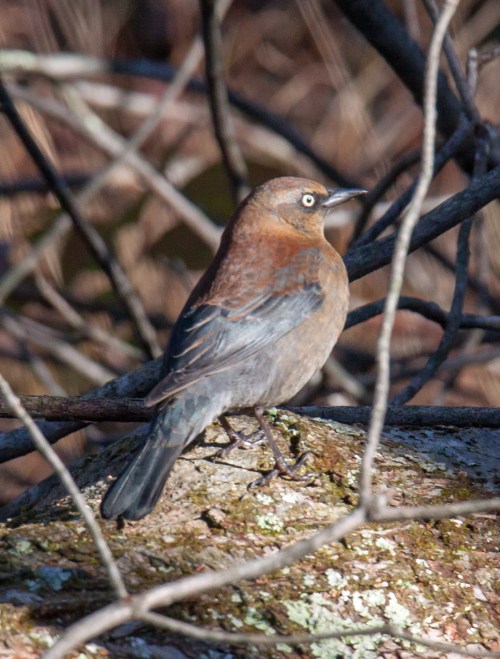
On Friday I spotted a very small flock of what I think are Rusty Blackbirds at Huntley Meadows Park. Unlike the much more common Red-winged Blackbirds (Agelaius phoeniceus), Rusty Blackbirds (Euphagus carolinus) like to forage in shallow pools of water at the edge of the woods, so they are often in the shadows

According to the Cornell Lab of Ornithology, the Rusty Blackbird is one of North America’s most rapidly declining species of birds. “The population has plunged an estimated 85-99 percent over the past forty years and scientists are completely puzzled as to what is the cause.”

At this non-breeding time of the year, the male and the female have similar coloration, with the male having a darker head and breast. I may have captured a male in the first photo and a female in the second or they may both be females, with the differences caused by changed lighting in the two images.

Rusty Blackbird

Rusty Blackbird

© Michael Q. Powell. All rights reserved.


Read Full Post »

A couple of days ago I began a posting with the words “Redheads tend to be stunning, rare, and elusive” and I could easily have used those words to describe the Red Fox (Vulpes vulpes) that I encountered yesterday morning at Huntley Meadows Park.

The fox appeared to be hunting at the edge of the water of one of the ponds in a remote part of the park. I was standing at the edge of the water on the other side of a beaver pond from the fox when it emerged from the vegetation and walked to the water. I don’t think the fox was ever aware of my presence. I tried to stay composed and motionless as I snapped away with my camera.

Initially I thought the fox was simply getting a drink of water, but it walked along the shore for a few minutes as though it were seeking prey. Eventually it faded back into the brush and the magical moments came to an end,

I’m still going through my photos, but here’s an initial favorite. I suspect there will be a follow-up posting or two, but I can’t contain my excitement about the encounter and the fact that I was able to capture some images.

fox

© Michael Q. Powell. All rights reserved.


Read Full Post »

Redheads tend to be stunning, rare, and elusive and the Red-headed Woodpeckers (Melanerpes erythrocephalus) at Huntley Meadows Park are no exception to that general rule. These relatively uncommon woodpeckers tend to spend their time high up in tall trees and it’s tough to even spot them. I was therefore thrilled on Monday when I caught a glimpse from a distance of this beautiful woodpecker and managed to capture a photo of it.

Red-headed Woodpecker

The photo shows the distinctive colors and pattern of the Red-headed Woodpecker pretty well. From a technical perspective, I’m happy that I was able to document the presence of this bird. From an artistic perspective, I’m a bit less satisfied with the shot. I hope that the Red-headed Woodpeckers hang around for the winter and that I can get some better shots.

The shots of the Red-headed Woodpecker were my final shots of the day. Interestingly enough, my first shots of the day were also of a woodpecker, a Downy Woodpecker (Picoides pubescens), a common species in my area. The woods were dark and full of shadows, but the sunlight was falling on one tree, illuminating an energetic little Downy Woodpecker.

Downy Woodpecker

I was able to get a sharper shot of this woodpecker and to manage the background better, producing an image that I actually like more than my shot of the Red-headed Woodpecker. I love the way that the areas of darkness and light provide a kind of natural vignette that draws the viewers’ eyes to the subject.

I realize that it often is tough for me to evaluate my own photos objectively, in part because I have trouble separating the emotions of the experience of shooting from the actual images themselves. It is exciting to see new or uncommon species and to get any kind of shot that I can use to help share those emotions with others.

In most cases, I have to use words to explain why a particular shot is meaningful to me. As I move forward in photography, I’d like to be able to eventually produce images more often that stand on their own artistically and technically, without any need for explanations.

© Michael Q. Powell. All rights reserved.

Read Full Post »

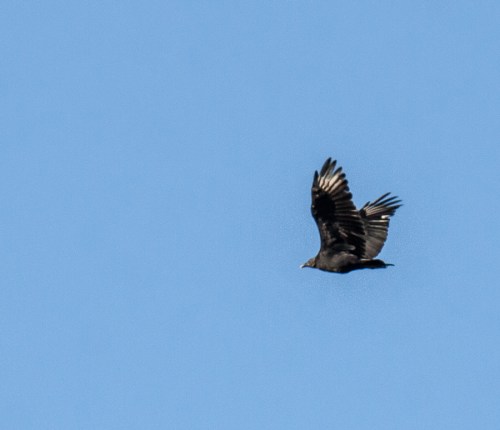
My eyes are unavoidably drawn to large birds in the sky. For me, it doesn’t really matter if it is a hawk, an osprey, or an eagle or, in this case, “only” a Black Vulture (Coragyps atratus) that I saw last week at Huntley Meadows Park. They are all impressive birds.

This bird was one of four Black Vultures that were circling overhead as I wandered through a remote area of my favorite marshland park. I love to watch these vultures as they soar through the sky searching for the scent of something dead to eat.

Where I live, we have both Black Vultures and Turkey Vultures. Most of the time, they are easy to tell apart, because the white patterns on the wings are different and their heads have different colors. As you can see in the photos, the Black Vulture has a black head, whereas the Turkey Vulture has a red head.

When vultures are circling around me like this, I follow the advice that was given to me several years ago and make sure I move from time to time. I wouldn’t want one of the vultures to think that I was dead.

Black Vulture

Black Vulture

Black Vulture

Black Vulture

© Michael Q. Powell. All rights reserved.

Read Full Post »

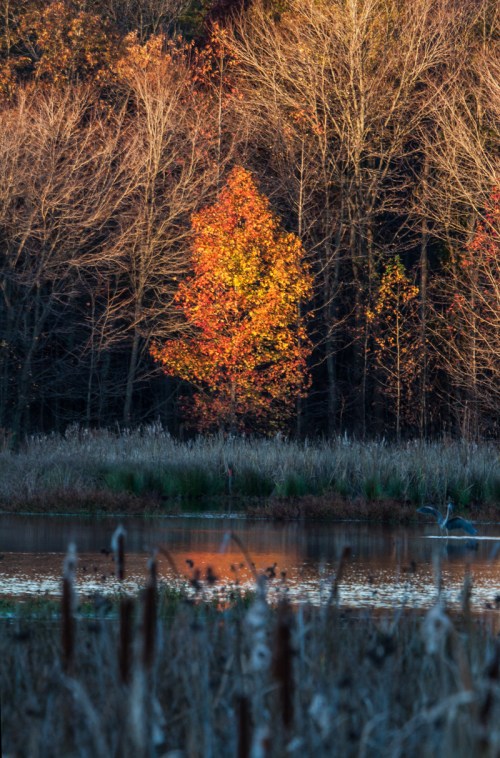
Most of the trees have given up their colorful leaves by now, but one hardy young tree refused to do so and looked almost like it was on fire in the early morning yesterday at Huntley Meadows Park.

The tree really stood out and grabbed my attention and I wanted somehow to capture its beauty. Many of you know that I have very limited experience with landscape photography and I simply wasn’t sure how to approach this atypical subject.

My first instinct was to zoom in closely and fill as much of the frame with the details of the tree as I could. That’s my favored approach with both my macro and zoom lenses.  I was shooting over a field of cattails and across a pond and my first series of images looked like this one.

fiery tree

I moved further down the boardwalk and decided to try to capture more of the surrounding environment by shooting in landscape mode. I also tried to get a clearer view of the beautiful reflections my moving beyond the cattails.

fiery tree

In order to get a different view, I climbed up the observation deck and took some shots like this one with various objects in the foreground and some reflected sky showing at the bottom of the image.

fiery tree

I presented the images with only a slight amount of cropping to give you an idea of what I was going for as I “worked” this subject. How did I do? In my view, the middle image is by far the best and serves as a reminder to me that stepping back and zooming out can be beneficial. More importantly, perhaps, I can see the benefits of trying out different approaches and different subjects as a way of stretching and learning and, hopefully, growing in my skills as a photographer.

© Michael Q. Powell. All rights reserved.

Read Full Post »

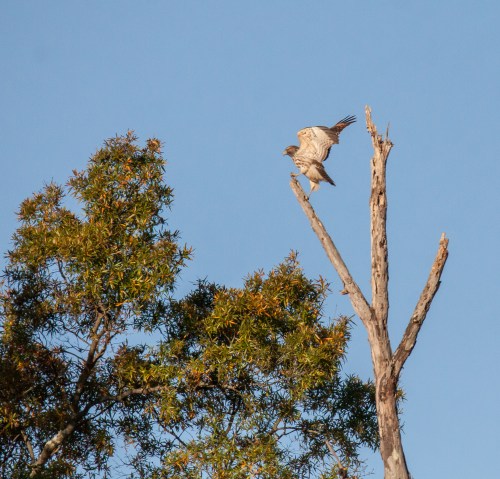
Wouldn’t it to be great to be able to soar high in the sky like a hawk, liberated from the cares of our daily lives? Of course, hawks have their own share of problems, like the pesky crows and blackbirds that mercilessly harass them.

I think the hawk in the photos is a Red-shouldered Hawk (Buteo lineatus), the same one, in fact, that I featured making a hasty landing in a tree. There were several small birds chasing after the hawk, though I was only able to capture one close to the hawk.

Red-shouldered Hawk

Red-shouldered Hawk

© Michael Q. Powell. All rights reserved.

Read Full Post »

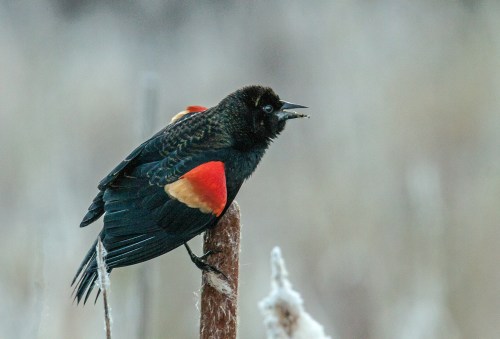
Who needs a rooster when you have a Red-winged Blackbird?

The silence of the early morning yesterday at Huntley Meadows Park was broken by the raucous call of a male Red-winged Blackbird (Agelaius phoeniceus), announcing loudly his presence and the arrival of a new day.

On a frosty November morning, it was time to wake up.

Red-winged Blackbird

© Michael Q. Powell. All rights reserved.

Read Full Post »
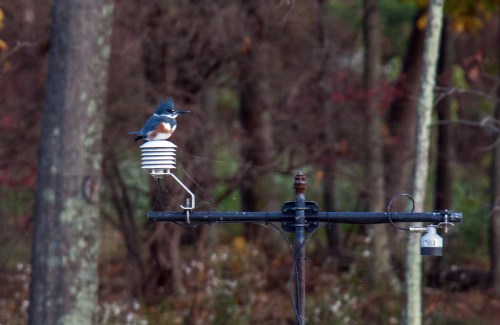
How do birds choose the perches they use? Several times last month I saw a female Belted Kingfisher (Megaceryle alcyon) perched in the early morning on this monitoring equipment sticking out of the water. Somehow I had the impression that the kingfisher was spending the nights on that perch.

Perhaps it’s more comfortable (or maybe safer) than the surrounding trees. Whatever the case, it makes for an interesting juxtaposition of natural and man-made elements in the image.

Belted Kingfisher

© Michael Q. Powell. All rights reserved.

Read Full Post »

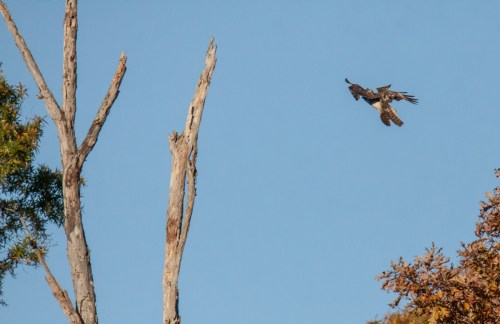
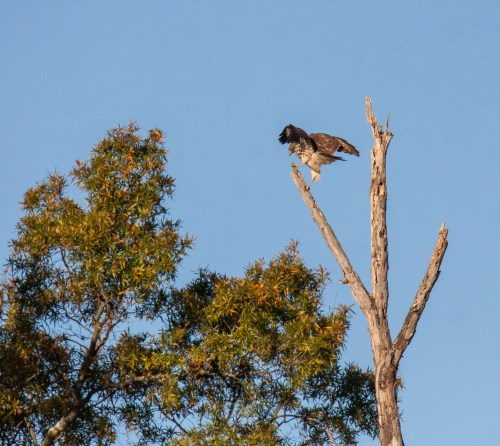
The hawk was moving really fast when it apparently spotted a perch that it liked. In an amazingly short distance, the hawk was able to slow down and really stuck the landing.  If I were a judge, though, I would have to deduct some points for the break in his form as he slowed down—it certainly did not look very elegant.

For most of these shots of the hawk, which I think is a Red-shouldered Hawk (Buteo lineatus), I was shooting at a higher ISO than I prefer in order to keep the shutter speed high. The results are a little grainy, particularly because I had to a fairly substantial crop, given that I was shooting across a small pond and the tree on which the hawk was perched was pretty far away. In the final shot, when the hawk was stationary, I was able to lower the ISO and there is a bit more fine detail.

Red-shouldered Hawk

Full speed ahead

Red-shouldered Hawk

Trying to slow down

Red-shouldered Hawk

Sticking the landing I

Red-shouldered Hawk

Sticking the landing II

Red-shouldered Hawk

Adjusting the position

Red-shouldered Hawk

Surveying the area

© Michael Q. Powell. All rights reserved.

Read Full Post »

Growing up in the 1960’s, I remember well The Byrds folk-rock version of the song Turn! Turn! Turn! (To Everything There is a Season), a Pete Seeger song with lyrics adapted almost word-for-word from Chapter 3 of the Biblical Book of Ecclesiastes. (If you have never heard The Byrds version of this song, here’s a link to a YouTube video of a performance.)

“To everything there is a season, and a time to every purpose under the heaven…”

According to statistical records, the season of the boldly-patterned Twelve-spotted Skimmer dragonfly (Libellula pulchella) in my area ended in early to mid-October. I was therefore shocked last Friday, 30 October, when I spotted a beautiful male Twelve-spotted Skimmer flying about in a field at Huntley Meadows Park.

I sometimes have trouble identifying species, but the wing patterns of this species are so distinctive that I knew exactly what it was, so I chased it around for a little while until I was able to get some shots of it. When I posted this photo on the Facebook page of Northeast Odonata, several members of the group commented on the “fresh” and undamaged condition of the dragonfly.

Statistics only get you so far, especially when looking at individuals. This dragonfly beat the odds and is a survivor—his personal “season” is off of the charts.

Like this dragonfly, we all have personal “seasons.” The dragonfly’s unexpected appearance brought to mind the words of a pastor at a funeral I attended earlier this year, who poignantly remarked that “we all come with expiration dates.” That reminder continues to challenge me as I think about how I should live my life.

“To everything there is a season, and a time to every purpose under the heaven…”


Twelve-spotted Skimmer

© Michael Q. Powell. All rights reserved.


Read Full Post »

In the stillness of the early morning hours, the line between reality and reflections is blurred and beauty is simply magnified.

The Great Blue Heron (Ardea herodias) is very recognizable in the first image, but as you progress through the three images, the central focus starts to shift away from the heron. In the final image, the heron has become merely one element of a larger, almost abstract composition.

Great Blue Heron

Great Blue Heron

Great Blue Heron

© Michael Q. Powell. All rights reserved.

Read Full Post »
On a sunny day in late October, I was admiring the beautiful fall colors at Huntley Meadows Park and thought that it would be really cool if a Great Blue Heron (Ardea herodias) would pose for me in the colorful foliage.

Then it happened.

Wishes sometime come true.

Great Blue Heron

© Michael Q. Powell. All rights reserved.

Read Full Post »

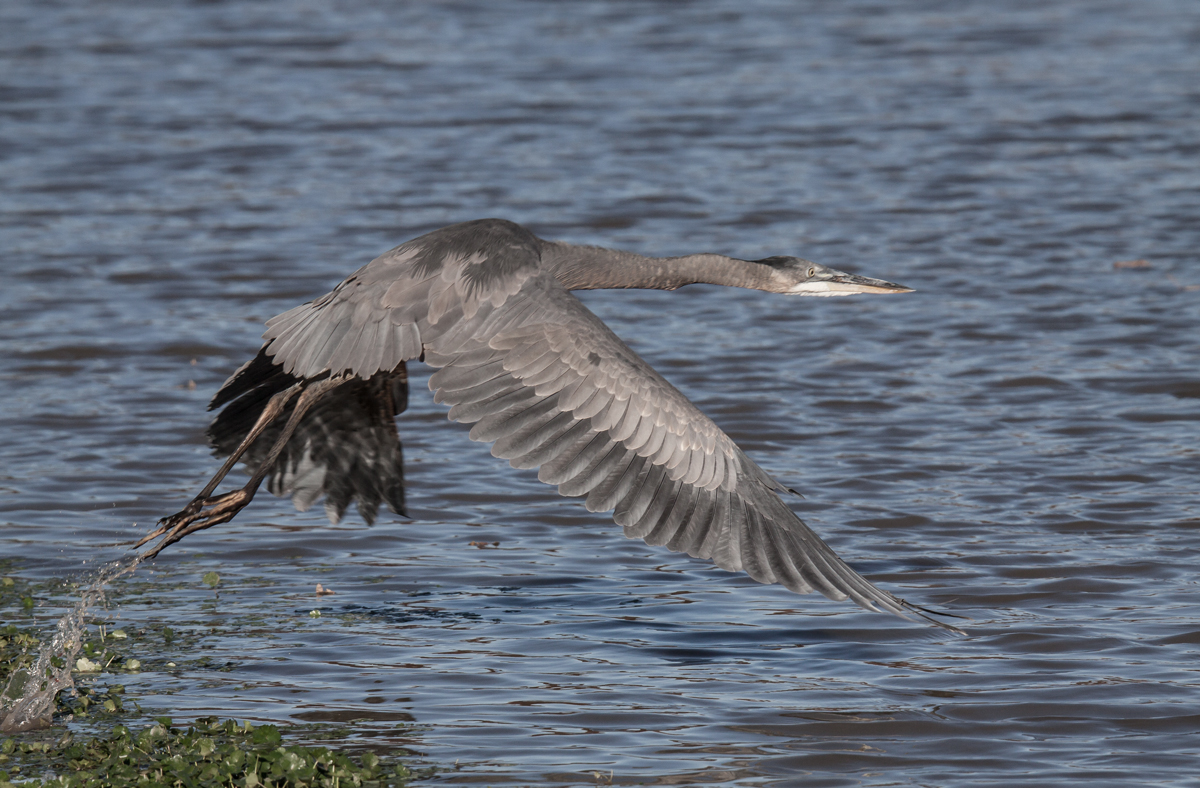
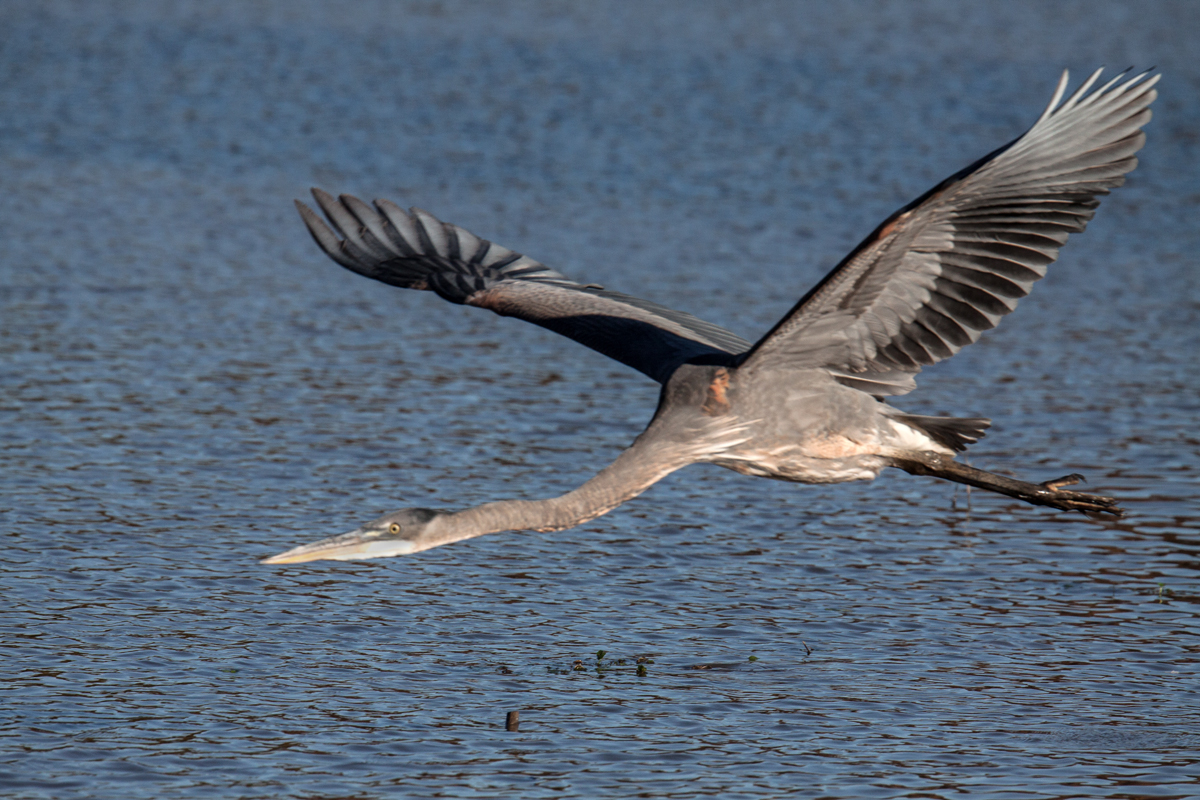
The egrets and green herons have gone south for the winter, but the Great Blue Herons (Ardea herodias) at Huntley Meadows Park continue to provide me with lots of photo opportunities.

Great Blue Herons present an unusual challenge to me—they are so long and wide when in flight that I actual have to remember to zoom out when photographing them in order to fit them in the frame.  Like most wildlife photographers, I usually am complaining about needing more reach and spend most of my time shooting with the lens almost fully extended.

In this first shot, I was able to anticipate the action and captured the heron’s takeoff almost exactly the way you see it. In the second shot, however, I slightly misjudged the speed of the heron and almost cut off the wings and the feet. As you can see, the light was beautiful and I was happy to be able to capture a lot of beautiful wing details.

Before long migrating ducks should be arriving and you should be relieved from steady diet of heron photos with which I have been populating my postings recently.

Great Blue Heron

Great Blue Heron

© Michael Q. Powell. All rights reserved.

Read Full Post »
Early morning light and fall foliage make such a great backdrop and I was thrilled when an Eastern Bluebird (Sialia sialis) flew closer to me and allowed me to take advantage of the situation.

I love it when the composition is this basic and the results are simply beautiful.

Eastern Bluebird

© Michael Q. Powell. All rights reserved.

Read Full Post »

Earlier this month I spotted a butterfly with perfect colors for Halloween and it was perched upside down in a way that reminded me of a bat. (Take a close look at its shadow.)

It’s not really called a Halloween Butterfly—I sometimes like to make up my own names for the creatures that I see and photograph. It was a cool, but sunny day when I came upon the butterfly, which was completely stretched out, basking in the warmth of the sun’s rays. I wasn’t sure it was alive, until it flew away when I moved in a little closer after some initial shots.

The unusual wing shape made me think it was either an Eastern Comma or a Question Mark butterfly—yes, there are butterflies named after punctuation marks—but I wasn’t sure which one. After a little research on line, I’m convinced that it is probably an Eastern Comma butterfly (Polygonia comma). According to a posting on Trekohio.com, Eastern Comma butterflies have three dark spots in a row on their front wings, while Question Mark butterflies have four spots.

Why am I seeing a butterfly this late in the season? Eastern Comma butterflies overwinter as adults. A University of Wisconsin-Milwaukee Field Station posting described the process in this way, “They overwinter in cracks and crevices in rocks and trees. There, they certainly freeze, becoming butterfly-sicles, but their blood contains glycogens – antifreeze – that allow their tissues to withstand the winter’s cycles of freezing and thawing.”

In spring, the un-dead arise again.

Happy Halloween.

Eastern Comma

© Michael Q. Powell. All rights reserved.

Read Full Post »

The soft morning light reflected off of the colorful autumn foliage early today at Huntley Meadows Park, providing a beautiful backdrop for this male Red-winged Blackbird (Agelaius phoeniceus) as it perched in the cattails.

Red-winged Blackbird

© Michael Q. Powell. All rights reserved.

Read Full Post »

Warblers are so small and hide so well in the trees that I almost never see any. This past week, however, I spotted a flash of yellow in the distance and I was able to capture some shots of what I have been told is a Palm Warbler (Setophaga palmarum), though it is hard for me to confirm the identification, considering how much many warbler species look almost alike.

I took these three shots from the same spot on the boardwalk at my local marshland park as I looked across a field of cattail and other vegetation. It’s interesting to note how much the feel of the photos changed as the warbler moved from perch to perch.

Normally I try to get close-up shots of my subjects, but I decided not to crop in on the first image, which reminds me of a Japanese ink painting with its sparse use of color and emphasis on lines and shapes. The background was so interesting in the second image, that once again I did only a minor crop. In the third image, my favorite element is the warbler’s tail.

Palm Warbler

Palm Warbler

Palm Warbler

© Michael Q. Powell. All rights reserved.

Read Full Post »

This past weekend I inadvertently spooked a small flock of little Wood Ducks (Aix sponsa) while wandering about Huntley Meadows Park, but managed to get some shots of them as they flew away through the trees.

I just love the combination of the colorful birds in flight and the autumn foliage.

Wood Duck

Wood Duck

Wood Duck

Wood Duck

© Michael Q. Powell. All rights reserved.

Read Full Post »
After a gray, rainy day like today, I need a visual pick-me-up and energetic Downy Woodpeckers (Picoides pubescens) never fail to raise my spirits. I spotted this little beauty at Huntley Meadows Park this past weekend.

Downy Woodpecker

© Michael Q. Powell. All rights reserved.

Read Full Post »
A Great Blue Heron (Ardea herodias) is so big that it’s difficult to imagine one hiding itself effectively. Yet when this heron settled in among the branches of a tree, I was amazed to see how well it blended in with its surroundings. The heron was so effectively camouflaged that others who walked by did not even notice this large bird until I pointed it out to them and some of them still had difficulty picking it out.

As some of you have undoubtedly noticed, I love alliteration. I somehow can’t smile when I pronounce the title I chose for this posting.  It somehow brings to mind one of the scenes in “My Fair Lady,” with the phrase, “In Hertford, Hereford and Hampshire, hurricanes hardly happen” repeated as Professor Higgins, Colonel Pickering, and Eliza sing “The Rain in Spain.” (Here’s a link to the YouTube film clip of this scene.)

Great Blue Heron

© Michael Q. Powell. All rights reserved.

Read Full Post »

I never quite know what I will stumble upon when I wander about in remote areas of the woods, fields, and marshes of Huntley Meadows Park. This past weekend I spotted this skull, which I guess is that of a White-tailed Deer (Odocoileus virginianus), a common species where I live. How did this deer meet its demise? Was it old age, disease, starvation, or a predator?

Somehow this simple image of a skull seems appropriate for Halloween Week. Happy Halloween in advance.

White-tailed Deer

© Michael Q. Powell. All rights reserved.

Read Full Post »
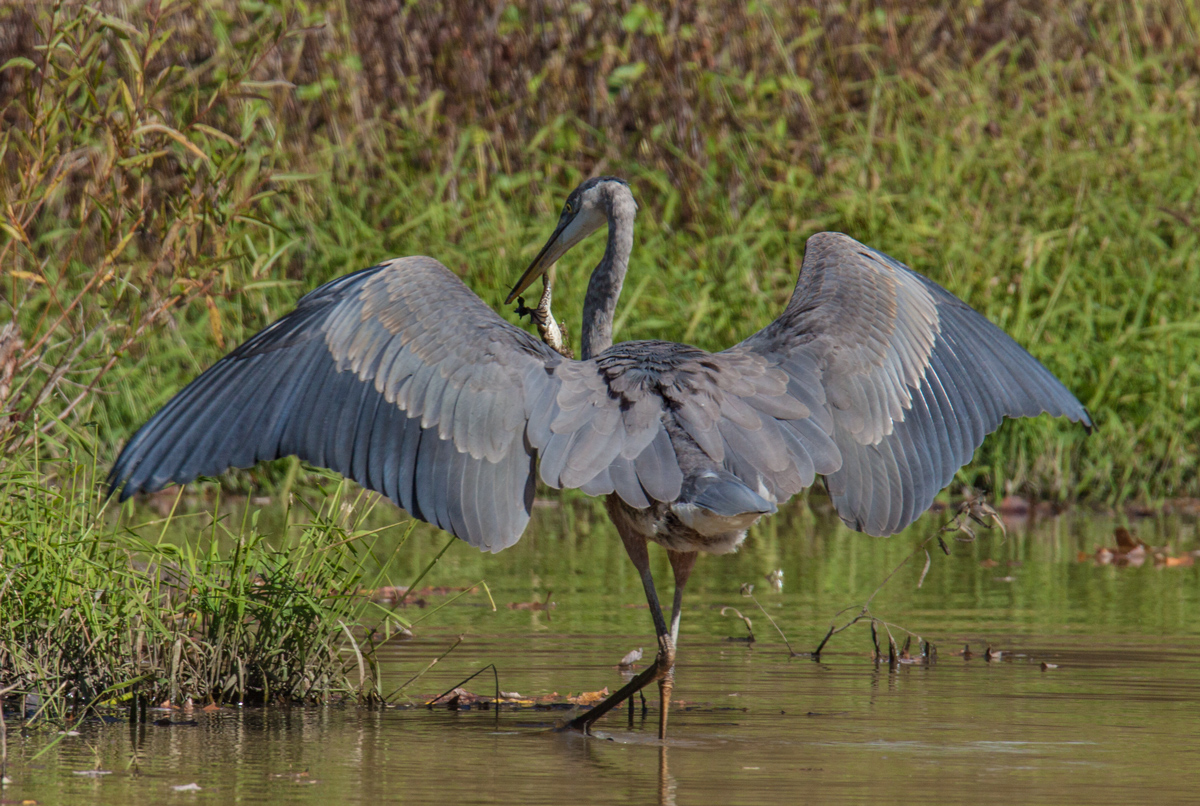
WARNING: This encounter did not turn out well for the frog. This past Saturday I spotted a Great Blue Heron (Ardea herodias) in the shallow water at the edge of a beaver pond at my favorite marshland. I watched and waited, knowing full well that a heron’s patience when fishing generally exceeds my own.

Suddenly the heron thrust its bill into the water with such force that it had to extend its wings for stability. Surely, I thought, the heron had just caught a massive fish.  When I caught a glimpse of the catch, however, I realized that it was not a fish—it was a frog. The heron’s grip on the frog looked to be a little problematic, for the heron had snagged the frog by its legs.

Now I realize that in some cultures, frog legs are considered to be a delicacy, but I was pretty confident that the heron was not going to settle for just the legs. The challenge for the heron was to reposition the frog without losing it. One added complication was that the frog appeared to be struggling, trying desperately to extricate itself from the heron’s tight grip.

Moving to the edge of the pond, the heron bent down and pinned the frog against the ground as it grasped the frog around its upper torso. Only then did the heron return to its original upright position, knowing that the frog’s fate was now sealed. With small movements of its head, the heron slowly repositioned the frog until it was in a heads-first position.

All of the sudden, the heron tilted its head back  and swallowed and the frog was gone so quickly that I was unable to capture its last moment.

Apparently the frog was just an appetizer, for I saw the heron catch a fish a short time later, but that may be the subject of a future post.

Great Blue Heron

The initial strike

Great Blue Heron

Hanging by the legs

Great Blue Heron

Grabbing the torso

Great Blue Heron

The beginning of the end

Great Blue Heron

Almost in position

Great Blue Heron

Ready for a big gulp

© Michael Q. Powell. All rights reserved.

Read Full Post »
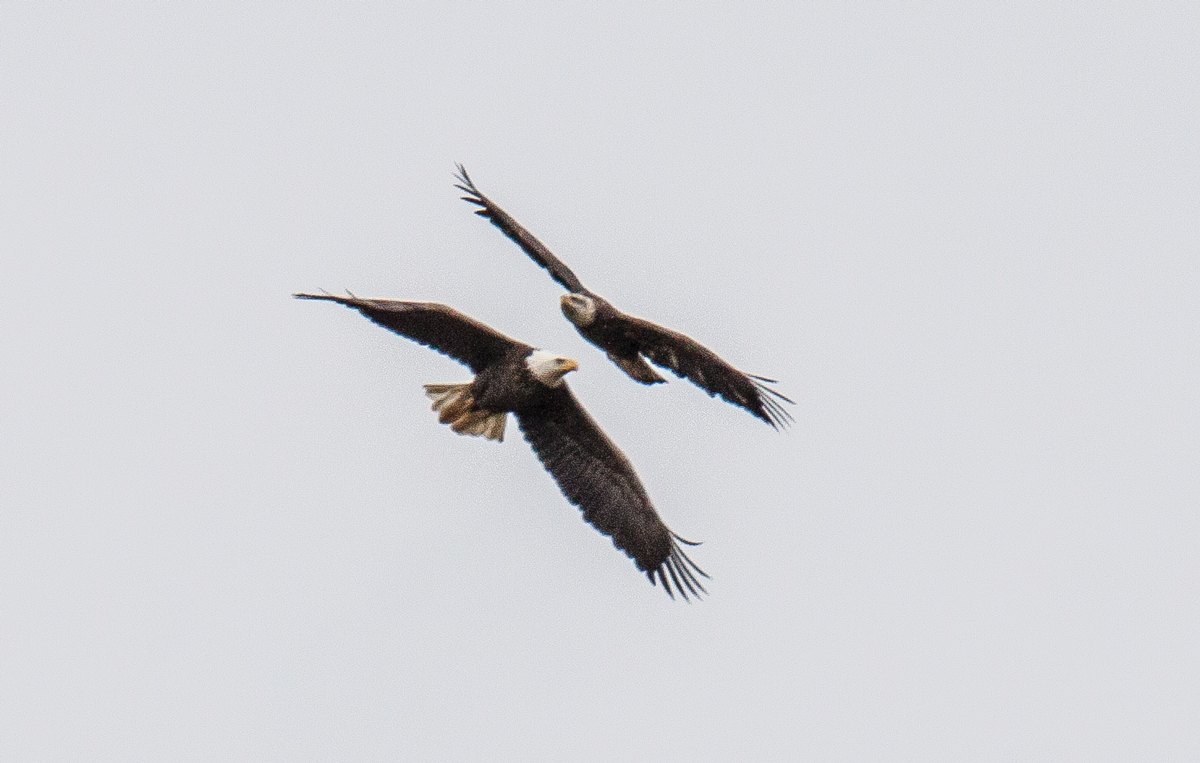
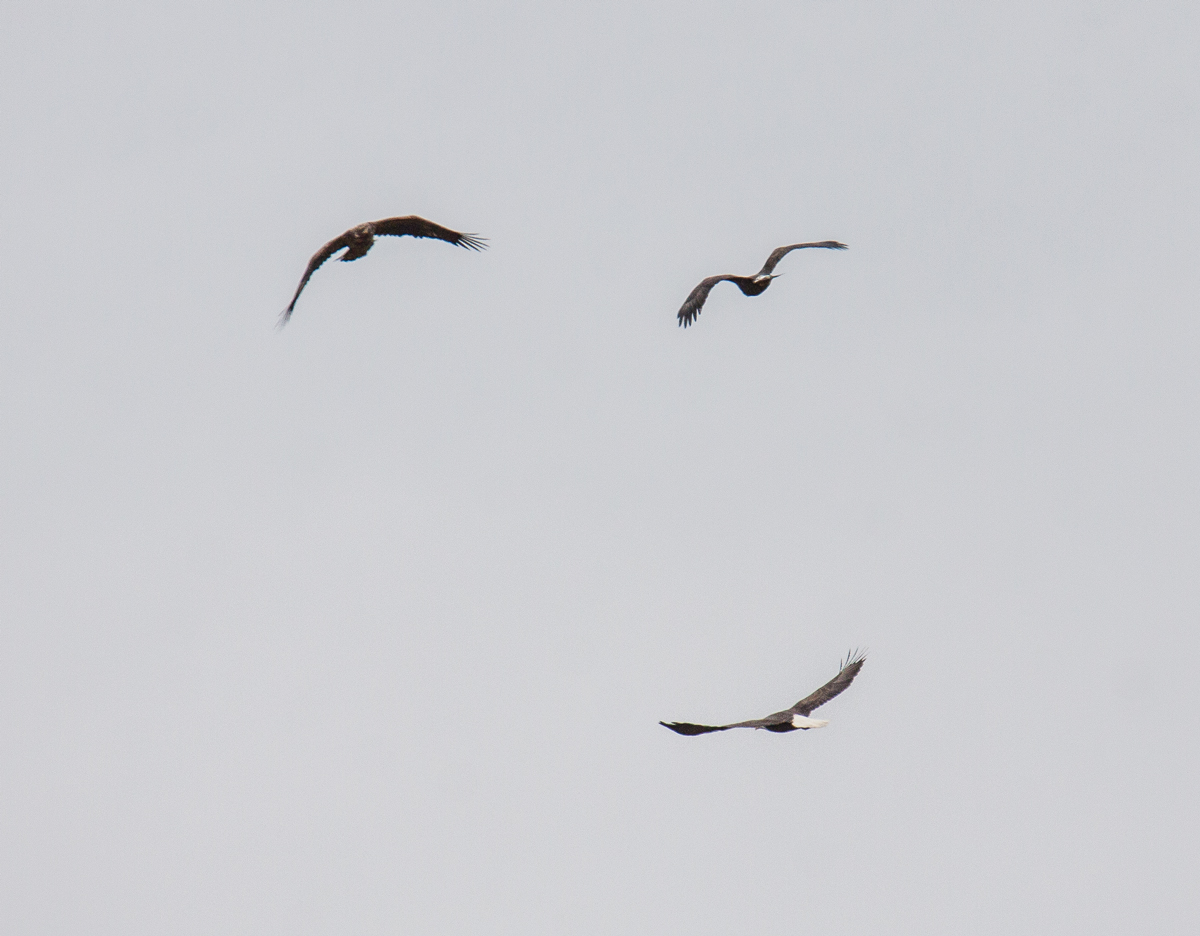
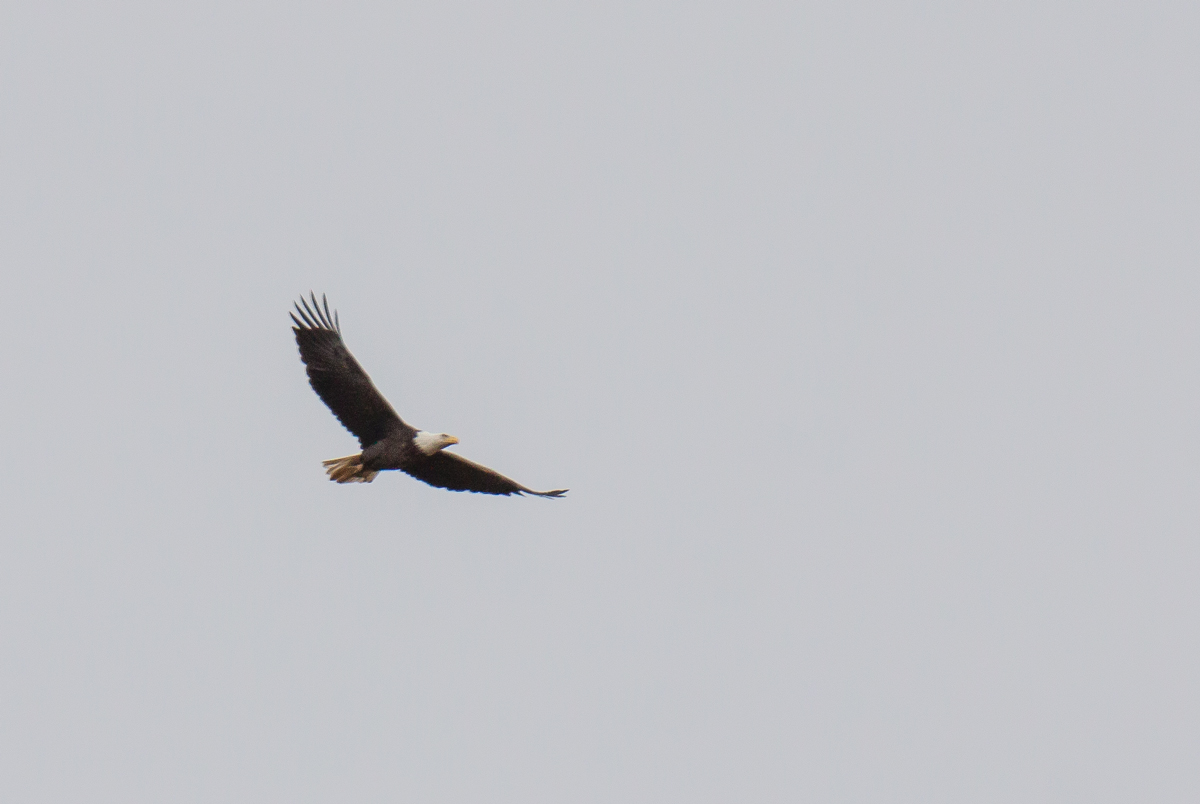
It was cool and cloudy yesterday at Huntley Meadows Park, but my spirits were brightened considerably when I saw three Bald Eagles (Haliaeetus leucocephalus) soaring briefly over the park. It looked to be two adults and one juvenile, perhaps a family on a Saturday outing.

The eagles were pretty far away and I had my telephoto zoom lens extended as far as it could go as I attempted to track the flying eagles. Occasionally two of them or even all three would come into the frame for a split second, but then they would be soaring off into different parts of the sky.

I’m including an assortment of shots to give you a sense of the experience. I consider any day that I spot a Bald Eagle and get recognizable shots of it to be a wonderful day.

Bald Eagle

Bald Eagle

Bald Eagle

Bald Eagle

Bald Eagle

© Michael Q. Powell. All rights reserved.

Read Full Post »
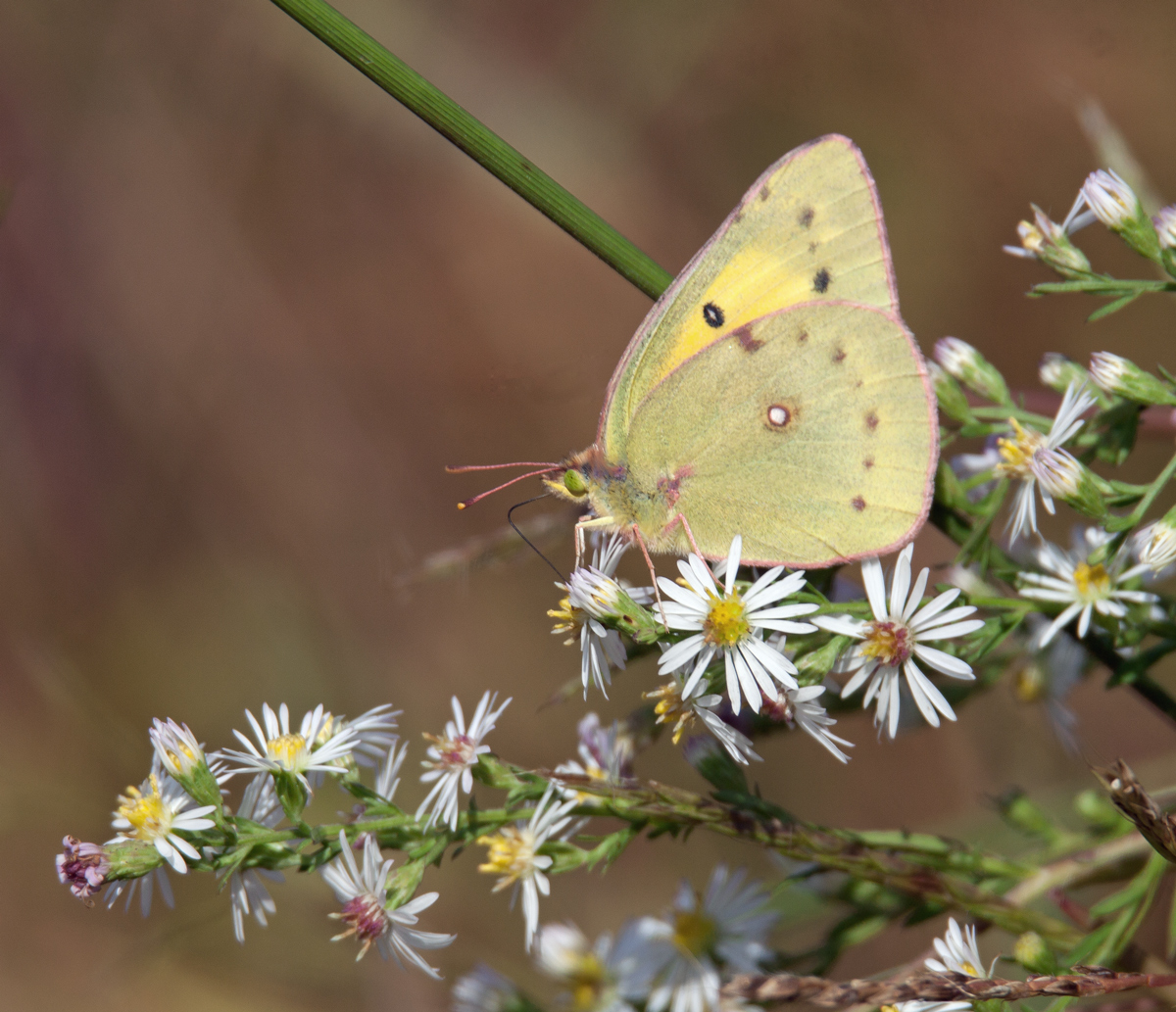
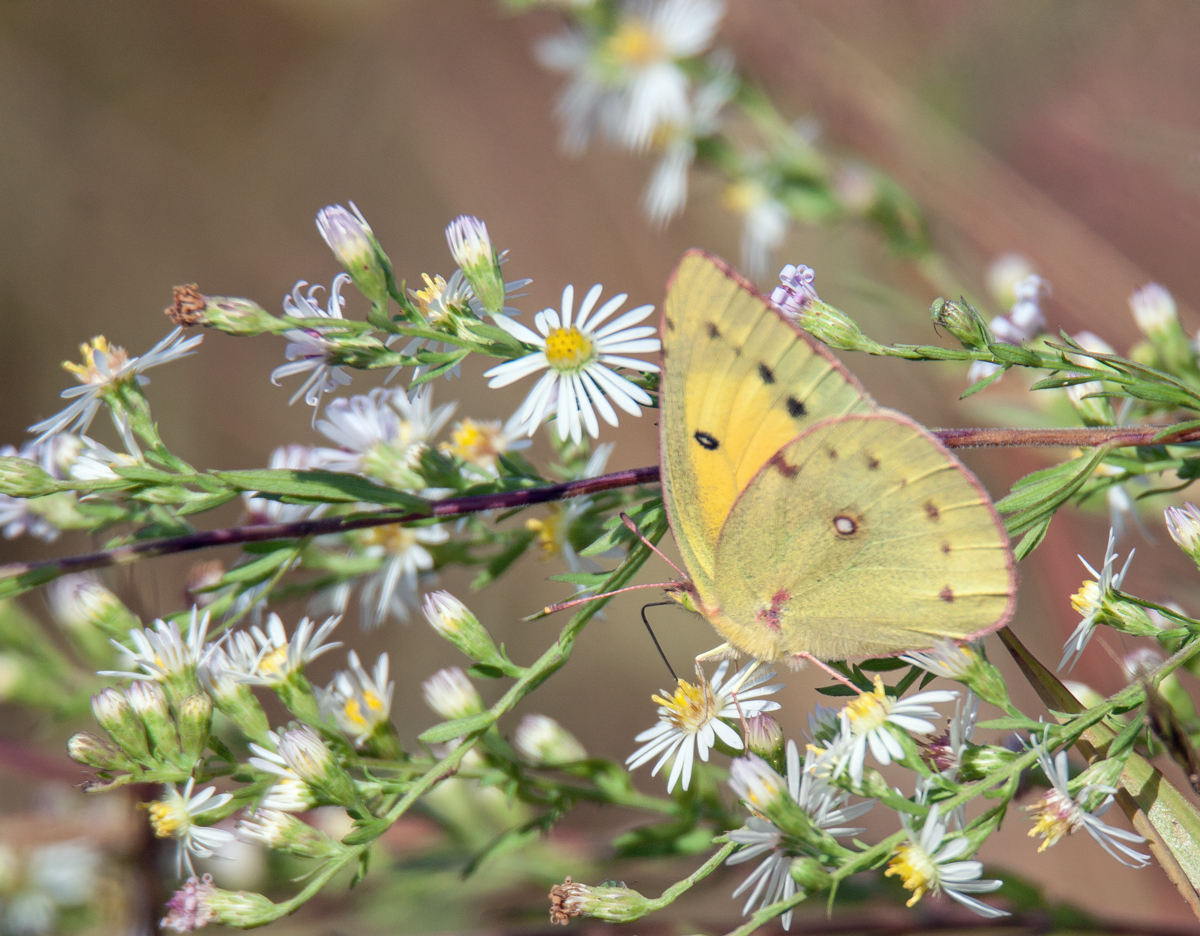
The large butterflies seem to be gone, but I continue to occasionally see smaller sulphur butterflies nectaring on late blooming flowers.

There are several different varieties of sulphur butterflies that look a bit alike, so I am not certain in identifying this butterfly. At first I thought that this might be a Pink-edged Sulphur (Colias interior), but the range maps suggest that we may not be in the correct geographic region for that species.

I think it is more likely that this is a Clouded Sulphur butterfly (Colias philodice). As for the flower, it looks to me to be some variety of aster.

The weather is definitely getting colder—I had to scrape frost off my car’s windshield earlier this week—so I don’t know how much longer I’ll be seeing these little beauties. Beauty so often is transitory; all we can do is enjoy it and appreciate it until it is gone.

Clouded Sulphur

Clouded Sulphur

Clouded Sulphur

© Michael Q. Powell. All rights reserved.

Read Full Post »

When I arrived at the marsh in the early morning hours, it looked like the spiders had been busy all night preparing decorations for Halloween—there were spider webs everywhere.

The webs seemed to have been more hastily constructed than those of the orbweavers that I have observed recently and there did not appear to be any spiders in the center of these webs. What is the purpose of these webs if the spiders are not there to secure any prey that is caught in the web?

I can’t help but admire the amazing artistry of these fascinating little creatures as I examine the interlocking lines and curves of their incredible creations.

I’ve place these images in a mosaic collage—if you want to see larger versions of the images, just click on any one of them and you’ll move into a slide show mode that lets you scroll through them quickly.

© Michael Q. Powell. All rights reserved.

Read Full Post »

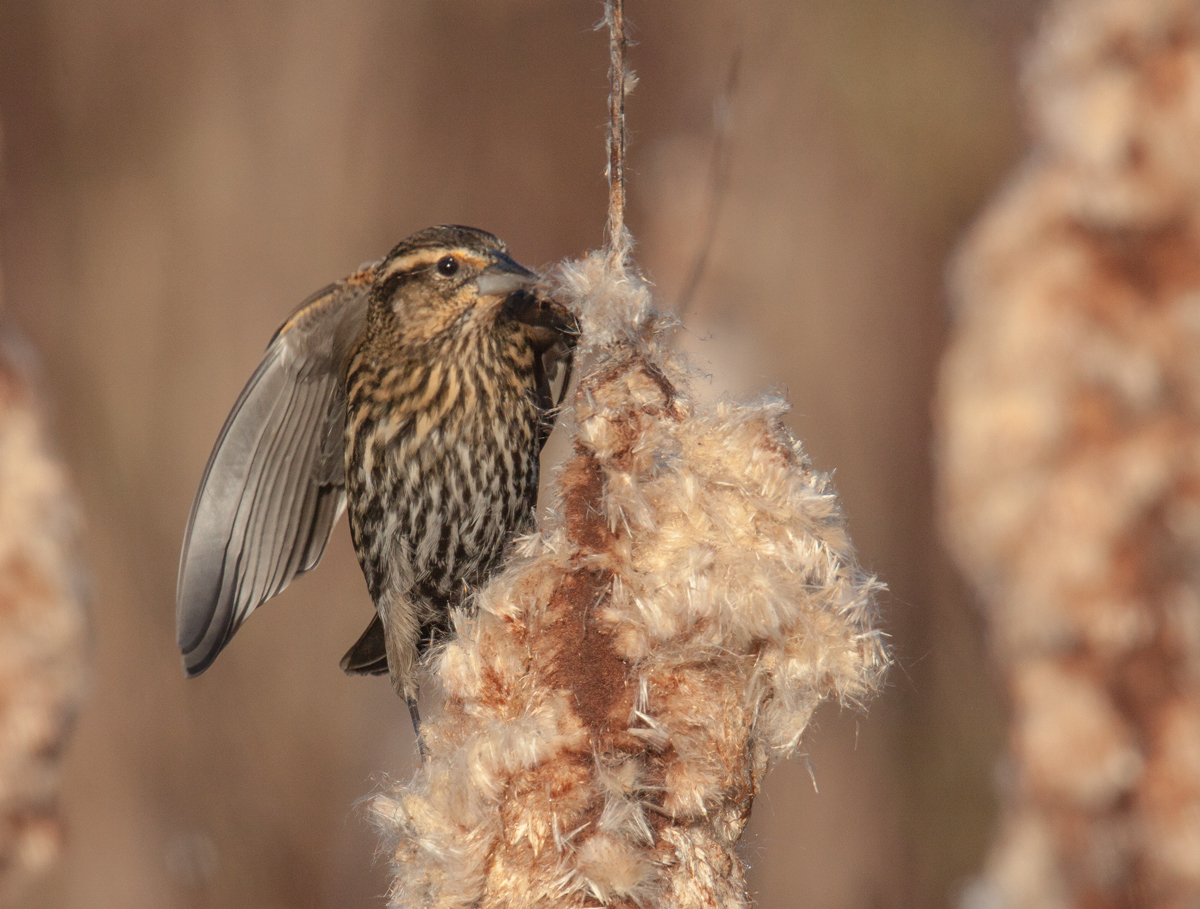
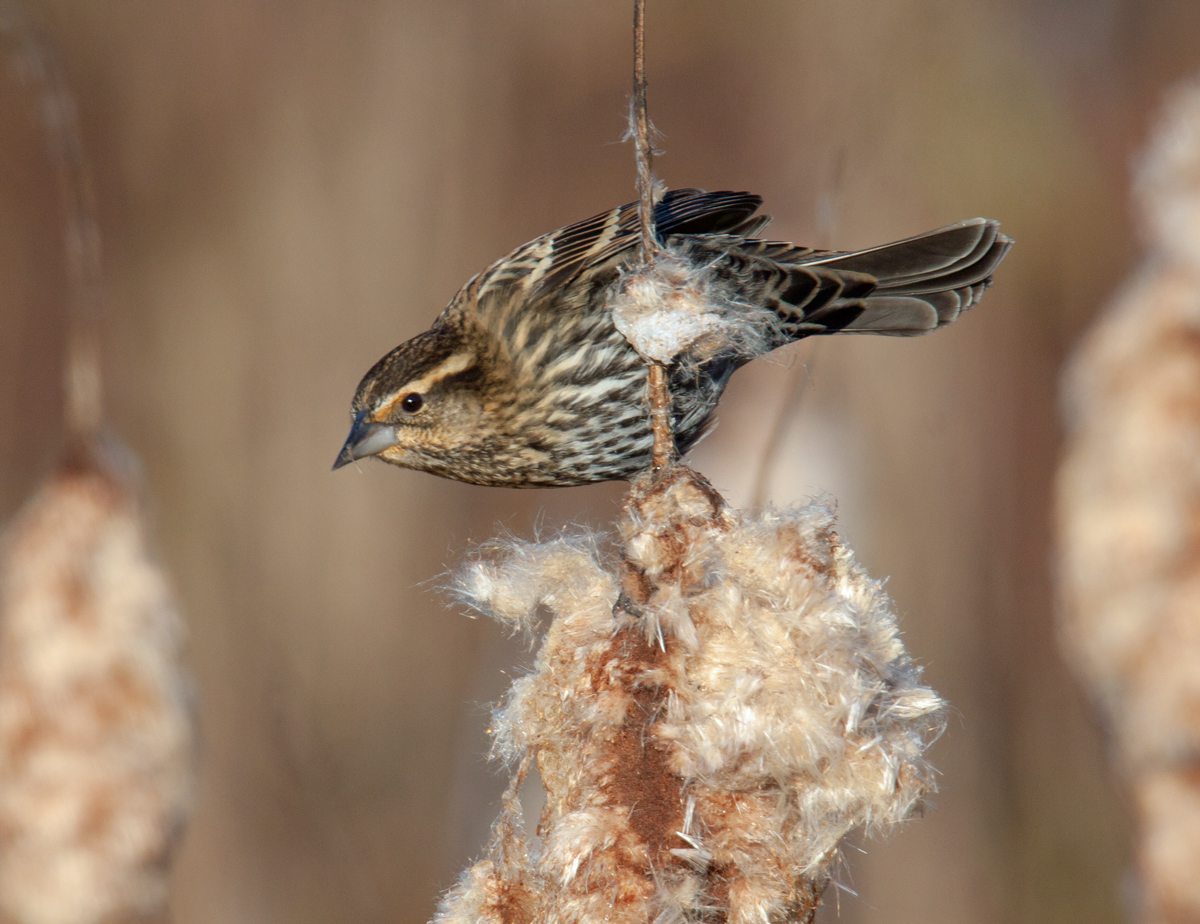
A small flock of Red-winged Blackbirds (Agelaius phoeniceus) was active in the cattails at Huntley Meadows Park on Monday morning. I was happy to be able to capture some action shots of one of the females, which, as you can readily see, are not black and don’t have red wings.

It was a real treat for me to be able to get some shots of the female blackbirds at the top of the cattails. Most of the time, the females peck about at the base of the cattails and only the male blackbirds are visible at the tops. For whatever reason, the majority of the members of this small flock appeared to be females.

I didn’t think that this female blackbird was aware of my presence as she diligently searched for insects, but the stare that I captured in the final photo seemed to be conveying a message that she did not want me there. I backed off and left a short time later.

Red-winged Blackbird

Red-winged Blackbird

Red-winged Blackbird

Red-winged Blackbird

Red-winged Blackbird

© Michael Q. Powell. All rights reserved.

Read Full Post »

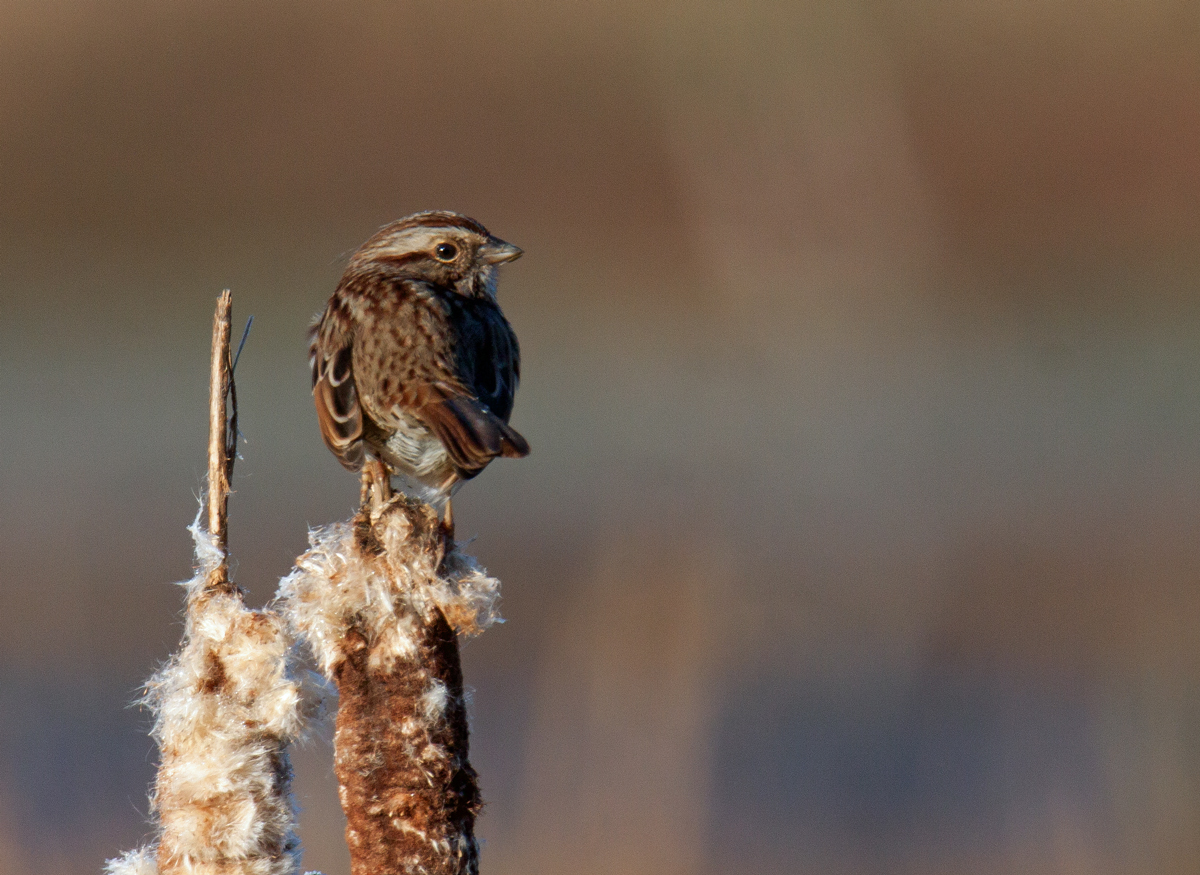
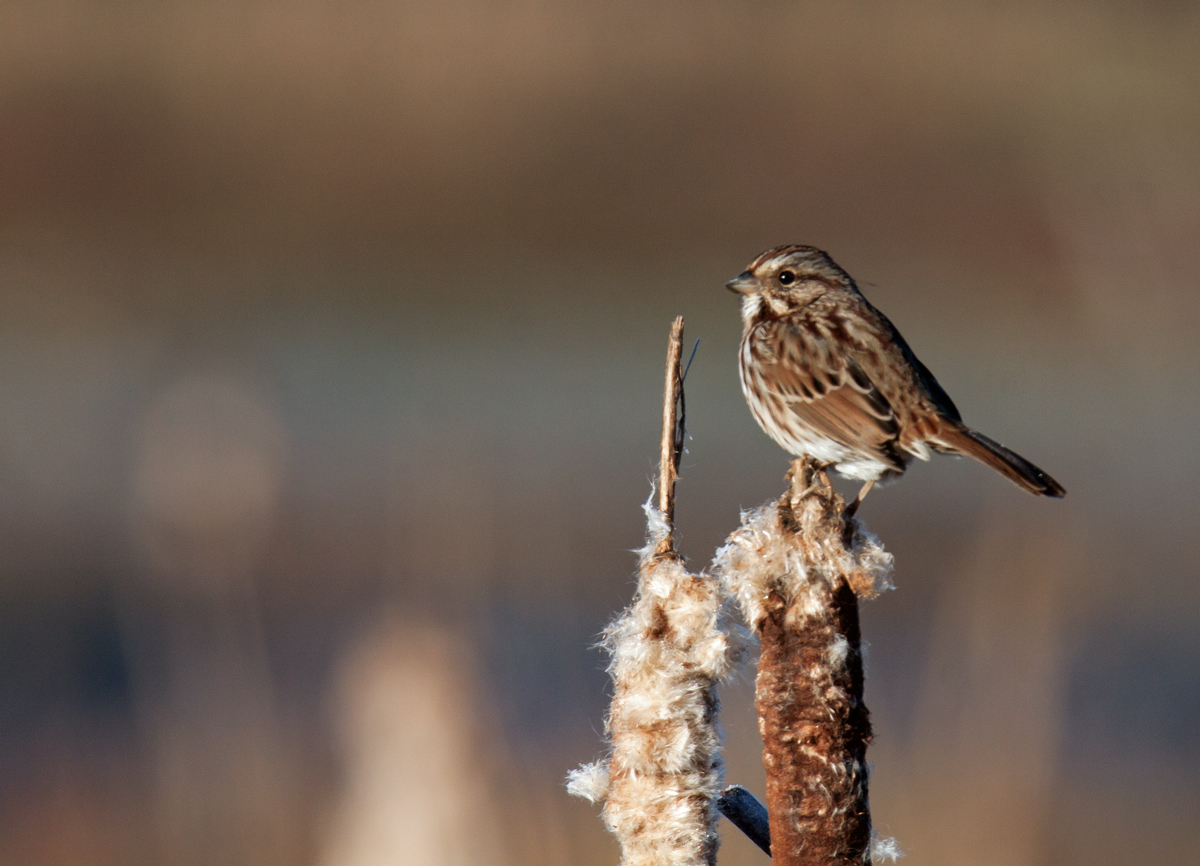
A lot of scratching and movement was taking place down deep in the cattails and I stopped and waited, hoping to see what birds were responsible for the commotion. Finally, one of them popped to the surface and it looked to be a White-throated Sparrow (Zonotrichia albicollis) and I smiled.

Sparrows have a very special place in my heart, because they remind me of my deceased parents. When I was growing up, one of their favorite hymns at church was “His Eye is On the Sparrow.” The hymn has a simple, Scripture-based message that we should not be discouraged, because the same God who watches over the sparrows in the field cares even more for us.

Now, whenever I see sparrows, I smile as I am filled with memories of my parents, and the words of the chorus of the hymn play again in my mind, “I sing because I’m happy. I sing because I’m free. For His eye is on the sparrow. And I know He watches me.”

If you have never heard this song, there are many versions of it on YouTube, including, versions by such noted artists as Whitney Houston. Sandi Patty’s rendition is close to the version that I remember in the small Baptist churches of my childhood.

White-throated Sparrow

White-throated Sparrow

© Michael Q. Powell. All rights reserved.

Read Full Post »

In the early light of the dawn, I captured this solitary Great Blue Heron (Ardea herodias) in deep reflection, contemplating the start of a new day.

There is nothing really complex about this image, but I like the way that it conveys the mood of that moment, a moment when the world seemed to be totally tranquil, uncluttered by the hustle and bustle of everyday life.

I love the early morning.

Great Blue Heron

© Michael Q. Powell. All rights reserved.

Read Full Post »

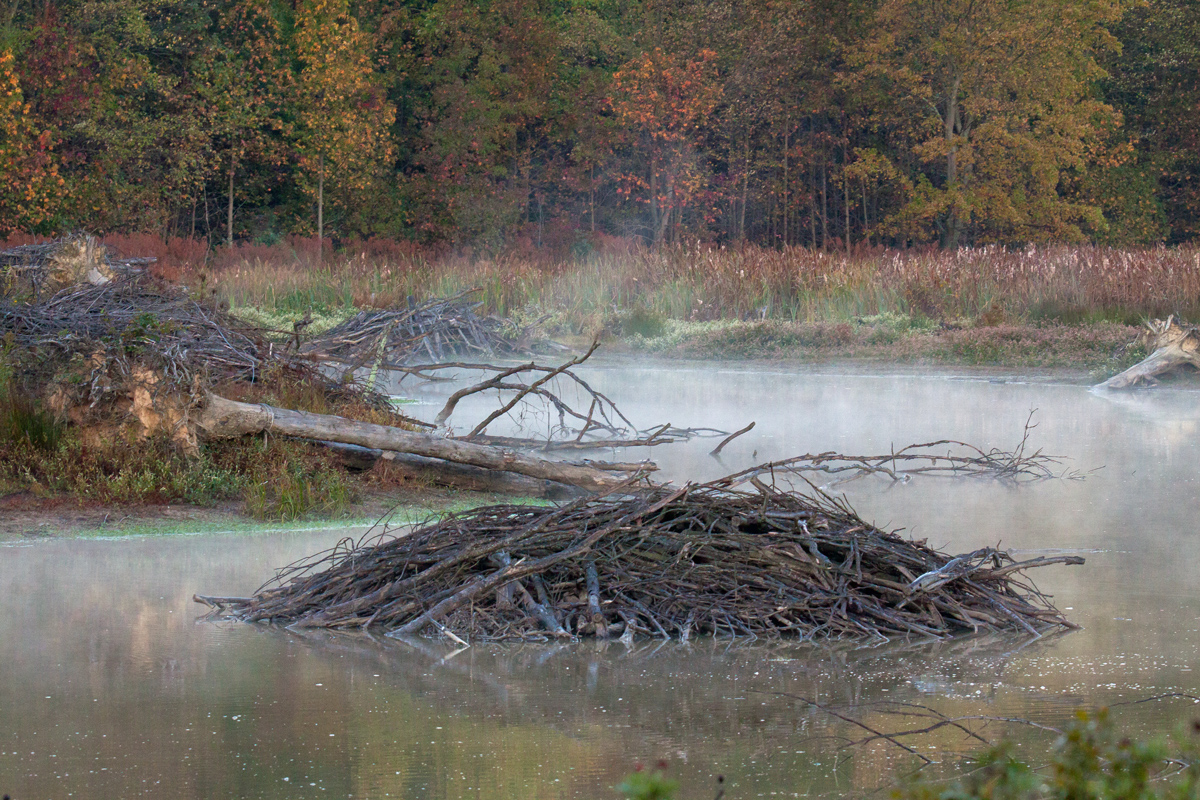
As the sun gradually illuminates the trees and burns off the mist on the water, Huntley Meadows Park is especially beautiful, especially at this time of the year, when the trees are showing off their changing colors. The park was silent when I arrived in the early morning darkness, but gradually I could hear the sounds of birds singing and I couldn’t help but notice the arrival of a small flock of Canada Geese (Branta canadensis).

The colors of the foliage here in Northern Virginia are not as bold and striking as in some other parts of the country, but there is an understated beauty in the muted tones or red and yellow. I am not used to taking landscape-style shots (and a 150-600mm lens is probably not optimal for doing so), but I tried to capture some different scenes to give you a sense of the park where I take so many of my photographs. It’s a wondrous location, particularly when you consider that it is found in a suburban location.

autumn

autumn

autumn

autumn

© Michael Q. Powell. All rights reserved.

Read Full Post »

« Newer Posts - Older Posts »