Feeds:
Posts
Comments

Posts Tagged ‘Tamron 150-600mm telephoto’

WordPress tells me I posted 851 photos during 2015 in 395 blog posts. I’ve forgotten many of those photos, but I want to share ten of my favorites with you today as we start the new year.

I used a very unscientific approach in selecting them—I simply chose ones that I really liked without looking at numbers of likes or views or comments. So often I am focused on getting new shots that I sometimes forget how wide a spectrum of subjects I like to shoot. These images remind me of my varied approaches and techniques.

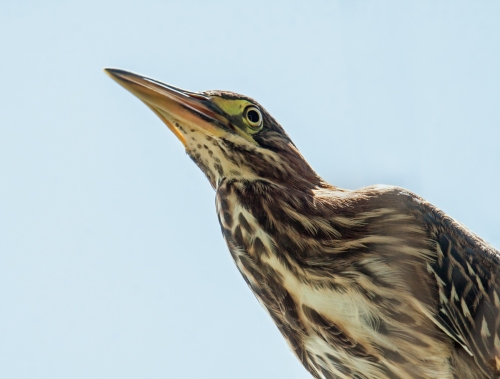
I didn’t include any of the fox photos or contest entries that I featured recently, figuring that you were already familiar with them. I should note that this selection of favorites is representative and not exhaustive—there are probably some awesome shots that I have neglected to include. I haven’t tried to put the images in any kind of rank order, but if forced to choose, my favorite image of the year is probably the first one, the Green Heron with a kind of Rembrandt lighting.

Thanks to all of you who have supported and encouraged me so much in 2015. Best wishes for a wonderful 2016.
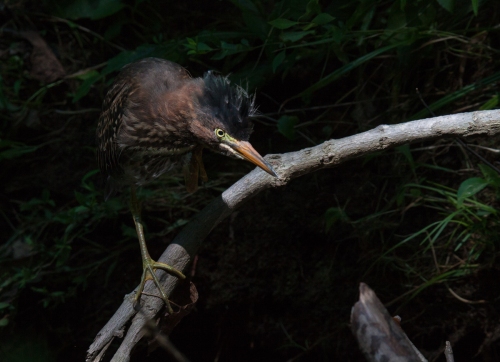
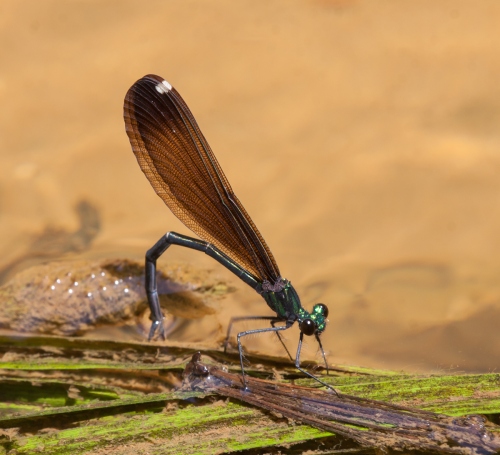
Green Heron

Ebony Jewelwing

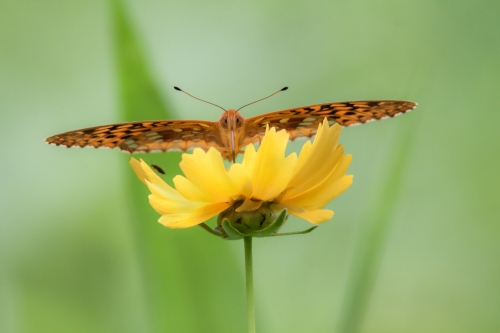
Great Spangled Fritillary

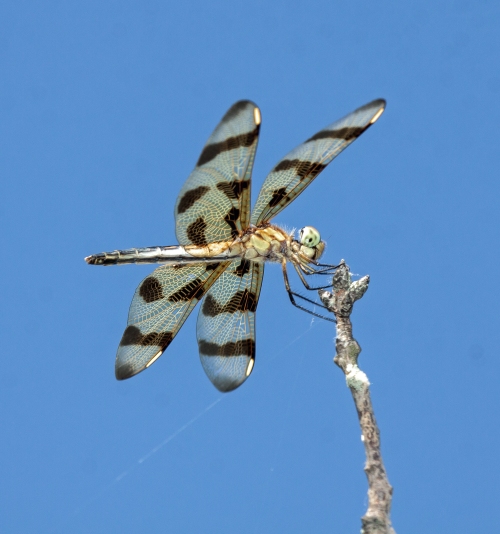
Banded Pennant

Green Heron

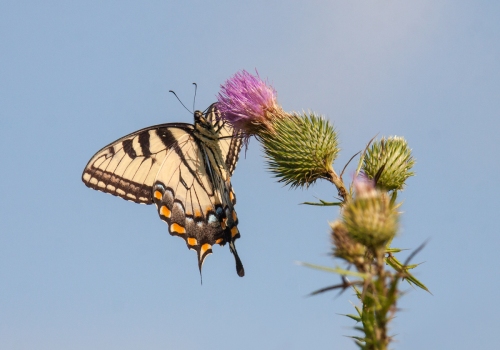
Eastern Tiger Swallowtail

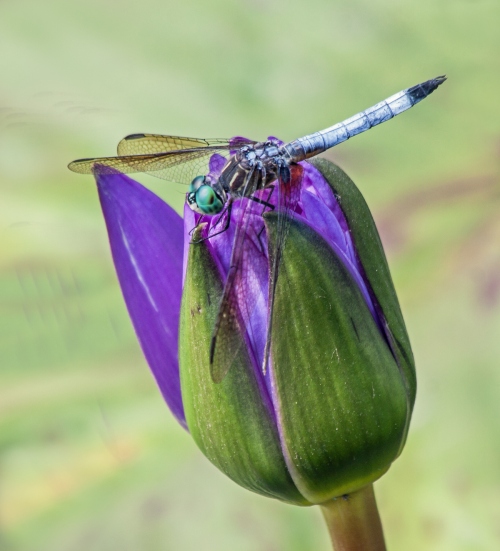
Blue Dasher

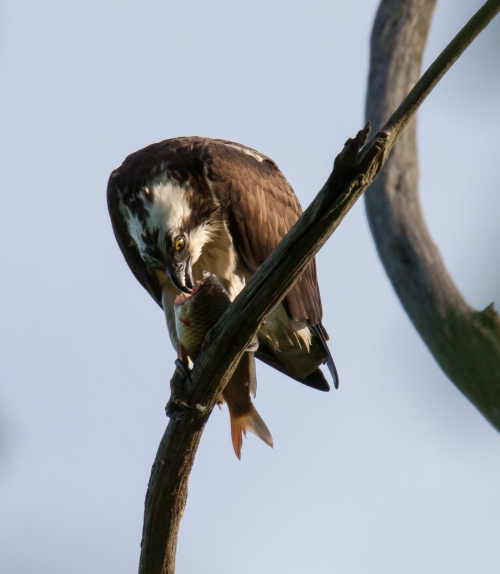
Osprey

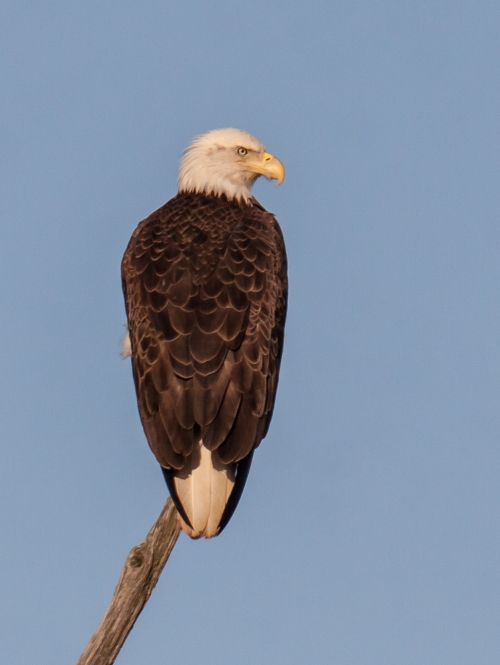
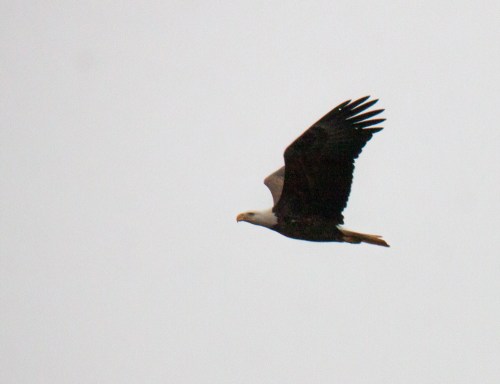
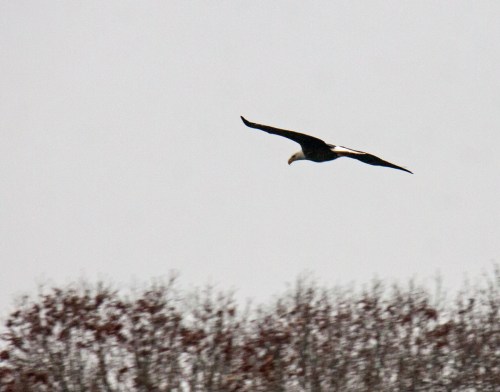
Bald Eagle

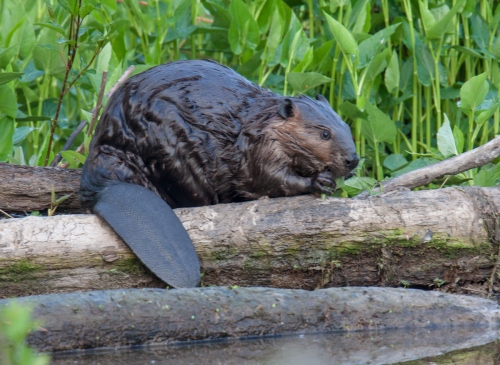
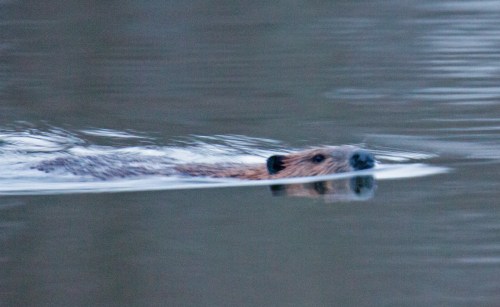
North American Beaver

© Michael Q. Powell. All rights reserved.
Read Full Post »


How do you celebrate the end of the year? Do you like to go out with a bang, with a big celebration and literal or figurative fireworks, or are you more pensive and reflective? I know that I am in the latter group.

My life this past year, both personally and as a photographer, has had some high points, but mostly it has been a year in which I have tried to find beauty and meaning in ordinary things. I have visited my favorite park over and over again, photographing some of the same species repeatedly. Patience and persistence have been my hallmarks and I have been rewarded with some wonderful photographic opportunities.

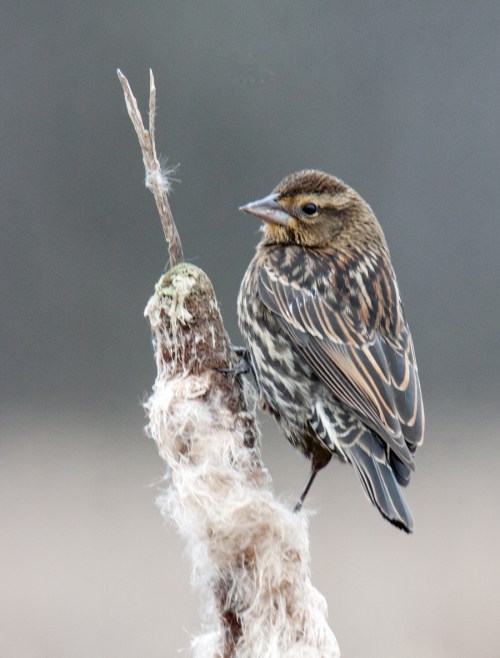
Somehow it seems appropriate that I end this year with a couple of images of this beautiful female Red-winged Blackbird (Agelaius phoeniceus) that I spotted in the cattails on Monday at Huntley Meadows Park. Red-winged Blackbirds are with us most of the year. They seem to come and go, but they are often there. The females are usually buried deep in the underbrush and are not seen as often as the more flashy and loud males. As you can see from these photos, however, the females are at least as beautiful as the males.

The blackbird’s body positions serve as a visual metaphors for my approach as I look forward to 2016—hanging on and occasionally looking back, but primarily looking forward with optimism to the future.

Best wishes to all for a wonderful 2016.

Red-winged Blackbird

Red-winged Blackbird

© Michael Q. Powell. All rights reserved.

Read Full Post »

Last week I conducted a poll to see which of my four recent photo contest entries was your favorite image and the fox came out on top with 43 percent, followed by the bluebird (28 %), the eagle 18 %), and the dragonfly (11 %). Thanks to all of you who voted and especially to those who left comments about your choice. I was intrigued, but not surprised, by the fact that the favorite of the readers—the fox— was different from the choice of the contest judge—the dragonfly.

Several readers commented, however, that the particular image of the Red Fox (Vulpes vulpes) that I used was not their favorite one. I had previously done three postings from the magical encounter with the fox and one of the other shots seemed to speak to some readers more than the one I submitted for the contest.

So I am seeking your views again by reprising all of the fox photos and asking you to vote for your favorite. Do you prefer the fox standing up or leaning over the water? Do you like it more when the fox is looking directly at you or at an angle? Does it make a difference if the fox’s bushy tail is visible? I realize that it may not be easy to narrow your choice down to a single image, so I have tried to set up the poll to permit multiple choices.

If I have set this up correctly, you can click on any image and scroll through each of them in full size. After viewing them all, select your favorite (or favorites) and register your vote. I’d be really happy if you left a few words about your choice. NOTE: If you open the posting in Reader, you may need to click on the Title to get to the poll and to actual posting in which you can scroll through the photos in larger size as a kind of slide show.


© Michael Q. Powell. All rights reserved.


Read Full Post »

“You better watch out…”

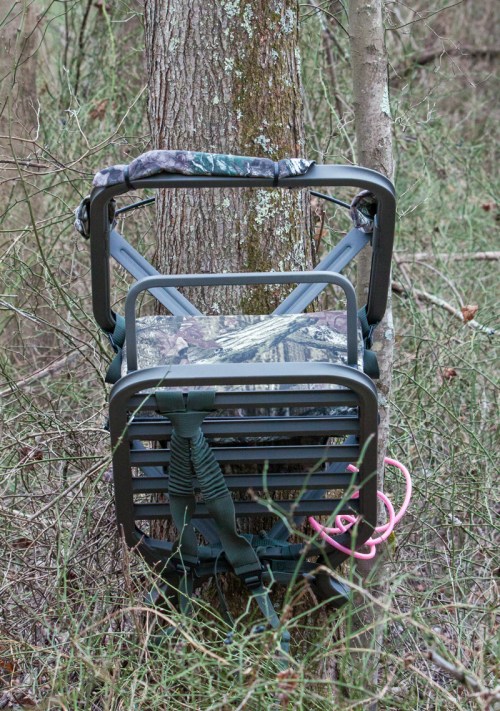
Kids are warned to be good “for goodness sake,” because Santa is coming to town. Well, Santa has come and gone, but it is prudent to remain good and cautious at Huntley Meadows Park, where I saw this camouflaged archer in a tree yesterday morning.

Each year I have seen the posted signs indicating that deer hunting will be taking place during the fall and winter. I have seen a few empty tree stands, but until yesterday, I had never seen an archer. Fortunately I was behind him when I spotted him and it is obvious from the photo that he had spotted me too and even gave me a little wave of the hand.  I passed by as quickly and quietly as I could.

Within a few minutes of spotting the hunter, I came upon two unoccupied tree stands. I guess that I am walking around in a favorite area for the deer hunters.

That  means I need to be a bit more diligent in wearing my brightly colored stocking hats and remaining alert. I better watch out.

archer

Unoccupied tree stand

Unoccupied tree stand #1


Unoccupied tree stand #2

Unoccupied tree stand #2

© Michael Q. Powell. All rights reserved.


Read Full Post »

Clouds can be a mixed blessing. Clouds can help diffuse the sunlight and eliminate harsh highlights. However, when the skies are as heavily overcast as they were for most of this past weekend, they can block so much light that details are hidden and contrast is really soft.

When I saw a bird with a large wingspan take flight in the distance, I readied myself. I wasn’t sure if it was a hawk, a vulture, or an eagle (or possibly even a heron), but I will generally try to get shots of any large bird I see in the sky. As I tracked the bird and took some shots, I still couldn’t positively identify the bird, but my hopes rose in anticipation that it might be a Bald Eagle (Haliaeetus leucocephalus).

Bald Eagles are one of the few species that I will try to photograph every single time that I manage to spot one. I did get some shots of what turned out in fact to be a Bald Eagle. They are recognizable, though the poor lighting conditions made it impossible to capture the details of its feathers. Usually I worry about blowing out the highlights of the eagle’s white head—that was not a problem this time.

I’ve had a pretty good year spotting eagles and suspect this might be the last one that I see in 2015, though I am heading out in a little while and am eternally hopeful that I will spot another one. As with many other photographic subjects, I hope in the coming year to get even better images of eagles, one of my favorite (and most challenging) subjects.

Bald Eagle

Bald Eagle

Bald Eagle

Bald Eagle

© Michael Q. Powell. All rights reserved.


Read Full Post »

It was almost dark yesterday (and getting darker) at Huntley Meadows Park when I saw the head of a beaver break the surface of the water. It’s been quite some time since I last saw a beaver, so I was thrilled, and even managed to get a few shots by cranking up the settings on my camera.

There are several beaver lodges at the park and the resident North American Beavers (Castor canadensis) have been really busy the last few months getting ready for winter. Every time that I visit the park, I see that that more mud has been applied to the lodges and the brush pile adjacent to the lodges, which server as a larder during the winter, keep getting bigger.

Despite all of this activity, the beavers have remained remarkably elusive and I have not spotted them a single time in recent months during my early morning visits to the park. Yesterday I went to the park late in the day and was able to finally see one.

My DSLR is a little long in the tooth and its max ISO setting is 3200. I had never set it that high, because of fears of unacceptable grain in the images, but boldly set it there yesterday. I was shooting in aperture priority at f/7.1 (wide open for my telephoto lens when fully extended is f/6.3) and I was shocked to see that my shutter speeds for my shots were either 1/4 or 1/8 of a second. Fortunately my lens has image stabilization, but it’s actually a little surprising that my images were not completely blurry when shooting at 600mm with a 1/8 second shutter speed.

This shooting situation definitely pushed the limits of my camera, but I am happy that I was able to get some recognizable images of a beaver swimming at dusk. As we move deeper into the winter, I will be looking to capture some more shots of our resident beavers, hopefully in better light.

North American Beaver

North American Beaver

North American Beaver

© Michael Q. Powell. All rights reserved.


Read Full Post »

It has been cloudy and rainy almost all of today and I feel a need for some bright colors. Here’s a shot from last December of a male Northern Cardinal (Cardinalis cardinalis) decked out in Christmas red.

Merry Christmas to all and to all a good night.

Northern Cardinal

© Michael Q. Powell. All rights reserved.

Read Full Post »

As many of you know, I recently entered some photos in a local photo competition and was fortunate to be awarded second place for one of them. I was a little surprised by the one that was selected, because, quite frankly, it was not my favorite one of the group.

The more that I though about it, the more I realized how difficult it must be to be a judge, especially in an area like photography in which there is both a technical and an artistic component.

Why do we like what we like?

I’ve never used a poll in a posting before, but thought that in this case it might be interesting to learn which one of my four entries is your favorite. I am not really asking you to judge which one is “best,” but am looking more for a sense of which one you like most. You can use whatever criteria you like and I would be thrilled if you gave a few words about your choice.

As you can see, I chose a diverse set of subjects to appeal to a variety of tastes. There are two birds—a Bald Eagle (Haliaeetus leucocephalus) and an Eastern Bluebird (Sialia sialis); one insect—a Blue-faced Meadowhawk dragonfly (Sympetrum ambiguum); and one mammal—a Red Fox (Vulpes vulpes).

If I have set this up correctly, you can click on any image and scroll through each of them in full size. After viewing them all, select your favorite and register your vote. As I mentioned earlier, I’d be really happy if you left a few words about your choice. (I think the poll might let you vote multiple times if you have trouble choosing, but am not 100 percent certain, given that I am not familiar with the polling component.) NOTE: If you open the posting in Reader, you may need to click on the Title to get to the actual posting and to the poll.

Thanks. Merry Christmas in advance for those celebrating Christmas and best wishes as we move toward the start of a new year.

© Michael Q. Powell. All rights reserved.

Read Full Post »

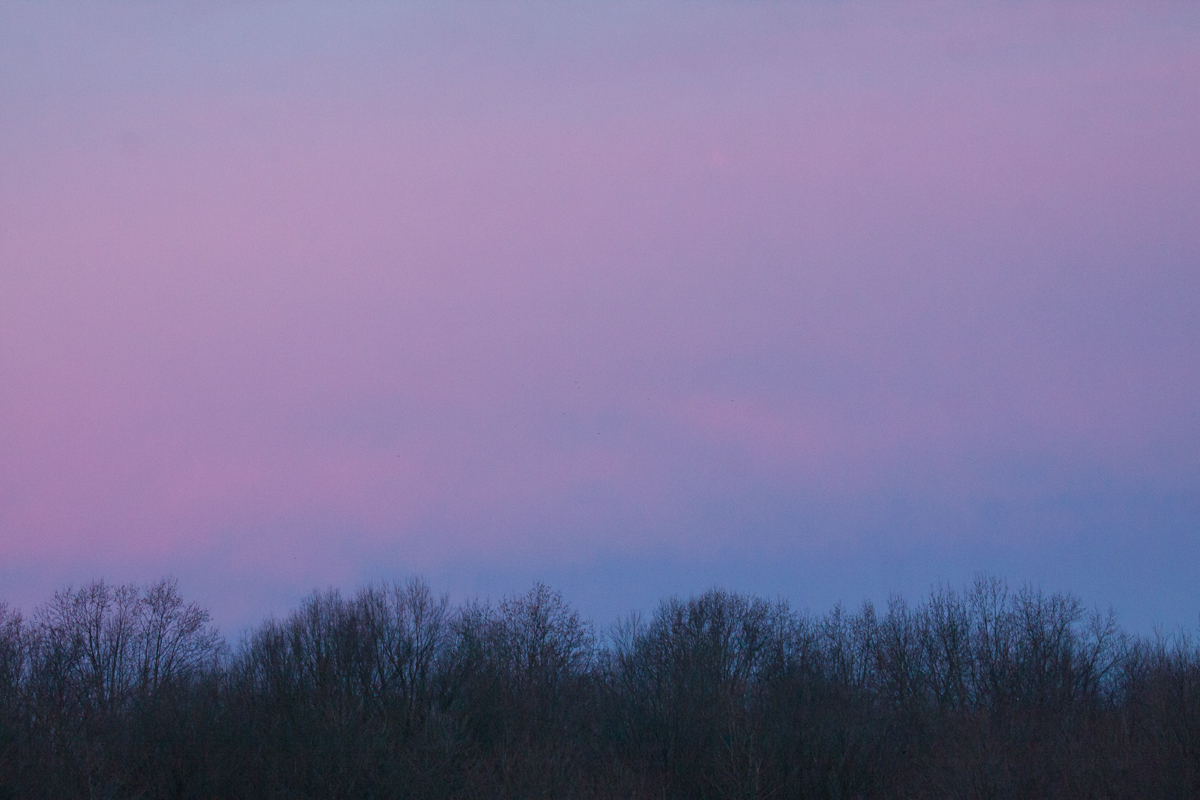
For a few magical moments, the early morning sky was awash with delicate shades of pink and blue. I hurriedly tried to capture that ephemeral beauty. Then suddenly the color was gone.

Yet somehow the magic remained. There is something really special about taking photos just after dawn—the colors are rich and saturated and the water is often incredibly still.

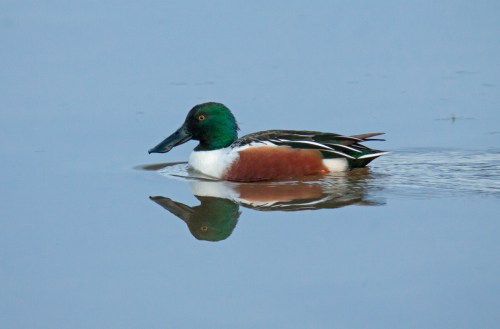
I captured this tranquil moment with a male Northern Shoveler (Anas clypeata) early on Monday at Huntley Meadows Park. at about 7:30, not long after the color had faded away.

I love the stillness of the early morning.

magic1_blog

magic2_blog

Northern Shoveler

© Michael Q. Powell. All rights reserved.

Read Full Post »

As I was trekking about at Huntley Meadows Park on Saturday, I was thrilled to spot this Cedar Waxwing (Bombycilla cedrorum), a species that don’t see very often at the park. Normally when I do see one, it is buried in the branches or is far away, but this bird posed for a moment on a branch and I was able to get an unobstructed shot of it. The Cedar Waxwing was in the shade, but its silhouette is unmistakable and I could identify it immediately.

Cedar Waxwing

© Michael Q. Powell. All rights reserved.

Read Full Post »

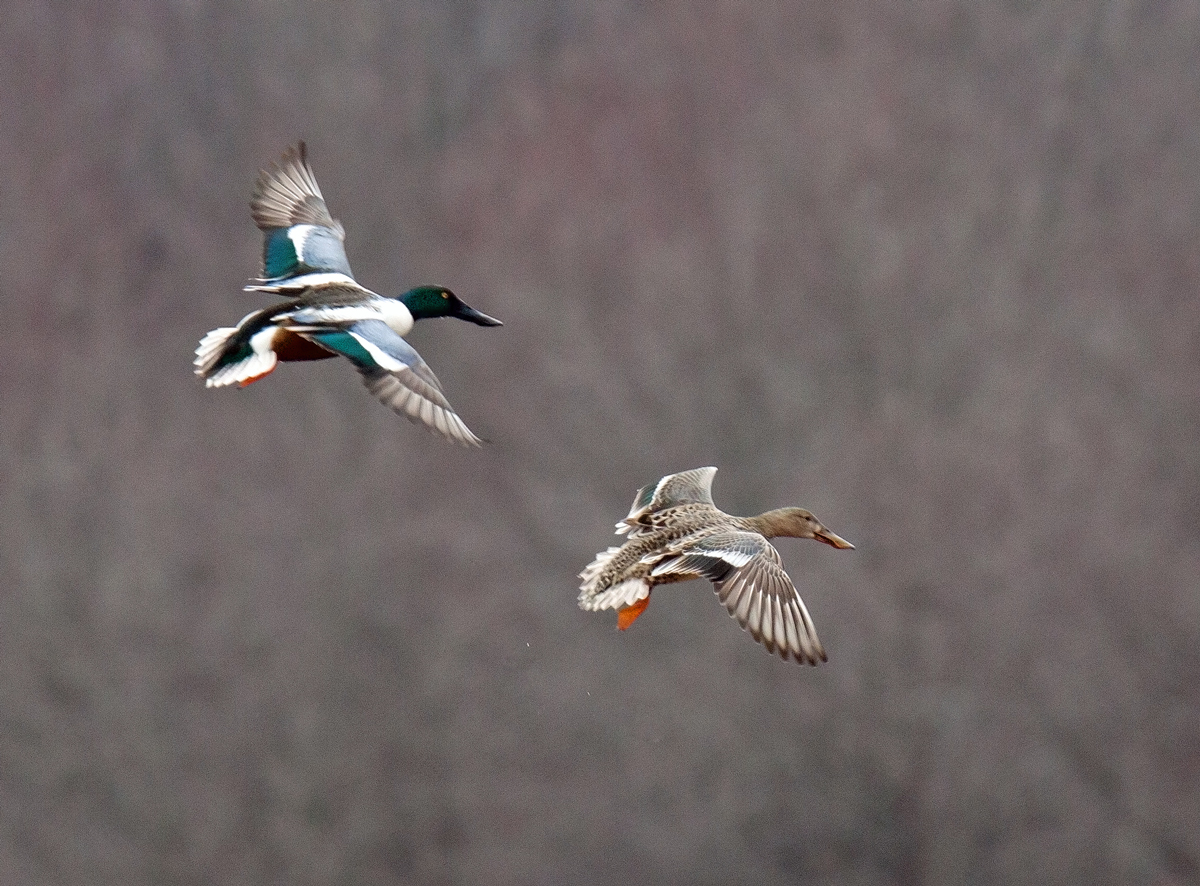
After a week and a half overseas in an urban environment, it was nice Friday to get back to the wildlife of Huntley Meadows Park, where I saw this Northern Shoveler couple preparing to make a landing.

I accidentally spooked the Northern Shovelers (Anas clypeata) when I was approaching the area in which they were foraging for food. I first caught sight of them when they took to the air. Although they flew only a short distance away, I was able to react quickly enough to track them and get a few in-flight shots that show their beautiful coloration.

Northern Shoveler

Northern Shoveler

© Michael Q. Powell. All rights reserved.


Read Full Post »

Woodpeckers are so energetic that it is rare for me to spot one that is not in constant motion. Recently, however, I was fortunate to spot a Red-headed Woodpecker (Melanerpes erythrocephalus) that seemed to be taking a break from its normal activities.

The woodpecker was relaxing on an exposed tree in the sunlight on a beautiful late autumn day. The red color of its head was even more spectacular than usual. Amazingly the woodpecker did not fly away immediately when I began to take some photos and actually changed its position a few times, almost like it was posing for me.

I hope that I have not oversaturated my readers with woodpecker shots, but I just love the attitude and look of these beautiful birds, especially the spectacular Red-headed Woodpecker.

Red-headed Woodpeckers

Red-headed Woodpecker

© Michael Q. Powell. All rights reserved.

Read Full Post »

Several years ago when I first started taking photos of birds, I remember how excited I was when I photographed a woodpecker that looked like this one. It had red on its head, so surely, I thought, it was a Red-headed Woodpecker.  Oh, how naive I was back then about the complexities of identifying birds.

Sometimes with age comes a bit of wisdom. I am now pretty confident in identifying this bird as a Red-bellied Woodpecker (Melanerpes carolinus), though I must confess that I have never seen a single spot of red on the belly of a Red-bellied Woodpecker.

Like the Red-headed Woodpecker that I featured yesterday, the Red-bellied Woodpecker gathers and stores acorns for later use. As one of my readers pointed out in a comment on a previous posting, it is a mystery  how the woodpecker remembers where it has stored the acorns and how it keeps other creatures from stealing its ‘treasures.”

Red-bellied Woodpecker

redbelly1_7Dec_blog

© Michael Q. Powell. All rights reserved.

Read Full Post »

As winter approaches, squirrels are not the only creatures gathering and storing acorns. Red-headed woodpeckers (Melanerpes erythrocephalus) also cache acorns in crevices of trees for consumption at a later point in time. Recently these beautiful birds seemed really busy and I was happy to capture some photos of one of them in action.

Red-headed Woodpecker

Red-headed Woodpecker

© Michael Q. Powell. All rights reserved.
 

Read Full Post »

When you don’t have a bird in the hand, sometimes you just have to make do with a bird in the bush.

Despite their bright color, male Northern Cardinals (Cardinalis cardinalis) are surprisingly hard to photograph. They like to dive into the deepest part of the bushes and forage there most of the time. Sometimes it sounds like they are taunting me.

This cardinal showed his face in the for a moment and I was able to get a mostly unobstructed shot of this beautiful bird, whose bright red color always reminds me of Christmas.

Northern Cardinal

© Michael Q. Powell. All rights reserved.
Read Full Post »

“You don’t look at all like your profile photo,” said one flamboyant duck to the other during the awkward first moments of a meet-up arranged through the internet dating site quack.com. Duck dating has moved into the 21st century.

For the record, the duck on the left is a male Green-winged Teal (Anas carolinensis) and the one on the right a male Northern Shoveler (Anas clypeata).

I welcome other suggestions for a caption for this photo as well as general wise quacks.

duck dating

© Michael Q. Powell. All rights reserved.


Read Full Post »

As I was wandering about yesterday in a remote area of my favorite park, the sharp eyes of a younger fellow photographer permitted him to spot a Bald Eagle (Haliaeetus leucocephalus) in a distant tree. The eagle’s even keener vision meant that it spotted us too and shortly thereafter departed.

In a shot of the eagle flying away, I noticed that the eagle seems to be carrying something. However, when I zoomed in on the next shot I took, in which I managed to cut off the eagle’s wings, it looks like the eagle’s left foot is dark and withered and is very different from the yellow right foot.

Am I seeing things? Is this an injury or merely an optical illusion?

Bald Eagle

Bald Eagle

© Michael Q. Powell. All rights reserved.

Read Full Post »

As we move toward winter, the natural landscape seems increasingly drab. Flashes of bright colors are particularly welcome now, like this American Goldfinch (Carduelis tristis) that I spotted this past weekend foraging in one of the fields at Huntley Meadows Park in Alexandria, Virginia.

American Goldfinch

© Michael Q. Powell. All rights reserved.
Read Full Post »

Its body was in the shadows, so I couldn’t see its belly, but I am pretty confident that this beautiful bird that I saw on Friday at Huntley Meadows Park is a Yellow-bellied Sapsucker (Sphyrapicus varius), a species of woodpecker that I rarely see.

Yellow-bellied Sapsucker

© Michael Q. Powell. All rights reserved.

Read Full Post »

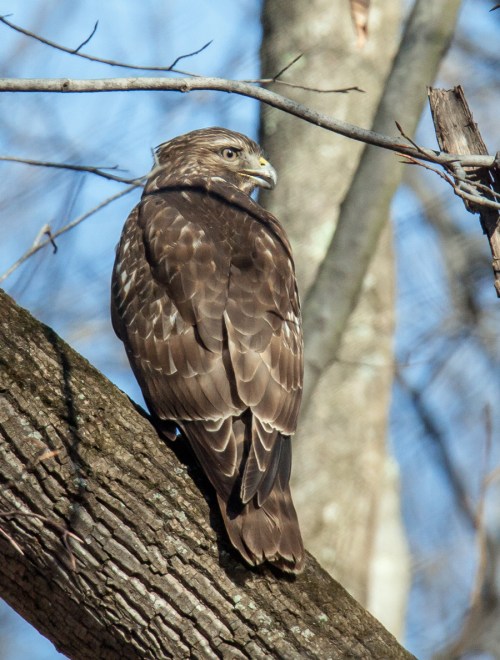
Why was the juvenile hawk perched on the ground? When I first caught sight of the flapping wings in the shadows beneath the trees, I assumed that the hawk had just captured a prey. However, there was no prey to be seen and the hawk just said there for what seemed to be a few minutes, looking from side to side.

juvenile hawk

juvenile hawk

juvenile hawk

I tried to be as stealthy as I could as I moved forward a little, but the hawk apparently sensed my presence and took to the air. I was surprised that it simply flew to a nearby tree and perched there. The light was a little better and I could see the hawk more clearly than when it was on the ground. There were, however, a lot of little branches, so it was not possible to get a completely unobstructed shot.

juvenile hawk

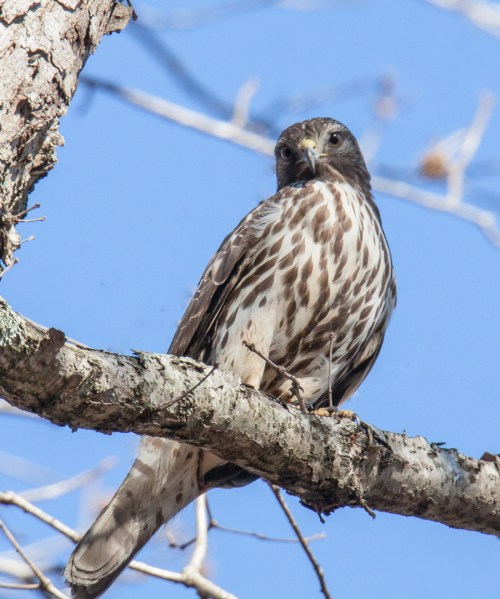
After a little while, the hawk flew to a more distant tree and I lost sight of it. I moved slowly in the direction that it had flown, scanning the trees. I finally spotted the hawk when I was almost directly below it. I got this shot of the hawk staring down at me before it flew off one final time. I guess the hawk decided that the portrait session was over.

juvenile hawk

I think that this might be a juvenile Red-shouldered Hawk (Buteo lineatus), but I am not at all certain about my identification. Adult hawks challenge my identification skills and juveniles frustrate me even more.

© Michael Q. Powell. All rights reserved.


Read Full Post »

How do you capture a sense of motion in an image? One of my favorite methods, panning, involves tracking a moving subject with the camera set at a slow shutter speed. The results can be a bit unpredictable, but are usually fun, like these images of a Canada Goose (Branta canadensis) coming in for a landing this past weekend.

In this case, the shutter speed ended up being 1/60 of a second. I was shooting in aperture priority, but knew that the shutter speed would be slow, because of the limited light early in the morning. With my telephoto zoom extended to about 550mm, I concentrated on trying to do a smooth pan handheld. My biggest challenge turned out to be keeping the goose centered in the frame.

None of these images are perfect, which is typical of most of my panning efforts, but there are elements of each of them that I really like. Photos like these remind me that it’s ok sometimes to have photos that are not perfectly in focus.

If you haven’t tried this technique, I highly recommend it, especially if you like “artsy” images.

Canada Goose

Canada Goose

Canada Goose

© Michael Q. Powell. All rights reserved.


Read Full Post »

I can’t help but smile every time that I see the outrageously elongated black bill of the male Northern Shoveler (Anas clypeata)—the duck looks like a cartoon character that could have been designed by Disney.

This is the time of year when migrating ducks are passing through our area and it is always exciting to check out the ponds at my favorite park to see what ducks have dropped in. I spotted the Northern Shoveler and its mate this past weekend and spent a pretty good amount of time trying to get a shot in which the duck’s long bill was not submerged in the water.

According to the Cornell Lab of Ornithology, the bill of the Northern Shoveler is about 2.5 inches (6.5 cm) long and has about 110 fine projections (called lamellae) along the edges for straining food from water.

Northern Shoveler

© Michael Q. Powell. All rights reserved.

Read Full Post »

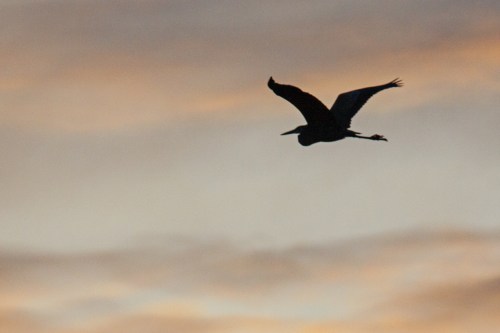
The sun was just coming up, illuminating the clouds with soft light and color, when a Great Blue Heron (Ardea herodias) flew slowly across the sky, ready to start his day at another location.

It was a magical beginning to a beautiful day.

Great Blue Heron

Great Blue Heron

Great Blue Heron

© Michael Q. Powell. All rights reserved.

Read Full Post »

Facebook reminded me earlier today that exactly two years ago I posted a photo of a Red-headed Woodpecker and as soon as I saw it, I realized that it is an almost perfect companion to the photo that I posted yesterday.  Yesterday’s image showed the flight feathers of a Red-headed Woodpecker (Melanerpes erythrocephalus) from underneath and the earlier image shows them from above.

Here is the posting in its entirety from December 1, 2013:

I suspect that I may qualify as a stalker, because I spent over thirty minutes on Friday sitting on a fallen tree, observing every movement of a juvenile Red-headed Woodpecker (Melanerpes erythrocephalus) high in the oak trees.

The small branches and the shadows made it almost impossible to get a clear shot of the little bird, but they did not keep me from trying. I was really fortunate to get this shot of the woodpecker as it took off from one of its perches with an acorn in its mouth and gave me a glimpse of its beautifully-patterned wings. As I understand it, when the Red-Headed Woodpecker becomes an adult, its wings will be pure black and white, so I am glad that I was able to get the shot of the black dots.

After I posted this photo, I noticed that there is a least one acorn jammed into a crack in the bark just above the top edge of the bird’s tail, mostly likely a snack that it has cached for future consumption.

woodpecker_flying_blog

© Michael Q. Powell. All rights reserved.

Read Full Post »

On a cold and intermittently rainy day yesterday at Huntley Meadows Park, most of the birds seemed content to hunker down in the trees. I had arrived in the park before sunrise, hoping that the weather would improve, but when the mist turned into a light rain and then grew heavier, I decided to call it quits early.

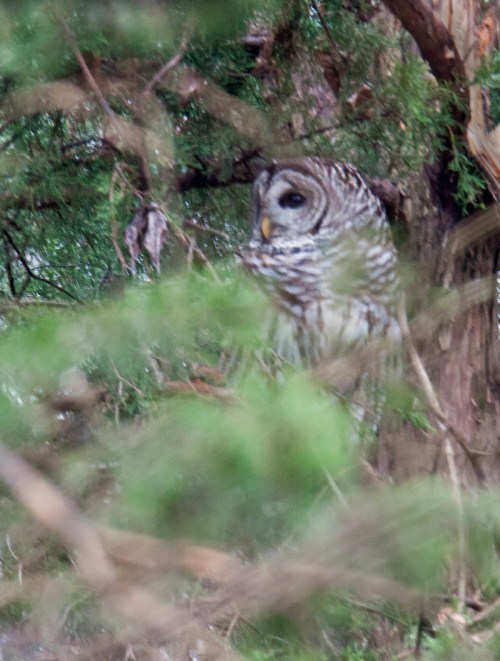
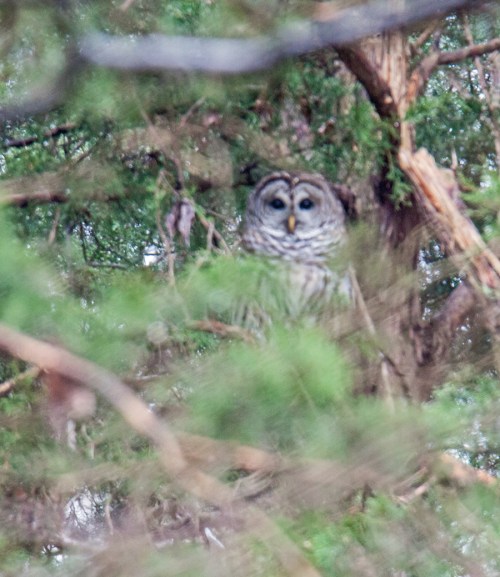
I had just opened the door of my car when a birdwatcher asked me if I was interested in seeing an owl. Of course I said yes. We walked together a short distance and the birder pointed through the trees at a cedar tree and told me that the owl was about six feet from the top of the tree. I could see the cedar tree, but could not spot the owl—all I could see was a tangle of branches.

Finally the birder decided that the best way to show me was to take a shot with my camera. When I saw the image, I had a better idea where to look. Then my battery died. The rain was coming down as I rummaged through my camera bag for a spare battery. I knew where to look, but still couldn’t really see the owl when I took my first shots, but the owl was in the frame, albeit in the corner, and I was able to make some adjustments.

Eventually I did get some shots of the Barred Owl (Strix varia). None of them are really sharp, but the soft focus, although not intentional, is in keeping with the feeling of the moment and seem altogether appropriate for a rainy day owl.

Barred Owl

Barred Owl

Barred Owl

© Michael Q. Powell. All rights reserved.

Read Full Post »

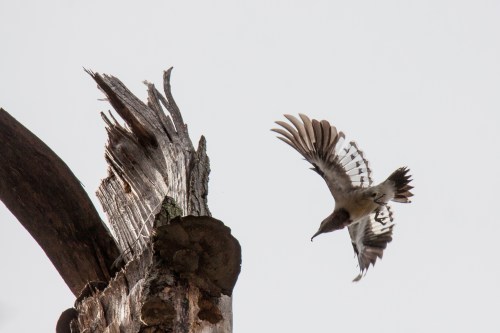
The sky was heavily overcast on Saturday as I focused on a Red-headed Woodpecker (Melanerpes erythrocephalus) high in a broken-off tree at Huntley Meadows Park. The woodpecker was mostly in the shadows and I was having real troubles getting a clear shot of it. Then I got lucky.

The woodpecker flew off and then immediately returned to the same spot and I managed to press the shutter at just the right moment to capture the bird in flight.

I love the way the jagged edges of the tree mirror the shapes of the wings of the woodpecker, giving this image an almost abstract quality. The almost monochromatic color palette and simple composition enhance that abstract feel for me.

Red=headed woodpecker

© Michael Q. Powell. All rights reserved.


Read Full Post »

Can you spot perched birds at a distance or do you need them to move in order for you to see them? Generally I need some movement for me to pick them out and it has been sometimes frustrating in the past not to be able to see birds that are almost right in front of me.

Yesterday morning, however, I managed to spot a Juvenile Bald Eagle (Haliaeetus leucocephalus) that was perched in a distant tree. Actually, I didn’t know initially that it was a Bald Eagle and I wasn’t even sure that it was a bird. I was scanning the trees on the other side of a small pond with my telephoto zoom lens extended to 600mm when I noticed a dark shape among the branches. I took a quick shot and zoomed in on the screen on my camera and was thrilled to see that it was some kind of raptor. This shot gives you an idea of what I was seeing.

Bald Eagle

It was early morning and there were a lot of clouds, but periodically the sun would break through and illuminate the scene. I made a few adjustments to my camera and, of course, that is when the eagle took off. The eagle initially flew in the direction it is facing and my shots became a hopeless mess of branches that were in focus and an eagle that was not in focus.

Suddenly the eagle began to change directions and gradually started to head back in my direction, flying a bit closer to me. I was finally able to get some in-flight shots that are pretty much in focus, although they did require some cropping.

Bald Eagle

Bald Eagle

Bald Eagle

As the eagle flew away, I was able to get this final shot. The eagle’s face is mostly hidden, but there is something that I really like about the wing position and details and the way that some of the clouds are visible in the sky.

Bald Eagle

© Michael Q. Powell. All rights reserved.
Read Full Post »

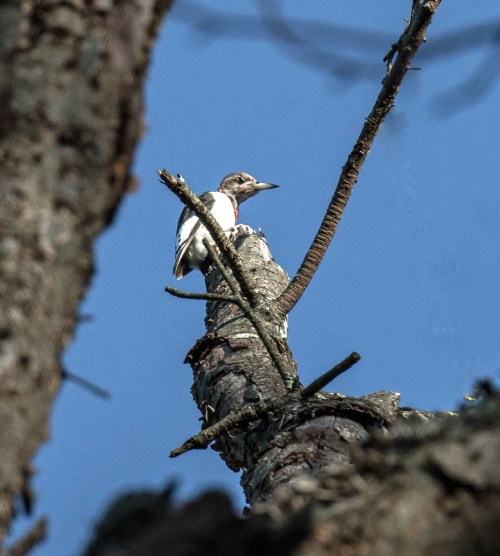
I heard the now familiar call of a Red-headed Woodpecker (Melanerpes erythrocephalus) and saw a flash of white as a bird flew to a new perch high in the trees. I maneuvered about trying to get a clear visual pathway to the bird and managed to get a few shots before the bird flew away.

A moment of confusion came upon me when I looked at the photos, because my Red-headed Woodpecker did not have a red head. Was I wrong in my initial identification? The wing pattern was certainly right for a Red-headed Woodpecker and I could see some small patched on red on the mostly brown head. Only then did I realize that this was almost certainly a juvenile Red-headed Woodpecker that had not yet transitioned to the trademark identifying feature of this species.

I’m including a couple of shots of the juvenile along with a shot of an adult that I took of an adult Red-headed Woodpecker earlier in the week, in case some readers are not familiar with the beautiful species of woodpecker.

Red-headed Woodpecker

Red-headed Woodpecker

Red-headed Woodpecker

© Michael Q. Powell. All rights reserved.
Read Full Post »

I’ve finally made my way through all the photos that I took of my recent encounter with a Red Fox (Vulpes vulpes) at Huntley Meadows Park in Alexandria, Virginia and found some more good ones to post. My dear friend and photography mentor Cindy Dyer helped me to select these and to get them ready for printing.

There is a photo contest at the park and the entry deadline is tomorrow, so we were scrambling to get a fox image ready to submit. There is a limit of four photographs per photographer and I’m pretty sure that the first one below is the fox photo that I will enter, along with photos of a bluebird, an eagle, and a dragonfly. This is the first time I’ve ever printed any of my photos bigger than snapshot size—the submission images will be 11 inches by 14 inches (29 x 36 cm) matted to 16 inches by 20 inches (41 x 51 cm)—and the first time that I have entered a contest.

If you haven’t seen my previous posting with photos of this session with the fox, check out Fox at water’s edge and Fox at water’s edge—part two.

Red Fox

Red Fox

Red Fox

Red Fox

Red Fox

Red Fox

© Michael Q. Powell. All rights reserved.


Read Full Post »

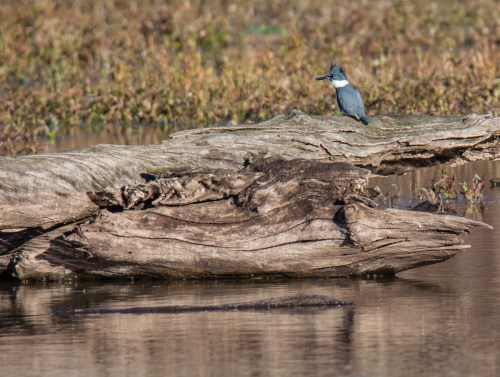
Where do birds spend their nights? I was surprised one recent early morning to see a Belted Kingfisher (Megaceryle alcyon) perched on a fallen tree not very far above water level. Why was the kingfisher there?

I am pretty sure the kingfisher wasn’t hunting—there wasn’t enough elevation for a dive. I wonder if it had spent the night there. Maybe the kingfisher has a fear of heights, which would be a terrible occupational hazard. Perhaps the kingfisher simply wanted to check out the scenery from a different perspective.

Whatever the reason for the unusual perch, it was nice to get a clear look at a Belted Kingfisher, even if it was from a long way off.

Belted Kingfisher

© Michael Q. Powell. All rights reserved.

Read Full Post »

In the quiet of the early morning I often will stand at the water’s edge, watching and waiting to see if any animals will emerge from the woods to get a drink of water. Sometimes my patience is rewarded.

On this occasion, two White-tailed Deer (Odocoileus virginianus) appeared. One of them kept its back to me most of the time and I was unable to get a clear shot of it. The other deer was a bit more cooperative and I manage to get some shots of it as it drank and then walked about a little bit before fading back into the woods.

Deer always seem so gentle and beautiful—a perfect match for the soft early morning light.

White-tailed Deer

White-tailed Deer

White-tailed Deer

© Michael Q. Powell. All rights reserved.
Read Full Post »

« Newer Posts - Older Posts »