Feeds:
Posts
Comments

Posts Tagged ‘Perithemis tenera’

Eastern Amberwing dragonflies (Perithemis tenera)  are tiny, less than an inch (20-25mm) in length, but they are distinctive and stunningly beautiful. According to information on the wonderful Dragonflies of Northern Virginia website, Eastern Amberwings are the smallest dragonflies in our area and the second smallest in the United States—only Elfin Skimmers are smaller.

I spotted this perching male this past weekend at Jackson Miles Abbott Wetland Refuge in the vegetation surrounding a small pond. I was happy to be close enough that I was able to capture so many of the details of the dragonfly, including its captivating eyes and segmented body.

Eastern Amberwing

© Michael Q. Powell. All rights reserved.

Read Full Post »

Dragonflies seem to love to perch on this piece of rusted rebar that sticks out of the water at Jackson Miles Abbott Wetland Refuge. I really like the juxtaposition of the man-made and natural elements in this shot of a male Eastern Amberwing dragonfly (Perithemis tenera) that I spotted on Monday.

You can’t see it really well in the first shot, but there is a spider on the rebar in addition to the dragonfly.  I got a better shot of the spider later in the day. I don’t know for sure that it could capture the dragonfly, but it’s a potentially dangerous situation for the dragonfly (and I have photographed several dragonflies that had fallen prey to spiders in the past).

Eastern Amberwing


spider

© Michael Q. Powell. All rights reserved.

Read Full Post »

As I was exploring Jackson Miles Abbott Wetland Refuge last weekend, I spotted some Eastern Amberwing dragonflies (Perithemis tenera) flying low above the surface of the pond. One of them, a female, kept returning to a particular spot and would dip down and touch the water to deposit eggs. A male would periodically make an appearance and I couldn’t tell for sure if he was guarding the female or was trying to put the moves on her.

This is my favorite shot of the encounter. The dragonfly on the left is a male Eastern Amberwing and the one coming in from the right is a female. I thought about cropping the image in closer, but decided to keep it like this in order to retain the ripples and the reflection, elements that I really like.


Eastern Amberwing

© Michael Q. Powell. All rights reserved

Read Full Post »

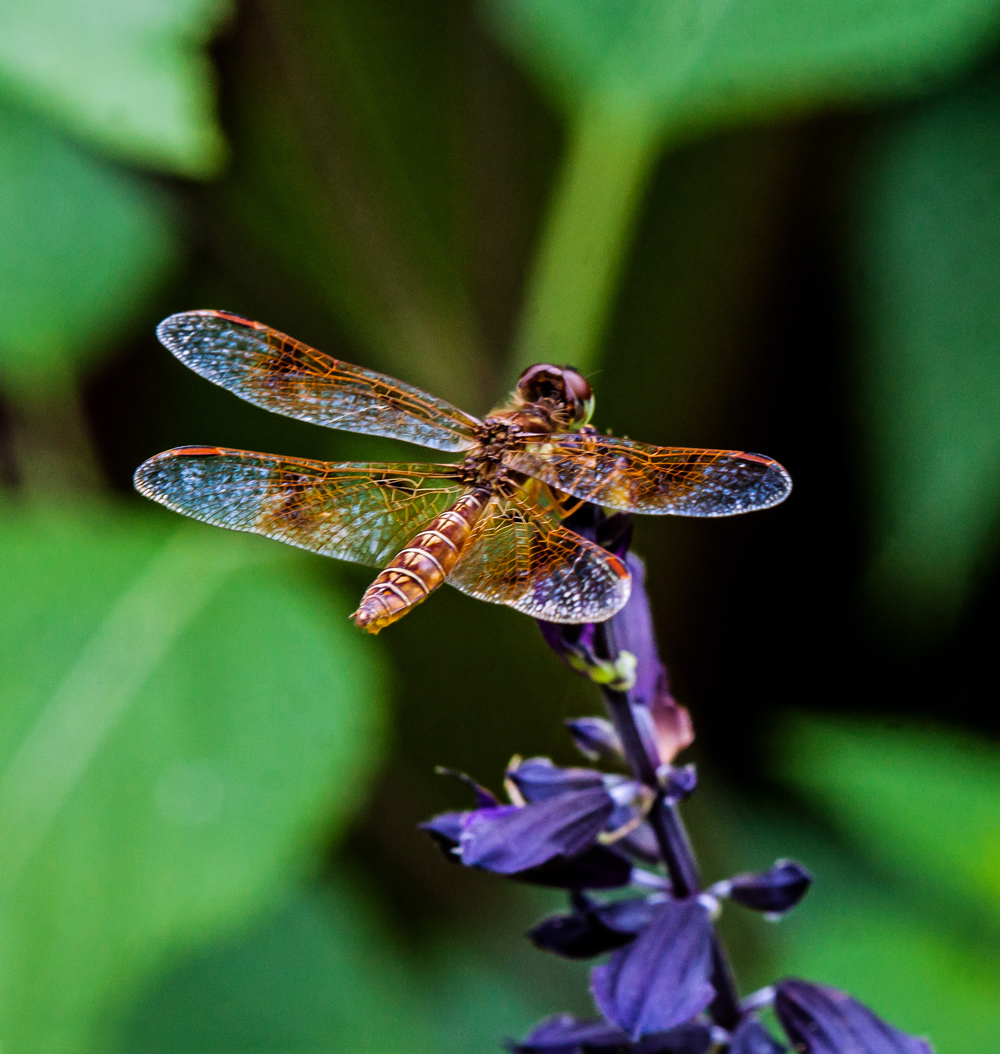
I don’t often see dragonflies in a garden, but spotted this female Eastern Amberwing dragonfly (Perithemis tenera) amidst the flowers earlier this week at Green Spring Gardens. There were lots of male Eastern Amberwings buzzing around the small ponds in another location at the gardens in hopeful expectation of finding a mate.

I have the impression that female dragonflies like to hang out in a different area from the males and then make an appearance at a time of their own choosing.

Eastern Amberwing

© Michael Q. Powell. All rights reserved.

Read Full Post »

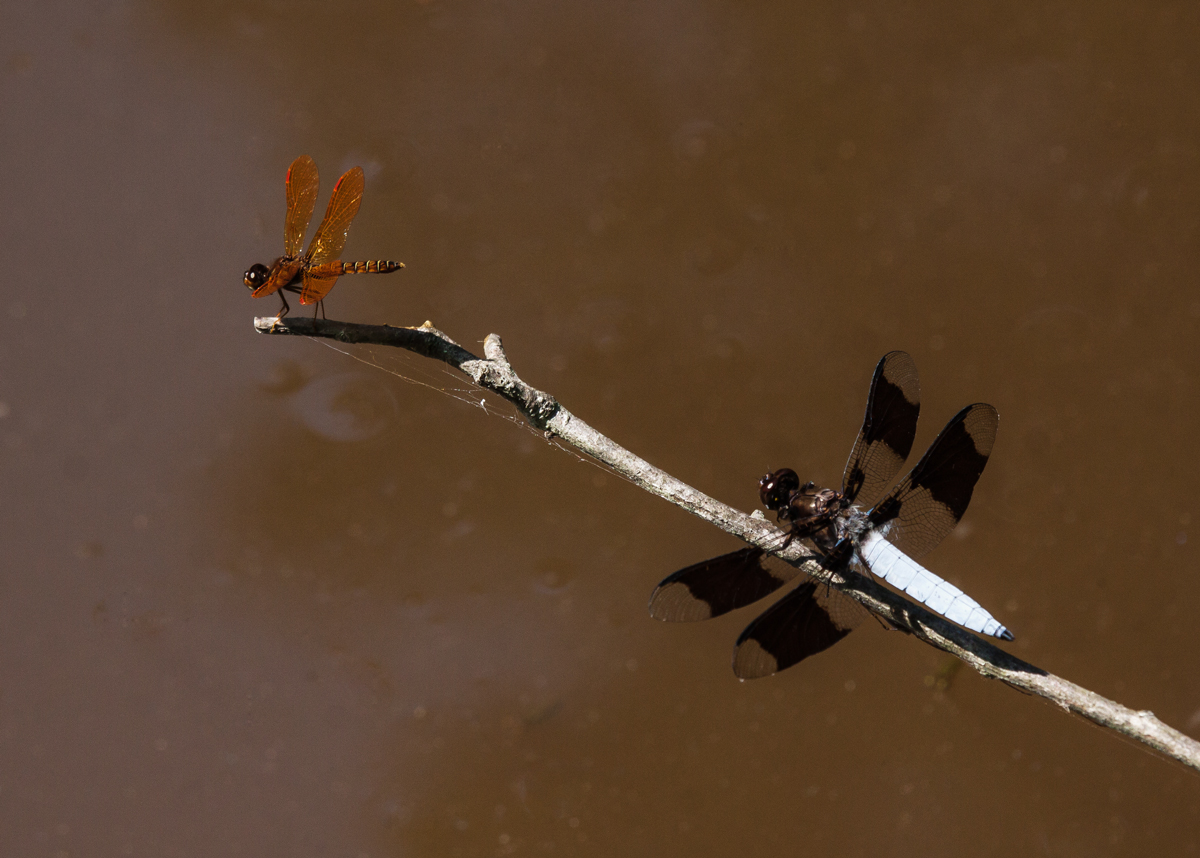
Despite their differences in size and appearance, the Eastern Amberwing (Perithemis tenera) and the Common Whitetail (Plathemis lydia) dragonflies were able to co-exist peacefully and both were able to enjoy the same perch this morning at Huntley Meadows Park.

Why is it so hard for us to do the same?

coexist1_8Jul_blog

© Michael Q. Powell. All rights reserved.

Read Full Post »

Summer is definitely here. In the Washington D.C. area where I live, summer means endless stretches of hot, humid weather. Even the insects seem to move more slowly, like this Eastern Amberwing dragonfly (Perithemis tenera) that I recently photographed as it languidly buzzed around the vegetation at Brookside Gardens in Wheaton, Maryland.

Eastern Amberwing

© Michael Q. Powell. All rights reserved.

Read Full Post »

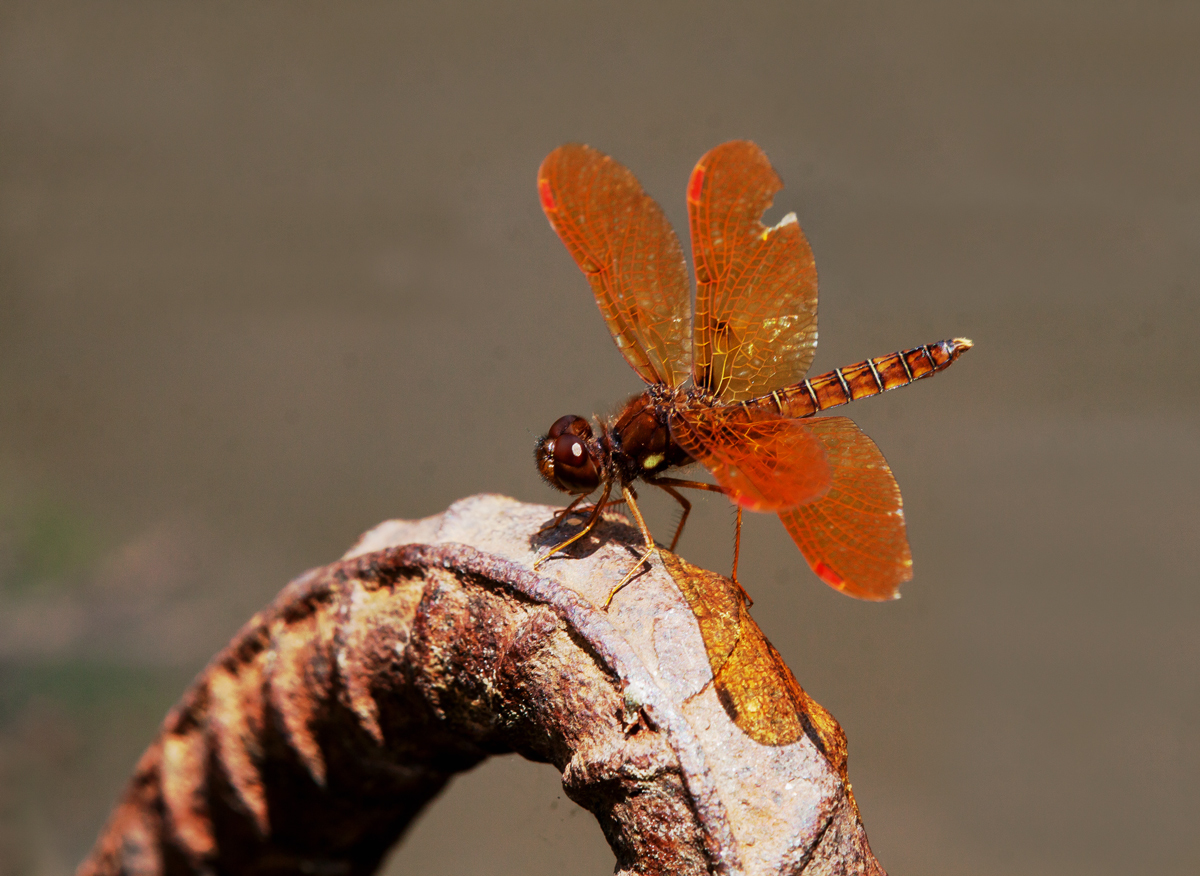
Normally I like to photograph dragonflies in their natural environment, but when an Eastern Amberwing dragonfly (Perithemis tenera) chose to perch on a curved piece of rebar recently, the juxtaposition of the natural and man-made elements seemed to create a sense of harmony rather than one of dissonance.

I took this photo at a small man-made pond at Green Spring Gardens in Alexandria, Virginia. Later in the summer I hope to see water lilies and lotus blossoms at the pond, but it is mostly devoid of vegetation right now, which many be why the dragonfly chose this unusual perch.

I have no idea why this piece of reinforcing steel is sticking out of the water, but its reddish-brown color and curved shape made it a good match for this tiny dragonfly.

Eastern Amberwing

© Michael Q. Powell. All rights reserved.

Read Full Post »

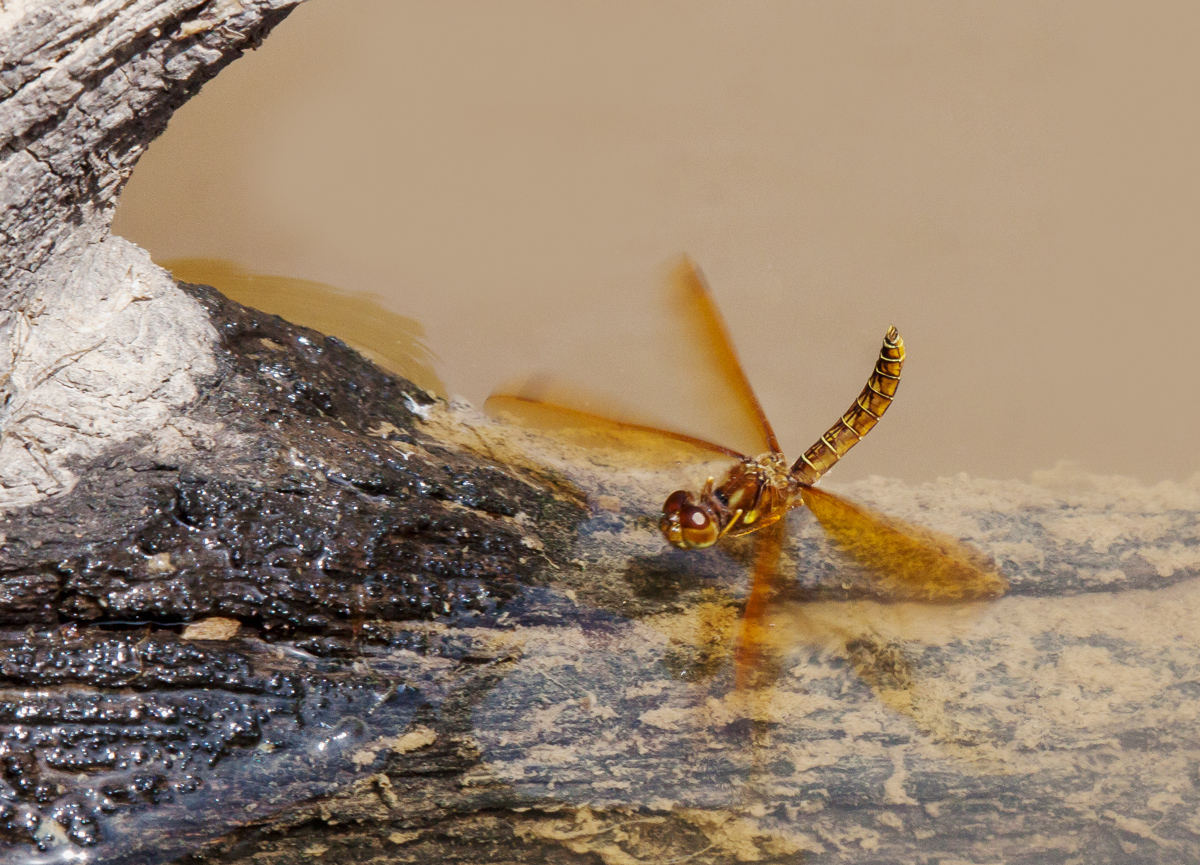
When I first spotted a tiny Eastern Amberwing dragonfly (Perithemis tenera) flying low over the water and flexing yesterday at Huntley Meadows Park, I assumed that it was a female depositing eggs into the water. As I continued to watch (and try to get shots) a couple of things became clear—it was a male, not a female, and he was pointing his abdomen up into the air, not down into the water. What was he doing?

Apparently this is courting behavior and he was trying to impress a lady that he had spotted. There is a fascinating description of this process in a blog posting by the University of Wisconsin Milwaukee Field station that I highly recommend. Here is an extract from that posting.

“A male flies low over the water, patrolling a territory about 20 feet wide of choice egg-laying turf (weedy aquatic sites) and defending it vigorously – darting out at intruders and displaying with those spectacular wings. When a female approaches, he follows and courts her, swaying back and forth, abdomen raised. If she’s agreeable, she follows him home. He hovers over his territory while she evaluates it, and if she likes it, she gets him along with it.”

As the third photo shows, his courting behavior was successful. After they mated, she deposited the eggs into the water and he returned to his perch, ready to chase off rivals and attract more female dragonflies. (In case you are not familiar with this dragonfly species, the Eastern Amberwing is one of the smallest dragonflies in the United States, with a body length of just under one inch (25 mm).

Eastern Amberwing


Eastern Amberwing

Eastern Amberwing

Eastern Amberwing

© Michael Q. Powell. All rights reserved.

Read Full Post »

One of my favorite summer dragonflies is the tiny Eastern Amberwing (Perithemis tenera). Its distinctive coloration makes it pretty easy to identify, even from a distance.

Eastern Amberwing

Michael Q. Powell. All rights reserved.

Read Full Post »

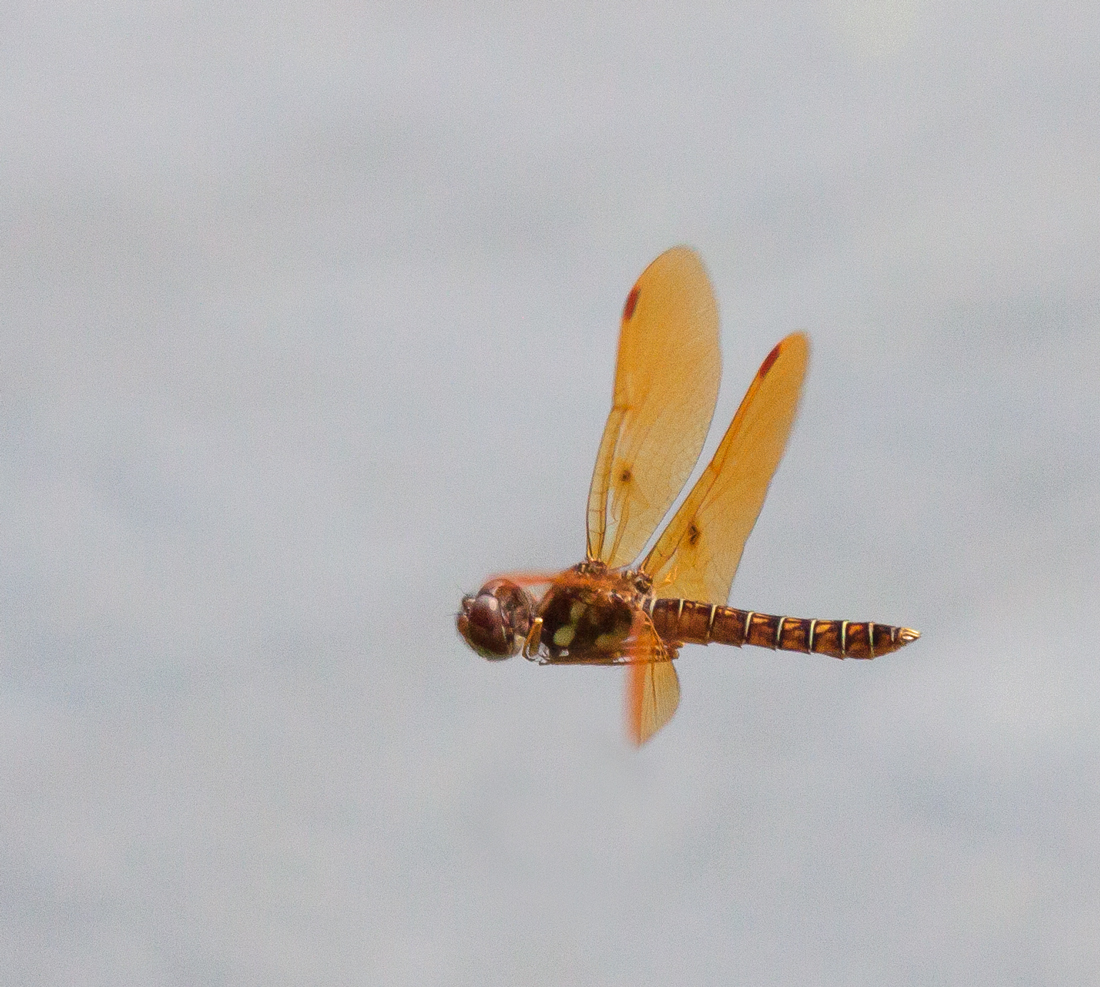
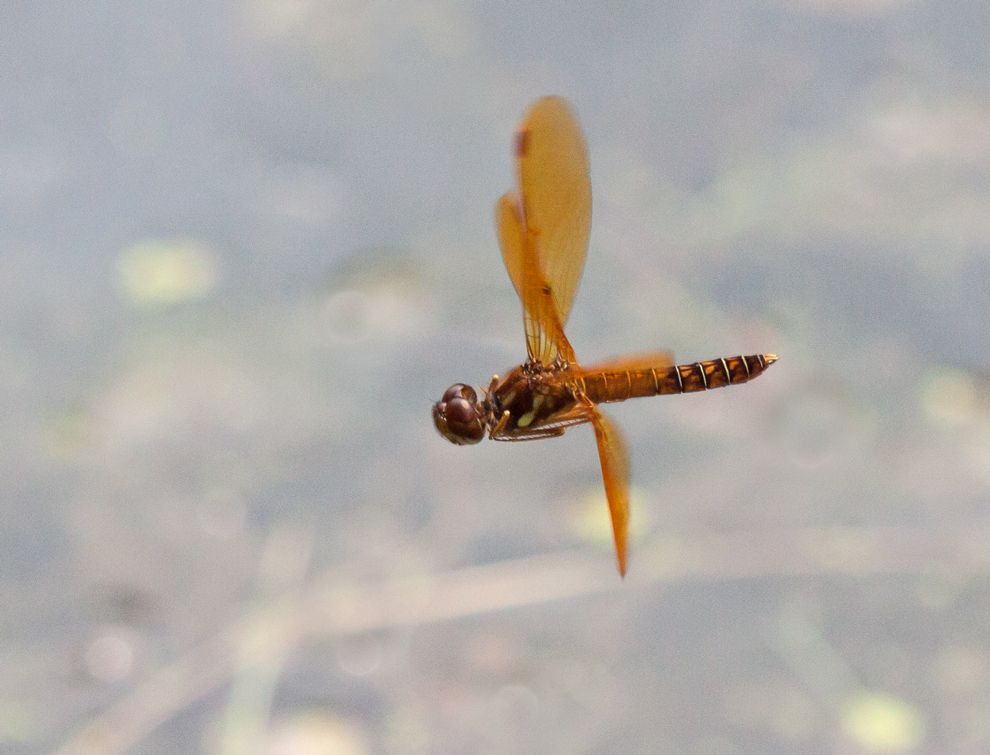
Photographing any dragonfly in flight is a real challenge, but this past weekend I spent time chasing after some of the smallest ones, the Eastern Amberwing dragonflies (Perithemis tenera). According to Bugguide, these dragonflies are typically 21-24mm in length, which is less than one inch, with a wingspan of maybe two inches or so.

amb2_fly_blog

There were lots of male Eastern Amberwings buzzing around the edges of a small pond at Green Spring Gardens, one of the local gardens that I like to visit. They were within range of the 180mm macro lens that I was using, but focusing and tracking were my biggest problems. The dragonflies did tend to hover a bit, which helped a little, but it was tough to get them in focus when focusing manually and almost impossible to do so with auto-focus.

I took a lot of shots and was happy that I managed to get some in decent focus, though I did have to crop the images. As I was preparing this posting, I noticed that I spent some time a year ago attempting to photograph the same dragonfly species. I think the results this year are marginally better, but you can make your own call by clicking on this link to the posting from July 2013.

amb4_fly_blogamb5_fly_blog amb3_fly_blog

amb1_fly_blog

© Michael Q. Powell. All rights reserved

Read Full Post »

It may sound like a new summer beverage sensation, but the title is meant to be literal. I encountered this tiny Eastern Amberwing dragonfly (Perithemis tenera) sunning itself on a rock in a small, muddy creek in the back area of my local marshland park.

It was a bit unusual for me to see a dragonfly on a rock (usually they perch on vegetation or on the ground) and I think the texture of the rock adds visual interest to the shot without being distracting the eye. I was pleased to capture so much beautiful detail of this cool little dragonfly and was particularly happy to see how well the amber wings turned out.

drag1_rocks_blog

© Michael Q. Powell. All rights reserved.

Read Full Post »

Compared to the other dragonflies that I have photographed, the Eastern Amberwing (Perithemis tenera) is tiny, typically less than an inch in size (25mm), but it has such a distinctive look that it is easy to identify.

I was able to approach this dragonfly from the rear and from above as it was perched on some vegetation overhanging a muddy creek and I don’t think it sensed my presence, even though I was pretty close to it. .

amber1_blog

© Michael Q. Powell. All rights reserved.

Read Full Post »

Only a tiny, lightweight dragonfly, like this Eastern Amberwing (Perithemis tenera), could assume this pose and hold it for an extended period of time. I have watched other dragonflies land near the end of a leaf like this, but gravity forced them to quickly give up their perch.

I was able to take a lot of photos of this dragonfly and this is one of my favorites, because its abdomen is raised, its wings are spread, and its head is cocked a little to the side—a near perfect pose.

amber_grass_blog

© Michael Q. Powell. All rights reserved

Read Full Post »

When I first spotted this dragonfly, I thought it was a wasp—it was that small. As I continued to observe it, however, I realized that it was a tiny dragonfly.

Its wings reminded me a little of a Halloween Pennant dragonfly (Celithemis eponina), one of the most exotic-looking dragonflies that I have ever photographed, but it was far too small. (Check out this previous posting for a look at the Halloween Pennant.)

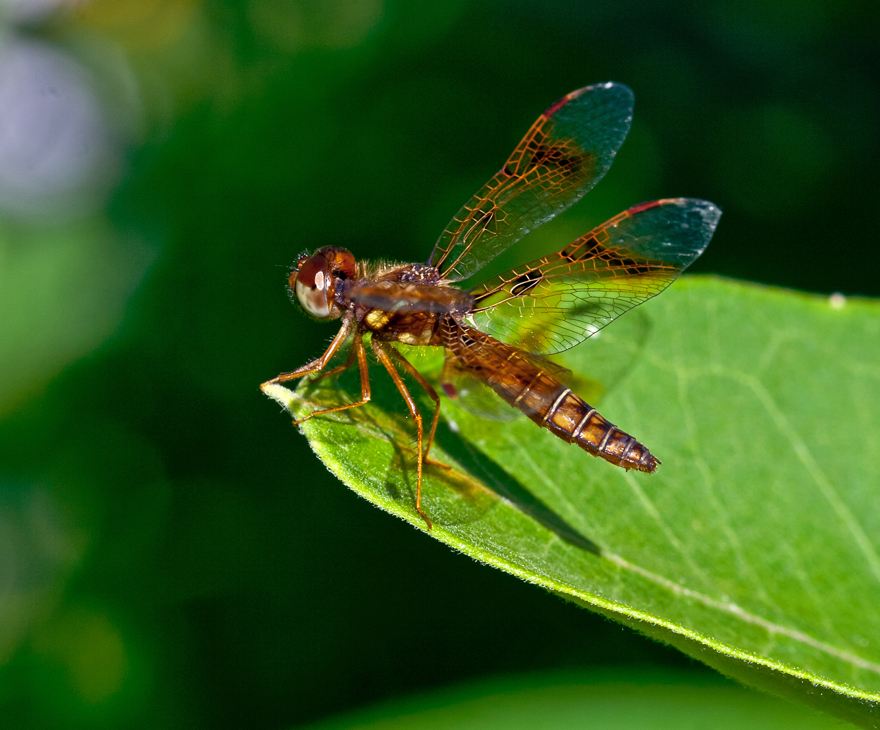
This dragonfly seemed even smaller than the Eastern Amberwing dragonfly (Perithemis tenera), the smallest dragonfly that I had encountered, and I figured it couldn’t be an Eastern Amberwing, because it did not have amber wings. I was wrong. Once again I had allowed myself to be misled by the name of a species. It turns out that this is almost certainly a female Eastern Amberwing, and females have clear wings with brown spots, not amber wings.

I continue to be amazed at the dragonfly’s diminutive size. According to the Field Station at the University of Wisconsin at Milwaukee, Eastern Amberwings are considered to be wasp mimics, because of their coloring, their rapid, erratic flight, and the way they twitch their wings and abdomens when at rest. The Latin name tenera means “tender” or “delicate,” a description that seems to fit this little dragonfly quite well. If you want to learn more about the Eastern Amberwing, you should check out the Field Station website.

Large or small, at rest or in motion, dragonflies are one of my favorite photographic subjects at this time of the year. Their beautiful colors and incredible agility never cease to amaze me.

tiny1_blog

© Michael Q. Powell. All rights reserved

Read Full Post »

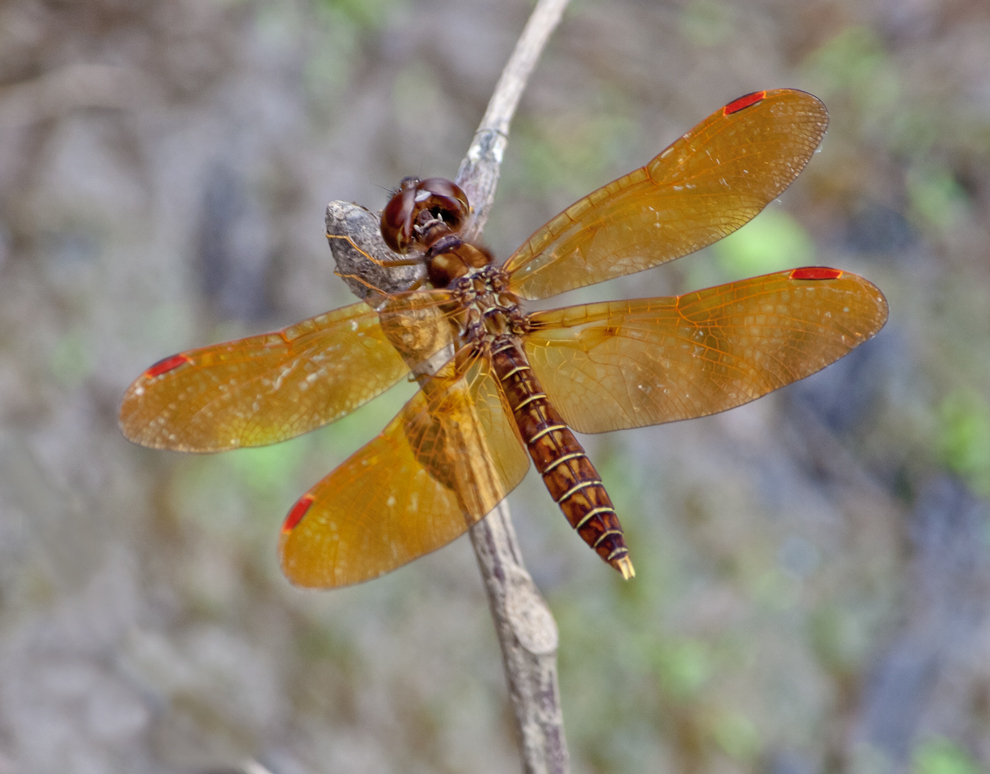
Earlier this week I posted some images of the Eastern Amberwing dragonfly (Perithemis tenera) in flight, but you can see the details of this tiny dragonfly better in this shot of one perched on a branch. It’s always a treat for me to get shots of these beautiful little dragonflies, because they are so small (less than one inch (25mm) and very active.

amberwing_branch© Michael Q. Powell. All rights reserved

Read Full Post »

It’s tough enough to try to photograph any dragonfly in flight, but this past weekend I chased after some of the smallest ones, the Eastern Amberwing dragonflies (Perithemis tenera).

According to Bugguide, these dragonflies are typically 21-24mm in length, which is less than one inch. There were lots of Eastern Amberwings buzzing around the edges of a small pond at one of the local gardens that I like to visit. They were within range of the 100mm macro lens that I was using, but focusing was my big problem. Even though they tended to hover a bit, it was tough to get them in focus when focusing manually and impossible to do so with auto-focus.

The amber wings of this dragonfly are distinctive and I was happy to get some images that showcase the wings. The shots are not quite as sharp as they might have been if I had captured the dragonflies perched, but they seemed to be in constant motion and never posed for me. Focusing manually is still an adventure for me when the subject is moving, but it is a fun challenge.

amber1_blog

amber2_blog

© Michael Q. Powell. All rights reserved

Read Full Post »

« Newer Posts