Feeds:
Posts
Comments

Posts Tagged ‘Huntley Meadows Park’

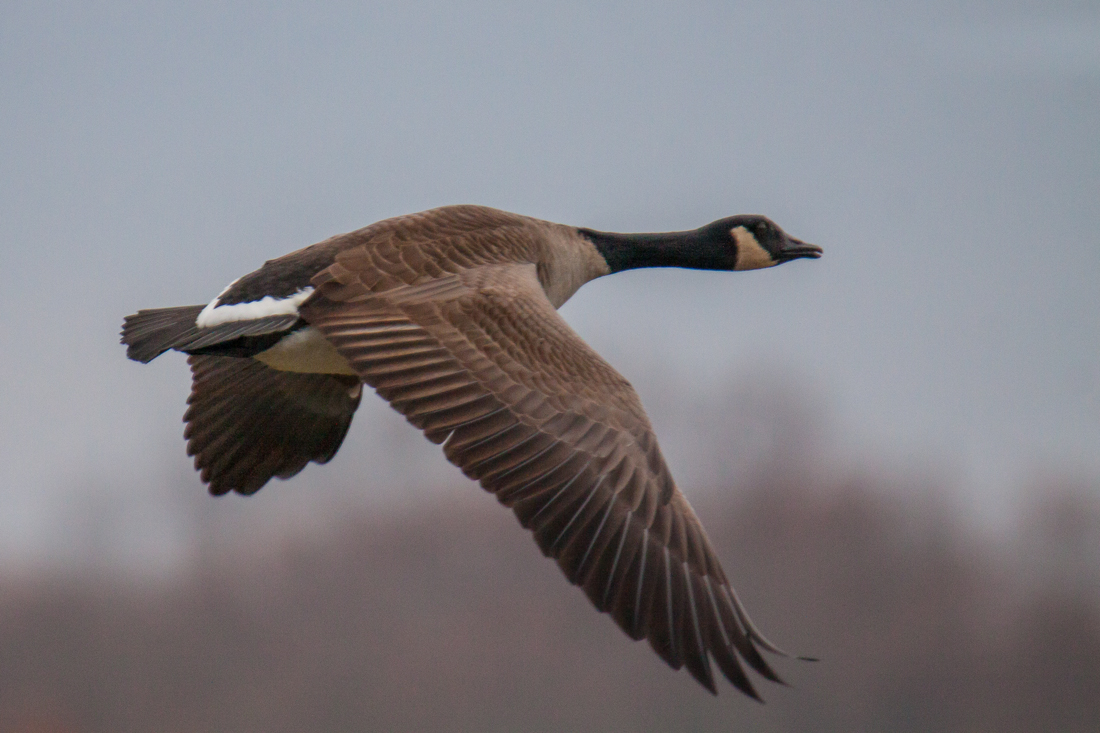
Canada Geese (Branta canadensis) have now invaded the ponds at my local marsh in full force, but the population seems mostly transient, with lots of arrivals and departures, particularly in the early morning hours.

Earlier this weekend, I continued to practice my skills in tracking birds in flight and took a couple of shots that I really like of geese flying in the early morning mist. In both cases I managed to capture a pretty good amount of detail on the goose and the background is a pleasing blur, especially in the first image, in which the hazy outlines of a distant tree line are visible. The goose in the second image was making a turn, preparing for an upcoming landing.

Canada GooseCanada Goose

© Michael Q. Powell. All rights reserved.

Read Full Post »

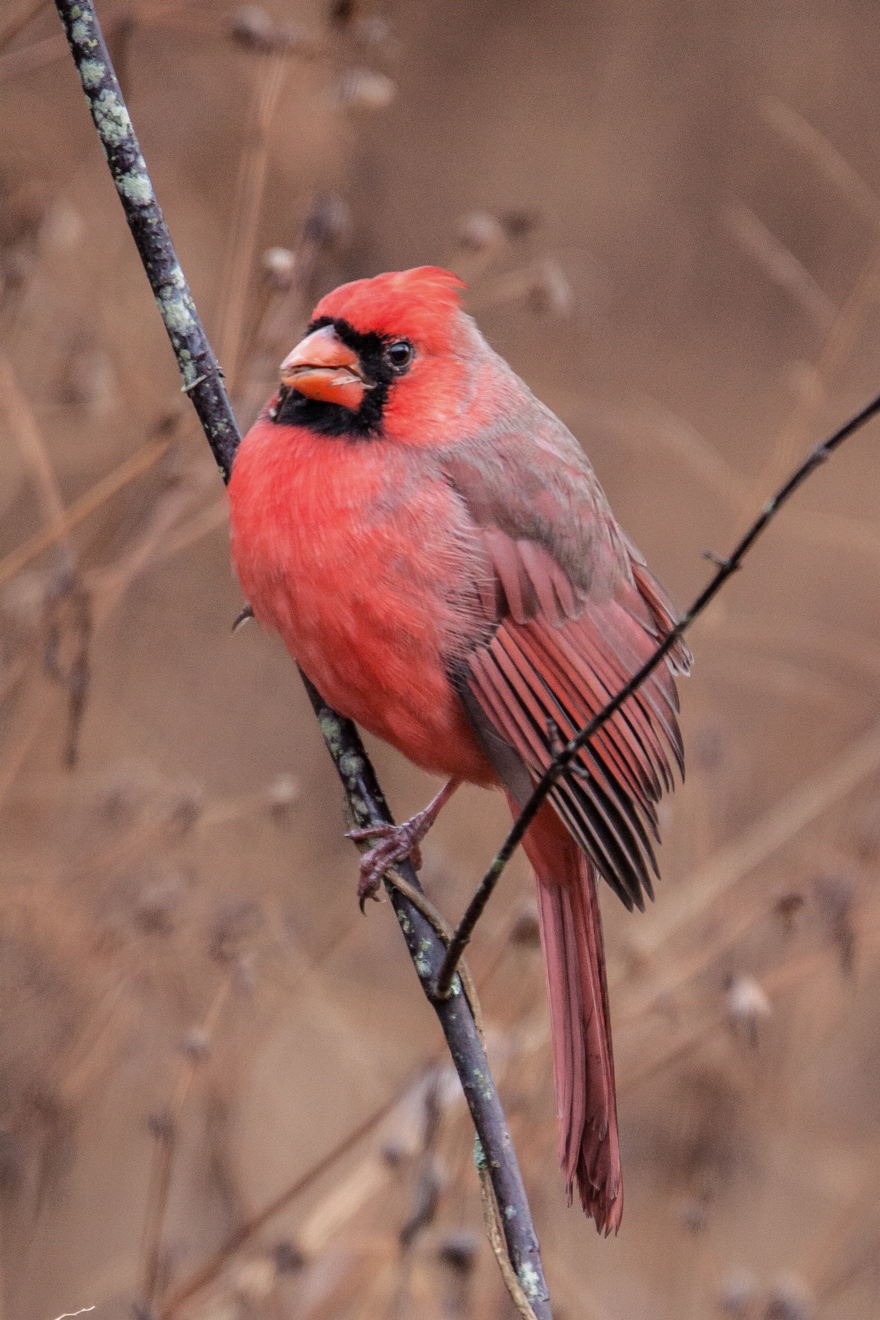
In the early morning mist yesterday at my local marshland park, the bright red color of this male Northern Cardinal (Cardinalis cardinalis) was even more distinctive than usual, shining like a beacon in the limited light.

The white-colored sky and the shadowy shapes of the trees in the distance provide a simple backdrop for this first image that gives it a lot of atmosphere. The wet, lichen-encrusted branch helps to tie the cardinal back to nature and keep this from looking too much like a studio shot, though it does look like the cardinal was posing for me.

When the cardinal moved to a different perch, the backdrop changed and the white sky was replaced by the dried-out vegetation of a field of cattails. Fortunately, the vegetation was far enough away from the subject that it softened up with the aperture wide open. In the second image, the cardinal seems to have become a little irritated with me and is scowling a bit. In both shots, the cardinal looks to have fluffed up its feathers, an indication that it was cold outside when I took these shots.

Northern CardinalNorthern Cardinal

© Michael Q. Powell. All rights reserved.

Read Full Post »

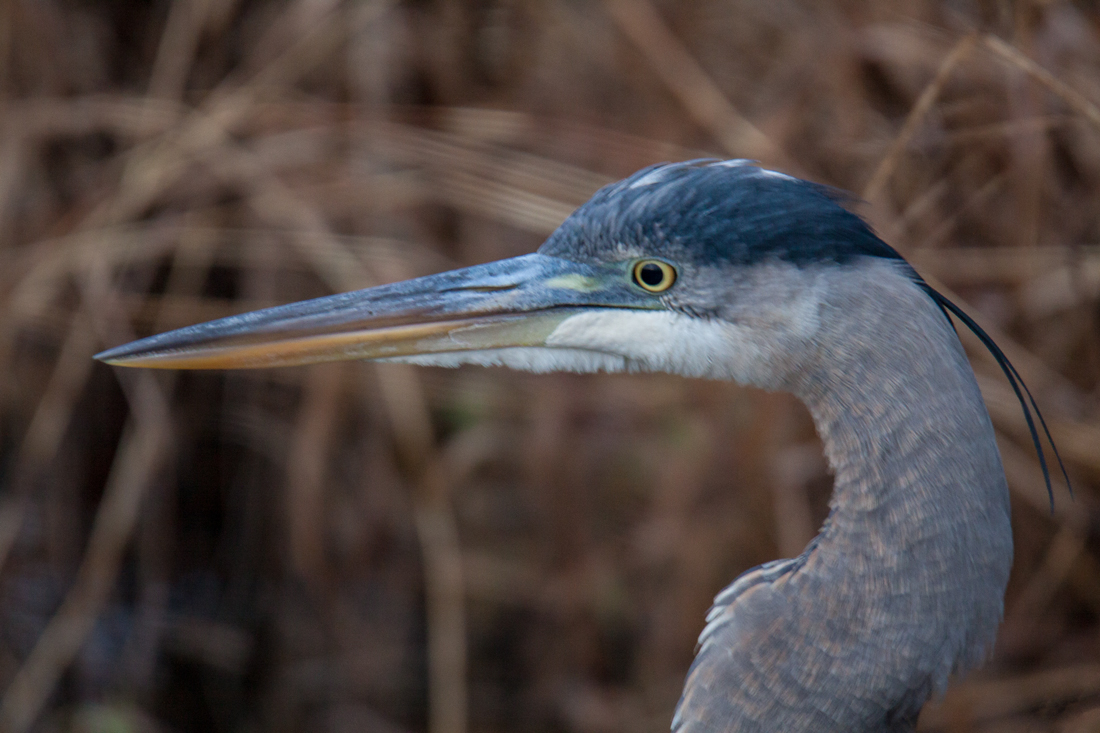
I started my Thanksgiving Day early with a big bird. No, I wasn’t preparing a turkey—I was sharing a quiet moment with this Great Blue Heron (Ardea herodias) at Huntley Meadows Park, the local marshland where I capture a lot of my images.

Happy Thanksgiving to all.

Great Blue HeronGreat Blue HeronGreat Blue Heron

© Michael Q. Powell. All rights reserved.

Read Full Post »

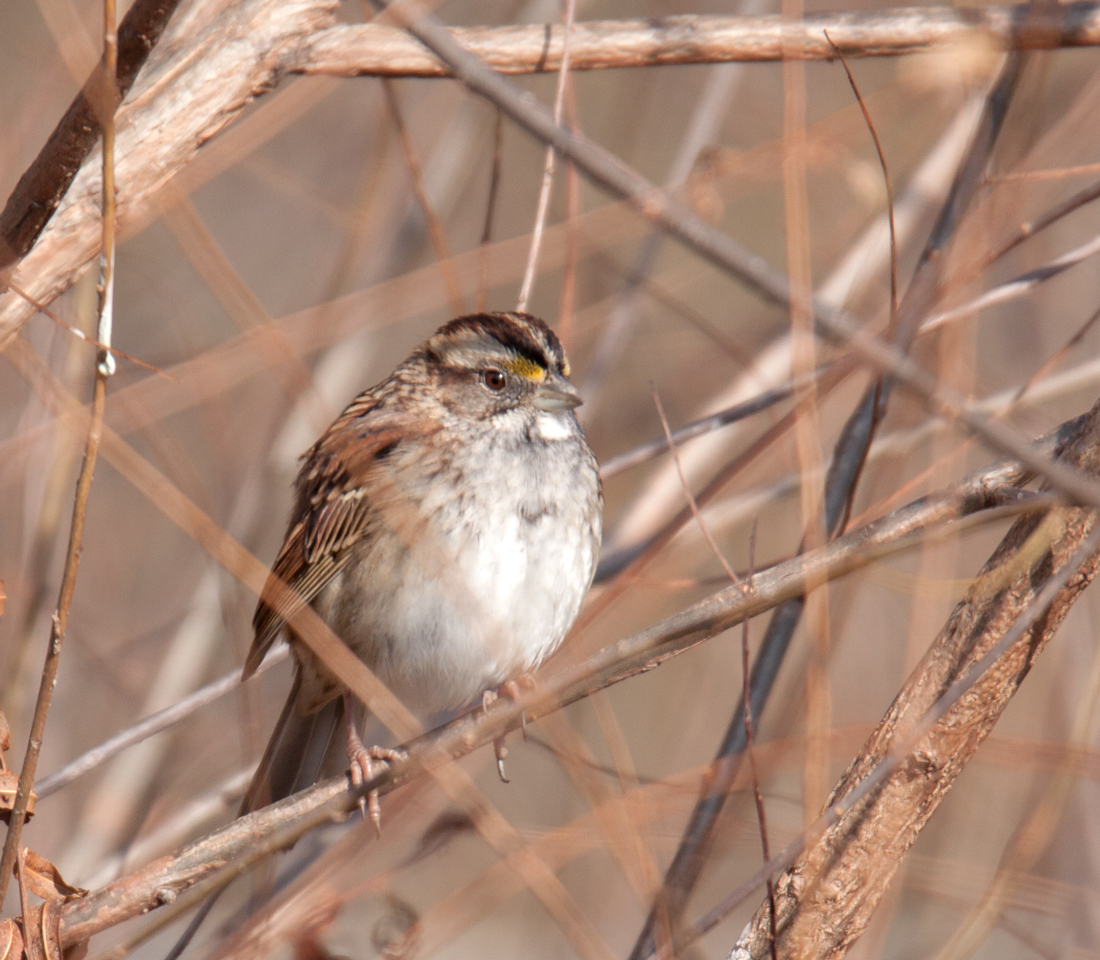
One of my goals in testing out my new Tamron 150-600mm lens was to see how well it did in capturing the little birds that hide out in the underbrush. As we move deeper into the autumn and into winter, I can always depend on hearing and sometimes spotting different kinds of sparrow poking about in the tangled plants and leaves in the marsh. These birds tend to be in constant motion, moving quickly from spot to spot after a few pecks, and this weekend I stalked a few of them to see if I could focus quickly and accurately on them.

We seem to have had a recent influx of White-throated Sparrows (Zonotrichia albicollis) and I think that all three of the images below are of members of this species. However, sparrows have often confounded me in the past, so I apologize in advance if I have misidentified them.

These sparrows seem to have individual personalities and I like the fact that they posed in different ways for me. I used to ignore sparrows and other such birds, but now go out of my way to try to photograph their beauty and individuality. I think my new lens passed the test in being able to capture portraits of these little sparrows.

White-throated SparrowWhite-throated SparrowWhite-throated Sparrow

© Michael Q. Powell. All rights reserved.

Read Full Post »

As the sun went down and a sliver of the moon appeared at Huntley Meadows Park, a Great Blue Heron (Ardea herodias) made a last attempt to catch a fish in the dwindling light.

Great Blue Heron

sunset_nov_blog

Waxing crescent moon (thanks to Walter Sanford for the identification)

Waxing crescent moon (thanks to Walter Sanford for the identification)

© Michael Q. Powell. All rights reserved.

Read Full Post »

Like my friend, Walter Sanford, I am thankful to have such a wonderful suburban oasis that serves as a refuge and an inspiration for so much of my outdoor photography. Walter has had a powerful influence on me as I have gotten more serious in my pursuit of dragonflies this past year. He has always been willing to share his time and extensive knowledge with so many of us, serving as an ambassador for Huntley Meadows Park. Thanks, Walter! Be sure to check out his blog for some amazing photos and fascinating information.

waltersanford's avatarwalter sanford's photoblog

It’s the traditional time of year when we give thanks for our many blessings. I am especially thankful for the opportunity to be a frequent and careful observer of the natural beauty of the hemi-marsh at Huntley Meadows Park, and for many good friends with whom I share the experience. And thanks to WordPress.com for the blog that enables me to share my sightings with others!

Last year I noticed a single male Autumn Meadowhawk dragonfly (Sympetrum vicinum) perching on the signage along the boardwalk, located near the observation tower. I wondered how many visitors wandered past the sign without noticing the dragonfly watching the “Wildlife Watching” sign.

On Veteran’s Day, 11 November 2014, I noticed two male Autumn Meadowhawks perching on the same sign so I stopped to take a few photos (shown above). Nearly a dozen people passed me and not one person stopped to see what…

View original post 32 more words

Read Full Post »

Some of the reviews of my new Tamron 150-600mm lens suggest that it has trouble capturing birds in flight, so I was anxious to test out its capabilities and the Canada Geese (Branta canadensis) coming and going from my local marsh served as my initial test subjects.

These five geese were part of a larger group that was departing from the marsh and I started tracking them as they flew past me. Initially thought that one of the geese has flown out of the frame in the second image, but then I looked more closely and realized that all five were still there—the formation was really tight (or at least the compression caused by the long telephoto lens made it look that way.

Sometimes in the past I have had problems in grabbing focus on moving subjects, especially when the background is cluttered and is competing for focus. I was happy to see that I was able to acquire and hold focus pretty well and the geese are separated from the trees in the background.

I am learning how to manage this longer lens and, for example, still have trouble sometimes pointing the extended lens at a subject and then finding the subject in the viewfinder—the field of view is not very wide at 600mm. I plan to check out the different focus options for my camera to see if any of them will improve my changes of getting clearer shots.

Does it show that I’m pretty excited with my new lens? I’ll be sharing more images as I continue to practice and learn with it.

Canada Geese in flight

Five guys in flight

Tight Formation

Tight Formation

© Michael Q. Powell. All rights reserved.

Read Full Post »

During this transitional time of the year there is often a thin coating of ice on the pond, especially when the temperature at night drops into the low 20’s F (-5 C).  On Friday morning, the ice was thick enough to support the weight of ducks most of the time, although the Canada Geese kept breaking through the ice when they tried to walk on it.

This female Mallard (Anas platyrhynchos) started out strutting confidently across the ice, but stopped for a moment at a place where the water had accumulated. I couldn’t tell if she was assessing the condition of the ice or was merely admiring her reflection—she is quite a beautiful duck after all and perhaps ducks have a sense of vanity.

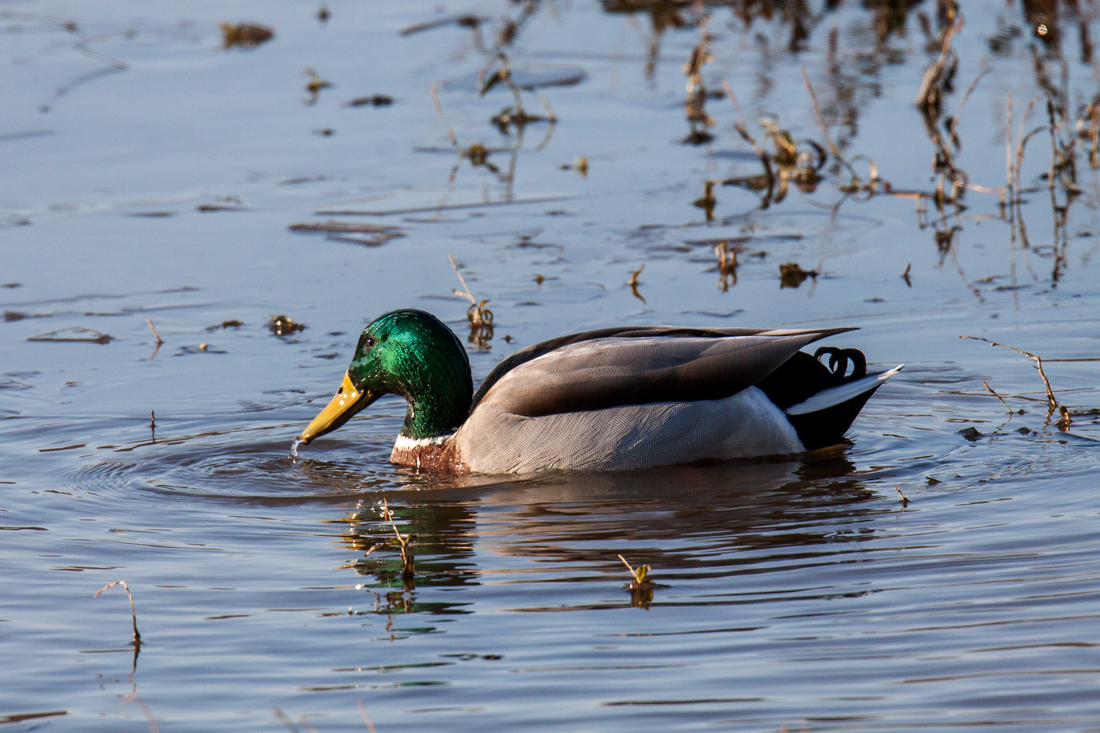
The male Mallard was more practical, remaining in the area of open water and foraging for food, content to leave the strutting and reflecting to his lady.

duck_walk_blogduck_reflect_blogmallard-male_nov_blog© Michael Q. Powell. All rights reserved.


Read Full Post »

As I wandered along the boardwalk yesterday at my local marsh, birds would periodically pop in and out of the eye-level cattails. Most of them were little sparrows that would bury themselves back down in the underbrush. At one point, though, a male Red-winged Blackbird (Agelaius phoeniceus) emerged and perched near the top of the cattails.

He was so close that I didn’t dare move from where I was standing and I tried to find a visual path through the vegetation to get a clear shot. I cropped this image slightly and made a few minor post-processing, but this is pretty much what I was seeing through the viewfinder as I tried out my new Tamron 150-600mm lens.

The photos were shot handheld at f/6.3, 1/400 sec, ISO 320, and 600mm. Recognizing that the image quality would increase a little if I closed down the aperture, backed off from the maximum focal length, and used a tripod, I am nonetheless pretty happy with the result and it’s definitely cool to more than fill the frame with a bird.

Red-winged Blackbird

Red-winged Blackbird

© Michael Q. Powell. All rights reserved.

Read Full Post »

Yesterday I spotted a male Downy Woodpecker (Picoides pubescens) on an exposed branch in a tree across a small field of cattails. In the past, I would not have even attempted to take a shot because of the distance, but I recently bought a Tamron 150-600mm zoom lens and suddenly this little bird was more or less within reach. This was my first day out with my new lens and it was fun testing out its capabilities (and I’ll do a few more postings showing what the lens was able to get in different situations).

Downy Woodpeckers seem to have an amazing amount of energy and are in almost constant motion. As I watched, the little woodpecker pecked his way to the end of the branch and then stopped. He seemed to be confused and stared straight ahead at first,  Unsatisfied, he looked down and then up. Suddenly he lifted off almost straight up and I was fortunate to capture him with his wings extended.

Who knew that Downy Woodpeckers had such an impressive wingspan?

Downy Woodpecker

Liftoff

Downy Woodpecker

Looking ahead

Downy Woodpecker

Looking down

Downy Woodpecker

Looking up

© Michael Q. Powell. All rights reserved.


Read Full Post »

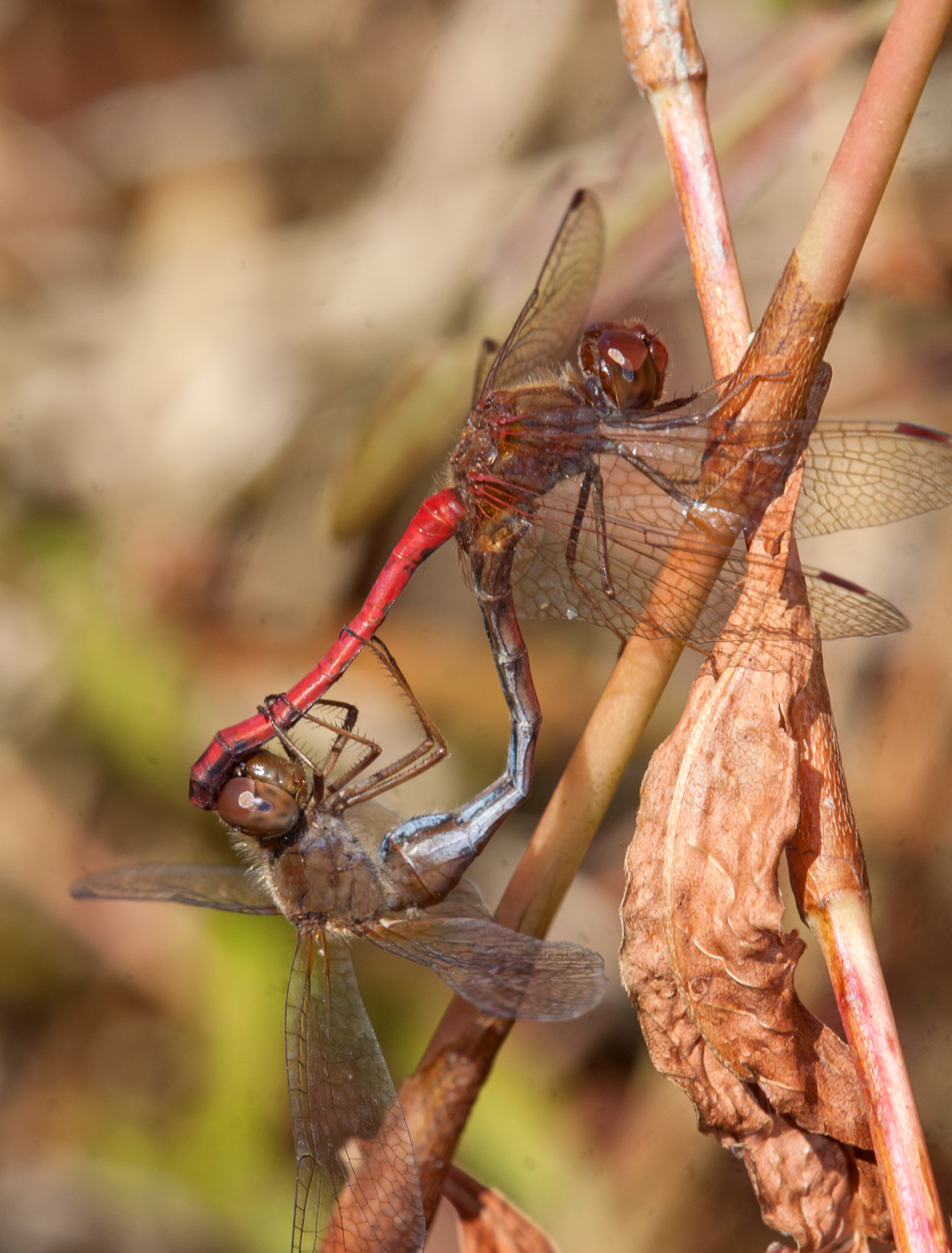
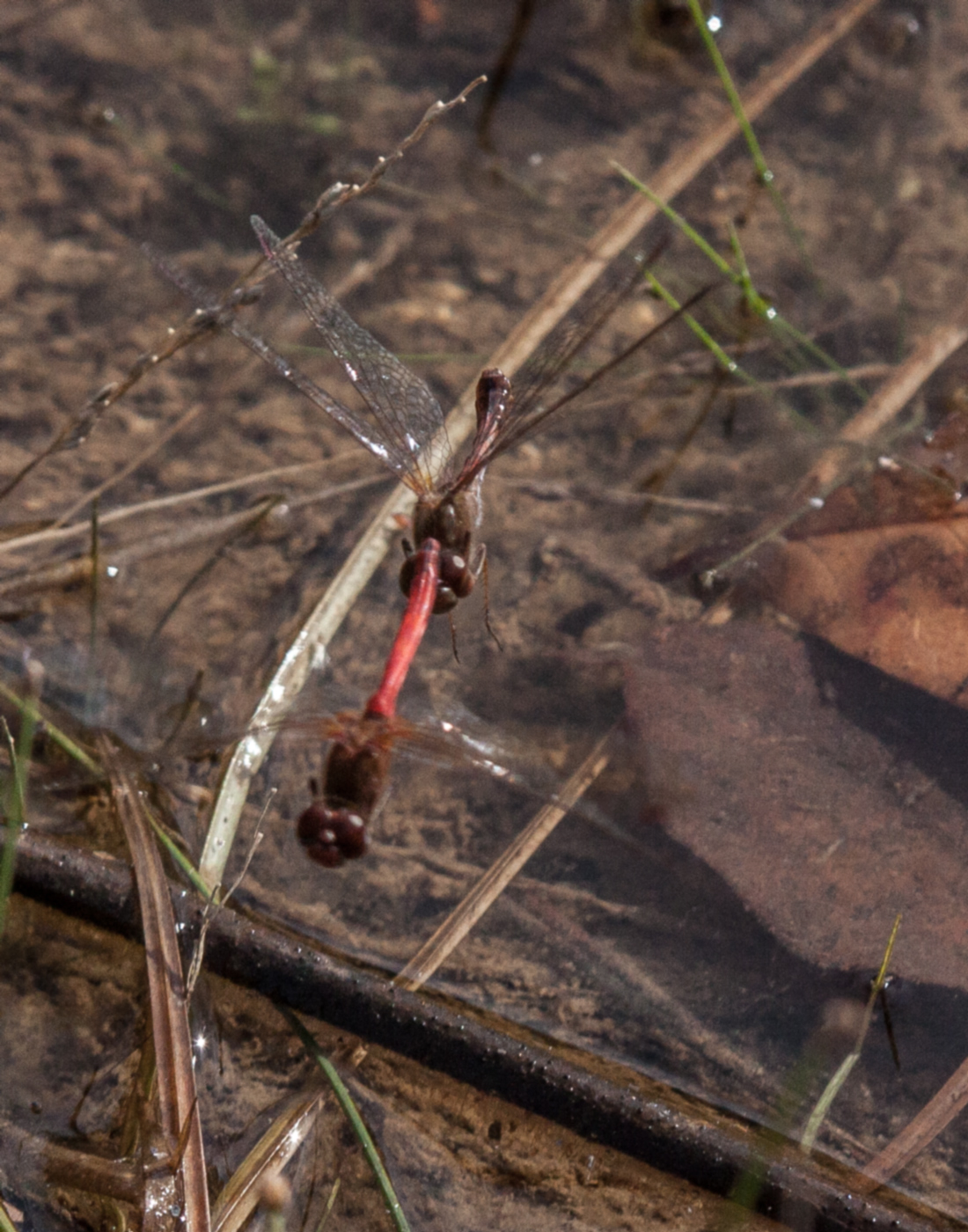
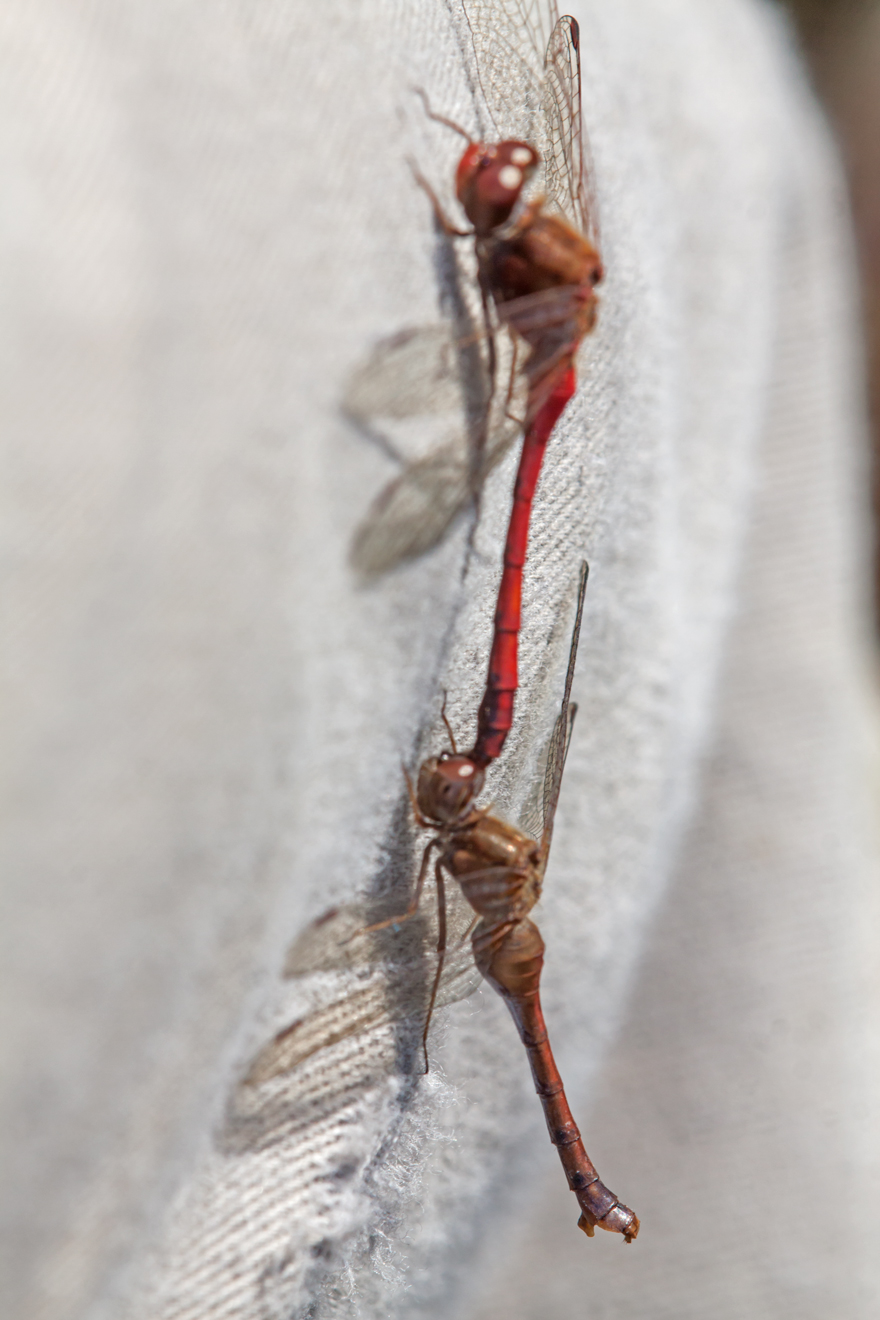
When I captured these two images of mating dragonflies on the 10th of November, I did not realize that their frantic efforts to perpetuate their species that day would mark an end to this year’s dragonfly season for me. There is a chance that some especially hardy Autumn Meadowhawks (Sympetrum vicinum) may have survived our recent spell of bitter cold, but realistically speaking, it’s time to put my macro lenses on the shelf and focus my photographic efforts and birds (and the occasional small mammal).

The Autumn Meadowhawks in the first image were a little higher off the ground that the Blue-faced Meadowhawks (Sympetrum ambiguum) in the second shot and I managed to get into a better shooting position to capture details and separate the dragonflies a bit from the background.  In case of the Blue-faced Meadowhawks, I was so thrilled to see them so late into November that I was willing to settle for a lower angle shot with a more cluttered background.

Most of the time I feature only a single species of dragonflies in a posting and it’s a little hard to compare the featured dragonflies with others. It’s a whole lot easier to see the differences between the species when you compare the two photos here.

And so this year’s dragonfly season draws to a close, as the mating couples dance their last tango of the autumn.

Autumn Meadowhawk matingBlue-faced Meadowawk mating

© Michael Q. Powell. All rights reserved.

Read Full Post »

I recently experienced a sharp increase in the number of views of my blog and went from 628 to 4723 views in a single week.  One of my posts has had an amazing 3235 views to date. What happened? Have I learned a secret to boosting my viewer statistics?

As you might have guessed from the photos that I have reprised below, the post in question is my 4 November posting Rescue of an Injured Bald Eagle. Within my WordPress world, the post was reasonably successful and sixty viewers “liked” it, but that’s not enough to account for the boost.

The most important key to getting more viewers, I think, is finding viewers from outside of WordPress. I sometimes cross-post on Facebook account and in a few Facebook groups to which I belong and will get some additional views, but generally only a few.

I’ve looked back at all that transpired and here is the “formula” that led to my “success.” First, take photos of an event that is newsworthy, has broad appeal, and preferably has police involvement. The police departments, it seems, are always looking for good news stories, and I sent copies of my photos to the officer who made the rescue. The Fairfax County Police Department posted my photos (with attribution) on their blog on 5 November and included a link to my blog posting. This got the ball rolling, it seems.

The next step is to enlist the aid of the mass media in publicizing your blog and keep them updated. I suspect that news outlets troll the police sites for stories and suddenly I started receiving requests from reporters to use the photos in the on-line versions of their television or radio stations—I don’t think the photos appeared in print. I gave approval each time that I was asked, but requested attribution by name and, if possible, a link back to my blog.

The local Fox station and the local NBC station were the most cooperative and did articles that used my photos, excerpts from the text of my blog, and included links to my blog. The Fox article brought in more than 750 viewers and the NBC article brought in over 100 viewers. WTOP, a local news radio station, was similarly cooperative. I made sure to keep these reporters in the loop when I first received information that the eagle was euthanized and all they did updates on the story.

What about the others? Several news outlets, most notably The Washington Post, used my photos with attribution, though they did not request permission or link back to my blog in any way. It was really cool to see the Post use one of my photos in articles on 5 November and 6 November, but it had no effect on my blog statistics. The local ABC station WJLA also gave attribution when they used my photo in an article. I ran across a couple of instances in which my photos were used and they were attributed to “a park visitor” or to the police department.

I came across the photos, with attribution, in several local community news sites and in a couple of other Fox site as well. The euthanization decision was carried by the Associated Press, but, alas, they did not use a photo.

I think I understand better now how I had such an increase in viewers, but I realize that the experience is not easily replicable and the results were short-lived. After the temporary spike in views, I have returned to more normal levels. I enjoyed the brief moment in the spotlight and learned a lot about how stories enter into the news cycle, but I am content to return to my smaller world of walking the trails, in search of new photographic adventure.

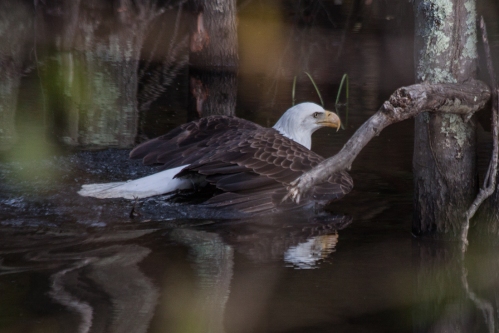
 

Bald Eagle rescue

Bald Eagle rescue

© Michael Q. Powell. All rights reserved.


Read Full Post »
I’ve been in denial about the change of seasons. Two weeks ago it was warm and I was still photographing insects.  The sub-freezing temperatures the last couple of days have been a reminder to me that it’s time to put my macro lenses on the shelf and reach for my telephoto lenses.

Walking through my local marshland park this past Monday, I couldn’t help but notice that the ducks are starting to arrive. During the fall and winter, the park hosts a variety of different ducks (along with quite a few Canada Geese). Some of them are there for a brief stay and then continue their journeys to more distant destinations. Others remain for an extended period of time.

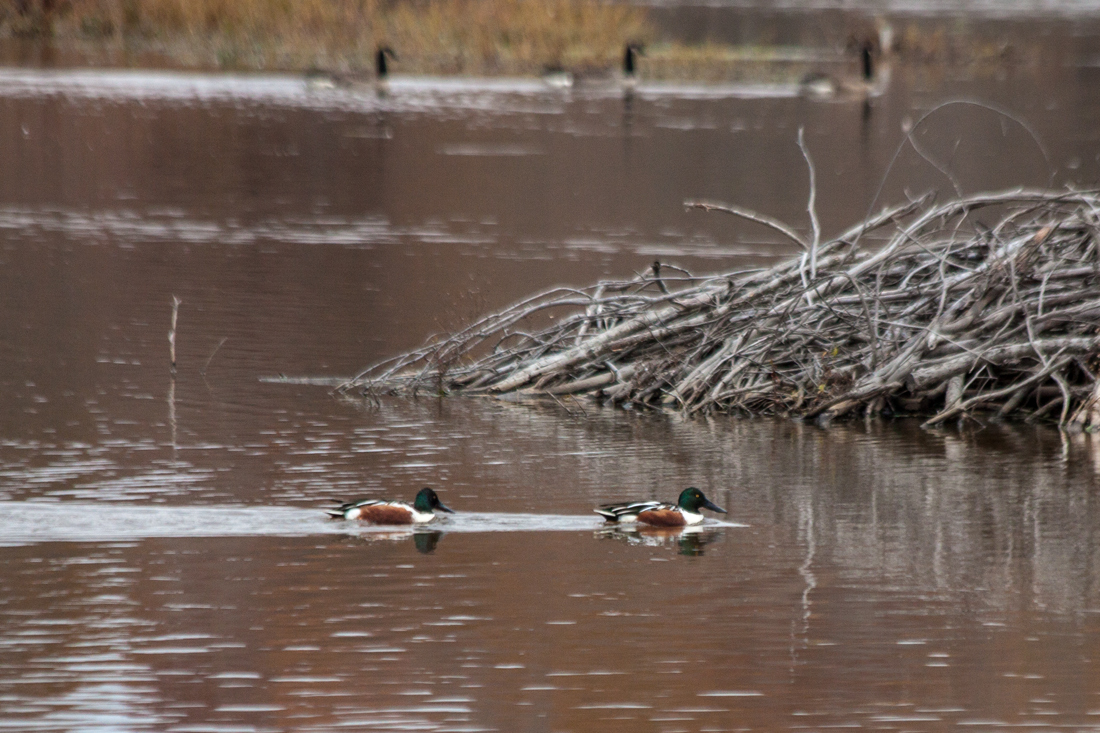
Among the early birds are these Northern Shovelers (Anas clypeata), whose distinctively-shaped bills and colorful bodies make them hard to miss. They were paddling across the largest pond in the park, past a brush pile, when I captured this image. I didn’t notice it when I took the shot, but I really like the way that you can see some Canada Geese swimming in the distance.Northern Shoveler

© Michael Q. Powell. All rights reserved.

Read Full Post »

The weather recently has turned cold and heavily overcast with intermittent rain. The chill in the air reminds me that winter is coming and apparently the beavers at my local marshland park have been receiving the same signals.

One of my favorite places in the park is a small beaver pond in a remote area of the park. It is peaceful and quiet and there are some fallen logs on which I like to sit and just watch and listen.

As the summer progressed I grew increasingly uncertain about the inhabitants. Were they still there or had they moved? It looked like the dam that held in the water had been neglected and parts of it were deteriorating.

I am sill not certain that they are still in the lodge that you see in the second photo, but in the area surrounding that lodge, I’ve come across incontrovertible evidence that beavers have been busy—several dozen small and medium trees that have been removed and the toothmarks look fresh.

I’ll be keeping my eyes open for additional signs that the lodge is occupied or that another one is being built nearby as I return to this spot.

dam3_blogdam1_blogdam2_blog

© Michael Q. Powell. All rights reserved.

Read Full Post »

I have seen these signs for a couple of months at my local marshland park and haven’t given them much thought. Yesterday, however, as I was wandering through a remote area of the park, I came across an above ground metal tree stand and the muscles between my shoulder blades began to involuntarily twitch a little.

My first thought was to climb up into the stand to check out the view from the higher vantage point. I resisted that impulse and began to wonder if I was risking my safety by traveling as often as I do off of the beaten path. Technically speaking, no part of the park is closed, but I must confess that I was not on an “established trail.”

This park is in a suburban area and one of the problems we face is an overpopulation of deer. Huntley Meadows Park explains the reason for the deer management program in these words:

“Over-populated deer herds eat large amounts of native vegetation, having a seriously negative effect on forest ecosystems. Native fruits, seeds, flowers and leaves essential as food sources for other wildlife are drastically reduced, or even eliminated. A park Huntley’s size should have approximately 60 White-tailed Deer-our most recent surveys indicate a herd of over 150. These over-populated herds are caused by the removal of deer’s natural predators (wolves, mountain lions, American Indians, etc.), and also the abundance of “free” food found in suburban yards. Archery hunters help replace absent predator populations and reduce deer numbers to more natural levels-this encourages a healthier forest ecosystem, with more plant and animal diversity.”
I probably will not curtail my photographic explorations, but I plan to be a little more cautious than I have been up until now—and I might even start wearing a hat or a vest that is bright orange.

archery1_blog archery2_blog

© Michael Q. Powell. All rights reserved.

Read Full Post »
During most of the year the bright red body of Blue-faced Meadowhawk dragonfly (Sympetrum ambiguum) would really stand out, but in the late autumn, it blends in pretty well with the vegetation. However, it is almost impossible to conceal this species’ stunning blue eyes and turquoise face, which cause it to stand out from even a very cluttered background.

Blue-faced Meadowhawk

© Michael Q. Powell. All rights reserved.

Read Full Post »

Although many summer dragonflies perch high on the vegetation, the autumn species seem to prefer the ground, so I have been spotting all kinds of cool-looking insects as I keep my eyes pointed down in my continuing search for dragonflies (and so far have not run into anything).

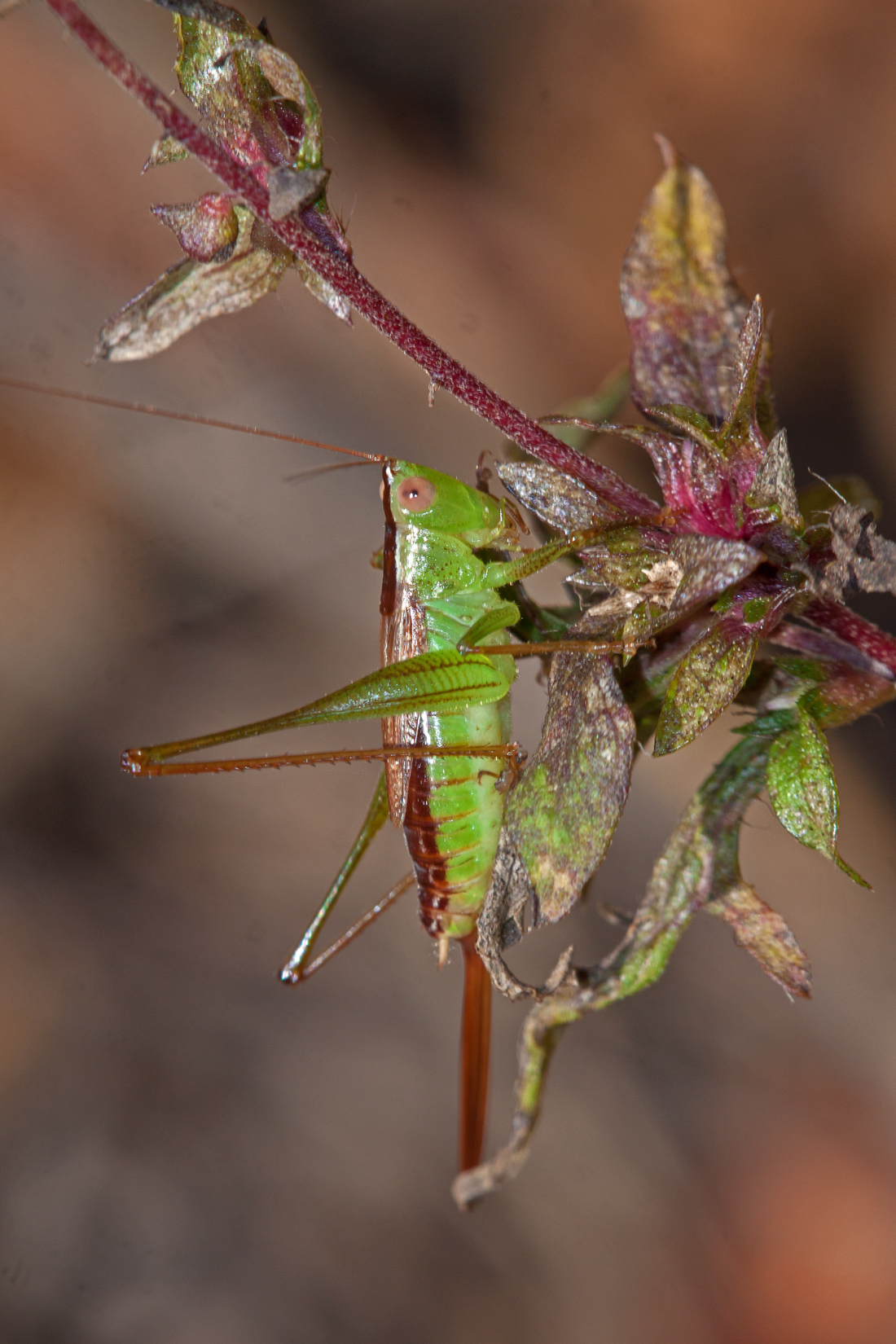
Earlier this week, I came across this beautiful grasshopper-like insect. It looks a bit like my all-time favorite insect, the  Handsome Meadow Katydid (Orchelimum pulchellum) and has the same long antennae, but this katydid’s colors are drab by comparison. (Check out one of my previous blog postings called Rainbow Grasshopper to see my favorite insect.)

This insect’s wings are pretty short and it looks to have a long ovipositor. As a result, I’ve tentatively concluded that it might be a female Short-winged Meadow Katydid (Conocephalus brevipennis) and have put in a request to the helpful folks at BugGuide for assistance in confirming my identification.

Short-winged Meadow Katydid

© Michael Q. Powell. All rights reserved.

Read Full Post »

“Make sure the eyes are in focus.” I can’t even count the number of times that I have read or heard these words of advice, which I usually try to follow, even when taking extreme close-up macro shots.

These are the compound eyes of the Autumn Medowhawk dragonfly (Sympetrum vicinum), a close relative of the Blue-faced Meadowhawk that I have featured in several postings recently. I took this shot on a cool day when the dragonfly was perched on a tree, trying to warm itself in the warmth of the sun. The camera’s aperture setting was in a middle range at f/9.0, but with the subject this close, the depth of field was pretty shallow and the eyes are pretty much the only portions of the dragonfly in focus (in addition to small section of the wings and the front legs).

autumn_close1_blog

© Michael Q. Powell. All rights reserved.

Read Full Post »
When Autumn Meadowhawk dragonflies (Sympetrum vicinum) have finished mating, the male does not release the female, but continues to clasp her head tightly with the tip of his abdomen. The pair flies off together in the “tandem” position and remains attached until the female has finished depositing her eggs, normally in the water.

A chivalrous interpretation of this behavior might be that the male is merely protecting his mate from clamoring suitors and allowing her to oviposit in peace. The reality, though, is that there is a fierce competition among males that can sometimes involve attempt to dislodge a rival’s sperm from a female and replace it with his own if the female has not yet laid her eggs. By holding onto the female, the male increases his odds of fathering some baby dragonflies.

Check out a 2006 National Georgraphic article called Dragonflies Strange Love for some other fascinating insights into the love life of dragonflies.

Earlier this month, I was at a small pool of water and I watched as a series of Autumn Meadowhawk couples in tandem went through the process of ovipositing and I attempted to get some in-flight shots of them. These dragonflies are really small and my success rate in keeping them in the frame was not high, but I did manage to get a few decent images.

Hopefully the practice in tracking a moving subject will carry over and help me as I move to photographing birds in flight, rather than dragonflies.

Autumn MeadowhawkAutumn Meadowhawk

© Michael Q. Powell. All rights reserved.

Read Full Post »

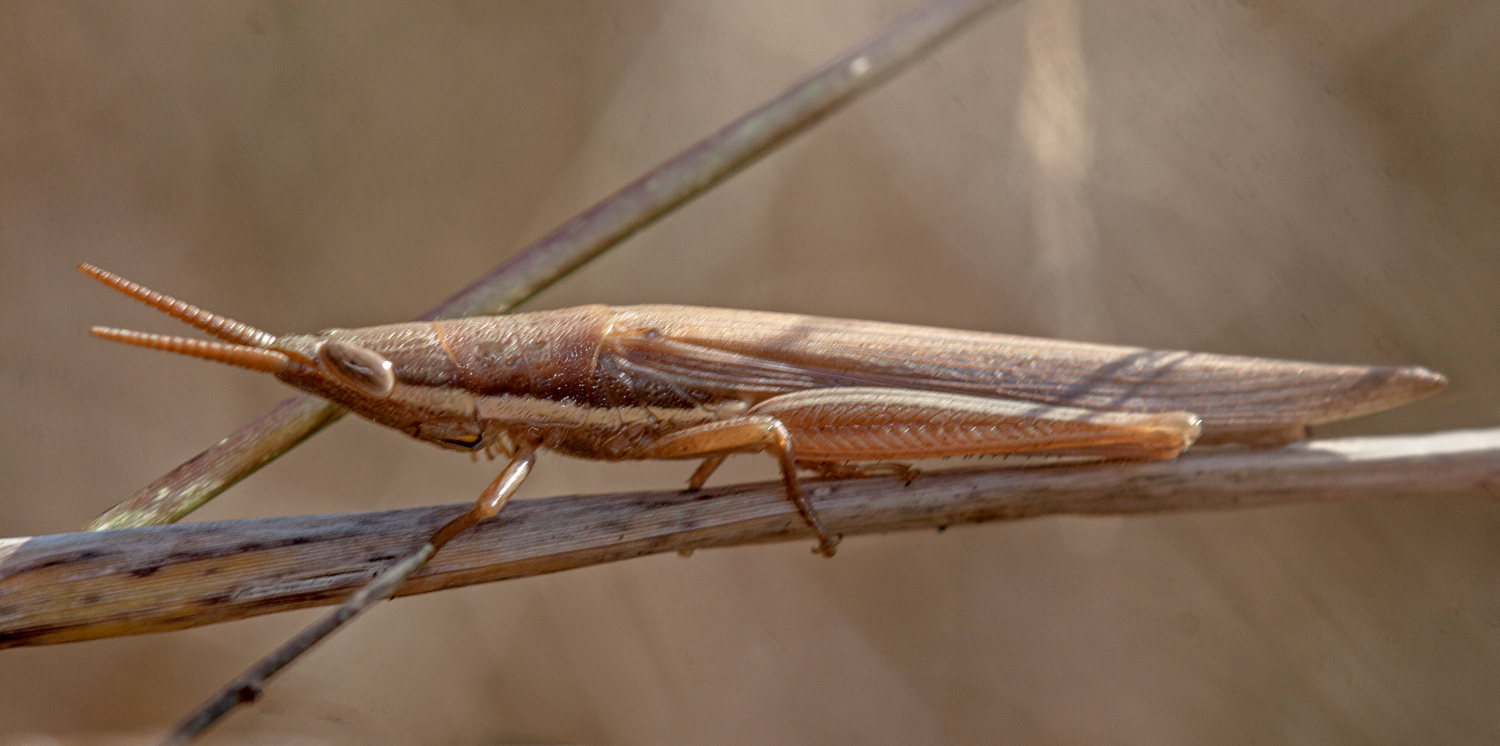
As I looked through my macro lens, I felt for a moment like a matador. The grasshopper in my viewfinder had lowered its head and was preparing to charge me, trying its best to gore me with its fearsome fluted horns. I wasn’t dressed for the part and had no little red cape to bravely wave at the charging grasshopper.

In reality, I am not sure what kind of a grasshopper this is. It looks a little like a Slant-faced Grasshopper, but I have never before seen one with such unusual, horn-shaped antennae. This grasshopper hopped up onto this stalk of grass as I was searching for dragonflies this past weekend. I don’t know much about the developmental cycle of grasshoppers and wonder if this might be a nymph.

In the absence of any scientific information, I think I’ll informally call this the Dual-unicorn Grasshopper, because the shape and pattern of the antennae remind me of so many of the depictions I have seen of the mythical unicorn.


charge_blogcharge2_blog

© Michael Q. Powell. All rights reserved.

Read Full Post »
My concerns about the potential demise of the Blue-faced Meadowhawk dragonflies (Sympetrum ambiguum) were greatly exaggerated and I saw a half-dozen or more yesterday on Veterans Day (Armistice Day).

Normally we stop seeing this species of dragonflies by the end of October, but we have not yet gone below freezing and perhaps that explains their unexpected longevity. Yesterday, for example, the temperatures soared to almost 70 degrees F (21 degrees C).  I have to note too that I am searching for them more diligently and in more remote locations of my marshland park, so that may help explain why I am seeing them more frequently.

As is the case with birds, male dragonflies tend to be more brightly colored and visible. Many female dragonflies are brown in colored and harder to spot. I was thus very happy yesterday to be able to get this close-up shot of a female Blue-faced Meadowhawk. Her body coloration may be a little bit drab, but those blue eyes are simply stunning.

In case you are curious, these dragonflies are small in size, with a body length of approximately 1.5 inches (38 mm), so I had to move in awfully close to get this shot. Surprisingly (and happily), this female tolerated my close presence for long enough for me to take several shots before she flew off into the distance.

female Blue-faced Meadowhawk

© Michael Q. Powell. All rights reserved.


Read Full Post »

Have you ever tried to photograph a living subject—or even worse, a pair of them—perched on one of your knees? Depth of field is a huge challenge and even trying to frame the subject is complicated, especially when you have a 180mm macro lens on your camera.

Autumn Meadowhawks (Sympetrum vicinum) are the most friendly dragonflies I have ever encountered. I don’t know what attracts them—perhaps it’s curiosity—but I found out last year that they are prone to perch on me.

Surprisingly, they will even perch as a pair when they are still in tandem, the position that this species uses when the female is ovipositing, i.e. placing her eggs in the water after mating. The male hangs on to the female by the head, presumably to keep other males from interfering with the process.

In my initial attempt to get a shot of the couple, I focused on the male, and the female is completely out of focus.  For the second attempt, I tried to twist myself around to photograph them from the side and almost fell over in the process. The female is more in focus, but the male is now slightly out of focus.

As the season progresses, I’ll see if I can find some even more cooperative Autumn Meadowhawks and try to get a shot of one perched on one of my fingertips, as I did last year.

Autumn Meadowhawk

Autumn Meadowhawk

Later in the day, a male Autumn Meadowhawk landed on my leg and I had much better success in getting some clear shots. I used a similar approach, taking the first shot from above and the second one from the side. My pants are a solid tan color and it is interesting to see how it almost looks like I was wearing a seersucker suit.

Autumn Meadowhawk

Autumn Meadowhawk

© Michael Q. Powell. All rights reserved.


Read Full Post »

We’re almost at the end of the dragonfly season now in Northern Virginia and soon I’ll be seeing only the Autumn Meadowhawks (Sympetrum vicinum), historically the last dragonflies of the year to disappear. This past Monday, though, I managed to find a few Blue-faced Meadowhawk dragonflies (Sympetrum ambiguum), unusually hardy survivors this late in the season.

I really enjoy trying to get close-up shots of these colorful little dragonflies and my favorite shot is this close-up of one of them, perched on a fallen leaf.

Blue-faced Meadowhawk

When you pull back a little, you can see how tough the season has been for this dragonfly—portions of its wings are shredded. Somehow, however, it managed to fly about as though its wings were undamaged.

Blue-faced Meadwhawk

Temperatures last night dropped down into the upper 30’s F (3-4 degrees C) and I doubt that I will see any more Blue-faced Meadowhawks. I am resigned to the possibility that these may be my last shots of the year of these stunning little dragonflies, but that won’t keep me from searching really hard for them later today.

Blue-faced Meadowhawk

© Michael Q. Powell. All rights reserved.

Read Full Post »

It’s hard not to feel a little bit like a voyeur when I move in close to capture the details of an intimate encounter between two wild creatures. There is something especially intriguing about the acrobatic maneuvers of colorful mating dragonflies, like this pair of Autumn Meadowhawk dragonflies (Sympetrum vicinum) that I photographed in the “wheel” position at my local marshland park in late October.

Many times I have to assume equally acrobatic positions to capture the action. Fellow photographer and dragonfly enthusiast Walter Sanford photographed me in one such pose in an image that I included in a previous posting entitled “My view of the mating dragonflies.”

On this occasion, however, the dragonflies were much more accommodating and they perched at eye level on the top of some vegetation. The couple was back-lit, but a little fill flash helped to bring out the details and the colors.

In this case, at least, the brightly-colored  dragonflies seemed to be exhibitionists and I felt less like a voyeur, though I must confess that I did not shield my eyes and turn away from the activity.

Autumn Meadowhawks mating

© Michael Q. Powell. All rights reserved.

Read Full Post »

Continuing my quest to find and photograph the dwindling number of insects before winter sets in, I came upon this tiny green spider this past Monday as I was searching for dragonflies. It was almost hidden in the leaf litter, but made a slight motion as I happened to be looking at its direction.

It looks to be some kind of crab spider, though that is more a guess than an informed opinion. One thing that I do know, though, is that I am fascinated by its eyes, which you can see more closely if you click on the image.

I took this photo just about at the minimum focusing distance for my lens, which the manufacture says is 18.5 inches (47cm). I tried to get just a bit closer, but had to back off to keep the spider in focus. As you can probably tell, I was really low to the ground when I took this photo and was using my camera bag to stabilize the lens for the shot.

The weather has turned cooler and rainy, which does not bode well for the insect population. I’ll probably be out tomorrow looking for the survivors (and have a few more to post from Monday if I am unable to find new subjects).

spider1_nov_blog

© Michael Q. Powell. All rights reserved.

Read Full Post »

We all like to believe in happy endings, but unlike fairy tales, real life does not always turn out that way. I was saddened this afternoon to learn that the female Bald Eagle (Haliaeetus leucocephalus) that was rescued on Monday at Huntley Meadows Park had to be euthanized.

The dislocation of her elbow was chronic and so severe that eventual release was not a possibility.  The doctors at The Wildlife Center of Virginia determined that humane euthanasia was the best treatment.

I was happy that the work of the Fairfax County Animal Control Services officer that I chronicled in an earlier posting were featured today in the on-line editions of local media, including the Washington Post, WJLA (ABC television), WTOP radio, and Inside NOVA. The sad ending in no way diminishes my respect and thanks to Officer Kathy Prucnal for her extraordinary efforts to rescue the injured eagle.

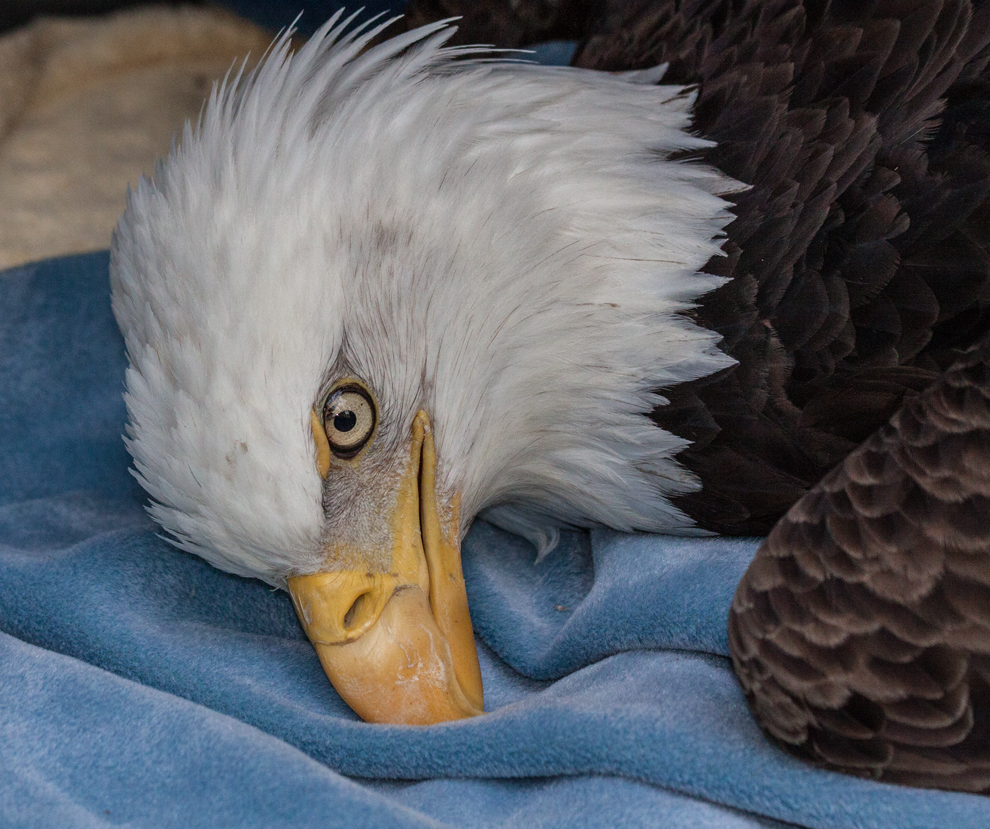
This photo that I took during the rescue is how I want to remember the female Bald Eagle, appearing strong and alert.

RIP, beautiful eagle.

Bald Eagle

© Michael Q. Powell. All rights reserved.

Read Full Post »

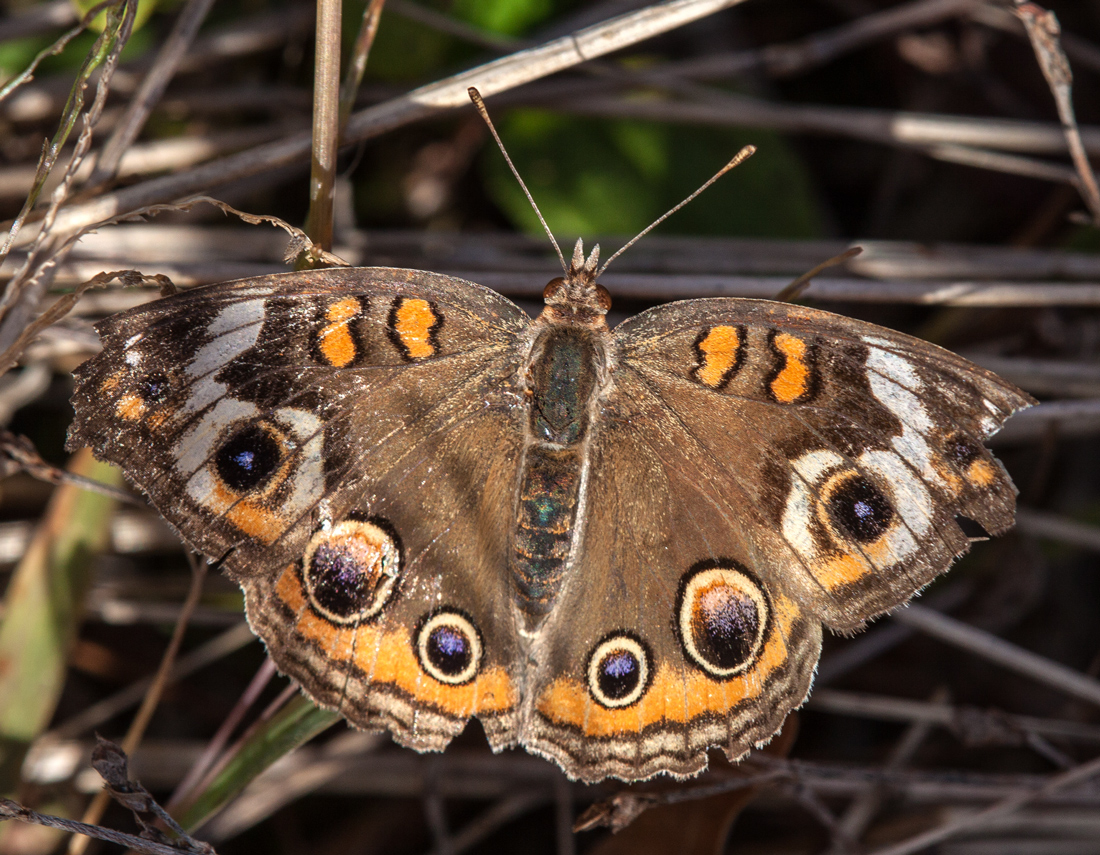
Butterflies in November? I didn’t really expect to see any, so it was a pleasant surprise when I came upon this Common Buckeye (Junonia coenia) on Monday at my local marsh. The butterfly is beat-up and bedraggled, but its beauty beams brightly—uncommon beauty at an unexpected time.

buckeye_nov_blog

© Michael Q. Powell. All rights reserved.

Read Full Post »

I received an update from the Animal Control Officer who rescued the Bald Eagle (Haliaeetus leucocephalus) featured in yesterday’s posting and the prognosis looks positive.

The eagle had a low heart rate, according to the attending veterinarian, likely from pesticide poisoning, and they treated it with atropine. The eagle, an 8 pound (3.6 kg) female, also had a dislocated joint in one wing, which is treatable as well. It is likely they will be able to release her after some rehabilitation at a specialized facility in southern VA, which I assume is The Wildlife Center of Virginia in Waynesboro, Virginia.

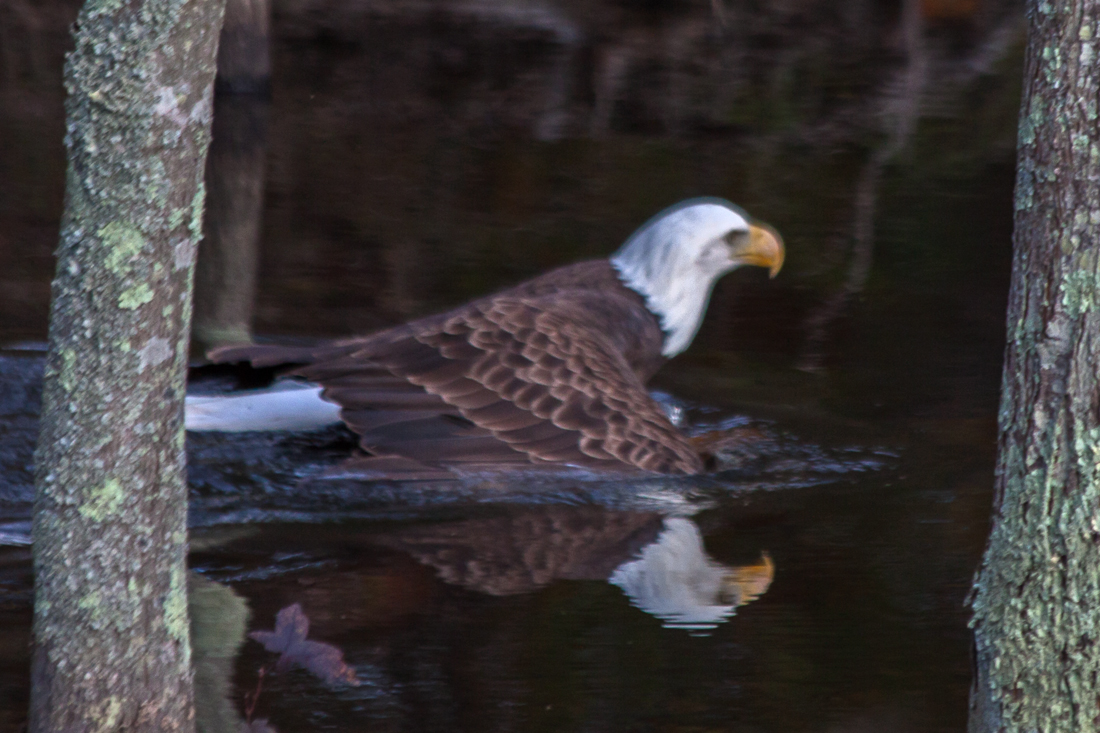
I took the first photo when the eagle was trying to swim away while being rescued. The image is not quite as sharp as the photos from yesterday, but I just love the reflection of the eagle in the water as it struggles to swim. This was in a wooded area of Huntley Meadows Park, my favorite venue for photography, that is now flooded as part of a wetland restoration project. The second photo shows the eagle as it was when I first came upon it, perched on a pile of brush, unable to fly away.

Bald Eagle

Bald Eagle

© Michael Q. Powell. All rights reserved.

Read Full Post »

Would you be willing to chase an injured adult Bald Eagle (Haliaeetus leucocephalus) with nothing more than a blanket in your hands? Yesterday, I was privileged to observe a very brave officer of the Fairfax County Animal Control Services capture an injured eagle at my local marshland park.

The eagle was perched on a brush pile in a flooded forest area of the marsh. From time to time it would hop to a new position, but did not seem able to fly away. Several parkgoers had alerted the park authorities of the situation and I came upon the situation shortly before the animal control officer arrived.

When the officer began to chase it, the eagle hopped away and then tried to swim away, stopping for a moment to look in my direction from behind a tree. Eventually, when an unidentified parkgoer helped to block a potential exit route for the eagle, the officer was able to capture the eagle.

As the officer was carrying the eagle, wrapped up in a blanket, to a small vehicle, I circled around on the path as fast as I could, hoping to get a closer look at the eagle. The officer was accommodating and briefly unwrapped the blanket and I got an amazing close-up look at this majestic bird. She was also willing to pose for me and I took a photo that I sent to her to help her remember her amazing actions.

I managed to get a final look at the eagle after it had been transferred to the animal control vehicle. The officer unwrapped the eagle so that the man who had assisted in the rescue could get a look at it. The eagle seemed to have settled down a bit and appeared to be resting comfortably. It was impossible to determine the cause and the extent of the eagle’s injuries, but the officer assured me that the county has excellent rehabilitation facilities for injured raptors. If I am able to get progress reports on the eagle’s recovery, I’ll be sure to keep you all informed.

Bald Eagle

Bald EagleBald Eagle rescueBald Eagle rescueBald Eagle rescue

© Michael Q. Powell. All rights reserved.

Read Full Post »

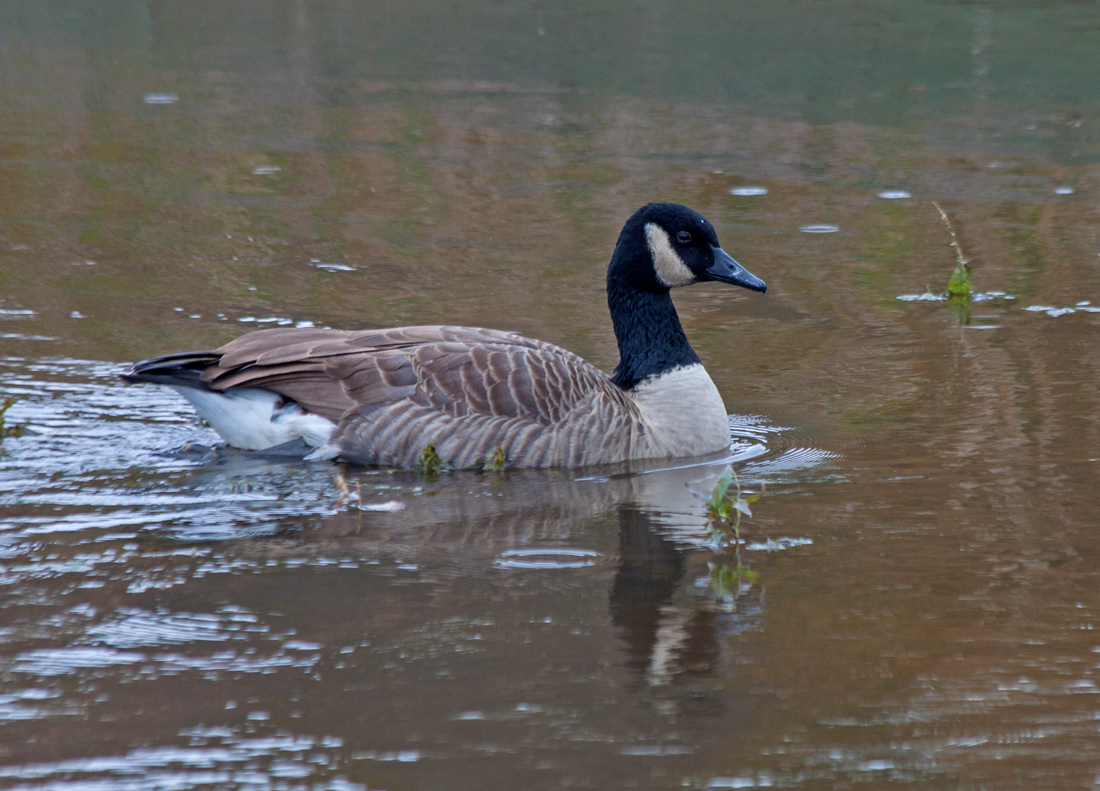
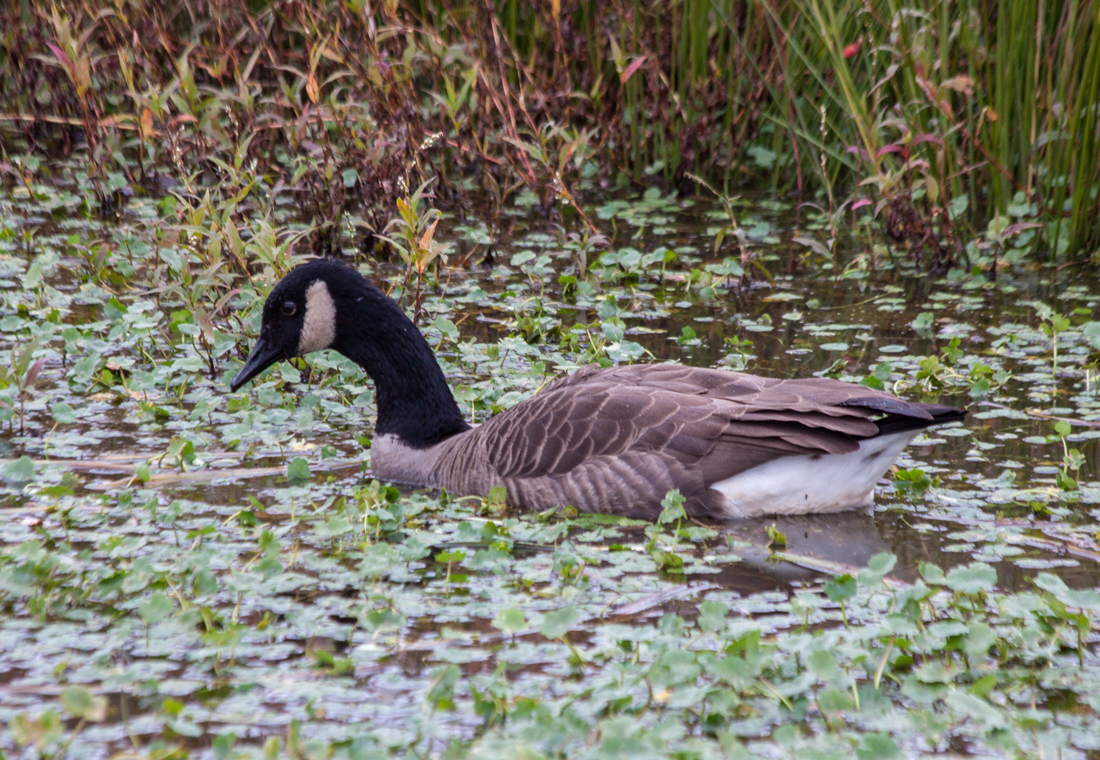
Some people love them and some people hate them, but there is no question that the arrival of Canada Geese (Branta canadensis) signals the transition to a new season.

Yes, they are loud and often obnoxious. Yes, they are numerous and sometimes crowd out other species. Yes, their droppings are nasty and slippery. Despite all of that, I enjoy watching and photographing Canada Geese in the air and on the water.

There were only a dozen or so geese at my local marsh this past weekend, but I am well aware of the fact that this is only an advance party for the hundreds of geese that will move through this area, with some of them choosing to remain here for extended periods of time.  From the perspective of my blog, this is the first posting of the season dedicated to Canada Geese, but certainly not the last.

Canada GooseCanada Goose

© Michael Q. Powell. All rights reserved.


Read Full Post »
A new month started quietly, with few animals, birds, or insects visible on a cold. overcast day. I walked around my local marsh for a couple of hours and experienced nature in a series of small encounters, signs of the changing season.

A lone swallow sang softly in a tree; (CORRECTION: A sharp-eyed reader noted this is a female or immature Red-winged Blackbird)

A mallow flower bloomed unexpectedly in the water;

A squirrel peeked out from behind some branches;

The trees showcased their muted autumn colors; and

An advance party of Canada Geese came in for a landing.

© Michael Q. Powell. All rights reserved.

Read Full Post »

« Newer Posts - Older Posts »