Feeds:
Posts
Comments

Posts Tagged ‘green spring gardens’

Blue Dasher dragonflies (Pachydiplax longipennis) have become for me one of the signs of summer in the area in which I live. When the weather turns hot and humid, they can often be seen flying lazily over the marshes and ponds, perching frequently on vegetation growing out of the water.

On a recent trip to Green Spring Gardens, I captured some images perched male Blue Dasher dragonflies. In the first shot, the dragonfly was perched on the edge of a lotus leaf. I really like the curves and softness of the leaves, which contrast with the details of the dragonfly. I think too that the shadow cast on the lower leaf adds some additional visual interest to the  image.

The second image features a Blue Dasher in the obelisk pose. It is generally believed that some dragonflies assume this pose to dissipate heat by reducing the amount of their bodies that is exposed to direct sunlight. I was shooting partially into the sun, which forced me to overexpose the image a bit and accounts for the lighter background. However, the surface of the water was covered with a lot of duckweed and was not uniform in color. As a result, the background ended ended up with some ugly gray patches that I seemed to be impossible for me to remove.

Blue Dasher

Blue Dasher

© Michael Q. Powell. All rights reserved.
Read Full Post »

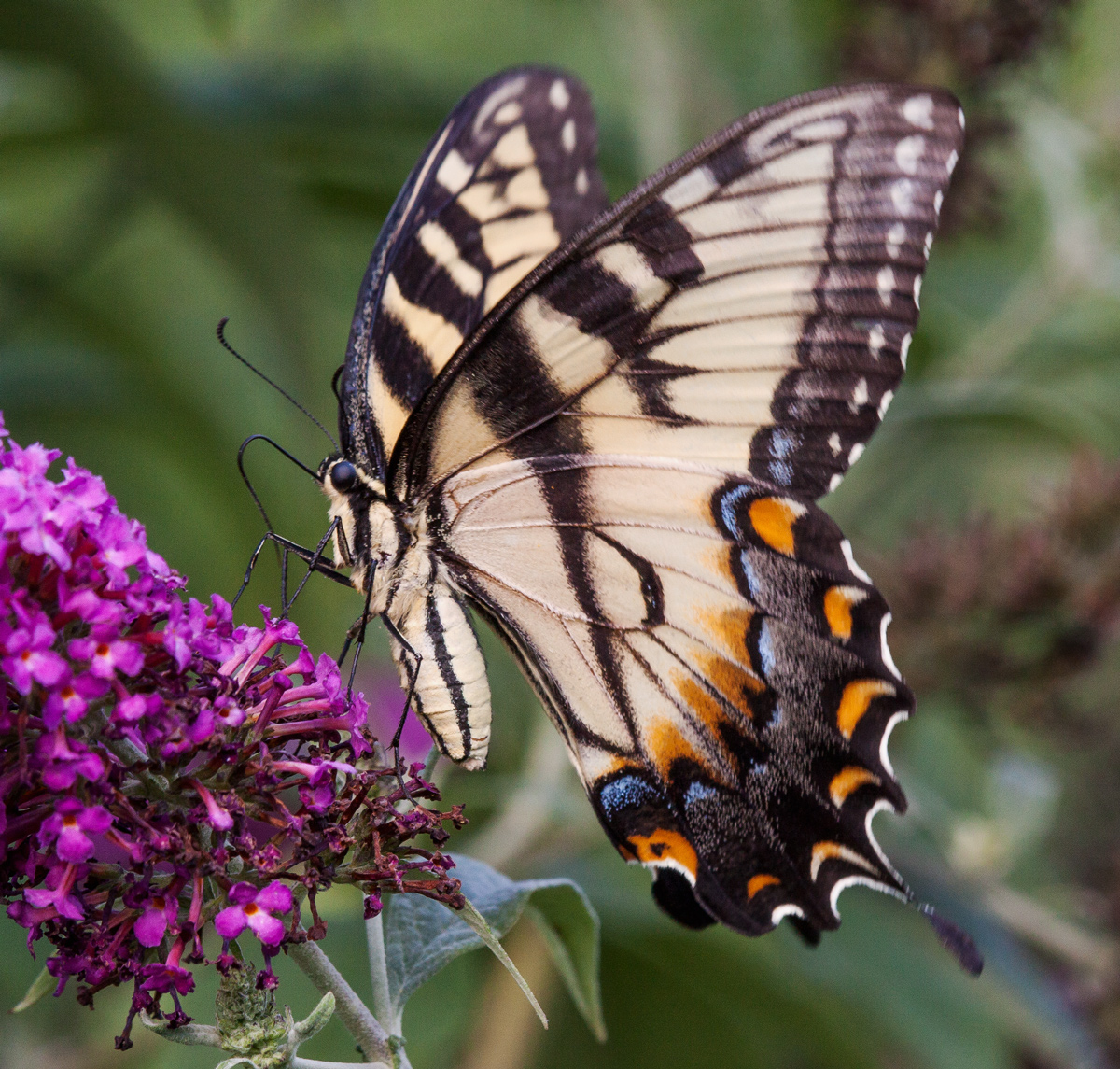
Some folks are really into chasing imaginary creatures with their cellphones. I prefer to chase living creatures with my camera and captured this image of a beautiful Eastern Tiger Swallowtail butterfly (Papilio glaucus) yesterday as it was feeding at Green Spring Gardens, a county-run historic garden in Northern Virginia.

The butterfly gave me multiple opportunities to get shots as it flew around a small area of the gardens, but it rarely gave me an obstructed view. Often it was partially buried in the flowers or turned away from me at an angle. When I took this shot, the butterfly had opened its wings and offered me a rare look at its body as well as its amazingly long proboscis.

Eastern Tiger Swallowtail

© Michael Q. Powell. All rights reserved.


Read Full Post »

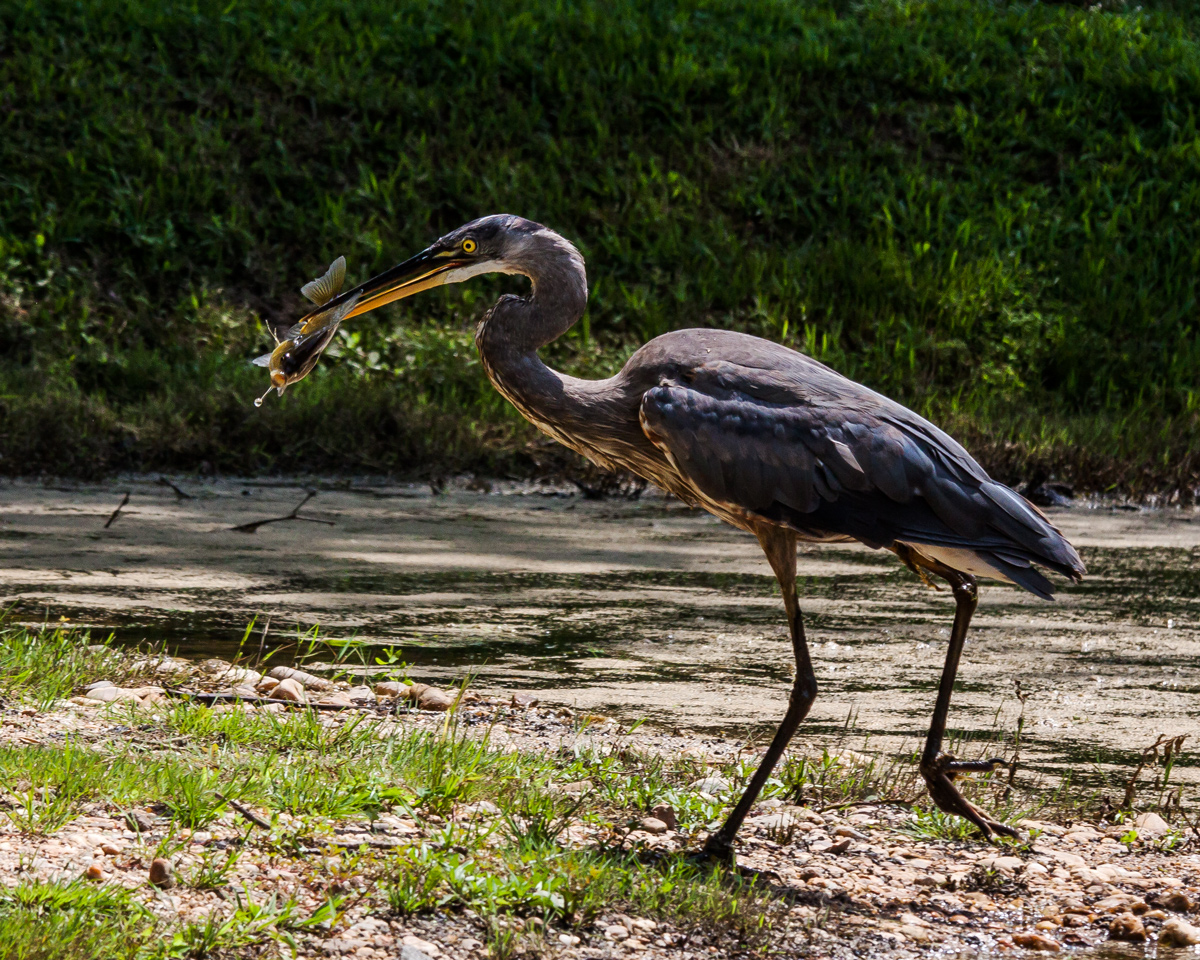
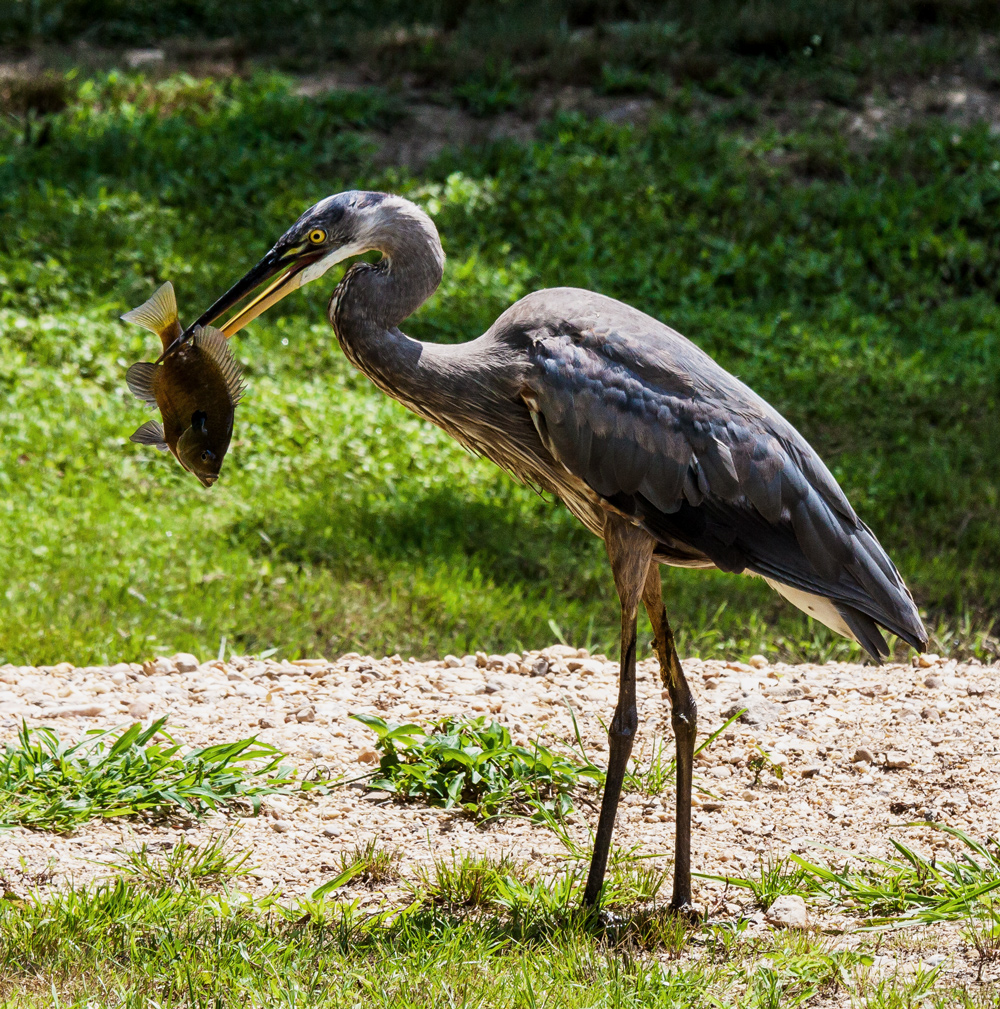
How many large fish can there possibly be in the tiny man-made pond at Green Spring Gardens? That was my initial thought when I stumbled upon a Great Blue Heron (Ardea herodias) intently focused on the water at one end of the pond. I crept as close as I could, acutely aware that I had a non-zooming macro lens on my camera, and watched and waited.

I was somewhat surprised when the heron finally made a strike and was amazed when it pulled out a large fish. Almost immediately, the heron headed for dry land, probably fearing that it might drop the fish into the water. Playing it safe proved to be a good choice for the heron subsequently did drop the fish onto the ground. I am not sure if it was an accidental drop or if it was an intentional maneuver to grab the fish, but the heron had no trouble retrieving the fish.

It took a little while for the heron to position the fish, but once the fish was in place, the heron swallowed the fish in a single gulp. The heron then stretched out its neck and I could almost watch as the fish made its way down the neck and into the heron’s stomach.

Great Blue Heron

Pulling the fish out of the water

Great Blue Heron

Heading for dry land

Great Blue Heron

Initial positioning

Great Blue Heron

Dropped fish

Great Blue Heron

The end is near

Great Blue Heron

Trying to swallow

© Michael Q. Powell. All rights reserved.
 

Read Full Post »

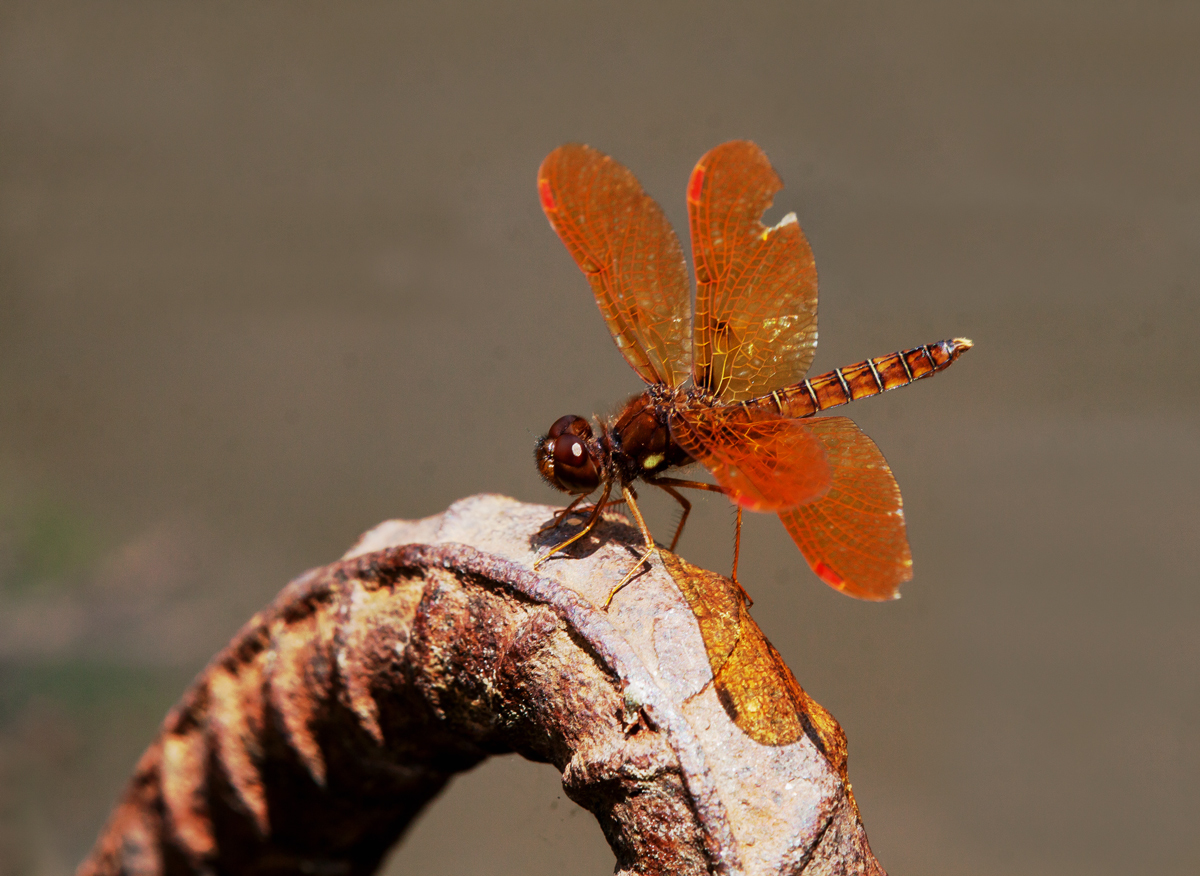
Normally I like to photograph dragonflies in their natural environment, but when an Eastern Amberwing dragonfly (Perithemis tenera) chose to perch on a curved piece of rebar recently, the juxtaposition of the natural and man-made elements seemed to create a sense of harmony rather than one of dissonance.

I took this photo at a small man-made pond at Green Spring Gardens in Alexandria, Virginia. Later in the summer I hope to see water lilies and lotus blossoms at the pond, but it is mostly devoid of vegetation right now, which many be why the dragonfly chose this unusual perch.

I have no idea why this piece of reinforcing steel is sticking out of the water, but its reddish-brown color and curved shape made it a good match for this tiny dragonfly.

Eastern Amberwing

© Michael Q. Powell. All rights reserved.
Read Full Post »

“I’m the king of the world.” This Red Milkweed Beetle (Tetraopes tetrophthalmus) is not exactly Leonardo DiCaprio, but it assumed his Titanic pose after it climbed to the tip of a milkweed plant this past weekend at Green Spring Gardens in Alexandria, Virginia.

I have been fascinated by Red Milkweed Beetles since I first encountered them several years ago when I first started getting into macro photography. They are bright and colorful and relatively easy to find—whenever I spot a milkweed plant I immediately begin to search for these little red bugs.

There is something almost cartoonish about the appearance of the Red Milkweed Beetle, as though an artist started with the shape of a horse’s head, added the horns of a longhorn bull, and then made it a really bold color to make it stand out.

For a fleeting moment, this little beetle is the king of the world.

Red Milkweed Beetle

© Michael Q. Powell. All rights reserved.

Read Full Post »

As I was looking over a whole range of the colorful flowers yesterday at Green Spring Gardens, I gradually realized that I was drawn most to those with simple shapes and relatively subdued colors, like the modest spiderwort (g. Tradescantia). There is a real beauty in its simplicity.

The bees seemed to like the spiderworts too, including one that I photographed with overfilled pollen sacs.

spiderwort

spiderwort

© Michael Q. Powell. All rights reserved.

Read Full Post »

For a change of pace I decided today to visit Green Spring Gardens, a historical county-run garden that always has lots of beautiful flowers. Some purple poppies were among my favorites. Several of them were in bloom, surrounded by a large number of seed pods. A honey bee and I were attracted to the same flower at the same time—the bee ignored me and busily went about its work.

Purple Poppy

© Michael Q. Powell. All rights reserved.
Read Full Post »

There is not much blooming during the frigid days of early January, so I was very happy to come across a small patch of Snowdrops (g. Galanthus) during a quick visit to Green Spring Gardens this past weekend. There is nothing complicated or showy about these small flowers and I find true beauty in their simplicity.

I somehow always feel like bursting into the words of the song Edelweiss from The Sound of Music whenever I see snowdrops:

“Small and white
Clean and bright
You look happy to meet me.

Blossom of snow
May you bloom and grow
Bloom and grow forever.”

snowdrop

© Michael Q. Powell. All rights reserved.
Read Full Post »

Yesterday I made a trip to Green Spring Gardens and found, not surprisingly, that not much was in bloom. I used to visit this county-run historical garden often, but it’s been a while since I was there last.

While I was there I spotted this beautiful little Northern Mockingbird (Mimus polyglottos) perched inside of a bush. I am not sure what kind of a bush it is, but the bright red berries add a festive touch to the scene.

I’m still celebrating the twelve days of Christmas, culminating on January 6 with Three Kings Day (Epiphany). Radio stations, alas, seem to have moved on, so I have to sing Christmas carols a cappella when I am in the car (or even at home).

Northern Mockingbird

© Michael Q. Powell. All rights reserved.


Read Full Post »

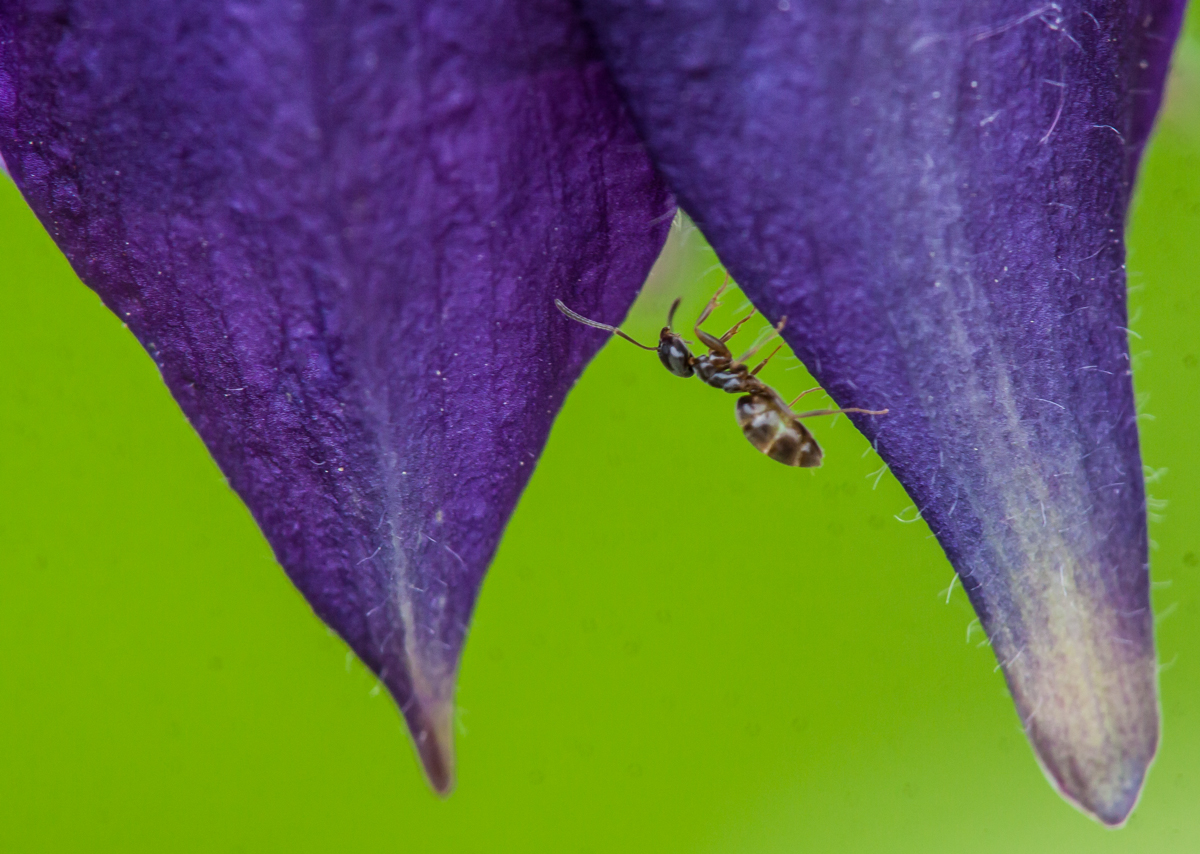
There were lots of flowers in bloom during a trip this past Friday to Green Spring Gardens, but not many insects. However, I did manage to find this intrepid ant testing his mountaineering skills as he climbed up and down the edges of a purple Columbine flower.

alpine ant

© Michael Q. Powell. All rights reserved.

Read Full Post »

One of my favorite spring flowers is the Columbine (genus Aquilegia), whose name comes from the Latin for “dove,” because the inverted flower is said to resemble five doves clustered together. Columbines come in many colors and color combinations and I am always fascinated by the shapes and colors of this unusual-looking flower.

I photographed this beautiful little Columbine on the first day of May at Green Spring Gardens in Alexandria, Virginia, a county-run historical garden that is one of my favorite places for photographing flowers.

Columbine

© Michael Q. Powell. All rights reserved.

Read Full Post »

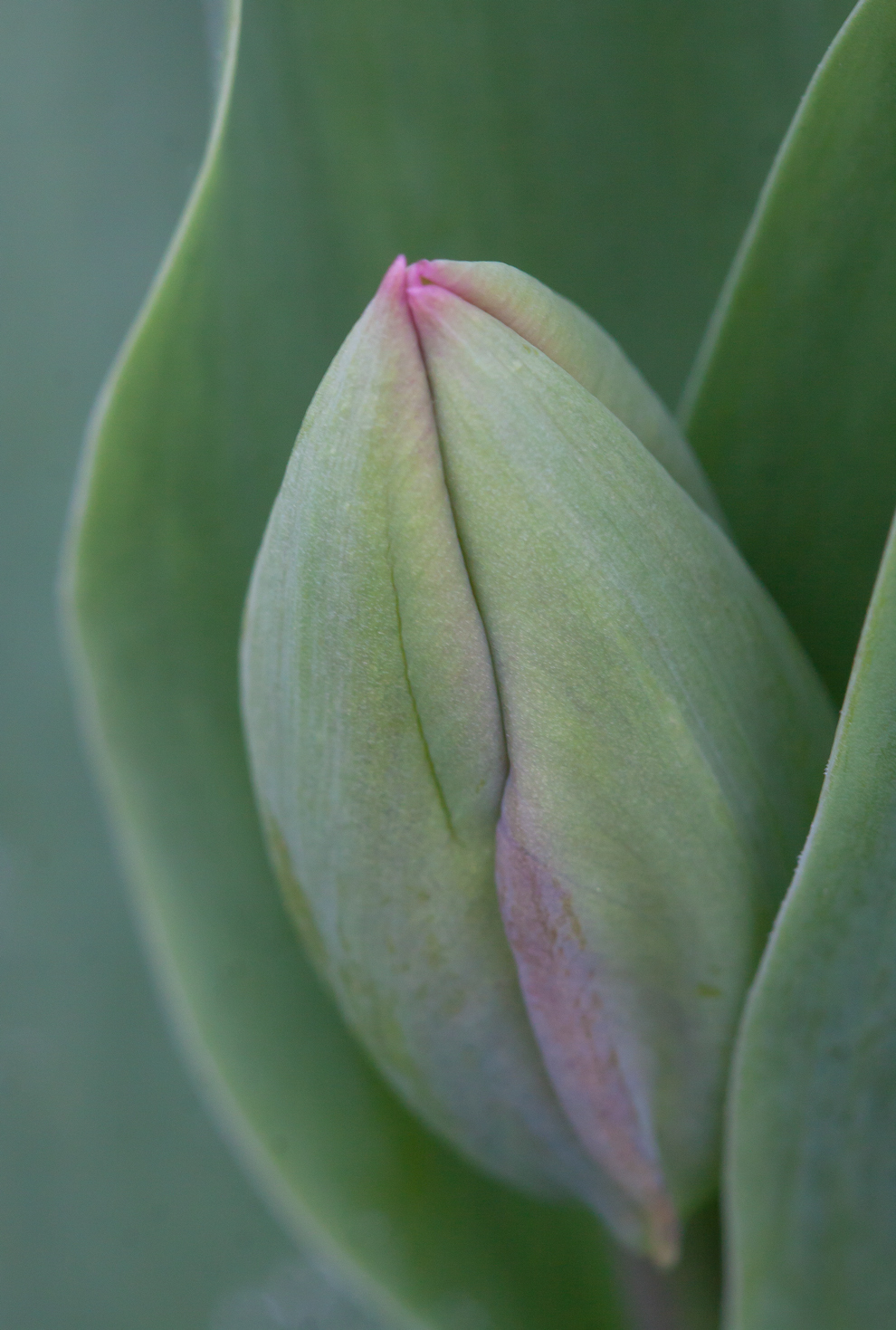
When you think of a gorgeous tulip, do you have to see it flowering to recall its beauty, or does a mere hint of its future shape and color suffice?

This image is different from my “normal” style of images, which tend to emphasize a kind of detailed realism. It is an almost abstract look at this flower, emphasizing shapes and colors and lines, with a minimum of details. There is an “artsy” side of me that I consider to be underdeveloped. Every now and then that tendency comes to the surface and I’ll step out of my comfortable box and try something a bit different.

tulip

© Michael Q. Powell. All rights reserved.

Read Full Post »

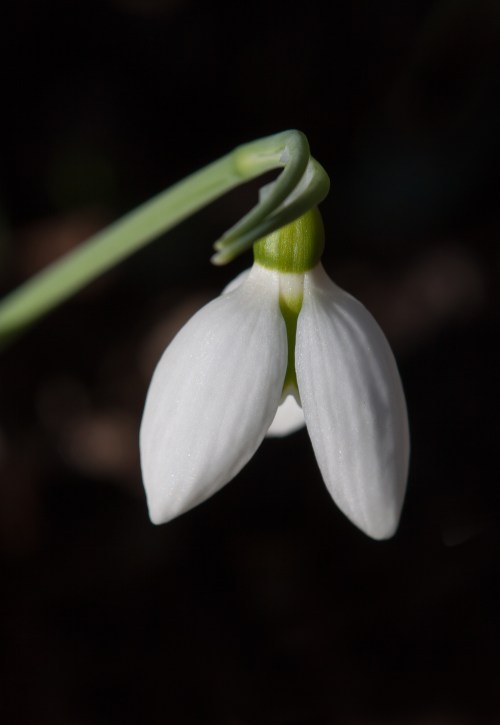
It’s showtime in the Washington D.C. area—the cherry blossoms are in full bloom. There is no denying their beauty, but somehow I am drawn even more to the simple beauty of modest flowers like this snowdrop (genus Galanthus) that I observed this past Friday. There was a light drizzle most of the day, which coated the unopened petals with beautiful crystal-like globes.

Simple beauty—I find it to be irresistible.

snowdrop

© Michael Q. Powell. All rights reserved.
Read Full Post »

During the spring our eyes are naturally drawn to signs of new life, but somehow yesterday it was the signs of the past that caught my attention. I was fascinated by the structure of the skeletonized remains of an unknown flower, whose beauty has long ago faded into a lace-like form that reminded me of a butterfly.

Beauty and fragility—an appropriate metaphor for our lives.

skeletonized flower

© Michael Q. Powell. All rights reserved.

Read Full Post »

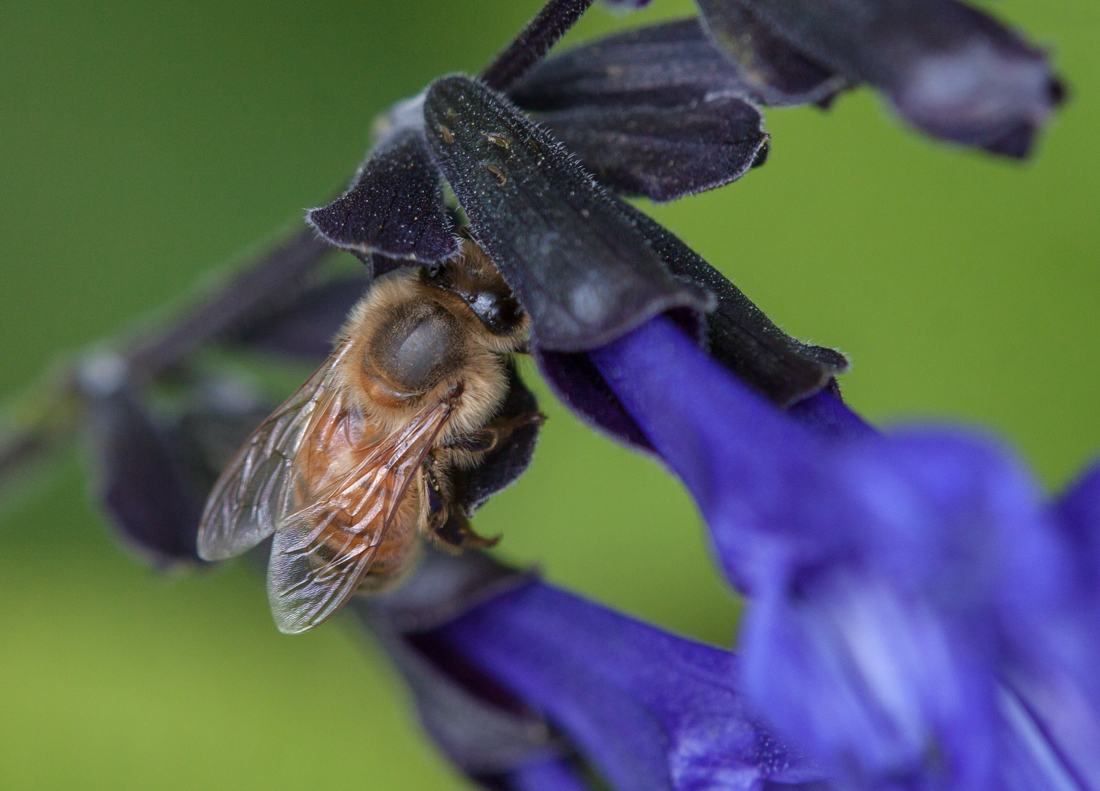
Flowers and bees have a mutualistic relationship—the flower provides the nectar and the bee assists in pollination. Sometimes, though, bees will circumvent the process by drilling a hole in the side of the flower and gaining access to the nectar without touching the reproductive parts of the flower, a process sometimes called “nectar robbing.”

Last weekend, I encountered this bee, which looks to be a honeybee, repeatedly taking nectar from the side of a Salvia flower. In an earlier posting, I showed that it was a tight fit for a bumblebee to enter the flower from the front, but it nonetheless did its part in pollination. The honeybee apparently decided it was easier to take a shortcut and go directly to the nectar.

honey2_bloghoney1_blog

© Michael Q. Powell. All rights reserved.
 

Read Full Post »

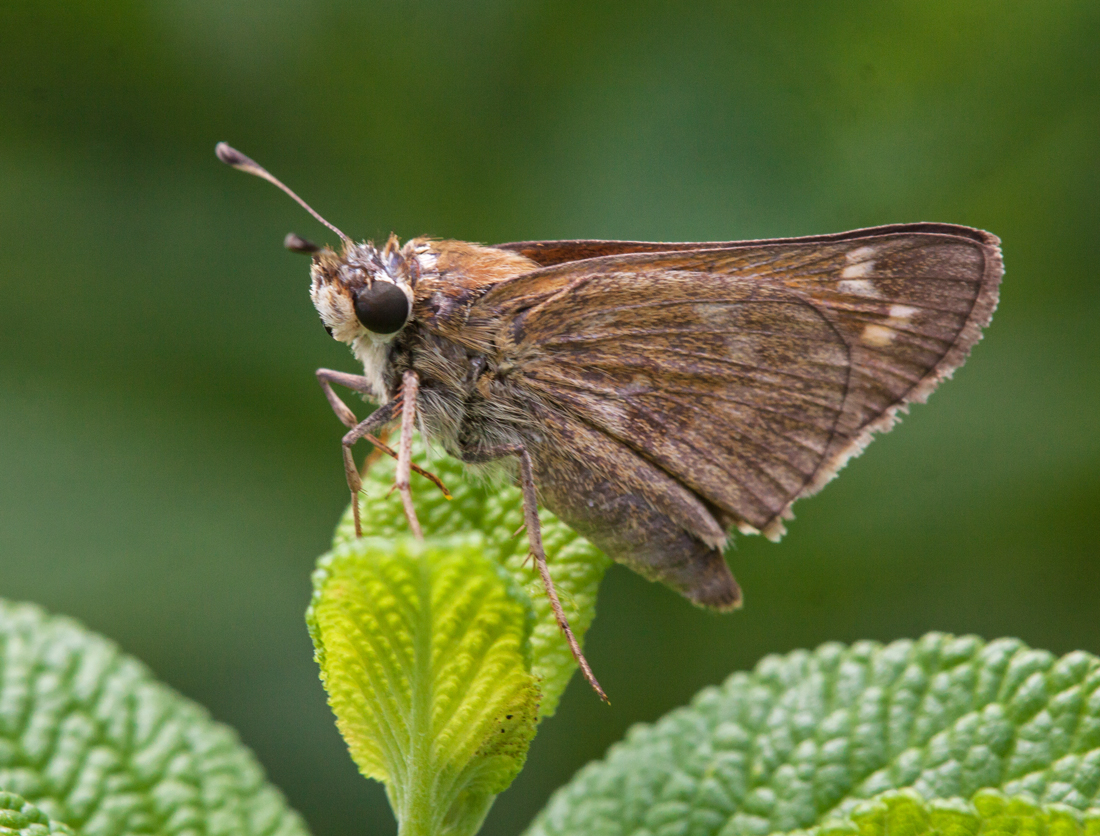
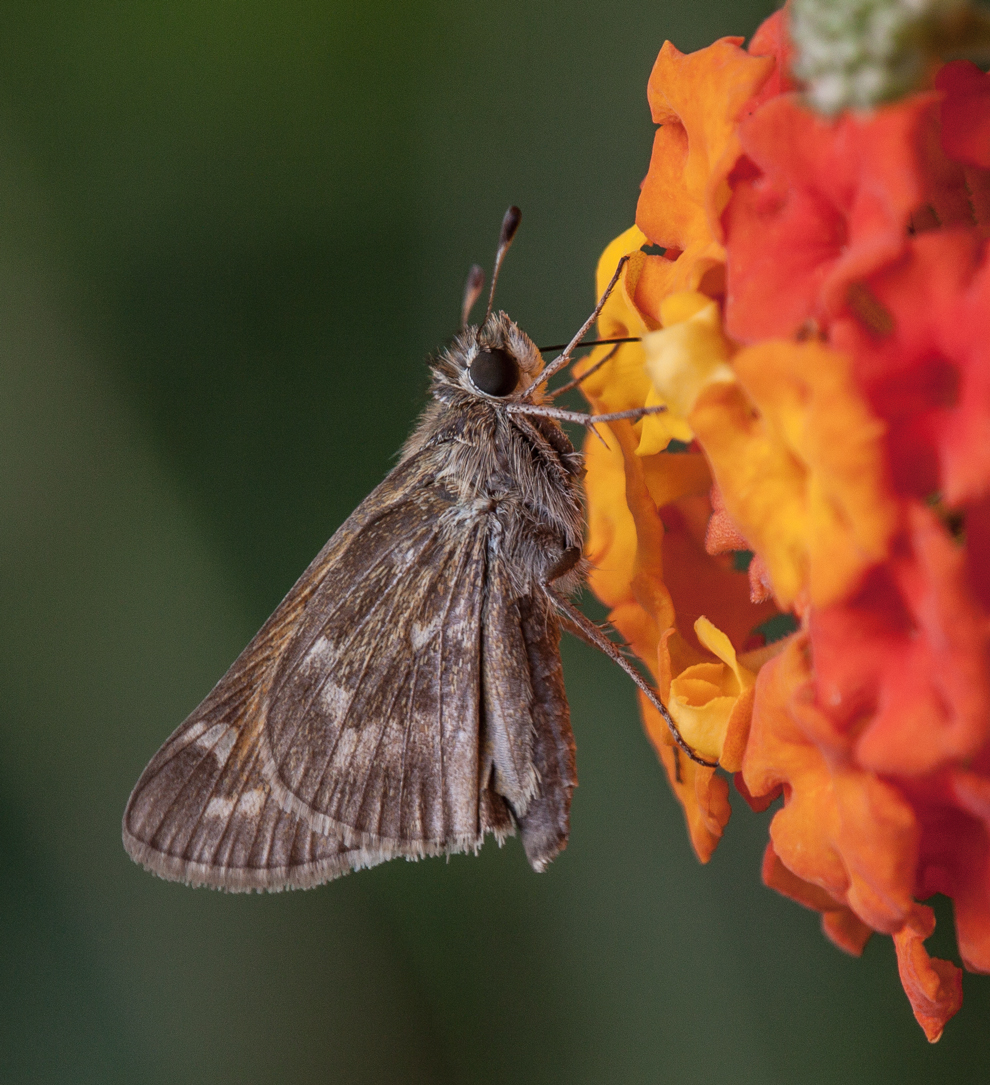
It’s a gray and gloomy day with intermittent rain—I feed the need for some color. This little skipper butterfly was busily at work last week on some very colorful flowers and I was able to catch him in action with his proboscis extended.

I am not sure what kind of skipper this is (there are more than 3500 species of skippers worldwide), but it looks a little like one that a reader identified for me as a Peck’s Skipper (Polites peckius). I must confess, though, that many skippers look very similar to me, so my identification is very tentative.

Capturing the butterfly with my macro lens was not too much of a problem, but I had a real problem in processing these shots because of some super bright highlights coming of the yellow flowers. I ended up darkening the highlights and desaturating the color in order to restore some detail to those flowers. I am not sure if I am happy with the results and might choose to process them differently another time. (The RAW images are still intact.)

skipper2_oct_blogskipper1_oct_blog

© Michael Q. Powell. All rights reserved.

Read Full Post »

Although it is already October and the weather is getting cooler, the local bees have not yet called it quits for the season. I am not sure what kind of purple flower this is, but the bumblebee was busily burrowing its head into its open blossoms.

I was happy to be able to catch the bee in action, capturing an “artsy” image of the moment.

October bee

© Michael Q. Powell. All rights reserved.
Read Full Post »

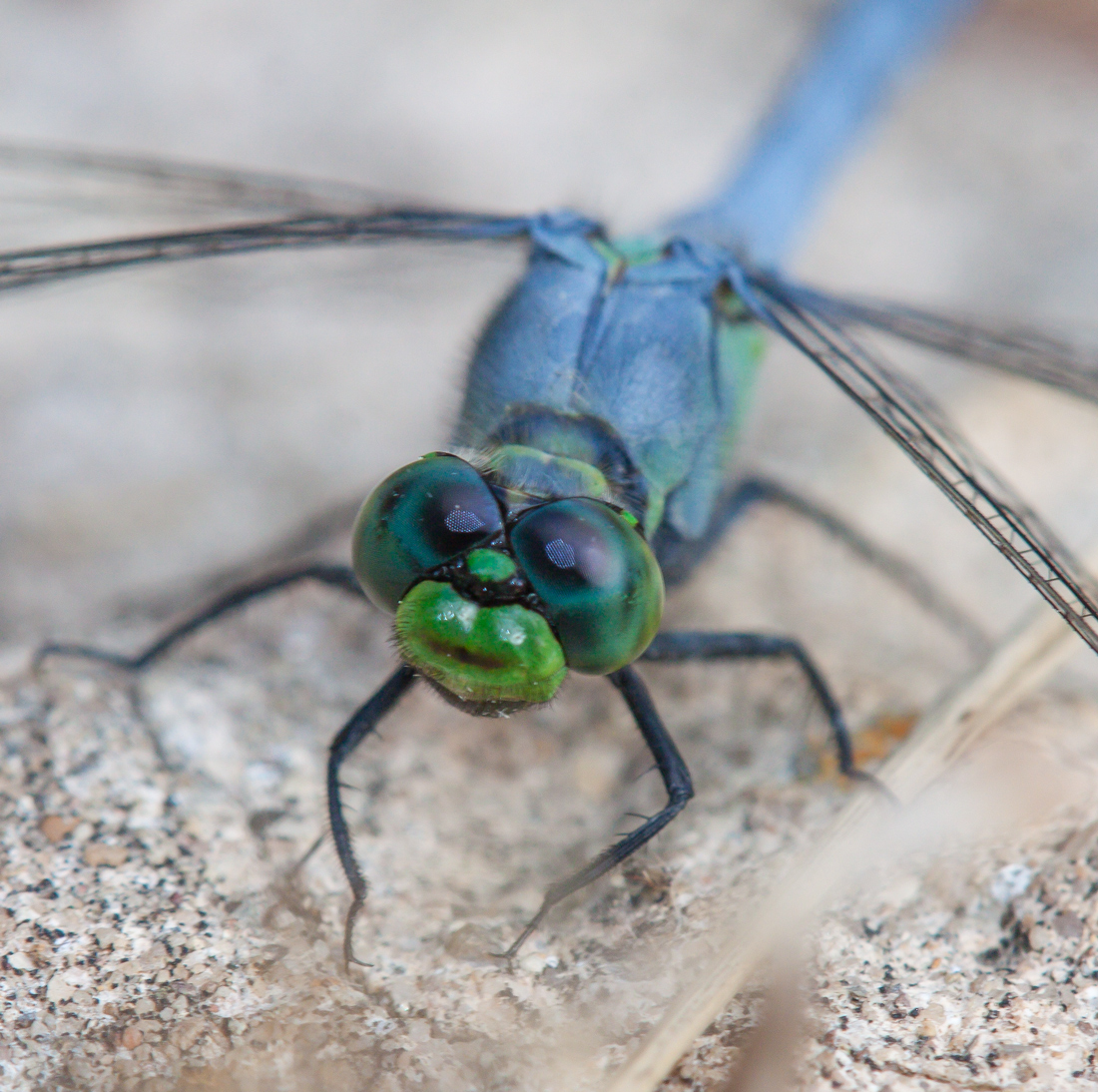
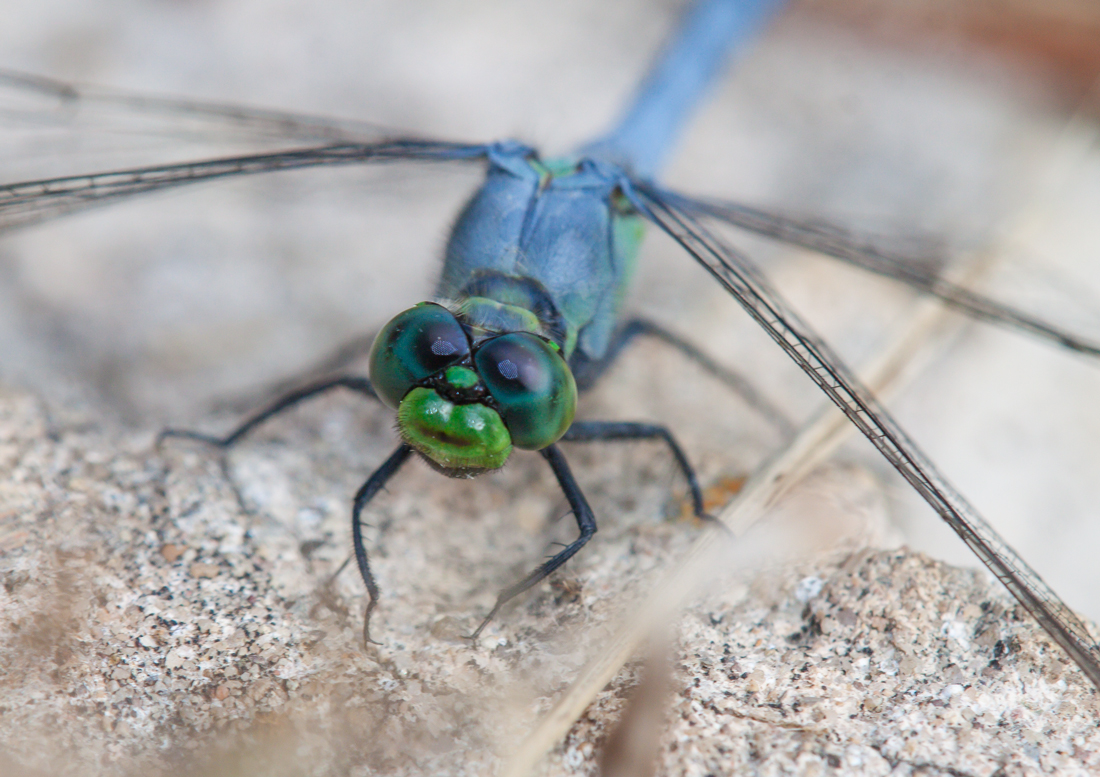
One of the main reasons why I love having a macro lens is that it that it lets me capture photos like this extreme close-up image of a male Eastern Pondhawk dragonfly (Erythemis simplicicollis) that I took yesterday at Green Spring Gardens, a historical, county-run garden in Alexandria, Virginia.

I have always been fascinated by the multi-faceted compound eyes of dragonflies and the blue-green eyes of the Eastern Pondhawk are particularly stunning. When I first caught sight of this dragonfly, he was sunning himself on a rock near the edge of a small pond. I kept low to the ground and approached him slowly. He didn’t fly away and seemed more curious about my presence than afraid.

For these shots, I rested the lens hood of the camera on the edge of the rock ledge to get this low, eye-to-eye perspective. This technique served to steady my camera, so I was able to capture a good deal of detail of the dragonfly’s face. In the initial photo, for example,which is a cropped version of the second image, you can see that the dragonfly has stubble on his chin. The third shot is a cropped version of the last photo, again to show greater detail and to draw the attention of viewers more directly to the eyes.

Do you think the shots are more effective when cropped or do you prefer the larger perspective images?

Eastern Pondhawk

Eastern Pondhawk

Eastern Pondhawk


pondhawk1_closeupb

© Michael Q. Powell. All rights reserved.


Read Full Post »

The light reflecting off the water in the background was really bright, creating these disco ball highlights when I took these shots of a male Blue Dasher dragonfly (Pachydiplax longipennis) recently at Green Spring Gardens. Normally I try to avoid distinctive specular highlights, but in this case I decided to embrace them.

Why do I suddenly feel an irresistible urge to watch Saturday Night Fever?

disco1_blogdisco2_blog

© Michael Q. Powell. All rights reserved

Read Full Post »

As I search in vain for larger, colorful butterflies, I continue to be amazed by the beauty of the smaller ones, like this Clouded Sulphur butterfly (Colias philodice) that I observed last week at Green Spring Gardens in Alexandria, Virginia.

Generally I like my closest shots the best when I am shooting with my macro lens, but in this case, I think I prefer the first shot below, that I took from a bit farther back. I like the way in which you can see the shadowy representations in the background of the stalks of the same kind of floweras the one one which the butterfly is feeding.

clouded2_blogclouded1_blog

© Michael Q. Powell. All rights reserved

Read Full Post »

When I started shooting regularly two years ago, I followed the lead of my mentor, Cindy Dyer, who specializes in flower photography, and spent a lot of time in gardens. (She photographs a wide range of  subjects, though, and I encourage readers to click on her name and check out the photos on her blog from a recent trip to Iceland.)

Last weekend I went back to my roots and visited a local garden with Cindy, where I spent some time with flowers and was only occasionally distracted by insects. Cindy helped me identify a toad lily and some zinnias, but we think the yellow flower is some kind of rudbeckia.

As I was shooting, I was particularly fascinated by the structure and patterns of the petals and by the amazing colors. The colors proved to be a challenge to render correctly and I am not entirely certain that I got the pinkish color of the zinnias true to life.

If you are viewing the original posting (and not it the Reader), click on any one of the thumbnail images to see the images in succession in larger size in slide show format. (I am still experimenting with using the Gallery options for displaying multiple images.)

toad_lily1_blog

© Michael Q. Powell. All rights reserved


Read Full Post »

Two years ago in a posting, I confessed to being obsessed with photographing Red milkweed beetles (Tetraopes tetraophthalmus). Inexorably I kept finding myself being drawn back to these bright red beetles.

I thought I had outgrown my obsession, until I encountered several of my little red friend this past weekend at Green Spring Gardens. I immediately reverted to my old behavior and began to stalk them like a paparazzo, trying to get a good shot or any shot at all.

My obsession continues.

Red Milkweed BeetleRed Milkweed BeetleRed Milkweed Beetle

© Michael Q. Powell. All rights reserved


Read Full Post »

Whenever I have my macro lens on my camera I seem to be irresistibly drawn to bees, like bees to honey. No matter what else I am shooting during the summer, I always seem to have some images of bees interspersed among my other photos. Here are some of my recent favorite bee shots.

bee_yellow_blogbee_white_blogbee_red_blog

© Michael Q. Powell. All rights reserved

Read Full Post »

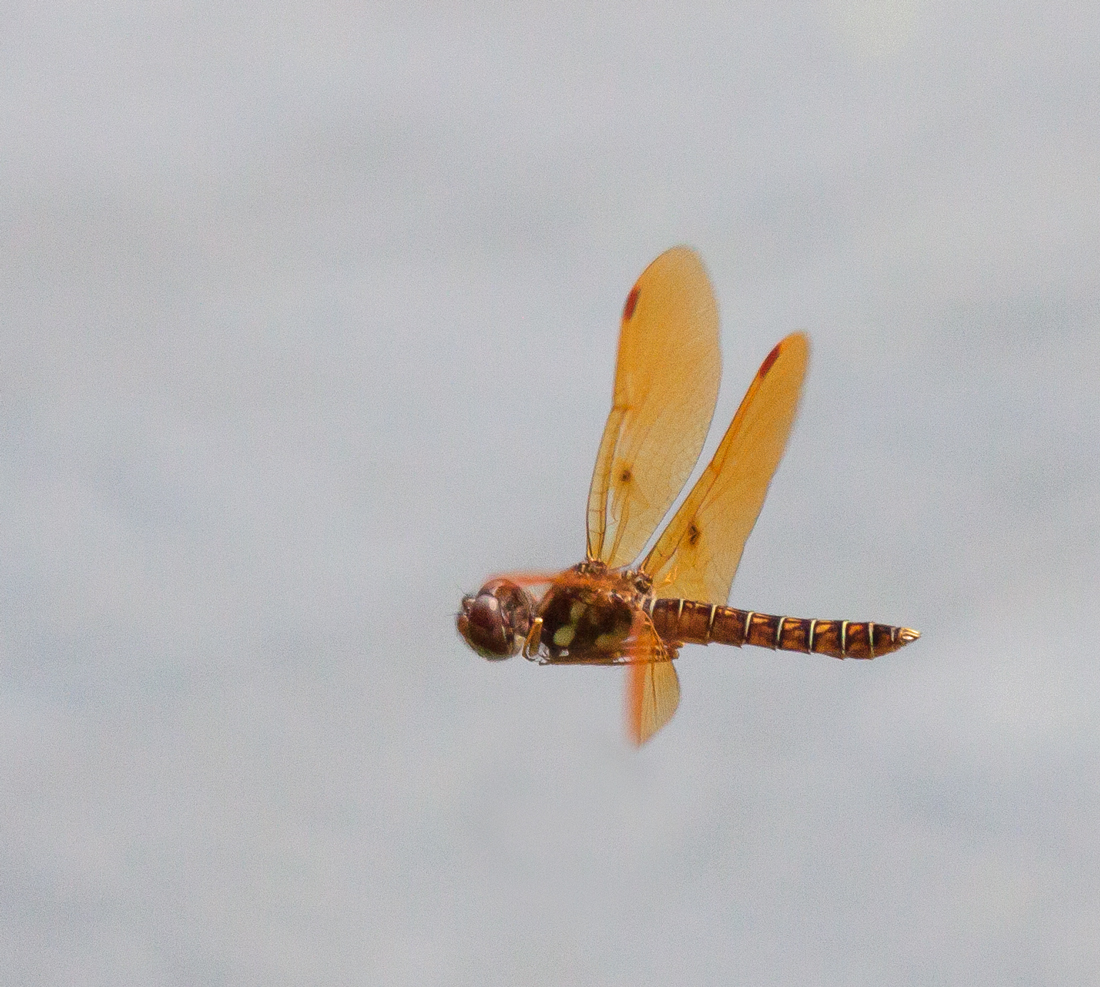
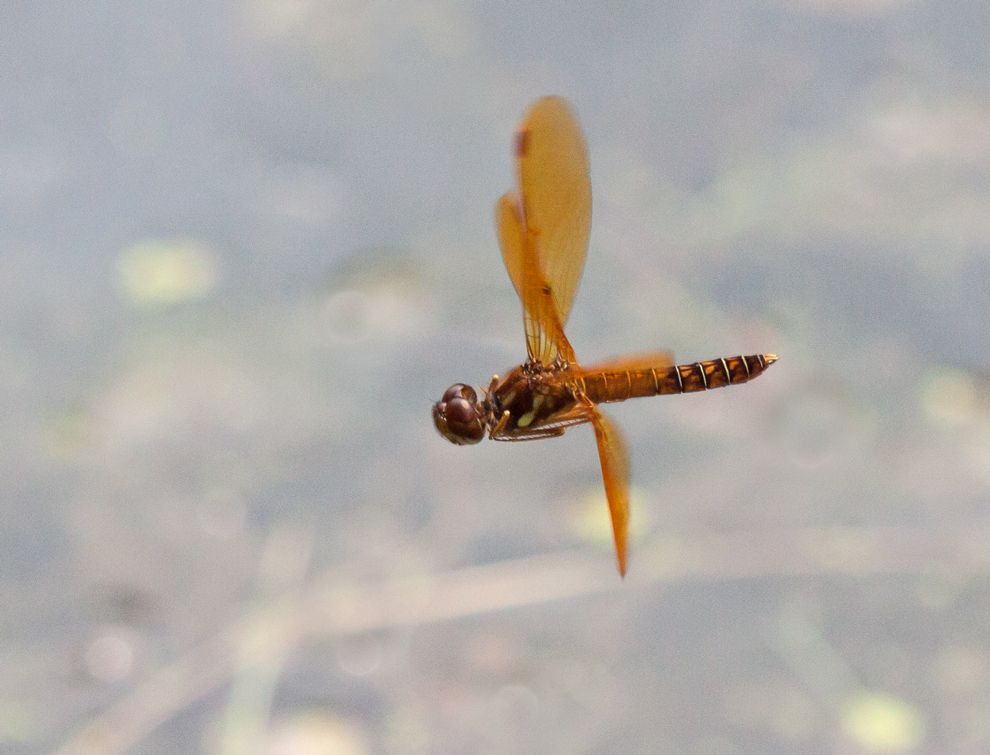
Photographing any dragonfly in flight is a real challenge, but this past weekend I spent time chasing after some of the smallest ones, the Eastern Amberwing dragonflies (Perithemis tenera). According to Bugguide, these dragonflies are typically 21-24mm in length, which is less than one inch, with a wingspan of maybe two inches or so.

amb2_fly_blog

There were lots of male Eastern Amberwings buzzing around the edges of a small pond at Green Spring Gardens, one of the local gardens that I like to visit. They were within range of the 180mm macro lens that I was using, but focusing and tracking were my biggest problems. The dragonflies did tend to hover a bit, which helped a little, but it was tough to get them in focus when focusing manually and almost impossible to do so with auto-focus.

I took a lot of shots and was happy that I managed to get some in decent focus, though I did have to crop the images. As I was preparing this posting, I noticed that I spent some time a year ago attempting to photograph the same dragonfly species. I think the results this year are marginally better, but you can make your own call by clicking on this link to the posting from July 2013.

amb4_fly_blogamb5_fly_blog amb3_fly_blog

amb1_fly_blog

© Michael Q. Powell. All rights reserved

Read Full Post »

A dragonfly perching on a heron? In real life it’s highly unlikely that you would see such a thing, but a male Blue Dasher dragonfly (Pachydiplax longipennis) decided that the metal silhouette of a Great Blue Heron (Ardea herodias) in a pond at Green Spring Gardens made a good spot to rest.

Click on any of the tiled images to see all of them full-sized in slide show mode.

Blue Dasher

© Michael Q. Powell. All rights reserved.


Read Full Post »

Small skipper butterflies don’t stand out as much as their larger, more colorful brethren, but they have an understated beauty that I find striking. It’s a daunting challenge, however, to identify them.

According to Wikipedia, there are more than 3500 recognized species of skippers worldwide, so I don’t feel too bad that my identification skills are weak in this area. As I looked through images on-line, I came across one identified as a Little Glassywing (Pompeius verna) that looks a bit like the one that I photographed, though my confidence level in this identification is pretty low.

I am confident, however, that I like the image I captured of the little skipper. There is a pretty good amount of detail, the background is blurred, and the leaves on which the butterfly is perched makes for an interesting pose.

UPDATE: A butterfly expert has definitively identified this as a female Sachem (Atalopedes campestris). Thanks to Joe Schelling and Jim Brock for their assistance in identifying this little skipper.

skipper1_blog

© Michael Q. Powell. All rights reserved.


Read Full Post »

In the shade of the flowering lotus plants, these two Eastern Pondhawk dragonflies (Erythemis simplicicollis) found a few moments for some summer lovin’. Summer lovin’, it happened so fast.

Eastern Pondhawks mating

© Michael Q. Powell. All rights reserved.
Read Full Post »

Even before they have bloomed, the buds of the Lotus flower (Nelumbo nucifera) can be spectacularly beautiful, like this one I photographed this past Monday at Green Spring Gardens, just a few miles from where I live in Northern Virginia.

lotus bud

© Michael Q. Powell. All rights reserved.
Read Full Post »

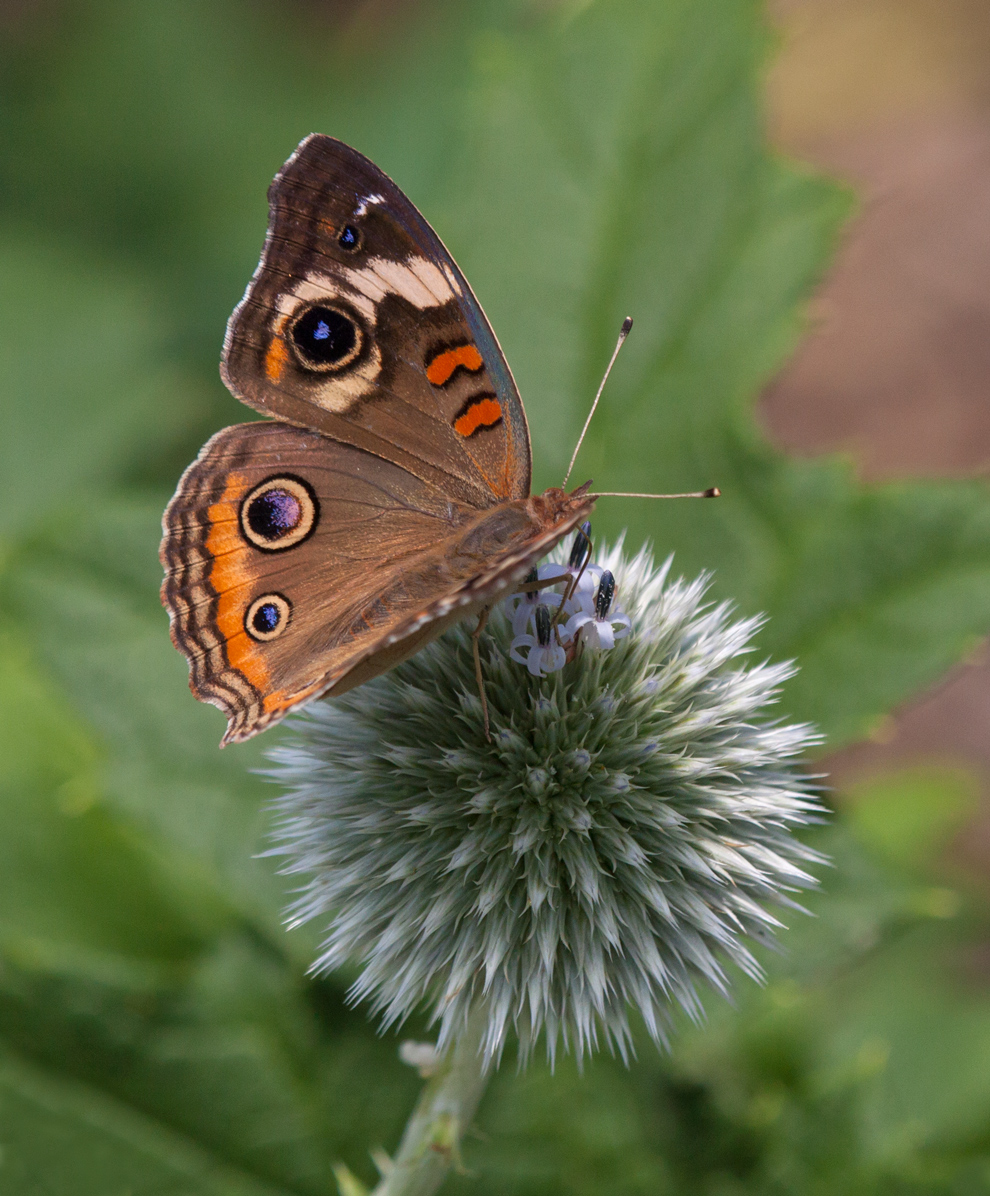
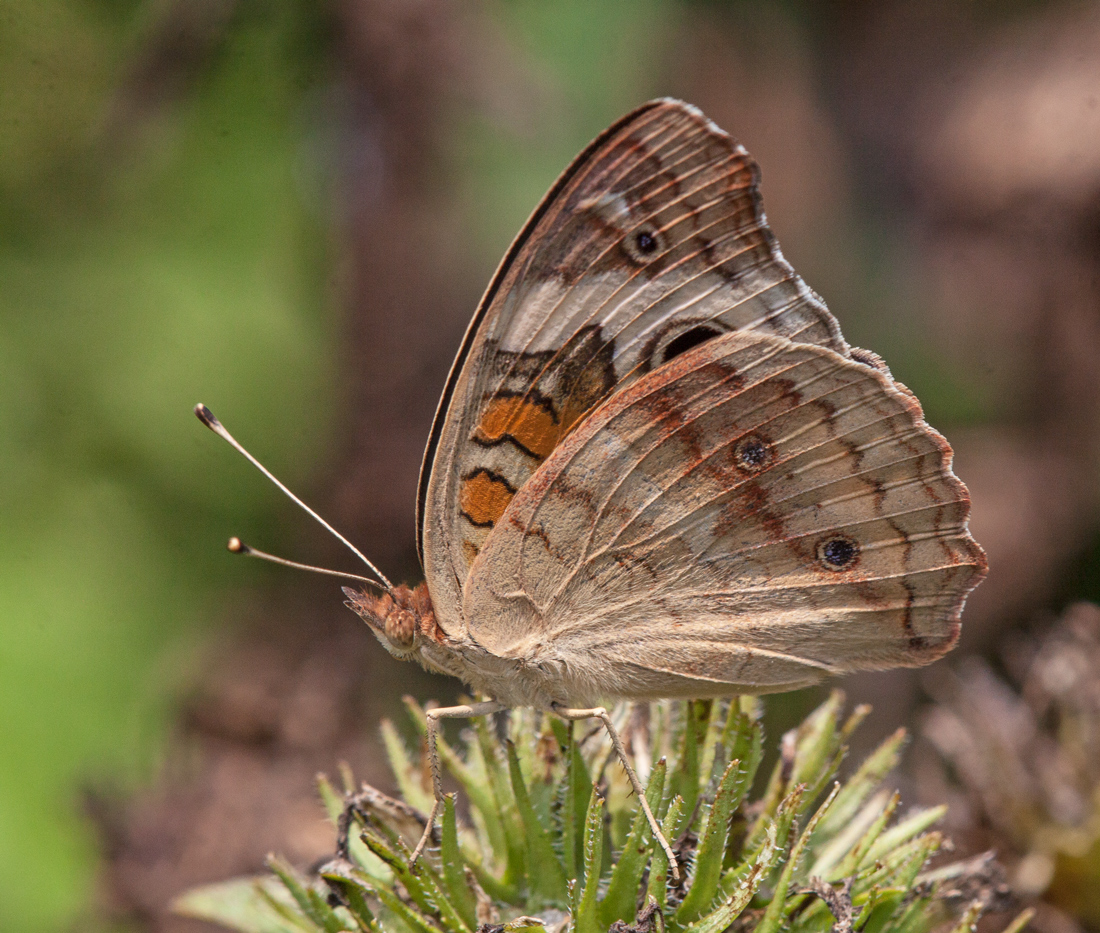
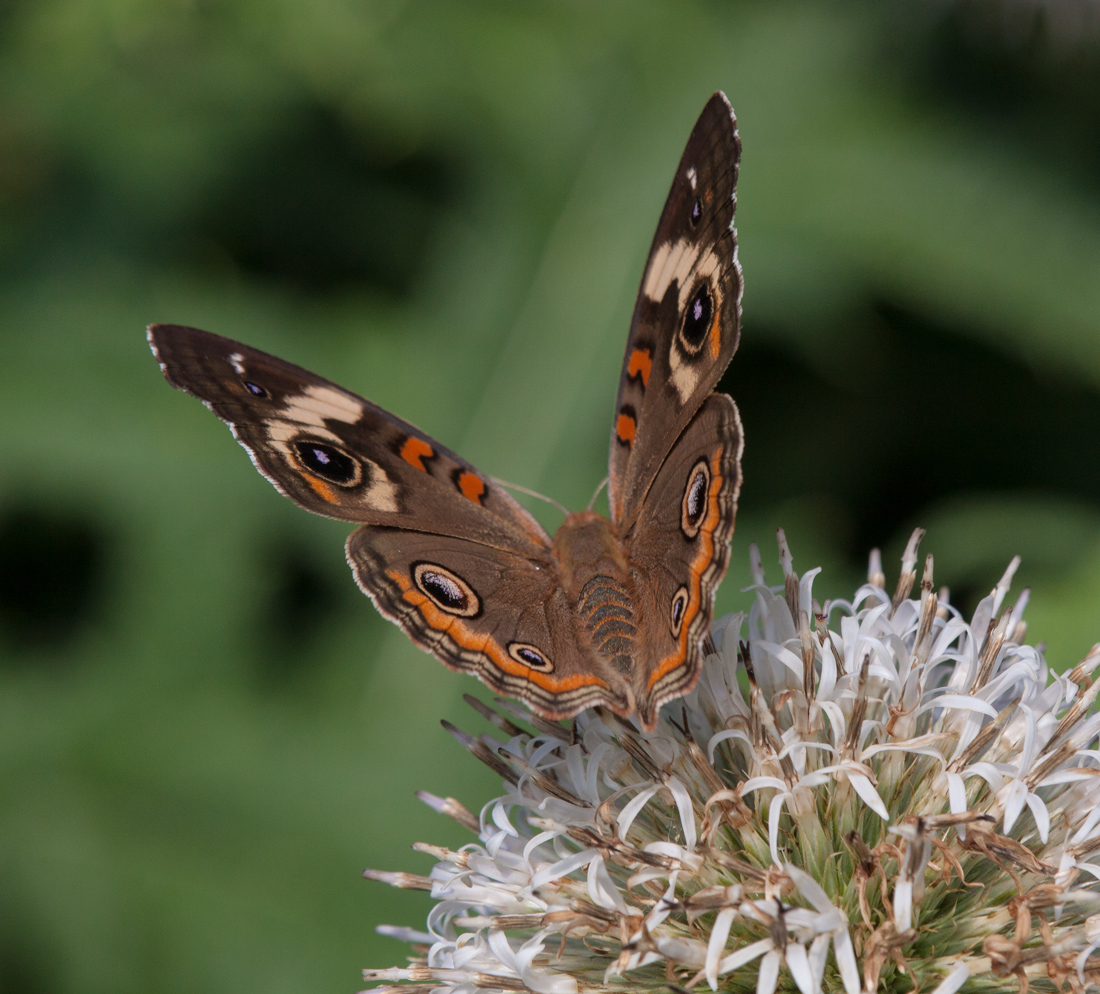
Although I don’t live in Ohio, nicknamed “The Buckeye State,” I think that I can claim that Virginia also is a Buckeye state, because we are a home to the uncommonly beautiful Common Buckeye butterfly (Junonia coenia).

Common Buckeye butterfly

I have seen few colorful butterflies so far this summer, besides the Great Spangled Fritillary butterflies that I featured in a posting in June. Where are all the Monarchs and Eastern Swallowtails? I don’t know if they were affected by the polar vortex of this past winter or if I am merely looking for them in all the wrong places, but their numbers seem to be unusually low this summer.

I was therefore thrilled this past Monday, when I caught sight of this Common Buckeye. Its coloration is so distinctive that I immediately recognized it and chased after it a bit. Fortunately I was able to capture several images of this beautiful creature before it flew out of sight.

Looking at these images, I am happy to proclaim that I live in a Buckeye state.

buckeye3_blog

buckeye2_blog

© Michael Q. Powell. All rights reserved.

Read Full Post »

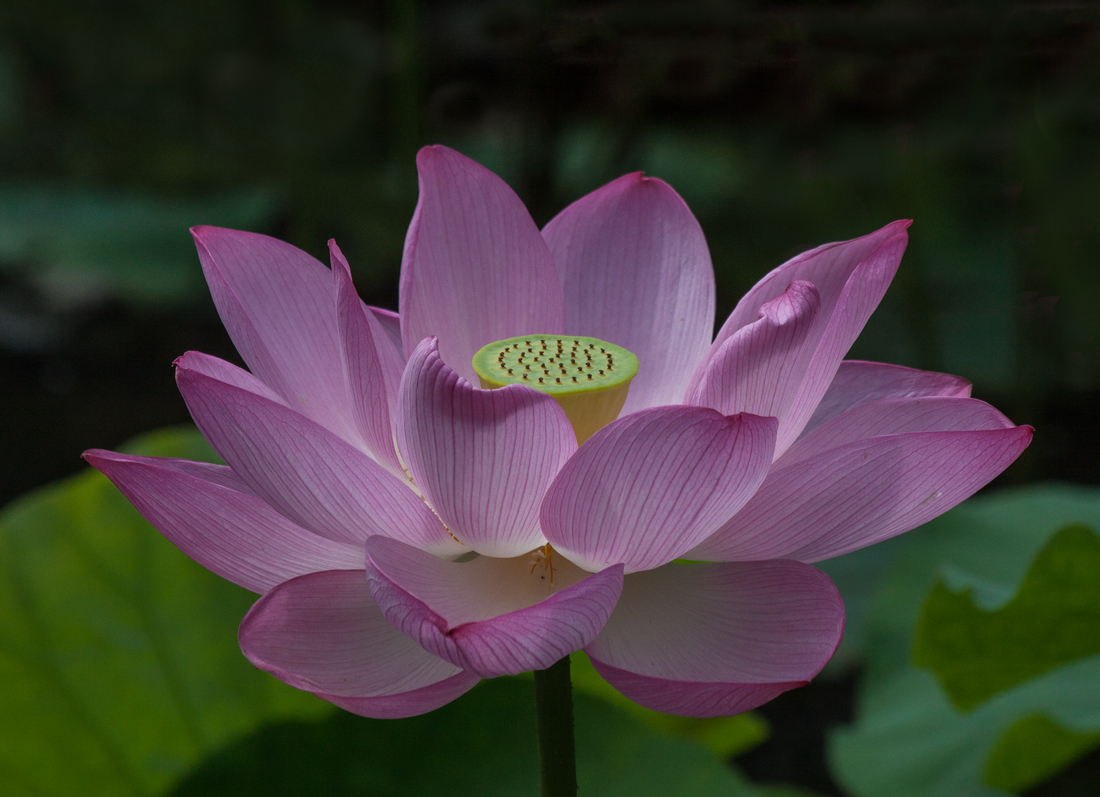
I simply love the exquisite beauty of lotus flowers.  A sense of tranquility seems to fill me during those moments when I am able to drink in their beauty, especially when I am alone.

I took these shots in mid-morning at Green Spring Gardens, a county-run facility that has two small, man-made ponds, in addition to the extensive gardens. The ponds are one of my favorite places to shoot when my time is limited and in the past I have captured some wonderful images of turtles, frogs, birds, and dragonflies. What makes the ponds really special for me, though, is that there are water lilies and lotuses at this time of the year.

I am experimenting with presenting my photos in the Gallery format. If you click on any one of the images, you can scroll through each of them in succession in full size. Let me know if  you think it works better than presenting each shot individually.

lotus3_blogWhen the lotus flowers are completely open, it is a real joy to be able to look inside the flower and glimpse the cylindrical seed pod, which contrasts wonderfully with the delicate pink petals in color as well as texture. I took these shots in the middle of the morning, which is usually a less than optimal time of day for lighting. In this case, though, the light, which was often coming from behind the flowers, helped to highlight the flowers and created some interesting shadows.

© Michael Q. Powell. All rights reserved.

Read Full Post »

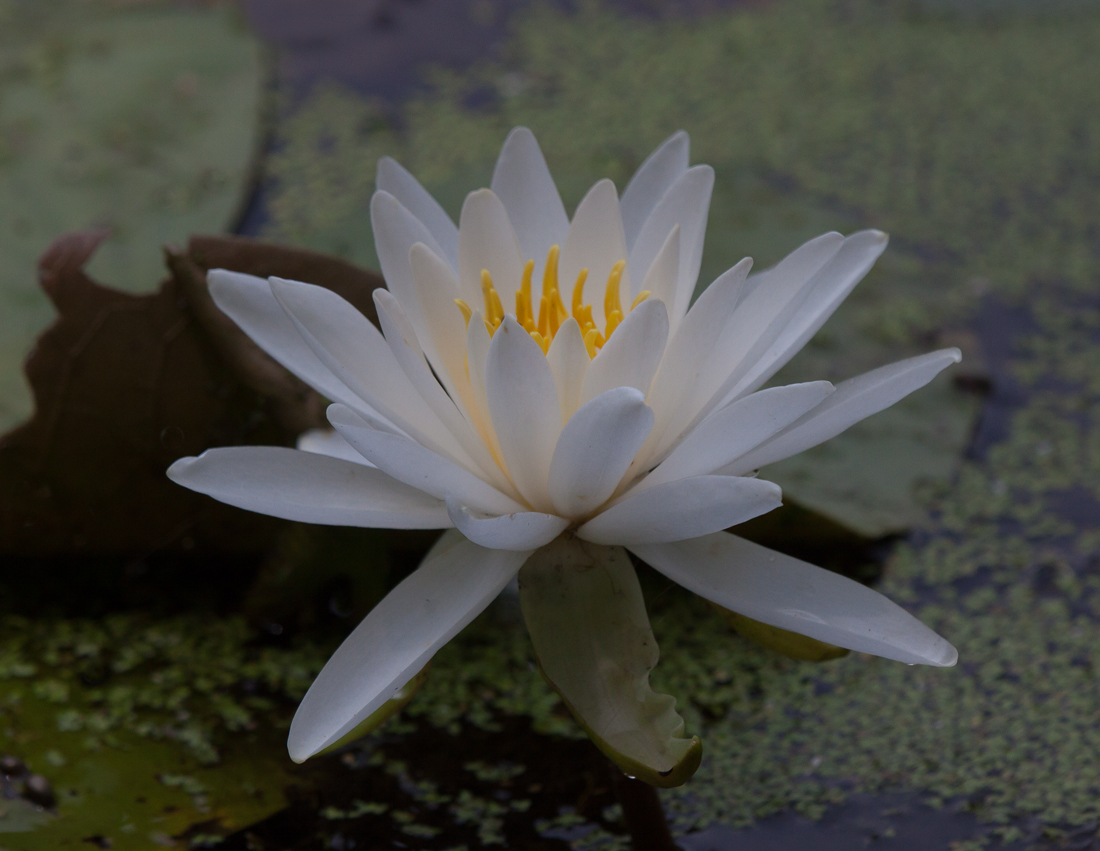
Some amazingly beautiful water lilies were in bloom at a local garden yesterday morning and seemed to be glowing from within.

Green Spring Gardens is a county-run historic garden just a few miles from where I live. I used to shoot there really often, but have been spending more time instead at my local marshland park. A couple of recent postings by Rob Paine on his blog I see beauty all around reminded me of the beauty of this garden and I spent several hours there yesterday, getting shots, primarily of the water lilies, lotus flowers, and dragonflies.

This image is a sneak preview of yesterday’s shoot, with more to follow in the near future.

lily1_blog

© Michael Q. Powell. All rights reserved.


Read Full Post »

« Newer Posts - Older Posts »