Feeds:
Posts
Comments

Posts Tagged ‘Canon SX50’

Do you like to go off in pursuit of rare and exotic species to photograph? Most of the time I am content to travel again and again to familiar places, searching for both old and new species to photograph.

Yet I guess that I have a bit of an adventurous streak too, for my interest sparked when fellow blogger and dragonfly enthusiast Walter Sanford informed me that he had spotted one of the rarest dragonfly species in our area, the Sable Clubtail (Stenogomphurus rogersi). What makes this dragonfly so rare is that it is found only in a very specific type of habitat and it only for a very short period of time each year.

I was still a bit jet-lagged this past Saturday morning, having returned the previous afternoon from my week-long trip to Brussels, but decided to see if I could find this elusive dragonfly. Walter and I had searched for dragonflies in this area before, so I more or less understood where he had seen the Sable Clubtail dragonflies when he described the location to me.

In retrospect, though, I probably should have done a little more homework, because I suddenly realized as I began my search that I didn’t know very well the distinguishing characteristics of a Sable Clubtail. I knew that the tip of its “tail” (actually its abdomen) was somewhat enlarged, because it was part of the “clubtail” family and I remembered from a photo that extreme end of the “tail” was curved. Beyond that, I was somewhat clueless and I was a little disappointed later in the day when I thought that I had not seen a Sable Clubtail dragonfly, but only some Unicorn Clubtail dragonflies.

I am happy to say that I was wrong in my identification of the species that I had photographed—in my ignorance, I had missed some diagnostic clues that should have told me immediately that I was shooting a Sable Clubtail. Of course, if you never have seen a species before, it’s easy to categorize it as something that you have seen.

Here are a few images from my encounter with a Sable Clubtail. The different angles any varying perches help to highlight the beautiful markings of this dragonfly and its very striking eyes.

I am not quite ready to quit my job and travel the world in search for rare dragonflies, but it was exciting to play the role of an adventurer for a day—a tiny bit of Indiana Jones—and gratifying that I was able to find the treasure that I was seeking, the Sable Clubtail dragonfly.

Sable Clubtail

Sable Clubtail

Sable Clubtail

© Michael Q. Powell. All rights reserved.

Read Full Post »

The eaglets in one of the two nests that I have been monitoring at Occoquan Bay National Wildlife Refuge appear to be almost full grown, but both of the parents were still keeping a watchful eye on them this past Saturday.

On this day I was shooting with my Canon SX50 superzoom camera and was able to zoom out and give you a sense of the relative position of the nest and the branches on which the adult Bald Eagles (Haliaeetus leucocephalus) were perched. I have featured this perch, which appears to be a favorite spot for these eagles, several times in this blog, but to the best of my knowledge this is the first time to show you the nest itself.

As you can see, the leaves have returned to the trees and it is getting harder and harder to get unobstructed shots of the eagle nest. I was hoping to get a shot of both of the eaglets, but the second one remained elusive and was hidden from view the entire time that I observed the eagles.

It would also have been nice to shoot from an angle in which the lighting was better, but essentially there was only a single location from which I had a clear visual path to the nest. I did change position for the shot of the two adults—the lighting was somewhat better, though I was still shooting through a tangle of branches. Sometimes you just have to take what you get and make the best of it.

Bald Eagle eaglet

Bald Eagle

Bald Eagle

© Michael Q. Powell. All rights reserved.

Read Full Post »

Many dragonflies are colored with muted shades of green and brown and blend in well with their environments. Some, though, are more boldly colored and are hard to miss when they are present.

That is definitely the case for this Scarlet Darter dragonfly (Crocothemis erythraea) that I spotted last week at the Rouge-Cloître Park in Brussels, Belgium. I first noticed the bright red color of this dragonfly when it zoomed across my line of sight and I was thrilled later in the day when one accommodated me by landing on the ground not far from where I was standing.

Scarlet Darter

Scarlet Darter

© Michael Q. Powell. All rights reserved.

Read Full Post »

When this bird spread its wings and left them open last week at a small pond in Brussels, I instantly knew it was a cormorant. Cormorants have to frequently dry out their wings, because their feathers are not completely waterproof like some other water birds. It sounds like that would be a problem, but it actually is an advantage for them. Their waterlogged feathers help them to dive deeper, kind of like a weight belt that a deep-sea diver might wear.

It turns out that this is a Great Cormorant (Phalacrocorax carbo), a larger and somewhat darker cousin of the Double-crested Cormorants that live in our area.

Great Cormorant

Great Cormorant

© Michael Q. Powell. All rights reserved.

Read Full Post »

Although I saw Eurasian Coots (Fulica atra) a few times when I was in Brussels, Belgium this week, I was especially thrilled to spot this juvenile coot interacting with one of its parents. The color pattern on the juvenile is quite different from the adult’s, but the shape of their bills definitely shows that they are both coots.

Eurasian Coots are similar in appearance to the American Coots (Fulica americana) that I am used to seeing, though it appears to me that the white frontal shield on the “forehead” of the coot seems more prominent on the Eurasian species.

As I was thinking about the word “coot,” I realized that most people use the word only in the expression “old coot.” It made me wonder why coots are associated with a somewhat disparaging term for older men. According to an article in the Hartford Courant newspaper, “If you’ve ever seen a coot — an ungainly marsh bird that bobs its head like a hen as it swims or walks — you can see why “coot” came to denote, by the 1700’s, “a harmless, simple person,” as in “an old coot.””

I love when I have the chance to photograph the interaction between two species or two members of the same species. In this case, the eye contact and body positions tell a story that scarcely requires words.

Eurasian Coot

© Michael Q. Powell. All rights reserved.


Read Full Post »

One of the most exciting things that I have observed during this brief trip to Brussels has been a family of Mute Swans (Cygnus olor) swimming in a small pond at the Rouge-Cloître park. I have seen swans a few times before in the wild, but I had never seen baby swans. As you might expect, they are really cute. Both of the parents seemed to be very attentive to the little ones and stayed close to them at all times. The baby swans, technically known as cygnets, seemed to be very curious and energetic and interacted a lot with each other as they explored the world.

Swan babies

Swan babies

Swan babies

© Michael Q. Powell. All rights reserved.

Read Full Post »

At several locations during this visit to Brussels, I have spotted large blue-and-green dragonflies flying patrols back and forth over the water. They reminded me a lot of the Common Green Darner dragonflies (Anax junius) that I see fairly often in my home area of Northern Virginia. I suspected correctly that Common Green Darners are a North American species and that the dragonflies that I was observing were European “cousins.”

It was not hard to establish that these are Emperor dragonflies (Anax imperator), a species that is also referred to as “Blue Emperor.” Because of their size and the fact that their territory seemed to be pretty small, it was easy to track the Blue Emperor dragonflies visually when they were flying. I had to wait a long time, however, for them to perch and then move quickly to get a shot when they did so. Their rest breaks frequently lasted only a few seconds and then they would begin to fly again.

I really like the blue and green color combination and the way that these colors coexist in both the bodies and in the eyes of these beautiful dragonflies.

Emperor dragonfly

Emperor dragonfly

© Michael Q. Powell. All rights reserved.

Read Full Post »

As I was exploring the Rouge-Cloître (Red Cloister) Park in Brussels, Belgium last weekend, I could hear some excited peeping coming from a heavily-vegetated area at the edge of a pond. Peering through the reeds, I could just make out the dark shapes and brightly-colored beaks of a pair of adult Common Moorhens (Gallinula chloropus).

As I kept watching I began to see several smaller shapes and realized there were baby chicks with the parents—there were at least three chicks and possibly more. The chicks and the parents remained mostly out of sight, but occasionally I got a partial glimpse of one of them through the vegetation as they moved about and managed to snap off a few shots.

I am also including a shot of an adult moorhen that I spotted earlier in the day at another park, in case you are not familiar with this bird species. In the photo you can’t help but notice that Common Moorhens have large feet that lack the webbing that we are used to seeing in ducks.

Common Moorhen

Common Moorhen

Common Moorhen

© Michael Q. Powell. All rights reserved.


Read Full Post »

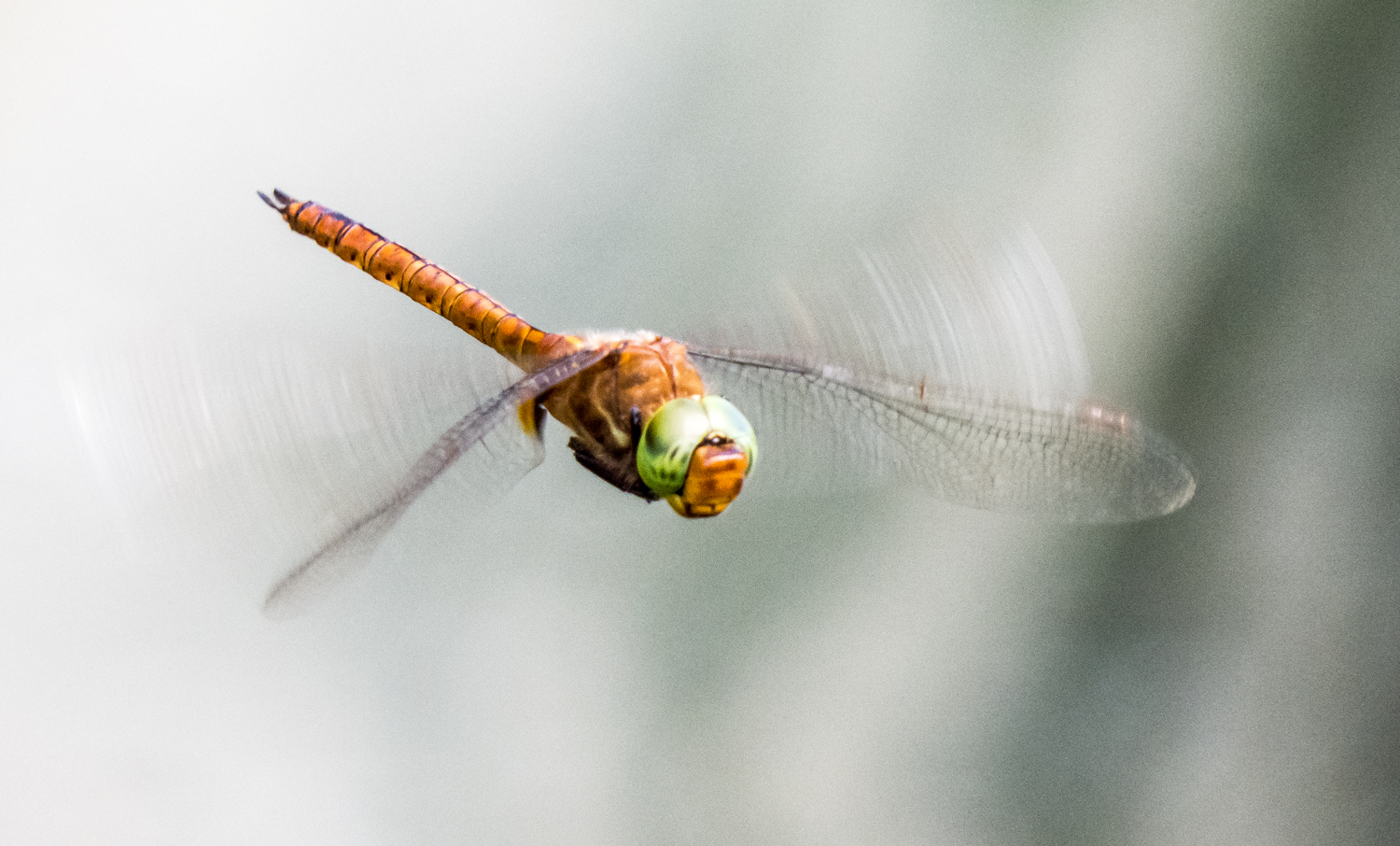
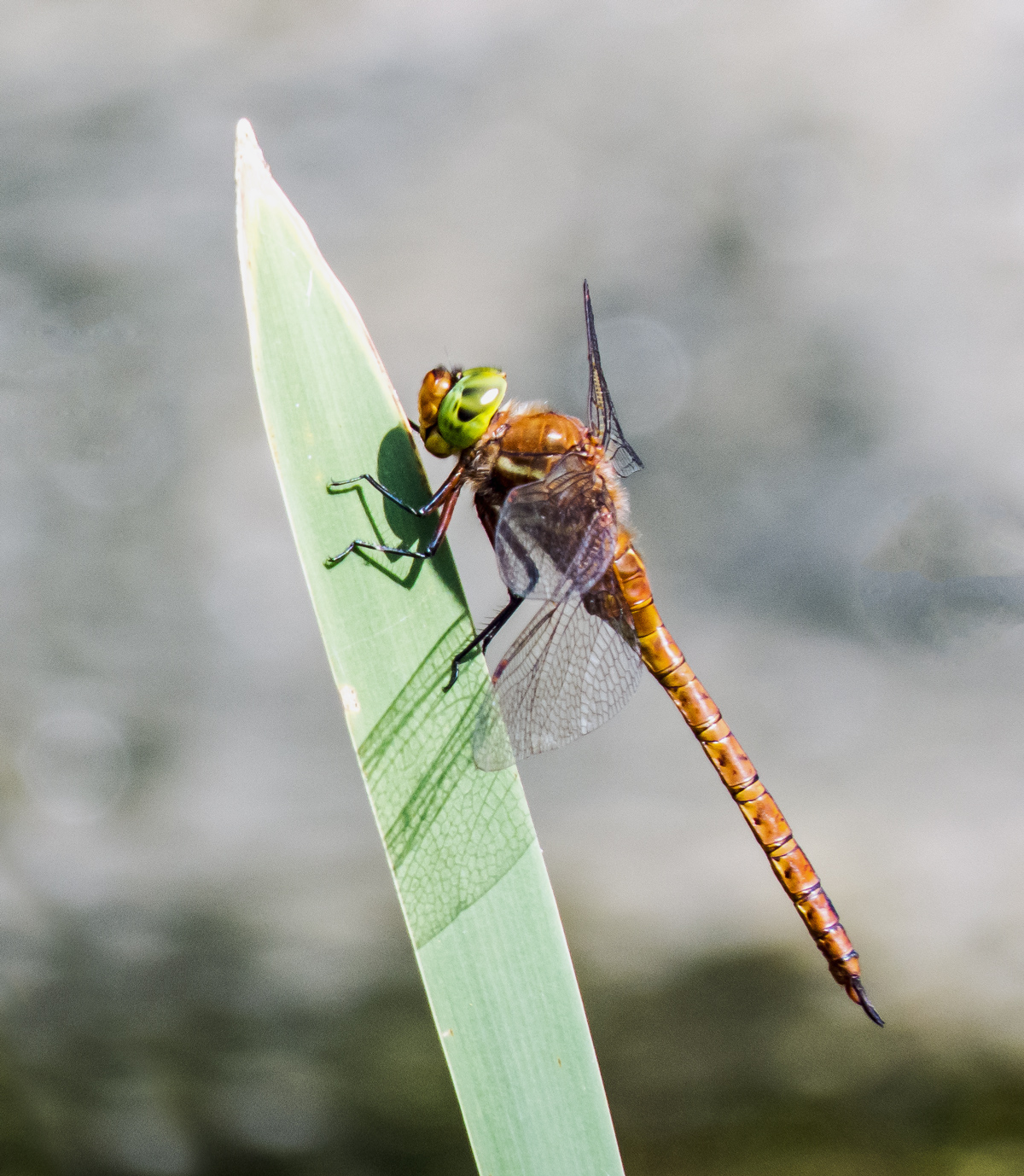
During this past weekend here in Brussels, I managed to find some really cool dragonflies, like this Green-eyed Hawker (Anaciaeschna isoceles or Aeshna isoceles) that I spotted at a pond in the Rouge-Cloître (Red Cloister) Park. This rather large dragonfly, also known as a Norfolk Hawker, is really striking as it flies, with a combination of colors that I have never seen before on a dragonfly.

With a bit of persistence and a lot of luck, I managed to capture an in-flight shot of a Green-eyed Hawker, but mostly I waited and waited for one to land. It was a little frustrating when one of them would land in a location that was too far away or in a location that did not afford me a clear shot, but eventually I was able to capture some images of a perching Green-eyed Hawker.

I was happy to capture the last photo that shows the yellow triangle on the upper part of the abdomen that is responsible for the “isoceles” portion of the Latin name of the species.

Green-eyed Hawker

Green-eyed Hawker

Green-eyed Hawker

© Michael Q. Powell. All rights reserved.

Read Full Post »

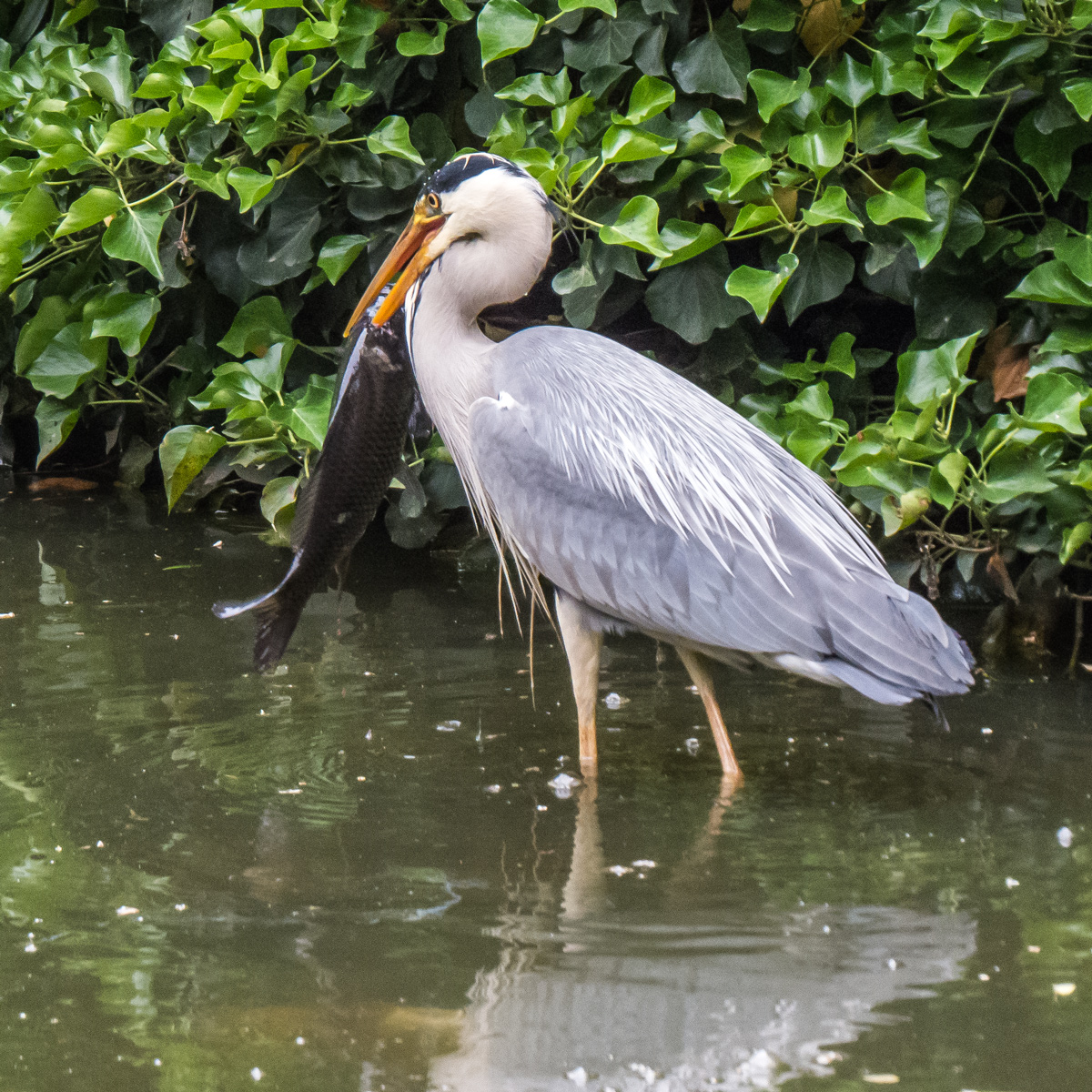
Grey Herons (Ardea cinerea), like this one that I observed at the Botanical Garden here in Brussels, look and act a lot like the familiar Great Blue Heron (Ardea herodias) of North America, but are a little smaller and slightly different colored. Shortly after it caught this big fish, the heron let it go or it somehow managed to escape—maybe they have a catch-and-release policy at this location.

Grey Heron

Grey Heron

Grey Heron

© Michael Q. Powell. All rights reserved.

Read Full Post »

Egyptian Geese (Alopochen aegyptiaca) have a look that is so unusual and distinctive that I can now recognize them almost instantaneously. I am fortunate to have the chance to travel to Brussels, Belgium a couple of times a year for work and one of my favorite places to visit here is the botanical gardens of Brussels. There is a small pond at the botanical gardens that always has an assortment of birds, and I was delighted to spot this beautiful Egyptian Goose swimming in the pond yesterday, my day of arrival in this historic city. I have seen an Egyptian Goose at this location a couple of times in the past, but the lack of surprise did not diminish at all my excitement at seeing this exotic species.

As their name suggests, Egyptian Geese are native to the Nile River area and sub-Saharan Africa, but there are now established breeding populations in parts of Europe and even in the United States. According to information in Wikipedia, Egyptian geese were considered sacred by the ancient Egyptians, and appeared in much of their artwork. They have been raised for food and extensively bred in parts of Africa since they were domesticated by the ancient Egyptians, although I suspect that they are viewed in Europe as primarily an ornamental bird.

Egyptian Goose

© Michael Q. Powell. All rights reserved.


Read Full Post »

When I am capturing wildlife images, I am usually driven by multiple motivations that sometimes come in conflict with each other. On the one hand, I am trying to capture reality, to record the presence of a given subject in a way that makes it recognizable and identifiable. On the other hand, I am trying to create art, by choosing compositional elements and camera settings that make an image that is visually pleasing to me.

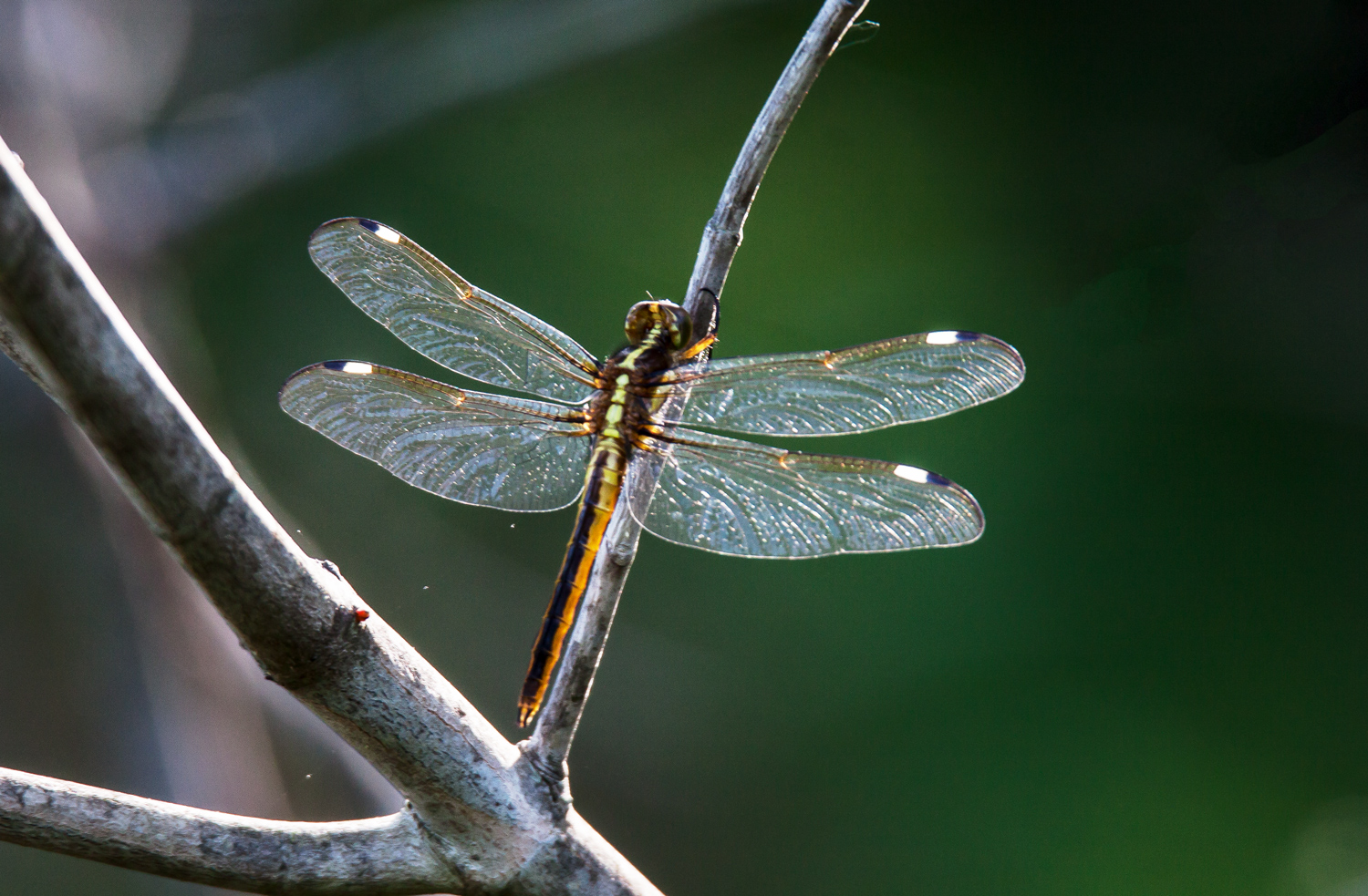
At this time of the year, dragonflies become one of my favorite subjects and I eagerly await the emergence of new species as we move deeper into spring and eventually into summer. This past Monday at Occoquan Bay National Wildlife Refuge, I noted that Spangled Skimmer  dragonflies (Libellula cyanea) are now with us. This species is pretty easy to identify because it is the only local species that has black and white stigmas—stigmas are the narrow rectangular patches of color that can be found on the front edges of the wings.

In the first image, a male Spangled Skimmer was pretty cooperative and let me capture one of my favorite type of dragonfly images—a head-on shot. In this kind of shot, the dragonfly’s body is almost always out of focus, but I am ok with that, because it forces the viewer to focus on the dragonfly’s amazing eyes.

The dragonfly in the second shot, which is an immature male Spangled Skimmer, had flown into a tree after I inadvertently spooked it. I loved the way that it was clinging to a branch. Shooting at an upward angle, I tried to simplify the background to draw attention to the branches as well as to the dragonfly. (As is often the case with dragonflies, immature male Spangled Skimmers initially have the coloration of adult females—eventually the dragonfly in the second photo will look like the one in the first image.)

Spangled Skimmer

Spangled Skimmer

© Michael Q. Powell. All rights reserved.

Read Full Post »

I was excited early on Friday morning to see my first Calico Pennant dragonflies (Celithemis elisa) of the season while exploring Occoquan Bay National Wildlife Refuge.  These small, brightly-colored dragonflies have become one of my favorites over the past year.

It is pretty early in their season and all of the ones that I spotted appeared to be immature—the patterns on the wings will soon get darker and more pronounced and bodies of the males, which start out yellow like those of the females, will turn red.

I have long wanted to capture shots of a dragonfly covered in morning dew or raindrops and the quest for these images helps motivate me to venture out early in the morning. If you click on the final photo and examine it at higher resolution, you will see tiny drops of water on the vegetation and a drop or two on the dragonfly’s wings. It’s not quite as I have imagined, but it is a good start.

Calico Pennant dragonfly

Calico Pennant dragonfly

Calico Pennant

© Michael Q. Powell. All rights reserved.

Read Full Post »

It’s taken a while, but I have finally spotted my first locally-born dragonfly of the season. Previously I had seen some Common Green Darner dragonflies, which were probably migrants from the south, but on Monday, the last day of April, I spotted this newly-emerged Blue Corporal dragonfly (Ladona deplanata) at Occoquan Bay National Wildlife Refuge.

I did not get a really good angle for this shot, so I can’t be absolutely certain of the dragonfly’s gender, but I think that it may be a male. One of the tricky things about identifying the gender of dragonflies is that immature males often look similar in coloration to females. If this is a male its abdomen will eventually turn blue in color, which helps explain the first part of the species name. As for the “corporal,” I have been told that this is a reference to the two whitish lines on the dragonfly’s thorax that resemble the two stripes that corporals wear as their rank insignia in the US Army.

The weather is warming up and I expect to be seeing a whole lot more dragonflies in the upcoming weeks and months. Unlike this Blue Corporal, some of them will perch above the ground rather than on in, which should permit me to get some more photogenic shots. Our weather this spring has been a bit crazy and the emergence of dragonflies seems to have been delayed, but with this spotting I can confidently state that the dragonfly season has started for me.

Blue Corporal dragonfly

© Michael Q. Powell. All rights reserved.

Read Full Post »

I will be heading home soon after my brief stay in Vienna, Austria and thought I would post a few last wildlife photos that I took here. These images help reinforce to me the notion that there is always something interesting in nature to photograph, no matter where I happen to be.

The first image is an unidentified species of frog that I encountered at the edge of a pond while wandering about the Donau-Auen National Park. It reminds me of the Southern Leopard Frog that I often see at home in Northern Virginia.

frog in VIenna

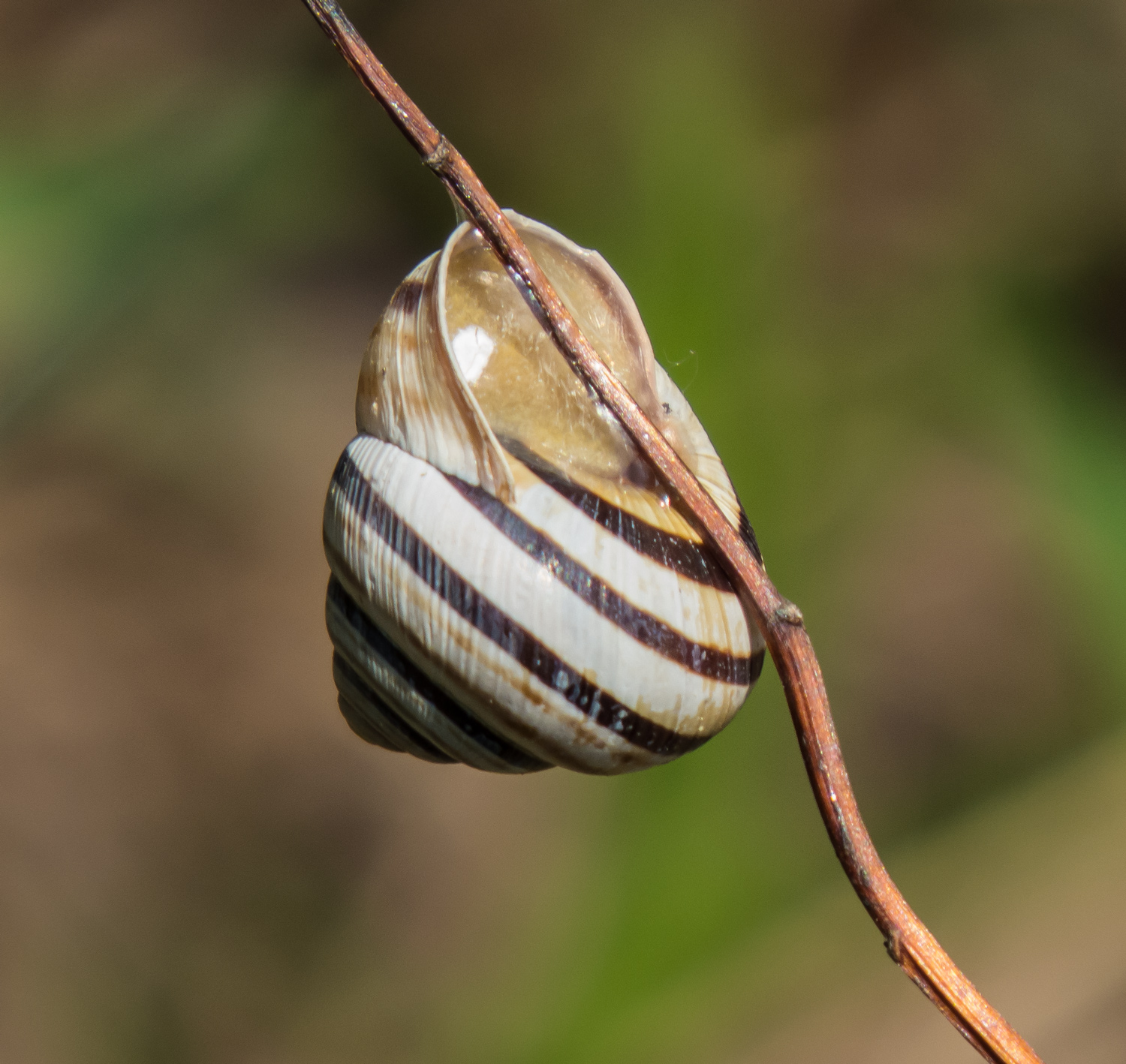
The second image appears to be a Viennese Banded Snail (Cepaea vindobonensis) that I also spotted in the National Park.  I thought that it was really cool the way that it had attached itself to the vegetation.

Viennese Banded Snail

The final image shows what I believe to be a Mute Swan (Cygnus olor) that I saw at the Stadtpark (“city park”) not far from the hotel where I am staying. I always find swans to be beautiful and graceful, even when located in an urban environment.

swan in Vienna

© Michael Q. Powell. All rights reserved.

Read Full Post »

Here are a few shots of butterflies that I spotted last weekend during a visit to the Donau-Auen National Park in Vienna, Austria. Unlike the brightly-colored larger butterflies that I sometimes see in gardens, these butterflies were small, rather drab in coloration, and very skittish. They also tended to perch on the ground, which made them a little tougher to photograph. In my experience, woodland butterflies tend to fit this general profile.

I particularly enjoyed chasing one butterfly, which is shown in the first and second images below. The butterfly is a species that I do not see at home and looks quite nondescript when its wings are closed. With the wings open, though, the butterfly reveals its beautiful colors and patterns—it is like a hidden treasure.

The other two butterflies are also quite beautiful, with wonderful muted tones and patterns.


butterfly in Vienna

butterfly in Vienna

butterfly in Vienna

butterfly in Vienna

© Michael Q. Powell. All rights reserved.

Read Full Post »

Dragonflies are amazing. They spend most of their lives as nymphs in the water before they crawl out, discard their exoskeletons, and become beautiful aerial acrobats. I photographed this probable Downy Emerald dragonfly (Cordulia aenea) last weekend at the Donau-Auen National Park in Vienna, Austria.

The object in the upper right in the first image is the discarded exoskeleton, often called an “exuvia,” and further down the vegetation is the dragonfly itself.  The dragonfly appears to have recently emerged from that same exuvia. Note how much longer the dragonfly’s body has grown after emergence. The wings of the dragonfly are not yet fully extended, suggesting that it still is in the process of emergence. If you look closely at the exuvia, you may notice some white stringy looking parts. These are the breathing tubes are part of the respiratory system that helped the dragonfly breathe while still a water-dwelling nymph.

I was standing on a relatively steep incline and the reed-like vegetation was growing out of the water, so it was a challenge to get a good angle to photograph the dragonfly. The second image was taken from a different angle from the first (and I was happy that I was able to keep from sliding into the water).

I proceeded down the trail for a while before looping back and returning to the spot where I had seen the dragonfly. I think the dragonfly in the final image may be the same one as in the first two shots, though obviously the perch is not the same. After dragonflies have emerged, they generally have to wait some time for the wings to harden and for their metamorphosis to be complete.

dragonfly in Vienna

dragonfly in Vienna

dragonfly in Vienna

© Michael Q. Powell. All rights reserved.
Read Full Post »

Damsels in Vienna? Here are a few shots of some beautiful little damselflies that I encountered this past weekend during a visit to the Donau-Auen National Park in Vienna, Austria.

While traveling for work I normally leave at home my Canon DSLR and big lenses and use instead a Canon SX50 point-and-shoot camera with a super zoom lens. There are some compromises and limitations with this type of camera, but I am quite pleased with the results I can achieve using it, including these almost-macro images.

damselfly in Vienna

damselfly in Vienna

damselfly in Vienna

© Michael Q. Powell. All rights reserved.


Read Full Post »

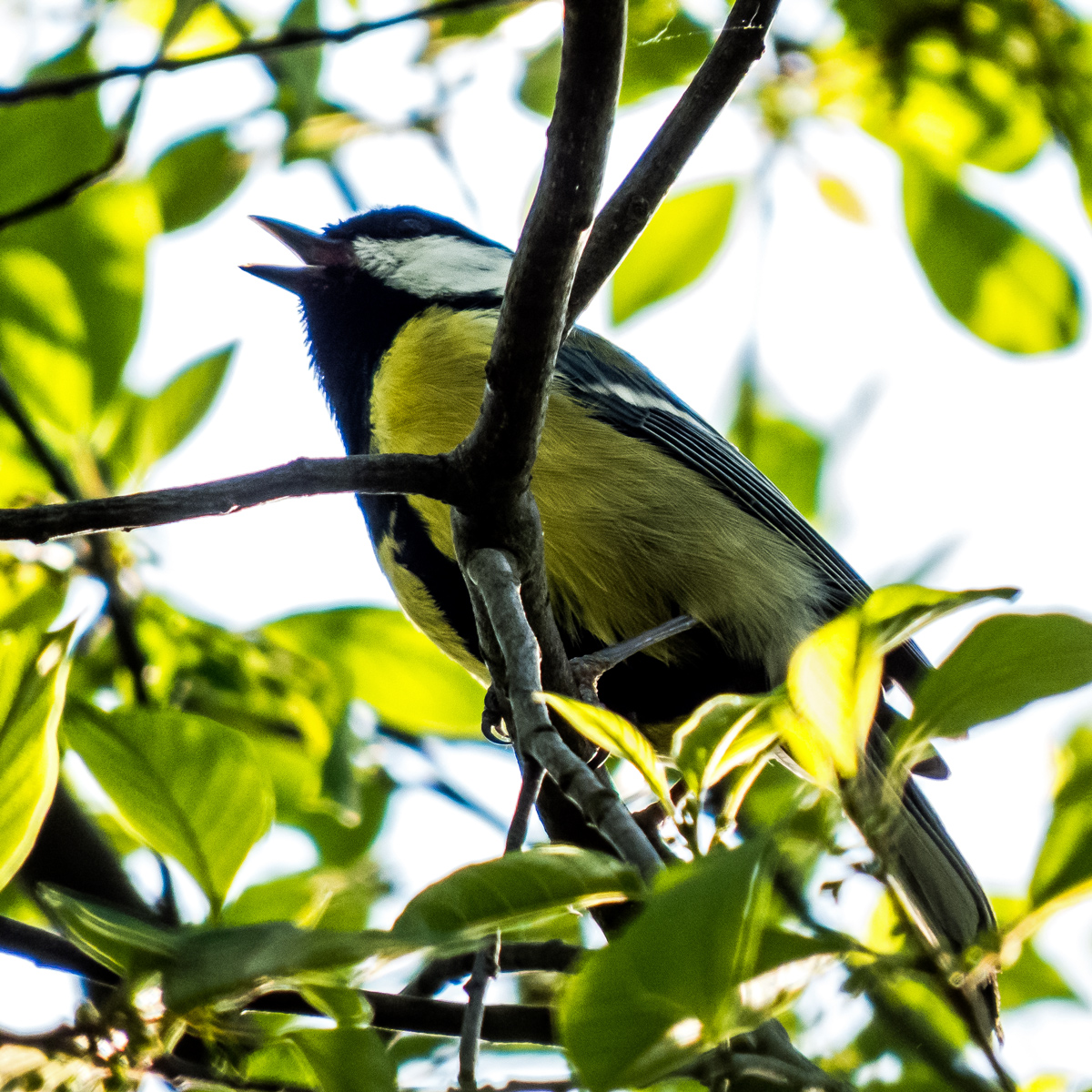
Finding birds is tough when the leaves are on the trees, but I did manage to spot this cool-looking one here in Vienna, Austria while visiting the Donau-Auen National Park. If this bird had remained quiet, there is no way that I would have been able to find it, but fortunately for me it was singing loudly.

I did a quick internet search, but so far I have not yet been able to identify it. I’d welcome identification assistance, particularly from someone with experience with European birds.

UPDATE: Thanks to the assistance of a number of viewers, I have been able to identify this bird as a Great Tit (Parus major), a widespread and common species throughout Europe, the Middle East, Central and Northern Asia, and parts of North Africa.

singing bird in Vienna
© Michael Q. Powell. All rights reserved.

Read Full Post »

I have been to Vienna, Austria often enough in the past 25 years that I have seen most of the big tourist sights. Now, when I have a bit of free time in the city, as I did yesterday, I like to go exploring in the Donau-Auen National Park and seek out wildlife.

I was thrilled when I spotted dragonfly in flight and was able to photograph it after it landed high in a tree. It is not a species with which I am familiar, but fellow bloggere and dragonfly enthusiast Walter Sanford suggested that it is of the Emerald family and I tend to agree with him.

dragonfly in Vienna

© Michael Q. Powell. All rights reserved.

Read Full Post »

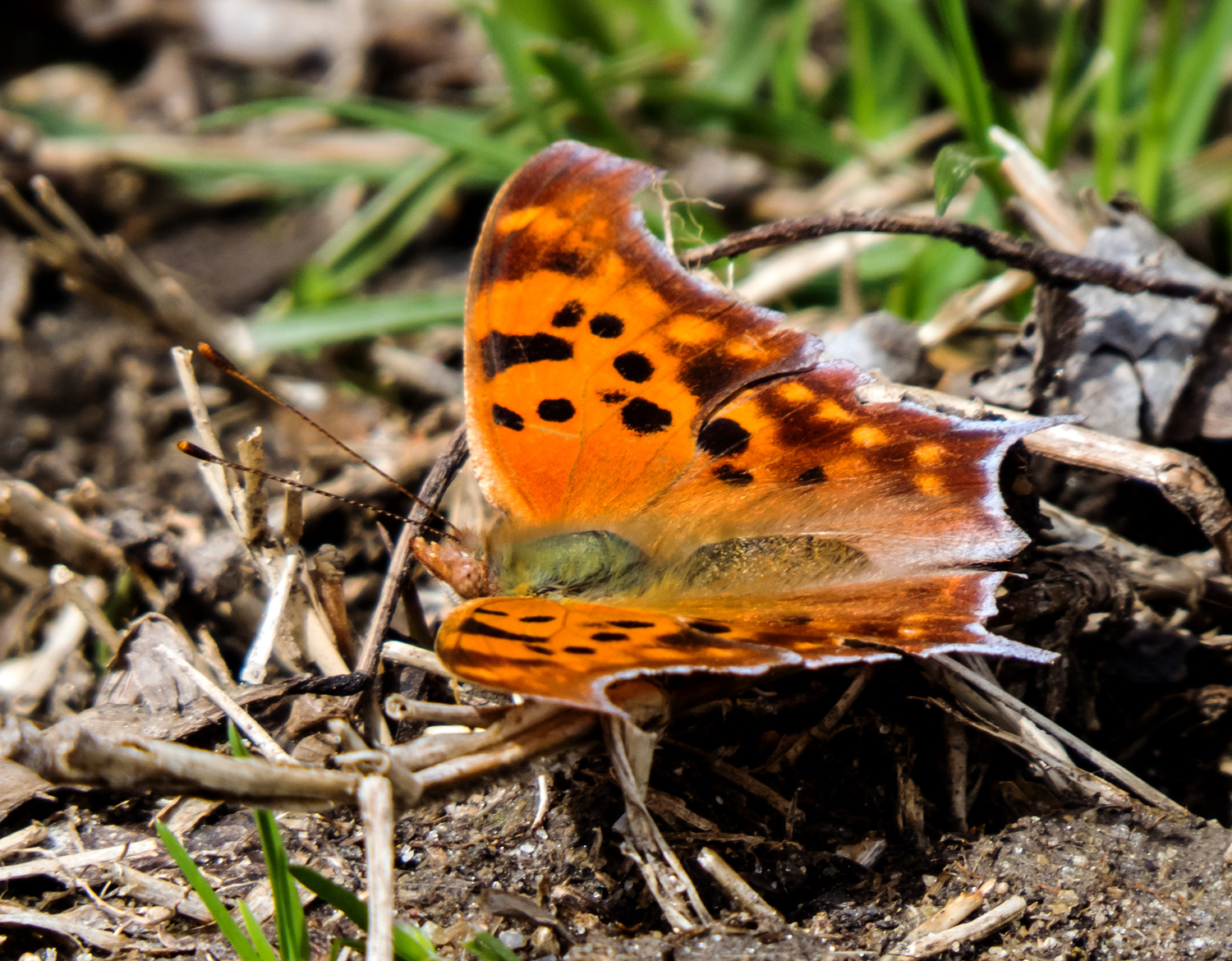
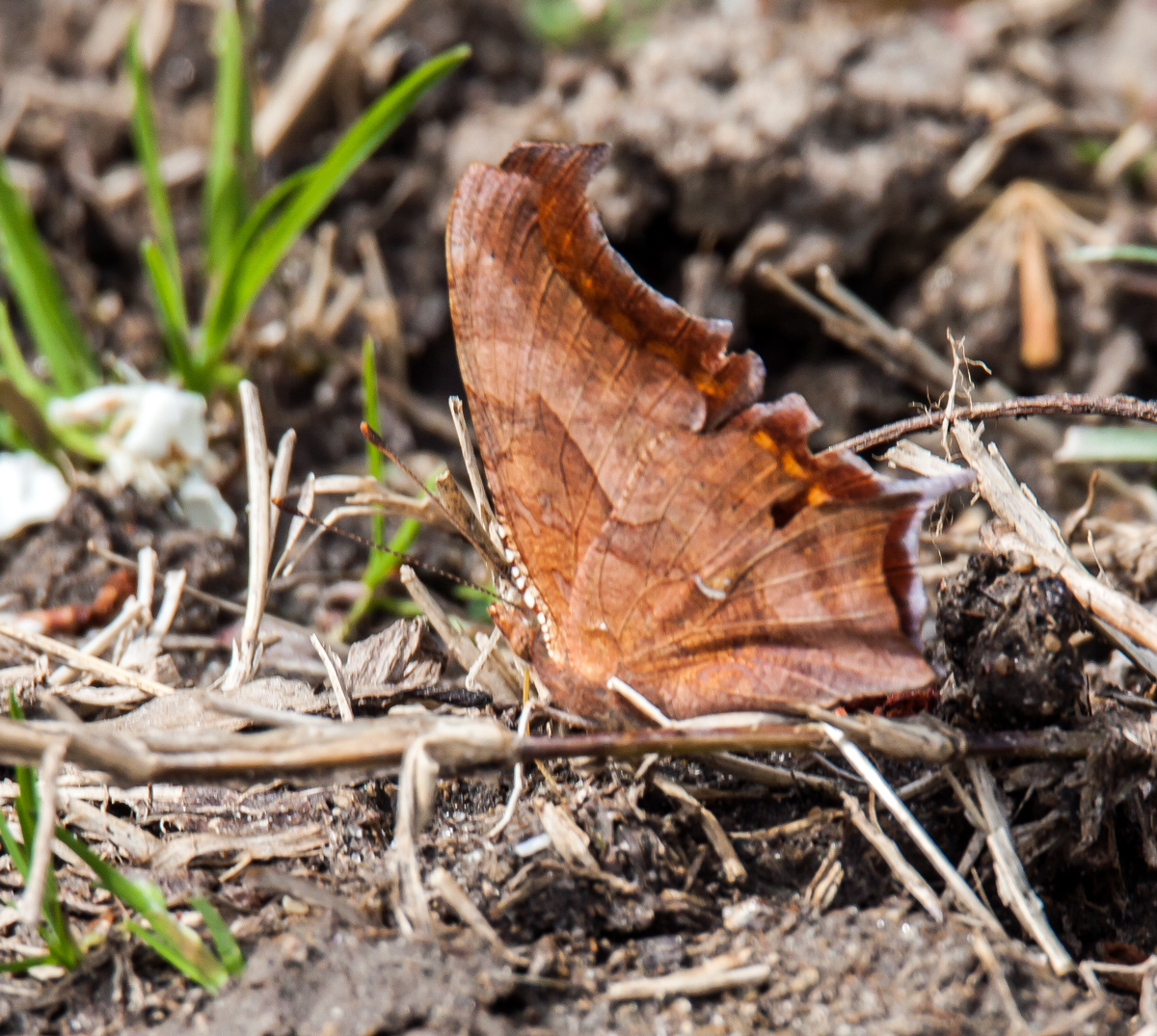
We have had colder than normal weather this past week, so I was quite shocked to see a fairly large orange and black butterfly last Friday fluttering about at Occoquan Bay National Wildlife Refuge. Actually, when the butterfly opened its wings I could see its bright colors, but it kept them closed, the butterfly blended in well with the background and look simply like another fallen leaf.

In our area there are two butterflies that are very similar in appearance and I knew that this one was either and Eastern Comma (Polygonia comma) or a Question Mark (Polygonia interrogationis) butterfly. I am often amused by the names given to species in nature and I wonder what kind of a personality some has that decides to name two butterfly species after punctuation marks—almost certainly it was a scientist and not an artist.

You can tell the two species apart by the markings on both the outer and inner wings and I concluded that this one is probably a Question Mark. If you are curious about the differences, check out a posting by TrekOhio called “Butterflies that Punctuate: The Eastern Comma and the Question Mark” that goes into some detail in explaining how to tell the species apart.

In the next few days, the weather is supposed to warm up and hopefully more colorful insects will appear (and maybe even some more birds). It’ll be fun to see what I can find and photograph.

Question Mark butterfly

Question Mark butterfly

© Michael Q. Powell. All rights reserved.
 

Read Full Post »

Perched high in a distant tree, this first Great Egret (Ardea alba) of the spring made an appearance for me on Thursday morning at Occoquan Bay National Wildlife Refuge. I love this egret’s long feathery breeding plumage.

My only regret is that I was unable to get a closer look at this beautiful bird. The egret seemed content to remain in its standing perch for a long time—perhaps it was tired from an extended migration flight. I don’t yet know if this was merely a resting spot for the egret or if it will remain in our area.

Great Egret

© Michael Q. Powell. All rights reserved.


Read Full Post »

No trip to Brussels is complete without a visit to see the statue of the Manneken Pis, the little boy that is one of the symbols of the city. Yesterday he was dressed in a costume that I have not yet been able to identify, but looks Scottish to me.

The little boy has hundreds of different costumes that he wears on special occasions, but the poor fit of this one makes me wonder if it might be an “unofficial” costume that was put on the statue as a prank.

Manneken Pis

© Michael Q. Powell. All rights reserved.


Read Full Post »

I don’t often shoot landscape images, but I was so taken with the stark beauty of the ice-covered world that I encountered on New Year’s Day at Occoquan Bay National Wildlife Refuge that I decided that I should attempt to capture a sense of the moment. I used the wide-angle capabilities of my Canon SX50 superzoom camera in the first two images below and shot the third one with the Tamron 150-600mm lens, the lens that I use on my Canon 50D for a significant number of my the photos featured on this blog.

icescape

icescape

icescape

© Michael Q. Powell. All rights reserved.

Read Full Post »

On the day of my arrival in Brussels, Belgium for a short business trip, I went for a short walk in the botanical garden, one of my favorite spots to visit in this city. It is within walking distance of my hotel and is one of the few places where I know I can find a taste of nature in the crowed inner city area of Brussels.

Initially I noted only a few mallard ducks and moorhens in the small pond at the botanical garden, but when I looked more closely, I spotted a couple of spectacularly-colored ducks sleeping in a remote corner. I wasn’t sure what they were, but that did not deter me from taking some photos of them. When I went searching on the internet for the species of ducks in Brussels, none of them seemed to match the ones that I had seen. So I switched to searching using more descriptive terms and discovered that the birds were not ducks, but were in fact geese—Egyptian Geese.

As their name suggests, Egyptian Geese (Alopochen aegyptiaca) are native to the Nile River area and sub-Saharan Africa. There are now established breeding populations in parts of Europe and even in the United States.

I took this photo with my Canon SX50, a superzoom point-and-shoot camera that I usually take with me when I travel. As you can see from this image, the camera is capable of capturing a pretty good amount of detail and color.

Egyptian Goose

© Michael Q. Powell. All rights reserved.
Read Full Post »

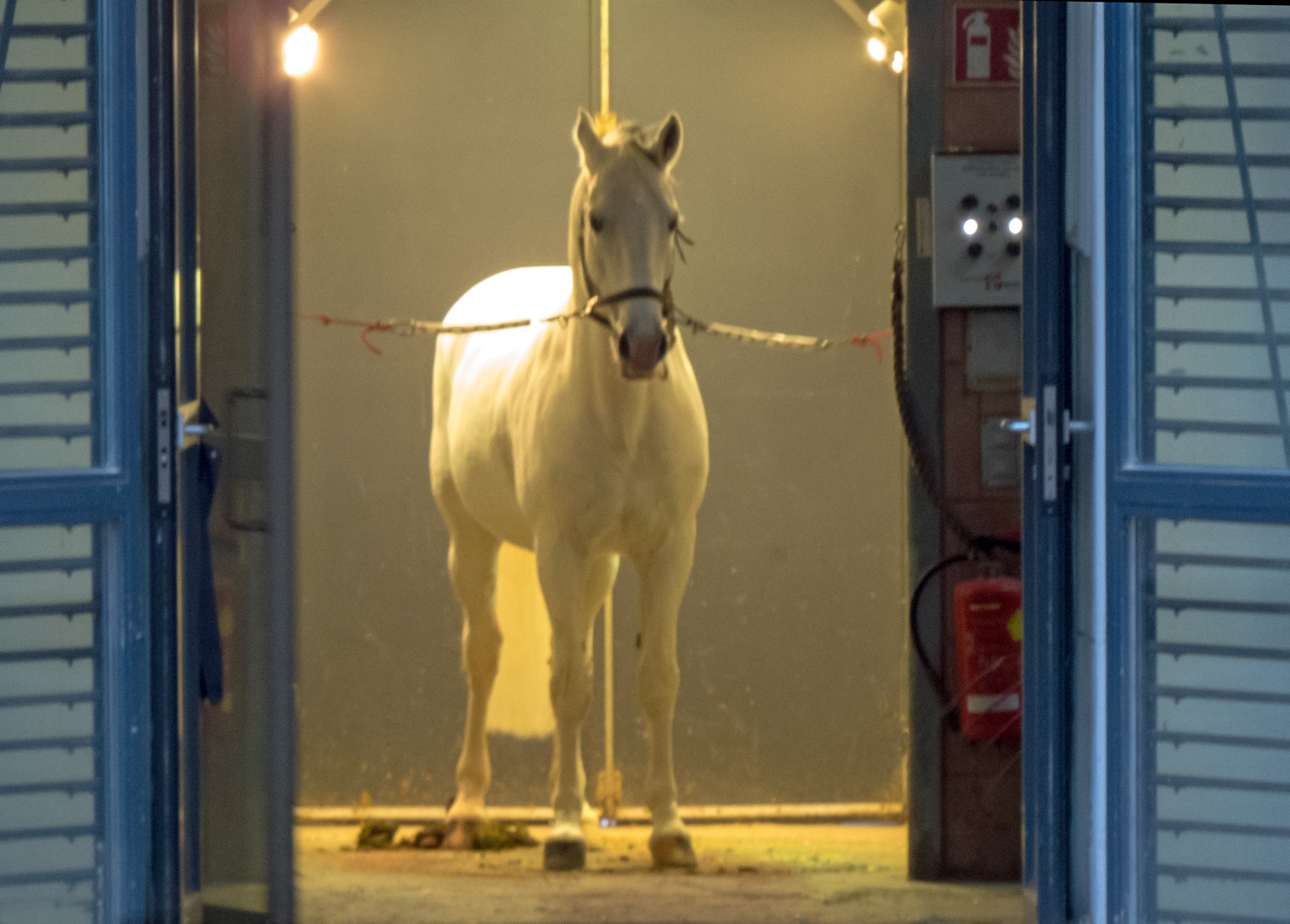
As I was walking to work through the streets of Vienna Friday morning, I passed by the Spanish Riding School in the Hofburg Palace and was thrilled to get a glimpse of some of the world-famous Lippizaner stallions. They were mostly hidden in their stalls, but occasionally one of these beautiful horse would pop its head out or a door would open briefly. I was also able to snap some quick photos as one of the horses was being prepared and was then walked across an open area.

Perhaps someday I will see a performance of the Lippizaners, but for now I am happy to have caught a glimpse of them on my last working day in Vienna for this trip.

Lippizaner

Lippizaner

Lippizaner

Lippizaner

© Michael Q. Powell. All rights reserved.

Read Full Post »

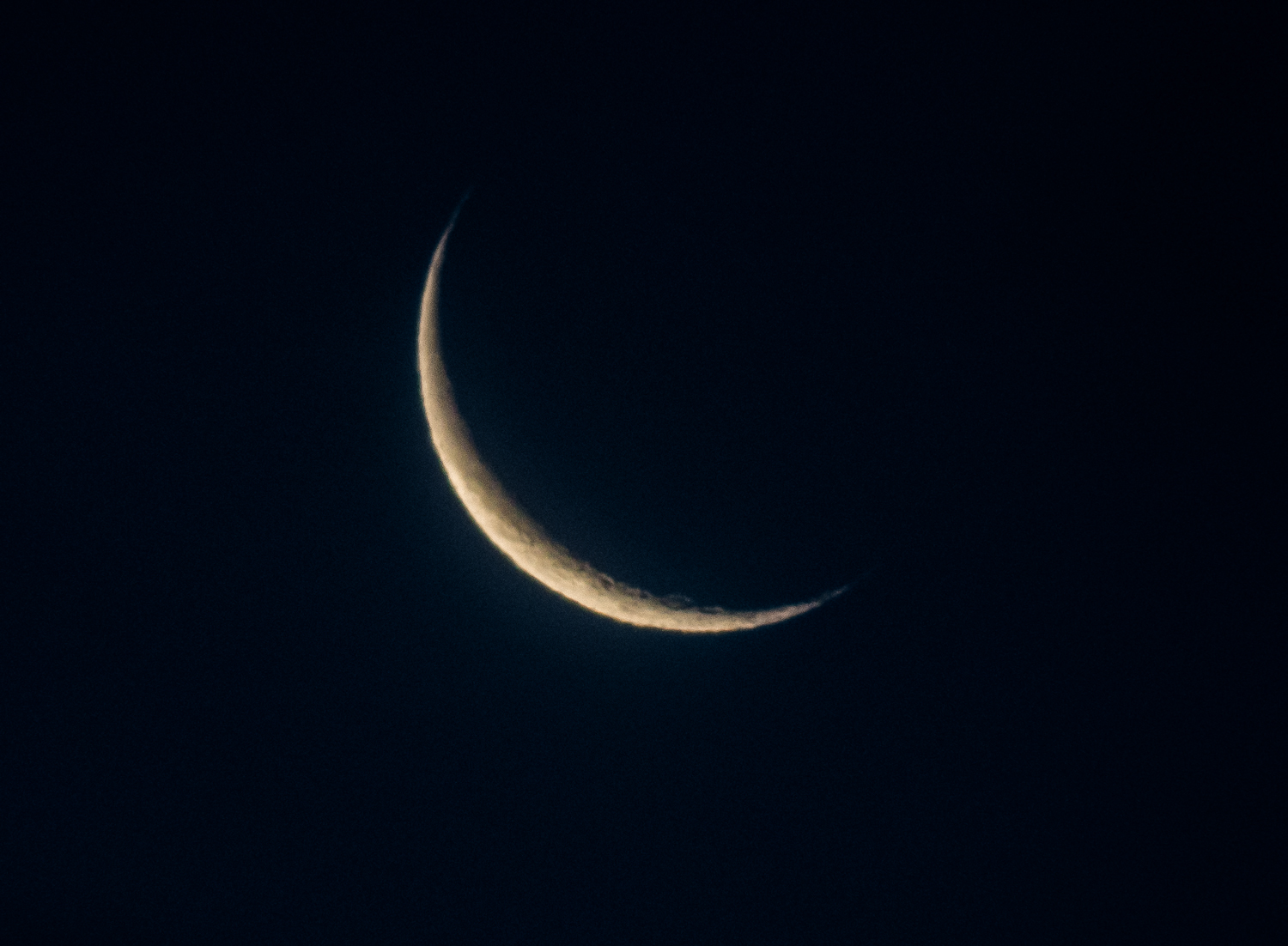
The view from my hotel room in Vienna seems to be mostly of ongoing construction work, but this morning it featured a touch of color as the sun slowly began to rise. A nice highlight was the sliver of a crescent moon still visible in the sky.

Vienna

Vienna

vienna

© Michael Q. Powell. All rights reserved.

Read Full Post »

In the middle of December, it starts to get dark really early in Vienna. As I was exploring one of the Christmas markets late in the afternoon a few days ago, my eyes were drawn to the interplay of light and shadows on the top of the building of the Museum of Natural History (Naturhistorisches Museum). Natural light was rapidly fading and the artificial lights began to come on, highlighting some of the architectural details of this magnificent building.

Folks passing by probably wondered why I was staring at this scene for an extended period, sometimes with my camera to my eye and sometimes with my naked eyes. We photographers are a peculiar breed.

Museum of Natural History

© Michael Q. Powell. All rights reserved.

Read Full Post »

I am in Vienna, Austria for a brief work trip and had a chance to stop by the Christmas Market in front of the Rathaus (City Hall). Even on a Monday afternoon, the market was crowded with shoppers. The market is noisy, busy, and a bit gaudy, but despite all of the commercialization, I could still feel the spirit of Christmas.

As the big sign in front of the market states in German, “Merry Christmas.”

Vienna Christmas Market 2017

Vienna Christmas Market 2017

© Michael Q. Powell. All rights reserved.

Read Full Post »

As I drove through the gates at Occoquan Bay National Wildlife Refuge this past Friday, a thick fog (or mist) was hanging low over the fields. The sun was just beginning to rise and it was still pretty dark. Although my goal for the day was to photograph birds, I decided to make an attempt at capturing the feeling of the moment and quickly realized the difficulty of that task—it’s a real challenge to capture the delicate nuances of light and shadows and the subtle shades of the rising sun when there is so little available light.

I felt a bit uncomfortable as I was shooting these images, a clear indication that I was way outside of my comfort zone, but I think it is good to try new approaches and subjects in order for me to keep on growing and learning as a photographer.


misty morning

autumn mist

autumn path

© Michael Q. Powell. All rights reserved.


Read Full Post »

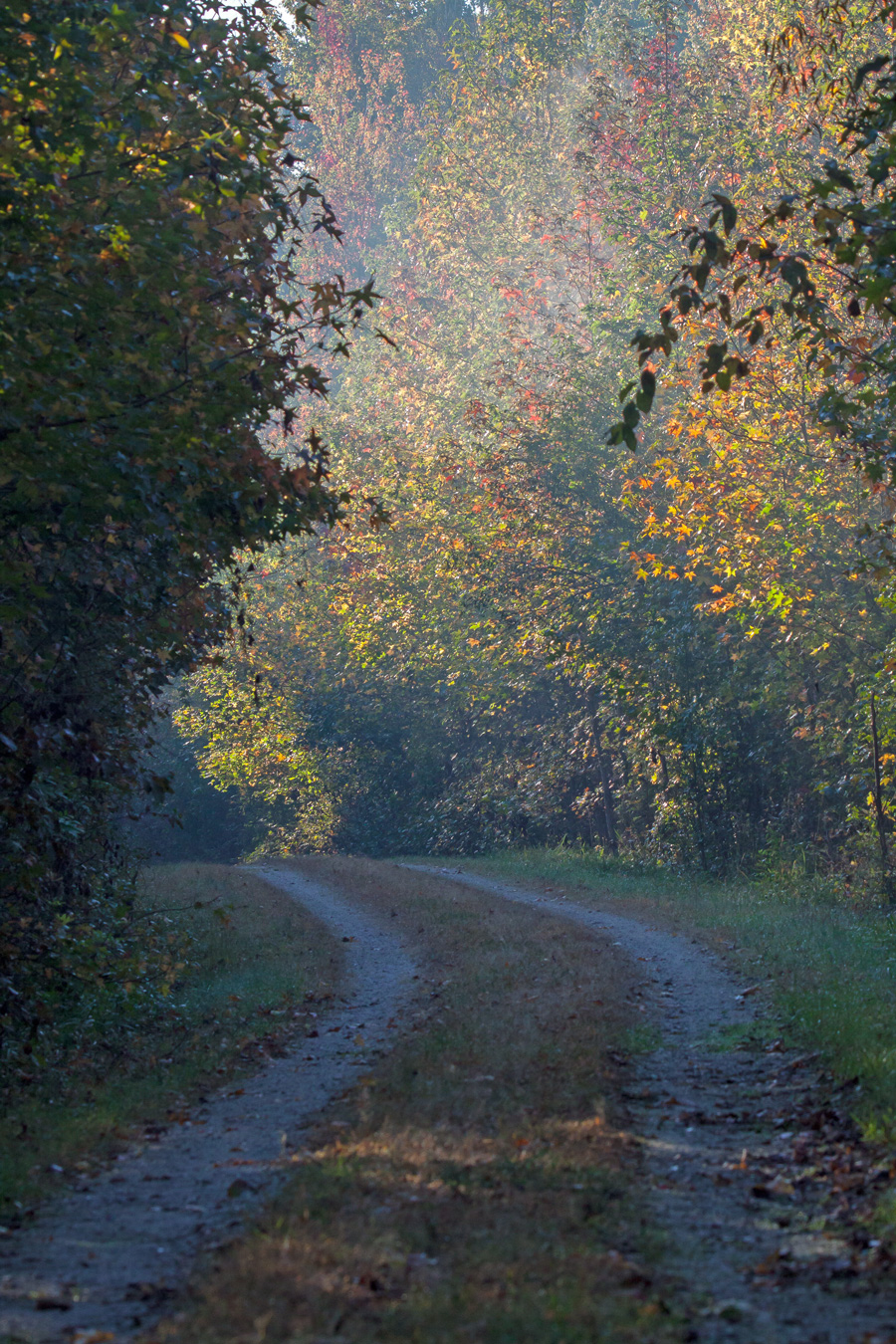
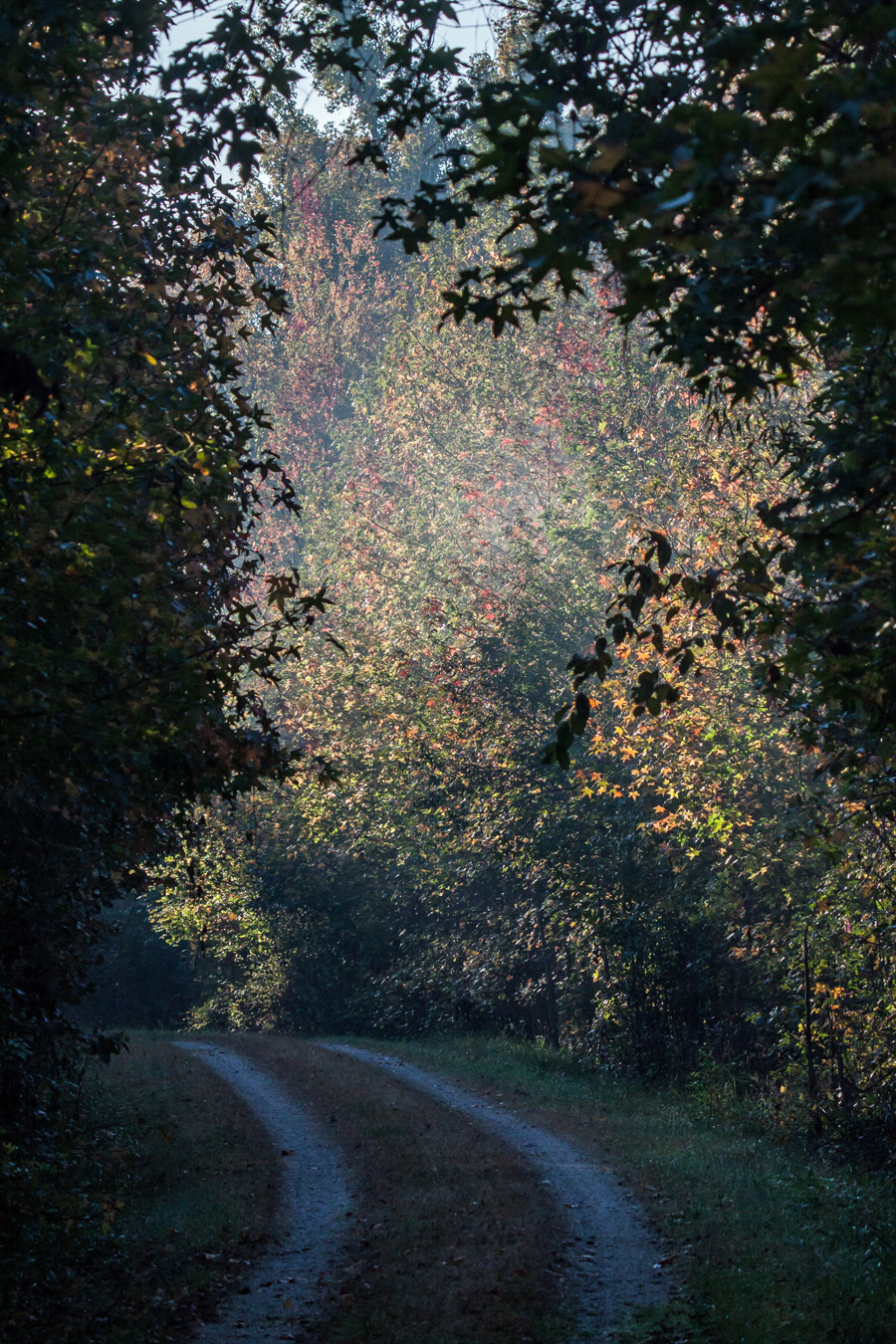
As the early morning light began to filter through the trees and the mist was rising, I was filled with an overwhelming sense of tranquility last Friday at Occoquan Bay National Wildlife Refuge. Was there any way that I could possibly capture that feeling in an image?

Many of you know that I rarely shoot landscape photos. I normally do not carry with me the kind of wide angle lens that is traditionally associated with landscape photography and instead carry a long telephoto zoom lens and a macro lens almost all of the time. The first two photos below were not cropped and were shot with the telephoto zoom lens set at 150mm, its widest setting. I have started carrying my Canon SX50 with me most of the time and this super zoom camera allowed me to get a much wider view and a greater depth of field.

I am not sure that any of these images adequately capture the feeling of the moment, but I wanted to share some of my different approaches in trying to capture the light, shadows, shapes, and colors of one early morning in the autumn.

early autumn morning

early autumn morning

early autumn morning

© Michael Q. Powell. All rights reserved.


Read Full Post »

« Newer Posts - Older Posts »