Feeds:
Posts
Comments

Posts Tagged ‘Canon 50D’

As I was hiking about in Prince William Forest Park this week, I was thrilled to come upon this distinctive wooden bridge over the South Fork Quantico Creek in Triangle, Virginia. I have seen some historical photos of a similar looking bridge at this park, but I think that the one in those photos was of a more heavy duty construction. This wooden bridge is fairly lightweight and is definitely for pedestrian use only. In fact, the wood appears to be relatively new.

On one side of the bridge is a trail that I had been following that took me along the shore of a manmade lake. The waterfall that you see in the distance is at the extreme end of that lake. On the other side of the the bridge is a camp that is not open to public access. I crossed the bridge to take these photos and then crossed back over to continue along the trail. As you can probably tell, I took the final photo from underneath the bridge—I really liked the pattern of the floor boards of the bridge as I looked up at them.

Prince William Forest Park is the largest protected natural areas in the Washington D.C. metropolitan area with over 16,000 acres (65 square kilometers) of territory. There are more than 37 miles (60 miles) of hiking trails along streams, through the forest, and along small ridges. I enjoy hiking along these trails and in the past month have done a couple of day hikes that were each more than 10 miles (16 km) in length.

South Fork Quantico Creek Bridge

South Fork Quantico Creek Bridge

South Fork Quantico Creek Bridge

© Michael Q. Powell. All rights reserved.

Read Full Post »

When I saw an osprey couple trying to build a nest earlier this spring on a channel marker in the waters off of Occoquan Bay National Wildlife Refuge, the building site seemed way too small. Amazingly the ospreys (Pandion haliaetus) found a way to add an overhanging extension that seems to defy gravity. The couple seemed comfortable in the nest, which appear to be capable of easily holding their weight.

A neighboring osprey couple had the opposite problem—they had too much space. The ospreys used only half of the space for their nest and could easily have shared the other half with another couple, but I think that ospreys like to keep their neighbors at arm’s length, or maybe it would be better to say “at wing’s length.”

osprey nest

osprey nest

© Michael Q. Powell. All rights reserved.


Read Full Post »

The newspapers in our area are full of apocalyptic stories about Brood X periodical cicadas (Magicicada septendecim) that are starting to emerge in my neighborhood and in other parts of the United States after a seventeen-year stint underground. I have not seen many live cicadas, but there are dozens of discarded exoskeletons on my backyard fence and in my front yard tree, a few of which you can see in the second and third photos. I am not paranoid, but it does feel like they are surrounding me.

On Tuesday I photographed one cicada that was in the process of emerging. If you look closely at the first photo you will note that the cicada’s wings are not yet fully formed. They will eventually lengthen and become transparent. So far the cicadas have remained silent, but before long I expect to hear their deafening chorus, as the males compete to attract females by belting out their mating calls.

Yesterday the Washington Post had a story with the sensationalist title A fungus could turn some cicadas into sex-crazed ‘salt shakers of death.’  According to the authors of this article, “Yellow-white fungus grows inside the cicadas, filling their insides and pushing out against their abdomens. One by one, the rings that compose the back halves of their bodies slough off and fall to the ground. Driven by a chemical compound in the fungus — and now lacking butts and genitals — the bugs try to mate like crazy. Some researchers call these infected cicadas “flying salt shakers of death.” And they’re lurking among Brood X.” There is even a warning in the article, “Despite the amphetamine’s ability to control cicadas, no one should expect to feel a high from eating a fungus-infected insect.”

Yes, things are a little crazy here as we await the full-scale onslaught of the cicadas. I will try do an update posting in the upcoming weeks with more photos of these brooding, red-eyed insect invaders.


cicada

cicada

cicada

© Michael Q. Powell. All rights reserved.


Read Full Post »

I was delighted to spot these beautiful Calico Pennant dragonflies (Celithemis elisa) on Tuesday at Occoquan Bay National Wildlife Refuge. The one with the yellow markings is a female and the one with the red markings is a male.

The combination of bright colors and intricate wing patterns makes Calico Pennants one of the most stunning dragonflies species that I am blessed to see and photograph. They sure do pack a lot of beauty into their tiny bodies that are only 1.3 inches (33 mm) in length.

Calico Pennant


calico pennant

calico pennant

© Michael Q. Powell. All rights reserved.

Read Full Post »

As some of you know, I have been monitoring two Bald Eagle (Haliaeetus leucocephalus) nests this spring at Occoquan Bay National Wildlife Refuge. This past month I have devoted most of my photography time to dragonflies, so yesterday I grabbed my long lens and headed off to the refuge, hoping to see some baby eagles. One of the nests is huge and has high walls, so it is hard to know what, if anything, is going on inside it.

I waited and waited and finally the head of an eaglet popped up over the edge of the nest. As I reviewed the first photo, I noticed that there is another eaglet on the other side of the tree trunk, just a little lower. (You may need to click on the image to spot the second eaglet.) Both of the baby birds were facing the tree trunk and I soon learned why.

It turns out that one of there was an adult eagle behind the tree trunk. In the second image, it looks like the adult eagle, whose only visible part was its beak, was giving a bite of food to one eaglet while its sibling looked out from the other side of the tree trunk and did not seem very happy about the situation.

In the final shot, you get a better look at the adult eagle and a partial view of one of the eaglets. I now know for sure that there are at least two eaglets in that nest—some years there have been three eaglets. As the eaglets get older, I hope they will be more active and curious and that will allow me to get some better shots of them.

eaglet

eaglet

bald eagle

© Michael Q. Powell. All rights reserved.


Read Full Post »

The shell of the Eastern Snapping Turtle (Chelydra serpentina) must have looked as big as the deck of an aircraft carrier to the Common Whitetail dragonfly (Plathemis lydia) that was circling around the pond, looking for a place to land yesterday at Occoquan Regional Park. I am pretty sure that the turtle, who was semi-submerged in the shallow water, basking in the sun, did not notice the temporary additional weight of the dragonfly.

When I first noticed the motionless snapping turtle in the water, I wondered if it was still alive. I kept a healthy distance from the turtle, because, as their name suggests, snapping turtles may snap with their powerful jaws when they feel threatened. I continued to observe the turtle and noticed the ever-changing pool of bubbles around its mouth that suggested that to me it was alive and breathing.

A number of Common Whitetail dragonflies were patrolling over the pond and I mused to myself that it would be really cool if one of them landed on the turtle. I was shocked when that scene unfolded in front of me just as I had imagined. Fortunately, I was not so shocked that I forgot to capture the moment with my camera.

Common Whitetail


© Michael Q. Powell. All rights reserved.

Read Full Post »

Yesterday I spotted this beautiful little Silver-spotted Skipper butterfly (Epargyreus clarus) while I was wandering about at Occoquan Regional Park. There are more than 3500 species of skippers worldwide, but fortunately this one is pretty easy to identify. Many of the other skippers in our area are similar in appearance, with only slight differences in the patterns on their wings.

When I was doing a little research on this species, I came across this curious comment on the Butterflies and Moths of North America website, “The Silver-spotted Skipper almost never visits yellow flowers but favors blue, red, pink, purple, and sometimes white and cream-colored ones.” I am not sure whether the fact that this butterfly species has a color preference surprises me more or the fact that some scientist obviously studied and catalogued its behavior.

Silver-spotted Skipper

© Michael Q. Powell. All rights reserved.

Read Full Post »

I have been seeing the flowers of tulip trees (Liriodendron tulipifera) on the ground during some recent photo excursions and yesterday I finally found a tree at Occoquan Regional Park where the flowers were low enough for me to get a shot of one of them. I like to call it a tulip tree because of the shape of these flowers, but it has lots of other names by which it is known including American tulip tree, tulipwood, tuliptree, tulip poplar, whitewood, fiddletree, canoewood, and yellow poplar.

Tulip trees are fast-growing and can get to be really tall. According to the Arbor Day Foundation, a tulip tree can have height increases of more than 24 inches (61 cm) per year. George Washington is reported to have planted some tulip trees at Mount Vernon that are now 140 feet (43 meters) tall. They can grow even taller than that—according to Wikipedia, the current tallest tulip tree on record in North America is 191.9 feet (58 meters) in height. Wow!

You may notice that I managed to capture an insect in this image, one that I cannot immediately identify. My friend Cindy Dyer like to call them “bonus bugs,” when you discover them only after you have taken the photo. In this case, I was watching the insect crawl around as I was composing the shot, so it does not qualify as a “bonus bug.”

tulip tree

© Michael Q. Powell. All rights reserved.


Read Full Post »

Earlier today I did a posting that discussed perching behavior and featured shots of two male Ashy Clubtail dragonflies (Phanogomphus lividus) that I had photographed last Thursday on a rocky area along a stream in Prince William County, Virginia. As I was going through my shots from this past Saturday, I came upon this image of a female Ashy Clubtail that serves as a nice complement to the photos in the earlier posting.

The most obvious differences is that this female dragonfly chose to perch on this interrupted fern that was much higher off of the ground. Note, however, that like her male counterpart, she is perching horizontally and not grasping onto a stalk or a branch, as some other dragonflies are prone to do. This image gives you a partial view of the terminal appendages at the tip of her abdomen (the “tail”) that make it clear that this is a female. If you compare those appendage with the same area of the males, you may be able to tell that they are different.

There are other ways to tell the gender of dragonflies, but I will save those explanations for a later posting, or leave them to my dragonfly-hunting friend Walter Sanford, who is much more of an expert on this topic than I am.

Ashy Clubtail

© Michael Q. Powell. All rights reserved.

Read Full Post »

Where do dragonflies like to perch? Different species perch in different ways and in different places (and some species spend most of their time flying and rarely seem to perch). Some dragonflies perch horizontally or at an angle, while others hang vertically. Some species perch on trees or in vegetation, while others perch on the bare ground or on the sand. When I am out hunting for dragonflies, their perching behavior is often my first clue to their identities.

When I spotted these two dragonflies perched in the rocks and sand at the edge of a stream in Prince William County that I was exploring with fellow dragonfly enthusiast Walter Sanford last Thursday, I guessed immediately that they were Ashy Clubtails. When I got a little closer, I was able to confirm that they both are male Ashy Clubtails. Ashy Clubtail dragonflies (Phanogomphus lividus) are an early-spring species that generally perch flat on bare-soil, fallen logs, rocks, or leaf litter. Sometimes I have even found them perching right in the middle of a sunlit hiking trail.

When dragonflies are perched higher, I like to try to get eye-level shots of them, but that is almost impossible to do when they are flat on the ground. I suppose that I could have tried the limbo approach—how low can you go? However, in this case, I stood as directly over them as I could and shot downwards in an attempt to get as sharp a shot as possible of their entire bodies.

Ashy Clubtail

Ashy Clubtail

© Michael Q. Powell. All rights reserved.

Read Full Post »

More dragonfly species are beginning to reappear as we move deeper in spring. On Thursday as I was exploring in Prince William County with fellow dragonfly enthusiast Walter Sanford, Walter spotted this female Spangled Skimmer dragonfly (Libellula cyanea) perched low in the vegetation, the first member of this species that either of us had seen this season.

There are several different species in which the females and immature males are yellow and brown in color like this dragonfly. Once we got a good look, however, we knew immediately that this was a Spangled Skimmer. How did we know? Spangled Skimmers are the only dragonflies in our area that have a small white patch, known as a stigma, beside a black patch on the outer leading edge of each of its wings. With most other dragonflies, the stigmas are a single color if they are present.

Female Spangled Skimmers retain this yellow and brown coloration throughout their lives, while immature males eventually transition to a blue color, which is presumably why the Latin name for the species is Libellula cyanea.

I expect that I will soon photograph a mature male this season, but if you would like a sneak preview of what one looks like, check out my posting from last year called Spangled Skimmer in June. If you want to search for a Spangled Skimmer dragonfly yourself, they tend to be found in shallow, vegetated, marshy areas.

Spangled Skimmer

Spangled Skimmer

© Michael Q. Powell. All rights reserved.

Read Full Post »

Beauty can often be found in small things in ordinary situations. On Thursday I captured this image of a beautiful Pearl Crescent butterfly (Phyciodes tharos) feeding on a dandelion while I was exploring in Prince William County with fellow dragonfly enthusiast Walter Sanford. Although we were focused on searching for dragonflies, most of you know that I am an opportunistic photographer and will take a photo of almost anything that catches my eye.

I am not completely certain about the identification of this butterfly—I have trouble distinguishing between a Silvery Checkerspot butterfly (Chlosyne nycteis) and a Pearl Crescent butterfly. In fact, I am not really sure if this is a dandelion or one of a number of small flowers that are similar in appearance.

The funny thing is, though, that I am totally unconcerned about the accuracy of my identification in this case. This image is more about art than it is about science. It is about light and color and patterns and details. I encourage you to click on the image and immerse yourself in the enlarged image. You will be amazed to see the speckles in the butterfly’s eyes and the flecks of pollen on its extended proboscis.

Beauty can often be found in small things in ordinary situations.

Pearl Crescent

© Michael Q. Powell. All rights reserved.

Read Full Post »

On Tuesday I was excited to spot this pretty Red-banded Hairstreak butterfly (Calycopis cecrops) while visiting Occoquan Regional Park. These tiny butterflies are only about an inch (25mm) in length, so I had to get pretty close to photograph one. Fortunately this butterfly seemed preoccupied with feeding, so it tolerated my presence pretty well.

My macro lens allowed me to capture an image that reveals many of the butterfly’s wonderful colors and patterns. It is also nice to be able to see the little “tails” protruding from the hind wings that are responsible for the name “hairstreak” and the pattern of colors on the antennae.

Red-banded Hairstreak

© Michael Q. Powell. All rights reserved.

Read Full Post »

When I am intently searching for dragonflies, my eyes are drawn to anything that is moving through the air. Once I detect movement, I will try to track the subject until I am able to identify it. Early in the season, things were a bit easier, because there were not many insects around, but as the weather has warmed out, it has gotten tougher and the air now seems filled with grasshoppers, bees, and other flying creatures as I move about in the fields and forests.

As I was wandering about last Thursday in Prince William County, I detected a black and yellow insect and tracked it until it landed on some vegetation. Ten years ago, I might have simply called it a “bee”—my knowledge of insects was so limited that I would have divided insects into broad categories like bees and butterflies. If pushed for more specificity, I might have called this a “small bee.”

My identification skills and my knowledge of insects has grown exponentially over the years. As soon as I saw the way that the insect was flying, I could tell that it was a hover fly, a member of a group of flies that you may know as flower flies, because of where they can be found most often. I was immediately attracted to the beautiful, elaborate patterns on the insect’s body and recalled that I had seen a similar one last year in the garden of my friend Cindy Dyer.

I believe that this cool-looking hover fly belongs to a species known as the Eastern Calligrapher Fly (Toxomerus geminatus), though there are over six thousand hover fly species worldwide, so it could also be a related species. Nevertheless, I love the thought of someone hand drawing the delicately etched pattern with pen and ink, creating a miniature work of art.

As I was composing a shot, I grew fascinated with the details of the leaf on which the hover fly was perched—it is easy for me to lose myself when looking at the world through a macro lens. It appears that some other insect had been chewing on the leaf before the Calligrapher Fly arrived and I like the way that I was able to capture the holes in the gnawed-on leaf.

Eastern Calligrapher Fly

© Michael Q. Powell. All rights reserved.

Read Full Post »

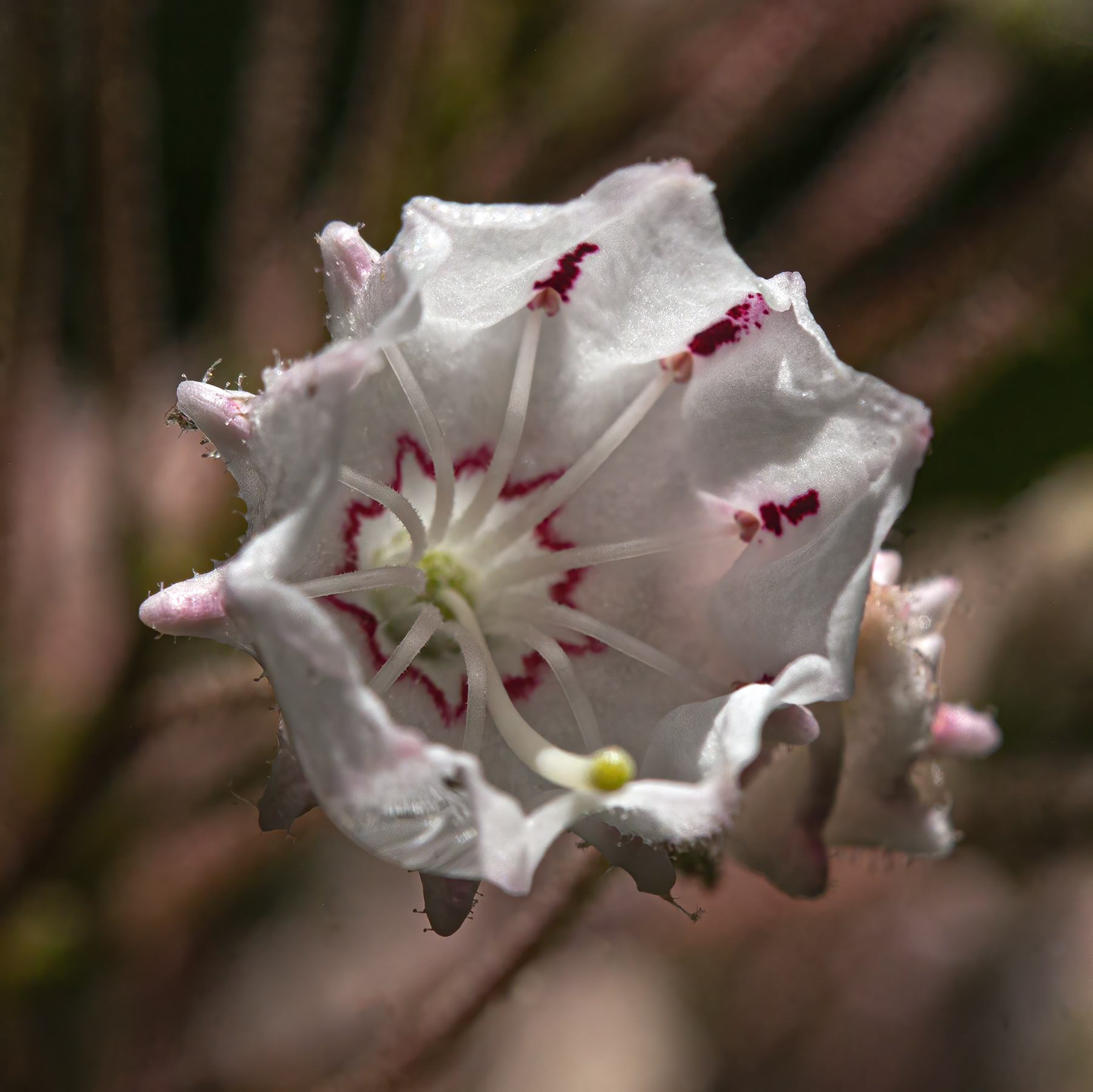
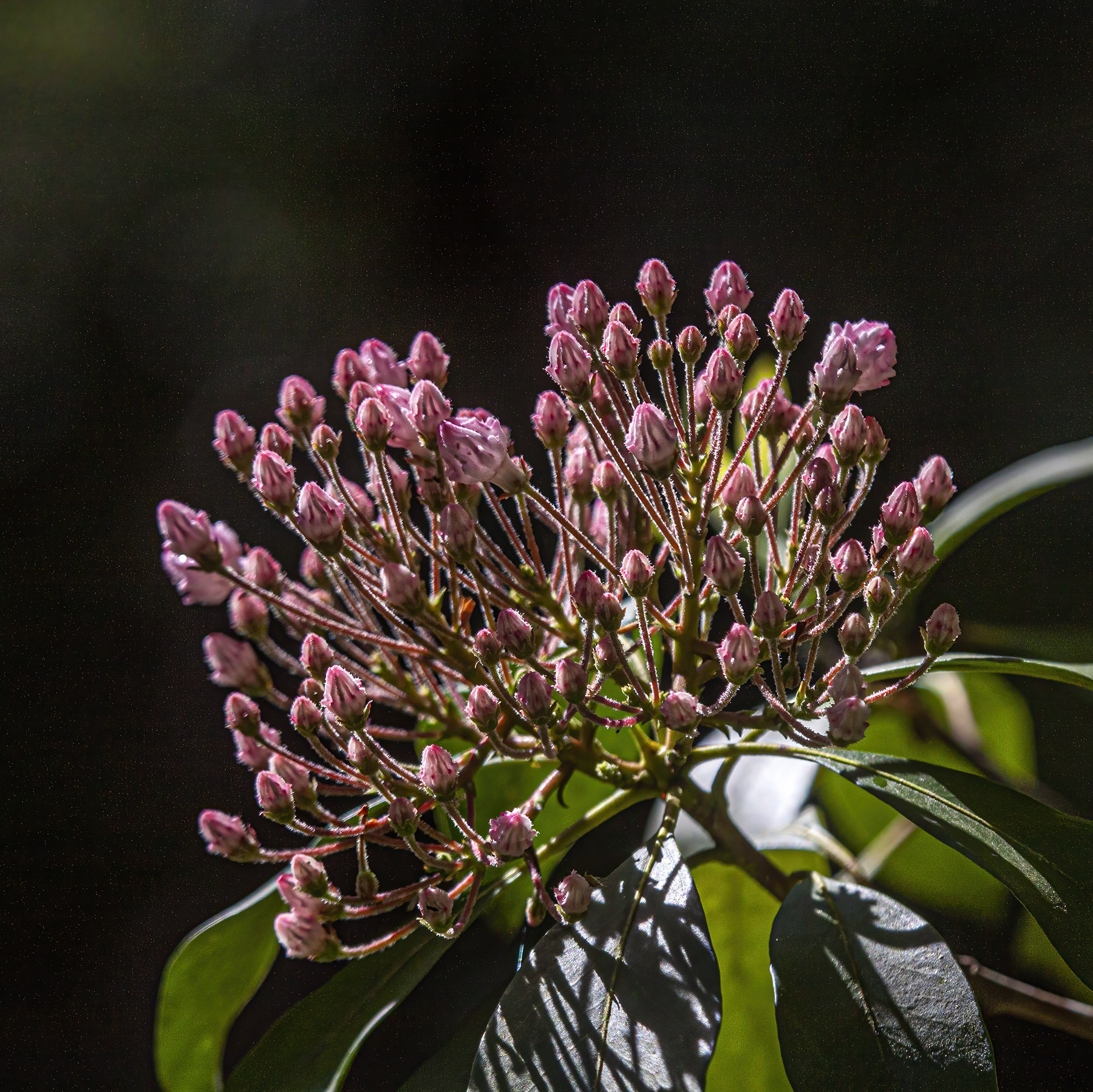
As I was wandering about last Saturday in Prince William County, I was thrilled to spot my first flower on a Mountain Laurel shrub (Kalmia latifolia). I had been noticing lots of buds during recent trips, but this was the first one that I spotted that was open. I think there may be cultivated versions of mountain laurel, but it is naturally found on rocky slopes and in mountain forest areas, which was exactly the environment that I was exploring.

I simply love the shape, colors, and pattern of the gorgeous flowers of this plant. After I published this post, I decided to add a second photo, one that shows the unopened buds of a mountain laurel, their additional beauty waiting to be revealed.

mountain laurel

mountain laurel

© Michael Q. Powell. All rights reserved.


Read Full Post »

More bearded irises? Yes, I decided to do another posting on the colorful bearded irises in the garden of my neighbor and photography mentor Cindy Dyer. We are probably near the peak period right now and there is a wide variety of irises  in bloom. There is only a stem or two of some of the irises that I photographed, each with several blooms, but there is also one patch, shown in the final photo, where there are at least several dozen irises of the same type concentrated in one area.

One of the challenges of photographing these irises is that the background tends to get very cluttered. I have tried to blur the background by choosing my angle of view and camera settings, and the results are ok.

Cindy has come up with a more elegant solution—she photographs them in situ against a black velvet-like background, which requires the assistance of another person to hold the background in place. Usually her husband Michael is drafted, but yesterday in the late afternoon I was an emergency fill-in when the late day light spontaneously prompted her to photograph the irises that were blooming outside of her yard around an electrical junction box. The final photo is one that Cindy took with her iPhone of me in “action.”

What kind of results do you get with this process? Check out Cindy’s blog postings Bearded iris blooming in my garden and Bearded iris (taken last year) to see some samples of the stunning studio-like portraits of these flowers that Cindy has taken.

bearded iris

bearded iris

bearded iris

bearded iris

bearded iris

bearded iris

photo assistant

© Michael Q. Powell. All rights reserved.


Read Full Post »

Whenever I can, I like to give a sense of the environment in which I find a dragonfly by including natural elements in the image. For example, I really like the fern in this photo of a female Painted Skimmer dragonfly (Libellula semifasciata) that I spotted last Thursday while wandering about in Prince William County.

Many of you know that I enjoy taking photos at Occoquan Bay National Wildlife Refuge, a grassland and wetland habitat at the confluence of the Potomac and Occoquan Rivers where I am able to find an amazing assortment of birds, animals, and insects. This past month, however, I have been spending a lot of time in a different habitat.

I have traded the coastal plains for a hilly, forested area in Prince William County and replaced the broad river expanses with small mountain creeks and streams. Why? Many of the early spring dragonflies are found only in very specific habitats and the area that I have been exploring meets the requirements of several of those species.

It is difficult to describe these “new” areas, so I have included a couple of photos to give you a few indications of what I see and feel there. The second photo shows a relatively flat area adjacent to a stream. The forest floor is covered completely in ferns and dragonflies can sometimes be found perching in that vegetation, as you can see in the first photo.

The final photo shows one of the streams that I love to explore. Sometimes there will be dragonflies flying over the water or perching on the banks. I don’t want to give you the false impression, though, that there are lots of dragonflies here. My sightings are infrequent, but it is easy for me to spend hours on end in places like this—any photos that I manage to take are a bonus.

Last Saturday, for example, I explored for little over six hours and covered 10.8 miles (17 km) on a day when I knew the weather was too cool and cloudy to find many dragonflies. Yeah, I am a bit of a fanatic sometimes.

Painted Skimmer

forest ferns

creek

© Michael Q. Powell. All rights reserved.


Read Full Post »

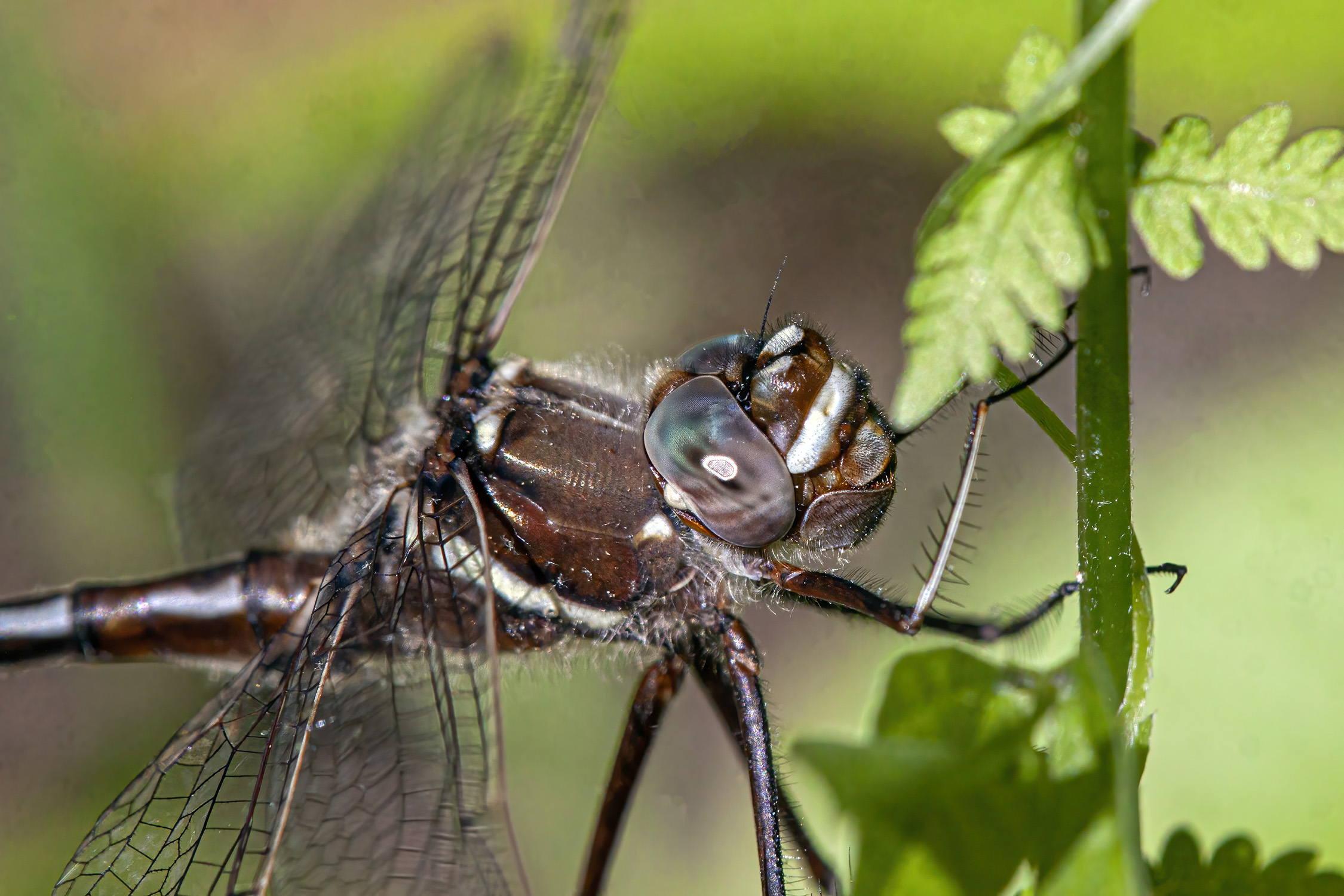
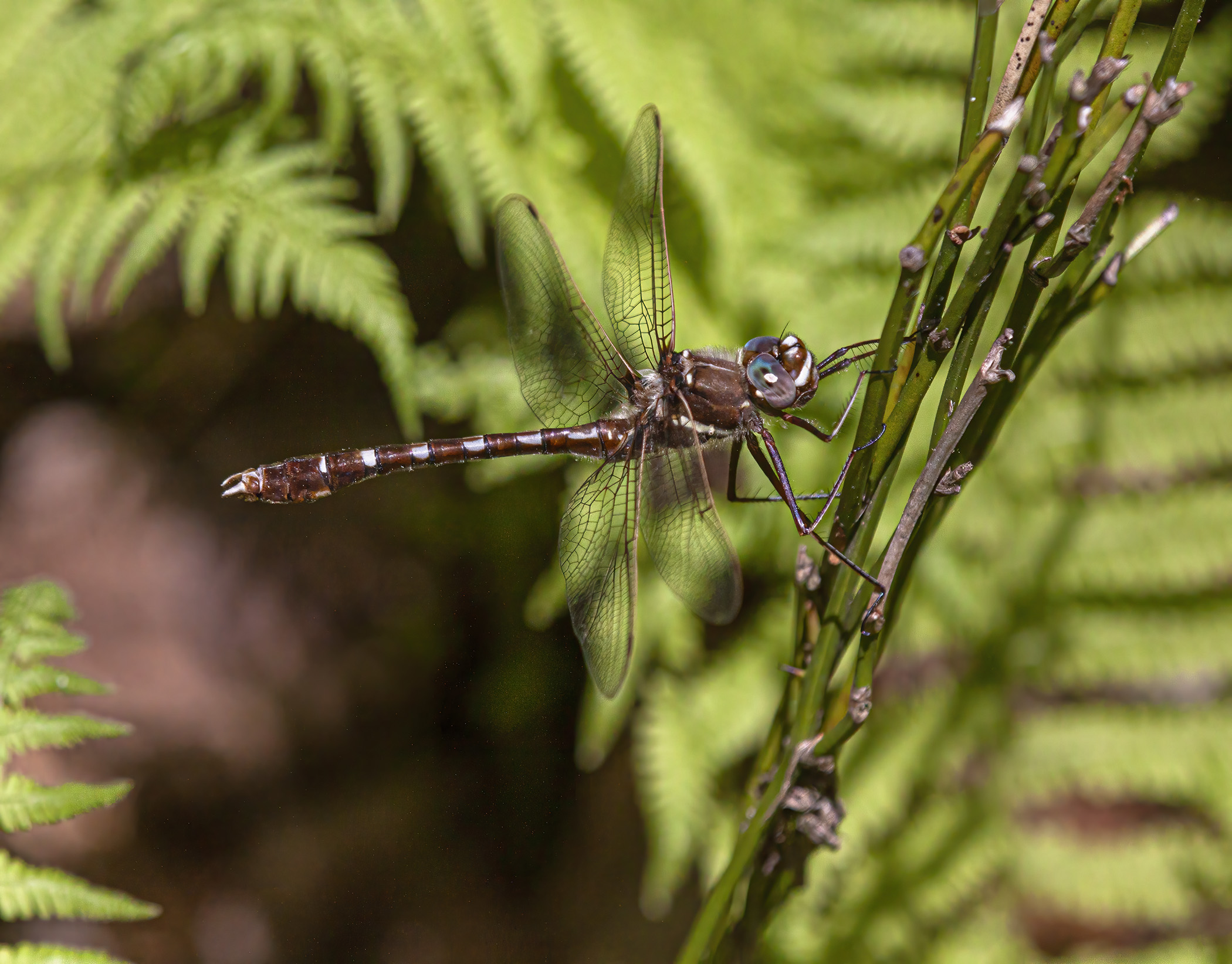
Can a dragonfly smile? I seemed to detect a cocky little smile when I moved in close for this shot of a handsome male Stream Cruiser (Didymops transversa) last Thursday in Prince William County. The macro view also allowed me to appreciate the beauty of his two-toned eyes and to note the curious-looking “chin strap.”

The second shot shows the entire body of the Stream Cruiser, a medium-sized dragonfly that is about 2.2 inches (56 mm) in length. The image also gives you a sense of the environment in which I spotted him—a large expanse of interrupted ferns adjacent to a stream.

Stream Cruiser

Stream Cruiser

© Michael Q. Powell. All rights reserved.

Read Full Post »

Almost a month ago, fellow dragonfly enthusiast Walter Sanford spotted a Selys’s Sundragon dragonfly (Helocordulia selysii), the first time that one had been spotted in Prince William County, Virginia where we were searching for dragonflies. This is an early spring dragonfly that is quite uncommon and we were both happy to get shots of it, though as I noted in my blog posting about the encounter, we did not realize until after the fact that this was a new discovery—we thought that it was a Uhler’s Sundraagon, a closely related species that I had previously seen at that location.

Whenever I encounter a brand new species in a location, I wonder if it is a one-off sighting, a vagrant who has wandered out of its normal territory, or if perhaps there is an established population. I may have gotten a partial answer to that question on Thursday when I spotted several Selys’s Sundragons a couple of miles upstream on the same creek where Walter made his initial discovery.

I managed to photograph two of these beautiful dragonflies while they perched on interrupted ferns that were growing in abundance in the area, including the dragonfly featured in the first two photos. The markings on the dragonfly’s body were quite distinctive and unfamiliar to me, given that this was the first time that I had seen this species at close range. Whenever I am out in the field, I tend not to worry about identification of my subjects and instead focus on getting the best shots that I can—I can sort things out when I get home and pull up the images on my computer screen.

A short time later, I also was able to capture some in-flight images of a Selys’s Sundragon when he cooperated for me by hovering a bit over the water. That made things marginally easier, but it is still a challenge to focus on a moving subject that is only 1.6 inches (40 mm) in length. Perhaps it is my imagination, but the dragonfly in the final photo seems to be glancing up at me, as though he was wondering if we were done yet with the photo shoot.

So, it looks like we may have at least a small established population of Selys’s Sundragons in this county. What is the flight season for the species? Walter and I were recently joking about that—as Walter pointed out, we are the baseline. We know that the season for this species in our area lasts at least from 13 April, when Walter had his initial sighting, to 6 May, when I took these photos. According to available information, the flight season for this species in our home state of Virginia lasts from 17 March to 23 May.

I hope to be able to make a return trip to this location to add another data point (and hopefully some new photos) to our information about this species or maybe some additional dragonflies are waiting to be discovered.

Selys's Sundragon

Selys's Sundragon

Selys's Sundragon

© Michael Q. Powell. All rights reserved.

Read Full Post »

I spent a lot of time tracking this Common Green Darner (Anax junius) as it patrolled over a field of vegetation yesterday in Prince William County and was thrilled when it finally perched for a moment. Like most darners, this one was hanging vertically and as I got closer, I was immediately struck by the muted color of its abdomen.

I could tell from its terminal appendages that it was a female and I suddenly realized that most of the Common Green Darners I have photographed in the past have been males that often have bright blue abdomens. It had never really struck me that female Common Green Darners have tan-colored abdomens. It is not that surprising, though, because, as is the case in much of the animal kingdom, female dragonflies generally tend to have more subdued colors than their more ostentatious male counterparts.

Common Green Darner

© Michael Q. Powell. All rights reserved.

Read Full Post »

Last week I was delighted to spot several more Stream Cruiser dragonflies (Didymops transversa) while wandering about in Prince William County. This handsome male Stream Cruiser  looked like he could have starred in the well-known “got milk?” publicity campaign in the United States that featured photos of celebrities with milk mustaches and was designed to make milk more interesting and to emphasize its wholesomeness.

The print campaign with the the milk mustaches was started by the Milk Processor Education Program (MilkPEP) as a follow-on to a very popular series of television commercials in which people went to extraordinary lengths to make sure they did not run out of milk, according to this Fast Company article about the history of the Got milk? campaign.

Celebrities almost literally lined up to participate in this campaign and famous photographer Annie Leibovitz photographed more than 180 of the advertisements, according to the aforementioned article. One of the few requirements for participation in the campaign was that the celebrities had be milk-drinkers—I think they might have waived that requirement for Kermit the Frog—which was a problem for Whoopi Goldberg, who is lactose-intolerant. However, she was featured when the campaign ran an advertisement for lactose-free milk.

I don’t drink very much milk these days, but have fond memories of growing up with milk in my cereal bowl each morning. Got milk?

Stream Cruiser

© Michael Q. Powell. All rights reserved.

Read Full Post »

Raindrops on flowers are among my favorite things. Yes, I am a huge fan of The Sound of Music and as soon as I see drops of rain on the petals of a flower—it doesn’t have to be roses—Julie Andrews starts singing in my mind the memorable song “My Favorite Things” that begins with the words, “Raindrops on roses and whiskers on kittens…”

I captured these iris images yesterday morning in the garden of my dear friend and neighbor Cindy Dyer during a break in the rain. Right now there are probably at least thirty irises of various colors in the process of blooming in her wonderful garden, an endless source of delight for me when I feel a need to take some photos or just desire to lift my spirits.

“I simply remember my favorite things and then I don’t feel so bad.”

bearded iris

bearded iris

© Michael Q. Powell. All rights reserved.

Read Full Post »

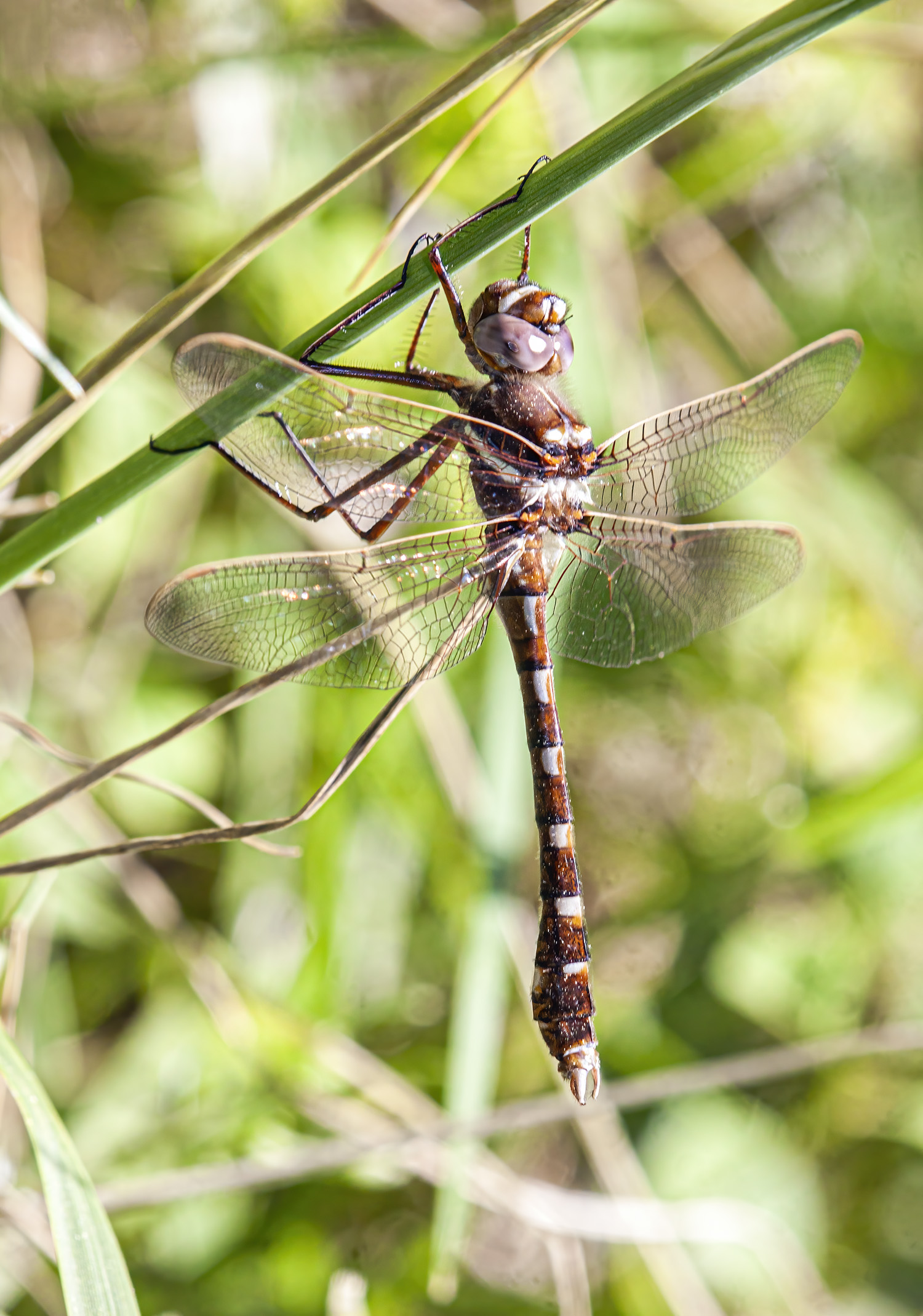
It is still relatively early in the dragonfly season, but already I am running across dragonflies with tattered wings, like this Carolina Saddlebags (Tramea carolina) dragonfly that I spotted yesterday at Occoquan Regional Par. Despite the extensive damage to all of its wings, the dragonfly did not appear to have any problems flying. In fact, I tracked it for a lengthy period of time as it patrolled over a small pond, waiting and hoping that it would finally land.

When the dragonfly decided to take a break, it perched on several pieces of vegetation that were covered with old spider webs. The vegetation was about as tall as I am, so I was able to shoot at a slight upwards angle that let me capture the wing patches that reminded someone of “saddlebags” when they were naming the species.

I was shooting almost directly into the sun, which gave a nice effect by illuminating the dragonfly’s wings from behind, but I kept having to adjust my camera to keep the body from appearing as a silhouette. I experimented with a number of different techniques, including using my pop-up flash for the final photo, which gives the image an almost studio-like appearance.

Carolina Saddlebags

Carolina Saddlebags

Carolina Saddlebags

© Michael Q. Powell. All rights reserved.
 

Read Full Post »

On a recent visit to Occoquan Bay National Wildlife Refuge I stumbled upon a Common Baskettail dragonfly (Epitheca cynosura) at the edge of a pond that was in the final stages of the process of emergence. The first photo shows the dragonfly only seconds after it popped open its wings for the first time—note how shiny and clear the fragile wings are at this stage. The second photo shows the dragonfly a few minutes earlier, when its wings were still closed and its markings were just beginning to appear.

The dragonfly remained in place for a few minutes as its wings began to harden. It then made a short fluttering flight to some nearby vegetation, a safer and less exposed location to rest and complete its amazing metamorphosis.


Common Baskettail


Common Baskettail

© Michael Q. Powell. All rights reserved.
Read Full Post »

Although I don’t have my own garden, I am blessed to have a neighbor and friend, Cindy Dyer, who loves to plant photogenic flowers, like these beautiful bearded irises that are now in bloom. Cindy is a self-employed photographer and graphic designer who I consider to be my photography mentor and muse. She and her husband Michael make up the rest of my “pod” that has helped to sustain me through this past pandemic year.

What else does Cindy do? Here is a little extract from the “Stuff About Me” page of her blog.

“Oil and acrylic painting, photography (portraits, glamour shots, nature, macro, floral/botanical, travel), cement leaf casting, crocheting hats like crazy come winter time (what else can a gardener do when it’s cold out?), needle felting, sewing, murals, faux painting, Polaroid transfers (if it’s something crafty, I’ve probably at least tried it once), biblioholic (any topic, you name it—we probably have at least one book on the subject…don’t even begin to guess how many gardening books I’ve amassed!), animal lover—currently three cats…”

You can get a look at some of Cindy’s photography and writing on her blog at cindydyer.wordpress.com. If you want a real treat, though, you should check out the slide show of her portfolio at cindydyer.zenfolio.com, where your eyes will be delighted as you see an amazing series of stunning images.

bearded iris

bearded iris

bearded iris

© Michael Q. Powell. All rights reserved.


Read Full Post »

If you want a fun photographic challenge, try to photograph a dragonfly in flight. It is definitely a test of your skill and patience to track and photograph a subject this small (about 1.6 inches (41 mm) in this case) while it is flying past you. I captured this image of a male Common Baskettail dragonfly (Epitheca cynosura) last Thursday at Occoquan Bay National Wildlife Refuge.

Longtime readers of this blog know that I will try to photograph dragonflies in flight at least several times every season. Some dragonfly species, like this one, will hover a little at times, which gives me a slightly better chance of getting a shot that is in focus. My camera does not focus quickly and accurately enough for me to use autofocus, so I end up focusing manually most of the time.

This shot is unusual in that I managed to freeze all of the motion of the wings—most of the time the wings are blurry. If you click on the image to see it in higher resolution, you will also note the way that the Common Baskettail (and many other species) folds its legs up under its “chest” (technically it is called the “thorax”) while flying to minimize wind resistance.

For those of you who might be curious, I ended up cropping the original image significantly, because I took the photograph with “only” my 180 mm macro lens and the dragonfly was flying over the water—I would have to have been in the water to get any closer.

Common Baskettail

© Michael Q. Powell. All rights reserved.

Read Full Post »

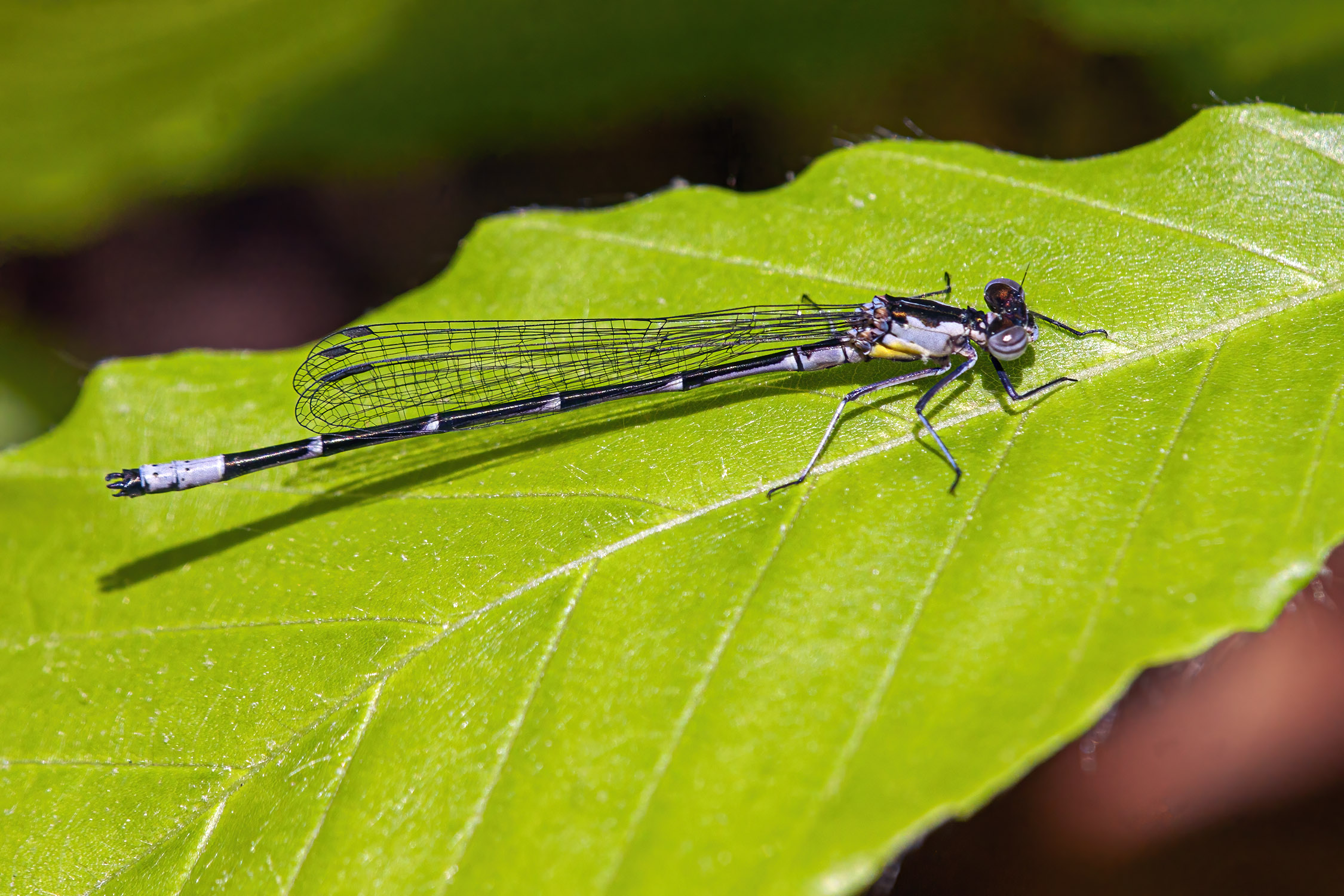
It was pretty cool to spot this male Aurora Damsel damselfly (Chromagrion conditum) on Friday while I was exploring in Prince William County. I love the accents of brilliant yellow on the sides of its upper body that make this damselfly stand out from many others that are also black and blue.

I also managed to get a shot of an Aurora Damsel couple in what is known as the “tandem” position. The female of this species, the lower damselfly in the second photo, also has the yellow accents, although her body coloration is more subdued, as is often the case with damselflies and dragonflies.

When they are mating, damselflies join together in a heart-shaped position, known as the “wheel position,” and afterwards the male will often remain attached to the female, including while flying, as she lays her eggs. He does this by retaining his grip on the front part of the female’s thorax, as you can see in the second photo, using claspers located at the tip of his abdomen.

If you have never seen the distinctive sidewards-heart that damselflies make when mating, check out a posting that I did last year entitled Sidewards heart that shows a pair of Ebony Jewelwing damselflies forming the aforementioned heart.

aurora damselfly

aurora damselfly

© Michael Q. Powell. All rights reserved.

Read Full Post »

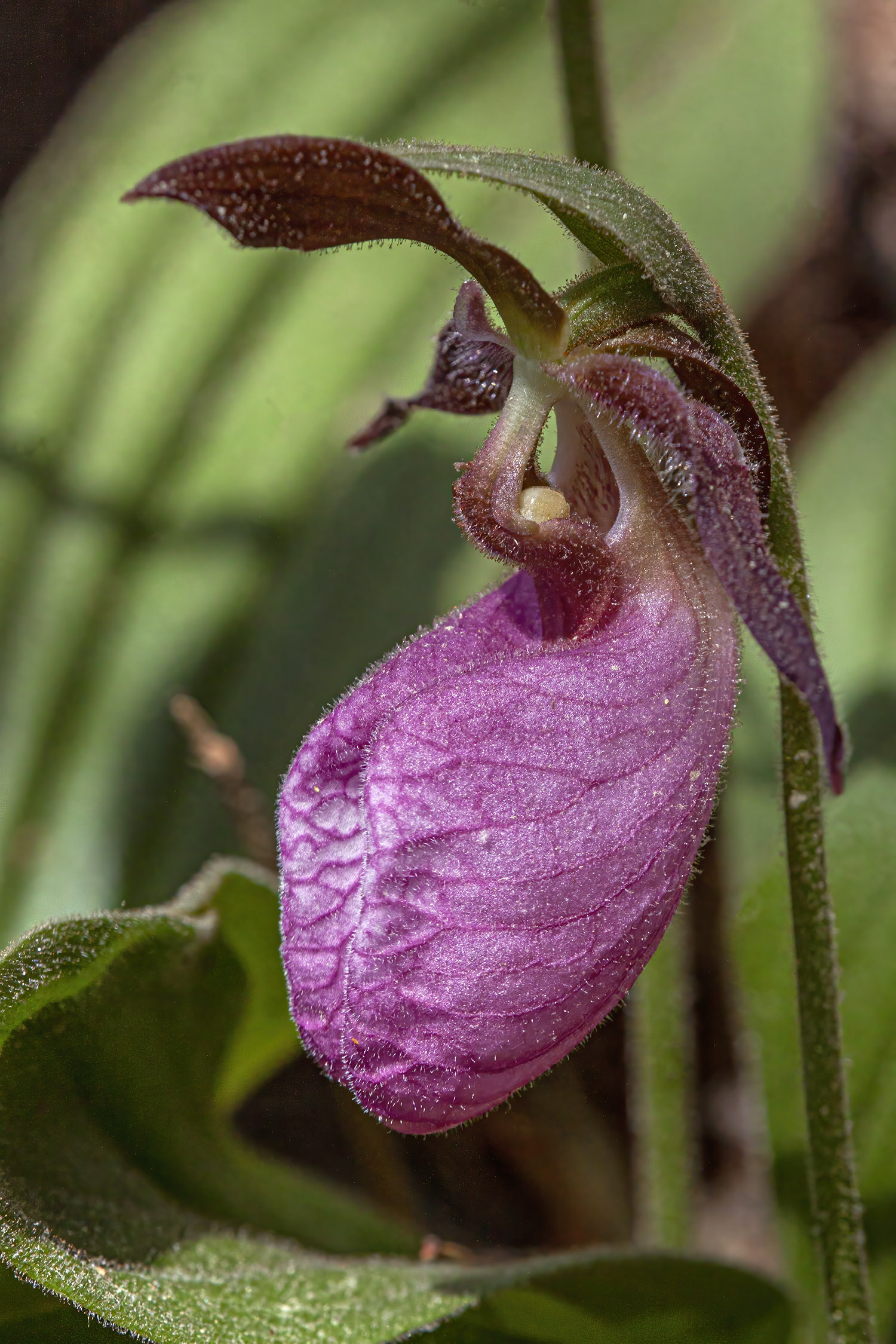
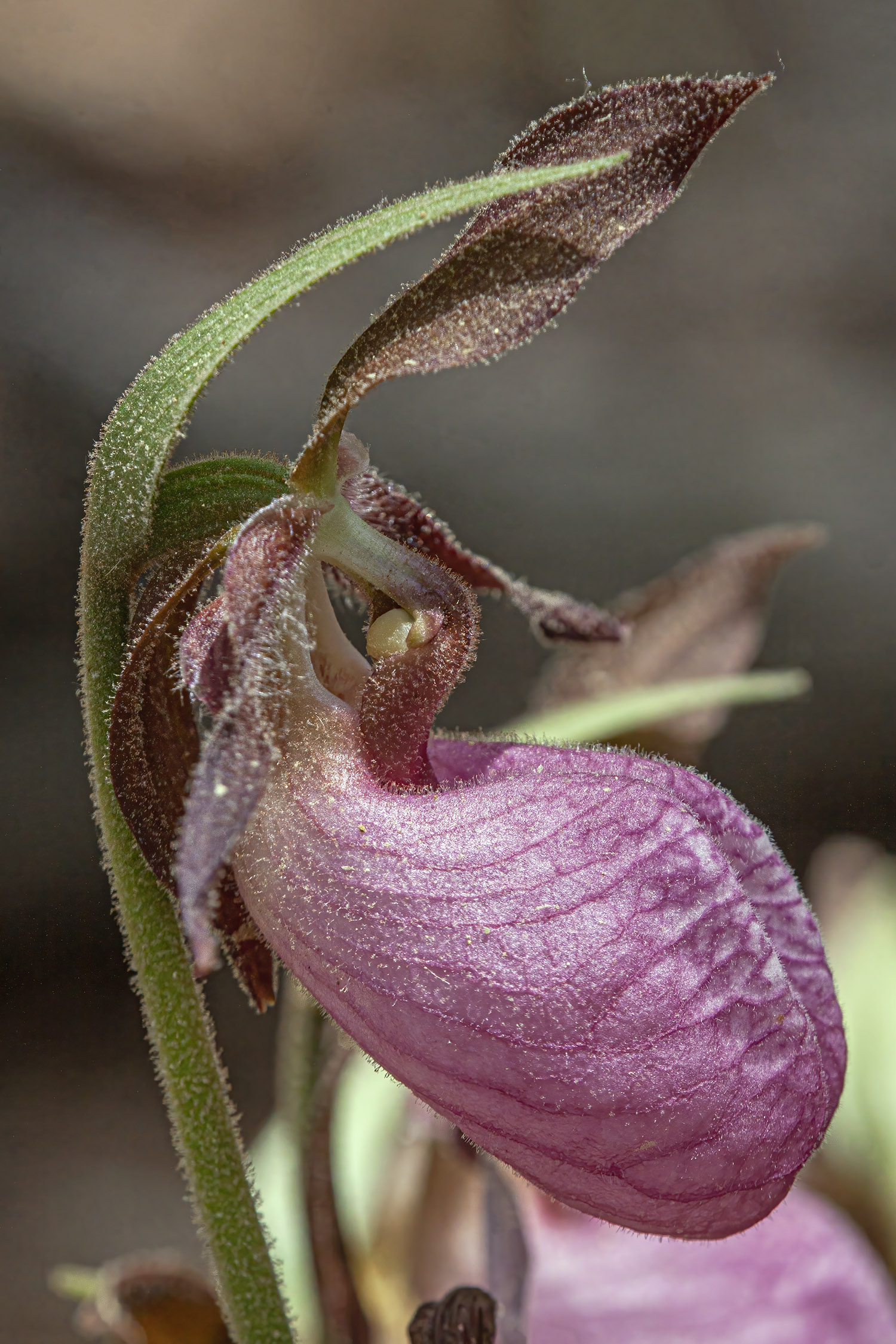
I was really excited yesterday to spot some Pink Lady’s Slippers (Cypripedium acaule), a type of native orchid, while exploring in Prince William County. Last year I saw some for the first time in the wild and managed to find the same spot again this year. When I posted the first photo in Facebook a number of people noted that it brought back memories of their childhoods.

Happy May Day. There are a lot of different types of celebrations on this day throughout the world, many devoted to celebrating spring.  Best wishes to you all however you choose to celebrate this day, perhaps with a walk in the woods to discover or re-discover hidden treasures like these little orchids.

Pink Lady's Slipper

Pink Lady's Slipper

Pink Lady's Slipper

© Michael Q. Powell. All rights reserved.

Read Full Post »

I have been having a really successful spring season in photographing dragonflies. Shaking off some of the winter doldrums, I have spent endless hours this month tramping about in a variety of habitats searching for these magical little creatures. I feel like I am now sprinting to the finish of a marathon on this final day of April

I was amazed to spot Stream Cruisers (Didymops transversa) on Monday at Occoquan Regional Park. I have seen Stream Cruiser dragonflies before, but never at this location. I was able to get shots of both a male (in the first photo) and a female (in the second photo). You can easily see the difference, I think, between the two genders, especially at the ends of their abdomens (the “tail”). Both of them, though, have the same long legs that always make their perching positions seem. a little awkward.

Earlier this spring, I spotted a large exuvia, the discarded exoskeleton of a dragonfly that has emerged, that my friend and fellow dragonfly enthusiast Walter Sanford was able to identify as being from a Stream Cruiser. I have included a photo of that exuvia as a final photo to give you a sense of the shape of the final stage of the water-dwelling nymph before it crawled onto dry land and began its metamorphosis to a new and exciting stage of its life as a dragonfly.

Stream Cruiser

Stream Cruiser

Stream Cruiser exuvia

© Michael Q. Powell. All rights reserved.

Read Full Post »

I was quite surprised and delighted to spot a male Calico Pennant dragonfly (Celithemis elisa) yesterday at Occoquan Bay National Wildlife Refuge. I thought I would have to wait another couple of weeks to find one of these tiny dragonflies that are only 1.3 inches (33 mm) in length, but perhaps our recent warm weather prompted this dragonfly to emerge early.

The Calico Pennant is one of a small group of dragonflies known as “pennants.” As you can see from these two images, pennant dragonflies like to perch on the very tips of flimsy stalks of vegetation where they are whipped about by the slightest breezes like pennants in the wind.

Calico Pennant


Calico Pennant

© Michael Q. Powell. All rights reserved.

Read Full Post »

I was thrilled to spot this beautiful male Painted Skimmer (Libellula semifasciata) on Monday, at Occoquan Regional Park, the first dragonfly of this species for me this season. I just love the way that the distinctive markings on the wings really make this dragonfly “pop” with a golden glow.

Painted Skimmer

© Michael Q. Powell. All rights reserved.

Read Full Post »

« Newer Posts - Older Posts »