Feeds:
Posts
Comments

Posts Tagged ‘Alexandria VA’

Last Friday at Huntley Meadows Park a host of turtles emerged from their winter sleep to bask in the unseasonably warm sun, including this beautiful Spotted Turtle (Clemmys guttata). Unlike most of the turtles where I live that prefer larger, more open bodies of water, Spotted Turtles are found most often in the shallow water of marshy areas and are considered to be semi-aquatic.

As I recall, turtles do not hibernate, but instead enter a period of brumation in which they bury themselves in the mud and slow down their metabolisms. According to the Pee Dee Wildlife Control website, “Brumation is different than hibernation as the animals who brumate can wake up on the random warm days to sun themselves and drink water to avoid dehydration, whereas a hibernating animal will not.”

The temperature last Friday soared to 80 degrees (27 degrees C) at Ronald Reagan National Airport here in the Washington D.C. area, a record high temperature for the month of January. The change in temperature was particularly jolting, because it came just one week after a snowstorm had dropped five inches (13 cm) of snow on us and a protracted period of sub-freezing temperatures that followed that storm.


Spotted Turtle

© Michael Q. Powell. All rights reserved.

Read Full Post »

Flowers are beautiful when you look at them from the front, of course, but they can be equally beautiful when you look at them from behind, especially when they are backlit. That was certainly true for these colorful violas that I photographed last week at Green Spring Gardens, a county-run historical garden not far from where I live.

I especially like the first shot, which has an abstract quality to it, caused in part by photographing the flower at close range with my macro lens. The flower is reduced to a mass of shapes and color and of light and shadows to the point where the brain at first glance does not seem to be able to figure out what the subject is.

viola

violas

© Michael Q. Powell. All rights reserved.

Read Full Post »

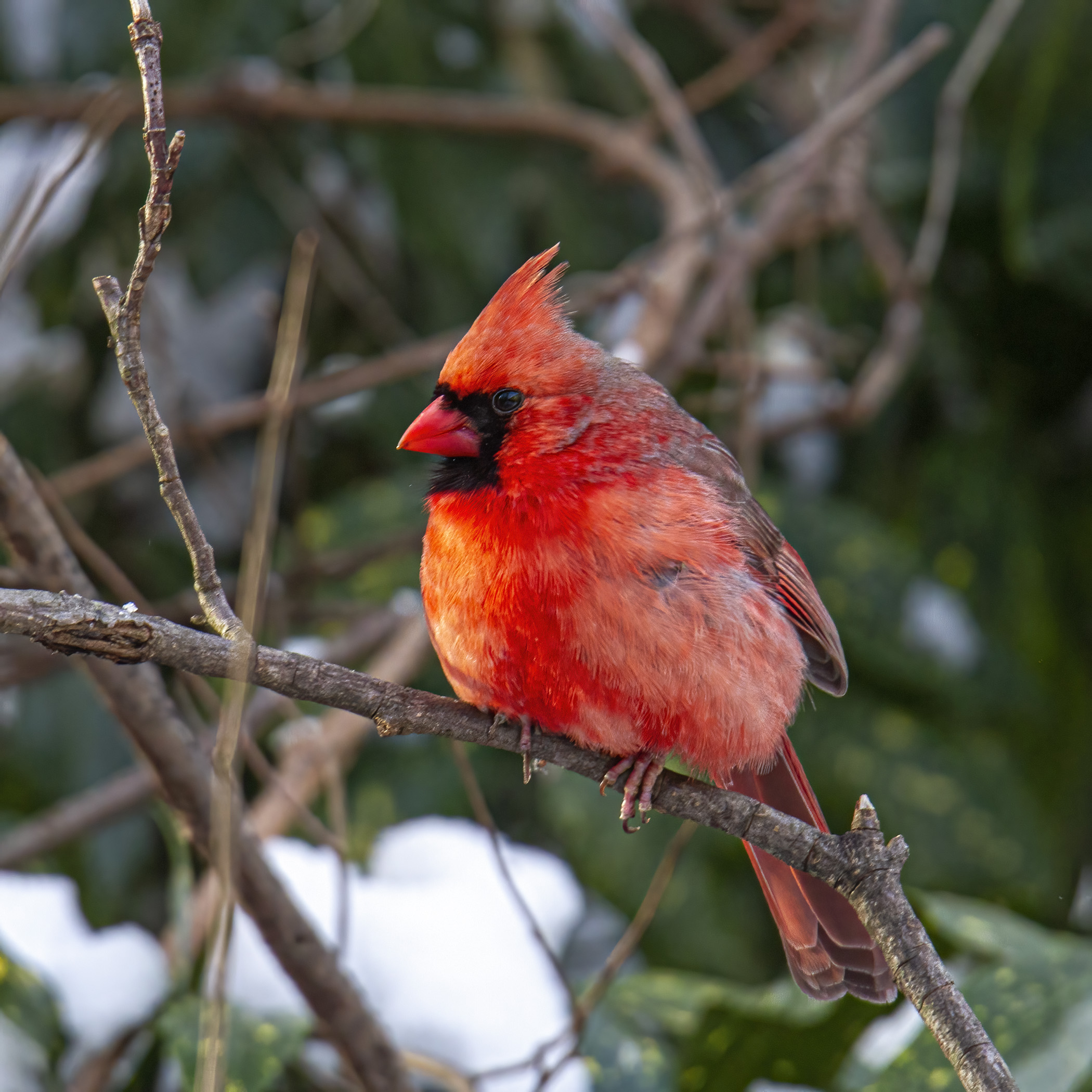
There is something iconic about a photo of a Northern Cardinal (Cardinalis cardinalis) in the snow and every time that we have a snow storm I try to capture images of these bright red birds. Fortunately I did not have to travel far to find some cardinals—I captured all three of these images in the suburban townhouse community in which I live.

Given the bright color their plumage, it is not hard to spot male cardinals, but they tend to be pretty active and don’t sit still for very long, so I had to react quickly when I managed to get an unobstructed view of one. I tried to frame my photos so there was at least a little bit of snow visible in the shot and more or less succeeded in doing so.

The weather forecasters predict that we will have some more snow tomorrow, so I will probably spend a little more time getting acquainted with my neighborhood birds this weekend.

Northern Cardinal

Northern Cardinal

Northern Cardinal

© Michael Q. Powell. All rights reserved.


Read Full Post »

We ended up getting 4-5 inches (10-13 cm) of snow in the storm that concluded yesterday. That may not sound like a lot of snow, but it was enough for the federal government and all of the school districts in the Washington D.C. area to be closed for the day. The roads were icy in my neighborhood, so I played it safe and did not venture out in my car at all.

However, I did go for a walk in my townhouse community in search of birds. It felt a little strange to be carrying a long telephoto zoom lens in such a heavily populated area and I alternately between feeling like a Peeping Tom and a member of the paparazzi.

I was happy to find a few birds in a strip of woods in our community, including this Dark-eyed Junco (Junco hyemalis). It was initially foraging on the ground when I spotted it, as you can see in the first photo, and then flew into some trees when I took a few steps closer.

It is sunny out today and the roads are mostly clear, but that is a bit deceptive, because the temperature was only 14 degrees (-10 degrees C), the last time I checked. Yikes! I have not reviewed all of my photos from yesterday, so I probably will stay inside and finish that review, rather than venture out with my camera today.

Dark-eyed Junco

Dark-eyed Junco

© Michael Q. Powell. All rights reserved.

Read Full Post »

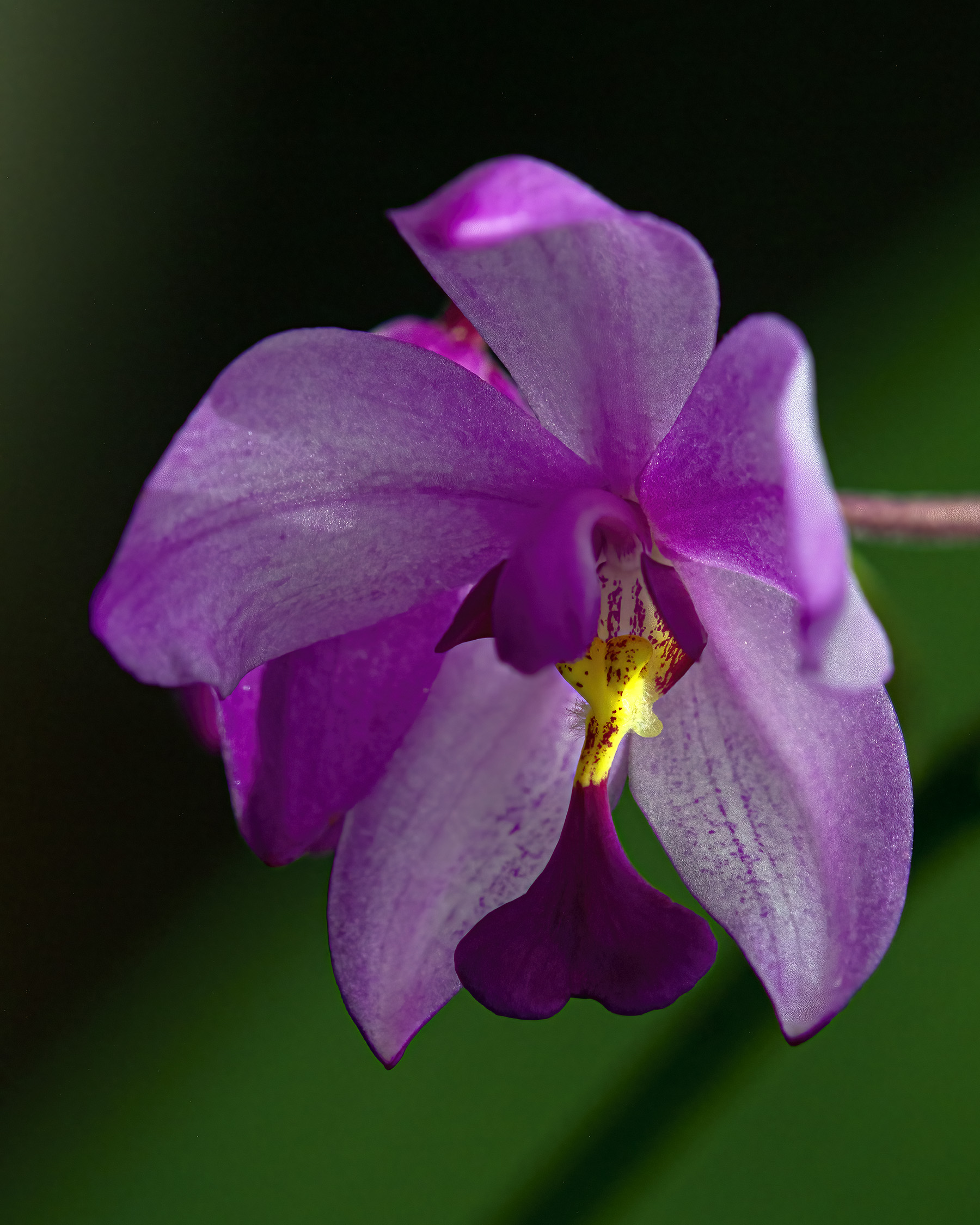
In addition to the stunning pink and purple bromeliad that I featured in an earlier posting, here are some shots of tropical plants that I observed in the “glasshouse” at Green Spring Gardens last week. The first two shots are of what I believe is a ground orchid—it may be a Phillippine Ground Orchid (Spathoglottis plicata), but there are a number of similar species, so I cannot be sure of the identification.

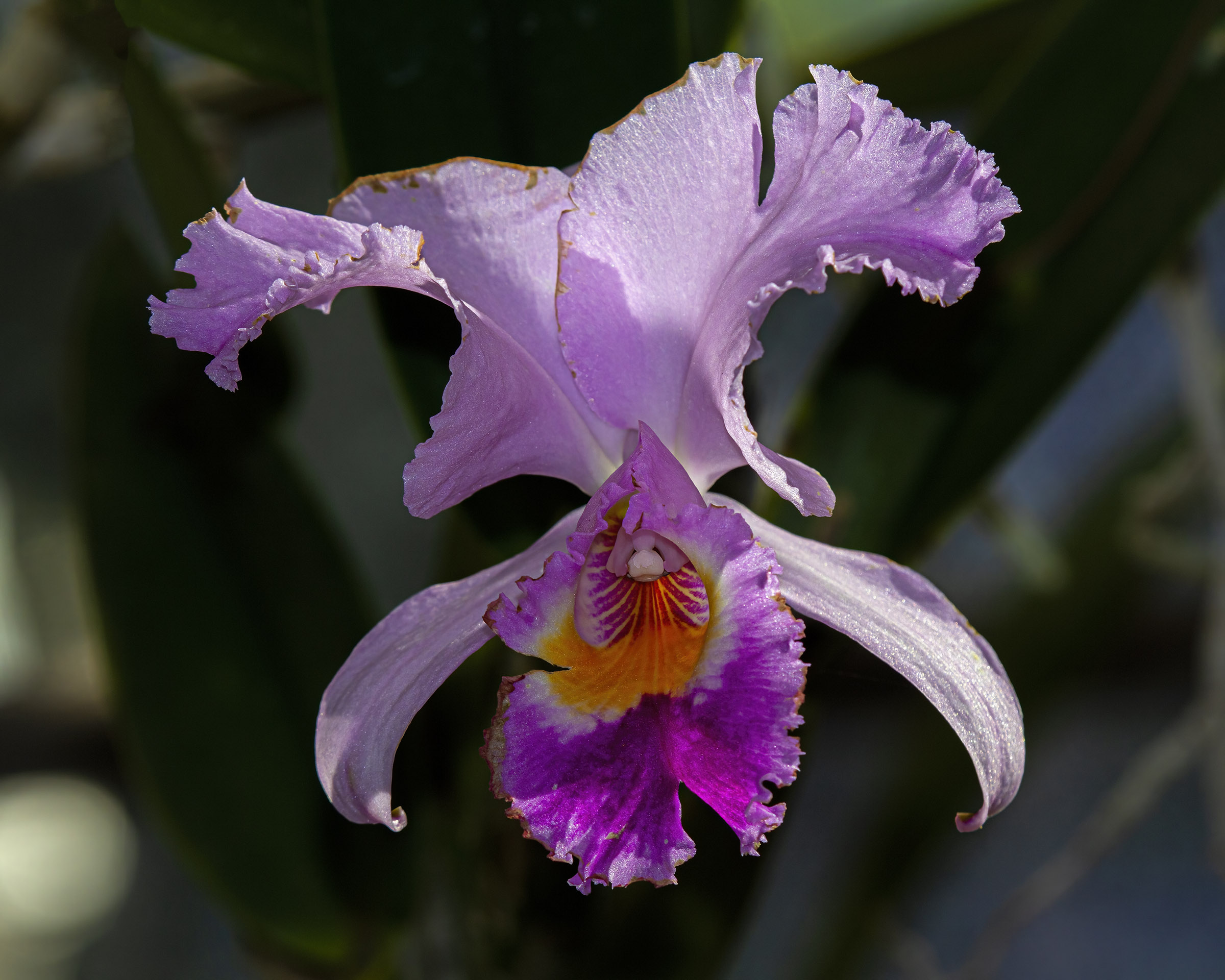
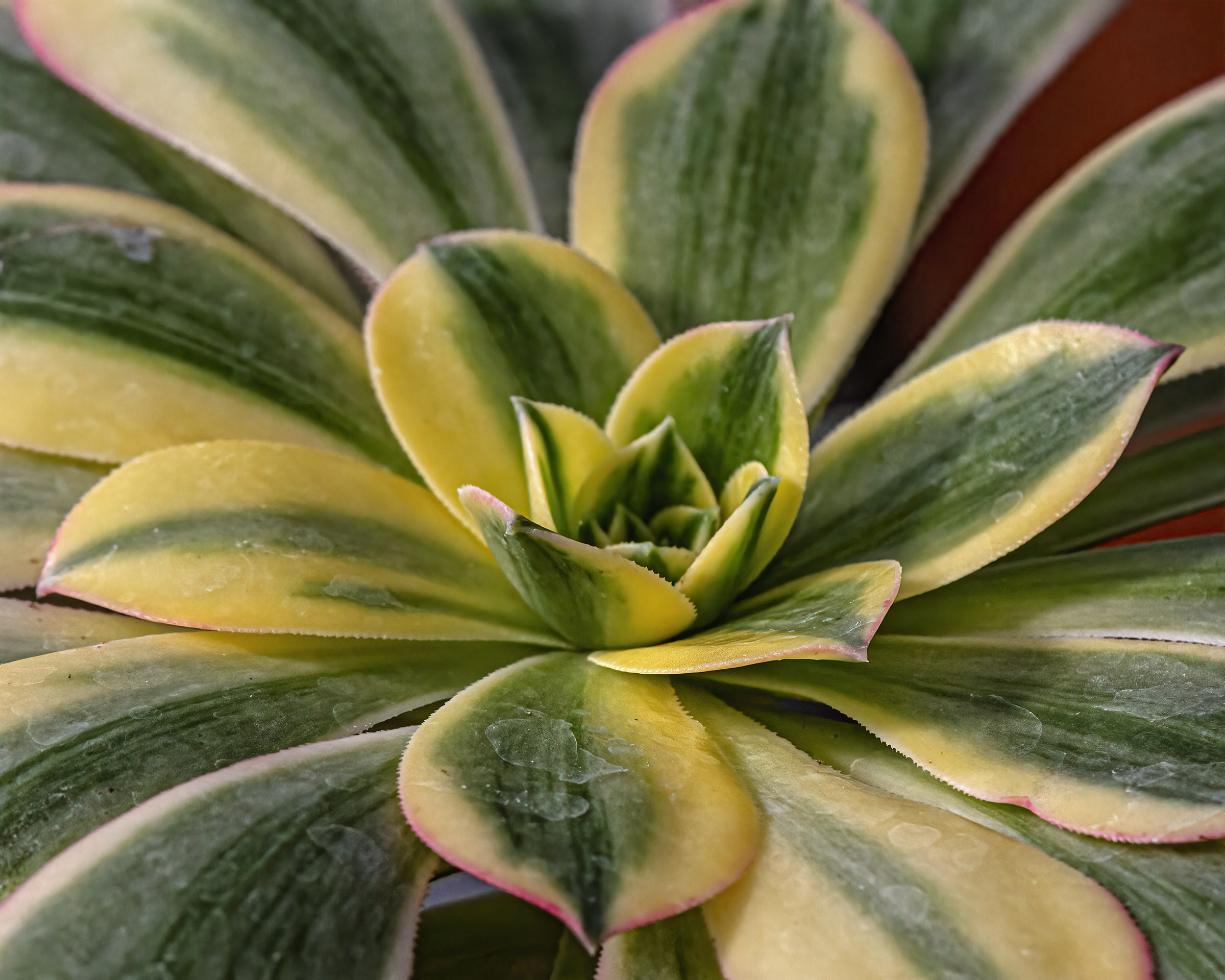
The third photo shows an orchid that is more typical of what I imagine when I think of an orchid. It is a little past its prime, but is still incredibly beautiful. The final photo is a close-up view of one of the many succulents that I observed. I love the geometric patterns of the multi-colored leaves in the image.

One of the nice things about taking photos indoors was that I did not have to worry about the wind creating movement. However, there was not a lot of space for maneuvering and the background was often cluttered, so I had to work hard to find pleasing angles for my photos.

This is a totally different style of photography that the bird photography I have been doing the past few months, but I think that it is good to mix things up a bit to keep from getting stuck in a rut photography-wise.

ground orchid

ground orchid

orchid

succulent

© Michael Q. Powell. All rights reserved.

Read Full Post »

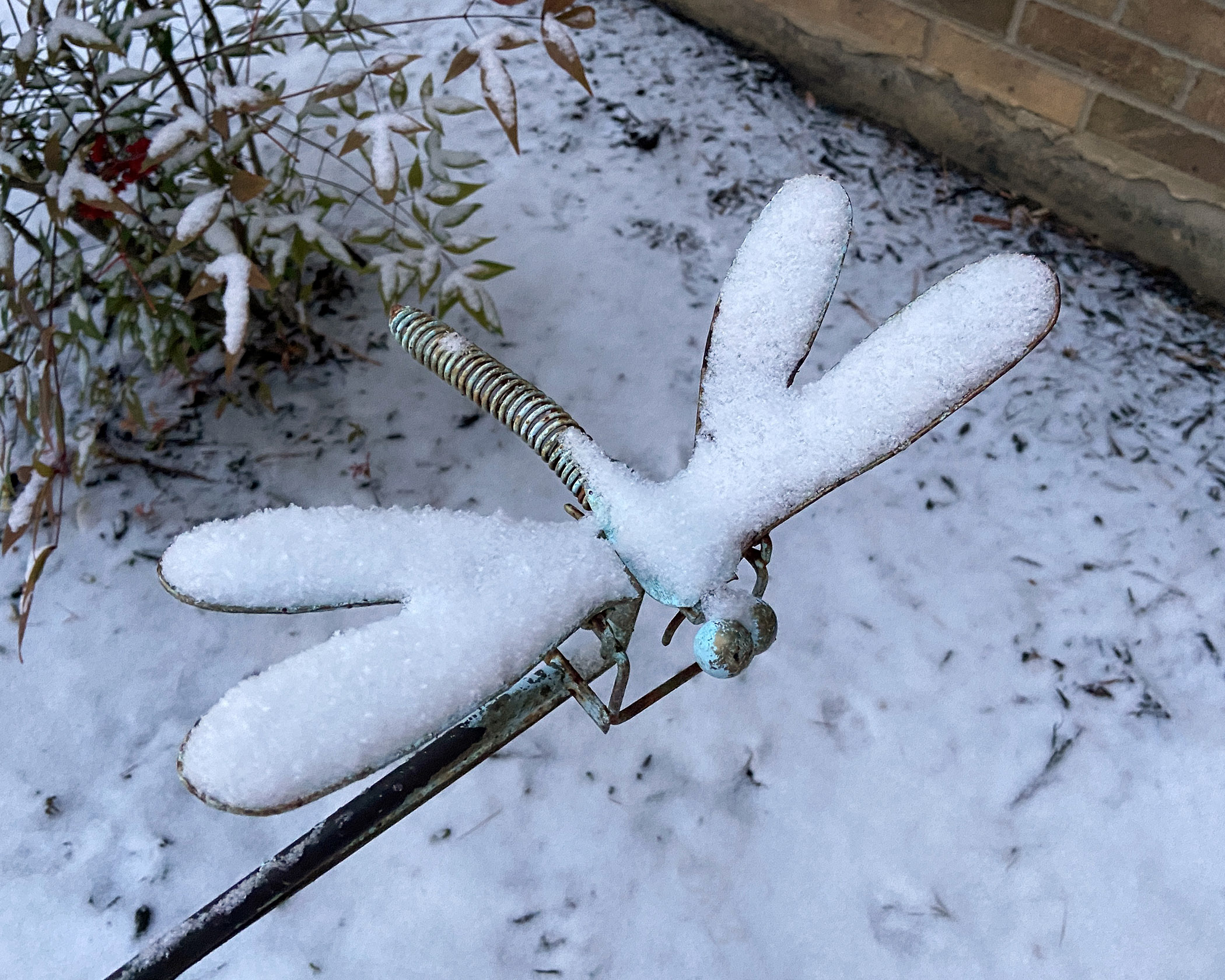
I have not been paying much attention to weather forecasts, so I was pleasantly surprised this morning to wake up to world covered with a dusting of snow. Normally this small amount of snow would not be newsworthy, but we have been in a snow drought for quite some time in my area. It has been two years since we last had an accumulation of two inches (50 mm) of snow in a single storm and for the entire winter last year we had a total of only about a half an inch (13 mm).

I probably did not need to do so, but I got out my snow shovel and cleared my steps and the sidewalk in front of my house.  I don’t really plan to drive anywhere, but I brushed the snow off of my car to keep it from freezing into any icy crust. Many of you know that I drive an orange KIA Soul and the final photo shows my BLESS MY license plate inside of a frame that says SOUL. I like this positive message and frequently get thumbs-up signs of approval from my fellow drivers.

Weather forecasters predict that we could get another 2 to 4 inches (50-100 mm) later today. I grew up in New England and that amount of snow would be a minor annoyance, but here in the Washington D.C. area, it will paralyze the area, undoubtedly resulting in numerous accidents and delayed school openings or even closures tomorrow. Some of the effects may be mitigated by the fact that today is a federal holiday, Martin Luther King Jr. Day, so traffic congestion should be lighter than usual, which will allow road crews to more effective clear and treat the roads.

Snowy dragonfly

Snowy lamppost

Snowy soul

© Michael Q. Powell. All rights reserved.


Read Full Post »

Yesterday I had the desire to photograph something different. For the past few months, my long 150-600mm telephoto zoom lens has remained on my camera and I have focused mostly on birds. I decided to switch back to my 180mm macro lens, the lens that I use most of the time during warmer months, and set off for Green Spring Gardens, a historic county-run park only a few miles from where I live.

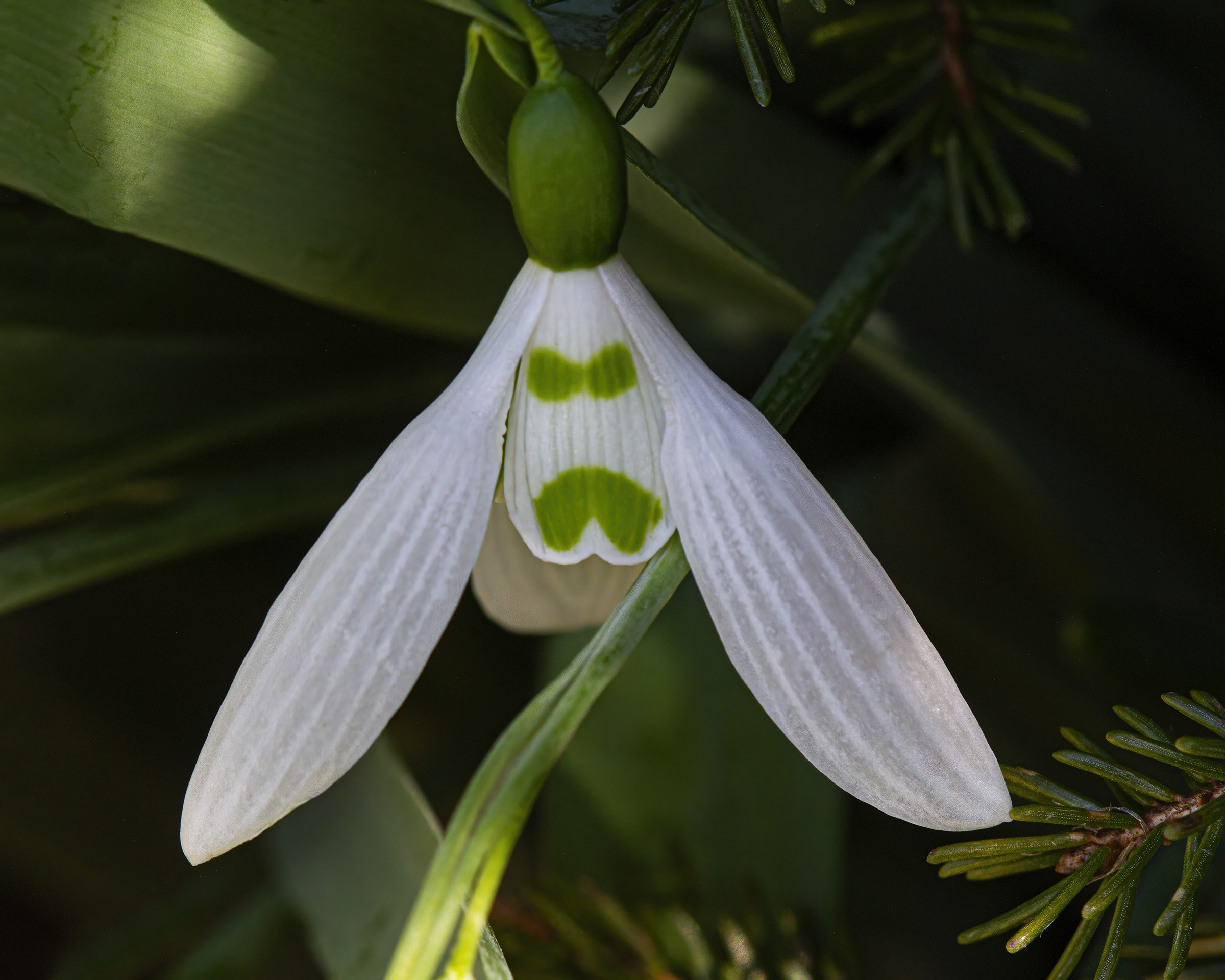
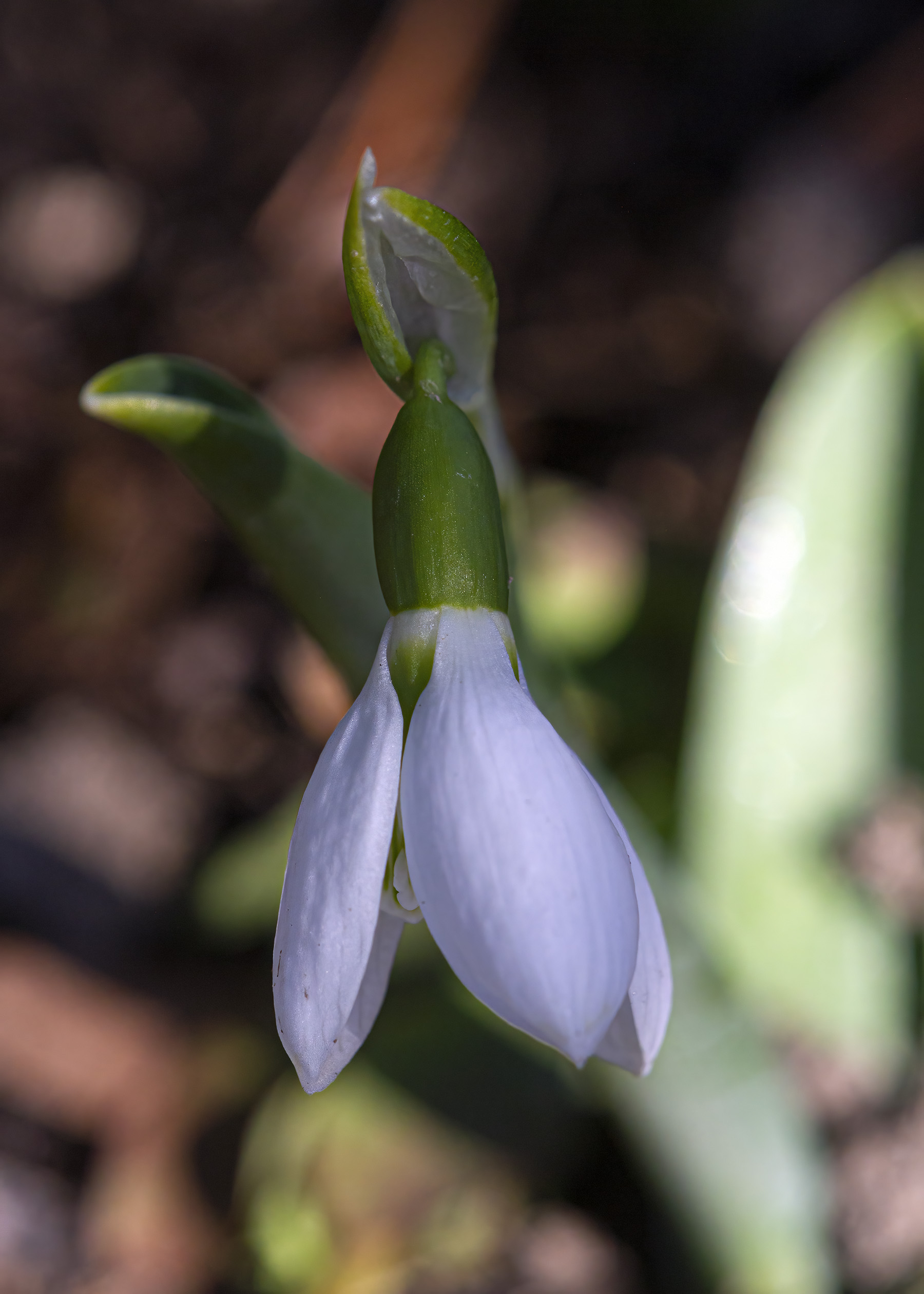
Not surprisingly, I did not spot any insects, but I was thrilled to find several patches of Snowdrop flowers (g. Galanthus) in bloom. I had a fun time trying to compose some  shots of these beautiful little flowers, though I did end up a bit muddy, because it had rained a lot the previous day.

At this time of the year the flower beds are mostly dirt and/or mulch, so it is impossible to get the smooth green backgrounds that I often strive for during the spring and summer months. However, I was able to blur the background some by carefully choosing my shooting angle and adjusting my camera settings.

During my time at the park, I also visited the “glasshouse,” a small greenhouse that houses tropical flowers, succulents, and bromeliads. It felt great to soak up the warmth of the sun in this enclosed environment and I managed to take a few photos there that I will share in a future blog posting.

Snowdrop

Snowdrop

Snowdrop

© Michael Q. Powell. All rights reserved.

Read Full Post »

When I was growing up in New England, American Robins (Turdus migratorius) were always viewed as a harbinger of spring. I don’t know if American Robins migrated out of our area and returned in the spring, but I do recall that seeing one of them foraging on a lawn meant that spring was on the way.

Here in Northern Virginia where I have lived for thirty years now, I have grown accustomed to seeing American Robins throughout almost the entire year. It gets cold enough here that the ground freezes most years, so I suspect that the robins have to adapt their diets to other food sources—I have a mental picture of robins pulling worms out of the ground and that would not be possible during the winter.

I spotted this American Robin last Thursday almost hidden in the vegetation at Huntley Meadows Park. I suspect that it is either a female or an immature male, given the rather pale coloration and the white patches of feathers on the belly.

American Robin

© Michael Q. Powell. All rights reserved.

Read Full Post »

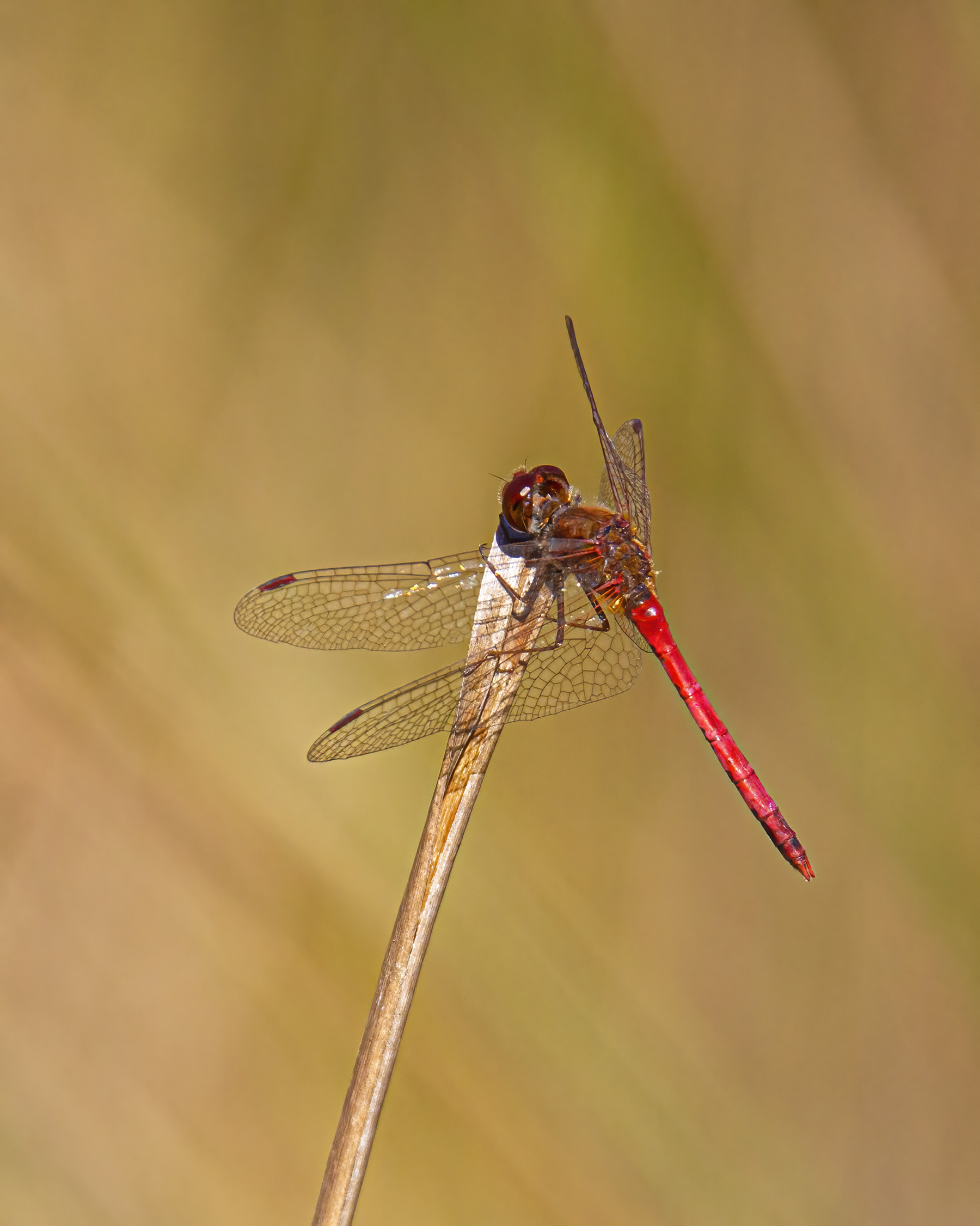
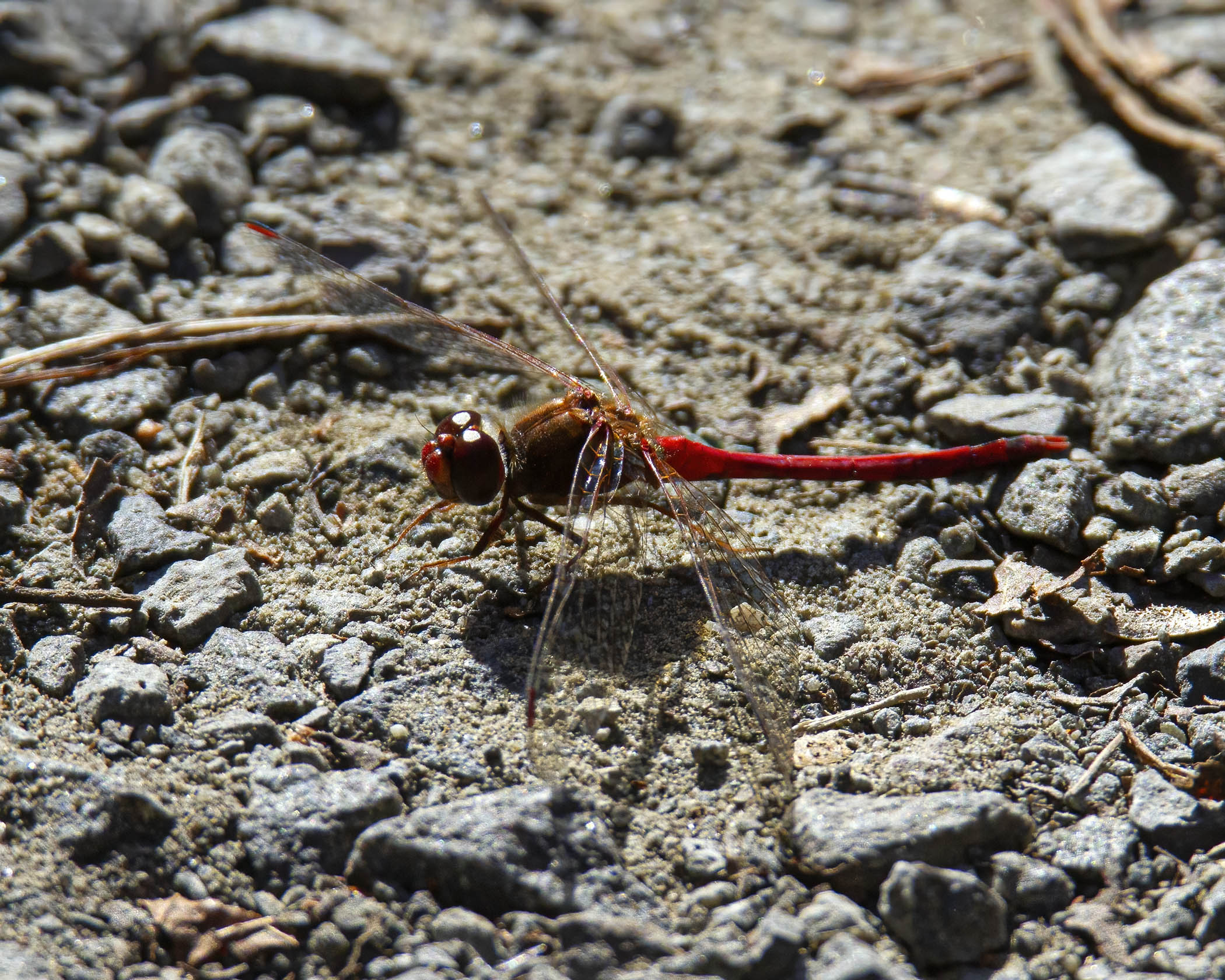
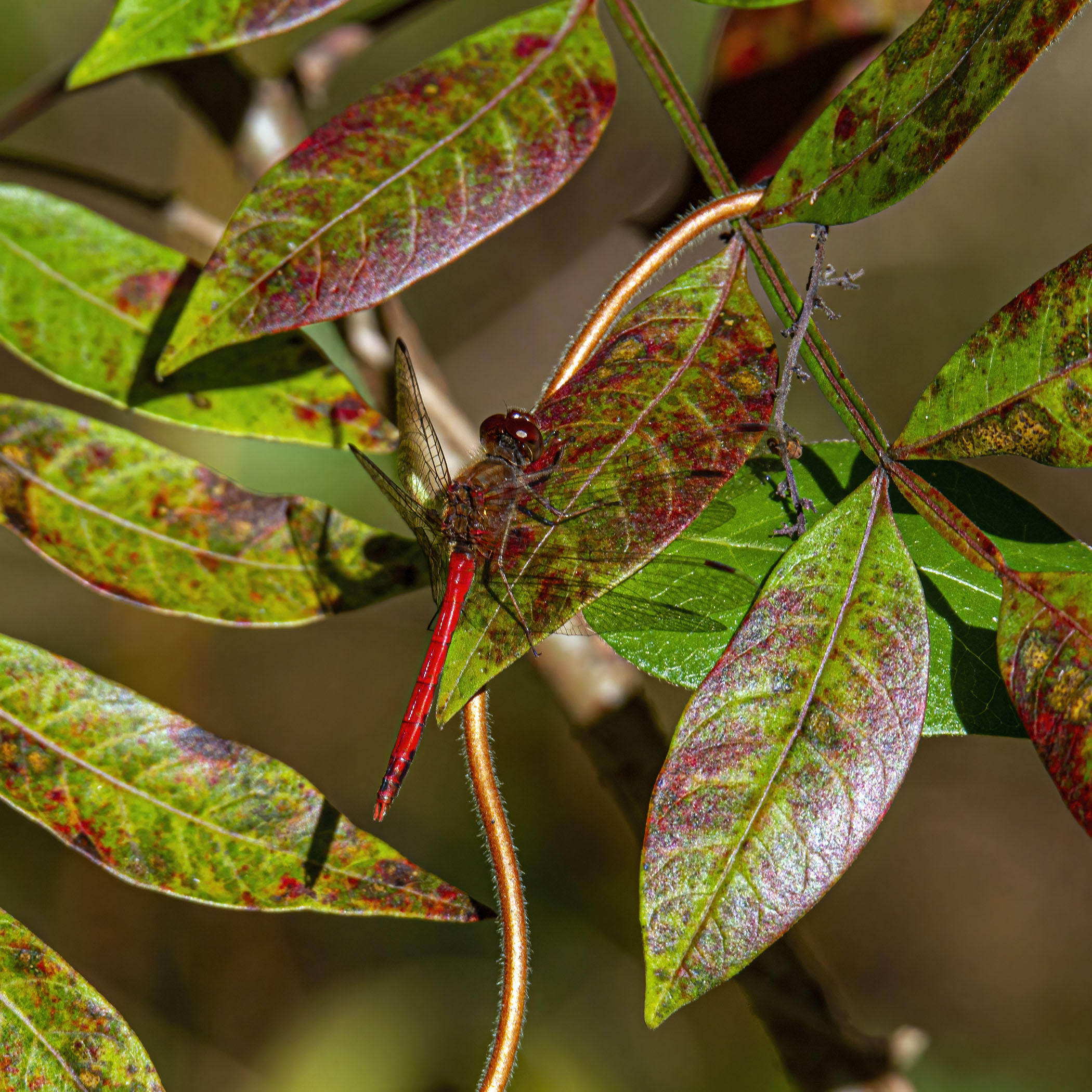
I can’t totally exclude the possibility that I may see a hardy survivor of another species, but it is beginning to look like Autumn Meadowhawks (Sympetrum vicinum) are the sole remaining dragonfly species. Last week I spotted quite a few of them during a visit to Huntley Meadows Park, a county-owned marshland not far from where I live.

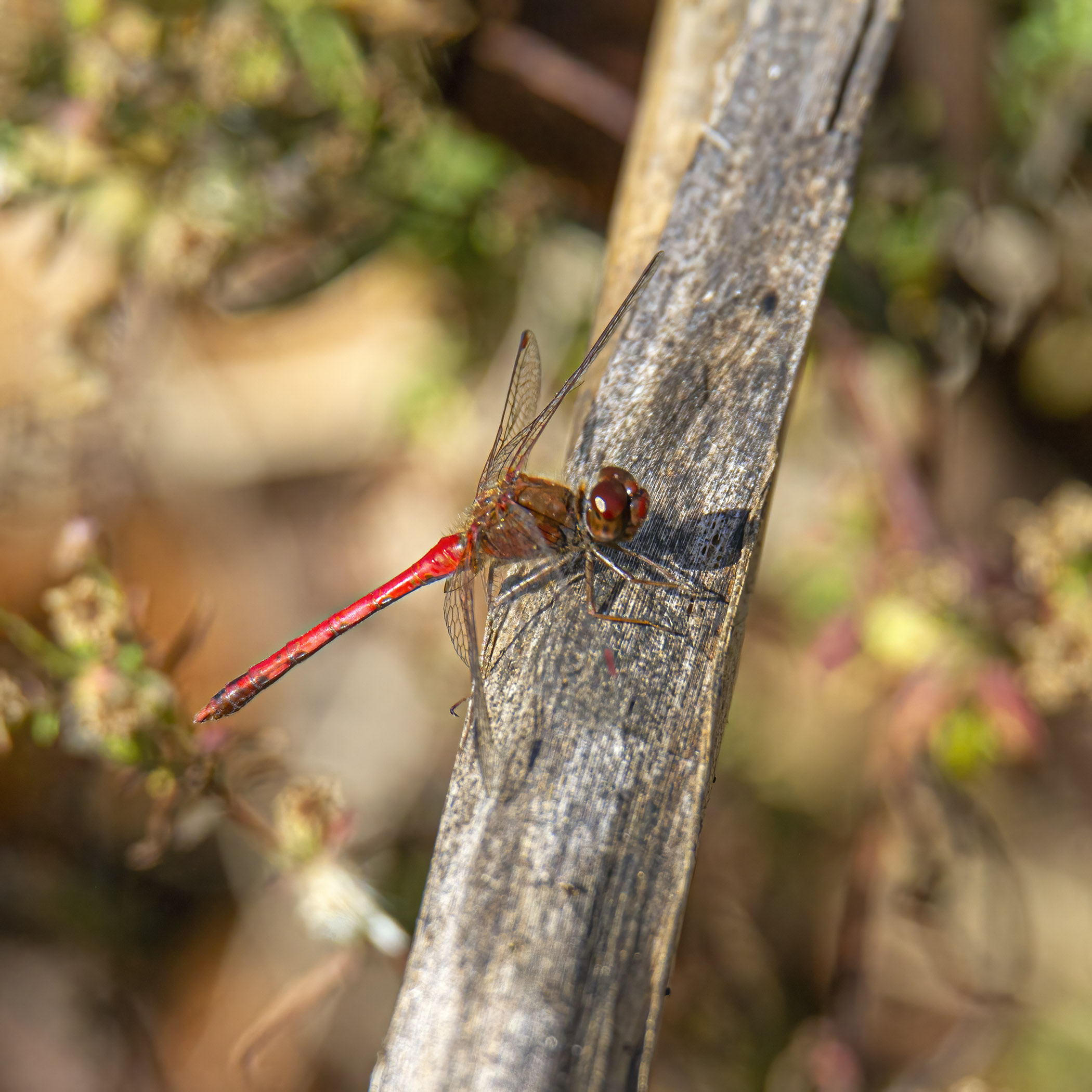
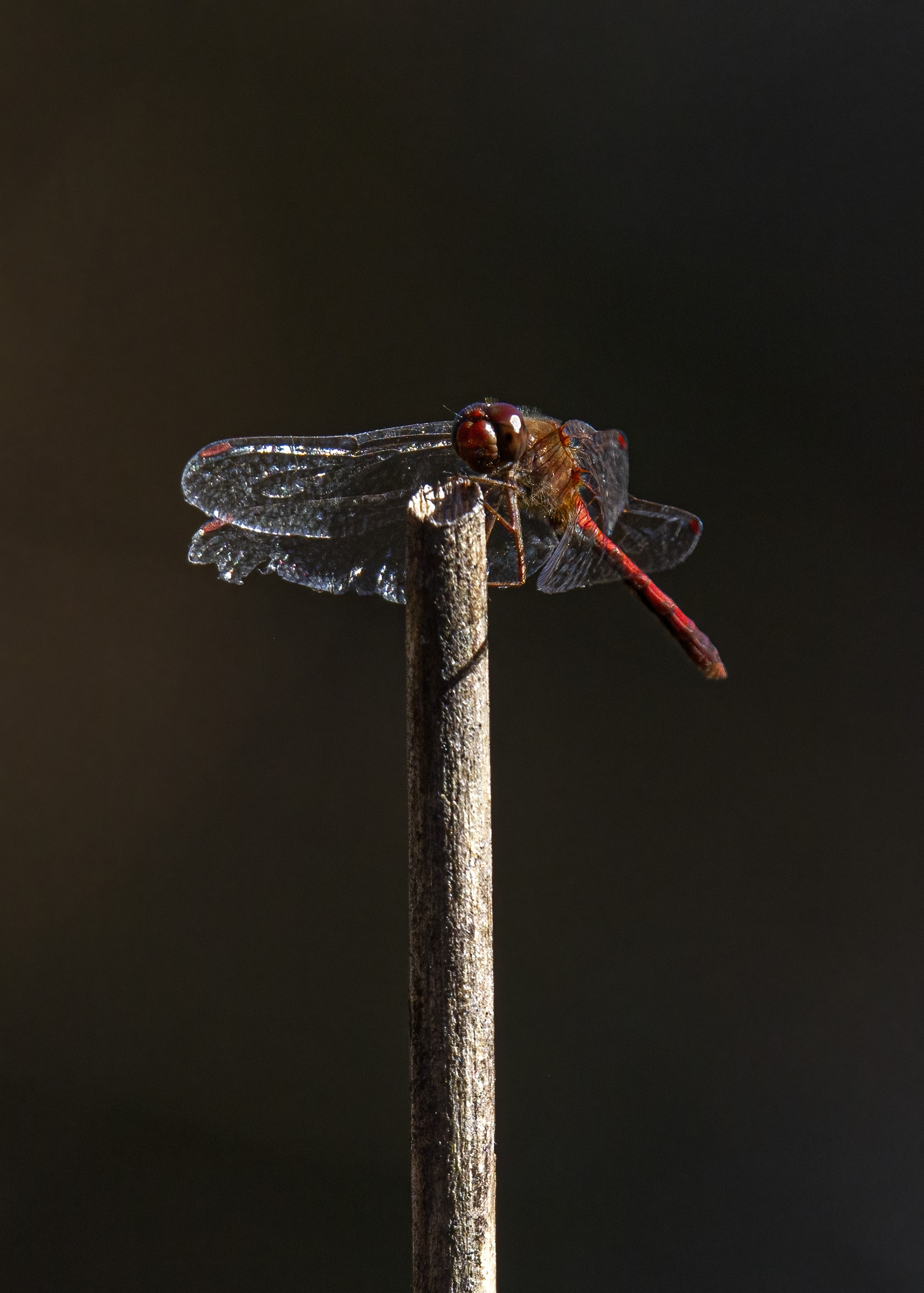
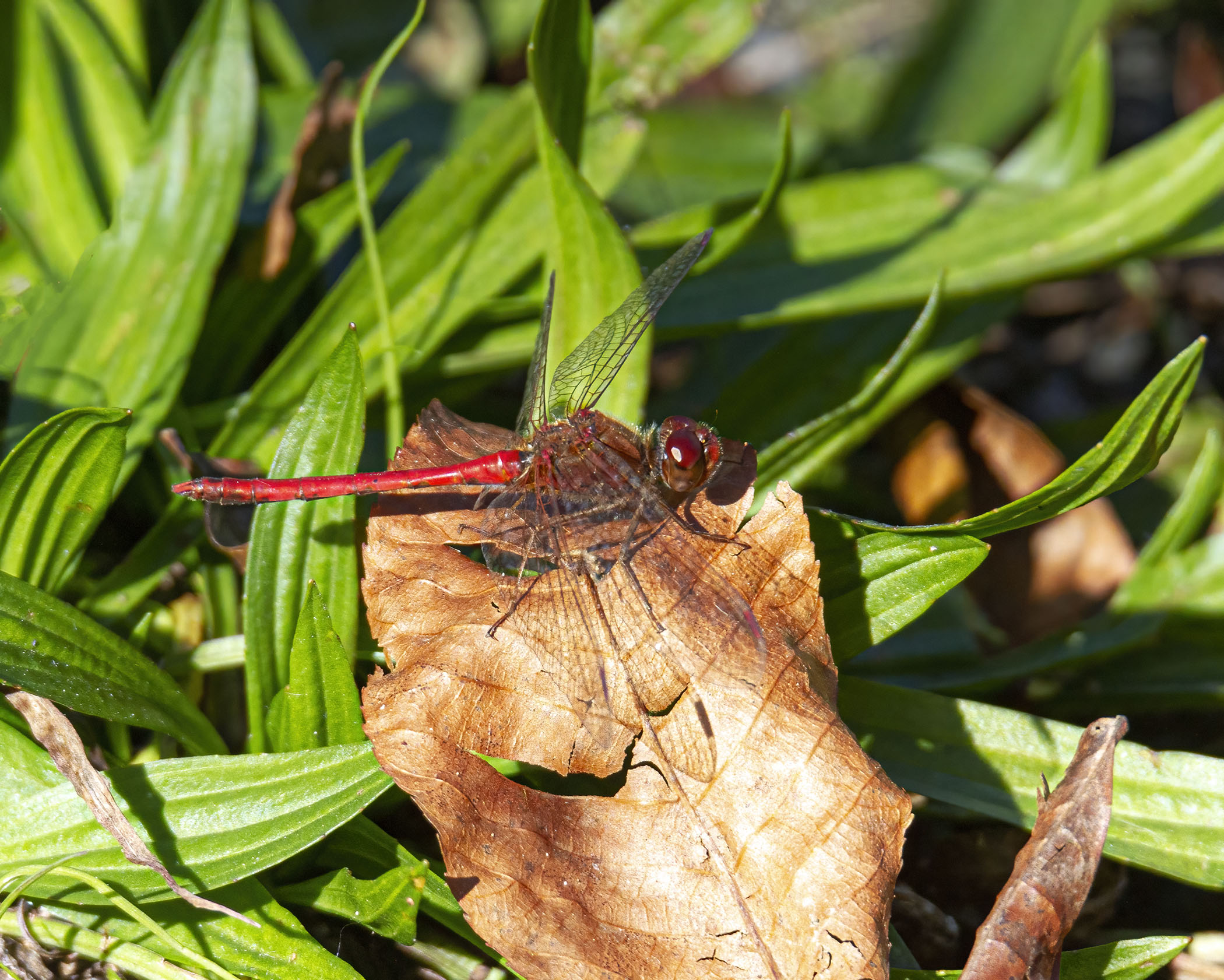
I tried to capture images of these bright red beauties in as many different environments as I could. Autumn Meadowhawks often perch on the ground, which does not provide a very interesting background, as you can see in the final photo. It is much more interesting if they perch on fallen leaves, or even better if they choose a more elevated perch.

The photos below give you an idea of how I try to “work” a subject. I try to shooting from different angles and distances.  When possible, I try to selectively include or exclude background elements by choosing the appropriate camera settings, as you can see in the fourth photo, where I caused the background to be totally out of focus. Paying attention to the direction of the light really helps too, as you can see particularly in the second image in which the light is so directional that it almost looks like a studio portrait.

Autumn Meadowhawks will probably be around for another few weeks or maybe a month or so, depending in part on the severity of the local weather. At that point, I will rekuctantly turn my focus to birds, landscapes, and other non-insect subjects. I also hope to devote a bit more attention to learning more about creating videos—I have a modest YouTube channel that I have allowed to languish this past year.

Autumn Meadowhawk

Autumn Meadowhawk

Autumn Meadowhawk

Autumn Meadowhawk

Autumn Meadowhawk

© Michael Q. Powell. All rights reserved.

Read Full Post »

While I was composing a shot of this turtle at a small pond in Kingstowne, a suburban area only a mile or so from where I live, another turtle popped its head out of the water to photobomb its friend. I am pretty sure that the basking turtle is a Red-eared Slider (Trachemys scripta elegans), though I must admit that turtles are definitely not my speciality when it comes to identifying species.

We are in a transitional time of the year—we have already had some days with frost, but some other days have been warm and sunny. Today, for example, we may be flirting with record high temperatures up to 76 degrees (24 degrees C). Tomorrow, on the other hand, the high temperature is forecasted to reach only 52 degrees (11 degrees C).

turtle

© Michael Q. Powell. All rights reserved.


Read Full Post »

As I was preparing to lock the front door of my townhouse in Northern Virginia one day last week, I glanced over at a bush about 10 feet (3 meters) away where a bird was perched. I pivoted my body, turned on the camera, and focused on the little bird, which I noted was a Carolina Wren (Thryothorus ludovicianus)—I going out out on a photo adventure, so my camera was slung over my shoulder.

Fearing that I might scare off the wren, I snapped off a few shots without paying too much attention to my camera settings. It felt a little strange to photograph a bird at such close range. In most cases I photograph birds with my 150-600mm lens zoomed out to 600mm, but in this instance I took the shot at 309mm and probably should have zoomed back a bit more.

When I was reviewing the images on my computer,  I checked the camera settings I had used and found out my camera was set at ISO 800, f/6.3, and 1/100. I am a little shocked that I was able to get a relatively sharp shot at such a low shutter setting, but the lens does have some built-in image stabilization and I am used to holding the lens pretty steady.

Some photographers travel great distances to capture wildlife images. This shot is definitely award worthy, but it does show that you may not have to travel far from home to see and photograph nature and wildlife. Beauty is everywhere.

Carolina Wren

© Michael Q. Powell. All rights reserved.

Read Full Post »

This tiny Ruby-crowned Kinglet (Corthylio calendula) glared down at me as I photographed it on Wednesday in a tree overhanging a stormwater retention pond in Kingstowne, a suburban community only a mile or so from where I live. The autumn foliage surrounding the pond had several patches of  impressively colorful leaves and I was delighted to be able capture some of the beautiful autumn color in the background of these two images.

In the first photo, you can see a portion of the kinglet’s “ruby crown,” a feature of the males that is often hidden from sight. The second image gives you a better overall view of the little kinglet, which only about four inches (10 cm) in length and weighs about .3 ounces (9 grams).

Ruby-crowned Kinglets are generally hyperactive, so it was unusual when this one paused for a moment in its foraging efforts and “posed” for me in the open.

Ruby-crowned Kinglet

Ruby-crowned Kinglet

© Michael Q. Powell. All rights reserved


Read Full Post »

Now that Autumn Meadowhawk dragonflies (Sympetrum vicinum) have become the only dragonflies that I see regularly, I have been paying a great deal of attention to their perches when I am photographing them—when there are a limited number of subjects available, I try to make each encounter count. During a recent trip to Huntley Meadows Park, a county-run marshland park only a few miles from where I live, I managed to capture images of these colorful little dragonflies perching on a variety of different types of vegetation.

Often I have to choose between zooming in close to show the details of my subjects or pulling way back to show the environment in which I found them. In the case of these Autumn Meadowhawks, though, the images balance those competing priorities quite well, in part, I believe, because the dragonflies were so immersed in their environment, i.e. they do not choose high perches that produce “dragonfly on a stick” photos that isolate the subject too much from its surroundings.

Autumn Meadowhawk

Autumn Meadowhawk

Autumn Meadowhawk

© Michael Q. Powell. All rights reserved

Read Full Post »

The red bodies of male Autumn Meadowhawk dragonflies (Sympetrum vicinum) make them relatively easy to spot.  However, when they choose to perch on foliage that matches their coloration, they can sometimes be well camouflaged.

The first photo shows an Autumn Meadowhawk perched on some kind of red vegetation (Virginia Creeper ?) at Huntley Meadows Park last Thursday. The red leaves really help to give the image a feel of autumn.

In the second image, the dragonfly stands out a bit more, but the dying leaves provide an artistically pleasing backdrop for the beautiful little dragonfly—I love this composition a lot.

Autumn Meadowhawk

Autumn Meadowhawk

© Michael Q. Powell. All rights reserved.


Read Full Post »

Lots of wildflowers still in bloom as we move deeper into autumn here in Northern Virginia. Last night we had our first frost warning of the season, but I don’t think there was any frost this morning in my neighborhood—a hard frost may speed the demise of many of the remaining butterflies and dragonflies. I was therefore delighted last Thursday to spot this Clouded Sulphur butterfly (Colias philodice) feeding on the flowers of what I believe is a White Heath Aster (Symphyotrichum ericoides) plant at Huntley Meadows Park.

Although part of the butterfly is obscured by the stem and the leaves in the foreground of this image, I like the way that I was able to capture the details of the butterfly’s green eyes and its extended proboscis.

Clouded Sulphur

© Michael Q. Powell. All rights reserved.

Read Full Post »

I will often strive to photograph my wildlife subjects from as many different angles as I can in order to take advantage of the lighting or to highlight the details of their bodies. When I spot a subject, though, I initially try to capture whatever shot I can before I work to get a better shot—any of my subjects are skittish and there is always the chance that my initial shot will be my only one.

I spotted this perched male Belted Kingfisher (Megaceryle alcyon) last Thursday at Huntley Meadows Park in Alexandria, Virginia and one of my initial shots was the third one below. The perch was sticking out of a pond that was surrounded by a marshy wetland, so there was really no chance for me to get closer to the kingfisher—there was no way to work the angles in my usual way.

So what did I do? In the background I noticed there were some patches of colorful fall foliage, so I decided to see if I could include some of those colors in my images to give them an autumn vibe. By bending, twisting, crouching, and kneeling I was able to vary my shooting angle, while remaining more or less in the same spot, and eventually managed to get some photos that included portions of that autumn foliage. The kingfisher remained in place, but cooperated by changing his head position from time to time.

Belted Kingfisher

Belted Kingfisher

Belted Kingfisher

© Michael Q. Powell. All rights reserved.

Read Full Post »

I was thrilled yesterday on Thursday at Huntley Meadows Park, a local marshland park, when I finally spotted some Blue-faced Meadowhawk dragonflies (Sympetrum ambiguum), a stunning species that is one of my favorites, after searching in vain for them at other locations for over a month. The Blue-faced Meadowhawk is a late-season dragonfly that is somewhat similar in appearance to the more common Autumn Meadowhawk—males of both species have bright red bodies, but the Autumn Meadowhawks have brown eyes.

The females of both species are more muted in their coloration than their male counterparts, as is often the case with many dragonflies and birds, so they have more natural camouflage and are frequently more difficult to find. The second image shows a female Blue-faced Meadowhawk that I managed to spot in the same general area as the male in the first photo. I love the way that the female dragonfly appeared to be singing a song as she basked in the sunlight on some dried-out vegetation.

Blue-faced Meadowhawk

Blue-faced Meadowhawk

© Michael Q. Powell. All rights reserved.


Read Full Post »

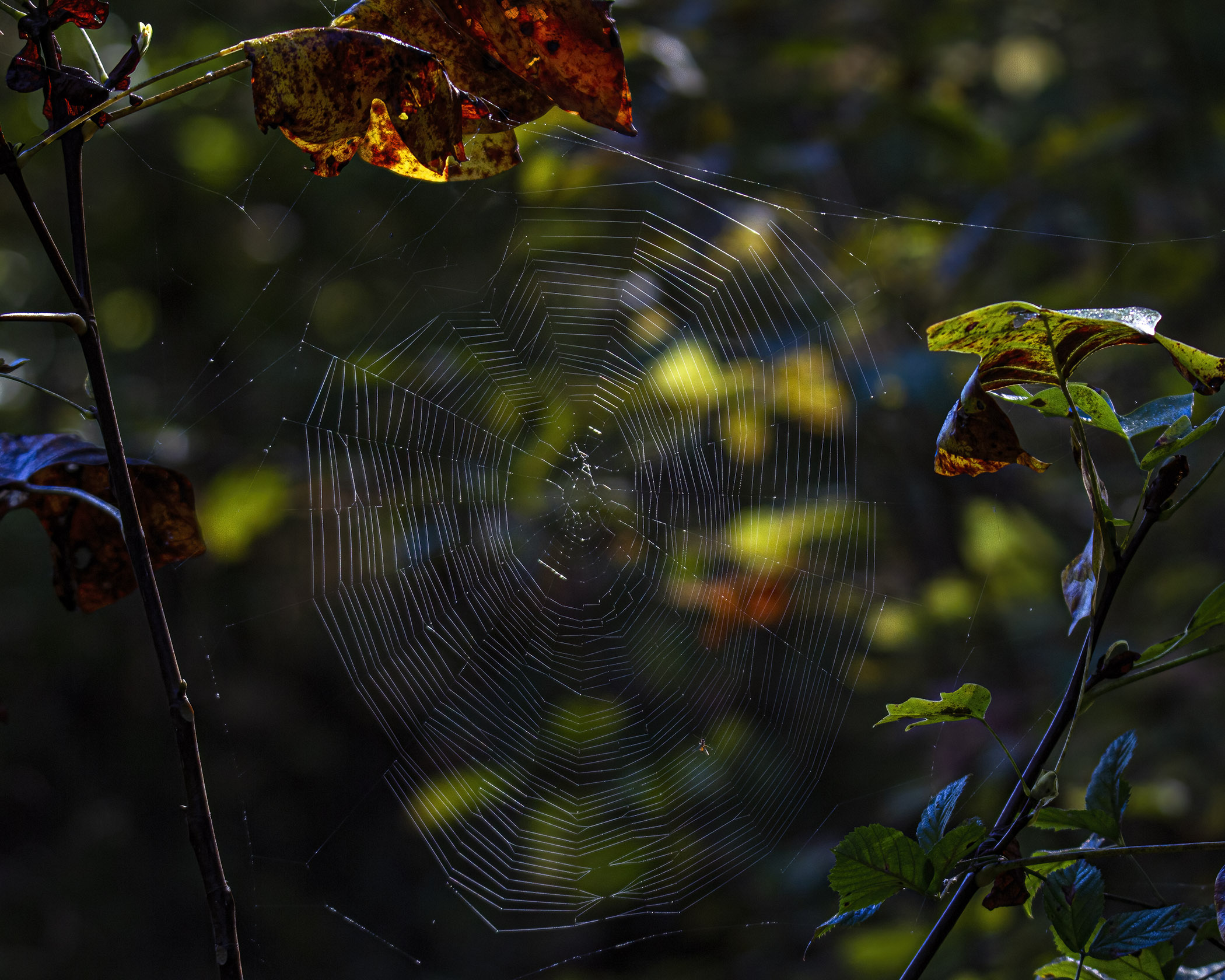
I have always admired the beauty and artistry of spider webs. It is so amazing to me that they can create such intricate patterns out of bodily secretions. I stumbled upon this beautiful little web on Thursday at Huntley Meadows Park and was thrilled that I was able to capture an image of it. I encourage you to click on the image for a closer view of the web design.

In order to make sure that the web did not disappear into the background completely, I deliberately underexposed the image, and focused manually on the web—there was no way that my camera’s autofocus would focus on the web.

spider web

© Michael Q. Powell. All rights reserved.

Read Full Post »

This late in the season, most of the large butterflies seem to be gone, but I continue to see some of the smaller ones, like this beautiful Variegated Fritillary butterfly (Euptoieta claudia) that I spotted on Thursday during a visit to Huntley Meadows Park, a county-run marshland park not far from where I live. Earlier in the year I encountered some Great Spangled Fritillaries, but I think this may well be my first sighting of a Variegated Fritillary in 2023.

The butterfly appeared to be basking in the sun as it perched with its wings wide open on some dried-out vegetation. I was using my Tamron 150-600mm telephoto zoom lens, which has a minimum focusing distance of almost nine feet (270 cm), so I was pretty far from the butterfly when I captured this image. I have read reviews that state that this lens is soft when fully extended to 600mm, but I have found that I can get acceptably sharp images if I pay a lot of attention to my focusing and shooting techniques, including remaining steady—in this case I was using a monopod.

Variegated Fritillary

© Michael Q. Powell. All rights reserved.


Read Full Post »

I was delighted to spot this Common Wood Nymph butterfly (Cercyonis pegala) this past Wednesday at the edge of the hike-bike trail on the back side of Huntley Meadows Park, a county-run marshland park in Alexandria, Virginia. I love the distinctive yellow patch on its wing and its really cool eyes with vertical stripes. Common Wood Nymphs usually like to hang around near the edges of the woods rather than in the fields that many butterflies seem to prefer.

Generally I like to get the plane of the sensor of my camera sensor as close to parallel as possible with my subject, so that the entire subject is in focus. In this case, though, a large mass of thorny vines kept me from being able to get my desired shooting angle and consequently the focus on the left-hand side of the subject is a little soft. That being said, I am nonetheless pretty happy with this shot of a cool-looking butterfly that I don’t see very often.

Common Wood Nymph

© Michael Q. Powell. All rights reserved.


Read Full Post »

I was thrilled on Wednesday to photograph my first Common Sanddragon dragonfly (Progomphus obscurus) of the year as he was enjoying a sandy beach near Wickford Park in Alexandria, Virginia. Unlike most dragonflies that prefer to perch on vegetation, Common Sanddragons are usually found perched flat on the sunny, sandy sections of shallow creeks.

According to the Dragonflies of Northern Virginia website, “Despite its name, this species is rare in Northern VA. In other parts of the country, where clean, sunny, shallow creeks with plenty of sandy/gravely banks are common, so too are Common Sanddragons. Our urban waterways are too influenced by stormwater, flowing fast and unchecked off impervious surfaces (roads, parking lots, roofs, etc.). This creates deeply incised, eroded banks and streambeds, with excess silt, unstable flows.”

This species is special to me because I was the first person to document its presence at Huntley Meadows Park, a county-run marshland park where I used to do a lot of my photography before it became overcrowded with photographers. Check out my June 2014 blog posting New dragonfly species in the park for the details of how I stumbled upon this “new” species.

Common Sanddragons are also special to me because in June 2016 I was lucky enough to observe and document the thirty minute metamorphosis of a water-dwelling nymph into a Common Sanddragon dragonfly. I had been collecting some discarded exoskeletons of already emerged dragonflies on a sandy bank of a stream when suddenly I felt one moving in my hand. I quickly placed it on the sand and was able to photograph the dragonfly as it was emerging. It was a remarkable encounter and I encourage you to check out my blog posting Metamorphosis of a dragonfly.

Nothing quite that exciting happened during my most recent encounter. I was able to capture some images of the dragonfly on various parts of the “beach” where I initially spotted him. He was pretty skittish and flew away multiple times, but kept returning to the same general are of the creek, sometimes choosing the sandy areas and sometimes opting for the more rocky spots. I particularly like the first photo that has a mixture of rocks and sand and has some green algae that matches the stunning eyes of this Common Sanddragon.


Common Sanddragon

Common Sanddragon

Common Sanddragon

© Michael Q. Powell. All rights reserved.

Read Full Post »

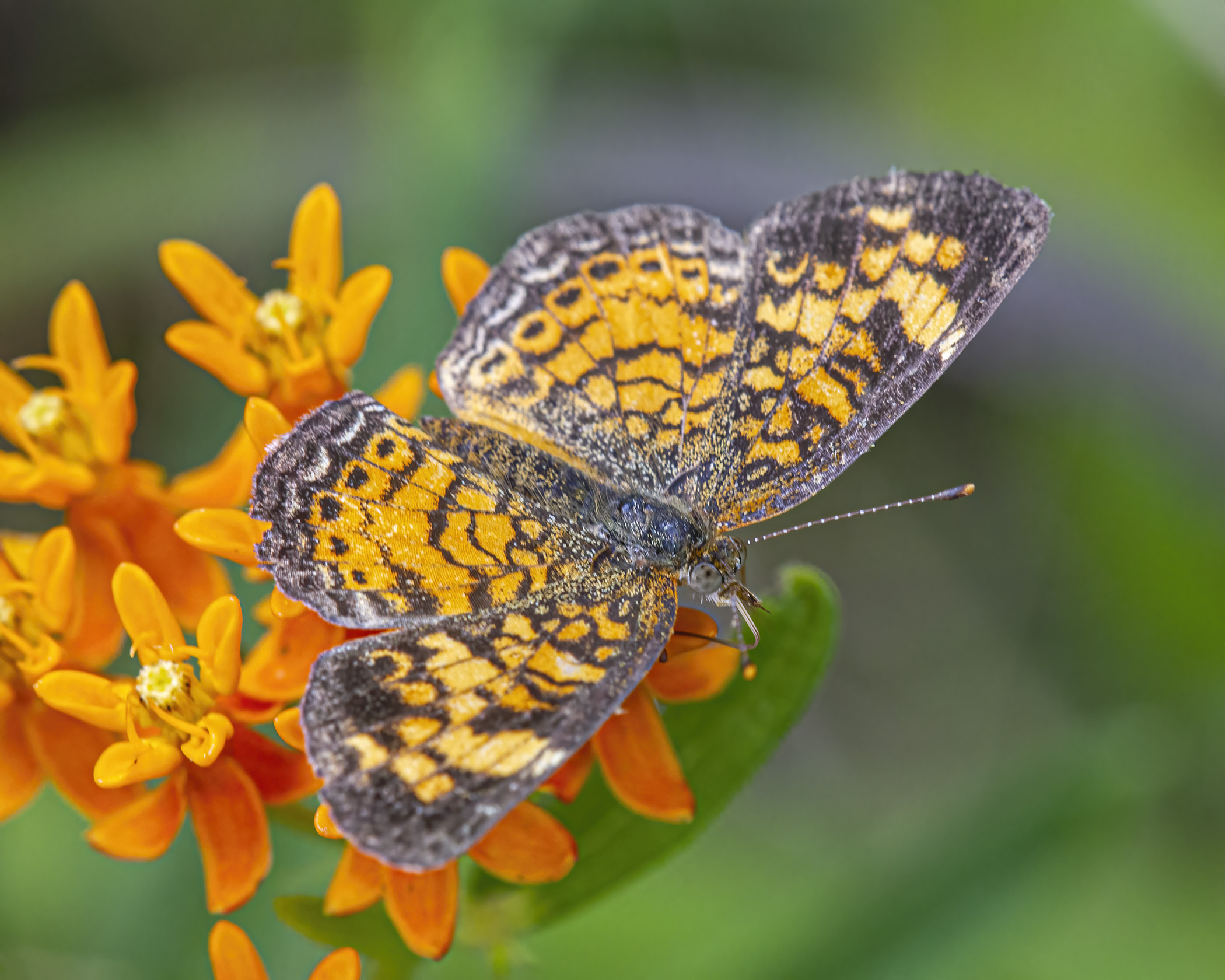
It is always a joy to see butterfly weed (Asclepias tuberosa), a bright orange species of milkweed that is full of nectar and attracts lots of butterflies. On Monday I spotted what I believe is a Pearl Crescent butterfly (Phyciodes tharos) feeding on some butterfly weed at Huntley Meadows Park in Alexandria, Virginia. I spotted some regular milkweed earlier in the day and was hoping to see my first Monarch butterfly of the season, but, alas, I came up empty-handed this time.

I love bright colors and some of you may recall that I drive an Ignition Orange KIA Soul. I was delighted to be able to capture some of the beautiful details and color of the butterfly weed and also some details of the butterfly, including its striking eyes and extended proboscis.

Pearl Crescent

© Michael Q. Powell. All rights reserved.

Read Full Post »

I have always been fascinated by the color and texture of the centers of poppies and was delighted to see poppies in several different colors during a recent visit to Green Spring Gardens in Alexandria, Virginia, just a few miles from where I live. The tissue-paper texture of the petals quite unusual, reminding me of my childhood craft projects with tissue paper and crepe paper—we may even have created our own poppies.

Even when their petals have faded and fallen away, poppies continue to fascinate me (and birds love their seeds) and I really like the look of their seed pods, like the one in the final photo.

poppy

poppy

poppy

poppy

© Michael Q. Powell. All rights reserved.

Read Full Post »

In the United States, today is Memorial Day, a federal holiday. For some people this day marks the unofficial beginning of summer, but for me, as someone who served for twenty years in the U.S Army, this day has a deeper meaning, a day to reflect on the lives of the brave men and women who died in the defense of this nation. Yesterday, Facebook reminded me of a posting I made on Memorial Day 2018, and I decided to share it again today in this blog posting.

“I was prompted this morning to read again the challenges to us in the Gettysburg Address, which seem so appropriate today as we remember the sacrifices of so many brave men and women. “It is for us the living, rather, to be dedicated here to the unfinished work which they who fought here have thus far so nobly advanced. It is rather for us to be here dedicated to the great task remaining before us—that from these honored dead we take increased devotion to that cause for which they gave the last full measure of devotion—that we here highly resolve that these dead shall not have died in vain—that this nation, under God, shall have a new birth of freedom—and that government of the people, by the people, for the people, shall not perish from the earth.” ”

For those of you who might be curious, the photo below is from a November 2014 blog posting entitled “Rescue of an injured Bald Eagle” that documented the capture of an injured eagle by an officer of the Fairfax County Animal Control Services at my local marshland park. Some of the photos from that posting were reprised in Washington D.C. media outlets and the posting has been my all-time most popular posting with 3472 views.

Bald Eagle

© Michael Q. Powell. All rights reserved.


Read Full Post »

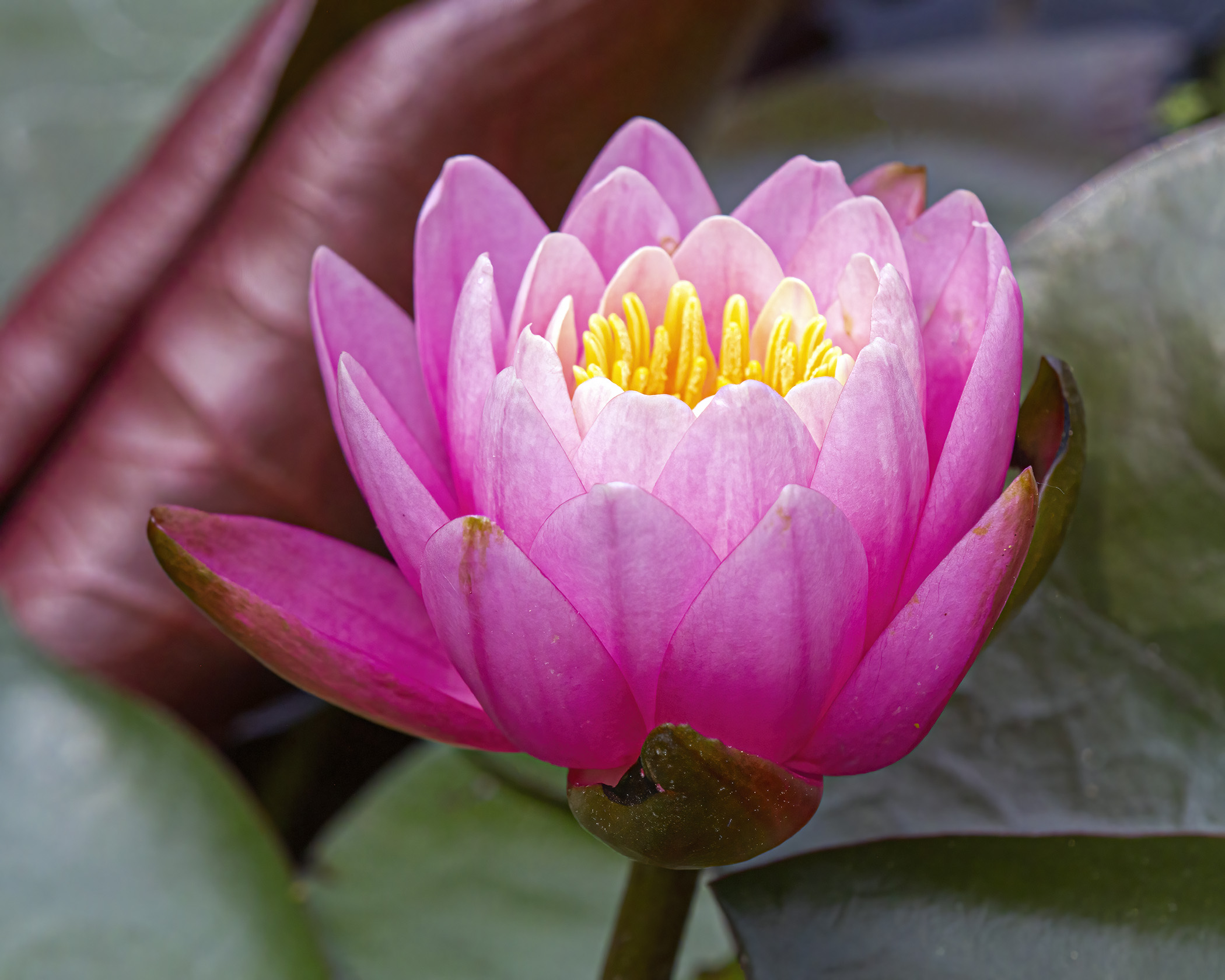
Water lilies are one of my favorite flowers and I was delighted this past Wednesday to see that several of them are already in bloom at a small man-made pond at Green Spring Gardens, including a couple of pink ones. Later in the season there will also be lotuses at this pond, but it appears to be too early for them right now. It is also a bit early for most of the dragonflies—I love to take photos of dragonflies perching on lotuses and water lilies.

Since there are so few water lilies blooming, I could not get the wider shots that remind me of the paintings of Claude Monet, one of my favorite artists, so I focused instead on capturing individual portraits of several of the flowers. It has always seemed to be that water lilies glow with an inner light and I was happy to capture a hint of that light in several of these photos.

water lily

water lily

water lily

© Michael Q. Powell. All rights reserved.

Read Full Post »

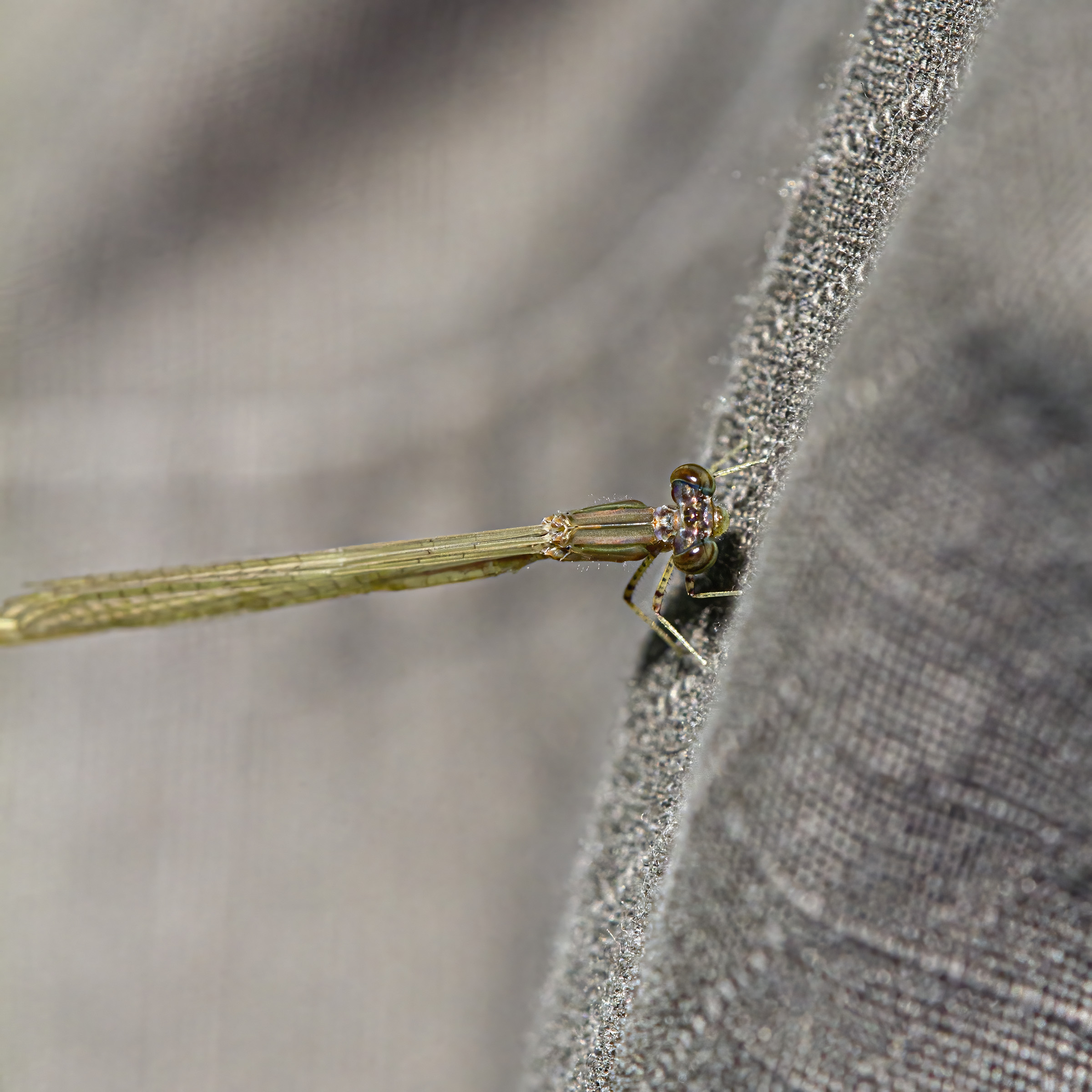
I did not get a close enough look at it to identify its species, but a teneral damselfly decided to momentarily hitch a ride on my pant leg last Wednesday at Green Spring Gardens in Alexandria, VA. A teneral damselfly is one that has only recent emerged and is therefore pale and does not yet have its full adult coloration.

It turns out that a 180mm macro lens is less than optimal for a selflie, even of my leg—I could not get far enough away to include the whole damselfly in the frame. The only other alternative is for me to become a lot more flexible, which at my age does not seem very likely.

teneral damselfly

© Michael Q. Powell. All rights reserved.


Read Full Post »

This tiny Cabbage White butterfly (Pieris rapae) paused for only a moment on a pink flower, but I managed to get a shot of it on Wednesday at Green Spring Gardens. If you look closely, you can just make out the butterfly’s stunning green eyes.

The composition of this image is pretty simple, but I think it is effective. I would have liked to blur out the background a bit more, but even though it is cluttered, it is not distracting. I think that is because the pink and white are so bright and distinctive that they “pop” against the green background.

Cabbage White

© Michael Q. Powell. All rights reserved.

Read Full Post »
On Wednesday at Green Spring Gardens, a county-run historic garden just a few miles from my home, I got a really good look at this bee’s proboscis, the long, straw-like tongue that it uses to collect nectar. From my angle, it looked more like a deadly weapon. Yikes! As you can probably tell, I have switched to using my macro lens most of the time now that the warmer weather has caused more insects to reappear.

One of my friends on Facebook named this bee the “Gene Simmons” bee, because it reminded him of an iconic pose by the singer from the band KISS in which his extended tongue reached to the tip of his chin. It is hard to know if it is true, but according to urban legend, Simmons had his tongue insured for a million dollars during the 1970’s, when KISS was at its height of popularity. The popular rumor at the time that he had a cow’s tongue grafted onto his own, however, has been disproven.

bee tongue

© Michael Q. Powell. All rights reserved.


Read Full Post »

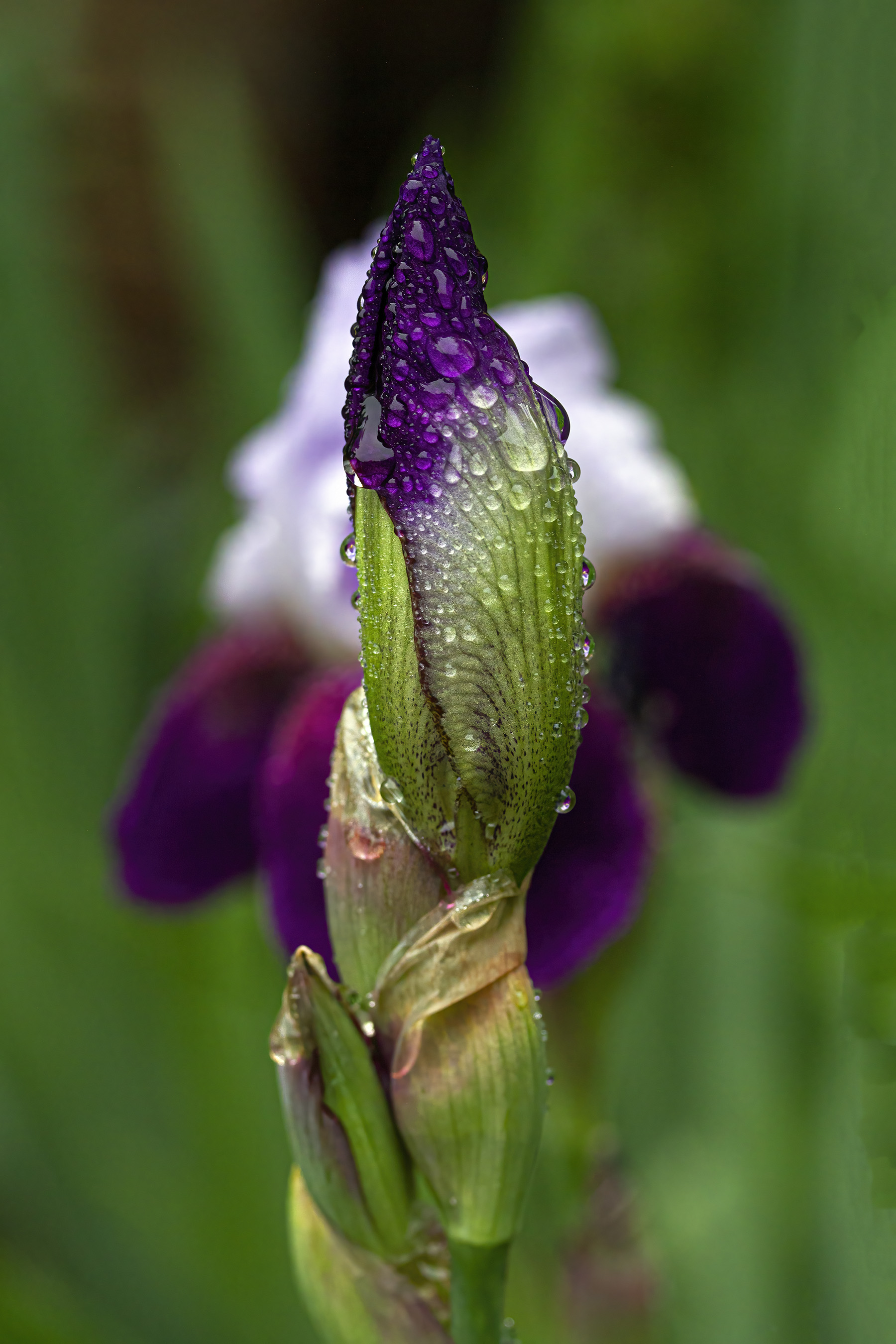
The rain has stopped for now, but some raindrops remain, sparkling like tiny jewels this morning on the bearded irises in the garden of my neighbor and fellow photographer Cindy Dyer. I tried to get creative with the framing of the first shot, with a blurred iris in the background of an unopened bud.

In the second shot, I was so close to the bearded iris that you almost can’t tell that the primary subject is a flower—I love my macro lenses. There third and fourth shows show a couple more varieties of irises that are currently in bloom in Cindy’s garden, with lots more still to come.

Iris

Iris

Iris

Iris

© Michael Q. Powell. All rights reserved.

Read Full Post »

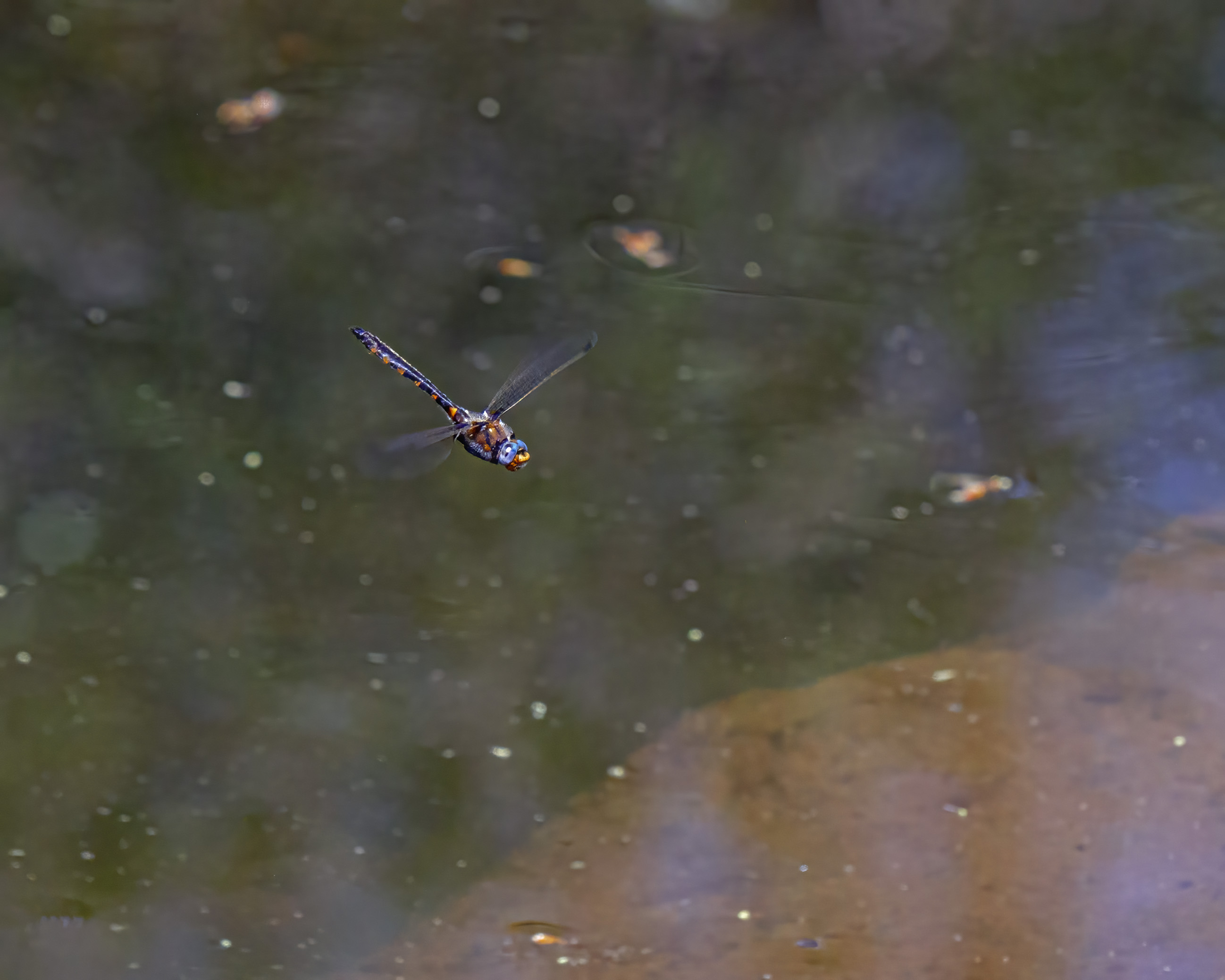
It is almost impossible, but I can’t help but try to capture images of dragonflies in flight. It is arguably the most difficult challenge of my ability to use my camera and also of my patience. None of the dragonflies in these photos flew close to the shores of the streams that I was exploring in Prince William County, Virginia, and I was using only a modest telephoto lens that I was focusing manually—the autofocus on my Tamron 180mm macro lens is relatively slow and could not focus on the dragonflies as they zoomed on by.

Last Wednesday I photographed the dragonfly in the first photo as it was patrolling over a creek. I believe that it is a Uhler’s Sundragon dragonfly (Helocordulia uhleri), which is about 1.8 inches (46 mm) in length. The dragonfly was not exactly following a pattern, but I was able to track it as it flew all around a small section of the creek.

The dragonfly in the second image may also be a Uhler’s Sundragon, though I am less confident of this identification. I really like the fact that the eyes of the dragonfly are in shart focus. It is probably just my imagination, but this dragonfly seemed to glance up at me and smile as it flew on by. In this photo, as in the first one, you really have a sense of the environment in which I found the dragonfly.

I captured the final image on Friday as I was exploring a different creek in Prince William County. The dragonfly in this photo was much larger than the ones in the other photos and was flying much faster and seemed to be conducting patrols over a much longer stretch of the creek. All the image was not completely sharp, I captured enough details to be able to identify it as male Stream Cruiser (Didymops transversa) dragonfly, a species that is about 2.2 inches (56 mm) in length.

Last year I did a short video on YouTube called Impossible Shots? Dragonflies in Flight in which I talked about one of my forays into the field and highlighted my approach to photographing dragonflies. Check it out if you want to see some more shots of dragonflies in flight or if you simply want to hear my voice and see my face. I included a link to the video in the title of the video (which should appear in color and underlined) and am also going to try to paste it into the end of posting, so you don’t have to go to YouTube to watch it. I am still just dabbling in video, but want to try to do more of it this year.

Uhler's Sundragon

Uhler's Sundragon

Stream Cruiser

© Michael Q. Powell. All rights reserved.

Read Full Post »
Yesterday I stopped by the garden of my neighbor and fellow photographer Cindy Dyer. Her early-season tulips were well beyond their prime, but more tulips are getting ready to bloom. I was a little surprised to see that some of her irises are already starting to bloom too. I love to photograph flowers when they are at this stage of growth—they are already beautiful and give hints of the additional beauty that is to come.

Happy Easter to all of you who are celebrating this holy day. Christ is risen!

tulip

tulip

iris

© Michael Q. Powell. All rights reserved.


Read Full Post »
« Newer Posts - Older Posts »