Posted in Autumn, Dragonflies, Insects, Nature, Photography, wildlife, tagged Alexandria VA, bluet, bluet damselfly, Canon 50D, Enallagma civile, Familiar Bluet, Familiar Bluet damselfly, Huntley Meadows Park, Tamron 150-600mm on November 21, 2016|
3 Comments »
It was a pleasant surprise to see this colorful Familiar Bluet damselfly (Enallagma civile) last Friday at Huntley Meadows Park. With the arrival of frigid weather, with temperatures at near-freezing levels at night, however, I fear that it will be my last damselfly sighting of the season.
When I first spotted this damselfly, I had my Tamron 150-600mm zoom lens on my camera. I didn’t want to take my eyes off of the damselfly, for fear of losing sight of it in the underbrush, so I decided to make do with the long zoom lens. I quickly realized that I had a few obstacles to overcome. The minimum focusing distance of the lens is almost nine feet (2.7 meters), so I had to back up. At that distance the damselfly was so small that my autofocus did not want to lock onto it, so I was forced to focus manually, while handholding the lens at 600mm.
I ended up trying to do environmental portraits, rather then the close-ups that I generally prefer to take. I like the way that the seasonal coloration of the background helps the blue of the damselfly’s body really stand out, almost like it is an alien visitor in a foreign land.
Farewell, sweet damsels of the air, until we meet again in the spring.


© Michael Q. Powell. All rights reserved.
Read Full Post »





















 Mike Powell
Expressing our differences
Posted in Birds, commentary, Nature, Photography, wildlife, tagged Alexandria VA, Ardea herodias, Canon 50D, Great Blue Heron, herons, Huntley Meadows Park, Tamron 150-600mm on November 8, 2016| 5 Comments »
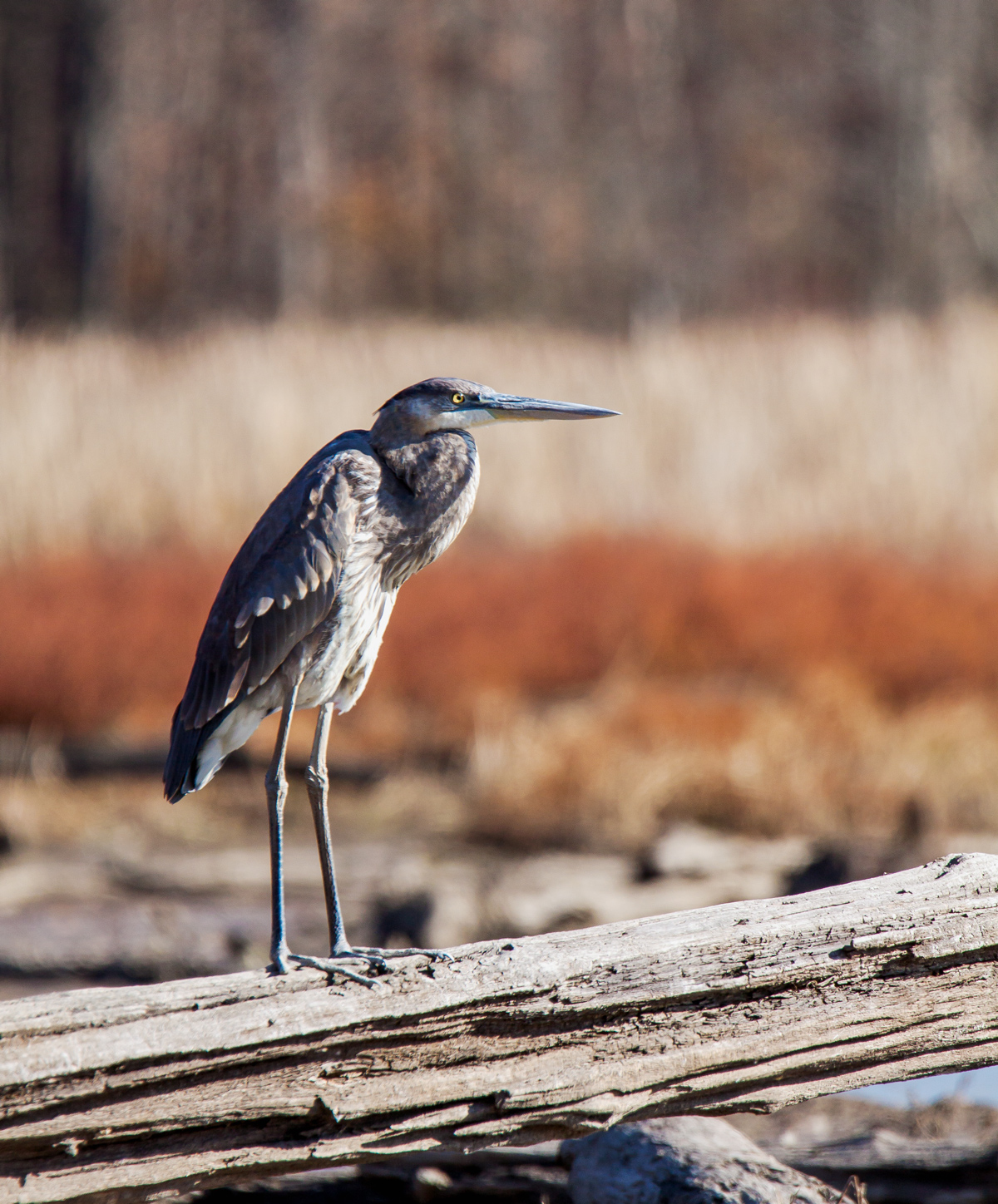
Why were the Great Blue Herons (Ardea herodias) prancing about on Saturday with their heads tilted upward and their wings displayed? Surely this was some kind of elaborate courting ritual.
As Tina Turner famously sang, “What’s love got to do with it?” Apparently this is how these herons defend their feeding territories. Really? According to the Cornell Lab of Ornithology, one of my favorite sources of information on birds, “Great Blue Herons defend feeding territories from other herons with dramatic displays in which the birds approach intruders with their head thrown back, wings outstretched, and bill pointing skyward.”
If only we could be so dignified in expressing our differences instead of squawking loudly and aggressively at each other.
© Michael Q. Powell. All rights reserved.
Share this:
Read Full Post »