Feeds:
Posts
Comments

Posts Tagged ‘Alexandria VA’

Sometimes I don’t have to venture far to capture images. I took this shot recently of a flower growing out of one of the hosta plants in my front yard as the rain was falling.

Simple colors and shapes and the sparkle of raindrops—photography doesn’t always have to be complicated. The challenge is to slow down, to really see the world around us, and to recognize its inherent beauty.

hosta in the rain

© Michael Q. Powell. All rights reserved

Read Full Post »

Milkweed plants provide a wonderful habitat for all kinds of creatures, including this Large Milkweed Bug (Oncopeltus fasciatus) that I spotted earlier this week at Green Spring Gardens. These  bugs go through a fascinating series of physical transformations as they move though different nymph phases. A little over six years ago, I studied these bugs  pretty closely and documented their stages of development in a posting that I called Life phases of the large milkweed beetle. Be sure to check it out for more information and fascinating photos of these colorful little bugs.

I really like the combination of colors in this simple shot, colors that remind me a little of Christmas. However, I doubt that anyone would choose to feature this image on their annual Christmas card. 🙂

Large Milkweed Bug

© Michael Q. Powell. All rights reserved

Read Full Post »

Today I decided to feature two butterflies that I have seen over the past week. I saw them at different times and at different places, so normally I would not put them together in a posting.

I was struck, however, by the contrast between the two of them. One of them, a Viceroy butterfly (Limenitis archippus), is brightly colored and hard to miss. The other, a Cabbage White (Pieris rapae) is so pale and nondescript that many people don’t notice it at all or dismiss it as being “only” a moth.

Beauty speaks to people in individual deeply personal ways. I find these two butterflies to be equally beautiful.

What do you think? Instinctively do you find one of these two to be more beautiful than the other?

Of course, there is no “right” answer. It seems to me that beauty is almost always subjective rather than universal. Our assessments of beauty tend to be influenced by a whole host of internal factors including our mood, personality, and background as much as by the external characteristics of the subject being considered.

Viceroy butterfly

Cabbage White butterfly

© Michael Q. Powell. All rights reserved


Read Full Post »

Normally I don’t do consecutive blog posts of the same subject, but I got such an overwhelmingly positive response yesterday to my images of Ruby-throated Hummingbirds (Archilochus colubris) that I decided to post a few more. All of these hummingbirds, the only species found in the eastern part of the US, will probably depart soon to winter in a warmer climate, so I figure I better take advantage of this opportunity while I have it.

The best chance to snap a photo of a hummingbird is when it hovers to gather nectar (or when it is perched), but I managed to capture the first image as the hummingbird was zooming on by. I love its body position.

From an artistic perspective, the second image is my favorite. The background is simplified and less cluttered than in other images and the bright color of the flowers really grabs the viewer’s eyes. The slightly blurred wings are in a wonderful position and help to emphasize the sense that the hummingbird is in motion.

The final shot was taken with a different camera. As I noted yesterday, I was shooting with my 180mm macro lens, but I also had my Canon SX50 superzoom camera with me. It has a long reach, but doesn’t handle fast action very well, so it mostly stayed in the camera bag. When one of the hummingbirds perched in a distant tree, however, I was able to pull it out and use it for this static portrait.


Ruby-throated Hummingbird

Ruby-throated Hummingbird

Ruby-throated Hummingbird

© Michael Q. Powell. All rights reserved

Read Full Post »

It was cloudy and there was intermittent rain, but some Ruby-throated Hummingbirds (Archilochus colubris) were active at Green Spring Gardens yesterday. My macro lens might not have been the optimal choice for photographing them, but it is what I had on my camera and I was pleasantly surprised by the results.

As I have noted many times before, I really like my macro lens, a Tamron 180mm lens. Because of the crop sensor of my Canon 50D DSLR, the lens has an equivalent field of view of 288mm, which lets me use if as a telephoto lens in a pinch. The only down side of the lens is that it does not have any image stabilization so I have to pay attention to my shutter speed and/or use a monopod as I was doing yesterday.

I noted that the hummingbirds seemed to like a particular kind of flower, so I planted myself in front of a patch of them and waited. The hummingbirds returned several times and I was able to decent shots. As I was waiting, it began to rain a bit, so I opened my umbrella and kept shooting—the hummingbirds did not seem to mind the light rain. It must have been quite a sight to see me with my umbrella in one hand and my camera on the monopod in the other.

For those of you who are interested in camera settings, I was shooting at ISO 1600 in aperture-preferred mode with an aperture setting of f/5. The relatively poor lighting meant that my shutter speed generally was 1/500 or slower, which was not fast enough to freeze the motion of the wings, but did allow me to capture the body fairly well when the hummingbird hovered.

I have a few more hummingbird shots that I may use in another posting, but wanted to share these initially.

Ruby-throated Hummingbird

Ruby-throated Hummingbird

Ruby-throated Hummingbird

© Michael Q. Powell. All rights reserved


Read Full Post »
I was thrilled to capture some shot of a Spicebush Swallowtail butterfly (Papilio troilus) this past weekend at Green Spring Gardens as it fed on a lantana flower. I am so used to more muted colors when I am shooting in the “wild” that the brightness of these flowers seem almost unnatural.

If you look closely at the butterfly’s legs in the first image, you will see that one of them is blurred. Obviously the butterfly was moving about and my camera’s shutter speed was too slow to stop the motion. In many cases I would be disappointed with that lack of sharpness, but I find that it acceptable here, because it doesn’t really distract the viewer’s eyes.

There are a number of dark-colored swallowtails in our area, but the Spicebush Swallowtail is the only one with a blue swoosh on its wings in the middle of a row of orange spots.

Spicebush Swallowtail

Spicebush Swallowtail

© Michael Q. Powell. All rights reserved.

Read Full Post »

There were only a few water lilies in bloom at the small pond at a local garden that I visited this past weekend. Surprisingly, they were all pink in color and not the white ones that I am more used to seeing—perhaps it is late in the season for the white ones. Not surprisingly, there were quite a few dragonflies buzzing about and I decided that I wanted to get a shot of one of them perched on one of the water lilies.

So I waited and hoped and waited some more. My patience was eventually rewarded when a tiny male Eastern Amberwing dragonfly (Perithemis tenera) landed on a partially open water lily bud and perched momentarily.

I really like the image that I managed to capture because of the way it conveys a sense of the mood of the moment, a calm, almost zen-like feeling of tranquility. The colors are subdued and the composition is minimalist—there is a real beauty in simplicity.

Dragonfly and water lily

© Michael Q. Powell. All rights reserved.


Read Full Post »

There were lots of flowers in bloom yesterday at Green Spring Gardens, a historic county-run garden not far from where I live. One of my favorites was the Zowie Zinnia and a Monarch butterfly (Danaus plexippus) seemed to like it a lot too.

I was at the garden with my dear friend and photography mentor, Cindy Dyer, and her husband. We were all taking a break at one point and I told Cindy that I was going to return to a patch of Zowie Zinnias to see if I could get a shot of a butterfly landing on one. We both recalled a photo that she took in 2010 (check out her blog posting) when an Easter Tiger Swallowtail butterfly appeared out of nowhere and landed on one of the two Zowie Zinnias that she was focusing on with her camera on a tripod.

Imagine her surprise when a couple of minutes later I returned with this photo. She grabbed her camera and went to the patch of zinnia, but, alas, the butterflies were not as cooperative for her as they had been for me.

Monarch butterfly and Zowie Zinnia

© Michael Q. Powell. All rights reserved.

Read Full Post »
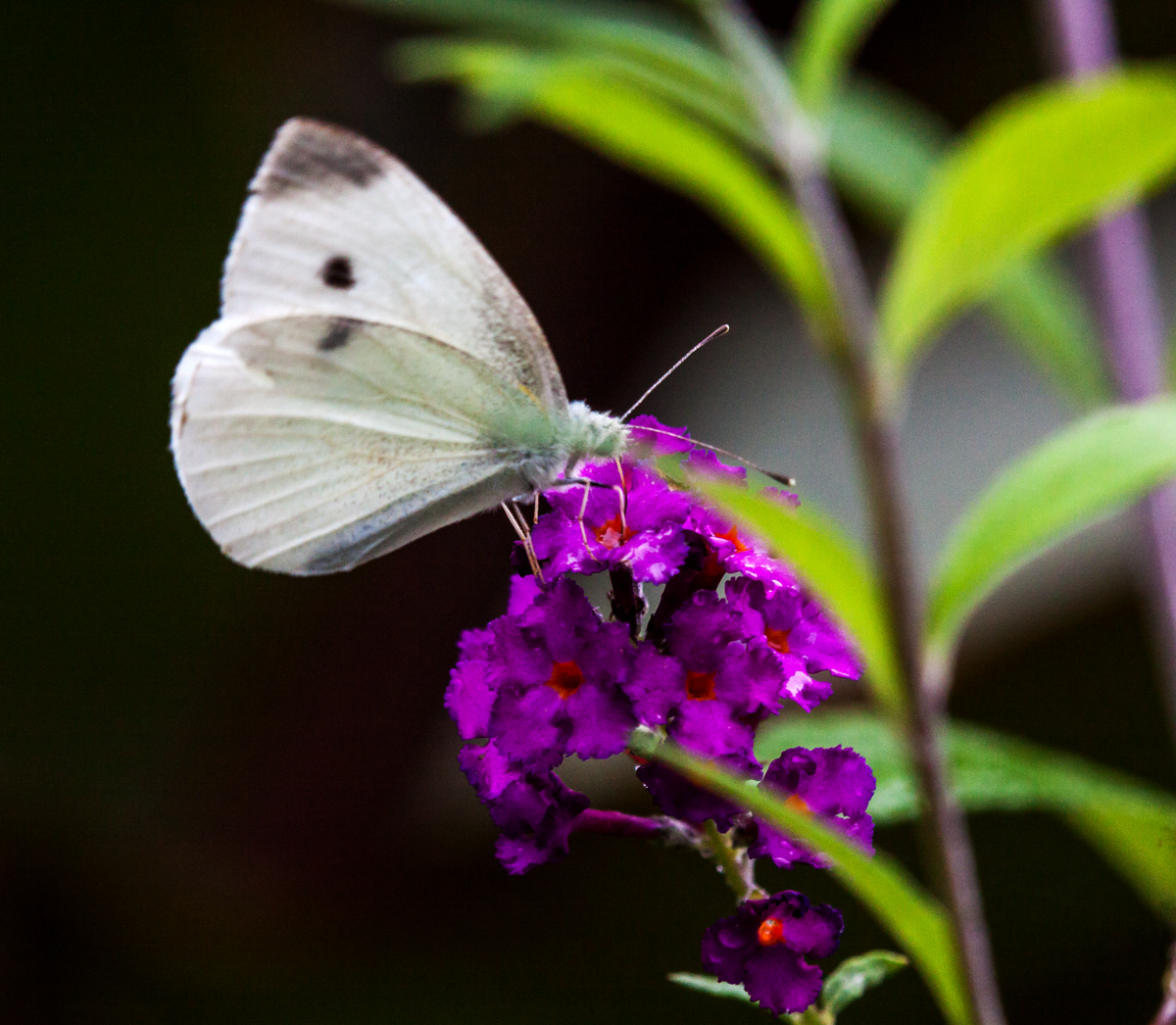
In a moment of calm amidst the storms this past Monday, I captured this shot of a beautiful little Cabbage White butterfly (Pieris rapae) in the garden of my neighbor and fellow photographer Cindy Dyer. The shot is a little grainy, because there was not a great deal of light, but somehow the image fills me with an overwhelming sense of serenity.

Cabbage White

© Michael Q. Powell. All rights reserved.

Read Full Post »

This past week we have had an amazing amount of rain. It has not been a single, prolonged storm, but instead has been a series of bands of heavy rain.

The rain slowed down a little yesterday morning, so I popped over to the garden of my neighbor and fellow photographer Cindy Dyer to see what was in bloom. My eye was immediately drawn to a gorgeous pinkish lily in her side garden and to some pear-shaped tomatoes on her front landing. The raindrops still glistening on both of the subjects seemed to add to their beauty and interest.

Thanks, Cindy for planting such photogenic species.

pink lily

tomatoes

© Michael Q. Powell. All rights reserved.


Read Full Post »

I tend to be more of a dog person than a cat person. Cats have always been somewhat mysterious creatures to me, a bit wild and uncontrollable. Nonetheless, I am usually the go-to person to watch her three cats when my neighbor and fellow photographer Cindy Dyer goes out of town.

This past weekend I watched and fed the three male cats and, as is usually the case, I attempted to take some photos of them. Cindy often manages to capture them in wonderful candid moments, but it was hard for me to get them to cooperate. I am not used to shooting indoors with limited light, so that was an additional challenge. I learned pretty quickly that the 180mm macro lens that I happened to have on my camera is not optimal for this task—it was tough to get far enough away to capture the cats’ major facial features.

Eventually I was able to capture a portrait of each of them. Queso, the orange cat who was rescued in the bushes outside of a Mexican restaurant, is the youngest one; Pixel is the one with the pixelated hair who loves to roll over to have his tummy scratched; and Lobo, the gray lone wolf of the pack, fixed me with a fierce stare when he finally let me take his picture.

I should be back to my more typical wildlife shots tomorrow in case any of you were concerned that I had abandoned my butterflies and dragonflies. I enjoy the challenge of a different set of subjects and I must admit that it was nice to shoot in the coolness of the air-conditioned indoors rather than in the hot, humid summer weather we have been experiencing.

.

Queso

Pixel

Lobo

© Michael Q. Powell. All rights reserved.

Read Full Post »

While they have been out of town, I have been watering the flowers in my neighbors’ garden and watching (and feeding) their three cats. The garden was planted by my photography mentor, Cindy Dyer, who always selects particularly photogenic species. She asked me document some of the flowers as they bloomed in case she does not return in time to see them herself.

Yesterday I was particularly struck by the beauty of the different lilies that are now blooming. Some of them probably qualify as day lilies, but there is another cool variety that has blooms that face downward. The big star of the show, though, is undoubtedly an enormous cream-colored lily that just opened and is the one that is featured in the first photo.

Many of you know that I am generally in ceaseless pursuit of animate subjects, but it is good to periodically stop and take the time to smell the lilies.

lily

lily

lily

© Michael Q. Powell. All rights reserved.


Read Full Post »

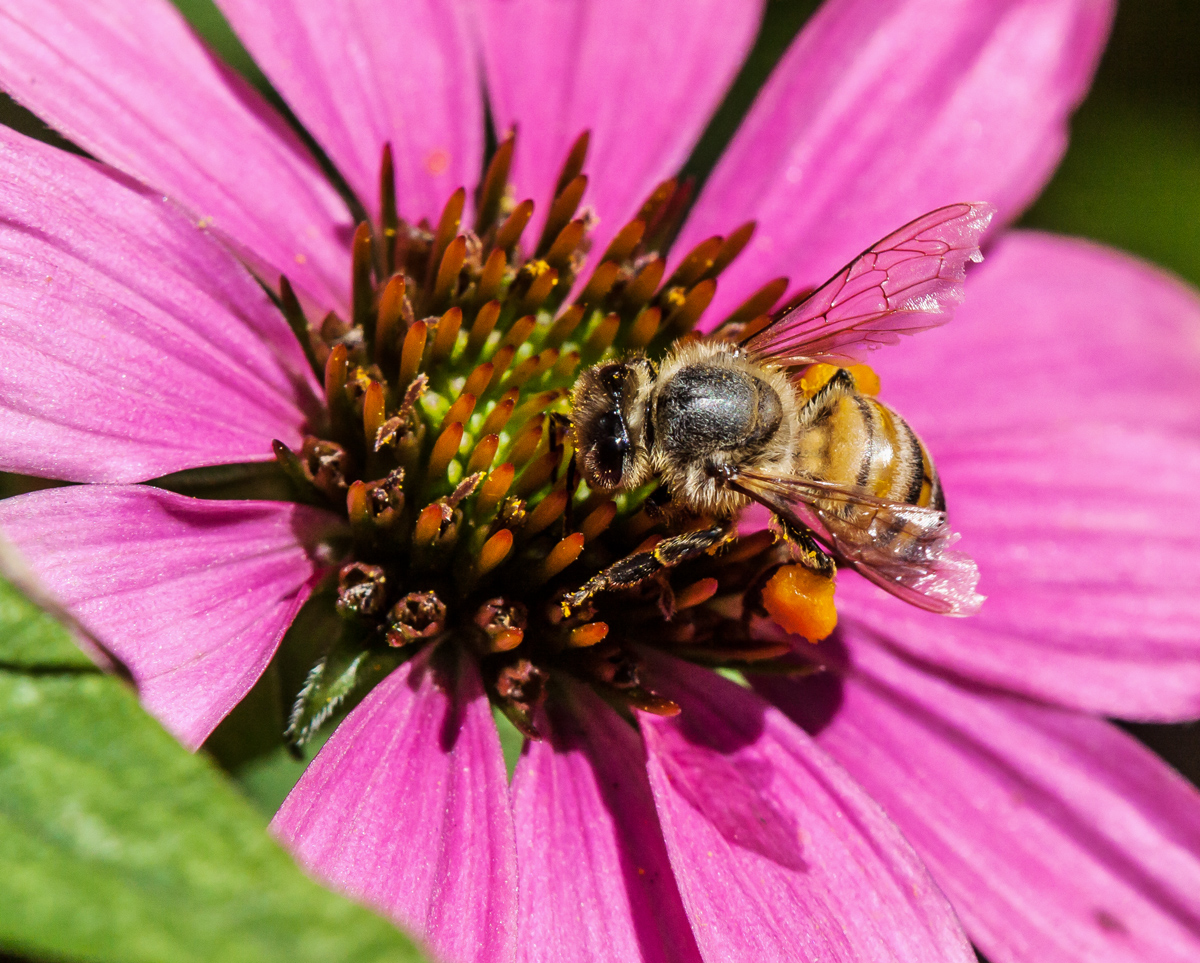
I love to watch bees as they gather pollen—they seem so industrious and focused as they systematically work their way through a group of flowers. This honey bee had both of its pollen sacs almost completely filled when I spotted it yesterday on a cone flower in the garden of one of my neighbors, fellow photographer Cindy Dyer.

One of the joys of shooting with a macro lens is that it lets you capture so many fine details, like the pollen grains on the legs of this bee and the slight damage on the trailing edges of the bee’s wings. Bees are also a great subject to practice macro techniques, because they often let you get really close without being spooked and flying away.

honey bee

© Michael Q. Powell. All rights reserved.

Read Full Post »
Insect identification is really tough for me. When I saw this insect crawling about on the top of what I believe is a Shasta daisy, I was pretty sure that it was a beetle. Beyond that, I really had no idea what it was. A quick search on the internet made me conclude that it was a kind of scarab beetle.

I posted a photo on the website bugguide.net and asked for help. Responders provided a couple of possibilities and it looks most likely that this is an Oriental Beetle (Exomala orientalis) or (Anomala orientalis). In some ways it’s not that important to identify my subject, but it is something that I strive to do as much as I can and I usually end up learning a lot in the process of figuring out what I have shot.

I took quite a few shots of this beetle and especially like this one, because the beetle raised its head momentarily and I was able to get a look at its cool forked antennae. I also like the way I was able to capture some of the drops of water on the petals of the daisy.

In case any viewer is worried that I have given up on dragonflies, I can reassure you that I still have shots of lots of beautiful dragonflies to be posted and am always seeking more. I just figured that I would mix things up a little and provide a little glimpse at the world through my macro lens.

Oriental Beetle

© Michael Q. Powell. All rights reserved.

Read Full Post »

A macro lens helps to open up a whole new tiny world that is often beautiful and occasionally a little scary. I think that a tiny insect that fellow photographer Cindy Dyer pointed out to me in her garden yesterday fits into the latter category. The insect in question was moving about on an orange cone flower and at first we thought it might be a spider. When we counted the legs and looked a little closer, we realized it was probably a bug, a bug with massive spiked front legs and additional spikes on its body. It was a bit chilling to learn that this was the nymph of an assassin bug, a Spiny Assassin bug in the genus Sinea.

As I was taking this photo, I was reminded once again now much I enjoy macro photography. It has its own set of challenges, but it is rewarding to be able to get shots like this. In this image I particularly like the way that the spikes in the center of the cone flower mirror those of the fearsome little insect, which would be a real monster if it were larger.

Spiny Assassin Bug nymph

© Michael Q. Powell. All rights reserved.


Read Full Post »

Have you ever watched sprinters prepare for the start of a race? They get into their starting blocks and lean forward, ready to push off at the sound of the gun. Well, that’s what some scientist had in his mind when he first saw today’s dragonfly, the Swift Setwing (Dythemis velox). The forward tilting of the wings is very distinctive and makes this dragonfly easy to identify.

This is mostly a southern dragonfly and I was thrilled when I spotted one two years ago, the first time that a Swift Setwing had been documented in my county. Since then I have looked forward to finding them each year at Jackson Miles Abbott Wetland Refuge, where they appear to have established themselves.

Last weekend I spotted my first Swift Setwing of the season and I was able to capture these images.

Swift Setwing

Swift Setwing

© Michael Q. Powell. All rights reserved.

Read Full Post »

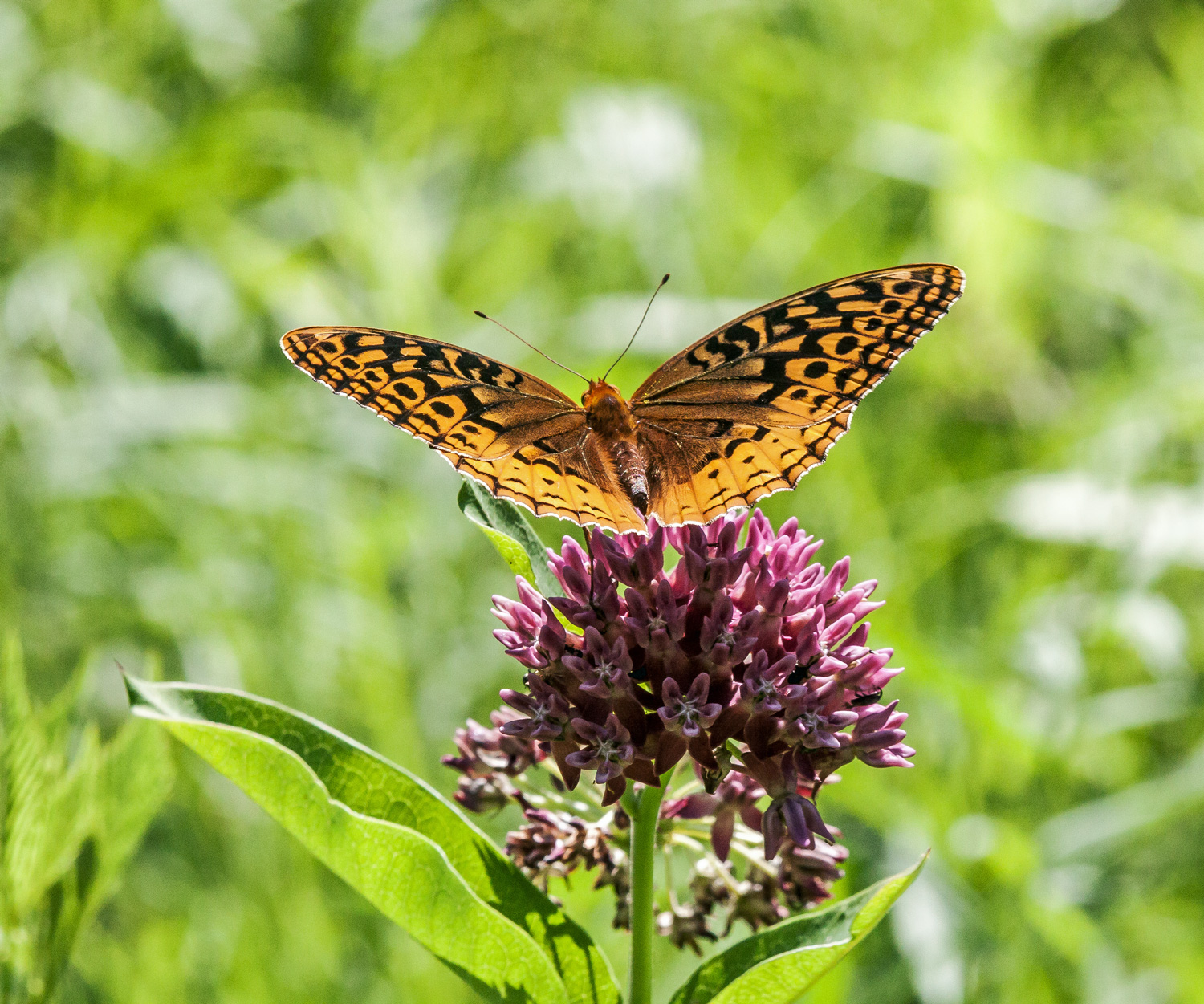
It is a gray and gloomy Friday morning and rain is forecast for most of the day. Somehow I feel the need for a boost of bright colors. So here is a shot of a Great Spangled Fritillary butterfly (Speyeria cybele) on a clump of what I believe is Purple Milkweed (Asclepias purpurascens) from this past weekend at Huntley Meadows Park.

As I worked on this image, there was a real temptation to crank up the saturation level of the colors, which made the shot look unnatural. I tried to show a little restraint and render the colors as I remember them, bright, but not in neon-like tones.

Great Spangled Fritillary

© Michael Q. Powell. All rights reserved.

Read Full Post »
Summer officially starts today and if you are like many people, your summer plans may include a trip to the beach. I tend to associate dragonflies with marshes and ponds, but a few dragonflies also like sandy beaches. It’s not too likely that you will encounter them at an ocean beach, but if you spread out your towel at the sandy edge of a stream, perhaps you might see a Common Sanddragon (Progomphus obscurus).

Common Sanddragons like to perch flat on the sand and transform themselves from water-dwelling nymphs to dragonflies in the open on the sand, rather than attaching themselves to vegetation as do many other dragonfly species. (If you want to see that amazing metamorphosis documented in a series of photos, check out this blog posting, Metamorphosis of a dragonfly, from two years ago.)

I have begun to recognize the kind of habitat that Common Sanddragons prefer and spotted my first one of the year last weekend on the banks of a small stream in Northern Virginia that I was exploring. That dragonfly is featured in the first two photos below. The very next day, I spotted some more Common Sanddragons at a stream in a local park where I had seen them in previous years. The third photo, which gives you a good view of the body of a Common Sanddragon, is from the second day.

This little series of shots illustrates one of the basic dilemmas that I face when photographing dragonflies. Should I try to capture a bit of the personality of this little creatures, which usually means direct eye contact, or should I try to give the clearest possible view of the entire body of the dragonfly, which usually means a side view? Fortunately, I am sometimes able to get both types of shots, but I am instinctively drawn more to shots like the second one below than to ones like the third image.

Common Sanddragon

Common Sanddragon

Common Sanddragon

© Michael Q. Powell. All rights reserved.


Read Full Post »

I remember reading an article once with tips on photographing butterflies. The article suggested that you photograph only the butterflies in perfect condition, the ones with no signs of aging, no faded colors, and no tattered wings.

I personally don’t believe in following that advice. Life can be really tough for the tiny creatures that I like to photograph (and for us two-legged creatures too) and I don’t mind at all when my photographs capture the effects of some of life’s struggles. As some of my friends are fond of saying, we have earned our wrinkles.

This past weekend I visited Huntley Meadows Park, a local marshland park that used to be my absolute favorite place to take photographs. In some ways it is a victim of its own success. Lots of photographers now flock to the park to photograph the wildlife there. I prefer, however, for my wildlife viewing to be more of a solitary pursuit than a group activity, so increasingly I have been spending my time in other local spots.

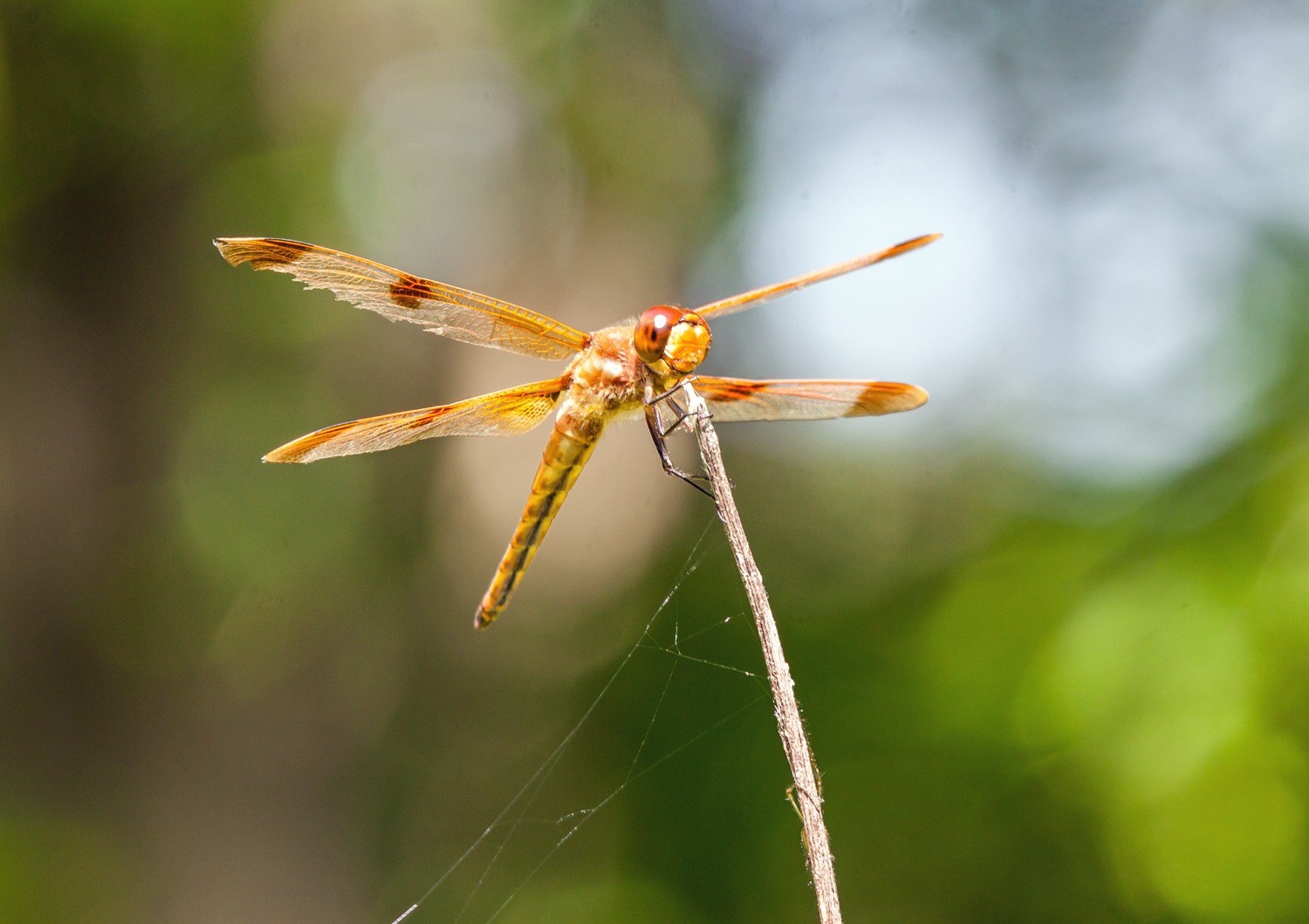
While at the park I spotted this beautiful Painted Skimmer dragonfly (Libellula semifasciata). Its wings are a bit tattered and somehow it seems appropriate that its perch shows some spider webs. Yet I couldn’t help but feel how confidently this little dragonfly perched on the tip of the vegetation, boldly displaying its faded beauty to the world.

The composition is simple, as is the message—true beauty is not about perfection.


Painted Skimmer

© Michael Q. Powell. All rights reserved.

Read Full Post »
I was prompted this morning to read again the challenges to all Americans found in Abraham Lincoln’s Gettysburg Address, challenges that seem so appropriate and relevant as we pause in the United States on this Memorial Day to remember the sacrifices of so many brave men and women.
 “But, in a larger sense, we can not dedicate—we can not consecrate—we can not hallow—this ground. The brave men, living and dead, who struggled here, have consecrated it, far above our poor power to add or detract. The world will little note, nor long remember what we say here, but it can never forget what they did here. It is for us the living, rather, to be dedicated here to the unfinished work which they who fought here have thus far so nobly advanced. It is rather for us to be here dedicated to the great task remaining before us—that from these honored dead we take increased devotion to that cause for which they gave the last full measure of devotion—that we here highly resolve that these dead shall not have died in vain—that this nation, under God, shall have a new birth of freedom—and that government of the people, by the people, for the people, shall not perish from the earth.”
Bald Eagle
(I captured this image of a hyper-vigilant injured Bald Eagle (Haliaeetus leucocephalus) in November 2014 shortly before it was rescued. You can learn more about the rescue and see additional images in a posting from that period entitled “Rescue of an injured Bald Eagle.”)
© Michael Q. Powell. All rights reserved.

Read Full Post »

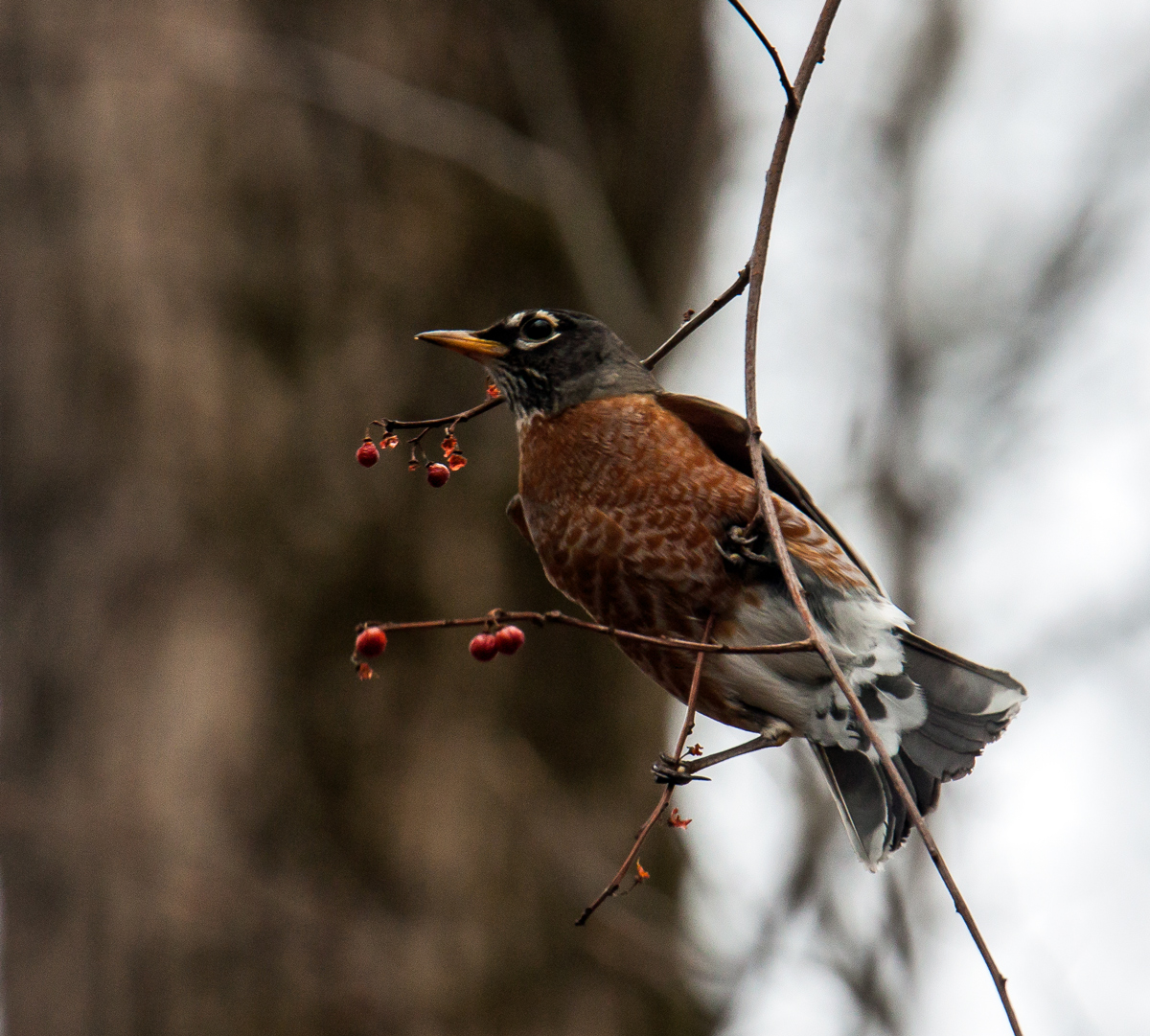
I don’t tend to think of American Robins (Turdus migratorius) as acrobatic birds—most of the time I see them poking about on the ground, the traditional early bird searching for the worm. I photographed this acrobatic robin in February at Huntley Meadows Park, a marshland park not far from where I live. The robin was precariously perched on a very thin branch and moved slowly and carefully to maintain its balance and gently grab the little red berries you can see in the photo.

American Robin

© Michael Q. Powell. All rights reserved.

Read Full Post »

While I was at Huntley Meadows Park on Wednesday, I spotted this Hooded Merganser (Lophodytes cucullatus) couple perched on a semi-submerged log, relaxing and preening their feathers. These small ducks have such an unusual and distinctive look that it is hard for me to ignore them whenever I am fortunate to spot them—often they spot me first and my first indication of their presence is when they are flying away from me.

Hooded Merganser

© Michael Q. Powell. All rights reserved.

Read Full Post »
The light was dim in the early morning hours this past Wednesday at Huntley Meadows Park, but I could detect some movement in the vegetation adjacent to the boardwalk that runs through the marshland. I watched and waited and eventually a male Northern Shoveler (Spatula clypeata) swam slowly into view and I managed to capture some images of it. I love the reflections of both the duck and the vegetation in this shot.

After the fact, I discovered that I probably should have changed the setting of my camera to raise the shutter speed. Many of my shots were blurry, but somehow this one came out reasonably sharp, despite the fact that it was taken with a shutter speed of only 1/15 of a second with my lens zoomed out all of the way to 600mm. I am pretty sure that it helped that I was using a monopod.

This incident reminded me of the special challenges and rewards that come with shooting at dawn or dusk. There is often a lot of activity, but there is a constant struggle to capture that activity in the limited light that is available. When things come together, though, it is almost magical and is definitely worth the effort.

Northern Shoveler

© Michael Q. Powell. All rights reserved.

Read Full Post »

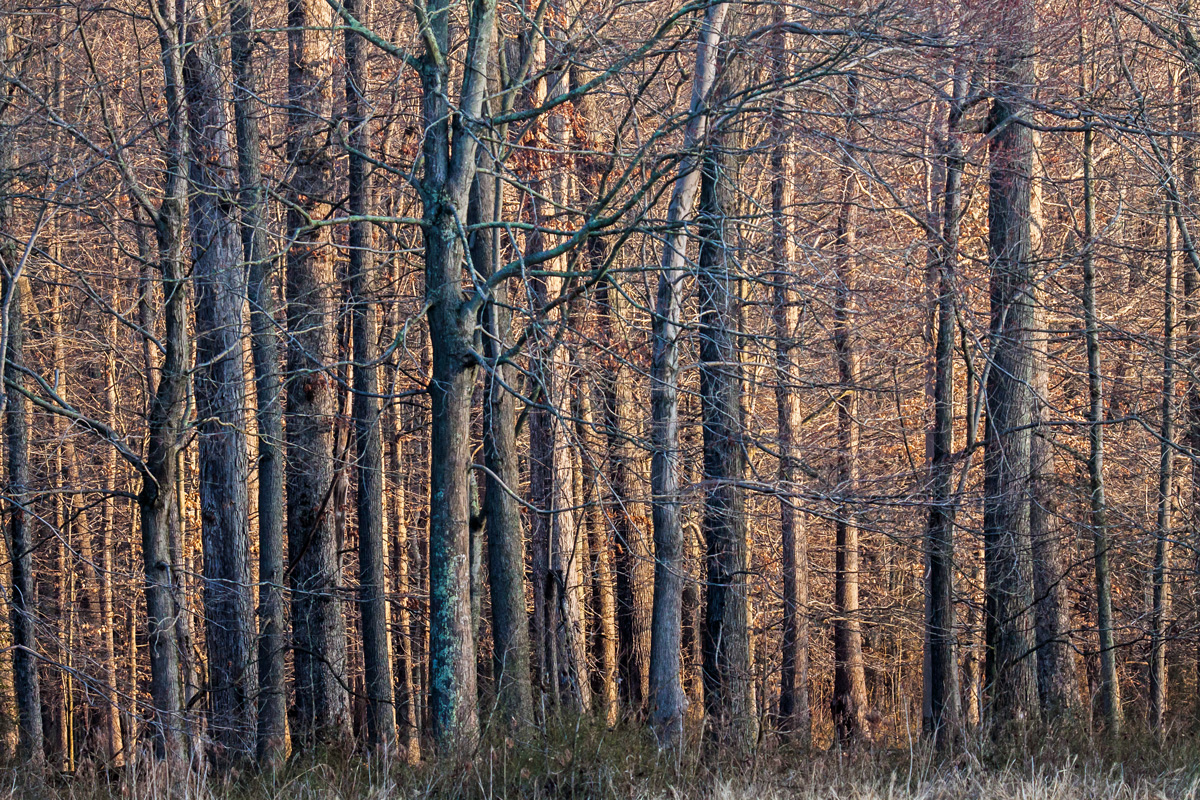
The early morning sunlight was spectacular yesterday as it streamed through the trees at Huntley Meadows Park. I tried to capture this phenomenon as a kind of mini-landscape by using my telephoto lens and framing it just as you see in this image. It is a little unusual for me not to crop an image at all, but by composing it this way, I was able to include those elements that I found the most interesting, the light and shadows of the trees, and left out the things that I found less interesting such as the sky. I did include a little strip of grass in the foreground so that the image is not completely abstract.

early morning trees

When I first arrived at the park, the sun had barely risen and there was a lot of ground fog, which made the woods look really mysterious and a little spooky. One of my viewers on Facebook said the image looked like it could be the setting for the witches in Macbeth. The second image was a lot tougher to capture, because of the lack of light and my desire to capture a sense of the fog that was clinging to the ground. There is a slight blur to the image, which would normally be a shortcoming in a photo, but I think it works ok with an image like this one.

early morning trees

© Michael Q. Powell. All rights reserved.


Read Full Post »

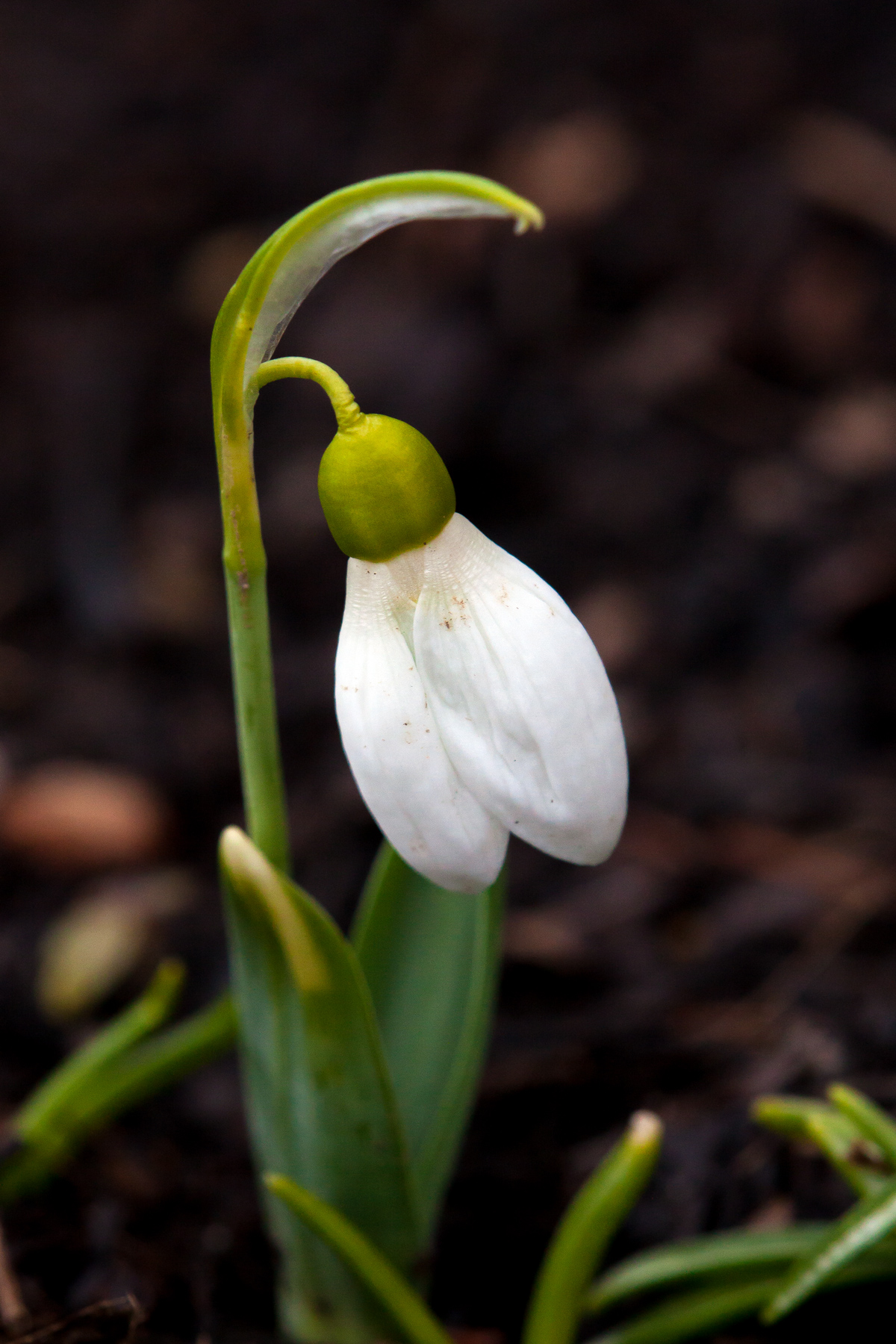
There were clumps of snowdrops scattered throughout Green Spring Gardens on Monday. I just love this simple little flower that is with us through much of the winter.

It won’t be long before the snowdrops are replaced by the more complex, more colorful flowers of the spring. At times I am impatient for the arrival of spring, but at other times I am simply content to enjoy the beauty of the modest snowdrop.

snowdrop

snowdrop

© Michael Q. Powell. All rights reserved.


Read Full Post »

Yesterday I took a break from bird photography and visited Green Spring Gardens, a county-run historic garden, with a macro lens on my camera rather than my long telephoto zoom lens. It is still a bit early for most flowers, so I was happy to spot these little purple flowers that had pushed their way to the surface. I think they may be crocuses, though I really don’t know flowers very well.

I got really low to get an interesting background and almost got stepped on by a runner—maybe it’s best not to wear a camouflage jacket when lying on the ground.

purple buds

© Michael Q. Powell. All rights reserved.

Read Full Post »

What was the first thing that you saw when you opened your eyes on Christmas Day? For me, it was the beautiful brown eyes of Freckles, the little Cocker Spaniel that is staying with me over the Christmas weekend while her owners are visiting family. Freckles lived in my house for over a year in the past, so she is totally comfortable with me and with my rabbit.

Freckles is amazingly photogenic—here are some shots of her from the last few days that highlight her soulful eyes.

Freckles

Freckles

Freckles

© Michael Q. Powell. All rights reserved.


Read Full Post »

Ducks do not seem to like to be alone. I will occasionally run across an odd solitary duck, but more often than not, the ducks that I encounter are in pairs or in larger groups. Sometimes the pairs are mixed-gender, like this Hooded Merganser (Lophodytes cucullatus) couple that was relaxing together recently at Huntley Meadows Park. At other times, the pair may be of the same gender, like these two male Northern Shovelers (Anas clypeata) at the same park that were preening and grooming themselves early one morning—one Facebook viewer speculated that they were getting ready for dates.

Hooded Merganser

Northern Shoveler

© Michael Q. Powell. All rights reserved.

Read Full Post »

Unlike most other woodpeckers, Northern Flickers (Colaptes auratus) like to spend a lot of time on the ground, which makes it tough to get a clear shot of one. According to the Cornell Lab of Ornithology website, “Although it can climb up the trunks of trees and hammer on wood like other woodpeckers, the Northern Flicker prefers to find food on the ground. Ants are its main food, and the flicker digs in the dirt to find them. It uses its long barbed tongue to lap up the ants.”

When I spotted this male Northern Flicker—females don’t have the black mustache stripe—last weekend at Huntley Meadows Park, it was perched horizontally on a fallen tree, which gave me a clear view of its beautiful colors and patterns. Other woodpeckers, which are mostly black and white, seem drab by comparison. For the first time ever, I was also able to see the downward curve of its bill that I had seen described in birding identification guides.

This bird remained still for only a moment and then seemed to fade away into the background.

Northern Flicker

© Michael Q. Powell. All rights reserved.

Read Full Post »

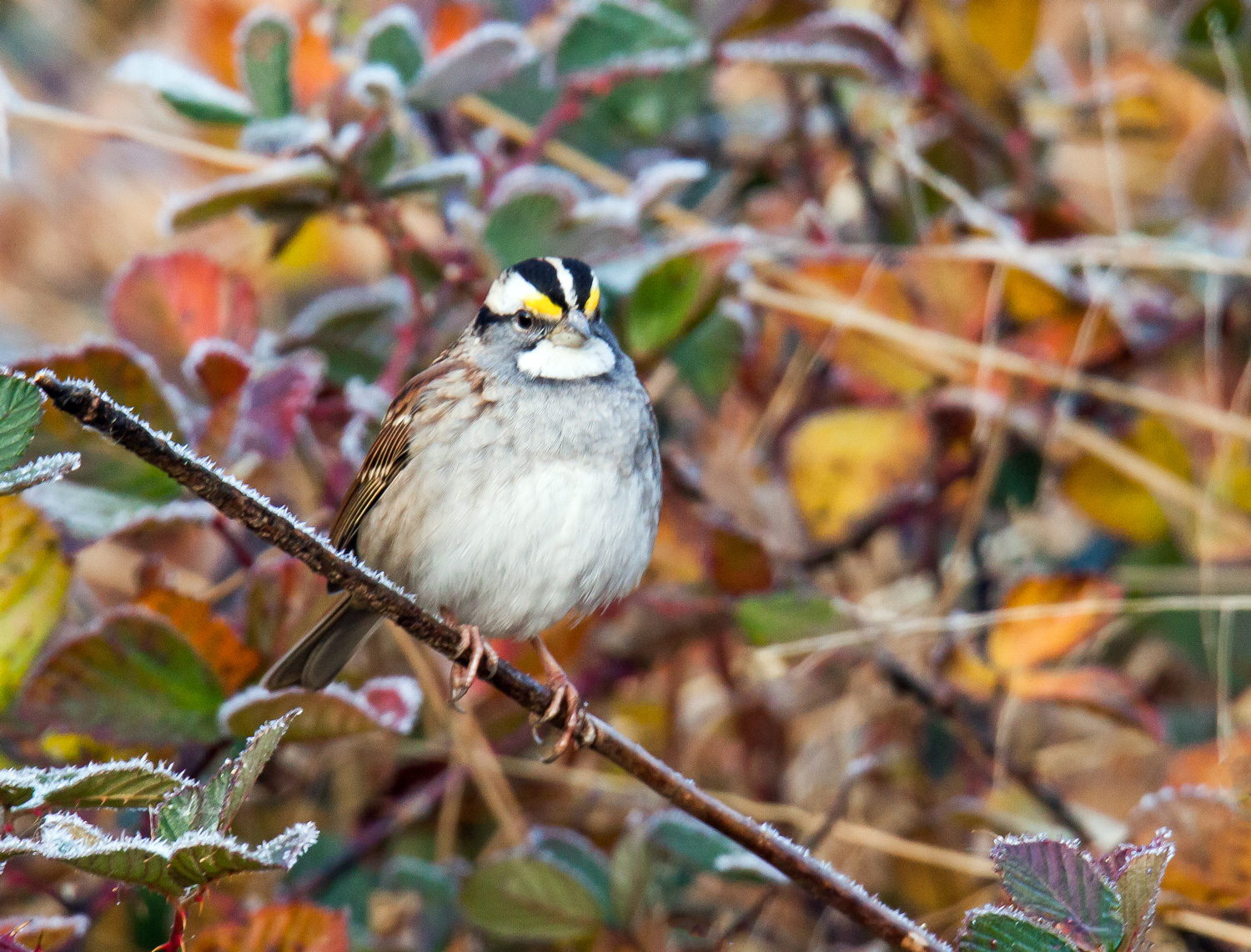
The Santa-like “beard” of the White-throated Sparrow (Zonotrichia albicollis) that I observed this past weekend at Huntley Meadows Park seems seasonally appropriate as we move closer and closer to Christmas. The backdrop of colorful foliage adds to the festive feel of the photo, which is further enhanced by the frosty leaves in the foreground.


White-throated Sparrow

© Michael Q. Powell. All rights reserved.

Read Full Post »

I love Northern Cardinals (Cardinalis cardinalis). The bright red of the male cardinal helps to lift my spirits throughout the winter when the world seems almost monochromatic. In terms of beauty, though, the more subdued coloration of the female cardinal is arguably even more impressive.

This past weekend I encountered several cardinals as I was exploring the frosty fields of Huntley Meadows Park in the early morning hours. I was focused on some sparrows in a patch of vegetation when suddenly a female cardinal flew in. I quickly adjusted my focus—I was focusing manually at that moment—and tried to steady my breathing as I took the first shot below just before she flew away.

A little while later, I caught sight of some movement out of the corner of my eyes in a stand of cattails. The red of a male cardinal is pretty hard to camouflage, so it was easy to spot him, but I was a little surprised by his pose. Somehow it looked more like the pose of a blackbird than that of a cardinal. Even though I was pretty far away, the cardinal seemed to be intently staring at me and didn’t seem too happy about my presence.

Cardinals are common where I live, but I never grow tired of photographing such ordinary subjects, seeking to discover and share the extraordinary that can often be found in the ordinary.

Northern Cardinal

northern cardinal

© Michael Q. Powell. All rights reserved.

Read Full Post »

« Newer Posts - Older Posts »