December 26, 2018 by Mike Powell
It was 24 degrees (minus 4 C) this morning when I first got into my car and I had to take time to clear away the frost. Nevertheless I managed to make it to Occoquan Bay National Wildlife Refuge in time to catch the sunrise over the water.

© Michael Q. Powell. All rights reserved.
Posted in Landscape, Nature, Photography | Tagged Canon 50D, Occoquan Bay National Wildlife Refuge, sunrise, Tamron 150-600mm, Woodbridge VA | 13 Comments »
December 25, 2018 by Mike Powell
The pastor at the Christmas service today reminded us of the theological implications of saying “Merry Christmas.” Every time that we utter those words, he said, we are telling another person that God loves them, that the true message of Christmas is God Incarnate, God taking on a human form to dwell among us.
Earlier this morning I was thinking about what kind of a photo I would post today. I considered selecting a recent wildlife photo, but not of them spoke to me. As I walked the dog while it was still dark, I thought about taking a photo of some of the colorful lights and decorations in my neighborhood, but somehow they didn’t represent Christmas to me at that moment.
I finally went out to my front yard and took this modest photo of one of the bushes there. I think it is called Heavenly Bamboo (Nandina domestica) and its simple form and traditional colors seemed an accurate reflection of my inner thoughts and feelings about Christmas this year. Christ came into the world in a humble way and meets us today where we are, no matter what our circumstances may be.
With the angel chorus and the heavenly host, I think about these words of the traditional Christmas story that I learned so long ago in the King James version: Glory to God in the highest, and on earth peace, good will toward men.
Merry Christmas to you all.

© Michael Q. Powell. All rights reserved.
Posted in Christmas, Flowers, Gardening, Nature, Photography | Tagged Alexandria VA, Canon 50D, Christmas 2018, Heavenly Bamboo, Nandina domestica, Runnymeade, Tamron 150-600mm | 8 Comments »
December 24, 2018 by Mike Powell
As the waves washed over the Double-crested Cormorant (Phalacrocorax auritus) perched on a floating remnant of a tree, the solo bird looked like a shipwrecked sailor, adrift on a swamped, semi-submerged sailboat. My mind conjured up scenes from different movies with this theme.
A short time later, I encountered a basketball dashing up against the shore with each successive wave. As the ball slowly turned I caught sight of its faded lettering. Like Tom Hank’s companion in the movie Cast Away, the ball was labelled “Wilson.” Perhaps the shipwrecked cormorant had been engaging in lengthy conversations with this Wilson, as Tom Hanks did during the movie.


© Michael Q. Powell. All rights reserved.
Posted in Birds, Nature, Photography, wildlife, Winter | Tagged Canon 50D, Cast Away, cormorant, Double-crested Cormorant, Occoquan Bay National Wildlife Refuge, Phalacrocorax auritus, Tamron 150-600mm, Tom Hanks, Wilson, Woodbridge VA | 2 Comments »
December 23, 2018 by Mike Powell
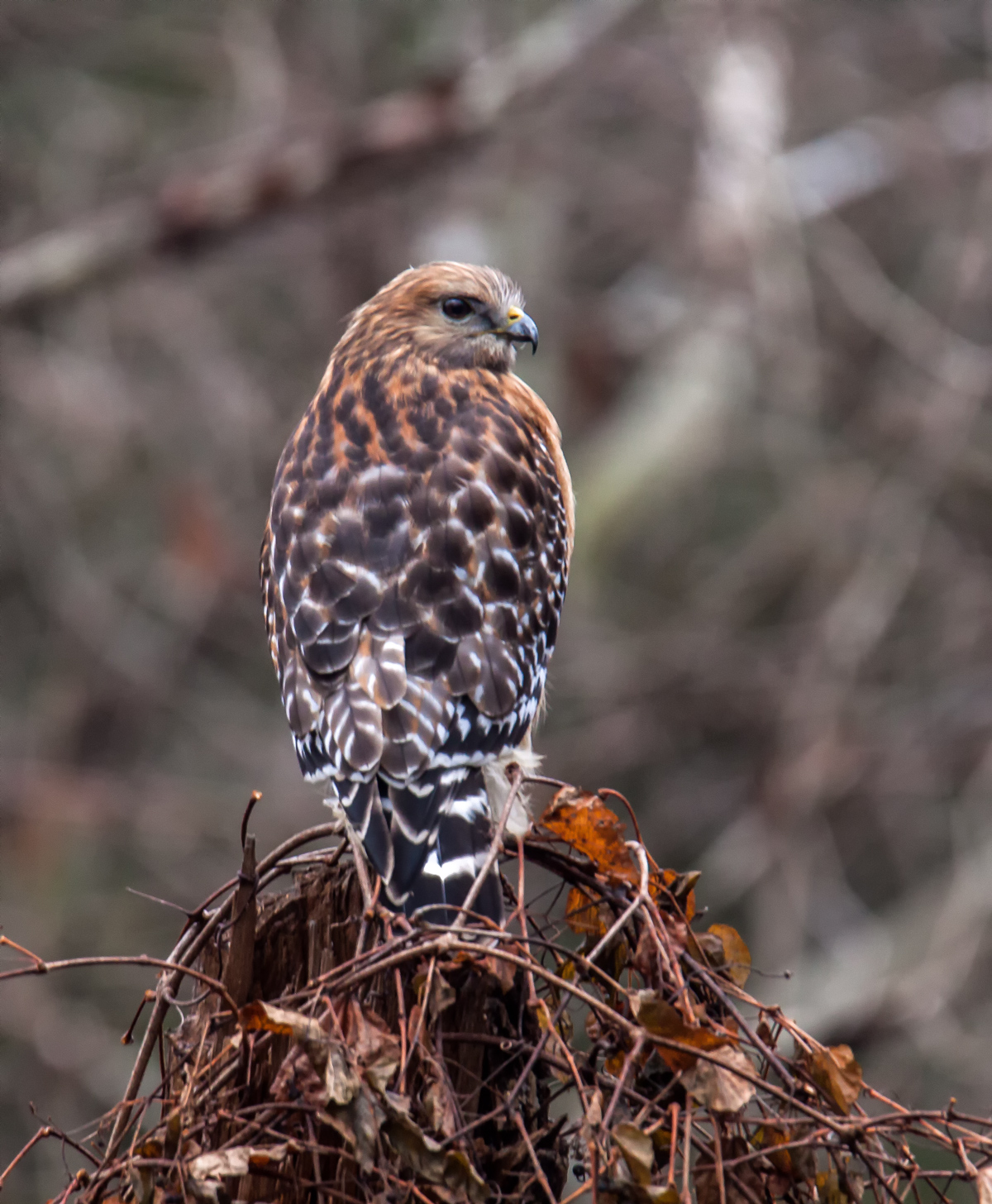
I didn’t have to go far to find this Red-shouldered Hawk (Buteo lineatus)—I spotted it while walking a friend’s Cocker Spaniel in my suburban townhouse neighborhood. I rushed home to get my camera and was thrilled when I returned to find that the hawk was still perched on a broken-off tree in a small marshy area.


© Michael Q. Powell. All rights reserved.
Posted in Birds, Nature, Photography, wildlife, Winter | Tagged Alexandria VA, Buteo lineatus, Canon 50D, Red-Shouldered Hawk, Runnymeade, Tamron 150-600mm | 13 Comments »
December 22, 2018 by Mike Powell
As I was walking across the Key Bridge from Georgetown on Wednesday night, I glanced down at the Potomac River and saw that the Kennedy Center was aglow with rainbow colors. I believe that the colors were part of the celebration of the Kennedy Center Honors, an annual honor given to those in the performing arts for their lifetime of contributions to American culture. Honorees receive a medallion that hangs from a rainbow colored ribbon.
Most of the landmarks shown here will be familiar only to locals, but some of you may recognize the Washington Monument in the middle left in the photo. In case you are curious, I took this shot with a Canon A620 camera, an old 7.1 megapixel point-and-shoot camera that I carry with me sometimes because it fits easily into my pocket. I leaned against the railing of the bridge to take this shot in what turned out to be a one second exposure.
Although I know what the subject matter of the image is, I enjoy it equally as a kind of abstract, man-made landscape, a beautiful combination of lines and shapes and colors, with some of them reflected in the dark waters of the river.

© Michael Q. Powell. All rights reserved.
Posted in abstract, Architecture, Art, Landscape, Photography, Travel, Urban | Tagged Canon A620, kennedy center, kennedy center honors, nightscape, Washington D.C., Washington Monument | 10 Comments »
December 21, 2018 by Mike Powell
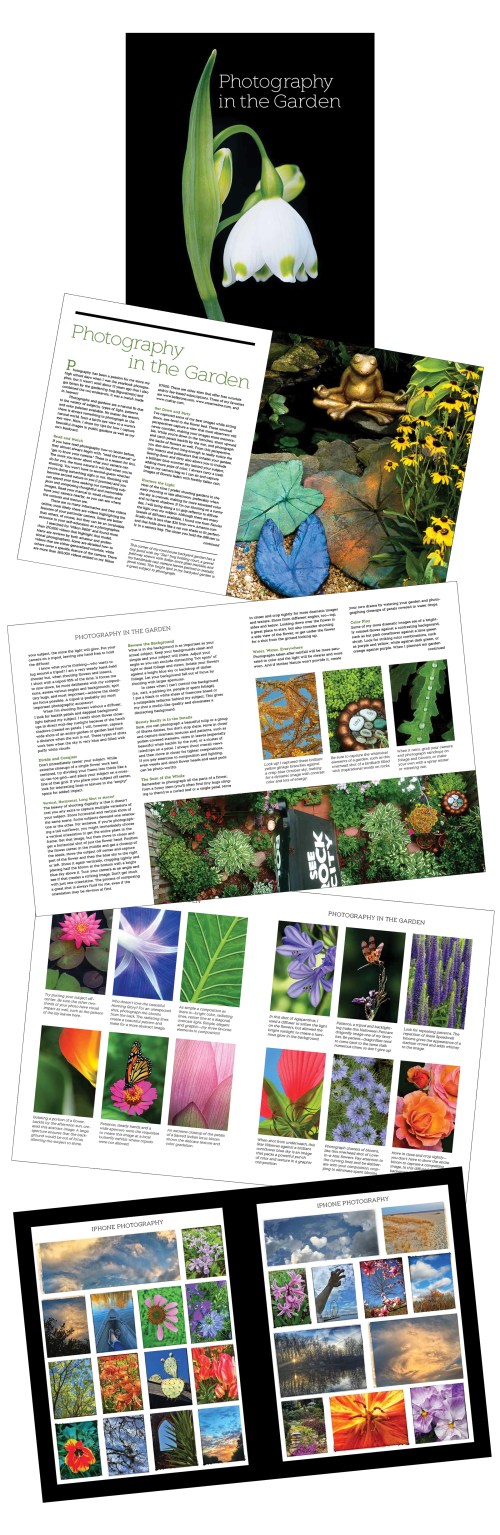
My dear friend and photography mentor Cindy Dyer just created a free mini-magazine on Photography in the Garden. Cindy is the one who helped me get more serious with photography six years ago. Her beautiful work has been featured on US postage stamps and in Nikon publications and exhibitions. In addition to her DSLR work, she has added a selection of amazing images that she shot with her iPhone.
Cindy is a constant source of inspiration for me and I encourage you all to check out her work—this mini-magazine is a great start.

 Cindy Dyer's Blog
In this 20-page mini-magazine, I share my tips and tricks for photographing your garden in its best light, whether you’re shooting with a DSLR, point-n-shoot, or smartphone. You’ll learn about composition, harnessing the light, photographic resources, and what’s in my bag. Photographing gardens and the natural world has been enormously rewarding for me. Below are some sample pages from the mini-magazine.
Read your manual, shoot regularly, learn how to process your digital images and above all else, always stay curious!
Click here: Cindy Dyer Garden Photography
© Cindy Dyer. All rights reserved.
View original post
Posted in Flowers, Gardening, Nature, Photography | Tagged Cindy Dyer, Photography in the Garden | 7 Comments »
December 21, 2018 by Mike Powell
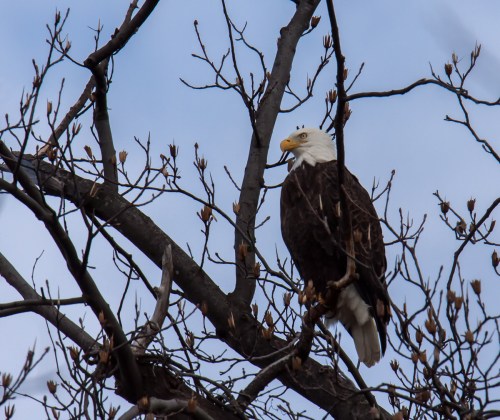
In theory, it is easier to spot a Bald Eagle (Haliaeetus leucocephalus) now that the leaves have fallen from the trees. In reality, however, the eagles often seem to like to perch in locations where they are at least partially hidden by branches.
That was certainly the case this past Monday when I spotted this bald eagle at Occoquan Bay National Wildlife Refuge. There was a lot of tangled vegetation between me and the eagle, so there was no way that I could get any closer. I was happy that I was able to find a shooting angle that allowed me to get a clear view of the eagle’s head and tail.
© Michael Q. Powell. All rights reserved.
Posted in Birds, Nature, Photography, wildlife, Winter | Tagged Bald Eagle, Canon 50D, eagle, Haliaeetus leucocephalus, Occoquan Bay National Wildlife Refuge, Tamron 150-600mm, Woodbridge VA | 5 Comments »
December 20, 2018 by Mike Powell
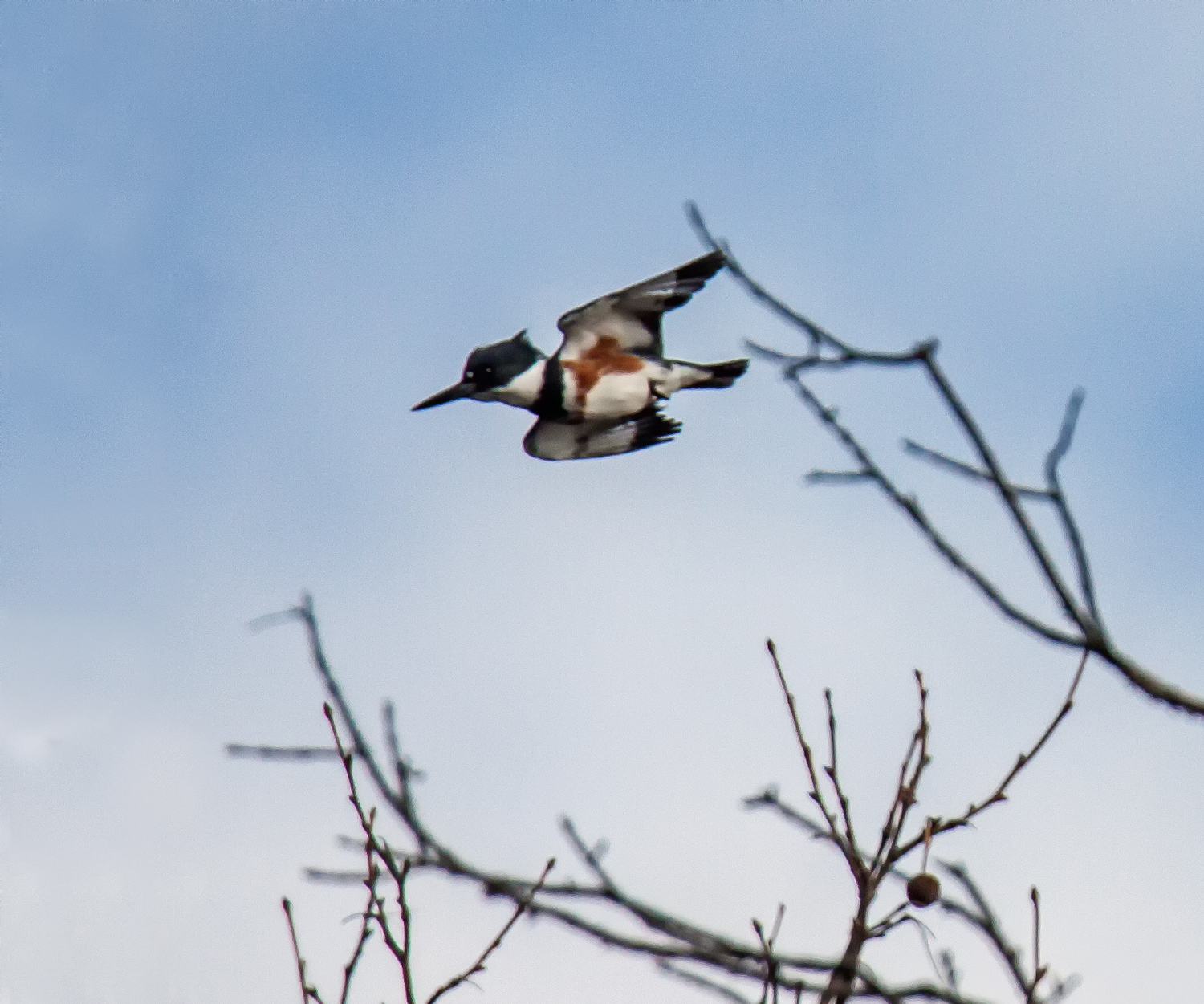
It often feels like Belted Kingfishers (Megaceryle alcyon) are taunting me. They boldly advertise their presence with a distinctive rattling call, but keep their distance or fly away quickly before I can spot them. I dream of spotting one at close range and getting some shots before it is aware of my presence.
Well, my dream did not not come true this past Monday, but I did manage to get some shots of a female Belted Kingfisher in flight while exploring Occoquan Bay National Wildlife Refuge. I took the shots at pretty long range as the kingfisher was moving from perch to perch in the distant trees.


© Michael Q. Powell. All rights reserved.
Posted in Birds, Nature, Photography, wildlife, Winter | Tagged Belted Kingfisher, Canon 50D, female Belted Kingfisher, kingfisher, Megaceryle alcyon, Occoquan Bay National Wildlife Refuge, Tamron 150-600mm, Woodbridge VA | 10 Comments »
December 19, 2018 by Mike Powell
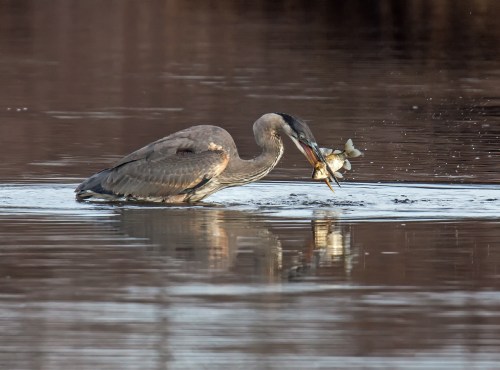
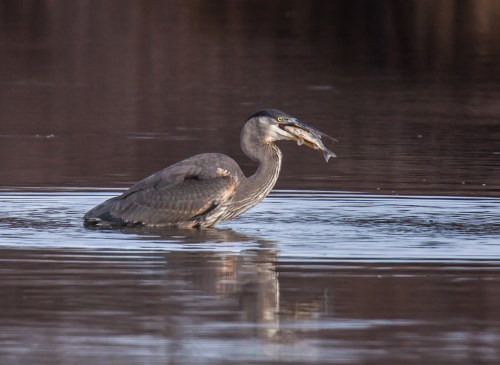
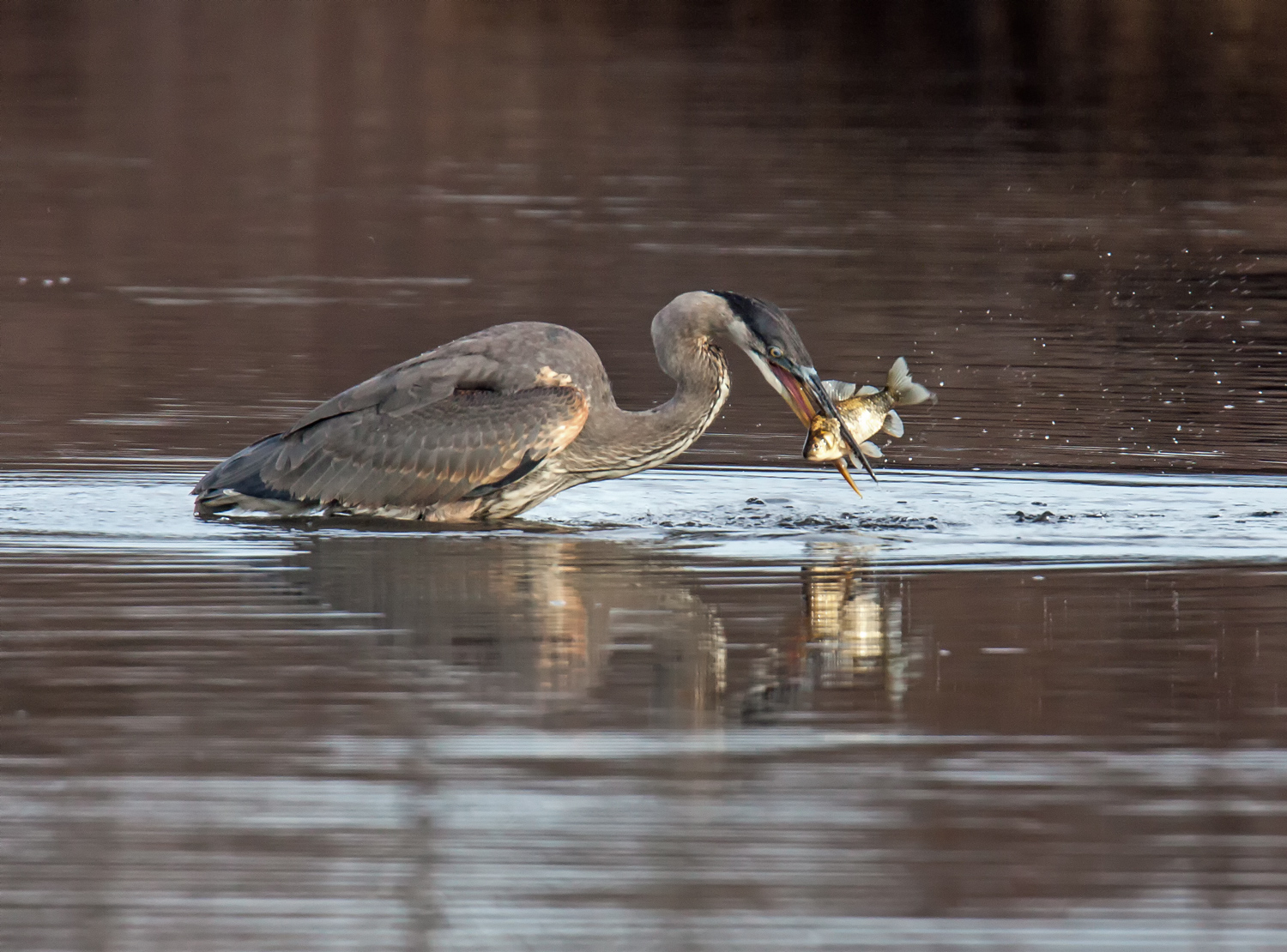
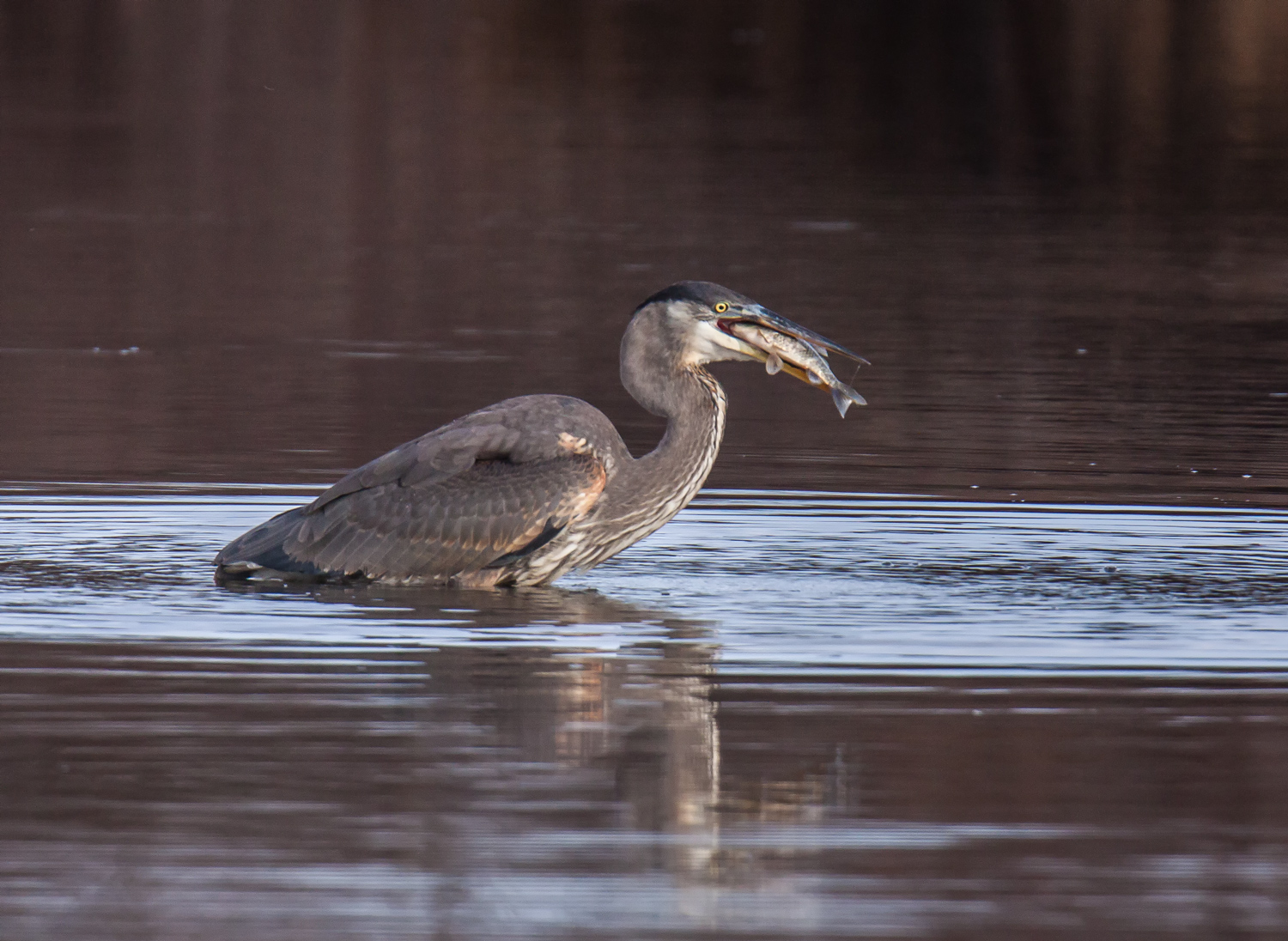
After several unsuccessful attempts, this Great Blue Heron (Ardea herodias) pulled a good-sized fish out of the waters of a small pond on Monday at Occoquan Bay National Wildlife Refuge. A few second later the heron had the fish correctly positioned and swallowed in a single big gulp. I thought the heron would take a break to digest his meal, but it returned immediately to fishing.
Great Blue Herons have an amazing amount of patience. They will stand immobile for extended periods of time and then strike forcefully into the water without any notice. When I am observing a heron, it is always a challenge to remain alert and ready. Often the heron’s patience exceeds my own, but fortunately that was not the case on this particular day. I was lucky too that the heron did not turn away after it had caught the fish, which allowed me to capture some of the action.
© Michael Q. Powell. All rights reserved.
Posted in Birds, Nature, Photography, wildlife, Winter | Tagged Ardea herodias, blue heron, Canon 50D, Great Blue Heron, Occoquan Bay National Wildlife Refuge, Tamron 150-600mm, Woodbridge VA | 12 Comments »
December 18, 2018 by Mike Powell
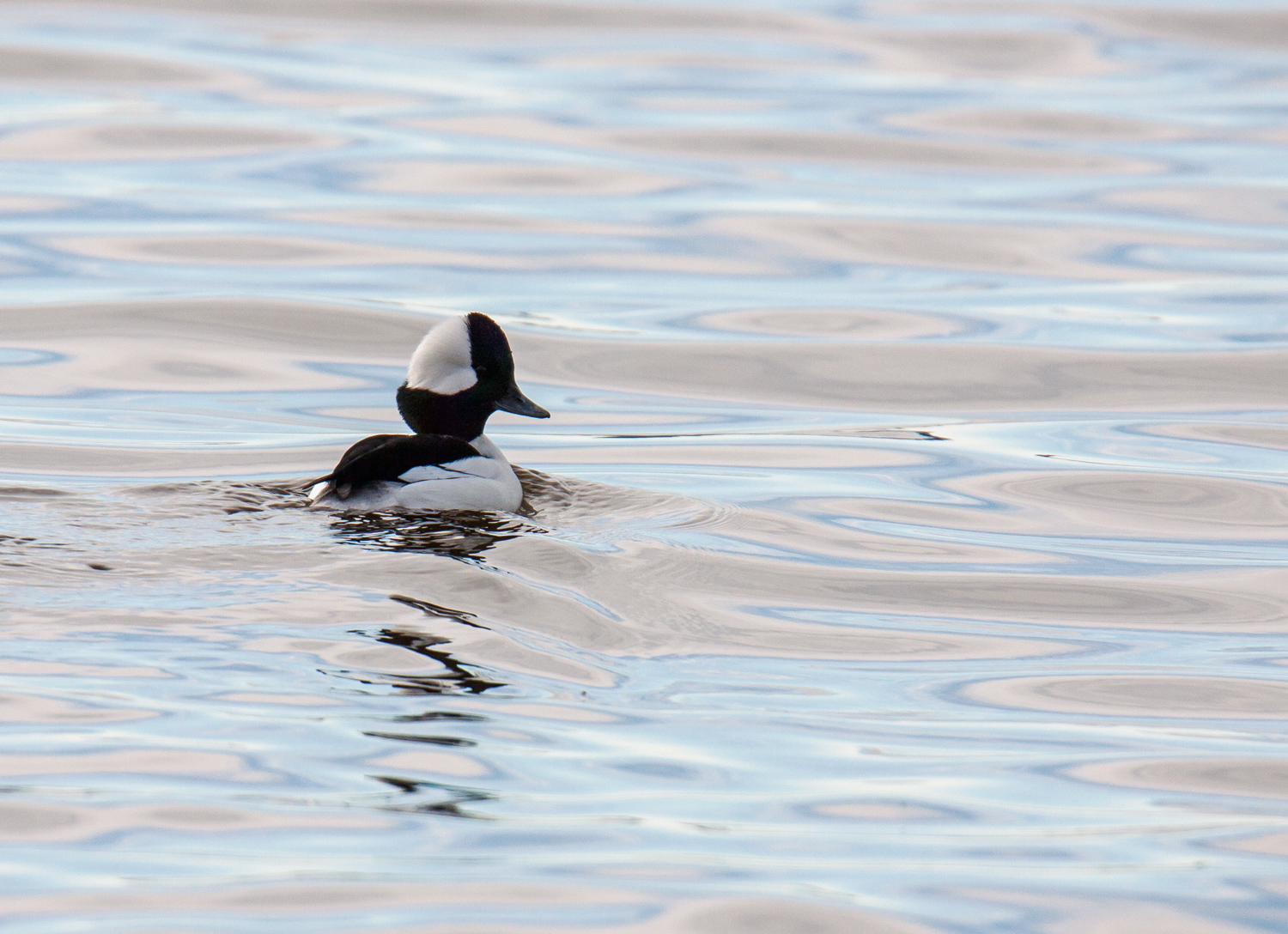
For the first time in a while, a male Bufflehead (Bucephala albeola) ventured close enough for me to get some shots yesterday when I was exploring Occoquan Bay National Wildlife Refuge. I have posted some photos of buffleheads fairly recently, but they have all been of females (or possibly immature males).
The shape and colors of these little water birds, especially the males, always strike me as cartoonish—like they were drawn by Disney artists.


© Michael Q. Powell. All rights reserved.
Posted in Birds, Nature, Photography, wildlife, Winter | Tagged Bucephala albeola, bufflehead, Canon 50D, male bufflehead, Occoquan Bay National Wildlife Refuge, Tamron 150-600mm, Woodbridge VA | 3 Comments »
December 17, 2018 by Mike Powell
I have returned from my week-long trip to Vienna, Austria, but thought that I would share images of some of the night lights of the city on my final night. On a cold winter evening when snow was lightly falling, Vienna gleamed like one of the brilliant crystals from Swarovski.
As you can see from the first photo of one of the streets in the central pedestrian zone of Vienna, the city lights are amazing. The second shot is of of the clock tower in one of the inner courts of the Hofburg Palace. The final image shows the elegant storefront of the Swarovski store.
Thanks to my readers who have stayed with me this past week as I deviated from my normal wildlife and nature photography. It is enjoyable to mix things up a bit and a fun challenge to photograph entirely different subjects. I am heading out in a short while and with a little luck will have some new wildlife images to share tomorrow.


© Michael Q. Powell. All rights reserved.
Posted in Architecture, Christmas, Travel, Winter | Tagged Canon SX50, Christmas 2018, Christmas lights, Hofburg Palace, Swarovkski, Vienna Austria | 6 Comments »
December 15, 2018 by Mike Powell
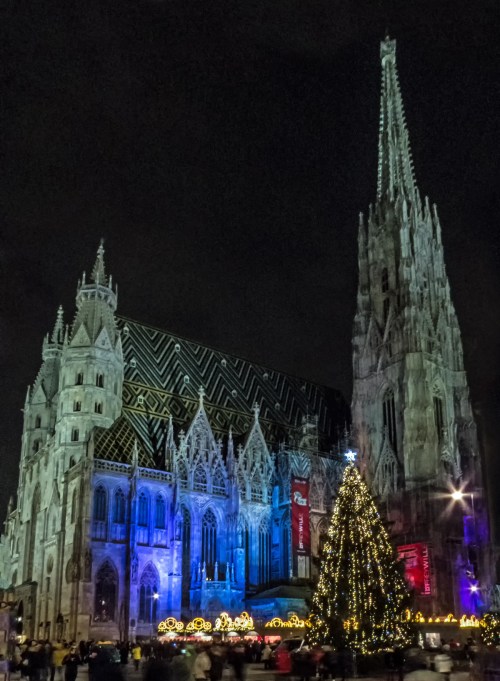
Last night, my final night in Vienna this trip, I had a chance to walk by Stephansdom (St. Stephen’s Cathedral), an incredible building in the center of the city.
The beauty of Vienna is magnified at this time of the year by wonderful decorations and lights everywhere.
© Michael Q. Powell. All rights reserved.
Posted in Architecture, Christmas, Photography, Travel, Winter | Tagged Canon SX50, Christmas 2018, St. Stephen's Cathedral, Stephansdom, Vienna Austria | 9 Comments »
December 14, 2018 by Mike Powell
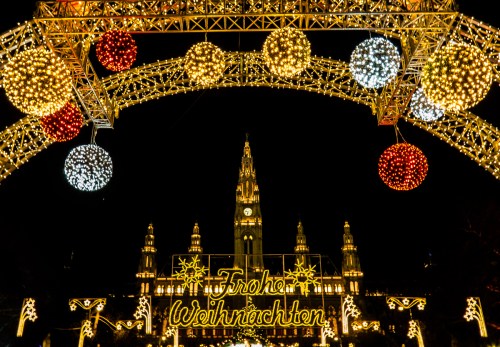
My short trip to Vienna, Austria is rapidly coming to a close and I want to leave you with this image of the entrance to the outdoor Christmas market at the Rathaus (City Hall), the tall building in the background.
My busy work schedule and the rainy weather this year have conspired against me and kept me from getting new photos. I decided to reprise a photo from a similar posting that I did in 2016. I did have a chance earlier in the week to visit this Christmas market and, as always, it was amazingly beautiful, despite the bustling crowds and often commercialized decorations and merchandise.
Best wishes to all for a “Frohe Weihnachten,” German for “Merry Christmas.”
© Michael Q. Powell. All rights reserved.
Posted in Architecture, Christmas, Photography, Travel | Tagged Canon SX50, Christmas 2018, Christmas market, Rathaus, Vienna Austria | 3 Comments »
December 12, 2018 by Mike Powell
Sometimes the most mundane scenes capture my eye and prompt me to photograph them. On Monday morning, I looked out of my hotel window and was captivated by the way that the early sunlight was falling on the dome of a building in the distance. As I started exploring the scene I saw lots of wonderful details, a wonderful juxtaposition of elements of the old and the new, of historical buildings and new construction.
This is not my normal style of photography, but I thought it would be fun to share with you a couple of images that give you a sense of the feel of that early morning in Vienna, Austria. I had hoped to take some additional photos of the city, but the last couple of days have been cold, wet, and windy. With a little luck I will be able to take a few photos of the Christmas markets to share with you before I depart this beautiful old city.


© Michael Q. Powell. All rights reserved.
Posted in Architecture, Landscape, Photography, Travel | Tagged architecture, Canon SX50, hotel, morning light, Vienna Austria | 8 Comments »
December 11, 2018 by Mike Powell
Whenever I am traveling for work I try to find some local wildlife to photograph. I am currently in Vienna, Austria and yesterday morning I went for a short walk in the Stadtpark, a park in central Vienna that is not far from my hotel. In the small pond there I found mostly mallard ducks (Anas platyrhynchos), a species with which I am quite familiar. One duck, however, really stood out because it had such unusual markings.
I focused my attention and my camera on this particular duck. Its shape looked to be similar to that of normal mallards and I wonder if this might be some kind of hybrid. I suppose that it could be another species altogether, though it did not look like any of the species in the photographic list I found on-line of the birds of Austria.
Whatever the case, this bird struck me as being a bit of an odd duck.


© Michael Q. Powell. All rights reserved.
Posted in Birds, Nature, Photography, Travel, wildlife | Tagged Anas platyrhynchos, Canon SX50, mallard, mallard duck, odd duck, Stadtpark, Vienna Austria | 13 Comments »
December 10, 2018 by Mike Powell
Over the past few months I have repeatedly heard the screaming of hawks in the distance, but it has been rare for me to actually catch sight of one. I was thrilled therefore when I spotted this Red-tailed Hawk (Buteo jamaicensis) last week at Occoquan Bay National Wildlife Refuge. The hawk soared almost directly over me, providing me with a wonderful view of its fully extended wings and red tail.
This was one of the few cases when it was not an advantage to have my camera attached to a monopod. I ended up taking this shot with the camera held at a high angle with monopod sticking straight out, almost parallel to the ground.

© Michael Q. Powell. All rights reserved.
Posted in Autumn, Birds, Nature, Photography, wildlife | Tagged birds in flight, Buteo jamaicensis, Canon 50D, Occoquan Bay National Wildlife Refuge, Red-tailed Hawk, Tamron 150-600mm, Woodbridge VA | 10 Comments »
December 9, 2018 by Mike Powell
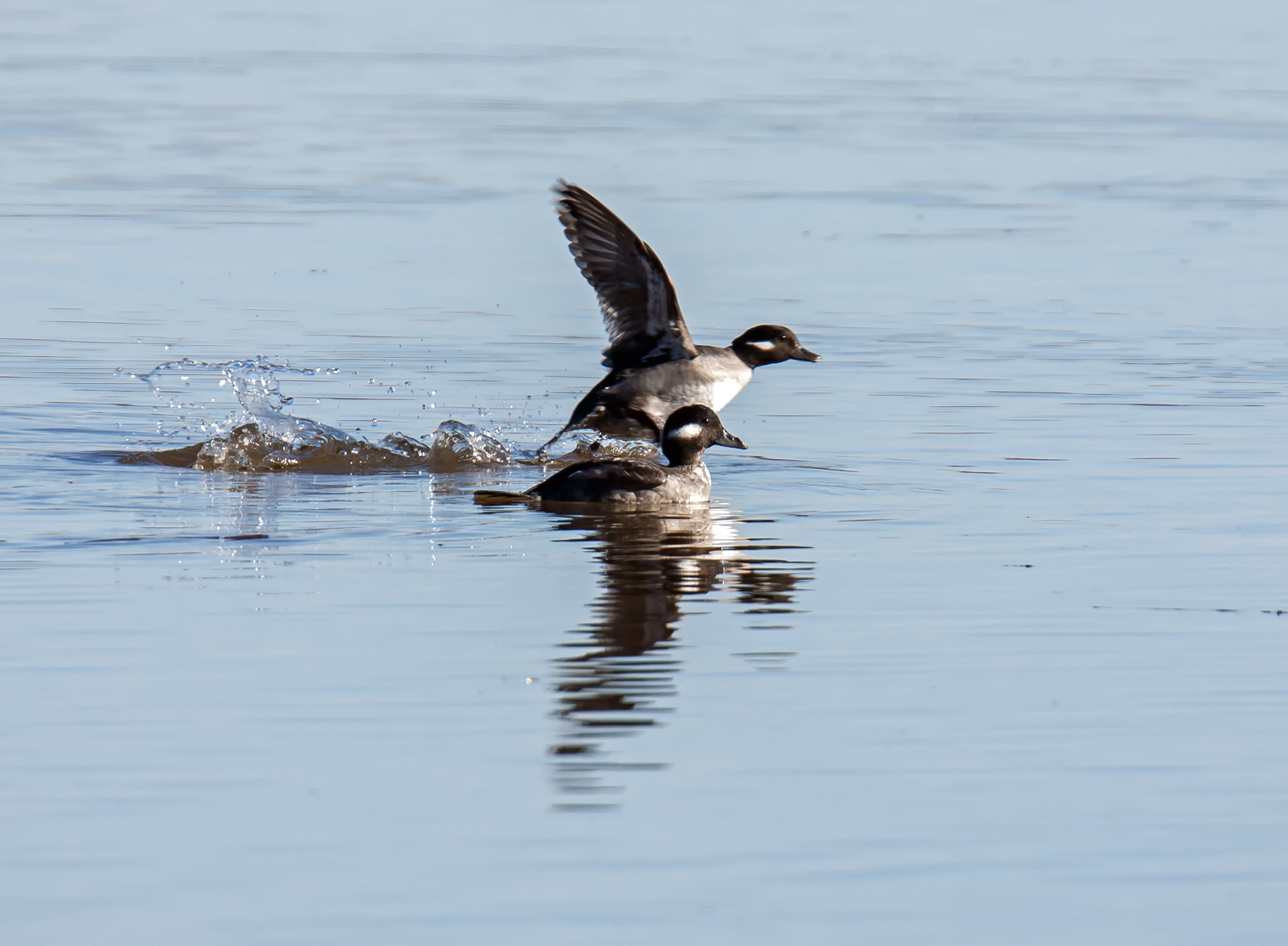
When I am watching water birds, it is hard for me to predict when they will decide to take to the air. Often they give no visible warning. Some species, though, need to dance across the water to gain momentum before they can lift off, like this pair of female Buffleheads (Bucephala albeola) that I observed last week at Occoquan Bay National Wildlife Refuge.
The one in the back had already started its takeoff maneuvers when I captured this image and a second later the second bufflehead was also skipping across the water.

© Michael Q. Powell. All rights reserved.
Posted in Autumn, Birds, Nature, Photography, wildlife | Tagged Bucephala albeola, bufflehead, Canon 50D, Occoquan Bay National Wildlife Refuge, Tamron 150-600mm, Woodbridge VA | Leave a Comment »
December 8, 2018 by Mike Powell
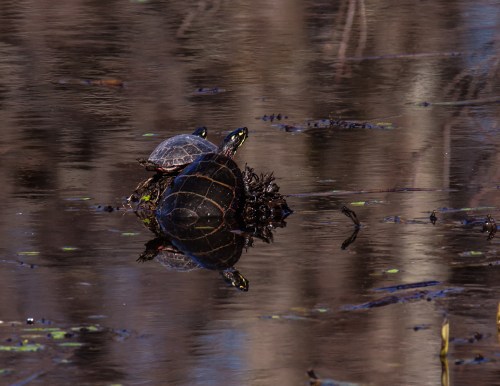
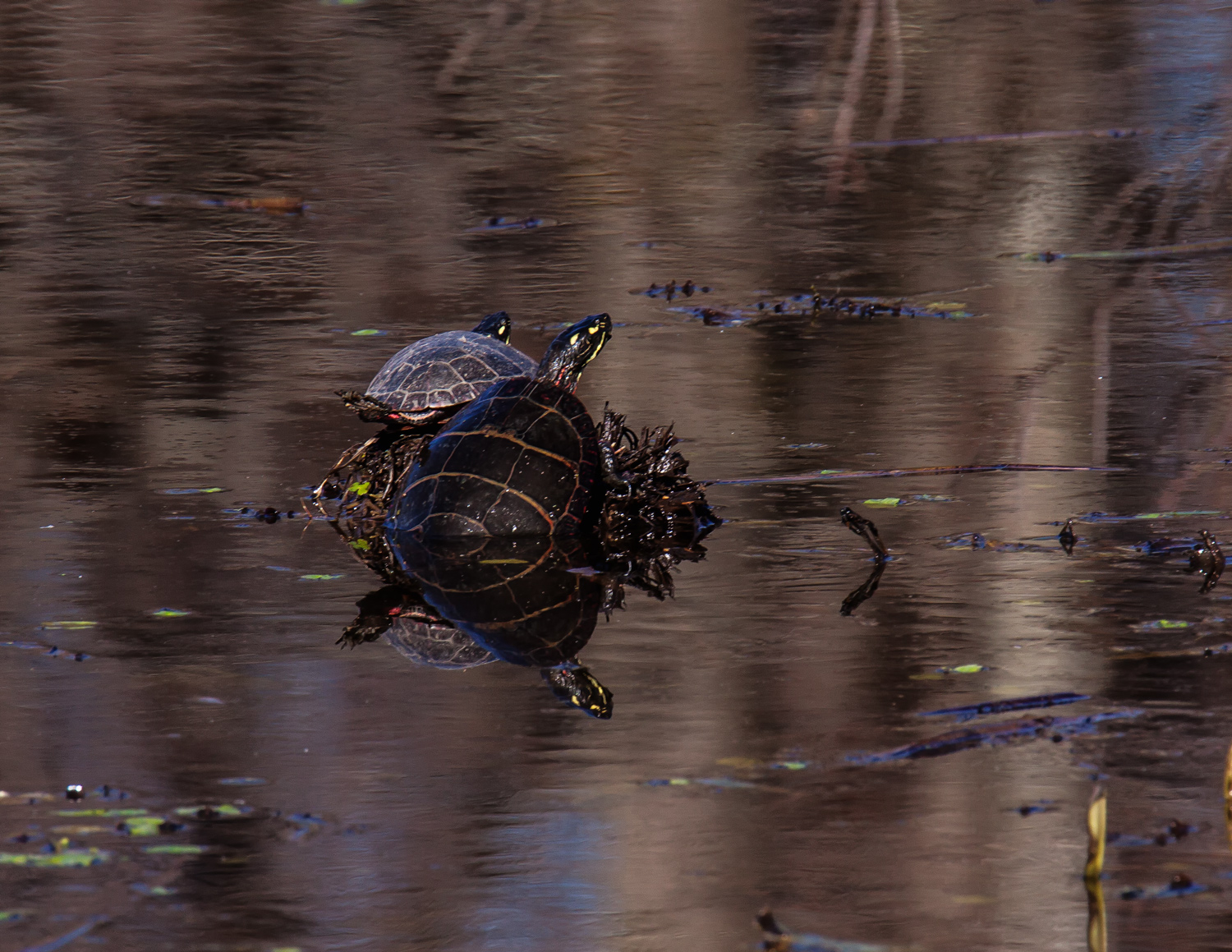
The temperature today feels so frigid—right about the freezing level—that it is hard to remember that only this past Monday it was sunny and 60 degrees (16 degrees C). While I was enjoying the unseasonably warm weather and exploring Occoquan Bay National Wildlife Refuge, I photographed these sunning turtles, a relatively rare sight in December.
I did not get a good enough view of the turtles to be able to identify them with any confidence, but I think they may be Eastern Painted Turtles (Chrysemys picta picta) or possibly Red-eared Sliders (Trachemys scripta elegans).
© Michael Q. Powell. All rights reserved.
Posted in Autumn, Nature, Photography, Reptiles, turtle | Tagged Canon 50D, Chrysemys picta picta, Eastern Painted Turtle, Occoquan Bay National Wildlife Refuge, red-eared slider, red-eared slider turtle, Tamron 150-600mm, Trachemys scripta elegans), turtle, Woodbridge VA | 3 Comments »
December 7, 2018 by Mike Powell
Recently I served as the assistant for a fellow photographer Cindy Dyer as she shot some portraits in her studio. I had never before participated in that kind of a venture and I was a little shocked by the amount of coaching that the subject needed to ensure a proper head position, body position, and expression. Apparently most of us do not know how to act “naturally” in a way that will yield a goof portrait.
Fortunately many birds do not require these instructions. On Monday of this week, this Cedar Waxwing (Bombycilla cedrorum) took a break from its foraging and seemed to be posing for me. The bird decided that a profile shot would be good to show of its distinctive eye mask and that any hint of a double chin could be eliminated by slightly elongating its neck. Although the Cedar Waxwing tried to maintain a serious expression, I think I detect the beginning of a tiny smile.

© Michael Q. Powell. All rights reserved.
Posted in Autumn, Birds, Nature, Photography, Portraits, wildlife | Tagged Bombycilla cedrorum, Canon 50D, Cedar Waxwing, Occoquan Bay National Wildlife Refuge, Tamron 150-600mm, waxwing, Woodbridge VA | 15 Comments »
December 6, 2018 by Mike Powell
Despite his diminutive size, this male Golden-crowned Kinglet (Regulus satrapa) seemed to have plenty of attitude when I spotted him on Monday at Occoquan Bay National Wildlife Refuge.
Size is relative, of course, but by almost any standard Golden-crowned Kinglets are tiny. The are about 3-4 inches (8 to 10 cm) in length and weigh only 0.1 to 0.3 ounces (4 to 8 gm). Their small size and hyperactivity make them a fun challenge to photograph.
I particularly like this bird’s combative stance and the way that it provides us with such a good view of its bright yellow “crown.” It is one of the rare occasions when I got an unobstructed shot of a kinglet—normally there are branches blocking at least part of the view.

© Michael Q. Powell. All rights reserved.
Posted in Autumn, Birds, Nature, Photography, Portraits, wildlife | Tagged Canon 50D, Golden-crowned Kinglet, kinglet, Occoquan Bay National Wildlife Refuge, Regulus satrapa, Tamron 150-600mm, Woodbridge VA | 4 Comments »
December 5, 2018 by Mike Powell
I was quite excited on Monday at Occoquan Bay National Wildife Refuge when this Brown Creeper (Certhia americana) finally let me get a relatively unobstructed shot of it. I had spent quite a while trying to track it as it climbed up and around several trees in a kind of corkscrew pattern.
In the past I have seen this elusive little bird several times, but as far as I know, this is the first time that I have ever gotten a shot of one. The Brown Creeper moves in a pattern that is not at all like any other bird that I have observed. The Cornell Lab of Ornithology website provides the following description of this behavior:
“The Brown Creeper spends most of its time spiraling up tree trunks in search of insects. It holds its short legs on either side of its body, with the long, curved claws hooking into the bark, and braces itself with its long, stiff tail. Both feet hop at the same time, making the bird’s head duck after each hop. Because of its specialized anatomy, the Brown Creeper rarely climbs downward: once high in a tree, it flies down to begin a new ascent at the base of a nearby tree.”
I am happy with this shot, though I must confess that I get a little dizzy if I look at it too long.

© Michael Q. Powell. All rights reserved.
Posted in Autumn, Birds, Nature, Photography, wildlife | Tagged brown creeper, Canon 50D, Certhia americana, creeper, Occoquan Bay National Wildlife Refuge, Tamron 150-600mm, Woodbridge VA | 7 Comments »
December 4, 2018 by Mike Powell
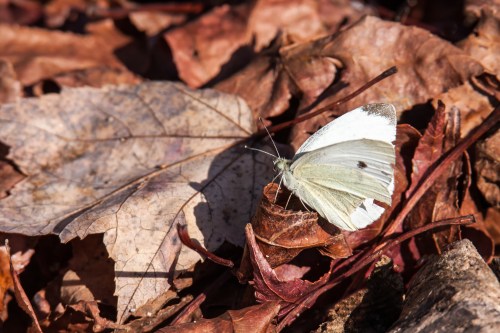
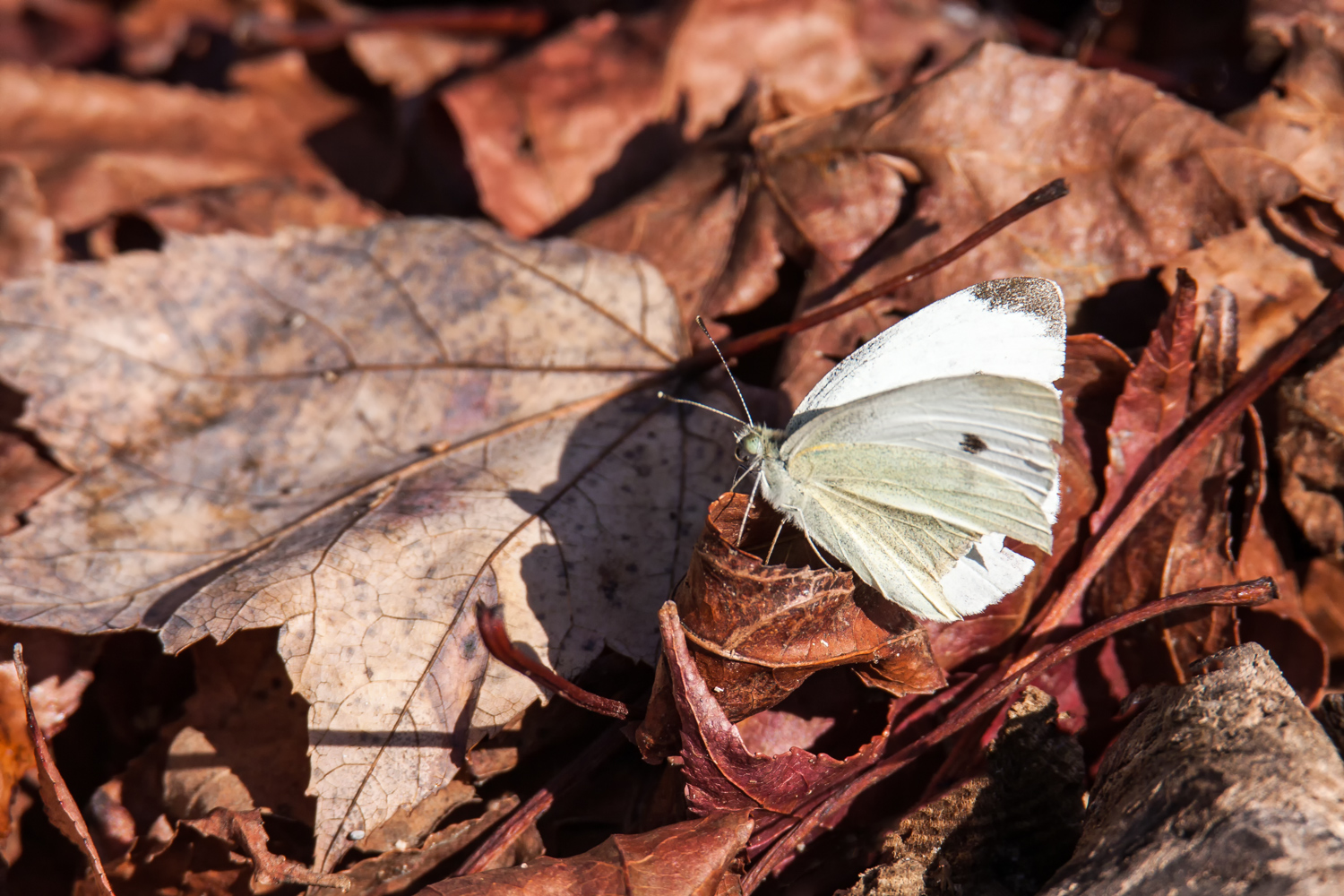
A butterfly in December? I was shocked and thrilled to see this tattered Cabbage White butterfly (Pieris rapae) flying around yesterday at Occoquan Bay National Wildlife Refuge.
I photographed this little butterfly with my telephoto zoom lens fully extended to 600mm. I contemplated cropping the image, but decided that I really like the look and feel of all of the fallen leaves and left it uncropped. I also like the way that the veining in the leaves seems to mirror the veining in the butterfly’s white wings.
© Michael Q. Powell. All rights reserved.
Posted in Autumn, Butterflies, Insects, Nature, Photography, wildlife | Tagged Cabbage White, Cabbage White butterfly, Canon 50D, Occoquan Bay National Wildlife Refuge, Pieris rapae, Tamron 150-600mm, Woodbridge VA | 3 Comments »
December 4, 2018 by Mike Powell
Yesterday we were blessed with a sunny, warm day. The temperatures rose to over 60 degrees (16 degrees C) and my hopes that I might see some dragonflies increased correspondingly.
This autumn season we have already had some sub-freezing temperatures and even a couple of inches of snow. However, my past experience has shown that Autumn Meadowhawk dragonflies (Sympetrum vicinum) are unusually hardy.
Autumn Meadowhawks are small, about 1.3 inches (33 mm) in length and tend to perch on the ground, which is now covered with fallen leaves and other debris. As a result, it is pretty hard to spot these little dragonflies, despite their bright red coloration.
I searched and searched and eventually found a few of them at Occoquan Bay National Wildlife Refuge. I was able to capture a number of images and decided to feature this one, because it gives you a good look at the dragonfly’s beautiful two-toned eyes.
Today we are back to cooler temperatures and there is snow in the forecast for this weekend. Will this be my last dragonfly of the season? I will continue to search for dragonflies for another month or so, though I know that my chances of finding one of these beautiful aerial acrobats will continue to drop.

© Michael Q. Powell. All rights reserved.
Posted in Autumn, Dragonflies, dragonfly, Insects, Nature, Photography, wildlife | Tagged Autumn Meadowhawk, Autumn Meadowhawk dragonfly, Canon SX50, Occoquan Bay National Wildlife Refuge, Sympetrum vicinum, Woodbridge VA | 7 Comments »
December 3, 2018 by Mike Powell
The gentle paddling of this Pied-billed Grebe (Podilymbus podiceps) produced such wonderful patterns in the water that it was easy to fight the temptation to crop this image more closely. This is another one of the waterbirds that appeared recently at a pond in a nearby suburban neighborhood.
Virtually all of the visiting birds are skittish enough that they will swim away toward the center of the pond as I approach. Fortunately for me they swim a lot more slowly than they fly, so I generally have a chance to track them as they swim, hoping they will turn their heads periodically to the side.

© Michael Q. Powell. All rights reserved.
Posted in Autumn, Birds, Nature, Photography, wildlife | Tagged Alexandria VA, Canon SX50, Grebe, Kingstowne, Pied-billed Grebe, poly | 2 Comments »
December 2, 2018 by Mike Powell
This male Ruddy Duck (Oxyura jamaicensis) and I spotted each other at almost the same time and we both immediately sprung into action. As I was bringing my camera up to my eye, the duck was swimming away. I thought that I had lost the photo opportunity when suddenly the duck turned his head to the side and I was able to capture this image.
This Ruddy Duck, like the Hooded Merganser duck that I featured yesterday, has taken up residence in a small pond in a suburban neighborhood not far from where I live. I am thrilled, because it gives me a place where I can experience wildlife without having to travel too far. Things can get busy sometimes, especially at this time of the year, and I cannot always spend hours on end in the wild with my camera as I prefer to do.

© Michael Q. Powell. All rights reserved.
Posted in Autumn, Birds, Nature, Photography, wildlife | Tagged Alexandria VA, Canon SX50, Kingstowne, Oxyura jamaicensis, Ruddy Duck | 2 Comments »
December 1, 2018 by Mike Powell
I have occasionally been described as a bit of an “odd duck,” which Wiktionary defines as “an unusual person, especially an individual with an idiosyncratic personality or peculiar behavioral characteristics.” That definition certainly fits me (and most other wildlife photographers too, I suspect).
In a more literal sense, “odd duck” is a great way to describe the unusual-looking Hooded Merganser duck (Lophodytes cucullatus). There are no other ducks in my area that look anything like these ducks, so identification is never a problem. Getting good photographs of one, though, can be a problem, because Hooded Mergansers are small and often skittish.
I spotted this handsome male Hooded Merganser yesterday at a suburban pond not far from where I live in Northern Virginia. He was part of a group of about a dozen or so Hooded Mergansers. Most of the members of the group were out in the middle of the pond, but this one hanging out nearer the shore and I was able to get off a few shots before he swam away to link up with the rest of his group.

© Michael Q. Powell. All rights reserved.
Posted in Autumn, Birds, Nature, Photography, wildlife | Tagged Alexandria VA, Canon SX50, Hooded Merganser, Hooded Merganser duck, Kingstowne, Lophodytes cucullatus, male Hooded Merganser, odd duck | 5 Comments »
November 30, 2018 by Mike Powell
When I am out in the wild with my camera, my eyes are almost always in constant motion, scanning the skies and the ground, the trees and the fields, searching for subjects to photograph. Sometimes, though, I’ll stop, overwhelmed by the natural beauty of my surroundings, and may remain stationary for an extended period of time.
I had such an experience earlier this week when I was checking out a small pond at Occoquan Bay National Wildlife Refuge. The early morning light was just beginning to illuminate the tops of the trees. Although most of the leaves on the trees have turned brown, the sunlight caused them to glow a little, restoring them for a few precious moments to their former glory.
It may not be traditional to shoot a landscape photo with a telephoto lens, but that is what I had on my camera that moment. I zoomed out my 150-600mm lens to its widest position and tried to compose an image that captured the feeling of the moment.
I don’t shoot landscape images very often and probably violated some of the normal guidelines, but I am pretty happy with this image. Although generally I crop an image to focus a viewer’s attention on my primary subject, that did not seem necessary in this case.

© Michael Q. Powell. All rights reserved.
Posted in Art, Autumn, Landscape, Nature, Photography | Tagged Canon 50D, early morning light, morning light, Occoquan Bay National Wildlife Refuge, Tamron 150-600mm, Woodbridge VA | 7 Comments »
November 29, 2018 by Mike Powell
Sunshine and bright colors have been in short supply during the month of November. We have already broken the all-time record for rainfall in November in our area and will break the record for rainfall in a year if we have one more inch (25mm) of rain by 31 December.
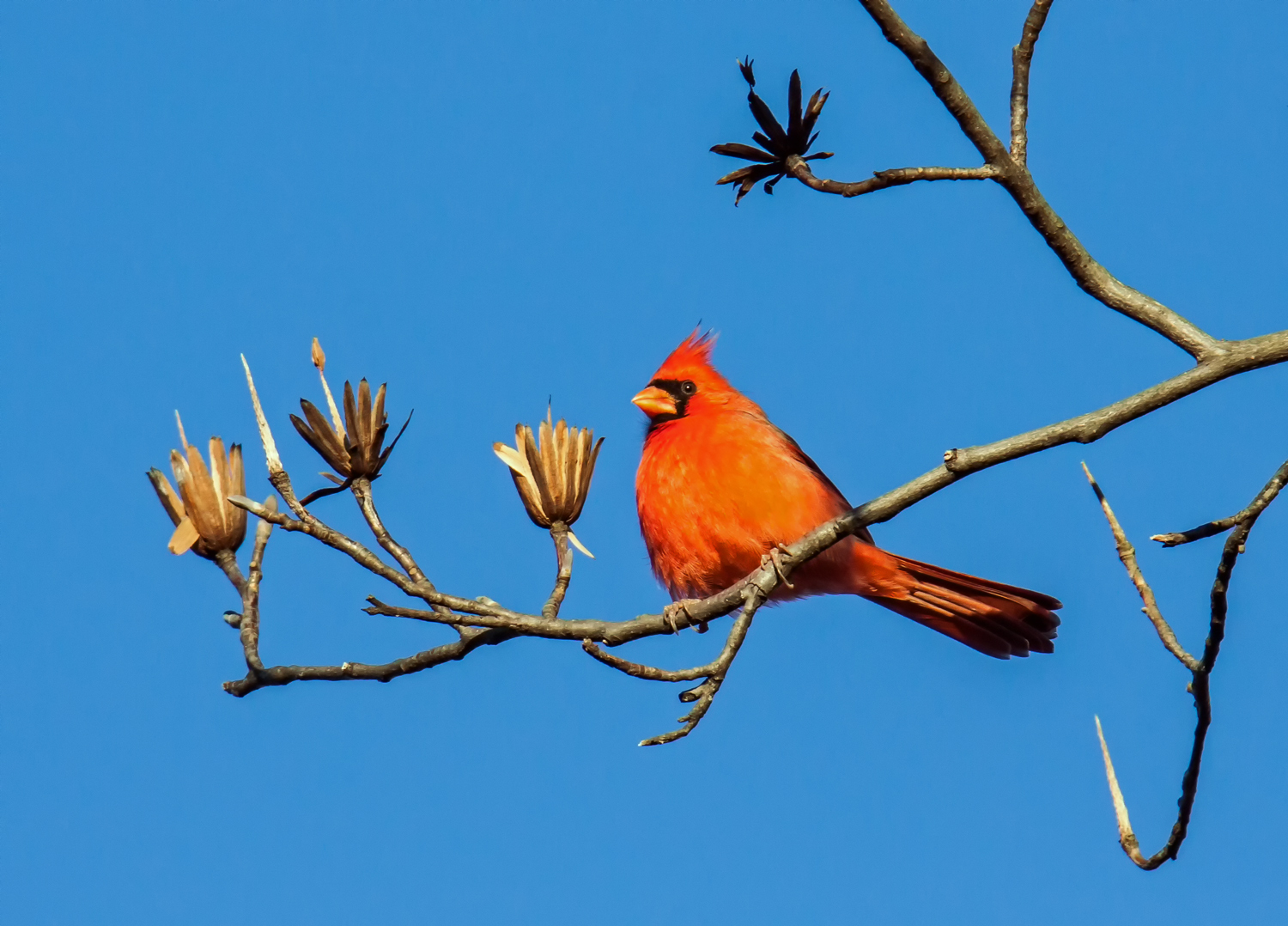
I was therefore absolutely thrilled when I spotted this bright red male Northern Cardinal (Cardinalis cardinalis) high in a tree at Occoquan Bay National Wildlife Refuge earlier this week. Unlike so many other birds that try to blend in with their surroundings, the cardinal seems bold and self-assured—it is not at all hard to spot them, though they often bury themselves in the middle of bushes, so getting an unobstructed shot can be quite a challenge.
Comparatively speaking, this cardinal was cooperative and posed for a short while before finally taking off. His head was in constant motion, but eventually I was able to capture an image with the head in a decent position. Even with human subjects, I find it tough to shoot a portrait in which the head and eyes are in a natural and pleasing pose.

© Michael Q. Powell. All rights reserved.
Posted in Autumn, Birds, Nature, Photography, wildlife | Tagged Canon 50D, cardinal, Cardinalis cardinalis, male Northern Cardinal, Northern cardinal, Occoquan Bay National Wildlife Refuge, Tamron 150-600mm, Woodbridge VA | 13 Comments »
November 28, 2018 by Mike Powell
Most of the time that I see a Great Blue Heron (Ardea herodias), it is standing stationary in the water or is flying away from me. Yesterday, however, I saw herons in slightly more unusual places. One was crouching slightly as it perched on a low branch overhanging a path at Occoquan Bay National Wildlife Refuge and the other was huddled in a field adjacent to a small pond, half-hidden from view.
The first image is an obvious one to feature in a posting, but I also really like the way that I captured the heron’s surroundings in the second image and the heron’s yellow eye that seems to be peering out at me though the reeds.


© Michael Q. Powell. All rights reserved.
Posted in Autumn, Birds, Nature, Photography, wildlife | Tagged Ardea herodias, Canon 50D, Great Blue Heron, Occoquan Bay National Wildlife Refuge, Tamron 150-600mm, Woodbridge VA | 5 Comments »
November 27, 2018 by Mike Powell
Whenever I walk the trails parallel to the water at Occoquan Bay National Wildlife Refuge I try to stay alert, because I never know when a Bald Eagle (Haliaeetus leucocephalus) will come zooming by, as this one did last week.
I had my camera already set to relatively appropriate settings and my biggest challenge was to acquire the eagle in my viewfinder before it flew out of sight. I was fortunate that the eagle was flying on a level plane, so I did not have to worry about having to zoom the lens in or out. I took a burst of shots and the image below was the one that I liked the best, primarily because of the wing position and the catch light in the eye.
Each opportunity to photograph a bird in flight is unique. I never know when circumstances will work together to permit me to capture a good in-flight image, but it feels almost magical when somehow I do.

© Michael Q. Powell. All rights reserved.
Posted in Autumn, Birds, Nature, Photography, wildlife | Tagged Bald Eagle, birds in flight, Canon 50D, eagle, Haliaeetus leucocephalus, Occoquan Bay National Wildlife Refuge, Tamron 150-600mm, Woodbridge VA | 10 Comments »
November 26, 2018 by Mike Powell
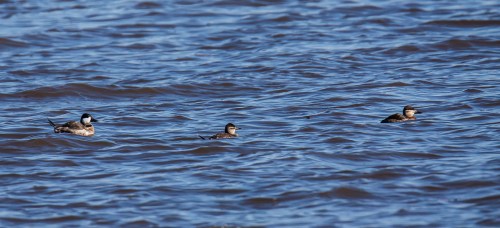
What does it mean to have your ducks in a row? For most of us, it means being well-prepared and organized in advance. Personally, I am a little scatter-brained and disorganized, so it is not a term that I would apply to myself very often.
As is the case with many such expressions, it is sometimes fun to apply them literally. Last week I spotted some Ruddy Ducks (Oxyura jamaicensis) in the waters off of Occoquan Bay National Wildlife Refuge. The wind was blowing pretty hard and the ducks seemed to be struggling to stay together. From my perspective, they seemed to be ducks in a row, though from their perspective, they probably felt like they were ducks in a column. It’s all a matter of perspective.
Most of the time that I see Ruddy Ducks, they are in groups like the one in the first photo, usually in the deeper waters. For more than a month, though, I have been seeing a solitary male Ruddy Duck in the more placid waters of a small pond at the wildlife refuge. I captured him in the second image below on the same day as the first shot. In both of the photos, you can see the stiff tail that is one of the distinguishing characteristics of this species.
I often wonder about the origins of expressions like “ducks in a row.” I assumed that it had to do with a mother duck and her ducklings, but decided to search the internet to see if that was the case. I came across a wonderful posting by The Word Detective that addresses speculation that the expression comes from the game of pool. It is a fun read, particularly the comments from readers suggesting that the expression is related to ship or aircraft construction or to duck hunting.

© Michael Q. Powell. All rights reserved.
Posted in Autumn, Birds, Nature, Photography, wildlife | Tagged Canon 50D, ducks in a row, Occoquan Bay National Wildlife Refuge, Oxyura jamaicensis, Ruddy Duck, Tamron 150-600mm, Woodbridge VA | 5 Comments »
« Newer Posts - Older Posts »














 Mike Powell