August 8, 2019 by Mike Powell
Dragonfly wings are amazing, but most of the time they are so transparent that it is hard to see all of the tiny little “cells” that make up the wings. Last Friday, though, I captured this shot of an immature male Calico Pennant dragonfly (Celithemis elisa) at Occoquan Bay National Wildlife Refuge that really highlights the beautiful mosaic-like pattern of its hind wings. Wow!

© Michael Q. Powell. All rights reserved.
Posted in Art, Dragonflies, dragonfly, Insects, Nature, Photography, Summer, wildlife | Tagged Calico Pennant, Calico Pennant dragonfly, Canon 50D, Celithemis elisa, male Calico Pennant, Occoquan Bay National Wildlife Refuge, Tamron 180mm, Woodbridge VA | 12 Comments »
August 7, 2019 by Mike Powell
Does you mood affect how you react to images? When I am reviewing images that I have captured, most of the time I use an analytical approach. I seek to identify the species of my subject and then look at the technical aspects of the photo, such as the sharpness of the focus. Finally I will see if I can improve the composition by cropping the image.
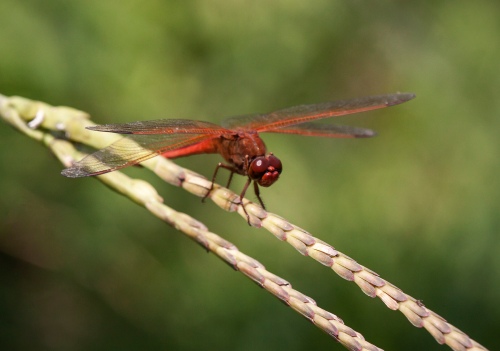
For some images, though, I respond initially with my heart and not my head. I don’t worry about “what” it is and simply enjoy the beauty of the shapes and colors that make up the image. That was the case with this shot of a male Needham’s Skimmer dragonfly (Libellula needhami) that I captured during a recent visit to Occoquan Bay National Wildlife Refuge.
I love the contrast between the orangish-red of the dragonfly’s body and the green background. The shape and texture of the vegetation, which I believe is Eastern Gamagrass (Tripsacum dactyloides), also really grabbed my eye (in part because I missed focus a little and the sharpest part of the image is the grass in front of the dragonfly). The composition is simple and straightforward and is pretty much the way I shot it.
We all like what we like. Most often we don’t even ask ourselves why we like something. I personally find it beneficial to try to articulate why I like something. Words fail me quite often when attempting to describe with words what is primarily an emotional reaction, but I think that the effort itself makes the process worthwhile.
© Michael Q. Powell. All rights reserved.
Posted in Art, Dragonflies, dragonfly, Insects, Nature, Photography, Summer, wildlife | Tagged Canon 50D, Eastern gamagrass, Libellula needhami, Needham's Skimmer, Needham's Skimmer dragonfly, Occoquan Bay National Wildlife Refuge, Tamron 180mm, Tripsacum dactyloides, Woodbridge VA | 6 Comments »
August 6, 2019 by Mike Powell
Are you always in search of new subjects or are you content to photograph the same subjects over and over again? Several years ago I came across an author who described two different types of people—those who prefer to live “widely” and those who prefer to live “deeply.” Those in the first group are always seeking new experiences and traveling to new places and, as photographers, are constantly looking for new things to photograph. By contrast, those in the second group are looking for a deeper experience and are likely to repeatedly return to the same locations over and over and photograph the same limited set of subjects.
As you might suspect, I see myself primarily as a member of the second group. Many of you have undoubtedly noted that I tend to hang out a lot in the same wildlife refuges throughout the year and often photograph familiar subjects. Why? For me, each encounter is unique—the lighting is different, the poses are different, and the age and genders of my subjects vary. I enjoy documenting the seasonal changes in fora and fauna at these locations. Each time I strive to capture different and, if possible, better images.
So, I am posting another photo of a Halloween Pennant dragonfly (Celithemis eponina), even though I posted several images of this species last week. My angle of view for this image from this past weekend was better; the lighting was coming from a better direction; and the slight breeze prompted the dragonfly to move its wings in a way that created a better pose. Consequently, I like this image more than the ones I posted earlier.
My simple approach to blog postings is to present something that is interesting to viewers. The photos may be visually appealing or show details or behavior that you may not have noticed before. You may learn something from my words or may have a better understanding of how the images came into being. Each day we have new opportunities to fill our lives with beauty and meaning. Photography and blogging have become part of my daily journey and I feel blessed to be able to share my experiences with so many of you.

© Michael Q. Powell. All rights reserved.
Posted in Dragonflies, dragonfly, Insects, Nature, Photography, Summer, wildlife | Tagged Canon 50D, Celithemis eponina, halloween pennant, Halloween Pennant dragonfly, Occoquan Bay National Wildlife Refuge, Tamron 180mm, Woodbridge VA | 13 Comments »
August 5, 2019 by Mike Powell
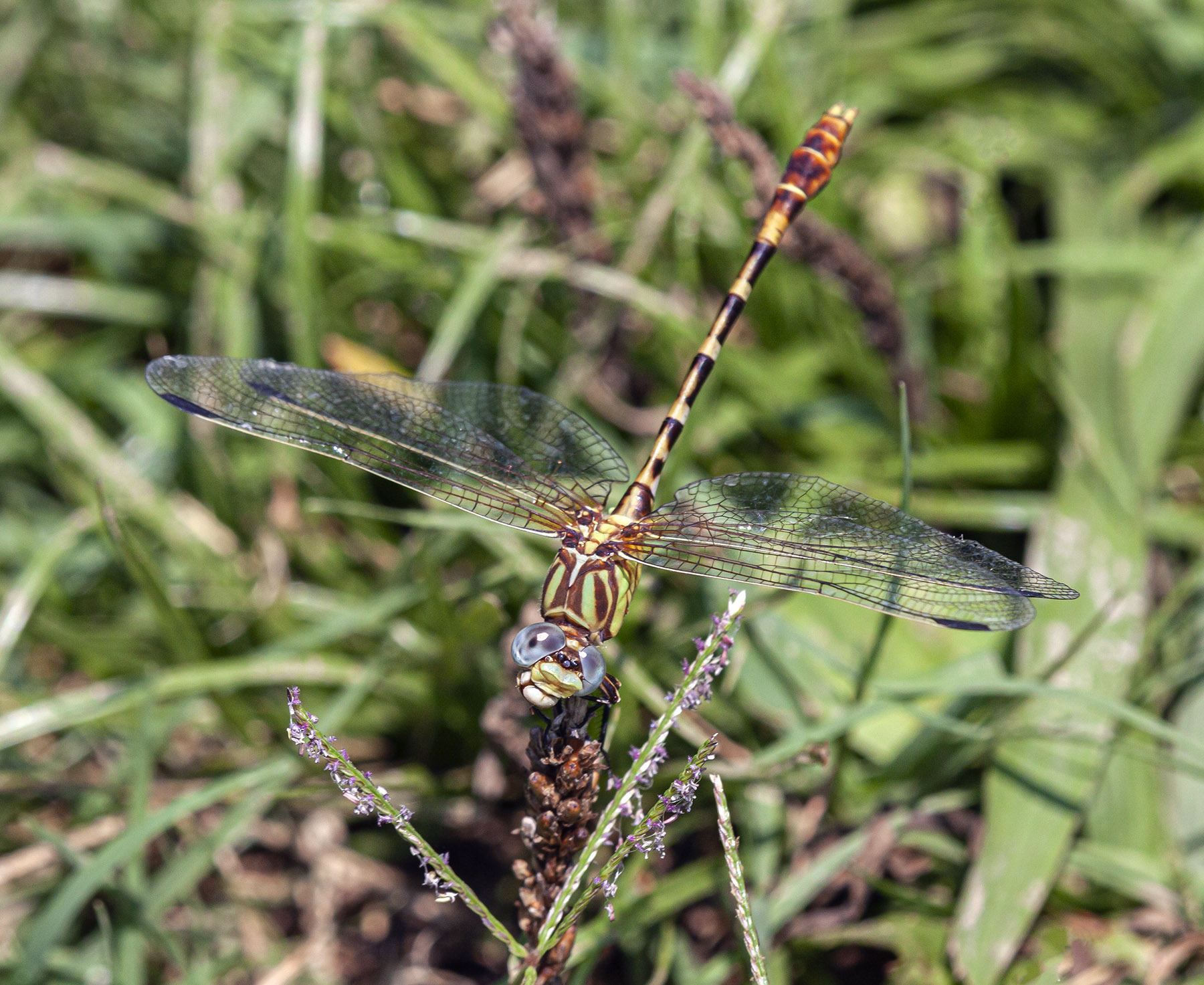
What is the best way to photograph a dragonfly that perches low to the ground? How can you create an image in which the dragonfly is not lost amidst the clutter of the vegetation? That was the challenge that fellow dragonfly enthusiast Walter Sanford and I faced last Monday when we journeyed to Riverbend Park in Great Falls, Virginia in search of Eastern Ringtail dragonflies (Erpetogomphus designatus).
Walter has a lot of experience with dragonflies and knew where to find Eastern Ringtails in the park. He knew, for example, that they like to perch on a section of concrete aggregate and indeed we spotted one not long after we arrived. Walter likes to maximize the chance of getting the entire dragonfly in focus by shooting downwards, ideally from as close to overhead as possible. For him, the concrete background is uncluttered and allows him to capture all of details of the dragonfly.
Although I prefer to photograph dragonflies on natural vice manmade surfaces, I took some photos, including the third one below, while the dragonfly was on the concrete—you have to shoot when the opportunity arises and I was not confident that I could wait for the dragonfly to choose a better perch. Rather than shooting from above when the dragonfly is on the ground, I usually choose to get down with the dragonfly.
Eventually I was able to get some shots of Eastern Ringtails perched in the grass. The middle image shows the dragonfly tilting its head to look towards me as I photographed it. I like the pose, but I was not fully satisfied. Those of you who have followed my blog for a while know that I like to get as close to a dragonfly as it will let me. The initial photo of this posting was one of my final shots of my session with the Eastern Ringtails and it is probably my favorite.
I began this post with a question and feel like I owe you a response. In reality, there is no “best” way to photograph a dragonfly on the ground, but my preferred option is to get low to the ground and close to the subject so that I am able to focus on part of the dragonfly, hopefully the eyes, and blur out the background because of the shallow depth of field when shooting that close. If you would like to see Walter’s wonderful photos of Eastern Ringtails from the same trip, I encourage you to check out his blog postings Eastern Ringtail reunion, continued and Reconnecting with Eastern Ringtail. Those postings provide his visual response to the question that I posed.


© Michael Q. Powell. All rights reserved.
Posted in Dragonflies, dragonfly, Insects, Macro Photography, Nature, Photography, Summer, wildlife | Tagged Canon 50D, Eastern Ringtail, Eastern Ringtail dragonfly, Erpetogomphus designatus, Great Falls VA, Riverbend Park, Tamron 180mm | 7 Comments »
August 4, 2019 by Mike Powell
Eastern Tiger Swallowtails (Papilio glaucus) were definitely enjoying this patch of Joe Pye Weed (Eutrochium purpureum) when I spotted them last Saturday at Riverbend Park. The butterfly in the foreground is a dark morph female and I believe the one in the background is a male. One of the cool things about Eastern Tiger Swallowtails is that females come in two varieties, one with coloration close to that of the male and one with the dark colors that you see in the image below.
This image is a a pretty straightforward presentation of a fairly common subject, but there is something about the composition that I really like. Maybe it’s the contrasting colors or the overlapping shapes. Who knows? So often I like what I like without being able to articulate the precise reasons why.

© Michael Q. Powell. All rights reserved.
Posted in Butterflies, Flowers, Insects, Nature, Photography, Summer, wildlife | Tagged Canon 50D, Eastern Tiger Swallowtail, Eastern Tiger Swallowtail butterfly, Eutrochium purpureum, Great Falls VA, Joe-Pye weed, Papilio glaucus, Riverbend Park, Tamron 180mm | 5 Comments »
August 3, 2019 by Mike Powell
This Osprey (Pandion haliaetus) spotted me about the same time as I spotted it and immediately took to the sky with its half-eaten fish yesterday at Occoquan Bay National Wildlife Refuge. Fortunately I had heard the osprey’s cry a few seconds earlier and was able to capture this image as it prepared for takeoff. Like another shot that I posted recently of an osprey, this image was captured using my 180mm macro lens.
This osprey was definitely not interested in sharing its freshly caught fish with me. If I want sushi, I’ll have to find it on my own.

© Michael Q. Powell. All rights reserved.
Posted in Birds, Nature, Photography, Summer, wildlife | Tagged Canon 50D, Occoquan Bay National Wildlife Refuge, Osprey, Pandion haliaetus, Tamron 180mm, Woodbridge VA | 7 Comments »
August 3, 2019 by Mike Powell
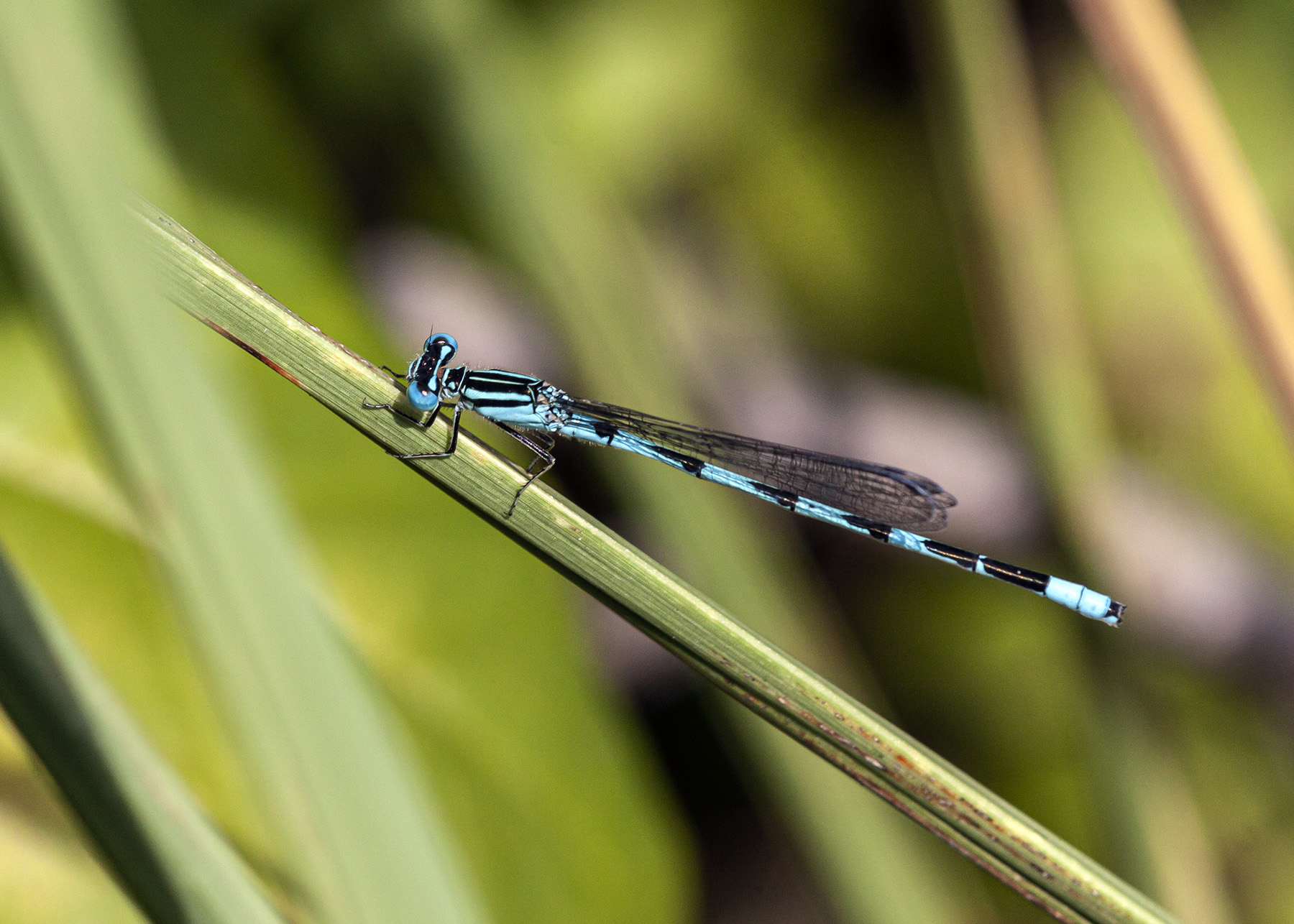
Recently there seems to have been an explosion of Big Bluet damselflies (Enallagma durum) at Occoquan Bay National Wildlife Refuge. This damselfly species is a coastal species and usually likes brackish water. Not surprisingly I saw them repeatedly yesterday as I walked along a trail near the water’s edge.
I like the first shot a lot, because of the repeated angled lines that provide a nice contrast with the damselfly. The second image shows a mating Big Bluet couple in a position known as the “wheel” that is viewed by many as a sidewards heart. As is usually the case with insects and with birds, the male Big Bluet is the more brightly-colored than his female counterpart.


© Michael Q. Powell. All rights reserved.
Posted in damselfly, Insects, Nature, Photography, Summer, wildlife | Tagged Big Bluet, Big Bluet damselfly, Canon 50D, Enallagma durum, Occoquan Bay National Wildlife Refuge, Tamron 180mm, Woodbridge VA | 3 Comments »
August 2, 2019 by Mike Powell
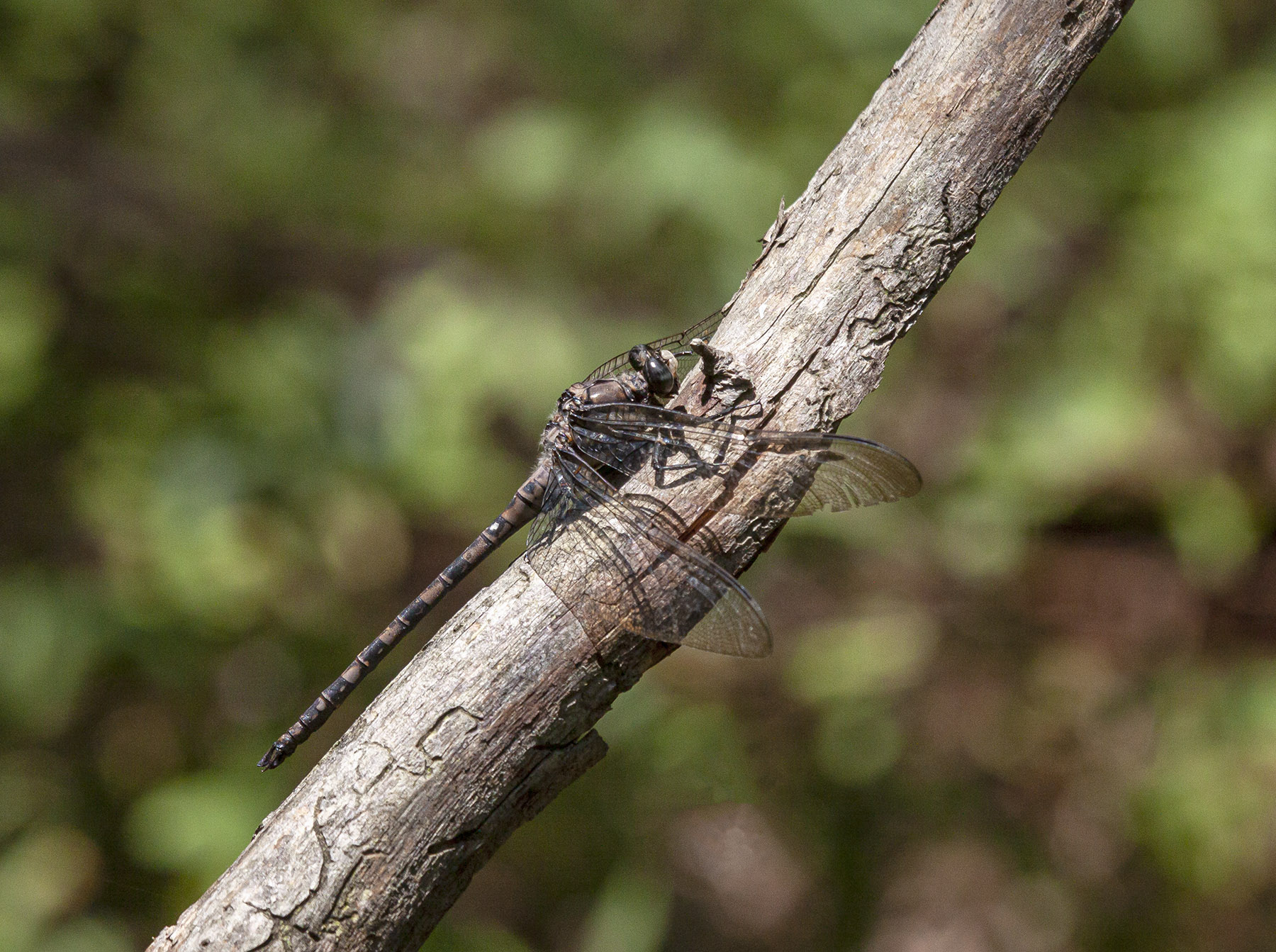
Although we still have quite a lot of summer remaining, some of my favorite dragonfly species have already disappeared for the season. I have been fortunate this year to see Gray Petaltail dragonflies (Tachopteryx thoreyi) on multiple occasions in several different locations. A little over a week ago I spotted this one at Occoquan Regional Park on the date that the Dragonflies of Northern Virginia website lists as the tail end of the season for this species. It is quite possible that I will have to wait until next year to see another one.
Gray Petaltails are remarkable dragonflies. They will sometime perch on you, which can be a bit disconcerting because they are so large and you can hear them when they fly by your head. Additionally, many scientists view this species as an ancient one. According to the website cited above, Gray Petaltails are “our oldest and most primitive dragonfly; species almost identical to petaltails flew alongside dinosaurs during the Jurassic period. Imagine petaltails and a herd of Brontosaurus sharing the same giant, fern-filled forests.”
It is hard to know exactly how long dragonflies have been around, but according to Wikipedia, fossils of very large dragonfly ancestors with wingspans of 30 inches (750 mm) have been found that are 325 million old. Given the ferocity of most dragonflies as predators, I am happy that modern day dragonflies are quite a bit smaller in size.

© Michael Q. Powell. All rights reserved.
Posted in Dragonflies, dragonfly, Insects, Nature, Photography, Summer, wildlife | Tagged Canon 50D, Gray Petaltail, Gray Petaltail dragonfly, Lorton VA, Occoquan Regional Park, Tachopteryx thoreyi, Tamron 180mm | 2 Comments »
August 1, 2019 by Mike Powell
Last Saturday I spotted this Blue-fronted Dancer damselfly (Argia apicalis) couple while exploring Riverbend Park in Great Falls, Virginia. I like this shot because it gives a good sense of the differences in coloration between the male and the female of this species. Most of the time when the damselflies are coupled, they are in contorted positions and most of the body of one or the other damselfly is out of focus in my photos. In this case, the damselflies are in the tandem position, but appear to be resting.

© Michael Q. Powell. All rights reserved.
Posted in damselfly, Insects, Nature, Photography, wildlife | Tagged Argia apicalis, Blue-fronted Dancer, Blue-fronted Dancer damselfly, Canon 50D, Great Falls VA, Riverbend Park, Tamron 180mm | 2 Comments »
July 31, 2019 by Mike Powell
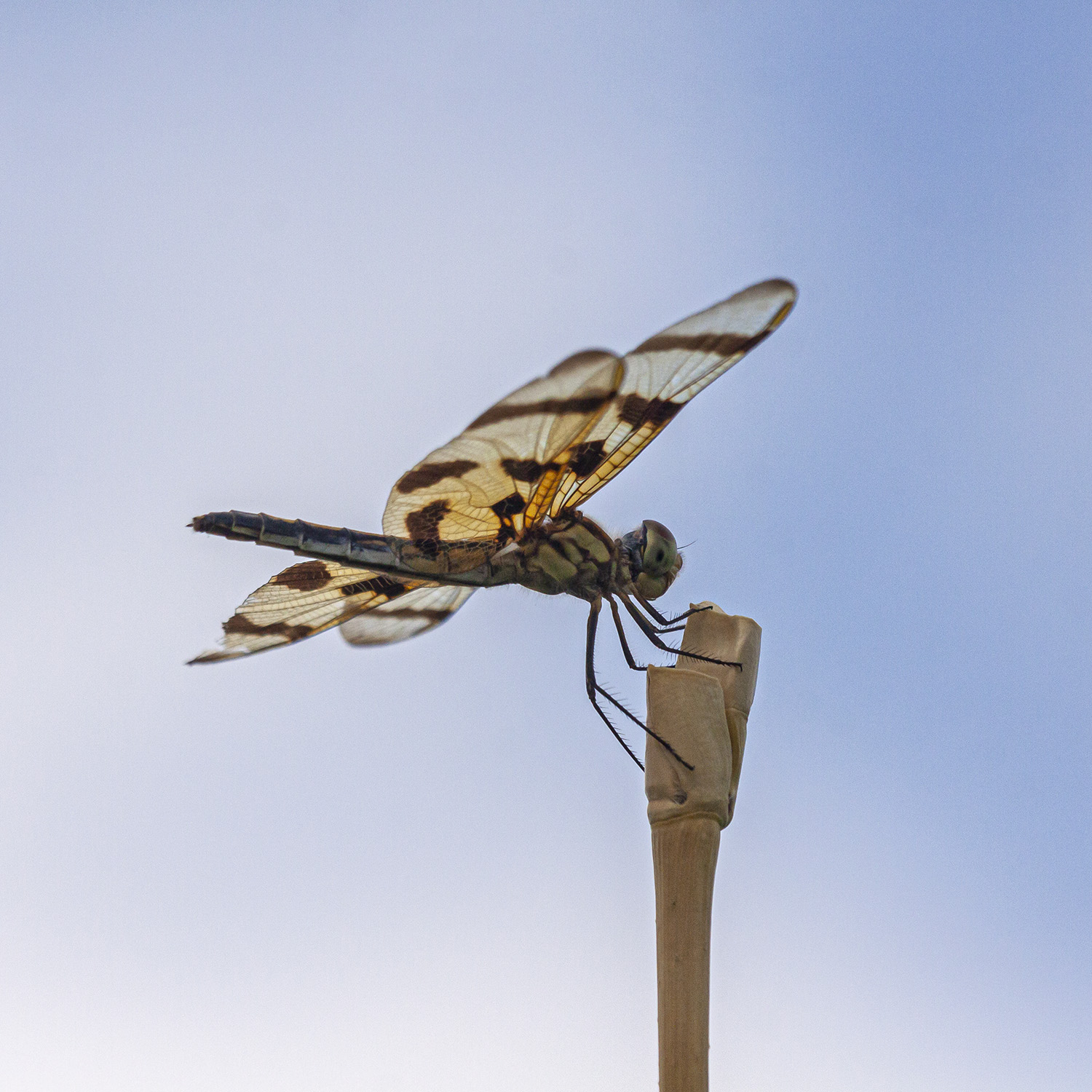
Last Thursday I spotted this beautiful Halloween Pennant dragonfly (Celithemis eponina) perched on a very photogenic plant at Occoquan Bay National Wildlife Refuge. I love the curlicue curves of the plant that remind me of ornamental wrought iron.
The perch in the second and third images is not as interesting, but I thought that I would share those images because of the way that I was able to capture the sky and the clouds in the background. As you can probably tell, the vegetation was really high and I was shooting at an upwards angle.


© Michael Q. Powell. All rights reserved.
Posted in Dragonflies, dragonfly, Insects, Nature, Photography, Summer, wildlife | Tagged Canon 50D, Celithemis eponina, halloween pennant, Halloween Pennant dragonfly, Occoquan Bay National Wildlife Refuge, Tamron 180mm, Woodbridge VA | 14 Comments »
July 30, 2019 by Mike Powell
I spotted this pretty Viceroy butterfly (Limenitis archippus) last Thursday at Occoquan Bay National Wildlife Refuge. The Viceroy has the same coloration as the Monarch, but has a line across its hind wings that is not present on the Monarchs. As I have learned more about insects, I have been amazed to find how often insects have adapted to mimic other species that predators may find bad-tasting or even toxic.

© Michael Q. Powell. All rights reserved.
Posted in Butterflies, Nature, Photography, Summer, wildlife | Tagged Canon 50D, Limenitis archippus, Occoquan Bay National Wildlife Refuge, Tamron 180mm, Viceroy, Viceroy butterfly, Woodbridge VA | 1 Comment »
July 29, 2019 by Mike Powell
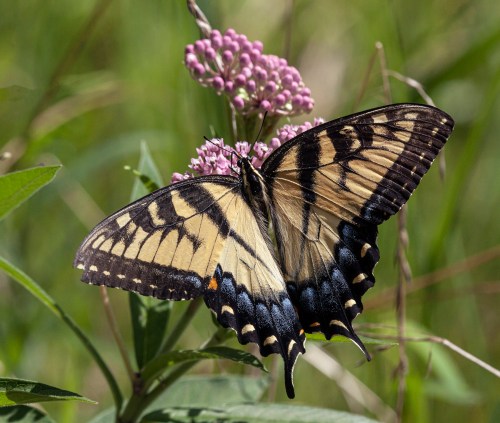
This seems to be the prime season for butterflies and I have been seeing lots of them this past week. I spotted this spectacular Eastern Tiger Swallowtail (Papilio glaucus) as I was exploring Occoquan Regional Park last Thursday. It was attracted to a pink flowering plant that I think is some kind of milkweed—I am a whole lot more confident in identifying butterflies than plants.
I am happy with both shots, but must that I particularly like the background in the first image.

© Michael Q. Powell. All rights reserved.
Posted in Butterflies, Insects, Nature, Photography, Summer, wildlife | Tagged Canon 50D, Eastern Tiger Swallowtail, Eastern Tiger Swallowtail butterfly, Lorton VA, milkweed, Occoquan Regional Park, Papilio glaucus, Tamron 180mm | 8 Comments »
July 28, 2019 by Mike Powell
Birds seem to spend a lot of time grooming themselves and this Great Blue Heron (Ardea herodias) was no exception. I spotted it yesterday on a small island in the Potomac River, midway between Riverbend Park and Great Falls Park. I knew that Great Blue Herons had flexible necks, but I must admit that I had never before seen one contort itself into the position shown in the first photo below.
After it had adjusted its feathers, the heron stood for a while with its wings partially opened. The position looks really strange and I have been told that it is a way for herons to dissipate heat when the weather gets hot by allowing greater air circulation. In case you are curious, I took the second and third photos from exactly the same spot—for one of them I was standing and for the other I was crouching.


© Michael Q. Powell. All rights reserved.
Posted in Birds, Nature, Photography, Summer, wildlife | Tagged Ardea herodias, Canon 50D, Great Blue Heron, Great Falls VA, Potomac River, preening, Tamron 180mm | 10 Comments »
July 27, 2019 by Mike Powell
Calico Pennants (Celithemis elisa) have really distinctive markings and are among the prettiest dragonflies in our area. I spotted this female Calico Pennant on Thursday at Occoquan Bay National Wildlife Refuge. As is usually the case for pennant dragonflies, she was perched on the very tip of the vegetation. As a slight breeze began to blow, she seemed to be holding on tightly with her tiny feet.

© Michael Q. Powell. All rights reserved.
Posted in Dragonflies, dragonfly, Insects, Nature, Photography, Summer, wildlife | Tagged Calico Pennant, Calico Pennant dragonfly, Canon 50D, Celithemis elisa, female Calico Pennnant, Occoquan Bay National Wildlife Refuge, Tamron 180mm, Woodbridge VA | 10 Comments »
July 26, 2019 by Mike Powell
Eastern Amberwings (Perithemis tenera) are one of the smallest dragonfly species where I live—less than one inch (25 mm) in length. I often see the amber-colored males buzzing around at the ponds that I visit, but it is rare for me to find a female.
According to the wonderful website Dragonflies of Northern Virginia, female Eastern Amberwing dragonflies are often found far from the water in meadows where they share perches with hornet and other wasps. When they are threatened, these dragonflies will rhythmically move their wings up and down while pulsing their abdomens in imitation of a wasp in order. Their goal is to scare off potential predators that believe they are about to be stung.
I spotted this tiny beauty yesterday while I was exploring Occoquan Bay National Wildlife Refuge. I was, in fact, far from the water when I photographed her. She posed briefly, it seemed, when I raised my camera and seemed to smile a little.

© Michael Q. Powell. All rights reserved.
Posted in Dragonflies, dragonfly, Insects, Nature, Photography, Summer, wildlife | Tagged Canon 50D, Eastern Amberwing, Eastern Amberwing dragonfly, female Eastern Amberwing, Occoquan Bay National Wildlife Refuge, Perithemis tenera, Tamron 180mm, Woodbridge VA | 11 Comments »
July 25, 2019 by Mike Powell
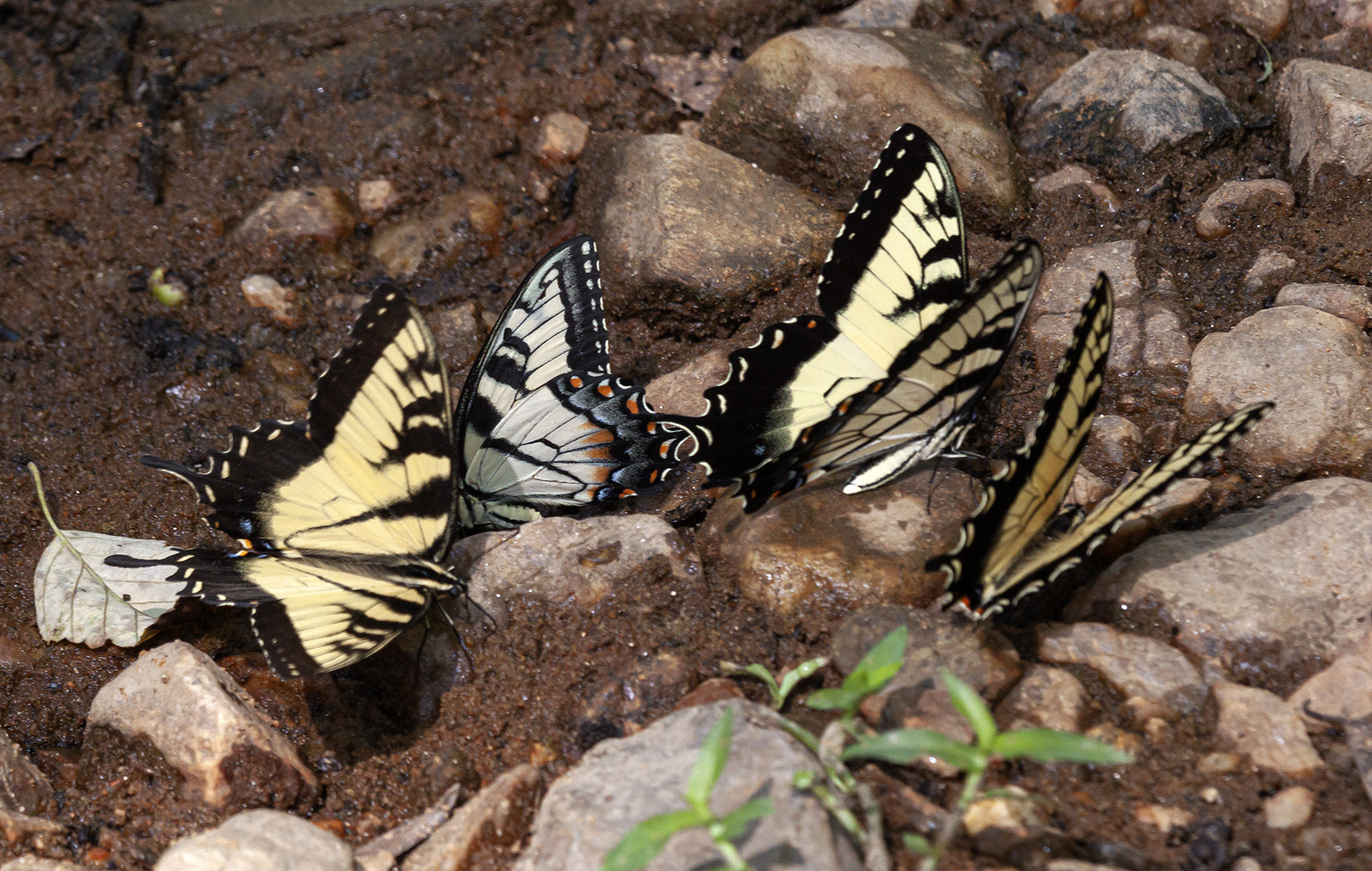
Most of us associate butterflies with flowers, but they sometimes can be found on the sandy banks of creeks, like this cluster of male Eastern Tiger Swallowtails (Papilio glaucus) that I spotted earlier this month in Prince William County, Virginia.
I went looking for information about this behavior and learned the following on the thoughtco.com website:
“Butterflies get most of their nutrition from flower nectar. Though rich in sugar, nectar lacks some important nutrients the butterflies need for reproduction. For those, butterflies visit puddles. By sipping moisture from mud puddles, butterflies take in salts and minerals from the soil. This behavior is called puddling, and is mostly seen in male butterflies. That’s because males incorporate those extra salts and minerals into their sperm. When butterflies mate, the nutrients are transferred to the female through the spermatophore. These extra salts and minerals improve the viability of the female’s eggs, increasing the couple’s chances of passing on their genes to another generation.”

© Michael Q. Powell. All rights reserved.
Posted in Butterflies, Insects, Nature, Photography, Summer, wildlife | Tagged Canon 50D, Eastern Tiger Swallowtail, Eastern Tiger Swallowtail butterfly, Papilio glaucus, Prince William County VA, puddling, Tamron 180mm | 6 Comments »
July 24, 2019 by Mike Powell
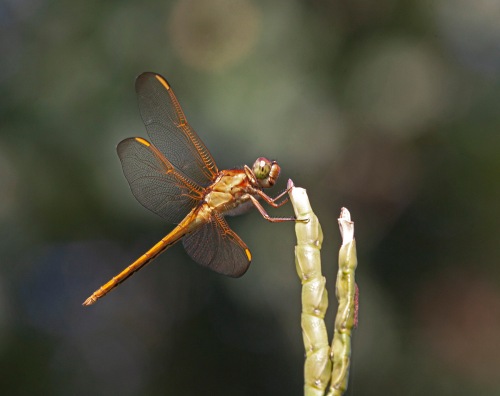
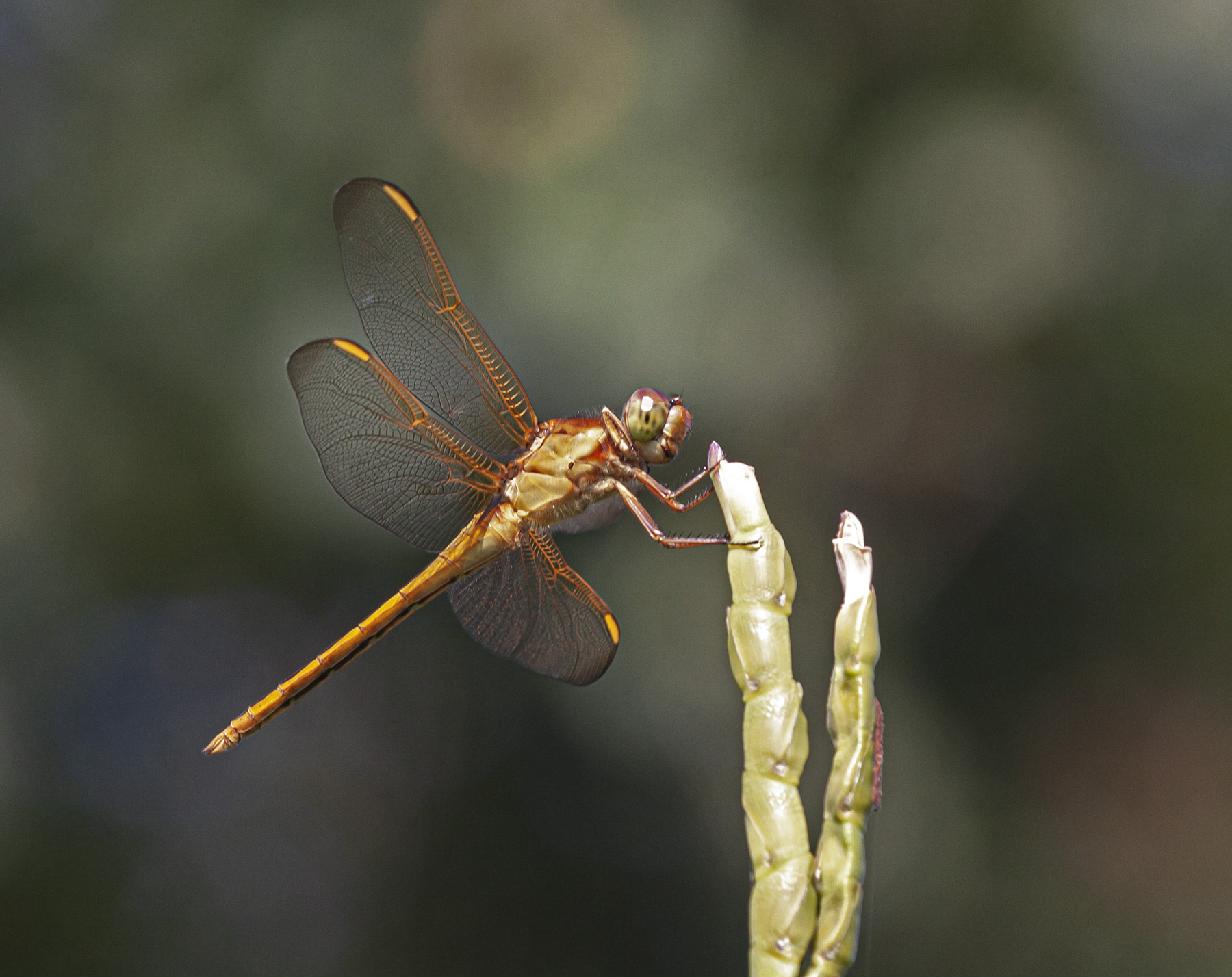
Last week I spotted this female Needham’s Skimmer dragonfly (Libellula needhami) at Occoquan Bay National Wildlife Refuge. The direct sunlight was a little harsh, but the high perch of the dragonfly allowed me to capture a beautiful, uncluttered background.
I love the golden edges of the wings of this species and the wonderful two-toned eyes of the females like this one. It was an additional bonus that she seemed to be smiling for her moment in the spotlight.
© Michael Q. Powell. All rights reserved.
Posted in Dragonflies, dragonfly, Insects, Nature, Photography, Summer, wildlife | Tagged Libellula needhami, Needham's Skimmer, Needham's Skimmer dragonfly | 6 Comments »
July 23, 2019 by Mike Powell
As I was walking along a trail last Tuesday at Occoquan Bay National Wildlife Refuge I heard the cry of an Osprey (Pandion haliaetus) that sounded like it was really close. I looked up, reacted quickly, and managed to capture this sequence of shots.
In many ways I should not have been able to get these shots. I had the wrong lens on my camera. Instead of a long telephoto lens, I had my 180mm macro lens. My camera settings were more appropriate for a static portrait than for a moving subject. Fortunately I almost always have my camera set for continuous shooting, so I was able to fire off a quick burst and was pretty pleased with the results.
These images remind me of the importance of taking photos whenever and however you can. Conditions may not be optimal and your gear may not be perfectly suited to the task, but I think it is best not to worry about that when you find yourself presented with a photo opportunity—just shoot it with what you have.


© Michael Q. Powell. All rights reserved.
Posted in Birds, Nature, Photography, Summer, wildlife | Tagged birds in flight, Canon 50D, Occoquan Bay National Wildlife Refuge, Osprey, osprey in action, Pandion haliaetus, Tamron 180mm, Woodbridge VA | 17 Comments »
July 22, 2019 by Mike Powell
What do you think is going on when you see this cluster of Silvery Checkerspot butterflies (Chlosyne nycteis)? Perhaps you think that they all are feeding on something particularly tasty. If you look closely you will noticed that they are facing in different directions and you get the feeling that something else is going on.
I had the benefit of seeing the situation unfold in front of my eyes. A few moments earlier I spotted the mating couple that you see in the second image. I do not see mating butterflies very often so my attention was very much focused on them. Suddenly another butterfly burst on the scene and attempted to turn this into a ménage à trois. In the first image, the interloper is the one on the left.
I suspect that the third butterfly is a male rival and he is trying to steal the female away. He made attempts from several angles to break apart the couple, but was not successful and eventually gave up. I decided that the couple needed some privacy, so I too departed.


© Michael Q. Powell. All rights reserved.
Posted in Butterflies, Insects, Nature, Photography, Summer, wildlife | Tagged Canon 50D, Chlosyne nycteis, ménage à trois, Occoquan Bay National Wildlife Refuge, Silvery Checkerspot, Silvery Checkerspot butterfly, Tamron 180mm, Woodbridge VA | 7 Comments »
July 21, 2019 by Mike Powell
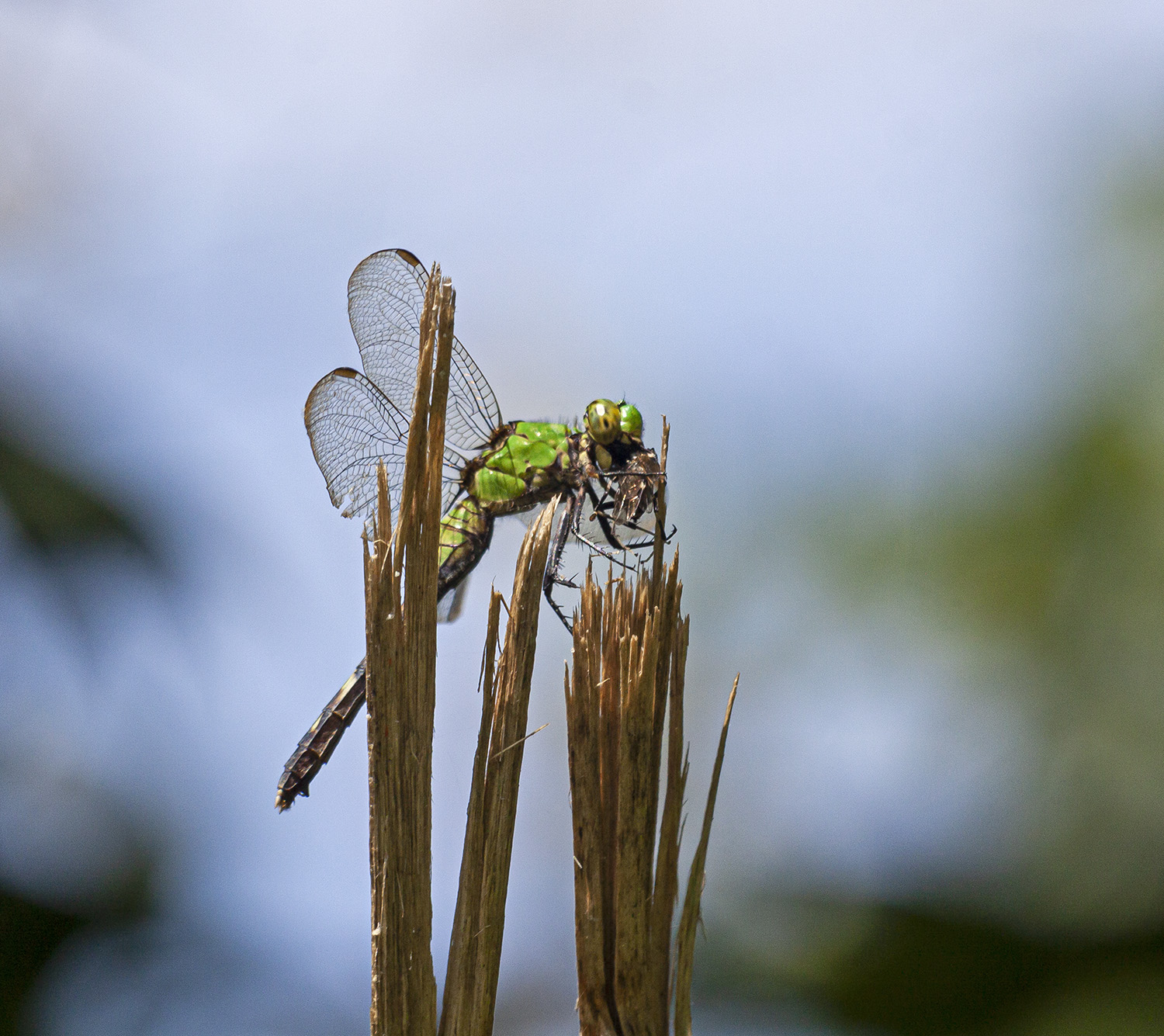
Eastern Pondhawk dragonflies (Erythemis simplicicollis) are voracious predators and I spotted this female pondhawk munching on another insect this past Tuesday at Occoquan Bay National Wildlife Refuge. At this time of the year the vegetation has grown high in many of the locations that I visit and I am now seeing more dragonflies perching at eye level or even higher. This heightened perspective allows me to get some cool, uncluttered backgrounds, like the one in this image that reminds me of a watercolor painting.

© Michael Q. Powell. All rights reserved.
Posted in Art, Dragonflies, dragonfly, Insects, Nature, Photography, Summer, watercolor, wildlife | Tagged Canon 50D, Eastern Pondhawk, Eastern Pondhawk dragonfly, Erythemis simplicicollis, Occoquan Bay National Wildlife Refuge, Tamron 180mm, Woodbridge VA | 15 Comments »
July 20, 2019 by Mike Powell
With all of the hot weather we have been having recently, I have absolutely no desire to be as busy as a bee. I spotted this bee busily at work this past Tuesday morning at Occoquan Bay National Wildlife Refuge.
Temperatures in our area are forecast to rise to 100 degrees (38 degrees C) today and the high humidity will make it feel even more intolerable. I will probably spend most of the days indoors, but fortunately I have plenty of recent photos in reserve that I can process and post.
This image is the kind of simple shot that I really like. I remember my sense of wonder the first time I used a macro lens and I still feel excitement when I immerse myself in the details that a macro lens reveals.

© Michael Q. Powell. All rights reserved.
Posted in Bees, Insects, Macro Photography, Nature, Photography, Summer, wildlife | Tagged bee, busy bee, Canon 50D, flower, Occoquan Bay National Wildlife Refuge, Tamron 180mm, Woodbridge VA | 11 Comments »
July 19, 2019 by Mike Powell
Dragonflies perch in a lot of different ways. Some perch at the top of vegetation, some perch in the middle, and some, like this Unicorn Clubtail dragonfly (Arigomphus villosipes) like to perch low to the ground or, in this case, to the surface of the water. I don’t see Unicorn Clubtails very often, so I was excited to see this one on Tuesday at Occoquan Bay National Wildlife Refuge in a marshy pond filled with lily pads.
I had two cameras with me when I encountered the dragonfly. The second image below shows the view from my DSLR with a 180mm macro lens. I really like the way that the shot gives you a sense of the environment and when I was processing the image I paid as much attention to the surroundings as I did to the dragonfly.
My Canon SX50 let me zoom in a lot closer to the dragonfly, as you can see in the first shot, and captured more details of the dragonfly. I like aspects of both images and think that together they provided complementary views of this wonderful dragonfly. You can’t really see it in these shots, but members of this species have a little protrusion in between their eyes, which prompted someone to name them “unicorns.”


© Michael Q. Powell. All rights reserved.
Posted in Dragonflies, dragonfly, Insects, Nature, Photography, Summer, wildlife | Tagged Arigomphus villosipes, Canon 50D, Canon SX50, Occoquan Bay National Wildlife Refuge, Tamron 180mm, Unicorn Clubtail, Unicorn Clubtail dragonfly, Woodbridge VA | 5 Comments »
July 18, 2019 by Mike Powell
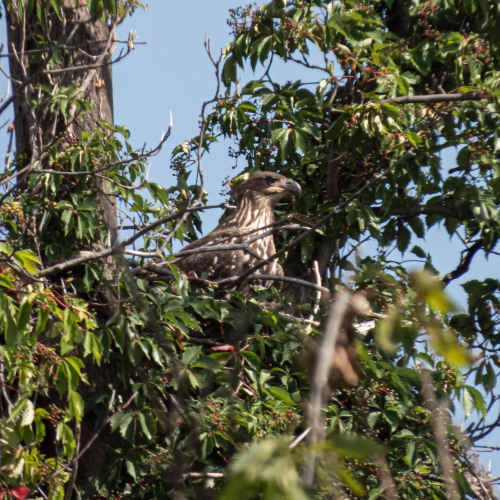
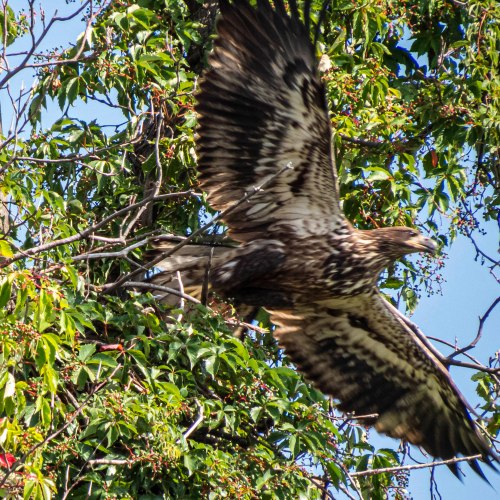
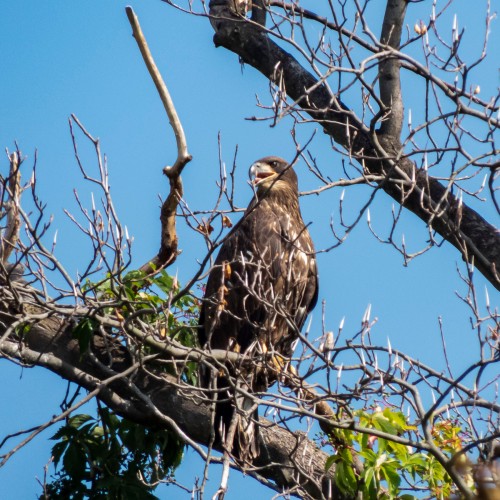
I was thrilled on Tuesday to get a glimpse of several juvenile Bald Eagles (Haliaeetus leucocephalus) at Occoquan Bay National Wildlife Refuge. I think that they are the eaglets that were born earlier this year and now it looks like they are almost fully grown. It will take a few more years, however, before they acquire the white feathers on their heads that make them look like they are bald.
The first eaglet was hanging out in the nest when I first spotted it, as you can see in the first shot. There is so much vegetation now that it is hard to see the nest, but I know that it is there. I wasn’t quite ready when the eagle took off so my second shot is a little blurry. I decided to included it, because it provides a pretty cool look at the feathers of this already majestic bird.
The final shot is of what I assume is one of the siblings of the eaglet in the first two shots. Based on a conversation that I had with one of the volunteers at the wildlife refuge, there may have been three eaglets at this nest this year (and two in a nest in another part of the refuge).
© Michael Q. Powell. All rights reserved.
Posted in Birds, Nature, Photography, Summer, wildlife | Tagged Bald Eagle, Canon SX50, eaglets, Haliaeetus leucocephalus, Occoquan Bay National Wildlife Refuge, Woodbridge VA | 4 Comments »
July 17, 2019 by Mike Powell
Yesterday I spotted this Common Wood Nymph butterfly (Cercyonis pegala) at the edge of a wooded area as I was exploring Occoquan Bay National Wildlife Refuge. Although the colors of this butterfly are somewhat muted, I really like the distinctive yellow patch that makes it easy to identify.
When I first saw the butterfly, it was on the ground and initially I was disappointed when it flew up into a tree. Fortunately, it perched on a leaf that was at eye level and I was happy to be able to capture this image.

© Michael Q. Powell. All rights reserved.
Posted in Butterflies, Insects, Nature, Photography, Summer, wildlife | Tagged Canon 50D, Cercyonis pegala, Common Wood Nymph, Common Wood Nymph butterfly, Occoquan Bay National Wildlife Refuge, Tamron 180mm macro, Woodbridge VA | 6 Comments »
July 16, 2019 by Mike Powell
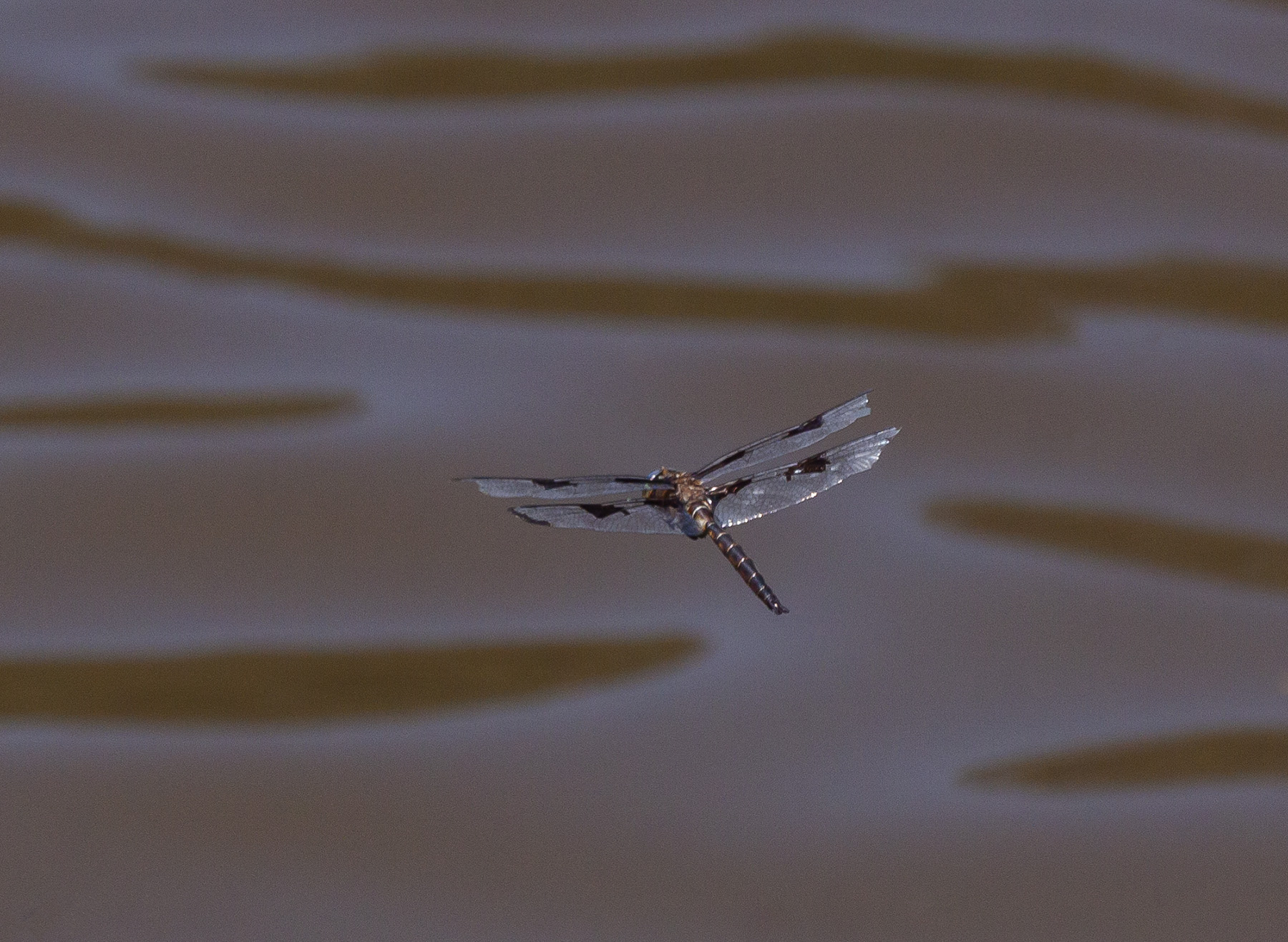
Life can be tough and can wear you down if you are a prince, at least if you are a Prince Baskettail dragonfly (Epitheca princeps). Last Saturday I spent a pretty good amount of time observing Prince Baskettails patrolling a pond at Jackson Miles Abbott Wetland Refuge.
As I am wont to do, I tried to photograph them in flight and managed to get a few shots in focus. As I reviewed the images, I couldn’t help but notice that the wings of all of the dragonflies were worn down and/or damaged. I am used to seeing such damage with dragonflies that fly through thickets and heavy vegetation, but I was a little surprised to see it with dragonflies that seem to spend most of the time flying over open water.
As we move deeper into summer, I am certain to encounter more and more dragonflies with damaged wings. I am always amazed to see that such dragonflies are still capable of amazing aerial acrobatics despite their physical limitations—somehow they manage.


© Michael Q. Powell. All rights reserved.
Posted in Dragonflies, dragonfly, Insects, Nature, Photography, Summer, wildlife | Tagged Canon 50D, Epitheca princeps, Fort Belvoir VA, Jackson Miles Abbott Wetland Refuge, Prince Baskettail, Prince Baskettail dragonfly, Tamron 180mm | 5 Comments »
July 15, 2019 by Mike Powell
Last Saturday I spotted this Pearl Crescent butterfly (Phyciodes tharos) on what looks to be a Black-eyed Susan flower (Rudbeckia hirta) at Jackson Miles Abbott Wetland Refuge. Initially the butterfly’s wings were open, which made for an ok shot. When the butterfly partially closed its wings, however, the light coming from the back helped to illuminate one wing like a stained glass window.
It is amazing how a slight change in the position of a subject can radically change the feel of an image—that is one of the reason why I like to shoot in short bursts, hoping to capture a variety of poses in a short period of time.

© Michael Q. Powell. All rights reserved.
Posted in Butterflies, Flowers, Nature, Photography, Summer, wildlife | Tagged black-eyed susan, Canon 50D, Fort Belvoir VA, Jackson Miles Abbott Wetland Refuge, Pearl Crescent, pearl crescent butterfly, Phyciodes tharos, Rudbeckia hirta, Tamron 180mm | 8 Comments »
July 14, 2019 by Mike Powell
Normally a dragonfly’s abdomen is straight. Occasionally, though, I encounter one with an abdomen that has a noticeable curve, like this male Eastern Pondhawk dragonfly (Erythemis simplicicollis) that I spotted yesterday at Jackson Miles Abbott Wetland Refuge. (For those of you not familiar with dragonfly anatomy, the upper portion of the body is the thorax and the lower two-thirds is the abdomen.)
I suspect that the curvature was the result of a problem that occurred when the dragonfly was first emerging. It does not seem to have any effect on his ability to fly or to catch prey, but it might pose a problem when he attempts to mate.

© Michael Q. Powell. All rights reserved.
Posted in Dragonflies, dragonfly, Insects, Nature, Photography, Summer, wildlife | Tagged Canon 50D, Eastern Pondhawk, Eastern Pondhawk dragonfly, Erythemis simplicicollis, Fort Belvoir VA, Jackson Miles Abbott Wetland Refuge, male Eastern Pondhawk, Tamron 180mm | 3 Comments »
July 13, 2019 by Mike Powell
Should I present a subject in landscape mode or portrait mode? That is a question I face frequently when I am composing photos initially and later when I am processing the images. Some subjects or scenes lend themselves naturally to one of the modes, but often it is not clear which one will be more effective. I remember reading somewhere that it is best to take shots from multiple angles, at varying distances, and using multiple modes and I try to follow that advice whenever I can.
This past week I encountered a large dragonfly as I was exploring a small creek in Prince William County, Virginia. The creek was mostly in the shadows and I was unable to identify the species of the dragonfly until it perched on a sun-lit tree. Then it was easy to determine that it was a Gray Petaltail dragonfly (Tachopteryx thoreyi).
The dragonfly was pretty cooperative and I was able to take multiple shots, two of which I have included in this posting. From an artistic perspective I particularly like the first image, which gives equal weight to the dragonfly and to the environmental elements. The second image draws your attention more to the details of the dragonfly and give greater emphasis to the texture of the tree.
Are you drawn more to one of the two images? If so, why? I know how I react to my own images and am always curious to hear what you think and/or feel about them.


© Michael Q. Powell. All rights reserved.
Posted in Dragonflies, dragonfly, Insects, Nature, Photography, Summer, wildlife | Tagged Canon 50D, Gray Petaltail, Gray Petaltail dragonfly, Prince William County VA, Tachopteryx thoreyi, Tamron 180mm | 21 Comments »
July 12, 2019 by Mike Powell
A couple of weeks ago I posted a photo of a Black-shouldered Spinyleg dragonfly (Dromogomphus spinosus) that prompted one of my readers, Molly Lin Dutina of Treasures in Plain Sight, to comment, “Spinyleg —sounds like something a child would be afraid of!” That photo, alas, did not give a very good view of the spiny legs.
This week, however, as I was exploring a creek in Prince William County, Virginia, I was fortunate to capture some images of a Black-shouldered Spinyleg that show off those fearsome spines. If you click on the image below and focus your attention on the back legs, you will see the long pointed spines that help the dragonfly hold on to prey.
Ouch!

© Michael Q. Powell. All rights reserved.
Posted in Dragonflies, dragonfly, Insects, Nature, Photography, Summer, wildlife | Tagged Black-shouldered Spinyleg, Black-shouldered Spinyleg dragonfly, Canon 50D, Dromogomphus spinosus, Prince William County VA, Tamron 180mm | 4 Comments »
July 11, 2019 by Mike Powell
Yesterday as I was exploring a creek in Prince William County, Virginia I spotted this large damselfly. I marveled at its beautiful coloration and was happy to be able to capture an image that shows it off well. At the time I took the photo I was not certain of the species, but when I returned home and looked in my damselfly book, I learned that it is a male Powdered Dancer damselfly (Argia moesta).
As a Powdered Dancer male gets older, its thorax and the tip of its abdomen become covered with a powdery blue or gray substance in a process known as pruinescence. Eventually the male will look almost white, which makes it even easier to identify. So many damselflies have a lot of blue on their bodies that it is hard for me to be confident in my identification when I see a damselfly with blue coloration.

© Michael Q. Powell. All rights reserved.
Posted in damselfly, Insects, Nature, Photography, Summer, wildlife | Tagged Argia moesta, Canon 50D, Powdered Dancer, Powdered Dancer damselfly, Prince William County VA, Tamron 180mm | 4 Comments »
July 10, 2019 by Mike Powell
During the hot, humid days of mid-summer, I often hear the sounds of birds, but rarely see them. Although I may be out in the blazing sun, most of the birds seem to use common sense and take shelter in the shade of the trees.
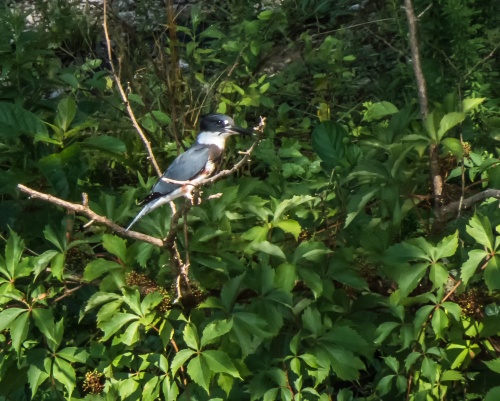
Last week as I was exploring Jackson Miles Abbott Wetland Refuge, I heard the unmistakable call of a kingfisher and caught a glimpse of it skimming across the water of a small pond. I was a bit surprised when it chose briefly to perch in a small tree overhanging the water. I was a long way away, but had a clear line of sight and captured this image of the female Belted Kingfisher (Megaceryle alcyon). I can tell that it is a female because I can see a reddish-colored band across its chest that the male lacks.
Many of you know that I photograph birds more frequently during the winter months, when insects disappear and the lack of foliage makes it easier to spot the birds. Throughout the year, however, I try to be ready in case a bird decides to be cooperative and poses for me.
© Michael Q. Powell. All rights reserved.
Posted in Birds, Nature, Photography, Summer, wildlife | Tagged Belted Kingfisher, Canon SX50, female Belted Kingfisher, Fort Belvoir VA, Jackson Miles Abbott Wetland Refuge, kingfisher, Megaceryle alcyon | 9 Comments »
« Newer Posts - Older Posts »
















 Mike Powell