November 12, 2012 by Mike Powell
It was a beautiful weekend and I did a lot of walking. I came across an assortment of ducks, including some Hooded Merganser ducks (Lophodytes cucullatus). Most of my photos of them were from a good distance away, so I may need to work on them before I post them. This image was in such a beautiful setting that I thought I’d post it first. (It looks better if you click on it and see it in greater resolution.) I took this photo from a little bridge looking down on the ducks, which is why the heads do not have the distinctive look associated with Hooded Merganser ducks. I’m making the call on the identification on basis of the color and markings, but would welcome a correction if I am mistaken.

Hooded Merganser ducks in a stream
© Michael Q. Powell. All rights reserved.
Posted in Birds, Landscape, Nature, Photography | Tagged Canon 55-250mm zoom lens, Canon Rebel XT, fall, Hooded Merganser, Hooded Merganser ducks, reflection | 1 Comment »
November 12, 2012 by Mike Powell
Yesterday afternoon, I took some photos of a Great Blue Heron (Ardea herodias) in the little pond in my suburban neighborhood. He seemed amazing mellow and content to relax in the shade. Consequently, he was pretty tolerant of my presence and that of the nearby Canada Geese. Here’s a sneak preview of the shoot, an image that captures the heron with the reflections of the remaining fall foliage.

Fall reflection of a Great Blue Heron
© Michael Q. Powell. All rights reserved.
Posted in Birds, Nature, Photography, wildlife | Tagged Ardea herodias, Canon 55-250mm zoom lens, Canon Rebel XT, fall reflection, Great Blue Heron, heron, Kingstowne, reflection | 4 Comments »
November 11, 2012 by Mike Powell
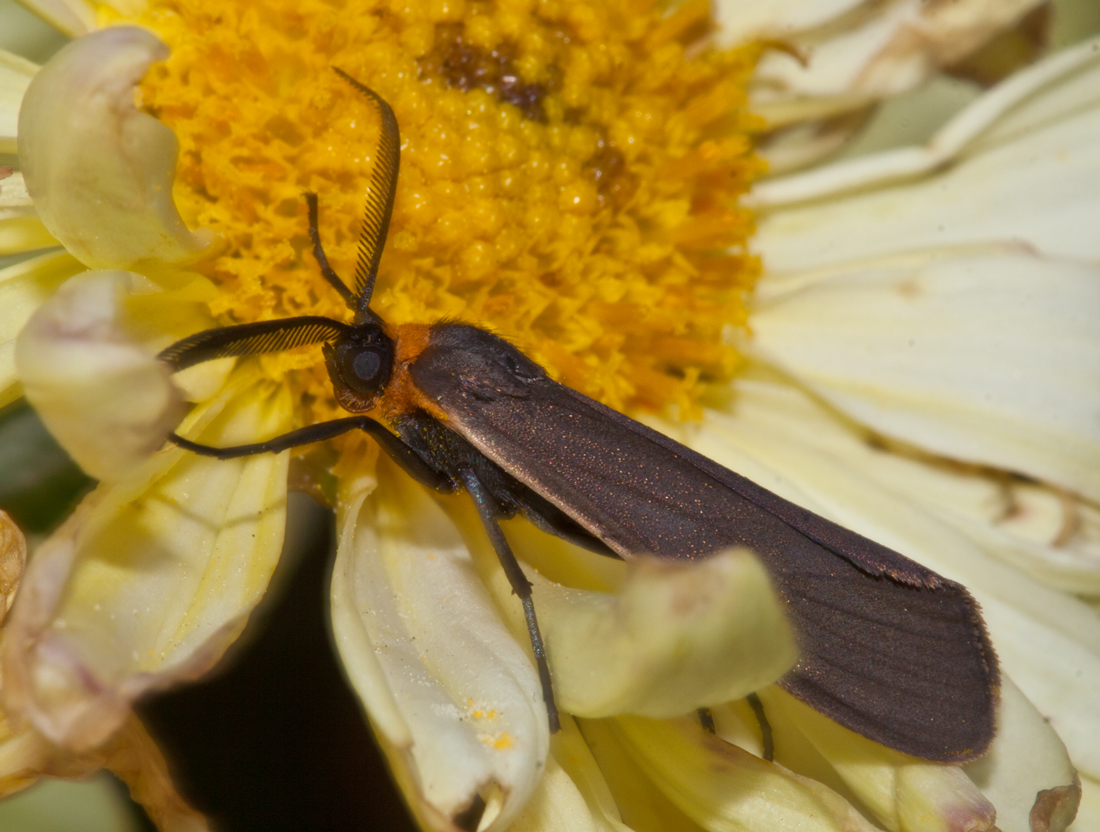
The light was starting to fade when I spotted a large insect on a flower. I already had my macro lens on my camera and my tripod was with me, so I thought I’d try to get some shots of the specimen.
To give myself a chance at a decent depth of field, I set the camera at f/18 and then dropped the ISO to 100 for the best possible quality. Finally, I decided to use my pop-up flash (at its lowest setting) to add a little light. I was in aperture priority mode, so I let the camera choose the shutter speed. I figured the shutter speed would be pretty slow, so I used the self-timer to minimize movement. The camera chose an exposure of 30 seconds.
Do you know how long 30 seconds feels as you check the insect to see if he is moving and hope that the wind will not blow? I took a couple of shots and got some pretty good results. Before I show you the entire insect, I’ll show you a close-up of the face. The antennae are amazing and the eyes are pretty cool looking too.
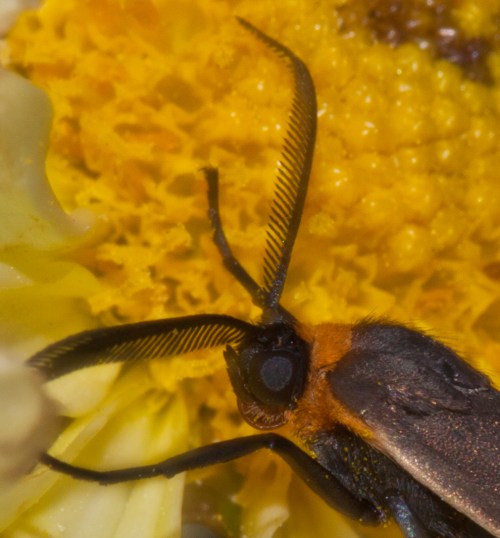
Close-up shot of really cool insect
So, what kind of an insect is this? It is a Yellow-collared Scape Moth (Cisseps fulvicollis). Yes, for those of you interested in collar ID, I realize that it is more orange than yellow, but even Bugguide acknowledges that it would be more appropriate to call it “orange-collared.” You can’t help but notice the amazing antennae with teeth like a comb—the technical term for antennae like this is “pectinate.”
Here is a photo of the entire insect. Sharp-eyes readers will notice that the first photo is merely a blow-up of a portion of this image. You can see the light shadow from the flash, but it seems to have helped reveal an amazing amount of detail. Surprisingly, it looks like neither the insect or the plant moved during the exposure.
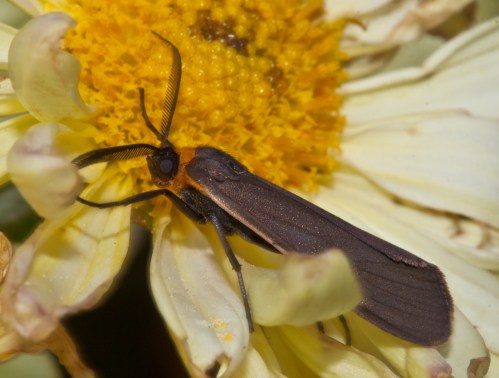
Yellow-collared Scape Moth
I have a lot to learn about using a flash for extra illumination for macro shots, but this image convinced me that it can be beneficial, though I probably need to diffuse the light and use off-camera flash.
© Michael Q. Powell. All rights reserved.
Posted in Bugs, Insects, Macro Photography, Nature, Photography | Tagged Canon 55-250mm zoom lens, Canon Rebel XT, Cissepsfulvicollis, comb-like antennae, green spring gardens, long exposure, pectinate antennae, Yellow-collared Scape Moth | 7 Comments »
November 11, 2012 by Mike Powell
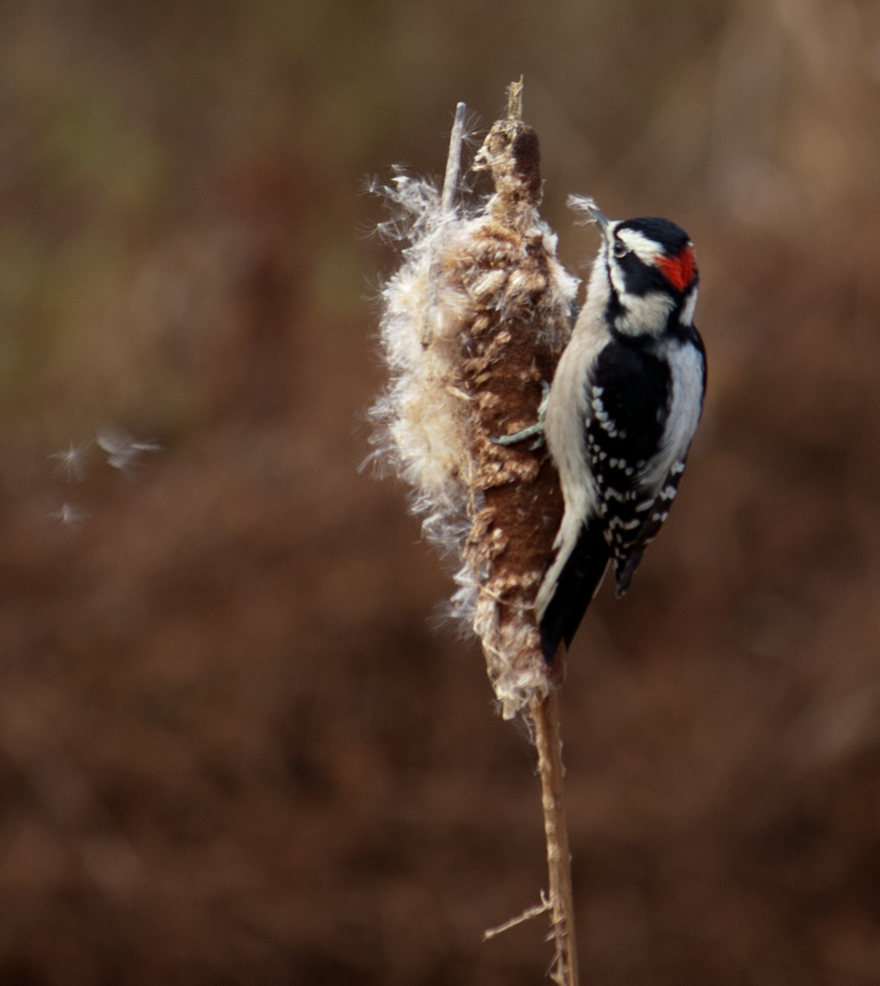
If I were a woodpecker, I would want to be a male Downy woodpecker (Picoides pubescens) and slam my head into something soft as a pillow—like this cattail—and not always into solid wood. Of course, you can end up with a mouthful of cattail fibers, and not just a tasty bug.

Downy woodpecker with mouthful of cattail

Downy woodpecker on cattail
More seriously, scientists are doing research to figure out why woodpeckers don’t end up with concussions, given that they can slam their heads into wood with the force of 1,000 times that of gravity, according to an article on livescience.com. By comparison, humans can survive a force of up to G’s, according to Air Force research, though there are reports of race car drivers surviving a force of over 100 G’s. According to the article, Chinese researchers are studying the microscopic structure of the bones surrounding the brain and also the beak to try to understand how the woodpecker’s brain is protected. If you are interested in the research, an article on a website called Inkfish explains in layman’s terms the research methodology and some of the preliminary conclusions.
© Michael Q. Powell. All rights reserved.
Posted in Birds, Bugs, Flowers, Gardening, Insects, Photography, poetry | Tagged birds, Canon 55-250mm zoom lens, Canon Rebel XT, cattail, Downy Woodpecker, Huntley Meadows Park, Picoides pubescens, woodpecker | 7 Comments »
November 10, 2012 by Mike Powell
After a frosty start, today was the warmest it’s been in a while, partly sunny with highs above 60 degrees F (about 16 degrees C). As the sun was starting to set, I decided to be a little creative and see if I could highlight a single leaf with the colorful sky in the background. I found a suitable tree without too much problem, but finding a leaf at the right height with an unobstructed background was a little tricky. I happened to have my 100mm macro lens on the camera and decided to go with that. I knew that I would need to use a little flash on the leaf to keep it from getting lost in the shadows. I used settings of ISO 100, F32, and 8/10 sec to get the effect and tweaked the image slightly in Photoshop Elements, though I chose not to crop at all. Here’s a couple of shots of my experiment. (In case you are curious, the leaf is still attached to the tree, even though it looks like I am merely holding it in from of the lens.)


© Michael Q. Powell. All rights reserved.
Posted in Art, Flowers, Gardening, Landscape, Nature, Photography | Tagged autumn, Canon 100mm macro lens, Canon Rebel XT, green spring gardens, leaf, sunset | 3 Comments »
November 10, 2012 by Mike Powell
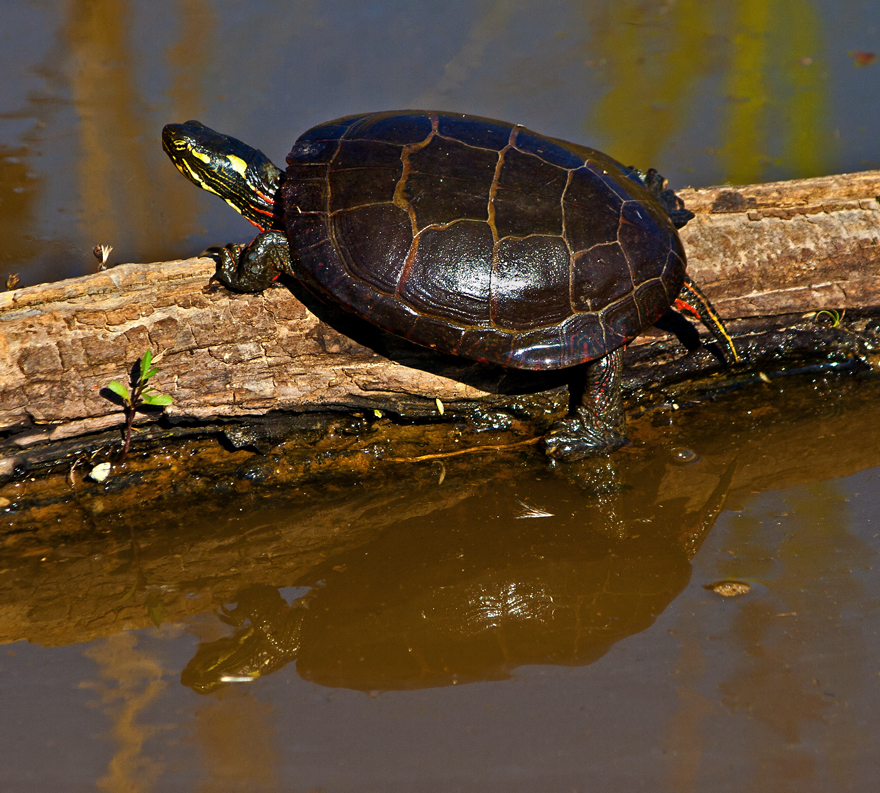
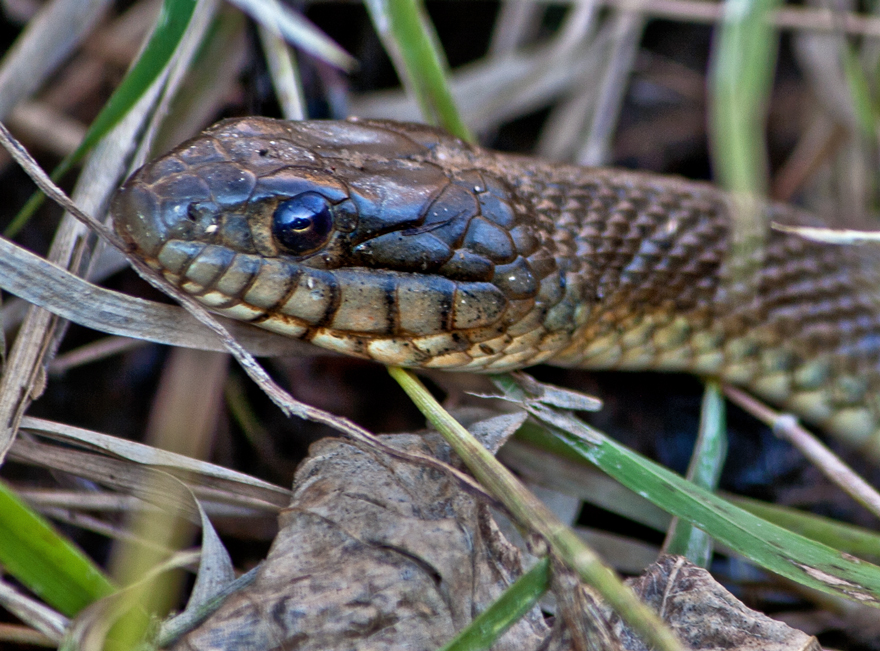
I haven’t seen a frog in a couple of weeks, but the turtles and snakes still make an appearance when the sun is high overhead, seeking somehow to warm themselves in the rays of the sun.
The first shot is a red-eared slider turtle (Trachemys scripta elegans), a type that I have featured before in blog posts. I find them to be amazingly photogenic. In this shot, I particularly love the reflection that he is casting. The blue of the water is a little unusual and reminds me a little of some of Monet’s paintings in which he used a similar blue.
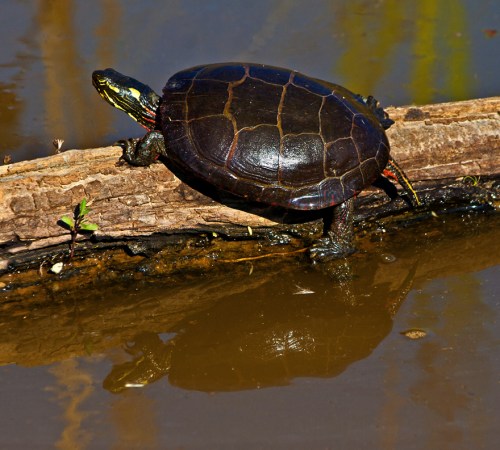
Sunning turtle in the fall
The second image is a head shot of a Northern Water snake (Nerodia sipedon). He was stretched out in a grassy portion of the marsh, probably trying to expose the maximum amount of his body to the sun. I got down pretty low to get the shot and, as you can see, the grass made it difficult to get an unobstructed shot.

Sunning snake in the fall
© Michael Q. Powell. All rights reserved.
Posted in Art, Nature, Photography, Reptiles, wildlife | Tagged Monet, Nerodia sipedon, Northern Water Snake, red-eared slider, red-eared slider turtle, snake, Trachemys scripta elegans), turtle, water snake | 2 Comments »
November 10, 2012 by Mike Powell
Last weekend, I took some shots of Multicolored Asian Lady Beetles (Harmonia axyridia) in the larval and pupal stage and discussed the phases of ladybug development in a post called Baby Ladybugs. Yesterday, I returned to see if I could find any fully developed ladybugs that had been in pupae the last time I encountered them. (Yes, I realize I would not be able to recognize them individually, but it’s nice to imagine that we’re gradually getting to know each other.)
So, what happened? I left the shoot thinking that I had not seen any adult ladybugs, but when I looked at some of the photos on my computer of different pupae, I was uncertain. Right outside of an empty pupa shell in one of the photos is something that looks like an adult ladybug, if I squint my eyes, tilt my head, and use a little imagination. What do you think?
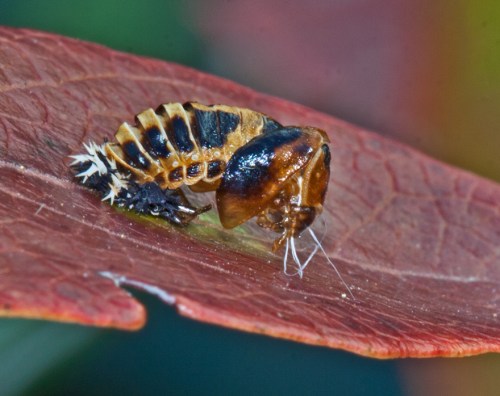
Newly emerged ladybug?
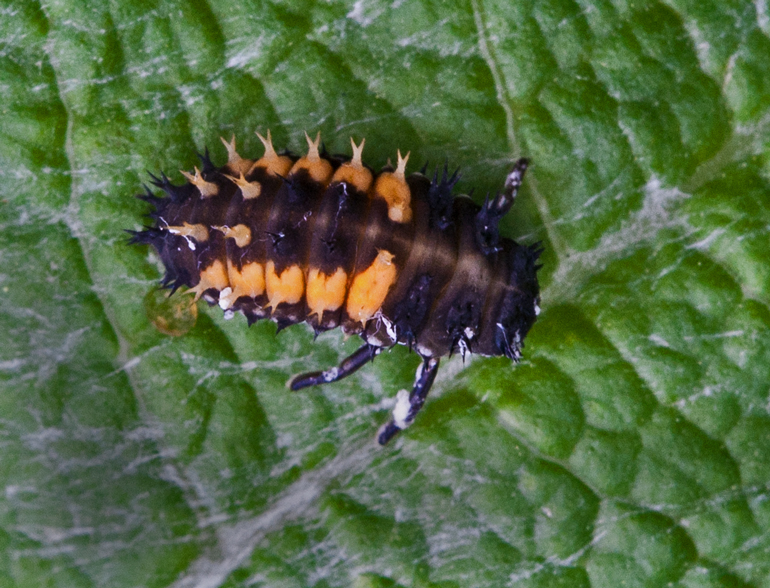
If you haven’t been following this story, let me catch you up with a couple of photos. (I feel like I’m doing an intro for a new television series, Lifestyles of the Ladybug.) Ladybugs start out as eggs and them become larvae. As they grow, they molt several times and each time they develop a new exoskeleton. Yesterday, I saw quite a few discarded skins that, at first glance, looked a lot like the larvae themselves. Here is what a ladybug larva looks like in a later phase of development. (I took some new shots of the larvae and pupae yesterday.) They are not as cute in this stage as they will become as adult ladybugs.

Ladybug larva
Once they are fully grown, the larvae enter into a pupal stage, somewhat akin to the cocoons into which caterpillars develop into butterflies. The pupae look a little bit like ladybugs themselves and are attached to leaves. While they are in this phase, the metamorphosis takes place in which they turn into ladybugs. Here is my favorite shots of a ladybug pupa.
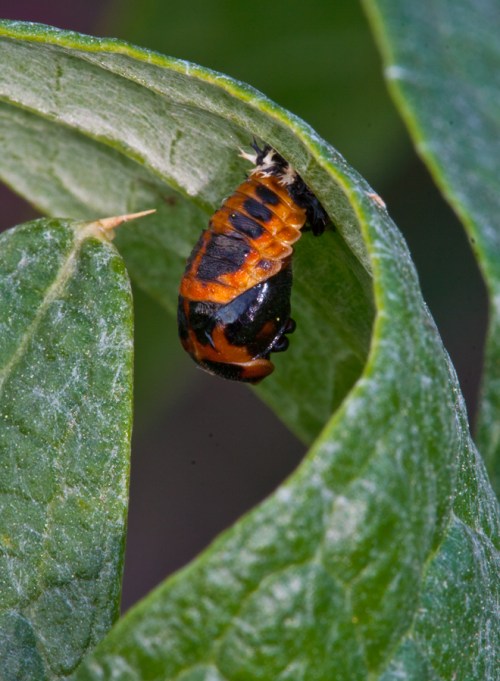
Ladybug pupa
After about five days, a ladybug emerges from the pupa. According to ladybug-life-cycle.com, “When the metamorphosis is complete, the skin of the larvae will split open and the full grown ladybug will emerge, but it still won’t look like the ladybug that you know so well. It will look soft and pink or very pale for a couple of hours until its shell becomes hard.”
Was I really lucky enough to catch the ladybug just after it had emerged from the pupa? My response is a firm, “Maybe,” but others with more experience may be able to respond more definitively. Here is one last photo of the possible new ladybug, from a slightly different angle than the first photo, to help your deliberations.
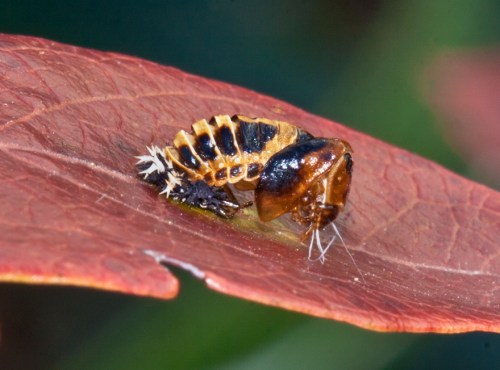
Welcome to this world
© Michael Q. Powell. All rights reserved.
Posted in Bugs, Insects, Macro Photography, Nature, Photography | Tagged Canon 100mm macro lens, Canon Rebel XT, emerging, green spring gardens, Harmonia axyridis, ladybug, larva, Multicolored Asian Lady Beetle, pupa | 8 Comments »
November 9, 2012 by Mike Powell
Looking for subjects to shoot this morning, I happened to look up and saw a large bird soaring on the wind, headed in my direction. My heart raced a little as I made a quick setting adjustment on my camera, because I figured the bird with the impressive wingspan was perhaps an eagle or at least some kind of hawk.
I was a little disappointed initially when I discovered later that the bird was “only” a turkey vulture (Cathartes aura). After a while, though, the wings and feathers and the coloration started to grow on me and I realized that the turkey vulture has a beauty all its own. (In some ways I might compare it to some of the wild turkeys that some of my fellow bloggers have featured recently in their postings—suffice it to say the turkeys are not traditionally beautiful.)
I’m still working on photographing birds in flight, but it sure is a lot easier when a bird is soaring like this one, not flying at full speed.

Turkey vulture in the fall

Turkey vulture at Huntley Meadows Park

Turkey vulture soaring on the wind
© Michael Q. Powell. All rights reserved.
Posted in Birds, Nature, Photography, wildlife | Tagged buzzard, Canon 55-250mm zoom lens, Canon Rebel XT, Cathartes aura, Huntley Meadows Park, turkey buzzard, turkey vulture, vulture | 6 Comments »
November 9, 2012 by Mike Powell
When I first saw this insect, my initial thought was to wonder about its identification—I still don’t have an answer to that quandary. My second thought was that it would be cool to try to take a photo looking into the flower from just over the edge of one row of petals, which were standing almost straight up. I’m still a relative neophyte with my macro lens, and depth of field and critical focus are sometimes real problems.
I am pretty happy with the results I achieved in capturing images consistent with my mental picture. The first photo is the closest to what I had in mind, but I also like the position of the insect in the second photo.


© Michael Q. Powell. All rights reserved.
Posted in Bugs, Flowers, Gardening, Insects, Macro Photography, Nature, Photography | Tagged bug, Canon 55-250mm zoom lens, Canon Rebel XT, flower, green spring gardens, orange flower, perspective, unknown | 7 Comments »
November 8, 2012 by Mike Powell
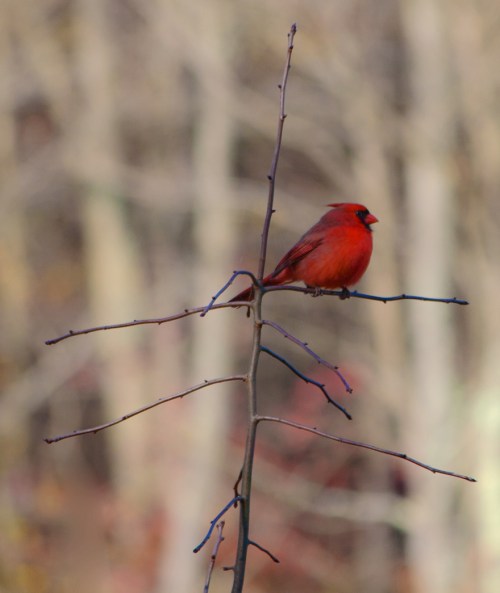
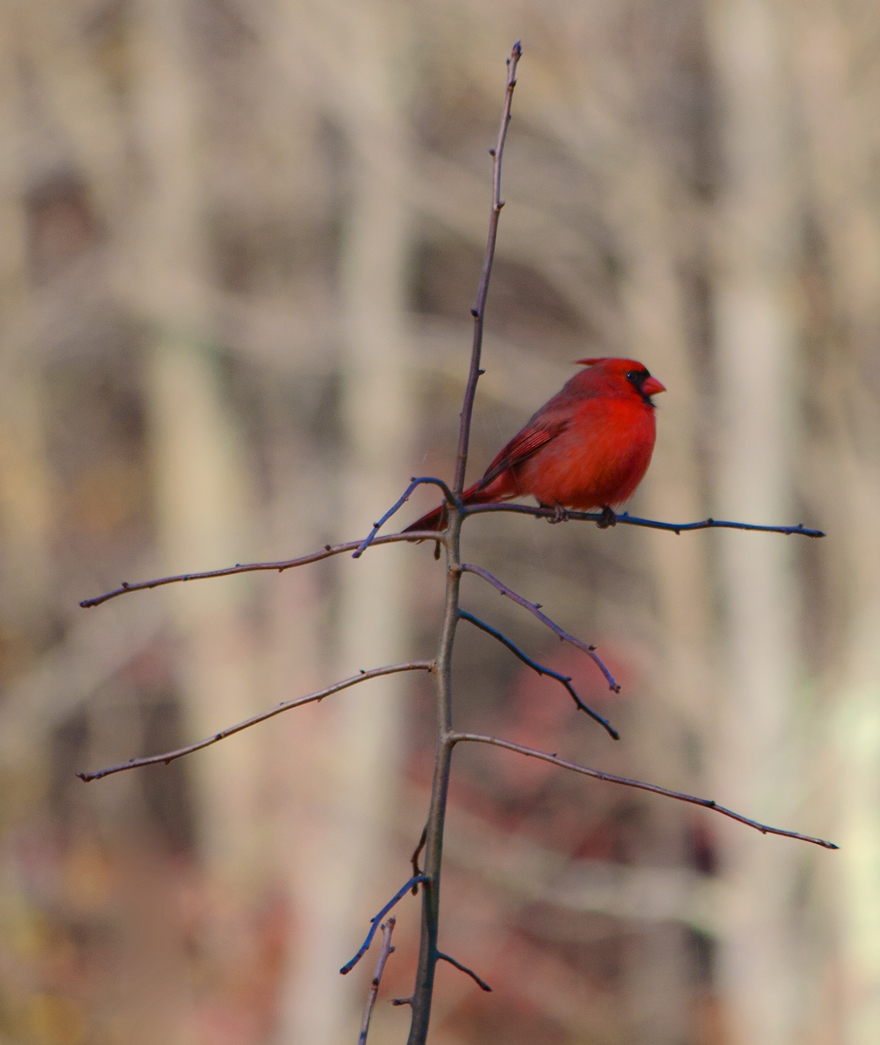
It’s difficult enough for a bright red cardinal to hide when there are lots of leaves on a tree, but when the leaves are gone, it’s impossible.
© Michael Q. Powell. All rights reserved.
Posted in Birds, Nature, Photography, wildlife | Tagged Canon 55-250mm zoom lens, Canon Rebel XT, cardinal, Huntley Meadows Park, Northern cardinal | 7 Comments »
November 8, 2012 by Mike Powell
Sometimes my eye is drawn to the shapes and colors and textures of objects more than to the objects themselves. The result can be a somewhat abstract looking photo, which is very different from what I usually shot. Here are couple of photos of that ilk from a trip last week to a local garden.
The first was taken looking through a ground-level weathered weathervane and the framing of the shot is just as it came out of the camera. I like the contrast between the light and the shadows and between the rust and the blurry natural colors in the background.
The second is a shot of a feathery looking yellow plant in which I narrowed the depth of field to isolated a few of the yellow needles and the reddish branch. I like the variations of color in the photo and the blurry repetitions of the foreground shapes and colors that can be found in the background.

Weathered weathervane

Abstract yellow
© Michael Q. Powell. All rights reserved.
Posted in Art, Flowers, Gardening, Landscape, Macro Photography, Photography | Tagged abstract, Canon 100mm macro lens, Canon Rebel XT, color texture, green spring gardens, rust, shap, weathervane, yellow | 5 Comments »
November 7, 2012 by Mike Powell
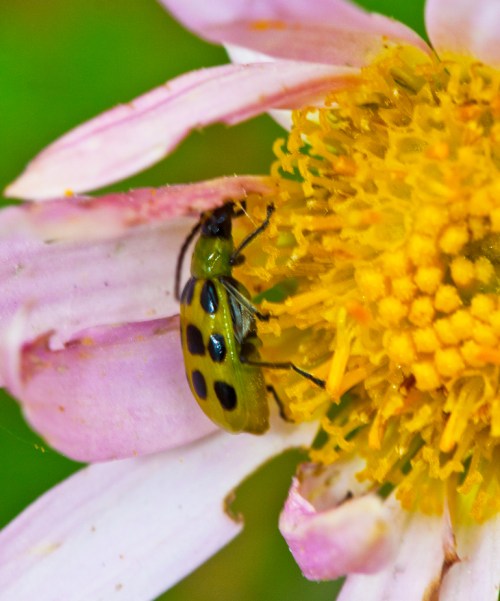
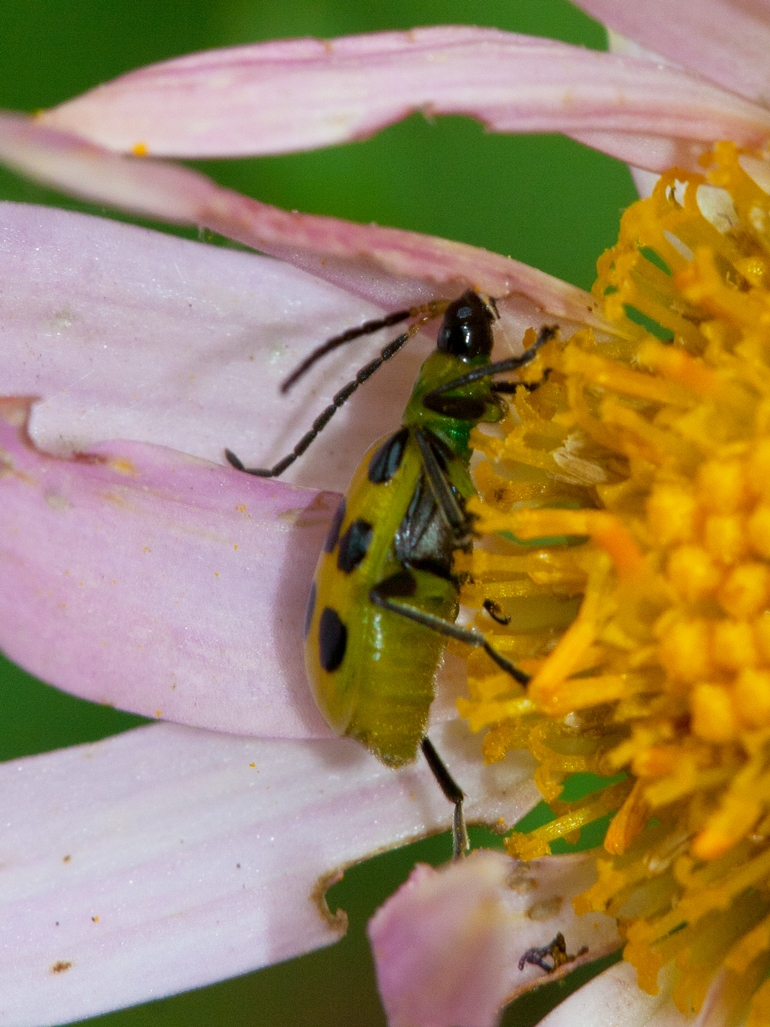
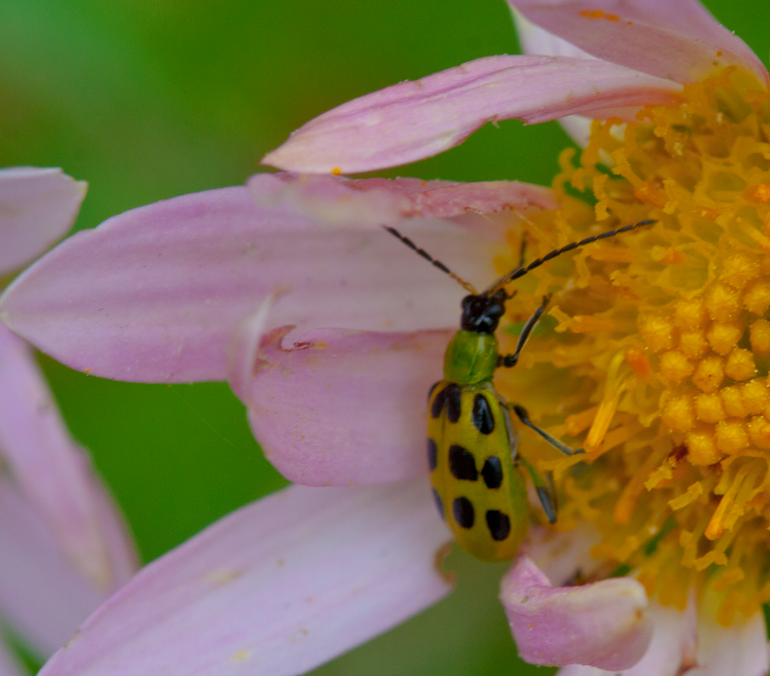
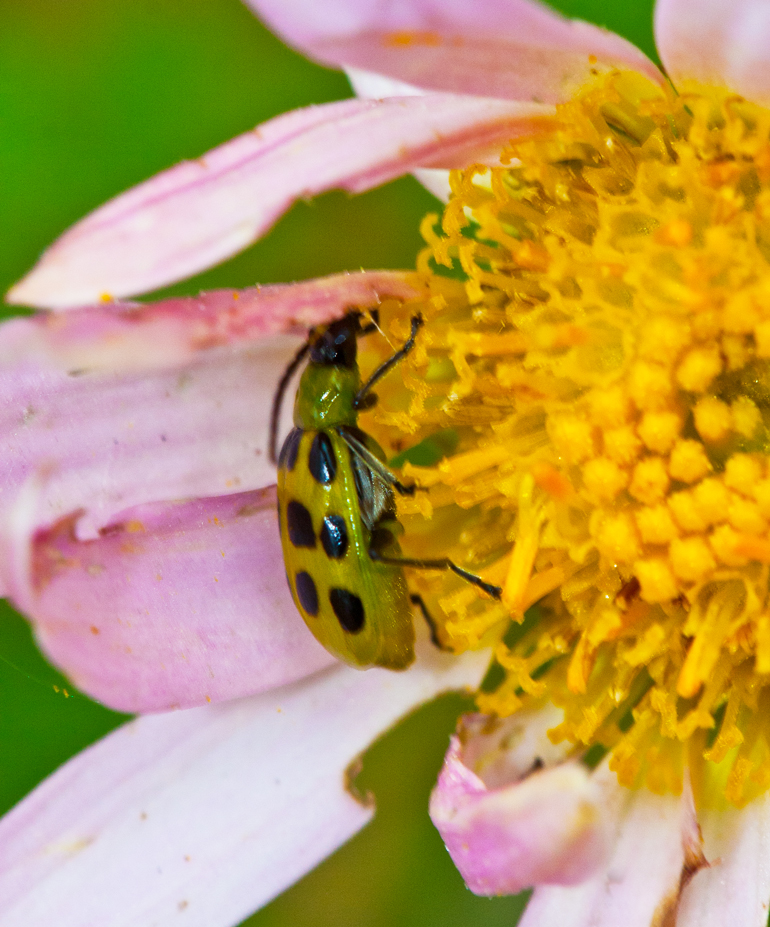
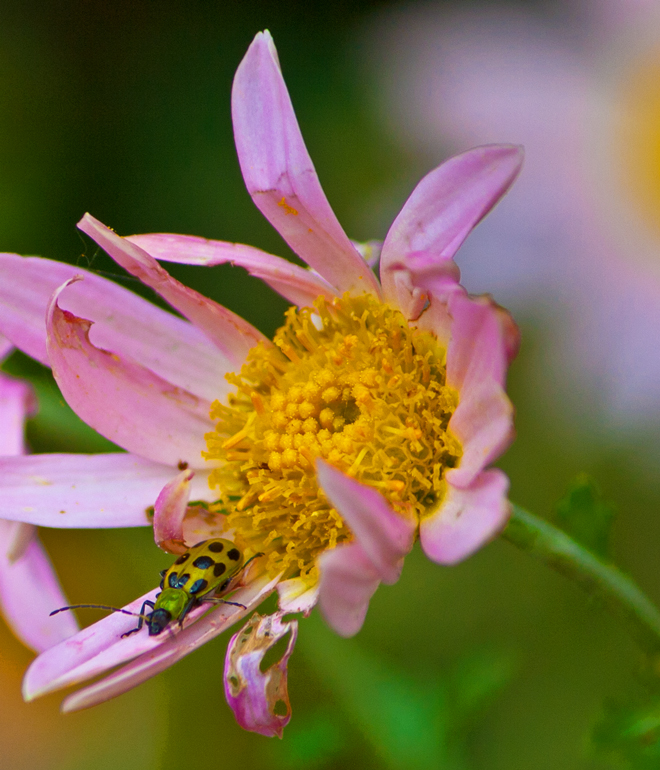
It seems that as long as plants are blooming, some insects, especially those considered to be pests, will continue to be active. This past weekend as I was looking at flowers at a local garden, I spotted a familiar insect, the Spotted Cucumber beetle (Diabrotica undecimpunctata). I consider this beetle to be attractive, with his different shades of green and multiple black spots, but recognize that it causes a lot of destruction (and you can see some of the petals of the flower that it has chewed through).
Several cucumber beetles were on the flowers and I was able to get some pretty good shots with my 100mm macro lens, a lens that has fallen into disuse as I have focused more of my attention on birds. The photos show the beetles in several different “poses”—I especially like the first one that seems to have caught the beetle as he is chewing on the flower. You may want to click on the photos to see higher resolution views.



© Michael Q. Powell. All rights reserved.
Posted in Bugs, Flowers, Gardening, Insects, Macro Photography, Nature, Photography | Tagged beetle, Canon 100mm macro lens, Canon Rebel XT, cucumber beetle, Diabrotica undecimpunctata, green spring gardens, spotted cucumber beetle | 6 Comments »
November 7, 2012 by Mike Powell
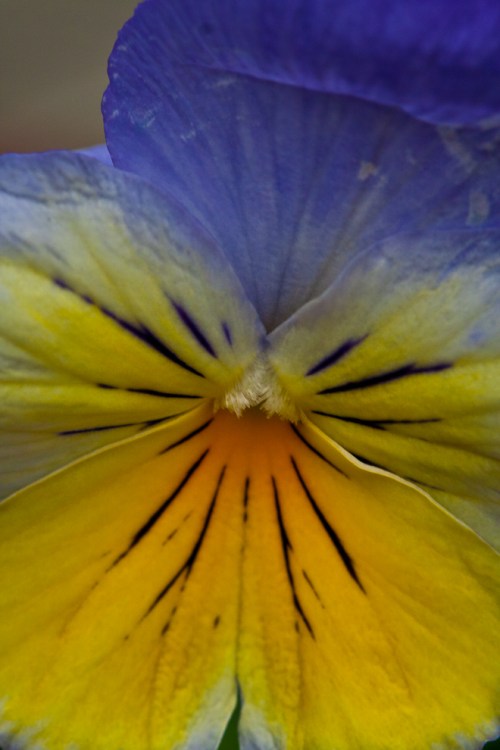
During a walk this past weekend through a local garden, I was surprised at how many flowers were still blooming (or were newly blooming). Here is a somewhat random assortment of photos of those flowers, some of which I can identify such as a zinnia and a pansy, but others are nameless beauties to me.
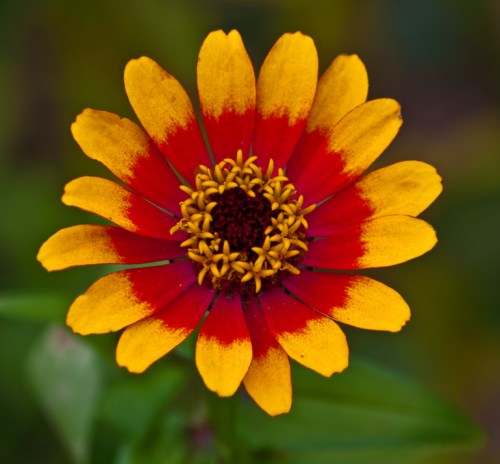
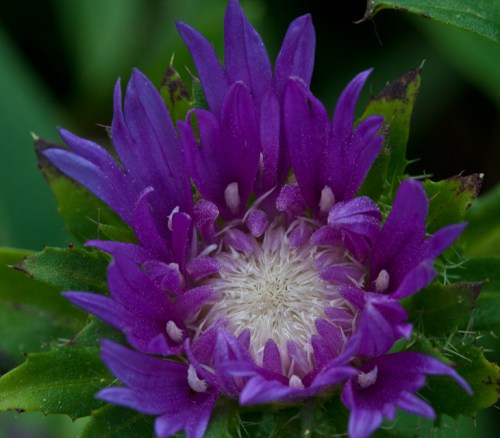
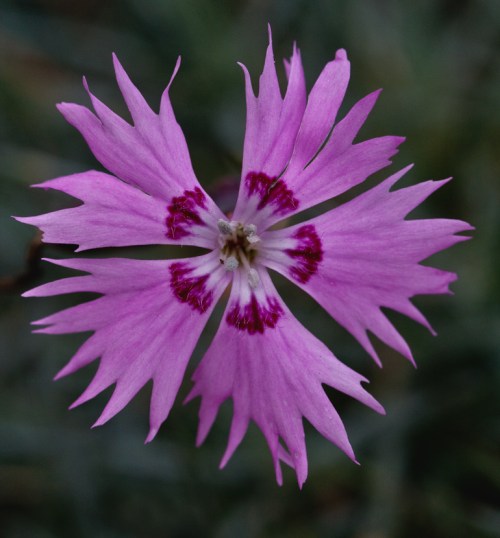

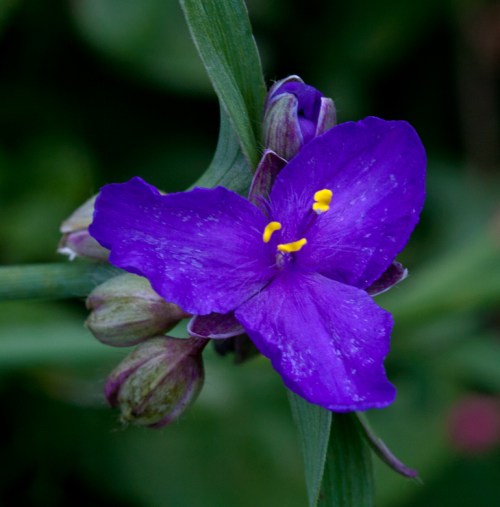
© Michael Q. Powell. All rights reserved.
Posted in Flowers, Gardening, Macro Photography, Photography | Tagged Canon 100mm macro lens, Canon 55-250mm zoom lens, Canon Rebel XT, flowers, green spring gardens, pansy, zinnia | 6 Comments »
November 6, 2012 by Mike Powell
During the past month or so I have posted multiple photos of male red-winged blackbirds. The female is not black and does not have a red patch on her wings, so she may not be as easily recognized as a red-winged blackbird. I think you would probably agree, however, that the coloration of the female is very striking and quite beautiful. Here is a shot of a female red-winged blackbird on a cattail that I took this past weekend. I especially love the silvery gray beak and the gold ring around her eyes.

Female red-winged blackbird on a cattail
© Michael Q. Powell. All rights reserved.
Posted in Birds, Nature, Photography | Tagged blackbird, Canon 55-250mm zoom lens, Canon Rebel XT, female, Huntley Meadows Park, red-winged blackbird | 7 Comments »
November 6, 2012 by Mike Powell
I know that ladybugs don’t really have babies, but, seriously, how many people will read a posting with words like “larva” and “pupa” in the title? A more accurate title would be something like “Larva and Pupa of the Multicolored Asian Lady Beetle (Harmonia axyridis).”
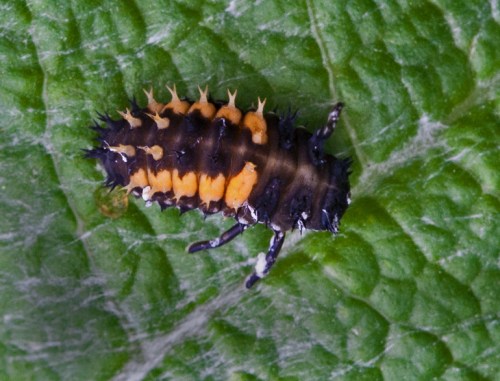
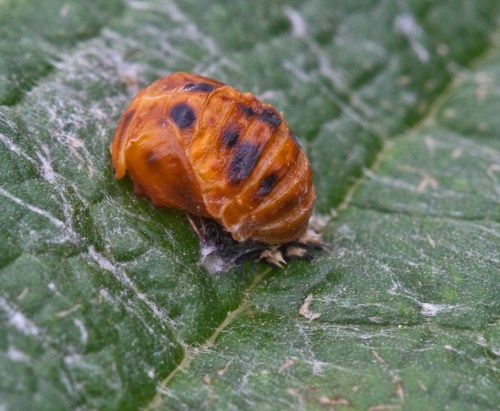
This past weekend I was wandering through a local garden when I spotted a strange-looking little yellow and black insect. Upon closer investigation, I discovered several more of them on the plant, along with some orange and black objects that I thought might be insects too, but they were not moving. This was a good excuse to take out my macro lens and to follow the old adage about shooting first and asking questions later.
After a bit of research, I realized that I had captured two different phases in the life cycles of a ladybug. Lady-bugs.org and ladybug-life-cycle.com offer additional details on the stages of development of a ladybug, but allow me to summarize for folks like me who don’t follow insects for a living. The ladybug’s life cycle is about four to six weeks long, with four stages (egg, larva, pupa, and adult). During the larval stage, the ladybug larvae shed their exoskeletons three times before the pupation stage begins. It is during the pupa stage that the metamorphosis takes place that is almost as magical as it is for butterflies and the insect that I photographed turns into a full grown ladybug.
Thanks to bugguide, I was able to identify my bug as the Multicolored Asian Lady Beetle (Harmonia axyridis). The article notes that the larvae look like tiny alligators and grow to be larger in size than the eventual ladybug. It describes the pupa as “an elongated dome shape, usually found attached to a leaf, with the spiky remains of the last larval skin usually clinging to one end. The branched spines of this skin are usually visible.”
It was fascinating to discover the details of what I had photographed—metamorphosis never ceases to amaze me. Here are a couple of my favorite shots of the ladybug larvae and several of different pupa. Be sure to click on them to see more details.



© Michael Q. Powell. All rights reserved.
Posted in Bugs, Flowers, Gardening, Insects, Macro Photography, Nature, Photography | Tagged Canon 100mm macro lens, Canon Rebel XT, green spring gardens, Harmonia axyridis, lady beetle, ladybird, ladybug, Multicolored Asian Lady Beetle | 20 Comments »
November 5, 2012 by Mike Powell
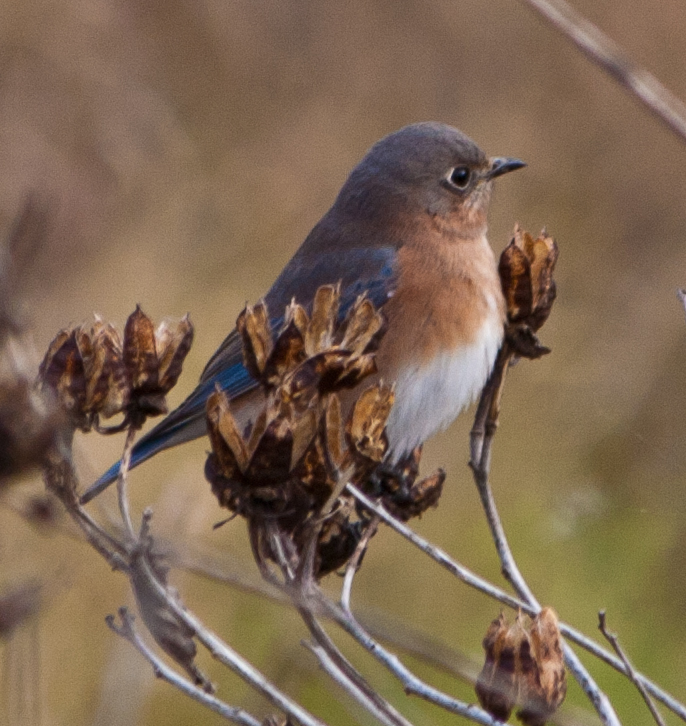
November so far have been gray and cloudy and much of the fall foliage has faded. I was therefore extra happy to see brightly colored birds today. Although I have repeatedly photographed brilliant red cardinals, today was the first day that I got a decent shot of the equally spectacular Eastern Bluebird (Sialia sialis).
I looked at the range map for the Eastern Bluebird and we may have them here all year in Northern Virginia. I guess that I’ll just have to wait and see.
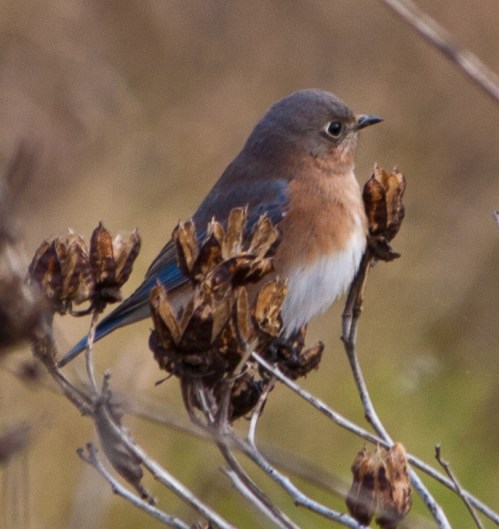
Eastern Bluebird
© Michael Q. Powell. All rights reserved.
Posted in Birds, Nature, Photography, Portraits | Tagged bluebird, Canon 55-250mm zoom lens, Canon Rebel XT, Eastern Bluebird, Huntley Meadows Park, Sialia sialis | 8 Comments »
November 5, 2012 by Mike Powell
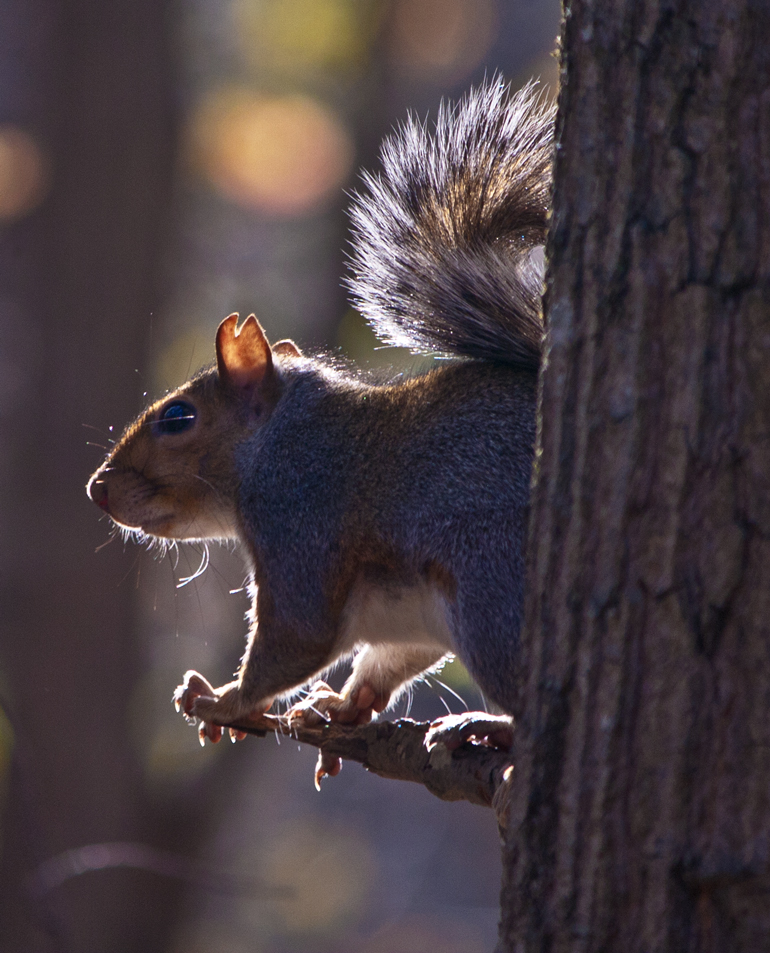
Backlighting adds drama and glamor, even when the subject is as ordinary as a squirrel.
I was almost done shooting photos today when I decided to try to capture a few images of squirrels. Usually they are too quick for me and I often end up with blurry photos. As I approached a squirrel, he climbed a tree and I stopped and waited to see if he would climb higher. Instead, he climbed out onto a tiny branch, offering me a profile shot with beautiful backlighting. I love the glow around the face and tail and the warmth of the light showing though the squirrel’s ear. Even the bokeh is nice.
Even a squirrel can look glamorous, under the right conditions.
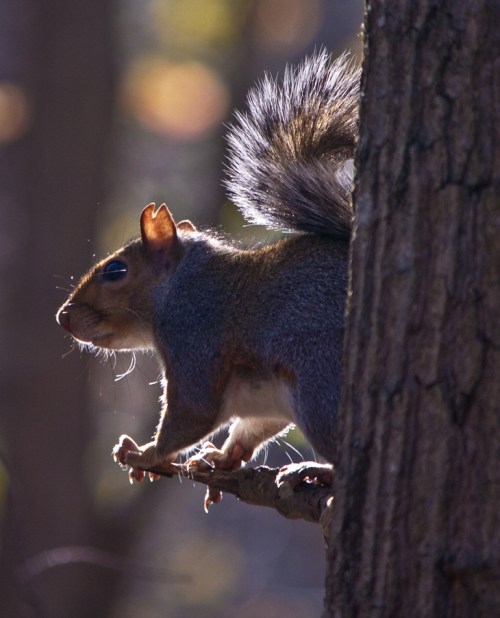
Squirrel glamor shot
© Michael Q. Powell. All rights reserved.
Posted in animals, Nature, Photography, wildlife | Tagged backlighting, backlit, canon 55, Canon Rebel XT, glamor, Huntley Meadows Park, squirrel | 9 Comments »
November 4, 2012 by Mike Powell
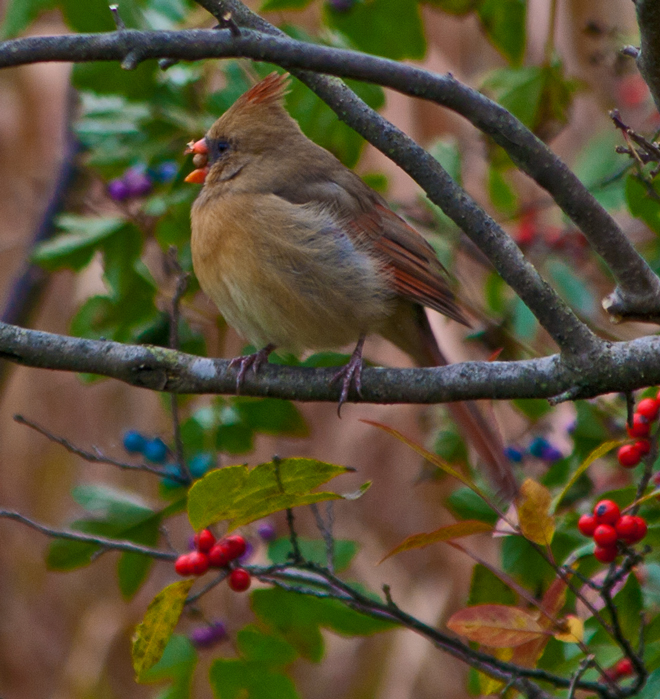
Some people claim that the camera adds ten pounds, and that seems to be the case with this female Northern Cardinal. Maybe it’s just the angle or she had fluffed up her feathers for better insulation, but it sure looks to me like she has been fattening herself up for the winter. In fact, you probably noticed that I caught her in mid-bite. I’m not sure what she is eating, but there are lots of colorful berries in the background from which to choose.
Some people claim that they eat like a bird—I hope they don’t mean they eat like this particular bird.
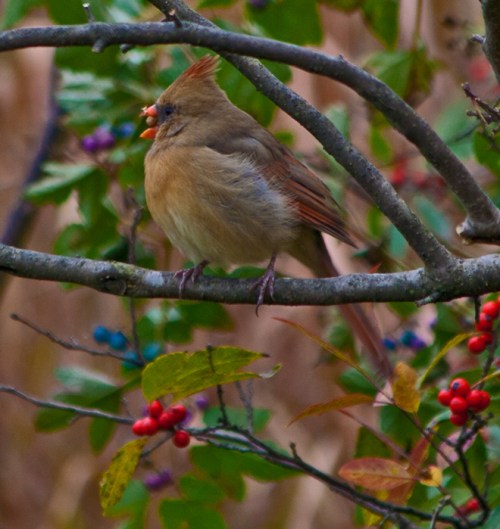
Cardinal in mid-bite
© Michael Q. Powell. All rights reserved.
Posted in Birds, Humor, Nature, Photography | Tagged Canon 55-250mm zoom lens, Canon Rebel XT, cardinal, female cardinal, green spring gardens, Northern cardinal | 12 Comments »
November 4, 2012 by Mike Powell
Yesterday I returned to my photographic roots at Green Spring Gardens, a county-run historic park, to shoot flowers and bugs, the subjects I started with six months ago when Cindy Dyer, my mentor and muse, helped me get serious about my photography. It was cloudy and cool (about 47 degrees F (8.3 degrees C) and I didn’t expect to see many insects active. There was quite a variety of flowers blooming, including many that have been present all summer. Perhaps when we have a hard freeze, some of them will die off, but for now they provide a blast of bright color that contrasts with the now fading fall foliage.
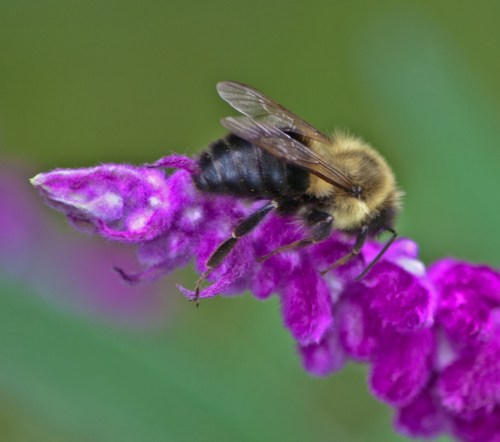
Bee in early November
I was surprised when I encountered this bee, the only one that I saw all day. It seemed to be moving slowly in the colder weather, but was industriously working on this purple flower. Judging from its relatively hairless abdomen, I think that this might be a carpenter bee rather than a bumblebee, though I am not completely sure about the identification.
I have always mentally associated bees with spring, but now, as I look more closely at nature, I realize that I have to question all of my previous assumptions. That’s probably a good thing for me to do regularly, and not just in my photography.

Bee working in the cold
© Michael Q. Powell. All rights reserved.
Posted in Bugs, Flowers, Gardening, Insects, Macro Photography, Nature, Photography | Tagged bee, bumblebee, Canon 55-250mm zoom lens, Canon Rebel XT, carpenter bee, Eastern Carpenter Bee, green spring gardens, purple flower | 5 Comments »
November 3, 2012 by Mike Powell
Did you ever wonder what happens if an aircraft’s radar and radio go bad? Yesterday I saw what happens when the emergency network is activated and escorts are sent out to accompany the aircraft to its final destination. In a cost-cutting measure, fighter jets are no longer dispatched, but these geese do have significant experience in long-distance flying and especially flying in formation.

Emergency escorts
© Michael Q. Powell. All rights reserved.
Posted in Birds, Humor, Nature, Photography | Tagged airplane, Canon 55-250mm zoom lens, Canon Rebel XT, escort, geese, Huntley Meadows Park, migrating geese | 6 Comments »
November 3, 2012 by Mike Powell
Looking down in the water, I was a little surprised to see a Banded Wooly Bear caterpillar (Pyrrharctia isabella) swimming, albeit not too quickly. He would slowly undulate his hairy body for a stroke and pause, and then repeat the process. It was fascinating to see the little air bubbles surrounding his mouth and the gentle ripples produced by his movement.
This caterpillar will almost certainly overwinter in his current state and pupate in the spring into an Isabella Tiger Moth. Bugguide notes that there are normally two broods, on that pupates in the summer and the other in the following spring. I have looked at some photos of the moth and can’t help but note that the caterpillar stage is a lot more attractive and interesting.

Wooly Bear caterpillar swimming (click for higher resolution)

Wooly Bear caterpillar pauses for a breath (click for higher resolution)
© Michael Q. Powell. All rights reserved.
Posted in Bugs, Insects, Macro Photography, Nature, Photography | Tagged Banded Wooly Bear caterpillar, Canon 55-250mm zoom lens, Canon Rebel XT, caterpillar, Huntley Meadows Park, Isabella Tiger Moth, Pyrrharctia isabella, swimming, Wooly Bear caterpillar | 10 Comments »
November 2, 2012 by Mike Powell
It seemed like this beautiful male Northern Cardinal (Cardinalis cardinalis) was posing for me on the dead log, somehow knowing that this position would provide for an equally beautiful reflection.

© Michael Q. Powell. All rights reserved.
Posted in Birds, Landscape, Nature, Photography, Portraits, wildlife | Tagged Canon 55-250mm zoom lens, Canon Rebel XT, Cardinalis cardinalis, Huntley Meadows Park, Northern cardinal, reflection | 4 Comments »
November 2, 2012 by Mike Powell
On a cold and overcast morning, I walked through the marsh today, heading toward a little pond area where I was hoping to see migrating ducks and geese. As I arrived at that area, I realized there was a deer in the distance near the far side of the water’s edge. I didn’t have time to make many adjustments and got off only two shots. This is the better of the two, and I like the pose of the deer, as she back at me before taking off. To give you an idea of the limited light, this was shot at ISO400, f5.6, and 1/30 second. I was at the far end of my 55-250mm zoom lens (and still had to crop quite a bit).

Early morning deer
© Michael Q. Powell. All rights reserved.
Posted in animals, Landscape, Nature, Photography, wildlife | Tagged Canon 55-250mm zoom lens, Canon Rebel XT, deer, early morning, Huntley Meadows Park, looking back | 7 Comments »
November 2, 2012 by Mike Powell
The leaf is back-lit and drops of dew glisten on its surface, a surface that is scarred and torn and unevenly colored with the tints of the fall. In its beautiful imperfection, this autumn leaf speaks to me in the simple, abstract language of lines and shapes, of light and color.

Abstract fall leaf
© Michael Q. Powell. All rights reserved.
Posted in Art, Landscape, Macro Photography, Nature, Photography | Tagged autumn, backlight, Canon 55-250mm zoom lens, Canon Rebel XT, drops of water, fall, Huntley Meadows Park, leaf | 1 Comment »
November 1, 2012 by Mike Powell
Here’s one last photo of the geese from last weekend, possibly my favorite shot. I like the fact that it shows geese in action—the geese look like they are having a race across the water, though I think they had just landed and were slowing down. The colorful fall foliage and its reflection in the water add interest too. Somehow the picture works well for me as an autumn landscape. (Be sure to click on it to see a higher resolution view.)

Geese racing in the fall
© Michael Q. Powell. All rights reserved.
Posted in Birds, Landscape, Nature, Photography | Tagged Branta canadensis, Canada Goose, Canon 55-250mm zoom lens, Canon Rebel XT, fall foliage, geese, Kingstowne, racing | Leave a Comment »
November 1, 2012 by Mike Powell
Last week I encountered Canada geese twice. The first time was when a few migrating ones made a brief stop at a local marsh. The second time was at a suburban pond where the geese seem to be semi-permanent residents. I had a great time observing and photographing the geese in the latter venue and have a couple of photos this morning of geese dipping their heads into the water. I couldn’t tell for sure if they were grabbing for plants underwater, drinking, or doing something else. Often they would submerge just their heads and blow bubbles in the water and then, as in the second photo, just let the water dribble out of their mouths.

Synchronized swimming geese

Dripping, dipping goose
© Michael Q. Powell. All rights reserved.
Posted in Art, Birds, Nature, Photography, Uncategorized, wildlife | Tagged Branta canadensis, Canada Goose, Canon 55-250mm zoom lens, Canon Rebel XT, dipping, dripping, geese, goose, Kingstowne | 4 Comments »
October 31, 2012 by Mike Powell
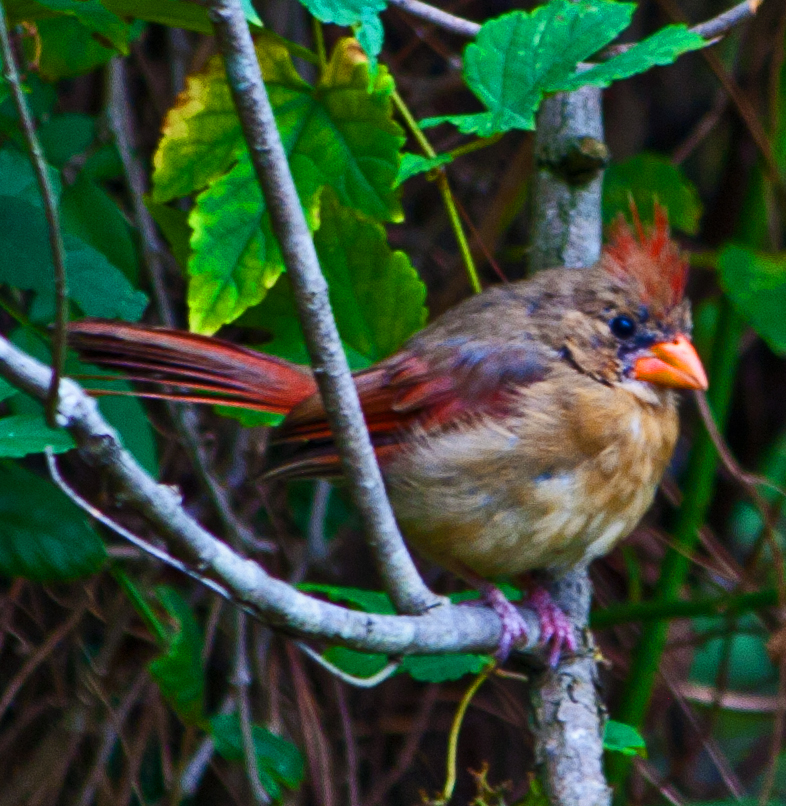
It looks like this female Northern Cardinal decided to get dressed up as a punk rocker for Halloween. She has put some gel in her bright red Mohawk and adopted an attitude. Her really bright eyes and vacant stare suggest that she might be under the influence of some natural or artificial stimulant. I was not able to get close enough to see if she has any tattoos or piercings, but it wouldn’t surprise me.
Happy Halloween!
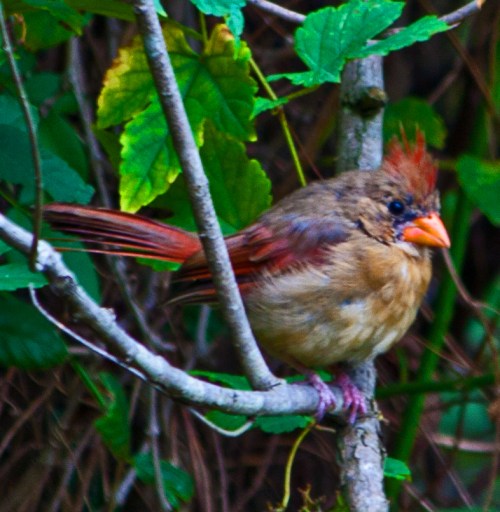
Punk rocker Cardinal
© Michael Q. Powell. All rights reserved.
Posted in Birds, Humor, Nature, Photography | Tagged Canon 55-250mm zoom lens, Canon Rebel XT, cardinal, Halloween, Northern cardinal, punk, punk rocker | 7 Comments »
October 31, 2012 by Mike Powell
Originally posted on 25 August 2012
I am re-posting this image for three primary reasons.
- Today’s Halloween and what could be more appropriate for an insect with Halloween in its name?
- This is one of my absolutely favorite images and many of you may not have seen it yet (and I like the text too).
- I’m a bit of a contrarian and want to post something beautiful today, rather than the creepy images that others may choose to post.
Happy Halloween!
Text of original post:
I remember my excitement the first time I saw a really cool dragonfly a few months ago that turned out to be a Halloween Pennant dragonfly (Celithemis eponina). He had a very distinctive look with brown spots and stripes on his wings and orange veins. That first time I was happy to get any shot of the dragonfly.
Today I think that I encountered a Halloween Pennant for a second time. I was still very much taken by his looks but I had the presence of mind to circle about a bit, trying to get a good angle for the shot. The shot below is the one that I like the best of those that I took.
As I think about it, I go through this cycle a lot. I’m so in awe and wonder when I encounter something new that photography is not my first priority. Instead I am living the experience. Maybe my photos the first time are not the best, but that’s ok for me, because living my life is more important than merely recording it in my photos. That may be why I like to go back to places a second time and then focus a bit more on getting good shots.
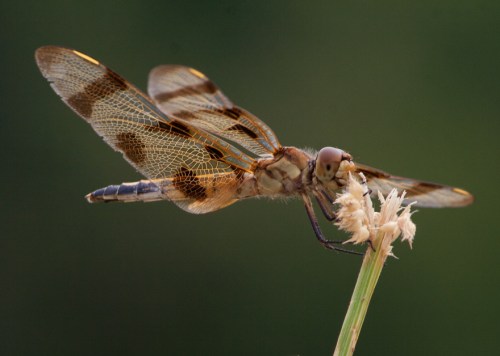
- Halloween Pennant dragonfly (Click for higher resolution view)
© Michael Q. Powell. All rights reserved.
Posted in Birds, Flowers, Gardening, Insects, Macro Photography, Nature, Photography | Tagged beautiful dragonfly, Canon 55-250mm zoom lens, Canon Rebel XT, Celithemis eponina, dragonfy, Halloween, Halloween Pennant dragonfly | 5 Comments »
October 30, 2012 by Mike Powell
It seems appropriate to post a photo of a spider on the evening before Halloween. I was not able to get a look at the spider’s front side when I photographed it this past weekend at Huntley Meadows Park, so I can’t identify it. I know for sure, though, that I never want to wake up in the morning and have this view of a spider. With my near-sighted vision, that would mean that it was way too close to me for my comfort. Happy Halloween!
UPDATE: Thanks to the assistance of my mentor and fellow blogger, Cindy Dyer, I am now pretty sure that the spider is the orb-weaver spider Neoscona Crucifera, sometimes known as Hentz’s orb-weaver or a barn spider (though there are other spiders known as barn spiders too).

Pre-Halloween spider enjoys a snack
© Michael Q. Powell. All rights reserved.
Posted in Bugs, Humor, Insects, Macro Photography, Nature, Photography | Tagged barn spider, Canon 55-250mm zoom lens, Canon Rebel XT, Halloween, Hentz's orbweaver, Huntley Meadows Park, Neoscona crucifera, spider | 4 Comments »
October 30, 2012 by Mike Powell
It was still raining early this morning when I ventured out into my suburban Virginia neighborhood to see what havoc Hurricane Sandy had wreaked upon us. One big tree had fallen onto several cars, but beyond that we had escaped virtually unscathed.
Run-off water was coursing rapidly down the little stream that runs through the neighborhood as part of the drainage system. I decided to attempt to take some shots of the moving water, inspired by some awesome images that I have seen recently in other blogs. There was a railing overlooking the stream and I placed my camera on it and used the self-timer, which permitted me to take some relatively long exposures.
Here are a few of the images that I produced. I still have a lot to learn about taking these kinds of shots, but I like some aspects of these initial efforts.

Suburban Virginia stream after Hurricane Sandy
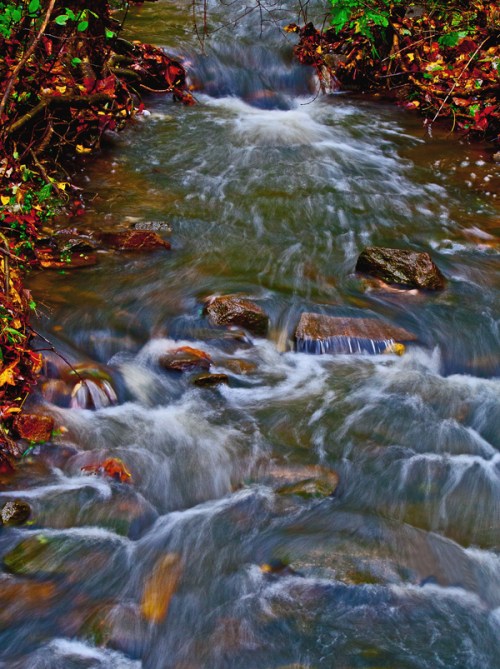
Post-hurricane run-off in suburban Virginia

Runnymeade stream
© Michael Q. Powell. All rights reserved.
Posted in Landscape, Nature, Photography | Tagged Canon 55-250mm zoom lens, Canon Rebel XT, hurricane, Hurricane Sandy, long exposure, nature, running water, Runnymeade, stream | 2 Comments »
October 30, 2012 by Mike Powell
This morning, we continue to assess the damage from Hurricane Sandy here in the Washington, D.C. area, mainly downed trees and flooded roads. Perhaps we can draw inspiration from these geese, who are engaging in a rarely seen version of t’ai chi, seeking to achieve balance. This ancient martial art can be practiced on land or in the water—the water variant is especially appropriate for a time of reflection.

T’ai chi goose

Water t’ai chi—a reflective pose
© Michael Q. Powell. All rights reserved.
Posted in Birds, Humor, Inspiration, Nature, Photography | Tagged balance, Branta canadensis, Canada Goose, Canon 55-250mm zoom lens, Canon Rebel XT, goose, Kingstowne, t'ai chi | 9 Comments »
« Newer Posts - Older Posts »






















 Mike Powell