July 26, 2013 by Mike Powell
Have you noticed that I really like purple water lilies? I was so struck by their beauty the first time that I saw one last year that a purple water lily appears at the top of my blog most of the time.
Earlier this week, as I was visiting Brookside Gardens in Wheaton, Maryland, I came across an area in which two types of purple, tropical water lilies were growing. My photography mentor, Cindy Dyer, always recommends photographing the little signs that identify flowers and other plants and these water lilies were called “Panama Pacific” and “Blue Beauty.”
As I was photographing one of the waterlilies—I think it was a Panama Pacific—a bee dove headfirst into the center of the flower. Even before the bee arrived, I had noticed that the center of the water lily seemed to be glowing and that was what I was trying to capture by underexposing the shot. If you click on the photo, you can see a higher resolution view of the image, which shows an almost three-dimensional view of the flower’s center.
 © Michael Q. Powell. All rights reserved
Posted in Art, Flowers, Gardening, Insects, Macro Photography, Nature, Photography | Tagged bee, brookside gardens, Canon 50D, purple water lily, Tamron 180mm macro, water lily, Wheaton MD | 8 Comments »
July 25, 2013 by Mike Powell
Yesterday was my first chance to try out my new lens, a Tamron 180mm macro, and I managed to get some shots of a Hummingbird Clearwing Moth (Hemaris thysbe) at Brookside Gardens in Wheaton, Maryland.

This was my first encounter with this moth, which I have admired in the photos of others, and I took a lot of photos of it, using a variety of settings. I think that I got my best shots when I set the ISO to 800 and underexposed a bit, which kept the shutter speed up pretty high, although the images are a little grainy. I still have a lot of photos to go through, so don’t be surprised if I come up with an even better image to post. However, I am so happy with this image that I want to share my excitement.
I had previously used the Nikon version of this lens with a friend’s camera and was impressed enough that I eventually decided to get one for my Canon. The lens does not have any built-in image stabilization, so it probably gives optimal results when used on a tripod or when there is a lot of light. However, I was impatient to use it, so I shot handheld when shooting this moth and probably need to work a bit more on my technique for steadier shooting.
I am pretty sure that I’ll be posting many more macro shots from this lens in the future—I plan on having a lot of fun with it.
© Michael Q. Powell. All rights reserved
Posted in Art, Insects, Macro Photography, Nature, Photography | Tagged brookside gardens, Canon 50D, Hermaris thysbe, Hummingbird Clearwing Moth, Tamron 180mm macro, Wheaton MD | 21 Comments »
July 25, 2013 by Mike Powell
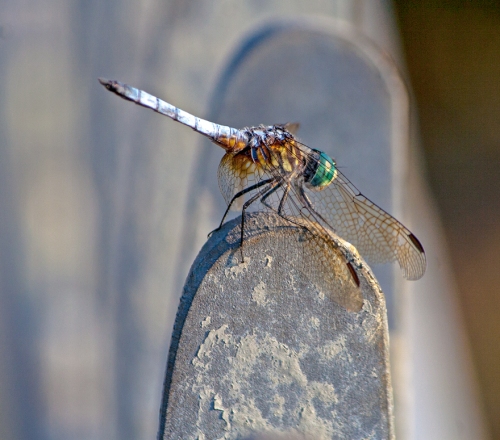
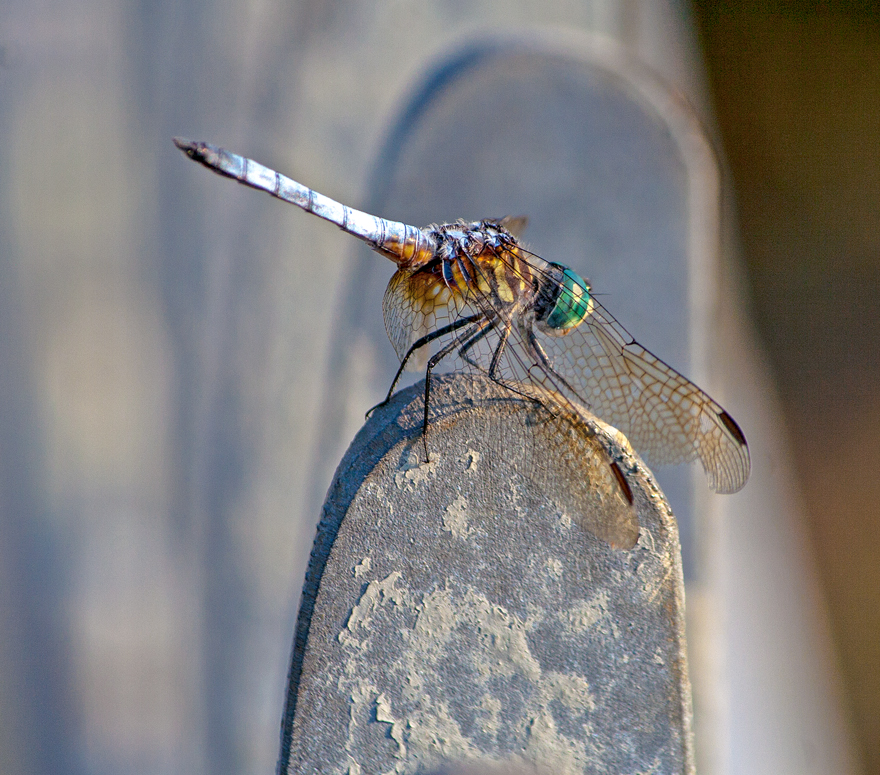
What do you do when the wildlife subject that you are attempting to photograph puts itself in a man-made setting, rather than a more natural environment? That was my dilemma when a Blue Dasher dragonfly (Pachydiplax longipennis) landed on one of the slats of a railing surrounding part of the boardwalk at Huntley Meadows Park, the local marshland where I take a lot of my photographs.
As I looked down the railing at the dragonfly, my eye was attracted to the repeating pattern of the slats, and I decided to try a creative approach to an image using that pattern. I chose camera settings that would give me a relatively shallow depth of field. Then I carefully composed the shot so that some other slats would appear in the background in a blurry form, but the one on which the dragonfly perched would be in sharp focus.
Although I generally prefer a more natural setting for my wildlife subjects, I think I managed to achieve a pretty cool effect that was relatively close to what I had in mind. I especially like the detail that I was able to capture of the weathered metal slat in the foreground (click on the photo to see a higher resolution view).
© Michael Q. Powell. All rights reserved
Posted in Art, Dragonflies, Insects, Macro Photography, Nature, Photography, Portraits | Tagged Blue Dasher, Blue Dasher dragonfly, Canon 55-250mm zoom lens, Canon Rebel XT, Huntley Meadows Park, Pachydiplax longipennis | 7 Comments »
July 24, 2013 by Mike Powell
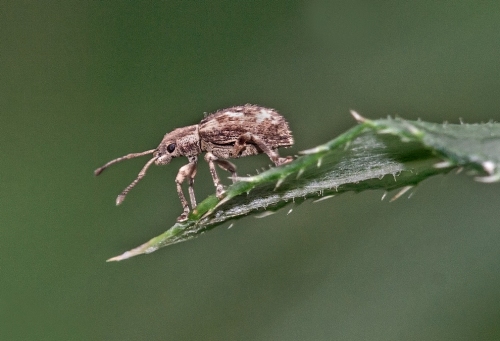
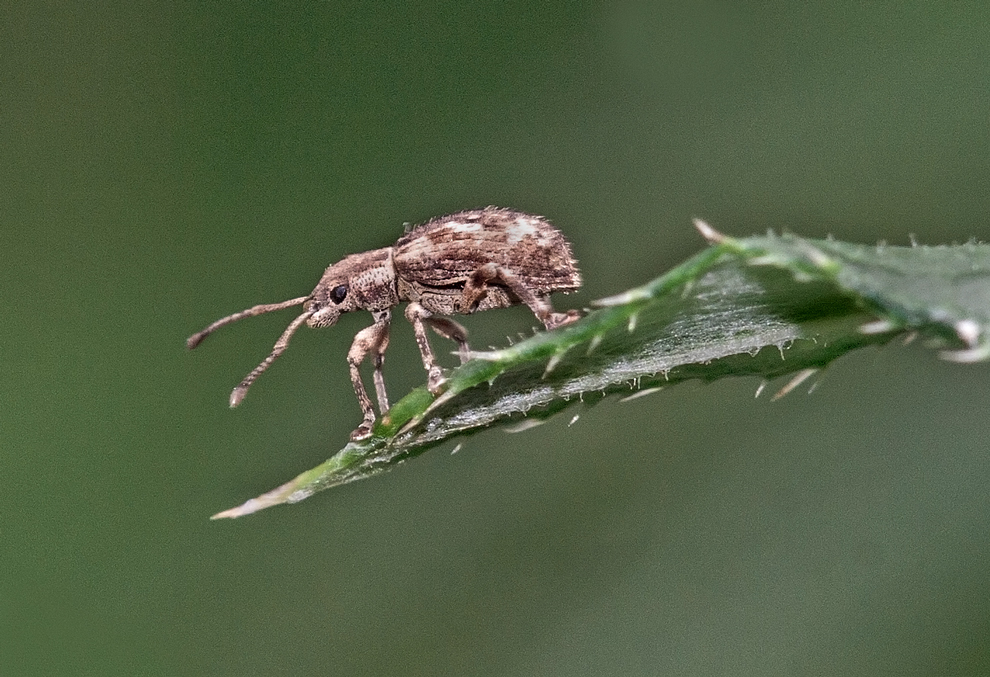
Last week, I stalked this little insect in my neighbors’ garden, trying hard to get a decent image of it with my 100mm macro lens. When it paused at the end of a leaf, I was able to get this shot, capturing some of the details of its body, which looks like a miniature dinosaur to me. Click on the photo to see some more details of the skin/shell of this little creature.
Normally I try to identify an insect before I post its photo, but in this case I am having trouble figuring out what it is. Perhaps one of my readers can help in identifying it.
© Michael Q. Powell. All rights reserved
Posted in Flowers, Gardening, Insects, Macro Photography, Nature | Tagged Alexandria VA, Canon 100mm macro lens, Canon Rebel XT, dinosaur, insect, on the edge | 5 Comments »
July 24, 2013 by Mike Powell
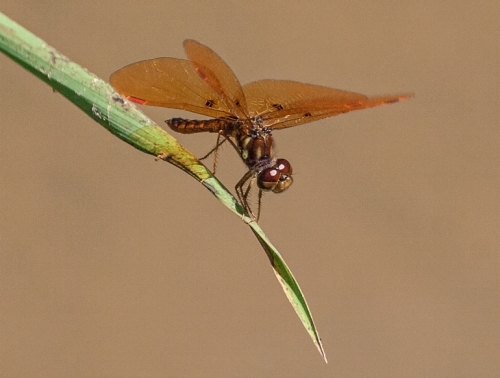
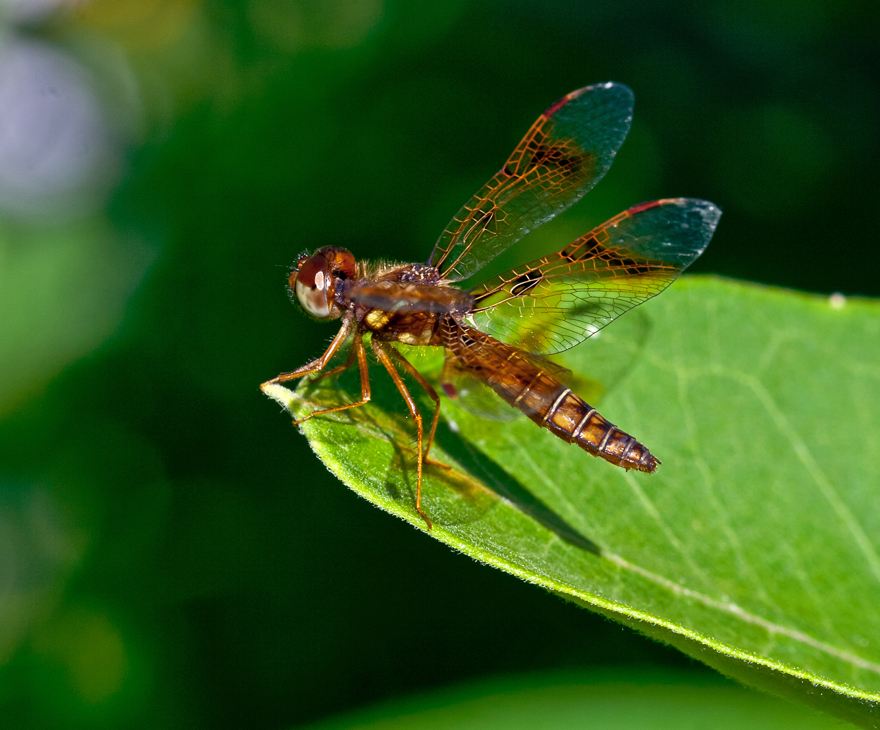
Only a tiny, lightweight dragonfly, like this Eastern Amberwing (Perithemis tenera), could assume this pose and hold it for an extended period of time. I have watched other dragonflies land near the end of a leaf like this, but gravity forced them to quickly give up their perch.
I was able to take a lot of photos of this dragonfly and this is one of my favorites, because its abdomen is raised, its wings are spread, and its head is cocked a little to the side—a near perfect pose.
© Michael Q. Powell. All rights reserved
Posted in Art, Dragonflies, Insects, Macro Photography, Nature, Photography, Portraits | Tagged Canon 55-250mm zoom lens, Canon Rebel XT, dragonfly, Eastern Amberwing, Eastern Amberwing dragonfly, Huntley Meadows Park, Perithemis tenera | 9 Comments »
July 24, 2013 by Mike Powell
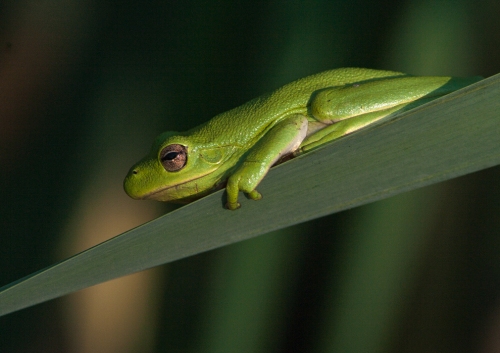
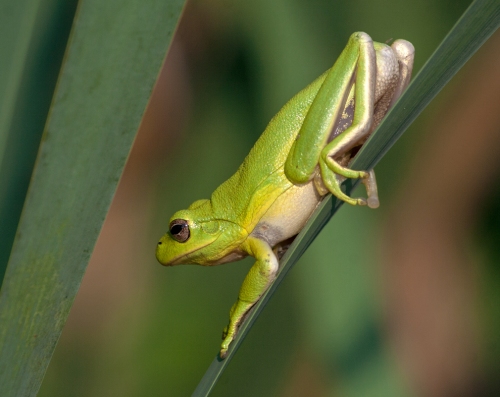
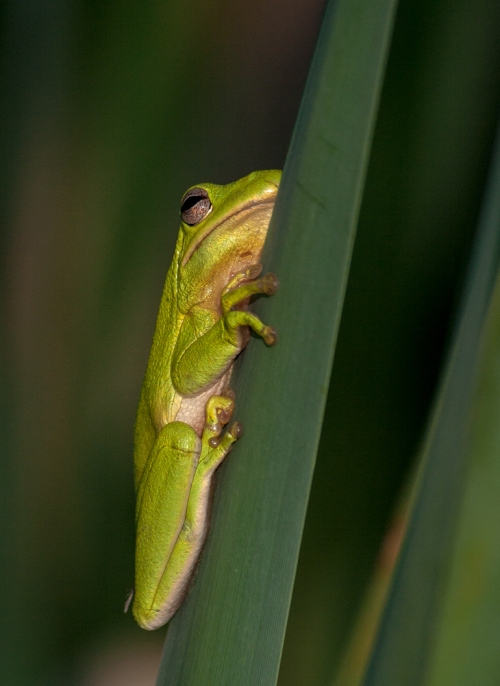
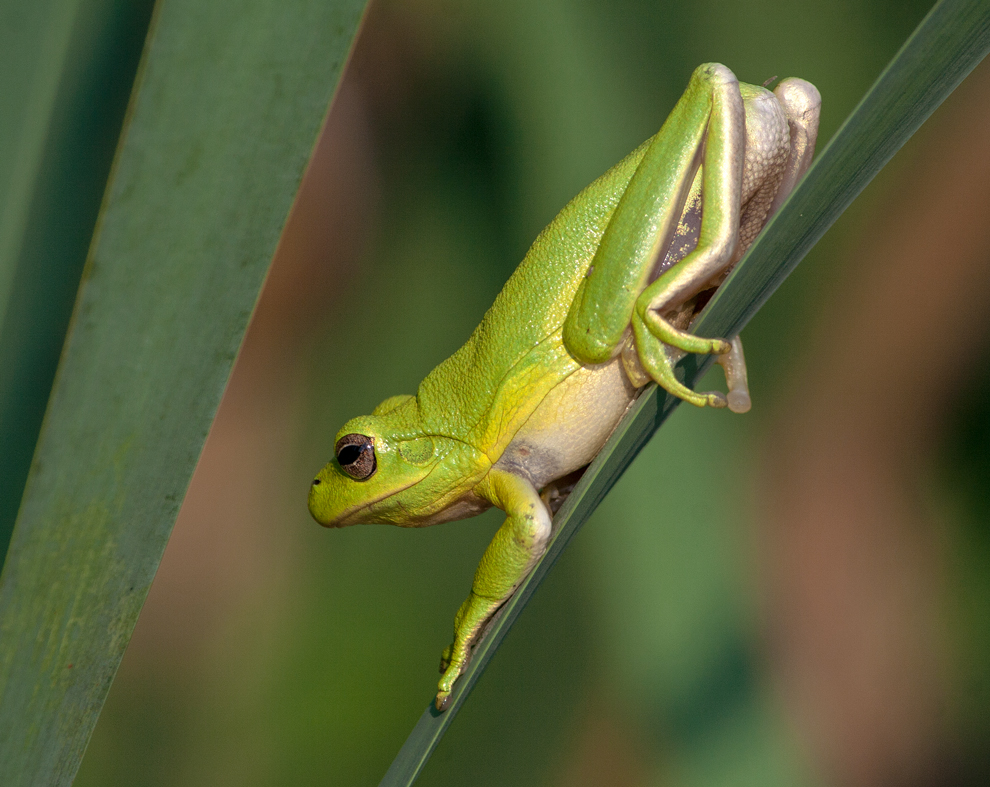
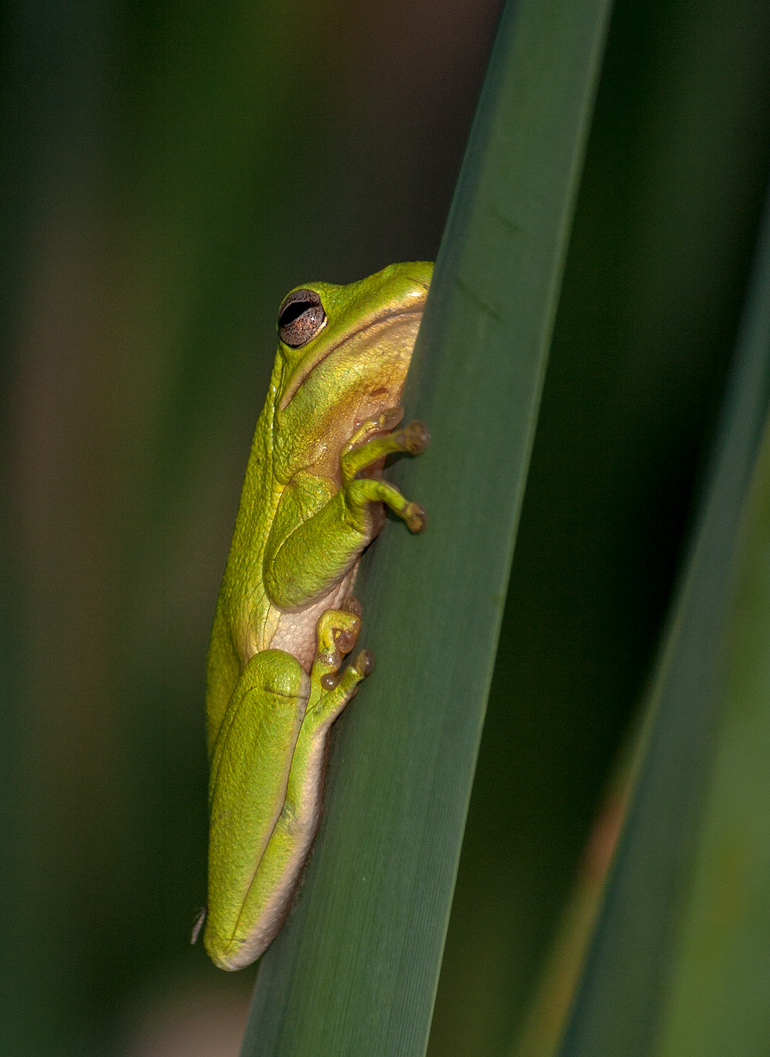
I spotted this little Green Treefrog (Hyla cinerea) in the cattails in the marsh at my local marshland park this past weekend and was pretty excited, because I had never before seen an adult tree frog up close.
I was amazed by its long toes with sticky pads, but it was the golden eyes that won my heart. I observed it for quite some time and managed to get some shots of it in different poses as it changed its position on the green leaves of the cattail.
Normally I think of tree frogs, I think of the ones with big red eyes that have been featured in National Geographic and other publications. It would be really cool some day to be able to photograph those tree frogs—for now I am content to explore the wildlife in my local area.

© Michael Q. Powell. All rights reserved
Posted in Amphibians, Macro Photography, Nature, Photography, Portraits, wildlife | Tagged Canon 55-250mm zoom lens, Canon Rebel XT, cattails, frog, Green Treefrog, Huntley Meadows Park, Hyla cinerea | 12 Comments »
July 23, 2013 by Mike Powell
As I was photographing sunflowers this past weekend, I came across this Dogbane Beetle (Chrysochus auratus), peering over the edge of a leaf. I can not confirm if it was responsible for the hole in the leaf, but I do like the way that the hole looks in the photo.
I took this shot at the minimum focusing distance of my 55-250mm telephoto zoom (3.6 feet (1.1 m), even though it looks like it was photographed with a macro lens. Often when shooting nature shots, I’ve found it best to make do with the lens that is on the camera at that moment, rather than risk losing the shot by changing to the best lens for the situation.

© Michael Q. Powell. All rights reserved
Posted in Bugs, Insects, Macro Photography, Nature, Photography | Tagged beetle, Canon 50D, Canon 55-250mm zoom lens, Chrysochus auratus, Dogbane Beetle, Maryland, McKee-Beshers Wildlife Management Area, Montgomery County | 1 Comment »
July 23, 2013 by Mike Powell
Although I tend to use either my macro or my shorter telephoto zoom lens most at this time of the year, yesterday I decided to walk around with my longest zoom (135-400mm) and was happy about that decision when I encountered this juvenile Hooded Merganser duck (Lophodytes cucullatus).
When I first saw it, the duck was sitting on a semi-submerged log in the beaver pond of my local marshland pond, basking in the sun. I expected for the duck to be part of a group, but it appeared to be alone.

I guess that I got a little too close, because the juvenile duck then slipped quietly off the log into the brown, muddy water of the pond and swam away a short distance. I like the concentric ripples in this shot of the duck slowly paddling away.

I backed off and continued to observe the young duck, which decided to take advantage of being in the water to do a little grooming. After submerging itself, the duck rose up out of the water to dry off. The duck flapped its wings and I clicked my shutter and got this shot.

There is a kind of playful feel to this shot that I really like. Somehow the duck reminds me of a friendly little dragon in this shot, with its feathers looking almost like scales and its wings and tail in an unusual position. I almost expected it to breathe a tiny burst of fire.
Maybe I should name the little duck “Puff.”
© Michael Q. Powell. All rights reserved
Posted in Art, Birds, Nature, Photography, Portraits, wildlife | Tagged Canon 50D, Hooded Merganser, Hooded Merganser duck, Huntley Meadows Park, juvenile Hooded Merganser, Lophodytes cucullatus, Sigma 135-400mm telephoto zoom lens | 7 Comments »
July 22, 2013 by Mike Powell
Every time that I look at a dragonfly head-on, I can’t help but think of the biplanes of World War I, like the Sopwith Camel that Snoopy famously imagined piloting in his battles with the Red Baron.
Considering the colors of this Needham’s Skimmer dragonfly (Libellula needhami), I guess that he would have to represent the Red Baron, not Snoopy. Aerial dogfights are not without danger, and it looks like this dragonfly has survived several encounters with the enemy, with all of his wings showing some damage.
 © Michael Q. Powell. All rights reserved
Posted in Dragonflies, Humor, Insects, Macro Photography, Nature, Photography | Tagged biplane, Canon 55-250mm zoom lens, Canon Rebel XT, dragonfly, Huntley Meadows Park, Libellula needhami, Needham's Skimmer, Needham's Skimmer dragonfly, Sopwith Camel | 4 Comments »
July 22, 2013 by Mike Powell
In an effort to avoid the unbearable summer heat, this past Friday I went out to my local marsh just as the sun was rising and watched as the sun slowly illuminated the flowers and vegetation and burned off the mist that lingered above the fields.
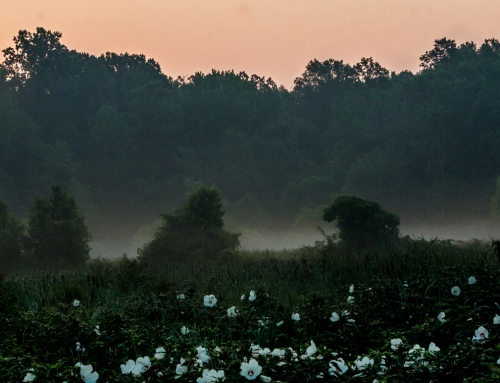
I don’t have a lot of experience shooting landscapes, but am relatively content with the composition I chose. I am also happy that I was able to capture the orange shade of the sky and some of the mist. A lot of the details are lost in the shadows, but that was the way it looked in the limited dawn light. In case you are curious, the flowers in the foreground are a kind of hibiscus that grow in the marsh—I think they are known as Swamp Rose Mallows (Hibiscus moscheutos).
© Michael Q. Powell. All rights reserved
Posted in Landscape, Nature, Photography | Tagged Canon 55-250mm zoom lens, Canon Rebel XT, dawn, Hibiscus moscheutos, Huntley Meadows Park, marsh, Swamp Rose Mallow | 6 Comments »
July 22, 2013 by Mike Powell
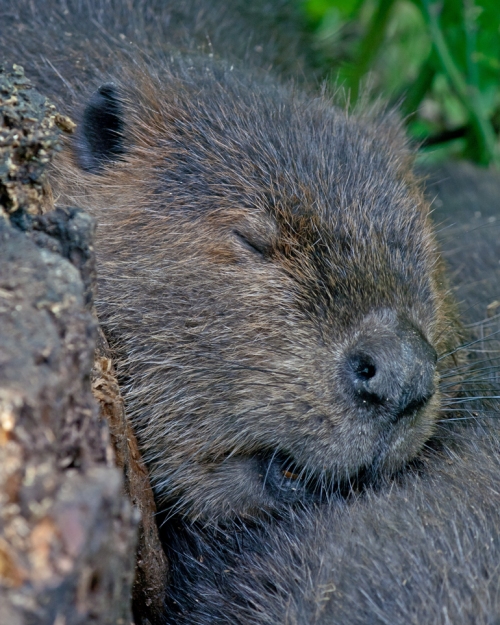
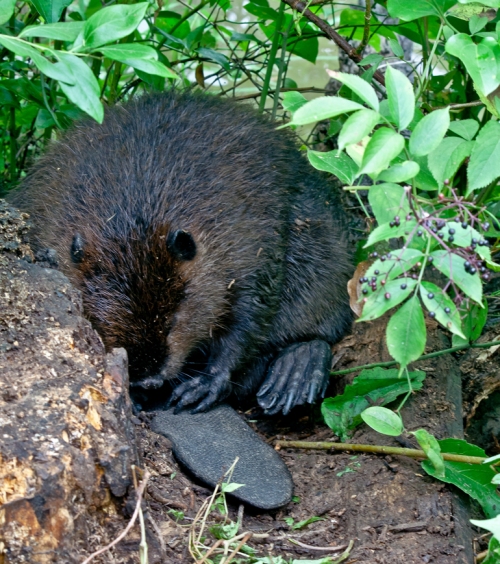
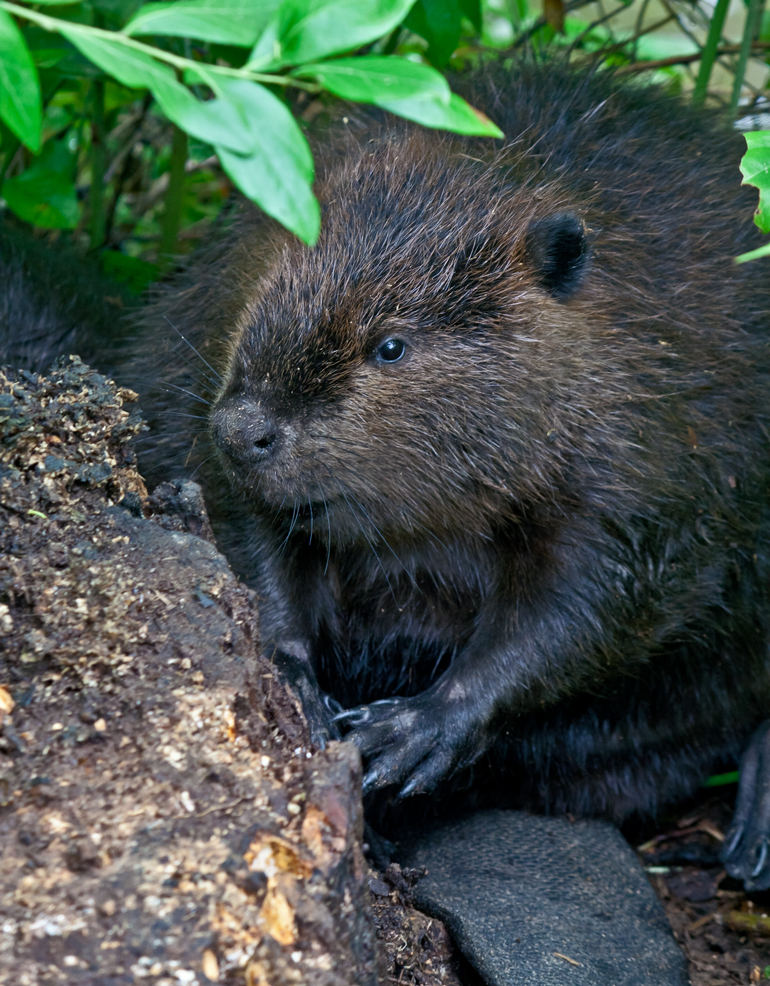
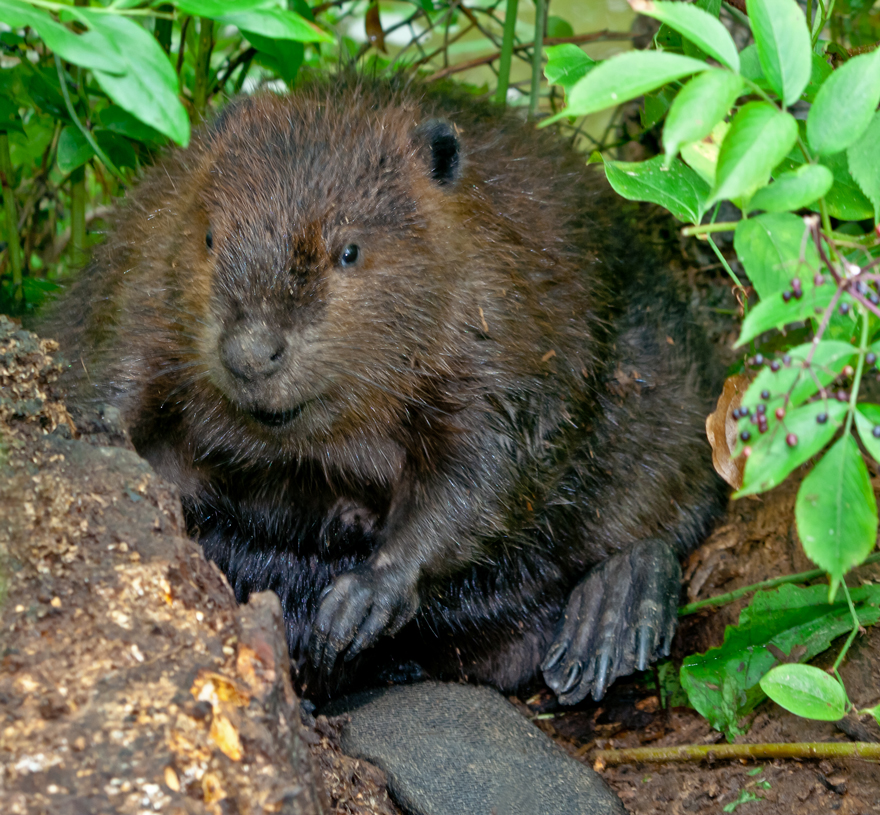
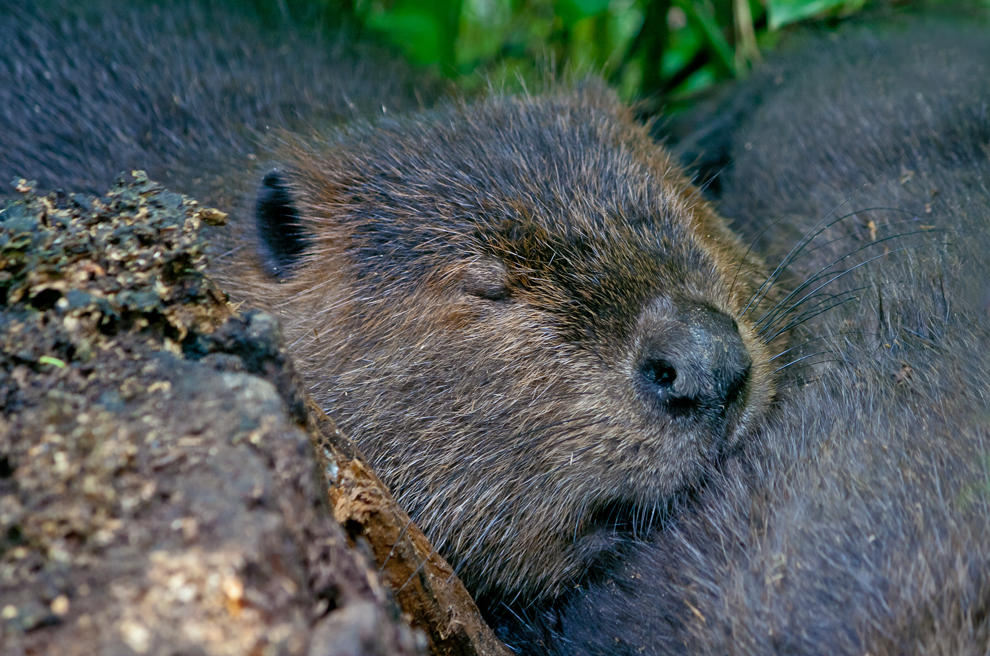
To conclude my mini-series on the three local beavers who were temporarily flooded out of their lodge, I am posting an extreme close-up of one of them sleeping and a shot in which I zoomed out enough to show the entire body of a sleeping beaver.
This first shot is probably my favorite of the entire series. The beaver, of course, is really cute, but the slightly open mouth gives it an extra little whimsical touch of personality.
The second shot shows one of the beavers sound asleep, curled up in a ball, leaning against a stump. At the moment of the shot, the beavers were not snuggling as much as they would do a bit later (as in the first photo). I like the way in which you can see the beaver’s feet and tail in this image.
If you missed the earlier postings on my amazing close-up encounter with the three sleeping North American Beavers (Castor canadensis), check out my earlier postings—Snuggling beaver and Restive beaver. If you want to see a higher resolution view of the images (the first one has lots of fine details), click on the photos.
© Michael Q. Powell. All rights reserved
Posted in animals, Nature, Photography, wildlife | Tagged beaver, Canon 55-250mm zoom lens, Canon Rebel XT, Castor canadensis, Huntley Meadows Park, North American Beaver | 11 Comments »
July 21, 2013 by Mike Powell
I was out yesterday on a trip to photograph sunflowers, but couldn’t resist capturing images of insects that my fellow photographers and I discovered, like this beetle—probably a blister beetle—on a chicory flower.

In many ways this image was part of an experiment for me. I was using a camera that is new to me, a used Canon 50D that I recently purchased, and this was my test run with it. The Canon 50D is several years old and is far from the bleeding edge of technology, it’s a considerable step up from my Canon Rebel XT. I also was trying to shoot macro-like photos with a telephoto zoom, because my macro lens has been acting up and is now on its way to Canon for repair. Finally, I jumped a couple of versions of Photoshop Elements and discovered today that the interface has changed considerably between versions 9 and 11, so it was interesting trying to work on this image.
Once I get the hang of my new camera and new software, I’m hoping to improve that you’ll be able to see some improvement in the quality of my images.
© Michael Q. Powell. All rights reserved
Posted in Bugs, Flowers, Gardening, Insects, Macro Photography, Nature, Photography | Tagged beetle, blister beetle, Canon 55-250mm zoom lens, chicory, Maryland, McKee-Beshers Wildlife Management Area, Montgomery County | 6 Comments »
July 21, 2013 by Mike Powell
How do you capture a field of sunflowers in a single image? That was my challenge yesterday, when I visited McKee-Beshers Wildlife Management Area in Montgomery County in Maryland, where there are 48 acres of sunflowers in a total of seven fields.
I am still going through my photos from yesterday, not sure if any single image captured the feeling of the endless rows of sunflowers. I am happy, though, that I was able to capture this iconic (or perhaps cliché) image of a single sunflower isolated against the sky.

It should have been a simple shot to take, but initially the sky was overcast and white—good for most kinds of photos, except for this kind of image. I was taking photos with some friends and we joked about having to Photoshop in the sky, but eventually the clouds broke up a little and enough blue showed in the sky that I was able to get this shot.
© Michael Q. Powell. All rights reserved
Posted in Art, Flowers, Gardening, Nature, Photography | Tagged Canon 50D, Canon 55-250mm zoom lens, Maryland, McKee-Beshers Wildlife Management Area, sky, sunflower | 5 Comments »
July 20, 2013 by Mike Powell
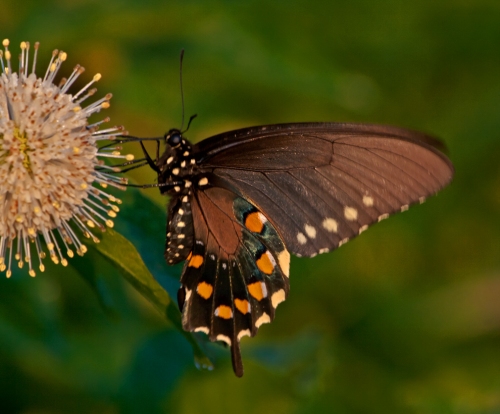
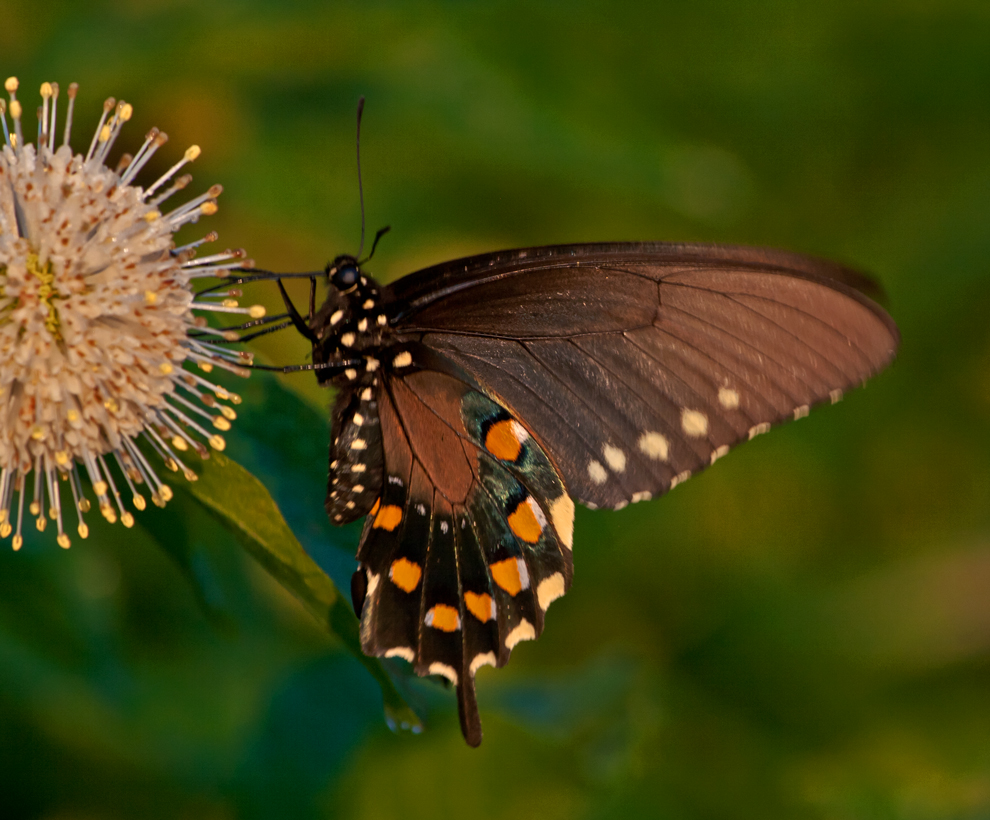
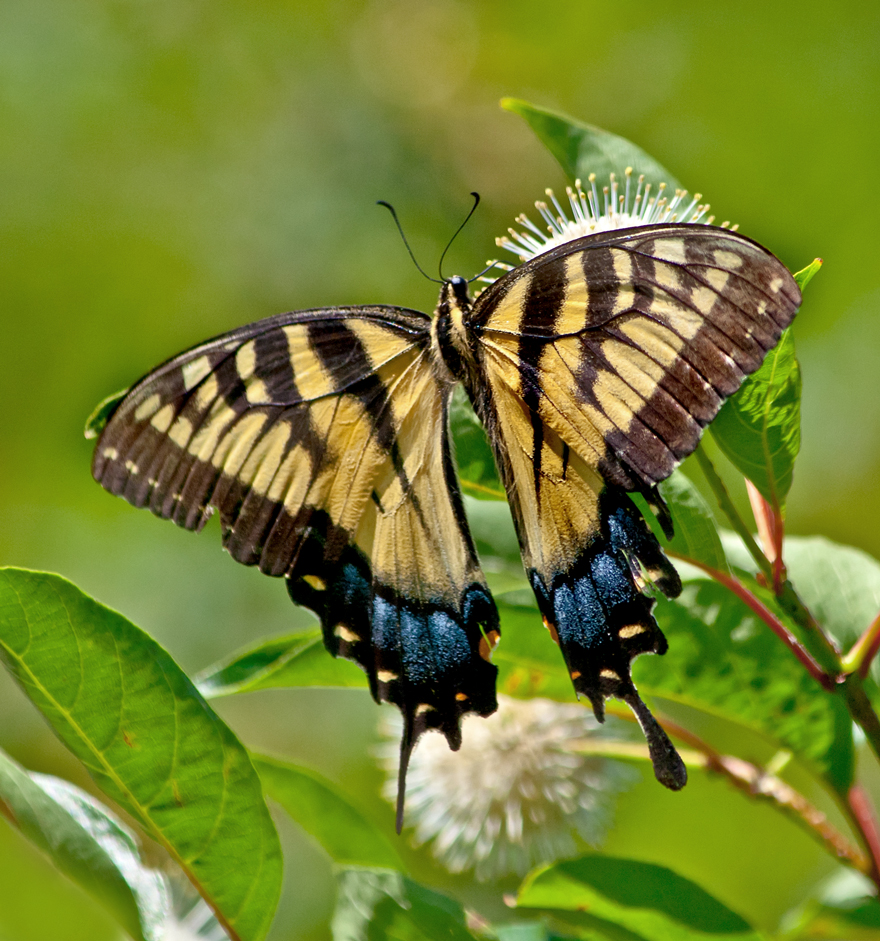
How many kinds of black swallowtail butterflies can there possibly be? Until yesterday, the only black swallowtail that I had ever encountered was the black variant of the female Eastern Tiger Swallowtail. (Check out my posting from last year to see the two variants of the female Eastern Tiger Swallowtail, a characteristic known as dimorphism.)
Yesterday, while walking along the boardwalk at my local marshland park, I came across a black butterfly feeding on a Buttonbush. Clearly it was a swallowtail and it was equally obvious that it was not an Eastern Tiger Swallowtail. I remembered that there was another black swallowtail called a Spicebush, so I figured that was what it had to be. When I checked out the photos of the Spicebush Swallowtail on-line, though, none of them seemed to match my butterfly exactly.
It was only today, when I was looking through photos with my photograph mentor, Cindy Dyer, that I realized that there was yet another black swallowtail and have concluded that the unknown butterfly is almost certainly a Pipevine Swallowtail butterfly (Battus philenor). It looks a lot like the Spicesbush, but the pattern of the orange dots are different, as pointed out in this posting by Don Lambert on the Earth Science Picture of the Day blog.

© Michael Q. Powell. All rights reserved
Posted in Butterflies, Flowers, Gardening, Insects, Macro Photography, Nature, Photography | Tagged Alexandria VA, Battus philenor, butterfly, Buttonbush, Canon 55-250mm zoom lens, Canon Rebel XT, Huntley Meadows Park, Pipevine Swallowtail, Pipevine Swallowtail butterfly | 11 Comments »
July 20, 2013 by Mike Powell
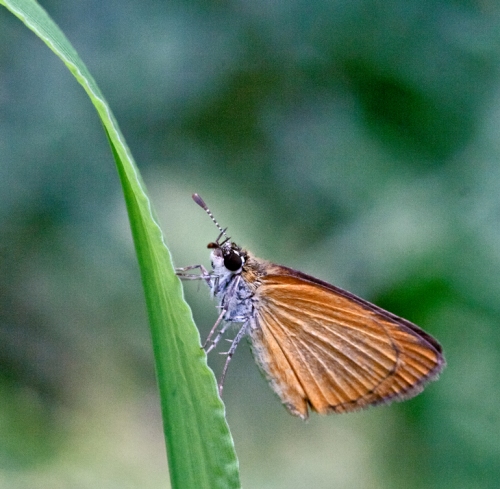
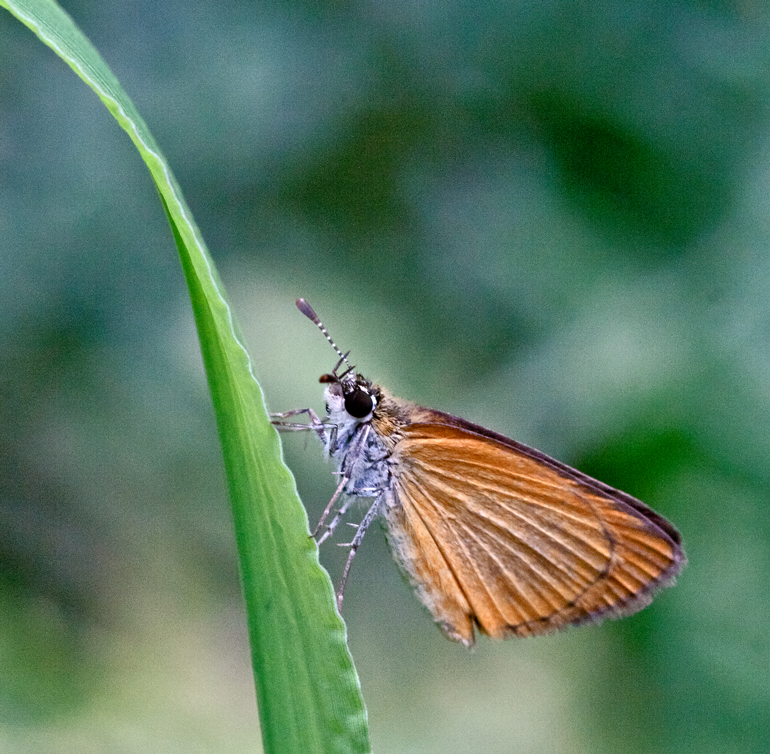
Although I enjoy chasing after large, colorful insects, I also will try to get shots of the smaller ones too, like this tiny butterfly that I think is a Least Skipper (Ancyloxypha numitor). Somehow this little butterfly struck me as having an attitude—maybe it’s because it looks like he is wearing a pair of Ray-Ban aviator sunglasses, like an insect Tom Cruise.
© Michael Q. Powell. All rights reserved
Posted in Butterflies, Flowers, Gardening, Insects, Macro Photography, Nature, Photography | Tagged Alexandria VA, Ancyloxypha numitor, Canon 100mm macro lens, Canon Rebel XT, Least Skipper, skipper | 1 Comment »
July 19, 2013 by Mike Powell
Have you ever watched an animal sleep? I used to watch my dog sleep. He slept soundly, but sometimes a sound or a smell or a dream would wake him up. He would look around a little to reassure himself that all was well and then would put down his head and go back to sleep.
Yesterday, I did a posting on a trio of North American beavers (Castor canadensis) that had been temporarily flooded out of their lodge and were sleeping on dry land a short distance from their home. The general response to the photo in that posting was that the beaver seemed peaceful and content (and cute!) when sleeping.
Today, I am posting a few photos of the occasions when one of the beavers woke up and looked around, much like my dog used to do. This is actually not the same beaver that was featured yesterday, although part of this beaver was visible in the photo yesterday. This beaver was the one on which the other beaver was leaning as it snuggled.
The first photo shows a pretty alert beaver, leaning on a stump around which the beavers were sleeping. I like the details that you can see of the fur and of the front paw. I was on a boardwalk at my local marshland park when I took these photos and was looking slightly down at the beavers. I was so close that I did not even have to use the full length of my zoom lens and, for example, shot the first photo with my lens at a focal length of 135mm.
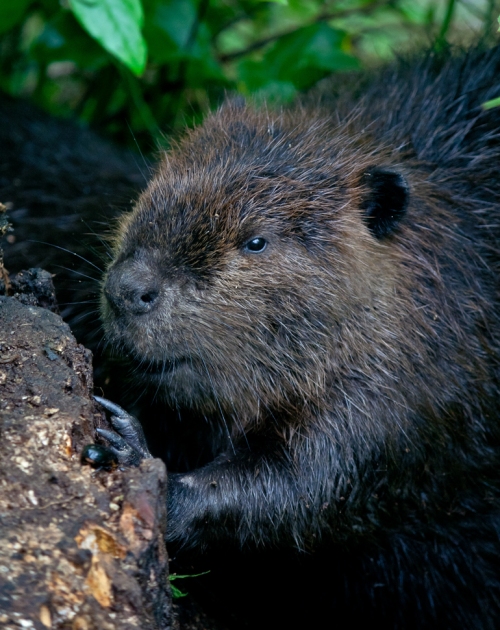
The second shot is somewhat similar to the first, but it shows part of the beaver’s tail. It was interesting to see how the beaver’s tail was tucked under the beaver when it was sleeping. I somehow had always assumed the tail was rigid—it seems to be reasonably flexible.
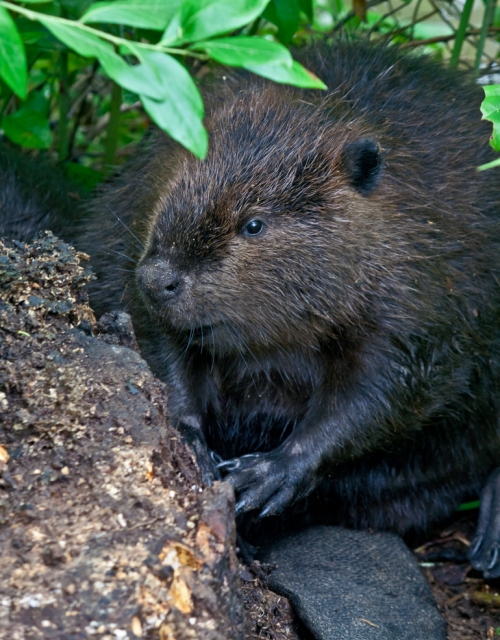
The final image today is not quite as sharp as the first two, but I like it because of the way that it shows both a front and back paw, as well as the tail. The beaver also has a tousled look and somehow unfocused eyes, looking a lot like most of us do when we first wake up.
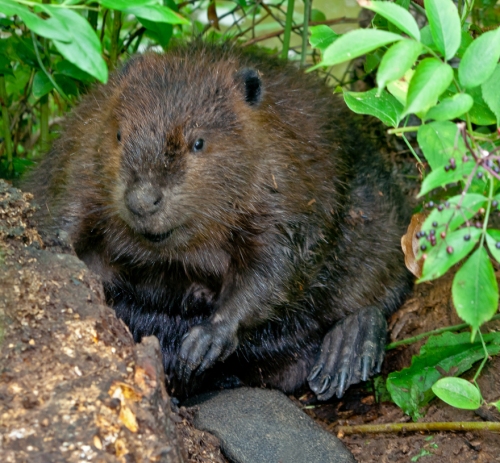
I am still going over my photos and may post a few more, so stay tuned. I feel really lucky that I was able to see these beavers in this kind of situation in the wild and managed to capture it well enough in photos to be able to share part of the experience with all of you.
© Michael Q. Powell. All rights reserved
Posted in animals, Humor, Macro Photography, Nature, Photography, wildlife | Tagged beaver, Canon 55-250mm zoom lens, Canon Rebel XT, Castor canadensis, Huntley Meadows Park, North American Beaver | 9 Comments »
July 18, 2013 by Mike Powell
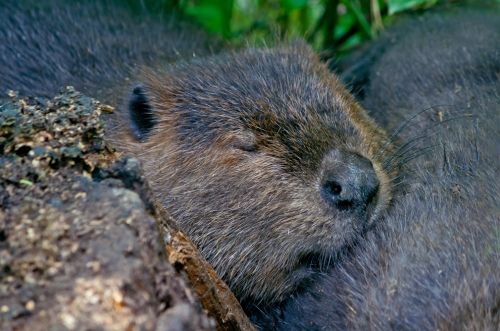
Last Friday, after some violent thunderstorms, I visited my local marshland park, where the staff alerted me that three beavers were sleeping on a patch of dry land near their lodge, which apparently had flooded. The three North American Beavers (Castor canadensis) were all snuggled together and reminded me a little of puppies. I am working up some more images, but thought that I would give a sneak preview of coming attractions.
© Michael Q. Powell. All rights reserved
Posted in animals, Nature, Photography, wildlife | Tagged Alexandria VA, beaver, Canon 55-250mm zoom lens, Canon Rebel XT, Castor canadensis, Huntley Meadows Park, North American Beaver | 24 Comments »
July 18, 2013 by Mike Powell
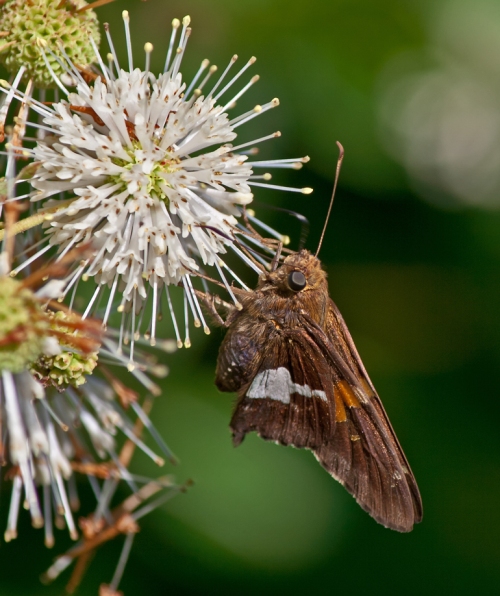
Can you name the most recognized Skipper in North America? According to Wikipedia, it’s the Silver-spotted Skipper butterfly (Epargyreus clarus), shown here clinging to a Buttonbush (Cephalanthus occidentalis) in a shot I took recently at my local marshland park.
I love the spiky look of the Buttonbush and it seems to attract a lot of butterflies. The skipper’s colors may be a little drab, but I am happy that it is easy to identify, given that there are over 3500 different species of skippers, according to a different article in Wikipedia.
© Michael Q. Powell. All rights reserved
Posted in Butterflies, Flowers, Gardening, Macro Photography, Nature, Photography | Tagged Buttonbush, Canon 55-250mm zoom lens, Canon Rebel XT, Cephalanthus occidentalis, Epargyreus clarus, Huntley Meadows Park, Silver-spotted Skipper butterfly, skipper | 7 Comments »
July 18, 2013 by Mike Powell
All of the photos that I have posted this year of the Eastern Pondhawk dragonfly (Erythemis simplicicollis) have been of females, which are a beautiful emerald green, but I think that you will agree that the male in this photo is equally stunning. I love the mixture of blue and green on its body and was particularly happy to capture this one perched on a colorful flower.
This is a shot from couple of weeks ago, when I was able to borrow my friend’s Nikon D7000 and Tamron 180mm macro lens for a little while while we were shooting at Kenilworth Aquatic Gardens in the District of Columbia. Every time that I look over the images that I shot, I am impressed by the results that I was able to achieve with a “foreign” camera—normally I shoot with a Canon.

© Michael Q. Powell. All rights reserved
Posted in Art, Dragonflies, Insects, Macro Photography, Nature, Photography | Tagged dragonfly, Eastern Pondhawk, Eastern Pondhawk dragonfly, Erythemis simplicicollis, Kenilworth Aquatic Gardens, Nikon D7000, Tamron 180mm macro, Washington DC | 11 Comments »
July 17, 2013 by Mike Powell
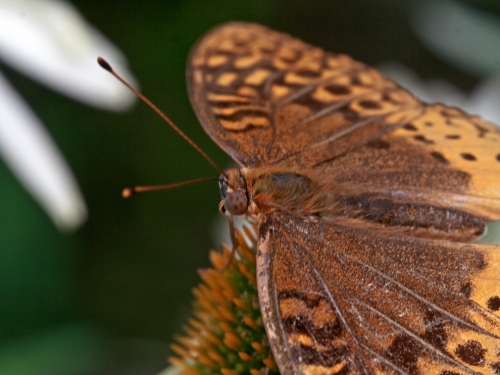
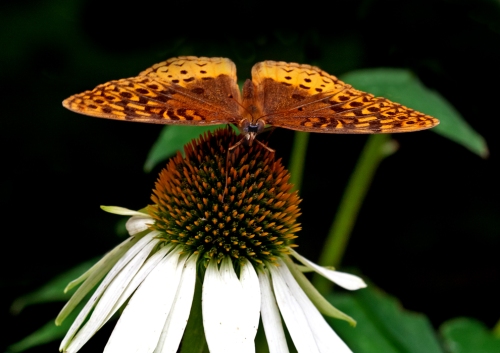
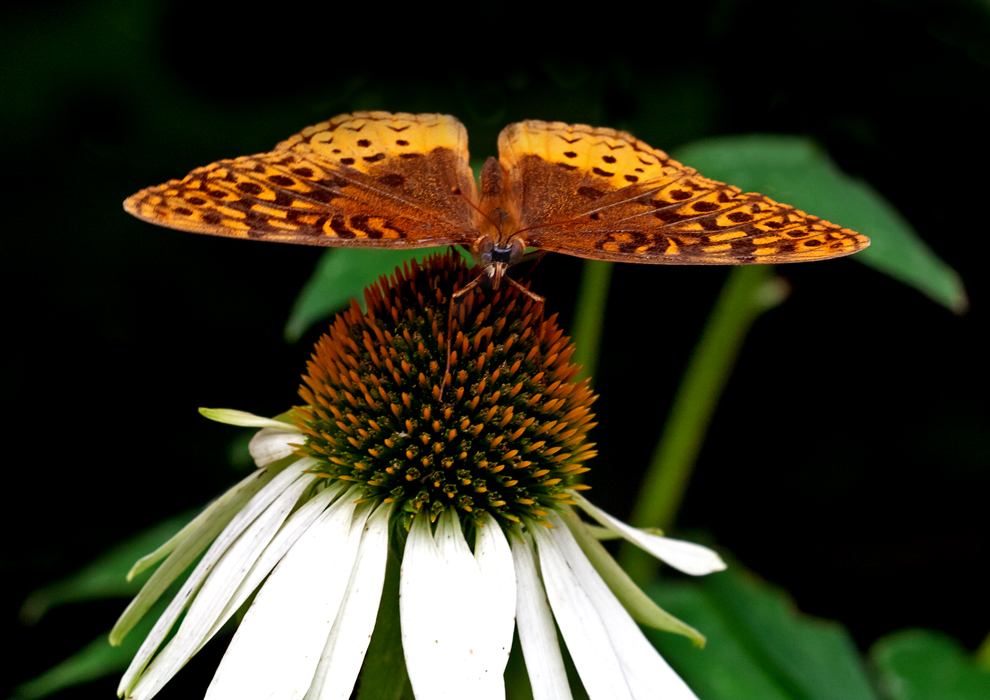
This Great Spangled Fritillary butterfly (Speyeria cybele) was so cooperative that I was able to get amazingly close to it with my 100mm macro lens and photograph it from some unusual angles.
This is the third (and final) posting from this session with the Fritilary (I love saying the butterfly’s name) and I realize that I have moved in a kind of progression. My first posting showed the butterfly from a “normal” perspective. Then I shifted to a somewhat unusual perspective in the second posting by shooting from below the butterfly.
In these final shots, I tried to get eye-to-eye with the fritillary. In the first image, I was almost directly over the butterfly and managed to capture some wonderful details. Who knew the butterfly would be so hairy? In the second shot, I tried to put myself on the same level as the Fritillary as it got nectar from a beautiful white cone flower. If you want to see the photos in greater resolution, click on the images.
© Michael Q. Powell. All rights reserved
Posted in Art, Butterflies, Flowers, Gardening, Insects, Macro Photography, Nature, Photography | Tagged Alexandria VA, Canon 100mm macro lens, Canon Rebel XT, Fritillary, Great Spangled Fritillary, Great Spangled Fritillary butterfly, Speyeria cybele | 8 Comments »
July 16, 2013 by Mike Powell
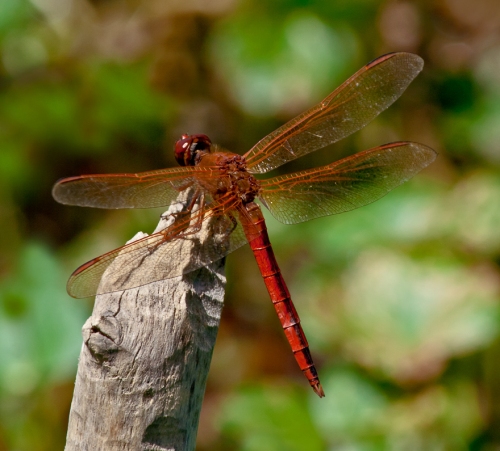
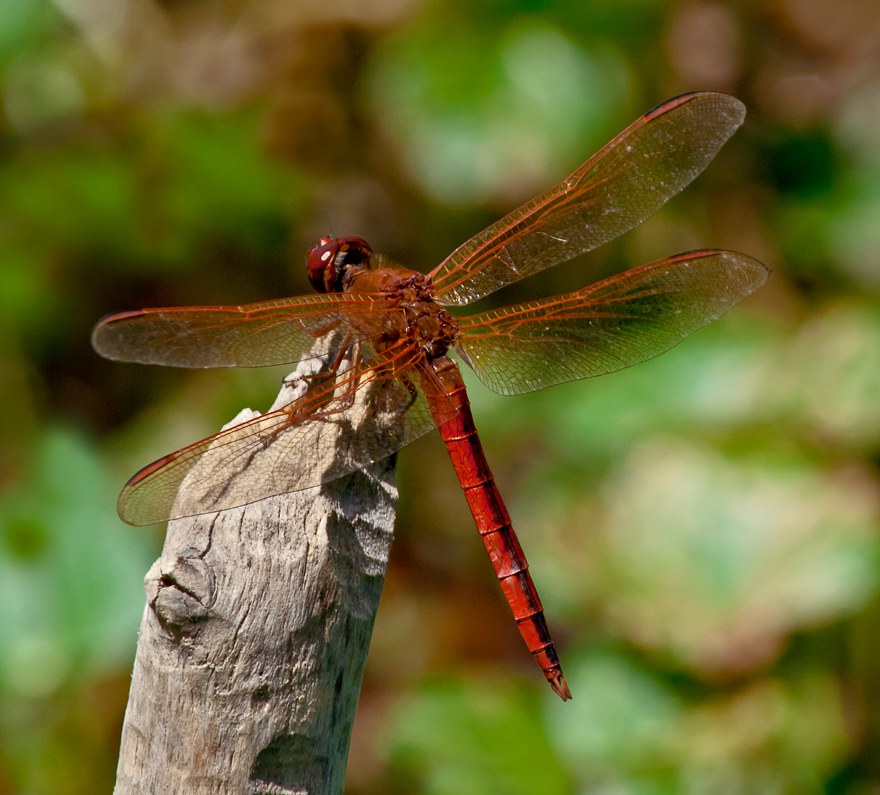
It’s unusual for me to see a red dragonfly, so yesterday I chased around several of them and have concluded that they are probably Needham’s Skimmer dragonflies (Libellula needhami), a species that I have never before encountered.
In addition to the red-orange bodies, these dragonflies have reddish-brown veins in their wings, which make them very striking. There is another species, Golden-winged skimmers (Libellula auripennis), that is supposed to look like the Needham’s Skimmers, so I may be off in my identification—I will leave the final call to experts.
I’m keeping my eyes open and hope that I’ll be able to find a few more species that are new to me before the summer ends, though it’s tough right now to go outdoors with temperatures in the daytime around 95 degrees F (35 degrees C) and very humid.
© Michael Q. Powell. All rights reserved
Posted in Dragonflies, Insects, Nature, Photography | Tagged Canon 55-250mm zoom lens, Canon Rebel XT, dragonfly, Huntley Meadows Park, Libellula needhami, Needham's Skimmer, Needham's Skimmer dragonfly, red dragonfly | 8 Comments »
July 16, 2013 by Mike Powell
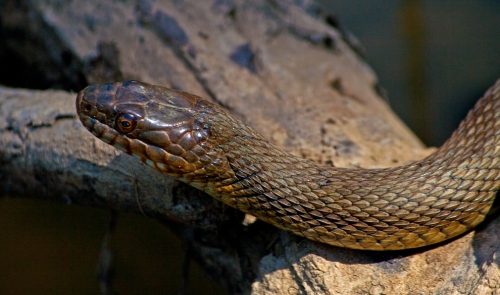
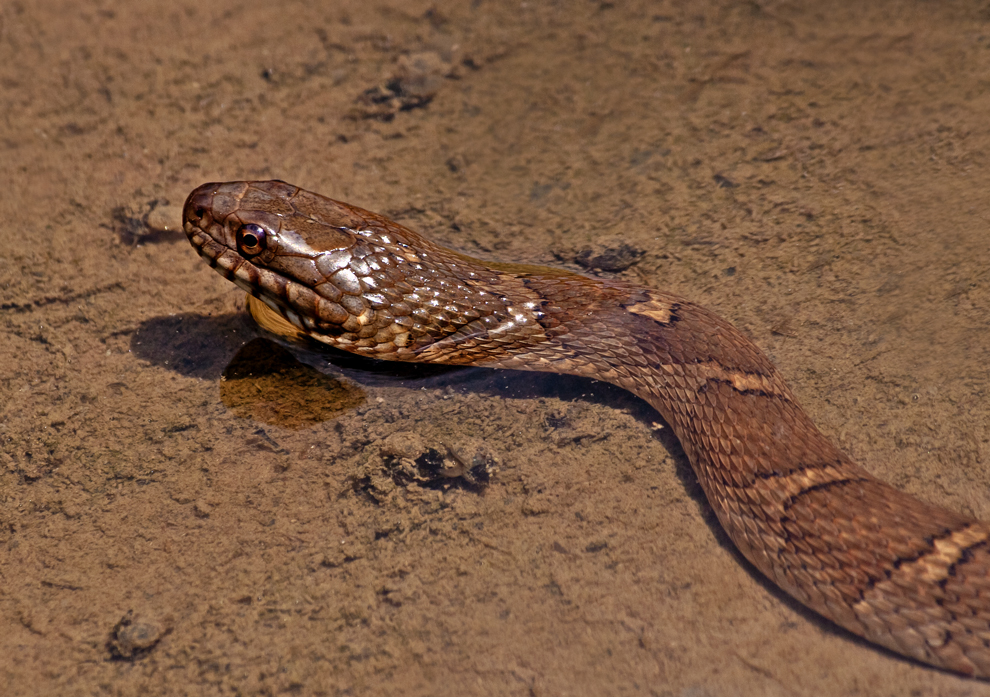
Soaring summer temperatures have caused the water level in some areas of my marshland park to drop and Northern Water snakes (Nerodia sipedon) can now be seen trolling these shallow waters for prey. Yesterday, in one small area I saw three of these snakes and managed to get shots of two them.
Sometimes the snakes will sit on brush and logs just above the level of the water, as in the first photo, while in other cases they submerge their bodies in the water, with their heads sticking out of the water, as in the second photo.
I like the way that the first image shows the details of the snake’s scales and like how the second photo highlights the marking on the snake’s body (and realize that some folks may find both images to be creepy).
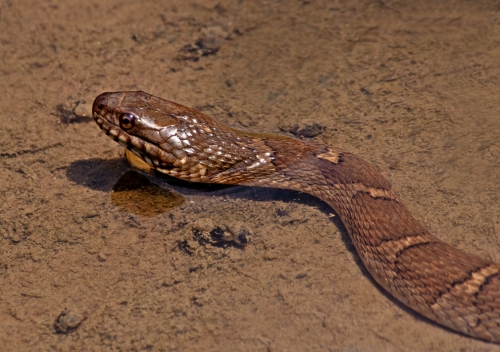
© Michael Q. Powell. All rights reserved
Posted in Macro Photography, Photography, poetry, Reptiles, wildlife | Tagged Canon 55-250mm zoom lens, Canon Rebel XT, Huntley Meadows Park, Nerodia sipedon, Northern Water Snake, snake | 6 Comments »
July 15, 2013 by Mike Powell
I am always amazed that butterflies can fly with wings that are severely damaged. This morning I encountered this beautiful female Eastern Tiger Swallowtail butterfly (Papilio glaucus) that had suffered some major damage to the area where the wings attach to the body. Despite the tears to the wings, the butterfly seemed unhindered in its flight and was busily at work, flying from bush to bush.
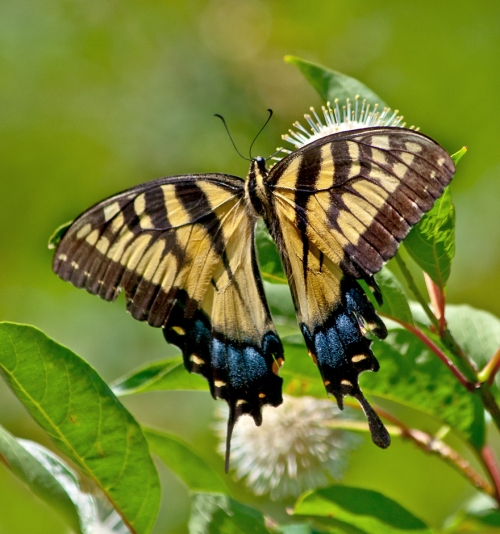
© Michael Q. Powell. All rights reserved
Posted in Butterflies, Flowers, Gardening, Insects, Macro Photography, Nature, Photography | Tagged Alexandria VA, Buttonbush, Canon 55-250mm zoom lens, Canon Rebel XT, Eastern Tiger Swallowtail, Eastern Tiger Swallowtail butterfly, Huntley Meadows Park, Papilio glaucus, swallowtail | 7 Comments »
July 15, 2013 by Mike Powell
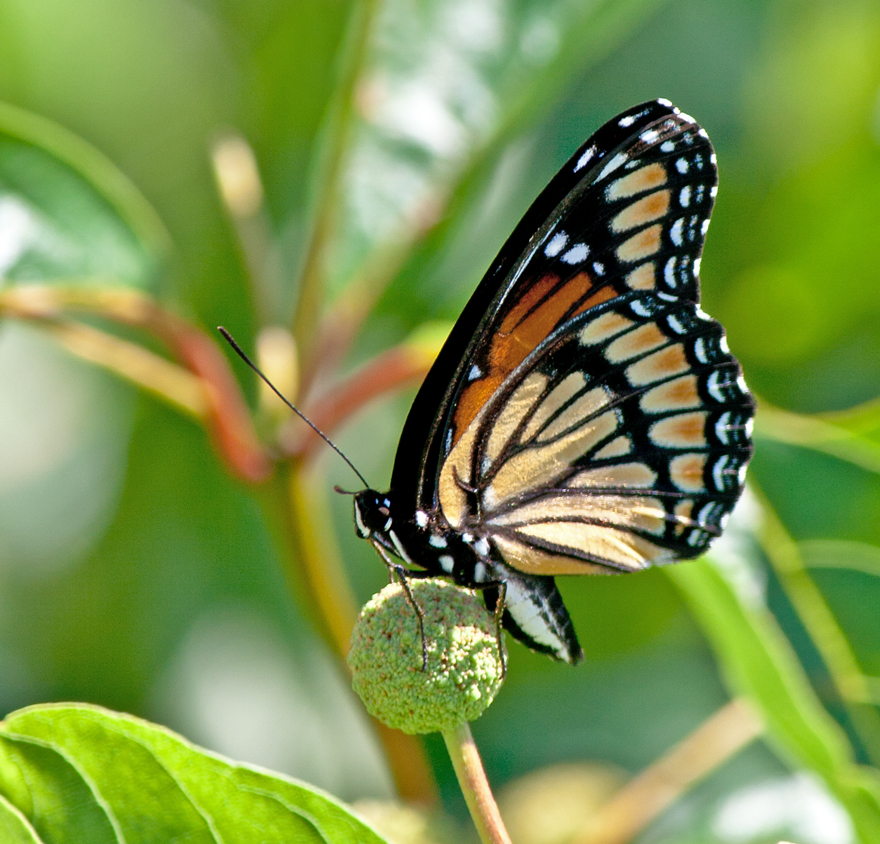
I haven’t seen a huge number of butterflies this summer, so I was happy to see a colorful butterfly this past weekend, which I believe is a Monarch butterfly (Danaus plexippus).
UPDATE: My tentative identification as a Monarch was not correct. Thanks to Jeremy Sell at The Life of Your Time for his help in identifying this as a Viceroy butterfly (Limenitis archippus archippus).
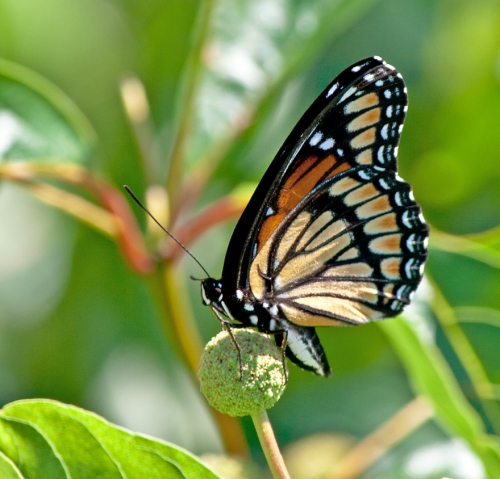
© Michael Q. Powell. All rights reserved
Posted in Butterflies, Flowers, Gardening, Insects, Macro Photography, Nature, Photography | Tagged Alexandria VA, butterfly, Canon 55-250mm zoom lens, Canon Rebel XT, Danaus plexippus, Huntley Meadows Park, Limenitis archippus archippus, Monarch, monarch butterfly, Viceroy butterfly | 13 Comments »
July 14, 2013 by Mike Powell
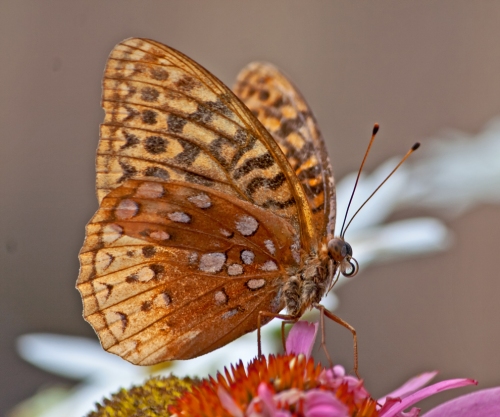
It was fun chasing this Great Spangled Fritillary butterfly (Speyeria cybele) around my neighbors’ garden as it moved from flower to flower. I tried to capture it from different perspectives and got some artsy looking shots that I really like.
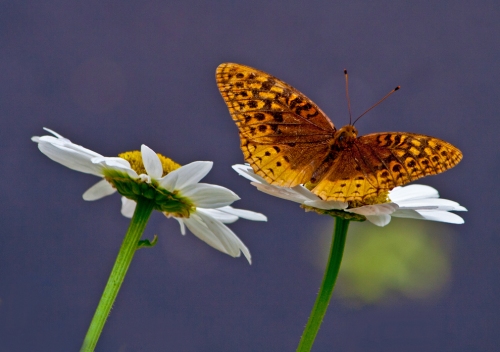
© Michael Q. Powell. All rights reserved
Posted in Art, Butterflies, Flowers, Gardening, Insects, Macro Photography, Nature, Photography | Tagged Alexandria VA, butterfly, Canon 55-250mm zoom lens, Canon Rebel XT, Great Spangled Fritillary, Great Spangled Fritillary butterfly, Speyeria cybele | 10 Comments »
July 14, 2013 by Mike Powell
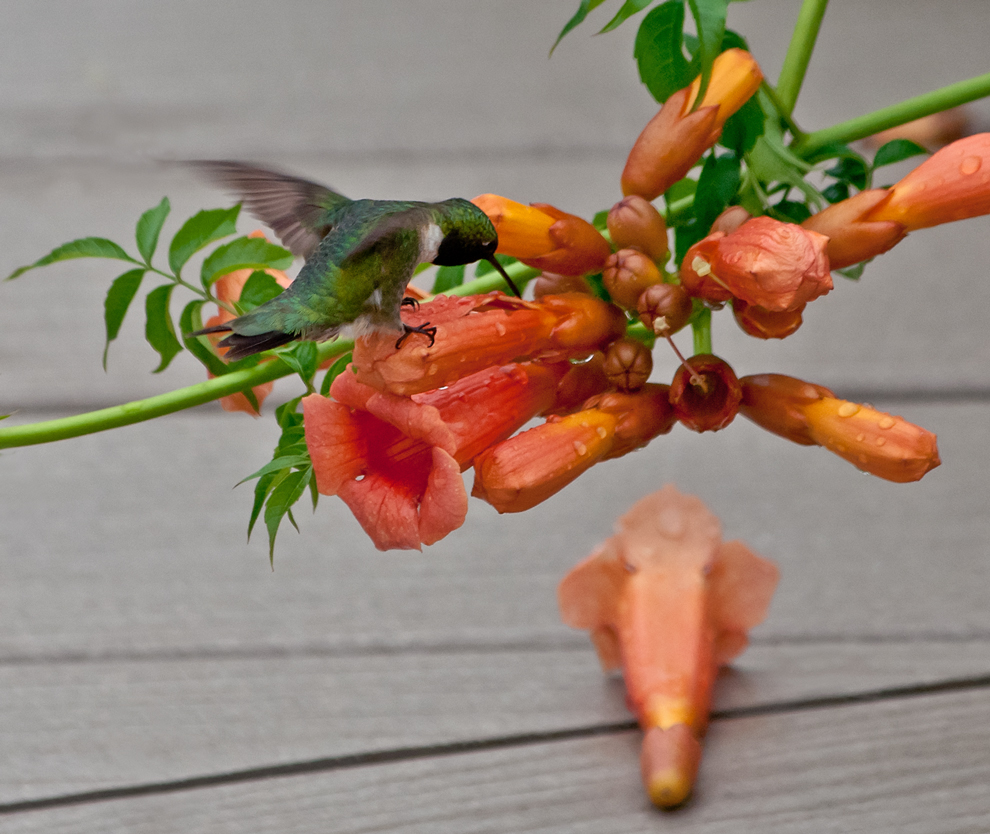
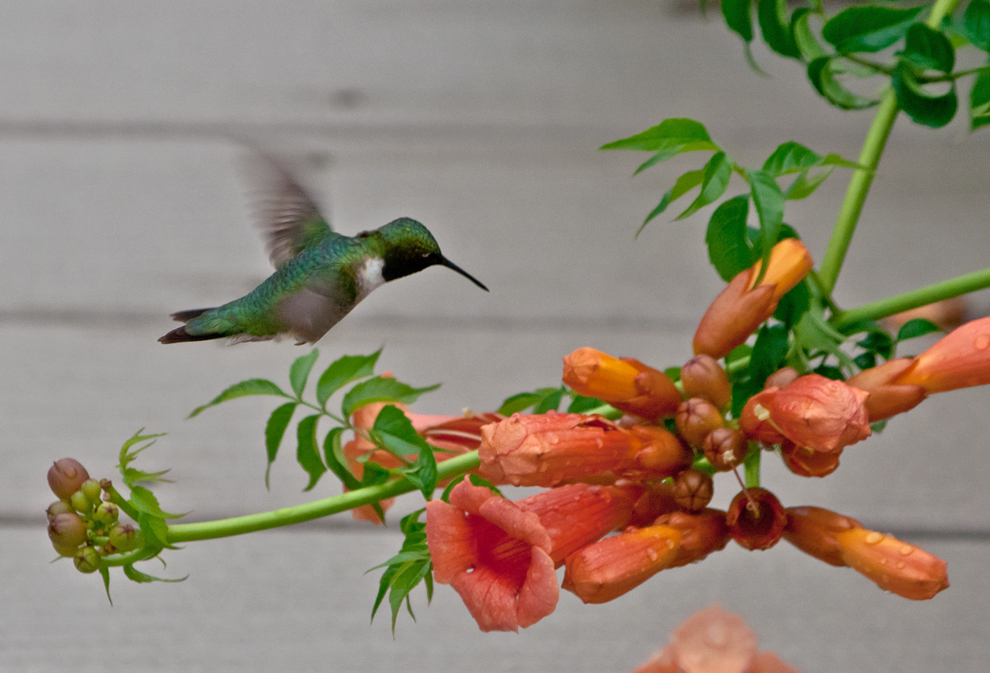
How do you get a sharp photo of a hummingbird’s wings? Apparently, if a hummingbird is hungry enough, it will extract the nectar from a flower before it has bloomed, and the leverage required may force it to perch on the flower, doing away with the necessity to fly its wings rapidly.
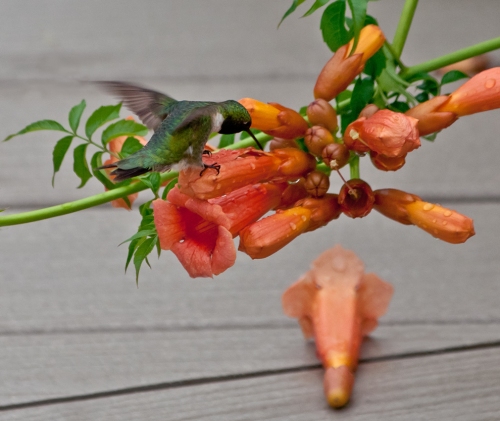
Walking on the boardwalk at my local marshland park, the last thing on my mind was a hummingbird—I was searching for butterflies and dragonflies. As I turned a corner, I saw a flash of color and figured it was a butterfly. I took a closer look and realized it was a hummingbird, a Ruby-throated Hummingbird (Archilochus colubris).

The hummingbird was circling around a plant with red, trumped-shaped flowers that was partially hanging over the boardwalk. Most of the flowers had not yet bloomed, so the bird seems to have decided to use its bill to drill into the side of the unopened flowers to extract the nectar. That decision was largely responsible for me being able to get some shots, because it caused the hummingbird to hang around longer.
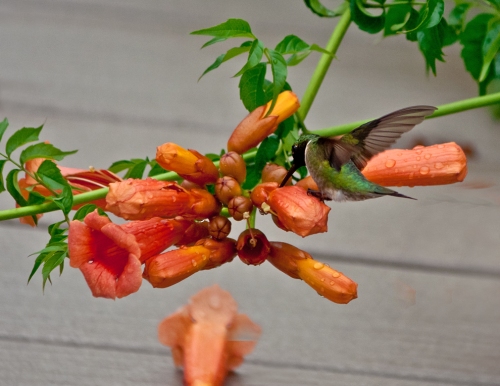
I realized that I had a limited window of opportunity and made a quick adjustment to my camera to increase the shutter speed of my camera, although that meant I had to narrow my depth of field. I also ended up shooting downward, with the gray composite boards of the boardwalk as the background. It was definitely a challenge to keep the camera focused on the hummingbird.
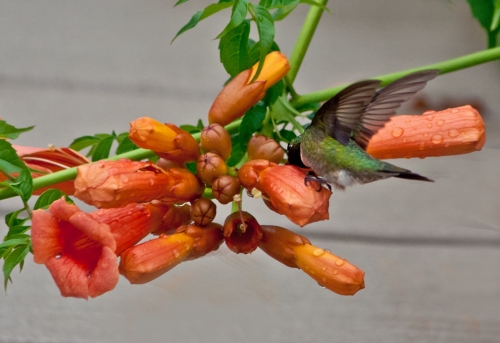
The photos are not perfect, but I am pretty happy that I was able to get photos at all, given that this is only the second time that I have seen a hummingbird in the wild. Next time, perhaps I’ll manage to get a more traditional shot of a hummingbird hovering in the air.
© Michael Q. Powell. All rights reserved
Posted in Birds, Flowers, Gardening, Nature, Photography | Tagged Alexandria VA, Archilochus colubris, Canon 55-250mm zoom lens, Canon Rebel XT, hummingbird, Huntley Meadows Park, Ruby-throated Hummingbird | 9 Comments »
July 13, 2013 by Mike Powell
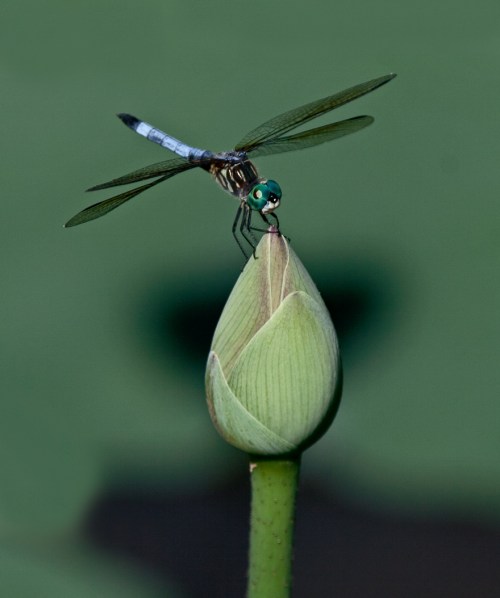
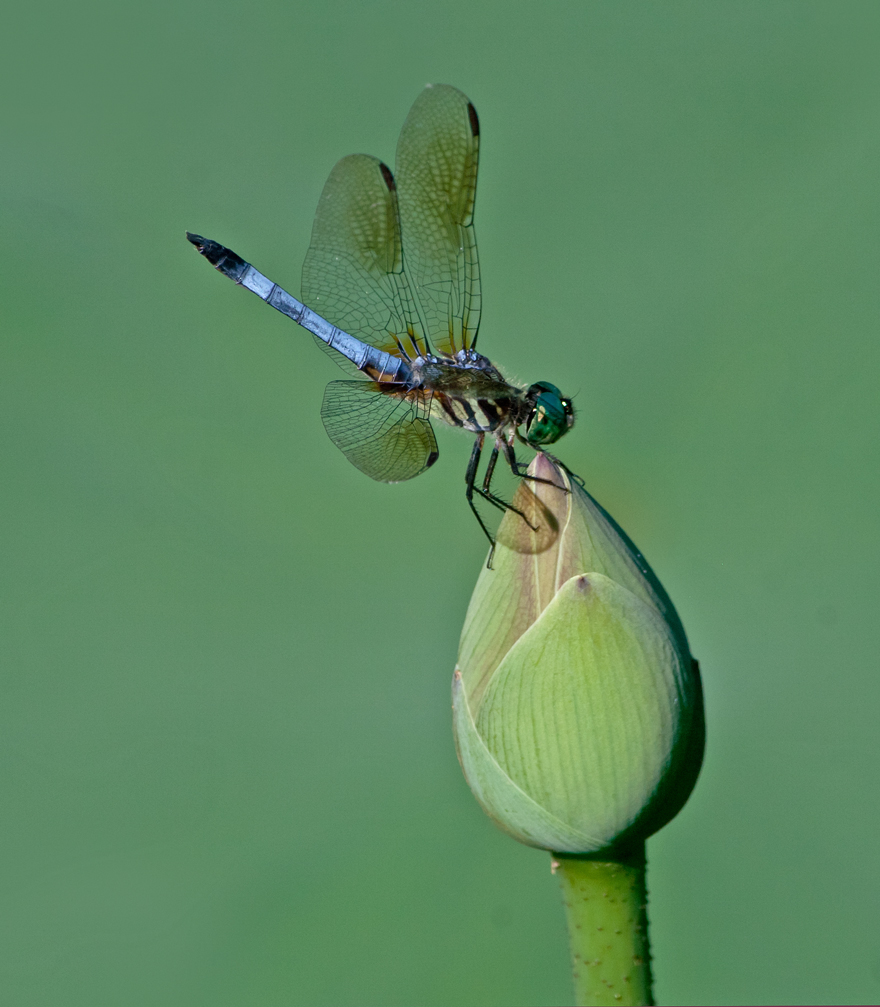
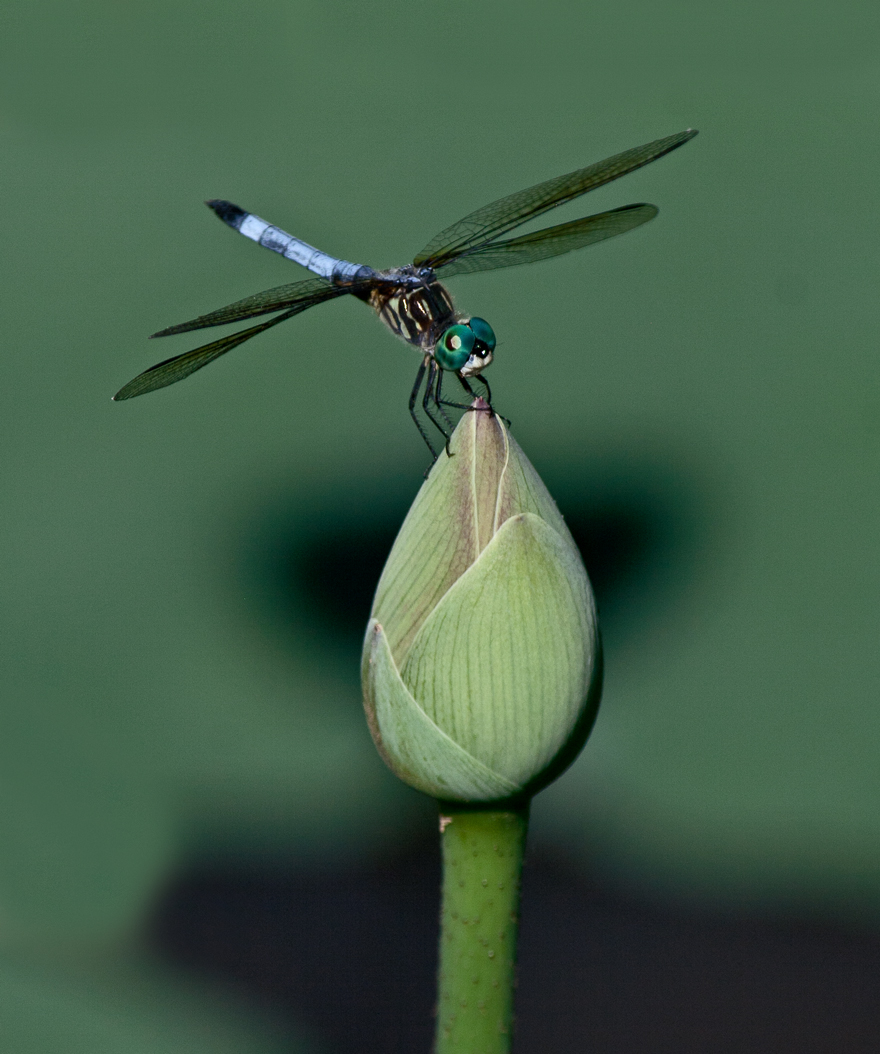
Having spotted some lotus flower buds at the aquatic garden last weekend, I remember thinking how cool it would be to see a dragonfly perching on a lotus bud and then it happened—a male Blue Dasher dragonfly (Pachydiplax longipennis) landed on the tip of one of the buds.
When stalking dragonflies, I always hope that they will choose a photogenic perch, but most of the time the perches are nondescript, at best, and the background is often cluttered.
I would like to claim that I have special powers as a dragonfly whisper, but I was unusually fortunate and am happy that I was able to get some good photos when the circumstances presented themselves.

 © Michael Q. Powell. All rights reserved
Posted in Dragonflies, Flowers, Insects, Macro Photography, Nature, Photography | Tagged Blue Dasher, Blue Dasher dragonfly, Canon 55-250mm zoom lens, Canon Rebel XT, Kenilworth Aquatic Gardens, Pachydiplax longipennis, Washington DC | 8 Comments »
July 13, 2013 by Mike Powell
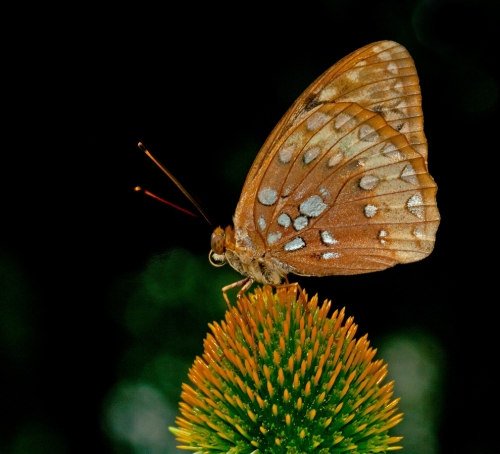
I continue to be amazed at the insects that visit my neighbors’ garden and yesterday I was thrilled to see this Great Spangled Fritillary butterfly (Speyeria cybele). The beautiful butterfly moved around a lot among the flowers and even returned after flying away, which gave me time to change lenses.
I took this shot of the butterfly on a cone flower with my 100mm macro lens. I wanted take the photograph at eye-level with the butterfly, but initially the background was too cluttered and there was too much light coming from the back, which caused the butterfly to be shadowy. I decided to use my pop-up flash, suspecting that the background would go black and the detail of the butterfly would be revealed, which is what happened.
The result looks a little bit artificial, but I like the effect that I managed to achieve. I am working on a couple more images of the butterfly taken in natural light, so you may see it again soon.
© Michael Q. Powell. All rights reserved
Posted in Art, Butterflies, Flowers, Gardening, Insects, Macro Photography, Nature, Photography | Tagged Alexandria VA, canon 100, Canon Rebel XT, cone flower, Great Spangled Fritillary, Great Spangled Fritillary butterfly, Speyeria cybele | 8 Comments »
July 12, 2013 by Mike Powell
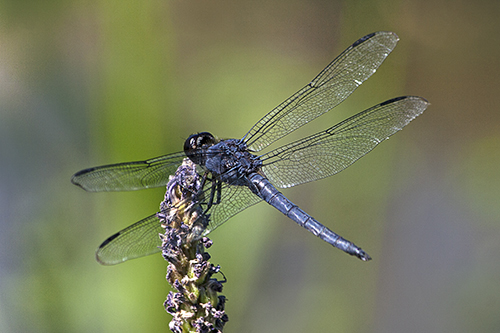
I love the coloration of this male Slaty Skimmer dragonfly (Libellula incesta) that I photographed last weekend at Kenilworth Aquatic Gardens in the District of Columbia. Somehow I was able to get both an interesting perch and a blurred background—all too often I get one or the other.
© Michael Q. Powell. All rights reserved
Posted in Art, Dragonflies, Insects, Macro Photography, Nature, Photography | Tagged Canon 55-250mm zoom lens, Canon Rebel XT, dragonfly, Kenilworth Aquatic Gardens, Libellula incesta, Slaty Skimmer, Slaty Skimmer dragonfly, Washington DC | 2 Comments »
July 12, 2013 by Mike Powell
When I first spotted this dragonfly, I thought it was a wasp—it was that small. As I continued to observe it, however, I realized that it was a tiny dragonfly.
Its wings reminded me a little of a Halloween Pennant dragonfly (Celithemis eponina), one of the most exotic-looking dragonflies that I have ever photographed, but it was far too small. (Check out this previous posting for a look at the Halloween Pennant.)
This dragonfly seemed even smaller than the Eastern Amberwing dragonfly (Perithemis tenera), the smallest dragonfly that I had encountered, and I figured it couldn’t be an Eastern Amberwing, because it did not have amber wings. I was wrong. Once again I had allowed myself to be misled by the name of a species. It turns out that this is almost certainly a female Eastern Amberwing, and females have clear wings with brown spots, not amber wings.
I continue to be amazed at the dragonfly’s diminutive size. According to the Field Station at the University of Wisconsin at Milwaukee, Eastern Amberwings are considered to be wasp mimics, because of their coloring, their rapid, erratic flight, and the way they twitch their wings and abdomens when at rest. The Latin name tenera means “tender” or “delicate,” a description that seems to fit this little dragonfly quite well. If you want to learn more about the Eastern Amberwing, you should check out the Field Station website.
Large or small, at rest or in motion, dragonflies are one of my favorite photographic subjects at this time of the year. Their beautiful colors and incredible agility never cease to amaze me.

© Michael Q. Powell. All rights reserved
Posted in Art, Dragonflies, Flowers, Gardening, Insects, Macro Photography, Nature, Photography | Tagged Alexandria VA, Canon 100mm macro lens, Canon Rebel XT, Celithemis eponina, dragonfly, Eastern Amberwing, Eastern Amberwing dragonfly, green spring gardens, Halloween Pennant dragonfly, Perithemis tenera | 1 Comment »
July 11, 2013 by Mike Powell
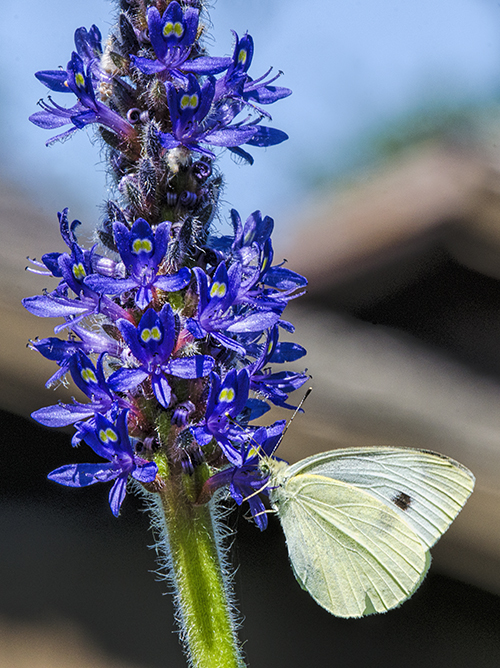
During my trip last weekend to Kenilworth Aquatic Gardens, I used a Nikon D7000 with a Tamron 180mm macro lens to take some shots while my fellow photographer, Cindy Dyer, relaxed in the shade on a hot, steamy day.
I use a Canon, so it was not immediately obvious to me where the controls were for various functions on the Nikon. I didn’t really have much time to poke around in the menus, so I just shot. I knew that the camera was set for aperture priority, but I didn’t realize until later that it was set at f/20. What that meant was that the two shots that I am posting here were shot at 1/100 and 1/80 of a second respectively. I am a little surprised that they came out relatively sharp, because the Tamron lens is pretty heavy and is not a VR lens.
The subject matter is pretty familiar for folks who follow my blog—a Cabbage White butterfly (Pieris rapae) and a Blue Dasher dragonfly (Pachydiplax longipennis). I like the way that both images turned out, with beautiful backgrounds.
Did the Nikon set-up make a difference? It was nice shooting with a camera with a bigger and brighter viewfinder than my Canon Rebel XT, but that is more a function of shooting with a much newer camera. What was especially nice, though, was shooting with a 180mm macro lens. The lens felt comfortable and gave sharp results, even if focusing was a bit slow when it had to move through the full range in autofocus mode.
I probably am not ready to go over to the dark side and embrace a Nikon—in my experience it seemed that the Nikon was different from my Canon, but not necessarily better. I may consider, however, the Tamron 180mm macro lens. I love my Canon 100mm macro lens, but sometimes it would be nice to have that little extra reach and still be able to get true macro results.

© Michael Q. Powell. All rights reserved
Posted in Butterflies, Flowers, Gardening, Insects, Macro Photography, Nature, Photography | Tagged Blue Dasher, Blue Dasher dragonfly, Cabbage White, Cabbage White butterfly, Kenilworth Aquatic Gardens, Nikon D7000, Pachydiplax longipennis, Pieris rapae, Tamron 180mm macro | 5 Comments »
« Newer Posts - Older Posts »
 © Michael Q. Powell. All rights reserved
















 Mike Powell