July 25, 2017 by Mike Powell
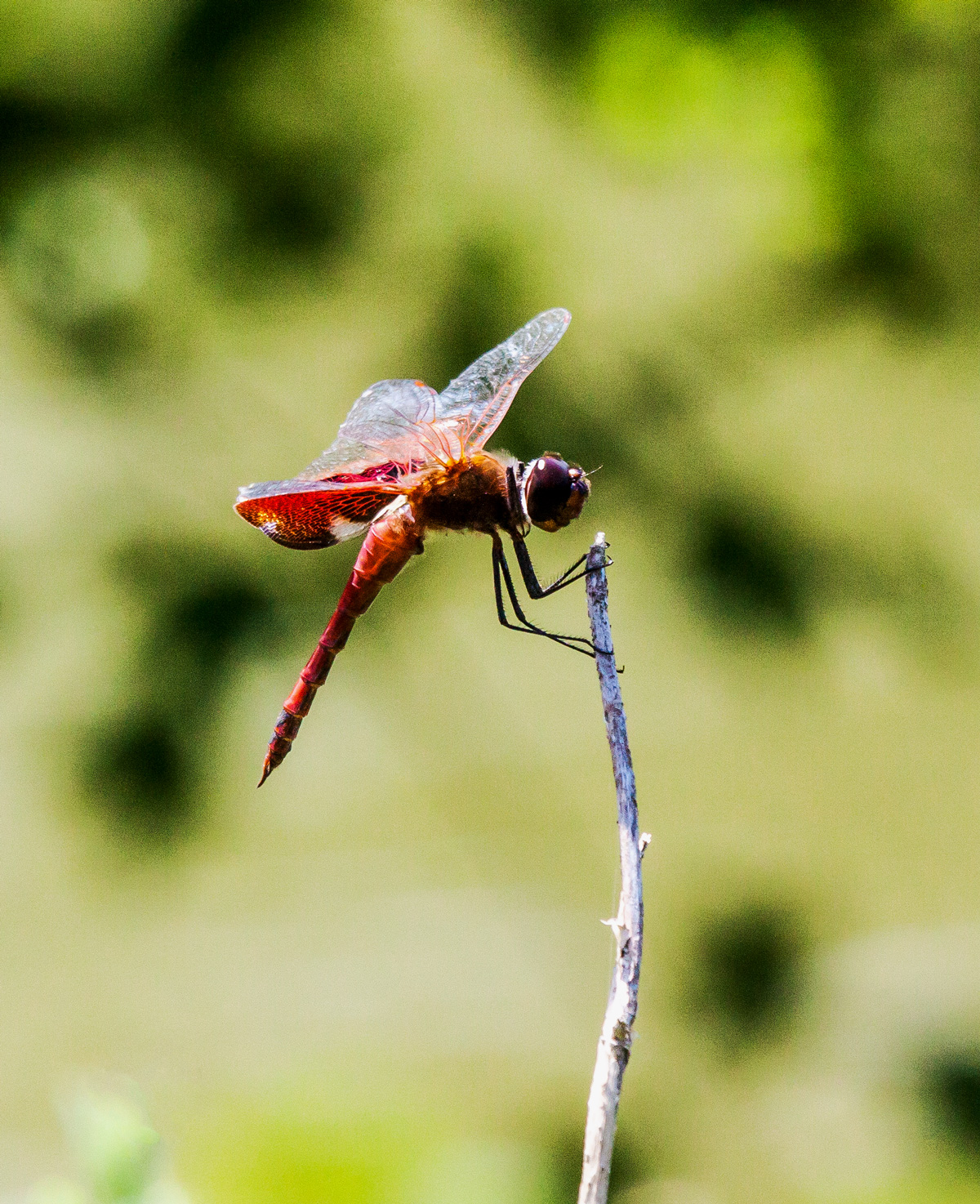
What are Carolina Saddlebags? Luggage for horseback or motorcycle riding? No, Carolina Saddlebags (Tramea carolina) are a species of bright red dragonflies with reddish-brown blotches of color on their hindwings. Why aren’t they Carolina Blue in color? Obviously the folks who named the dragonfly were not fans of the University of North Carolina (UNC) basketball team. (According to Wikipedia, the use of the light blue color at UNC dates back to 1795.)
I first became aware of the Carolina Saddlebags yesterday at Jackson Miles Abbott Wetland Refuge when a flash of red caught my eye. A dragonfly was patrolling over a section of the water and the adjacent grassy area. I tracked it visually and eventually realized it was a saddlebags dragonfly—those blotches of color stand out even when the dragonflies are flying. Most of the saddlebags dragonflies that we encounter in our area are Black Saddlebags (Tramea lacerata), but I was pretty confident that my eyes were seeing the red of the relatively rarer Carolina Saddlebags. I tried to capture some in-flight shots, including the first one below, but eventually lost sight of the dragonfly.
Carolina Saddlebag dragonflies, according to the information on the Dragonflies of Northern Virginia website, are powerful fliers and are one of only a few species that routinely migrate hundreds of miles. Additionally, according to that same website, they rarely perch. As I continued to walk around the small pond of the wildlife refuge, imagine my surprise when I came upon one that was perching.
I didn’t dare approach too closely initially and may well have been holding my breath when I took some preliminary shots. My caution proved to be justified, because the dragonfly flew away when I tried to move forward, even though I was approaching as slowly and as stealthily as I could. Either the dragonfly was skittish or its short rest break was over.
Carolina Saddlebags was not a species that I had seen before at this location and it was not really on my radar. Fortunately I was able to react quickly enough and was lucky enough to get some shots, including the in-flight one as the dragonfly was zooming past me. As I learned in the Boy Scouts, it is always good to be prepared.


© Michael Q. Powell. All rights reserved
Posted in Dragonflies, dragonfly, Insects, Nature, Photography, Summer, wildlife | Tagged Canon 50D, Carolina Saddlebags, Fort Belvoir VA, Jackson Miles Abbott Wetland Refuge, Tamron 180mm, Tramea carolina | 2 Comments »
July 24, 2017 by Mike Powell
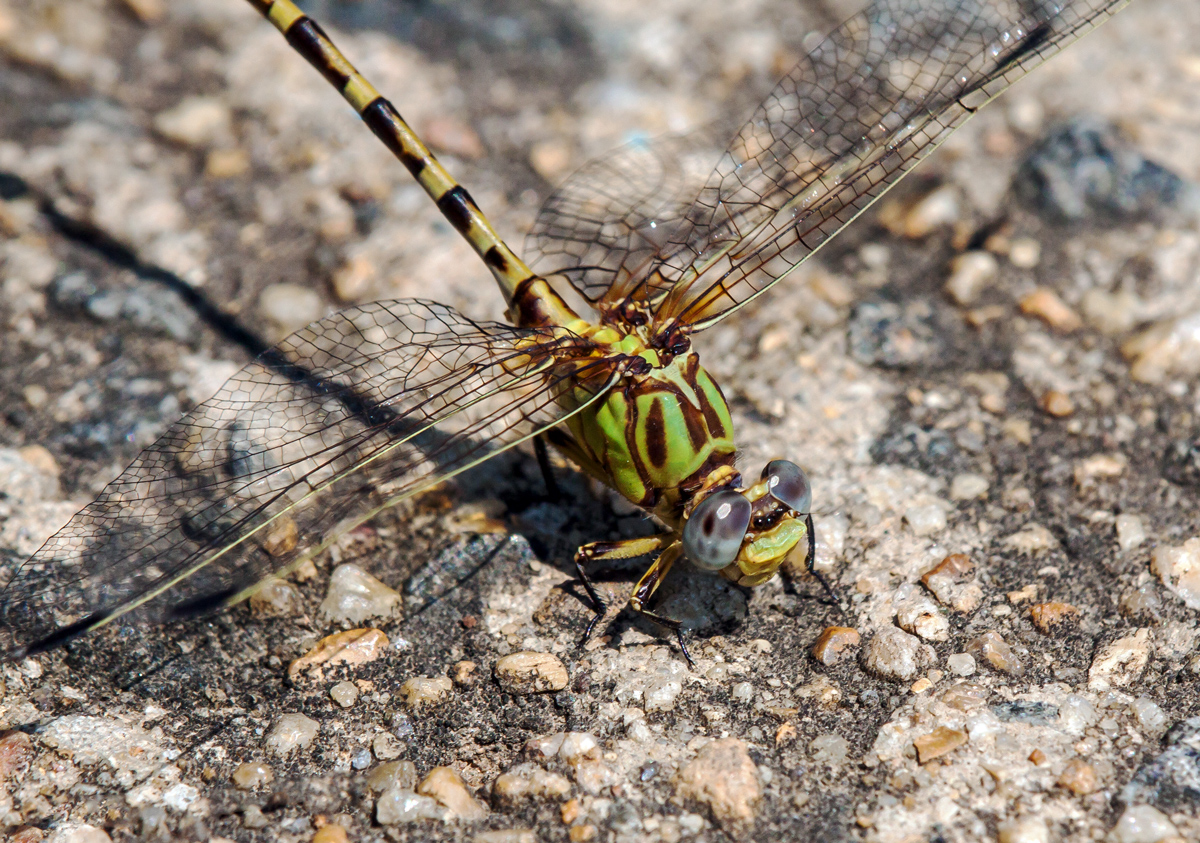
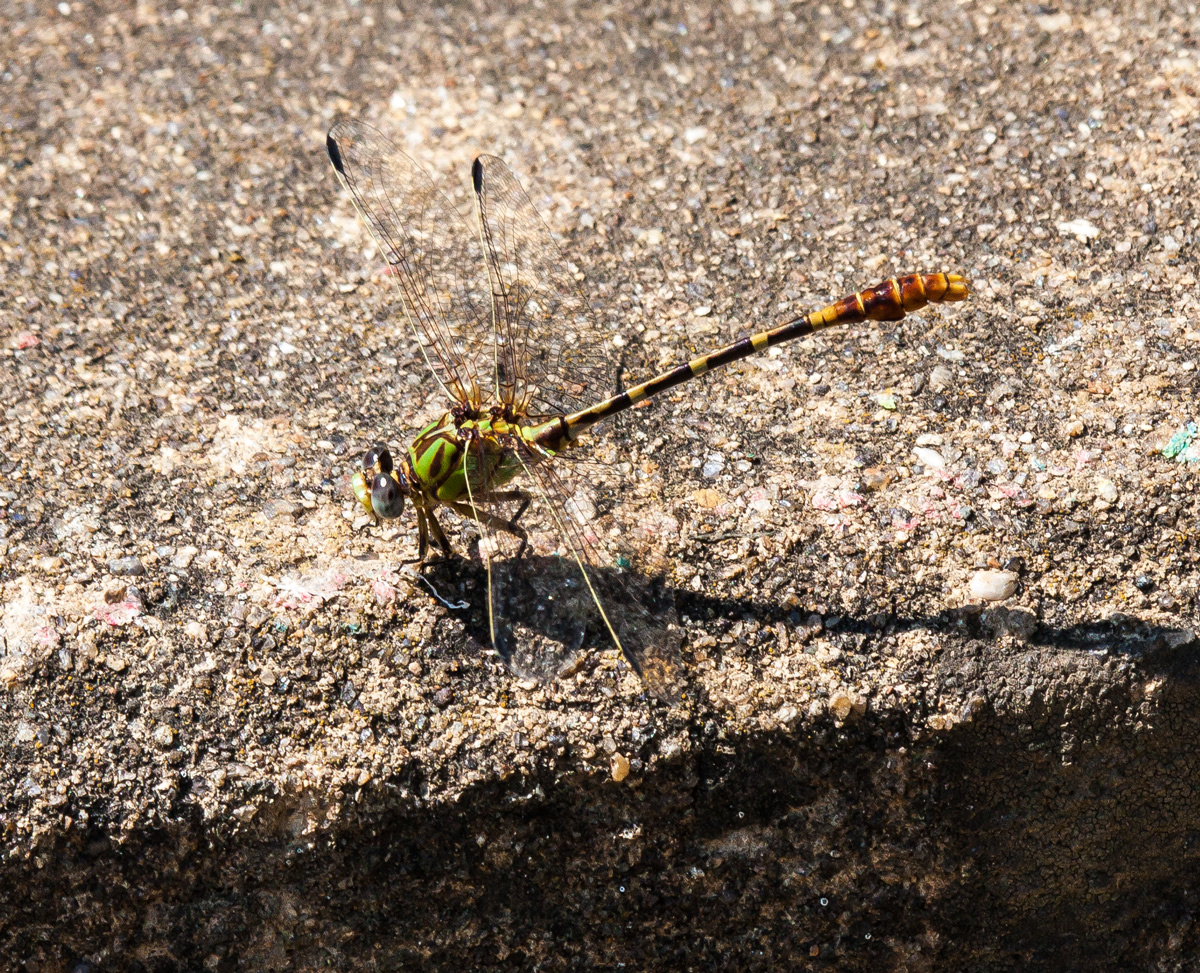
This past week I was excited to see several Eastern Ringtail dragonflies (Erpetogomphus designatus) while exploring Riverbend Park in Great Falls, Virginia. This species is relatively uncommon in our area and I had only encountered one once before at a location in Maryland. Fellow dragonfly enthusiast and photographer Walter Sanford had alerted me to the presence of these dragonflies at the park and their location, so I was fairly confident that I would be able to find some of them. (With wildlife photography there are few guarantees—you can never be sure how long a species will remain at a given location, particularly when it comes to insects like dragonflies that have a limited season.)
Well, I managed to find some Eastern Ringtails and was faced with the challenge of how to photograph them. The bad news was that this species likes to perch on the ground, but the good news was that the ground on which they chose to perch was uncluttered—it was a boat ramp made of some kind of aggregate concrete. The background of these shots is not natural, but it does allow you to see some of the beautiful details of this stunning dragonfly, especially their spectacular blue eyes.


© Michael Q. Powell. All rights reserved
Posted in Dragonflies, dragonfly, Insects, Macro Photography, Nature, Photography | Tagged Canon 50D, Eastern Ringtail, Eastern Ringtail dragonfly, Erpetogomphus designatus, Great Falls VA, Potomac River, Riverbend Park, Tamron 180mm | 6 Comments »
July 23, 2017 by Mike Powell
I have known for a while that hummingbirds are attracted to trumpet vines, so I keep my eyes open whenever I pass a stand of them near the observation tower at Huntley Meadows Park. Yesterday morning I finally lucked out and spotted a female Ruby-throated Hummingbird (Archilochus colubris) in the midst of the trumpet vines (Campsis radicans) and managed to capture these images, including one in which the hummingbird was resting for a few seconds on a branch before resuming her energetic activity.


© Michael Q. Powell. All rights reserved
Posted in Birds, Flowers, Nature, Summer, wildlife | Tagged Alexandria VA, Archilochus colubris, Campsis radicans, Canon 50D, hummingbird, Huntley Meadows Park, Ruby-throated Hummingbird, Tamron 150-600mm, trumpet vine | 2 Comments »
July 22, 2017 by Mike Powell
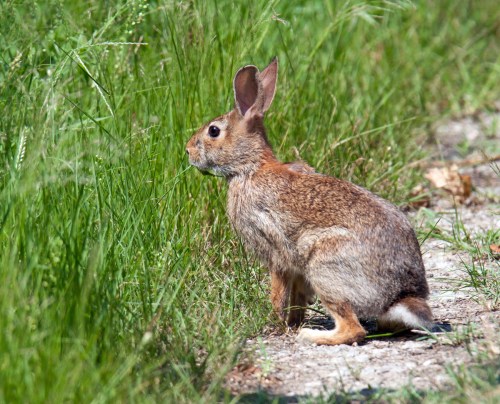
I don’t feature rabbits very often on this blog because I don’t see them very often. Actually that is not entirely accurate—I have a rabbit named Prime Rib who appears from time to time, but I don’t count him, because he does not live in wild and instead lives in a cage in my living room.
At Huntley Meadows Park, where I do a lot of my wildlife photography, I rarely see rabbits. Perhaps the marshy and wooded habitat is less than ideal for the rabbits or perhaps the hawks are brutally efficient at keeping their numbers low. During some recent visits to Occoquan Bay National Wildlife Refuge, which has more open grassy areas, I’ve spotted numerous rabbits and decided to feature a couple of them today.
In a recent posting, I expressed my concern about possibly oversaturating my readers with dragonfly photos. In an exchange of comments, a faithful reader, Dan Antion, shared similar concerns about his photos of rabbits and squirrels and I warned him that I was going venture into his niche and post some rabbit photos. Dan is one of my favorite bloggers and I encourage everyone to check out his blog No Facilities for his humorous and insightful looks at the joys and frustrations of everyday life as well as some great photos, including images of the aforementioned squirrels and rabbits and his faithful dog Maddie.
This one is for you, Dan.

© Michael Q. Powell. All rights reserved
Posted in animals, Nature, Photography, Summer, wildlife | Tagged Canon 50D, Occoquan Bay National Wildlife Refuge, rabbit, Tamron 180mm, Woodbridge VA | 3 Comments »
July 21, 2017 by Mike Powell
When the Eastern Tiger Swallowtail butterfly (Papilio glaucus) that I was chasing at Riverbend Park flew into some vegetation, I thought that I had lost it. Suddenly and almost magically the butterfly’s shadow was revealed on a large leaf as it moved about. I was thrilled to be able to capture the swallowtail shadow as well as a small portion of the butterfly itself.
It’s usually best to shoot with the sun at your back, but it worked out well in this case for me to violate that “rule.”

© Michael Q. Powell. All rights reserved
Posted in Butterflies, Insects, Nature, Photography | Tagged Canon 50D, Eastern Tiger Swallowtail, Eastern Tiger Swallowtail butterfly, Great Falls VA, Papilio glaucus, Riverbend Park, Tamron 180mm | 7 Comments »
July 20, 2017 by Mike Powell
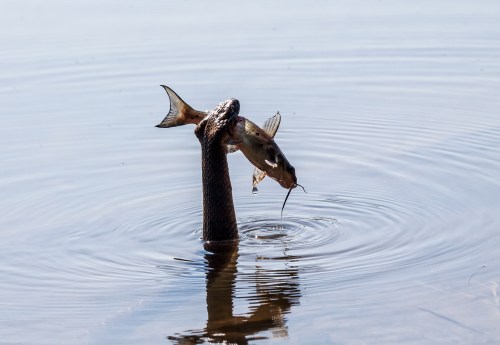
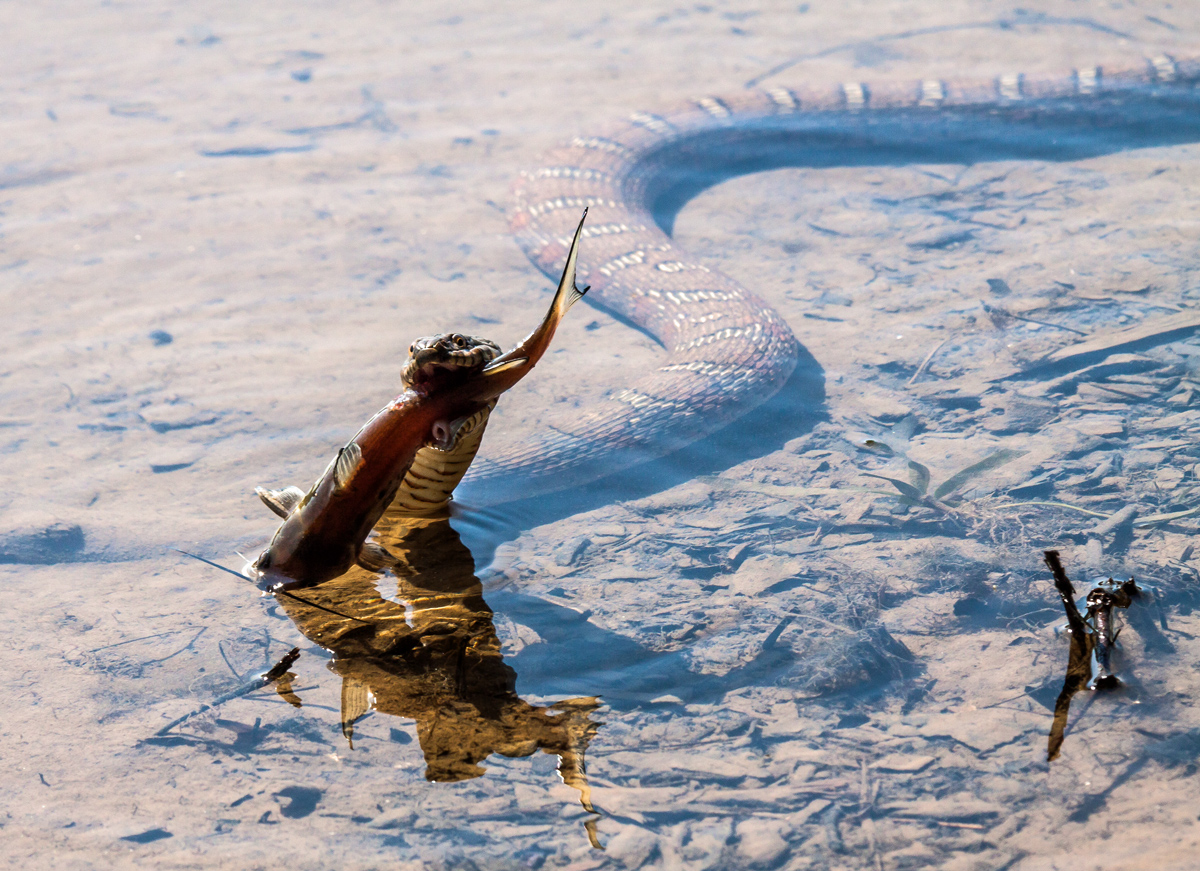
It may appear to be the Loch Ness monster, but I am pretty sure that it is “only” a Northern Water Snake (Nerodia sipedon). I stumbled upon it yesterday while exploring Riverbend Park in Great Falls, Virginia just after it had caught a pretty good-sized catfish. It took a while to subdue the fish, but the snake eventually was able to swallow it.
I have seen snakes like this catch small fish before, but I was shocked to see the size of its catch this time. How does a snake subdue and immobilize a fish that big? Northern Water Snakes are not poisonous, though I have been told that their bite can be quite painful and that the snake injects an anti-coagulant into your system, so that you will bleed a lot. The snake swam around with the fish for quite some time, periodically rearing its head and part of its body out of the water. The snake’s mouth seemed to have a literal death grip on the fish.
I watched the action with a mixture of horror and fascination, frozen in place to avoid spooking the snake. The snake seemed to be adjusting the position of the fish, as I had seen herons do, and I wondered how it could possibly swallow the fish. Suddenly there was a lot of movement in the water, the snake’s body started to writhe, and the fish simply disappeared, except for a small piece of the tail still sticking out of the fish’s mouth.
I still don’t know exactly how the snake ingested the fish—one minute it was then and then in a blink of an eye it wasn’t. It seemed like some kind of magical legerdemain (which is probably the wrong term for a limbless creature), though I suspect that the snake has powerful muscles that enabled it to pull in the fish all at once.
There are signs in Riverbend Park warning folks not to swim in the Potomac River, probably because of the current. I think that I have found another reason to stay out of the water.



© Michael Q. Powell. All rights reserved
Posted in Fish, Nature, Photography, wildlife | Tagged Canon 50D, catfish, Great Falls VA, Nerodia sipedon, Northern Water Snake, Northern Watersnake, Potomac River, Riverbend Park, Tamron 180mm | 20 Comments »
July 19, 2017 by Mike Powell
Green Herons (Butorides virescens) have so much personality packed into their small bodies. This one almost seemed to be smiling as it flew by me last weekend at Huntley Meadows Park. Perhaps it was just my imagination running away with me.

© Michael Q. Powell. All rights reserved
Posted in Birds, Nature, Photography, Summer, wildlife | Tagged Alexandria VA, birds in flight, Butorides virescens, Canon 50D, green heron, Huntley Meadows Park, Tamron 150-600mm | 4 Comments »
July 18, 2017 by Mike Powell
For wildlife photographers, I would argue, a successful image is most often the result of some combination of luck, skill, and equipment. We inhabit a world of tremendous uncertainty and have to be hypervigilant, never knowing when “the moment” will arrive when we will be forced to make a series of split-second decisions.
One of those moments arrived for me yesterday as I was exploring Occoquan Bay National Wildlife Refuge in Woodbridge, Virginia. Although I was quite aware that there were bald eagles in the area, because some of the trails in the refuge near eagle nesting sites were closed, I was primarily chasing dragonflies and butterflies, so I had my 180mm macro lens mounted on my camera. I knew that I would be doing a lot of walking, so in order to minimize weight, I was not carrying my trusty (and heavy) 150-600mm zoom lens.
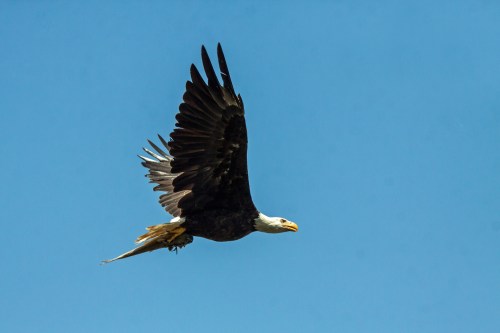
I was following a trail that ran parallel to the waters of Occoquan Bay and was a little frustrated that the view was frequently obstructed by heavy vegetation. When I reached an opening in the vegetation I looked out at the water and suddenly a Bald Eagle (Haliaeetus leucocephalus) burst into view out of nowhere. The eagle was almost at eye level and seemed to be struggling a little to gain altitude. As I later was able to ascertain, it had just caught a fish.
The logical part of my brain might have told me that a 180mm lens is not long enough to capture an image of an eagle in flight, but think I was acting on an instinctive level at that moment and I was able to snap off some shots before the eagle disappeared out of sight. It took a while for the adrenaline to wear off and I didn’t know for sure if I had been able to capture the moment. It was only when I reviewed the images on my computer that I realized that I had gotten my best eagle shots ever.
As is the case with most of my bird images, I cropped the first image to bring the subject in a bit closer. However, I am also including an uncropped version of the same image. It boggles my mind to think that I filled up that much of the frame with an eagle in flight with a 180mm lens.
Luck was hugely important; skill played a role, though it was my quick reaction time that was critical; and equipment turned out to be less important that I would have anticipated.

© Michael Q. Powell. All rights reserved
Posted in Birds, Nature, Photography, wildlife | Tagged Bald Eagle, birds in flight, Canon 50D, Haliaeetus leucocephalus, Occoquan Bay National Wildlife Refuge, Tamron 180mm, Woodbridge VA | 10 Comments »
July 17, 2017 by Mike Powell
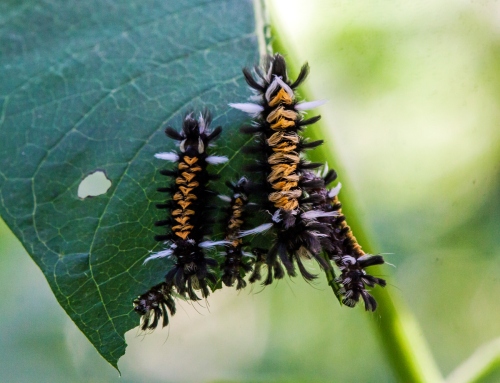
What in the world is that? That was my initial reaction when I spotted a mass of black, orange, and white fibers sitting atop a milkweed plant leaf. As I moved closer, I changed my mind and decided it was probably a cocoon. I was shocked when it started moving and I realized that it was a strange-looking caterpillar.
When it comes to finding insects, milkweed plants are one of my favorite locations. There are all kinds of bugs and butterflies that make their homes on these plants and I make a point to explore them whenever I find them growing. These particular milkweeds were growing in a wooded area of Wickford Park, a small park adjacent to Huntley Meadows Park, the marshland location where I shoot many of the photos featured in this blog.
After photographing the single caterpillar, I stumbled across a whole family of them devouring a leaf on a another milkweed plant. I didn’t know the species of the caterpillar, but it was easy to do a search on the internet, because I could identify the host plant. I learned that this is a Milkweed Tiger Moth caterpillar (Euchaetes egle), also known as a Milkweed Tussock Moth caterpillar.

© Michael Q. Powell. All rights reserved
Posted in Insects, Macro Photography, Nature, Summer | Tagged Alexandria VA, Canon 50D, Euchaetes egle, milkweed tiger moth, milkweed tussock moth, milkweed tussock moth caterpillar, mlkweed tiger moth caterpillar, Tamron 180mm, Wickford Park | 14 Comments »
July 16, 2017 by Mike Powell
Is it possible that I am sharing too many dragonfly images, that I am oversaturating the market and taxing the patience and tolerance of my readers? I realize that not everyone is as drawn as I am to these amazing little creatures and that some folks are repelled by insects of any variety or are simply not interested in them.
An old adage asserts that beauty is in the eyes of the beholder and to a certain extent I agree with that statement. However, I would counterargue that beauty is not entirely subjective, that there are cases in which the majority of people would agree that something is beautiful.
I somehow think that this might be the case for an image I captured this past Friday of a spectacular female Halloween Pennant dragonfly (Celithemis eponina) at Huntley Meadows Park. Most of the Halloween Pennants that I have photographed this year have been males, which tend to be more visible, since they are trying to attract females, so it was a treat to spot a female. In the dragonfly world, females usually are the ones that choose the partner for mating and they frequently remain in the treeline or in open fields until they are ready.
I had my 150-600mm lens mounted on my camera, because I was hoping that I might see a bald eagle or a hawk, so I was able to shoot this dragonfly from a distance without disturbing her. I focused manually and was able to capture some beautiful details of the dragonfly, such as the two-toned eyes and the long, two-toned legs. I love the organic shape and feel of the cool-looking perch that the dragonfly had chosen. The background dropped out of focus so much that it almost looks like a studio shot and draws the eyes of viewers to the subject.
When you first read the title, you might have scratched your head in puzzlement, because the color palette is more subdued than oversaturated. By now, it should be clear that I was not referring to the colors, but to the question of whether or not I am posting too many images of dragonflies. Fear not, not all of my postings will be about dragonflies, but we are in the prime period for dragonflies, so stay tuned for more images of these amazing aerial acrobats. When it comes to the quantity of my dragonfly images, I feel like some Southerners do about sugar in their sweet tea—you can never have too much of a good thing.

© Michael Q. Powell. All rights reserved
Posted in Dragonflies, dragonfly, Insects, Nature, Photography, Summer, wildlife | Tagged Alexandria VA, Canon 50D, Celithemis eponina, halloween pennant, Halloween Pennant dragonfly, Huntley Meadows Park, Tamron 150-600mm | 17 Comments »
July 15, 2017 by Mike Powell
Painted Skimmer dragonflies (Libellula semifasciata) have distinctive patterns on their wings that make them fairly easy to identify. Unlike the pennant dragonflies that I have featured recently, Painted Skimmers have chunkier bodies and tend to perch lower down on the stems of the vegetation. I spotted this slightly damaged female Painted Skimmer yesterday as I was exploring some of the back areas of Huntley Meadows Park. There were a lot of blackberry bushes nearby with plenty of sharp thorns, so I wonder if they were responsible for the damage to the dragonfly’s wings—I drew blood a few times when I got too close to the thorns, but fortunately I am not missing a chunk of me.

© Michael Q. Powell. All rights reserved
Posted in Dragonflies, dragonfly, Insects, Nature, Photography, wildlife | Tagged Alexandria VA, Canon 50D, Huntley Meadows Park, Libellula semifasciata, Painted Skimmer, Painted Skimmer dragonfly, Tamron 150-600mm | Leave a Comment »
July 14, 2017 by Mike Powell
I spotted several young Wood Ducks (Aix sponsa) this morning at Huntley Meadows Park, including these two who playfully posed for me. Actually, there were three young Wood Ducks grooming themselves on a long and one decided to jump into the water. After swimming around for a while, the duck in the water decided to dry its wings and I was able to capture the extended wings in this shot. In case you are curious, the third duck was just out of the frame to the right. Although it was well past the “golden hour,” the light was beautiful and I was happy to be able to capture a partial reflection of the duck with outstretched wings.

© Michael Q. Powell. All rights reserved
Posted in Birds, Nature, Summer, wildlife | Tagged Aix sponsa, Alexandria VA, Canon 50D, Huntley Meadows Park, Tamron 150-600mm, wood duck | Leave a Comment »
July 13, 2017 by Mike Powell
Why do we like certain photos more than others? What makes a good image? These questions churn away in my brain every time that I have my camera in my hand and often even when my hands are empty. Sure, there are rules and guidelines and generally accepted norms, but often it comes down to personal, unexplainable preferences—I like what I like.
Last weekend I spent a lot of time observing Green Herons (Butorides virescens) at Huntley Meadows Park. I kept trying to capture action shots of the herons catching fish or flying through the air, but I pretty much came up empty-handed. Oh, I took a lot of shots and once I wade through them all there may be some decent images of the herons that I will choose to post, but none of those images really spoke to me during my initial review of the photos from that day.
I was drawn instead to some images from early in the day when a fellow photographer and I spotted a Green Heron in the trees in the distance. We were standing on a boardwalk, so there was only a limited freedom of movement to frame our shots. There was a lot of vegetation that partially obstructed our view of the heron. I searched in vain for a visual tunnel that afforded a clear view of the entire body of the heron. Still, the light was beautiful, so I kept shooting—when it comes to birds, expressions are so fleeting that it is best to shoot a lot of images.
I decided to post this shot and attempt to explain why. There are so many things that I like about this image that I am not really bothered by the leaves that blocked my view. What do I like? I love the tilted head as the heron looks to the sky and basks in the sun; I like the little head feathers that look like a cowlick; I really like the shapes and colors in the background; and I am happy that I was able to capture some details in the wing feathers.
Is it one of my best shots? No, it is not, but I choose to post images that I like and especially the ones that make me happy, like his image of a pensive, relaxed Green Heron in a tree.

© Michael Q. Powell. All rights reserved
Posted in Birds, Nature, Photography, Summer, wildlife | Tagged Alexandria VA, Butorides virescens, Canon 50D, green heron, Huntley Meadows Park, Tamron 150-600mm | 3 Comments »
July 12, 2017 by Mike Powell
Like many guys, I have trouble remembering anniversaries, so it came as a surprise a few days ago when WordPress reminded me that it was the fifth anniversary of the launching of my blog. Five years old probably qualifies as middle age or maybe even old age for a blog.
I remember well how my photography mentor Cindy Dyer sat me down and virtually insisted that I start a blog to showcase and share the results of my growing interest in photography. I’ve captured thousands and thousand of images since that time and made close to 2400 postings on this blog. My confidence, awareness, and skills as a photographer have grown significantly. More importantly, though, this blog has helped me to gain a new voice as I have learned to use my words and photographs to express a creative part of myself that has been dormant most of my life.
I am very appreciative of the support, encouragement, and suggestions that so many readers have provided these last five years. Thanks to all of you—you have helped to sustain me during times when my energy and enthusiasm have waned.
My very first posting was an image of a perching dragonfly and was simply titled Blue Dasher dragonfly. If you look at that posting, you can see that my fascination with dragonflies is not a new phenomenon. It is altogether appropriate, therefore, that I “celebrate” with another dragonfly image.
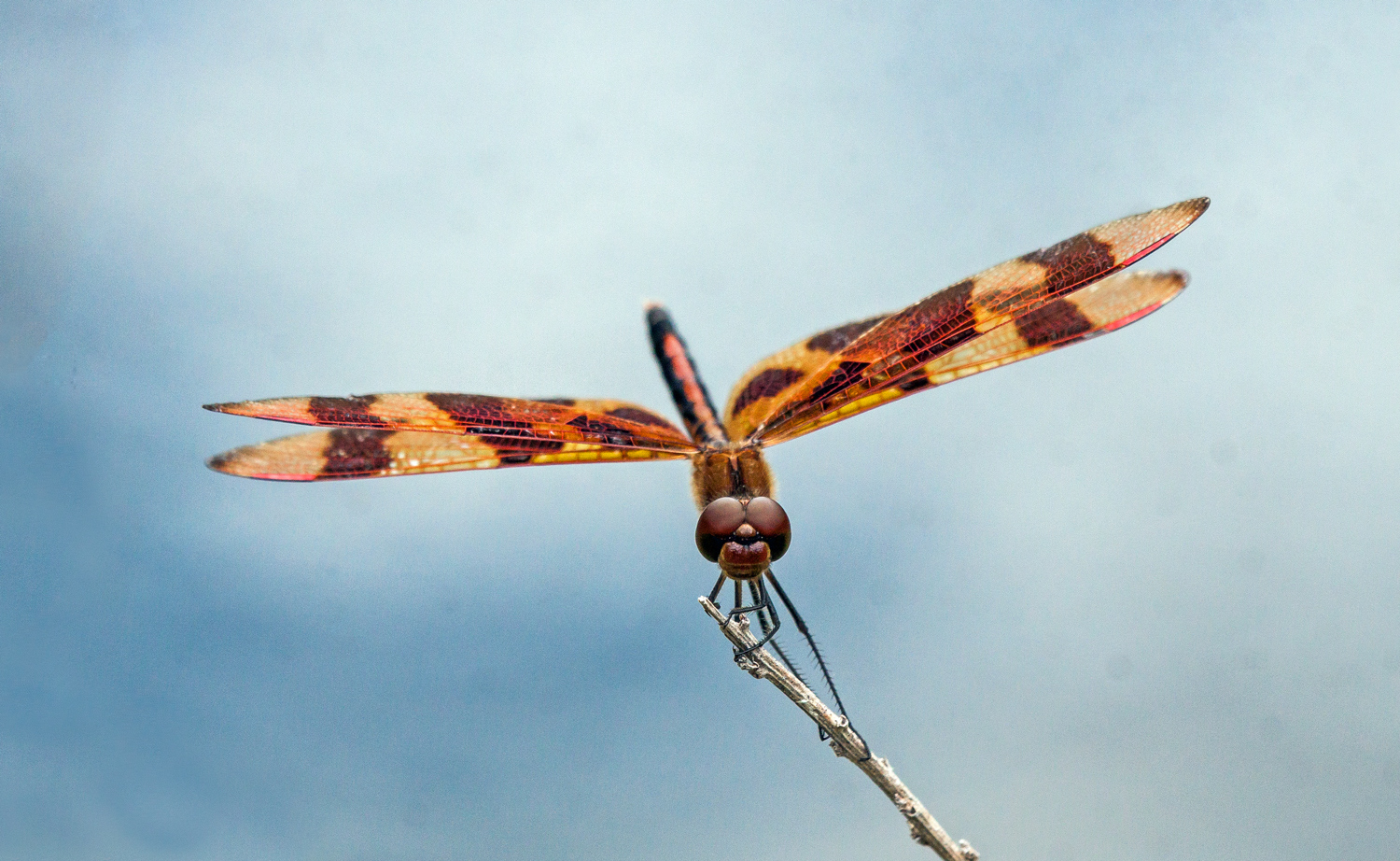
Halloween Pennant dragonflies (Celithemis eponina) generally perch facing away from me. Although it gives me a good view of their spectacular wings, I like it better when I get a frontal view and can look straight into the dragonfly’s eyes. This weekend I found a cooperative subject while exploring Meadowlark Botanical Gardens in Vienna, Virginia, and was able to capture this image.
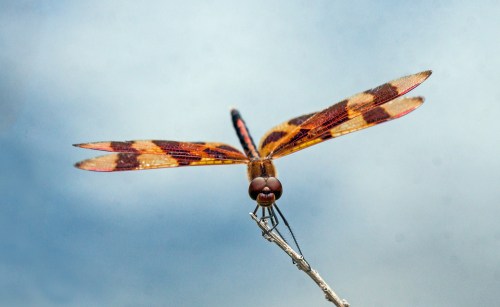
Like this dragonfly, I am ready to spread my wings and fly, resting briefly before taking off again. It’s a bit of a cliche, but from the blog’s inauguration the sub-title has always been, “My journey through photography.” Where will I go next? I honestly don’t know, but I definitely welcome fellow travelers to accompany me on my continuing journey of exploration.
Perhaps I will set my sights really high and point my camera, to use the famous words of Buzz Lightyear, “to infinity and beyond.” Come fly with me.
© Michael Q. Powell. All rights reserved
Posted in Dragonflies, dragonfly, Halloween, Insects, Macro Photography, Nature, Photography | Tagged Canon 50D, Celithemis eponina, halloween pennant, Halloween Pennant dragonfly, Meadowlark Botanical Gardens, Tamron 180mm, Vienna VA | 15 Comments »
July 11, 2017 by Mike Powell
I haven’t seen many hummingbirds this year, so I am always excited to spot one of their insect counterparts in action. Hummingbird Clearwing Moths (Hemaris thysbe) act a lot like hummingbirds, with the notable difference of gathering nectar with their long proboscises rather than with needle-like bills.
I photographed this moth yesterday at Jackson Miles Abbott Wetland Refuge at Fort Belvoir, Virginia. As you can probably imagine, I had to take a lot of shots to get one in which the moth was in focus and had its wings in a relatively good position. These moths are really fast, keep moving in and out of the flowers, and are pretty small—about a wingspan of about an inch and a half (4 cm).

© Michael Q. Powell. All rights reserved
Posted in Insects, Macro Photography, Nature, Photography, Summer, wildlife | Tagged Canon 50D, Fort Belvoir VA, Hermaris thysbe, Hummingbird Clearwing, Hummingbird Clearwing Moth, Jackson Miles Abbott Wetland Refuge, Tamron 180mm | 1 Comment »
July 10, 2017 by Mike Powell
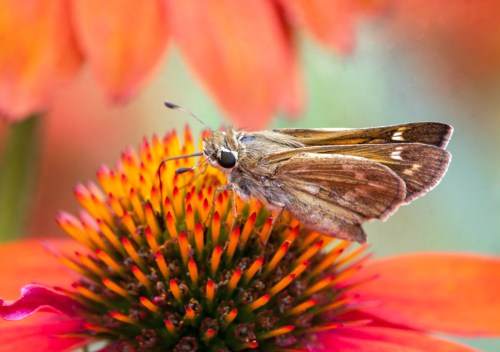
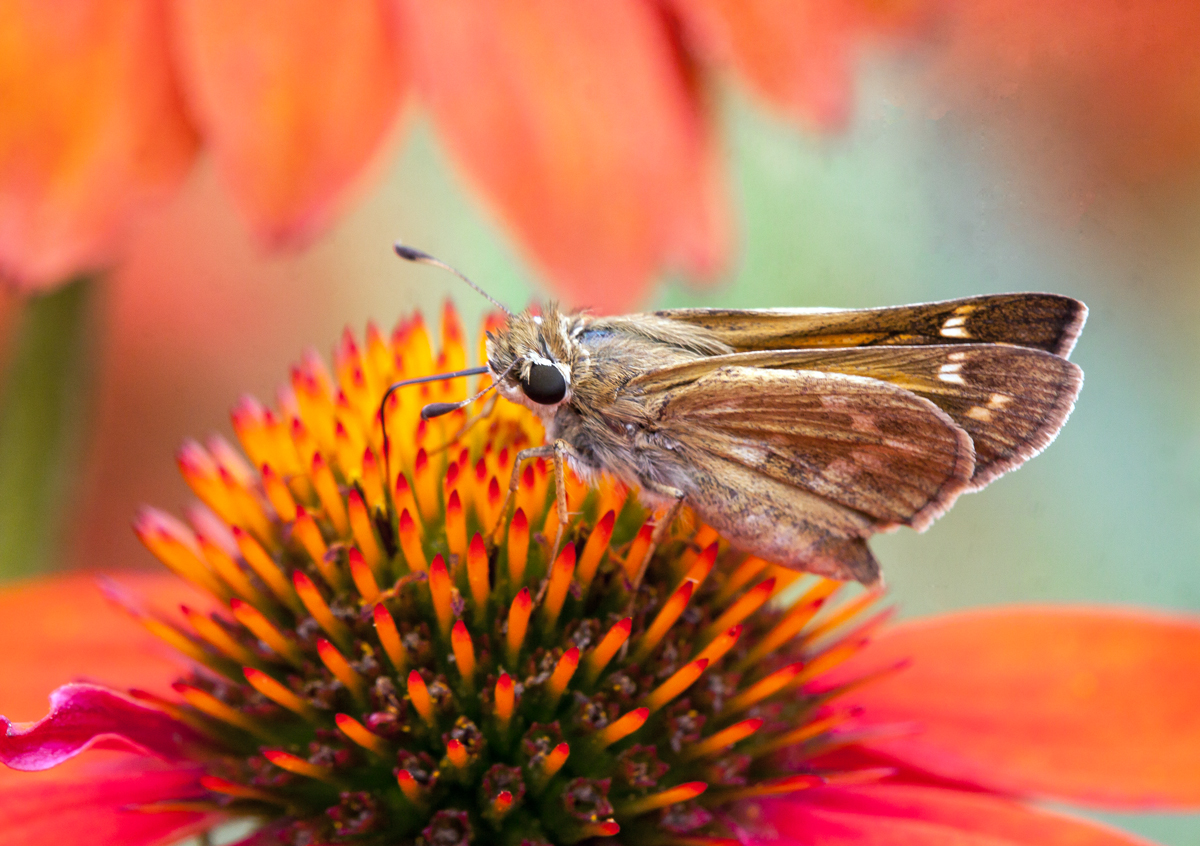
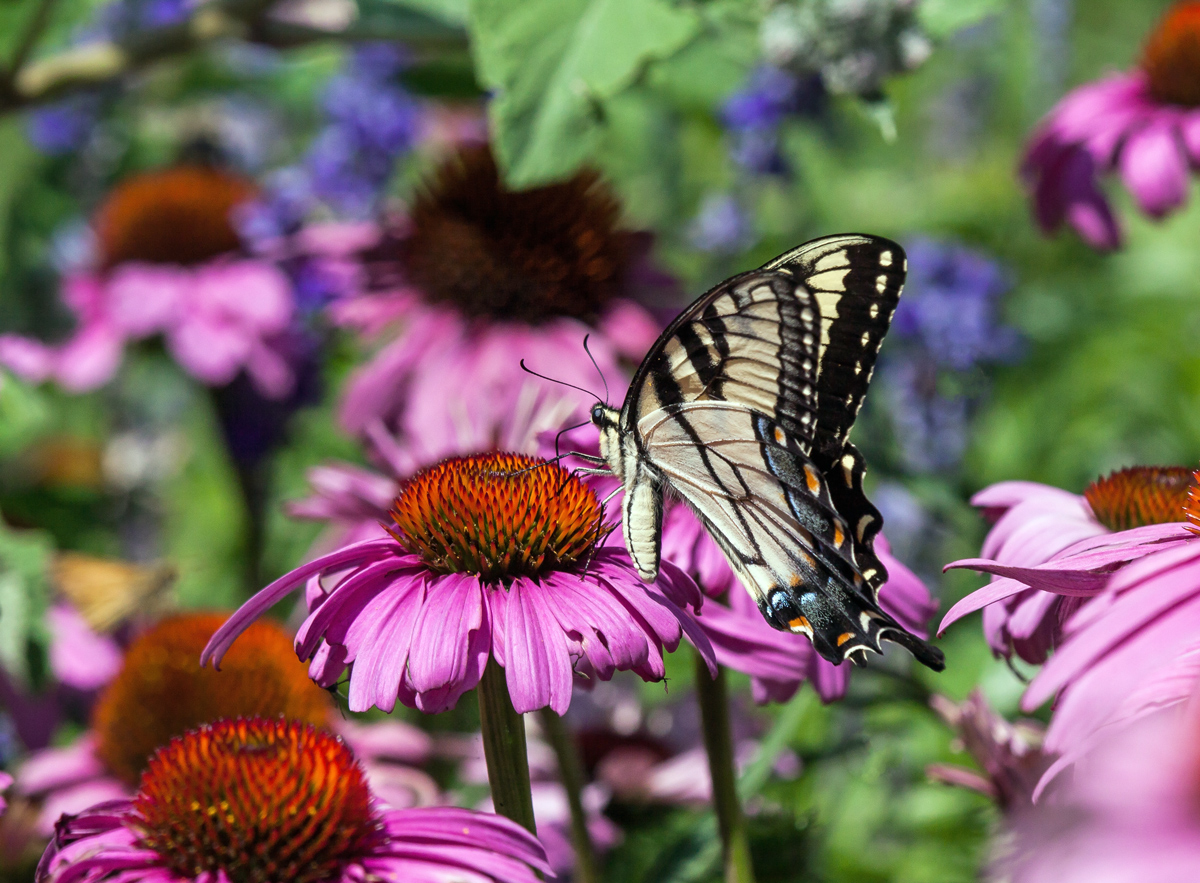
Brightly-colored flowers and butterflies—-what a wonderful combination for a summer’s day. I spotted these beauties this past weekend at Meadowlark Botanical Gardens in Vienna, Virginia.
The first shot features a little skipper butterfly on a spectacular, orange-red coneflower. The other two shots highlight the beauty of an Eastern Tiger Swallowtail (Papilio glaucus) in a patch of the more frequently observed purple coneflowers.


© Michael Q. Powell. All rights reserved
Posted in Butterflies, Flowers, Nature, Photography, Summer | Tagged Canon 50D, Eastern Tiger Swallowtail, Eastern Tiger Swallowtail butterfly, Meadowlark Botanical Gardens, Papilio glaucus, skipper, Tamron 180mm, Vienna VA | 8 Comments »
July 9, 2017 by Mike Powell
As the breeze kicked up yesterday at Meadowlark Botanical Gardens in Vienna, Virginia, this male Halloween Pennant dragonfly (Celithemis eponina) hung on tightly to his perch. From the angle at which I was shooting, though, it looked like he was participating in a pole vault competition.

© Michael Q. Powell. All rights reserved
Posted in Dragonflies, dragonfly, Insects, Macro Photography, Nature, Photography | Tagged Canon 50D, Celithemis eponina, halloween pennant, Halloween Pennant dragonfly, Meadowlark Botanical Gardens, pole vault, Tamron 180mm, Vienna VA | 5 Comments »
July 8, 2017 by Mike Powell
As we move deeper into summer, I have been seeing fewer and fewer duck families at Huntley Meadows Park—maybe the ducklings have grown up or have succumbed to predators. Whatever the case, I was thrilled early yesterday morning to spot a Mama Wood Duck (Aix sponsa) with five ducklings, relaxing and grooming themselves on a log in the water in one of the more remote areas of the park.
When they are first born, all of the ducklings seem to look the same to me, but gradually they seem to take on some of their adult markings. The duckling alone in the center, for example, seems to be acquiring some of the head markings of the adult Wood Duck, though he still lacks the spectacular colors of the adult male Wood Duck. (In case you don’t know what a male Wood Duck looks like, I am reprising below a photo from earlier this year of one sitting on a nesting box.)


© Michael Q. Powell. All rights reserved
Posted in Birds, Nature, Photography, Portraits, wildlife | Tagged Aix sponsa, Alexandria VA, Canon 50D, Huntley Meadows Park, Tamron 150-600mm, wood duck, wood duck family | 1 Comment »
July 7, 2017 by Mike Powell
Several folks have recently posted photos in Facebook of a juvenile Yellow-crowned Night-Heron (Nyctanassa violacea) that they spotted at Huntley Meadows Park, my favorite marshland for photography, so I kept my eyes open today as I explored the park. I came up empty-handed for this particular bird, a species that I had never seen before, but as I was getting ready to leave, a helpful photographer led me to a spot where he had seen the bird earlier in the day.
Amazingly the bird was in the same general location and I was able to get several long-distance shots of the gangly little bird, which seems to be bigger than the Green Herons in the park, but smaller than the Great Blue Herons. As far as I know, nobody has seen an adult Yellow-crowned Night-Heron in the park, so we don’t really know how this juvenile happens to be in this location.


© Michael Q. Powell. All rights reserved
Posted in Birds, Nature, Photography, wildlife | Tagged Alexandria VA, Canon 50D, Huntley Meadows Park, Nyctanassa violacea, Tamron 150-600mm, Yellow-crowned Night-Heron | 6 Comments »
July 6, 2017 by Mike Powell
The White-tailed Deer (Odocoileus virginianus) seemed alert but unafraid when they first sensed my presence early one recent morning at Huntley Meadows Park. I watched them graze for a while before they silently faded back into the tree line.

© Michael Q. Powell. All rights reserved
Posted in animals, Nature, Photography, wildlife | Tagged Alexandria VA, Canon 50D, deer, Huntley Meadows Park, Odocoileus virginianus, Tamron 150-600mm, white-tailed deer | 5 Comments »
July 5, 2017 by Mike Powell
In the early morning hours at Huntley Meadows Park this past weekend, a tiny muskrat (Ondatra zibethicus) silently swam to the shore and began to forage for food in the vegetation at the water’s edge. It was a peaceful moment, a perfect start to a beautiful day.

© Michael Q. Powell. All rights reserved
Posted in animals, Nature, Photography, wildlife | Tagged Alexandria VA, Canon 50D, Huntley Meadows Park, muskrat, Ondatra zibethicus, Tamron 150-600mm | 2 Comments »
July 4, 2017 by Mike Powell
Yesterday as I was exploring at Jackson Miles Abbott Wetland Refuge I came across one of my favorite insects, a Hummingbird Clearwing Moth (Hemaris thysbe). These spectacular insects act like a cross between a bee and a hummingbird, although they look more like a flying crayfish. They move really quickly, so I was thrilled to capture this image that gives a clear view of the moth’s transparent wings.

© Michael Q. Powell. All rights reserved
Posted in Insects, Macro Photography, Nature, Photography, wildlife | Tagged Canon 50D, Fort Belvoir VA, Hemaris thysbe, Hummingbird Clearwing, Hummingbird Clearwing Moth, Jackson Miles Abbott Wetland Refuge, Tamron 180mm | 2 Comments »
July 3, 2017 by Mike Powell
Eastern Amberwing dragonflies (Perithemis tenera) are tiny, less than an inch (20-25mm) in length, but they are distinctive and stunningly beautiful. According to information on the wonderful Dragonflies of Northern Virginia website, Eastern Amberwings are the smallest dragonflies in our area and the second smallest in the United States—only Elfin Skimmers are smaller.
I spotted this perching male this past weekend at Jackson Miles Abbott Wetland Refuge in the vegetation surrounding a small pond. I was happy to be close enough that I was able to capture so many of the details of the dragonfly, including its captivating eyes and segmented body.

© Michael Q. Powell. All rights reserved.
Posted in Art, Dragonflies, dragonfly, Insects, Macro Photography, Nature, Photography | Tagged Canon 50D, Eastern Amberwing, Eastern Amberwing dragonfly, Fort Belvoir VA, Jackson Miles Abbott Wetland Refuge, Perithemis tenera, Tamron 180mm | 2 Comments »
July 1, 2017 by Mike Powell
Yesterday I was thrilled to spot some Common Sanddragon dragonflies (Progomphus obscurus) at Wickford Park, a small park adjacent to the normal marshland park where I do a lot of my shooting. This species, one of my favorites, prefers to perch on the sandy shores of a creek more than on vegetation and the spots at Huntley Meadows Park where I have seen them in the past are underwater at present, so I have not been able to find them there.

© Michael Q. Powell. All rights reserved.
Posted in Dragonflies, dragonfly, Insects, Macro Photography, Nature, Photography | Tagged Alexandria VA, Canon 50D, Common Sanddragon, Common Sanddragon dragonfly, Progomphus obscurus, Tamron 180mm, Wickford Park | Leave a Comment »
June 30, 2017 by Mike Powell
Great Egrets (Ardea alba) are so graceful in flight—it’s like watching an aerial ballet performance. I spotted this egret early this morning at Huntley Meadows Park and captured this image as it was taking off from atop a tree on which it was perched.

© Michael Q. Powell. All rights reserved.
Posted in Birds, Nature, Photography, wildlife | Tagged Alexandria VA, Ardea alba, birds in flight, Canon 50D, egret, Great Egret, Huntley Meadows Park, Tamron 150-600mm | 1 Comment »
June 29, 2017 by Mike Powell
I just love the vibrant colors of the tropical water lilies at Kenilworth Park and Aquatic Gardens, like this one that I photographed on Sunday during a brief trip there. These gardens, located in a part of Washington D.C., are run by the National Park Service and have acres of ponds with all kinds of lotuses and water lilies. The tropical water lilies are in small cement ponds behind the visitor center and are one of my favorite spots to visit.


© Michael Q. Powell. All rights reserved.
Posted in Flowers, Nature, Photography, Summer | Tagged Anacostia, Canon 50D, Kenilworth Aquatic Gardens, Kenilworth Park and Aquatic Gardens, Tamron 180mm, tropical water lilies, Washington D.C., water lilies, water lily | Leave a Comment »
June 28, 2017 by Mike Powell
Halloween in June? I spotted a beautiful female Halloween Pennant dragonfly (Celithemis eponina) this past Saturday in one of the back areas of Huntley Meadows Park.
Although it is now summer, the colors of this beautifully-patterned dragonfly bring to mind those of the autumn, which thankfully is still a long way off.


© Michael Q. Powell. All rights reserved.
Posted in Dragonflies, dragonfly, Insects, Macro Photography, Nature, Photography | Tagged Alexandria VA, Canon 50D, Celithemis eponina, Halloween in June, halloween pennant, Halloween Pennant dragonfly, Huntley Meadows Park, Tamron 150-600mm | Leave a Comment »
June 27, 2017 by Mike Powell
The last few years it has been pretty rare for me to see a Monarch Butterfly (Danaus plexippus). Most of the time when I thought I had spotted one, it turned out to be a similar-looking Viceroy Butterfly.
I was therefore really excited when I spotted a Monarch Butterfly fluttering about in a clump of what I think is some kind of milkweed during a brief trip to Kenilworth Aquatic Garden this past weekend. The butterfly seemed to be unusually skittish—it would perch for only a split second and then take off again. When it would decide to perch for a slightly longer period of time, inevitably it would bury itself among the vegetation, making a clear shot almost impossible.
I waited and waited and finally was able to get this almost unobstructed shot of the spectacular butterfly. Even in America we celebrate this kind of Monarch.

© Michael Q. Powell. All rights reserved.
Posted in Butterflies, Insects, Nature, Photography | Tagged Canon 50D, Danaus plexippus, I, Kenilworth Aquatic Gardens, Kenilworth Park and Aquatic Gardens, Monarch, monarch butterfly, Tamron 180mm | 4 Comments »
June 26, 2017 by Mike Powell
With most of my dragonfly shots, I try to get as close as I can to the dragonfly, either my moving or by zooming, in order to highlight my subject. If I am not able to do so, I will often crop the image during post-processing.
Sometimes, though, I will intentionally keep my distance and will carefully compose the image to include more environmental elements. That was the case yesterday during a quick trip to Kenilworth Park and Aquatic Gardens with my photography mentor Cindy Dyer. Cindy needed to drop off some prints at the gift shop and I had a few minutes to grab a few shots.
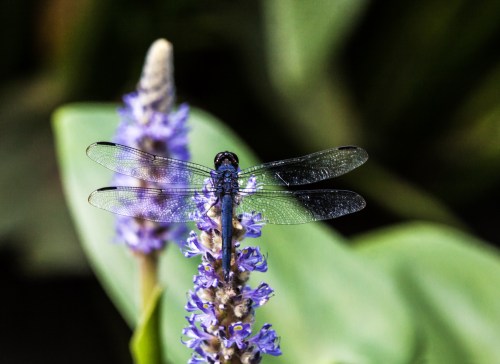
Dragonfly perches generally are not very interesting, often just dried-out branches sticking out of the water. I was excited, therefore, when I spotted a male Slaty Skimmer dragonfly (Libellula incesta) perching on a purple Pickerelweed plant (Pontederia cordata). I positioned myself to capture an additional pickerelweed plant in the background, pretty sure that it would be out of focus and not be too distracting. The cool colors and the sinuous curves of the plants in the background combine to create an “artsy” image that I really like.
© Michael Q. Powell. All rights reserved.
Posted in Art, dragonfly, Insects, Nature, Photography | Tagged Anacostia, Canon 50D, Kenilworth Park and Aquatic Gardens, Libellula incesta, pickerel weed, pickerelweed, Pontederia cordata, Slaty Skimmer, Slaty Skimmer dragonfly, Tamron 180mm, Washington D.C. | 2 Comments »
June 25, 2017 by Mike Powell
As I was wandering about in the woods early yesterday morning at Huntley Meadows Park, I inadvertently spooked a raccoon (Procyon lotor) that was stretched out high above me on a tree limb. The raccoon quickly climbed inside the tree, but it seems like it was overcome by curiosity and poked its head out to get a better look at me.
A sharp-eyed viewer of my posting of this image in Facebook noted that the raccoon seems to have a problem with ticks, with several of them visible in one of its ears. I know that raccoons are notorious for carrying rabies, so I kept a close eye on the raccoon and was ready to move away if it had made a move to climb down from the tree.

© Michael Q. Powell. All rights reserved.
Posted in animals, Nature, Photography, Portraits, wildlife | Tagged Alexandria VA, Canon 50D, Huntley Meadows Park, Procyon lotor, raccoon, Tamron 150-600mm | 10 Comments »
June 24, 2017 by Mike Powell
Yesterday at Occoquan Bay National Wildlife Refuge in Woodbridge, Virginia, I was able to photograph a new dragonfly species for me, the beautiful Calico Pennant (Celithemis elisa). Fellow photographer and dragonfly enthusiast Walter Sanford had alerted me to the presence of these dragonflies at this location and had given me a general idea of where I might find them.
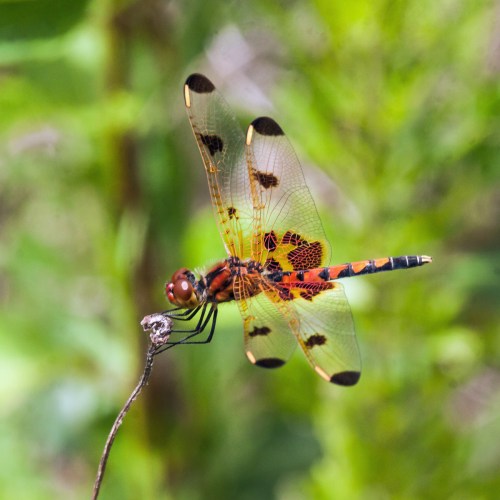
When I arrived at the wildlife refuge, which I had never visited before, I was a bit disoriented at first, but eventually found the pond that was my target location. The challenge, though, was to find the diminutive dragonflies. I walked about for quite some time before I finally spotted one perched on the very top of some vegetation in a field adjacent to the pond. Like other pennant dragonflies, Calico Pennants usually hang on to the most fragile, flimsy branches of plants and are often flapping in the breeze like a pennant.
Here are a couple of shots of Calico Pennant dragonflies that I observed. The one with the yellow abdomen is a female and the male has the red abdomen. As is the case with many species, immature males have the same coloration as the females, so it usually pays to look at the terminal appendages to determine the gender.

© Michael Q. Powell. All rights reserved.
Posted in Dragonflies, dragonfly, Insects, Macro Photography, Nature, Photography, wildlife | Tagged Calico Pennant, Calico Pennant dragonfly, Canon 50D, Celithemis elisa, Occoquan Bay National Wildlife Refuge, Tamron 180mm, Woodbridge VA | 8 Comments »
« Newer Posts - Older Posts »










 Mike Powell