Feeds:
Posts
Comments

Archive for the ‘Winter’ Category

I was a little surprised to see this Downy Woodpecker (Picoides pubescens) down on the ground amid the sparrows, pecking away at the dried vegetation and the crazy thought came to mind that it might have been raised by those sparrows. I assumed that Downy Woodpeckers ate only insects, but learned on the Cornell Lab of Ornithology website that “About a quarter of their diet consists of plant material, particularly berries, acorns, and grains.”

Eventually the woodpecker emerged from the undergrowth and climbed up a slender stalk, permitting me to get an unobstructed view of its beauty.

Downy Woodpecker

Downy Woodpecker

Down in the weeds


© Michael Q. Powell. All rights reserved.

Read Full Post »

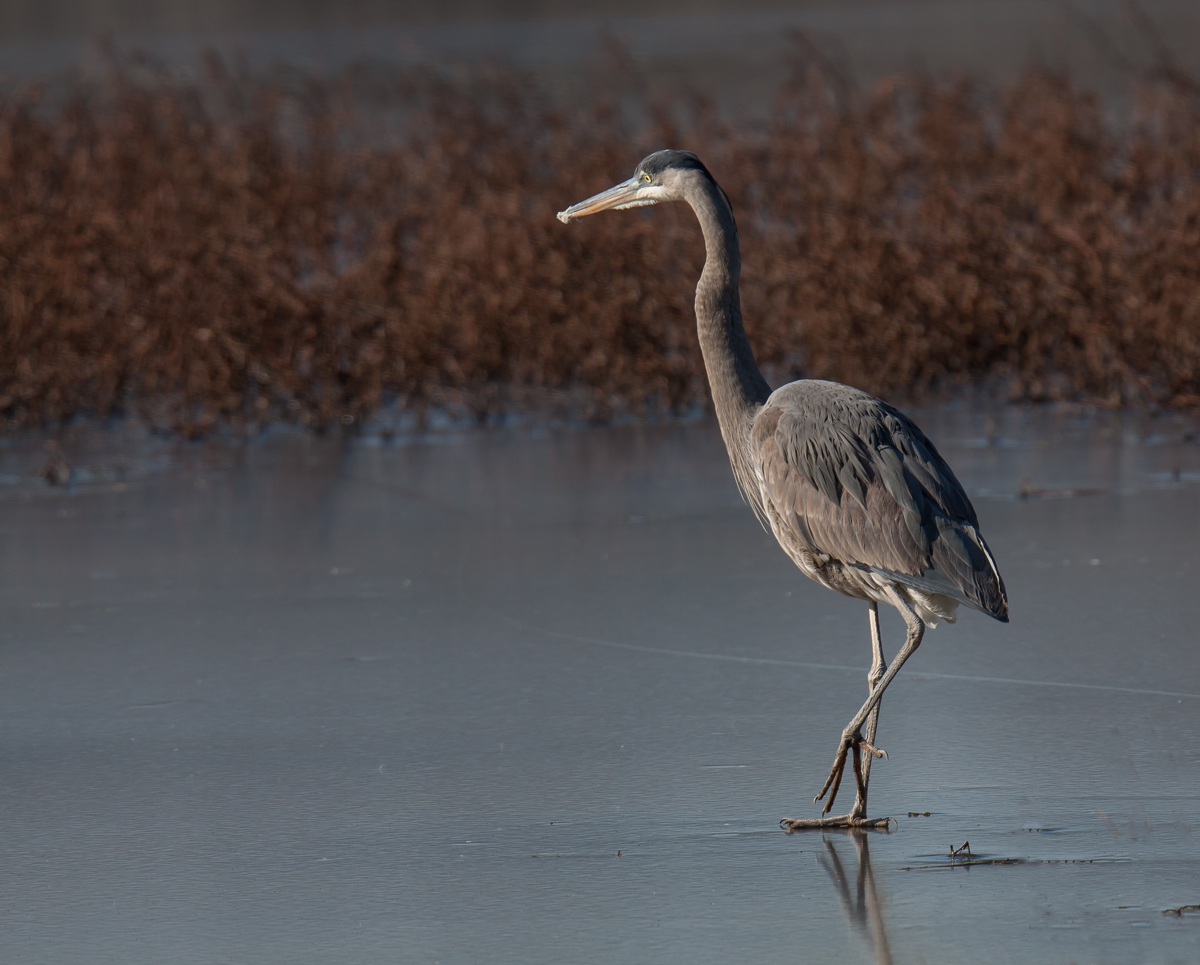
This Great Blue Heron (Ardea herodias) seemed a little confused when the ponds froze over at my local marshland park and appeared to be trying to stalk fish that he may or may not have been able to see through the ice.

heron3_ice_blog

heron1_ice_blog


© Michael Q. Powell. All rights reserved.

Read Full Post »

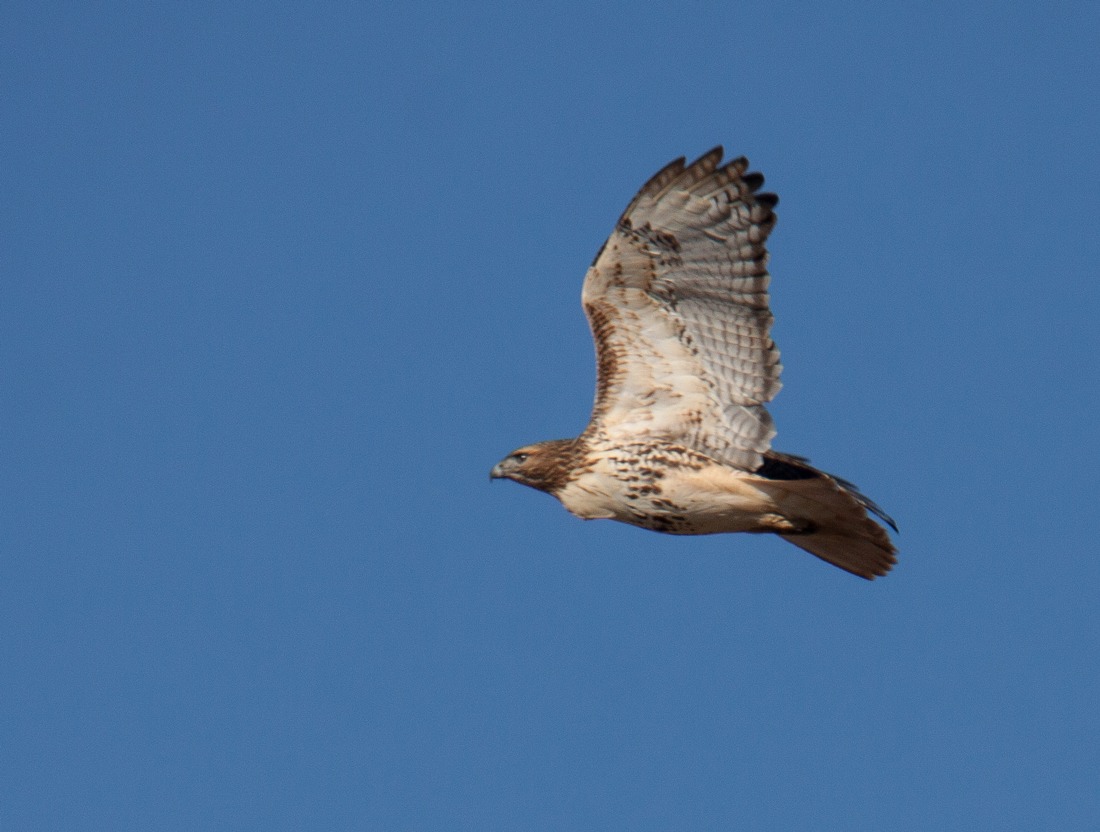
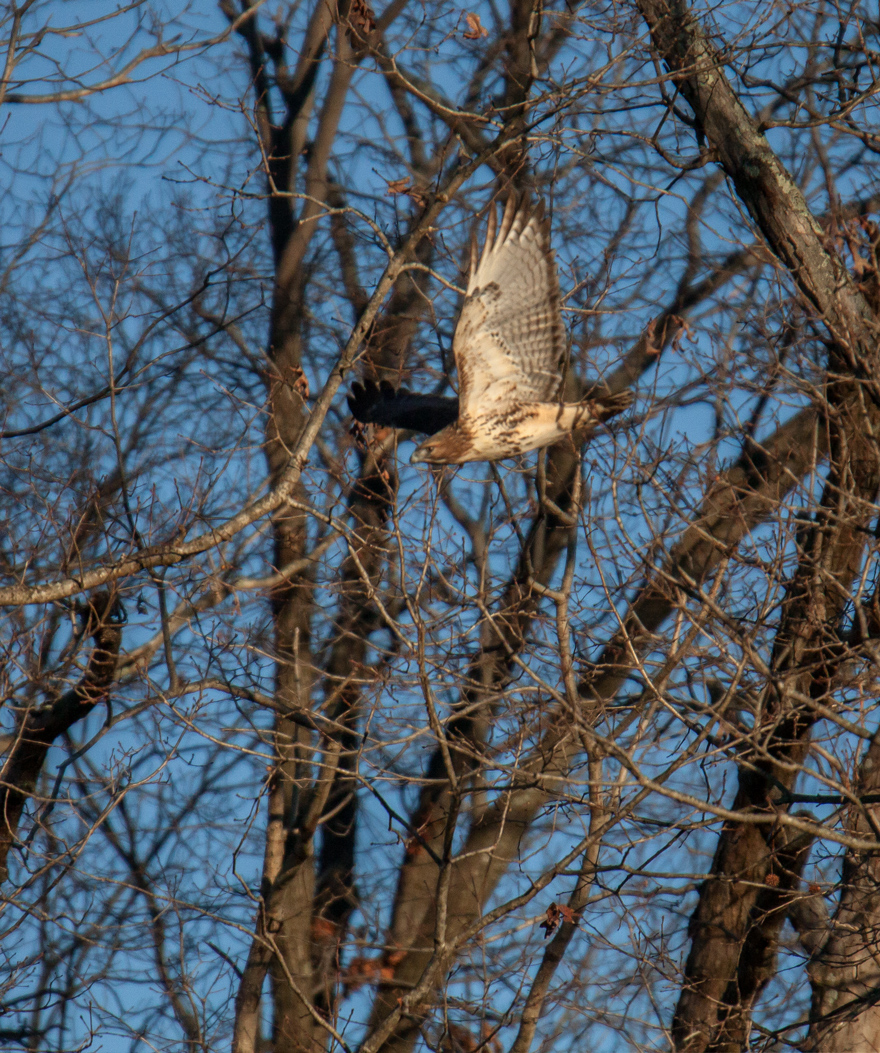
It was finally above the freezing mark yesterday, which made my trek around Huntley Meadows Park a bit easier to tolerate. Among the highlights was this Red-tailed Hawk (Buteo jamaicensis) flying overhead with a very determined (or maybe hungry) look on its face. Although Red-tailed Hawks are common in many places, most of the hawks that I see at my local marsh are Red-shouldered Hawks, so it was a nice treat to capture a Red-tailed in flight.

The blue sky provided a clean background for these shots, though I must confess that I am still having some difficulties finding and keeping moving subjects in the frame and in focus when at full zoom. I’m hoping that I have lots of opportunities to practice this winter.

Red-tailed HawkRed-tailed HawkRed-tailed HawkRed-tailed Hawk

© Michael Q. Powell. All rights reserved.


Read Full Post »

Some winter days, it’s really hard for me to find birds to photograph, but I can usually count on seeing some sparrows busily at work, pecking away in the underbrush for what look to be the tiniest of seeds.

This past Monday, before the arrival of the Arctic weather, I observed this beautiful little sparrow, which I think is a Swamp Sparrow (Melospiza georgiana). Sparrows are tough for me to identify, so I apologize in advance if this turns out to be another kind of sparrow.

The bird kept its head down most of the time and remained stayed primarily in the shadows. For just a moment, though, it lifted its head and turned toward the light and I was able to take this modest little portrait of one of my faithful winter companions at the marsh.

Swamp Sparrow

© Michael Q. Powell. All rights reserved.

Read Full Post »

According to the internet weather for my area, it is 8 degrees F outside right now and windy (minus 13 degrees C). Baby, it’s cold outside. We are forecast to get up to about 20 degrees F today (minus 7 C).

This is unusually cold weather for the Washington D.C. area, where winters are relatively mild. Earlier in the week we had a couple of inches of snow right at the morning rush hour and the roads were gridlocked for hours as commuters unfamiliar with the snow struggled to stay on the pavement.

The roads are treated now and mostly passable, but the cold makes even short outdoor trips barely tolerable. Earlier this month I took some shots of ice that had accumulated in the shady area of a stream at my local marshland park and one of those ice shots seem appropriate for today. I really like the way that the shapes and shades of the ice came out in this image, along with some of the bubbles in the water.

I have lots to do at work today—I sure hope my car starts in another hour or so.

ice1_blog

© Michael Q. Powell. All rights reserved.


Read Full Post »

No, this is not a commentary on overindulgence during the holidays. Instead it is a response to one viewer’s comments on a recent posting that showed a pair of foraging Northern Shovelers with their heads almost buried in the weeds. The viewer preferred one photo over the other simply because it showed this bird’s unusual bill.

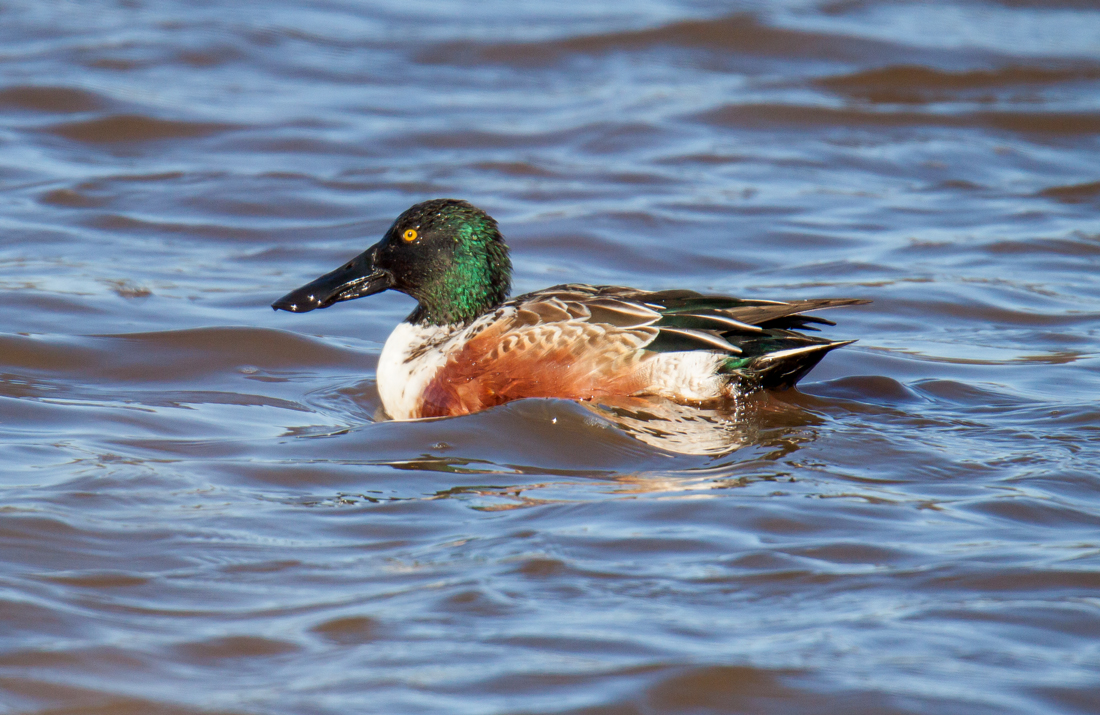
On Monday, a day that was sunny, cold, and windy, I observed another pair of Northern Shovelers (Anas clypeata) and took some shots that show their bills in all of their oversized glory.

I can still remember my surprise at the length of the bills when I saw these birds for the first time. Initially I thought it was an optical illusion, but it became clear pretty quickly that the bill was unusually long. According to the Cornell Lab of Ornithology, the Northern Shoveler’s bill has has about 110 fine projections (called lamellae) along the edges that help in straining food from water.

Northern Shoveler

female Northern Shoveler

© Michael Q. Powell. All rights reserved.

Read Full Post »

Can you identify the bird in the first photo? There is an almost abstract quality to the image that I really like that focuses on the bird’s wide wingspan more than on the identity of the bird. The unusual viewing angle, looking forward from his extended feet, enhances that effect.

As you can see in the second photos (and as you probably easily guessed), this was a Great Blue Heron (Ardea herodias). Yesterday, a blustery but sunny day, I came across this heron at my local marshland park as he tried in vain to catch some lunch. Without much warning, he took off just after I snapped the second photo, perhaps to find a better fishing spot, and I was able to capture the more unusual view that I have shown as the first image.

Great Blue HeronGreat Blue Heron

© Michael Q. Powell. All rights reserved.


Read Full Post »

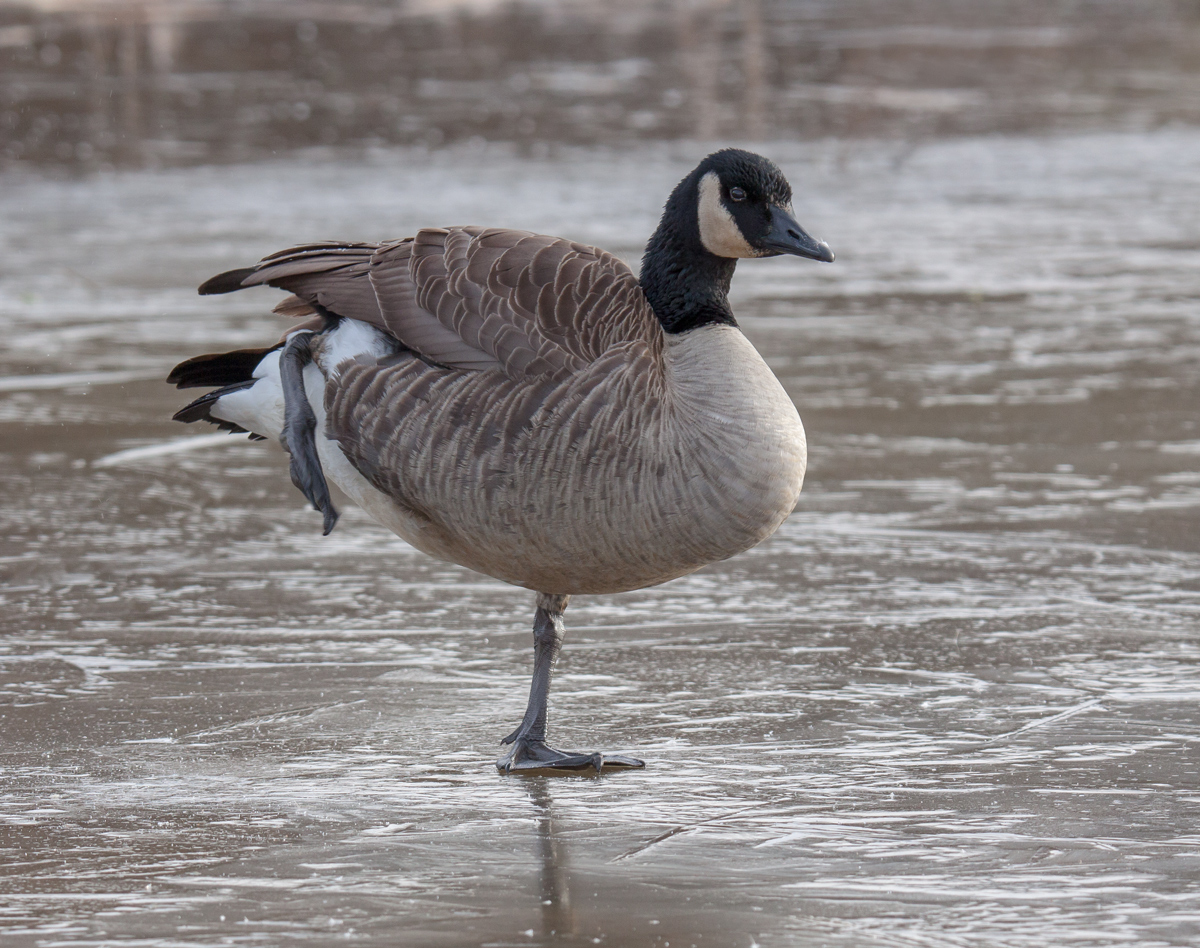
Standing one-legged on the frozen pond, this Canada Goose (Branta canadensis) briefly stirred to adjust its position as I passed by. A few seconds later, the goose slipped one leg and its head back under its wings and gradually drifted back to sleep on a cold winter morning.

In case you are curious about the physiological explanation of the one-legged pose and why the goose’s feet don’t freeze to the ice, check out this blog posting from last November by Sue of Back Yard Biology.

Canada Goose

© Michael Q. Powell. All rights reserved.


Read Full Post »

I will sometimes see other birds open their wings and stretch them out for a moment, but the Double-crested Cormorant (Phalacrocorax auritus) is the only bird that I have observed that leaves its wings open for an extended period of time.

Initially I was confused when I heard the cormorant had to dry out its wings because they got waterlogged. How does a waterbird survive if its wings are not waterproof?

The Cornell Lab of Ornithology, my favorite website for information about birds, provides the following explanation of this phenomenon:

“They have less preen oil than other birds, so their feathers can get soaked rather than shedding water like a duck’s. Though this seems like a problem for a bird that spends its life in water, wet feathers probably make it easier for cormorants to hunt underwater with agility and speed.”

Double-crested Cormorant

© Michael Q. Powell. All rights reserved.

Read Full Post »

Oh say can you see by the dawn’s early light? Peering through a break in the bushes, I could just barely make out the unmistakeable shape of a male Hooded Merganser (Lophodytes cucullatus) as he slowly paddled away from the shore of a small pond at my local marshland park.

Hooded Merganser

© Michael Q. Powell. All rights reserved.

Read Full Post »

There is something really special about the moment when the darkness of the night finally gives way to the early light of the dawn and the sky is tinged with delicate shades of pink and orange. The silence is broken by the sounds of awakening birds as their day begins.

It’s not an optimal time for wildlife photography—there is simply not enough light to reveal all of the colors and the details of the subjects. Recently, though, I managed to capture a sense of the dawn in this image of a duck ascending into the air, heading for an unknown destination.

Early bird

© Michael Q. Powell. All rights reserved.

Read Full Post »

Last week, when the weather was a bit warmer and the ponds had not yet frozen over at my local marshland park, I managed to get some shots of a pair of Northern Shovelers (Anas clypeata) in action.

I quickly realized that trying to photograph two birds, rather than a single one as I usually do, significantly magnified the difficulty in getting a good shot. The two North Shovelers rarely would stay together and would wander in and out of the frame. Even worse, one of them would move closer or farther away, challenging my ability to keep them both in focus.

Northern Shovelers forage by swimming along with their bills in the water, straining out food, and never seem to completely submerge their heads. I was happy that I was able to capture some shots in which the eyes are visible, even though the bills are in the water.

I really like the first image, because the positions of the male and the female are synchronized, yet I also really like the second image, because the positions are completely out of synch. I may be confused, or perhaps a lot of different things appeal to me, depending on how I consider them.

Northern Shoveler

Northern Shoveler

© Michael Q. Powell. All rights reserved.

Read Full Post »

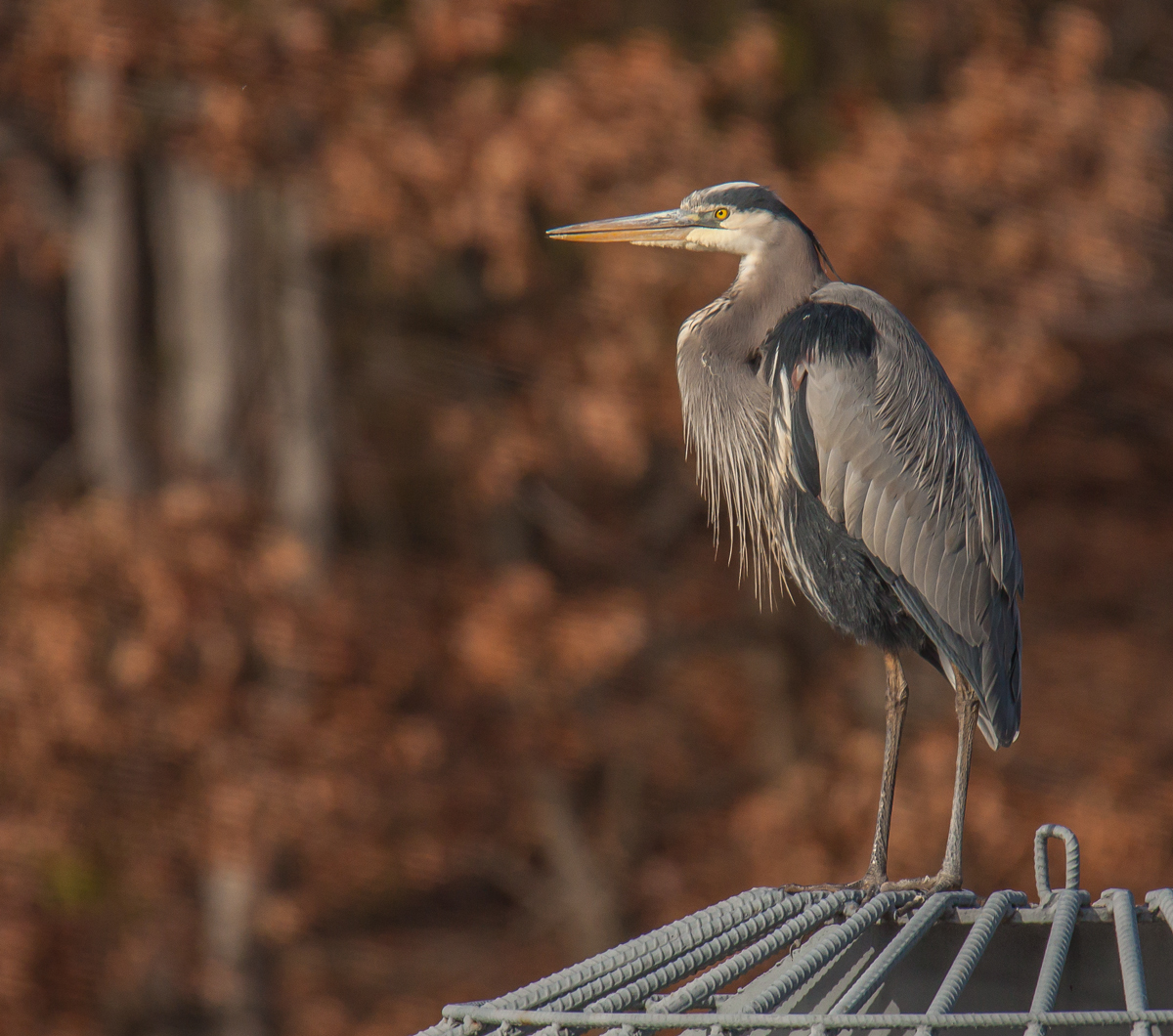
As you contemplate the promises and possibilities of the new year that has just begun, are you more like the pensive Great Blue Heron in the first image or the intensely focused heron in the second photo? (For the record, the Great Blue Heron (Ardea herodias) in both photos is actually the same one that I photographed last weekend at a local water retention pond.)

I’m more like the first heron—I am full of optimism and hope, but don’t have specific plans or resolutions.

Best wishes to all of you for a healthy, prosperous, and blessed new year.

Great Blue Heron

Great Blue Heron

© Michael Q. Powell. All rights reserved.


Read Full Post »

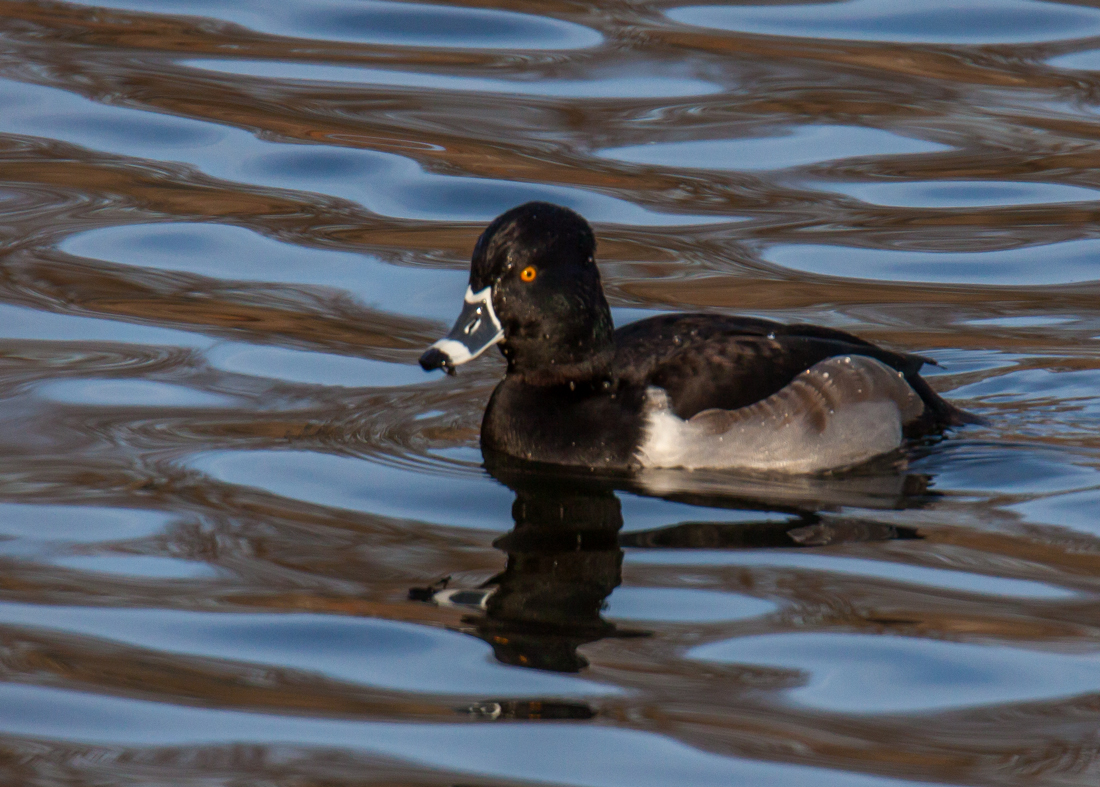
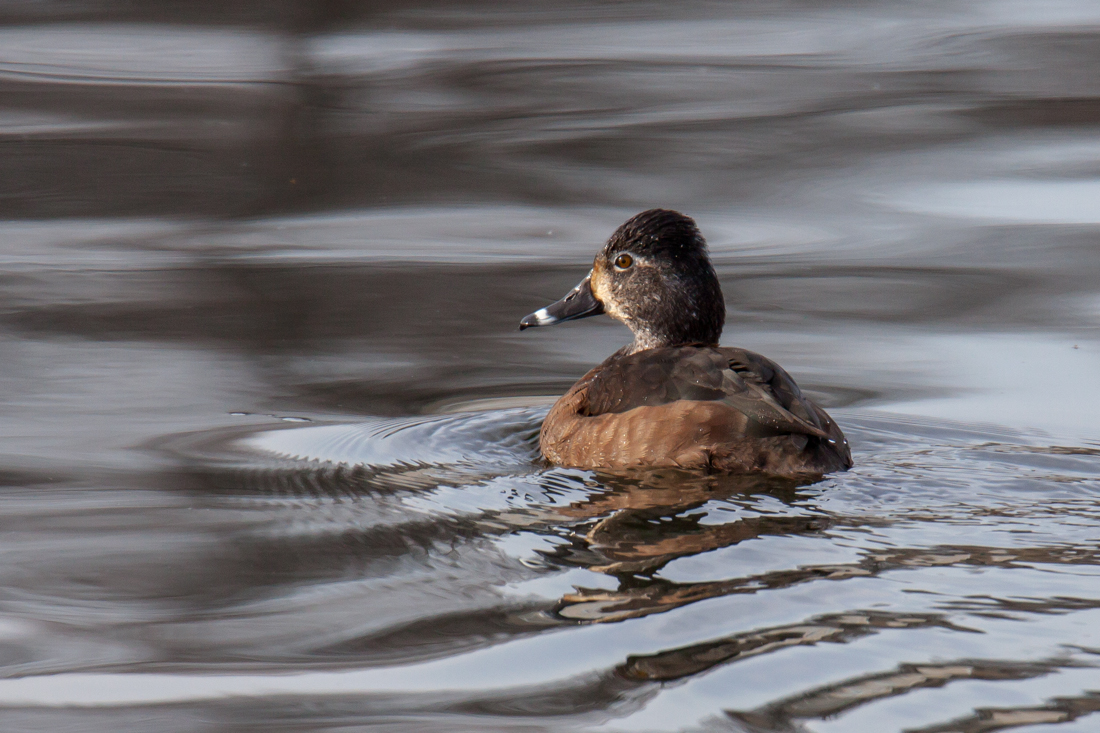
Although the rings on the bills of the Ring-necked Ducks (Aythya collaris) are very distinctive, it is their beautiful eyes that really draw me in, whether it be the startlingly yellow eyes of the male or the more subtle brown eyes of the female.

I never see these ducks in the ponds of my local marshland park, but each winter over the past few years, I have seen them in a small water retention pond in the middle of a suburban townhouse community near where I live.

Ring-necked DuckRing-necked DuckRing-necked Duck

© Michael Q. Powell. All rights reserved.


Read Full Post »

Where’s Waldo? As I was observing a Red-shouldered Hawk (Buteo lineatus) in the early morning, it took off and I captured this first image, in which you can just barely make out the hawk’s face and body amid all the branches.

In the second image, the sunlight hit one of the hawk’s wings just right and illuminated it against the backdrop of the tangled branches, making the hawk a bit easier to pick out.

UPDATE: Several readers have noted that this is almost certainly a Red-tailed Hawk (Buteo jamaicensis), not a Red-shouldered Hawk—I still have lots of work to do on improving my identification skills.

Red-tailed Hawk

Red-tailed Hawk

© Michael Q. Powell. All rights reserved.

Read Full Post »

As I gazed out into the center of a small, man-made pond, I spotted gulls and geese and a few ducks. Suddenly a small bird swam into view that I couldn’t identify. It looked a bit like a duck, but the bill seemed to be very different.

I’m stepping out into the unknown by speculating that this might be a Pied-billed Grebe (Podilymbus podiceps), although it doesn’t quite match any photos that in my identification guide or that I could find on-line. I wonder if it is a juvenile bird. I would welcome a clarification, correction, or confirmation from more experienced birders. Thanks in advance for your assistance.

As you can tell, it was a bright, sunny day when I took this shot this past weekend, a welcome respite from the gray days of winter. Alas, it is cloudy again today, with rain forecast for much of the day.

Grebe

© Michael Q. Powell. All rights reserved.

Read Full Post »

Double-crested Cormorants (Phalacrocorax auritus) are strange-looking waterbirds that sit really low in the water. I’ve seen them from time to time, but until yesterday, when I saw this one at a small suburban retention pond, I never knew that they have striking blue eyes.

One of the other unusual things about this bird is that they spend a good amount of time outside of the water drying out their wings. Despite being a diving bird, the cormorant’s feathers do not shed water as well as a duck’s, for example, and they can get soaked pretty quickly.

I took some photos of the cormorant drying its wings that I will post later, but I wanted to post the image of the cormorant resting on one leg, because it shows off the blue eyes (and I like the reflection).

Double-crested Cormorant

Double-crested Cormorant

© Michael Q. Powell. All rights reserved.

Read Full Post »

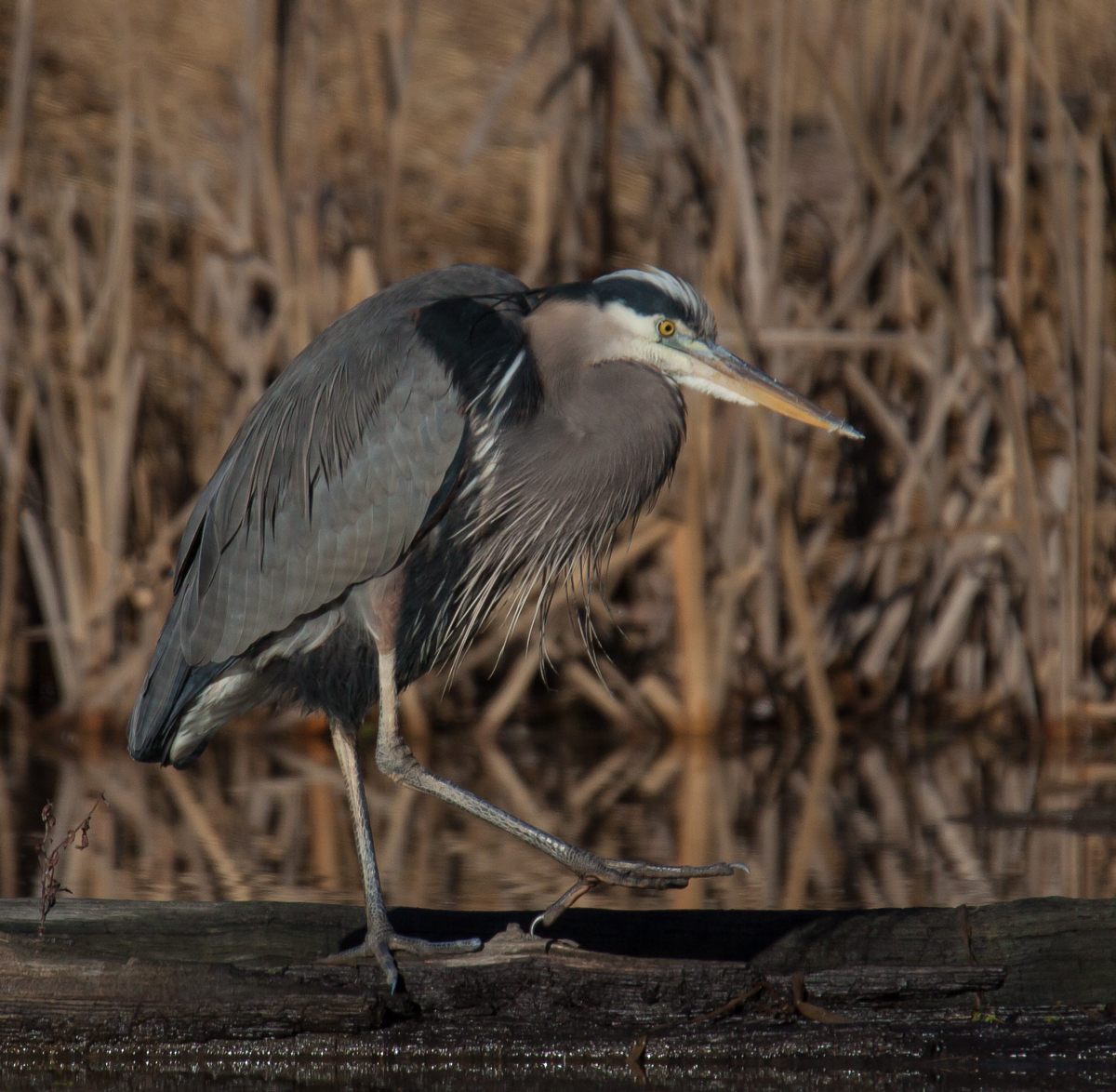
Yesterday at my local marshland park, this Great Blue Heron (Ardea herodias) seemed to be dancing—I think he was rocking to the sounds of “Walk This Way” by Aerosmith.

Great Blue Heron

Great Blue Heron

© Michael Q. Powell. All rights reserved.

Read Full Post »

On Christmas Day I managed to fit in a short walk at Huntley Meadows Park, my local marshland park, and captured these images of a pair of Hooded Mergansers (Lophodytes cucullatus) as they took off from the water and started to gain altitude.

Hooded Merganser takeoff

Hooded Merganser takeoff

Hooded Merganser takeoff

Hooded Merganser takeoff

© Michael Q. Powell. All rights reserved.

Read Full Post »

I posted this image once already, but its bright Christmas colors cry out to be used again this morning.

Merry Christmas to friends and family and best wishes for a blessed New Year.

Thanks for all of your support and encouragement this past year as I have continued my journey through photography.

Northern Cardinal

© Michael Q. Powell. All rights reserved.

Read Full Post »

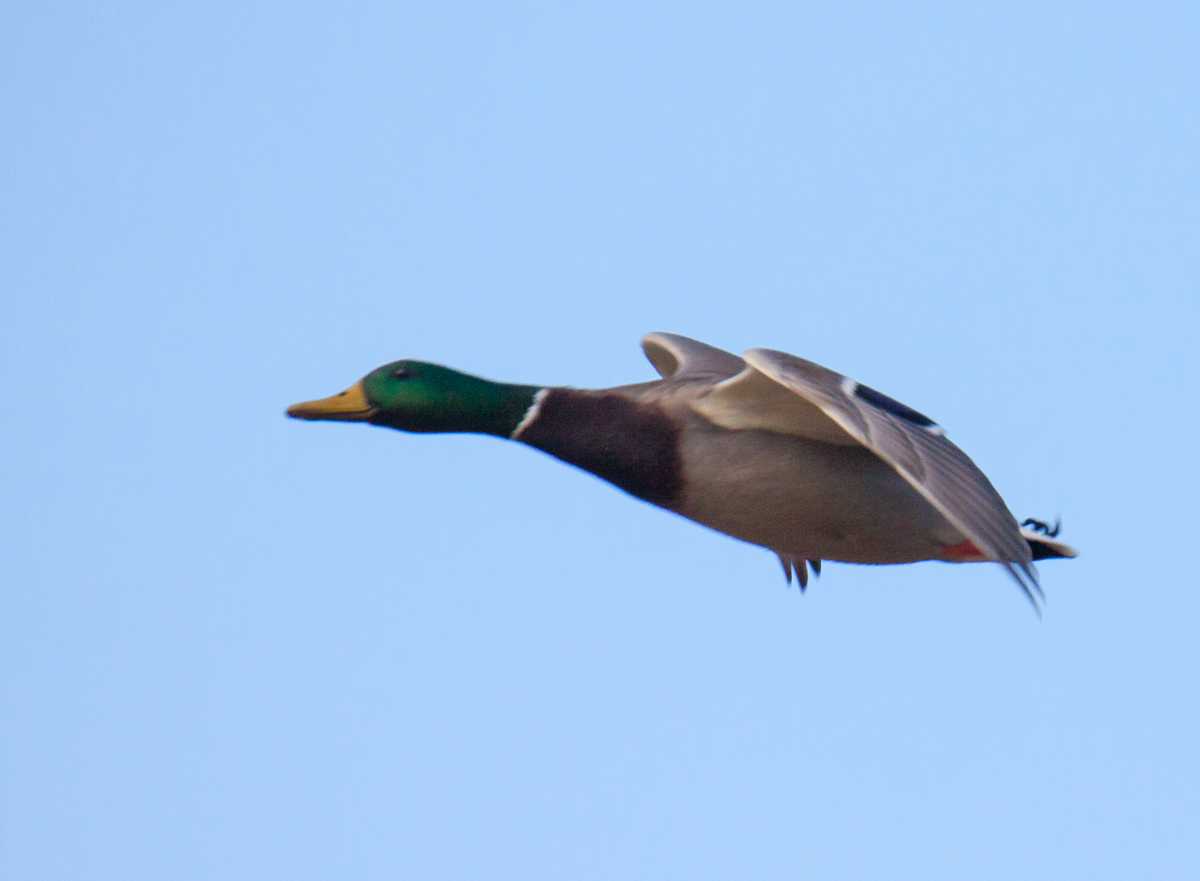
I’ve generally had a lot more difficulty capturing photos of ducks in flight than geese. Ducks are smaller, fly faster, and take off and land without the kind of advance warning that geese provide.

This past Monday, though, I managed to get some decent shots of a male Mallard (Anas platyrhynchos) as he flew past me. The background is uncluttered, a blue sky, which is ok, if not particularly interesting. As I reviewed my shots, I couldn’t help but notice how difficult it is to catch the wings in a good position, so I am happy that I took lots of shots in short bursts.

The last few days we’ve had almost constant rain, which is probably good for ducks like this one, though I would prefer to have some sunshine.

Mallard in flight Mallard in flight Mallard in flight

© Michael Q. Powell. All rights reserved.

Read Full Post »

The weather recently has turned cold and heavily overcast with intermittent rain. The chill in the air reminds me that winter is coming and apparently the beavers at my local marshland park have been receiving the same signals.

One of my favorite places in the park is a small beaver pond in a remote area of the park. It is peaceful and quiet and there are some fallen logs on which I like to sit and just watch and listen.

As the summer progressed I grew increasingly uncertain about the inhabitants. Were they still there or had they moved? It looked like the dam that held in the water had been neglected and parts of it were deteriorating.

I am sill not certain that they are still in the lodge that you see in the second photo, but in the area surrounding that lodge, I’ve come across incontrovertible evidence that beavers have been busy—several dozen small and medium trees that have been removed and the toothmarks look fresh.

I’ll be keeping my eyes open for additional signs that the lodge is occupied or that another one is being built nearby as I return to this spot.

dam3_blogdam1_blogdam2_blog

© Michael Q. Powell. All rights reserved.

Read Full Post »

My concerns about the potential demise of the Blue-faced Meadowhawk dragonflies (Sympetrum ambiguum) were greatly exaggerated and I saw a half-dozen or more yesterday on Veterans Day (Armistice Day).

Normally we stop seeing this species of dragonflies by the end of October, but we have not yet gone below freezing and perhaps that explains their unexpected longevity. Yesterday, for example, the temperatures soared to almost 70 degrees F (21 degrees C).  I have to note too that I am searching for them more diligently and in more remote locations of my marshland park, so that may help explain why I am seeing them more frequently.

As is the case with birds, male dragonflies tend to be more brightly colored and visible. Many female dragonflies are brown in colored and harder to spot. I was thus very happy yesterday to be able to get this close-up shot of a female Blue-faced Meadowhawk. Her body coloration may be a little bit drab, but those blue eyes are simply stunning.

In case you are curious, these dragonflies are small in size, with a body length of approximately 1.5 inches (38 mm), so I had to move in awfully close to get this shot. Surprisingly (and happily), this female tolerated my close presence for long enough for me to take several shots before she flew off into the distance.

female Blue-faced Meadowhawk

© Michael Q. Powell. All rights reserved.


Read Full Post »

In between rain showers yesterday, I spotted this Banded Woolly Bear caterpillar (Pyrrharctia isabella) at Huntley Meadows Park, my local marshland. Unlike this photographer, most of the wildlife seemed to be taking shelter from the rain, so I was particularly excited when I caught sight of this caterpillar as I was trudging through the wet, calf-high vegetation.

Folklore says that the width of the brown band is an indicator of the severity of the upcoming winter. I can never remember whether a narrow band means a severe winter or the opposite, but Google came to the rescue again and indicated sources that say a narrow band means a colder winter. If that’s right, we may be in for a mild winter, given the size of the broad brown area on this caterpillar. Of course, there is no real scientific basis for this folklore, but it’s probably about as reliable as the weather forecasters in this area, who are notoriously bad in predicting the weather. They claim that we live in a complicated meteorological area.

When I was photographing this caterpillar, I noticed that it had a number of water drops on its “fur” and I was happy to see that I was able to capture them. There is something magical about those little globes of water and light.

Banded Woolly Bear caterpillar

© Michael Q. Powell. All rights reserved.

Read Full Post »

Which of your images are unusual or distinctive enough that you genuinely feel like they are “once in a lifetime” photos?

Of course, all photos are unique captures of a subject at a particular moment. As the ancient Greek philosopher Heraclitus is reported to have said, “No man ever steps in the same river twice.”

Somehow, though, it seems like we could capture similar images in many cases if we returned to the same locations under similar conditions and were patient and persistent enough.

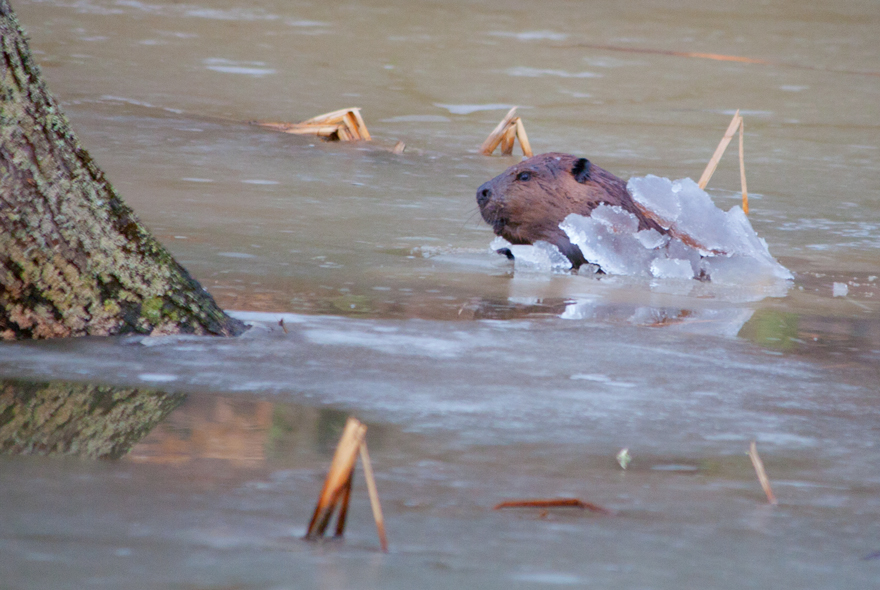
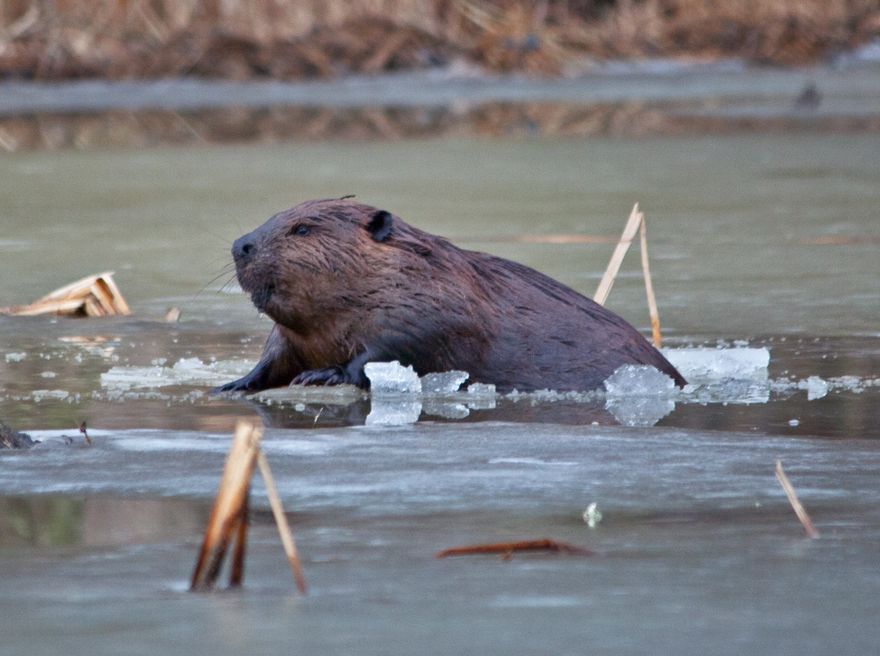
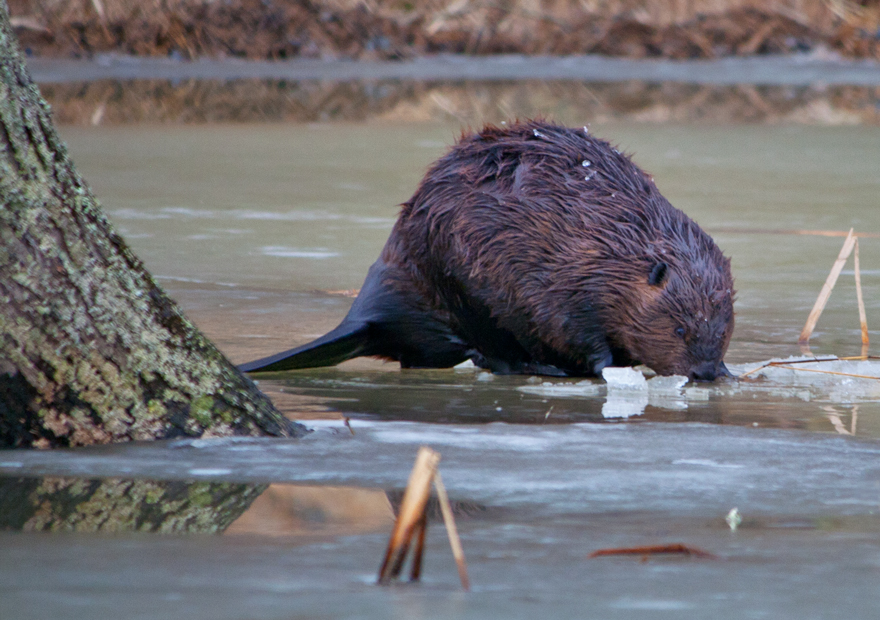
As I celebrate my two year blog anniversary this week, I’ve been doing a few retrospective re-postings of favorite posts from the earliest days and am continuing in that vein today with some photos of a North American Beaver (Castor canadensis) breaking through the ice of a beaver pond from below on a winter day early in 2013.

A lot of things had to work together perfectly for me to get these images and it’s hard to imagine that confluence of factors ever happening again for me. The photos and the accompanying prose help to document that very special moment.

Besides the uniqueness of that moment, there is something particularly enjoyable about posting icy winter photos as we continue to suffer through a seemingly endless cycle of hot, humid summer weather. I hope that you feel as refreshed as I do when viewing these images.

Complete text of original posting Breaking through the ice from below on 30 January 2013:

The beaver had disappeared from the small open water area of the ice-covered beaver pond.  Wondering if he would resurface, I stood in silent readiness with my camera still in my hand.

My eyes were focused on one area of the pond, but my ears detected a sound emanating from another location near the edge of the pond. Somehow I knew instantly what was about to happen—the beaver was about to achieve a breakthrough. The light had faded a bit and I couldn’t see well enough to focus perfectly, but I aimed at the source of the sound and got this shot of the beaver poking his head through a newly-created hole in the ice. From this perspective, it looks like the beaver is pretty small.
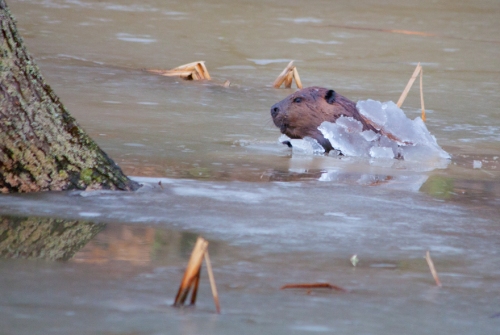
breakthrough1_blog

As I watched, the beaver placed his front paws on the ice, which appeared to be able to support his weight, and gradually pulled his body out of the water. Naturally, the small hole became a lot bigger as his large body came increasingly into view.
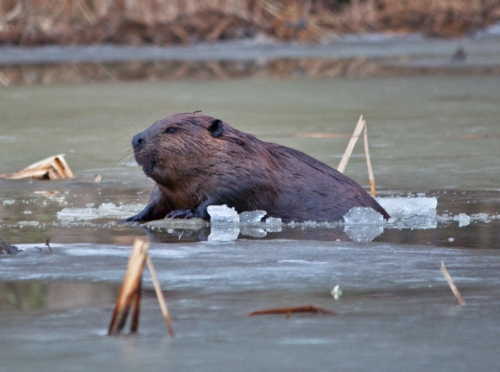
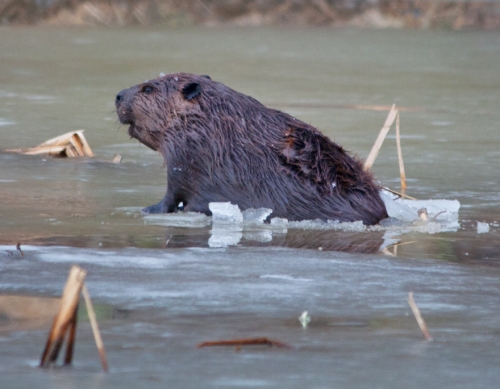
breakthrough4_blogbreakthrough2_blogAfter the beaver was completely out of the water, he bent down over the opening that he had just created. Perhaps he was trying to decide if he needed to enlarge it further or was trying to free a tasty-looking stick from the ice. It almost looks to me, though, that he is peering into the water, wondering if one of his fellow beavers is going to be popping up to join him.
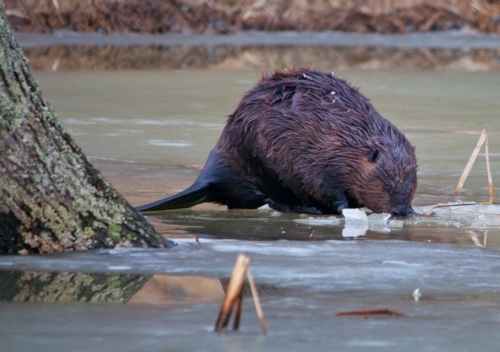
breakthrough3_blog

The beaver did not linger long at the new location. After a few seconds on the “outside,” he dove back into the icy waters of the pond.

There are few moments in life that are truly “once-in-a-lifetime” experiences, ones that would be impossible to replicate, but I have the sense that this was one of them. So many things had to work together to make these photos happen—the timing, the location, and the ice, to name a few.

It is supposed to get up to 70 degrees (21 degrees C) today and the ice will almost certainly be gone by the time I am able to return to the marsh this weekend. Perhaps I will get to observe the beavers eating or working or playing or maybe they will remain in the lodge. In either case, I can be happy, knowing that we shared a really special moment together.

© Michael Q. Powell. All rights reserved


Read Full Post »

It’s difficult not to feel a bit like a voyeur when you spot a pair of ladybugs mating. They consummate the act in public view and their bold coloration makes them almost impossible to miss. Still, there is just something loveable about ladybugs and I doubt that many readers will find these images objectionable.

ladybug1A_love_blogladybug2_love_blog

© Michael Q. Powell. All rights reserved.

Read Full Post »

Spring is here and I am once again chasing dragonflies, on a quest to capture images of these beautiful insects. Common Green Darners (Anax junius) rarely seem to perch, so I was forced to try to photograph them in flight.

This early in the spring, there aren’t yet a lot of dragonflies, so my patience was tested as I waited for one to fly by. I tried a lot of different approaches and the one that worked best on this day was to focus manually, which is a bit of a challenge at 300mm when the subject is moving pretty fast.

I hope I’ll get some better shots later this season—this is my best one so far.

dragonfly_flight_blog

© Michael Q. Powell. All rights reserved

Read Full Post »

Like the dried-up leaves on this branch, winter is tenaciously hanging on, refusing to give way to spring. March is almost over, yet I look out the window and see that the ground is still covered with snow.

Soon the monochromatic tones of winter will be replaced by the pastel colors of spring. Starved for bright colors, my senses rejoice when I am greeted by bright colors, like those of this male Northern Cardinal (Cardinal cardinalis) that I observed this past weekend.

cardinal_march_blog

© Michael Q. Powell. All rights reserved

Read Full Post »
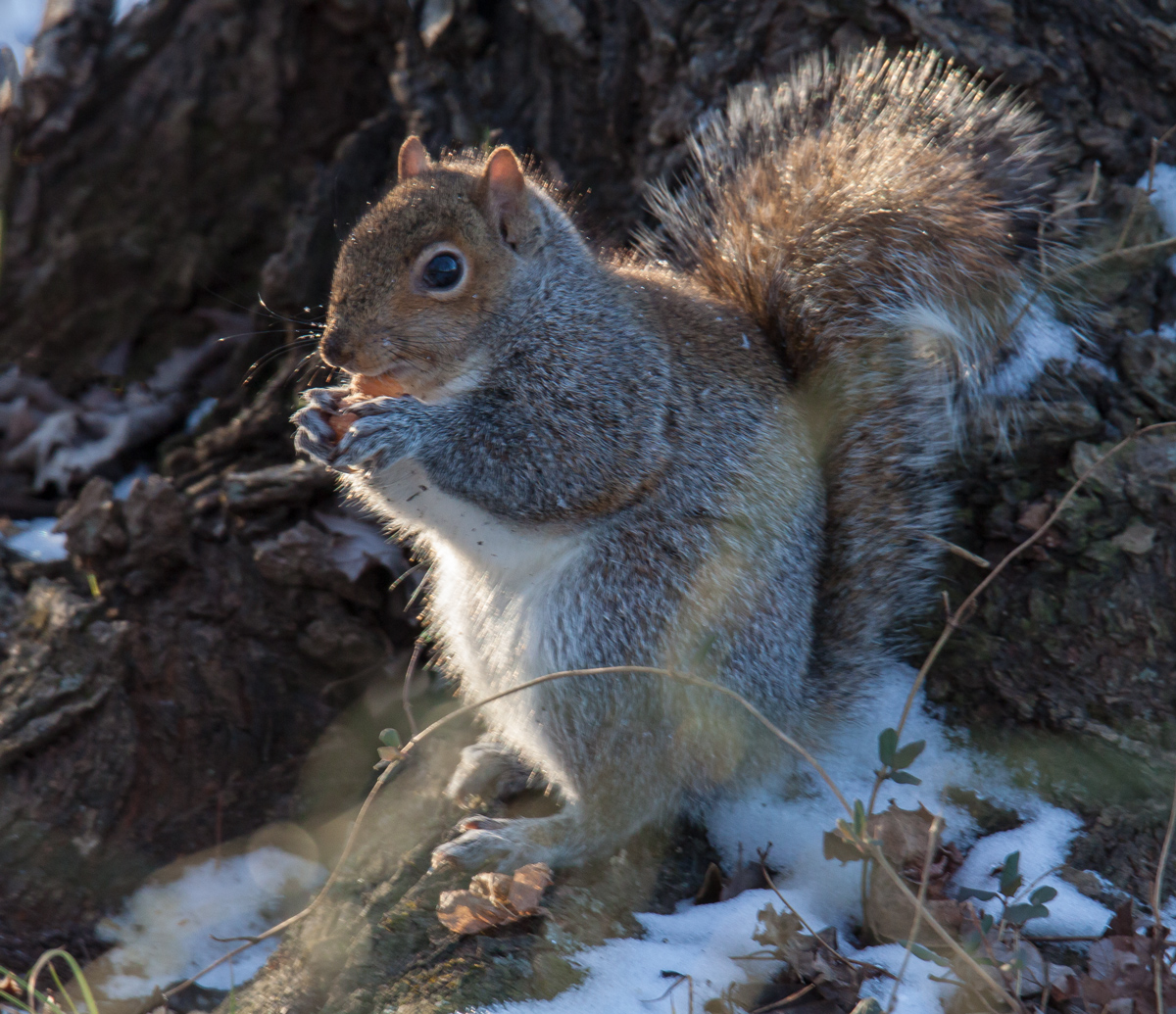
Do woodpeckers smile?

Earlier this month, I spent some time observing a Pileated Woodpecker (Dryocopus pileatus) at work, high in a tree at my local marshland park. The woodpecker would peck away for a while and then stop for a break.  As the big bird turned his head to one side or to the other, it seemed to me that its face would light up in a self-satisfied smile.

What do you think, is the woodpecker smiling or is it just my imagination, running away with me? (Sorry, I just couldn’t resist the temptations to throw in a line from a song.)

pileated4_march_blogpileated1_march_blogpileated2_march_blogpileated3_march_blog

© Michael Q. Powell. All rights reserved

Read Full Post »

Direct sunlight and harsh shadows in the middle of the day make it challenging to take portraits without somehow diffusing the light. During the spring and summer, I will usually carry a collapsible diffuser that I use when photographing flowers (and occasionally people), but it would have been tough to get into position to use such a diffuser on this Great Blue Heron (Ardea herodias) that I spotted on the shore of the Potomac River last Saturday, when I was visiting Dyke Marsh Wildlife Preserve.

As I observed the heron, I was standing on a raised boardwalk, looking downward at the heron though some bushes. In order to get an unobstructed shot, I zoomed in, focusing primarily on the head and neck. The heron moved its head about a lot as it searched the shallow waters and looked through the debris at the shore’s edge, moving in out of the shadows.

I took a lot of photos of the heron and this is one of my favorites. I like the way that I was able to capture some of the details of the plumage and the sinuous curve of the heron’s neck. I would love to be able to capture a similar image early in the day or late in the day, but, as every wildlife photographer knows, you can never tell when you will have another opportunity to photograph a subject again.

heron1_march_blog

© Michael Q. Powell. All rights reserved

Read Full Post »
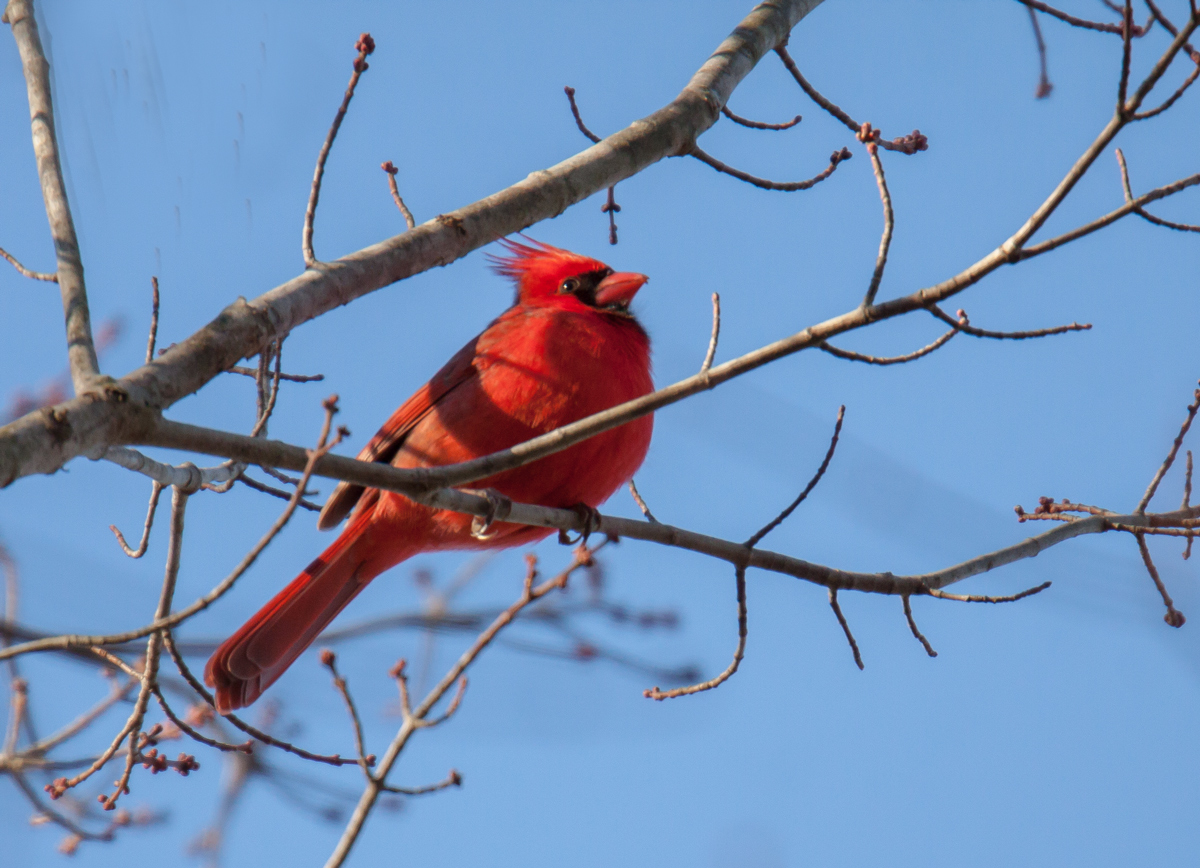
These images are disturbing, especially the first one. They show the harsh reality of the struggle for survival for wild creatures, even in the relatively comfortable confines of a suburban marshland park.

For the second time this winter, I stumbled upon a dead deer in a remote area of my the marsh when I take many of my wildlife photos. (I documented the earlier sighting in a posting that I titled “The Buck Was Stopped Here.”) This time, the skeleton was relatively intact and I was surprised to see that it was another buck. I am still baffled about the cause of his death. Predators? Starvation?

As a photographer and as a human, I struggled in deciding how to present this subject in photographs. I knew that I was not going to remove the body far from where I found it, so I had to settle for a relatively cluttered backdrop. Was it better to show the whole body, as I did in the third photo and keep death at a distance? Should I photograph it to look like the deer had fallen asleep and died peacefully, as the second shot suggests, the way we treat death at a funeral home?

I decided that my best shot was the one in which I forced the viewer essentially to look death in the face directly, by focusing directly on the deer’s now empty eye socket. Death is a reality that can’t be avoided. The photo is a bit macabre, I know, but it speaks to me of life and of death, of the passing of one of God’s creatures.

buck_small2_blogbuck_small1_blogbuck_small3_blog

© Michael Q. Powell. All rights reserved

Read Full Post »

« Newer Posts - Older Posts »