Feeds:
Posts
Comments

Archive for the ‘wildlife’ Category

In the early morning light at Huntley Meadows Park last week, I was thrilled to catch a glimpse of an Eastern Kingbird (Tyrannus tyrannus). The colors and lighting were subdued, which helped to draw my attention to the details of the bird’s feathers when I captured these images.

Several other photographers had posted photos of a kingbird on the park’s Facebook page and I was hoping that I would see one when I set out that day. When I first saw this bird from a distance, I thought it might be some kind of swallow. Once I got a little closer, I changed my mind and considered the possibility that it might be an Eastern Phoebe. It was only when I got home and was able to look at my birding book that I realized the white-tipped tail of this bird meant that it was almost certainly an Eastern Kingbird.

I studied Latin for a couple of years in high school (a long time ago) and I am always curious about the origin of the Latin name for different species. This one—Tyrannus tyrannus—really caught my eye.  The Cornell Lab of Ornithology website explained the name in these words. “The scientific name Tyrannus means “tyrant, despot, or king,” referring to the aggression kingbirds exhibit with each other and with other species. When defending their nests they will attack much larger predators like hawks, crows, and squirrels. They have been known to knock unsuspecting Blue Jays out of trees.”

Eastern Kingbird


Eastern Kingbird


Eastern Kingbird

© Michael Q. Powell. All rights reserved

Read Full Post »

I know that some folks find spiders to be creepy, but I think they are beautiful, particularly when presented creatively in an image. I spotted this little spider earlier this week in a wooded area at Huntley Meadows Park.

The area in which the spider was located was pretty dark, so I decided to use  the pop-up flash on my camera. The light was a bit too powerful at such close range, so I  improvised a diffuser by slipping a plastic sleeve over the flash—when it is raining out, my Washington Post is delivered in plastic sleeves. All three of these shots were taken using the flash, but they look so different because of the direction of the ambient light. In the one that has a light background,for example, I was shooting almost directly into the light, so the flash was need to avoid getting nothing but a silhouette.


dramatic spider


dramatic spiderdramatic spider

© Michael Q. Powell. All rights reserved

Read Full Post »

This Green Heron (Butorides virescens) picked a particularly precarious perch from which to focus on a potential prey this past Monday at Huntley Meadows Park in Alexandria, Virginia.

Green Heron

© Michael Q. Powell. All rights reserved


Read Full Post »

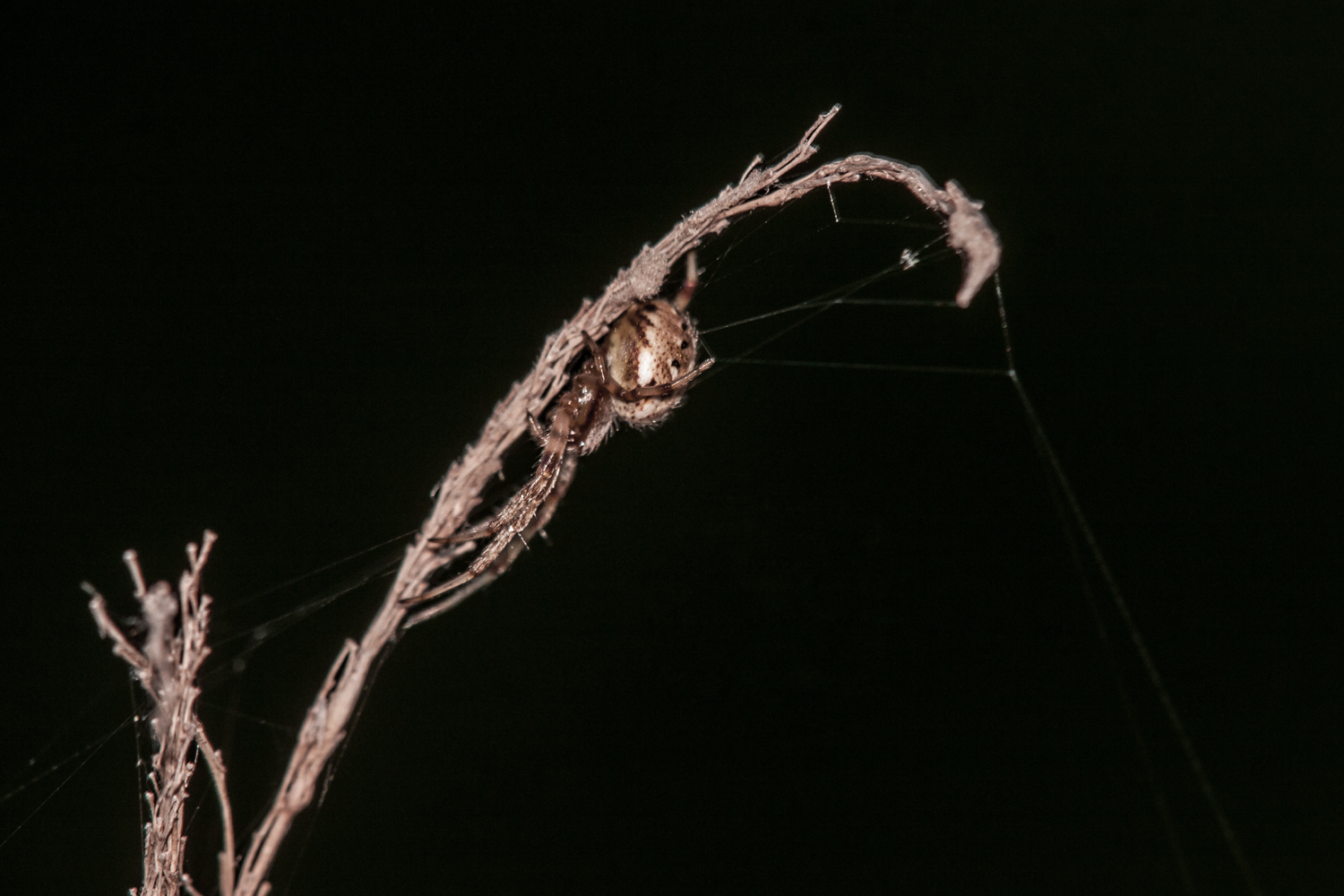
If you go out early in the morning, you have undoubtedly seen flat dew-covered squares of web material scattered all over the ground. Yesterday morning at Huntley Meadows Park, I decided to explore several of them, hoping to find one of the spider-architects. Eventually I was able to find and photograph one of these spiders, which are commonly known as American Grass Spiders (g. Agelenopsis) or funnel weaver spiders.

According to an article on BugGuide.net, “For this family of spiders, the web is a horizontal, sheet-like web with a small funnel-like tube off to a side (or for some species, the middle of the web). This funnel is what the family is named for, and is used by the spider for hunting and protection. The spider will lay in wait in the funnel, and when an insect flies into, or lands on the web, the spider will rush out, very quickly check to see if it is prey, and if it is prey, bite it. The venom is fast-acting on the prey, so once the prey is subdued (within a second or two), the spider will drag the prey back into the funnel (for safety while eating, and to prevent other insects from recognizing the danger that lurks on the web).”

It’s fascinating to think about all the different ways that spiders are able to capture their prey, including all kinds of webs or even without webs, as is the case with jumping spiders and fishing spiders. It makes me happy that spiders are not larger, except perhaps in some Japanese science fiction movies, or we all might be in danger.

funnel weaver spider

© Michael Q. Powell. All rights reserved


Read Full Post »

The butterflies were really active today at Huntley Meadows Park and I nearly wore myself out chasing after them. Fortunately one of them would occasionally perch, like this Great Spangled Fritillary (Speyeria cybele), whose image I was able to capture from an unusual perspective.

Happy Memorial Day. Let us never forget the brave men and women who sacrificed so much for our freedom.

Great Spangled Fritillary

© Michael Q. Powell. All rights reserved

Read Full Post »

Most of us know what it is like to change a lens on a DSLR, but what is it like when you change a lens in one of your eyes? About 48 hours ago, I had surgery to replace the lens in one of my eyes with a plastic intraocular lens (IOL). Cataracts in both of my eyes had advanced to a point where they were interfering with activities such as night driving and both my optometrist and my ophthalmologist recommended cataract surgery.

I am in an interesting situation right now, because one of my eyes has been “fixed” and one of them has not. As a result I can’t help but do a series of before-and-after comparisons by looking at the world one eye at a time.

It’s hard to describe the changes, but it may be a little easier with photographers. Do you remember the first time that you looked at a RAW image? RAW images often look dull and flat. That’s kind of the way that things look in my right (uncorrected) eye. The view is darker, dingier, and has a slight yellow cast. The colors appear desaturated and there is not much contrast.

When I look through my corrected eye, it feels like a RAW image that has been adjusted by a skilled photographer. The whites are pure white, the colors are vibrant, and sharpness and contrast have been tweaked. Interestingly, the colors are a little on the cool side, with a slight blue color cast. One thing I didn’t expect is that objects in my corrected eye are slightly bigger than in my uncorrected eye. I asked my ophthalmologist if the lens he implanted has a magnifying effect and he noted that it did not—the phenomenon I had described was caused by my myopia, which causes objects to look smaller.

Previously I was significantly near-sighted and have needed glasses since I was in the fifth grade. The corrected eye is far-sighted now and my distance vision is amazing—for the first time in my life I was able to drive a car yesterday without glasses. My near vision now is essentially non-existent. I am hoping that it will improve a little bit as my eyes continue the adjustment process, but I fully expect that I will need the kind of reading glasses that I am using at this very moment.

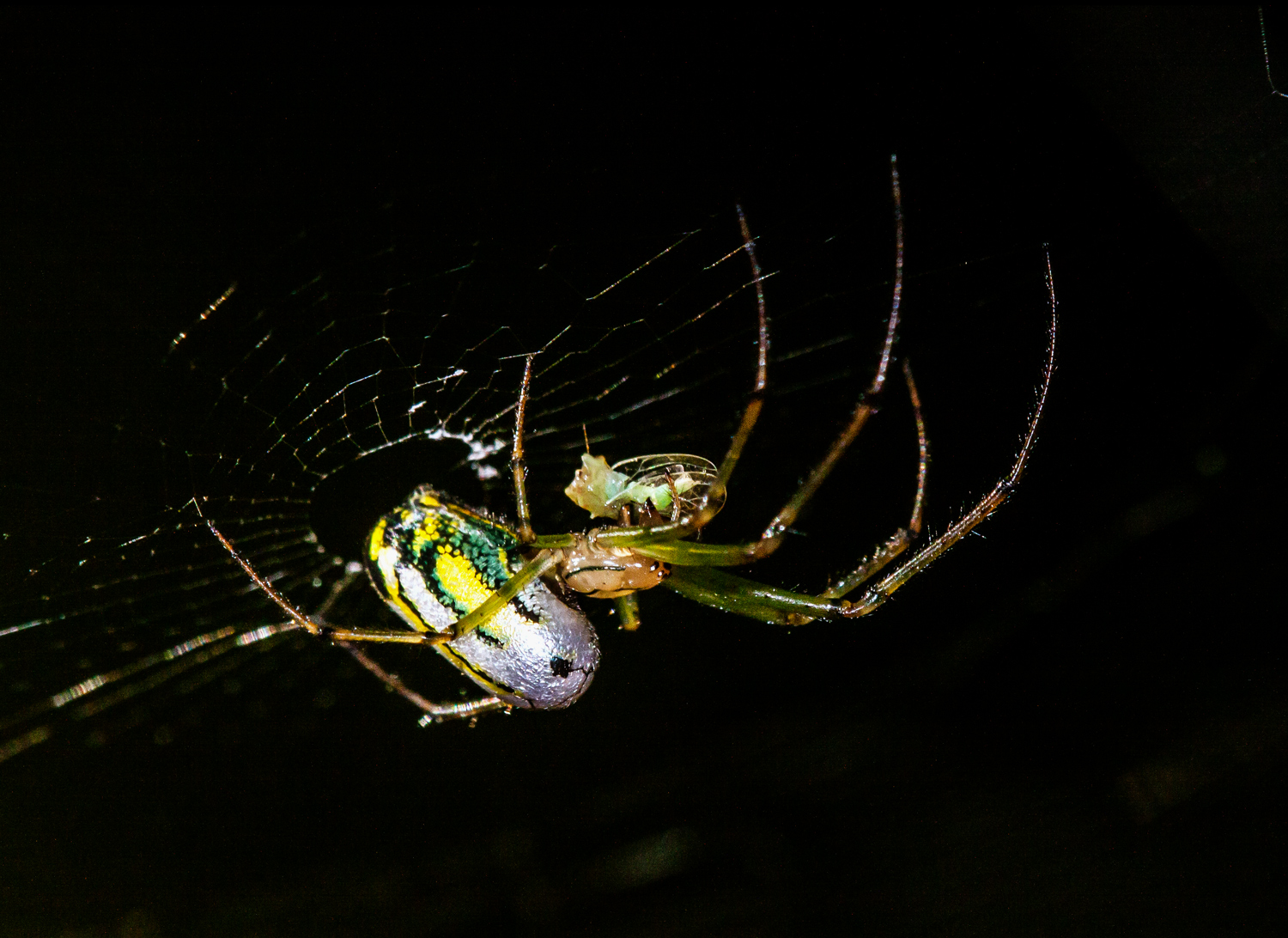
Here is a photo of an Orchard Orbweaver spider (Leucauge venusta) that I took recently. The woods were pretty dark and I was trying to shoot from a relatively short distance away, so I decided to use my pop-up flash. It produced too much glare off of the spider’s shiny body, so I ended up throwing a gray bandana over the flash as a makeshift diffuser. The spider had just captured a prey (I think) and I am pretty happy that I was able to capture as much detail as I did. (Normally I like to be more nuanced when using a flash on close-up subjects, but I think the dark background works well with a spider;)

When I look at the spider with my uncorrected eye, the green and yellow on the spider’s body are pale and dull and the section of the body between the yellow areas appears to be gray. Looking though the corrected eye, however, I see a bright white area in between the bright yellow markings and even the green seems brighter and more intense.

In another two weeks the lens in the right eye is scheduled to be replaced and I’ll probably start to take my newer, brighter world for granted. For now, though, all I have to do is close one eye at a time to see what a difference a change in lens can produce.

Orchard Orbweaver

© Michael Q. Powell. All rights reserved


Read Full Post »

I am not completely certain what these two muskrats (Ondatra zibethicus) were doing on Monday at Huntley Meadows Park. It may have been only grooming, but to me it looks like muskrat love.

muskrat love

© Michael Q. Powell. All rights reserved

Read Full Post »

Wildlife photography forces us to make a lot of choices in a short period of time, because we often encounter our subjects unexpectedly and don’t have the luxury of carefully planning all of our shots. When I stumbled upon this Hooded Merganser family (Lophodytes cucullatus) on Monday at Huntley Meadows Park, for example, I had to make a quick choice. Should I focus on the hyper-vigilant Mom or on her ducklings?

It’s hard to resist cuteness, so I initially focused on the babies. As you can see in the first shot below, the ducklings were relaxed and appeared to be preening and playing, while the Mom in the foreground kept watch. After I had taken a few shots, I switched my attention and my focus to the mother. Her more rigid posture is in sharp contrast to that of her ducklings, who have faded a little into the background in the second shot.

I think that my focusing choices cause each of the images to tell a slightly different story and causes a viewer to react differently. That’s one of the cool things I like about photography—our creative choices can help others to see the world in different ways as we gently guide their attention to what we think is important.

Hooded Merganser family

Hooded Merganser family

© Michael Q. Powell. All rights reserved

Read Full Post »

As I was getting ready to leave Huntley Meadows Park yesterday afternoon, a Wood Duck family (Aix sponsa)  suddenly swam right in front of me from under the boardwalk. Even though I zoomed out, I was unable to capture the entire family with my long telephoto lens.

Here are a couple of shots of the mother and some of her ducklings. They were moving pretty quickly as a group and I didn’t have much time to get some shots before they disappeared into the vegetation.

Wood Duck

Wood Duck

© Michael Q. Powell. All rights reserved


Read Full Post »
In addition to dragonflies, damselflies are now appearing in greater numbers, like this beautiful little Ebony Jewelwing (Calopteryx maculata) that I spotted on Friday at Huntley Meadows Park. Identification is pretty easy, because it is the only dark-winged species in our area. The red eyes suggest that it is newly emerged—the eyes will change to a less demonic color later—and the lack of white markings on the wings indicate it is a male. Click on the image if you want to see some of the details of the damselfly at higher resolution, like the tiny hairs on its legs.

Ebony Jewelwing

© Michael Q. Powell. All rights reserved

Read Full Post »

As the weather warms up, more and more dragonflies finally are starting to emerge at Huntley Meadows Park in Alexandria, Virginia. like these Spangled Skimmers (Libellula cyanea) that I spotted yesterday at the park. Spangled Skimmers are pretty easy to identify, because they are the only dragonflies in our area that have the both black and white “stigma” on the front edges of their wings. The adult male is blue, but immature males have the same coloration as the females, so you have to look closely to determine gender.

The first image, for example, shows an immature male, while the second image shows a female. If you examine the extreme tip of the abdomen (what I used to call a “tail”), you can see some differences. You may also note that the terminal appendages match for the first and third images, both of which show males.

If you want to learn more about Spangled Skimmers, check out this page from the Dragonflies of Northern Virginia website. The website is a wonderful resource for anyone interested in dragonflies, not just for folks who live in our area.

Spangled Skimmer

Spangled Skimmer

Spangled Skimmer

© Michael Q. Powell. All rights reserved

Read Full Post »

It was wonderful early this morning to catch a glimpse of one of the Hooded Merganser families (Lophodytes cucullatus) at Huntley Meadows Park. The ducklings appear to be almost grown up now and the survival rate seems to be higher than normal. In the past I have often seen the size of similar families dwindle down to just a couple of ducklings because of the large number of potential predators, most notably snapping turtles. I am amazed that the mother is able to watch over so many babies—the father doesn’t stick around to help raise the offspring.

mama merganser and babies

© Michael Q. Powell. All rights reserved

Read Full Post »

It has rained almost continuously for several days since my return from a brief overseas trip to Vienna, Austria. After a week spent mostly in the city, I was itching to get out into the wild again. The rain finally let up in middle of this morning, so I went out exploring with my camera at Jackson Miles Abbott Wetland Refuge.

The wetland was really wet and it was cool and cloudy, so not much was stirring, except this little butterfly. I think I disturbed its sleep, for it was motionless with its wings spread wide until I was almost on top of it. Suddenly it took to the air and flew away. I am not sure what type of butterfly this is, but I was so happy to be in my “natural” environment again, that I am content to simply marvel in its delicate beauty.

UPDATE: In a Facebook insect identification group, my pretty little butterfly has been identified as a Crocus Geometer moth (sp. Xanthotype) or possibly a False Crocus Geometer moth.

butterfly

© Michael Q. Powell. All rights reserved

Read Full Post »

I was hoping that I would be in Vienna at the right time of the year to see baby swans, but I guess my trip brought me here a bit too early. At the lake at Donau-Auen National Park, I could see one Mute Swan (Cygnus olor) swimming around and wondered if it was alone. When I walked further around the lake, I spotted what appears to be its mate, partially hidden by the vegetation, sitting on a nest.

Mute Swan

Mute Swan

Mute Swan

Mute Swan

© Michael Q. Powell. All rights reserved

Read Full Post »

These Southern Spreadwing damselflies (Lestes australis) were engaging in a little May Day mayhem this past Monday at Huntley Meadows Park. If I have this figured out right, the female, the one on the right in this image, is depositing her eggs in the vegetation after successfully mating with the male, who is still holding on to her.

Southern Spreadwing

 © Michael Q. Powell. All rights reserved

Read Full Post »
Creepy or cool? This snake and I stared at each other for a while on Monday at Huntley Meadows Park before it decided that it had had enough and silently slithered away. One of my Facebook friends praised me for winning a staring contest with a snake, but I think that it may have simply gotten bored or had satisfied its curiosity.

I am not sure of the species, but think that it may be an Eastern Ratsnake (Pantherophis alleghaniensis).

Eastern Ratsnake

© Michael Q. Powell. All rights reserved

Read Full Post »

I celebrated May Day yesterday by searching for dragonflies at Huntley Meadows Park and was rewarded by spotting my first Eastern Pondhawk dragonflies (Erythemis simplicicollis) of the season. This bright green female pondhawk was almost hidden in the fresh vegetation, but she really showed her colors when she perched on the brittle fallen leaves on the forest floor. The muted tones of gray and brown created a wonderful (albeit cluttered) backdrop that really let her beautiful colors and patterns stand out.

Eastern Pondhawk

© Michael Q. Powell. All rights reserved

Read Full Post »

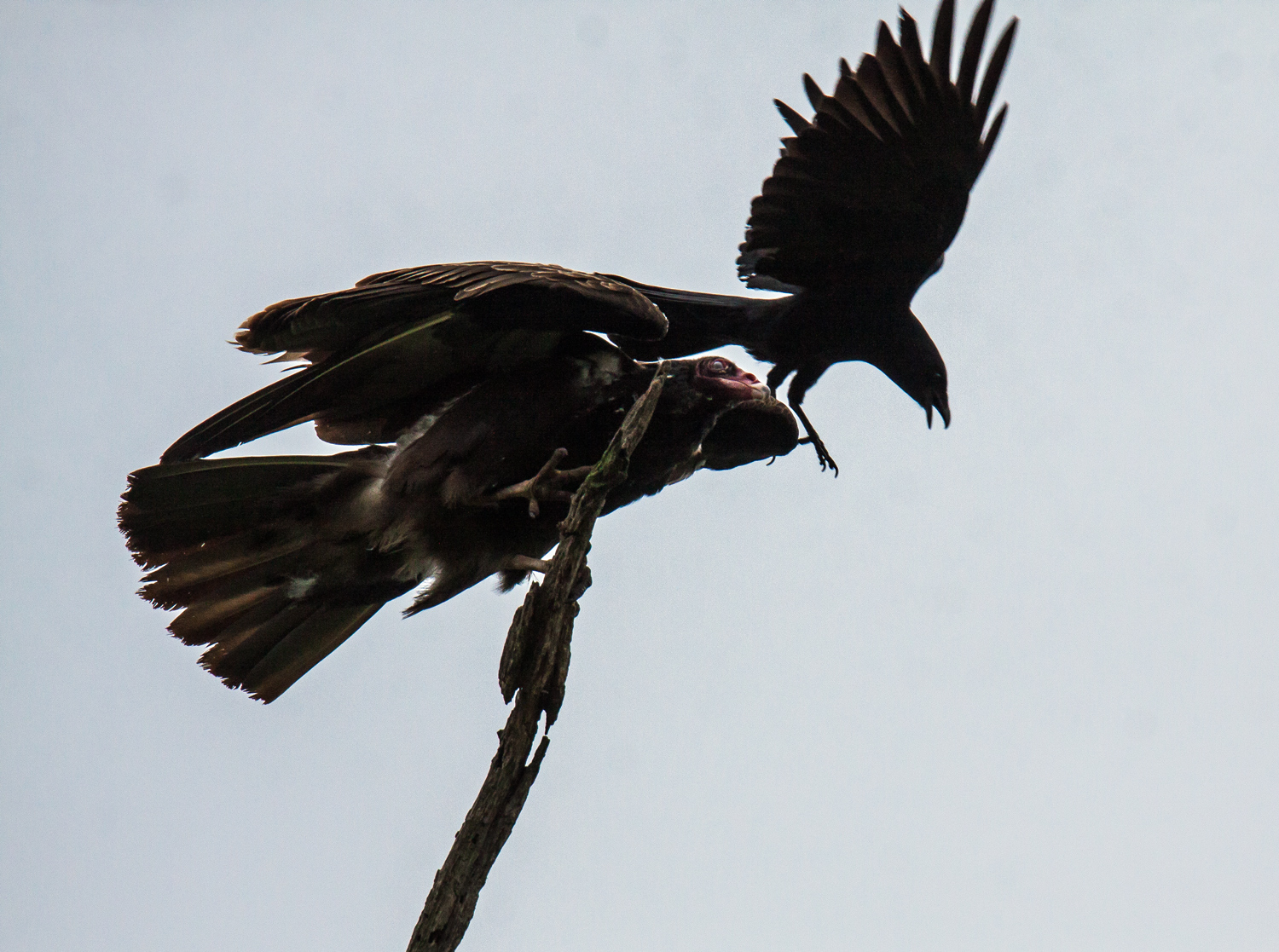
I was watching a Turkey Vulture high in a tree at Huntley Meadows Park this past weekend, when all at once it seemed to get tense and agitated. Suddenly a flash of black crossed my field of view as I gazed through my camera’s viewfinder.

I had no idea what had happened until I saw this photo–an aggressive crow appeared to be attempting to get the vulture to move. What was unusual was that the attack was not preceded by the loud calls of a crow, nor did there appear to be a group of crows, as is often the case when crows harass larger birds.

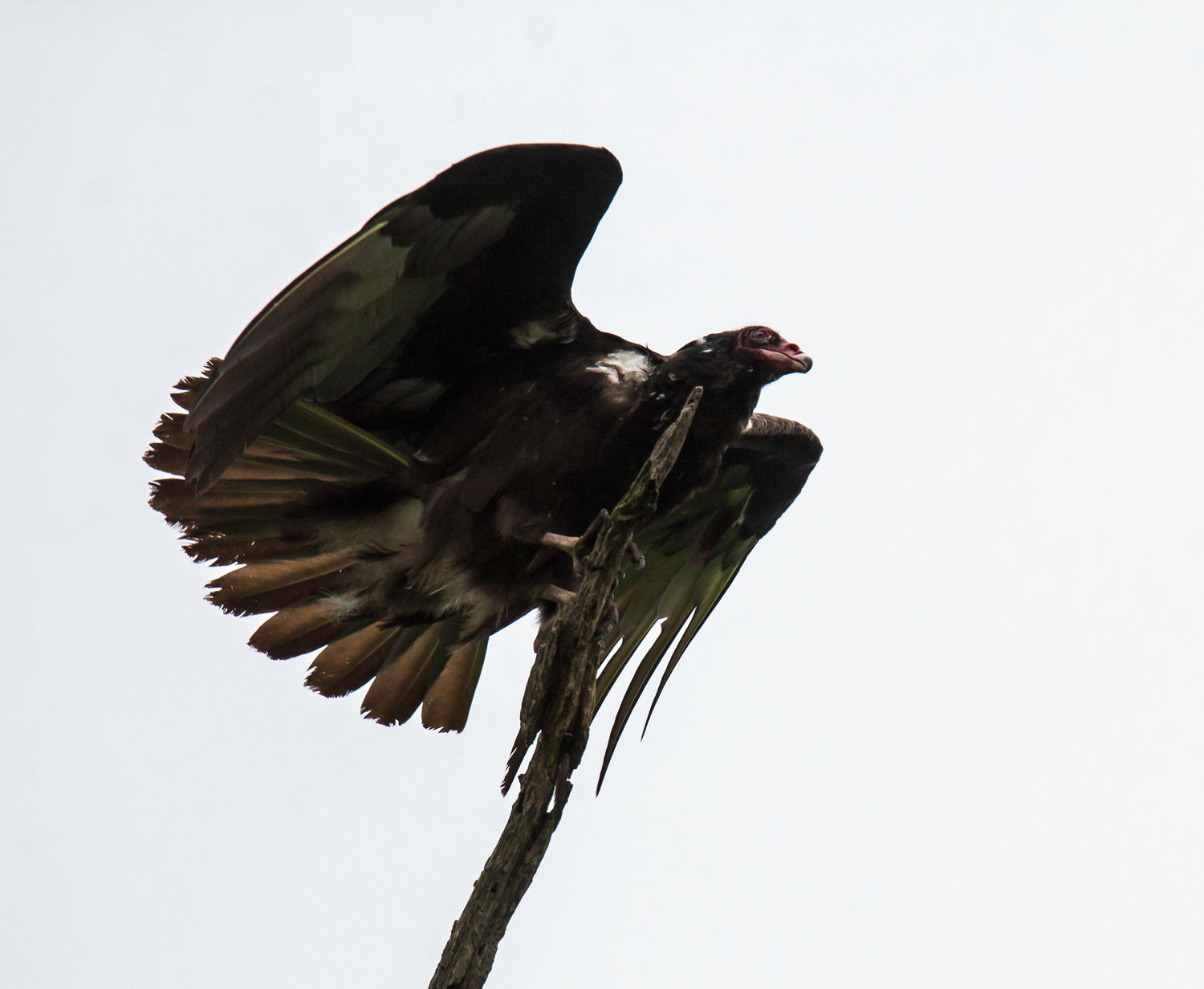
The vulture stayed put and eventually lowered its wings. (The second shot shows the vulture seconds before the attack, when it had raised its wings and appeared to be ready to take action if required.)

Turkey Vulture

Turkey Vulture

© Michael Q. Powell. All rights reserved

Read Full Post »

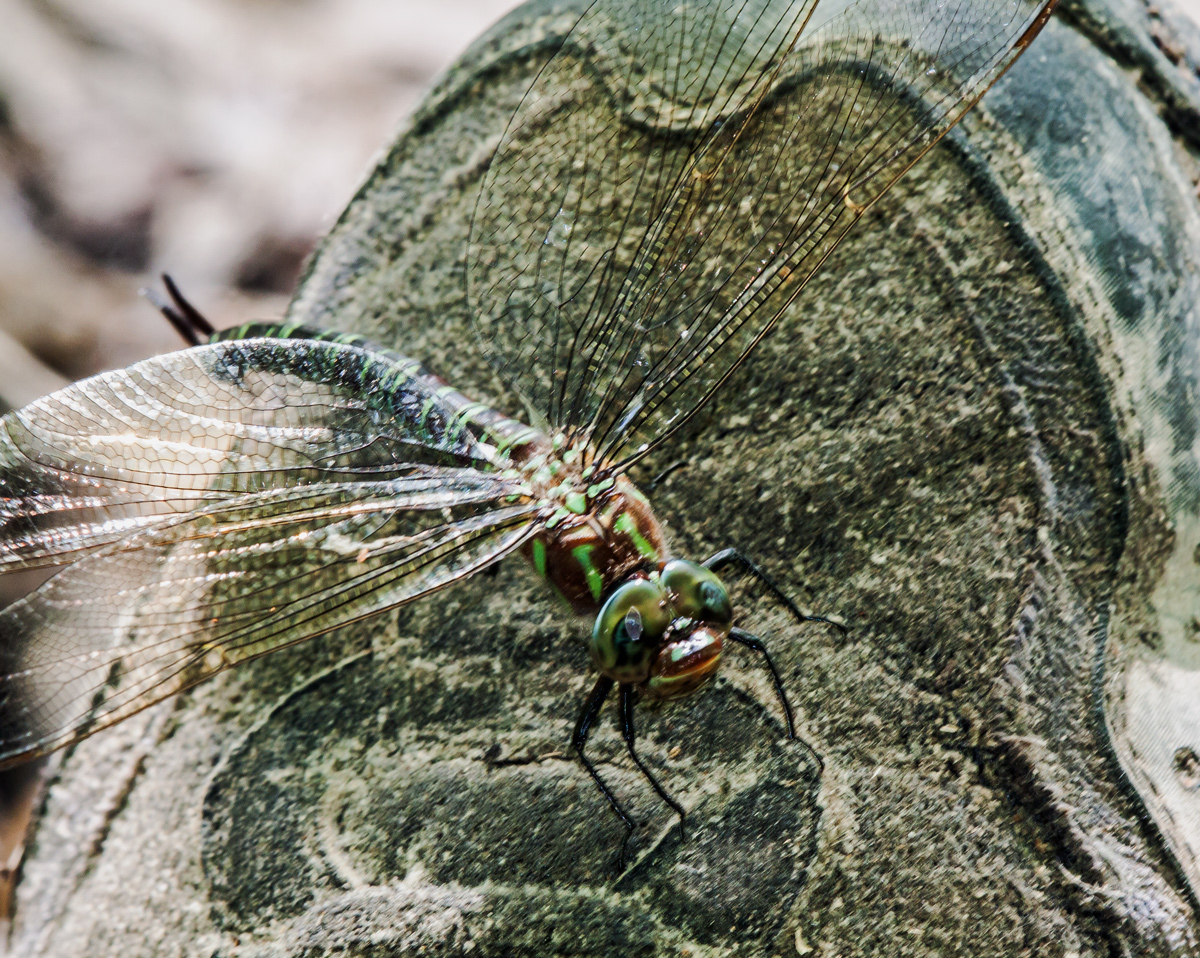
The weather yesterday was hot and sunny—perfect for dragonflies, although a little uncomfortable for me. I decided to search in the vicinity of a vernal pool, one of my favorite spots for dragonflies at Huntley Meadows Park. As I was walking along a small water-filled ditch, a large dragonfly flew up from the water and perched in a tree just a short distance away. I suspected it might be a Swamp Darner (Epiaeschna heros) and it turns out that I was right.

About this time each year, a number of female Swamp Darners descend on this small ditch to lay their eggs. Unlike many other dragonflies, which lay their eggs in the water, Swamp Darners lay their eggs in moist, often rotten logs. Essentially they tunnel into the wood before they lay the eggs.

I spotted the most likely target log and sat on the bank of the ditch to see if the dragonflies would come. It didn’t take long for them to arrive. Sometimes it was just one dragonfly, while at other times there were two or even three of them laying eggs in the same log. I was shooting with a 180mm macro lens, so I could not zoom out to include all of them (and I did not want to move for fear of scaring them away). In one of the photos, you can see two of the Swamp Darners in action and part of the abdomen of a third one in the upper left corner.

I don’t know if it is some biological imperative for species preservation that compels them to deposit these eggs, but the females were putting them everywhere. I was a little shocked when one of them landed on my mud-covered shoes and began to deposit eggs there.

The dragonflies were so focused on depositing their eggs that I was able to lean forward and get a close-up view of the face of one of them. I love dragonfly faces and especially their amazing giant eyes.

Swamp Darner

Swamp Darner

Swamp Darner

Swamp Darner

Swamp Darner

© Michael Q. Powell. All rights reserved

Read Full Post »

As this Turkey Vulture circled overhead, I couldn’t help but notice the large gap in its wing feathers. Some birds seem to fight with each other, which cold account for the missing feathers, but I don’t recall ever seeing a Turkey Vulture squabbling with another bird. What would they fight about? Territory? Food?

Despite the gap, the vulture seemed to have no trouble flying and its wingspan was still pretty impressive.

Turkey Vulture

© Michael Q. Powell. All rights reserved

Read Full Post »

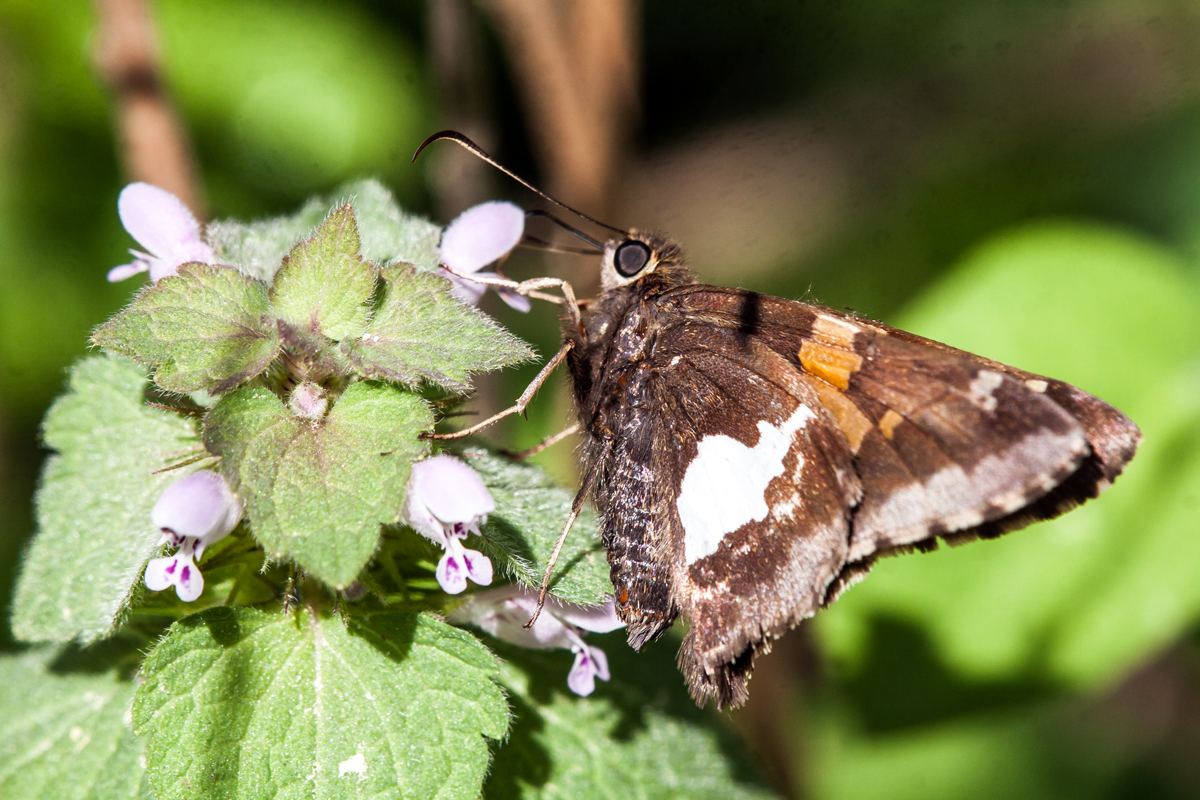
Out of the more than 3500 different species of skipper butterflies worldwide, according to Wikipedia, there is really only one that I can reliably identify—the Silver-spotted Skipper (Epargyreus clarus). I spotted this beautiful little butterfly this past weekend at Jackson Miles Abbott Wetland Refuge. The skipper was so intent on feeding that it let me get pretty close to it. As a result, this image is one of the rare cases when I didn’t feel a need or desire to crop at all. I am not very good at plant identification, but I really like the tiny flowers of the plant in this image.

Silver-spotted Skipper

© Michael Q. Powell. All rights reserved

Read Full Post »

It’s springtime and love is in the air. So many creatures seem to be searching for mates and some of them have obviously found one, like this pair of Pearl Crescent butterflies (Phyciodes tharos) that I spotted in flagrante delicto at Jackson Miles Abbott Wetland Refuge in Northern Virginia this past Friday.

I am no expert in butterfly anatomy and have no idea how this works, but there is a real beauty in the position, which appropriately looks  to me like a double heart. What can I say, I am a romantic at heart.

Pearl Crescent

© Michael Q. Powell. All rights reserved

Read Full Post »

Last weekend at Huntley Meadows Park, a Tree Swallow (Tachycineta bicolor) seemed determined to scare off potential competitors by screaming loudly and vigorously flapping its wings as it sat atop a pole to which a nesting box was attached. The swallow spent a lot of time looking upwards, scanning the skies for rivals. I couldn’t tell if the swallow’s mate was inside of the nesting box or if it was simply staking a claim to the box for future use.

Tree Swallow

Tree Swallow

© Michael Q. Powell. All rights reserved

Read Full Post »
Now that the dragonfly season has started in my area, I am devoting more and more of my available photography time to searching for these beautiful little creatures. Some dragonflies can be found almost anywhere, but many of them require a very specific kind of habitat and may be present for only limited periods of time.

Yesterday afternoon I visited Jackson Miles Abbott Wetland Refuge, which features a small pond surrounded by a pathway. Last year I found several different dragonfly species there, so I knew that I might have a chance of seeing some dragonflies. I looked in the brush and in the vegetation and came up empty-handed until I looked at the water and spotted several dragonflies flying low above the water.

I recognized the dragonflies as Common Baskettail dragonflies (Epitheca cynosura) and knew that I faced a challenge—this species seems to fly continuously and rarely have I seen one perch. I realized that if I wanted to get some shots of the dragonflies I would have to capture the images while they were flying.

I had my Tamron 180mm macro lens on my camera and started to track the flying dragonflies. I have tried a number of focusing techniques in the past and have had the most success when I focus the lens manually (although I hesitate to use the word “success,” given the high rate of failure in getting an in-focus shot). This was my favorite shot of a Common Baskettail flying above the water. There is a bit of motion blur in the wings and I had to crop the image quite a bit, but I managed to keep most of the dragonfly in focus.

Common Baskettail

I walked multiple circuits around the pond, still searching for more dragonflies. I tend to like to keep moving, rather than sticking in one spot. As I reached one end of the pond, I suddenly realized that a dragonfly was hovering in mid-air right in front of me. The dragonfly was moving slowly above a grassy patch adjacent to the pond, but did not seem interested in heading for the water.

I could hardly believe my good fortune and tried to compose myself and focus on the dragonfly. I managed to get some detailed shots that show, for example, how the Common Baskettail folds up its legs when flying. I took the first shot below while on my knees, so that I was almost level with the dragonfly. For the second shot, I was shooting down on the dragonfly and it looks almost like it was taken by a drone, hovering above the hovering dragonfly.

Common Baskettail

Common Baskettail

© Michael Q. Powell. All rights reserved

Read Full Post »
Hooded Merganser ducks (Lophodytes cucullatus) are usually pretty skittish, but the females are a little less so at this time of the year as they hang around and wait for their eggs to hatch.  I spotted this little lady earlier this month on a morning when the light was particularly beautiful. She was unusually cooperative and looked in my direction as if to say, “I’m ready for my close-up.”

Hooded Merganser

© Michael Q. Powell. All rights reserved

Read Full Post »

With so much water currently in the central wetlands area of Huntley Meadows Park, I don’t see many shorebirds at this time of the year. The shorebirds seem to prefer to wade in shallow water. This past weekend, however, I spotted this one as it surveyed the marshland from atop a log. I think it is a Greater Yellowlegs (Tringa melanoleuca), although I admit that I have troubles identifying the different shorebirds, many of which look almost identical to me.

As you can see, the yellowlegs was a long way away. Usually I try to get close-up shots with either a telephoto or a macro lens and am a little disappointed if I can not fill a substantial part of the frame with my primary subject. In this case, however, I was never tempted to crop the image more severely, because  the surrounding landscape is an important element of making this image appealing to me.

Greater Yellowlegs

© Michael Q. Powell. All rights reserved

Read Full Post »

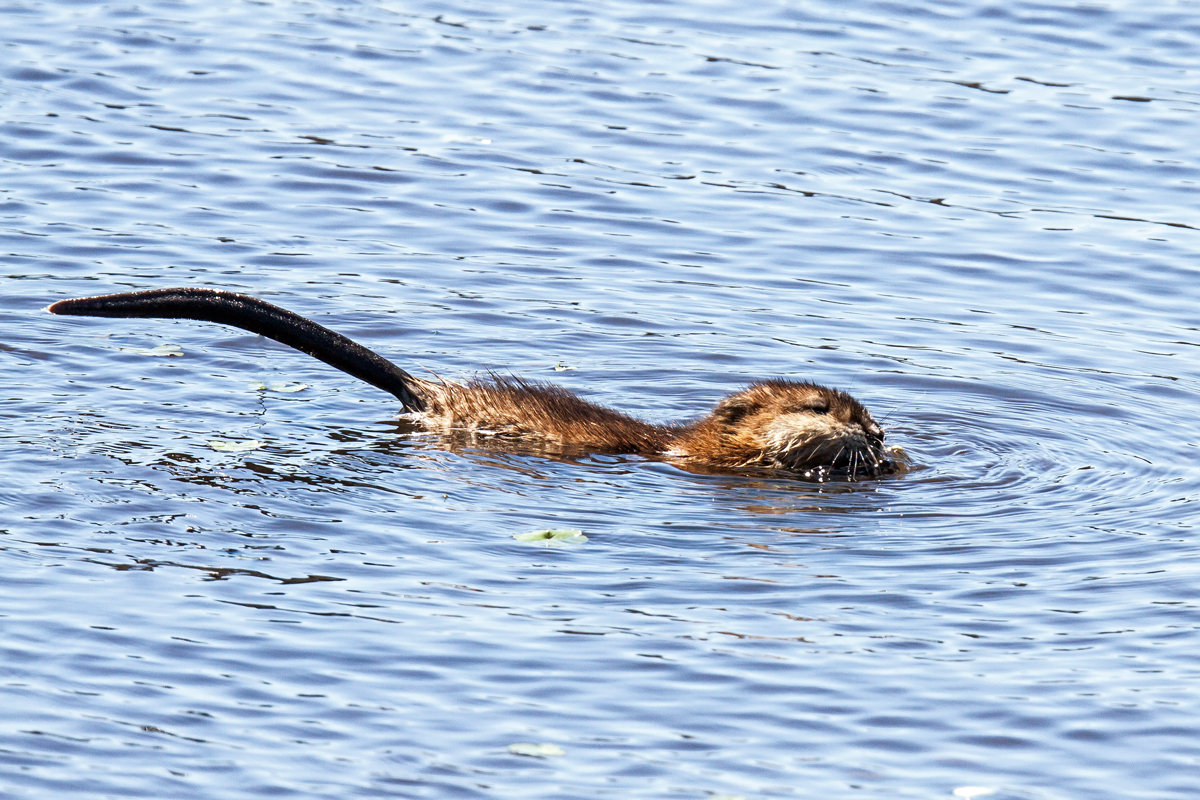
I am not exactly sure what was going on, but this muskrat (Ondatra zibethicus) seemed to be really struggling in the open water one afternoon last week as the strong wind gusts made the water really choppy at Huntley Meadows Park. Normally muskrats use their tails as a source of underwater propulsion, but it seemed really unusual to see a muskrat’s tail completely out of the water.

A Wikipedia article noted that muskrat tails are covered with scales rather than hair, and, to aid them in swimming, are slightly flattened vertically, which is a shape that is unique to them. I somehow had always thought of muskrat tails as being long and skinny, but, as the image shows, their tails are quite substantial.

I can’t tell for sure, but it looks like the muskrat may be carrying something in its mouth and/or front paws. Is that why it was seeking to balance itself with its tail? For now it remains a mystery, but I think I will go back over the other photos that I took of this muskrat to see if I can find an answer.

muskrat

© Michael Q. Powell. All rights reserved

Read Full Post »

On the same day that I saw the Common Whitetail dragonfly that I featured yesterday in my blog posting, I was thrilled to have the chance to photograph an uncommon dragonfly, a male Stream Cruiser (Didymops transversa). I had never before seen a Stream Cruiser, but local dragonfly expert and fellow photographer Walter Sanford had observed them in the past at Accotink Bay Wildlife Refuge and offered to guide me.

It’s somewhat of an understatement to say that Stream Cruisers are hard to spot. The are not very big (about 2.2 inches (56-60mm) in length), they are skittish, and they often perch on the stems of low vegetation. During the hours that we searched for them, I observed a couple of probable Stream Cruisers in the air, but lost them in the blur of the vegetation and never saw a single one land. Walter saw the first one of the day, a female, and posted an awesome photograph of the beautiful dragonfly in a blog posting yesterday. Unfortunately for me, I was unable to make it to the dragonfly’s location before she flew away. Walter spotted a few more Stream Cruisers during the day, but each time I couldn’t get there quickly enough to see one.

I was beginning to think that I was going to end up empty-handed for the day when Walter called out that he had spotted a male perched in the underbrush. This Stream Cruiser was cooperative enough to stay perched as I rushed to try to get a shot. I had my Tamron 180mm macro lens on my camera at that moment. The dragonfly and the stem on which it was perched were so small in the viewfinder that my camera’s autofocus would not lock on my subject, so I had to resort to focusing manually. Dragonflies have so many fine details that it is really hard to tell when they are in focus. This image was the best I could get after cropping the initial shot quite a bit.

Stream Cruiser

I decided to push my luck and see if I could get a better shot with my Tamron 150-600mm lens that I use primarily to photograph birds. Amazingly the dragonfly stayed put while I changed lenses. Once again I had to focus manually, which is an even bigger problem with this lens, because the focus ring is located really close to the lens mount. It’s hard to hold the camera steady and focus manually at the same time.

Here’s an image that I shot at 600mm. I managed to get the eye pretty sharp and to capture some of the details of the dragonfly’s incredibly long legs, but the depth of field was so shallow that the abdomen is out of focus. Normally I will try to move around the subject to be as parallel as I can be, but in this case I stayed fixed at one spot and remained as immobile as I could.

Stream Cruiser

It is really nice to start off this dragonfly season with a new species. If you want to learn more about the Stream Cruiser dragonfly, check out this page from the Dragonflies of Northern Virginia website (and stay tuned for Walter’s shots of this dragonfly that should appear tomorrow morning in his blog).

© Michael Q. Powell. All rights reserved.


Read Full Post »

When some birds zoomed by me this past weekend, I could tell they were swallows by the way that they flew.  Their coloration, however, didn’t seem to match the Barn and Tree Swallows that I have previously seen at Huntley Meadows Park.

One of them finally perched and I got this shot of what appears to be a Northern Rough-winged Swallow (Stelgidopteryx serripennis), a bird that I had never seen before. According to the Cornell Lab of Ornithology, “The species derives its name from the outer wing feathers, which have small hooks or points on their leading edges.”

The bright sun made for a pleasant day, but made it tough to properly expose for the brilliant white feathers on the swallow’s chest. I was happy that I managed to capture a few details of the feathers despite the rather harsh midday sunlight.

Northern Rough-winged Swallow

© Michael Q. Powell. All rights reserved.

Read Full Post »

Why do I like to get up really early in the morning, striving to arrive at my destination just as the sun is rising? There is something special about the sights and sounds and even the smell of the early morning. At a time when many people are still snuggled in their warm beds, many wild creatures are already active.

It’s a real challenge, though, to pinpoint that activity and it is even harder to photograph it. Even when I am not able to get a shot, however, I am often filled with a sense of awe and reverence as I share the start of the day with all of these amazing creatures.

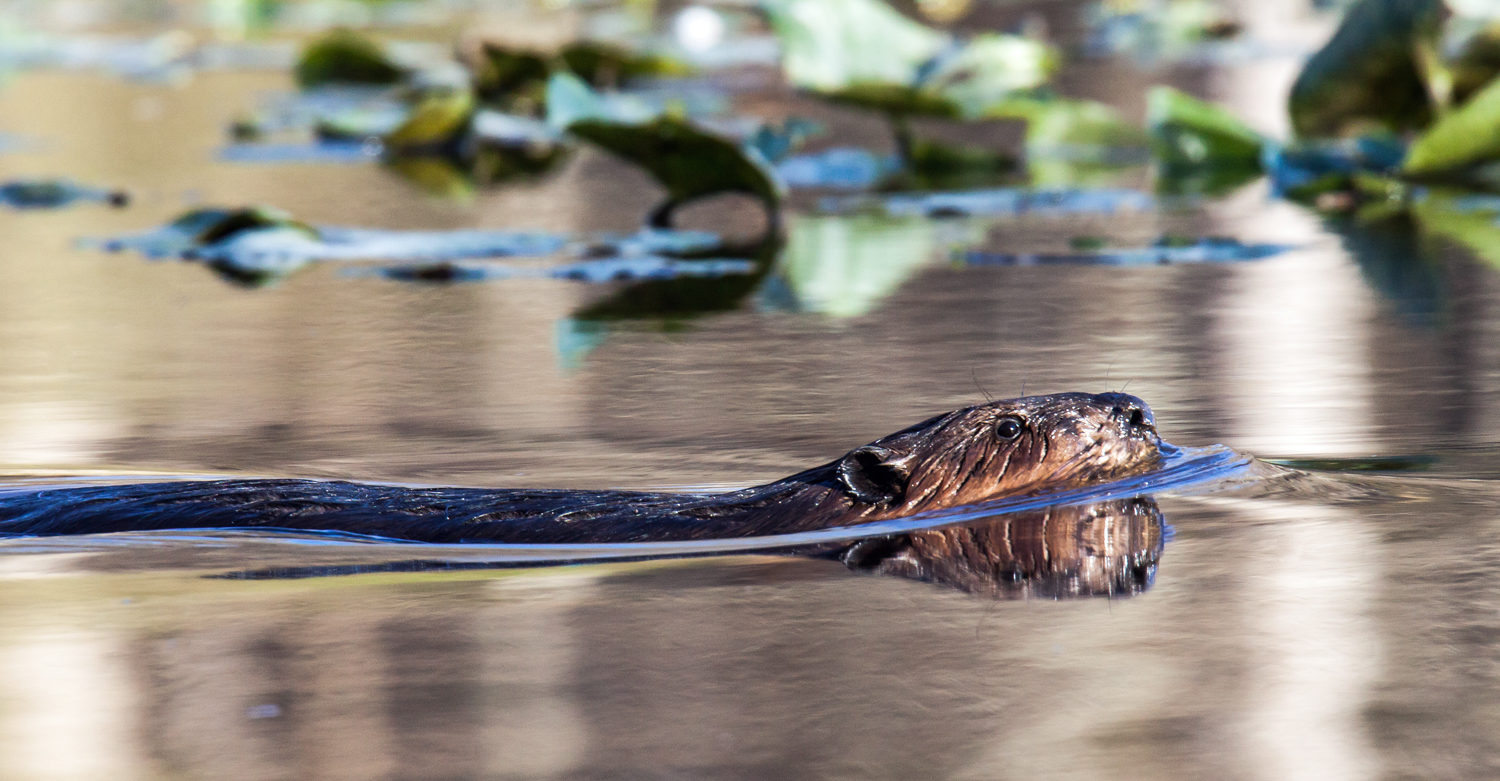
When things come together, it is truly magical, and I had one of those experiences this past weekend. I was seated on a fallen tree at the edge of a remote beaver pond at Huntley Meadows Park, my favorite spot in the park. I had been sitting there for a while, almost entranced by the reflections in the water, when I suddenly spotted the unmistakable wake of a swimming beaver.

This North American Beaver (Castor canadensis) appeared to be swimming laps in the middle of the pond. The beaver would head a certain direction for a little while and then would turn and swim back in the other direction, moving back and forth, in and out of the shadows and the reflections. Time seemed to slow down. I leaned forward slightly and tried to get as low as I could, but did not make any abrupt movements for fear of spooking the beaver.

It is really difficult to put into words what I was feeling as I observed the swimming beaver and I hope this image helps to convey a sense of the encounter. Eventually the beaver swam off and I continued on my way, filled with a sense of calm and inner peace.

Why do I like to get up early? The knowledge and the hope that special moments like this may await me are sufficient motivation for me.

beaver

© Michael Q. Powell. All rights reserved.

Read Full Post »

As the seasons change, new birds appear and disappear at my favorite marshland park—Huntley Meadows Park—in Northern Virginia. We are fortunate to be along the migratory route for birds flying north and south and are far enough south to be a destination of some overwintering birds.

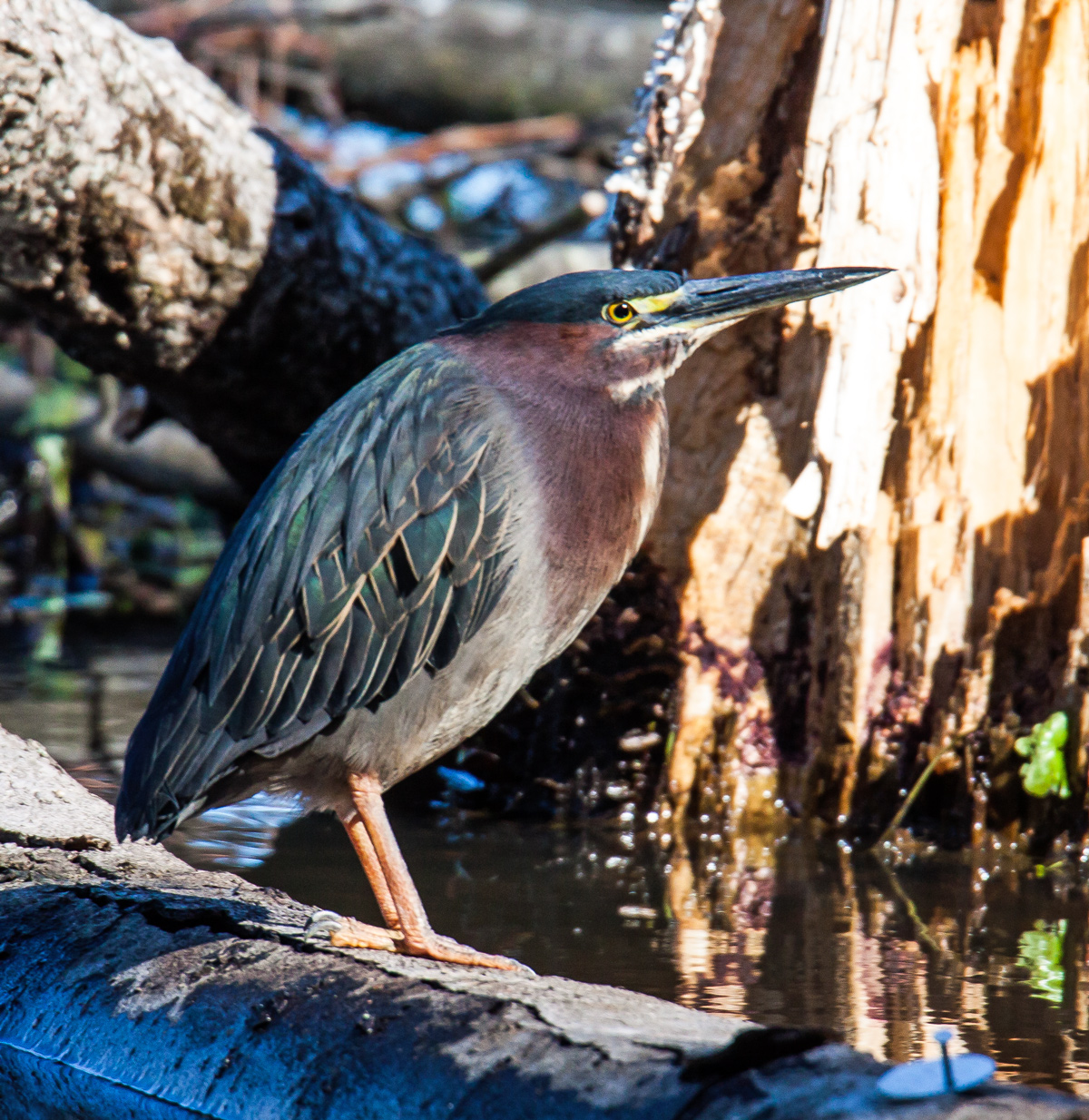
Unlike the Great Blue Herons, which remain with us all year, Green Herons (Butorides virescens) leave in the autumn and I eagerly await their arrival in the spring? Why? I am utterly fascinated by these squat little birds, despite the fact they have none of the elegance of the Great Blue Herons and Great Egrets. They always strike me as industrious and diligent and go about their work, generally avoiding the spotlight. Green Herons also seem to have an abundance of personality and almost seem capable of expressing emotions. Finally, Green Herons have a subdued, but refined beauty, a beauty that I was able to capture in this image from yesterday morning.

Welcome back, Green Herons. I missed you. Perhaps it is true that absence makes the heart grow fonder.

Green Heron

© Michael Q. Powell. All rights reserved.

Read Full Post »
« Newer Posts - Older Posts »