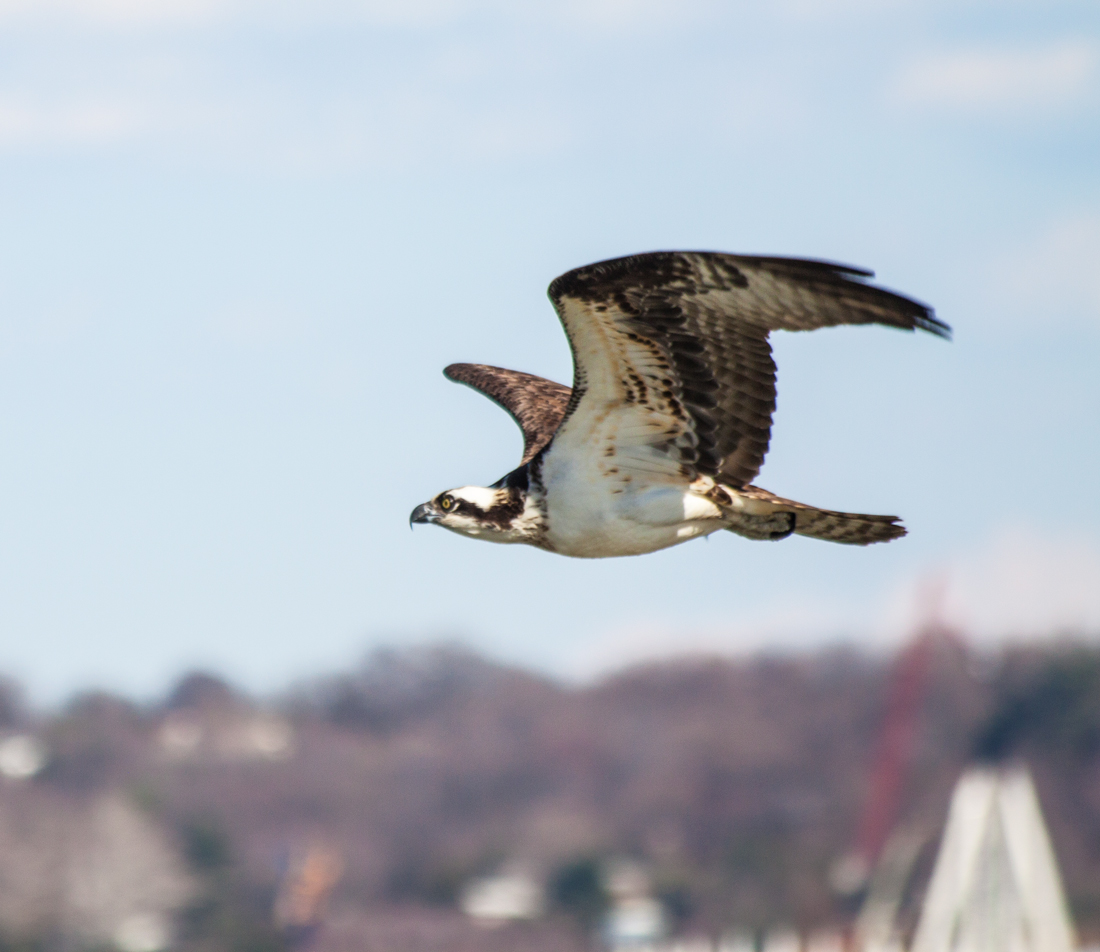
Soaring high above the earth, this Osprey (Pandion haliaetus) seemed to be relaxing, enjoying a moment of peace before getting back to the pressing job of rebuilding the nest.
© Michael Q. Powell. All rights reserved
Posted in Art, Birds, Nature, Photography, Portraits, wildlife, tagged Alexandria VA, Belle Haven Marina, birds in flight, Canon 50D, Canon 70-300mm telephoto zoom lens, Osprey, Pandion haliaetus on March 26, 2014| 8 Comments »
Soaring high above the earth, this Osprey (Pandion haliaetus) seemed to be relaxing, enjoying a moment of peace before getting back to the pressing job of rebuilding the nest.
© Michael Q. Powell. All rights reserved
Posted in Humor, Macro Photography, Nature, Photography, Portraits, Reptiles, spring, wildlife, tagged Alexandria VA, Canon 50D, Common Ribbonsnake, Huntley Meadows Park, snake, snake eyes, Tamron 180mm macro lens, Thamnophis sauritus on March 25, 2014| 9 Comments »
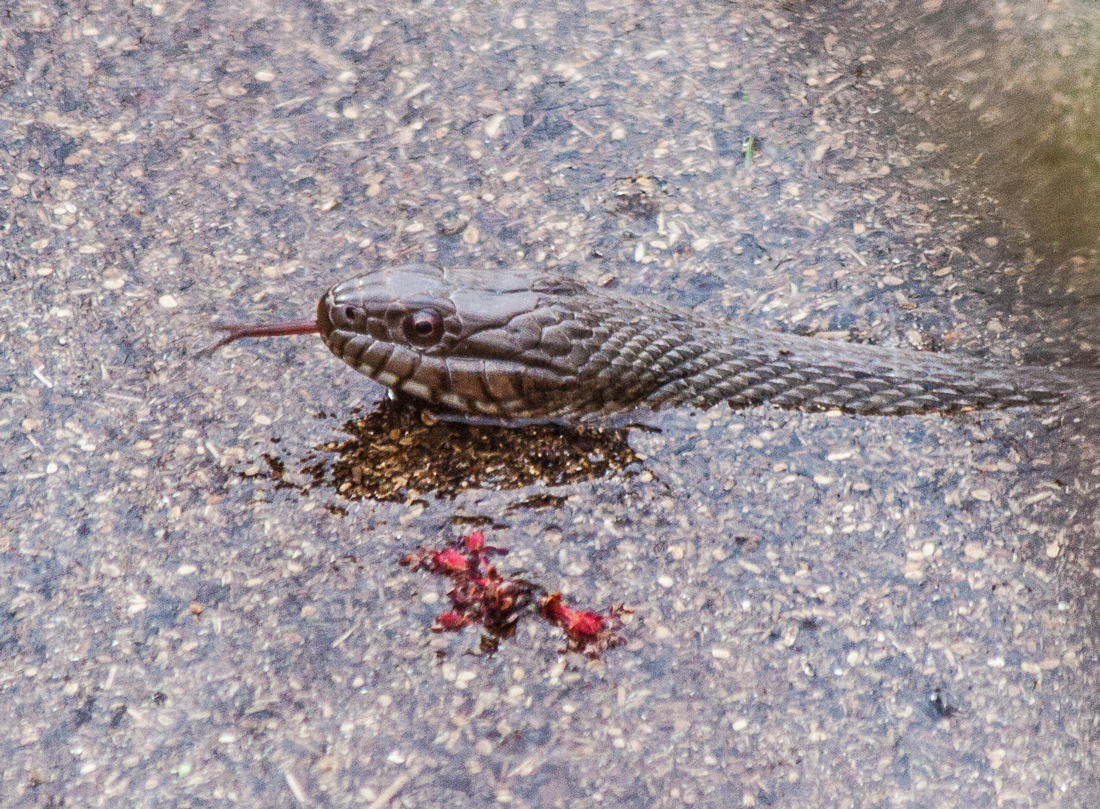
Can snakes whistle? It sure looks like this Common Ribbonsnake (Thamnophis sauritus) is trying hard to whistle as he purses his lips and seems to be blowing air in this series of shots. Who knew that snakes had lips? This snake has lips that rival those of Mick Jagger and look a bit like they were enhanced with collagen.
When you shoot subjects, how close do you get to them? My general rule for wildlife subjects is to shoot them from a distance (so I can be sure of getting a shot) and then move slowly closer and closer. I was amazed at how close this snake let me approach—this first shot was not cropped very much at all.
I like the head-and-shoulders look of the first image (taking into account the fact that snakes don’t really have shoulders), which draws attention to the snake’s eye. At times, though, I prefer the shots that show more of the snake’s body and my favorite of this group is probably the third shot. I really like the curve of the snake’s body and the tilt of its head. It’s hard to see in this reduced-size image, but two little tips of the snake’s forked tongue are visible in its partially open mouth.
© Michael Q. Powell. All rights reserved
Posted in Insects, Macro Photography, Nature, Photography, spring, wildlife, tagged Alexandria VA, Canon 50D, fly, Green Bottle Fly, Huntley Meadows Park, macro, spring, Tamron 180mm macro lens on March 24, 2014| 7 Comments »
The world changed for me when I put my macro lens back on my camera, simultaneous becoming smaller and bigger. Instead of looking in the distance for birds, I switched my focus to the world immediately in from of me, searching for tiny objects that I can photograph.
In vain I long for colorful butterflies and dragonflies, but it is too early in the spring for them to appear. As soon as a fly buzzed by me, I was seized with an irresistible urge to capture its image. It’s only a fly (a Green Bottle Fly, I think), but it is symbolic of the joys to come, the time when I will spend endless hours chasing after insects, trying to capture the detailed beauty of their colors and patterns.
© Michael Q. Powell. All rights reserved
Posted in Arachnids, Art, Macro Photography, Nature, Photography, spring, Urban, wildlife, tagged Alexandria VA, Canon 50D, jumping spider, KIA Soul, Runnymeade, spider, Tamron 180mm macro lens on March 22, 2014| 12 Comments »
Sometimes you don’t have to travel far to get good nature photos. I noticed this colorful little jumping spider on my car yesterday when I was loading my camera gear, getting ready to go out shooting. 
It was a fun challenge trying to get shots of the spider as it moved to various parts of the trim surrounding the windshield, many of which were reflective. I wasn’t sure how long the spider would hang around, so I didn’t set up my tripod and I think it would have been pretty awkward to do so.
I am hoping that nobody snapped pictures of me as I sprawled my body across the hood of the car, trying to find a way to brace my body and get a decent shooting position. My Tamron 180mm macro lens lets me get in close, but it does not have image stabilization.
One of the first things that I noticed when I reviewed my images was that my car is dirty. In this area, they use a lot of salt on the roads when it snows and I suspect that those little white spots are salt residue. I thought about removing them in post-processing, but decided that I like the more urban, gritty feel that they give the images (and besides, it would have been a lot of work to get rid of all of them).
I am always thrilled when I find a jumping spider. There is something special about all of those eyes that simply fascinates me and I am particularly happy when I manage to get reflections in the eyes.
© Michael Q. Powell. All rights reserved
Posted in Macro Photography, Nature, Photography, Portraits, Reptiles, spring, wildlife, tagged Alexandria VA, Canon 50D, Common Ribbonsnake, Eastern Garter Snake, garter snake, Huntley Meadows Park, snake, Tamron 180mm macro lens, Thamnophis sauritus sauritus, Thamnophis sirtalis on March 21, 2014| 19 Comments »
Now that it is spring, I have started carrying around my macro lens, which I was able to use to get this really close-up shot today of an Eastern Garter snake (Thamnophis sirtalis) at Huntley Meadows Park, my favorite local spot for nature photography. The snake was curled up in a mossy area and seemed to be a little sluggish. Consequently, he did not slither away when I got down low and moved in close to take this photo.
CORRECTION: Fellow photographer and blogger Walter Sanford, who is much more of an expert in snakes than I am, has identified this snake as a Common Ribbonsnake (Thamnophis sauritus sauritus), not an Eastern Garter snake.
© Michael Q. Powell. All rights reserved
Posted in Birds, Humor, Photography, Portraits, wildlife, Winter, tagged Alexandria VA, Canon 50D, Canon 70-300mm telephoto zoom lens, Dryocopus pileatus, Huntley Meadows Park, Pileated Woodpecker, smiling woodpecker, woodpecker on March 21, 2014| 11 Comments »
Do woodpeckers smile?
Earlier this month, I spent some time observing a Pileated Woodpecker (Dryocopus pileatus) at work, high in a tree at my local marshland park. The woodpecker would peck away for a while and then stop for a break. As the big bird turned his head to one side or to the other, it seemed to me that its face would light up in a self-satisfied smile.
What do you think, is the woodpecker smiling or is it just my imagination, running away with me? (Sorry, I just couldn’t resist the temptations to throw in a line from a song.)
© Michael Q. Powell. All rights reserved
Posted in Birds, Nature, Photography, Portraits, wildlife, Winter, tagged Alexandria VA, Ardea herodias, Canon 50D, Canon 70-300mm telephoto zoom lens, Dyke Marsh, Dyke Marsh Wildlife Preserve, Great Blue Heron, heron on March 20, 2014| 13 Comments »
Direct sunlight and harsh shadows in the middle of the day make it challenging to take portraits without somehow diffusing the light. During the spring and summer, I will usually carry a collapsible diffuser that I use when photographing flowers (and occasionally people), but it would have been tough to get into position to use such a diffuser on this Great Blue Heron (Ardea herodias) that I spotted on the shore of the Potomac River last Saturday, when I was visiting Dyke Marsh Wildlife Preserve.
As I observed the heron, I was standing on a raised boardwalk, looking downward at the heron though some bushes. In order to get an unobstructed shot, I zoomed in, focusing primarily on the head and neck. The heron moved its head about a lot as it searched the shallow waters and looked through the debris at the shore’s edge, moving in out of the shadows.
I took a lot of photos of the heron and this is one of my favorites. I like the way that I was able to capture some of the details of the plumage and the sinuous curve of the heron’s neck. I would love to be able to capture a similar image early in the day or late in the day, but, as every wildlife photographer knows, you can never tell when you will have another opportunity to photograph a subject again.
© Michael Q. Powell. All rights reserved
Posted in animals, Nature, Photography, wildlife, Winter, tagged Alexandria VA, buck, Canon 50D, Canon 70-300mm telephoto zoom lens, death, deer, Huntley Meadows Park, white-tailed deer on March 19, 2014| 11 Comments »
These images are disturbing, especially the first one. They show the harsh reality of the struggle for survival for wild creatures, even in the relatively comfortable confines of a suburban marshland park.
For the second time this winter, I stumbled upon a dead deer in a remote area of my the marsh when I take many of my wildlife photos. (I documented the earlier sighting in a posting that I titled “The Buck Was Stopped Here.”) This time, the skeleton was relatively intact and I was surprised to see that it was another buck. I am still baffled about the cause of his death. Predators? Starvation?
As a photographer and as a human, I struggled in deciding how to present this subject in photographs. I knew that I was not going to remove the body far from where I found it, so I had to settle for a relatively cluttered backdrop. Was it better to show the whole body, as I did in the third photo and keep death at a distance? Should I photograph it to look like the deer had fallen asleep and died peacefully, as the second shot suggests, the way we treat death at a funeral home?
I decided that my best shot was the one in which I forced the viewer essentially to look death in the face directly, by focusing directly on the deer’s now empty eye socket. Death is a reality that can’t be avoided. The photo is a bit macabre, I know, but it speaks to me of life and of death, of the passing of one of God’s creatures.
© Michael Q. Powell. All rights reserved
Posted in Birds, Nature, Photography, Portraits, wildlife, Winter, tagged Alexandria VA, Aythya valisineria, Belle Haven Marina, birds in flight, Canon 50D, Canon 70-300mm telephoto zoom lens, Canvasback, Canvasback duck, Potomac River on March 18, 2014| 6 Comments »
As I was observing the osprey couple on the Potomac River this past weekend, I spotted an unusual-looking duck of a species that I had never seen before. One of my fellow photographers said that he was pretty sure that it was a Canvasback duck (Aythya valisineria) and I couldn’t disagree, having no idea what a Canvasback duck looked like.
The duck was a pretty good distance away and I was looking through my telephoto lens when it decided to take off from the water. I don’t think that the duck was aware of our presence, for it initially flew toward us and parallel to the shore before veering off into the center of the river. I was able to track the duck pretty well and got some in-flight shots, including my two favorites that I am posting.
I am not one hundred percent sure of the identification and would welcome a confirmation or correction, as appropriate, from someone with more experience in identifying bird species.
© Michael Q. Powell. All rights reserved
Posted in Art, Birds, Nature, Photography, spring, wildlife, Winter, tagged Alexandria VA, birds in flight, Canon 50D, Canon 70-300mm telephoto zoom lens, Dyke Marsh Wildlife Preserve, swallow, Tachycineta bicolor, Tree Swallow on March 17, 2014| 19 Comments »
I was a little surprised to see some Tree Swallows (Tachycineta bicolor) on Saturday when I visited Dyke Marsh Wildlife Preserve, a freshwater tidal wetlands on the Potomac River. I thought it was a bit early for these little aerial acrobats to be here, given the fact that there are not yet many insects for them to catch, but they were flying about and checking out a nesting box.
Sometimes I get cool shots of birds in flight by accident, like this shot of a Tree Sparrow, which took off as I was photographing it. The angle of view is one that I have never before captured in any image.
Two of the swallows seemed to spend a lot of time together and I suspect that they are a breeding pair, though they were periodically buzzed by other tree swallows, which could be other potential suitors for the female. One of the swallows eventually entered the box and I suspect that the swallows are constructing a nest in it, though I didn’t see any of them actually carrying in construction material.
It’s a good sign for me that spring is almost here when I see birds reappearing (even as I shovel away eight or so inches of snow that have fallen in the last 24 hours).
© Michael Q. Powell. All rights reserved
Posted in Birds, Nature, Photography, spring, wildlife, tagged Alexandria VA, Belle Haven Marina, birds in flight, breeding, Canon 50D, Canon 70-300mm telephoto zoom lens, Osprey, Pandion haliaetus on March 16, 2014| 20 Comments »
A breeding pair of Ospreys (Pandion haliaetus) has returned to a nesting site only a few miles from where I live and I was thrilled to get some shots of the ospreys yesterday, on a bright sunny day.
The nest, which has been used for quite a number of years, is built on a wooden piling near the Belle Haven Marina south of Old Town Alexandria on the Potomac River. The piling is tilted quite a bit, apparently because of the pressure of the ice that accumulated when the cold temperatures this winter caused the river to freeze, but the birds seem undeterred and were busily adding sticks to the nest yesterday. It looks like the ospreys may be compensating for the angle by building the nest higher on one side than the other, though it is really hard to tell at the moment.
I took lots of shots yesterday that I need to review, but I thought I would post this one as a sneak preview and suspect that I will have enough shots for another few postings. The ospreys flew by a few times (most often the male) and I was able to get photos of them in flight andworking on the nest. I remember hearing that there were ospreys on the Potomac River, but somehow never made the trip last year during breeding season. This year, I will try to make more frequent trips to check on the couple’s progress.
© Michael Q. Powell. All rights reserved
Posted in Art, Birds, Humor, Landscape, Nature, Photography, wildlife, Winter, tagged Alexandria VA, Branta canadensis, Canada Geese, Canon 50D, Canon 70-300mm telephoto zoom lens, geese, Huntley Meadows Park, wild goose chase on March 15, 2014| 5 Comments »
Earlier this month, when the ponds were almost completely frozen over at my local marsh, I watched as some Canada Geese (Branta canadensis) zoomed across the ice at a very low altitude. It looked like they were racing each other. In the background you can see some potential spectators, but they didn’t seem to want to get caught up in a wild goose chase.
© Michael Q. Powell. All rights reserved
Posted in Landscape, Nature, Photography, wildlife, Winter, tagged Alexandria VA, beaver, beaver lodge, beaver pond, Canon 50D, Canon 70-300mm telephoto zoom lens, Huntley Meadows Park, reflections on March 12, 2014| 9 Comments »
Do you have a favorite spot that serves as a refuge, a place to which you can retreat and just sit and absorb the natural beauty that surrounds you? This winter I found such a place at a beaver pond in one of the remote corners of my local marshland park, a location reachable only by following a thorny, informal trail that was often muddy and/or icy.
Often I would sit on one of the logs that surrounded one end of the beaver pond for extended periods of time and listen and observe. On occasion I was lucky and managed to get shots of an otter and a red fox from this spot, but mostly I would try to relax and clear my mind and reflect on life (I never managed to see any beavers here).
This spot has really beautiful light and sometimes I would marvel at the beautiful reflections that the trees across the pond would cast onto the water. I tried several times to capture those wonderful reflections with my camera, mostly without success. Last week, though, I took some photos that I like and here are a couple of them. They have an abstract quality that I find to be really appealing.
© Michael Q. Powell. All rights reserved
Posted in Art, Birds, Nature, Photography, Portraits, wildlife, Winter, tagged Agelaius phoeniceus, Alexandria VA, blackbird, Canon 50D, Canon 70-300mm telephoto zoom lens, Huntley Meadows Park, male Red-winged Blackbird, red-winged blackbird, Supremes, You Just Keep me hanging On on March 10, 2014| 9 Comments »
Usually I spot male Red-winged Blackbirds (Agelaius phoeniceus) perched on the top of the cattails stalks, loudly calling out, but this one decided to perch himself sidewards. It looked a little awkward, but he seemed to manage well enough as he struck a pose for me.
© Michael Q. Powell. All rights reserved
Posted in Art, Birds, Nature, Photography, Portraits, wildlife, Winter, tagged Alexandria VA, Anas clypeata, Canon 50D, Canon 70-300mm telephoto zoom lens, ducks, ducks swimming, Huntley Meadows Park, Northern Shoveler, reeds, shovelers on March 8, 2014| 2 Comments »
Every time that I see the outlandishly long bill and bright colors of a male Northern Shoveler (Anas clypeata), I can’t help but think that this is a cartoon duck, created by Walt Disney for a Technicolor movie. Of course, these ducks are real and the bills serve a useful function in helping them to strain the water for food.
The male shoveler is easier to spot, because of its more distinctive coloration, but I was happy to be able to get some shots of a female too as this couple moved in and out of the reeds in one of the ponds at my local marsh. According to the Cornell Lab of Ornithology, Northern Shoveler pairs are monogamous and remain together longer than pairs of other dabbling duck species.
One of the interesting things that I noted is that the feathers on the male’s head are not the solid green that I am used to seeing. They seem mottled and I wonder if this is some kind of transitional plumage as breeding season approaches.
© Michael Q. Powell. All rights reserved
Posted in Birds, Nature, Photography, Portraits, wildlife, Winter, tagged Alexandria VA, Anas acuta, Canon 50D, Canon 70-300mm telephoto zoom lens, first date, Huntley Meadows Park, Northern Pintail, Northern Pintail Duck on March 7, 2014| 4 Comments »
Judging from the distance between them and the awkwardness of their poses, these Northern Pintail ducks (Anas acuta) this morning at my local marsh looked like they were on a first date, getting to know each other.
© Michael Q. Powell. All rights reserved
Posted in Art, Birds, Music, Nature, Photography, wildlife, Winter, tagged Alexandria VA, American robin, Canon 50D, Canon 70-300mm telephoto zoom lens, Huntley Meadows Park, Mary Poppins, robin, Spoonful of Sugar on March 6, 2014| 7 Comments »
This past weekend it seemed like we had been invaded by a large flock of American Robins (Turdus migratorius), busily foraging in the trees and in the grass, and these words kept echoing in my mind:
“A robin feathering his nest
Has very little time to rest
While gathering his bits of twine and twig
Though quite intent in his pursuit
He has a merry tune to toot
He knows a song will move the job along.”
Folks of my generation will immediately recognize some of the lyrics of the song “A Spoonful of Sugar” from the movie Mary Poppins. In case you don’t recall the song or have never heard it, here’s a link to a clip on YouTube (http://www.youtube.com/watch?v=U8VHc49ZdP4).
The song and the movie may be seem unrealistically squeaky clean by today’s standards, but I can never get enough of its cheery optimism. It’s one of my favorite things, like silver white winters that melt into spring.
© Michael Q. Powell. All rights reserved
Posted in Art, Dragonflies, Humor, Insects, Nature, Photography, wildlife, Winter, tagged Alexandria VA, Canon 50D, Canon 70-300mm telephoto zoom lens, dragonfly, giant dragonfly, Runnymeade, winter on March 5, 2014| 2 Comments »
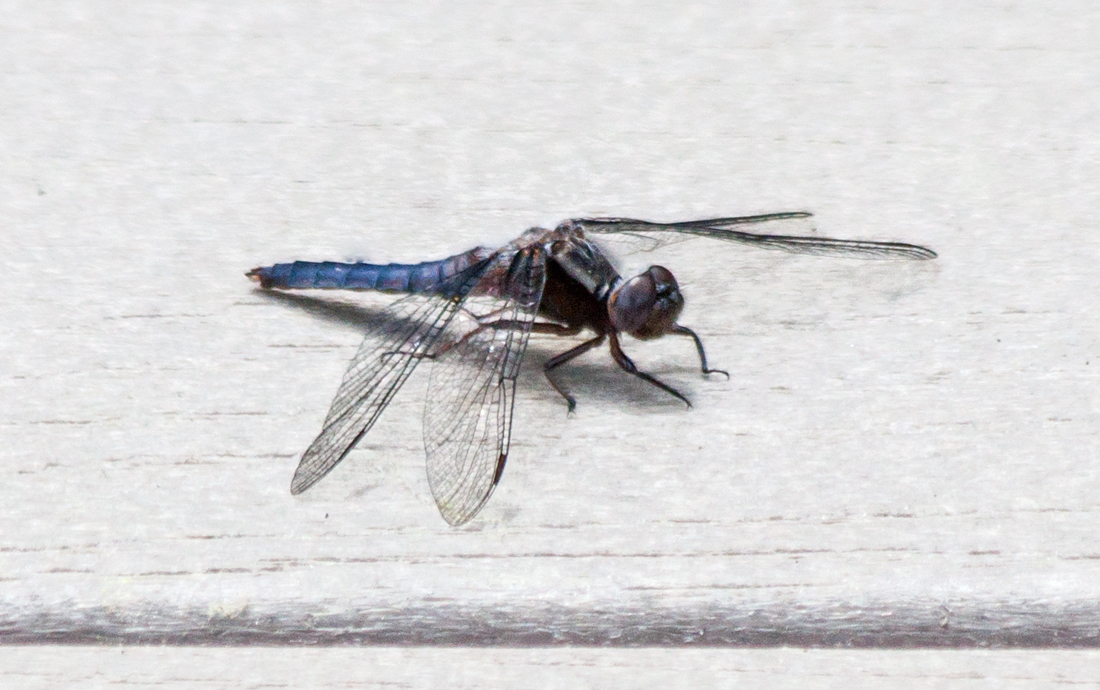
I never expected to encounter a dragonfly when I went walking in the snow in my neighborhood yesterday.
My eyes were scanning the trees for birds, when right it front of me I detected the unmistakable shape of a dragonfly, a giant green dragonfly perched on a tree. I approached it quietly and was able to get this shot, my first shot of a dragonfly in a long time.
With snow still covering the ground and the temperatures below freezing, it’s hard to imagine that the real dragonflies will be appearing in a few short months.
© Michael Q. Powell. All rights reserved
Posted in Birds, Nature, Photography, Portraits, wildlife, Winter, tagged Alexandria VA, birds in flight, Branta canadensis, Canada Goose, Canon 50D, Canon 70-300mm telephoto zoom lens, goose, Huntley Meadows Park on March 3, 2014| 5 Comments »
What it would be like to fly like a bird? When I look at this photo I took recently of a Canada Goose (Branta canadensis) in flight, I feel almost like I am flying in formation with a gaggle of geese and have glanced over to look at one of my flying companions. The sad reality, of course, was that my feet were firmly planted on the ground and this goose flew by me at a relatively low altitude.
I’d still like to fly—perhaps in my dreams I can take flight.
© Michael Q. Powell. All rights reserved
Posted in Art, Birds, Nature, Photography, wildlife, Winter, tagged Alexandria VA, Americn Crow, birds in flight, Canon 50D, Canon 70-300mm telephoto zoom lens, Corvus brachyrhynchos, crow, Huntley Meadows Park on March 3, 2014| 9 Comments »
The soundtrack to my recent visits to the marsh has been the constant cacophony of a chorus of countless cawing crows. The crows seem to be everywhere, swooping in large groups from one grove of trees to another.
I have tried numerous times to get some shots of these American Crow (Corvus brachyrhynchos) without much success, but recently I took an image that I like. The day was cloudy and heavily overcast when photographed this crow in flight. When I started working on the image the sky turned almost white. Normally, I would not have been happy with that result, but somehow this stark background works for me for this crow.
I thought about going completely black-and-white for this image, but I like the way that some of the feathers appear to be a lighter shade of brown. Is the crow molting, perhaps?
© Michael Q. Powell. All rights reserved
Posted in animals, Nature, Photography, wildlife, Winter, tagged Alexandria VA, antlers, buck, Canon 50D, Canon 70-300mm telephoto zoom lens, deer, Huntley Meadows Park, Odocoileus virginianus, white-tailed deer on March 2, 2014| 14 Comments »
Hiking through a remote area of my local marshland park yesterday, I came upon the skull of a dead deer with some impressive-looking antlers. I don’t know much about deer, but the antlers are enough to tell me that it was a buck and, if I understand the counting system right, it was a six-point buck (three on each side). Initially I saw only the skull, but when I investigated the marsh grass in the surrounding area, I saw some of the larger bones of the deer.
The White-tailed deer (Odocoileus virginianus) in the park don’t have many natural predators, so I can’t help but wonder what caused this buck’s demise. There are coyotes in the park, so I guess that is a possibility. At certain times of the year, archers also shoot deer and I have been told that police sharpshooters sometimes hunt deer at night, but my understanding is that they try to recover the bodies and turn the meat over to homeless shelters. Whatever the case, the animals and birds of the park had picked the bones clean.
I took these shots primarily to record my find, not to make any kind of artistic statement. I used a couple of elements in the area where I found the skull to prop it up so that I could photograph some of the details of this once beautiful animal.
© Michael Q. Powell. All rights reserved
Posted in Birds, Nature, Photography, Portraits, wildlife, Winter, tagged Alexandria VA, Canon 50D, Canon 70-300mm telephoto zoom lens, Huntley Meadows Park, Melospiza georgiana, Melospiza melodia, shadow, song sparrow, sparrow, swamp sparrow on March 1, 2014| 6 Comments »
At this time of the year especially, I can usually depend on seeing ducks, geese, and sparrows at my local marsh—other birds may or may not be present, but these three species are my constant companions. The ducks and the geese are often loud and occasionally obnoxious, but when the sparrows sing, it’s generally a more melodious song. The ducks and geese will often fly away when I approach, but the sparrows will just take a hop or two and continue to forage for food.
I take lots of photos of sparrows. They are usually within range and have a surprising amount of personality. Yesterday, on a cold and windy day, I captured this image of what I think is a Song Sparrow (Melospiza melodia). The light was pretty good and the sparrow cooperated by lifting its head without turning, resulting in a pleasant little portrait of this pretty little bird.
CORRECTION: A number of more experience bird watchers have noted that this is a Swamp Sparrow (Melospiza georgiana), not a Song Sparrow. Sorry for any confusion—this is not the first time I have misidentified a species, and certainly not the last.
© Michael Q. Powell. All rights reserved
Posted in Birds, Nature, Photography, wildlife, Winter, tagged Alexandria VA, Ardea herodias, Canon 50D, Canon 70-300mm telephoto zoom lens, crouching heron, Great Blue Heron, heron, Huntley Meadows Park on February 27, 2014| 8 Comments »
The Great Blue Heron (Ardea herodias) was standing tall on the trunk of a fallen tree last weekend and extended his neck as he looked all around. When he bent down and leaned forward, I knew he was getting ready to take off and I managed to get this shot just before his liftoff.
© Michael Q. Powell. All rights reserved
Posted in Birds, Nature, Photography, Portraits, wildlife, Winter, tagged Alexandria VA, Ardea herodias, birds in flight, Canon 50D, Canon 70-300mm telephoto zoom lens, Great Blue Heron, heron, Huntley Meadows Park on February 26, 2014| 7 Comments »
When the Great Blue Heron landed high in a limbless, skinny tree, I suspected he would not be there long—it was like he was perched on top of a flagpole. I managed to capture of series of action shots as he pushed off from the tree and launched himself into a dive.
The shot below give you an idea of the height of the tree in which he was perched. It looked to be dead and mostly rotted and was in the center of a marshy field. It was early in the morning and there was heavy cloud cover, which is why the sky looks so white. The photos were mostly silhouetted, but I tried to lighten the shadows a bit to reveal some details.
The next shot shows the Great Blue Heron (Ardea herodias) a split second before he took off. He has extended his wings and is leaning forward. Obviously he had received the call from the control tower that he was cleared for takeoff.
This final shot suggests that the heron propelled himself forward with his legs before using his wings, ending up in a somewhat unusual position.
I was able to track the heron until he disappeared into the trees, which let the buffer in my camera catch up with me—as you might suspect, I was shooting as fast as my camera would fire.
© Michael Q. Powell. All rights reserved
Posted in Birds, Nature, Photography, wildlife, Winter, tagged Alexandria VA, bluebird, Canon 50D, Canon 70-300mm telephoto zoom lens, Eastern Bluebird, Huntley Meadows Park, Sialia sialis, Somewhere Over the Rainbow, Wizard of Oz on February 25, 2014| 5 Comments »
I saw a flash of blue in the distance and I smiled, for I knew it was an Eastern Bluebird (Sialia sialis). Bluebirds have that effect on me. Why?
I suppose that I can blame the Wizard of Oz, a movie that I watched repeatedly during my childhood. Who could forget Dorothy singing of happy little bluebirds flying beyond the rainbow?
“Somewhere over the rainbow
Bluebirds fly.
Birds fly over the rainbow.
Why then, oh why can’t I?
If happy little bluebirds fly
Beyond the rainbow
Why, oh why can’t I?”
© Michael Q. Powell. All rights reserved
Posted in Art, Birds, Nature, Photography, wildlife, Winter, tagged Alexandria VA, Branta canadensis, Canada Goose, Canon 50D, Canon 70-300mm telephoto zoom lens, goose, Huntley Meadows Park on February 23, 2014| 8 Comments »
What happens if you try to photograph a bird in flight with a shutter speed of 1/100 second? Under most circumstances, you get a really blurry image. However, if you can track your subject by panning the camera, you can freeze (or in this case, almost freeze) the action and as a bonus you get a really cool background.
It was pretty early in the morning and there was not a lot of light when I took this shot. Even though my camera was at ISO 400 and f/6.3 aperture, I knew that the shutter speed was not going to be fast enough to stop the action, given that I was in aperture-priority mode. That’s the main reason that I resorted to trying this panning technique. Getting the right speed for a pan is little hit-or-miss and I never know for sure how well it will work until I look at the results.
I’m pretty happy with this result, because I managed to capture a sense of motion in a still shot, a sense that is accentuated by the motion blur of the wings, as well as by the feeling of movement in the background.
© Michael Q. Powell. All rights reserved
Posted in Arachnids, Macro Photography, Nature, Photography, wildlife, Winter, tagged Alexandria VA, arachnid, Canon 50D, Canon 70-300mm telephoto zoom lens, Huntley Meadows Park, spider on February 22, 2014| 6 Comments »
I was a little surprised yesterday when a small spider crossed my path when I was walking on the boardwalk at my local marsh. Sure, temperatures had warmed up and it was over 50 degrees outside (10 degrees C), but I didn’t think there were any spiders around at this time of the year. This is definitely my first spider of 2014.
Expecting to photograph birds, not bugs (yes, I know a spider technically is an arachnid, not a bug), I had equipped my camera with a telephoto lens, not a macro lens, and wasn’t even carrying my macro lens. The spider was moving too, so I used what I had and shot these photos at 300mm and cropped them.
You can probably tell that the boardwalk at the marsh is made of a synthetic material and not real wood, which means that I am not at risk of getting splinters when I kneel on it as I often do. This spider, whose species I cannot identify, was pretty small. The visible head of a screw used to hold in place the planks of boardwalk help to give you an idea of the relative size of the spider. Eagle-eyed readers may notice that the third photo is the same image as the first one, but cropped less severely.
In a few short months, I hope to see (and photograph) a whole lot more spiders in even greater detail, but the first one of the year is always special.
© Michael Q. Powell. All rights reserved
Posted in Birds, Nature, Photography, wildlife, Winter, tagged Alexandria VA, Ardea herodias, Bald Eagle, Belted Kingfisher, Canon 50D, Canon 70-300mm telephoto zoom lens, eagle, early birds, Great Blue Heron, Haliaeetus leucocephalus, heron, Huntley Meadows Park, kingfisher, Megaceryle alcyon on February 22, 2014| 10 Comments »
Early yesterday morning, I was so focused on a Great Blue Heron that I spotted high in a tree that I didn’t even notice that there was a Bald Eagle in an adjacent tree until it took off almost right in front of me. Nearby, a female Belted Kingfisher loudly announced her presence with her unmistakable rattling call.
The sky was covered with heavy clouds and the forecast called for thunderstorms, which meant that lighting conditions were less than optimal for taking photos in a wooded area. Still, it felt great to be outdoors on the trails after a week of constrained activity thanks to our recent snowstorm.
I hadn’t seen a live Great Blue Heron (Ardea herodias) at my local marsh in quite some time, so I was excited when I caught sight of the heron, perched on broken-off tree at the edge of one of the marshy fields. The heron was almost a silhouette against the sky, but its shape is very easy to recognize when you see it in profile.
As I was creeping forward to get a clearer shot, I was startled when a large bird flew right across my field of view—I knew almost immediately that it was a Bald Eagle (Haliaeetus leucocephalus), although it too was mostly a shadowy silhouette as I viewed it through the branches of the trees. I was able to react quickly enough to get off a few shots before the eagle flew out of sight.
A short distance away, a female Belted Kingfisher (Megaceryle alcyon) was perched on the trunk of a rotted tree, intently staring down at the shallow water of the marsh, looking for prey. That water prevented me from getting closer to her, but I did manage to capture her distinctive pose through the branches.
I am an early bird by habit and it was great to be outdoors in the “wilds” of my suburban marsh to see what other early birds I could find.
© Michael Q. Powell. All rights reserved
Posted in Birds, Nature, Photography, wildlife, tagged Alexandria VA, American robin, Canon 50D, canon 70-300mm telephoto zoom, Huntley Meadows Park, robin, Turdus migratorius on February 21, 2014| 6 Comments »
Earlier this week, I saw my first American Robins (Turdus migratorius) of the year, a traditional harbinger of spring. I remember my parents telling me when I was young that robins are a sign of the imminent arrival of spring and that association remains strong in my mind to this day. That association also gives me the change to use the word “harbinger” at least once a year.
The snow from our recent big snowstorm is almost gone and I will soon be seeing more signs of spring, like crocuses and daffodils and increasing numbers of birds, signs of new life and new energy and new color after a cold, gray winter.
© Michael Q. Powell. All rights reserved
Posted in Birds, Humor, Nature, Photography, wildlife, Winter, tagged Alexandria VA, Canon 50D, Canon 70-300mm telephoto zoom lens, crow, crows, Huntley Meadows Park, turf war, turkey vulture, vulture on February 20, 2014| 19 Comments »
Trying to avoid an all-out turf war, the leaders of the Crows and Vultures agreed to meet, but the negotiations quickly started to break down. What happened?
The leaders had agreed to meet alone in the middle of a snow-covered field.
However, the Crow leader had brought reinforcements with him and the Vulture found himself outnumbered.
Not wanting to show any fear, the Vulture leader decided to flex his muscles and extended his mighty wings. The Crows were not impressed and would not agree to any compromises.
The Vulture leader started to feel a little uncomfortable as he felt someone creeping up behind him and turned quickly to face the potential Crow assassin.
Clearly, these negotiations were not going anywhere and the Vulture leader headed back to announce to his subordinates that a full-scale turf war with the Crows was about to begin.
© Michael Q. Powell. All rights reserved
Posted in Art, Birds, Nature, Photography, Portraits, wildlife, Winter, tagged Alexandria VA, Ardea herodias, blue heron, Canon 50D, Canon 70-300mm telephoto zoom lens, Great Blue Heron, heron, Huntley Meadows Park on February 19, 2014| 8 Comments »
As many of you know from my posting last week, I recently came upon a dead body of a Great Blue Heron (Ardea herodias) and several of us who regularly visit this marsh have wondered if perhaps this was the young blue heron who hung around the boardwalk throughout the fall and early winter. We had previously noted that this heron was not very proficient at catching food and worried that it seemed to lack basic survival skills.
I took a lot of photos of that young heron, whom I encountered repeatedly during my early morning visits to the marsh, and decided to post a few photographs from late December and early January. I’ll never know for sure if this heron survived the winter, but these images help remind me of some of the special moments that we shared.
© Michael Q. Powell. All rights reserved