Feeds:
Posts
Comments

Archive for the ‘spring’ Category

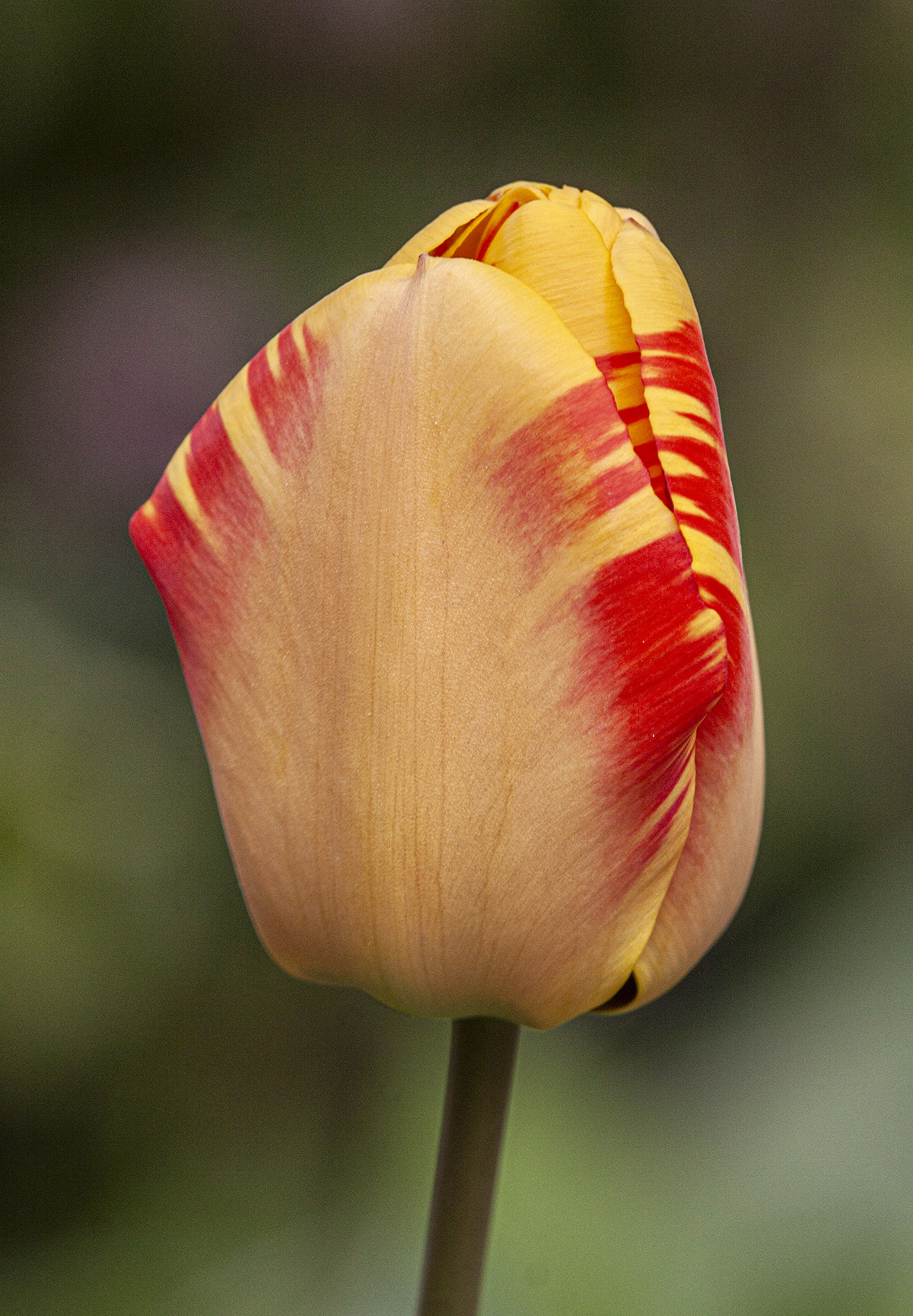
The color and texture of this tulip reminded me of a ripe peach when I first saw it yesterday morning. Alas, it will be months before peaches will be in season and the canned cling peaches that I remember from my childhood can’t compare to the fresh ones.

Like so many of the wonderfully colorful flowers that I have featured recently, this beauty is from the garden of my neighbor and photography mentor Cindy Dyer. Thanks again, Cindy.

At this time of the year, I tend to shoot most often with my 180mm macro lens. With my APS-C crop sensor camera, I get an equivalent field of view of almost 300mm, which gives me some standoff distance for shooting live subjects like dragonflies. However, for shooting subjects like flowers, I found it difficult to frame the images because I was shooting from so far away. For this shot, I switched to a 60mm macro lens and shot with the aperture wide-open at f/2.8.

tulip

© Michael Q. Powell. All rights reserved.

Read Full Post »

I felt like I had hit the jackpot last Friday when I finally spotted several Uhler’s Sundragon dragonflies (Helocordulia uhleri) while exploring a stream in Prince William County, Virginia. Uhler’s Sundragons are a scarce and seldom seen dragonfly species with a brief and early flight period. There is a very active Virginia dragonfly group in Facebook that posts sightings and photos and it appears that my sightings of this species were the first in our state for 2020.

Last year I was able to do some reconnaissance of an area where this species had been spotted in previous years using information shared with me by fellow dragonfly fanatic and blogger Walter Sanford. Eventually I found and photographed some Uhler’s Sanddragons and he and I were able to spot them again several times.

This species generally is found in a specific type of habitat—”Clean, sandy or gravely forest streams with a mix of riffles and pools,” according to the excellent Dragonflies of Northern Virginia website. So Friday I scoured the locations where had spotted them last year and it was in one such location that I spotted the Ashy Clubtail and Common Green Darner that I featured recently in my posting First dragonflies of the season. I looked for Uhler’s Sundragons there but came up empty-handed.

It was at a second spot that I finally spotted one as it flew through the air and landed on a piece of vegetation. There is not much flying this early in the season and I could tell from the way that it perched that it was probably my target species. I think I was shaking a little bit and certainly my heart rate had accelerated, but I managed to get a shot of that one (the middle shot below), before it flew away. A few minutes later, I had another spotting and captured the last shot below—it might have been the same dragonfly or a different one.

Part of my long walk back took me along another stretch of the same stream and I was absolutely thrilled when I spotted yet another Uhler’s Sundragon and captured my favorite shot of the day, the first one below. It turns out that all of the Uhler’s Sundragons that I photographed were females. I am not sure if the males were all out patrolling or were simply in other locations.

Many of the locations where I might normally search for dragonflies are closed and some of the others are potentially crowded, so I am not willing to go there. As you can see from my recent postings, I am staying really close to home most of the time, with trips like this one to remote locations being a rare exception.

Uhler's Sundragon

Uhler's Sundragon

Uhler's Sundragon

© Michael Q. Powell. All rights reserved.

Read Full Post »

What do you call a group of butterflies? I have always been fascinated by the collective nouns that we use in English for groups of creatures. I was delighted to learn that one of the collective nouns used for butterflies is a kaleidoscope.

“A kaleidoscope of butterflies” seems to be the perfect descriptor for this group of beautiful Eastern Tiger Swallowtail butterflies (Papilio glaucus) that I spotted yesterday. They appeared to be engaged in a behavior known as “puddling,” during which the butterflies, most often the males, gather minerals and other nutrients from the soil or other organic material.


Eastern Tiger Swallowtails

© Michael Q. Powell. All rights reserved.

Read Full Post »

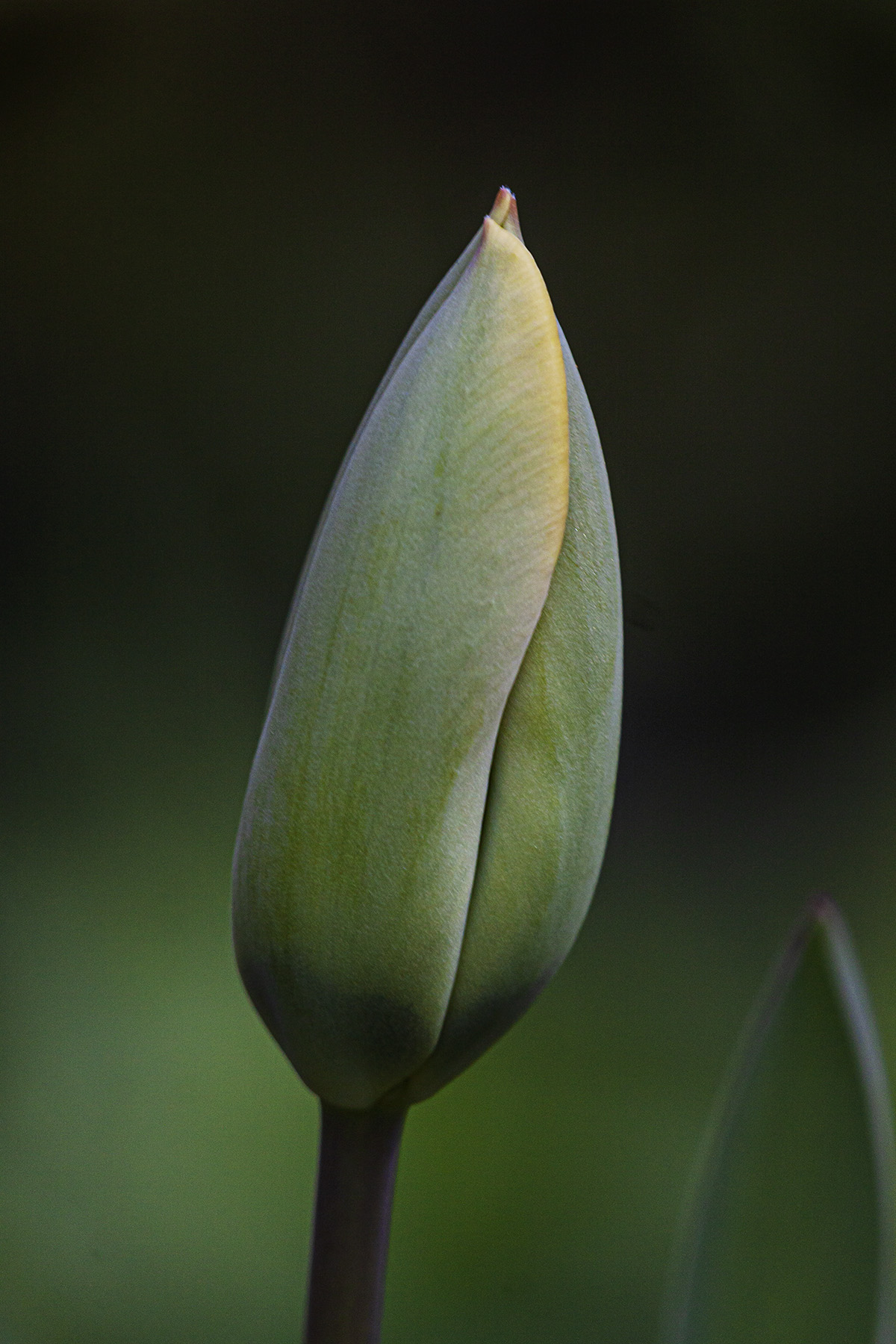
What are your feelings about the future? For me, they are like this tulip bud, full of the promise of new life and beauty that is yet to come. The challenge for us all is to be patient and wait with joyful expectation.

As with all of my other recent tulip shots, I photographed this bud in the garden of my neighbor and friend Cindy Dyer. Thanks, Cindy.

tulip bud

© Michael Q. Powell. All rights reserved.


Read Full Post »

Last Friday I photographed my first dragonflies of the spring, a male Common Green Darner (Anax junius) and a female Ashy Clubtail (Phanogomphus lividus). The Common Green Darner is probably a migratory dragonfly that is just passing through as it heads north—we do have local-born members of this species, but it is too early for them to have emerged.

The Ashy Clubtail, which was actually the first dragonfly that I photographed, almost certainly emerged locally. When a dragonfly emerges, its wings are really shiny and the wings of this Ashy Clubtail were definitely sparkling in the sunlight. According to the local flight calendar, the Ashy Clubtail is one of the earliest dragonflies in our area to emerge, but I have never seen one this early before.

As you can see, I captured the images of both of these dragonflies when they were perched flat on the ground. There were dry leaves all around, which made a stealthy approach almost impossible and focusing on the dragonfly was a bit of a challenge.

Common Green Darner

Ashy Clubtail

© Michael Q. Powell. All rights reserved.

Read Full Post »

Did you know that some bees have green speckled eyes? I was really startled by the brightness of this bee’s eyes as I was taking its photo last Monday while exploring in Prince William County, Virginia. Some research on-line revealed that this is a male Eastern Carpenter Bee (Xylocopa virginica).

I was pretty sure that I had never before seen a bee like this, but I was wrong. As I was preparing this posting, I discovered that I had seen a similar bee in October 2012 and published a posting entitled “Green-eyed Eastern Carpenter bee.” Wow. It’s been a long time between sightings, so maybe I can be forgiven for having forgotten about the previous time, though at my age I can simply claim that I had a “senior moment.” Ages has its privileges.

Eastern Carpenter Bee

© Michael Q. Powell. All rights reserved.

Read Full Post »

Beauty is everywhere, including in the abstract patterns of nature. Last week my eyes were drawn to the interplay of light and shadows in the leaves of some iris plants that have not yet bloomed in the garden of my neighbor Cindy Dyer. I love the series of triangles and straight lines in the resulting image and there is something soothing and peaceful about the various shades of green.

When I posted this image in Facebook, my pastor noted that these leaves reminded her of the palms that we would normally be waving in a procession to begin the celebration of Palm Sunday. In a few hours we will be celebrating in a different way, via Zoom teleconferencing software, but we have been asked to gather some branches or colorful pieces of cloth to wave in front of our cameras as we say, “Blessed is he that cometh in the name of the Lord; Hosanna in the highest.” This pandemic has changed some of the outward aspects of our worship, but we continue on.

Whether you are Christian or not, my prayer is that this Sunday finds you feeling thankfulness in the midst of this crisis for what you still have and not merely lamenting that which you have lost. I also pray that you are filled with the joyful hope that we will eventually make it through this difficult time. If there is one thing we have certainly learned, it is that we are truly all in this together.

leaves

© Michael Q. Powell. All rights reserved.

Read Full Post »

This week I did a pair of postings in a single day that I called “beauty and the beast” that was so well received that I thought I would do it again. Earlier this morning I did the “beauty” part with a shot of some crabapple blossoms in my front yard. For the “beast” part, I decided to feature this shot of a little orchard spider (Leucauge venusta) in the garden of my neighbor, fellow photographer and blogger Cindy Dyer. The spider was hanging in the midst of a group of irises that have not yet bloomed and I was happy to be able to be able to frame the shot so you have a sense of the spider’s environment.

As always, I offer my apologies to those who are creeped out by spiders, and recommend that you check out the crabapple posting if you have not seen it yet. As for me, I find spiders to be always fascinating and often beautiful.

orchard orbweaver spider

© Michael Q. Powell. All rights reserved.

Read Full Post »

Beauty is everywhere. Thursday afternoon as I walked out of my suburban townhouse, I glanced at the crabapple tree in my front yard, now covered with blossoms. Realizing how beautiful it is, I captured this simple image.

You don’t always have to go to distant locations to find beauty—you can often find it in your back yard or, in my case, in your front yard.

crabapple

© Michael Q. Powell. All rights reserved.


Read Full Post »

The two-colored tulips in the garden of my neighbor and friend Cindy Dyer were open yesterday and they are awesome. The first macro shot makes the tulip look almost like a little pinwheel. The second shot gives you a greater sense of the colors and patterns in these beautiful tulips—the delicate feathering of the red on the yellow petals is simply breathtaking.

tulip

tulip

© Michael Q. Powell. All rights reserved.

Read Full Post »

The sun had just risen when I arrived last Thursday morning at Occoquan Bay National Wildlife Refuge. How, I wondered could I possibly capture my impressions of those wonderful moments as the new day was dawning?

I hastened to capture an image while the sun was still low on the horizon and grabbed the first photo below while standing at the edge of the parking lot. There was a soft mist lingering over the fields and in my second shot, I worked to capture the stillness and serenity that I was feeling.

When I finally arrived at the shore, the sky and the water seemed to be almost the same color with a narrow, darker strip of land separating the too. I immediately thought of the moody, minimalist landscape shots that Michael Scandling regularly features in AMAGA Photography Blog. Michael likes to coax each pixel into submission and I confess that I did not work on my final image as much as he would have, but it is a kind of homage to his wonderful work.

So there you have it, three distinctive images that together give you a sense of what I was seeing and feeling in the early morning hours, a time of day that is perfect for introspection and reflection.

sunrise at Occoquan Bay

sunrise at Occoquan Bay

sunrise at Occoquan Bay

© Michael Q. Powell. All rights reserved.


Read Full Post »

From a distance, I noticed yesterday that some yellow tulips were getting ready to bloom in the garden of my neighbor and photography mentor Cindy Dyer. Cindy deliberately chooses colorful, photogenic flowers for her garden, so I love visiting it frequently. As I got close, I noted the spectacular two-color patterns of these tulips. When I sent a photo to Cindy, she informed me that they are known as “broken tulips.”

Perhaps she told me some time in the past what “broken tulips” are, but I rushed to Google to find out why they are considered to be “broken.” This term refers to the dramatic color-breaking of these flowers, an effect highly sought after during the 17th-century Dutch “tulip mania,” according to Wikipedia. Historically, these changes are caused by a virus infects the tulip bulb and causes the cultivar to “break” its lock on a single color, resulting in intricate bars, stripes, streaks, featherings or flame-like effects of different colors on the petals.

Unfortunately, the virus weakens the bulbs and as a result some famous color-broken varieties no long exist. Today’s “broken tulips” are no longer caused by a viral infection, but are stable variants produced through breeding. Cindy noted to me that her tulips have been going strong for at least five years.

I was feeling creative yesterday when I took these photos and tried a lot of different angles and settings to get some unusual looks. I decided mainly to feature the areas with the different colors and deliberately shot with a shallow depth of field that causes the edges that are away from the center to be soft and out of focus. I think it worked out pretty well.

I decided to post these images today as a counterbalance to the photograph of a wolf spider that I posted earlier, a kind of “beauty and the beast” set of postings. I am guessing that almost everyone will like at least one of the two postings.
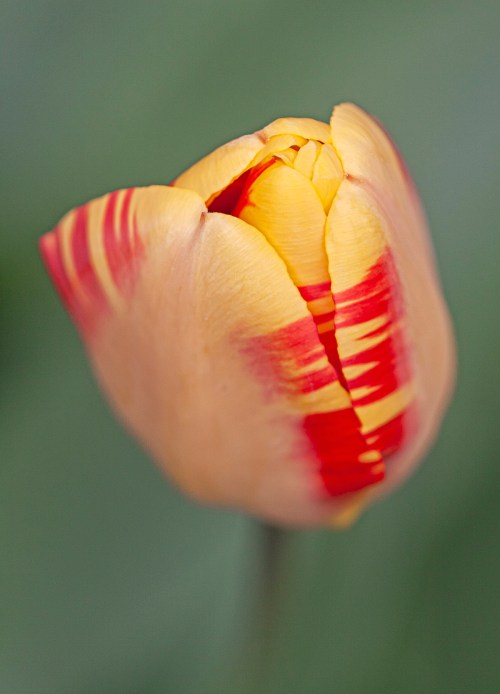
broken tulip

broken tulip

broken tulip

© Michael Q. Powell. All rights reserved.


Read Full Post »

Whenever I have my macro lens on my camera, I tend to scan small areas very carefully, looking for variations of color and patterns or signs of movement. The colorful markings permitted me to spot the tiny cricket frog that I featured in yesterday’s posting. Not far from the frog’s habitat, it was movement that allowed me to spot this cool-looking wolf spider (Tigrosa georgicola) on Monday. The spider was slowly crawling through some leaf litter and I was able to grab this shot when it paused for a second in an open area.

I believe that this is the first wolf spider that I have ever photographed. Fortunately I was able to get help in identifying it in a Facebook group devoted to spider identification. I know that some people are totally creeped out by spiders, while others are fascinated by them. I apologize to those in the former group, but hope that exposure to these spiders through my photos will help you appreciate their beauty—they truly are amazing creatures.

If you are at all interested in or curious about wolf spiders (and there are a lot of different species), you should check out Pete Hillman’s blog that just yesterday featured a photo of a wolf spider basking in the sun. Those who really like spiders will love a posting that Pete did earlier in the month entitled Not One For The Squeamish that shows a female wolf spider with a group of little spiderlings on her back—be sure to double-click on that image.


wolf spider

© Michael Q. Powell. All rights reserved.

Read Full Post »

Yesterday I captured this shot of an Eastern Cricket Frog (Acris crepitans) while exploring a seepy area in Prince William County, Virginia. The frog was tiny, only an inch or so (25 mm) in length. I was thankful for the green markings or I might otherwise have missed seeing the frog. The markings look very much like an arrow point towards the frog’s head. They also gave me something on which to focus since the rest of the frog’s body was pretty well camouflaged.

Eastern Cricket Frog

© Michael Q. Powell. All rights reserved.

Read Full Post »

It is easy for me to be delighted and entranced by simple things in nature, like this dandelion seed head that I spotted last week in my neighborhood. I remember the joy of blowing on these balls of fluff when I was a child and watching the little seeds sail through the air.

Yesterday the Governor of Virginia, the state in which I live, issued an executive order directing us all to stay at home except for a limited number of excepted essential tasks, including things like getting groceries and seeking medical care. One of the exceptions is “Engaging in outdoor activity, including exercise, provided individuals comply with social distancing requirements.” I am not yet sure if my forays into the wild with my camera would still be permitted as “engaging in outdoor.” If not, the content of my blog postings might change a little, but I plan to continue to post.

Whatever the case, I think this is a good time for us to be mindful of and thankful for the simple delights that can be found all around us.

dandelion

© Michael Q. Powell. All rights reserved.

Read Full Post »

Sometimes Ospreys (Pandion haliaetus) will renovate preexisting nests, but often they have to build one from scratch. This osprey couple that I spotted recently at Occoquan Bay National Wildlife Refuge was trying to build one in what seemed to be a rather precarious location.

I learned about the location of the nest only when I spotted an osprey flying by me with a stick in its talons. In my zeal to track the osprey, I neglected to pull back on my zoom lens, so I ended up cutting off its wing tips in the first image in which the osprey is delivering the stick. In the second image, you can see the nest-to-be as the osprey attempts to arrange the sticks. The final shot shows the osprey arriving at the nesting site with another stick. I like the way that the osprey almost hovered in order to land softly with its delivery.

I don’t know it the osprey couple will manage to jam enough sticks in the crook of the tree to be able to form a stable nest, but I will be sure to check their progress in future visits, as long as the wildlife refuge continues to stay open.

Osprey

Osprey

Osprey

© Michael Q. Powell. All rights reserved.

Read Full Post »

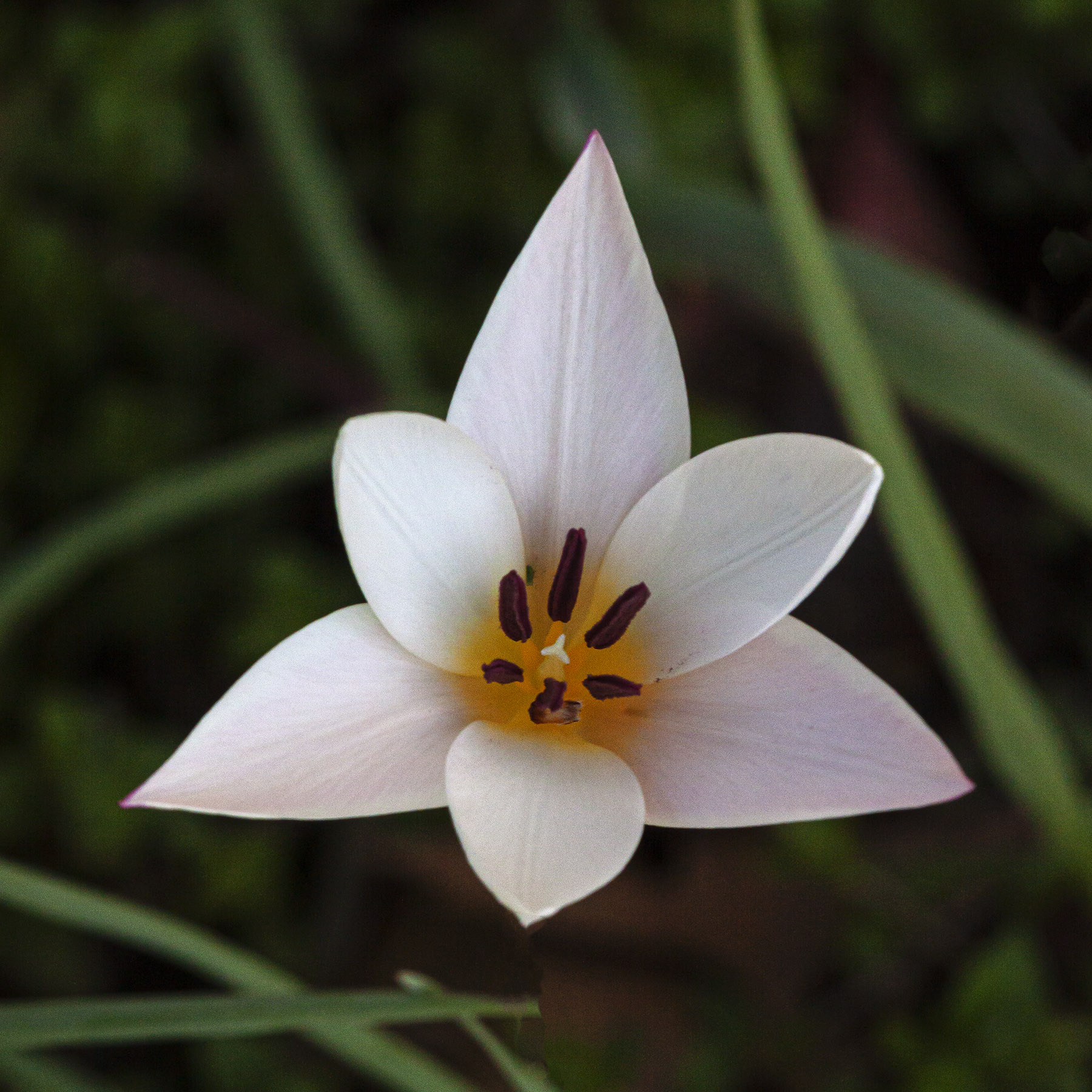
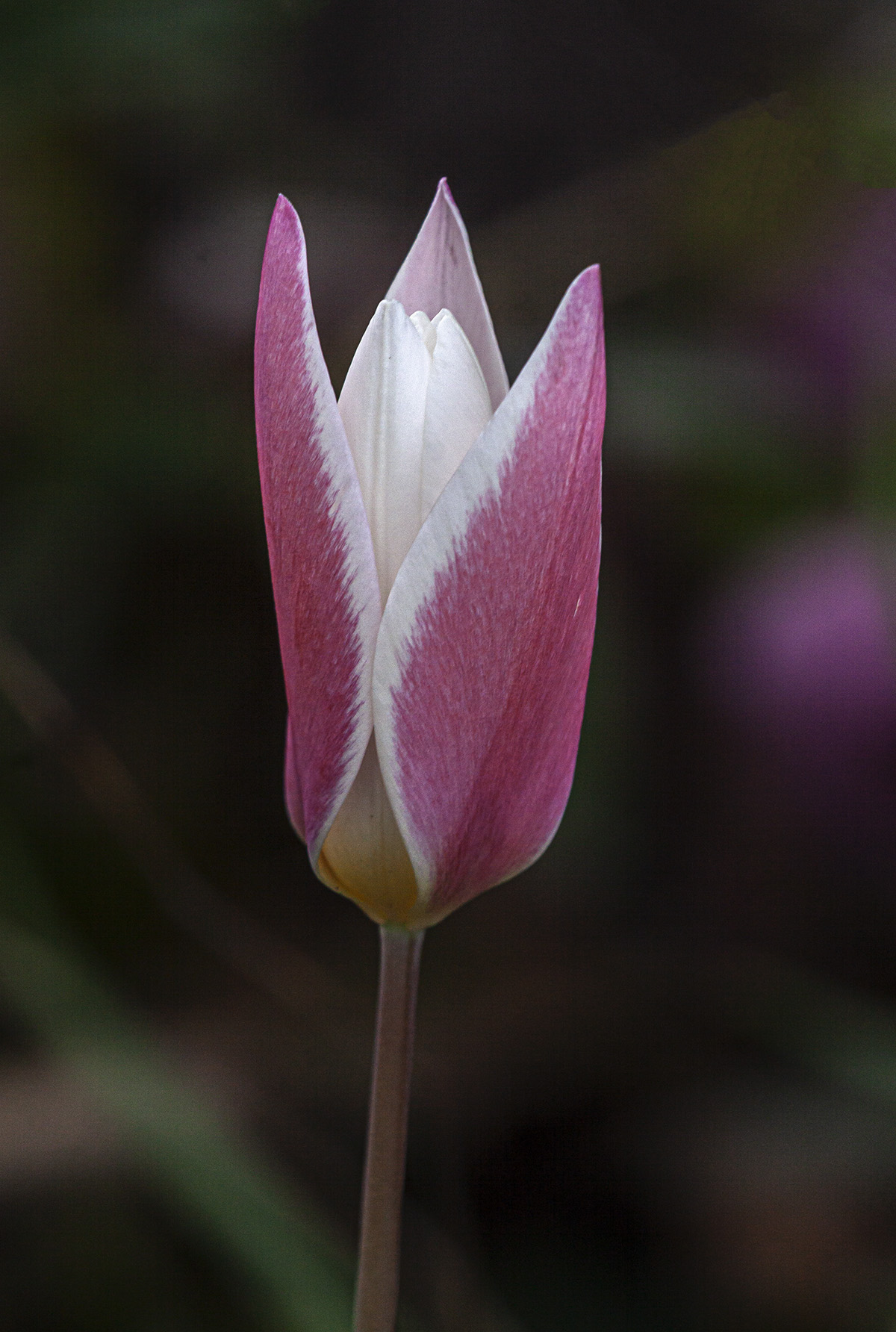
The Lady Jane tulips (Tulipa clusianaLady Jane”) in the garden of my neighbor and photography mentor Cindy Dyer are now fully in bloom. In a recent post called Two tulips, I featured a side view of a mostly closed flower, highlighting the tulip’s unusual shape and reddish-pink color. This time, I shot almost straight down from above and was struck by the geometric shapes in the petals, the stamen, and even the stigma (the little three-lobed part in the very center of the flower). For the middle shot, I shot from a slight angle to give a somewhat more natural perspective.

I hope that all of you are staying safe and healthy. I am remaining close to home most of the time and it has been a blessing for me to be able to find such beautiful subjects to photograph almost literally across the street—Cindy and I live at opposite sides of a suburban semi-circle.


Lady Jane tulip

Lady Jane tulip

Lady Jane tulip

© Michael Q. Powell. All rights reserved.


Read Full Post »
“Oh what a beautiful morning, oh what a beautiful day, I’ve got a beautiful feeling everything’s going my way.” I started my Thursday morning at Occoquan Bay National Wildlife Refuge with this handsome Great Blue Heron (Ardea herodias) who seemed to be serenading me.

If you have ever heard the squawk of a Great Blue Heron, you know why it is best that there is no soundtrack. Instead, I recommend that you click on this link to a YouTube video of the song that I cited in my opening sentence from the classic 1955 movie “Oklahoma”—it is guaranteed to brighten your day.

Great Blue Heron

© Michael Q. Powell. All rights reserved.

Read Full Post »

Need a blast of bright color? Here you go, a shot I took of the inside of a gorgeous red tulip blooming this morning in the garden of my neighbor and photography mentor Cindy Dyer.  This view straight down into the tulip reminds me of the kaleidoscopes that fascinated me endlessly when I was a youth. I managed to frame this shot almost exactly as I had envisioned, so I decided not to crop it at all, which is pretty unusual for me.

tulip

© Michael Q. Powell. All rights reserved.

Read Full Post »

Land prices are so high here in Northern Virginia that you have to be creative. Yesterday I spotted this Osprey (Pandion haliaetus) couple building their tiny house on one of the boundary channel markers off of Occoquan Bay National Wildlife Refuge.

The osprey perched in the back, which I believe is the female, remained in place while the other osprey flew off to forage for building materials. Sometimes they were only small twigs, but occasional the male osprey would return with a fairly long branch, as in the second photo. In the third shot, the male osprey has successfully landed with the long branch, but has not yet let go of it.

Multiple osprey couples are busily constructing nests all of “my” wildlife refuge and I hope to be able to share some images of their constructions sites.


Osprey

Osprey

Osprey

© Michael Q. Powell. All rights reserved.

Read Full Post »
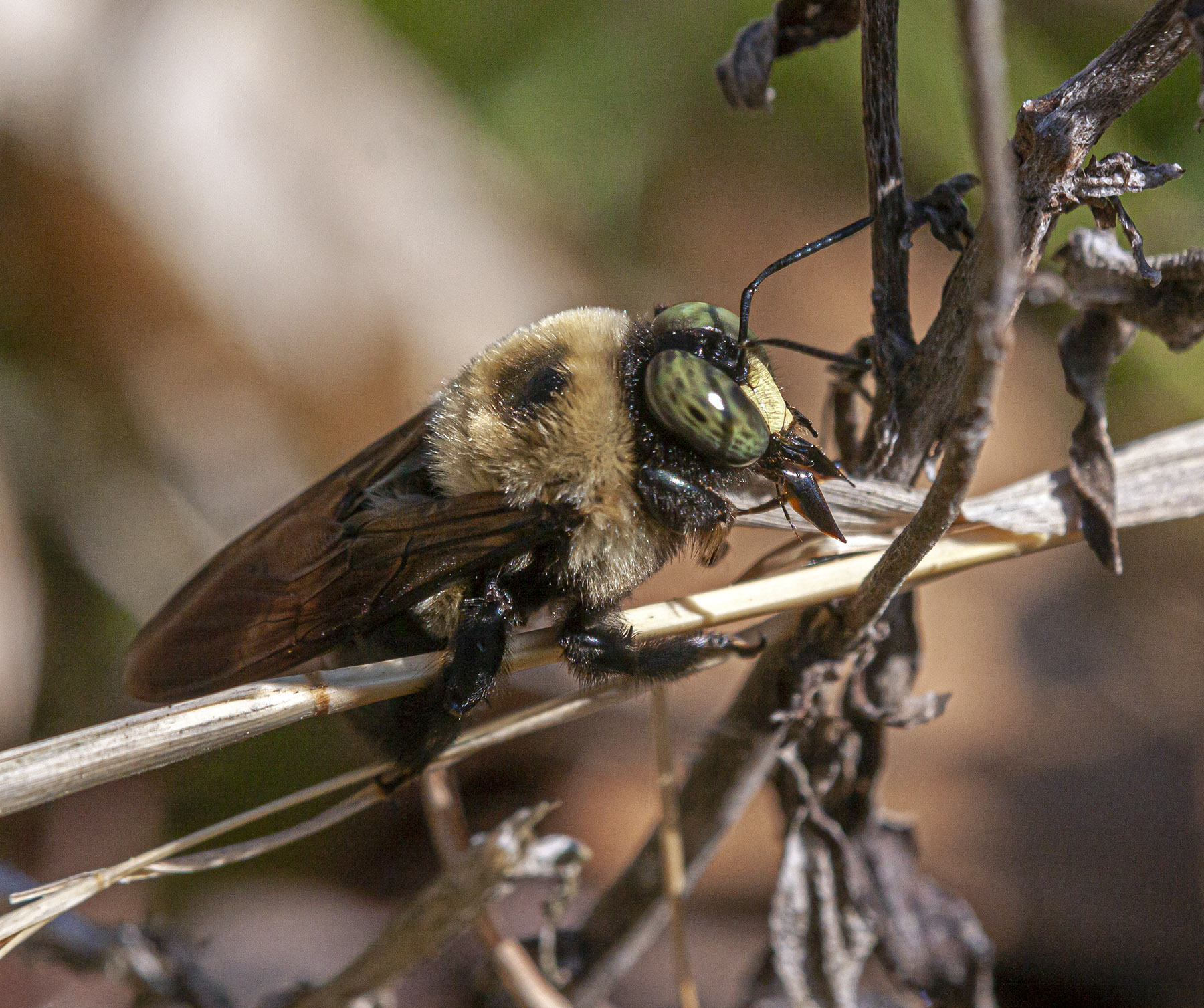
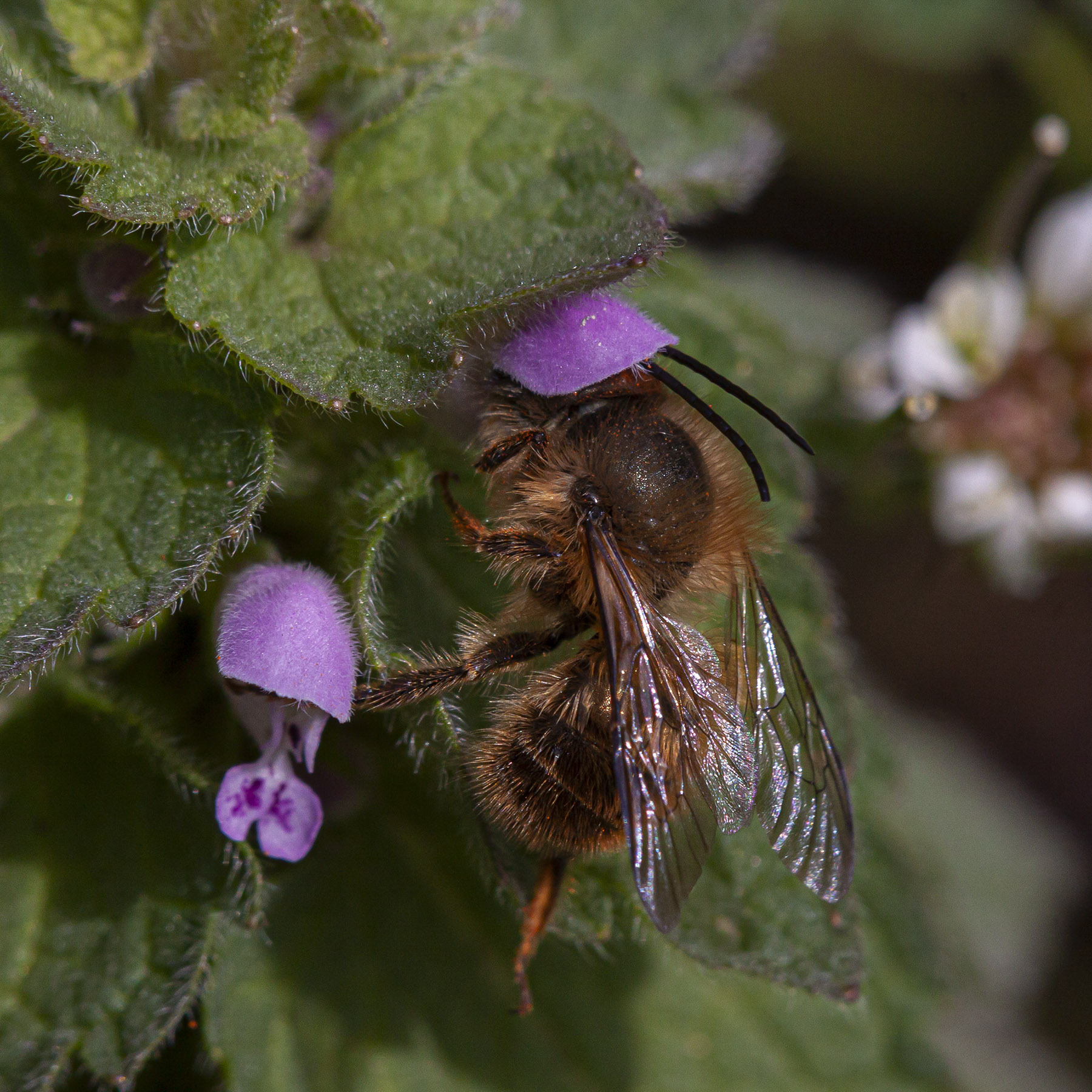
Although the temperatures were cool on Tuesday afternoon, this little bee was busy in the garden of my neighbor and friend Cindy Dyer. The plant on which the bee was feeding technically bight be considered to be a weed, and not a flower, but the bee surely did not mind.

Most of the pollen that I am used to seeing is bright yellow, but in this case it appeared to red in color. As you can see in the second photo, the bee was using a headfirst approach—for extended periods of time it would bury its head among the small petals of this plant.

I went searching around on internet trying to identify the plant and I think it might be Henbit (Lamium amplexicaule). I would welcome a confirmation or correction of this identification by someone more familiar with flowers than I am.

bee

bee

© Michael Q. Powell. All rights reserved.

Read Full Post »

You don’t have to go far to find beauty—it is all around us. I spotted this beautiful Lady Jane tulip yesterday afternoon in the garden of my neighbor and fellow photographer Cindy Dyer. Cindy loves to photograph flowers and has planted a wide assortment of photogenic flowers in her front and side gardens. I was delighted to see that about a dozen of these little tulips were starting to bloom.

Many of Cindy’s “normal” tulips are starting to form buds, but only one is blooming right now, the beautiful red one that is shown in the final photo. I have always been impressed by the photos that tourists take of broad swaths of colorful tulips in the Netherlands, but for me, I tend to find beauty in the individual flowers.

Lady Jane Tulip

tulip

© Michael Q. Powell. All rights reserved.

Read Full Post »

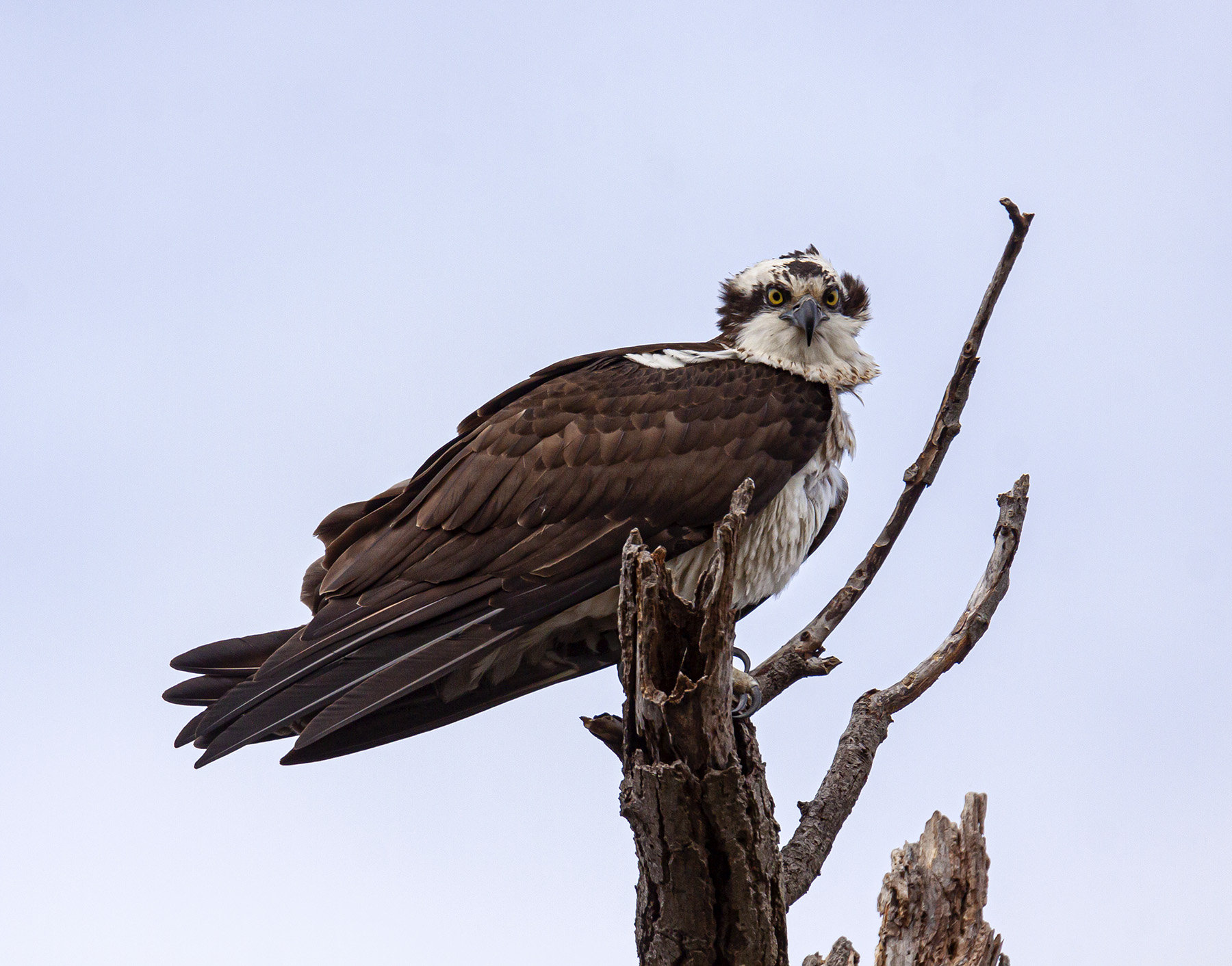
Even though we were at more than an acceptable social distance, this Osprey (Pandion haliaetus) seemed to be communicating a message to me with its direct eye contact on Saturday at Occoquan Bay National Wildlife Refuge—something like, “Please leave so I can continue working on my nest.”

Most of the time I will try to avoid photographing a bird head-on, because it has the potential to distort its features a lot. With this osprey, though, I think it worked out pretty well, perhaps because of the size and shape of its head.

osprey

© Michael Q. Powell. All rights reserved.

Read Full Post »
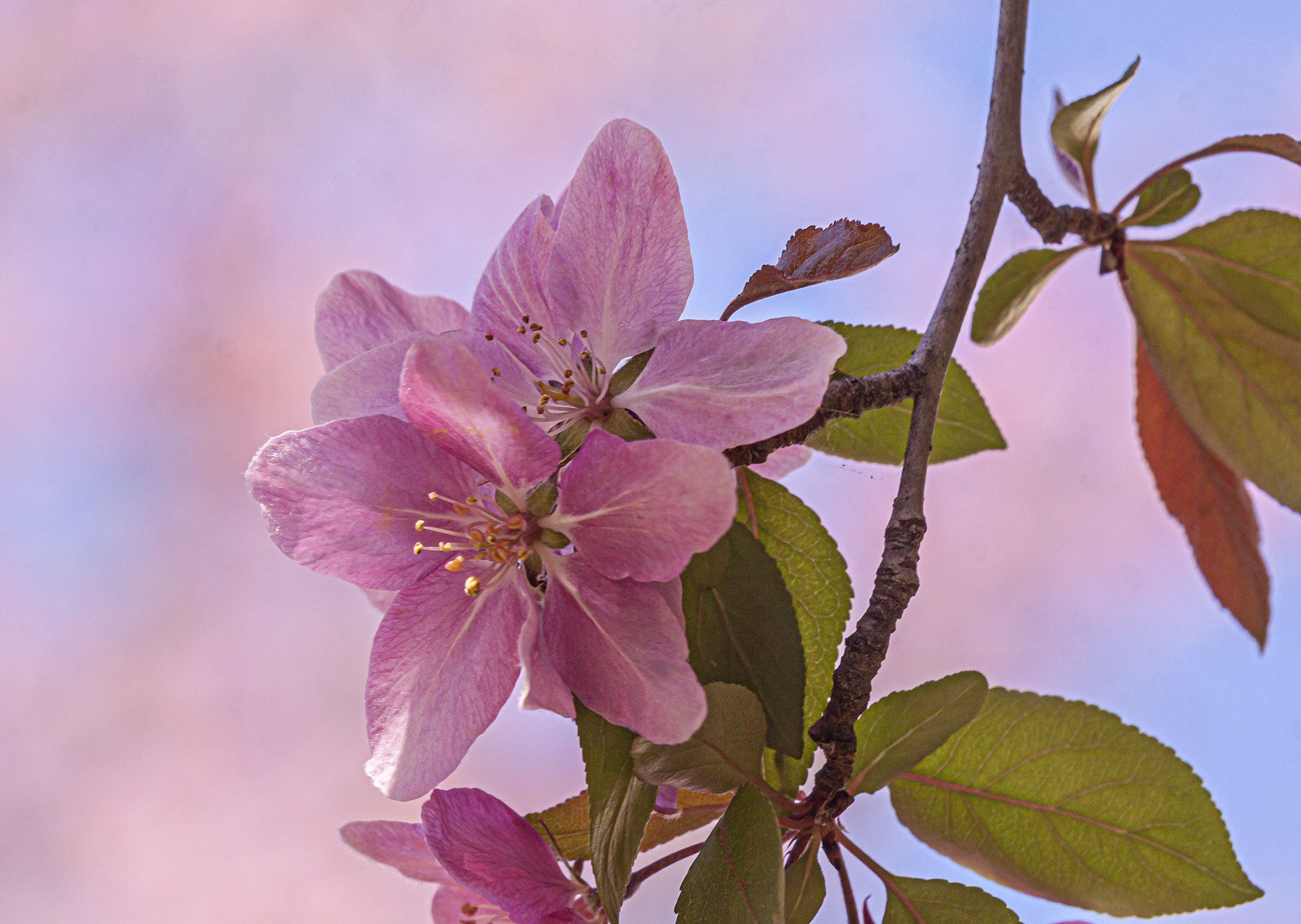
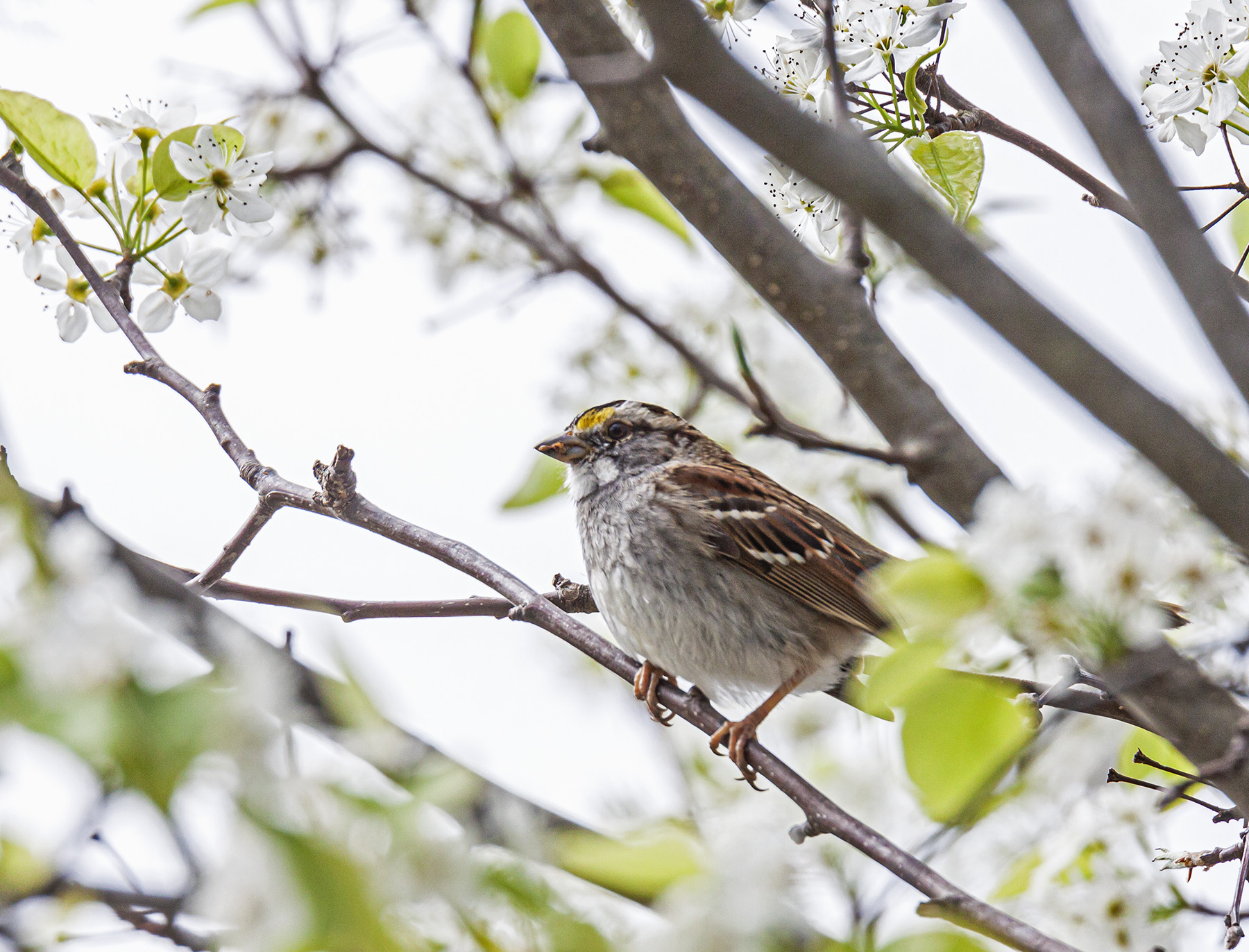
Each spring I try to get shots of birds perching in blossoming trees, but the birds rarely cooperate with me—they all seem more interested in foraging for food than in posing for me. On Saturday, though, a White-throated Sparrow (Zonotrichia albicollis) at Occoquan Bay National Wildlife Refuge paused for a moment and I was able to capture this image.

I chose not to crop this image any closer in order to give you a better view of the delicate white blossoms of a tree that I am not able to immediately identify.

White-throated Sparrow

© Michael Q. Powell. All rights reserved.

Read Full Post »

I am more of a liberal arts guy than a scientist, so the details of bird identification often escape me. Sue of the Back Yard Biology blog, on the other hand, is a self-avowed “geeky science nerd.” She decided to do some work to find out how to tell the age of a wild turkey. I suspect that many of you will find her posting as fascinating as I did, so be sure to click on the View Original Post in order to see her entire posting.

Be sure also to check out other postings on her wonderful blog. Sue is one of my most faithful followers and was one of the first to comment on my earliest postings more than seven years ago.

Sue's avatarBack Yard Biology

It’s that time again, when tom Turkeys begin to strut their stuff in the backyard.  The other day, a FB friend/fellow wildlife photographer posted a shot of a tom turkey (https://michaelqpowell.com/2020/03/22/panic-or-calm/) that looked quite a bit different than the one I have been seeing in my backyard.  I thought it looked younger, but I wondered how one can tell the age of male wild Turkey.  So, I googled that thought, and it turns out it’s not a hard thing to do (assuming you can judge lengths somewhat accurately).

The key things to look for are the length of the beard (the hair-like structures — which are modified feathers) hanging down from its breast), the color of the tip of the beard, and the length of the spurs on the back of the lower-most part of its leg next to the foot (the tarsometatarsus to be exact).

It’s still early in…

View original post 399 more words

Read Full Post »

Wild Turkeys (Meleagris gallopavo) reacted in different ways yesterday at Occoquan Bay National Wildlife Refuge when they detected my presence. One turkey seemed to panic, put down its head, and sprinted to the other side, while the other calmly strode across the trail. Both reached the other side safely. Was this the turkey version of social distancing?

How do you react in the face of a perceived threat? These days, this question is not merely an academic one—it is part of our daily lives. I think we all experience moments of panic, but we can choose not to let those feelings overwhelm us. Stay safe and healthy within the limits imposed on you by the current crisis and be sure to take care of yourselves.

Wild Turkey

Wild Turkey

© Michael Q. Powell. All rights reserved.


Read Full Post »
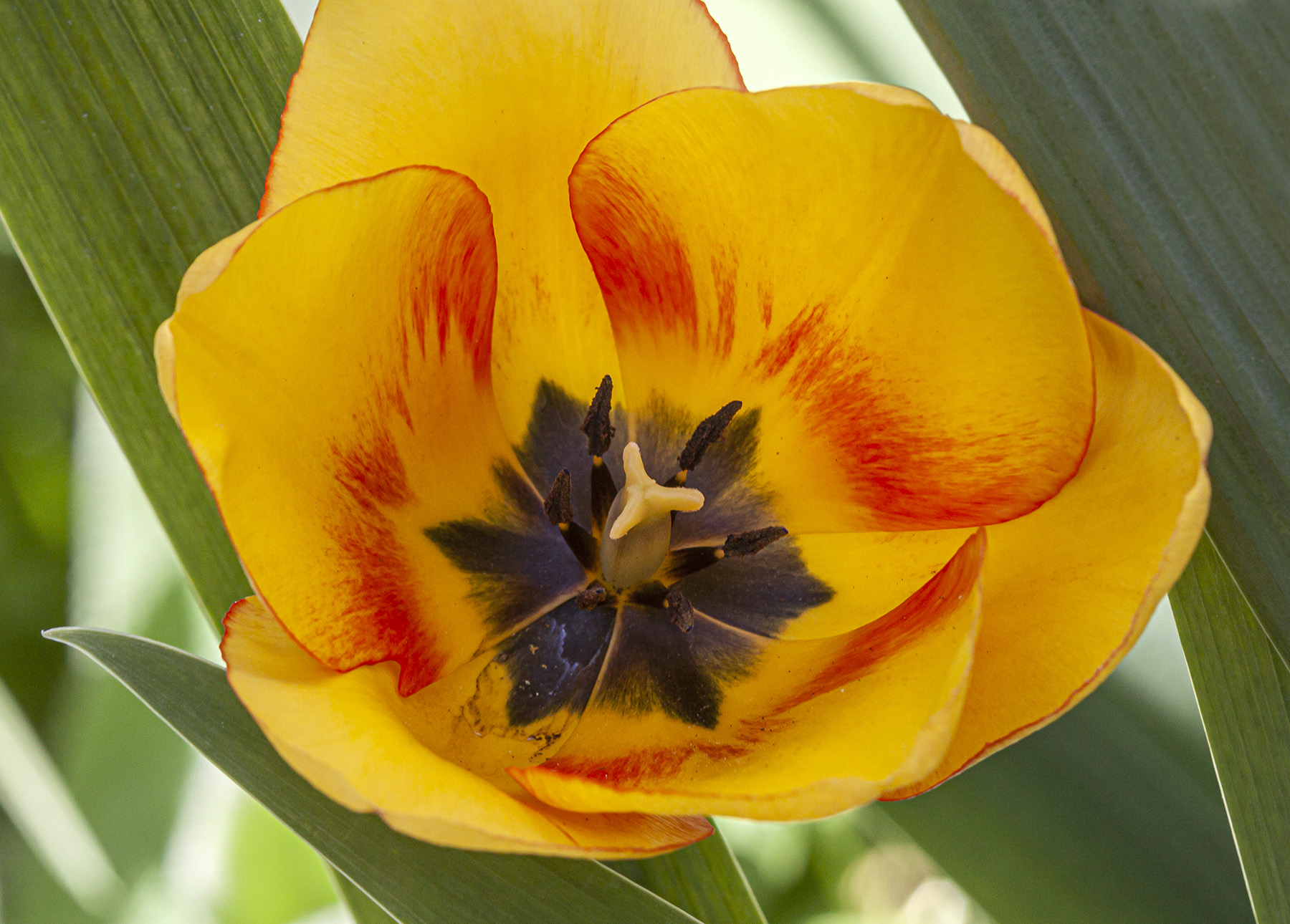
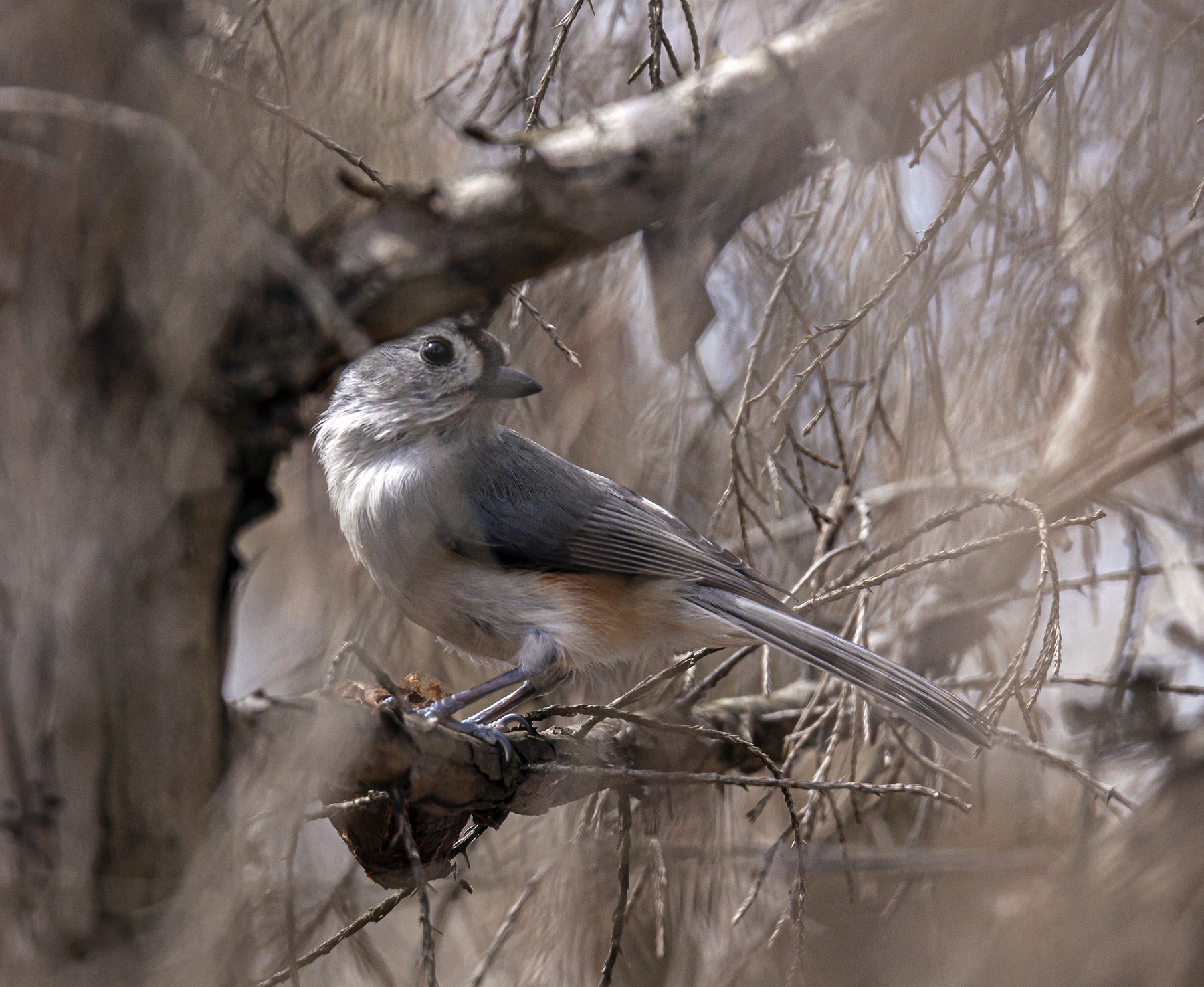
The early bird gets the worm, they say, but this mid-morning Tufted Titmouse (Baeolophus bicolor) was eating something different when I spotted it through the trees last Friday at Occoquan Bay National Wildlife Refuge.

It is always a challenge to get shots of birds as small as this one (approximately 5.5-6.3 inches (14-16 cm) in length), but I have found that my chances of success increase when a subject stops to eat. I could see the little titmouse clearly, but there was a lot of vegetation between us.  As a result, I had to move from side to side, trying to find a clear visual tunnel. I am happy with what I was able to get, even if the bird’s distinctive pointed crest did end up being blocked from view by a tree.

Tufted Titmouse

Tufted Titmouse

© Michael Q. Powell. All rights reserved.

Read Full Post »

When I am out in the wild with my camera, I am usually looking for creatures to photograph.  There are moments, however, when the beauty of the surroundings simply draws me in and for a while I can block out the stresses of the world. At this time, when our “normal” world seems to be crumbling before our eyes, I think we all need to find ways to step away from media reporting, take a deep breath, and find fresh perspectives—this is how I do it.

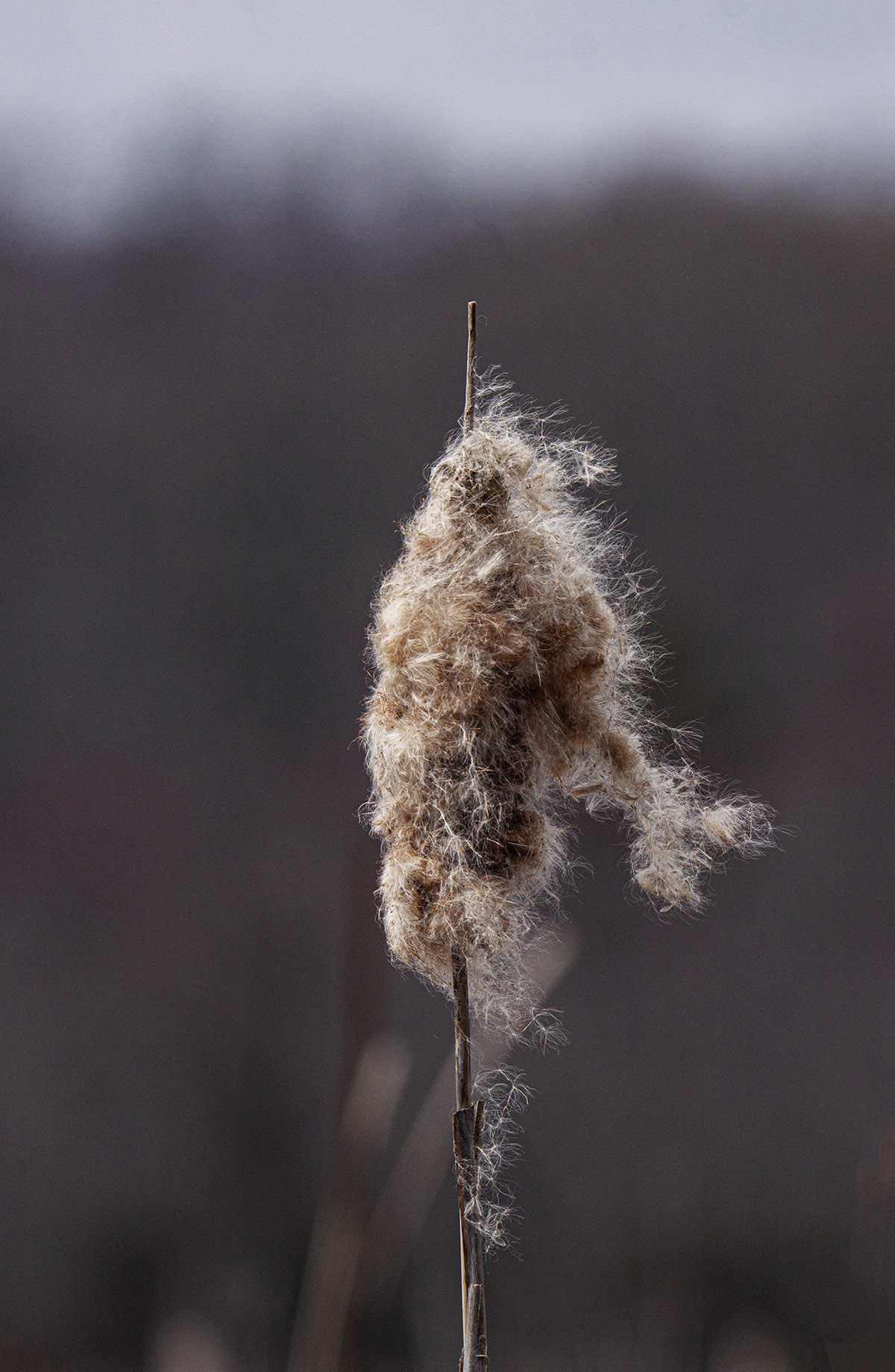
Here are a few photos that I took on Tuesday at Accotink Bay Wildlife Refuge. In the first image, I was struck by the successive layers of vegetation, some dried, some evergreen, and some showing reddish traces of new growth. The texture of the cattail captured my attention in the second image—as it moved in the gentle breeze, the it cattail would release a few fluffy seed heads that floated through the air. The final photo shows a small observation platform at the end of a trail. I was struck by the amount of vegetation that has grown up and almost engulfed the small structure and blocked the view to the water.


Accotink Bay Wildlife Refuge

Cattail

Accotink Bay Wildlife Refuge

© Michael Q. Powell. All rights reserved.

Read Full Post »

On Tuesday I could hear a pair of screaming hawks overhead at Accotink Bay Wildlife Refuge and eventually I saw one of them land on a broken-off tree. As I focused on that hawk, which I think is a Red-shouldered Hawk (Buteo lineatus), the other hawk zoomed into the frame and continued the fight.

In the first image, the perched hawk appeared to sense the approach of the “enemy” and was preparing itself for battle. I didn’t realize that the other hawk was approaching I saw it through the viewfinder of my camera as you can see in the second shot. At that moment, the stationary hawk was preparing to take off. In the final shot, the flying hawk had closed the gap and the two raptors were engaged in what looked to be a fierce struggle.

Why were they fighting? My guess is that it was some kind of territorial dispute, but there is no way for me to be sure. When I first saw the two hawks chasing each other, I thought it might be love, but the final frame suggests that was not the reason.

Red-shouldered Hawk

Red-shouldered Hawk

Red-shouldered Hawk

© Michael Q. Powell. All rights reserved.

Read Full Post »

No matter how many times it happens, it is always exciting to see a Bald Eagle (Haliaeetus leucocephalus). Last week I spotted this one at Occoquan Bay National Wildlife Refuge and I was happy when it presented me with a chance to take this profile shot.

I had watched as the eagle flew to this tree and stealthily approached it. I was able to get relatively close, because the eagle was looking away from me and could not see me moving closer. However, the butt-first pose that it presented to me is not the most flattering for any creature, so I waited and hoped that the eagle would change its position. After what seemed like an eternity, the eagle moved its head to the side and I was finally able to get a few shots in which the eye was visible. Patience paid off one more time.


Bald Eagle

© Michael Q. Powell. All rights reserved.

Read Full Post »

Last Monday I was thrilled to spot this North American Beaver (Castor canadensis) slowly swimming by me in the early morning light at Occoquan Bay National Wildlife Refuge. I was able to follow the beaver along the shore for several minutes before it disappeared with a big splash, as you can see in the final photo that show the beaver’s distinctive tail, the last part of the beaver to enter the water.

The limited light caused me to shoot at slower shutter speeds than the situation actually demanded, but the slight blurriness somehow enhances the dreamlike feeling of the time around sunrise. I checked the data on the final shot and was a little shocked to see that I took it with a shutter speed of 1/50 of a second. Somehow I was able to capture a decent composition and an almost abstract-style image—the image that you see is also uncropped.

Happy St. Patrick’s Day to those of you who are celebrating the holiday. I grew up outside of Boston, Massachusetts, where St. Patrick’s Day is a big deal, including a large parade that, alas, had to be canceled this year.

beaver

beaver

beaver

© Michael Q. Powell. All rights reserved.

Read Full Post »
« Newer Posts - Older Posts »