Feeds:
Posts
Comments

Archive for the ‘spring’ Category

I was happy on Monday to photograph my first butterfly of the year, which appears to be the appropriately named Spring Azure butterfly (Celastrina ladon). Earlier this season I have spotted several Mourning Cloak butterflies, but was not able to get a shot of any of them.

The Spring Azure butterfly is only about an inch (25 mm) in size, but has some wonderful details that I was able to capture. It is fairly nondescript in color until it opens its wings and reveals a beautiful shade of blue—you get a small glimpse of that wonderful blue in the second image.

I had to pursue this butterfly for quite a while before it finally landed. An outside observer might have have wondered what it the world I was doing, but chasing butterflies always makes me feel like a child again.

It won’t be long before I see much bigger and more colorful butterflies, but this one is special to me as the first butterfly of the spring that I was able to photograph.

Spring Azure

Spring Azure

Spring Azure

© Michael Q. Powell. All rights reserved.


Read Full Post »

It was sunny and warm on Monday, so I went off in search of dragonflies. There has already been at least one sighting of a dragonfly this month in Virginia, but it realistically is still a bit early for any to appear in the northern part of the state where I live. I searched diligently at a pond and at several small streams in Prince William County, but did not find any dragonflies or damselflies.

I was happy, however, to spot several Eastern Cricket Frogs (Acris crepitans crepitans). These frogs are tiny, with a length of about 5/8 to 1-3/8 inches (16-35 mm). One of the most distinctive things about this species is the male mating call that resembles the sound of two stones being hit together or perhaps is similar to the sound of a cricket.

According to the Virginia Herpetological Society, “This species prefers grassy margins of ponds, ditches and wetlands. Permanent bodies of water with emergent or shoreline vegetation and exposure to the sun are preferred habitat,” a perfect description of the locations where I spotted these frogs.

Each year I am confused when researching this species, because I see references to Eastern Cricket Frogs and Northern Cricket Frogs used almost interchangeably. If I understand it correctly Northern Cricket Frog (Acris crepitans) is the species name and Eastern Cricket Frog (Acris crepitans crepitans) is one of the subspecies.

As you can see from these images, cricket frogs blend in really well with their surroundings. If I had not seen these frogs jump to their new locations, I am pretty sure that I would not have seen them. I walked around all day with my 180mm macro lens attached to my camera and it served me well to capture some of the details on the bodies of the little frogs. I attempted to get as low as I could and to shoot from the side in order to get as much of the frog in focus as I could, so muddy knees were inevitably one of the “benefits” of getting these shots.

cricket frog

cricket frog

© Michael Q. Powell. All rights reserved.


Read Full Post »

I don’t see Ring-necked Ducks (Aythya collaris) very often, so I was happy to spot this little group of them last week at Occoquan Bay National Wildlife Refuge. Although this looks like a ménage à trois situation with a male duck in the middle of two females, there actually was another male who was out of the frame when I took this photo. Ring-necked Ducks are a migratory species that overwinters with us and I suspect that these ducks will soon be leaving our area for more northern locations.

Ring-necked Duck

© Michael Q. Powell. All rights reserved.

Read Full Post »

Sometimes I feel compelled to throw back my head and sing at the top of my lungs, as this Bald Eagle (Haliaeetus leucocephalus) was doing when I spotted it last week at Occoquan Bay National Wildlife Refuge. It might be somewhat of an exaggeration to call it “singing”—the eagle was calling out to its mate, I believe, in a somewhat unmelodious way, but it was a cool experience nonetheless.

The Cornell Lab of Ornithology had the following description of a bald eagle’s calls, “For such a powerful bird, the Bald Eagle emits surprisingly weak-sounding calls—usually a series of high-pitched whistling or piping notes.” Check out this link to a Cornell Lab webpage that has several sound samples of an eagle’s call. According to a National Public Radio report, Hollywood movies often dub over an eagle’s call with a Red-tailed Hawk’s cry, which is much more majestic, so you may be surprised to hear what a bald eagle actually sounds like.

bald eagle

bald eagle

bald eagle

© Michael Q. Powell. All rights reserved.

Read Full Post »

Turtles were out in force on Wednesday at Jackson Miles Abbott Wetland Refuge, including these three that appeared to be practicing social distancing. They looked to me to be different species—a Red-eared Slider, maybe a Northern Red-bellied Cooter, and one that I’m really not sure about.

I must confess that I am not very good at identifying different types of turtles, especially when they are covered in dried mud. The middle turtle was shockingly clean and had especially beautiful and colorful markings. Be sure to click on the image to get a better look at the turtles. If you know a lot about turtles, I would welcome your assistance in identifying the species of these three turtle that were basking in the sunlight on an unusually warm March day.

turtles

© Michael Q. Powell. All rights reserved.

Read Full Post »

I spotted this tiny red tulip yesterday morning in the garden of my dear friend and photography mentor Cindy Dyer, my first tulip sighting of the year. One of Cindy’s passions is gardening and she deliberately plants a lot of flowers that she believes will be photogenic.

Last fall she planted bulbs for some large, frilly, multi-colored tulips that she hopes will bloom later this year. (See my posting from last spring entitled Fire-breathing dragon to see an example of one of those crazy-looking parrot tulips.) I will be looking for those exotic flowers, but I have to say that am often drawn more to the simple, spare elegance of a single bloom, like today’s tulip.

When I first started to get serious about my photography almost ten years ago, I imitated the type of photographs that Cindy was taking, with a lot of emphasis on macro shots of flowers. Cindy taught me a lot about photography during those early days, lessons that have stuck with me as I have ventured into other areas of photography.

One of those lessons was about the value of a well-composed, graphic image, like today’s simple shot. Anyone, in theory, could have taken this shot, but they would have had to be willing to get on their hands and knees in the dirt to do so, another one of Cindy’s lessons. (If you want to see more of Cindy’s tips, check out her article How to Grow Your Garden Photography Skills that was featured several years ago on the NikonUSA.com website.)

tulip

© Michael Q. Powell. All rights reserved.

Read Full Post »

Some of the Ospreys (Pandion haliaetus) that I spotted last week at Occoquan Bay National Wildlife Refuge seemed to be making early claims on the existing nests from last year, while others were simply perched on trees throughout the refuge. Mostly they kept their distance, though, so I had to be content with relatively distant shots of these recently returned raptors.

osprey

Osprey

© Michael Q. Powell. All rights reserved.

Read Full Post »

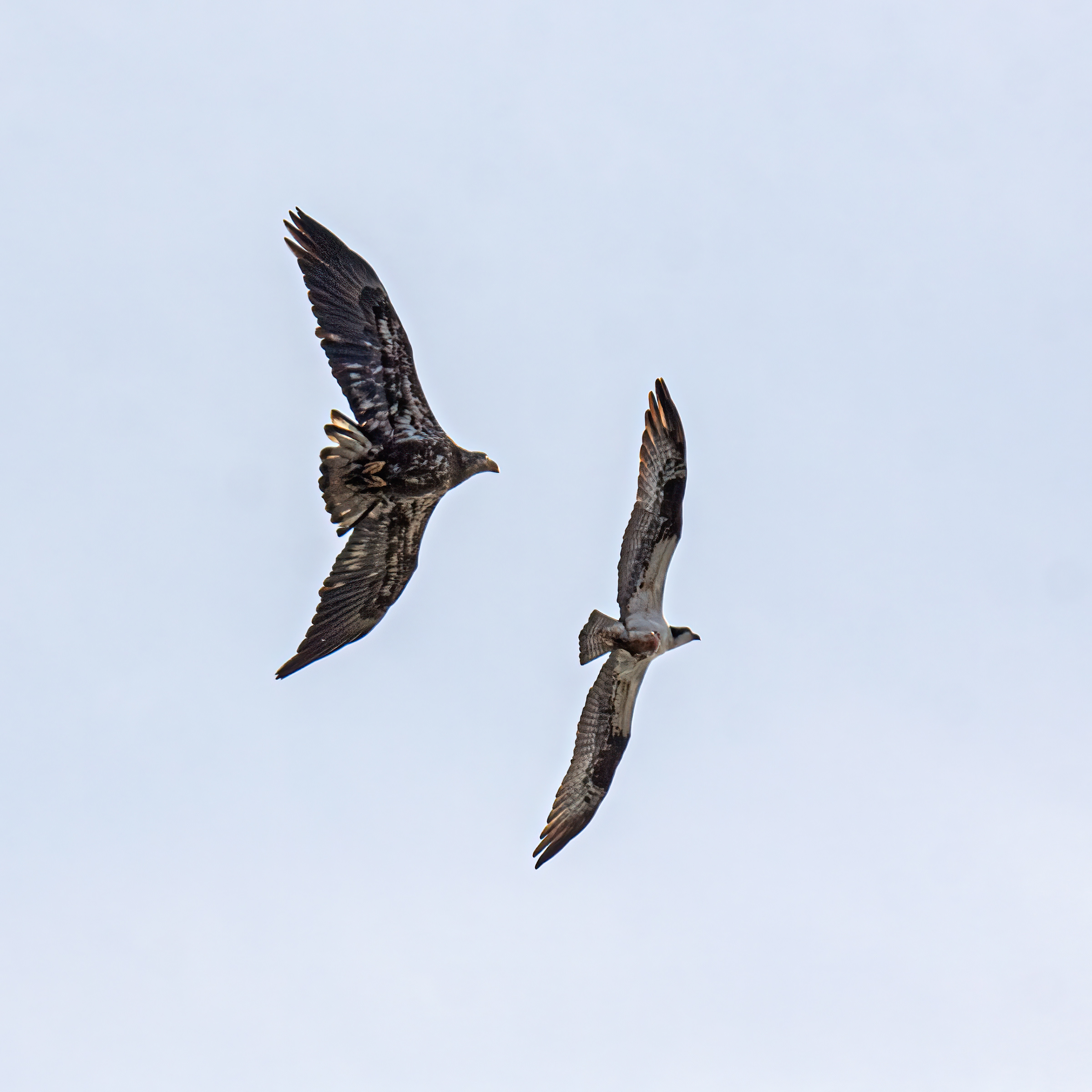
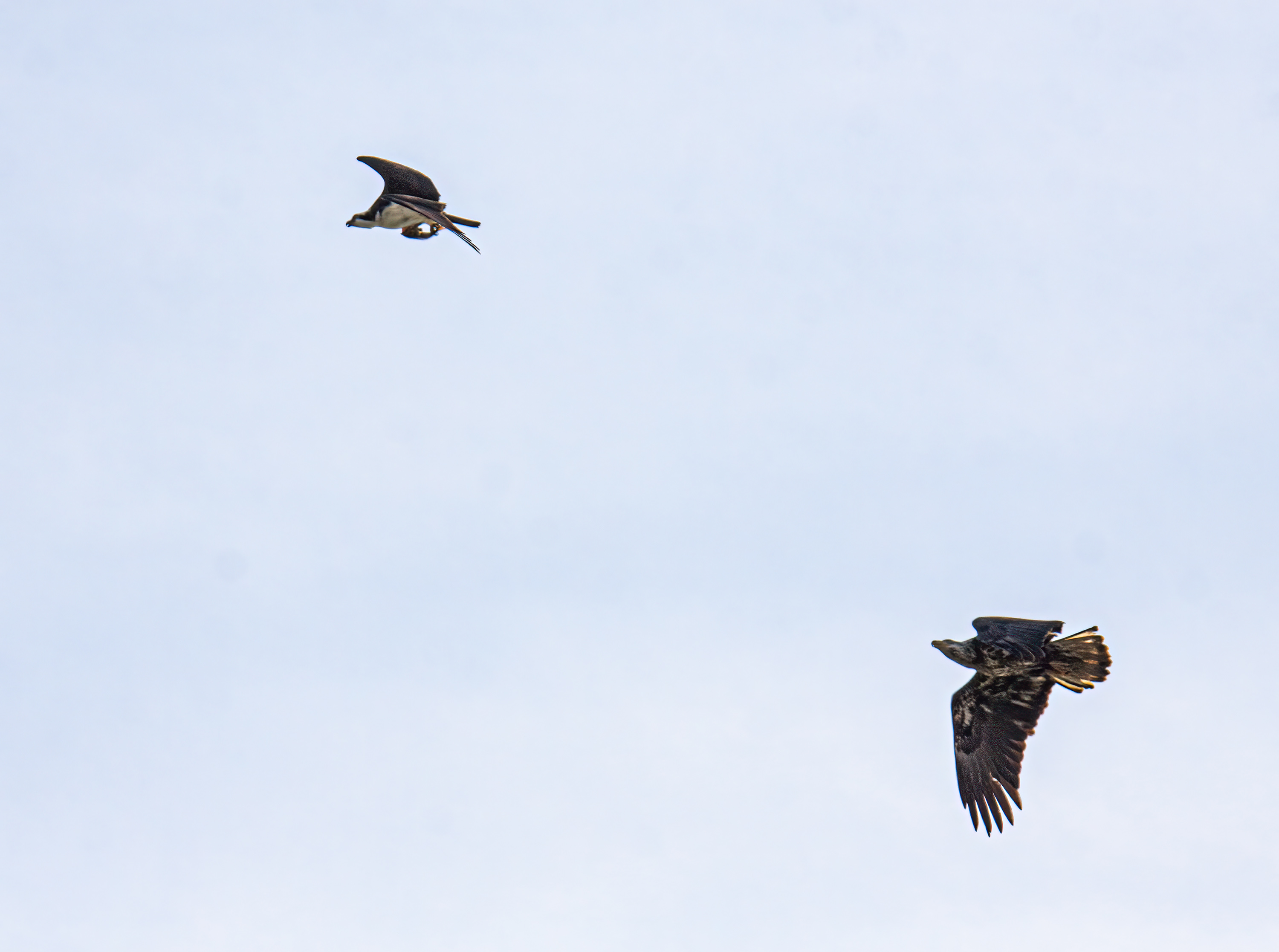
A juvenile Bald Eagle (Haliaeetus leucocephalus) tried to steal a fish from an Osprey (Pandion haliaetus) on Thursday at Occoquan Bay National Wildlife Refuge and chased it across the sky. It was quite an aerial dogfight. In the end, I think that the osprey dropped the fish and both birds ended up “empty-handed.”

Ospreys migrate away from my area for the winter and I was delighted to see that they had returned. I spotted at least a half-dozen or more ospreys and they were both active and vocal. Ospreys have high-pitched, distinctive voices that the Cornell Lab of Ornithology described in these words, ” Their calls can be given as a slow succession of chirps during flight or as an alarm call—or strung together into a series that rises in intensity and then falls away, similar to the sound of a whistling kettle taken rapidly off a stove.” Here is a link to a Cornell Lab webpage where you can listen to recordings of various osprey calls.

These three photos give you a general sense of the chase. In the first shot, you can definitely see the “prize,” the fish that the osprey had caught. In the second shot, the eagle has closed the distance separating it from the osprey. In the third shot, the osprey is doing its best to maneuver away from the eagle, but the eagle was able to match the osprey turn by turn. All of this took place over the water and eventually the two birds flew out of range.

eagle osprey chase

eagle osprey chase

eagle osprey chase

© Michael Q. Powell. All rights reserved.

Read Full Post »

Pushing out of the still dormant winter earth, several crocuses in the garden of my dear friend Cindy Dyer were shining brightly yesterday, a hopeful sign of the spring beauty that is yet to come.

For the first image, I shielded the sun with my body to avoid the harsh highlights that the sunlight was creating. I then changed my shooting position so that the sunlight was streaming from another angle, which caused the yellow parts of the flower to glow.

Please continue to pray for the people of Ukraine and for all those affected by Putin’s invasion of Ukraine.

Crocus

crocus

© Michael Q. Powell. All rights reserved.

Read Full Post »

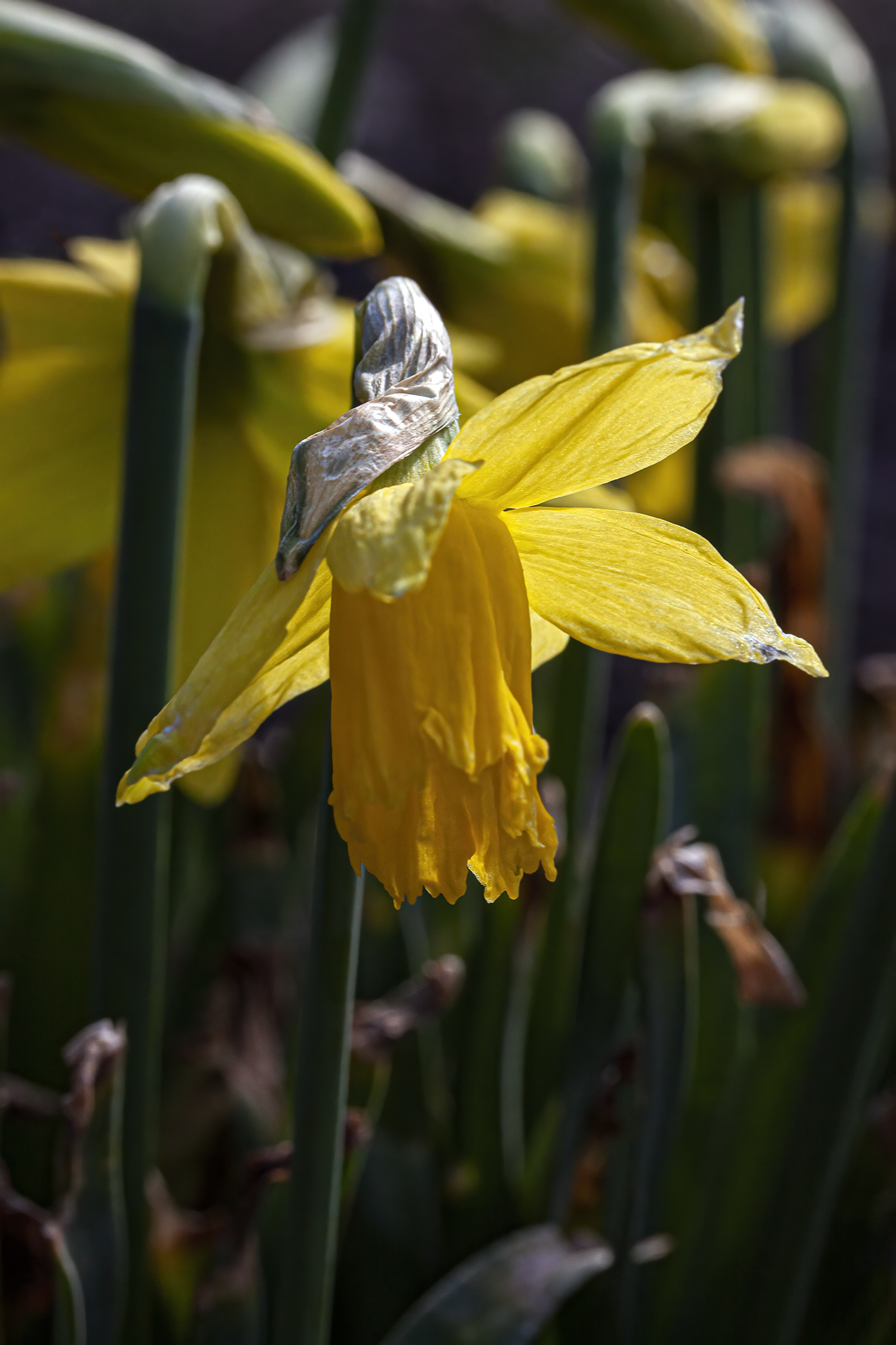
As I was walking through my neighborhood yesterday, I was delighted to spot some daffodils (g. Narcissus) that were already in bloom. The ground is still brown and bare and not very photogenic, so it is hard to take a “pretty” picture of these beautiful little flowers.

I used a short macro lens capture these images of the early daffodils, the advance guard for a multitude of spring flowers that will arrive before long. I am ready for the spring.

daffodil

daffodil

daffodil

© Michael Q. Powell. All rights reserved.

Read Full Post »

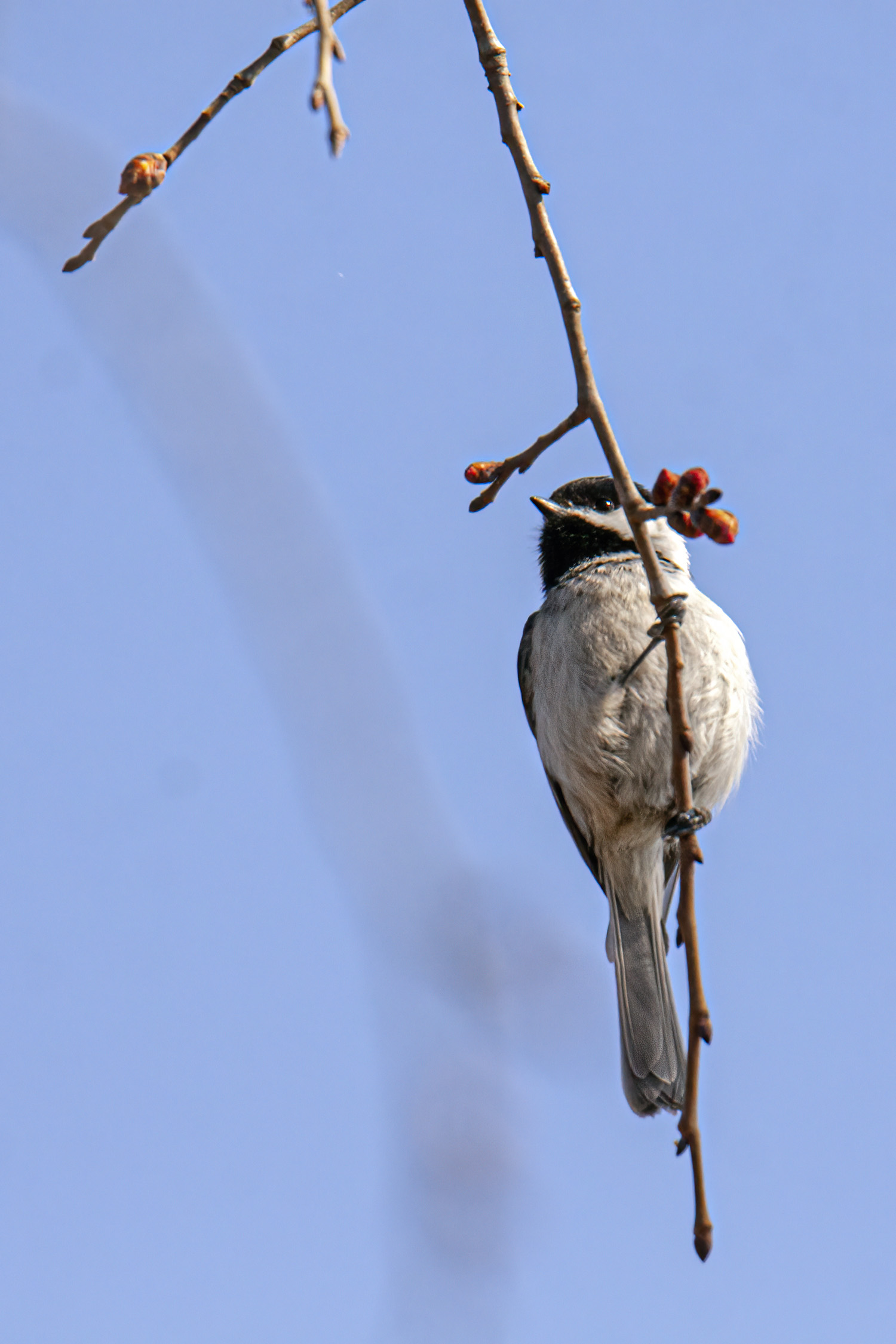
“This bud’s for you.” A Carolina Chickadee (Poecile carolinensis) seemed happy that buds are finally starting to appear on the trees on Monday at Occoquan Bay National Wildlife Refuge.

According to the Cornell Lab of Ornithology, “In winter, the Carolina Chickadee’s diet is about half plant, half animal. The rest of the year about 80–90 percent of their diet is animal (mostly insects and spiders).”

Progress is uneven, but it looks like spring inexorably is on the way.

Carolina Chickadee

Carolina Chickadee

© Michael Q. Powell. All rights reserved.

Read Full Post »

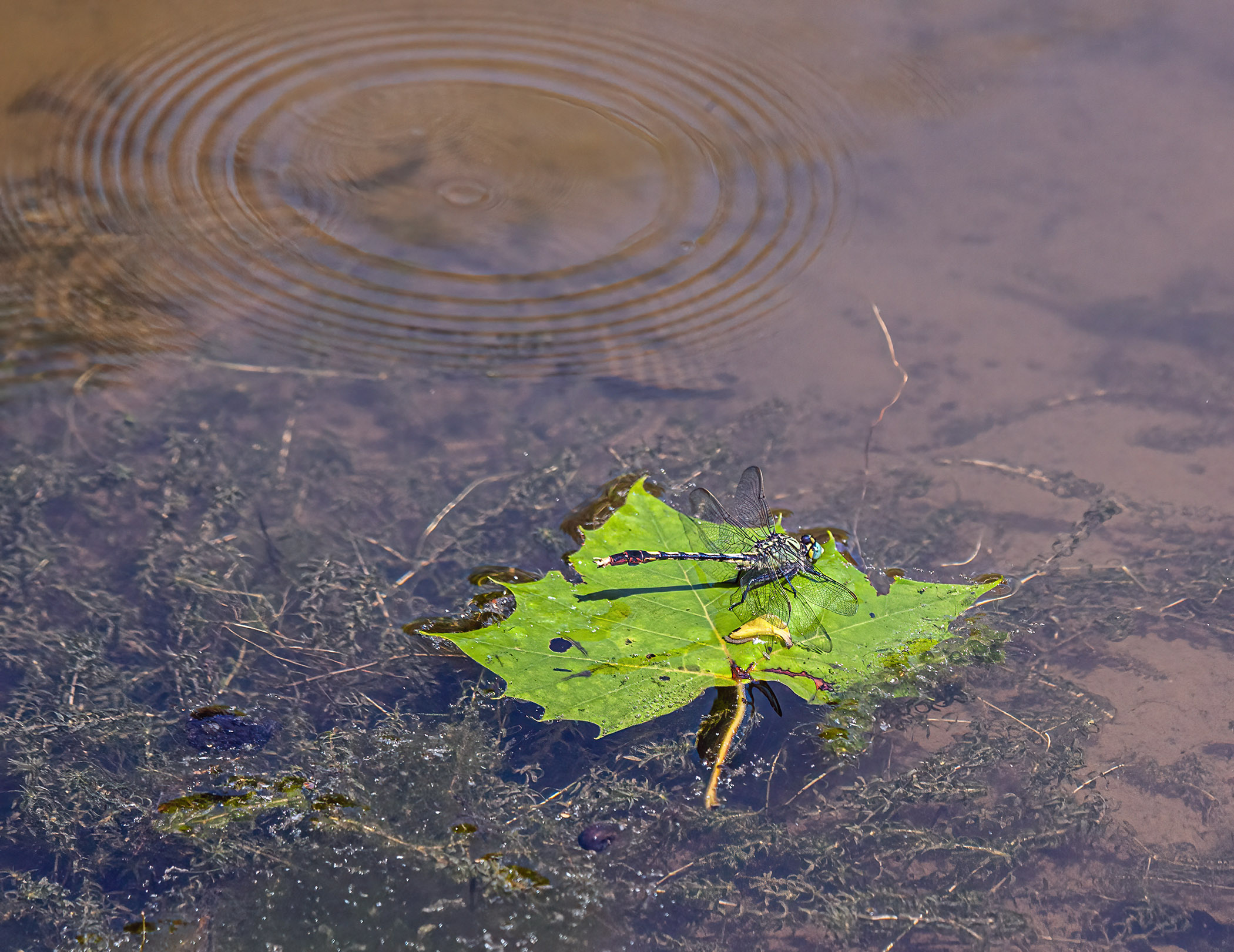
I was excited to spot this male Unicorn Clubtail dragonfly (Arigomphus villosipes) last Saturday as I was exploring a small pond in Fairfax County with fellow dragonfly enthusiast Walter Sanford, my first sighting of this species this season. The dragonfly changed perches multiple times, but steadfastly remained out of reach and facing the pond, forcing me to shoot from an awkward angle.

If the ground at the edge of the pond had not been so soft and muddy, I might have waded into the water a bit to improve my position. As it was, my feet ended up soaked and I just missed tumbling into the water as I leaned forward to try to get as close as I could.

I included the second image to give you an idea of the habitat in which we found the Unicorn Clubtail. I really like the way the dragonfly opportunistically used the floating leaf as a temporary landing pad. I am not sure what caused the concentric ripples in the upper left corner of the photo, but they were interesting enough to justify not cropping the image to give you a closer view of the dragonfly. You can always click on the image if you would like to see more details of the floating dragonfly.

Unicorn Clubtail

Unicorn Clubtail

© Michael Q. Powell. All rights reserved.

Read Full Post »

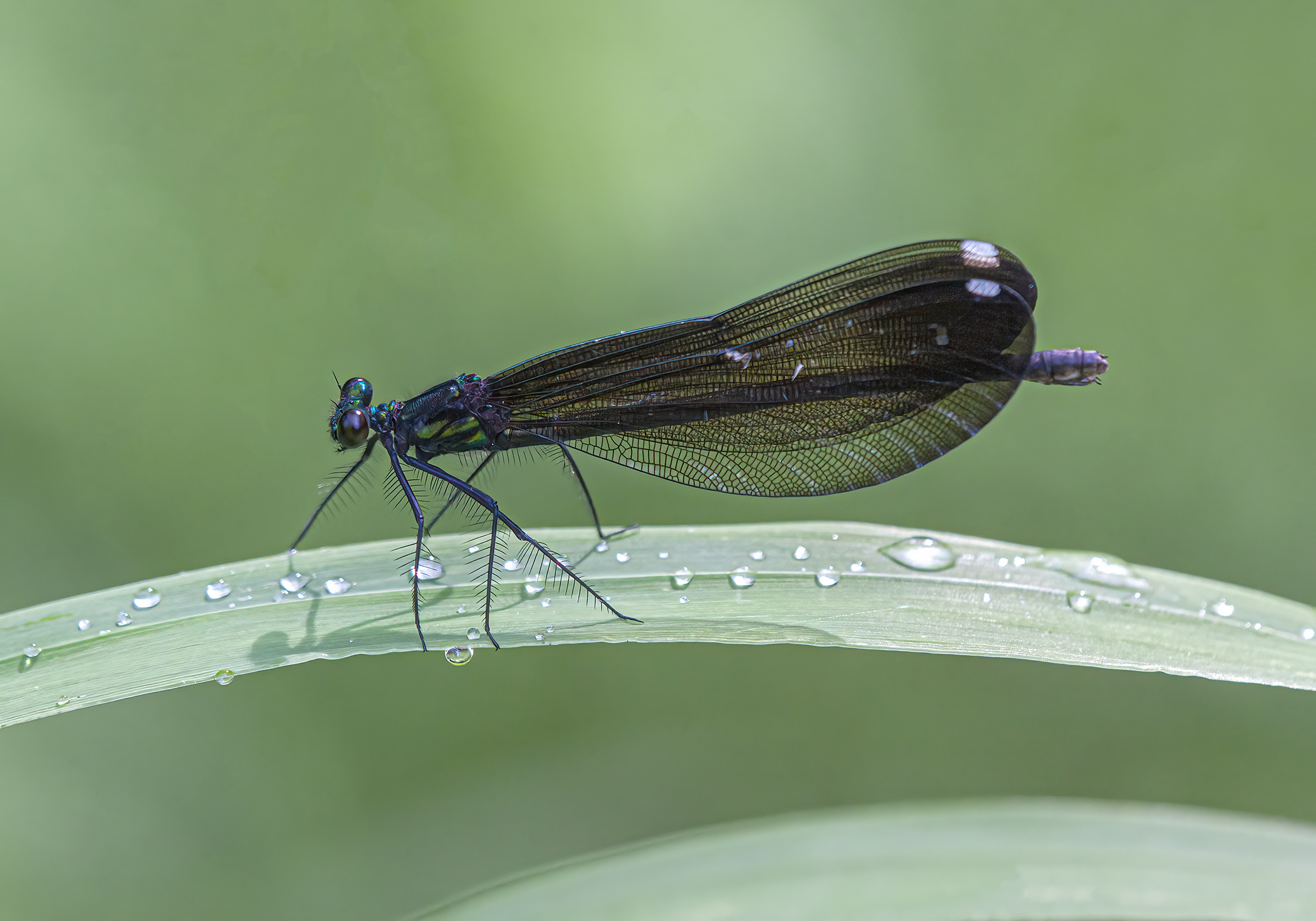
Some say that the secret to capturing an effective image is to eliminate all of the non-essential elements. This image is about as minimalistic as I can get. The raindrops on the vegetation provide a sense of what has been and the shadows a hint that the sun was shining again when I spotted this stunning female Ebony Jewelwing damselfly (Calopteryx maculata) at Occoquan Regional Park on Friday.

The image itself is simple, but I am amazed at the details that I was able to capture of this tiny creature and encourage you to click on the image. If you do, you may be as shocked as I was, for example, at the length of the “hairs” on the damselfly’s legs—clearly leg shaving is not practiced among the ladies of this species.

Ebony Jewelwing

© Michael Q. Powell. All rights reserved.


Read Full Post »

I spotted this beautiful American Lady butterfly (Vanessa virginiensis) yesterday morning as I was exploring one of the trails at Occoquan Regional Park. There is a similar-looking butterfly called a Painted Lady and I had to wait until I got home to figure out which one I had photographed. The American Lady has two large eye spots on each hind wing, while the Painted Lady has four. The second image below, I believe, shows only two eye spots.

I love to try to time my butterfly photos to get shots when the wings are fully opened, revealing the butterfly’s inner beauty. In this case, though, I think that the American Lady butterfly is even more stunning when its wings are closed. Alas, I couldn’t move fast enough to get a good side shot before she flew away. The second shot at least gives you a general sense of how pretty she is.

American Lady

American Lady

© Michael Q. Powell. All rights reserved.


Read Full Post »

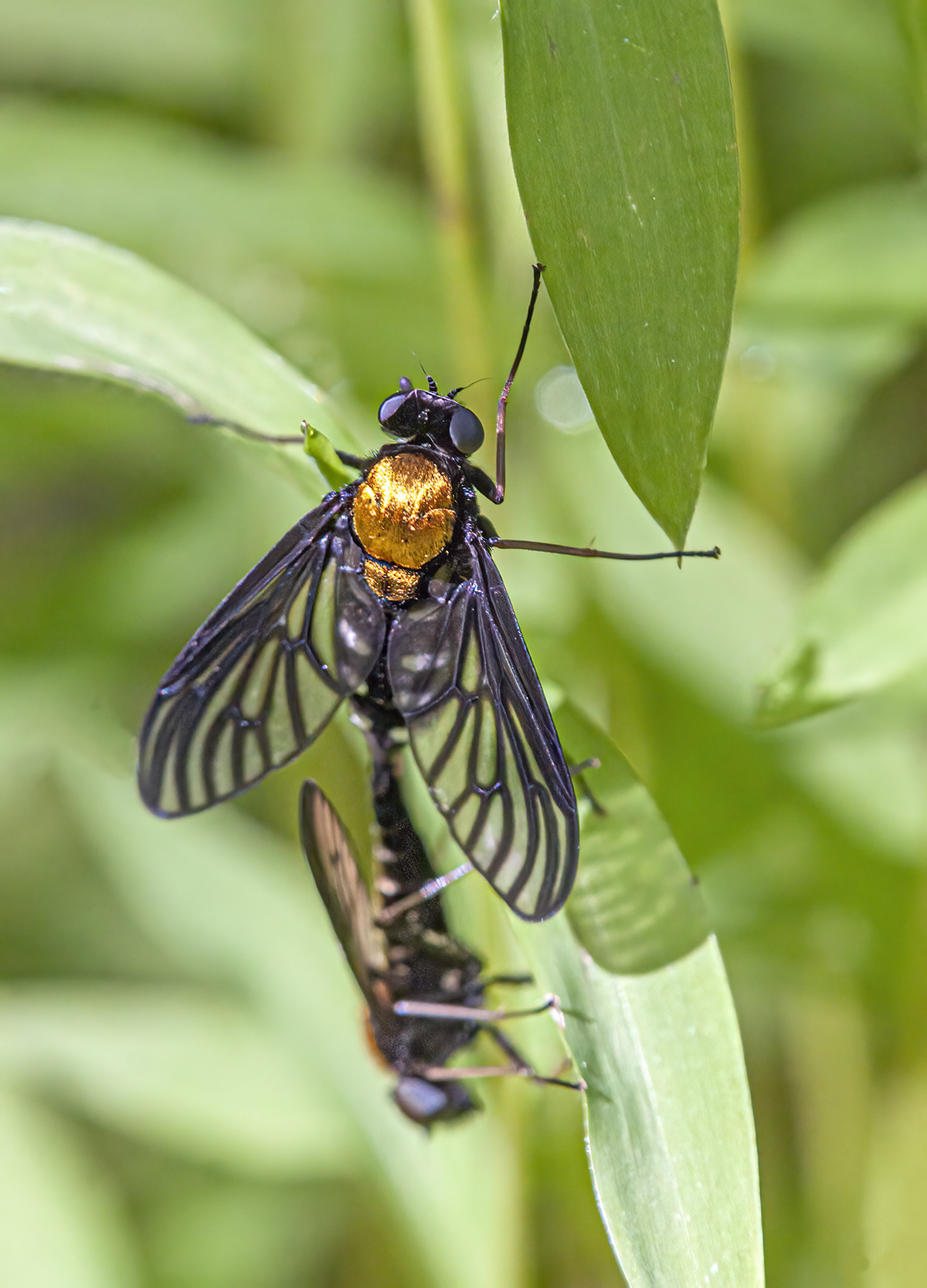
I see all kinds of flies when I am out in the wild with my camera, but I don’t think that I have ever seen one like this brightly-colored one that I spotted on Tuesday at Occoquan Regional Park. Some internet research suggests that it is a Golden-backed Snipe Fly (Chrysopilus thoracicus). It was hard to find detailed information about the life cycle of this species, but I did come across an amusing and informative article by Joe Boggs at The Ohio State University entitled Snipe Hunting, if you are interested in learning a little more about this unusual-looking fly.

Golden-backed Snipe Fly

© Michael Q. Powell. All rights reserved.

Read Full Post »

Some of the rarest dragonflies in our area are quite muted in their appearance, like this male Sable Clubtail dragonfly (Stenogomphurus rogersi) that I spotted on Tuesday while exploring a park in Fairfax County in Virginia, the county in which I live. Sable Clubtails are generally found only in very small numbers, have a short flight period, and require very specific habitats. My good friend and fellow dragonfly enthusiast Walter Sanford did an extensive amount of research and re-discovered the Sable Clubtail dragonfly (Stenogomphurus rogersi) at this location in 2018.

When a dragonfly population is so small and localized, there is always a fear that they could be wiped out by extreme weather conditions or by a change in their habitat. At this specific location, the stream habitat has been compromised somewhat by increased silt and higher levels of vegetation as a result of some imprudent dumping of dirt and the resulting runoff. (For additional information about the damage to the stream and some of the back story of Walter’s re-discovery of the species, check out his June 2020 posting entitled Sable Clubtail dragonfly (Male, No. 1).)

Each year since Walter’s rediscovery I have returned to the same stream with a certain degree of trepidation, unsure if I will be able to find any members of this relatively rare species. This year I spotted them further upstream than previously, suggesting the possibility that the small Sable Clubtail population has relocated. According to the Dragonflies of Northern Virginia website, Sable Clubtails appear “to prefer small, relatively clean, shallow and stable forest streams, with plenty of low vegetation and a gentle flow.”

Over the next few weeks, I will probably return to this stream multiple times to see if I can gain a better understanding of the state of this population. I am hopeful that there will be signs that the population has rebounded and it would be really cool to spot a female Sable Clubtail too.

Sable Clubtail

© Michael Q. Powell. All rights reserved.

Read Full Post »

I was a bit startled on Tuesday when I spotted this small, pale snake as I was walking along a trail at Occoquan Regional Park. In the first place, I am not used to seeing a snake at waist level, coiled up atop the vegetation. Secondly, I have never seen a snake that looked like this one. Was it a young snake of a familiar species?

I did some research and determined that it is almost certainly a DeKay’s Brown Snake (Storeria dekayi), a snake that on average is only 9 to 13 inches (23 to 33 cm) in length in Virginia. I had never even heard of this snake, so I headed over to the Virginia Herpetological Society for some information. According to the society’s website, “Dekay’s Brownsnakes are terrestrial, secretive, and seldom found in the open. They are nocturnal, but are most often found under surface objects such as boards, trash of all sorts, logs, and rocks. Their microhabitat may be described as the soil-humus layer.” I am not sure why this one was in the open, but the fact that this species spends a lot of time in the dirt, where it feeds primarily on slugs and worms, explains why I have never seen one before.

I was intrigued to note that this species is viviparous, which means that it gives birth to living young rather than lay eggs as many snakes do. The gestational period is 105 to 113 days and the average litter size is about 11, according to the Virginia Herpetological Society website, which also noted that “mating has not been observed in Virginia.” After the young are born there is no parental care involved, but sometimes young brown snakes will stay close with the parent, according to information on the Animal Diversity Web website.

I have visited this park dozens of times at different times of the year and it is exciting for me to be able to continue to spot new species there. It is humbling to think about how little I know about the diverse population of living creatures in this one location.

DeKay's Brown Snake

© Michael Q. Powell. All rights reserved.


Read Full Post »

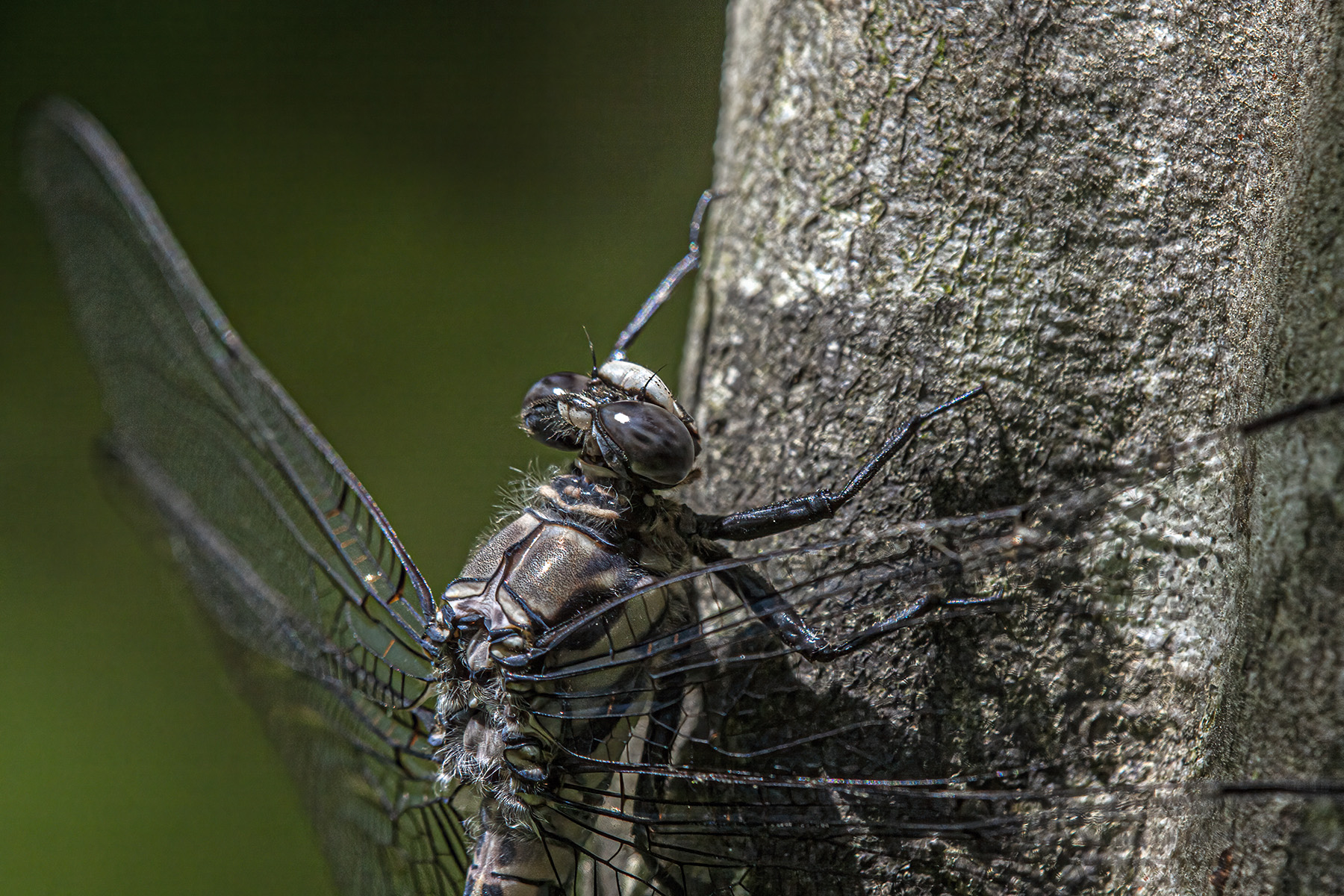
I was thrilled to encounter Gray Petaltail dragonflies (Tachopteryx thoreyi) multiple times on 27 May as I explored a stream in Prince William County, Virginia. There are no other dragonfly species in our area that look like Gray Petaltails, so they are easy to identify if you can spot them. It is a real challenge, though, to see them because they often perch vertically on the trunks of trees where they blend in with the bark of the tree. On several occasions last Thursday, my first indication that there was a Gray Petaltail on a tree right in front of me was when it flew away.

Many of the Gray Petaltails were quite skittish and I had to settle for long-distance shots, but in the case of the first image below, the dragonfly was accommodating and let me get close enough to look deeply into its stunning gray eyes. Often I would attempt to maneuver myself around for a side shot, like the second image below, to try to get a little separation of the dragonfly from the tree and allow the viewer to see its body better.

In the final photo, the Gray Petaltail was perching almost horizontally on a fallen tree. I like the way that both the lichen in the foreground and the out-of-focus ferns in the background give you an idea of the moistness of the area that I was exploring. I was often trudging through a sea of ferns that came almost up to my knees at time as I followed the path of the stream. Gray Petaltails usually originate in seepy area and I will usually scan the sunny side of trees when I am in such areas.

Gray Petaltails are unusual in a lot of different ways. I really like the list that Kevin Munroe composed for the Gray Petaltail page of the Dragonflies of Northern Virginia website:

“This wonderfully odd dragonfly stands out in several ways: 1) Their eyes, unlike most dragonflies, are widely spaced and don’t touch. Only clubtail dragonflies share this trait. 2) This is our only dragonfly with no bright colors that uses camouflage as a daily defense. 3) They spend most of their lives perched on, or vertically exploring, tree trunks. 4) Seemingly quite tame, petaltails often perch on people—perhaps they mistake us for trees. 5) They establish territories at tiny forest seeps, and their larvae can live out of water, among wet leaves on the forest floor in and around their seeps.”

I did not have a Gray Petaltail perch on me last week, but expect that it will happen sometime later this season, especially if I keep wearing gray shirts, which the Gray Petaltails seem to prefer. It was a little disconcerting the first few times that it happened, because these dragonflies are quite large, about three inches (76 mm), in length and sometimes they will perch on my head and shoulders. Now I am used to it and quite enjoy it when a dragonfly chooses to use me as a perch. In case you are curious, here is a link to a re-blog of a posting by my friend Walter Sanford entitled You look like a tree to me! with photos of a Gray Petaltail on my chest and on my shoulder.


gray petaltail

Gray Petaltail

gray petaltail

© Michael Q. Powell. All rights reserved.

Read Full Post »

I love the cool tones of this image of a male Eastern Pondhawk dragonfly (Erythemis simplicicollis) that I photographed last week at Occoquan Regional Park—the green of the vegetation seemed a perfect complement to the colors of this handsome dragonfly. In most dragonfly species the male stands out more than the female, but with the Eastern Pondhawk, it is the female who is more often in the spotlight with her emerald green thorax and the black striped abdomen, as some of you may recall from my posting last week entitled First Eastern Pondhawk of 2021.

A male Eastern Pondhawk starts out with the same bright green coloration as the female, but over the course of his adult life the green is gradually transformed into a duller shade of blue and finally a powdery bluish-grey. A number of other dragonflies have a similar shade of blue on their bodies, but it is fairly easy to identify male Eastern Pondhawks because they, like the females, have bright green faces and their terminal appendages at the tip of their abdomens (the “tail”) are white in color.

Eastern Pondhawk

© Michael Q. Powell. All rights reserved.

Read Full Post »

I spotted this beautiful female Turquoise Bluet damselfly (Enallagma divagans) on 27 May as I was exploring the edge of the woods adjacent to a small pond in Prince William County, Virginia. While I was out in the field, I recognized that it was a bluet, but could not determine its species. Even when I returned home and consulted resources in print and on-line, I quick became confused as I assesed the relative size of the eyespots on the the top of the damselfly’s head, the width of the occipital bars (the band that joins the eyespots), and the placement and size of the blue areas on the abdomen (the “tail”).

Fortunately I am a member of several Facebook groups focused on dragonflies and damselflies and the experts in those groups came to my rescue and identified this as a female Turquoise Bluet, a species that I had never before encountered. I was happy that I was able to capture a lot of detail in my photo and encourage you to click on it to see those details. For reference, Turquoise Bluets are 1-1.4 inches (25-36 mm) in length.

Turquoise Bluet

© Michael Q. Powell. All rights reserved.


Read Full Post »

I love to see dragonflies with patterned wings and it is a real bonus when they have two different colored patterns, like this young male Twelve-spotted Skimmer (Libellula pulchella) that I spotted last week at Occoquan Regional Park. I can tell that it is a male, because females do not have the white spots, and that it is young, because as the males get older, their bodies develop a waxy blue powder called pruinescence.

Some of you who are mathematically inclined may have tried to count the dragonfly’s spots and come up with a number higher than twelve. It is a little confusing, but someone in the past decided to count only the dark spots, three on each wing, to come with the name Twelve-spotted Skimmer. It many not make complete sense, but I have long ago given up trying to understand the “logic” of some of the names of species that I have encountered.

This dragonfly seemed quite skittish and flew around a lot over the pond before it settled for a moment on some vegetation close to me. The multiple spots on the dragonfly’s wings make it easy to track visually, making it look almost like a butterfly. When I took my shots and afterwards in post-production, I tried a few different ways to present the butterfly. For the first image, I shot from a front angle and cropped to a square to give greater emphasis to the dragonfly.

For the second image, I moved a little more to the side and shot from a higher angle so that more of the surface area of the wings was visible. I also used a portrait aspect ratio to show more of the interesting vegetation on which the dragonfly was perched.

I like each of the two images for different reasons. Is there one of the two that stands out to you more than the other?


Twelve-spotted Skimmer

Twelve-spotted Skimmer

© Michael Q. Powell. All rights reserved.

Read Full Post »

Whenever I go out searching for dragonflies in the early morning or after a rainstorm, I am hoping to photograph a dragonfly covered with drops of water. It has not happened yet, but it remains as one of my aspirational goals.

There were plenty of raindrops on the vegetation on Thursday morning when I began my adventures in Prince William County. I was happy to spot this tiny male Fragile Forktail damselfly (Ischnura posita) peering over the edge of the water-spattered leaf on which he was perched. I really like the simplicity of the image that I captured, with its limited number of shapes, colors, and patterns.

Photography does not have to be complicated to be effective—minimalistic images are often the most powerful.

Fragile Forktail

© Michael Q. Powell. All rights reserved.


Read Full Post »

I can’t help myself—whenever I see a dragonfly moving through the air, I feel compelled to try to capture an image of the dragonfly in flight. It is an almost impossible challenge and success is often dependent as much on luck as it is on skill. Last Thursday as I was exploring in Prince William County, I was feeling particularly patient and repeatedly spotted dragonflies flying.

Early in the day at a small pond, I spotted a Carolina Saddlebags dragonfly (Tramea carolina) and a Common Green Darner (Anax junius) that were patrolling over the water. In situations like this when the dragonflies are flying at a constant height, it is marginally easier to get shots, because there is one fewer variable than when the dragonfly is moving up and down.The Carolina Saddlebags was flying a little closer to the shore, but I had to contend with all of the vegetation that wanted to grab my camera’s focus, so I focused manually (first photo). The Common Green Darner was flying over the open water that presented a less obstructed background, but it filled such a small part of the frame that again I was forced to focus manually—my camera’s auto-focus had trouble focusing quickly on the moving dragonfly (second photo).

My greatest challenge, however, came later in the day. If I were to assign a degree of difficulty to my photos, the final photo would be near the top of the list. When I moved to a new location and got out of my car, I immediately spotted a group of large dragonflies frenetically flying through the air, feasting on insects as they flew. The dragonflies were moving in unpredictable ways, constantly changing their flight altitude and speed. Unlike some dragonflies that hover a bit when patrolling, these dragonflies were in constant high-speed motion.

I did my best to track the dragonflies visually, but it was tough to even get one in my viewfinder. I was ecstatic when I finally managed to capture a more or less in-focus image of one of the Swamp Darners (Epiaeschna heros) as it zoomed past me relatively low to the ground, as you can see in the final photo.

When it comes to wildlife photography, some shots are easy and straightforward—I see something and take the shot and that is it. At other times, I have to work really hard and take a lot of shots before I can get a potentially good one. Last Thursday definitely fell in the latter category more than in the former one. Was all that effort worth it? I think so, but I must confess that at times I felt like Don Quixote tilting at windmills.

If you want to get a more detailed look at the details of the three flying dragonflies, be sure to click on the images.


Carolina Saddlebags


Common Green Darner

Swamp Darner

© Michael Q. Powell. All rights reserved.

Read Full Post »

Generally I like to photograph dragonflies on natural perches, not on manmade ones. However, every time I visit Jackson Miles Abbott Wetland Refuge I always check a piece of rebar that sticks out of the water of Mulligan Pond, because I have found that dragonflies love this perch. On Wednesday I spotted this young male Common Whitetail dragonfly (Plathemis lydia) on that perch, the third dragonfly species that I have photographed there—I have also photographed a Slaty Skimmer and an Eastern Amberwing at that spot.

I really like the juxtaposition of the natural and manmade elements in this image and the ways that the markings of the rebar seem to mirror those on the abdomen of the dragonfly. As this young male Common Whitetail matures, his body will grow whiter as he develops a white powdery substance often referred to as “pruinosity.”

Although Common Whitetails are the most common dragonfly species in my area, I never get tired of trying to get shots of them.

Common Whitetail

© Michael Q. Powell. All rights reserved.


Read Full Post »

I have always been fascinated by the intricate patterns of spider webs and I love to attempt to photograph them. Of course, the first challenge is to spot them. In the past I have had some success in early morning hours when the webs were covered in dew—see, for example, my posting from September 2012 called More spider art. In more recent years, though, I have most frequently encountered spider webs when I have run into them stretched head-high across trails.

I was pretty excited therefore when I spotted this backlit spider in its web last Thursday as I was exploring a forested area in Prince William County. I loved the way that the light was shining through the body of what I recognized to be an Orchard Orbweaver spider (Leucauge venusta). I toyed around with ideas on how to compose the image and decided to include only the upper half of the web—I wanted to make sure that the viewer’s eyes would be drawn to the spider.

Orchard Orbweaver spiders are quite common in my area and I encountered another one later that same day and captured the close-up image below that shows some of the spider’s beautiful coloration. I know that some people find spiders to be creepy and threatening, but hopefully these spider shots can help to convince at least a few of those viewers that spiders can also be quite beautiful.

Orchard Orbweaver

Orchard Orbweaver

© Michael Q. Powell. All rights reserved.


Read Full Post »

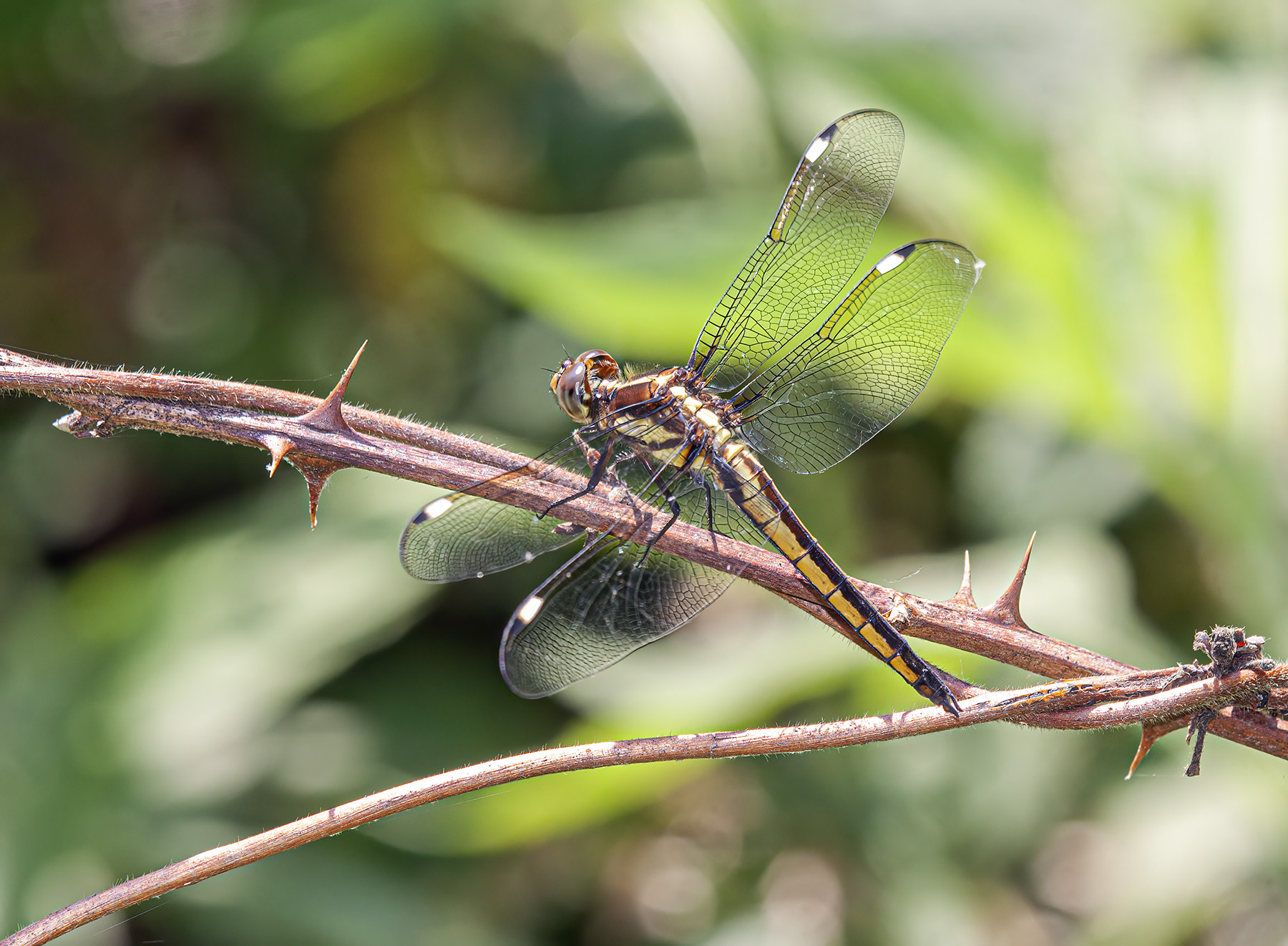
How do dragonflies decide where to perch? Sometimes I can guess in advance where a dragonfly will choose to perch—many dragonflies like exposed stalks of vegetation at the water’s edge and will often return to the same perch over and over again.

Some dragonflies, though, will choose to perch in unexpected places. I was a little shocked yesterday during a short visit to Jackson Miles Abbott Wetland Refuge to spot this juvenile Spangled Skimmer dragonfly (Libellula cyanea) perched on a thorny vine. The sharp thorns seemed to be larger than the dragonfly’s head and the distance between them seemed smaller than the dragonfly’s wingspan.

What was the point of his choice of perches? Is it pointless to talk of safer perches? Perhaps the dragonfly is a young thrill seeker who simply likes to live life on the edge—many of us did some things in our youth that in hindsight were incredibly risky if not outright stupid. Maybe instead he calculated that the risk of damage to his delicate wings was outweighed by the additional protection that the thorns provided him from potential predators.

Rather than ponder these deep questions of intent, I focused on photographing the handsome little dragonfly. I really like the way that I captured him in an environmental portrait.

Spangled Skimmer

© Michael Q. Powell. All rights reserved.


Read Full Post »

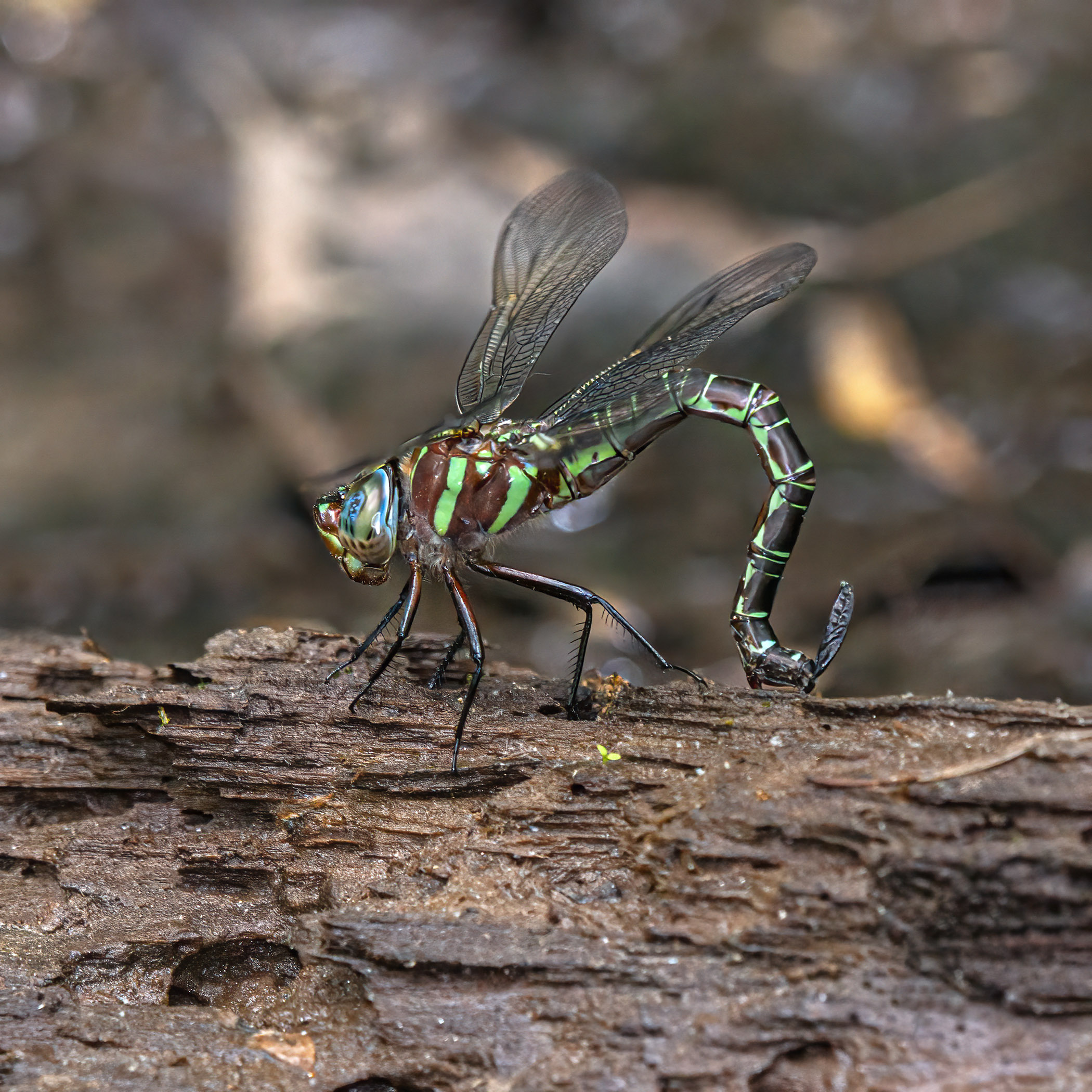
I was really excited on Saturday to spot this colorful female Swamp Darner dragonfly (Epiaeschna heros) depositing her eggs into a rotten log at Prince William Forest Park. Some female dragonflies (like this Swamp Darner) and all female damselflies have well-developed ovipositors at the tip of their abdomens that they use to insert their eggs into plant tissues at or below the water level. The first photo gives you a really good look at the Swamp Darner’s spike-like ovipositor in a raised position and the other shots show the ovipositor partially inserted into the log.

An alternative method for laying eggs is used by most dragonfly species. Rather than placing eggs in specific locations like the Swamp Darner, many female dragonflies lay their eggs in clusters directly onto the surface of the water or onto the mud along the water’s edge by tipping their abdomens multiple times against the water in different spots.

This whole process is fascinating to me and I have provided a rather simplified explanation of these different strategies for propagation of the dragonfly species. If you want to learn a bit more, I recommend an article by the Slater Museum of Natural History entitled Odonate Oviposition. Despite its scientific-sounding title, the article is quite easy to read and understand.

Swamp Darner

swamp darner

swamp darner

© Michael Q. Powell. All rights reserved.

Read Full Post »

I have not seen many baby birds this spring, so it was exciting to spot this little Canada Goose family last week swimming together in the waters off of Occoquan Bay National Wildlife Refuge. Canada Geese (Branta canadensis) are so common where I live that many people consider them to be a nuisance, but I love to observe and photograph them.

Earlier this spring I noticed that a Canada Goose had established a nest on top of one of the wooden duck blinds and I wonder if these little goslings were hatched in that nest. Whatever the case, springtime is such a wonderful time to celebrate new life in all of its forms—and you have to admit that those three baby geese are really cute.

Canada Goose

© Michael Q. Powell. All rights reserved.


Read Full Post »

Great Blue Herons remain in my area throughout the winter, but the much smaller Green Herons (Butorides virescens) depart in the autumn for warmer locations. It is always exciting for me when these colorful little herons return in the spring. Green Herons have always struck me as having more outgoing personalities than the more stoic Great Blue Heron and I love to watch them.

Normally I see them down at water level, often partially hidden by the vegetation, which makes them a challenge to photograph. Last week during a visit to Occoquan Bay National Wildlife Refuge, however, I spotted a Green Heron that had chosen a higher perch that allowed me to get an unobstructed shot. I really like the heron’s pose as it alertly surveyed the surrounding area.
Green Heron

© Michael Q. Powell. All rights reserved.


Read Full Post »

Last week I photographed my first Eastern Pondhawk dragonfly (Erythemis simplicicollis) of the season, a stunning female that I spotted while exploring in Prince William County. I really like all of the different shades of green in this image and the linear stalks of grass that provide a perfect perching place for the pondhawk.

Before long Eastern Pondhawks will become a frequent sight in my area, but it is always special for me to greet the first member of a species each year.

Eastern Pondhawk

© Michael Q. Powell. All rights reserved.

Read Full Post »

This past Saturday I spotted this unusual insect—an Eastern Eyed Click Beetle (Alaus oculatus)—while I was exploring in Prince William County. The large eye spots on its thorax are a kind of defensive adaption designed to confuse or frighten potential predators into thinking the beetle is much larger than it really. In addition to the distinctive eye spots, the beetle has some really cool looking antennae that you can see more clearly if you click on the image to enlarge it.

Eastern Eyed Click Beetle

© Michael Q. Powell. All rights reserved.

Read Full Post »
« Newer Posts - Older Posts »