Feeds:
Posts
Comments

Archive for the ‘Nature’ Category

At this time of the year I have to work hard to get photographs of birds. If I am lucky, I will spot a Bald Eagle or another raptor, but most of the time I walk slowly down the trails, looking and listening for small birds. I know that they are there, but even with the leaves gone from most of the trees, the birds often remain hidden from view.

One of my favorites is the White-throated Sparrow (Zonotrichia albicollis), like this one that I spotted last week at Occoquan Bay National Wildlife Refuge. Maybe it is the effect of the season, but this sparrow always makes me think of Santa Claus. With the white “beard” and the distinctive yellow stripe over the eye, this sparrow is also relatively easy to identify, a real plus considering how many sparrow species are similar in appearance to each other.

An even smaller bird is the tiny Ruby-crowned Kinglet (Regulus calendula), which is about 4 inches in length (10 cm) and weighs only 0.2-0.3 ounces (5-10 g). This one was bouncing in and out of the vegetation so much that I thought I would never get a clear shot of it. Eventually I was more or less successful. What a sweet little bird.


White-throated Sparrow

Ruby-crowned Kinglet

© Michael Q. Powell. All rights reserved.

Read Full Post »

I was thrilled yesterday to spot almost a dozen Autumn Meadowhawk (Sympetrum vicinum) dragonflies at Occoquan Bay National Wildlife Refuge. These hardy little red dragonflies are always the last ones of the season and they often hang on until December. In some years they have even been spotted in early January.

When I explored the exact same area on Wednesday, I did not see a single one of these dragonflies. Why? Wednesday was heavily overcase, but yesterday the sun was shining brightly. Every single Autumn Meadowhawk that I saw was basking in the sun, perched on fallen leaves or logs. The sun seems to warm them up enough so that they can fly a bit, though I wonder if they manage to find anything to eat, given that there are almost no other insects flying.

So this year’s dragonfly season continues for at least a little while longer. As I search in the trees for birds, I will continue to look down as well, hopeful of spotting one of these beautiful aerial acrobats.

Autumn Meadowhawk

Autumn Meadowhawk

© Michael Q. Powell. All rights reserved.

Read Full Post »

When it comes to woodpeckers, I often hear them before I see them. Sometimes it is a gentle tapping sound, but at other times it sounds as loud as a jackhammer.

I spotted this little Downy Woodpecker (Picoides pubescens) on Wednesday morning at Occoquan Bay National Wildlife Refuge. He was slowly making his way up the tree in a spiral pattern, stopping periodically to probe for insects. I tried to track him as he moved in and out of view and was happy to capture a few relatively unobstructed shots.

Normally, it is best to capture a subject when its eyes are looking more or less in your direction. I, however, are more attracted to the first photo below in which the little woodpecker is looking away and slightly up. Perhaps he had seen or heard something that caught his attention, but I like to think that he was taking a break in order to daydream. Perhaps he too was longing for Paris.

Woodpeckers are industrious by nature, though, so after his short pause, he was back to work, slamming his head against the unforgiving wood. It is what woodpeckers do—hopefully that does not sound like your job.

Downy woodpecker

downy woodpecker


© Michael Q. Powell. All rights reserved.

Read Full Post »

This is definitely not Paris. Yesterday, less than 24 hours after my return from my stay in Paris, I was back on the trails at Occoquan Bay National Wildlife Refuge, one of my favorite places to photograph wildlife.

It was a cloudy, blustery day and there was not a lot of wildlife active, but I did manage to capture this shot of a Bald Eagle (Haliaeetus leucocephalus). From a distance, I spotted the top of the eagle’s head as it hunkered down in a nest, presumably seeking shelter from the wind. Although I was a pretty far away, it spotted me and quickly took to the air. My vision is really good after my cataract removal surgery a couple of years ago, but when it comes to being “eagle-eyed,” I am no match for the real thing.

Bald Eagle

© Michael Q. Powell. All rights reserved.

Read Full Post »

Any wild animals in Paris? While wandering through the gardens at the Rodin Museum on Friday, I came across this adorable rabbit sunning itself in a semi-shaded open area. I watched it for a while until some noisy visitors scared it away.

I knew there had to be some wildlife in Paris other than the two-legged partygoers that were awfully loud late into the night yesterday in the streets outside of my apartment.

Rabbit in Rodin garden

Rabbit in Rodin garden

© Michael Q. Powell. All rights reserved.

Read Full Post »

Those of you who know me well are probably surprised that I have not yet posted an insect photo from Paris. I have chased after a few hornets and flies, but came up pretty much empty-handed. Yesterday, however, I came upon this cool little ladybug on top of a pole blocking off a pedestrian zone and finally captured an urban insect photo worth posting.

All things considered, the ladybug was quite cooperative. She—the ladybug might be a male, but the name causes me to assume it is a female—crawled around the spherical surface on the top of the pole, giving me a number of different views. I do not have a true macro lens with me, but I do have a 24mm lens that is sharp and lets me get pretty close.

I initially tried shooting downward at the ladybug, but the results were not very exciting. When I bent down so I was at eye-level or maybe slightly lower, I got a cool, out of focus street background that I really like.

I do not know enough about ladybugs in France to know if this is a domestic one or is a foreign visitor—there are certainly plenty of those in Paris, present company included.


ladybug in Paris

© Michael Q. Powell. All rights reserved.

Read Full Post »

What does it mean to be rare? It seems to me that rarity, like beauty, is in the eyes of the beholder and is often hard to quantify objectively. When I went for a walk yesterday in the Bois de Boulogne in Paris, I was hoping that I might see some birds. I already did a posting on a European Robin, arguably the most beautiful bird that I spotted during the day.

Did I see any rare birds? All of the birds that I saw were undoubtedly “common” for the locals, but they seemed rare and exotic to me, because they were new to my experience. One of the joys of traveling is having the chance to see new creatures that may share a common heritage with more familiar ones or may be totally different. For me, it is simpler to treat them all as special rather than focusing exclusively on the uncommon ones. I attempt to highlight the beauty and behavior of them all no matter how many times I may have seen them previously. Unlike some birders I know, I do not have a life list that says that I should move on to new species once I have seen a particular one—each new encounter is unique.

So what did I see? I think that I have correctly identified these species, but would welcome corrections if I am wrong. The first one was the hardest for me to identify and I learned that it is a Eurasian Jay (Garrulus glandarius)—I love the combination of colors on its body.

The second one, a Eurasian Magpie (Pica pica) seemed somewhat familiar because, even though we do not have magpies where I live, I had spotted a similar-looking American Magpie (Pica hudsonia) during a trip to Denver, Colorado a few years ago. In this encounter, I was thrilled that I was able to capture some of the iridescent shine and color on the tail feathers.

The final photo shows an energetic little Great Tit (Parus major) pecking away in all of the crevices of a tree, seeking whatever tiny morsels of food that it can find.

I will probably return to more urban subjects after a day of respite in the woods of Paris. My feet definitely enjoyed the break from the cobblestone streets and I feel refreshed from my return to nature.


Eurasian Jay

Eurasian Magpie

Great Tit

© Michael Q. Powell. All rights reserved.

Read Full Post »

Today I decided to give my feet a break from the cobblestone streets and instead went for a walk on some of the wooded trails of the Bois de Boulogne in the outskirts of Paris. The highlight of the day for me was getting this shot of a European Robin (Erithacus rubecula), known in French as a Rouge-gorge (Redbreast). There are different birds around the world that share the name “robin” and it was nice to finally have a chance to see the European one.

European Robin

© Michael Q. Powell. All rights reserved.

Read Full Post »

With the recent onset of cold and rainy weather here in Paris, it is hard to remember that we had a bit of sunshine earlier in the week. As I was walking along the banks of the Seine River during one such sunny period, I grew entranced by the shadows that trees were casting onto the embankment walls. People passing by me must have wondered what I was photographing, given that I was facing a seemingly blank wall and had my back to the river.

The images show mostly skeletal tree forms, but some show evidence of hardy leaves persistently clinging to the branches, not yet ready to fall. If you examine the photos carefully, you can see some of the details and textures of the materials used to build these embankments. Just a few yards above, there is busy world, full of cars and people hurrying about, but here, life moves at a slower pace.

I love too seeing the giant iron rings intermittently embedded in the embankment walls.  These, I believe, are a legacy of past commerce along this river, places where barges would tie up, perhaps for safety or sleep, or simply to silently surveil the scenic surroundings. There are times in our lives when we could all use spots like that.

shadow tree

Shadow Trees on Seine River

© Michael Q. Powell. All rights reserved.


Read Full Post »

When I spotted this bird as I was walking along the Seine River yesterday morning, I knew immediately that it was some kind of cormorant. Unlike most water birds that float on the surface of the water, cormorants sit really low in the water with their bodies barely visible. Their long necks always make me think of a periscope coming out of a semi-submerged submarine.

Although this bird looks a lot like the Double-crested Cormorant (Phalacrocorax auritus) that I am used to seeing at home, I have determined that it is most likely a Great Cormorant (Phalacrocorax carbo). This cormorant followed a familiar pattern of behavior—it would be swimming along when without warning it would dive deeply into the water and remain underwater for a long time. It was a fun challenge trying to figure out when and where the cormorant would reappear.

Most of the time the cormorant stayed far from the banks of the river, but on one occasion it popped up right in front of me and I was able to capture this image. It was nice to be able to capture some of the orange coloration around the cormorant’s mouth, but the real prize for me was getting a clear view of its spectacular blue eyes. It is definitely worthwhile to click on the image to get a closer look at that amazing shade of blue. If you look closely at the water, you will also notice some small concentric ripples created by the falling raindrops.

When I went walking in the rain yesterday, I knew there was a good chance that I would see ducks and gulls and maybe a swan or two. Who knew there were Great Cormorants on the Seine RIver? No matter where I am, I am always thrilled by the joy of the unexpected, by those little surprises that add so much texture to life. So I choose to live my life in hopeful expectation as I scan the world for marvelous subjects to photograph, confident that they will present themselves if I keep my eyes and my heart open,

Great Cormorant

© Michael Q. Powell. All rights reserved.

Read Full Post »

After another brief rain shower today in Paris, the rain abruptly stopped. As I was putting away my umbrella, I glanced down a side street and caught a glimpse of this glorious rainbow. I managed to snap a few photos and then the rainbow simply disappeared.

Rainbow in Paris

© Michael Q. Powell. All rights reserved.

Read Full Post »

Swans seem almost angelic in their beauty and I was thrilled to spot this pair of Mute Swans (Cygnus olor) yesterday as I strolled along the Seine River in Paris. I had the impression that the swans wanted to swim nearer to the middle of the river channel but were unable to do so because of the numerous boats filled with gawking tourists.

Periodically, as you can see in the second and third photo below, the swans had to deal with the waves created by the passing boats. However, they did not complain out loud—they are mute swans after all. The swan in the first image may have been signaling its displeasure, though I believe it was merely trying to dry its wings after being doused by a high wave.

Mute Swan in Paris

Mute Swan in Paris

Mute Swans in Paris

Mute Swan on the Seine

Mute Swans on the Seine

© Michael Q. Powell. All rights reserved.


Read Full Post »

I think the spiky protrusions were intended to keep birds from perching on this post along the Seine River, but somehow this gull did not get the point.

gull on the Seine

© Michael Q. Powell. All rights reserved.

Read Full Post »

I did not plan to make birding a focus of my trip to Paris, but I can’t help but take shots of them when the occasion arises. I’ve seen lots of gulls and pigeons, some mallards, and a few swans, but so far have not gotten close enough to get shots of them—I have relatively modest telephoto lenses with me on this trip.

The first image shows a crow, what I think is a Carrion Crow (Corvus corone). I am not at all certain about identifying birds in Europe, so please correct me if I am wrong. I photographed this crow and the other birds featured in this posting in the Tuileries Garden, which is located in between the Louvre and the Place de la Concorde.

The second bird is a Common Moorhen (Gallinula chloropus). Several other moorhens were swimming about in a small pond, but this one decided to boldly look for food. Perhaps it was looking for a handout from tourists.

The final birds are Common Starlings (Sturnus vulgaris). This small flock of starlings flew about from place to place. I did not detect any signals, but all of them seemed to take off and land at the same time.

If you have followed my blog for any length of time, you know that I like to photograph anything that catches my eye. Even in a place like Paris, where there appear to be famous landmarks in every direction I turn, I am just as likely to be spending time photographing these modest little birds. I think it would make me a maddening travel companion for a more normal person.

Carrion Crow

Common Moorhen

Common Starlings

© Michael Q. Powell. All rights reserved.
 

Read Full Post »

I seem to be having problems recently getting unobstructed views of small birds. Although the leaves are falling from the trees at an increasingly rapid rate, there are still plenty of them to block my view. I have to admit, however, that the colors and texture of the fall foliage can sometimes provide additional visual interest to a shot of a perched bird.

I spotted this Gray Catbird (Dumetella carolinensis) last week at Occoquan Bay National Wildlife Refuge. The catbird’s direct look suggests that he had spotted me too. Normally I do no photograph birds head-on like this, but in this case I like the way that it gives the catbird a comical, almost cartoonish look.

I like to shoot whatever captures my attention and have a hopeful expectation that the images will turn out ok. I have found that most often when I shoot what I like, I like what I shoot.

Gray Catbird

© Michael Q. Powell. All rights reserved.

Read Full Post »

It is normally hard for a male Northern Cardinal (Cardinalis cardinalis) to camouflage itself, but it seemed to blend in pretty well with the brilliant red leaves of these sumac plants last week at Occoquan Bay National Wildlife Refuge.

Northern Cardinal

© Michael Q. Powell. All rights reserved.


Read Full Post »

I thought that the Great Egrets (Ardea alba) had already left our area, so I was pleasantly surprised to see this one on Tuesday at Occoquan Bay National Wildlife Refuge. The egret was perched on the ruins of a duck blind sticking out of the water and spent most of the time that I observed it preening and simply surveying the surroundings.

As I moved about trying to compose the shot, I was fortunate to be able to get an angle in which the colors of the autumn foliage were visible in the background. The autumn colors in my area are somewhat muted, but beautiful nonetheless.

Great Egret

© Michael Q. Powell. All rights reserved.

Read Full Post »

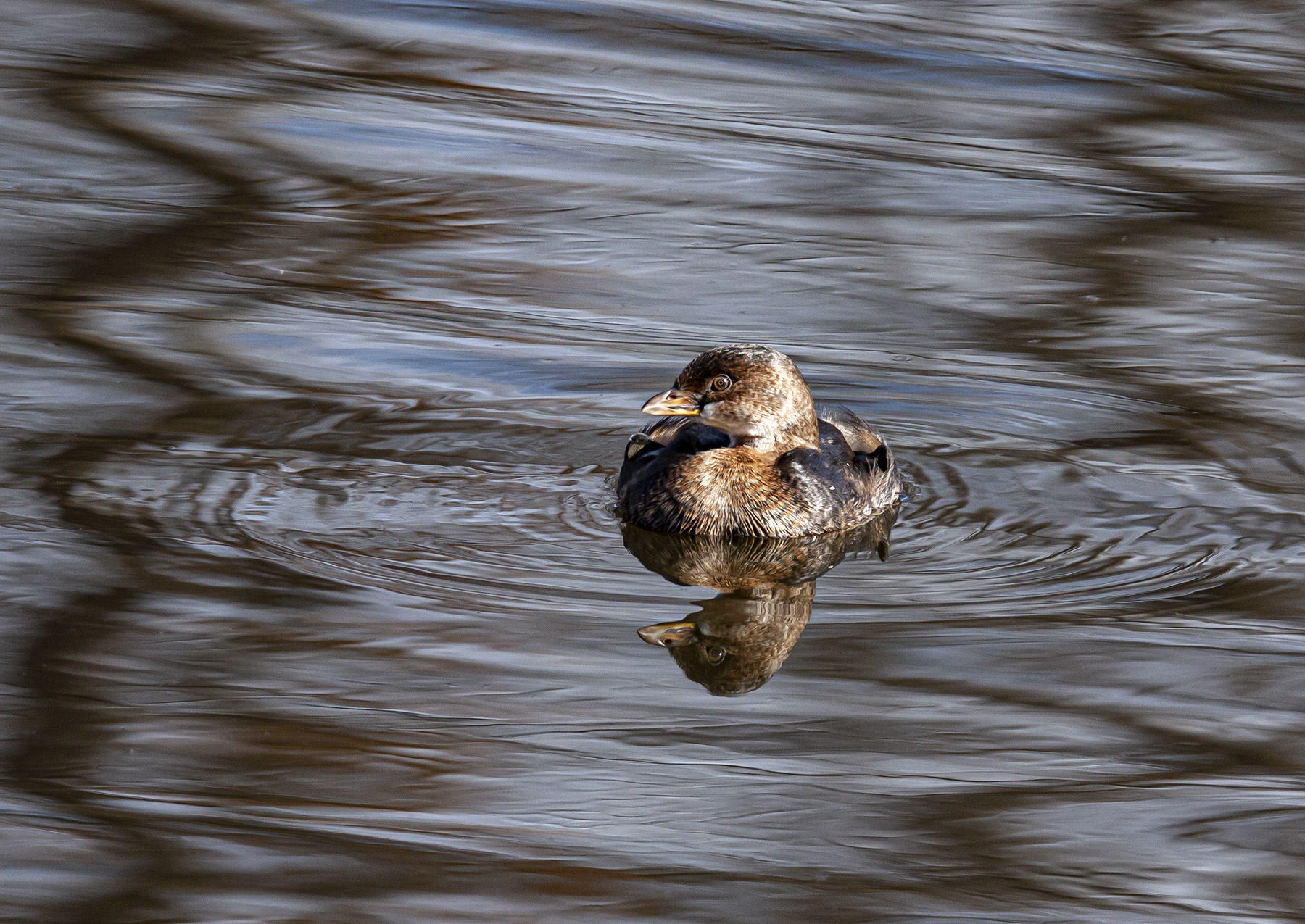
I do not know for sure if Pied-bill Grebes (Podilymbus podiceps) are migratory, but I had not seen any in a long time when I spotted a small flock of them on Tuesday in the waters off of Occoquan Bay National Wildlife Refuge. Pied-billed Grebes have a rather unusual and distinctive look—especially the bill— that makes them relatively easy to identify. Northern Virginia, where I live, is far enough south that it is a destination for some birds that will overwinter here, while many other species will pass through on their migration southward.

According to the Cornell Lab of Ornithology, “The Latin genus name for “grebe” means “feet at the buttocks”—an apt descriptor for these birds, whose feet are indeed located near their rear ends. This body plan, a common feature of many diving birds, helps grebes propel themselves through water. Lobed (not webbed) toes further assist with swimming. Pied-billed Grebes pay for their aquatic prowess on land, where they walk awkwardly.”

Pied-bill Grebe

© Michael Q. Powell. All rights reserved.


Read Full Post »

Perhaps it is because today is Halloween or because the overcast sky on Tuesday at Occoquan Bay National Wildlife Refuge caused everything to be shadowy and monochromatic. Whatever the reason, the shape of this Double-crested Cormorant (Phalacrocorax auritus) reminds me of a bat, especially in the first image.

I captured these two images as the cormorant was preparing to take off from the water. Unlike some birds that rise straight up, a cormorant has to bounce across the water to gain enough momentum for liftoff, which is why you can see the splashes of water behind the cormorant in both shots.

Double-crested Cormorant

Double-crested Cormorant

© Michael Q. Powell. All rights reserved.

Read Full Post »

When I heard the loud call of a Bald Eagle (Haliaeetus leucocephalus) yesterday I had to turn back in the direction I had come on a trail at Occoquan Bay National Wildlife Refuge. Had I walked underneath the tree in which the eagle was perched? Had it just flown in?

I did not ponder these questions for long, because it was abundantly clear that the eagle was really close and I wanted to try to get a shot. I backtracked slowly and caught sight of the eagle just after I had passed it—it was almost hidden by the foliage. I didn’t want to risk spooking the eagle, so I stayed in place and captured the first image below. Apparently I am not as stealthy as I think, for the image suggests that the eagle was monitoring my every step.

I grew a little bolder and moved to a position from which I had a clearer view of the eagle. Several times the eagle seemed to glance down at me and flex its talons a bit in a not-too-subtle reminder that it was merely tolerating my presence. After a short while, the eagle tired of our little game and took off without warning.

As you can probably tell from the images, yesterday was an overcast day. Although I really like the brilliant blue sky that served as a backdrop to some shots of a bald eagle earlier this month, I think that the clouds diffused the light and allowed me to capture more details in the white head feathers than when the sun was shining brightly.


Bald Eagle

Bald Eagle

© Michael Q. Powell. All rights reserved.

Read Full Post »

Some experienced birders can identify a bird by its call, but, except with a few common birds, I am not one of the them. I need to be able to see a bird to identify it, and that is a challenge at this time of the year, when most of the leaves are still on the trees.

Last week as I was exploring a trail at Occoquan Bay National Wildlife Refuge, I heard a bird singing almost directly in front of me. As my eyes searched among the leaves, the bird kept on singing and eventually I located it. I could see that it was a sparrow and often that is an identification problem for me, because sparrows fall into the group of little brown birds that all basically look the same. However, in this case, I could see a dark spot on the breast of the bird, which usually means that it is a Song Sparrow (Melospiza melodia).

I was happy to be able to capture a few shots of the little Song Sparrow before it flew away. If you are curious about the sound of the Song Sparrow’s song, check out this page on the Cornell Lab of Ornithology website, where there are several audio and video clips of this birds songs and calls.


Song Sparrow

Song Sparrow

© Michael Q. Powell. All rights reserved.

Read Full Post »

Many people associate the color red with autumn because of the brilliant foliage that the season brings forth in places like New England. For me, though, red is an autumn color because of the bright red dragonflies that remain active in October and November (and sometimes even later in the year).

Yes, I continue to chase dragonflies as we move deeper and deeper into autumn. I spotted this handsome male Autumn Meadowhawk dragonfly(Sympetrum vicinum) last Wednesday at Jackson Miles Abbott Wetland Refuge in nearby Fort Belvoir, Virginia. Many of the Autumn Meadowhawks that I saw earlier this fall were females, which have a much more subdued coloration. There is nothing subdued about this male, which made it pretty easy to spot him, especially when he perched on a small stump at knee-level. You do have to pay attention to find them, however, because Autumn Meadowhawks are only about 1.3 inches (33 mm) in length.

Autumn Meadowhawk

© Michael Q. Powell. All rights reserved.

Read Full Post »

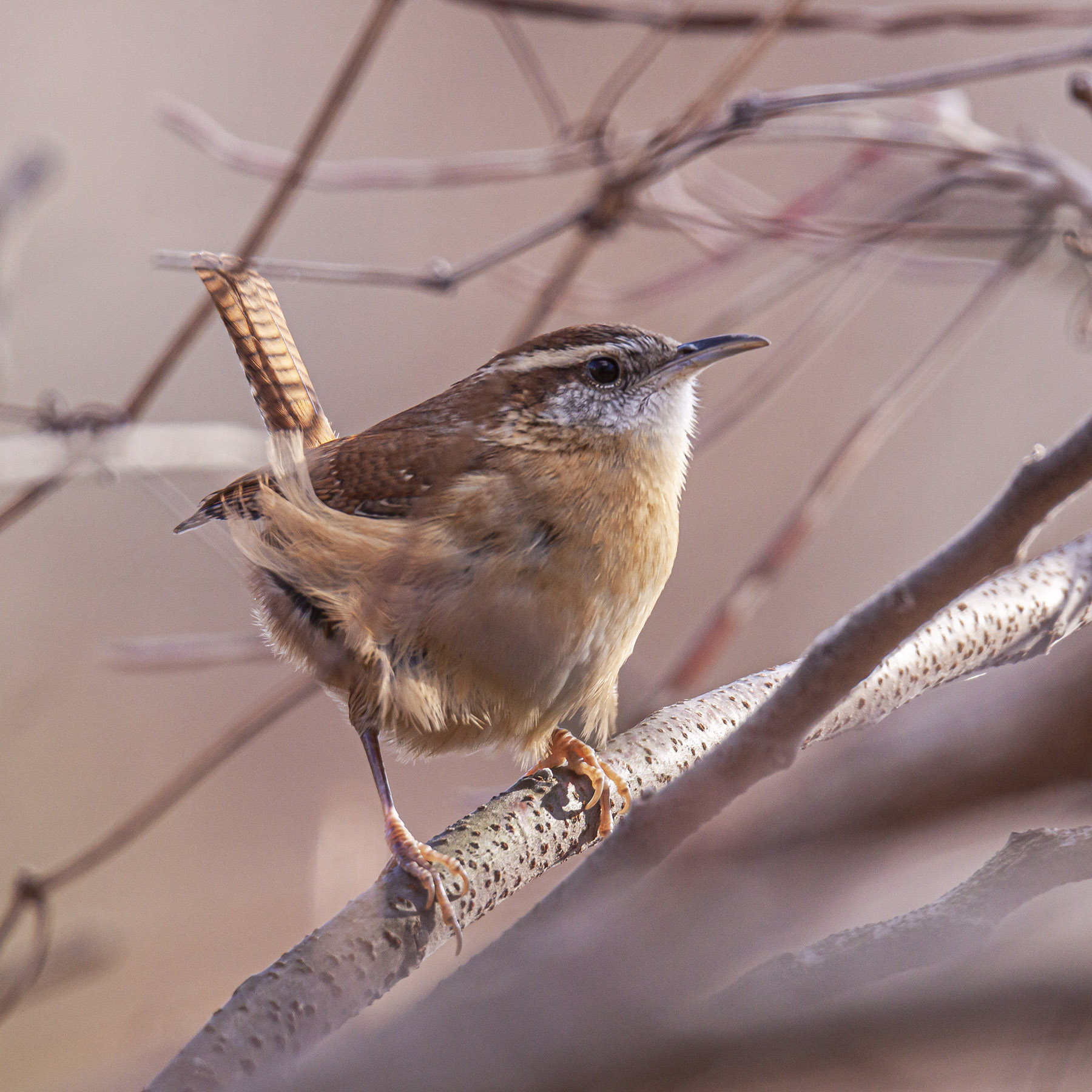
Most of the time when I see or hear Carolina Wrens (Thryothorus ludovicianus), they are hidden in the undergrowth. I was thrilled therefore last Monday to be able to capture an image of this one in the open at Occoquan Bay National Wildlife Refuge.

I generally think of Carolina Wrens as cheerful, energetic little birds and I like the way that this simple shot captures a bit of that personality.


Carolina Wren

© Michael Q. Powell. All rights reserved.

Read Full Post »

A sharp-eyed fellow photographer spotted this Northern Rough Green Snake (Opheodrys aestivus) at eye level in a tree at Jackson Miles Abbott Wetland Refuge this past Wednesday as we both were searching for dragonflies. The sun was shining brightly and I suspect the snake was basking in its warm on a relatively cool day. I managed to capture a few shots of this colorful snake before it silently slithered away.

Northern Rough Green Snake

Northern Rough Green Snake

© Michael Q. Powell. All rights reserved.

Read Full Post »

I have observed woodpeckers in action numerous times, but have rarely seen one capture an insect. On Monday, however, I managed to capture this image of a Red-bellied Woodpecker (Melanerpes carolinus) at Occoquan Bay National Wildlife Refuge with a tasty morsel of some sort.

According the the welcomewildlife.com website, Red-bellied Woodpeckers are one of three woodpecker species in the United States known for storing their food and protecting their stash. I suspect that the insect in the photo was consumed on the spot, but I have often seen Red-bellied Woodpeckers with acorns in their mouths that they then jammed into a crack in a tree for future consumption. According to the aforementioned website these trees, known as granaries, may hold up to fifty thousand acorns. (In case you are curious about the other woodpeckers that exhibit similar behavior, they are the Red-headed Woodpecker, a species that is present where I live, and the Acorn Woodpecker, which I believe is found in the western part of the United States.)

Red-bellied Woodpecker

© Michael Q. Powell. All rights reserved.

Read Full Post »

As I was wandering about Occoquan Bay National Wildlife Refuge earlier this week, I was struck by the large number of Common Buckeye butterflies (Junonia coenia) that I observed. Not only were there a lot of them, many of them appeared to be in almost pristine condition, unlike the tattered survivors of other butterfly species that are hanging on this late in the season.

I decided to do a little research and learned from bugguide.net that Common Buckeyes have two to three broods throughout the year from May to October. I had suspected that was the case and that helps to explain the “fresh” condition of the butterflies that I observed. What was a little more surprising to learn was that, “Adults from the south’s first brood migrate north in late spring and summer to temporarily colonize most of the United States and parts of southern Canada.”

I don’t know if the Common Buckeye butterflies in my area will migrate south to avoid the freezing temperatures that will soon be upon us or if they will remain with us. In either case, I love to see these little butterflies and marvel at the way that their colors fit in with nature’s autumn color palette.

Common Buckeye

© Michael Q. Powell. All rights reserved.

Read Full Post »

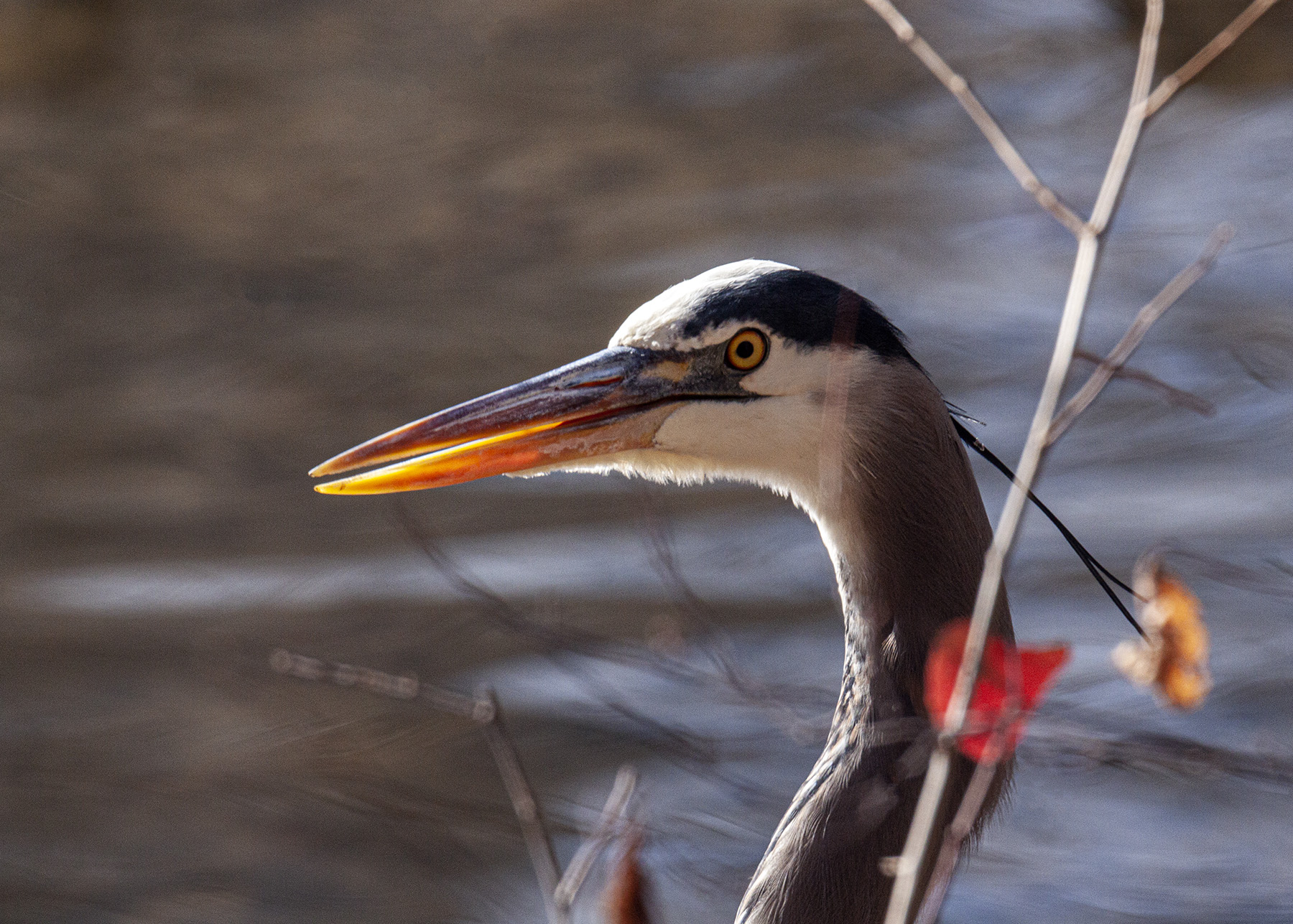
I have had unusually good luck finding Bald Eagles (Haliaeetus leucocephalus) this month at Occoquan Bay National Wildlife Refuge, including this one that I spotted on Monday. Most often when I see an eagle, it flies away before I can get close, which is not really surprising given its superior eyesight and reaction time.

This time, though, I was able to approach the eagle until I was almost directly below the tree in which it was perched. In the wintertime, that might have allowed me to get some awesome close-up shots, but in this case my view of the eagle was almost completely blocked by the abundant foliage. I moved around a little until I was finally able to see the eagle’s eye and captured the first image below. The second image was my initial view of the eagle before I started to creep closer. I like that shot a lot, but it seems to me that it doesn’t quite have the same visual impact as the first shot.

Bald Eagle

Bald Eagle

© Michael Q. Powell. All rights reserved.
Read Full Post »

When they keep their wings closed, some butterflies match their surroundings so well that they are almost invisible. Question Mark butterflies (Polygonia interrogationis) look like dead leaves and at this time of the year there are plenty of fallen leaves littering the landscape.

It was impossible for me to me the distinctive autumn colors of this Question Mark when I spotted it earlier this month at Occoquan Bay National Wildlife Refuge.  I had to back up a bit in order to focus on the butterfly with my telephoto zoom lens and I actually had trouble seeing it when it decided to close its wings. Fortunately it spread its wings a little bit and I was able to capture the second image below.

A month or so ago it seemed like there were more dragonflies than butterflies, but now the ratio seems to have shifted. Butterflies, especially Common Buckeyes, are still flying in good numbers, while the quantity of dragonflies continues to drop.

Question Mark

Question Mark

© Michael Q. Powell. All rights reserved.
 

Read Full Post »

It’s always fun to encounter cute little rabbits like this one that I spotted recently as I was walking along one of the trails at Occoquan Bay National Wildlife Refuge.

I do not see a lot of mammals during my walks, with the notable exception of squirrels, so I am always happy to see a rabbit or a deer or a beaver. As most of you know, I tend to see a lot more insects and birds and that is one of the reasons why they appear so often in my postings.

On the sides of some of the trails at the refuge there are heavy thickets and my observations suggest that they are the preferred habitat for the rabbits, which are almost certainly Eastern Cottontail rabbits (Sylvilagus floridanus).  The rabbits at the wildlife refuge generally seem to be very cautious, which is probably a good survival tactic, considering the number of hawks and eagles in the area.

This particular rabbit froze in place for a moment when it first detected me, allowing me to get this shot. After a brief pause, it scampered away into the safety of the heavy vegetation.

rabbit

© Michael Q. Powell. All rights reserved.
 

Read Full Post »

I love the effects of the light in this image of a Great Egret (Ardea alba) that I captured on Tuesday at Occoquan Bay National Wildlife Refuge. (For the sake of clarity, I should note that I captured the image and not the egret.) When I first spotted the egret, its wings were down and it was more or less just a silhouette. As I was focusing on it, though, the egret hopped into the air and flapped its wings and I snapped the shot. I was looking almost directly into the sun and I was fascinated by the way the light illuminated the outstretched wings and was happy that I was able to capture, at least in part, that effect.

Great Egret

© Michael Q. Powell. All rights reserved.
 

Read Full Post »

Wandering Gliders (Pantala flavescens) are the most widespread dragonfly species in the world and are found on all continents except Antarctica. I was thrilled on Tuesday when one stopped wandering for a moment at Occoquan Bay National Wildlife Refuge and I was able to capture this image. According to Wikipedia, individual Wandering Gliders can fly more than 3730 miles (6000 km)—one of the farthest known migrations of all insect species.

Wandering Glider

© Michael Q. Powell. All rights reserved.

Read Full Post »

« Newer Posts - Older Posts »