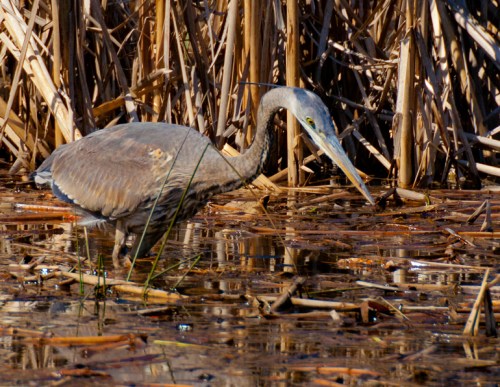
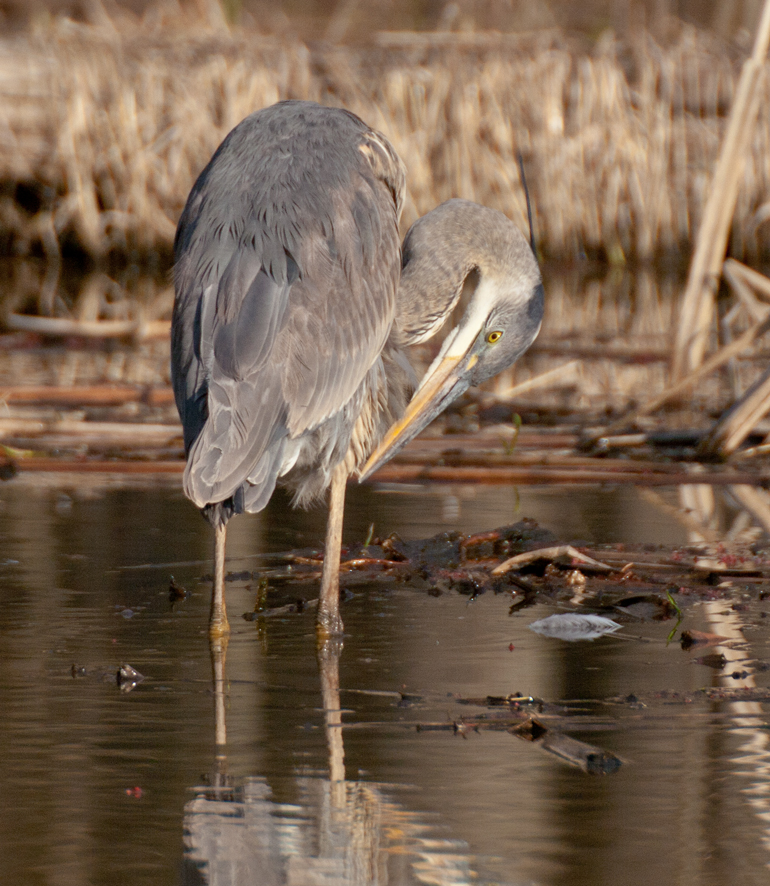
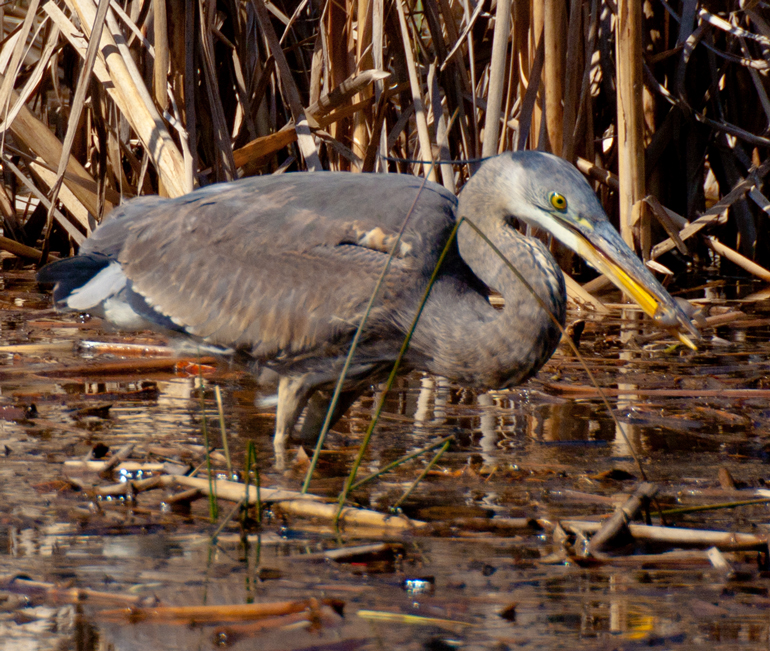
A Great Blue Heron this weekend was poised, waiting to strike, and I waited with my camera and my tripod, hoping to capture the moment of triumphal success.
I had visions of the heron pulling some big fish out of the water, like I see in Phil Lanoue‘s incredible photos, and watching as he struggled to swallow it whole.
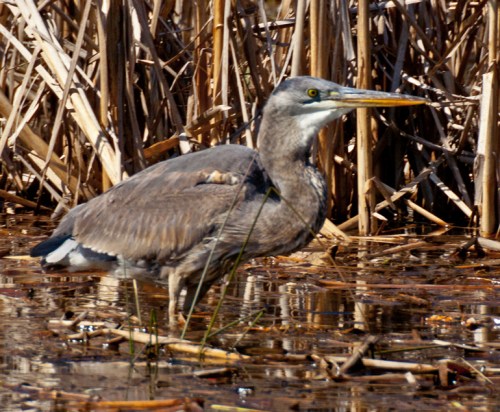
The reality, as you can see, was much more modest. After all, the Great Blue Heron (Ardea herodias) was fishing in the beaver pond at my local marsh and the pickings were pretty slim. Initially, I though he had caught a frog, but the photo suggests it was a small fish, though it is hard to tell for sure because of the catch’s small size.
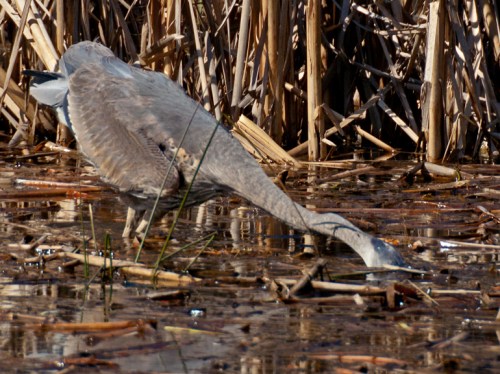
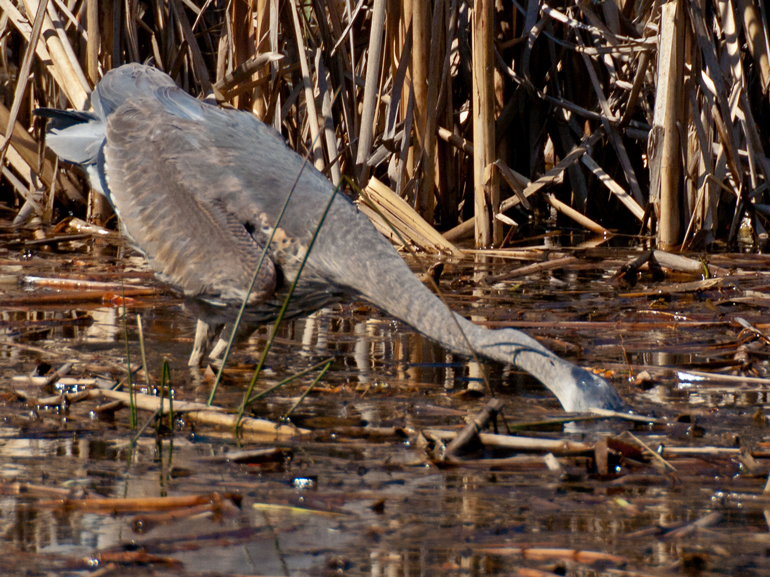
The second photo shows his pre-strike position. The heron stood motionless in this position for what seemed like an eternity. I am amazed that he could see anything in the shallow, reed-covered water.
When he struck, he didn’t even have to put his head very deeply into the water or use a lot of force to catch the fish. The final shot shows the heron swallowing his catch. It did not take any special maneuvering to get the little fish down his throat.
I saw a heron hanging around the same beaver pond the following day. I hope he is not spending all of his time in this one location or I may end up photographing a really skinny heron in the future.

Michael Q. Powell. All rights reserved
Read Full Post »




















 Mike Powell
Birds or insects?
Posted in Birds, Bugs, commentary, Insects, Nature, Photography, tagged Agelaius phoeniceus, Canon Rebel XT, Huntley Meadows Park, red-winged blackbird, Sigma 135-400mm telephoto zoom lens on April 13, 2013| 4 Comments »
Standing at an apparent crossroad, I was struggling to decide if I should continue to focus my attention on birds, as I did much of the winter, or switch back to the insects that populated so many of my photographs last summer.
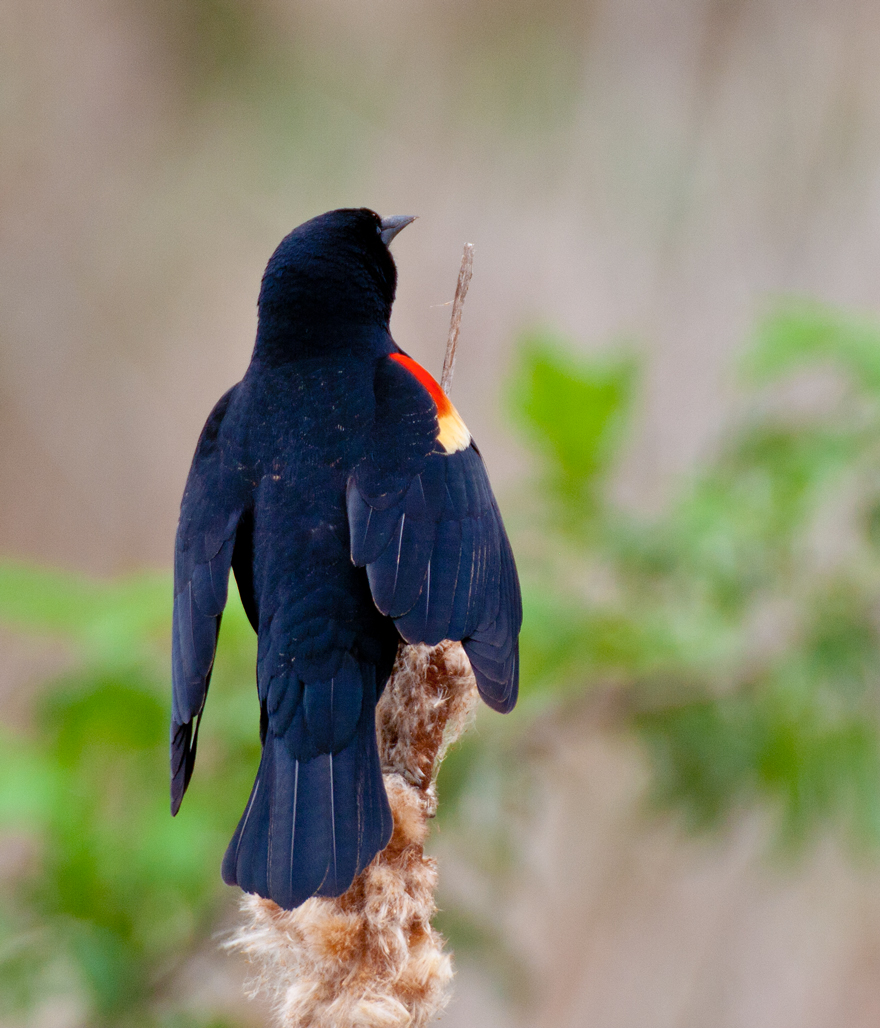
This photo of a Red-winged Blackbird (Agelaius phoeniceus) from yesterday suggests that maybe I don’t necessarily have to choose one or the other, that maybe I can live in both worlds at least some of the time.
I wonder how often in my life I set up these kind of false choices, when I would be better served by thinking more expansively and creatively.
Michael Q. Powell. All rights reserved
Share this:
Read Full Post »