Feeds:
Posts
Comments

Archive for the ‘Nature’ Category

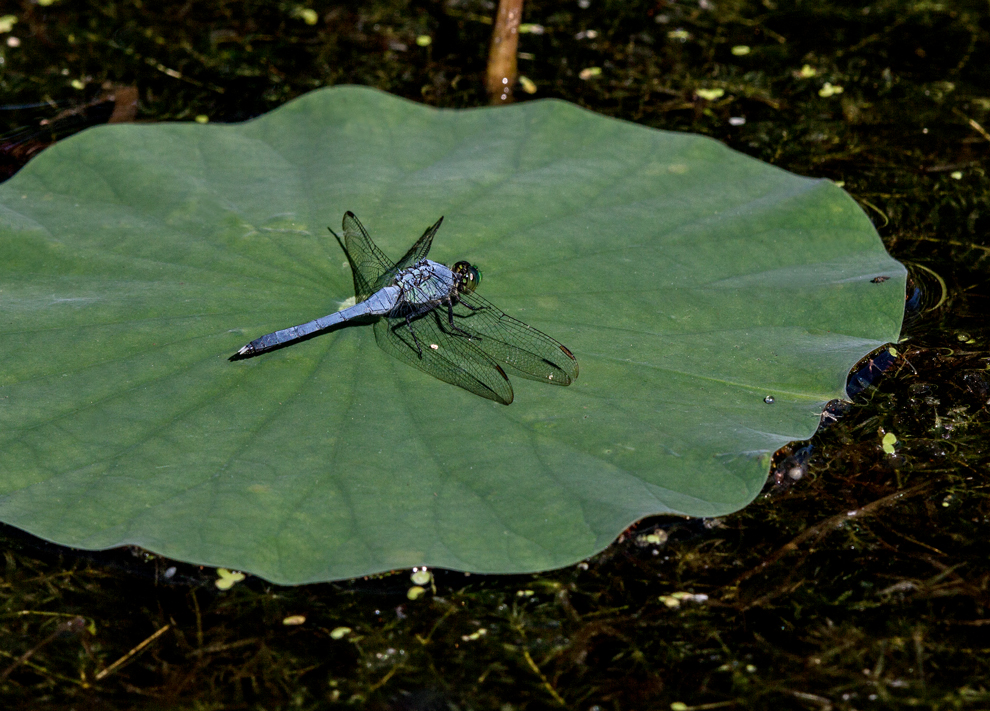
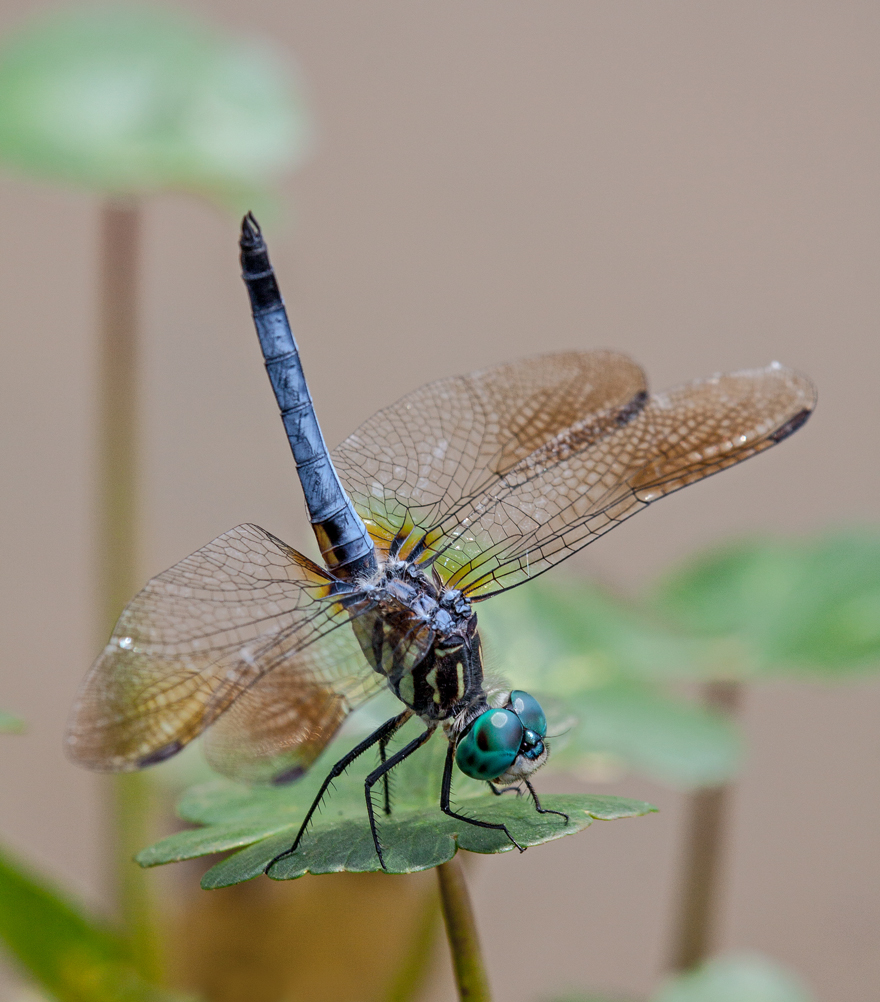
As I noted in an earlier posting today, some of my favorite images are almost minimalist in their approach. This recent image of a male Blue Dasher dragonfly (Pachydiplax longipennis) fits into that category.

Once again, the composition is simple, the color palette is fairly limited, and there is a good amount of negative space. The brown-colored background is the water in one of the areas of my local marshland park.

I like the position of the dragonfly—I think he was trying to cool off on a hot day by raising his abdomen—and the viewer’s eyes are drawn to the dragonfly, because it is the most colorful and the most sharply-focused object in the photo.

This image reminds me a little of a painting in which the artist has arranged the elements to make a pleasing composition. In this case, though, nature did the arranging.

dasher_leaves_blog

© Michael Q. Powell. All rights reserved

Read Full Post »

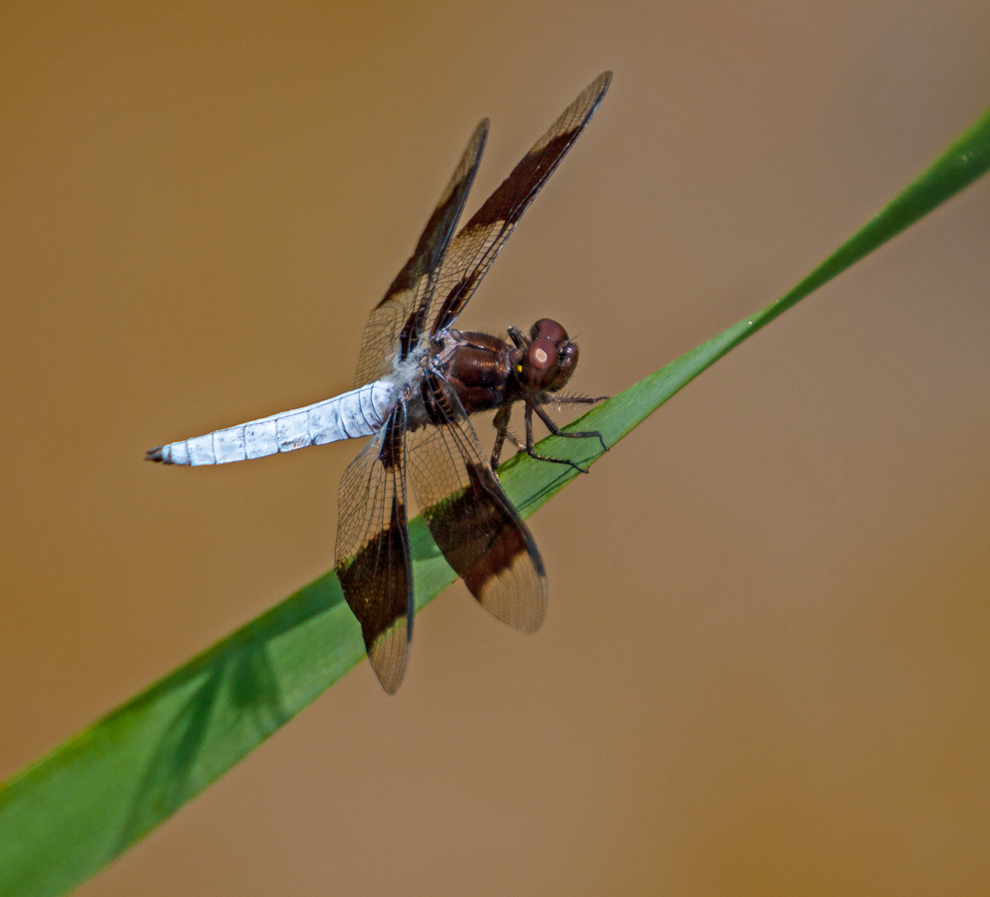
Some of my favorite images are almost minimalist in their approach, like this shot of a male Common Whitetail dragonfly (Plathemis lydia).

The composition is simple, the color palette is limited, and there is a pretty good amount of negative space. The subject is not unique and unusual—its name even indicates that it is “common.”

I managed to capture some of the details of the dragonfly, though, like the “hairs” on the legs (click on the image to see a higher resolution view), though the image is not super sharp. The shadow of the wings on the green leaf adds an additional touch of visual interest to the image.

The photo is not spectacular and showy, but I find a real beauty in its quiet simplicity.

whitetail_A_blog

© Michael Q. Powell. All rights reserved

Read Full Post »
I usually think of bees as being yellow and black, but I encountered this cool-looking metallic green bee (of the Agapostemon family) yesterday at Lewis Ginter Botanical Garden in Richmond, Virginia.

I remember The Green Hornet on television when I was a child, but I had never seen a green bee before. At first I was not even sure that it was a bee, but as I watched it gather pollen, I concluded that it had to be a bee.

It seems appropriate that I would be suffering from color confusion at that moment, because the bee was perched on a Purple Cone Flower (Echinacea purpurea), a flower that in my experience is rarely purple—they normally appear to be more pink than purple.

Now that I have freed my mind and broken the bonds of my conventional thinking about the color of bees, perhaps I will be able to bee all that I can bee.

green_bee1_blog green_bee2_blog green_bee3_blog

© Michael Q. Powell. All rights reserved

Read Full Post »
It had been years (and maybe even decades) since I had last seen a toad and somehow I had forgotten that they have lots of warts and bumps, unlike the smooth-skinned frogs that I am used to seeing.

I encountered this brown toad, which I think is an Eastern American Toad (Anaxyrus americanus americanus), at a garden in Maryland. According to Maryland’s Department of Natural Resources, there are only two types of true toads in the state, so my changes of being correct are pretty good. The other toad is a Fowler’s Toad.

Apparently, you can distinguish between the two types by the number of warts per dark spot on their backs. Maybe you can tell them apart—I wouldn’t even know where to start counting.

toad_blog

© Michael Q. Powell. All rights reserved

Read Full Post »
I am in awe of photographers who can capture amazing shots of birds in flight and I continue my quest to improve my own skills. So many things have to come together to get such shots including the timing, location, lighting, and focusing.

Here is one of my most recent efforts, a shot of a Great Egret (Ardea alba) in flight. The focus is a little soft, but I really like the position of the egret that I managed to capture, with a beautiful sweep of the wings.

flying_egret1_blog

© Michael Q. Powell. All rights reserved

Read Full Post »

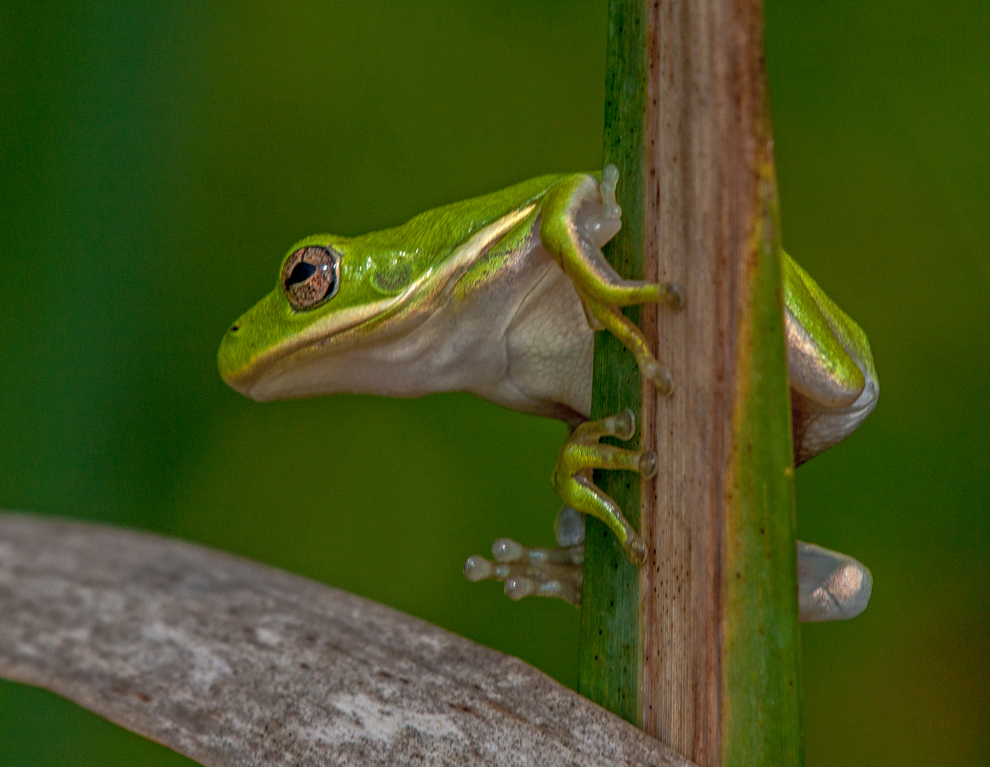
Usually it is hard for me to find frogs, because they blend in so well with their surroundings, but that certainly was not the case with this bright green frog. Doesn’t he realize how much he stands out in that environment? I was able to spot him from quite a distance away.

camouflage_blog

© Michael Q. Powell. All rights reserved

Read Full Post »

When I first caught sight of this male Blue Dasher dragonfly (Pachydiplax longipennis) in the air, I thought that he had captured some sort of prey. I was wrong, yet I was also right.

The male dragonfly’s prey was a female dragonfly and they were in a mating position that I later learned is known as the wheel. The sheer flexibility and athleticism involved seems worthy of the Cirque de Soleil. Apparently it starts when the male grabs the female’s head with special claspers at the tip of his abdomen.

I came across a fascinating article by Jennifer Ackerman in National Geographic Magazine entitled Dragonflies Strange Love that provides some amazing insights into the mating habits of dragonflies. One sentence really sums up the process, “Grab, shake, bite, puncture, punch—that’s just the courtship ritual of these dazzling aerobats.”

The male dragonfly seems to be driven by an incredibly strong biological drive. I can almost hear one of them repeating the words of the Tina Turner song, “What’s love got to do with it?”

wheel_blog

© Michael Q. Powell. All rights reserved

Read Full Post »

This bee might argue that it’s just the camera angle, but my initial impression of this bee was that he looked chubby—I don’t think that I have ever encountered a bee with such a round face. He reminds me of a sumo wrestler at the start of a match.

The bee pretty much ignored me, though, and seemed to really get into his work, literally, gathering pollen from some kind of milkweed plant, perhaps swamp milkweed (Asclepias incarnata).

chubby_blog

© Michael Q. Powell. All rights reserved

Read Full Post »

It was just starting to rain when some fellow photographers and I encountered a very strange-looking caterpillar. I couldn’t believe my eyes and was immediately reminded of the dogs in my neighborhood that sometimes wear colorful raincoats in inclement weather.

It turns out that this is a Saddleback caterpillar (Sibine stimulea), the larva of a type of moth. Once you get past the green “saddle,” it’s hard to miss all of the spines, which happen to be venomous. According to Wikepedia, stings by this caterpillar can cause swelling, nausea, and leave a rash that can last for days. Yikes! If I had known that in advance, I might not have leaned in to get a close-up shot of the head, though fortunately my 180mm macro lens allowed me to stay at a safe distance.

I can safely say that this is the most bizarre caterpillar I have ever seen. It’s hard to imagine that I can possibly encounter anything stranger than this, but my local marsh continues to surprise and amaze me.

saddleback_catterpillar1_blogsaddleback_caterpillar2_blog

© Michael Q. Powell. All rights reserved

Read Full Post »

As I was walking along the boardwalk at my local marshland park, I heard some splashing in the shallow, muddy water and was surprised to see a Northern Water Snake (Nerodia sipedon) emerging from the water with a fish in its mouth. I did not see the snake actually catch the fish, but by the time I caught sight of it, the snake already had a firm grip on the head of the fish. I suspect that the snake had moved onto dry land to make certain that the fish had no chance of escaping.

Fascinated and a little horrified, I watched as the snake opened its mouth wider, worked the obviously strong muscles of its throat, and gradually swallowed the small fish. In the series of photos below, you can see how the snake’s head and throat grew larger as more and more of the fish was drawn in.

After the snake finished its meal, it returned to the water and joined two other snakes searching for prey.  At times it looked like they might be working together to push the fish into the shallow water. That may have been my imagination, though, as I noted that the successful snake made no attempt to share his catch with the others.

snake_fish1_blogsnake_fish2_blogsnake_fish3_blogsnake_fish4_blog

© Michael Q. Powell. All rights reserved

Read Full Post »

I was attracted initially by the bright red color of a cardinal flower (Lobelia cardinalis), but then I noticed a small amount of movement. When I looked more closely, I realized there was a tiny bee—the smallest that I have ever seen—busily gathering pollen. Rather than gathering pollen in little sacs, as I had seen other bees do, this bee seemed to be collecting it on his abdomen.

I don’t know much about plant anatomy, but as I searched on the internet, I learned some fascinating things about the cardinal flower, especially from a blog posting by Eye on Nature dealing with the way in which hummingbirds pollinate cardinal flowers. That posting contains some detailed images of the cardinal flower as well as some fantastic shots of a hummingbird.

I shot these images handheld with my 180mm macro lens. Ideally I should have used my tripod to get clearer shots, but the bee was so active that I feared that it would be gone if I had taken the time to set up the tripod.

It’s hard to appreciate the small size of the “bearded” section of the cardinal flower, so I enclosed an overall look at the flower as a final photo.

tiny_bee_blogtiny_bee2_blogtiny_bee-3_blogcardinal_flower_blog

© Michael Q. Powell. All rights reserved

Read Full Post »
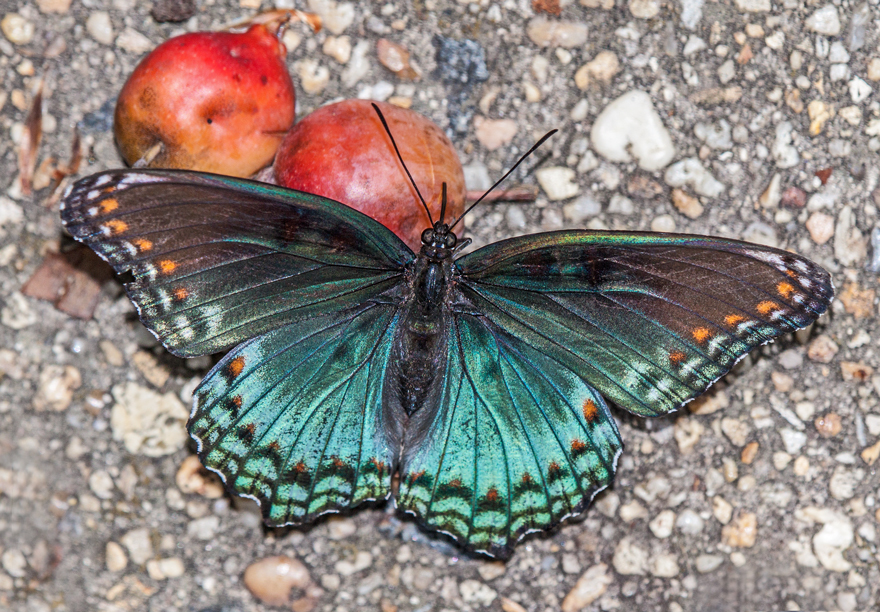
Every now and then I take a photograph and I am not really sure how I achieved the effect in the shot, like this one of a Fiery Skipper butterfly (Hylephila phyleus) on a jagged leaf.

With the exception of a few minor adjustments of the RAW image and a tiny bit of cropping, this looks just like the image I started with. When I first examined the image, I was pretty sure that I had used flash, but the EXIF data indicate that flash was not used. I took the shot handheld at ISO 400, f/6.3, and 1/500 sec. The depth of field was pretty shallow, but I did get the eye pretty much in focus, and I like the way the sharpness falls off so quickly.

I especially like the blurry jagged back edge of the leaf and the sharper near edge. The triangular shape of the wings seems to mirror those jags. Even the butterfly’s pose seems to work well, with the one leg dangling over the edge. If you click on the image, you get a higher resolution view of the photo.

I think that this is a Fiery Skipper, though I confess that I am not very good at identifying these little butterflies. Let me know if you can help in further identifying the butterfly.

skipper_leaf_blog

© Michael Q. Powell. All rights reserved

Read Full Post »

Normally I don’t think of orange and pink as colors that work well together, but I really like the result when I captured a shot of a Great Spangled Fritillary butterfly (Speyeria cybele) feeding on an unidentified pink flower.

spangled_pink_blog© Michael Q. Powell. All rights reserved

Read Full Post »
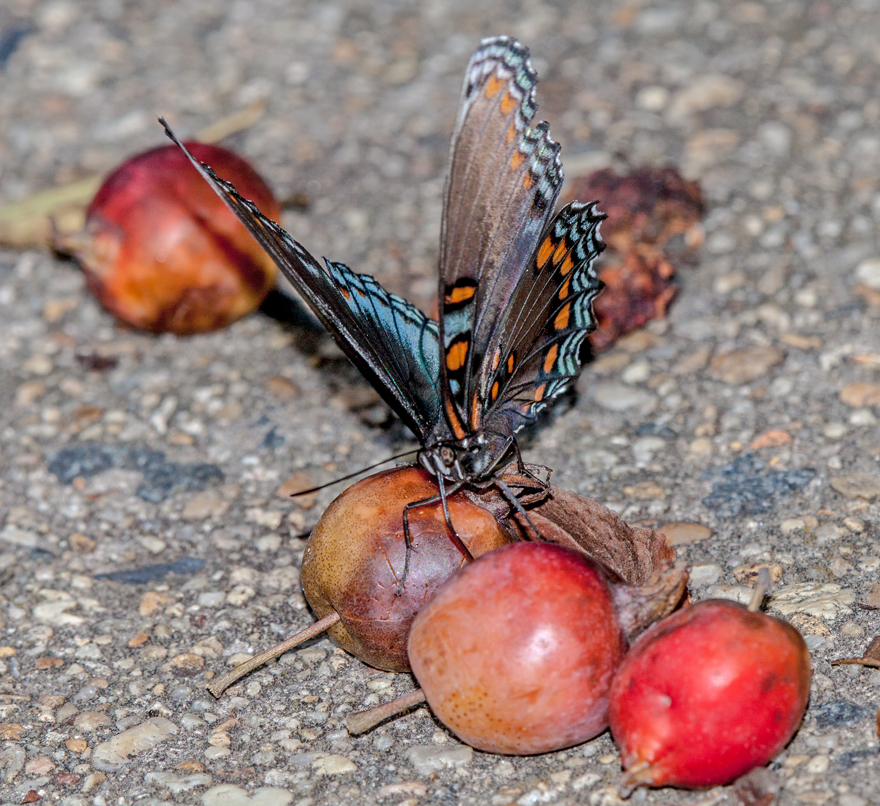
The water has gone down in some parts of my local marsh and I encountered this Green Heron (Butorides virescens) in a little tree that overlooked one of the dried out areas.

I am not sure if the heron was hunting or resting, although it looked more like the former than the latter, because he seemed to be looking from side to side. Perhaps he was searching for frogs or some other terrestrial prey.

I did not have my longest telephoto lens on my camera, but I was happy that to get some several decent shot of the little heron in a number of different poses.

limb1_bloglimb3_bloglimb2_blog

© Michael Q. Powell. All rights reserved

Read Full Post »
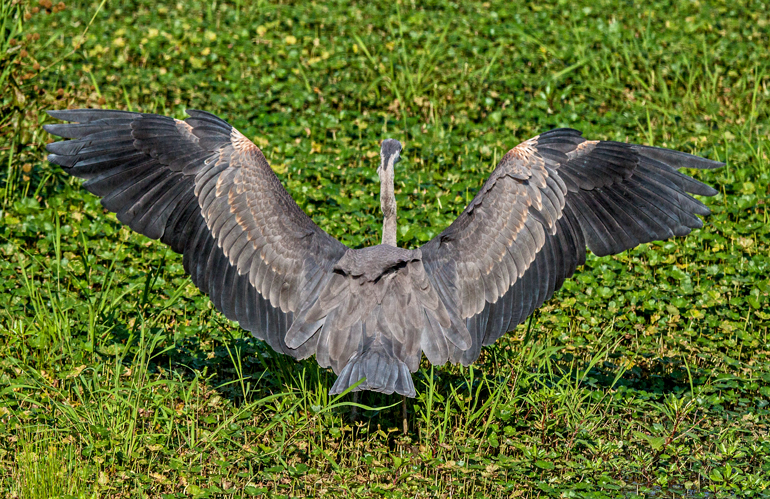
I had zoomed all the way in on this Great Blue Heron (Ardea herodias), when suddenly he took a big stride, a stride that almost took him out of the frame.

Something must have caught his attention, because he started moving quickly after having been still for quite some time. Normally when a blue heron moves, he is striking, reaching down to pull (or spear) some hapless prey out of the water. His lateral movement caught me a little by surprise.

One of the challenges of taking photos of wildlife is to be ready for the unexpected. I’m learning that the more I study subjects like this blue heron, the more I can anticipate some of their action. It’s a whole lot easier to be ready for the expected than for the unexpected.

stride_blog

© Michael Q. Powell. All rights reserved

Read Full Post »

I don’t know my flowers very well, but I think that this Eastern Tiger Swallowtail (Papilio glaucus) is feeding on some kind of tiger lily (Lilium columbianum). Tiger on tiger—I like the way that sounds. Whatever the case, I love the gorgeous colors of the flowers, providing a gorgeous contrast to those of the butterfly.

tiger_blog

© Michael Q. Powell. All rights reserved

Read Full Post »

I don’t usually think of photographing birds with a macro lens, but that’s exactly what I did when I encountered this Barn Swallow (Hirundo rustica) perched on a small branch, with a beautiful blue sky in the background.

Of course, I probably should note that the macro lens in question is 180mm in focal length, so it has good telephoto capability—I had just never tried to use it in that way. My experience photographing birds this past winter suggests that this lens does not have enough reach for most birds.  I was really happy, though, with the detail it was able to capture in this situation, when I was standing almost directly below the bird.

Mentally it was an adjustment to be shooting with a prime lens and I had to keep reminding myself that if I wanted to adjust the composition, I had to change my position and move closer or farther away. That’s probably a good thing to remember when I am using a zoom lens, which has a tendency to make me a little lazy.

swallow2_blogswallow1_blog

© Michael Q. Powell. All rights reserved

Read Full Post »

The weather this week has been mostly gray and dreary and I felt the need for a burst of bright colors, so I am posting this image from last week of a two Eastern Tiger Swallowtail butterflies (Papilio glaucus) feeding on an unidentified flower against the backdrop of a brilliant blue sky. The butterflies were even cooperative enough to place themselves at different angles to add  visual interest to the shot.

swallowtails_blog

© Michael Q. Powell. All rights reserved

Read Full Post »

The wasp looked huge, even from a distance, but I could get a clear shot of it against a beautiful blue sky, so I stepped out of my comfort zone and got close enough to it to get these images.

Fortunately I was shooting with a 180mm macro lens, so I was not exactly on top of the wasp, but even so, it was a little disconcerting to try to get a shot of a moving insect that looked so enormous and a bit threatening in the viewfinder.

After I took these shots, the wasp flew away and I breathed a sigh of relief—another sting avoided.

wasp2_blog

wasp1_blog

© Michael Q. Powell. All rights reserved

Read Full Post »

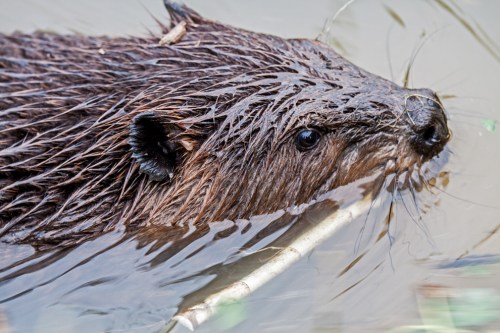
It has been a while since I featured a mammal in my blog, so I thought that I would post a photo of this little muskrat (Ondatra zibethicus) that I encountered this past weekend at my local marsh. I observes muskrats there fairly often, but most of the time they are swimming away or are submerging themselves by the time my camera is ready.

This muskrat was poking about at the edge of a formerly inhabited beaver lodge when I first caught sight of him. He did not immediately perceive my presence, so I was able to creep close enough to him to get this shot using my 55-250mm zoom lens.

Unlike the beavers, which sleep during daylight hours, muskrats are active when it its light—in theory it should be easy to get a good shot of a muskrat. The reality, though, is that muskrats are small, fast, and elusive, so I have not yet been able to get many good shots of them.

muskrat1_blog

© Michael Q. Powell. All rights reserved

Read Full Post »

When I am chasing after little butterflies, it’s rare that I manage to get a shot of them with their wings open—I am lucky if I can get a side view.

This little brown butterfly, which I think is an Appalachian Brown (Satyrodes appalachia), perched in a location, however, which allowed me to shoot downward, catching its wings wide open. The muddy, brown water of the marsh normally would not be optimal for an image, but seem to work well here, almost matching the colors of the butterfly.

I also was able to get a shot from the side, the second image, showing the butterfly’s beautiful brown eyes. There was intermittent rain the day that I was shooting and you can see a few raindrops on the leaves of the plant on which the butterfly is perched.

brown_butterfly1_blogbrown_butterfly2_blog

© Michael Q. Powell. All rights reserved

Read Full Post »
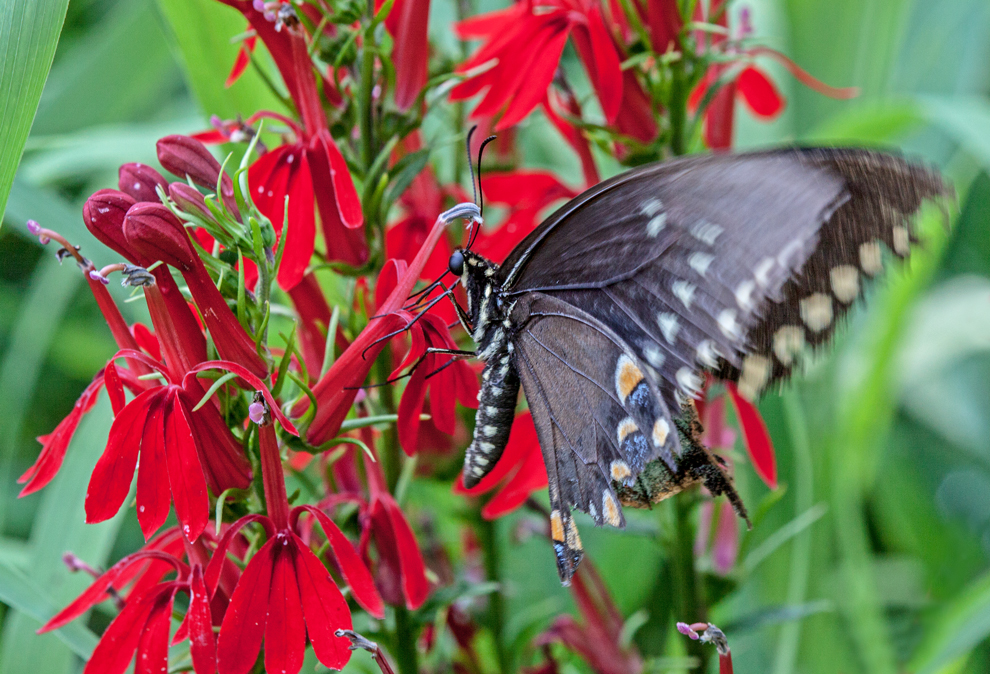
Let me introduce you to the coolest-looking insect I have ever encountered, the Handsome Meadow Katydid (Orchelimum pulchellum), an insect that I photographed this past weekend at my local marsh. The name just seems to fit the insect perfectly, unlike so many other insects that seem to have been named almost randomly.

I still recall the first time that I encountered a Handsome Meadow Katydid last summer and the resulting double take—I could not believe what my eyes were seeing. The bright colors of the body were astonishing and seemed so unreal that one of my friends wondered if I had colorized the photo.

It’s the eyes, though, that make this insect so attractive for me. There is just something so alluring about those blue eyes, eyes that I don’t expect to see in an insect.

I got some pretty good shots of Handsome Meadow Katydids last year, but was growing concerned that I would not see many this year (you can tell it’s a katydid, in part, because of the length of the antennae). I actually heard this katydid before I saw it. I was passing by a small bush and hear a kind of vibrating sound. I put my ear closer and closer to the plant and finally spotted the source.

I had to go pretty wide in cropping the shot, because the katydid was stretched out along the small branch. Click on the image if you want see a higher resolution view of the photo, including those amazing eyes.

rainbow1_blog

© Michael Q. Powell. All rights reserved

Read Full Post »

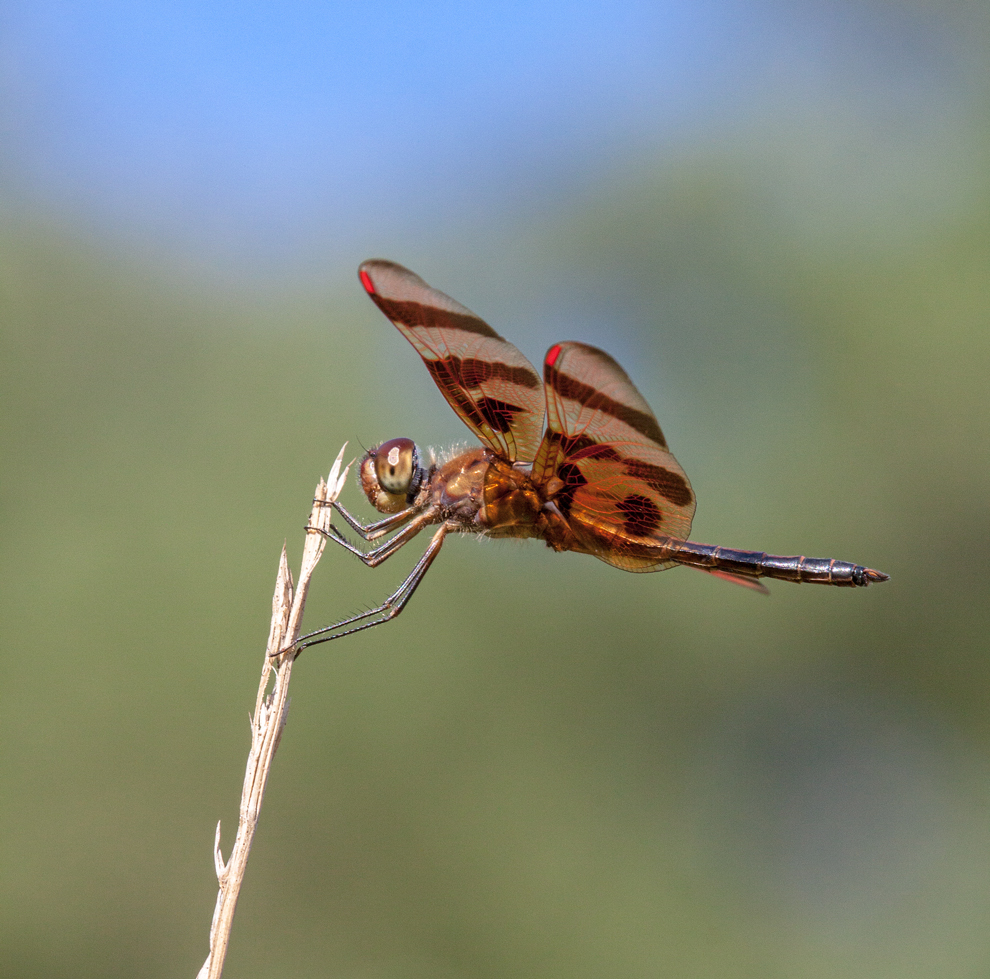
Yesterday I was happy to get some shots of my favorite dragonfly, the Halloween Pennant dragonfly (Celithemis eponina), at Meadowlark Botanical Gardens in Vienna, Virginia.

I don’t see this dragonfly at all at most of the usual places where I take photographs, so I was really excited when I caught sight of a couple of them yesterday. I chased them around for well over an hour and attempted to take a couple of hundred shots using a wide range of camera settings.

Why did I take so many photos? The dragonfly gets the “pennant”  part of its name because it likes to perch on the very tip of a weed stalk and waves in the breeze like a pennant. Yesterday, in fact, was breezy and it was quite an adventure trying to keep the dragonfly in focus, particularly because I was trying to fill the frame with the dragonfly.

The dragonflies that I photographed were reasonably cooperative and I was able to attempt shots from the side, from above, and even from below (fortunately the insects in the grass did not bite very often).

I have not been able to go through the shot to pick the best ones, but thought it would be nice to post one now, especially for those readers who may not be familiar with this beautiful dragonfly. I suspect that I will eventually post at least a couple more images in future postings.

Halloween1_blog

© Michael Q. Powell. All rights reserved

Read Full Post »

Different flowers affect me differently—some attract me with their beauty or their fragrance or their colors. Others produce an emotional response, like sunflowers, which invariably make me feel happy.

The sunflower’s large size, bright colors, and bold graphic design appeal to me. The sunflower virtually shouts its presence to the world—there is nothing soft and delicate and hidden about a sunflower.

Like this Easter Tiger Swallowtail butterfly (Papilio glaucus), I sometimes enjoy the flowers one at a time. It was really fun, though, to visit a large field of sunflowers last month with some friends and to see row after row of these cheery flowers. I wanted to capture a group shot of the sunflowers, but I struggled to find a way to do so effectively (even though we had even brought along a little stepladder to give us a perspective from above the flowers).

In the end, my favorite shot (the second one below) focuses on a single sunflower, with other flowers a blur in the background. I used a simple 50mm lens (often called the “nifty fifty”) on my camera to make sure that I could control the aperture and throw the background out of focus.

EasternTigerSwallowtail lorez

sunflowers_blog

© Michael Q. Powell. All rights reserved

Read Full Post »

It’s hard enough to identify moths and butterflies when they are fully grown—it seems almost impossible to do so when they are caterpillars, like this fuzzy white caterpillar that I encountered today at my local marshland park.

The caterpillar had so much long hair that it was hard to see the actual body, which might have been quite small for all I could tell. It was crawling around in the cattails on a day that featured intermittent rain. If you look closely at the first shot, you can see little water drops near what I think is the area of the head.

The second shot may look like it was done with flash, but the darker background was caused merely by changing the settings on my camera and deliberately overexposing the image.

fuzzy2_blogfuzzy1_blog

© Michael Q. Powell. All rights reserved

Read Full Post »

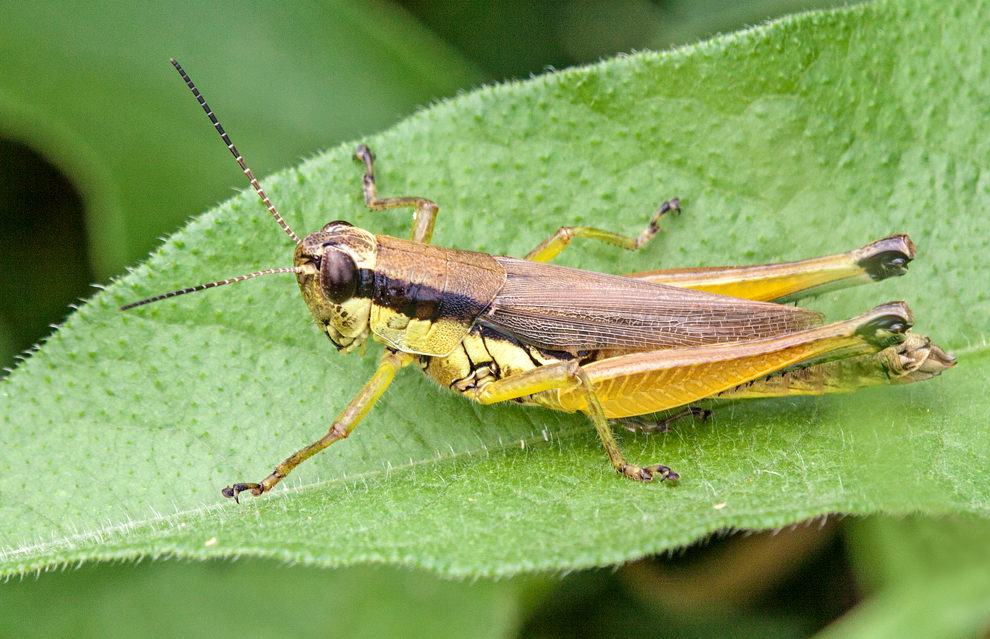
I haven’t seen many grasshoppers this summer, so I was happy to get a few shots of this one before he hopped off the leafy stalk for a new destination. I especially like the details of the eyes and the mouth.

Grasshoppers are special to me, in part because “grasshopper” is the term that my photograph mentor, Cindy Dyer, uses for me, her student. Some of you may be old enough to remember the television series Kung Fu from the 1970’s, in which Master Po, the blind monk, called his young pupil “grasshopper.”

I often wondered why he used that particular word and today I came across an explanation in Wikipedia. Apparently it stemmed from an exchange between the Master Po and the student, Caine, in the pilot episode of the series.  There is a lot of wisdom in that final response.

Master Po: Close your eyes. What do you hear?
Young Caine: I hear the water, I hear the birds.
Po: Do you hear your own heartbeat?
Caine: No.
Po: Do you hear the grasshopper which is at your feet?
Caine: Old man, how is it that you hear these things?
Po: Young man, how is it that you do not?

grasshopper1_blog

© Michael Q. Powell. All rights reserved

Read Full Post »

Japanese beetles (Popillia japonica) are very destructive, but also very beautiful and I sought to highlight both of these aspects in this image.

There were quite a few plant with holes chewed in them in one area of the marsh and I suspect that Japanese beetles were the culprits (this one sure looks guilty). I like the coloration and the reflectiveness of the insect’s body.  I’m not completely sure, but  I think that I see my own reflection as well as the sky in the part of the shell near the beetle’s head.

This was a situation in which I really enjoyed having my new 180mm macro lens. It allowed me to frame it the way in which I wanted without scaring away the beetle (and I did not have to do much cropping at all).

beetle_chew_blog© Michael Q. Powell. All rights reserved

Read Full Post »
I don’t often see dragonflies perched on flowers, so I was really happy when this male Blue Dasher dragonfly (Pachydiplax longipennis) decided to take a break on something more attractive than the usual broken swamp reed.

If you look closely at the dragonfly’s face (or click on the photo for higher resolution), you can see some interesting details, like his cute little bucktooth and some sparse sprouting hairs on his chin, like those of a human teenager. I also like the contrast in color between the blues and greens of his body and the pink of the flowers.

Why did the dragonfly choose to land on the flower? It almost looks like he is helping with pollination, but I suspect that is not the case. The answer to the question is probably much more simple—he landed on it, because it was there.

face_blog

© Michael Q. Powell. All rights reserved

Read Full Post »
As I was ending a photo shoot of sunflowers last month with some fellow photographers, one of them noticed a pretty butterfly perched on a leg of one of our tripods.

The butterfly remained on the tripod leg for a long time and appeared to be licking the leg, prompting us to speculate that there might be residual salt from sweaty hands on the leg. Of course, we all gathered around the tripod and tried to snap photos of the butterfly. Eventually the butterfly flew off to some nearby vegetation, where I got this shot of a butterfly that I have not been able to identify.

As we go ready to walk back to our vehicle, the butterfly perched on the pant leg of one of the other photographers and then on my shirt before flying away again. After stowing our gear in the trunk, we figured that we had seen the last of the butterfly.

However, as we were slowly driving away, we noticed that the butterfly was inside the car, eventually moving to the windshield, right in front of the driver. We helped the butterfly out of the car with the aid of a CD cover, but had to admire its persistence—the butterfly really seemed to want to go home with us.

SpottedButterfly lorez

© Michael Q. Powell. All rights reserved

Read Full Post »

Tiny butterflies seem to be constantly in motion and their size and speed normally make them difficult to photograph.

However, this butterfly, which I think may be a Summer Azure butterfly (Celastrina neglecta), stayed perched on a Black-eyed Susan (Rudbeckia hirta) long enough to allow me and my fellow photographer, Cindy Dyer, to take multiple shots, including some with flash. There is a whole family of small Azure butterflies, which have a wingspan of about one inch (25mm) and look pretty similar, so please correct me if I have misidentified this insect.

We encountered this little butterfly on a recent trip to Meadowlark Botanical Gardens in Vienna, Virginia. (You can check out Cindy’s image of this butterfly, along with her amazing photographs of other flowers and insects on her blog.)

I love large, colorful butterflies, like the Eastern Tiger Swallowtails that were virtually omnipresent in the garden that day, but there is something really special too about the delicate beauty and simple colors of this tiny butterfly. In this image, I like the way in which the muted tones of the butterfly provide a nice visual counterbalance to the bold colors of the flower.

azure1_blog

© Michael Q. Powell. All rights reserved

Read Full Post »

I have always thought that Great Blue Herons (Ardea herodias) look a bit awkward on the ground, tall and gangly, but they are exceptionally beautiful in the air.

As I approached this blue heron yesterday at my local marshland park, it decided to take off. I often try to capture photos of birds in flight, though generally I’ve had only limited success.

I was pretty happy with this shot, taken shortly after the heron had taken to the air. The shaded woods make a decent backdrop and I like the blooming mallow flowers in the foreground. The focusing is a little soft, but I was able to capture some of the magnificent details of the visible wing.

heron_flying_blog

© Michael Q. Powell. All rights reserved

Read Full Post »

« Newer Posts - Older Posts »