Feeds:
Posts
Comments

Archive for the ‘Nature’ Category

I can understand how an adept female Red-winged Blackbird (Agelaius phoeniceus) can catch one dragonfly, but how in the world did this one manage to catch two at once?

I can’t tell for certain, but the dragonflies in the bird’s mouth look to be female Common Whitetails (Plathemis lydia) or possibly immature males, which look like the females. The wings seem to be very transparent, so it’s possible too that these may be newly emerged dragonflies—when they first transition from the water nymph stage into dragonflies, they are very vulnerable.

Red-winged Blackbird

© Michael Q. Powell. All rights reserved.

Read Full Post »

Yesterday as I was watching some Ruby-throated Hummingbirds (Archilochus colubris) buzzing around some distant trumpet flowers at Huntley Meadows Park, one of them suddenly flew closer to a small patch of cardinal flowers (Lobelia cardinalis).  The shutter speed was too slow to stop the action completely, but you can see how perfectly the hummingbird’s bill fits into the long tubular flower that is too narrow for most bees to reach.

Hummingbirds fly really fast, so I wasn’t too surprised that there was a lot of motion blur in my shots. I was a bit shocked, however, to see that my shutter speed had fallen to 1/100 of a second for these shots, which is, of course, way too slow for the subject, particularly because I was shooting with my zoom lens at 600mm handheld. When I was focusing on the sitting hummingbird that I included as the final shot here, there was considerably more light and the subject was stationary and I did not make any adjustments when the hummingbird flew to a darker area with the cardinal flowers.

If you look closely at the shot of the perched hummingbird, you may notice that it has tiny feet. According to the Cornell Lab of Ornithology website, “The extremely short legs of the Ruby-throated Hummingbird prevent it from walking or hopping. The best it can do is shuffle along a perch. Nevertheless, it scratches its head and neck by raising its foot up and over its wing.”

Ruby-throated Hummingbird

Ruby-throated Hummingbird

Ruby-throated Hummingbird

© Michael Q. Powell. All rights reserved.


Read Full Post »

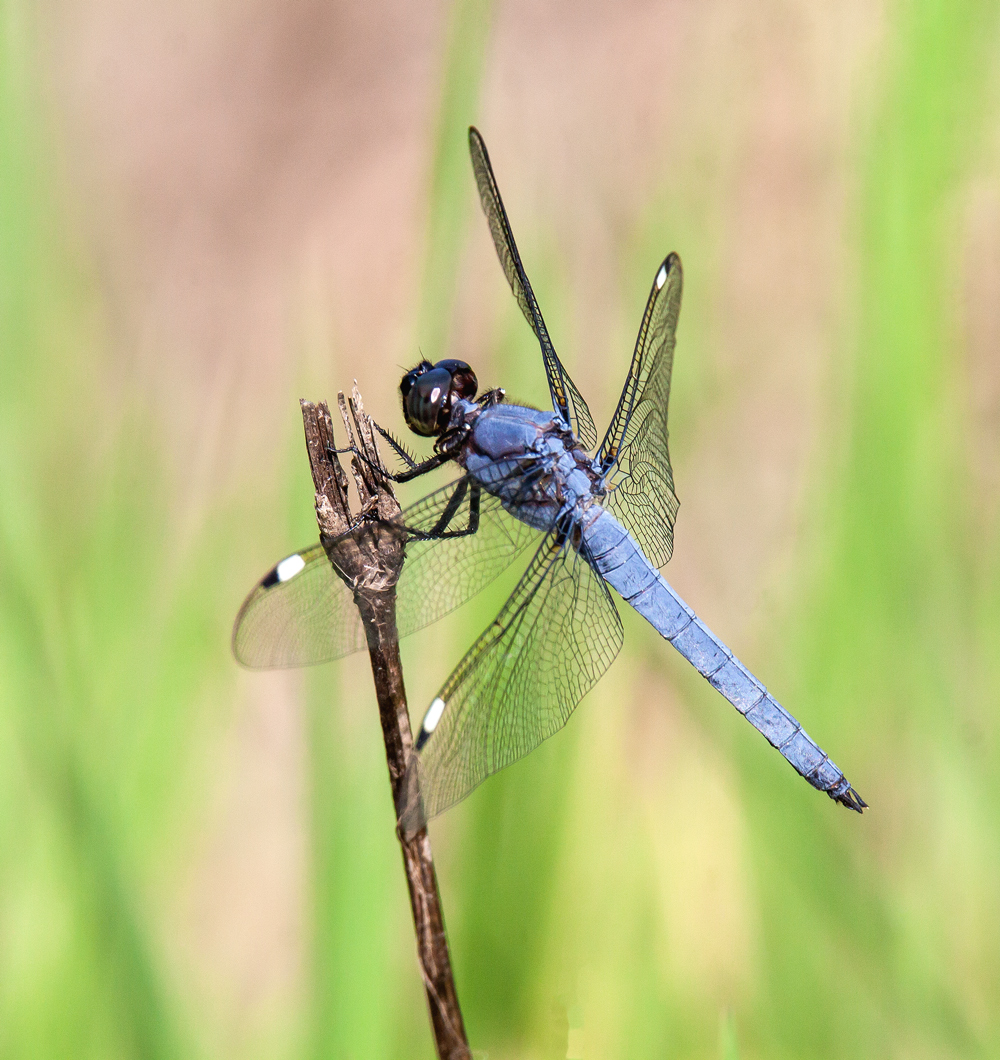
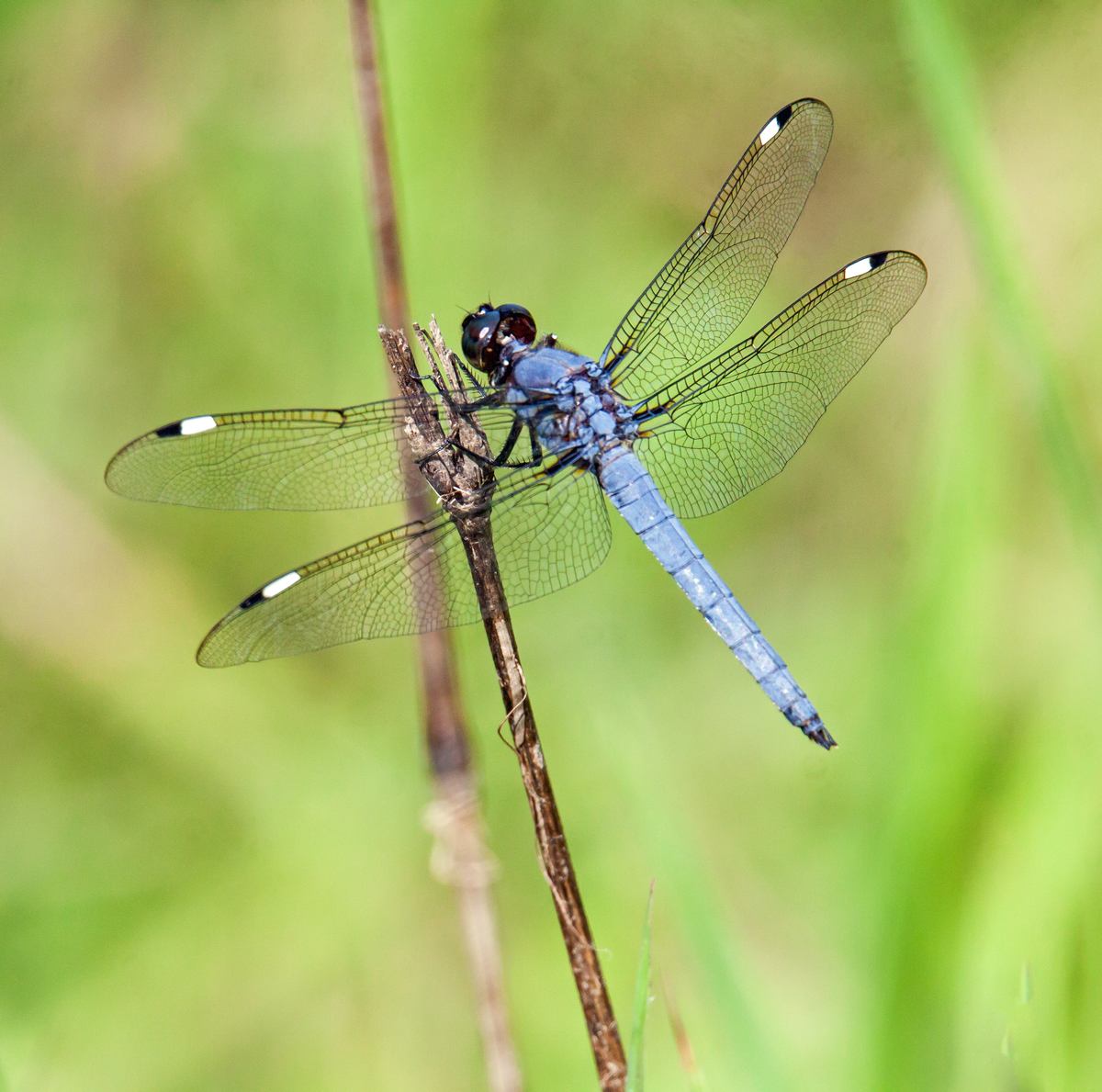
It violates one of the basic rules of photography to have your subject in the center of an image, but for both of these shots of a male Widow Skimmer dragonfly (Libellula luctuosa), that’s precisely what I did.

In the first image, the blade of grass that bisects the image helps to emphasize the symmetric patterns on the wings of the Widow Skimmer.

Widow Skimmer

In the second image, I was so fascinated by the geometric lines of the grass and their varying degrees of sharpness that I did not want to crop them at all, so I left the Widow Skimmer more or less in the center.

Widow Skimmer

When it comes to my photography, I tend to look at “rules” as general guidelines that apply in many—but not all—situations. That approach helps me to remain centered and flexible.

© Michael Q. Powell. All rights reserved.

Read Full Post »

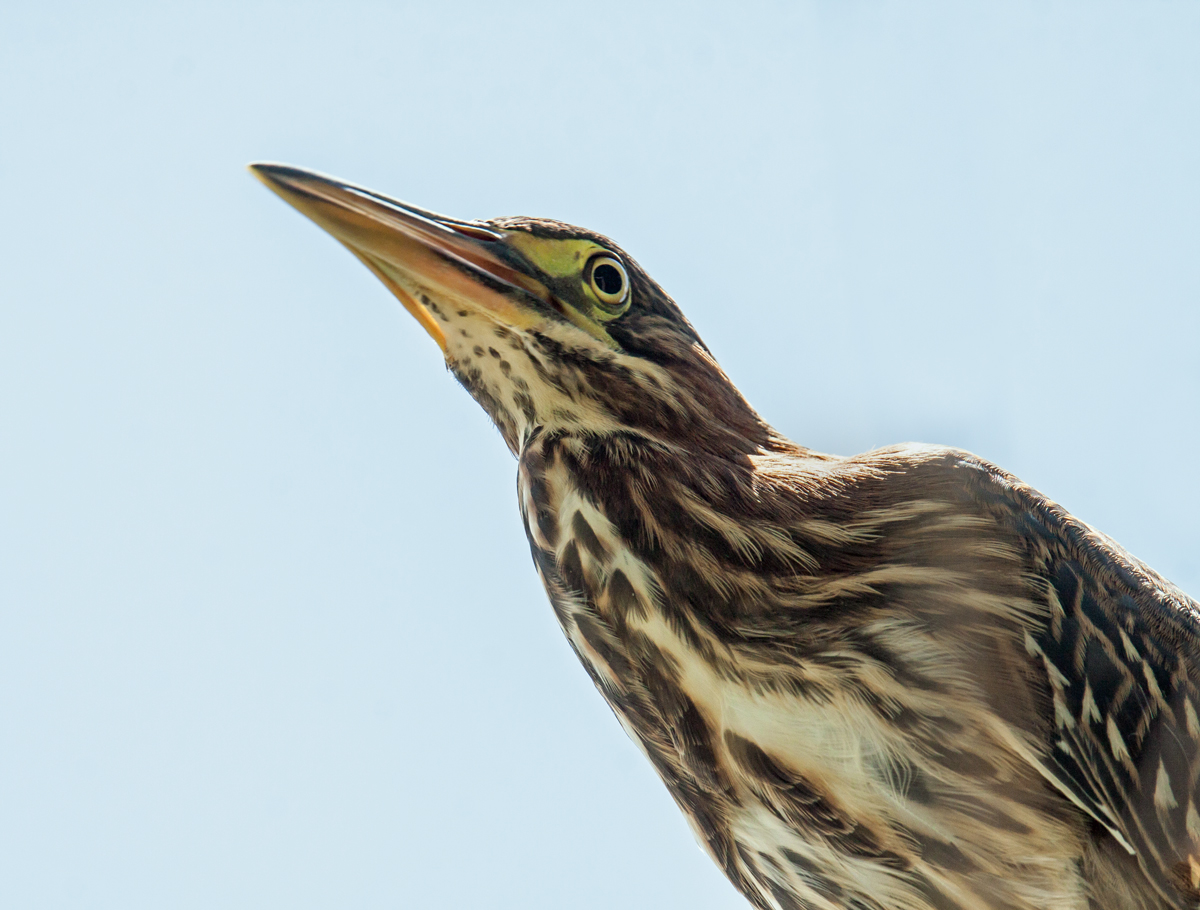
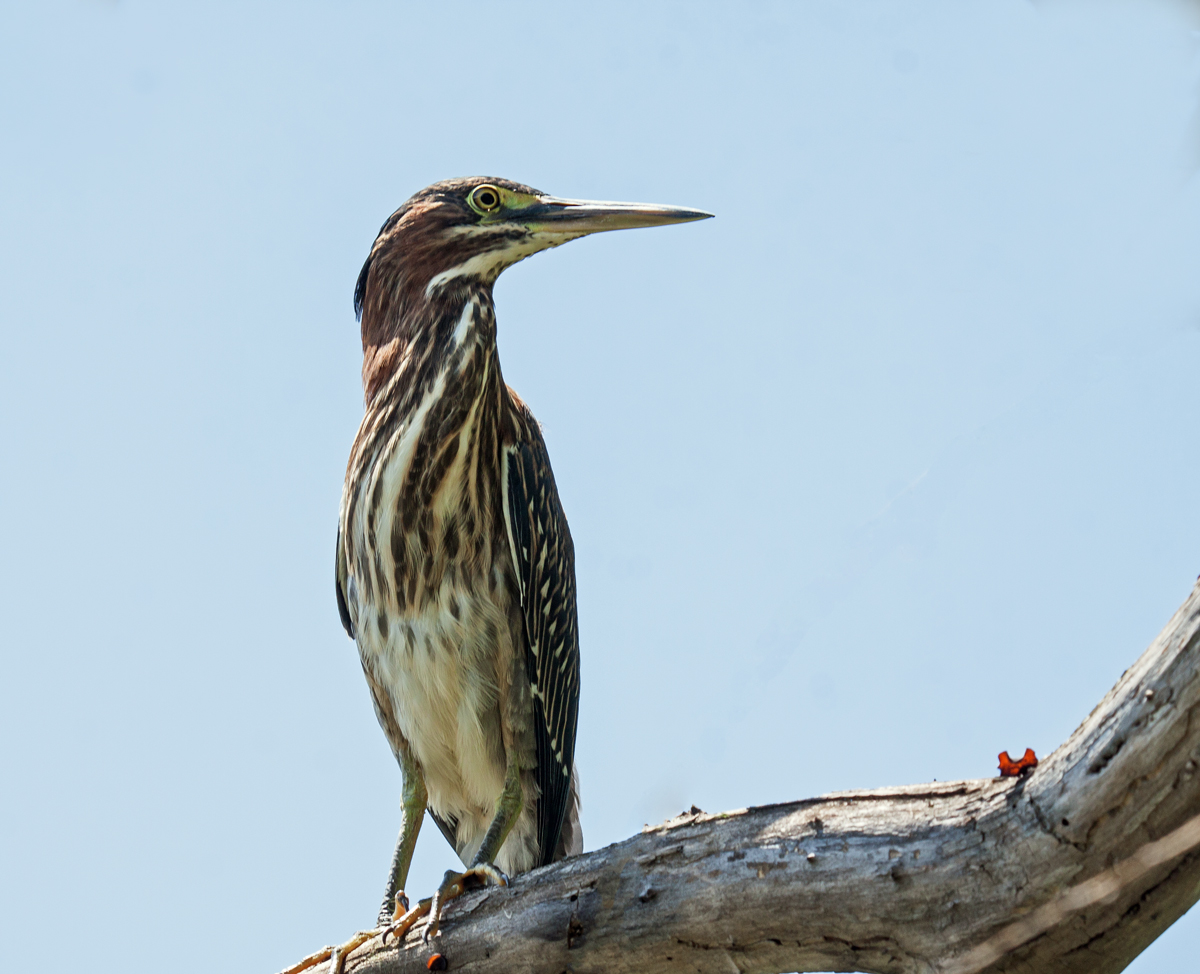
Yesterday as I was exploring Ben Brennan Park, a suburban park in Alexandria, Virginia with a pond, I spotted a young Green Heron (Butorides virescens) in a tree. I took some initial shots and then was able to creep up to the tree and shoot almost directly up.

I have taken numerous photos of Green Herons, but this is the first time that I’ve ever taken a shot showing the underside of the bill. I love to shoot familiar subjects hoping to see them from new perspectives or engaging in interesting behavior.

Green Heron

Green Heron

Green Heron

heron4_up_blog

© Michael Q. Powell. All rights reserved.

Read Full Post »

Tracking a moving bird as it weaves its way in and of vegetation is a real challenge for a photographer and it seems almost miraculous when you manage to get any shots in focus. My skills were definitely tested last weekend when I spotted a female Ruby-throated Hummingbird (Archilochus colubris)  in a patch of trumpet vine (Campsis radicans) at my local marshland park.

I did manage to get a few clear shots in which there were no branches between me and the hummingbird, but mostly I tried to find little windows among the branches through which I could get a view of a part of the bird. I was standing on a boardwalk when I took these shots, so there was not much room for to maneuver to get better angles of view. Additionally, the trumpet vines were a pretty good distance away, so I had to crank out my telephoto zoom and even then had to crop the images.

I don’t often see hummingbirds, so I was happy to capture some shots of this beautiful bird as it flitted from flower to flower.

Ruby-throated Hummingbird

Ruby-throated Hummingbird

Ruby-throated Hummingbird

Ruby-throated Hummingbird

Ruby-throated Hummingbird

© Michael Q. Powell. All rights reserved.

Read Full Post »

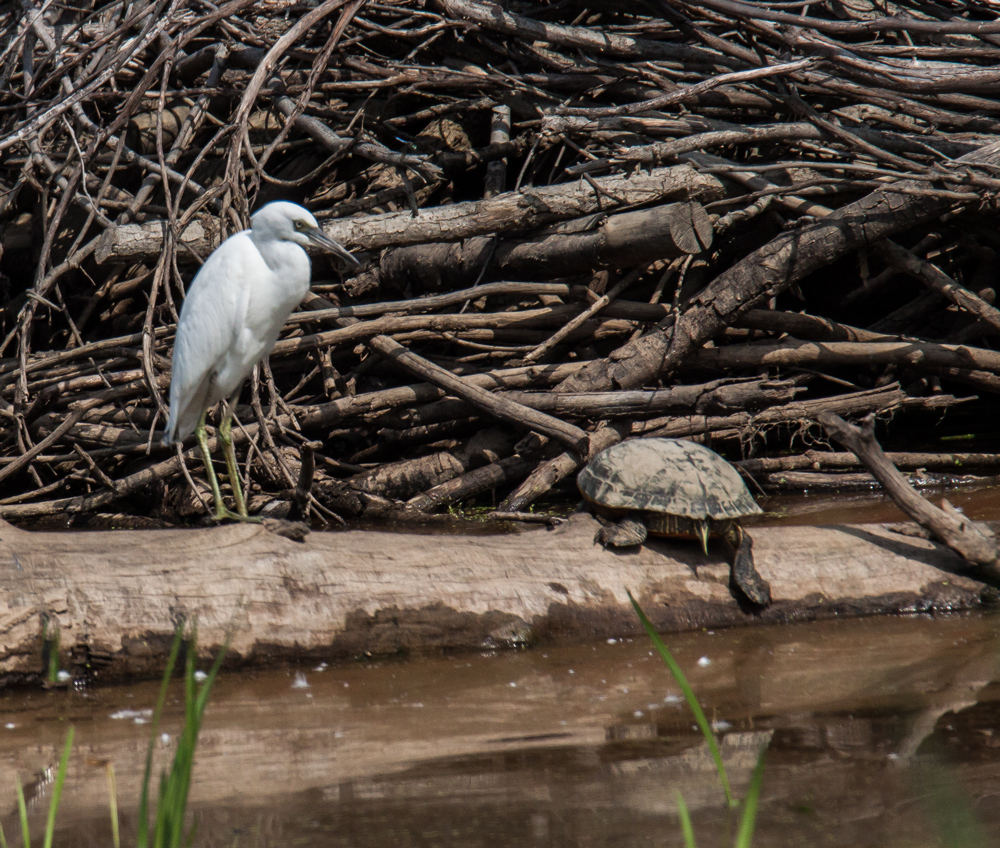
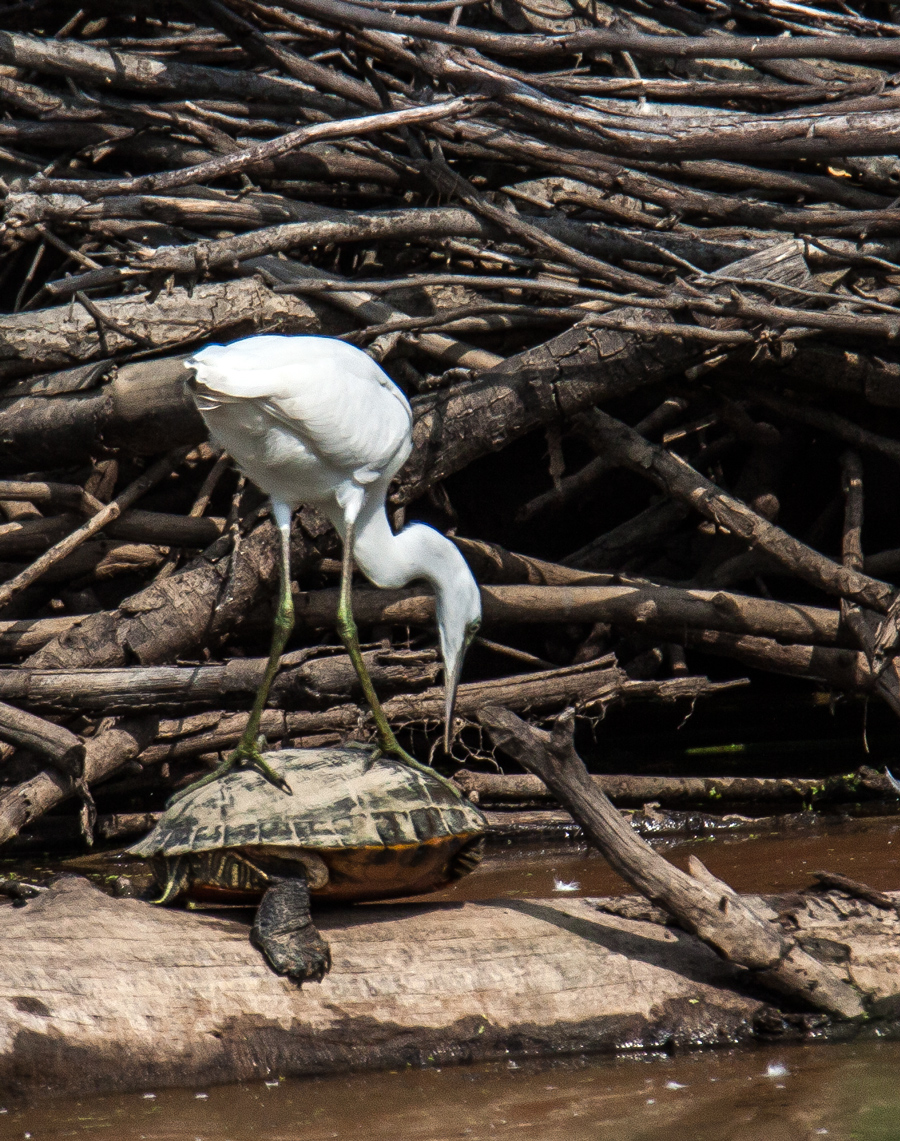
As I watched through my telephoto lens last Friday, one of the juvenile Little Blue Herons (Egretta caerulea) at Huntley Meadows Park became increasingly curious about the turtle with whom it was sharing a log. The heron moved closer and closer and finally jumped on top of the turtle. I was shocked to see the heron then put its face mere inches from that of the turtle.

This past month, a group of four or more juvenile Little Blue Herons has taken up residence at my local marshland park. When I first saw them, I assumed they were Great Egrets, because of the bright white coloration. However, the bills are a different color than those of the egrets. I am hoping that the Little Blue Herons hang around long enough for us to see them change into the blue color for which they are named.

I managed to take a series of shots of the encounter between the heron and the turtle. I initially thought it was a snapping turtle, but one of the folks who saw a photo I posted on Facebook thinks it might be a slider of some sort, a Red-eared Slider (Trachemys scripta elegans), I would guess after taking a closer look at the second image.

Little Blue Heron

Initially the heron eyed the turtle from a distance.

Little Blue Heron

Then he decided to get a closer look.

Little Blue Heron

Feeling bold, he placed one foot on the turtle…

Little Blue Heron

…and jumped on top of the turtle.

Little Blue Heron

His curiosity still not yet satisfied, the heron leaned in for a face-to-face encounter. (Note that the turtle has retracted one of its front legs.)

© Michael Q. Powell. All rights reserved.

Read Full Post »

Chasing after beautiful butterflies on a sunny summer day—it doesn’t get much better than that. I don’t know plants very well, but this appears to be some kind of thistle. I photographed this Eastern Tiger Swallowtail (Papilio glaucus) last Saturday at Huntley Meadows Park in Alexandria, Virginia.

Eastern Tiger Swallowtail

© Michael Q. Powell. All rights reserved.

Read Full Post »

The blooming Swamp Rose Mallows (Hibiscus moscheutos) at Huntley Meadows Park helped provide a beautiful backdrop for this Great Blue Heron (Ardea herodias) that I spotted there last Saturday.

Great Blue Heron

© Michael Q. Powell. All rights reserved.

Read Full Post »

Yesterday I made a trip to Jackson Miles Abbot Wetlands Refuge at Fort Belvoir, a local military base, and was thrilled to see a Banded Pennant dragonfly (Celethemis fasciata), a cool-looking species that fellow photographer Walter Sanford spotted at that location on 24 July. (Check out his posting of that encounter to see some more shots of a Banded Pennant.)

Like other pennant dragonflies, such as the Halloween Pennant that I photographed earlier this summer, the Banded Pennant likes to perch at the very tip of tall grass and other vegetation. A pennant dragonfly is sometimes easier to spot than those species that perch lower, but the slightest breeze sets the dragonfly in motion and makes it more difficult to photograph.

I spotted only a single Banded Pennant yesterday, but managed to get a number of shots before it flew away, though most of them were from pretty much the same angle. As I looked over the images, I couldn’t decide which was the most effective way to present the dragonfly. Was it better to maximize the size of the dragonfly by cropping it a square or to emphasize the height of the vegetation by using a vertical format?

In the end, I didn’t choose, but instead presented a shot in each of the two formats? Do you have a preference for one over the other?


Banded Pennant

Banded Pennant

© Michael Q. Powell. All rights reserved.

Read Full Post »

How do you capture the details of a pure white bird as it flies in an out of the light? That was my challenge this past weekend when I tried to photograph Great Egrets (Ardea alba) at my local marshland park.

Many of my past shots of egrets have been unsuccessful, usually because they are overexposed and the highlights and details are blown out. I’ve tried using exposure compensation with only minimum success.

This time, I remembered to switch to spot metering and had greater success. Sure, the backgrounds are a bit underexposed, but I think that the darkness helps the highlight the beauty of the egret.

Great Egrets seem a little awkward when in the water, but when they take to the air, it’s like watching a ballet.

Great Egret

Great Egret

Great Egret

© Michael Q. Powell. All rights reserved.

Read Full Post »

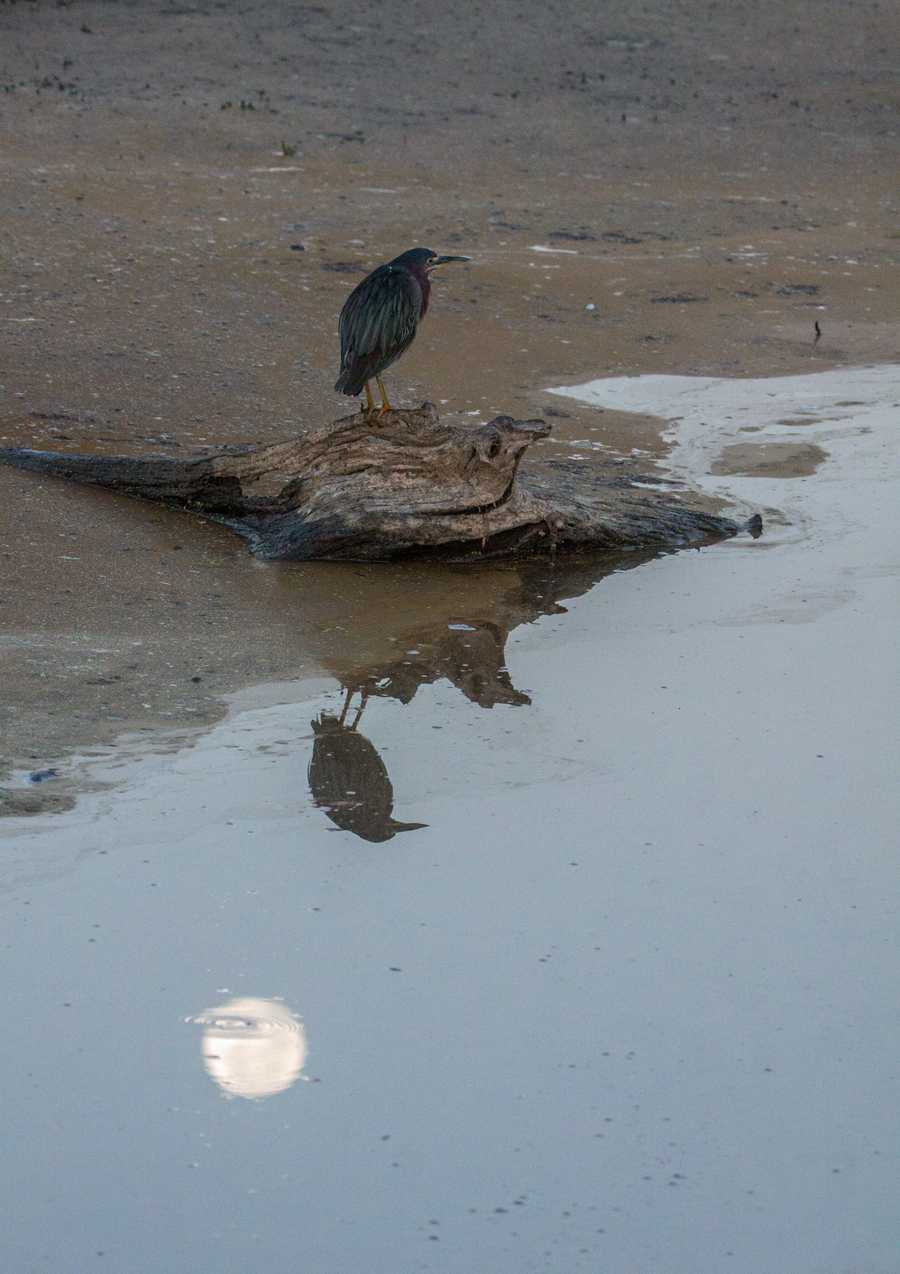
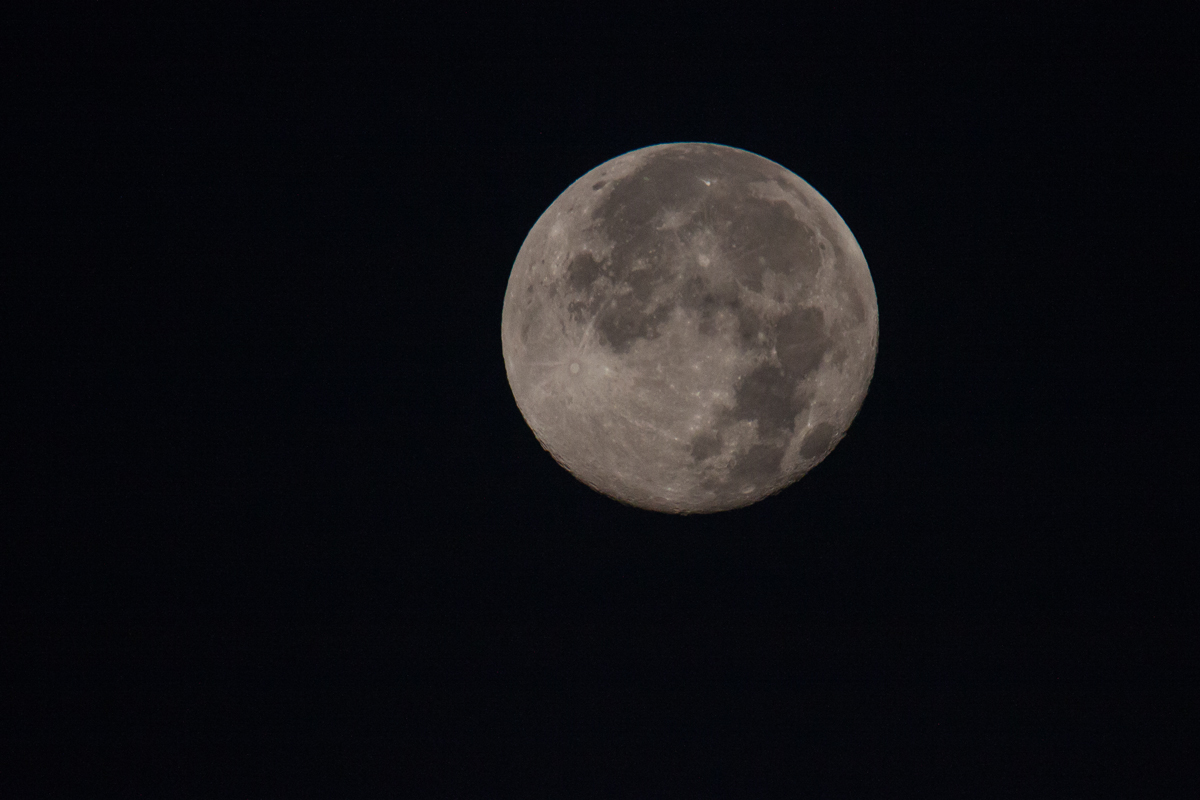
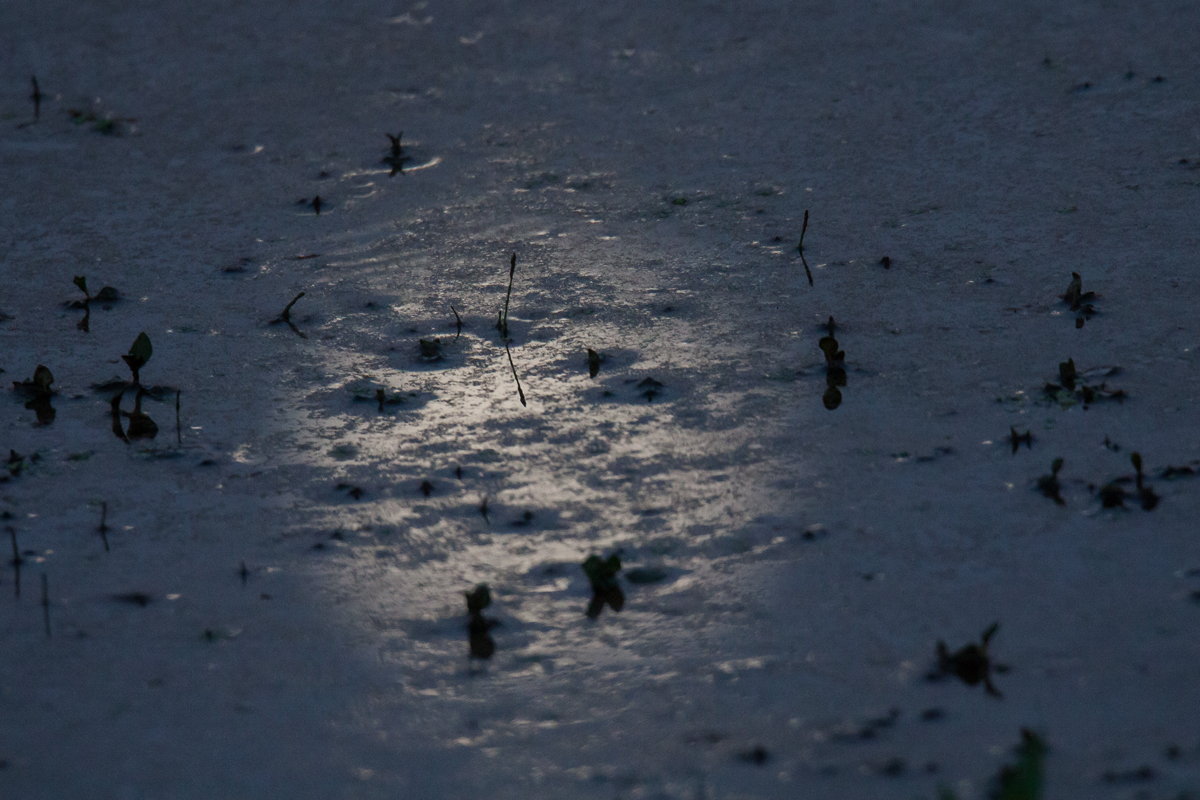
The full moon was bright and beautiful early yesterday morning, when I arrived at Huntley Meadows Park as the sun was just beginning to rise.

I struggled a little, trying to figure out the best way to capture the moon. Should I show the moon against the black night sky? Should I show merely its reflection? Should I show it as an element of a larger composition?

Here are some of my attempts to show the full moon in the predawn light at my local marsh.

Green Heron

Green Heron in the moonlight

Full moon in the night sky

Full moon in the night sky

reflections of a full moon

Reflections of a full moon

full moon

Moon over the marsh


© Michael Q. Powell. All rights reserved.

Read Full Post »

The Green Heron (Butorides virescens) was mostly in the shadows yesterday as I observed him at the edge of a small stream. When he bent down, his face was briefly illuminated and I managed to capture this action portrait with a fascinating interplay of light and darkness.

Green Heron

© Michael Q. Powell. All rights reserved.

Read Full Post »

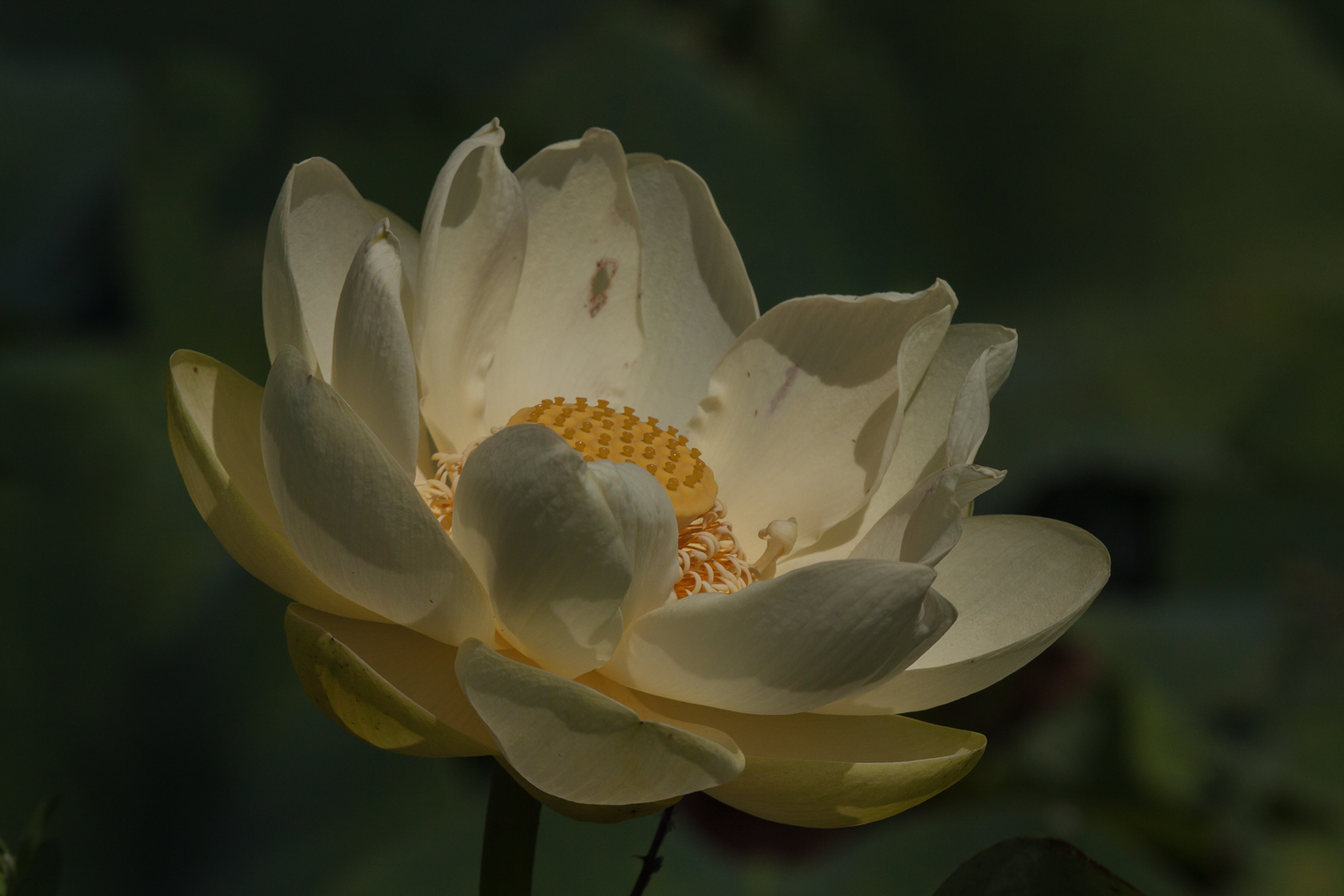
The lotuses were a bit faded and past their prime last weekend at Lilypons Water Gardens, but the beauty and elegance of the lotus flowers was undiminished in my eyes.

I love the look of the lotus throughout its life cycle—from the elegant simplicity of the bud to the showy outburst of petals to the alien-looking seedpods.

The beauty of the lotus never fades, though it is transformed and changes as the flower grows and matures.

Lotus

Lotus

Lotus

© Michael Q. Powell. All rights reserved.


Read Full Post »

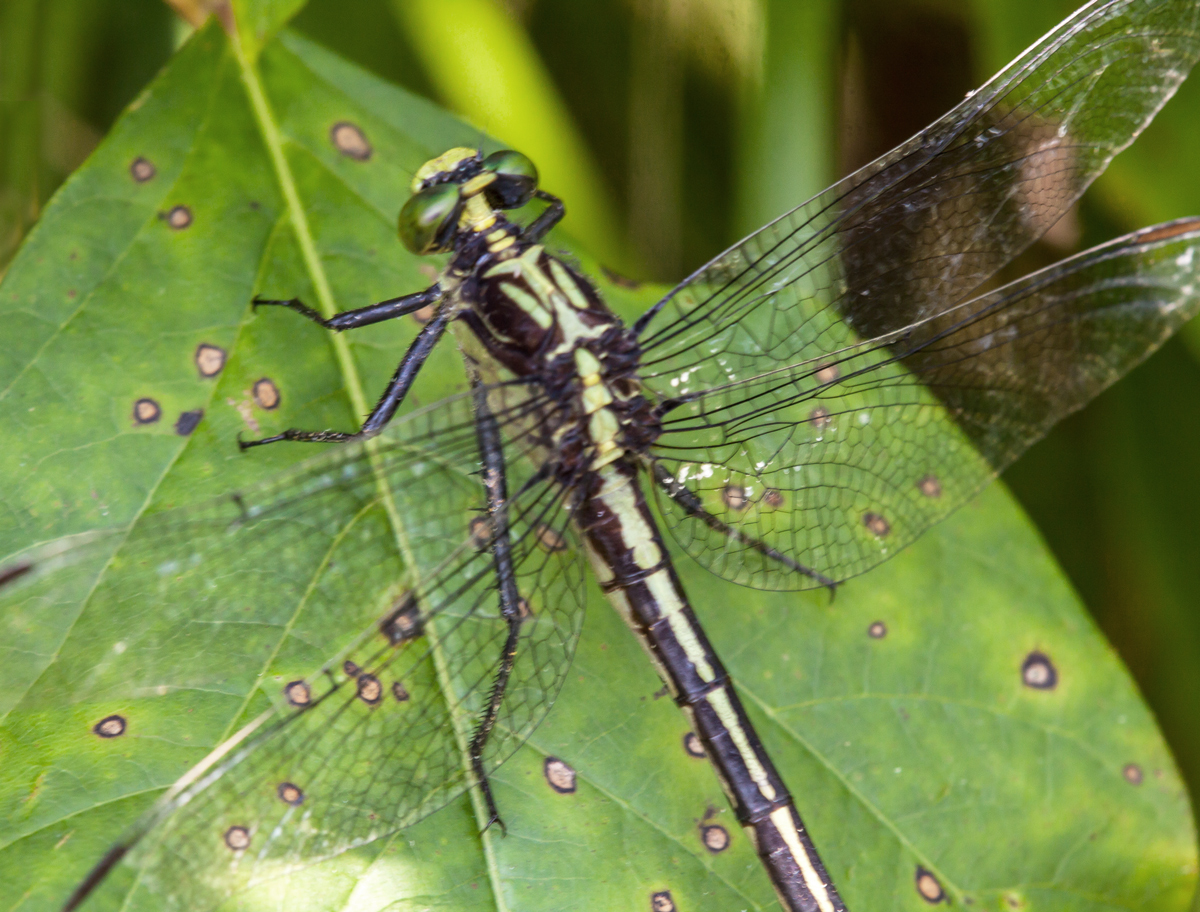
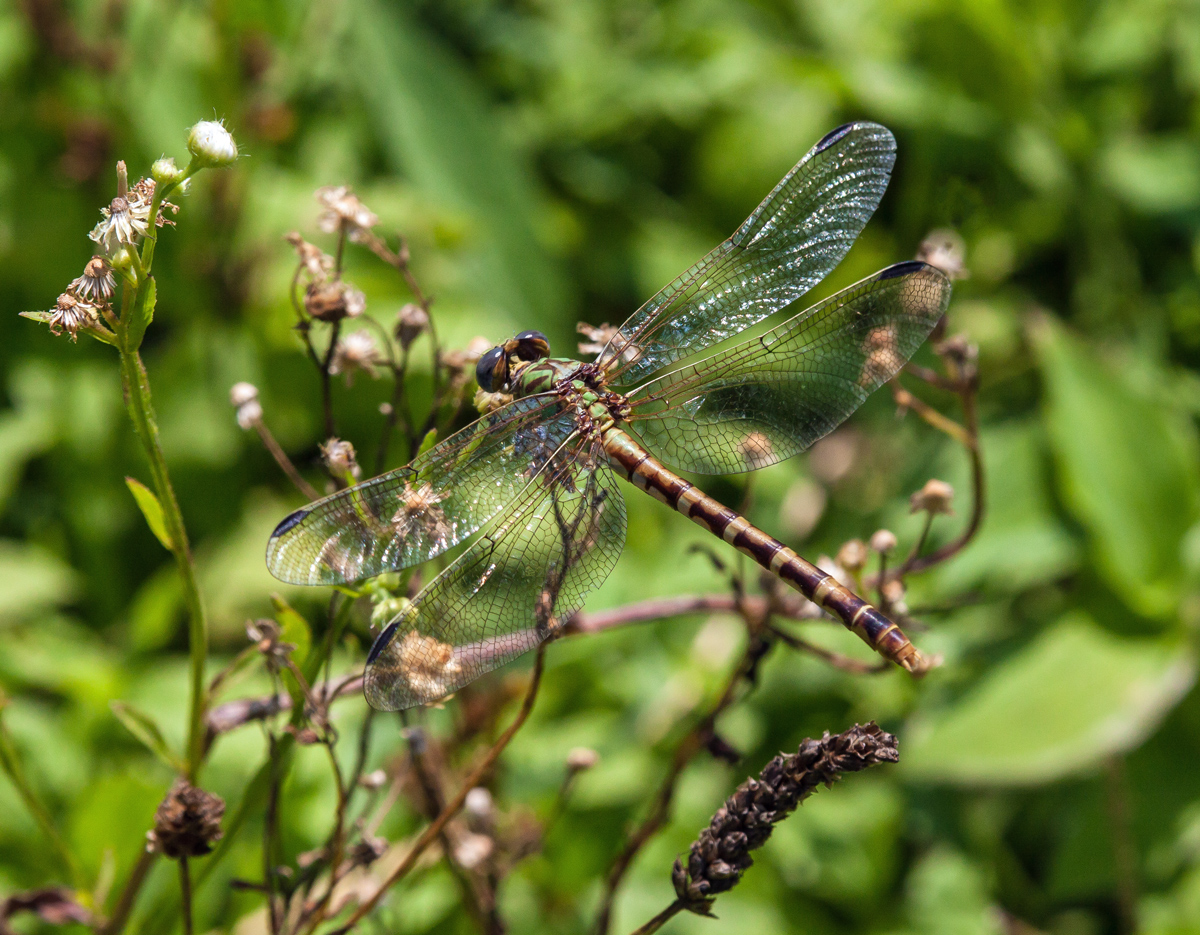
Last Saturday at Lilypons Water Gardens in Adamstown, Maryland I spotted a large dragonfly that I had never seen before, a Black-shouldered Spinyleg (Dromogomphus spinosus). That’s definitely a cool (and descriptive) name for a spectacular-looking dragonfly.

The dragonfly remained perched in the vegetation surrounding a small pond long enough for me to get shots from a few different angles and distances with my macro lens. I was particularly struck by the length of the long black legs, which somehow reminded me of those of a spider.

Black-shouldered Spinyleg

Black-shouldered Spinyleg

Black-shouldered Spinyleg

© Michael Q. Powell. All rights reserved.


Read Full Post »

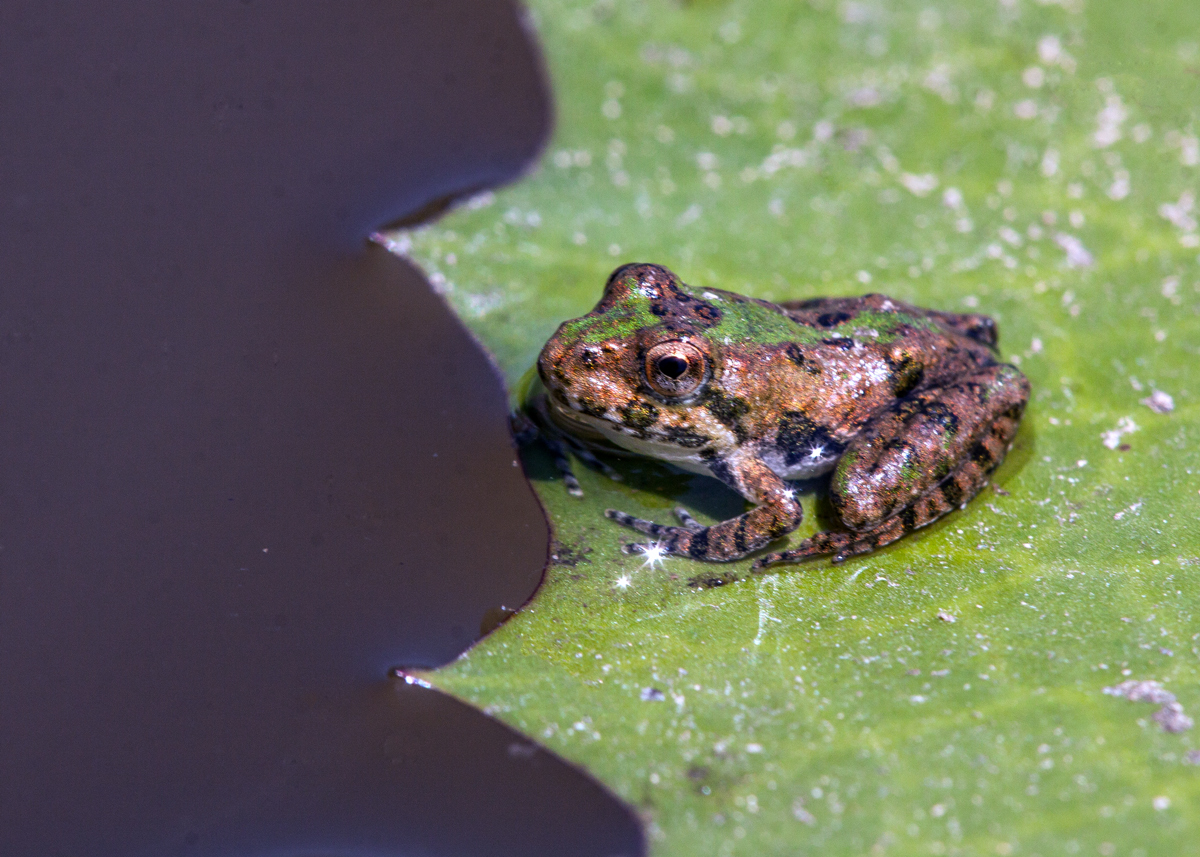
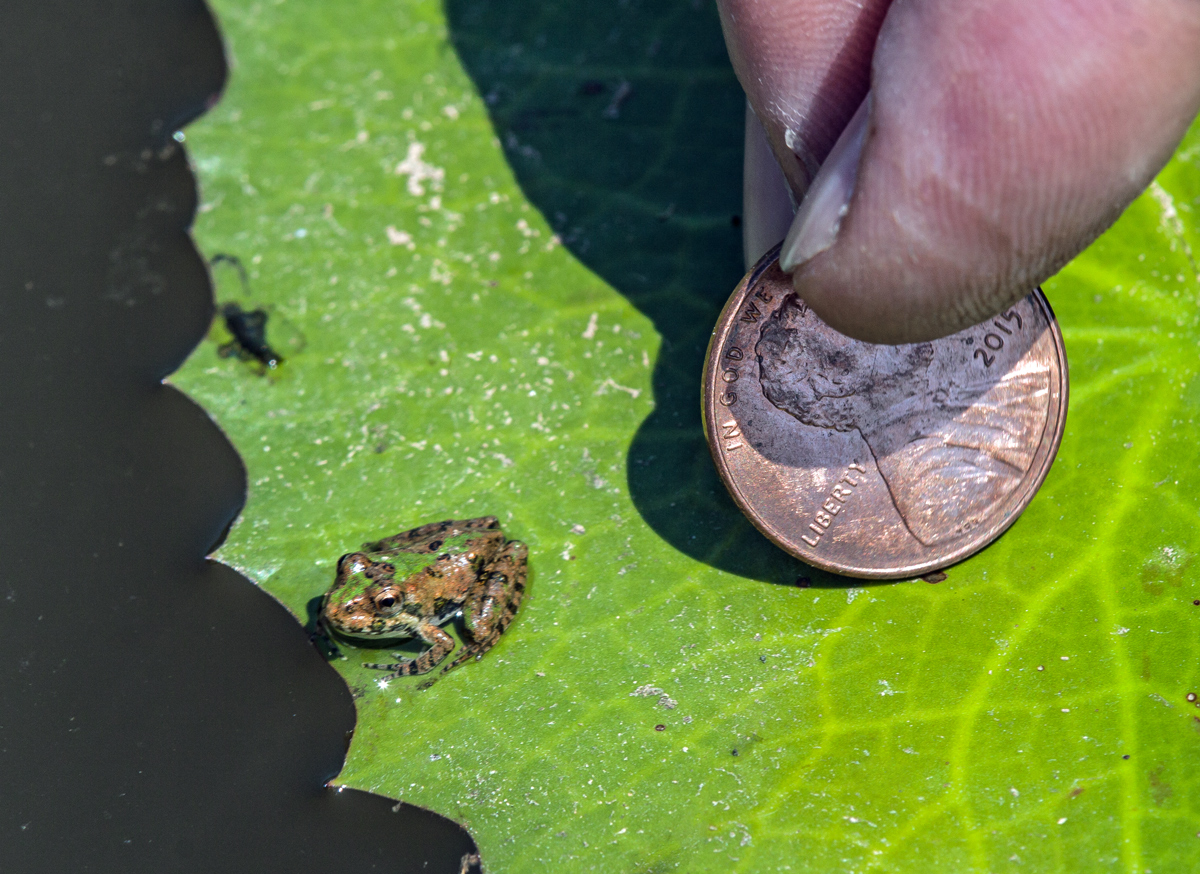
Perched at the edge of a lily pad, this frog at Lilypons Water Gardens was so small that I doubt I would have seen it by myself. However, one of my sharp-eyed fellow photographers spotted it and served as the hand model for the shot with the penny.

A helpful Facebook reader suggested that this is probably a Northern Cricket frog (Acris crepitans) and it certainly does look like the photos that I can find on the internet. Judging from the size of the penny, which is 3/4 of an inch in diameter (19 mm), I’d guess that the frog was less than 3/8 of an inch (9.5 mm) in size.

My fellow photographer tried to move the penny slowly into position, but, as I suspected would happen, the frog jumped away shortly after the second shot below. I would have liked to capture the frog in motion, but ended up instead with a shot of the vacant lily pad—the frog had jumped right out of the frame.

Northern Cricket frog

tiny2_frog_blog

© Michael Q. Powell. All rights reserved.


Read Full Post »

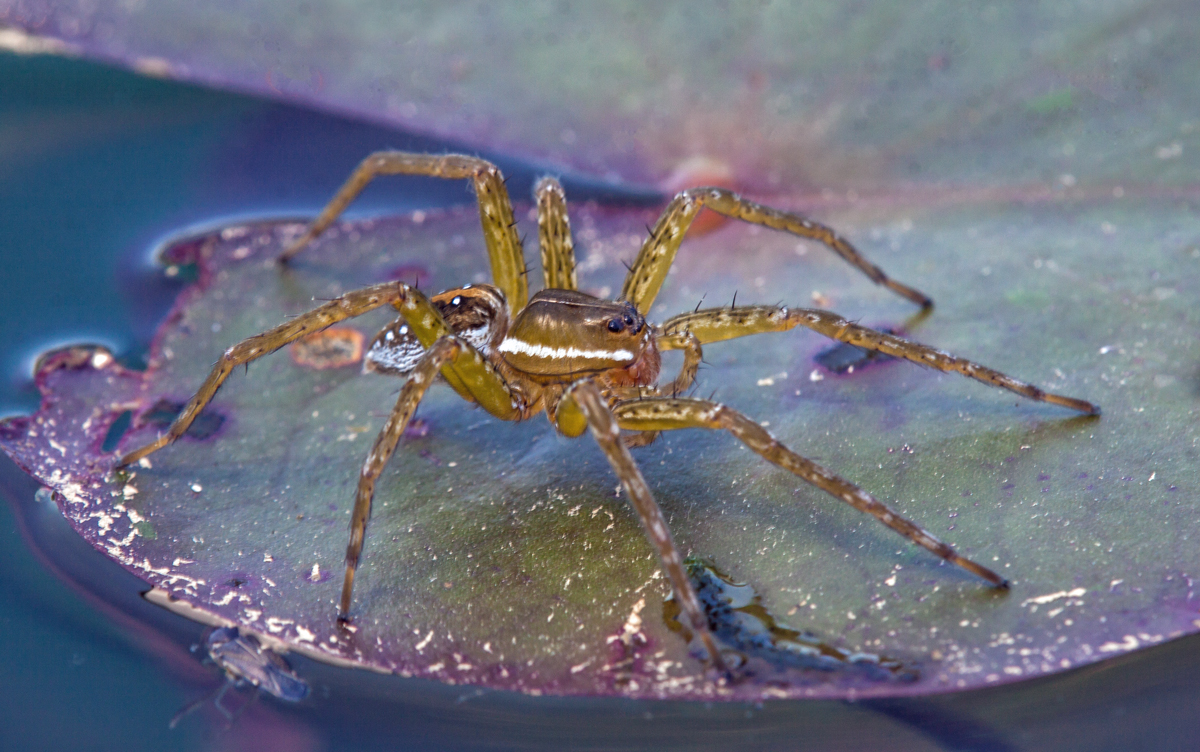
When shot from a relatively low angle, this Six-spotted Fishing spider (Dolomedes triton) looks especially fearsome, although it was actually pretty small, only about an inch (25 mm) or so in length. The spider was perched on a lily pad at Lilypons Water Gardens in Adamstown, Maryland.

Six-spotted Fishing spider

© Michael Q. Powell. All rights reserved.

Read Full Post »

I haven’t taken very many damselfly photos this summer, in part because often I have been attempting to shoot dragonflies with my long telephoto lens. That lens has a minimum focusing distance of almost nine feet (2.7 meters) and it’s hard to see and focus on a tiny damselfly at that distance.

This past weekend, however, I was using my 180mm macro lens and was happy to be able to capture some images of this beautiful female Fragile Forktail damselfly (Ischnura posita) during a trip to Lilypons Water Gardens in Adamstown, Maryland.

Damselflies are really small, but they pack a lot of beautiful details and colors into that tiny package. This particular species is special to me this year, because way back in April a female Fragile Forktail was the first damselfly that I spotted this season and presented in this posting.

Fragile Forktail

© Michael Q. Powell. All rights reserved.

Read Full Post »

I really enjoy photographing familiar subjects, but there is still something really special about finding new ones, like this female Eastern Ringtail dragonfly (Erpetogomphus designatus) that I stumbled upon yesterday during a photo excursion with some friends to Adamstown, Maryland.

The goal of our visit was to explore Lilypons Water Gardens, a large facility that specializes in all kinds of aquatic plants and includes a series of interlocking ponds with waterlilies and lotuses. I suspected that there would be lots of dragonflies and I was not disappointed.

While my friends were photographing the flowers, I started walking along the barely trampled paths that had knee-high grass and other vegetation. Most of the dragonflies that I spotted were familiar friends: Widow Skimmers, Eastern Pondhawks, Slaty Skimmers, Common Whitetails, and Blue Dashers, but a couple that I saw immediately struck me as being new and different.

The very colorful and distinctive rings on the abdomen of today’s featured dragonfly, the Eastern Ringtail, really attracted my attention and somehow reminded me of the photos I had seen of a coral snake. Fortunately the dragonfly, unlike the snake, is not poisonous. I chased the dragonfly for quite a while but never managed to get a shot of it with an uncluttered background—it kept perching on vegetation low to the ground.

When I returned home, I didn’t have a clue where to start with identification, because I hadn’t gotten some of the kind of diagnostic shots that I need, as relative neophyte, to identify a dragonfly. So I did what I usually do in cases like this—I contacted Walter Sanford, my local dragonfly expert. He tentatively identified it as a female Eastern Ringtail and another expert in the Northeast Odonata Facebook group agreed with Walter.

I’m pretty happy with my newest dragonfly find, a species I might have trouble finding again. According to the Maryland Biodiversity Project, the Eastern Ringtail is designated S2, which means that it is rare in the state of Maryland.

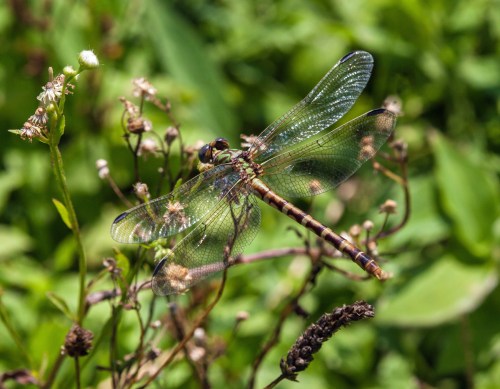
 

Eastern Ringtail

Eastern Ringtail

© Michael Q. Powell. All rights reserved

Read Full Post »

Recently Green Herons (Butorides virescens) have been more numerous than in the past at my local marshland park. Most of the time these little herons are obscured by the vegetation at the water’s edge or by the branches of the trees in which they like to roost.

Early one morning last week, however, I watched one of them stalking potential prey from a log in an open area. The little heron seemed focused, but relaxed. From time to time the Green Heron would become more alert and rigid and he would stare more intently at the water.

On this occasion, they were all false alarms and I didn’t see him catch anything for breakfast. Eventually he seemed to give up and flew off, presumably to a better location for catching something to eat.

Green Heron

Green Heron

Green Heron

© Michael Q. Powell. All rights reserved


Read Full Post »

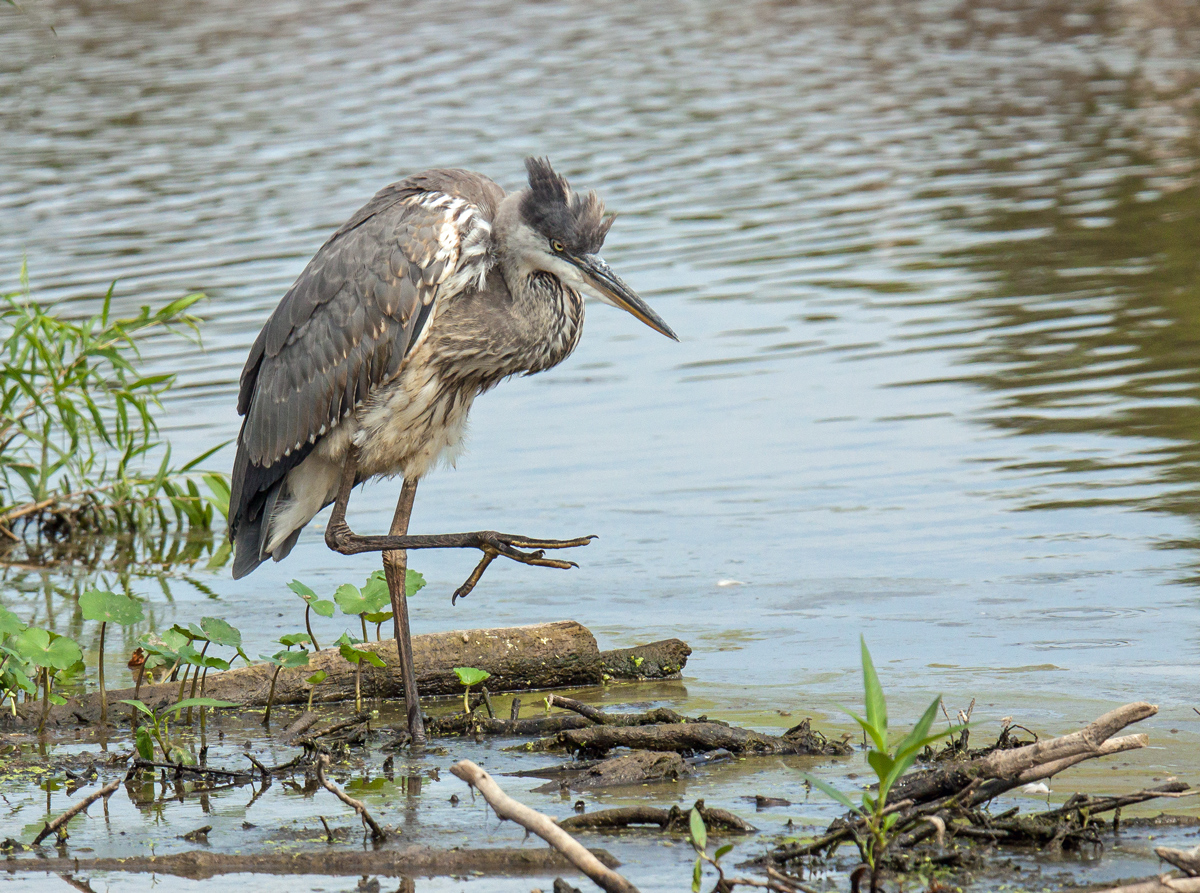
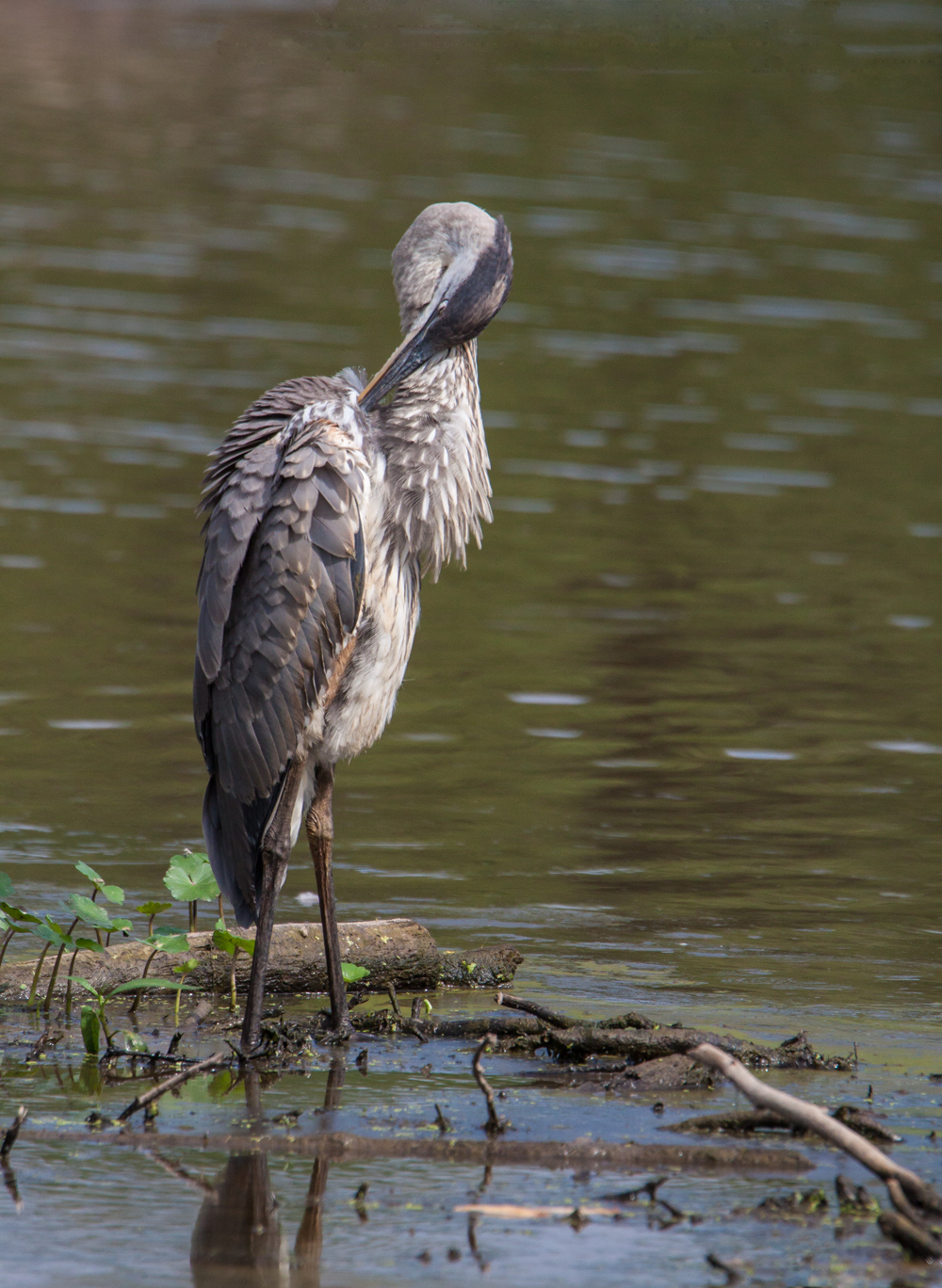
I never tire of watching Great Blue Herons (Ardea herodias) and catching them in fun and unusual poses.

Great Blue Heron

Great Blue Heron

Great Blue Heron


© Michael Q. Powell. All rights reserved


Read Full Post »

On Monday I came across this really cool-looking moth while walking through the woods at Huntley Meadows Park in Alexandria, Virginia. The moth’s distinctive pattern reminds me of the shields used in the Middle Ages by the knights during the Crusades, which is why I want to call it the Crusader moth.

Officially, this is a Clymene Moth (Haploa clymene), a moth of the Tiger Moth family that is found in the eastern part of North America.

As I was doing research, I learned that 18-26 July is National Moth Week.

Go wild!

Clymene moth

Clymene moth

© Michael Q. Powell. All rights reserved

Read Full Post »

It’s fun to watch the Great Egrets (Ardea alba) at Huntley Meadows Park, the local marsh where I take most of my wildlife photos. Unlike the Great Blue Herons (Ardea herodias), who will remain motionless for a long time, the egrets like to move.

Great Egret

Great Egret

This egret’s moves in the initial two images somehow brought to mind the song “Walk Like an Egyptian” by the Bangles. In case you don’t recall that catchy tune or are too young to have heard it, here’s a link to a YouTube video of the song.

I was quite amazed at the variety of moves in the egret’s repertoire and the expressive way that it was able to use its neck, sometimes tucking it in and sometimes fully extending it. Here are a few more shots from the egret’s performance.

Great Egret

Great Egret

Great Egret

I think with a little more practice the egret will be ready for “Dancing With the Stars” or “So You Think You Can Dance.”

© Michael Q. Powell. All rights reserved

Read Full Post »

In vain I have searched this month for Common Sanddragon dragonflies at the places where I spotted them earlier this season. My good friend and fellow photographer and blogger, Walter Sanford, captured some beautiful shots of the last ones that we spotted. Be sure to check out the other wonderful photos and fascinating information in his blog.

waltersanford's avatarwalter sanford's photoblog

Common Sanddragon (Progomphus obscurus) is a member of the Clubtail Family of dragonflies that is spotted during June and July in mid-Atlantic United States like Virginia. Common Sanddragons are habitat specialists that prefer sandy woodland streams, so don’t look for them in wetland areas like the hemi-marsh at Huntley Meadows Park.

This post features two male Common Sanddragon dragonflies, as indicated by their terminal appendages. As fate would have it, they are the last Sanddragons spotted during Summer 2015.

The water level was near the top of the stream banks after near record-setting rainfall for the month of June. (Notice the discoloration of the vegetation from siltation during a recent flood.)

A Common Sanddragon dragonfly (Progomphus obscurus) spotted at Dogue Creek, Huntley Meadows Park, Fairfax County, Virginia USA. This individual is a male. 29 JUN 2015 | Huntley Meadows Park | Common Sanddragon (male)

The conditions for hunting Sanddragons were less than ideal. Male Common Sanddragons prefer perching on a sandy beach, facing the water; there weren’t any beaches, so Sanddragons were…

View original post 178 more words

Read Full Post »

Sunrise yesterday was at 5:59 and I managed to get this shot of a beautiful little fawn in the cattails at 6:05, when there was just barely enough light for my camera to focus.

Summer weather in the Washington D.C. area is often miserable—hot and humid—and I decided to visit my local marshland park really early to avoid some of the oppressive heat. When I left my house in the pre-dawn darkness, however, it was already 80 degrees (27 degrees C) on a day that was forecast to reach 96 degrees (35 degrees C).

I could hear a lot of movement in the marsh as I made my way along the board walk and occasionally would catch a glimpse of some activity as it grew progressively lighter. I encountered another photographer and he was the one who spotted the fawn and pointed it out to me—I am pretty sure that I would not have seen it without his help.

We didn’t see any adult White-tailed deer (Odocoileus virginianus) with the fawn, but their presence could easily have been hidden by the thick stand of cattails. I had time to snap off only a few photos before the fawn slowly turned his back on us and slowly faded into the background.

What a wonderful way to start my day.

fawn

© Michael Q. Powell. All rights reserved

Read Full Post »

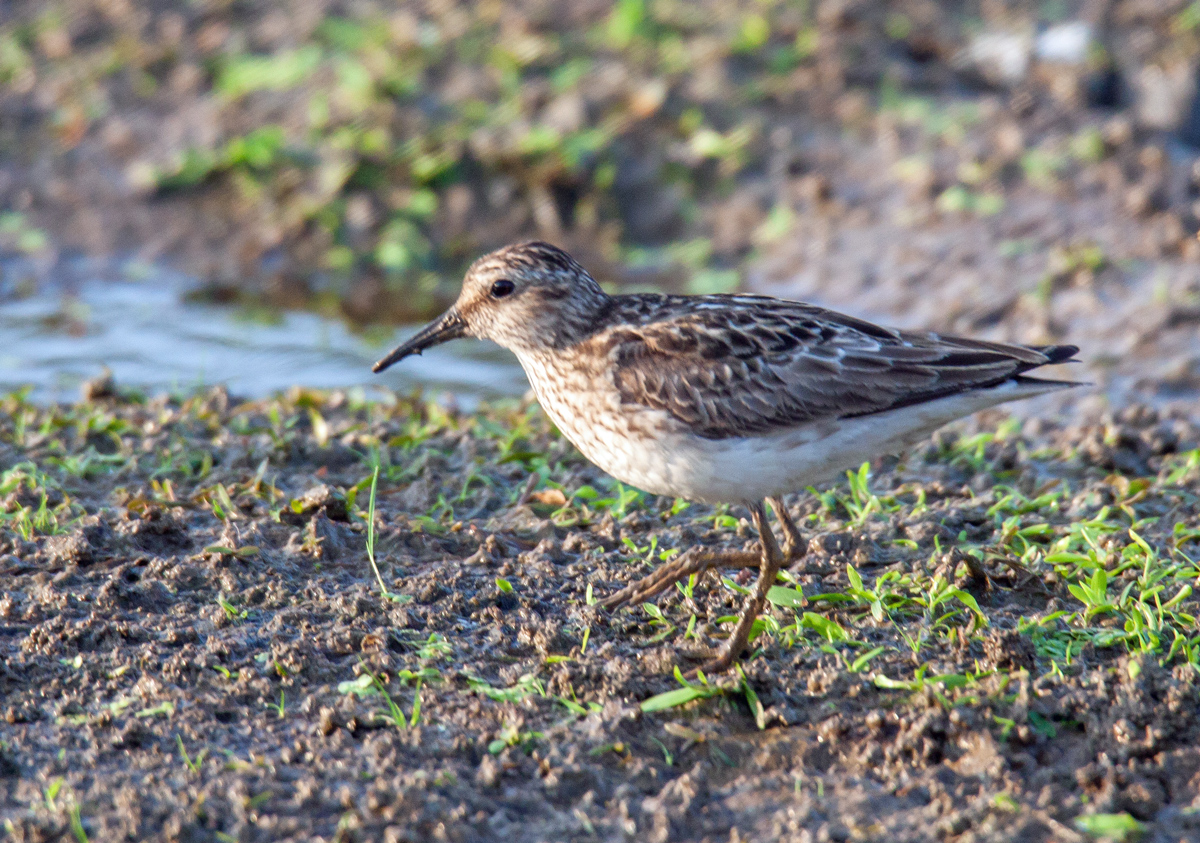
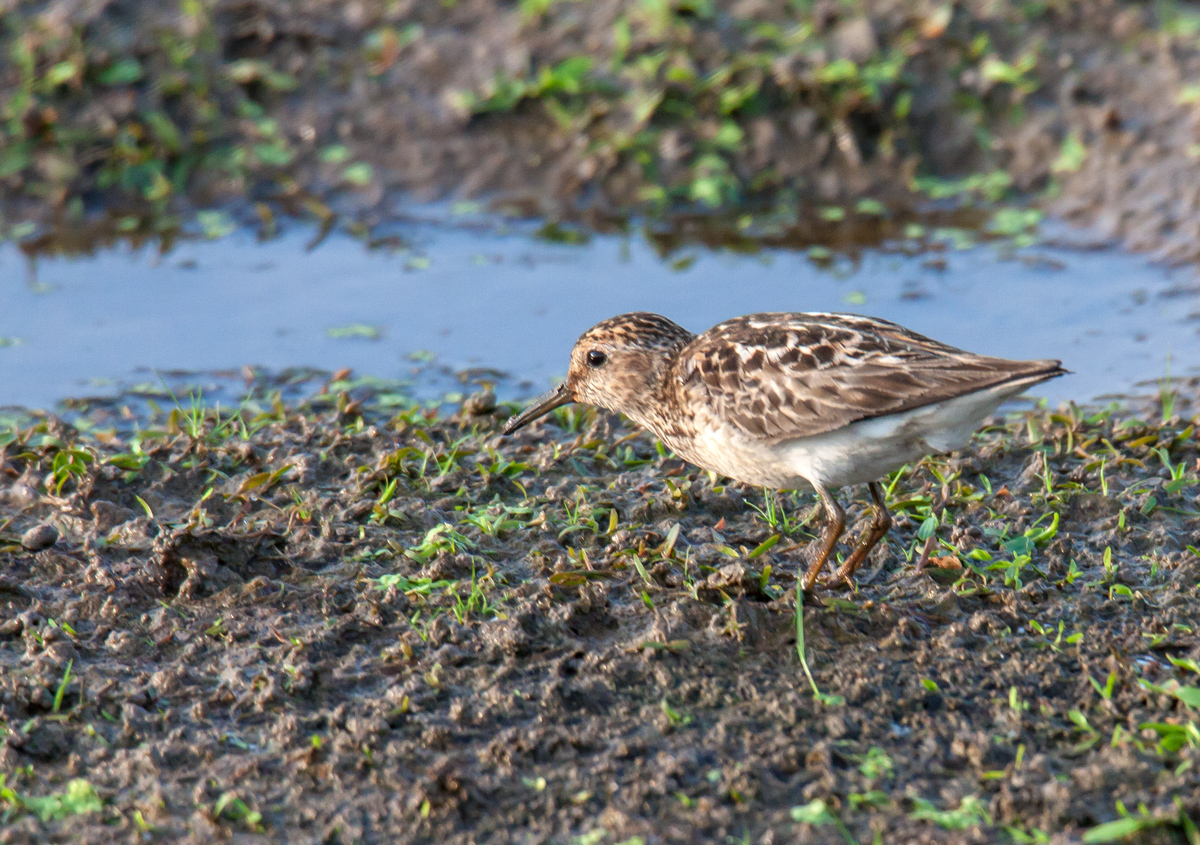
I can’t help but wonder if Least Sandpipers (Calidris minutilla) suffer from an inferiority complex, surrounded as they are by “Great” Blue Herons and “Great” Egrets.

Early Saturday morning, I spotted a small flock of these tiny birds at my local marsh in an area where the water levels were really low, revealing a muddy area with shallow pools of water that seemed perfect for these little wading birds. According to the Cornell Lab of Ornithology website, the Least Sandpiper is the smallest shorebird in the world, weighing in at about one ounce (28 grams) and measuring five to six inches long (13-15 cm).

I suspect that these Least Sandpipers are in the process of migration, probably eventually heading further south. At this time of the year we start to see all kinds of unusual birds that make brief stops at my local marshland on their way to more distant destinations.

Least Sandpiper

Least Sandpiper

Least Sandpiper

© Michael Q. Powell. All rights reserved

Read Full Post »
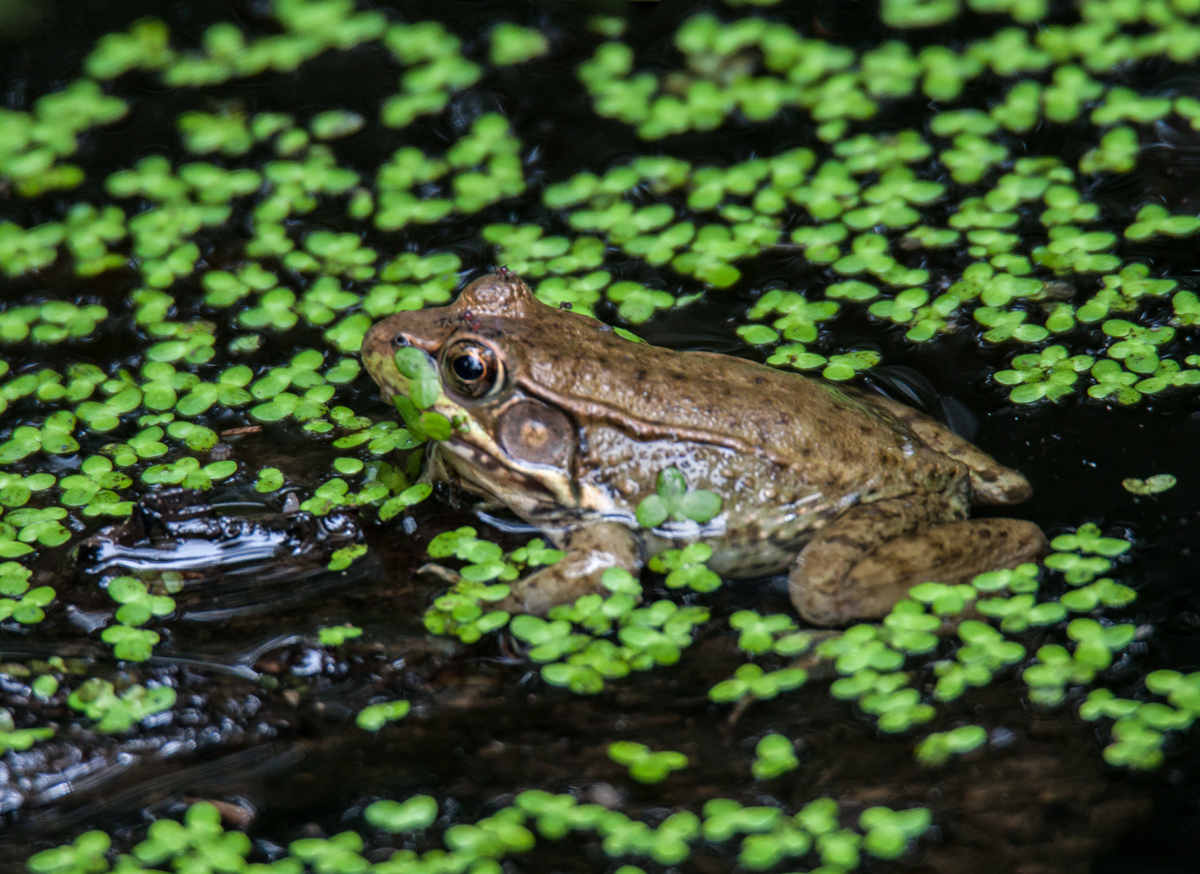
When a friend pointed toward a small pond and said he saw a bronze frog, I thought he was talking about a metal figurine. I had never even heard of bronze frogs and certainly had not seen one before.

Bronze Frogs (Rana clamitans clamitans) are a subspecies of the Green Frog (Rana clamitans) and I must confess that I really can’t tell them apart from the other subspecies, the Northern Green Frog (Rana clamitans melanota), because there is a significant amount of color variation.

Identification aside, I really like the way that this frog is surrounded by and partially covered with duckweed as he tries to stay cool on a hot day in July.

bronze frog

© Michael Q. Powell. All rights reserved

Read Full Post »

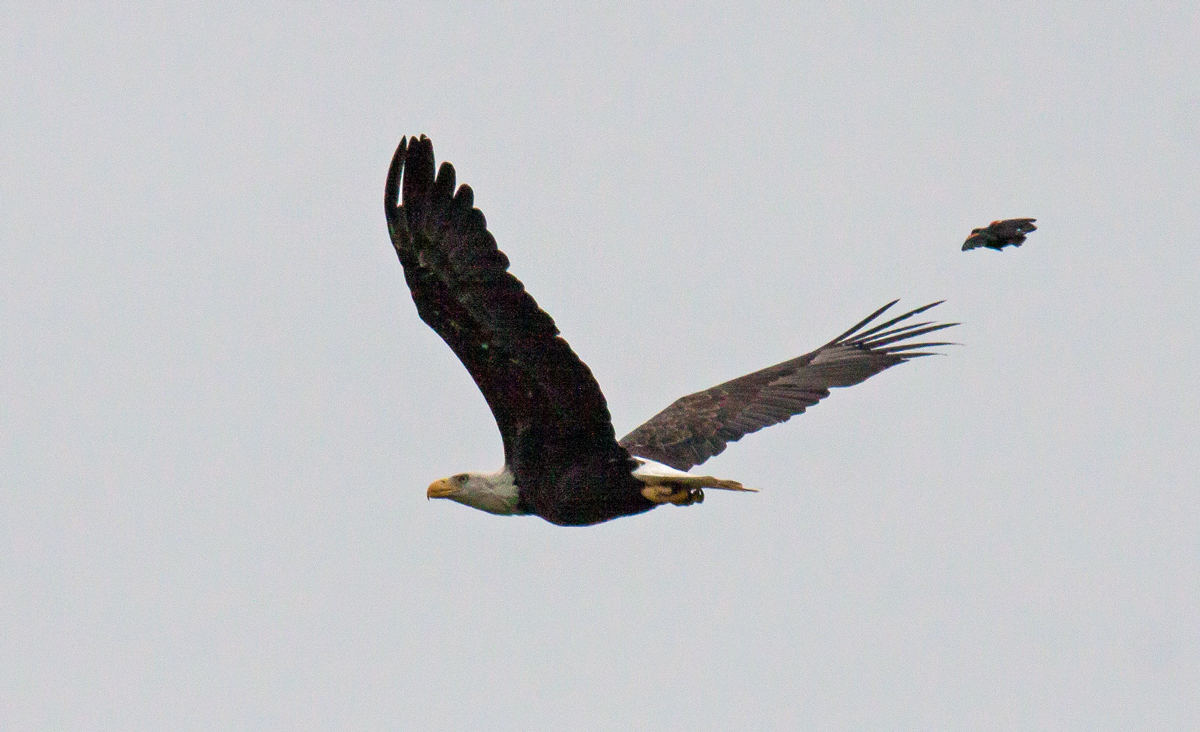
The Red-winged Blackbird (Agelaius phoeniceus) was either really brave or really foolish chasing a Bald Eagle (Haliaeetus leucocephalus) across the sky early yesterday morning at Huntley Meadows Park in Alexandria, Virginia.

Bald Eagle chase

I did manage to get a few other shots (below) in which the eagle’s wings are in more photogenic positions, but the blackbird is farther away from the eagle in each of them.

Bald Eagle chase

Bald Eagle chase

© Michael Q. Powell. All rights reserved

Read Full Post »
What do adventurous young grasshoppers do for fun? Hopping may be ok for the average grasshopper, but this little guy prefers the adrenaline rush he feels when he scales the sheer face of a rocky cliff with no ropes or other climbing gear.

grasshopper

The truth is a little less exciting than my fiction. The angle was not as steep as it looks in the shot and the “rock” is actually a rotten log.

I still choose to believe that grasshoppers like a little adventure in their lives. Who knows what they do when we are not watching?

© Michael Q. Powell. All rights reserved

Read Full Post »

Safe inside the confines of an enormous lily pad, this little frog calmly watched the crowds of people last weekend in Washington D.C. at the Lotus and Water Lily Festival at Kenilworth Park and Aquatic Gardens.

frog on a lily pad

You can’t help but noticed that this is not your average lily pad. I believe that it is a tropical variety that comes from the Amazon River basin of the genus Victoria, possibly Amazonica victoria. According to Wikipedia, the leaves of this species can grow as large as 10 feet in diameter (3 meters), although this one was probably less than three feet (one meter) in size. Clearly it had no problem supporting the weight of the little frog.

Readers who follow my photography know that I love to try to get in close to my subjects, irrespective of whether I am shooting with a telephoto lens or a macro lens, and this was no exception. There was a waist-high wire fence around the cement pond in which the water lilies were growing, so I had some limitations in framing my shots, but did manage to get this shot of the frog looking over the edge of lily pad.

frog on a lily pad

© Michael Q. Powell. All rights reserved


Read Full Post »

Do you find yourself shooting the same subjects over and over? I often take repeated pictures of familiar subjects, knowing that the weather, the lighting conditions, the environment, and the subject’s pose will be different each time.  Although I try to control the exposure, the framing, and the angle of view, I am sometimes pleasantly surprised at the results.

I don’t see Spangled Skimmer dragonflies (Libellula cyanea) very often, so I was happy to spot this beautiful male last week. The markings on the wings are so distinctive that it is pretty easy to identify a member of this species when I do come upon one. (The second shot gives a really good view of those markings.)

I like the way that the background turned out in these shots and I have captured pretty detailed images of a Spangled Skimmer. I am confident, though, that I will be snapping away again if I stumble across another one. Who knows what kind of a photo I might be able to capture the next time?

Spangled Skimmer

Spangled Skimmer

© Michael Q. Powell. All rights reserved

Read Full Post »

When damselflies are connected in the tandem mating position, they are large enough to be noticed, especially when they fly right by me, as was the case this past Friday. They were pretty skittish, but I managed to get a couple of relatively clear shots.

My identification task was greatly eased by the fact that these were not one of the multiple blue species that inhabit my local marshland park—there was only a little blue on the tip of the male’s abdomen. Imagine my shock when I learned that these damselflies are Blue-tipped Dancers (Argia tibialis). In my experience, names generally are not that helpful when it comes to identification, but this is an obvious exception.

Sharp-eyed readers may notice that these damselflies look a bit like the one currently featured in the banner of my blog. That damselfly is a Violet Dancer, a subspecies of the Variable Dancer species (Argia fumipennis). Apparently damselflies do a lot of dancing!

If you are interested in seeing some photos and descriptions of the bluet family of damselflies at our local park, check out this recent posting by fellow blogger and photographer Walter Sanford entitled Blue for Bluets.

Blue-tipped Dancer

Blue-tipped Dancer

© Michael Q. Powell. All rights reserved


Read Full Post »

« Newer Posts - Older Posts »