Feeds:
Posts
Comments

Archive for the ‘Macro Photography’ Category

I tend to think of pollen as yellow, but it comes in other colors too. This past weekend I captured this shot of a bee covered in bright red pollen from the Purple Deadnettle flowers (Lamium purpureum) on which it was feeding. Earlier this spring I did a posting with a somewhat similar shot, but misidentified the plant as the closely-related Henbit (Lamium amplexicaule).

Purple Deadnettle is in the mint family and seems to be everywhere at this time of year. I was in a fairly remote area when I took this shot, but I have seen large patches of it in gardens, where it is considered to be a weed. According to an article entitled “Foraging for Purple Dead Nettle: an edible backyard weed,” the plant is not only a wild edible green, but a highly nutritious superfood. The leaves are edible, with the purple tops being even a little sweet. It can also be used in combination with other “weeds” like chickweed and dandelion greens to make pesto and can also be added to soups, salads, or blended into smoothies.

But wait, there is more. Purple Dead Nettle also has purported medicinal benefits. It is known in the herbal world as being astringent, diuretic, diaphoretic and purgative. It’s also anti-inflammatory, anti-bacterial, and anti-fungal and can be used to make salve, poultices, and teas.

As an interesting aside, in Great Britain this plant is apparently known as Red Deadnettle. Why is there a difference in names? I do not know why, but it is not all that surprising considering the number of different words the British use for common objects and the different spellings for common words.

bee

© Michael Q. Powell. All rights reserved.
 

Read Full Post »

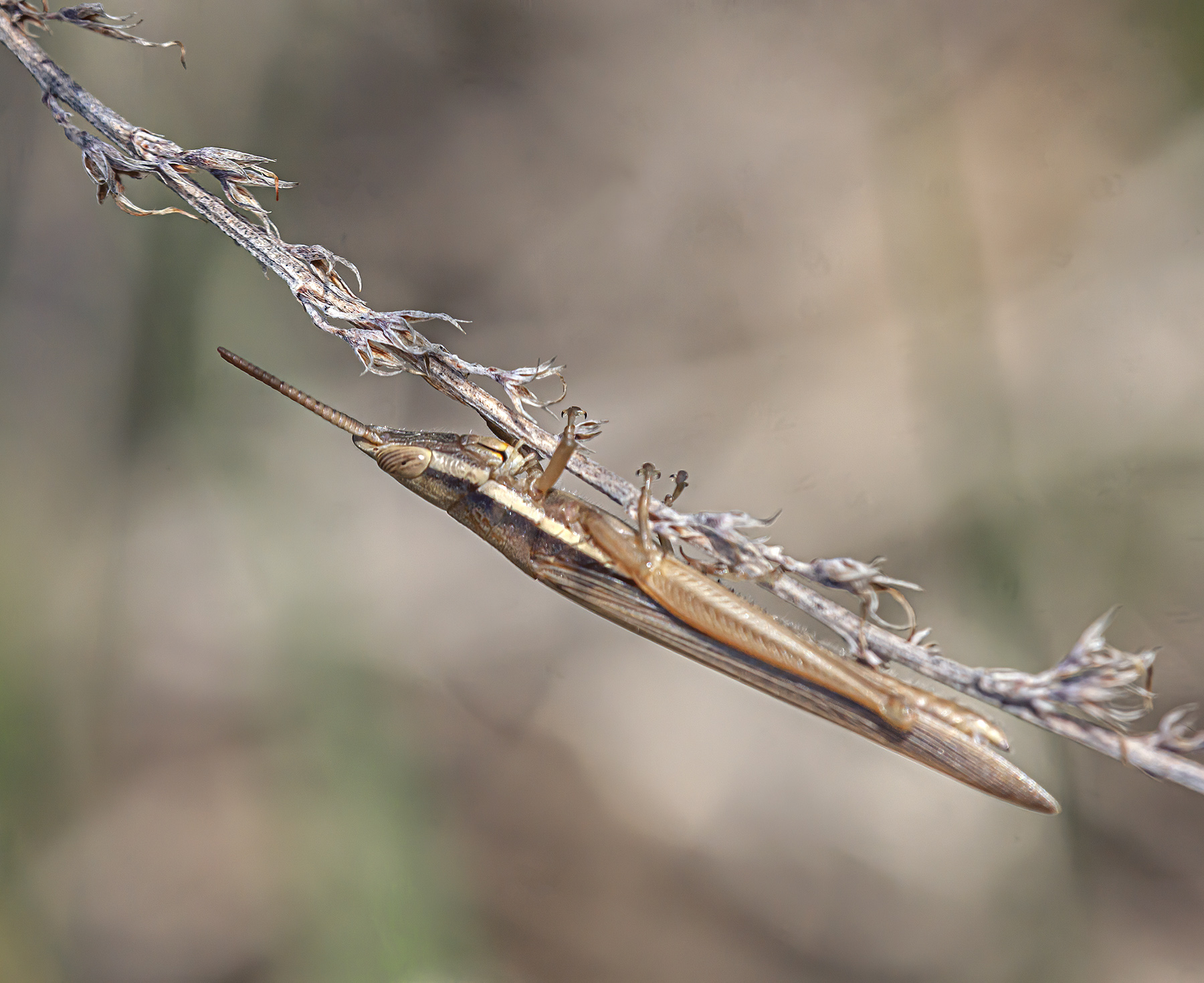
Have you ever stopped to look closely at grasshoppers? They come in all shapes, sizes, and colors. I spotted this elongated one with fluted, unicorn-like antennae this past week at Occoquan Bay National Wildlife Refuge. I knew that I had seen one like this before, but could not recall its name. After some research, I rediscovered that it is the colorfully-named Cattail Toothpick Grasshopper (Leptysma marginicollis).

If you try chasing grasshoppers, you will discover that they often stay in place after the first hop, giving you a chance to examine them for a moment before they hop away.

So whether you are in your backyard or in a park, be sure to check out the grasshoppers. You might be surprised by what you discover.

Cattail Toothpick Grasshopper

© Michael Q. Powell. All rights reserved.

Read Full Post »

One of the earliest dragonflies to emerge in the spring in our area is the Blue Corporal (Ladona deplanata). Adult males are bluish in color and both the male and the female have two white stripes on their thoraxes in an area that you might think of as their shoulders. In the military of the United States, the rank insignia for corporals is two stripes, which accounts for that portion of the common name for the species.

The dragonfly in the first photo is a female Blue Corporal. She will remain that tan color for her entire life. If you look closely at the very tip of her abdomen (the “tail”) and compare it with the same area of the dragonfly in the second image, you can probably see some physiological differences. This is often the best way to tell the gender of a dragonfly.

The dragonfly in the second photo is a newly emerged male Blue Corporal, a stage known as teneral. During this stage, the wings are very clear and shiny and are very fragile. As the male matures, he will gradually turn bluish in color. His corporal stripes may turn light blue and eventually fade away.

You probably noted that the male Blue Corporal is perched flat on the ground—this is the most frequent perching position for this species. I was a little surprised that the female in the first photo was perching vertically a few inches above the ground, but I am not complaining, because it gave me a better chance to get a photo of her wings.

It is still a bit early in the season for dragonflies, so I was really happy to spot these two on Wednesday at Occoquan Bay National Wildlife Refuge. The refuge is still open and there were a number of other cars in the parking lot when I arrived. All of the other visitors, though, seemed to be either birding or walking in other areas of the refuge, leaving me the chance to muck about at the edge of a small pond all by myself, safely distanced from human contact.

Blue Corporal

Blue Corporal

© Michael Q. Powell. All rights reserved.


Read Full Post »

This insect is fuzzy like a bee and acts as a pollinator as it sips nectar, but it is not a bee, it is a fly, a Greater Bee Fly (Bombylius major). Are you confused yet? Unlike bees, bee flies have only two wings instead of four, large eyes, skinny long legs and very short antennae. Bee flies also seem hyperactive, hovering in midair rather than landing as they suck up the nectar with a really long proboscis and thereby avoiding potential predators like crab spiders.

When I did a little research, though, I learned that bee flies have a dark side. According to an article entitled “A Pollinator With a Bad Reputation” by Beatriz Moisset, “The reason why it diligently hovers over bare ground early in the spring is that it is looking for bee nests, probably the same ones with which they compete for nectar. The bees dig tunnels and lay their eggs at their bottoms after collecting enough pollen to feed the larvae. This requires numerous trips, thus the bee fly takes advantage of the mother’s absence and lays its eggs in such nests. Making use of its flying prowess, it does not even need to land but it flicks its abdomen while hovering over the open burrow, letting one egg fall in or near it. The fly larva finds its way to the chamber where the mother bee has laid the provisions and the egg and proceeds to feed on the stored pollen. Afterwards it devours the bee larvae; when it is fully grown, it pupates and stays inside the nest until next spring.”

I was inspired to post this image by a recent posting by Pete Hillman entitled “Dark-edged Bee Fly” that featured a similar bee fly. In my zeal to post photos of all of the ephemeral wildflowers I had seen this spring, like the Virginia Spring Beauties in this photo, I had forgotten about this bee fly.

You may notice that the bee fly’s wings are blurred in this— image and assume that I was shooting with a slow shutter speed. I checked the EXIF data for the shot and found that the shutter speed was 1/2500 second—I think that it had consumed as much coffee as I had that late March morning. I recommend that you click on this image to see all of the amazing details of this fascinating insect, the Greater Bee Fly.


Greater Bee Fly

© Michael Q. Powell. All rights reserved.

Read Full Post »

When I first saw some tiny little flies buzzing around in the garden of my neighbor and photography mentor Cindy Dyer, I knew that they were not bees. I could tell that they were hover flies, because of the way they acted, or perhaps you know them as flower flies, because of where they can be found most often.

As I observed the flies, I was attracted to the beautiful, elaborate patterns on their bodies and realized that this was a different species of hover fly than I was used to seeing. Unfortunately, according to Wikipedia, there are over six thousand hover fly species worldwide. How could I possibly identify this species?

I was shocked, amazed, and delighted when a Facebook viewer informed me that this species is known as the Eastern Calligrapher Fly (Toxomerus geminatus). I love the thought of someone hand drawing the delicately etched pattern with pen and ink, creating a miniature work of art.

If you want to learn more fun facts about this cool little fly, check out an article from riveredgenaturecenter.org entitled “Bug o’the Week–Eastern Calligrapher Fly” by clicking on the name of the article.

Eastern Calligrapher Fly

Eastern Calligrapher Fly

© Michael Q. Powell. All rights reserved.

Read Full Post »

I finally photographed my first damselflies of the spring on Wednesday during during a brief visit to Jackson Miles Abbott Wetland Refuge. I spotted the female Eastern Forktail damselfly (Ischnura verticalis) in the first image as she perched on a log in a mini-wetland area adjacent to a small pond. In addition to capturing the damselfly itself, I am really happy with the way that the texture of the bark and the interplay of the light and shadows turned out in the shot.

The second shot shows a male Fragile Forktail damselfly (Ischnura posita), one of the few damselflies that I am able to identify with a relatively high degree of confidence. On males of this species (and most females too), the shoulder stripe is interrupted and looks like an exclamation point. I like the way that the muted colors of the dried-out vegetation on which this damselfly was perched  help to make its colors stand out and draw a viewer’s eyes to the main subject.

I will almost certainly get more and better shots of damselflies in the upcoming months, but there is something special about stopping for a moment to celebrate images of my first damselflies each year.

Eastern Forktail

Fragile Forktail

© Michael Q. Powell. All rights reserved.

Read Full Post »

Yesterday I was excited to spot several tiny Eastern Tailed-Blue butterflies (Everes comyntas) during a brief visit to Jackson Miles Abbott Wetland Refuge. What was particularly striking was that these delicate butterflies were perched with their wings partially open, revealing a spectacular blue color. I maneuver to position myself almost directly above one perched close to the ground, waited for it to open its wings fully, and captured this shot.

If you click on this image, you can get a better look at the marvelous details of this male Eastern-Tailed Blue, including the tiny “tails” and the little orange chevrons at the bottom of the hind wings. I was struck by the apparent asymmetry of the butterfly’s wings—the right wings look bigger than those on the left—but wonder if that is simply a consequence of the angle at which I took the shot or perhaps the wings were not fully open and were at slightly different angles.

Eastern Tailed-Blue

© Michael Q. Powell. All rights reserved.

Read Full Post »

When I saw this insect sipping nectar from a Spring Beauty wildflower on Tuesday, I was sure that it was some kind of wasp or hornet. Bees, I thought, do not have such narrow waists. I was wrong. Some of the experts at bugguide.net identified my insect as a male Nomad Bee (genus Nomada).

Nomad Bees are the largest genus of kleptoparasitic “cuckoo bees,” according to Wikipedia. “Kleptoparasitic bees are so named because they enter the nests of a host and lay eggs there, stealing resources that the host has already collected.” Nomad bees do sip nectar like other bees, as you can see in my photos, but do not collect pollen to feed their offspring.

I remember being shocked the first time that I read about cuckoos and cowbirds deliberating laying their eggs in the nests of other birds to avoid having to build their own nests and raise their own babies. I guess I can add nomad bees to the list of deliberately delinquent parents.


nomad bee

nomad bee

© Michael Q. Powell. All rights reserved.

Read Full Post »

Most of the time when I see spiders, it is because I spot their webs first.  Some spiders, though, rely exclusively on speed to capture unsuspecting prey, like this Six-spotted Fishing Spider (Dolomedes triton) that I spotted on Monday at Jackson Miles Abbott Wetland Refuge.

Fishing spiders sit at the edge of the water with some of their long legs fully extended. When they sense vibrations of a potential prey on the surface of the water, fishing spiders can walk on the water to seize insects, vertebrates, tadpoles and occasionally small fish or even dive underwater up to 7.1 inches (18 cm), according to Wikipedia.

When I first spotted this fishing spider, it was perched on a semi-submerged log, as shown in the second image below. The spider somehow sensed my presence and ran towards some vegetation at the edge of the water. I was able to maneuver to a position from which I was looking almost directly down at the spider and captured the first image which makes the spider look rather large and menacing, which is why I selected the photo as the featured image.

six-spotted fishing spider


six-spotted fishing spider

© Michael Q. Powell. All rights reserved.

Read Full Post »

I love ladybugs and was thrilled to spot this one on Monday at Jackson Miles Abbott Wetland Refuge. When I posted this photo on Facebook, one viewer noted that this is a Multicolored Asian Lady Beetle (Harmonia axyridis), a non-native species that has become the most common species in the United States since it was deliberately introduced into the country in 1916 in an attempt to control the spread of aphids.

How can you tell a native ladybug from the Asian ladybug? Several sources on-line note that the Asian ladybug has a white marking behind its head in the openings of what looks like a black M, as you can see on the ladybug in my photo. If you are interested in learning more about the differences, check out this fascinating article at thespruce.com, The Differences Between Ladybugs and Asian Lady Beetles.

Whether native or not, this ladybug in my eyes is beautiful. If you want to see something really cool, click on the photo and check out the details on the ladybug’s front foot. I never knew that ladybugs have two tiny toes.


ladybug

© Michael Q. Powell. All rights reserved.

Read Full Post »

I have not yet seen any large spiders this spring, but I have run across a few long-jawed spiders. The bodies of long-jawed orb weaver spiders of the Tetragnathidae family tend to be thin and they have extremely long legs of varying lengths. Most often I find them on vegetation overhanging the water, which in this case was a small pond at Jackson Miles Abbott Wetland Refuge.

long-jawed spider

© Michael Q. Powell. All rights reserved.


Read Full Post »

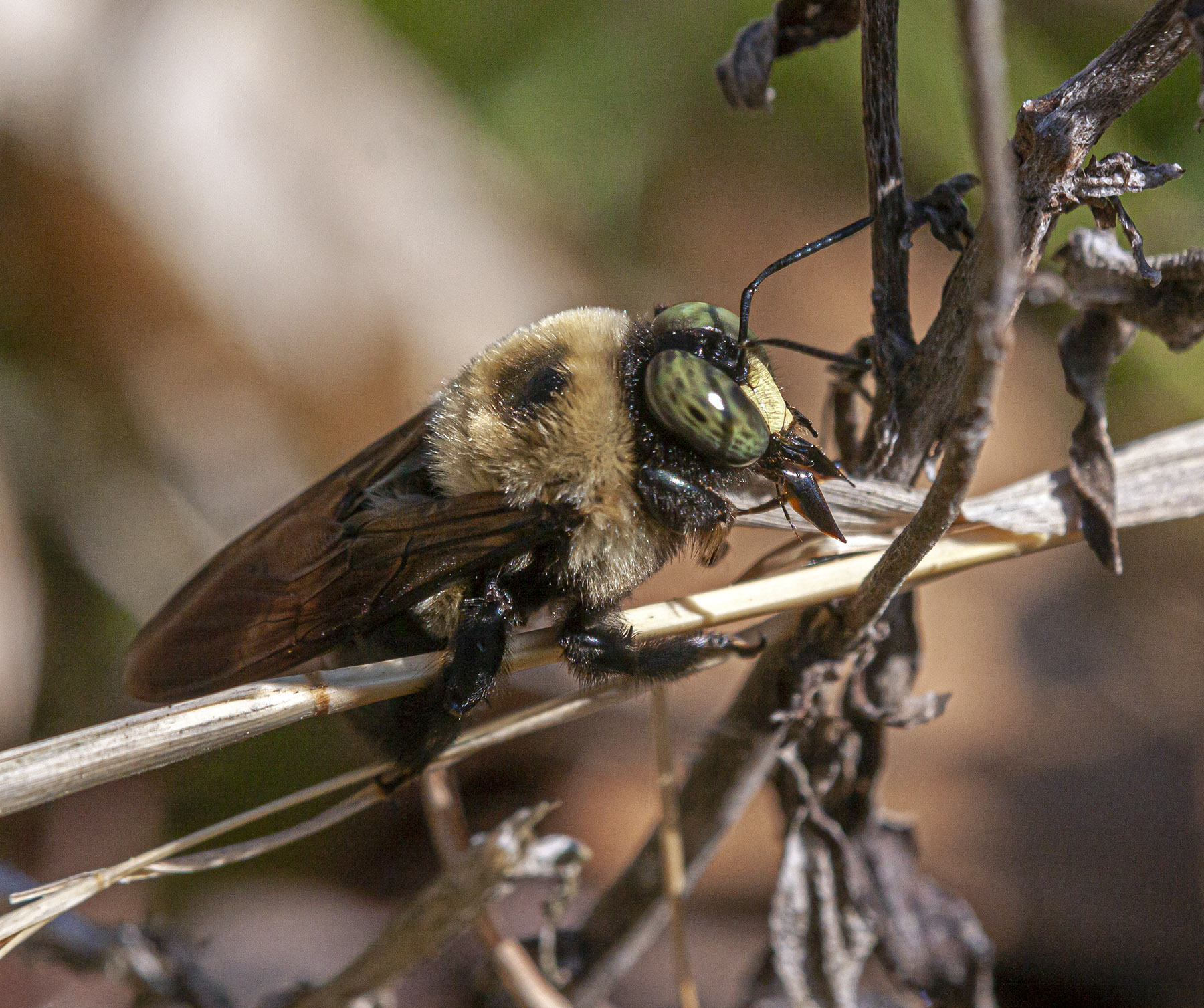
Did you know that some bees have green speckled eyes? I was really startled by the brightness of this bee’s eyes as I was taking its photo last Monday while exploring in Prince William County, Virginia. Some research on-line revealed that this is a male Eastern Carpenter Bee (Xylocopa virginica).

I was pretty sure that I had never before seen a bee like this, but I was wrong. As I was preparing this posting, I discovered that I had seen a similar bee in October 2012 and published a posting entitled “Green-eyed Eastern Carpenter bee.” Wow. It’s been a long time between sightings, so maybe I can be forgiven for having forgotten about the previous time, though at my age I can simply claim that I had a “senior moment.” Ages has its privileges.

Eastern Carpenter Bee

© Michael Q. Powell. All rights reserved.

Read Full Post »

This week I did a pair of postings in a single day that I called “beauty and the beast” that was so well received that I thought I would do it again. Earlier this morning I did the “beauty” part with a shot of some crabapple blossoms in my front yard. For the “beast” part, I decided to feature this shot of a little orchard spider (Leucauge venusta) in the garden of my neighbor, fellow photographer and blogger Cindy Dyer. The spider was hanging in the midst of a group of irises that have not yet bloomed and I was happy to be able to be able to frame the shot so you have a sense of the spider’s environment.

As always, I offer my apologies to those who are creeped out by spiders, and recommend that you check out the crabapple posting if you have not seen it yet. As for me, I find spiders to be always fascinating and often beautiful.

orchard orbweaver spider

© Michael Q. Powell. All rights reserved.

Read Full Post »

The two-colored tulips in the garden of my neighbor and friend Cindy Dyer were open yesterday and they are awesome. The first macro shot makes the tulip look almost like a little pinwheel. The second shot gives you a greater sense of the colors and patterns in these beautiful tulips—the delicate feathering of the red on the yellow petals is simply breathtaking.

tulip

tulip

© Michael Q. Powell. All rights reserved.

Read Full Post »

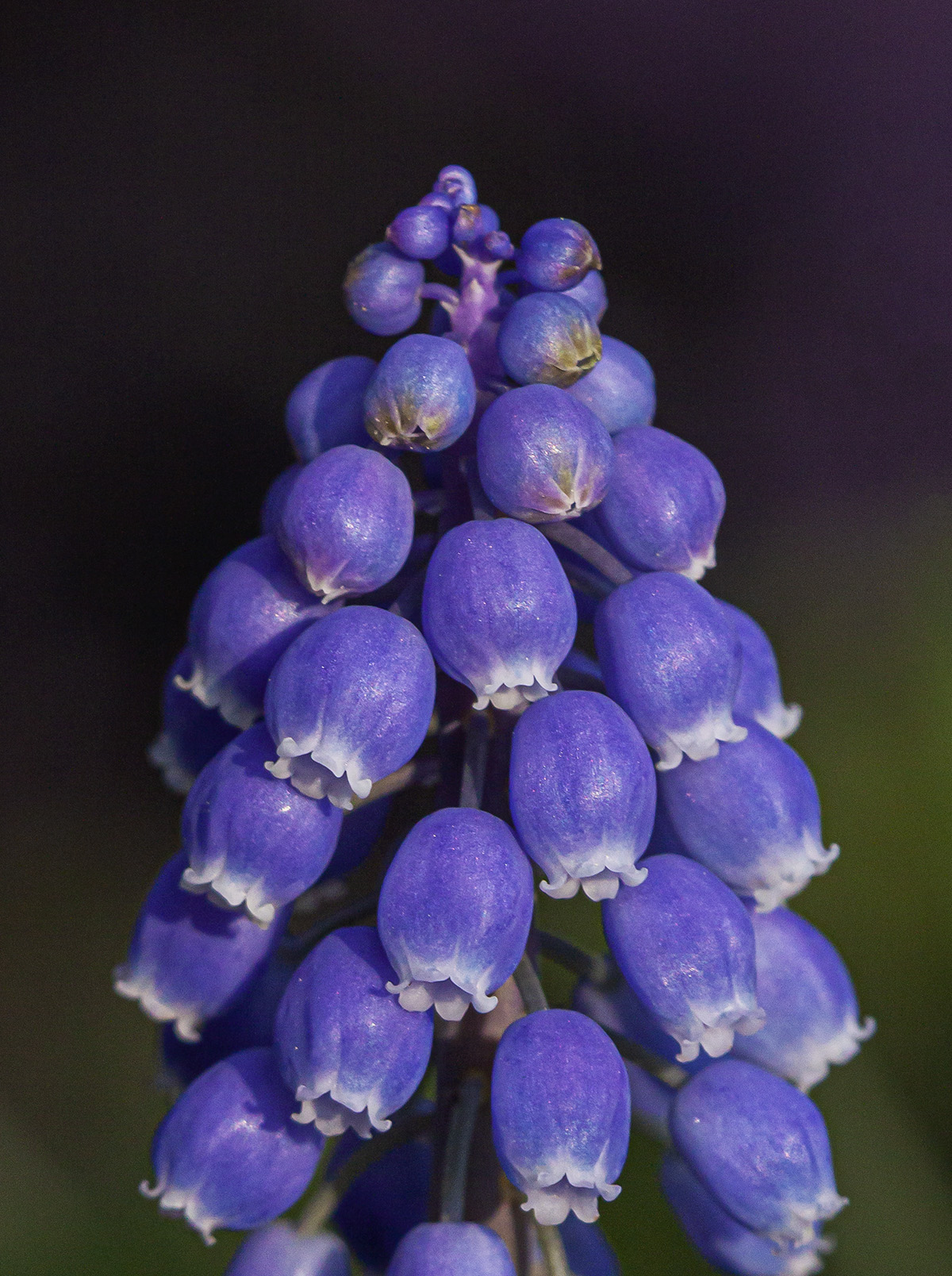
Beauty is everywhere. A few minutes ago I walked over to the garden of my friend and neighbor Cindy Dyer and captured this modest image of a little grape hyacinth (g. Muscari). I just love that vibrant violet color.
So often, taking photos is a multi-hour endeavor for me. Normally I pack my gear and head off to remote locations and walk and walk, watching and waiting for opportunities to arise. It definitely is not normal now, so I am relearning the joy of taking photos in small doses, a few minutes here and a few minutes there. Perhaps I won’t capture stunning action shots, but I am convinced that the words with which I began this posting are true—beauty is everywhere.
grape hyacinth
© Michael Q. Powell. All rights reserved.

Read Full Post »

Whenever I have my macro lens on my camera, I tend to scan small areas very carefully, looking for variations of color and patterns or signs of movement. The colorful markings permitted me to spot the tiny cricket frog that I featured in yesterday’s posting. Not far from the frog’s habitat, it was movement that allowed me to spot this cool-looking wolf spider (Tigrosa georgicola) on Monday. The spider was slowly crawling through some leaf litter and I was able to grab this shot when it paused for a second in an open area.

I believe that this is the first wolf spider that I have ever photographed. Fortunately I was able to get help in identifying it in a Facebook group devoted to spider identification. I know that some people are totally creeped out by spiders, while others are fascinated by them. I apologize to those in the former group, but hope that exposure to these spiders through my photos will help you appreciate their beauty—they truly are amazing creatures.

If you are at all interested in or curious about wolf spiders (and there are a lot of different species), you should check out Pete Hillman’s blog that just yesterday featured a photo of a wolf spider basking in the sun. Those who really like spiders will love a posting that Pete did earlier in the month entitled Not One For The Squeamish that shows a female wolf spider with a group of little spiderlings on her back—be sure to double-click on that image.


wolf spider

© Michael Q. Powell. All rights reserved.
Read Full Post »

Yesterday I captured this shot of an Eastern Cricket Frog (Acris crepitans) while exploring a seepy area in Prince William County, Virginia. The frog was tiny, only an inch or so (25 mm) in length. I was thankful for the green markings or I might otherwise have missed seeing the frog. The markings look very much like an arrow point towards the frog’s head. They also gave me something on which to focus since the rest of the frog’s body was pretty well camouflaged.

Eastern Cricket Frog

© Michael Q. Powell. All rights reserved.

Read Full Post »

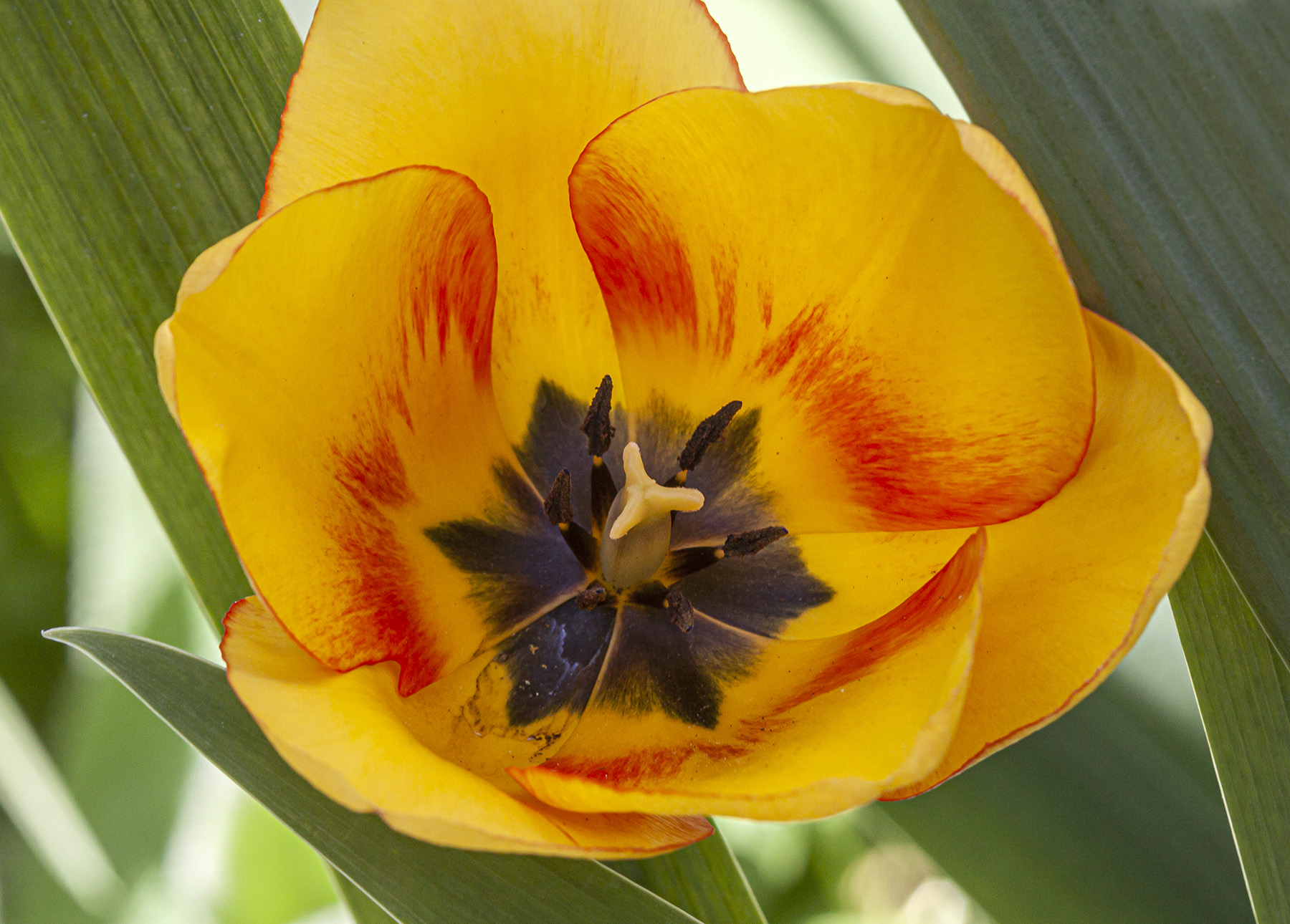
Need a blast of bright color? Here you go, a shot I took of the inside of a gorgeous red tulip blooming this morning in the garden of my neighbor and photography mentor Cindy Dyer.  This view straight down into the tulip reminds me of the kaleidoscopes that fascinated me endlessly when I was a youth. I managed to frame this shot almost exactly as I had envisioned, so I decided not to crop it at all, which is pretty unusual for me.

tulip

© Michael Q. Powell. All rights reserved.

Read Full Post »

One of the highlights of my visit on Monday to Green Spring Gardens was photographing a blossoming Japanese Apricot tree (Prunus mume). It was a little strange to see a tree with blossoms during the winter, but apparently it is normal for this species to blossom in mid-winter and late winter. The flowers are commonly known as plum blossoms and are a frequent theme in traditional painting in China and in other East Asian countries—the blossoms were also a favorite with the honey bees.

According to Wikipedia, the plum blossom is “one of the most beloved flowers in China and has been frequently depicted in Chinese art and poetry for centuries. The plum blossom is seen as a symbol of winter and a harbinger of spring. The blossoms are so beloved because they are viewed as blooming most vibrantly amidst the winter snow, exuding an ethereal elegance, while their fragrance is noticed to still subtly pervade the air at even the coldest times of the year. Therefore, the plum blossom came to symbolize perseverance and hope, as well as beauty, purity, and the transitoriness of life.”

I do not use my macro lens very much during the winter months and usually leave it at home. However, the mild weather that we have been having made me suspect that some flowers would be in bloom, so I put the macro lens on my camera—the busy bees turned out to be a big bonus.

I especially admired the efforts of the bee in the first photo. This bee did not want to wait for the bud to open, but instead burrowed its way to the pollen-filled center of the blossom-to-be.

Japanese Apricot tree

Japanese Apricot tree

Japanese Apricot tree

© Michael Q. Powell. All rights reserved.
Read Full Post »

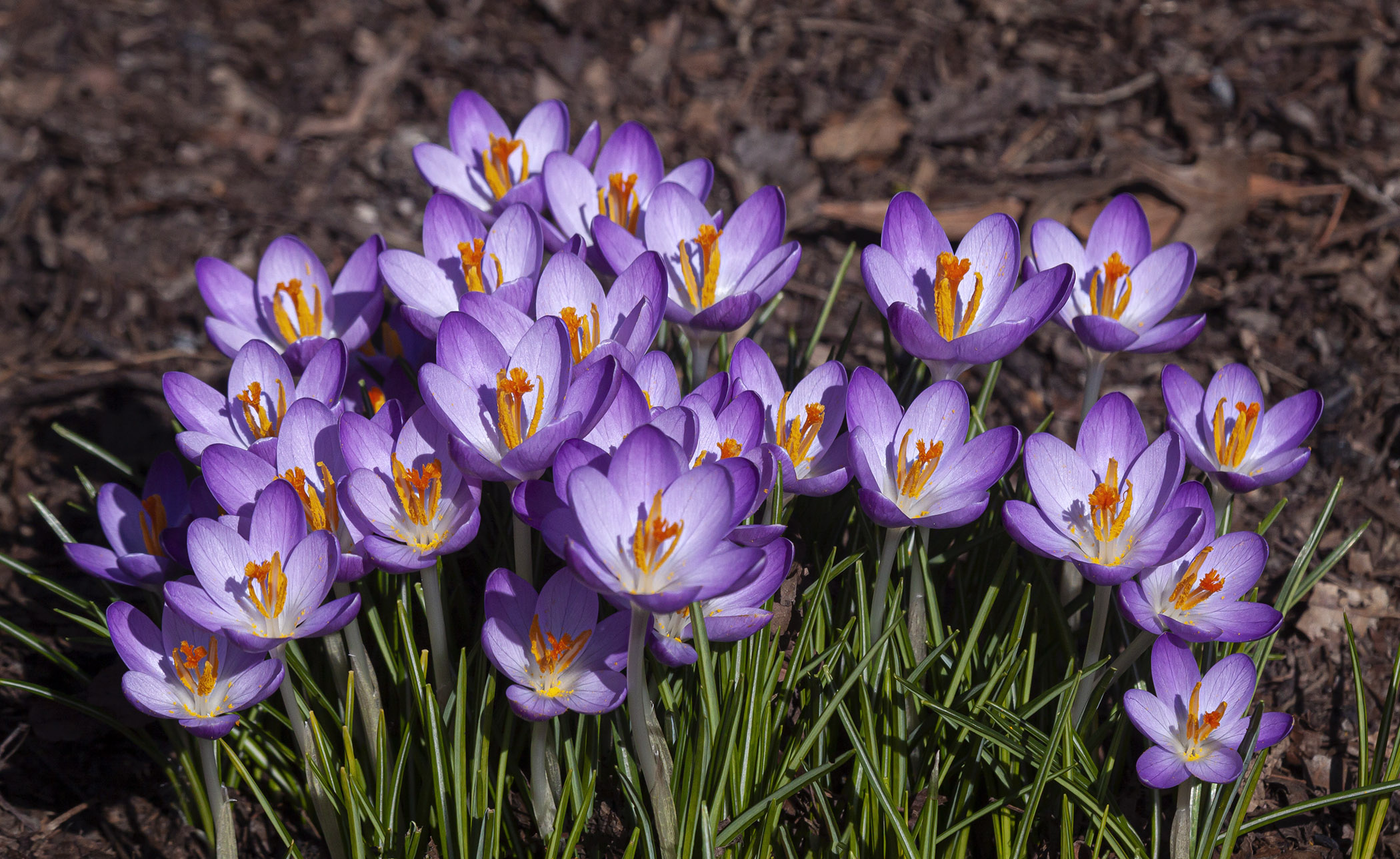
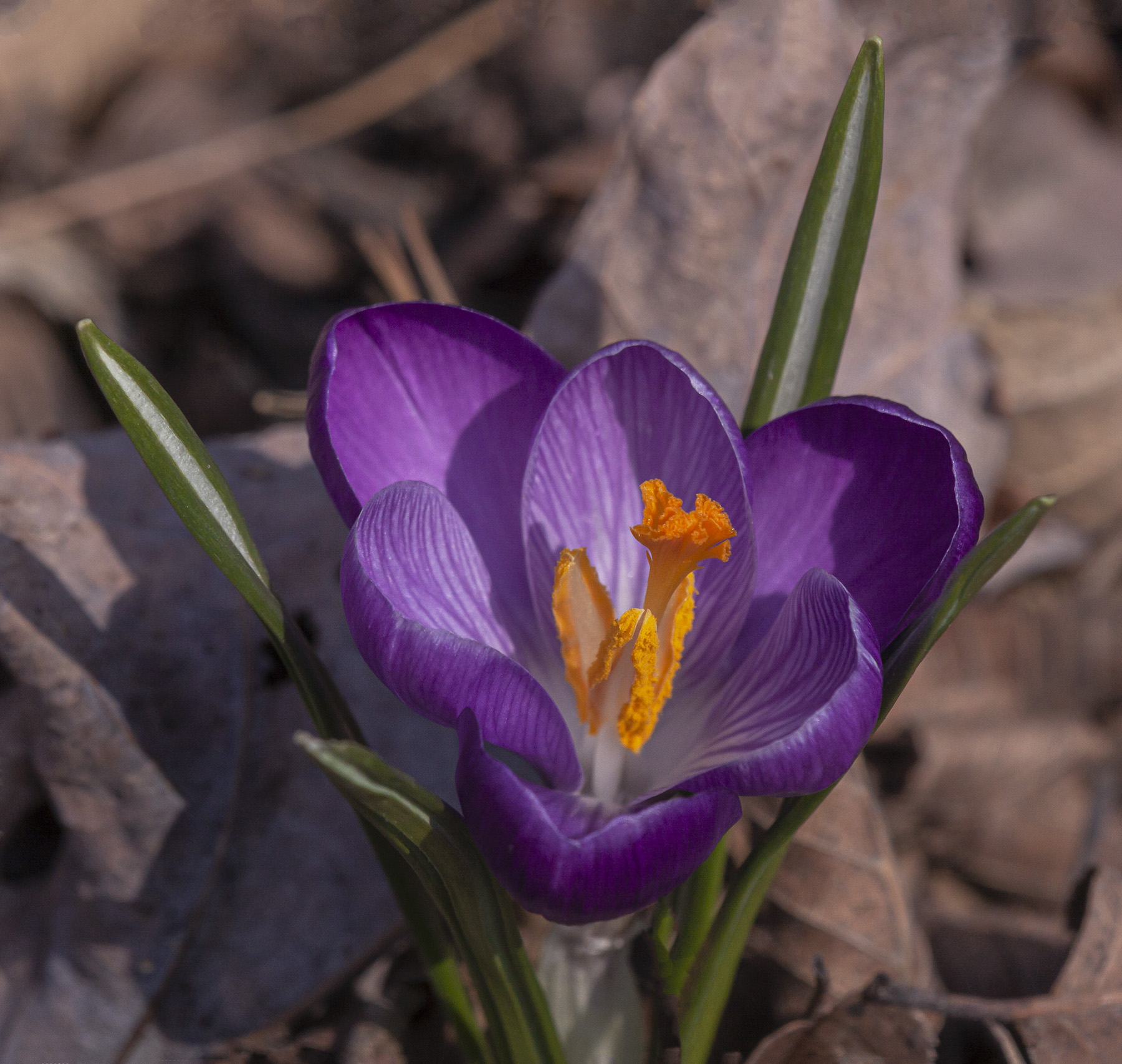
This winter has been usually mild and spring color is already starting to appear in our area. During a visit yesterday to Green Spring Gardens, a local county-run historical garden, I spotted crocuses in bloom at several locations. Finding crocuses was not too much of a surprise, since they are usually among the first flowers to appear each spring.  However, it was an unexpected bonus to be able to photograph a honey bee collecting pollen inside of one of the crocuses.

In many ways yesterday’s photography was a return to my roots. When I started getting more serious about photography seven years ago, I did a lot of shooting with my friend and mentor, Cindy Dyer. One of her many areas of specialization is macro photography of flowers and some of her flower images have even appeared on US postage stamps. From her I learned a lot about the technical aspects of photography, like composition and depth of field, but more importantly she encouraged and inspired me back then and continues to do so to this day. Thanks, Cindy.

I started off photographing flowers with a few insects, but gradually realized that I was more interested in shooting insects with a few flowers. I can appreciate the beauty of the crocuses in the second and third images below, but the first shot is more representative of my desired shooting style.

crocus

© Michael Q. Powell. All rights reserved.
Read Full Post »

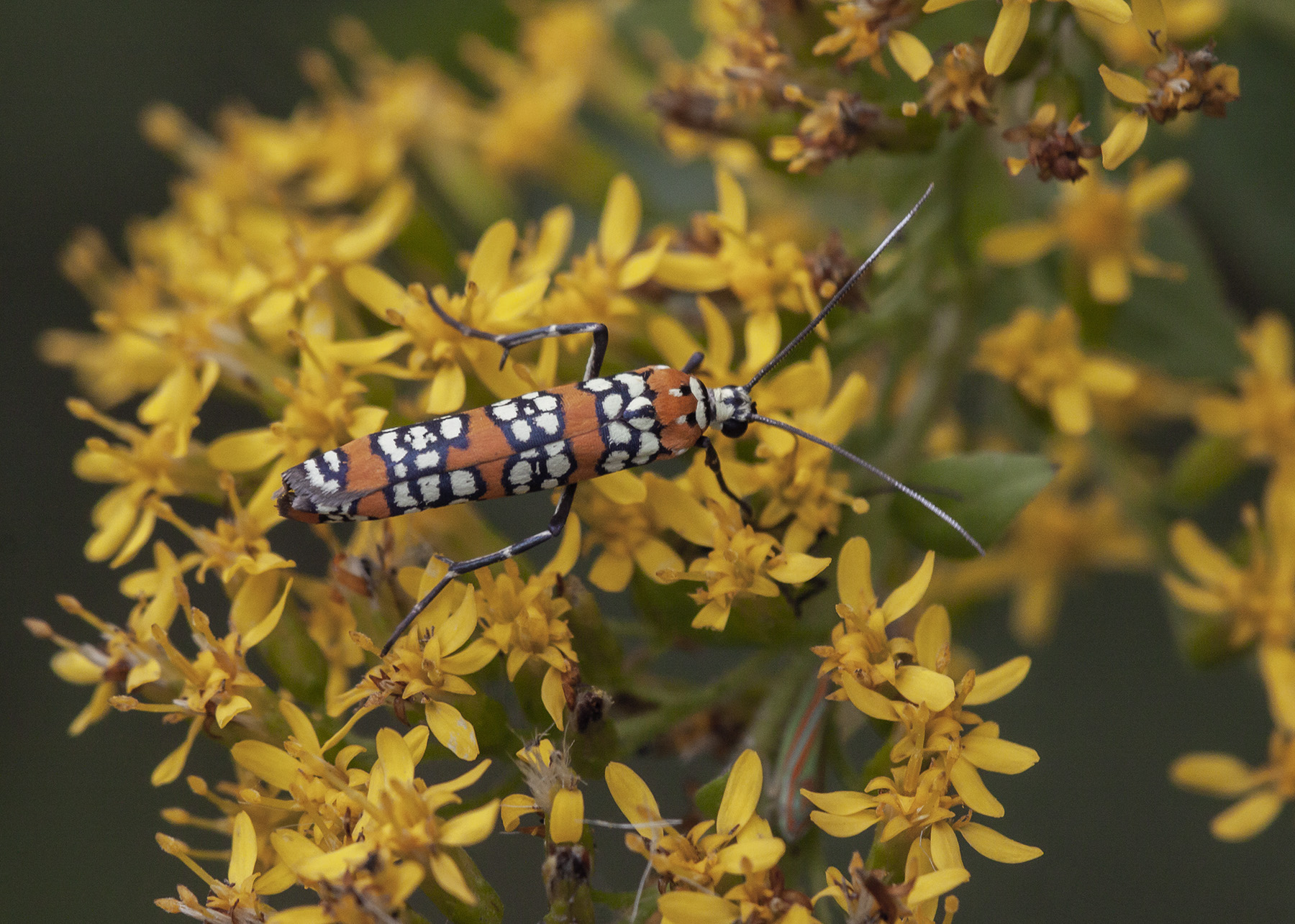
Whenever I see an Ailanthus Webworm moth (Atteva aurea), I assume that it is some kind of beetle. It is hard to believe that the colorful patterns are actually part of the wings and not a hard exterior shell. I spotted this beautiful little moth on some goldenrod last week while exploring Occoquan Bay National Wildlife Refuge.

The pattern on this insect’s body reminds me of an animal print. Wouldn’t it be cool to have fabric printed with this bold pattern? I can imagine throw pillows and even fashion accessories. From a marketing perspective, though, I think we would have to come up with a new name for the insect—a name like “webworm” probably would not attract many customers.

Ailanthus Webworm moth

© Michael Q. Powell. All rights reserved.


Read Full Post »

Do you ever stop to look at grasshoppers? A lot of them are really cool, like this giant one that I spotted on Thursday at Occoquan Bay National Wildlife Refuge. I love how it looks like the grasshopper is wearing a helmet on its head and a suit of armor on its torso.

I am not very good in identifying grasshopper species, but after looking through various internet sites, I wonder if this might be an Eastern Lubber grasshopper (Romalea guttata). This species is found only in the southeastern part of the United States. Virginia, where I live, is not within its listed range, so it is possible that this is a related species. Whatever the case, I definitely love the bold coloration of this giant grasshopper.

yellow grasshopper

© Michael Q. Powell. All rights reserved.


Read Full Post »

As many of you know, I love to photograph dragonflies and will often try to get close-up shots of them. Initially I captured a head-on shot of a female Blue-faced Meadowhawk dragonfly (Sympetrum ambiguum) that I spotted on Thursday at Occoquan Bay National Wildlife Refuge.

As I was observing this dragonfly at close range, she began to groom herself. I am not sure if she was cleaning her eyes or merely scratching an itch, but it was a bit eerie when she rotated her head more than 90 degrees to do so, as you can see in the second image. It brought back memories from my youth of Linda Blair’s spinning head in the original version of The Exorcist, though fortunately the dragonfly’s head did not rotate 360 degrees.

Blue-faced Meadowhawk

Blue-faced Meadowhawk

© Michael Q. Powell. All rights reserved.

Read Full Post »

Do you have a favorite insect? Although I like dragonflies a lot, my favorite insect is probably the rainbow-colored Handsome Meadow Katydid (Orchelimum pulchellum). I was thrilled to spot this beauty on some colorful vegetation last Saturday at Occoquan Bay National Wildlife Refuge.

I remember well the sense of incredulity that I felt when I saw one of these insects for the very first time—I simply could not believe that the bright colors were real. The beautiful curling leaves hide the details of the katydid’s body a little, but add a wonderful artistic element to this image. If want to see the brilliant colors of a Handsome Meadow Katydid on full display, check out this link to a 2013 posting that I entitled Rainbow Grasshopper—it is one of my most popular posts to date with over 315 views.

The vivid colors of this katydid are sure to grab your attention, but you should also be sure to check out its eyes. I am still blown away every time that I see those amazing eyes that seem to be looking deeply into me.  Here’s looking at you, kid.

Handsome Meadow Katydid

© Michael Q. Powell. All rights reserved.


Read Full Post »

If you were to pit a mantis against a spider, which one would have the advantage? I thought it would be the mantis, but that was clearly not the case this past week at Occoquan Bay National Wildlife Refuge. This spider had a large web stretched over a path on which I was walking, and I guess the mantis was unlucky enough to get stuck in its sticky strands as it was moving through the air.

mantis versus spider

© Michael Q. Powell. All rights reserved.

Read Full Post »

As I was looking at a small patch of purple aster flowers yesterday at Jackson Miles Abbott Wetland Refuge, I noticed that the center of one of them was a different color than all of the rest. I moved closer and was thrilled to see this very cool-looking White-banded Crab Spider (Misumenoides formosipes) nestled in among the petals of the flower. This kind of spider does not build a web, but patiently perches, waiting to pursue passing prey.

crab spider

crab spider

© Michael Q. Powell. All rights reserved.

Read Full Post »

With a name that includes the word “bluet,” you might expect that this female Big Bluet damselfly (Enallagma durum) would be blue, but obviously that is not the case here. There is a blue female variant in this species, but this one appears to be the olive variant.  Damselfly identification is difficult under the best of circumstances, because so many of them share the same colors—only the patterns help you distinguish among them. In this case, size helps a bit too, because Big Bluets are in fact larger than many other damselflies.

As I was exploring Occoquan Bay National Wildlife Refuge a few days, I was fortunate that this damselfly chose to perch at almost eye level on a stalk of Eastern Gamagrass, which let me get a clear shot with the sky in the background.  Most of the time damselflies like this perch lower to the ground in areas with denser vegetation.

Big Bluet

© Michael Q. Powell. All rights reserved.


Read Full Post »

The milkweed plants were dirty and dried up, but I knew from past experience that there might be ladybugs crawling around on them. The first two plants that I checked were full of aphids, a favorite food of ladybugs, but I did not see any ladybugs at all. As I approached a third plant, I saw a flash of red and spotted a small ladybug crawling quickly down the stem of the plant. I was not as close as I could have like to have been, but managed to capture some images before the ladybug disappeared from sight.

I like the way that this shot turned out because the reddish-orange of the ladybug really stands out against the blues and greens in the rest of the photos. In case you are curious, the little specks of yellow are aphids. In this case, the aphids were safe, for this ladybug seemed to be in too much of a hurry to stop for a snack.

ladybug

© Michael Q. Powell. All rights reserved.
Read Full Post »

Really, an image of a horsefly? That sentence fragment was part of an internal dialogue that I had with myself when considering whether to post this image. I know that most people find flies to be fairly disgusting.  However, I was really taken with the details that I managed to capture when this enormous horsefly—it looked to be about 2 inches (50 mm) in length—perched in front of me earlier this week as I was resting alongside a rocky creek.

The fly’s eyes seem to have multiple colors and its body has several wonderful patterns. It is not all beauty, though, and I find those sharp points protruding from the face to be menacing, an impression enhanced by the enlarged shadow that cast by the fly.

I have to admit that I was fascinated by this giant horsefly and that fascination prompted me to post the photo despite my initial inhibitions. What do you think?

horsefly

© Michael Q. Powell. All rights reserved.
Read Full Post »

Yesterday I was thrilled to spot this spectacular female American Rubyspot damselfly (Hetaerina americana) while exploring a creek in Fairfax County, Virginia with my good friend and fellow  dragonfly enthusiast Walter Sanford.  This species is found along streams and rivers and this in only the second time that I have ever seen American Rubyspots. The green and brown colors on the thorax (the “chest”) of this damselfly are incredible and I highly recommend you click on the images to get an even better look at the amazing details.

Signs are starting to appear that we are approaching the end of summer. Already I have noted that the number of dragonflies is dropping, though there still seem to be plenty of butterflies. It was therefore particularly gratifying to see this unfamiliar damselfly yesterday. The dragonfly season, though is far from over—there are some autumn dragonfly species that I have not yet seen.  Birds are starting to migrate through this area, so some may appear in this blog soon, but there should still be dragonfly photos for the next few months at least.

American Rubyspot

American Rubyspot

© Michael Q. Powell. All rights reserved.
Read Full Post »

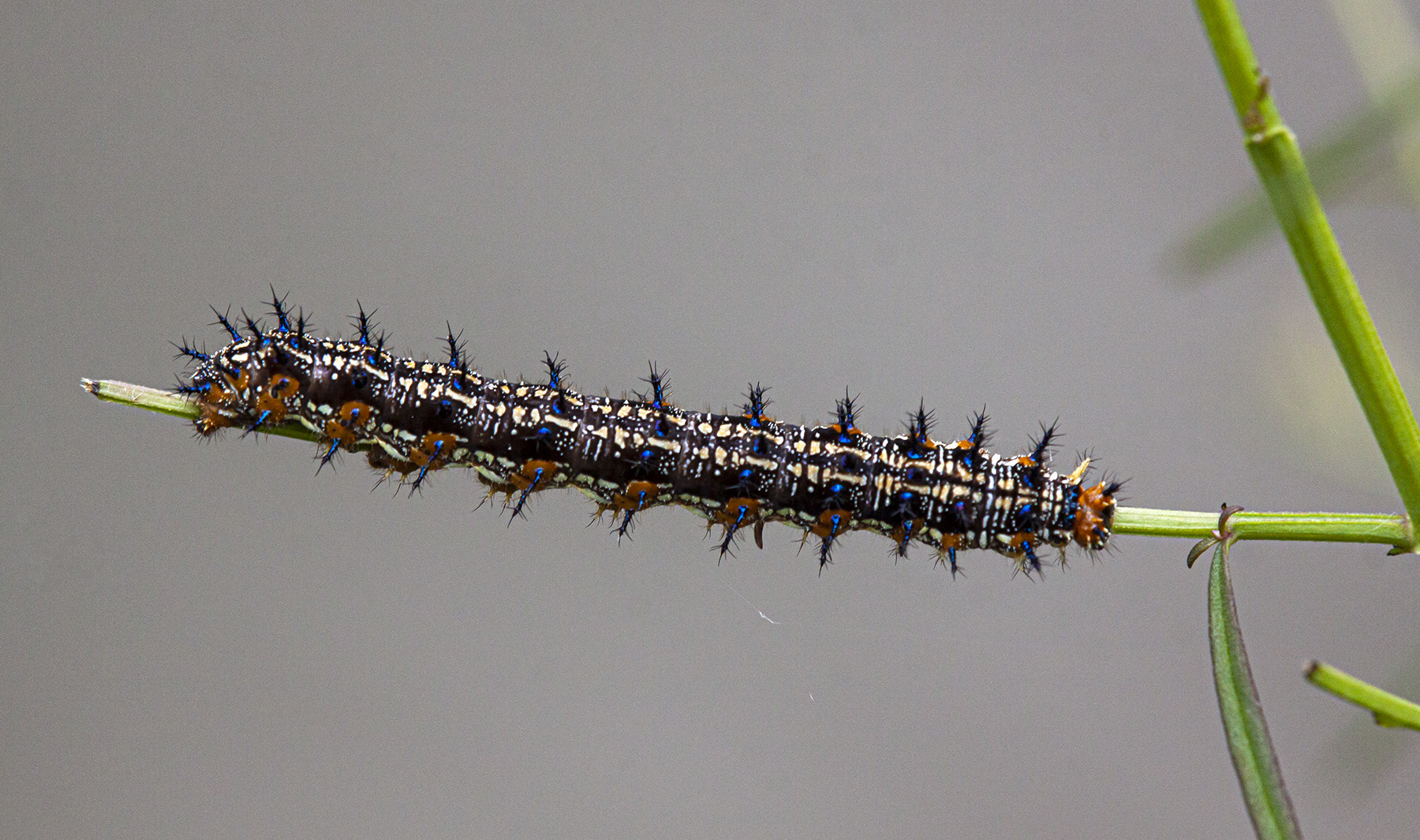
Yesterday I spotted this amazing looking caterpillar alongside a pond at Jackson Miles Abbott Wetland Refuge. I have not yet been able to identify it, but I was really struck by the stunning blue dots and the prickly spikes that run the length of the caterpillar’s body. Often these types of spikes are an indication of a venomous stinging caterpillar, so I kept my distance as I was taking this shot. Click on the image if you want to get a closer look at the wonderful details of the caterpillar.

UPDATE: Several helpful folks have weighed in and have identified this as a Common Buckeye caterpillar (Junonia coenia). Thanks for the help.

caterpillar

© Michael Q. Powell. All rights reserved.

Read Full Post »

« Newer Posts - Older Posts »