Feeds:
Posts
Comments

Archive for the ‘Inspiration’ Category

In addition to following bloggers whose photography I admire, I enjoy reading the words of bloggers who prompt me to think more deeply. Here’s one such posting from Roger Pocock’s blog Windows into History that recently had such an effect on me.

Roger Pocock's avatarWindows into History

Selborne, as pictured in A History of the County of Hampshire: Volume 3, 1908. Selborne, as pictured in A History of the County of Hampshire: Volume 3, 1908.

Snippets 98. Richard Le Gallienne (1866-1947) was a poet and writer of books and essays on a wide variety of topics. In his 1900 work, Travels in England, he explains why he feels that travelling close to home, and at a measured pace, is such an important thing to do (he was born in Liverpool, resident in England at the time, although he would later move to the USA, and the “Le” in his name was an affectation). This might prove inspiring for those who also, like myself, derive just as much pleasure from exploring Great Britain as travelling abroad.

It is then in this spirit of ready wonder that I mount my wheel, and invite I know not what of new and dangerous in the ten miles between Hindhead and Selborne. Were I…

View original post 554 more words

Read Full Post »

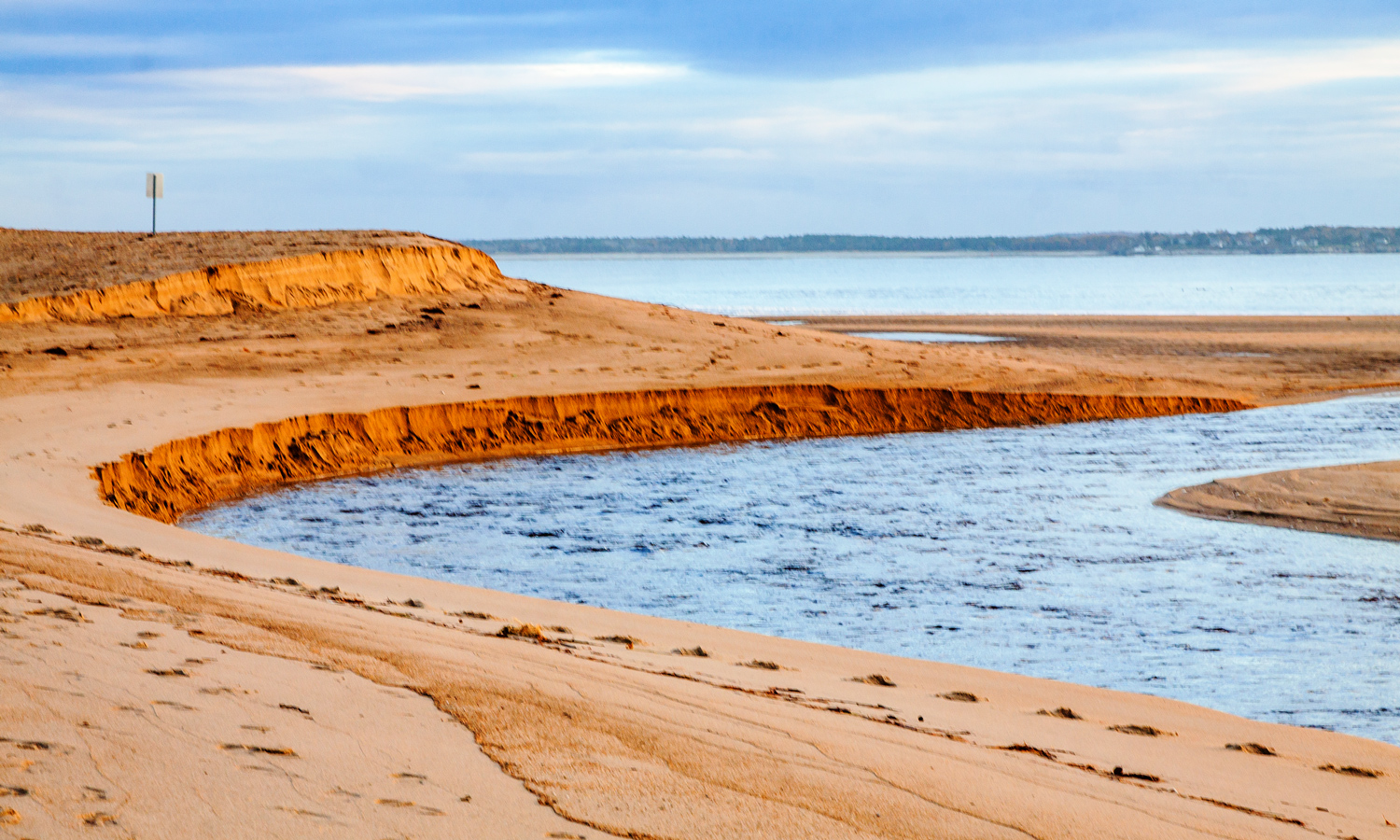
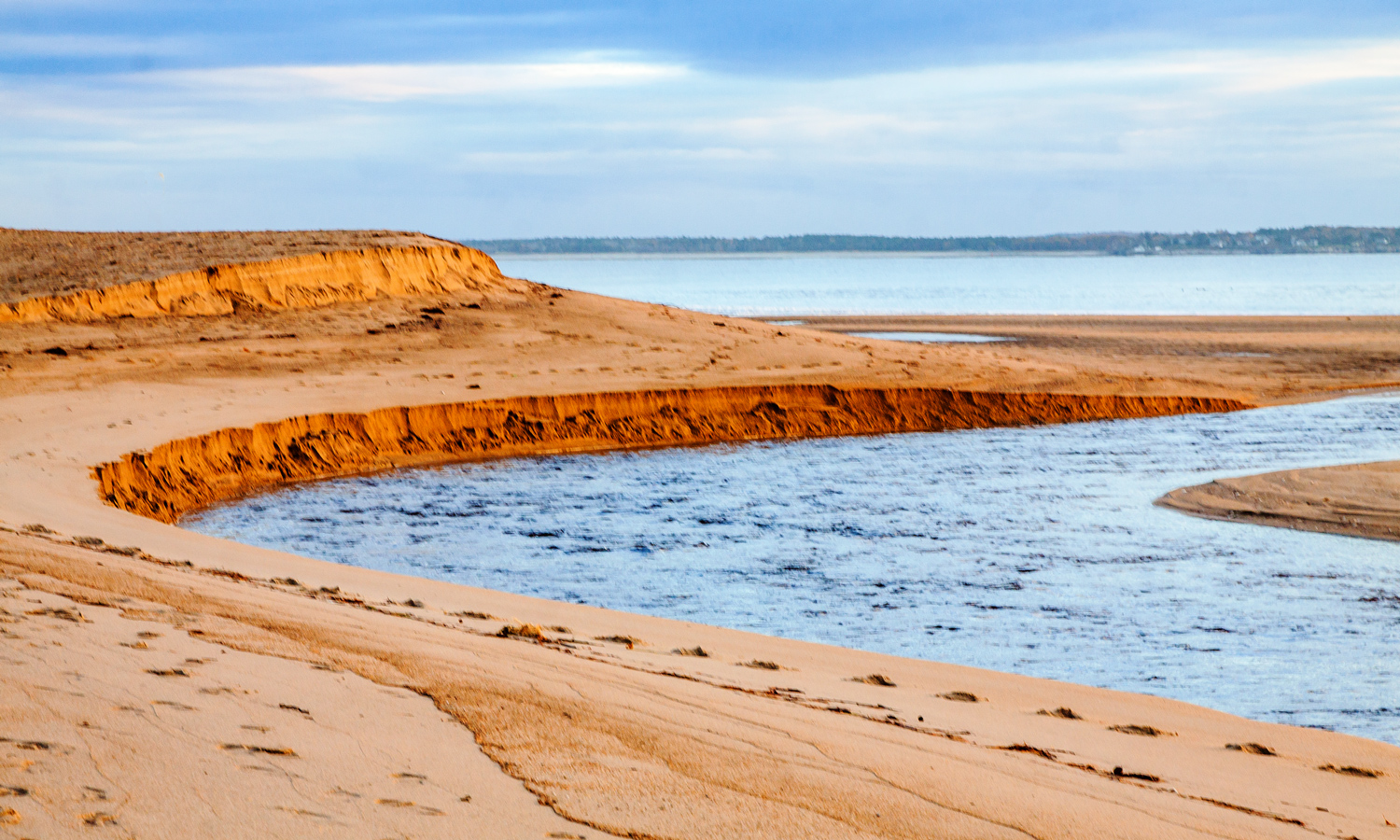
Is it distracting to have a man-made object in an otherwise natural landscape? The ocean really inspired me during my recent short trip to Maine. I am amazed at the number of beautiful images that I was able to capture. I particularly like the colors and simple composition of a shot I took of a small river that rises and falls with the tide.

As I was working on the image, I noticed that there was a solitary warning sign in the upper left-hand corner that alerts folks to the dangers of the tides. I actually like the juxtaposition of this hard vertical line with the gentle curves of the image and the hazy coastline in the background. I began to wonder, however, if others would see the sign as a discordant element in the image, so I created a second version of the image without the sign.

Which image do you prefer, the one with the sign or the one without it?

Old Orchard Beach

O;d Orchard Beach

© Michael Q. Powell. All rights reserved.

Read Full Post »

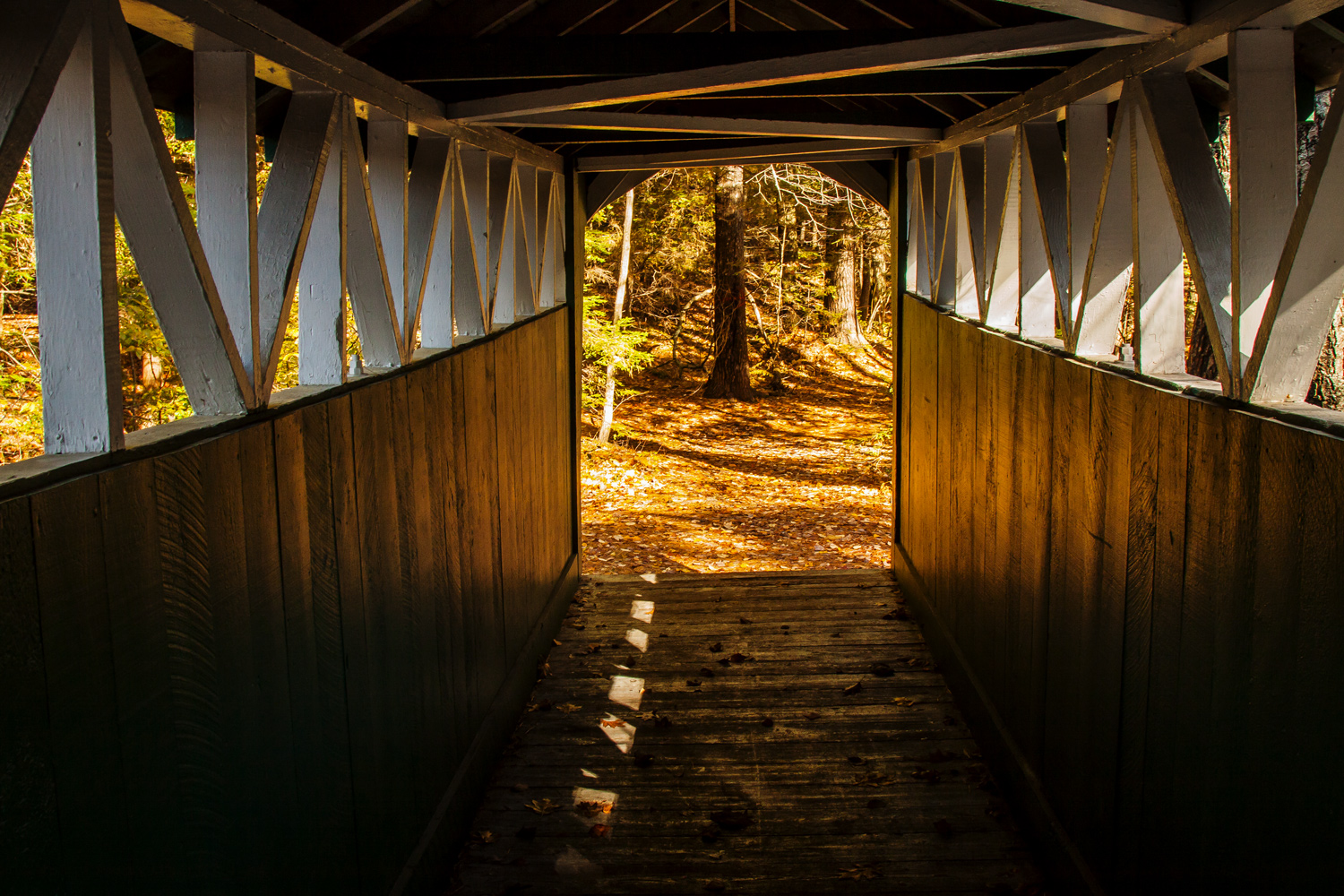
One of my favorite places in Ocean Park, Maine is a small covered bridge that leads into a grove of beautiful trees. The bride crosses a stream and is barely wide enough for two people to walk through side-by-side. It was dedicated in 1944 as a war memorial.

Ocean Park is a special place for my family. My parents went on their honeymoon there and eventually retired to the small community. Those of you who read this blog regularly know that I was recently in Maine. Unfortunately it was not for pleasure, but was in connection with what proved to be a fatal heart attack for one of my younger brothers.

The final image of these three is my favorite, because it serves as a kind of visual metaphor for me of the passing of my brother Patrick.

covered bridge

covered bridge

covered bridge

© Michael Q. Powell. All rights reserved.

Read Full Post »

The sky was mostly clouded over as I made my way toward the beach in the early morning, but the dawn’s early light helped me to see the wooden pathway through the dune grass at Old Orchard Beach in Maine. Although I couldn’t see the sun itself, a reddish glow was reflected on the clouds and sometimes onto the water.

It was a fun challenge to try to capture the beautiful light in different ways, from the very realistic to the almost abstract.

dawn's early light

dawn's early light

dawn;s early light


© Michael Q. Powell. All rights reserved.

Read Full Post »

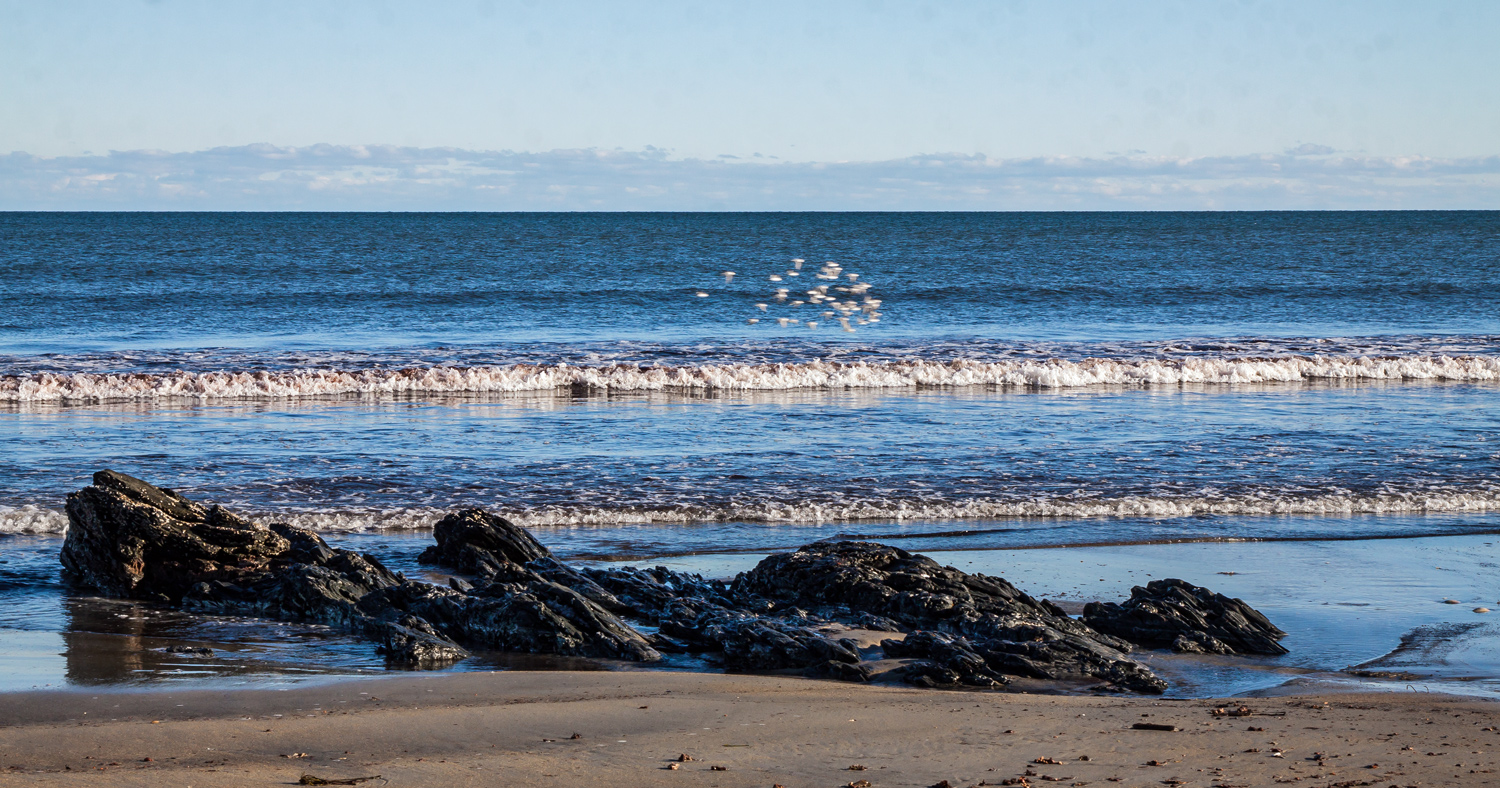
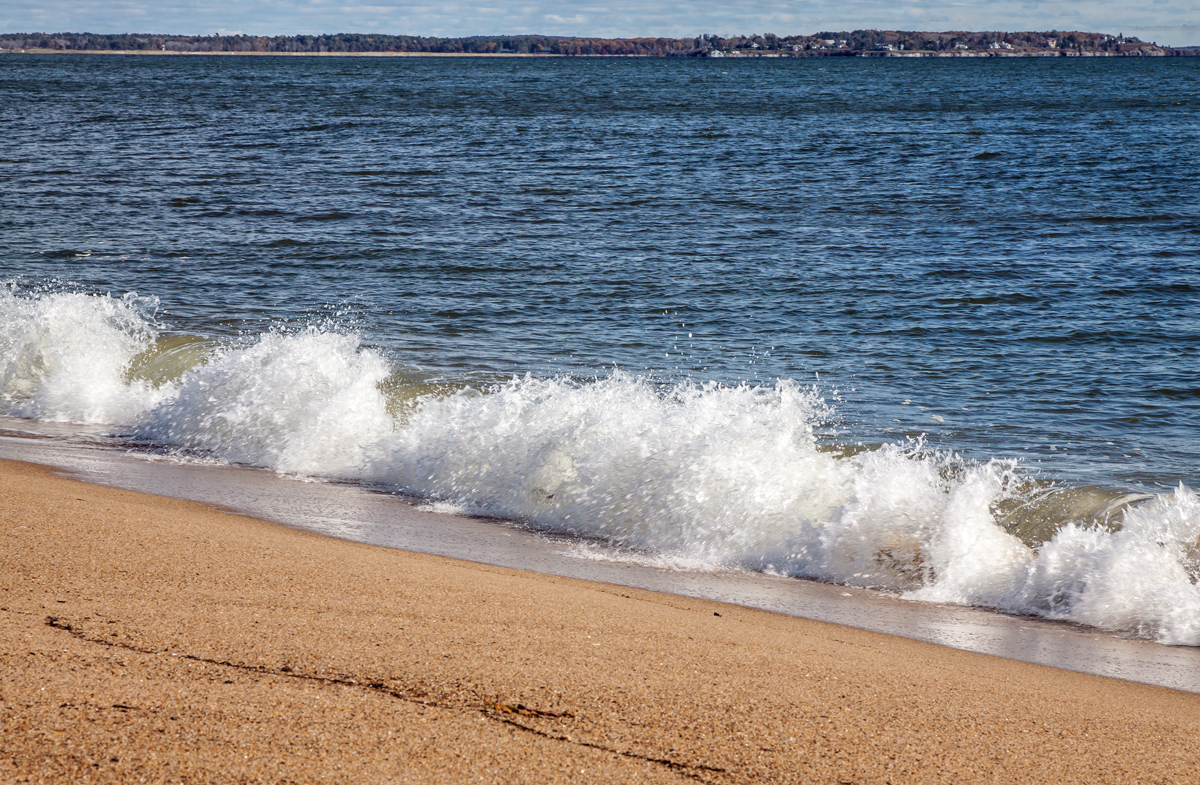
I don’t often shoot landscapes (or seascapes), but the beauty of the ocean and the waves crashing on the shore inspired me to give it a shot. Normally I take photos with a macro lens or a telephoto zoom, but I was fortunate to have brought along a 24-105mm lens. Here are a few favorite images that I captured yesterday at Old Orchard Beach, Maine.

Old Orchard Beach

Old Orchard Beach

© Michael Q. Powell. All rights reserved.

Read Full Post »

Do your remember what it was like to be young and in love? You and your beloved couldn’t beat to be separated—you were always together, always close, always touching, like these two Shasta Daisies growing in the garden of my neighbor and fellow photographer Cindy Dyer.

As I was looking for information about the Shasta Daisy, I came across this fascinating information on the history on the flower at lutherburbank.org:

“2001 marked the 100th anniversary of Luther Burbank’s introduction of the Shasta daisy, one of America’s most beloved garden flowers. Burbank spent 17 years developing this quadruple hybrid which he named after Mt. Shasta. Others have continued Burbank’s work and many new varieties of the Shasta daisy have been introduced since Burbank completed his work more than 100 years ago.”

Shasta Daisy

© Michael Q. Powell. All rights reserved.

Read Full Post »

For a few magical moments Monday morning the sun was shining through the trees at Huntley Meadows Park with a gorgeous golden light. At first I was a little disappointed that there were no birds or animals for me to photograph, but gradually I was drawn deeper and deeper into the simple abstract beauty of the trees themselves.

The varied colors, shapes, and textures of this intimate landscape enveloped me and filled me with a kind of reverent awe and inner sense of peace. I would have liked to freeze that moment and experience it in slow motion, but all too quickly the golden light faded and reality returned.

golden1_29Feb_blog

© Michael Q. Powell. All rights reserved.

Read Full Post »

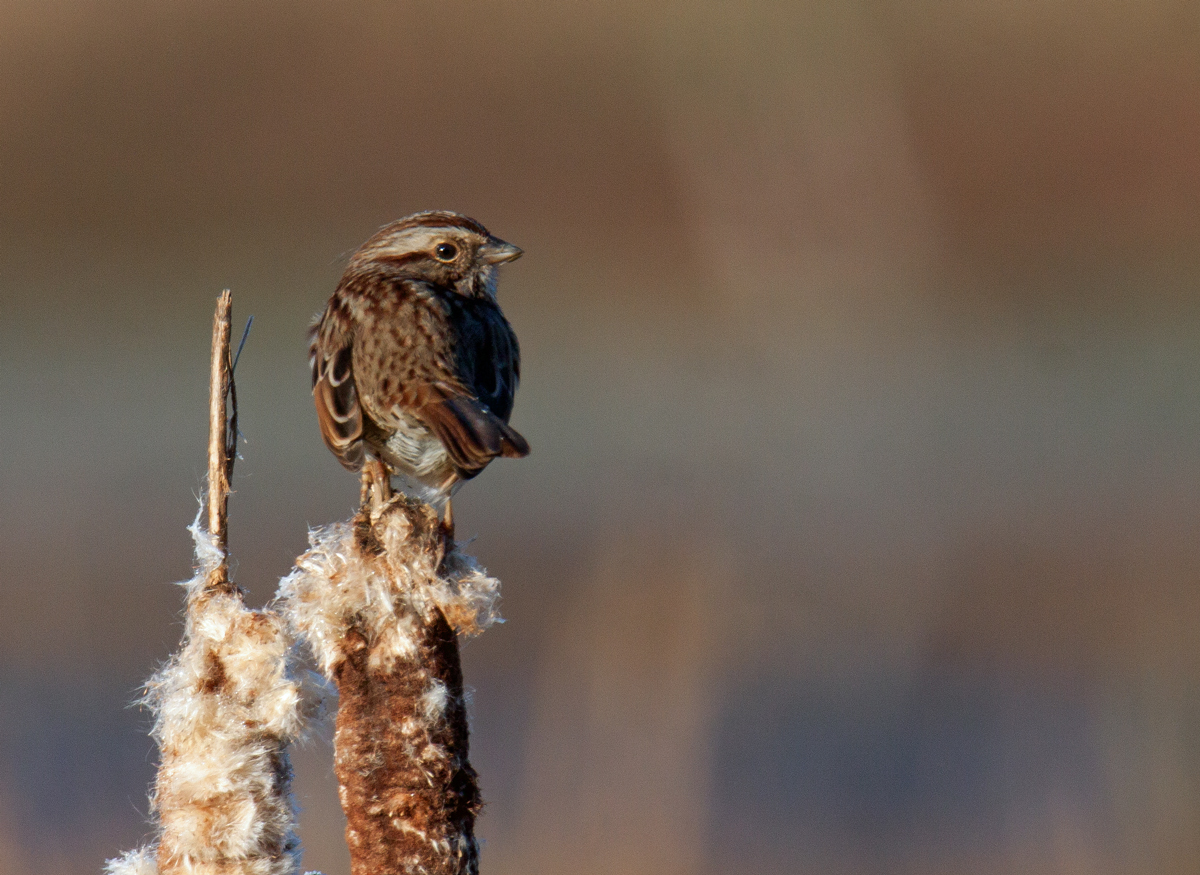
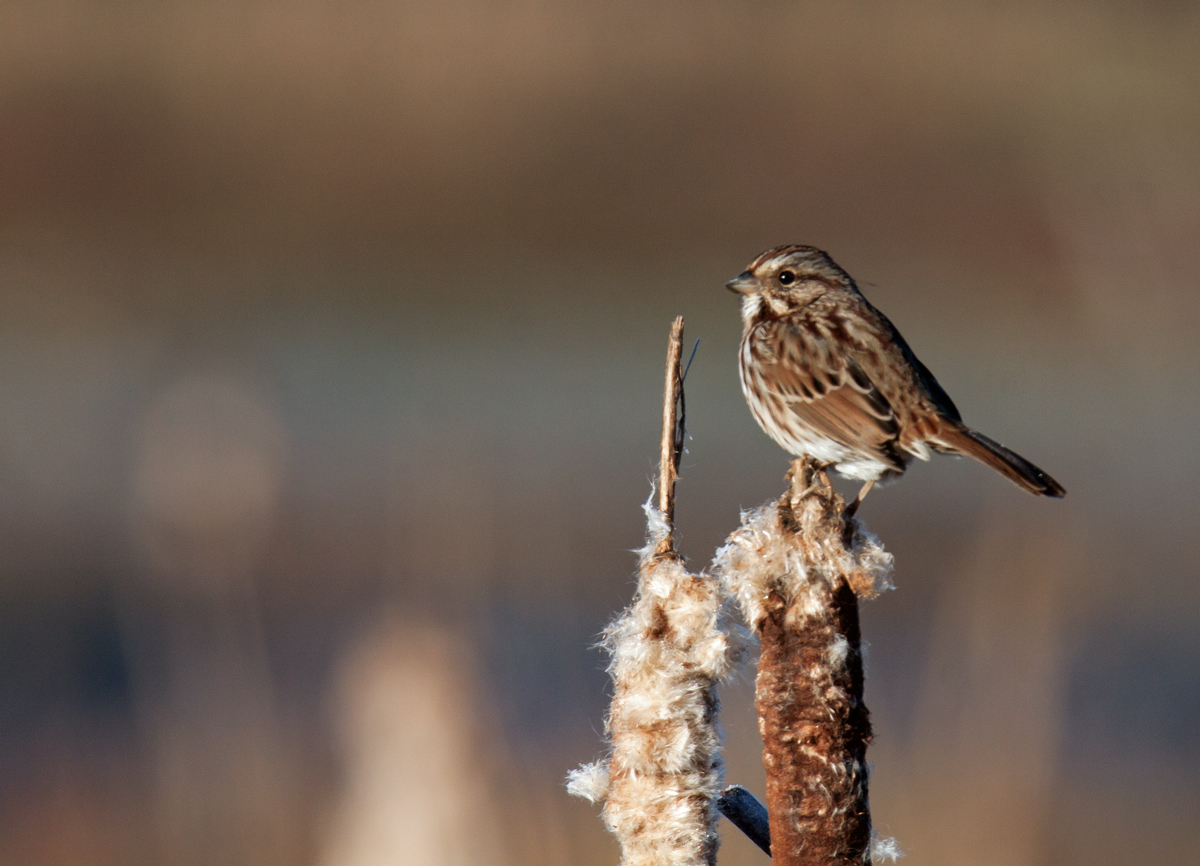
A lot of scratching and movement was taking place down deep in the cattails and I stopped and waited, hoping to see what birds were responsible for the commotion. Finally, one of them popped to the surface and it looked to be a White-throated Sparrow (Zonotrichia albicollis) and I smiled.

Sparrows have a very special place in my heart, because they remind me of my deceased parents. When I was growing up, one of their favorite hymns at church was “His Eye is On the Sparrow.” The hymn has a simple, Scripture-based message that we should not be discouraged, because the same God who watches over the sparrows in the field cares even more for us.

Now, whenever I see sparrows, I smile as I am filled with memories of my parents, and the words of the chorus of the hymn play again in my mind, “I sing because I’m happy. I sing because I’m free. For His eye is on the sparrow. And I know He watches me.”

If you have never heard this song, there are many versions of it on YouTube, including, versions by such noted artists as Whitney Houston. Sandi Patty’s rendition is close to the version that I remember in the small Baptist churches of my childhood.

White-throated Sparrow

White-throated Sparrow

© Michael Q. Powell. All rights reserved.

Read Full Post »

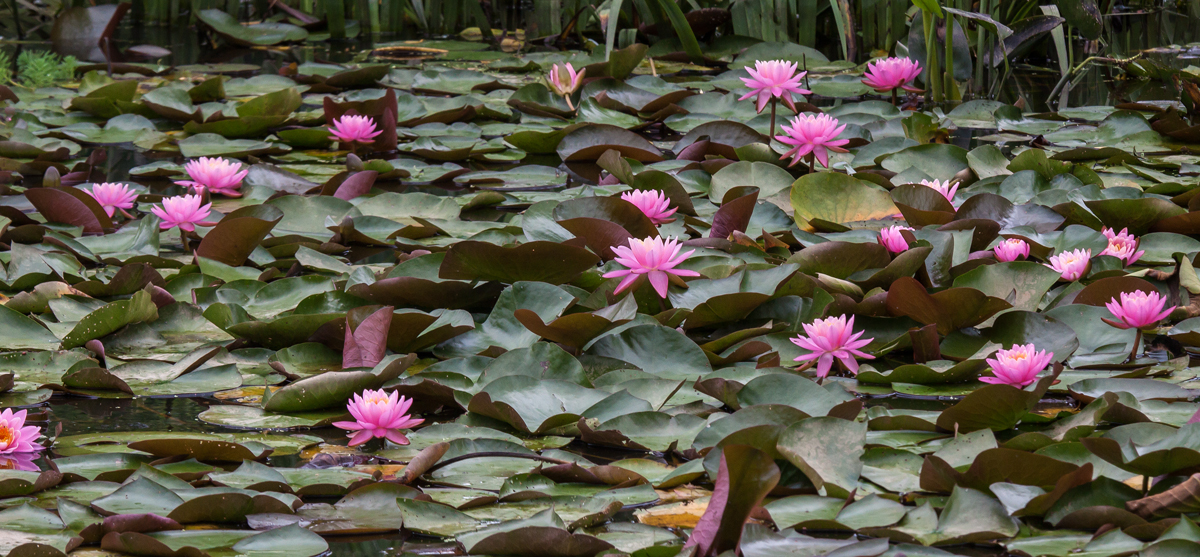
While I was at Kenilworth Park and Aquatic Gardens in Washington D.C. on Monday, it was easy to understand Monet’s endless fascination with water lilies. My opening image of a small wooden bridge brings to mind several of Monet’s paintings of the Japanese Bridge in his water garden at Giverny.

bridge at Kenilworth

Water lilies seem to draw me in and surround me with an overwhelming sense of beauty and tranquility. How can I possibly capture that feeling in a photo? Here are a few images to show you some of the different approaches that I used in attempting to show the irresistible attraction of water lilies.

water lily at Kenilworth

water lilies at Kenilworth

pink water lilies at Kenilworth

© Michael Q. Powell. All rights reserved

Read Full Post »

Like most guys, I have trouble remembering anniversaries, so it is a good thing that WordPress sent me a reminder that three years ago today I started my blog. I still recall my feelings of doubt and uncertainty when my mentor and muse Cindy Dyer sat me down in front of a computer and told me that I was starting a blog. We had just finished reviewing and editing some shots that I had taken earlier in the day at Kenilworth Park and Aquatic Gardens. Cindy helped me through the mechanics of setting up the blog and shortly thereafter I made my first posting, Blue Dasher dragonfly.

Once I started, I couldn’t stop. I grew to look forward to writing the postings and taking photos to feature. As of right now, I’ve made 1638 postings and had 78743 views—that’s a lot of words and a lot of photos.

I was struck from the outset by the sense of community and mutual support that exists in the blogging world and there is a small group of fellow photographers with whom I feel a particular affinity, including Sue, Gary, Leanne, Ed, Lyle, Emily, Allen, and Chris. The amount of encouragement that I receive from them and countless others is overwhelming. Closer to home, Cindy continues to be a constant source of inspiration and instruction and Walter and I help to push each other as we explore remote areas of our favorite marshland park.

When I started this blog, I didn’t really think of myself as a photographer. I was taking a lot of photos and knew that I was improving, but there was a kind of psychological barrier that kept me from thinking in those terms. Now, I can confidently say that I am a photographer.

My journey into photography has been full of highlights, but two moments from 2014 really stand out. In November, I witnessed the rescue of a bald eagle at my local marsh and my photos and links to my blog posting were featured on the websites of several Washington D.C. media outlets, resulting in a total of 3344 views of my posting Rescue of an injured Bald Eagle. A short time before that incident, I was really honored when I was featured in an Introductions post by noted Australian photographer Leanne Cole.

If you have read this far, you may be wondering about my reference to “cannibals” in the title of this posting. What do cannibals have to do with my blog? Well, if I set aside the abnormally high number of views of my eagle rescue post, for the longest time my most popular post was one with the innocuous title of Fuzzy white caterpillar. There is not a whole lot special about the prose or the photos, but it has had 489 views to date.

Earlier this week the caterpillar was passed in the stats by my post Red-footed Cannibalfly, with 492 views to date—the cannibals have taken over the lead. As a guy, I feel happier that a more macho sounding insect is now leading the field of “normal” posts. As far as I can tell, the post’s popularity is a function of the search engines. The post was not particularly popular when it first appeared and has only 36 likes. Now, though, it even shows up on the first page of Google results if you type in “Red-footed Cannibalfly.”

So what’s ahead? I hope to be able to keep improving my writing and my photography. I have certain aspirational shots in my mind of different subjects or different locations.

Yesterday, when I was taking photos of water lilies with Cindy Dyer, I mentioned that I had always imagined taking a shot a frog on a lily pad, but had never even seen a frog perching on one. A short time later, Cindy excitedly pointed out a partially submerged frog on a lily pad and I managed to snap a couple of shots before he dove into the water. (Check out Cindy’s blog posting to see her beautiful shot of this frog.) Dreams do come true.

Thanks again to all my readers and supporters, whose encouragement has helped motivate and sustain me this past three years. I look forward to sharing my journey with my fellow travelers.
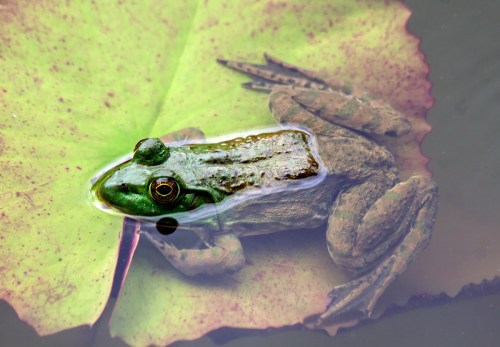
 

Frog on a lily pad

© Michael Q. Powell. All rights reserved

Read Full Post »

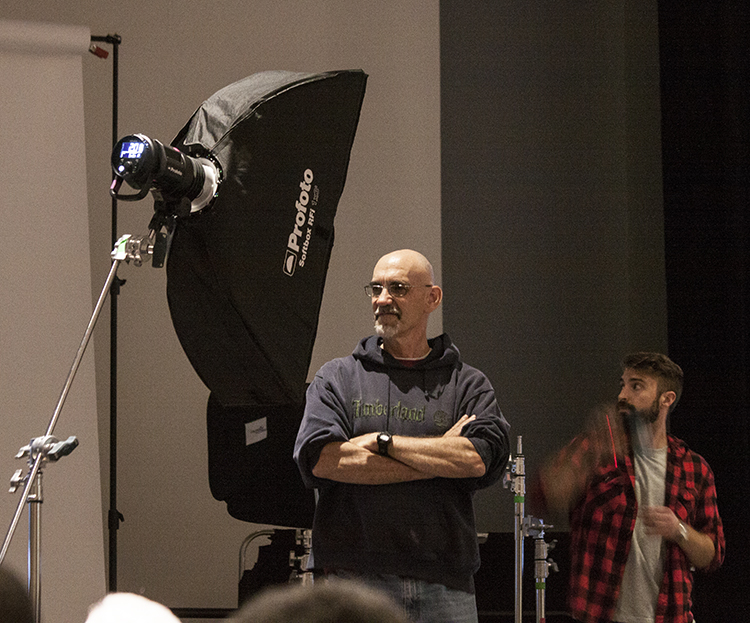
Like most photographers, I feel more comfortable when I am behind the camera, but last Thursday I found myself on stage in front of five hundred other photographers with the lens pointed in my direction.

I was at the Washington D.C. Convention Center with my dear friend and photography mentor Cindy Dyer for a daylong seminar on lighting using flash, taught by Joe McNally, an internationally-known photographer and a great motivational instructor.

During one class segment, Joe pulled me out of the crowd to serve as the model for a mini-shoot. I was more than a little shocked when he pointed in my direction and asked me to come forward. I was a little self-conscious about the fact that I was wearing a hooded sweatshirt and jeans, but at least I didn’t have to worry about how my hair looked.

While I was up on the stage, Cindy decided that she needed to capture the moment and initially took some shots with her iPhone. She was unsatisfied with the results, but didn’t have her camera with her.  Suddenly she remembered that my camera was in my camera bag underneath my chair. Although she is a dedicated Nikon shooter, she grabbed my Canon and got these shots of both the setup and the resulting images from one of the large video projections screens.

In an interesting side note, this is actually the second time that I have been photographed by Joe McNally. In March 2012, when Photoshop World was held in Washington D.C., I was observing one of Joe’s lighting demonstrations at a vendor’s booth. He had just demonstrated beauty lighting with a very photogenic couple and said he needed a subject to demonstrate character lighting—and pointed to me.

IMG_5822 DONE lorezIMG_5831 DONE lorez IMG_5835 DONE lorez IMG_5836 DONE lorez

© Michael Q. Powell. All rights reserved.

Read Full Post »

This re-posting is a bit of shameless self-promotion, but it is hard to describe how honored and thrilled I feel to be featured by Leanne Cole in a blog posting today. Leanne, who lives and works in Australia, is a wonderful photographer who spends a lot of time as a kind of photographic evangelist, sharing her passion for the art and practice of photography. She is constantly encouraging and teaching others, yet somehow seems to find time to explore new areas of her own photography, ranging from photographing the stars at night to investigating the close-up world of macro photography. Be sure to check out her incredible blog.

Read Full Post »

Some subjects are so awe-inspiring that I get excited just seeing them, even if they are too far away for a good photo—like this Bald Eagle (Haliaeetus leucocephalus) that I saw Monday at my local marsh. The eagle seemed to sense my presence and took off before I could get closer, but I managed to capture an image of its final preparations for takeoff from the branch.

eagle_takeoff1_blogWhen I am walking through the woods at this time of the year, I have to keep my eyes in constant motion. Leaves are still sparse enough on the trees that I am still able to spot some birds in the trees.  However, insects are starting to appear too, so I have to scan the leaves and branches on the ground for these little creatures.

On early Monday morning, as I looked through a break in the trees, I caught sight of a large bird in the distance, sitting on the end of a branch. I immediately stopped, having learned from experience that even a single step forward would be likely to spook the bird. The light was not great, but the shape suggested to me that it was probably a bald eagle.

The eagle looked around for a few seconds and then took off. At that moment, I was absolutely certain that it was a bald eagle. I was not so certain that I had captured any useable images, but I was content just to have experienced the sight of that majestic bird in flight.

eagle_takeoff2_blog

© Michael Q. Powell. All rights reserved

Read Full Post »

Do you ever sit by a window and daydream as you look out into the world with unfocused eyes? Somehow that was what came to mind when I spotted this Mourning Dove (Zenaida macroura) perched on a branch, framed by the trees. The dove seemed gentle and pensive, unlike so many of the birds (and people) in this area that are so driven, always intense and tense.

There is a real value in slowing down and daydreaming more in order to recharge my creative batteries. Sometimes I need a gentle reminder.

dove_framed_blog

© Michael Q. Powell. All rights reserved.

Read Full Post »

This photo leaves me a little confused, because the larval shell to which this damselfly is clinging seems too big for its body and looks more like it belonged to a dragonfly.

There are plenty of places on the internet where you can read about the life cycle of dragonflies and damselflies, but the short version is that they spend most of their lives in the water as nymphs. There they go through a series of larval stages in which they shed their skin that has grown too tight. Just before they molt for the final time, they climb out of the water and, once the skin dries, the damselflies emerge. They then have to rest for a little while as their wings unfurl and their legs get stronger. Only then can they fly away.

This pretty little damselfly seems to be in the resting phase on a little rock ledge at the edge of a pond at a local garden. I wanted to try to get a bit closer, but the embankment where the ledge was located was steep and muddy and I would have had to be standing in the water to get a better angle.

I like the photo a lot and find it to be weirdly fascinating. The landscape is simple and rugged, with some texture in the foreground. The moulted shell still seems lifelike and seems to be looking at us with a slightly tilted head. The damselfly itself has the only color in the image and attracts the viewers’ eyes. There is a kind of tension in the damselfly’s pose, as it hangs on with all of its strength, waiting until the moment when it can fly away.

Imagine what it would be like waiting, waiting for the moment when you take to the air for the first time, leaving behind forever your old life in the water.

emerging_blog

© Michael Q. Powell. All rights reserved

Read Full Post »

There is a spot in a back corner of my marshland park that I love to visit in the early morning, when the light produces beautiful reflections in the still waters of a small pond.

It’s accessible only by an informal muddy trail, so I don’t have to share the moments of tranquility with the baby strollers and power walkers that interrupt my conversations with nature when I am on the boardwalk. Sometimes I will see ducks and geese here and I have even spotted a bald eagle perching in a tall tree, but the main draw for me is not the wildlife—it’s the sense of peace that envelopes me when I am here.

Sometimes I like reflections in which you can easily identify the objects being reflected, like the two trees in the first image. Other times, I get lost in the reflections themselves, which can result in a Monet-like abstract image like the second image below.

All of us are looking for an inner peace—this is one place in which I am able to experience a few moments of that peace.

reflection1_blogreflection2_blog

Michael Q. Powell. All rights reserved

Read Full Post »

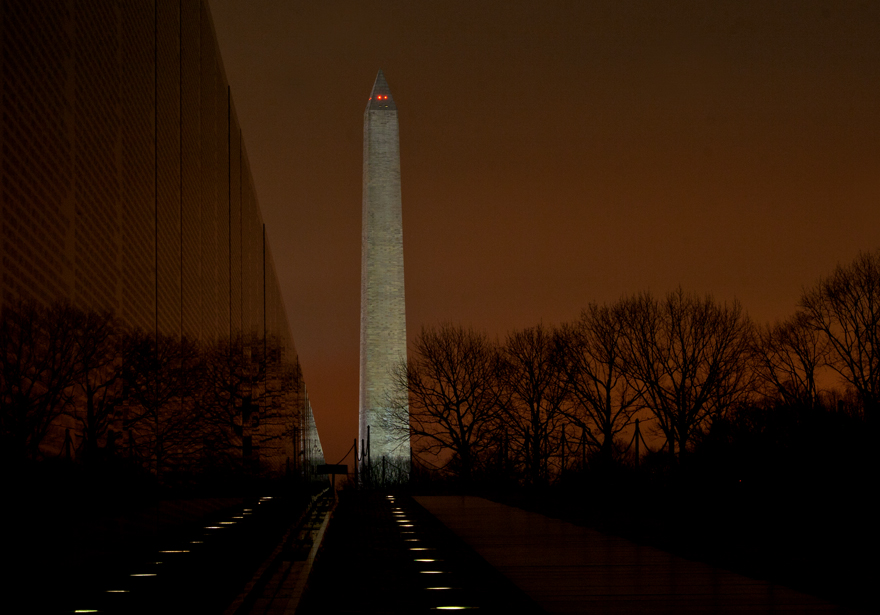
In the orange glow of the sky, the trees cast their reflections on the black granite surface of the Vietnam Veterans Memorial wall.

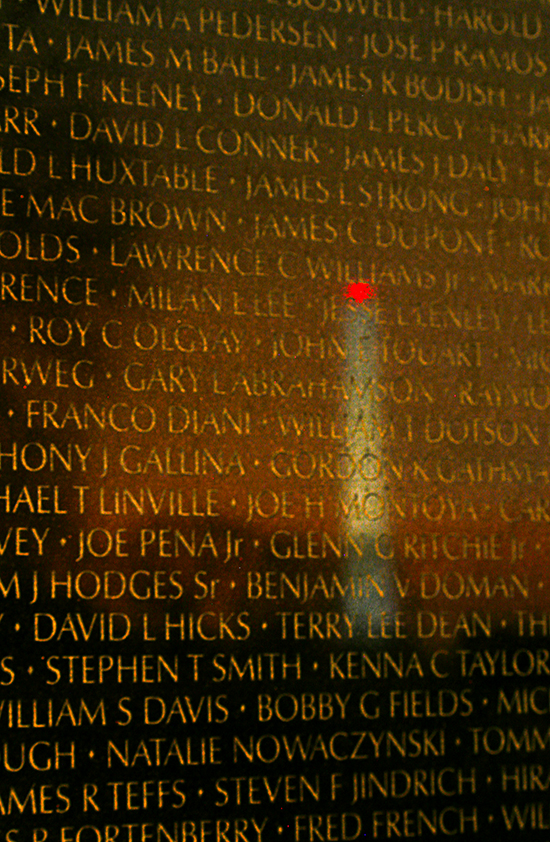
It was a moment to reflect on the names of more than 58,000 men and women whose names are inscribed on the wall. I am old enough to remember the conflicted mood of the country at the time of that war.  In the late 1970’s I enlisted in the U.S. Army and served on active duty for twenty years. With that experience, I can’t help but be humbled by the memorial to the sacrifice of so many Americans for the common good.

Monuments_blog

From certain angles, I could see reflections of the Washington Monument in the wall. It proved to be very difficult, however, to capture that reflection in a photograph. I used my tripod and a long exposure, but never quite captured the feeling of the moment. I am posting one of those efforts as a kind of aspirational shot, one that I hope to shoot better in the future.

WashMonuWords

© Michael Q. Powell. All rights reserved

Read Full Post »

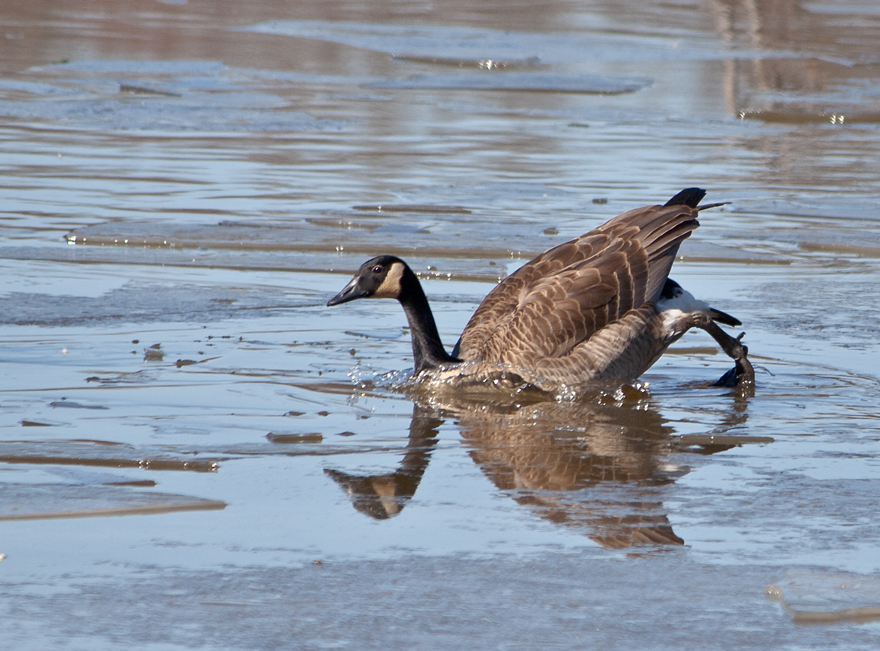
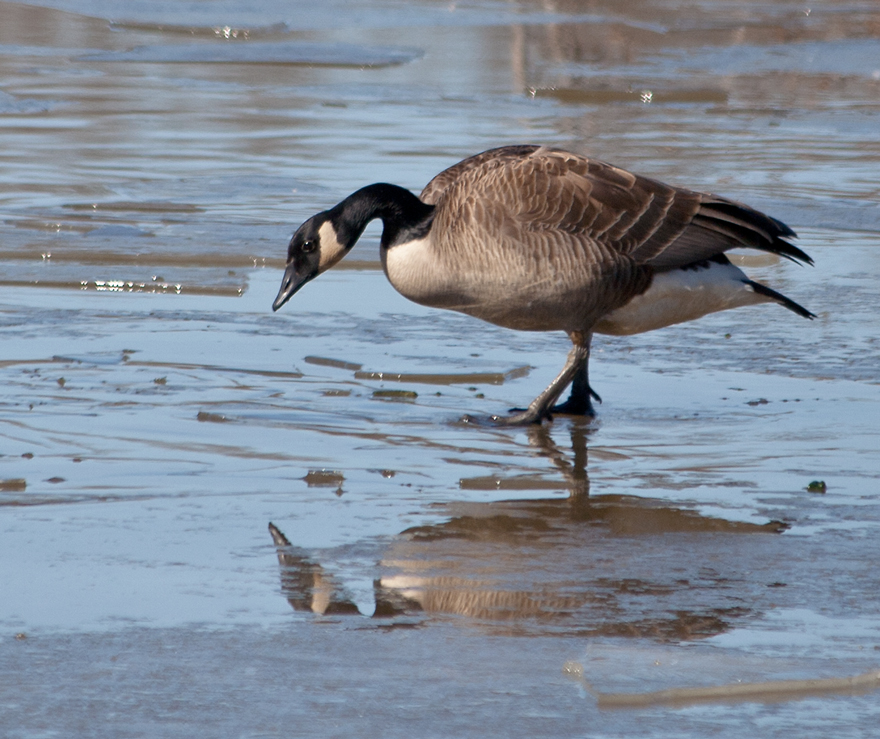
Can you figure out what is going on in this photo of a goose posing in an unusual position?

transition_blog

The pre-spring season is a often a period of transitions, as winter gradually looses its hold and gives way to spring. The old lingers, but is gradually replaced with the new.

In the first photo, the goose is transitioning from the ice, which still covers much of the pond, into a small pool of open water. I captured him at the moment when he took the plunge and gradually eased his body into the icy water.

I watched him as he approached this area slowly and cautiously, staring intently at the ice, as shown in the second photo. He seemed to hesitated, uncertain about whether to continue to move forward.

reflection1_blog

I know that I approach transitions in much the same way as this goose, hesitating and cautious, frozen in uncertainty. He had the courage to move forward and embrace the change. Will I be able to do the same when these moments arrive?

© Michael Q. Powell. All rights reserved

Read Full Post »

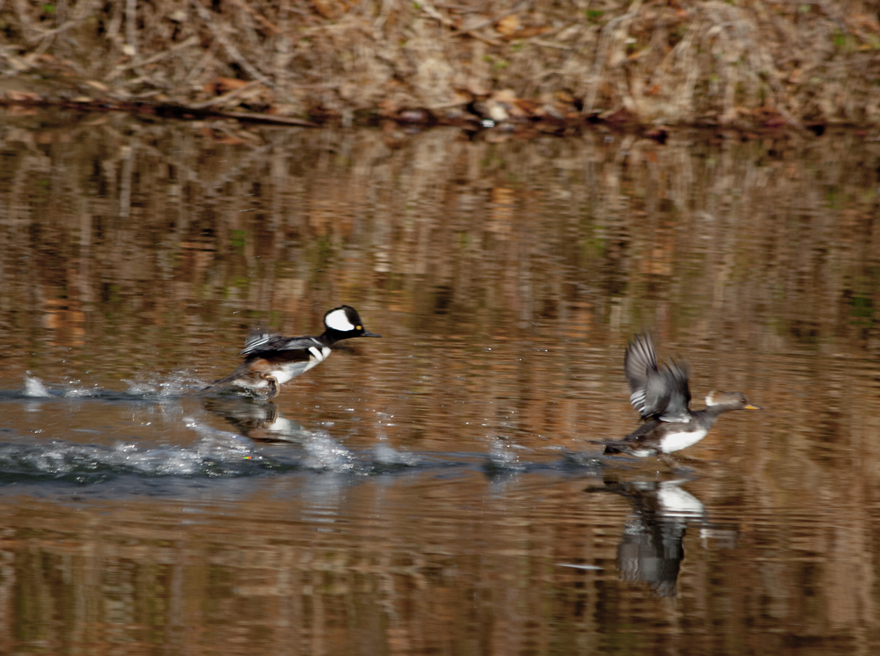
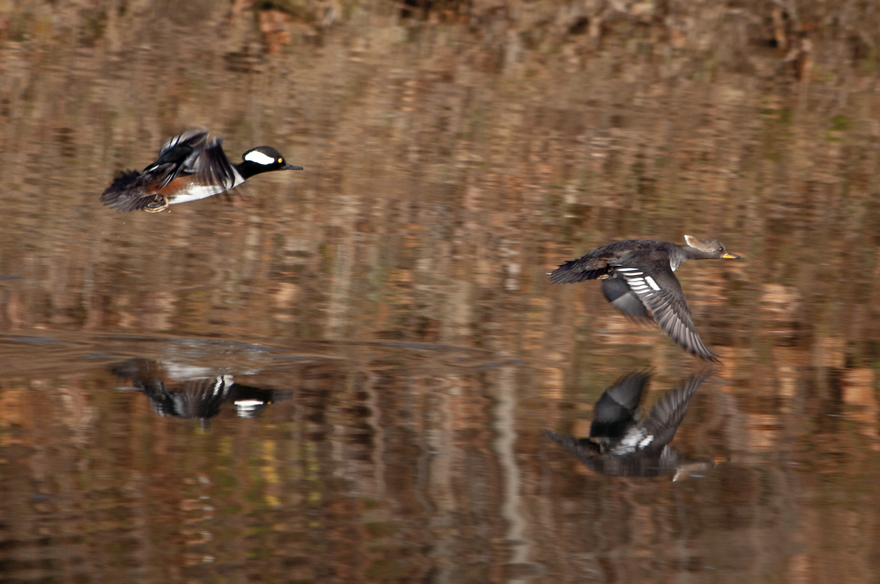
I stumbled upon a pair of Hooded Merganser ducks (Lophodytes cucullatus) at Lake Cook, a tiny urban lake, shortly after I photographed a Belted Kingfisher this past weekend. As soon I spotted them, they also became aware of my presence and immediately took evasive action. In most cases in the past, that has meant that they started swimming away. This time they seemed to have decided that more decisive action was needed and they immediately took off.

Fortunately my camera was already in my hands and the settings were about the right ones for the situation. When I started photographing birds, one of the more experienced birders whom I met recommended keeping the camera set for burst mode and that’s where I keep it most of the time now. Occasionally that means I shoot off a few extra exposures unintentionally when my trigger finger is a little heavy, but sometimes it lets me get an exposure I might not have gotten otherwise. Now, let me be clear that my almost ancient Canon Rebel XT is not a professional DSLR, so burst mode means about three frames a second, which worked out this time.

I fired off a half-dozen frames as the two ducks, a male and a female, took off from the water and I am pretty pleased with the results. It looks like the ducks get a running start on the water before they take to the air. The photo of the male duck that I featured at the start is the second one in the chronological sequence, but I thought it was the most interesting in showing the little water “explosions” as the ducks skipped across the surface. The rest are pretty much self-explanatory. I especially like the way that the heads flatten out into more aerodynamic shapes as the ducks start flying and the reflections are pretty nice. A couple of the shots are cropped to show only the male duck, because his position happened to bemore interesting than that of the female in the image (no discrimination intended).

Takeoff2_blogTakeoff1_blogtakeoff3_blog Takeoff4_blog

© Michael Q. Powell. All rights reserved

Read Full Post »

On a cold, windy day this weekend, I visited one of the local gardens. Most of the color was gone and it was a desolate, lifeless place.

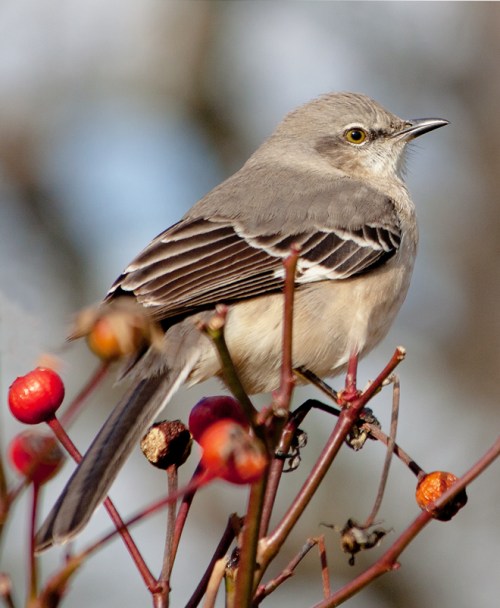
Then suddenly I heard a sound, the beautiful song of a bird. It was a Northern Mockingbird (Mimus polyglottos) defiantly singing a song of hope and good cheer. It seems so appropriate for this Christmas season, a message of peace on earth, goodwill to men.

Northern Mockingbird

Northern Mockingbird

© Michael Q. Powell. All rights reserved

Read Full Post »

Do your find yourself shooting the same subjects over and over, hoping that you will find the perfect combination of lighting, pose, and background? That is certainly the case for me when it comes to photographing birds. It is both frustrating and challenging to realize that the only variables over which I have any control are me and my trusty camera. I can try to creep closer to birds or adjust the exposure and composition, but luck and perseverance are the overwhelmingly dominant factors in achieving success, however you choose to definite it.

Walking along a path at my local marshland park this past Friday, I heard the now-familiar tap-tap of a woodpecker. I looked up and saw a male Downy Woodpecker (Picoides pubescens) at work in the upper branches of a tree. Instantly I knew I had a chance for a pretty good shot, because the lighting was good, the view was uncluttered,  and the sky was blue in the background. The woodpecker was persistent as he moved along the branch and so was I, snapping away with my head bent back at an uncomfortable angle.

Downy Woodpecker portrait

How did I do? Well, you can judge for yourself, but I think that this is about as close to perfection as I can achieve with my current skills and equipment. The elements fell into place and I managed to take an image with which I am pretty happy, a nice portrait of a Downy Woodpecker.

© Michael Q. Powell. All rights reserved

Read Full Post »

As I mentioned in another post, Monday there was ice on the small ponds that a week before had been full of migrating ducks. The ducks were all gone, it seemed. As I was passing the beaver lodge, however, I notice a small bit of bright orange on a log across the beaver pond. I looked through my telephoto lens and realized that what I had seen were the feet of a female duck, perched on the log that jutted out into the water. She was so well camouflaged that I almost missed see her. When I moved to one side, I noticed a second duck, a male, right behind them. They were huddled together, with their heads tucked in between their wings, resting and sharing their body warmth on a cold morning. Why were they alone? Had they become separated from a larger group? Were they on their way to another destination?

There was something very tender, almost intimate about this scene, about the closeness of this duck couple. The environment might be hostile and threatening, but they could face it together—at least they had each other.

Facing the world together

© Michael Q. Powell. All rights reserved.

Read Full Post »

Some birds seem to enjoy relaxing and posing and showing off their beauty, embodying a carefree approach to life. Woodpeckers, on the other hand, seem to be serious and focused, with a look of sheer determination in their eyes. It’s the same look that I see in so many of the people here in the Washington D.C. area, so driven in their professional lives that they are in danger of losing their identities apart from work.

Today, I photographed this Downy Woodpecker (Picoides pubescens) as he was preparing himself for work. Look deeply into his eye and what to you see? (Click on the photo to see more details.) The dead tree seems huge in comparison to this tiny bird. Yet he seems determined, determined to beat his head repeatedly against that wood, determined to find the food that he hopes and believes may be hidden inside.

Determined Downy Woodpecker


Do you ever feel like this woodpecker?

© Michael Q. Powell. All rights reserved.

Read Full Post »

What strikes you first when you look at a photo? Is it the color, the composition, the lighting, or some other aspect? When I first looked at this close-up photo of a Canada Goose foraging as it took a break from its migratory flying, it was the contrast in textures that grabbed my eyes. When I see these geese from a distance, I tend to see them in solid blocks of color, such as a black and white face. A closer examination reveals details like the shininess of the eyes and the beak, the burlap-like texture of the white portion of the face, and the multicolored beauty of the feathers.

What other details do I miss each day, because I fail to look closely enough?

Goose textures

© Michael Q. Powell. All rights reserved.

Read Full Post »

This morning, we continue to assess the damage from Hurricane Sandy here in the Washington, D.C. area, mainly downed trees and flooded roads. Perhaps we can draw inspiration from these geese, who are engaging in a rarely seen version of t’ai chi, seeking to achieve balance. This ancient martial art can be practiced on land or in the water—the water variant is especially appropriate for a time of reflection.

T’ai chi goose

Water t’ai chi—a reflective pose

© Michael Q. Powell. All rights reserved.

Read Full Post »

« Newer Posts