Feeds:
Posts
Comments

Archive for the ‘Gardening’ Category

During a visit yesterday to Meadowlark Botanical Gardens in Vienna, Virginia, I was reminded of my favorite artist—Claude Monet. During the last thirty years of his life, water lilies (Nymphéas in French) were the main focus of his artistic production. One of the museums that I most love visiting is the Musée de l’Orangerie in Paris, because it houses eight massive water lily murals by Monet in two specially-built oval rooms. It is incredibly peaceful to just sit in one of those rooms, surrounded by those amazing paintings.

I was delighted and a little surprised yesterday to see that some water lilies were already in bloom. There was a lot of vegetation surrounding the pond in which the beautiful flowers were floating, so there were some limits to my ability to compose my shots. Still, I am pretty happy with the images that I was able to capture.

Perhaps you will find yourself as captivated by the water lilies as I was.

Water lily

Water lily

water lily

© Michael Q. Powell. All rights reserved.


Read Full Post »

When I first started getting serious about photography almost seven years ago, I often went shooting with my photography mentor Cindy Dyer. Cindy is accomplished in many areas of photography, but she is particularly passionate about capturing the beauty of flowers with her trusty macro lens. I learned a lot about the art of photography by shooting flowers side by side with her and reviewing my images with her.

Yesterday she and I made a short visit to Green Spring Gardens, a historical, county-run garden not far from our neighborhood, and it was wonderful to see how many flowers were in bloom. I was especially attracted by the poppies that I saw growing in several areas of the gardens—the star-like centers of the poppies seemed to beckon me.

Here are a few photos of those wonderful poppies, which came in a surprising variety of colors.

purple poppy

white poppy

purple poppy

© Michael Q. Powell. All rights reserved.

Read Full Post »

Daffodils have popped up all over my neighborhood the past few days, but none of them says Spring to me as much as this single crocus that I spotted in a neighbor’s yard last week. Backgrounds are always a big problem with flowers this early—it’s hard to avoid having mulch or fallen leaves in a shot. For this shot I used my 180mm macro lens and a really shallow depth of field. I like the softness that the settings gave the edges of the flower, while the center on which I was focusing was pretty sharp.

crocus

© Michael Q. Powell. All rights reserved.

Read Full Post »

As I look out my window today, piles of snow from the snowstorm earlier this week remind me that winter is not yet over. I discovered, however, that some plants are already in bloom (or almost in bloom) yesterday during a visit to Dumbarton Oaks, a historic museum, research center, and garden in Washington DC.

I am definitely not an expert when it comes to flowers, but if I had to guess, I’d say that the flower in the first image is a crocus, those in the second image are snowdrops, and those in the final image are forsythias. Even in I am incorrect in my identification, it was a real joy to see some colors and signs of life after so many long gray days this winter.

I can’t wait for spring to arrive.

crocus

snowdrops

forsythia

© Michael Q. Powell. All rights reserved.


Read Full Post »

It will be a few more months until dragonflies reappear in our area, so for now I have to content myself with this one in my front yard that I photographed yesterday as the snow was gently falling. This metal dragonfly is part of a raised sprinkler that stands about three feet tall (about a meter).

I really like the way that the dragonfly has weathered and acquired various colors. I suppose I could talk of rust and tarnish, but I prefer to think of it as “patina.”

dragonfly

© Michael Q. Powell. All rights reserved.

Read Full Post »

The pastor at the Christmas service today reminded us of the theological implications of saying “Merry Christmas.” Every time that we utter those words, he said, we are telling another person that God loves them, that the true message of Christmas is God Incarnate, God taking on a human form to dwell among us.

Earlier this morning I was thinking about what kind of a photo I would post today. I considered selecting a recent wildlife photo, but not of them spoke to me. As I walked the dog while it was still dark, I thought about taking a photo of some of the colorful lights and decorations in my neighborhood, but somehow they didn’t represent Christmas to me at that moment.

I finally went out to my front yard and took this modest photo of one of the bushes there. I think it is called Heavenly Bamboo (Nandina domestica) and its simple form and traditional colors seemed an accurate reflection of my inner thoughts and feelings about Christmas this year. Christ came into the world in a humble way and meets us today where we are, no matter what our circumstances may be.

With the angel chorus and the heavenly host, I think about these words of the traditional Christmas story that I learned so long ago in the King James version: Glory to God in the highest, and on earth peace, good will toward men.

Merry Christmas to you all.

Heavenly Bamboo

© Michael Q. Powell. All rights reserved.

Read Full Post »

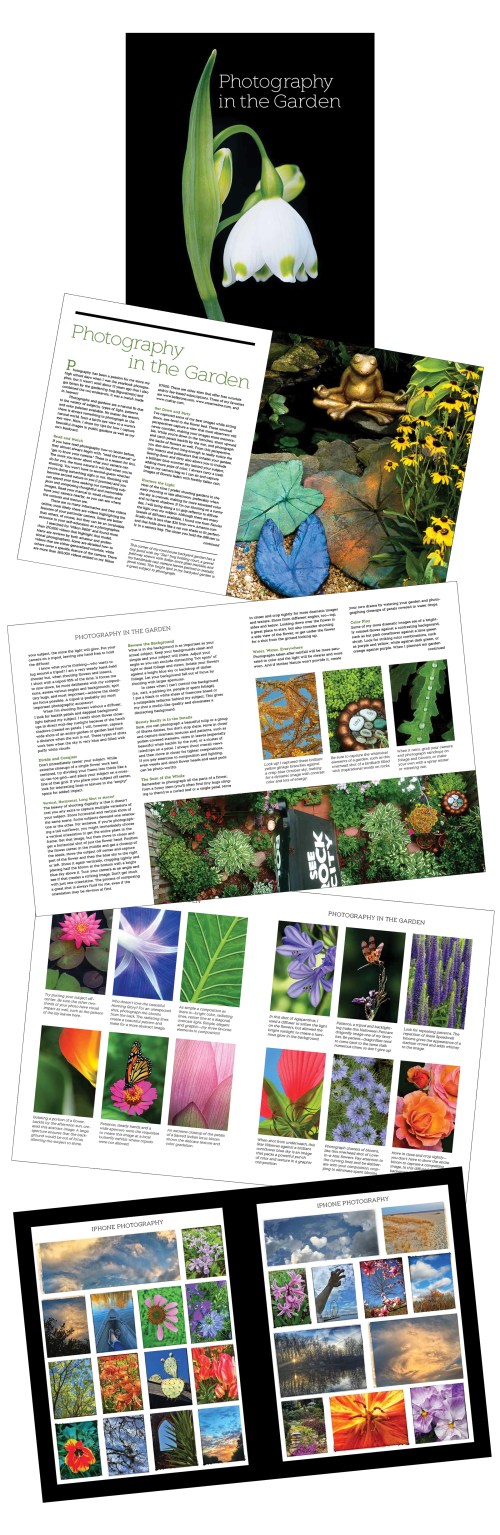
My dear friend and photography mentor Cindy Dyer just created a free mini-magazine on Photography in the Garden. Cindy is the one who helped me get more serious with photography six years ago. Her beautiful work has been featured on US postage stamps and in Nikon publications and exhibitions. In addition to her DSLR work, she has added a selection of amazing images that she shot with her iPhone.

Cindy is a constant source of inspiration for me and I encourage you all to check out her work—this mini-magazine is a great start.

cindydyer's avatarCindy Dyer's Blog

In this 20-page mini-magazine, I share my tips and tricks for photographing your garden in its best light, whether you’re shooting with a DSLR, point-n-shoot, or smartphone. You’ll learn about composition, harnessing the light, photographic resources, and what’s in my bag. Photographing gardens and the natural world has been enormously rewarding for me. Below are some sample pages from the mini-magazine.

Read your manual, shoot regularly, learn how to process your digital images and above all else, always stay curious!

Click here: Cindy Dyer Garden Photography

© Cindy Dyer. All rights reserved.

GP Sample Display

View original post

Read Full Post »

Sometimes I don’t have to venture far to capture images. I took this shot recently of a flower growing out of one of the hosta plants in my front yard as the rain was falling.

Simple colors and shapes and the sparkle of raindrops—photography doesn’t always have to be complicated. The challenge is to slow down, to really see the world around us, and to recognize its inherent beauty.

hosta in the rain

© Michael Q. Powell. All rights reserved

Read Full Post »

Normally I aim for extreme realism when taking photos. Sometimes, however, I like to try an “artsy” approach, like in this image of a flower (a zinnia, I believe) from this past weekend at Meadlowlark Botanical Gardens.

In this case, I deliberately tried to distort perceptions and make it look like the grass and the sky had switched places. In reality, the blue is not from the sky, but is a gravel path.

I like to try to vary the angle at which I am shooting and the results can often be fun and different. I never know when I will find myself sprawled on the ground or standing in the mud, so I tend to wear clothes that are rugged and often ragged.

zinnia

© Michael Q. Powell. All rights reserved.

Read Full Post »

In a moment of calm amidst the storms this past Monday, I captured this shot of a beautiful little Cabbage White butterfly (Pieris rapae) in the garden of my neighbor and fellow photographer Cindy Dyer. The shot is a little grainy, because there was not a great deal of light, but somehow the image fills me with an overwhelming sense of serenity.

Cabbage White

© Michael Q. Powell. All rights reserved.

Read Full Post »

This past week we have had an amazing amount of rain. It has not been a single, prolonged storm, but instead has been a series of bands of heavy rain.

The rain slowed down a little yesterday morning, so I popped over to the garden of my neighbor and fellow photographer Cindy Dyer to see what was in bloom. My eye was immediately drawn to a gorgeous pinkish lily in her side garden and to some pear-shaped tomatoes on her front landing. The raindrops still glistening on both of the subjects seemed to add to their beauty and interest.

Thanks, Cindy for planting such photogenic species.

pink lily

tomatoes

© Michael Q. Powell. All rights reserved.


Read Full Post »

While they have been out of town, I have been watering the flowers in my neighbors’ garden and watching (and feeding) their three cats. The garden was planted by my photography mentor, Cindy Dyer, who always selects particularly photogenic species. She asked me document some of the flowers as they bloomed in case she does not return in time to see them herself.

Yesterday I was particularly struck by the beauty of the different lilies that are now blooming. Some of them probably qualify as day lilies, but there is another cool variety that has blooms that face downward. The big star of the show, though, is undoubtedly an enormous cream-colored lily that just opened and is the one that is featured in the first photo.

Many of you know that I am generally in ceaseless pursuit of animate subjects, but it is good to periodically stop and take the time to smell the lilies.

lily

lily

lily

© Michael Q. Powell. All rights reserved.


Read Full Post »

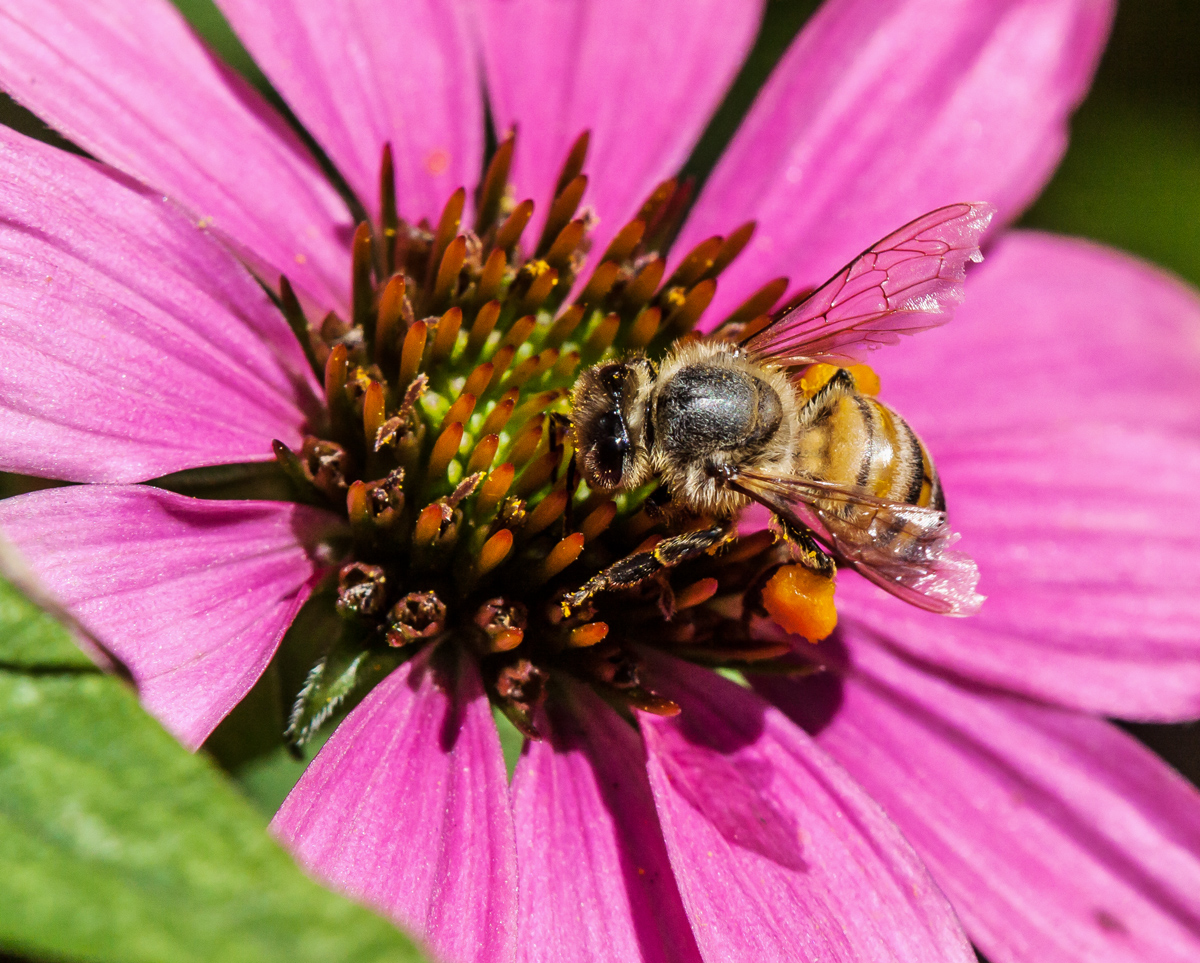
I love to watch bees as they gather pollen—they seem so industrious and focused as they systematically work their way through a group of flowers. This honey bee had both of its pollen sacs almost completely filled when I spotted it yesterday on a cone flower in the garden of one of my neighbors, fellow photographer Cindy Dyer.

One of the joys of shooting with a macro lens is that it lets you capture so many fine details, like the pollen grains on the legs of this bee and the slight damage on the trailing edges of the bee’s wings. Bees are also a great subject to practice macro techniques, because they often let you get really close without being spooked and flying away.

honey bee

© Michael Q. Powell. All rights reserved.

Read Full Post »

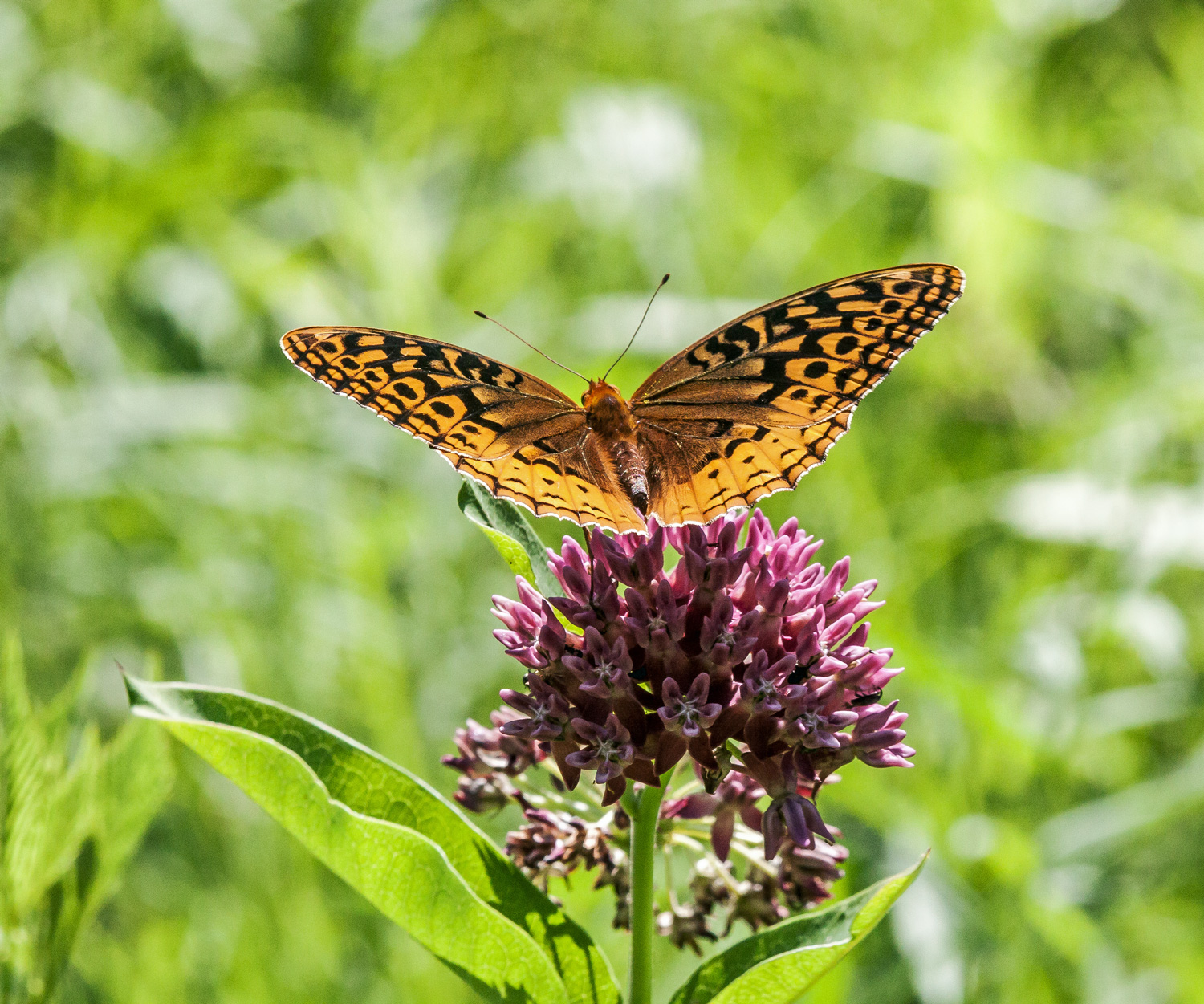
It is a gray and gloomy Friday morning and rain is forecast for most of the day. Somehow I feel the need for a boost of bright colors. So here is a shot of a Great Spangled Fritillary butterfly (Speyeria cybele) on a clump of what I believe is Purple Milkweed (Asclepias purpurascens) from this past weekend at Huntley Meadows Park.

As I worked on this image, there was a real temptation to crank up the saturation level of the colors, which made the shot look unnatural. I tried to show a little restraint and render the colors as I remember them, bright, but not in neon-like tones.

Great Spangled Fritillary

© Michael Q. Powell. All rights reserved.
Read Full Post »

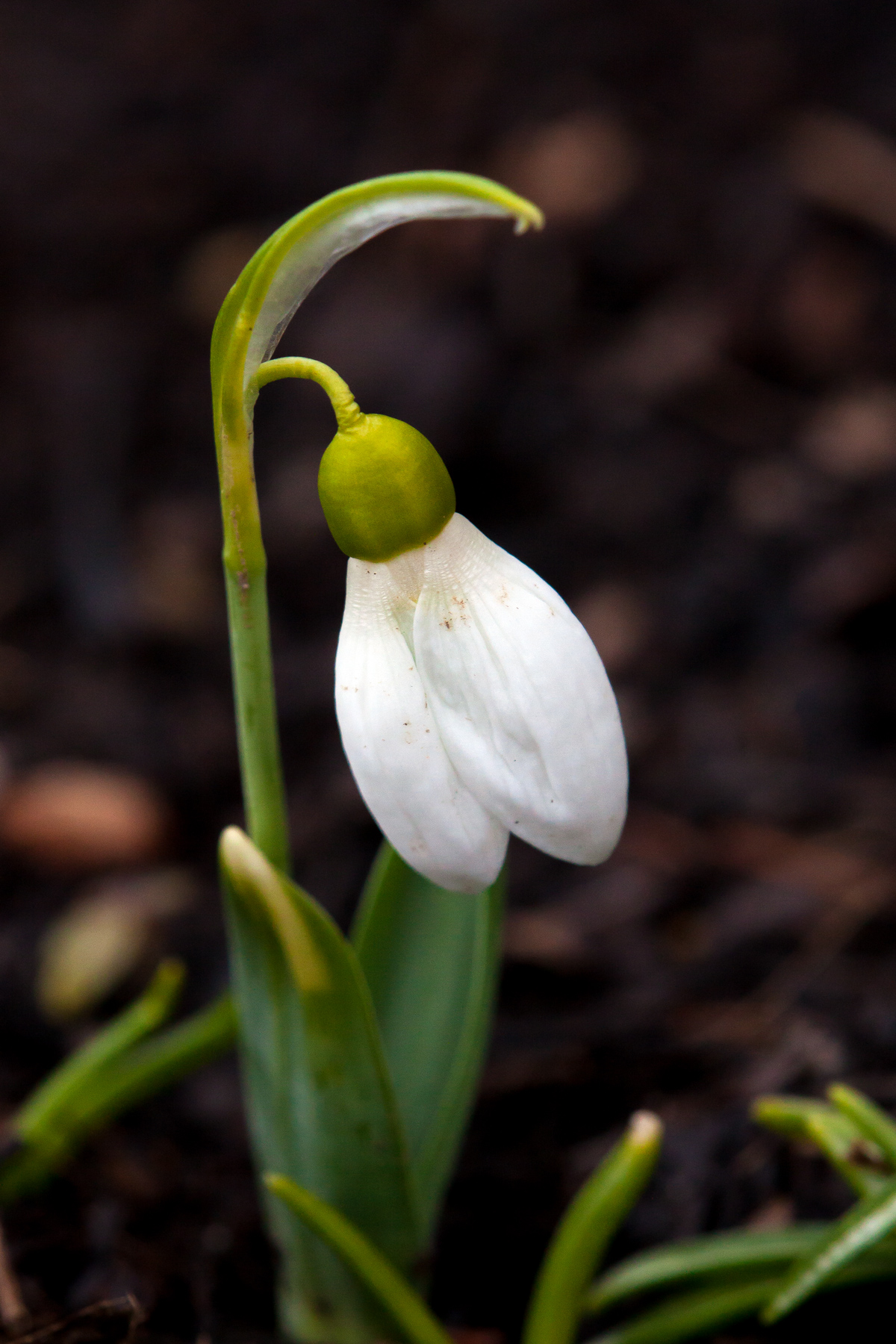
There were clumps of snowdrops scattered throughout Green Spring Gardens on Monday. I just love this simple little flower that is with us through much of the winter.

It won’t be long before the snowdrops are replaced by the more complex, more colorful flowers of the spring. At times I am impatient for the arrival of spring, but at other times I am simply content to enjoy the beauty of the modest snowdrop.

snowdrop

snowdrop

© Michael Q. Powell. All rights reserved.


Read Full Post »

Yesterday I took a break from bird photography and visited Green Spring Gardens, a county-run historic garden, with a macro lens on my camera rather than my long telephoto zoom lens. It is still a bit early for most flowers, so I was happy to spot these little purple flowers that had pushed their way to the surface. I think they may be crocuses, though I really don’t know flowers very well.

I got really low to get an interesting background and almost got stepped on by a runner—maybe it’s best not to wear a camouflage jacket when lying on the ground.

purple buds

© Michael Q. Powell. All rights reserved.

Read Full Post »

It is already June, but today I thought I would post an image of a striking May flower that I photographed late last month. Some of you know that I don’t have my own garden, though I am trying to grow some flowers in my yard this year. I generally have to rely on the garden of one of my neighbors, my photography mentor Cindy Dyer, for beautiful flowers to shoot.

I stopped by her house on the day when her first red day lily opened up. More of them are blooming now, but there is always something special about the first one. I love the rich red color of this particular variety of lily.  When I was growing up in Massachusetts. my Mom had some orange tiger lilies that appeared each year that she especially loved. This lily, of course, is a different color, but somehow it brought back memories of my departed Mom.


lily

© Michael Q. Powell. All rights reserved


Read Full Post »

The simple shape and spare palette of spiderwort plants (g. Tradescantia) really appeal to me and I found myself taking innumerable photos of them during a visit with fellow photographer Cindy Dyer to Meadowlark Botanical Gardens in Vienna, Virginia this past weekend. Be sure to check out Cindy’s blog for some awesome colorful images of many of the other flowers that we observed.

My friends all know that I have a warped sense of humor, so it would come as no surprise to them when I confess that I can’t help but think of an abnormal growth on an arachnid every time that I use the word “spiderwort.” As the weather continues to warm up, I’m pretty confident that I will soon be featuring images of spiders, warts and all.

spiderwort

© Michael Q. Powell. All rights reserved

Read Full Post »

Most of us have probably tried to frame a shot by using an archway, foliage, or other natural or man-made object to draw the attention of our viewers to our main subject. Yesterday I decided to try something a little more elaborate  during a visit to Meadowlark Botanical Gardens in Vienna, Virginia.

The Korean Bell Pavilion at Meadowlark Botanical Gardens in Vienna,VA is an amazing structure. It was made by hand using traditional methods and houses an enormous bell. How could I highlight its beauty? I started off by taking some conventional shots of the structure and they were ok, but probably the same as hundreds of other visitors have taken.

Korean Bell Pavilion

As I was exploring some of the other buildings in the Korean Bell Garden, I noticed some beautiful carved wooden openings that faced the bell pavilion. By half-kneeling and half-standing, I realized that I could frame a view of the pavilion through the opening.

Korean Bell Pavilion

I liked the shots that I was getting, but the “frame” seemed to be a bit too dark, so I decided to see what would happen if I used my pop-up flash. As I expected, the flash helped to reveal some of the beautiful grain and color of the wood without affecting the rest of the image.

Korean Bell Pavilion

As I stood up, I saw another wooden opening and tried a similar approach, resulting is a panoramic-style shot.

Korean Bell Pavilion

Of course, it is always possible to add a frame to a shot after it has been taken, but for me it’s a lot more fun to try to frame the image while I am taking it. At a minimum, it’s worth the extra effort to try to find new angles and perspectives for a shot.

© Michael Q. Powell. All rights reserved


Read Full Post »

Is it just me, or does this iris make anyone else think of a rather elegant lady with a broad-brimmed hat? There is just something whimsical about the position of this rather ordinary flower that brings a smile to my face.

I don’t have my own garden, but fellow photographer and neighbor Cindy Dyer has all kinds of flowers in her garden. Her irises have just started to bloom and I walked by her townhouse recently and spotted this somewhat faded iris and took this shot.

iris

© Michael Q. Powell. All rights reserved

Read Full Post »

I don’t have my own garden, but my neighbor and fellow photographer Cindy Dyer always has beautiful flowers in her garden, like this Lady Jane tulip (Tulipa clusiana) that I photographed yesterday afternoon with the sunlight streaming in from behind the flower.

Lady Jane tulip

© Michael Q. Powell. All rights reserved.

Read Full Post »

It’s still a little too early for dragonflies, but I did find some cool little bees yesterday afternoon at Green Spring Gardens in Alexandria, Virginia, a county-run historical garden not far from where I live. Longtime readers of the blog know that I love taking macro photographs and during summer months my trusty Tamron 180mm macro lens is on my camera most of the time.

Yesterday I decided to dust off my macro lens and search for insects. For most of the afternoon I came up empty-handed, but then I spotted a few bees gathering pollen. They kind of look like honey bees, but I don’t remember honey bees being that small. Grape Hyacinths (g. Muscari) are only a couple of inches tall and the first photo gives you an idea of the size of the bees.

Spring is finally here and I look for an explosion of insects soon. During this transitional time of the year I expect to be switching back and forth between my telephoto zoom lens, primarily for birds, and my macro lens, primarily for flowers and insects.

bee

bee

bee

© Michael Q. Powell. All rights reserved.

Read Full Post »

During the winter months, my macro lens doesn’t get used much, but I was happy to have it with me during my recent trip to Georgia when I spotted this beautiful flower in bloom at the Oxbow Meadows Environmental Learning Center in Columbus. I’m pretty sure that it is a variety of spiderwort ( g. Tradescantia), a commonly seen flower where I live, but not in February

I grew to love this kind of shot when I first started shooting with Cindy Dyer, my photography mentor and muse. She infused me with a love for macro photography and for botanical subjects that is re-energized each spring. As I look at this image, I imagine her telling me how much she likes it, but also gently reminding me that I should have shot it with a tripod to get the extra degree of sharpness and more precise framing.

spiderwort

© Michael Q. Powell. All rights reserved.

Read Full Post »

I love the way that the folks at Nalls Produce Center chose to display their wide variety of autumn produce—it is almost like a work of art. It was a challenge to photograph the wall of produce and I never did get the angles quite right. so all my photos were crooked to one degree or another. I thought about trying to photograph individual boxes, but decided to photograph them in multiples of varying numbers.

As I look overt the images I continue to marvel at the differences in size, shape, color, and texture of the fruits and vegetables on display.

autumn produce

autumn produce

autumn produce

© Michael Q. Powell. All rights reserved.

Read Full Post »

Nothing quite says autumn like a visit to a pumpkin patch. In this case it was a brief excursion to Nalls Produce Center, a nearby establishment that has an amazing assortment of produce and plants. Normally I think of pumpkins as being orange and there are plenty of orange pumpkins there of all shapes and sizes. They also have an incredible variety of pumpkins of different colors, including the multi-colored ones in the final photo. They are known by a number of different names including Turk’s Turban and Mexican Hat.

pumpkin patch

pumpkin patch

pumpkins4_blog

Mexican Hat pumpkin

© Michael Q. Powell. All rights reserved.

Read Full Post »

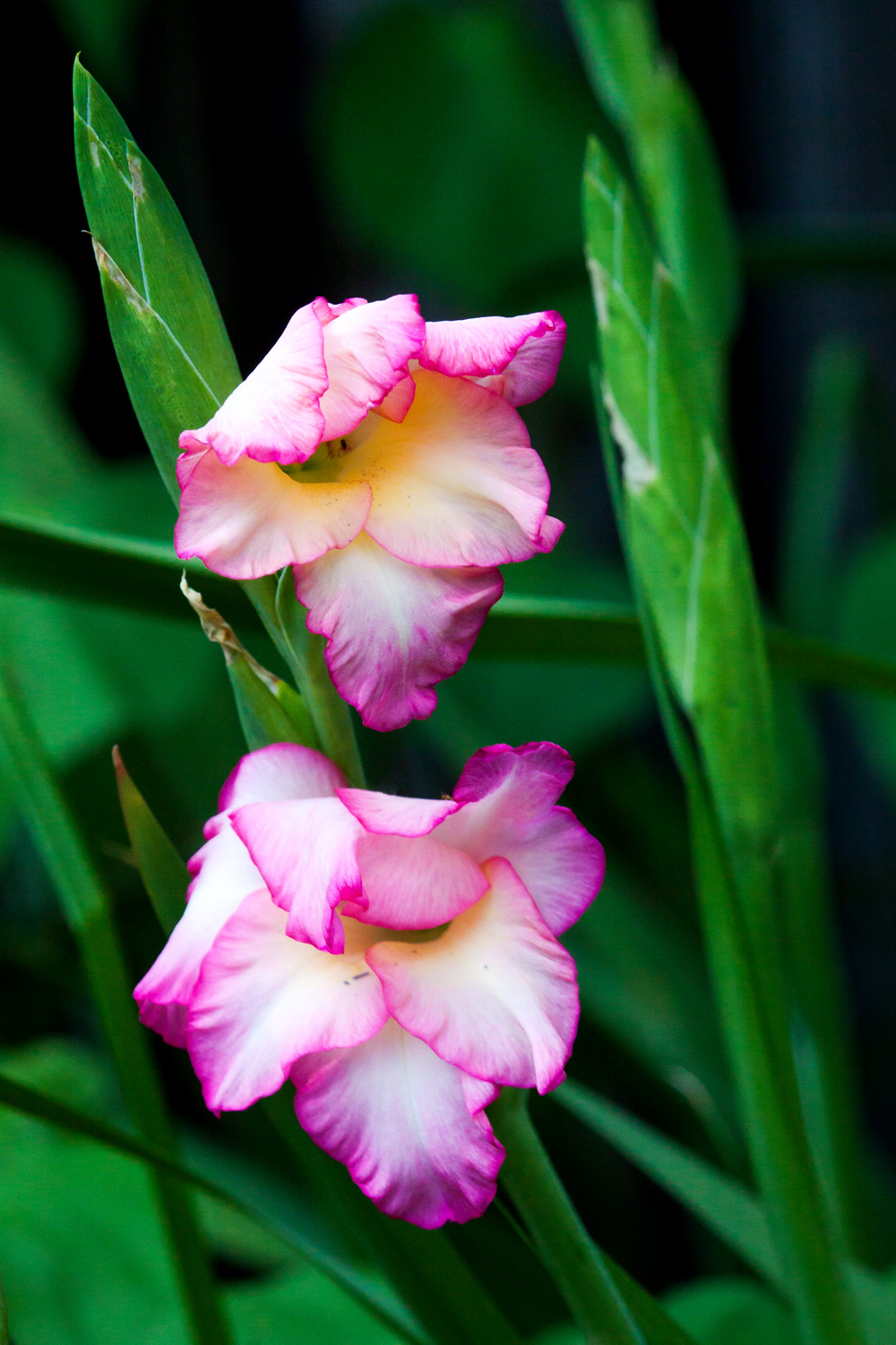
When the temperature is 96 degrees outside (about 36 degrees C), it’s hard to have the energy to go far with my camera. Fortunately, my neighbor, fellow photographer Cindy Dyer, has an awesome garden. I was glad to be able to capture this shot of some gladiolas that were blooming there this past weekend.

Thanks, Cindy.

gladiolas

© Michael Q. Powell. All rights reserved.

Read Full Post »

This weekend when I visited Green Spring Gardens I was shocked to see that not a single lotus flower was blooming, given that so many were blooming recently at nearby Kenilworth Park and Aquatic Gardens. As I looked in vain for a flower, I somehow became fascinated with the shapes of the leaves of the lotus plants and their interplay with the light and captured these almost abstract images.

These images are definitely different from the ones that I normally post, but I thought I would share them to show you what unexpectedly caught my eye that day.

lotus leaf


lotus leaf

© Michael Q. Powell. All rights reserved.
Read Full Post »

I absolutely love the vibrant colors of the daylilies in the garden of my neighbor, Cindy Dyer. Cindy is best known for her photos of flowers that have appeared multiple times on U.S. postage stamps, but she photographs a wide variety of subjects. On a more personal level, she has served as my photography mentor over the past four years and has been a constant source of encouragement and inspiration for me.

As I was capturing some images of the daylilies, I thought back to one of my earliest lessons with Cindy in which she reassured me that I didn’t have to capture the entire flower when I photographed it. That simple insight helped me realize that I was doing something more than simply documenting reality—I was creating my own version of reality through a series of artistic and technical choices.

I learned a powerful and liberating lesson that day that has continued to shape the way I approach most of my photography.

daylily

© Michael Q. Powell. All rights reserved.
Read Full Post »

Do your remember what it was like to be young and in love? You and your beloved couldn’t beat to be separated—you were always together, always close, always touching, like these two Shasta Daisies growing in the garden of my neighbor and fellow photographer Cindy Dyer.

As I was looking for information about the Shasta Daisy, I came across this fascinating information on the history on the flower at lutherburbank.org:

“2001 marked the 100th anniversary of Luther Burbank’s introduction of the Shasta daisy, one of America’s most beloved garden flowers. Burbank spent 17 years developing this quadruple hybrid which he named after Mt. Shasta. Others have continued Burbank’s work and many new varieties of the Shasta daisy have been introduced since Burbank completed his work more than 100 years ago.”

Shasta Daisy

© Michael Q. Powell. All rights reserved.

Read Full Post »

There is something really special about water lilies (g. Nymphaea)—it’s easy for me to understand why impressionist painter Claude Monet was obsessed with them. During my recent visit to Kenilworth Park and Aquatic Gardens in Washington D.C. many of the water lilies were closed up, probably because of the extreme heat of the midday sun, but I did manage to get some shots.

The traditional white water lilies tend to have a calming effect on me. For those folks looking for a bit more passion, there were also some fiery red water lilies.

Water lily

water lily

water lily

© Michael Q. Powell. All rights reserved.
Read Full Post »

How far do you usually travel when you want to take some photos? I capture a lot of my wildlife/nature images in my local area, but generally I get into my car and travel at least a few miles before I begin shooting.

Sometimes, though, I feel the urge to shoot, but don’t really want to travel far. In those moments I will usually walk over to the townhouse of my neighbor, fellow photographer Cindy Dyer, who always seems to have an assortment of photogenic flowers in bloom.

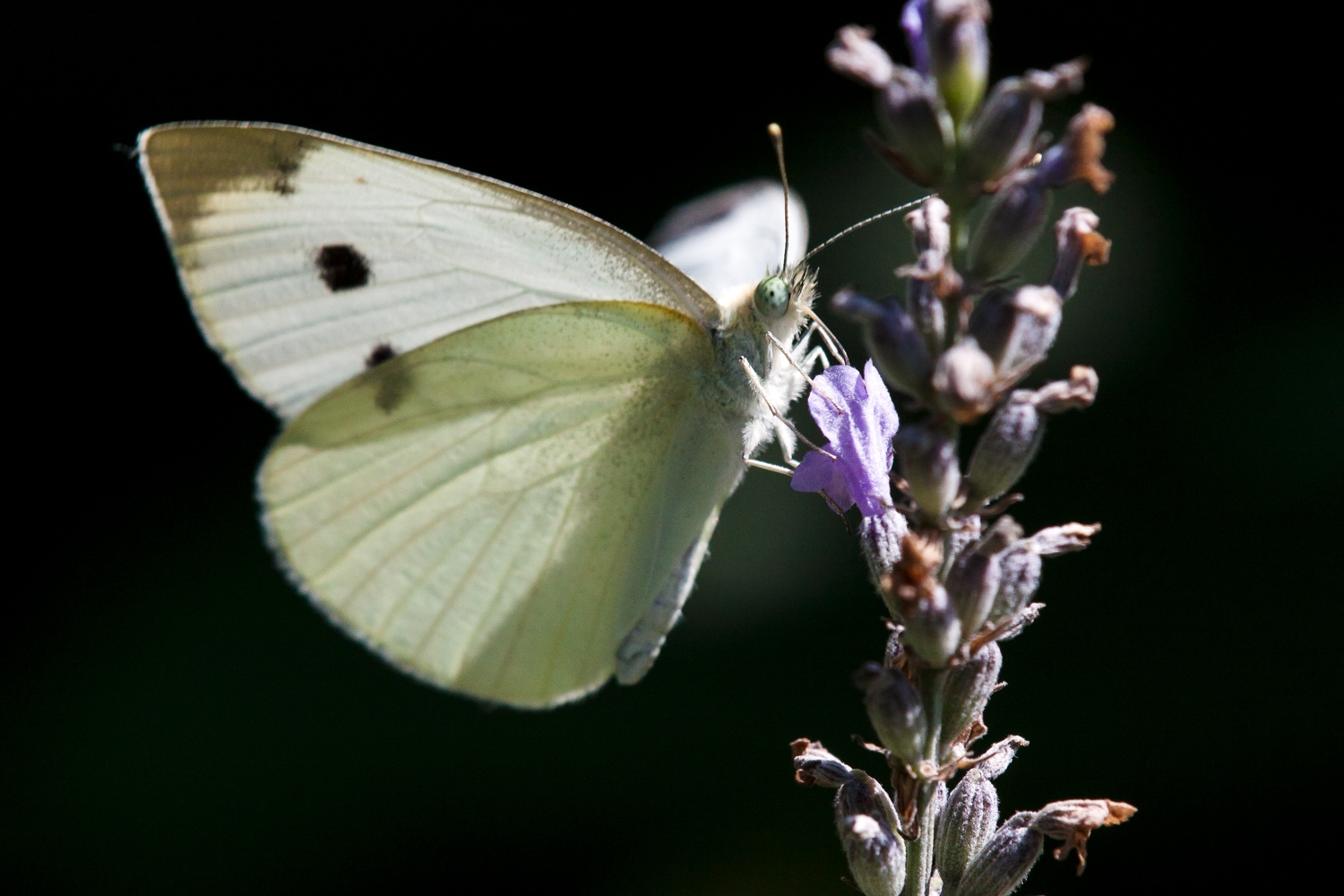
Last week I chased a Cabbage White butterfly (Pieris rapae) that I spotted fluttering about the flowers in garden. It passed by the globe thistles and the cone flowers and finally perched for a moment on a lavender plant. The sun was shining brightly, which I knew would create problems in getting a proper exposure of the dazzling white wings of the butterfly. I switched my metering to spot metering and the wings retained their details, but the background became really dark, creating a dramatic lighting effect that I really like. As always, I was thrilled to be able to see the beautiful green eye of this common butterfly that is often ignored or simply taken for granted.

Cabbage White

© Michael Q. Powell. All rights reserved.

Read Full Post »

« Newer Posts - Older Posts »