Feeds:
Posts
Comments

Archive for the ‘Autumn’ Category

“Make sure the eyes are in focus.” I can’t even count the number of times that I have read or heard these words of advice, which I usually try to follow, even when taking extreme close-up macro shots.

These are the compound eyes of the Autumn Medowhawk dragonfly (Sympetrum vicinum), a close relative of the Blue-faced Meadowhawk that I have featured in several postings recently. I took this shot on a cool day when the dragonfly was perched on a tree, trying to warm itself in the warmth of the sun. The camera’s aperture setting was in a middle range at f/9.0, but with the subject this close, the depth of field was pretty shallow and the eyes are pretty much the only portions of the dragonfly in focus (in addition to small section of the wings and the front legs).

autumn_close1_blog

© Michael Q. Powell. All rights reserved.

Read Full Post »

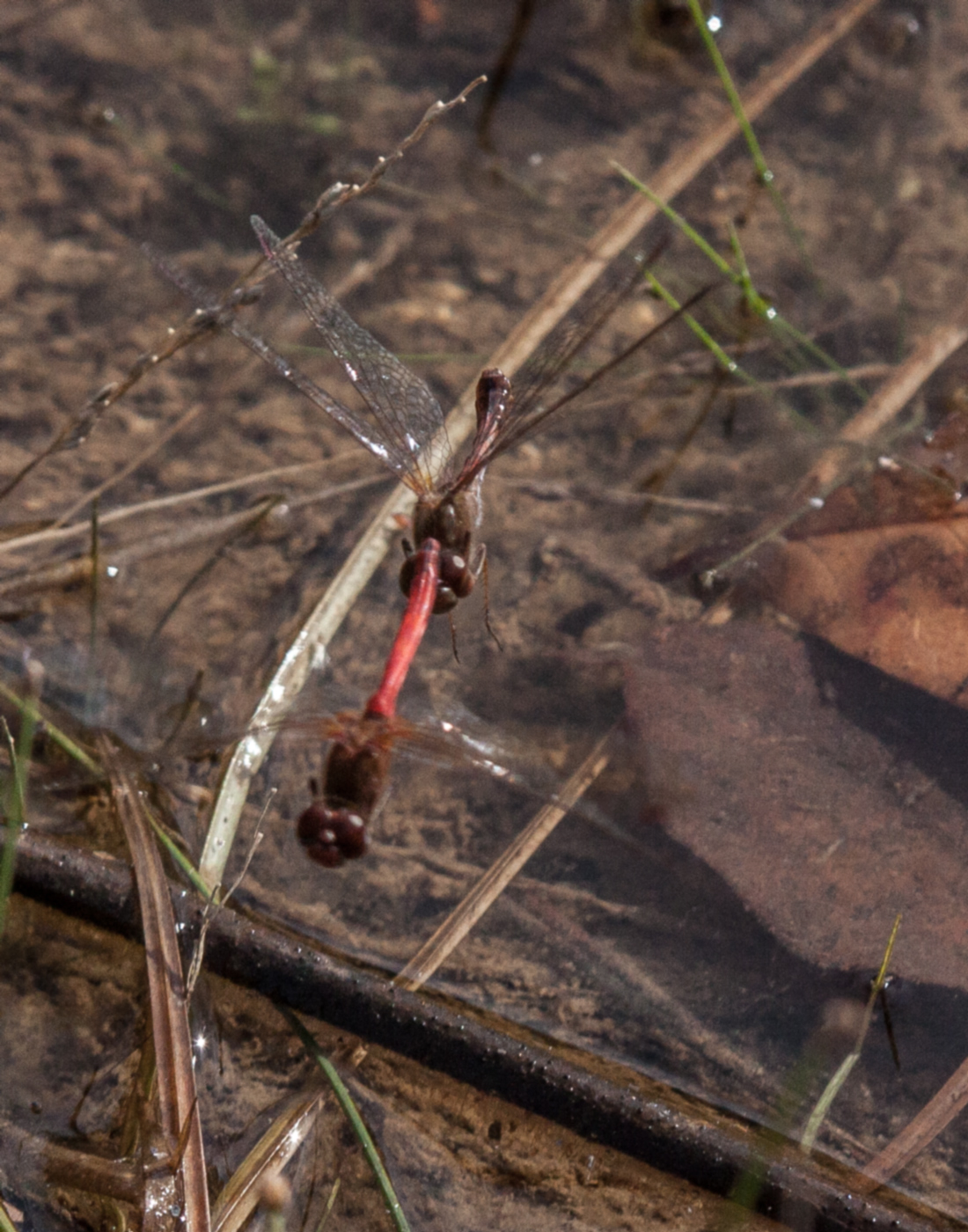
When Autumn Meadowhawk dragonflies (Sympetrum vicinum) have finished mating, the male does not release the female, but continues to clasp her head tightly with the tip of his abdomen. The pair flies off together in the “tandem” position and remains attached until the female has finished depositing her eggs, normally in the water.

A chivalrous interpretation of this behavior might be that the male is merely protecting his mate from clamoring suitors and allowing her to oviposit in peace. The reality, though, is that there is a fierce competition among males that can sometimes involve attempt to dislodge a rival’s sperm from a female and replace it with his own if the female has not yet laid her eggs. By holding onto the female, the male increases his odds of fathering some baby dragonflies.

Check out a 2006 National Georgraphic article called Dragonflies Strange Love for some other fascinating insights into the love life of dragonflies.

Earlier this month, I was at a small pool of water and I watched as a series of Autumn Meadowhawk couples in tandem went through the process of ovipositing and I attempted to get some in-flight shots of them. These dragonflies are really small and my success rate in keeping them in the frame was not high, but I did manage to get a few decent images.

Hopefully the practice in tracking a moving subject will carry over and help me as I move to photographing birds in flight, rather than dragonflies.

Autumn MeadowhawkAutumn Meadowhawk

© Michael Q. Powell. All rights reserved.

Read Full Post »

My concerns about the potential demise of the Blue-faced Meadowhawk dragonflies (Sympetrum ambiguum) were greatly exaggerated and I saw a half-dozen or more yesterday on Veterans Day (Armistice Day).

Normally we stop seeing this species of dragonflies by the end of October, but we have not yet gone below freezing and perhaps that explains their unexpected longevity. Yesterday, for example, the temperatures soared to almost 70 degrees F (21 degrees C).  I have to note too that I am searching for them more diligently and in more remote locations of my marshland park, so that may help explain why I am seeing them more frequently.

As is the case with birds, male dragonflies tend to be more brightly colored and visible. Many female dragonflies are brown in colored and harder to spot. I was thus very happy yesterday to be able to get this close-up shot of a female Blue-faced Meadowhawk. Her body coloration may be a little bit drab, but those blue eyes are simply stunning.

In case you are curious, these dragonflies are small in size, with a body length of approximately 1.5 inches (38 mm), so I had to move in awfully close to get this shot. Surprisingly (and happily), this female tolerated my close presence for long enough for me to take several shots before she flew off into the distance.

female Blue-faced Meadowhawk

© Michael Q. Powell. All rights reserved.


Read Full Post »

Have you ever tried to photograph a living subject—or even worse, a pair of them—perched on one of your knees? Depth of field is a huge challenge and even trying to frame the subject is complicated, especially when you have a 180mm macro lens on your camera.

Autumn Meadowhawks (Sympetrum vicinum) are the most friendly dragonflies I have ever encountered. I don’t know what attracts them—perhaps it’s curiosity—but I found out last year that they are prone to perch on me.

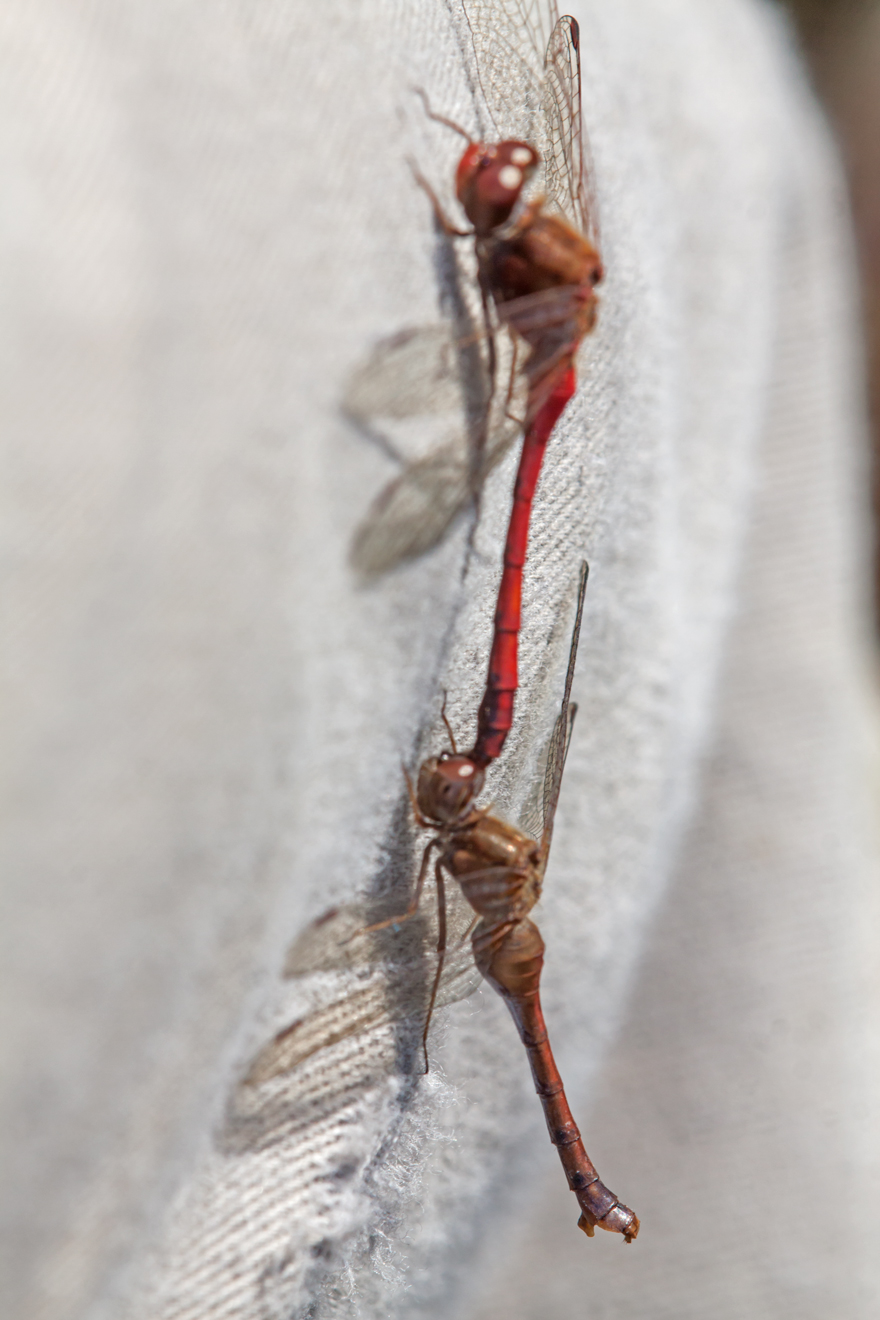
Surprisingly, they will even perch as a pair when they are still in tandem, the position that this species uses when the female is ovipositing, i.e. placing her eggs in the water after mating. The male hangs on to the female by the head, presumably to keep other males from interfering with the process.

In my initial attempt to get a shot of the couple, I focused on the male, and the female is completely out of focus.  For the second attempt, I tried to twist myself around to photograph them from the side and almost fell over in the process. The female is more in focus, but the male is now slightly out of focus.

As the season progresses, I’ll see if I can find some even more cooperative Autumn Meadowhawks and try to get a shot of one perched on one of my fingertips, as I did last year.

Autumn Meadowhawk

Autumn Meadowhawk

Later in the day, a male Autumn Meadowhawk landed on my leg and I had much better success in getting some clear shots. I used a similar approach, taking the first shot from above and the second one from the side. My pants are a solid tan color and it is interesting to see how it almost looks like I was wearing a seersucker suit.

Autumn Meadowhawk

Autumn Meadowhawk

© Michael Q. Powell. All rights reserved.


Read Full Post »

We’re almost at the end of the dragonfly season now in Northern Virginia and soon I’ll be seeing only the Autumn Meadowhawks (Sympetrum vicinum), historically the last dragonflies of the year to disappear. This past Monday, though, I managed to find a few Blue-faced Meadowhawk dragonflies (Sympetrum ambiguum), unusually hardy survivors this late in the season.

I really enjoy trying to get close-up shots of these colorful little dragonflies and my favorite shot is this close-up of one of them, perched on a fallen leaf.

Blue-faced Meadowhawk

When you pull back a little, you can see how tough the season has been for this dragonfly—portions of its wings are shredded. Somehow, however, it managed to fly about as though its wings were undamaged.

Blue-faced Meadwhawk

Temperatures last night dropped down into the upper 30’s F (3-4 degrees C) and I doubt that I will see any more Blue-faced Meadowhawks. I am resigned to the possibility that these may be my last shots of the year of these stunning little dragonflies, but that won’t keep me from searching really hard for them later today.

Blue-faced Meadowhawk

© Michael Q. Powell. All rights reserved.

Read Full Post »

It’s hard not to feel a little bit like a voyeur when I move in close to capture the details of an intimate encounter between two wild creatures. There is something especially intriguing about the acrobatic maneuvers of colorful mating dragonflies, like this pair of Autumn Meadowhawk dragonflies (Sympetrum vicinum) that I photographed in the “wheel” position at my local marshland park in late October.

Many times I have to assume equally acrobatic positions to capture the action. Fellow photographer and dragonfly enthusiast Walter Sanford photographed me in one such pose in an image that I included in a previous posting entitled “My view of the mating dragonflies.”

On this occasion, however, the dragonflies were much more accommodating and they perched at eye level on the top of some vegetation. The couple was back-lit, but a little fill flash helped to bring out the details and the colors.

In this case, at least, the brightly-colored  dragonflies seemed to be exhibitionists and I felt less like a voyeur, though I must confess that I did not shield my eyes and turn away from the activity.

Autumn Meadowhawks mating

© Michael Q. Powell. All rights reserved.

Read Full Post »

Continuing my quest to find and photograph the dwindling number of insects before winter sets in, I came upon this tiny green spider this past Monday as I was searching for dragonflies. It was almost hidden in the leaf litter, but made a slight motion as I happened to be looking at its direction.

It looks to be some kind of crab spider, though that is more a guess than an informed opinion. One thing that I do know, though, is that I am fascinated by its eyes, which you can see more closely if you click on the image.

I took this photo just about at the minimum focusing distance for my lens, which the manufacture says is 18.5 inches (47cm). I tried to get just a bit closer, but had to back off to keep the spider in focus. As you can probably tell, I was really low to the ground when I took this photo and was using my camera bag to stabilize the lens for the shot.

The weather has turned cooler and rainy, which does not bode well for the insect population. I’ll probably be out tomorrow looking for the survivors (and have a few more to post from Monday if I am unable to find new subjects).

spider1_nov_blog

© Michael Q. Powell. All rights reserved.

Read Full Post »

We all like to believe in happy endings, but unlike fairy tales, real life does not always turn out that way. I was saddened this afternoon to learn that the female Bald Eagle (Haliaeetus leucocephalus) that was rescued on Monday at Huntley Meadows Park had to be euthanized.

The dislocation of her elbow was chronic and so severe that eventual release was not a possibility.  The doctors at The Wildlife Center of Virginia determined that humane euthanasia was the best treatment.

I was happy that the work of the Fairfax County Animal Control Services officer that I chronicled in an earlier posting were featured today in the on-line editions of local media, including the Washington Post, WJLA (ABC television), WTOP radio, and Inside NOVA. The sad ending in no way diminishes my respect and thanks to Officer Kathy Prucnal for her extraordinary efforts to rescue the injured eagle.

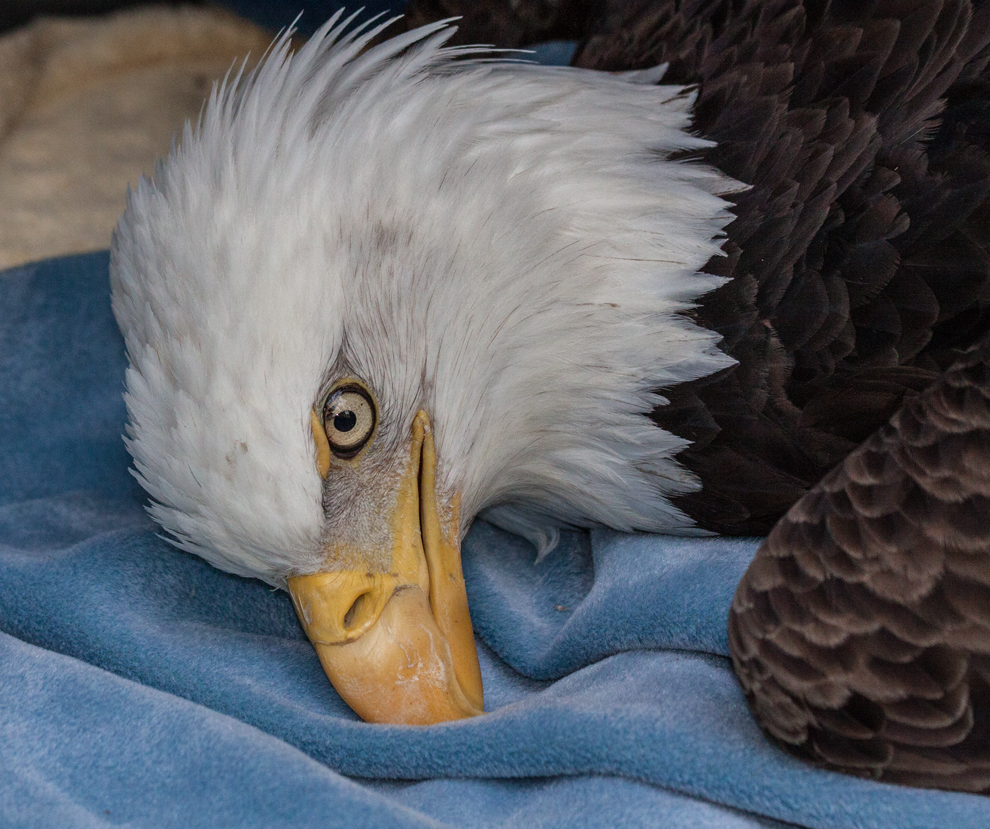
This photo that I took during the rescue is how I want to remember the female Bald Eagle, appearing strong and alert.

RIP, beautiful eagle.

Bald Eagle

© Michael Q. Powell. All rights reserved.

Read Full Post »

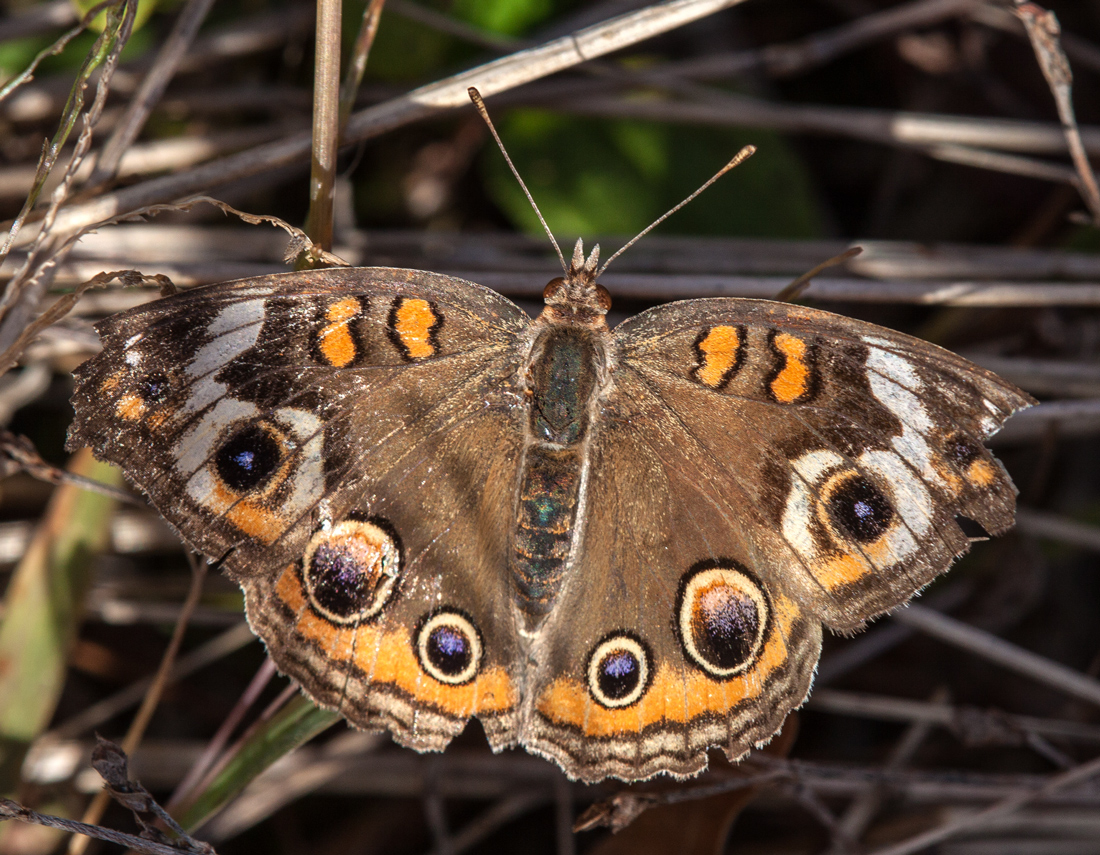
Butterflies in November? I didn’t really expect to see any, so it was a pleasant surprise when I came upon this Common Buckeye (Junonia coenia) on Monday at my local marsh. The butterfly is beat-up and bedraggled, but its beauty beams brightly—uncommon beauty at an unexpected time.

buckeye_nov_blog

© Michael Q. Powell. All rights reserved.

Read Full Post »

I received an update from the Animal Control Officer who rescued the Bald Eagle (Haliaeetus leucocephalus) featured in yesterday’s posting and the prognosis looks positive.

The eagle had a low heart rate, according to the attending veterinarian, likely from pesticide poisoning, and they treated it with atropine. The eagle, an 8 pound (3.6 kg) female, also had a dislocated joint in one wing, which is treatable as well. It is likely they will be able to release her after some rehabilitation at a specialized facility in southern VA, which I assume is The Wildlife Center of Virginia in Waynesboro, Virginia.

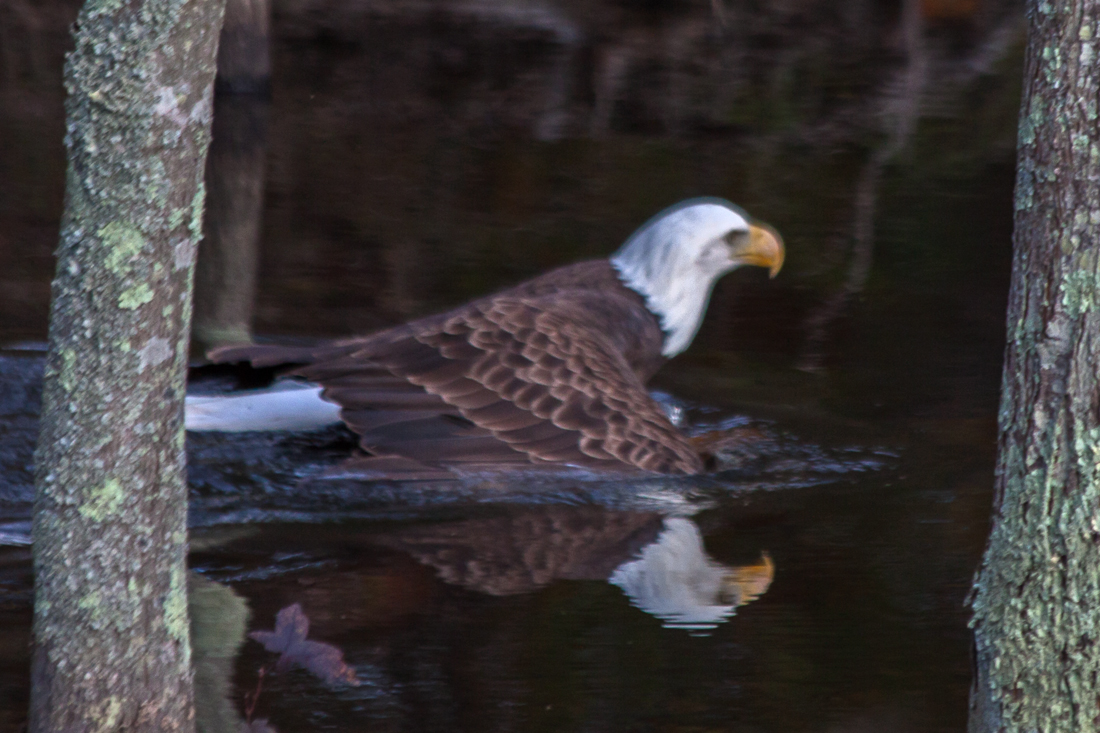
I took the first photo when the eagle was trying to swim away while being rescued. The image is not quite as sharp as the photos from yesterday, but I just love the reflection of the eagle in the water as it struggles to swim. This was in a wooded area of Huntley Meadows Park, my favorite venue for photography, that is now flooded as part of a wetland restoration project. The second photo shows the eagle as it was when I first came upon it, perched on a pile of brush, unable to fly away.

Bald Eagle

Bald Eagle

© Michael Q. Powell. All rights reserved.

Read Full Post »

Would you be willing to chase an injured adult Bald Eagle (Haliaeetus leucocephalus) with nothing more than a blanket in your hands? Yesterday, I was privileged to observe a very brave officer of the Fairfax County Animal Control Services capture an injured eagle at my local marshland park.

The eagle was perched on a brush pile in a flooded forest area of the marsh. From time to time it would hop to a new position, but did not seem able to fly away. Several parkgoers had alerted the park authorities of the situation and I came upon the situation shortly before the animal control officer arrived.

When the officer began to chase it, the eagle hopped away and then tried to swim away, stopping for a moment to look in my direction from behind a tree. Eventually, when an unidentified parkgoer helped to block a potential exit route for the eagle, the officer was able to capture the eagle.

As the officer was carrying the eagle, wrapped up in a blanket, to a small vehicle, I circled around on the path as fast as I could, hoping to get a closer look at the eagle. The officer was accommodating and briefly unwrapped the blanket and I got an amazing close-up look at this majestic bird. She was also willing to pose for me and I took a photo that I sent to her to help her remember her amazing actions.

I managed to get a final look at the eagle after it had been transferred to the animal control vehicle. The officer unwrapped the eagle so that the man who had assisted in the rescue could get a look at it. The eagle seemed to have settled down a bit and appeared to be resting comfortably. It was impossible to determine the cause and the extent of the eagle’s injuries, but the officer assured me that the county has excellent rehabilitation facilities for injured raptors. If I am able to get progress reports on the eagle’s recovery, I’ll be sure to keep you all informed.

Bald Eagle

Bald EagleBald Eagle rescueBald Eagle rescueBald Eagle rescue

© Michael Q. Powell. All rights reserved.

Read Full Post »

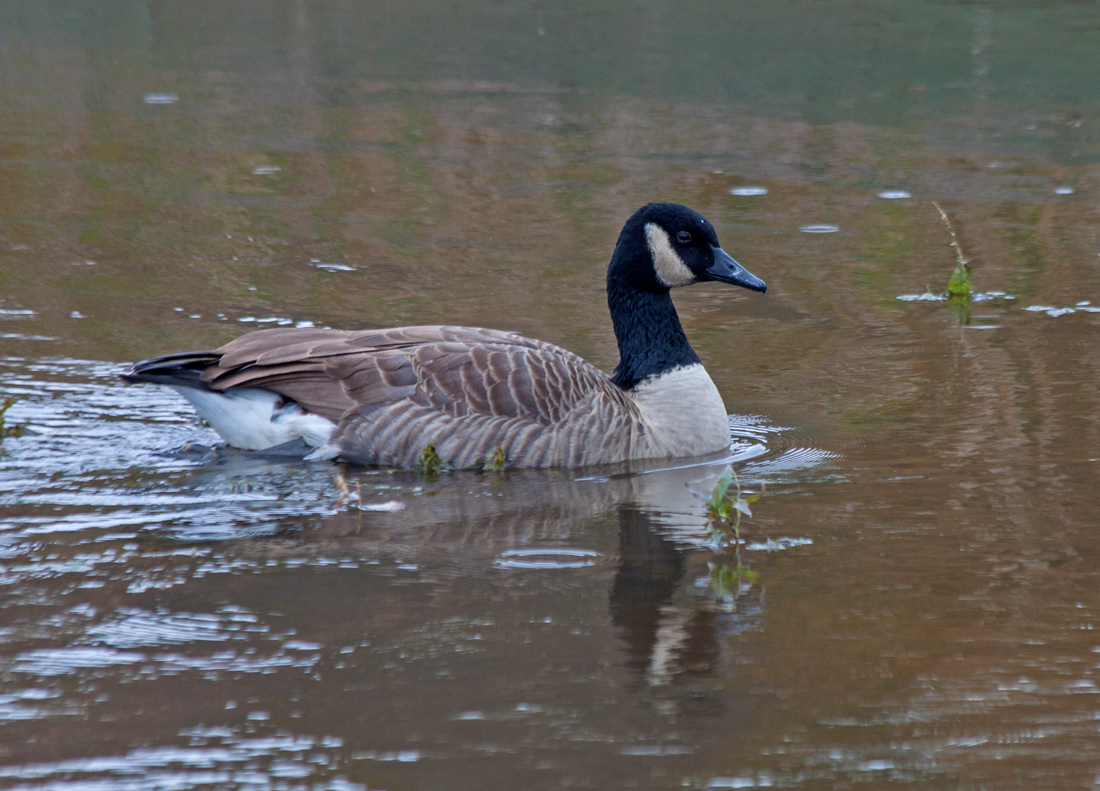
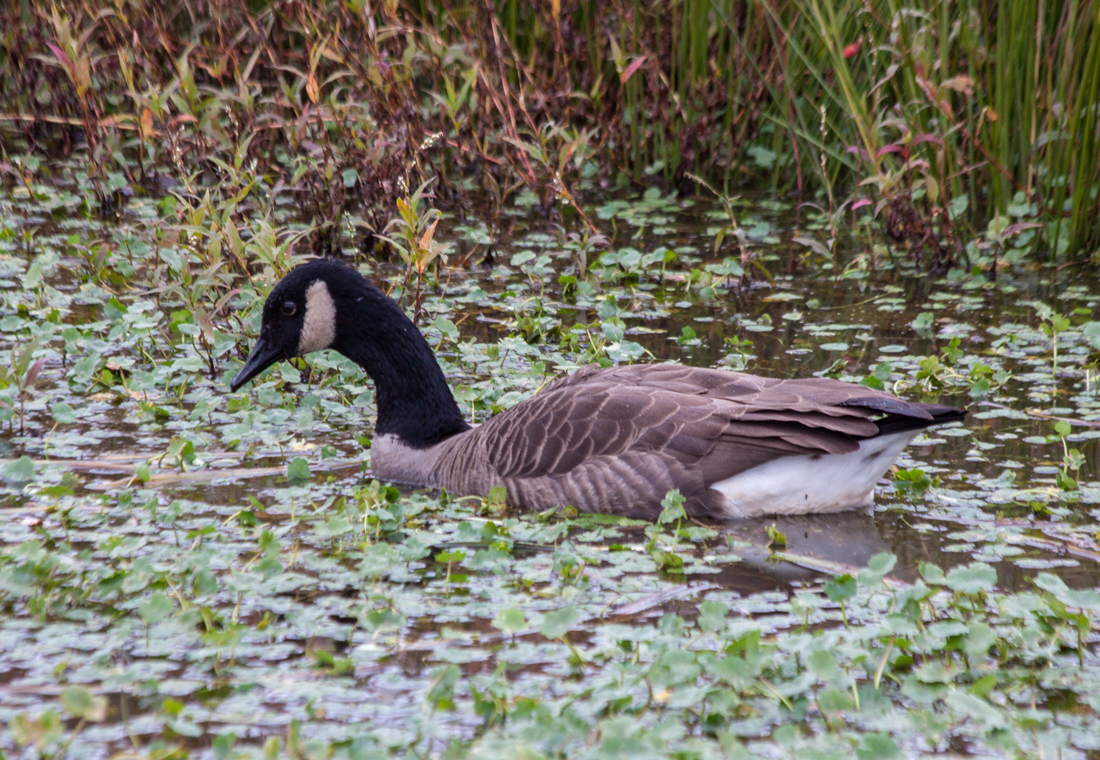
Some people love them and some people hate them, but there is no question that the arrival of Canada Geese (Branta canadensis) signals the transition to a new season.

Yes, they are loud and often obnoxious. Yes, they are numerous and sometimes crowd out other species. Yes, their droppings are nasty and slippery. Despite all of that, I enjoy watching and photographing Canada Geese in the air and on the water.

There were only a dozen or so geese at my local marsh this past weekend, but I am well aware of the fact that this is only an advance party for the hundreds of geese that will move through this area, with some of them choosing to remain here for extended periods of time.  From the perspective of my blog, this is the first posting of the season dedicated to Canada Geese, but certainly not the last.

Canada GooseCanada Goose

© Michael Q. Powell. All rights reserved.


Read Full Post »

A new month started quietly, with few animals, birds, or insects visible on a cold. overcast day. I walked around my local marsh for a couple of hours and experienced nature in a series of small encounters, signs of the changing season.

A lone swallow sang softly in a tree; (CORRECTION: A sharp-eyed reader noted this is a female or immature Red-winged Blackbird)

A mallow flower bloomed unexpectedly in the water;

A squirrel peeked out from behind some branches;

The trees showcased their muted autumn colors; and

An advance party of Canada Geese came in for a landing.

© Michael Q. Powell. All rights reserved.

Read Full Post »

November arrived as a cold, overcast, windy day and there was not much wildlife moving around (and no insects at all). All around me I noticed signs of autumn and I decided to try to capture the feeling of the changing season at my local marsh. I took lots of photos of the fall foliage, but somehow I liked this image best as a graphic depiction of autumn at my favorite marsh.

autumn cattail

© Michael Q. Powell. All rights reserved.

Read Full Post »

Even from a distance it’s hard to miss the bright lapis blue eyes of a male Great Spreadwing damselfly (Archilestes grandis). Unlike many damselflies, which are tiny, this species, as its name suggests, is a big damselfly, about 2 to 2 1/2 inches in length (50-62mm). According to Bugguide.net, though, the bright yellow”racing” stripe, which occurs on both males and females, is the most easily seen distinguishing identification feature for this species.

I had never even heard of this beauty until the 11th of October, when fellow dragonfly hunter Walter Sanford blogged about his discovery of one at Huntley Meadows Park on the 9th of October. I had no idea if this was the only member of the species at the park or how long it would hang around and didn’t hold much hope of seeing one of these damselflies myself.

I was shocked and pleased on the 20th of October when I spotted Walter and this damselfly. Walter graciously ceded to me the prime spot for taking a close-up shot. A week later I returned to the same location and the Great Spreadwing was gone.

In past years I didn’t pay much attention to the timing and location of various dragonflies and damselflies—they were either present or they weren’t. This summer and fall, however, I’ve been learning how important the specific habitat and the time of year are for certain species and the window of opportunity to observe them opens and closes pretty quickly.

Consequently, I consider myself very fortunate that I was able to capture this little portrait of the Great Spreadwing damselfly.


Great Spreadwing

© Michael Q. Powell. All rights reserved.

Read Full Post »

It’s hard enough to find the stunningly beautiful Blue-faced Meadowhawk dragonfly, but fellow photographer Walter Sanford set the bar higher this season by seeking to capture them against a backdrop of colorful autumn foliage. Check out his amazing results.

waltersanford's avatarwalter sanford's photoblog

This is Part 1 in a series of posts featuring photos of Blue-faced Meadowhawk dragonflies (Sympetrum ambiguum) spotted while photowalking Huntley Meadows Park during Fall 2014. All individuals are males, as indicated by their coloration and terminal appendages.

One of my overarching goals this fall is to shoot pictures of my favorite species of dragonfly against a background of autumn foliage. The color and clarity of these photographs is enhanced by using an external flash unit to add “fill” light.

… the real secret of wildlife photography is fill flash. Fill flash is one of the key techniques for easily improving wildlife images. Electronic flash improves the color balance of the image, improves color saturation, fills in dark shadows with detail, adds a catch light to an animal’s eye, and may help increase sharpness.” Source Credit: Wildlife Fill Flash.

Please view full-size versions of the following photos in…

View original post 46 more words

Read Full Post »

As the days grow colder, I am trying to capture images of almost any insect that I can find.

I was particularly happy this weekend when I came across this little flower fly (also called a hoverfly or syrphid fly) on a beautiful reddish-purple leaf. The leaf made for a simple backdrop that lets you see some of the details of the fly’s body, including the incredible compound eyes and the antennae.

I was also pleased that the out-of-focus area behind the lead is a orange-red color that seems appropriate for this autumn season.

flower fly

© Michael Q. Powell. All rights reserved.

Read Full Post »

Many of the other dragonflies are gone for the season, but the Autumn Meadowhawks (Sympetrum vicinum) will be around for quite some time, possibly even into December. Autumn Meadowhawks like to perch on the ground much of the time, but yesterday I was happy to capture one in what I consider to be its natural environment, perched among the colorful leaves of the autumn foliage.

Autumn Meadowhawk

© Michael Q. Powell. All rights reserved.

Read Full Post »

The calendar indicates that we are well into autumn, but this metallic green sweat bee (genus Agapostemon) that I observed on Friday at Huntley Meadows Park was busily gathering pollen as though it were spring. With eyes that look like a mask, it looks like he decided to dress us as a Teenage Mutant Ninja Turtle for Halloween.

Teenage Mutant Ninja Bee

Teenage Mutant Ninja Bee

© Michael Q. Powell. All rights reserved.

Read Full Post »

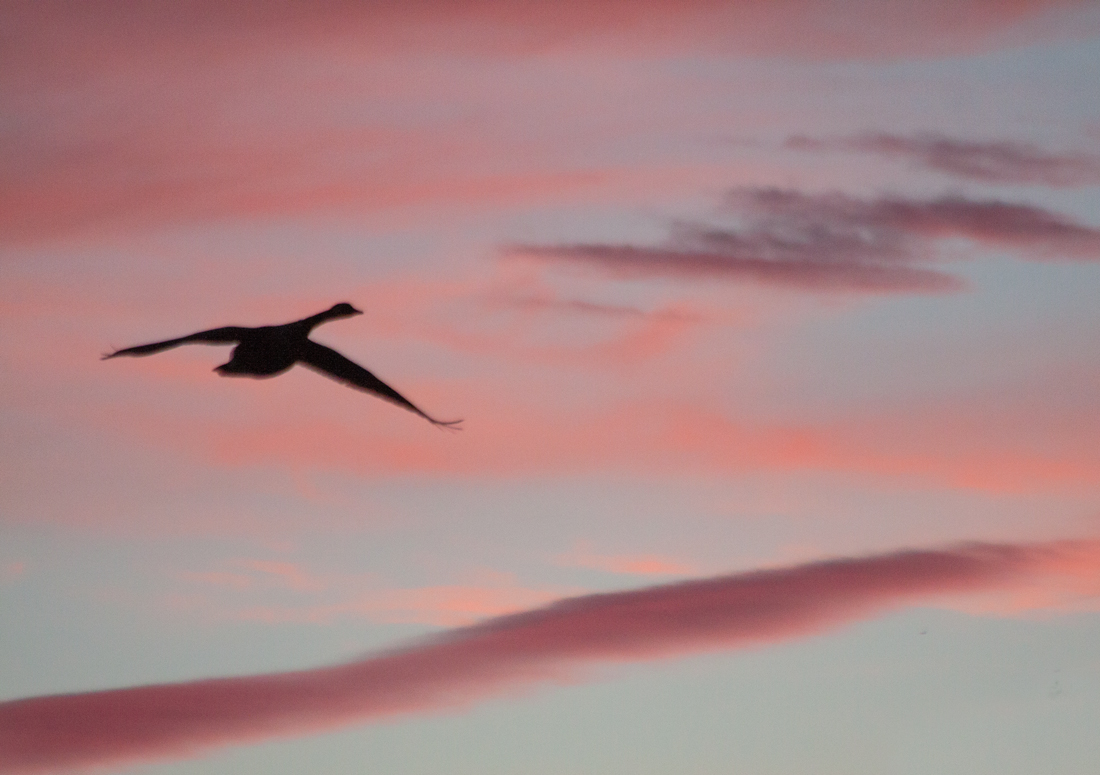
As I watched the glorious sunset at my local marsh yesterday, I kept hoping that a V-shaped formation of geese would fly into the frame. I was happy to settle for this solitary Canada Goose (Branta canadensis) and an amazing pink-tinged sky.

sunset1_oct_blogsunset2a_blog

© Michael Q. Powell. All rights reserved.


Read Full Post »

Do you ever shoot the same subject at the same time with another photographer and compare the results afterwards? It is fascinating to see how the choice of equipment, individual shooting styles, and angle of view affect the results.

Recently I was walking at Huntley Meadows Park, the local marshland park where I take a lot of my nature photos, with fellow blogger and photographer Walter Sanford when he spotted a mating pair of Blue-faced Meadowhawk dragonflies (Sympetrum ambiguum). Eventually they landed on the ground and Walter and I took up our shooting positions. He was seated on his Coleman folding camp stool facing the sun and I was crouching (and eventually sprawling flat on the ground) on the other side of the mating dragonflies, trying desperately not to cast a shadow on the action.

The dragonflies were surprisingly tolerant of us or were so caught up in the moment that they were oblivious to the outside world. We ended up shooting quite a few images during a lengthy session and couldn’t help but note the remarkable endurance of this couple. 

I started out in a position where I could capture both members of the couple (as you can see in the second photo), but then I started inching forward in an effort to see how close I could get to them, focusing my camera and my attention on the female. When I took the first photo below, I was pretty close to the minimum focusing distance of my Tamron 180mm macro lens, which is 1.54 feet (47cm). In case anyone is curious about the settings for that image, I was at ISO 400, f/13, and 1/20 of a second and used my pop-up flash.

There is no way that I can handhold this lens at 1/20 of a second, in part because it has no built-in image stabilization). It’s virtually impossible to use a tripod that close to the ground. So what I have started doing is using my camera bag as a kind of giant beanbag and resting my camera on the bag.

Walter took some shots of me in action and kindly agreed to let me use one of the resulting photos in this posting. He also circled in red the mating dragonflies to give you a better idea of how small our subjects were. In case you are wondering what the black object is that is underneath me, it’s my tripod bag—my photography mentor Cindy Dyer has influenced me to carry a tripod at almost all times.

In a final fashion note, I would like to point out that this is not the way that I usually wear a baseball cap. I turned the cap around in order to look through the viewfinder at this low angle. You will never catch me with my hat like that in public and I shudder every time I see a teenager with his hat tilted to the side or on backwards.


Blue-faced MeadowhaekBlue-faced MeadowhawkP1270731_Aperture-BFX_psda

© Michael Q. Powell. All rights reserved.

Read Full Post »

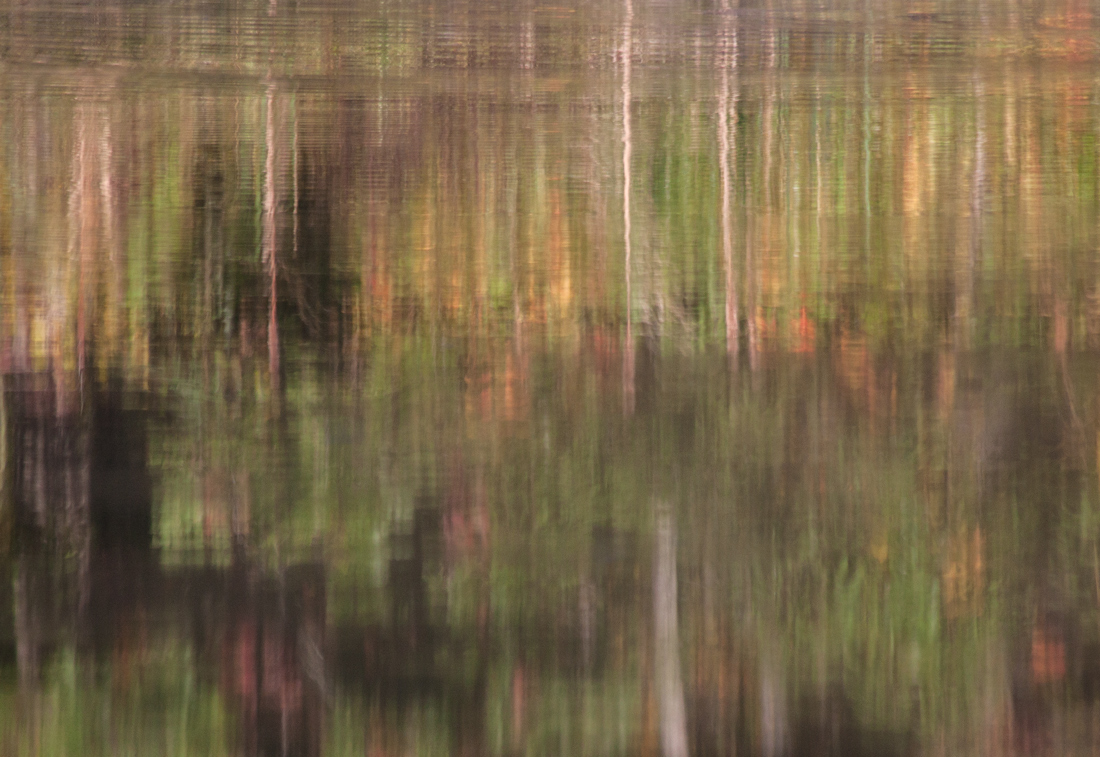
How can I show the beauty of the autumn foliage? As I was pondering that question, I glanced down into the waters of a small pond at my local marshland park and found my answer.

Impressionist autumn

The combination of the light, the reflections, and the ripples enveloped me in an impressionist world, where the forms were blurred, but recognizable. I love the art of Monet, and somehow the autumn reflections brought his works to mind.

Impressionist autumn

As i moved about, the scene would change, as different elements were reflected in the water.

Impressionist autumn

I’m often at a loss when trying to photograph landscapes—I am so used to focusing on the details of a subject that I have trouble seeing the big picture. Somehow it seemed easier when I concentrated my attention on the limited expanse of the water in the pond.

Impressionist autumn

Here in Northern Virginia, we usually don’t have the really vivid colors that I remember from my childhood days in New England, but the subdued colors are beautiful nonetheless. I find in these more restrained shades a kind of melancholic reminder that the days are gradually fading into winter.

Impressionist autumn

© Michael Q. Powell. All rights reserved.


Read Full Post »
Fall foliage is great at this time of the year, but I am also finding beautiful colors as I walk deeper into the woods. I can’t identify these different fungi, but that doesn’t keep me from enjoying their beauty. I especially enjoy the rainbow shapes in the shades of autumn, with such a wide range of oranges and browns.

© Michael Q. Powell. All rights reserved.

Read Full Post »

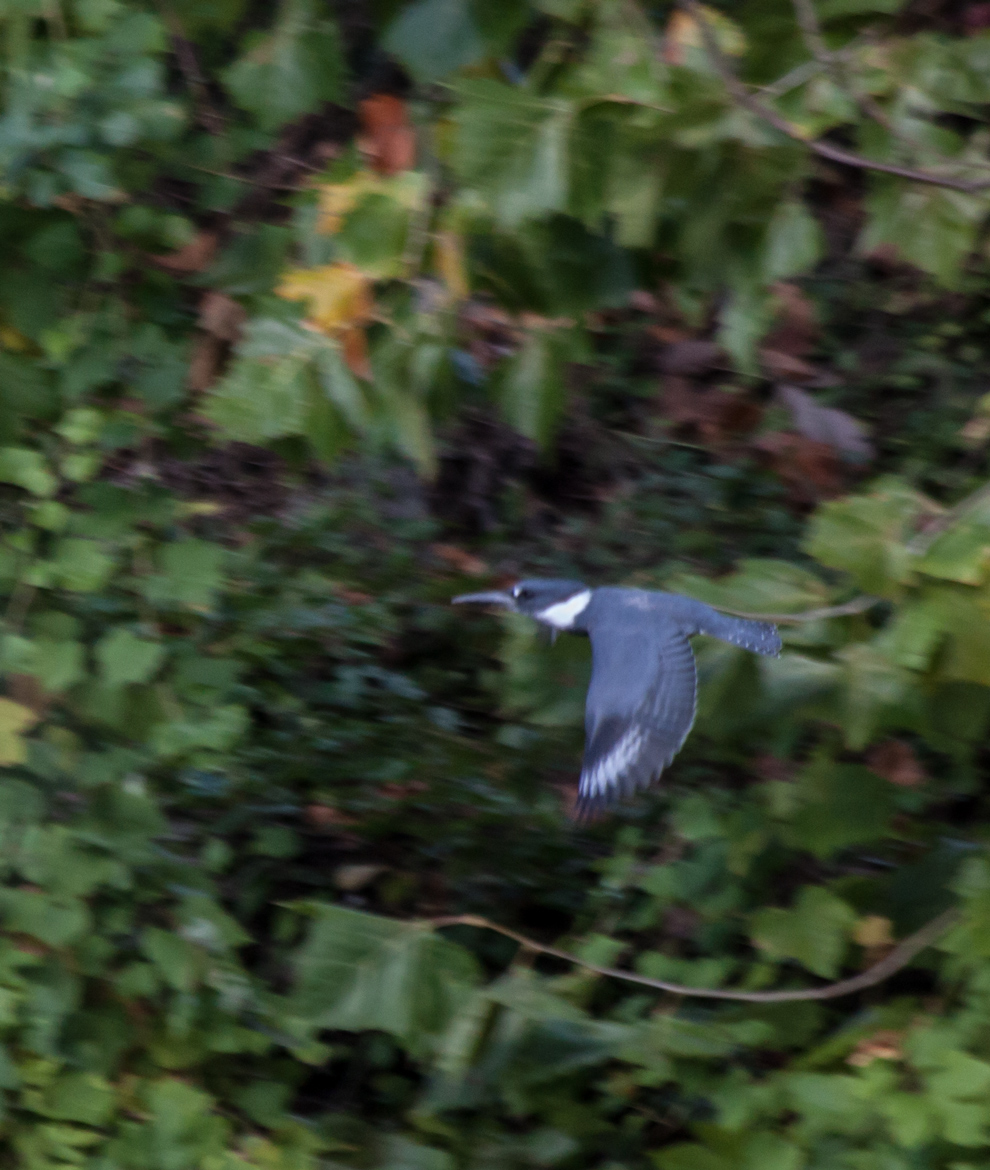
A female Belted Kingfisher (Megaceryle alcyon) lives at a small lake not far from where I live and periodically I try to photograph, but she continues to remain elusive.

Generally I try to photograph the kingfisher at one of her normal perches in a grove of trees across a narrow portion of the lake from where I am standing. It’s tough to isolate her against the backdrop of the trees, especially at this time of the year when the leaves are still on the trees, and often I only catch sight of her when she starts to fly.

Most of the shots in this posting are my attempts to capture her in flight. I am getting better at tracking the bird in the air and keeping her in focus, but it’s not easy to do as she flies in and out of the shadows and against varying backgrounds and she is somewhat hidden in these shots.

This past weekend, I decided to try to approach the grove of trees from the other side of the lake, where there is often a group of fishermen. I was fortunate that I was alone and I was able to make it relatively close to the grove of trees.  I was surprised to see that the kingfisher was on a low perch rather than high in the trees where I usually find her and I managed to squeeze off a few shots before she flew away. The first shot in this posting was from this new shooting position.

I plan to try this new approach again in the future and with a bit of luck, I may finally be able to get the kind of shot of this bird that I have been visualizing in my mind.


Belted Kingfisher

Belted KingfisherBelted KingfisherBelted Kingfisher

© Michael Q. Powell. All rights reserved.

Read Full Post »

As I slowly made my way through the tall grass on the lake shore, my eyes were focused on the low-hanging branches where I had seen a Belted Kingfisher earlier in the day. Suddenly the water exploded at my feet.

I was startled and so was the Double-crested Cormorant (Phalacrocorax auritus) that scrambled into action and started moving across the surface of the water. The cormorant had apparently been resting or feeding at the water’s edge and had not heard me approach. It was interesting to see the cormorant move—it rose up a bit and seemed to walk across the water and then settled back into the water once it was a good distance away from me.

The action happened so quickly and in an unexpected location that I initially had trouble framing my shots. This is my favorite of the ones in which I managed to get the entire cormorant in the frame. I especially like the details that you can see on the wings. As I was working on the image, it was interesting to note that there are almost no colors in the shot, except for the bird’s bill. When I adjusted the hue and saturation, for example, almost nothing changed.

Double-crested Cormorant

© Michael Q. Powell. All rights reserved.

Read Full Post »

As their name suggests, Autumn Meadowhawks (Sympetrum vicinum) appear later in the year than most other dragonflies. This past weekend I spotted quite a number of mating pairs, including this couple that I captured in an acrobatic position worthy of the Cirque du Soleil. The dramatic lighting and colorful background added to the theatrical feel of the image, as all the elements worked together to focus our attention on the performance.

Autumn Meadowawk

© Michael Q. Powell. All rights reserved.


Read Full Post »
When I am trying to take a close-up shot of a dragonfly, I know that I have succeeded when I manage to capture some of the details of the ommatidia. What are ommatidia? Ommatidia are the up to 30,000 hexagonal facets that make up the incredible compound eyes of a dragonfly. For more information and a more scientific explanation, check out a posting entitled “Super-predators” that Sue did in June 2013 in her Backyard Biology blog.

Rather than think about science, today I would prefer to simply bask in the beauty of the blue-eyed Blue-faced Meadowhawk dragonfly (Sympetrum ambiguum) that I photographed yesterday as it perched on a fallen leaf at my favorite marshland park. The color of the dragonfly’s eyes completely captivate me.

As for the ommatidia, I’ve cropped a portion of the image and added it to the posting as a second image to make it even clearer what they look like. I chuckled a little when I examined the cropped image, because this dragonfly, like some others that I have photographed, has the sparsely distributed mustache and chin hairs that never fail to remind me of human teenagers who refuse to shave in a vain attempt to look older.

Blue-faced MeadowhawkBlue-faced Meadowhawk

© Michael Q. Powell. All rights reserved.

Read Full Post »

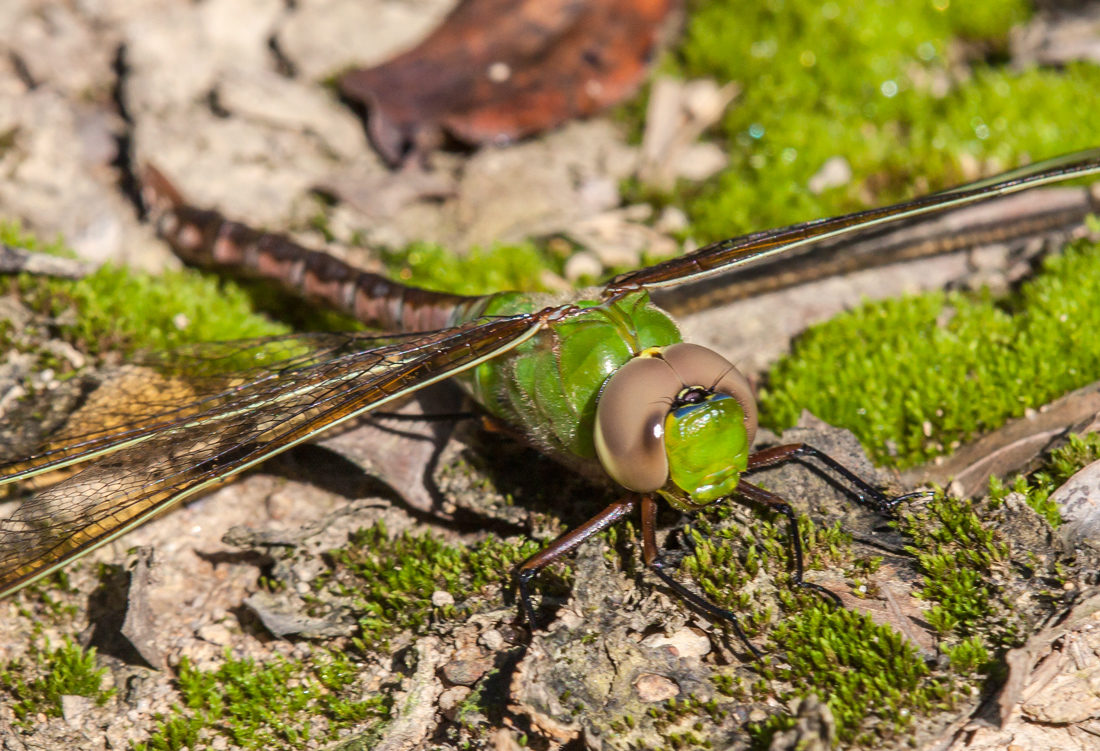
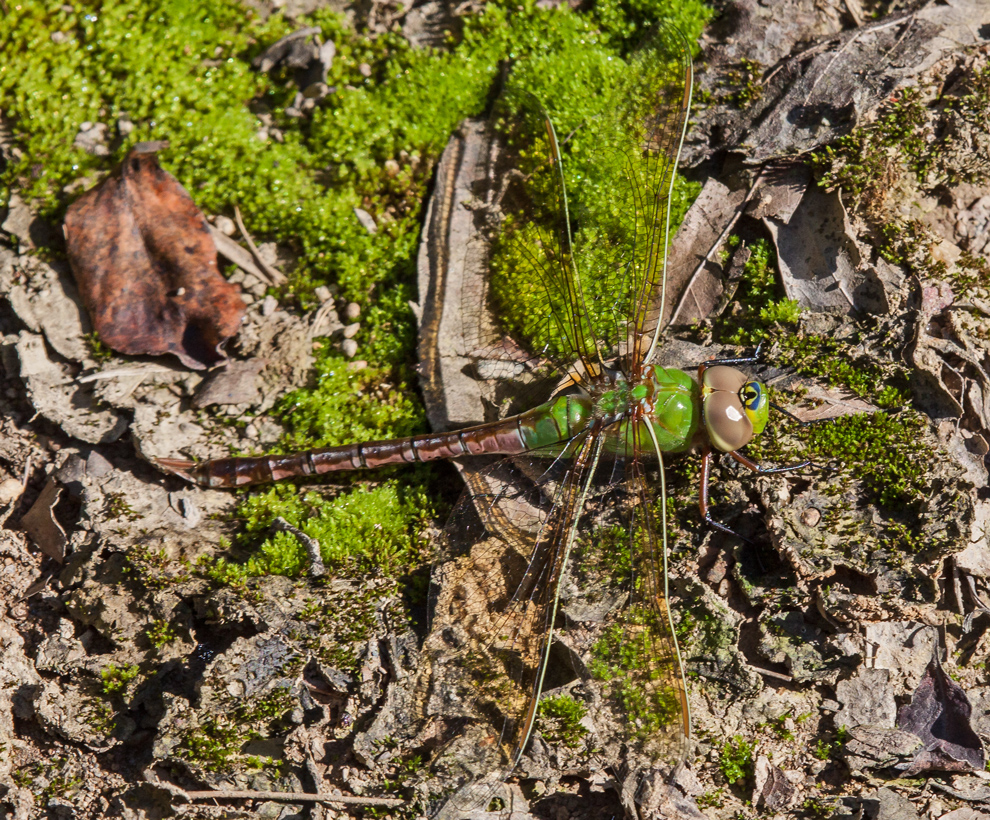
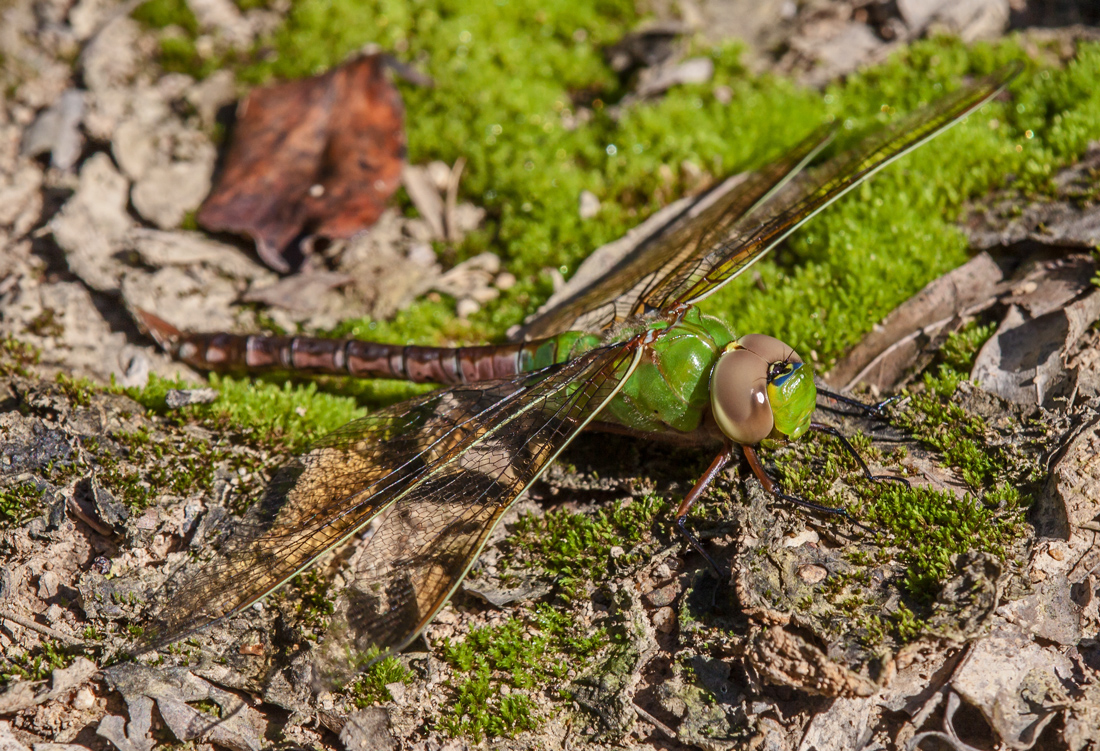
It’s migration time for Common Green Darner dragonflies (Anax junius) and last week one of my fellow photographers, Walter Sanford, reported a small swarm of Green Darners at my local marshland park.

I was walking in an entirely different area of the park from Walter and was surprised to see Green Darners, which are easily recognized thanks to their coloration and distinctive bullseye on their heads, flying up from the ground as I approached them. Rather than fly off into the distance, which is most often the case when I happen to disturb a dragonfly, these dragonflies moved only a short distance and came to rest again on the ground.

I don’t yet have the ability to interpret the movements of dragonflies, but it seemed to me that these Green Darners were conserving energy, as though they were resting in the midst of a long journey. I tried to be as quiet and stealthy as I could and moved closer and closer to one Green Darner perched near some green moss that was almost a perfect match for the color of the forward portion of her body. Judging from her overall coloration, I think this is probably a female.

My subject was amazingly cooperative and I was able to get shots of this beautiful dragonfly from a number of different angles. Although I normally try to have backgrounds that are must less cluttered than those in these images, I don’t find them to be too distracting here and they do help to show how well this colorful dragonfly blended in with her environment.

Common Green DarnerCommon Green DarnerCommon Green DarnerCommon Green Darner

© Michael Q. Powell. All rights reserved.

Read Full Post »

In between rain showers yesterday, I spotted this Banded Woolly Bear caterpillar (Pyrrharctia isabella) at Huntley Meadows Park, my local marshland. Unlike this photographer, most of the wildlife seemed to be taking shelter from the rain, so I was particularly excited when I caught sight of this caterpillar as I was trudging through the wet, calf-high vegetation.

Folklore says that the width of the brown band is an indicator of the severity of the upcoming winter. I can never remember whether a narrow band means a severe winter or the opposite, but Google came to the rescue again and indicated sources that say a narrow band means a colder winter. If that’s right, we may be in for a mild winter, given the size of the broad brown area on this caterpillar. Of course, there is no real scientific basis for this folklore, but it’s probably about as reliable as the weather forecasters in this area, who are notoriously bad in predicting the weather. They claim that we live in a complicated meteorological area.

When I was photographing this caterpillar, I noticed that it had a number of water drops on its “fur” and I was happy to see that I was able to capture them. There is something magical about those little globes of water and light.

Banded Woolly Bear caterpillar

© Michael Q. Powell. All rights reserved.

Read Full Post »

Yesterday was a beautiful day to cheer on the rowers of the DC Strokes Rowing Club as they competed at the 3.1 mile Occoquan Chase. The weather was pleasant and the leaves were starting to change colors, adding to the natural beauty of the Occoquan River, a tributary of the Potomac River just south of the District of Columbia.

The river was pretty wide and unfamiliar to me, so I hadn’t figured out a good vantage point for capturing the action. Eventually I ended up perching on a rock outcropping near the water’s edge. I was probably about six feet above the level of the river and I had to be careful not to lean too far forward, given that it was a straight drop down into the water.

One of my main goals was to capture some action shots in which each of DC Strokes rowers was recognizable. I am happy that I was able to accomplish that goal and got some shots of the four 8+ boats in action (eight rowers and a coxswain in each boat), although I was not able to capture the action of the boats with four rowers.

Occoquan Chase

DC Strokes Mens Novice 8+

Occoquan Chase

DC Strokes Womens 8+

Occoquan Chase

DC Strokes Mens 8+, Boat #349 (Pride)

DC Strokes Mens 8+, Boat #350

DC Strokes Mens 8+, Boat #350 (Oscar)

© Michael Q. Powell. All rights reserved.


Read Full Post »

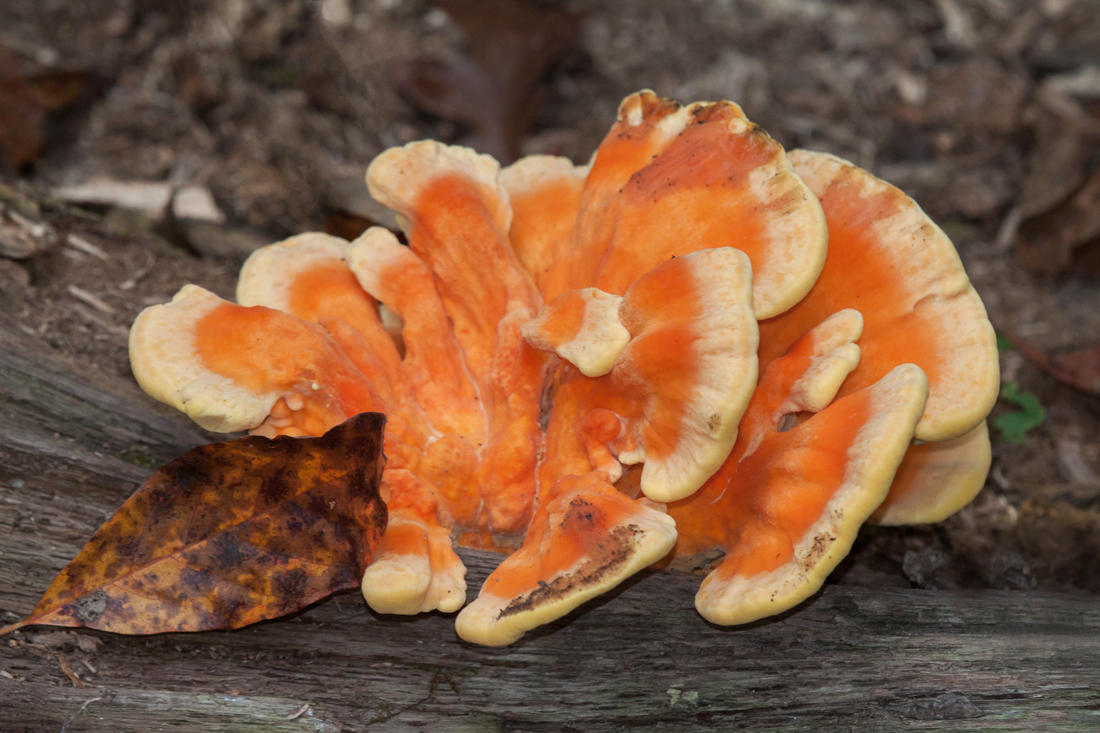
When I think of mushrooms, I usually imagine tiny, pale specimens growing in dark places close to the ground. I was startled, therefore, when I encountered this big, bold bright orange mushroom in plain view. The color was so vivid that I spotted it from a long way off and couldn’t help thinking at first that it looked like a smashed pumpkin.

It didn’t take too much searching on the internet to find this mushroom—its scientific name is Laetiporus sulphureus, but it is commonly known as the Chicken of the Woods mushroom. There are lots of recipes available for this edible mushroom, which can be sautéed, deep fried, baked, and may be used in soups.

I’m a chicken, though; when it comes to eating questionable things and don’t think I’d ever eat a mushroom that I encountered in the wild. The beautiful colors of this mushroom include the shades that I associate with autumn, which lets me enjoy it with my eyes, even if I won’t be putting it in my mouth.

chicken2_blogchicken1_blogchicken3_blogchicken4_blog

© Michael Q. Powell. All rights reserved.

Read Full Post »

« Newer Posts - Older Posts »