Feeds:
Posts
Comments

Archive for the ‘Art’ Category

When it is pouring rain all day in Paris, what can you possibly photograph? Like wildflowers in the spring, colorful umbrellas have sprung up all over the city and they make cool subjects.

I captured the first little scene along the Seine River this morning. I envisioned the possibility of the photo and hung around the location as the group of three people approached. I took multiple photos as the moved toward and under the bridge. The biggest challenge I had was a distractingly bright orange bicycle parked in the middle of the pathway beyond the exit. Fortunately the green umbrella was large enough in this shot to hide the offending bicycle.

I semi-stalked the next group of three young ladies as they walked through the Tuileries Garden toward the pyramid entrance to the Louvre. It was a little frustration because they kept stopping for selfies, but I finally got a shot when they moved together for a moment. I love the way that the three subjects had complementary shades of umbrellas and stylishly distinctive backpacks.

The final photo highlights the umbrellas themselves and not the owners. Although it was still raining, the owners had carefully placed their umbrellas to the side so that they could take photos of themselves with the Louvre pyramid in the background. I like the angle at which the umbrellas are placed, which, along with their black color, emphasizes the form of the umbrellas. The shadows on the wet cobblestones add additional visual interest to the image.

It was cold throughout the day today, about 34 degrees right now (one degree C) and the possibility of snow is forecast for this evening. Yikes! Fortunately I have warm clothes with me and most importantly my camera bag has proven to be as waterproof as advertised. I don’t exclude the possibility of an after dark adventure a bit later.

Umbrellas along the Seine

Umbrellas in Paris

Umbrellas in Paris

© Michael Q. Powell. All rights reserved.

Read Full Post »

Place du Tertre, a small square in the center of Montmartre, is a special place where artists of all varieties set up their easels every day and work in the open air, surrounded by the milling public. Many of them are portrait artists, who gently try to convince you to sit for a portrait.

I watched several of those artists at work and they are amazing talented, creating true-to-life drawings over an extended period of time. This is in sharp contrast with the large number of quick sketch “artists” who aggressively pursue you in the streets, trying to convince you to stand for a “portrait,” which is often a mere caricature that barely resembles the subject.

A number of other artists worked on small canvases with oil paint using palette knives. I had the impression that some of them were working in almost assembly line fashion, cranking out the same limited number of scenes of Paris suitable for souvenirs.

After circling the square, I returned to the only artist who was working in watercolor. He would sketch out his detailed paintings in India ink using a pointed fragment of bamboo as a drawing instrument. After the ink had dried, he would carefully apply multiple washes of color. Some of you know that I have dabbled with watercolor and I was absolutely enthralled as I watched this artist at work, mixing and applying the colors from a watercolor set not all that different than ones that I have.

Watercolor painting is time-consuming and unforgiving—you really cannot hide your mistakes. Supplies are relatively expensive, compared to oil and acrylic painting. Why would an artist choose this style of painting? It does not seem like an economically rational decision.

I did not want to interfere with the artist’s efforts, so I watched from a respectful distance and discreetly took a few photos. When he reached a certain stage when he needed to let a layer dry, he stopped for a smoke break. As he lit up an unfiltered, hand-rolled cigarette, I started to talk with him.

At first I asked him about the materials that he uses. He paints on high quality Arches 100% cotton paper, using a mix of artist quality paints from Winsor and Newton, Sennelier, and others. For brushes, he uses several rather large natural hair brushes. He pointed to one of them and noted that it had cost over 80 Euros (about $100), but he had used it for close to ten years.

He said that he had been painting from a young age and preferred painting in public like this and had done so for almost 40 years. Based on some comments he made about other painters, he seemed to reject the almost elitist idea of painting in seclusion in a studio, with works hanging in high-priced galleries.

He obviously loved what he was doing, but somewhat wistfully talked of eventually retiring to a place in the country. As he puffed on the final fragments of his cigarette, he announced that it was time to get back to work. I thanked him for talking with me—we spoke exclusively in French—and sharing his experience and perceptions. He graciously agreed to let me take a quick portrait shot and that photo, the last one below, is one of my favorite remembrances of this trip to Paris.

The first photo below gives you an overall sense of the environment at the Place du Tertre. Note the assemblage of easels and the passing tourists and compare that with the focus of the painter, who appears to be in his own little world.

The second image provides a slightly closer view of the work in progress. Note the large size of the brush that he is using and the initial delicate washes of color that he has applied.

The final shot, as noted above, is a quick portrait of the artist. It’s a candid pose from where he was standing. I really like the way that it turned out, capturing in part the unique personality of this awesome artist that I was happy to encounter, a man content with doing what he loves outdoors in all kinds of weather (except, he noted, in the rain, which obviously is bad for watercolor paintings).

Painter at Place du Tertre

Painter at Place du Tertre

Painter at Place du Tertre

© Michael Q. Powell. All rights reserved.

Read Full Post »

So much of Paris merges together when viewed from the step of Sacre-Coeur in Montmartre, in part because new construction in Paris was limited to 121 feet (37 meters) as of 1977. One notable exception is the Montparnasse Tower at 689 feet (210 meters), which is quite visible in this photo from yesterday evening—the height limitation was imposed in reaction to the construction of this building in 1973, whose size and appearance were loudly criticised. (By comparison, the Eiffel Tower is 1,063 feet tall (324 meters.)

In case you are curious, the giant ferris wheel is a temporary structure in the Tuileries Garden for what I think is a Christmas market. When I first arrived in Paris, the circular portion of the wheel was only partially completed. Since that time, the wheel was completed, cabins were added, and, as of yesterday, the wheel was moving, probably in test mode.

In recent years, the rules on construction have been relaxed and some taller buildings are planned, primarily on the outer edges of the Paris. I highly recommend an article at newweek.com entitled “Will Skyscrapers Ruin Paris?” that argues, in part, that the traditional architecture of the city is part of what sets the city apart from others in the world.

Here is one thought-provoking paragraph from the article:

“When a dense area has low buildings, it forces residents to interact and puts more life out on the streets—a large part of what gives Paris its character. According to Swiss writer and philosopher Alain de Botton, five stories is the ideal height of a city building because anything higher begins to make us feel “insignificant, small, and trivial”—all words rarely used to describe life in the City of Lights. It’s no wonder artists and scholars have flocked to Paris for years for inspiration. Would the same be true if the spirit of Paris were essentially locked away in modern towers?”

In the 1942 classic movie Casablanca (my all-time favorite movie), Rick (Humphrey Bogart) famously told his ex-lover Ilsa (Ingrid Bergman), “We’ll alway have Paris.” Will we?

Montparnasse Tower

© Michael Q. Powell. All rights reserved.


Read Full Post »

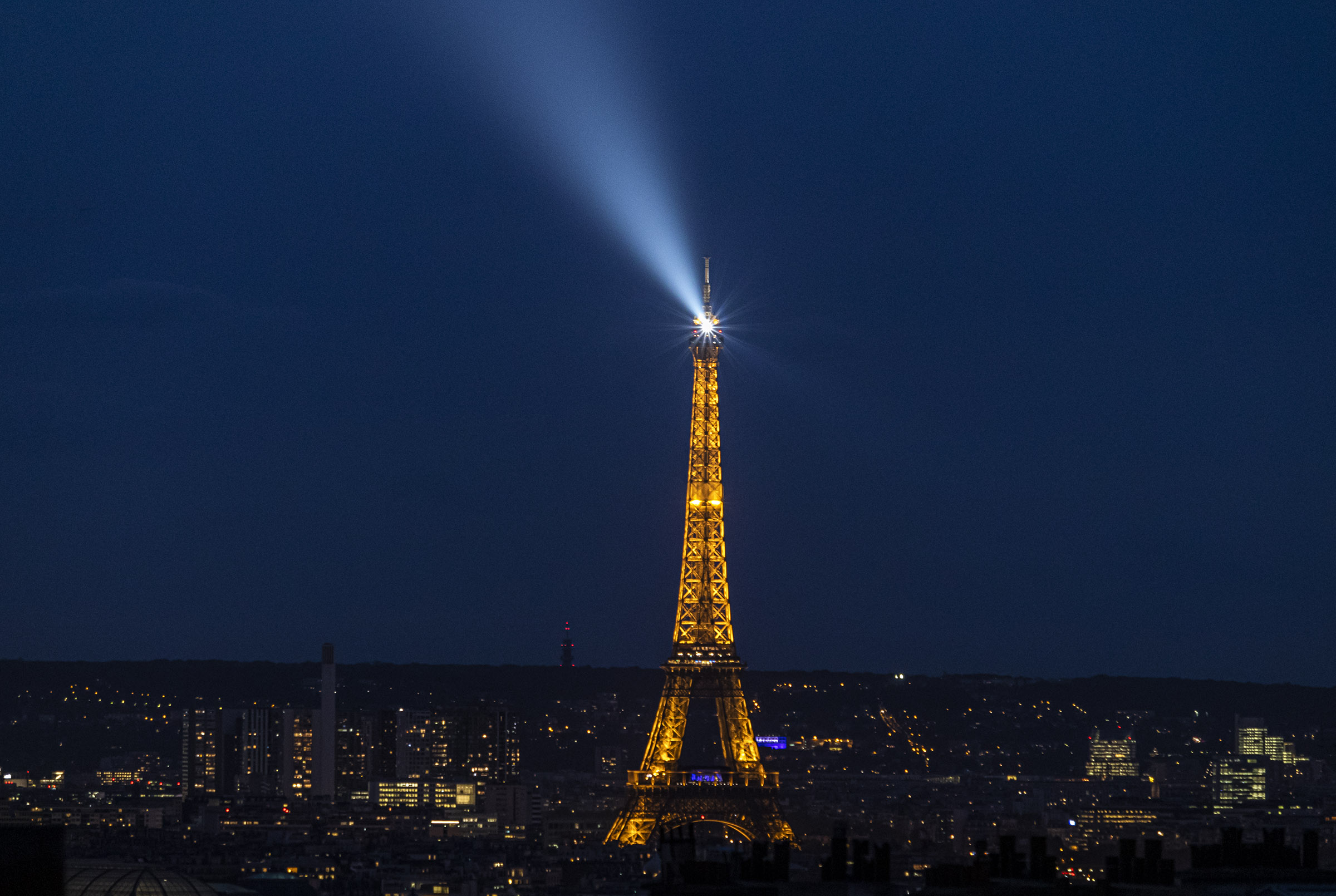
I finally figured out a way to get an unobscured view of the Eiffel Tower from the hills in Montmartre. Yesterday evening was relatively clear and I managed to get a few cool shots just after sunset. There was a small group of tourists that jostled me a little as they tried to get similar shots with their cell phones but my monopod and longish telephoto lens (55-250mm) almost certainly helped me to get better shots.

However, it turns out that the night lighting of the Eiffel Tower is covered under a copyright, so please don’t use my shot for commercial purposes. I have a friend who reviews photos of a stock company and she unsurprisingly was well aware of this reality. Copyrights in the European Union, including France, are good for the lifetime of the artist plus 70 years. So, in 1993, the Eiffel Tower entered into the public domain (and a legal replica was later made in Las Vegas).

Here is a link to an article from PetaPixel that explains this whole issue and includes an informative video. The bottom line is that the night lighting was installed in 1985 and is considered an artistic work, covered by a separate copyright law. As many of you know, I spend most of my time photographing wildlife, not buildings, so I have never really thought about problems like this.

In the end, though, I’ve decided to post these photos, because my blog is not a commercial endeavor. If at some time I were to decide to do this professionally, these photos, no matter how much I like them, would not be part of my portfolio.

Eiffel Tower

Eiffel Tower

© Michael Q. Powell. All rights reserved.


Read Full Post »

Paris inspires me to try “artsy” shots. On a recent early rainy morning, I was struck by the elongated shadow of this bicycle on the wet pavement and captured this image. The light seemed to be coming from two different sources, with different color temperatures and directionality.

bicycle in Paris

© Michael Q. Powell. All rights reserved.

Read Full Post »

Last week I spotted this male Common Green Darner dragonfly (Anax junius) while exploring with fellow photographer and dragonfly enthusiast Walter Sanford . This beauty was part of a swarm of dragonflies we observed that was probably preparing for migration.

As I processed these images I was struck by the wonderful range of colors on this dragonfly’s body. As its name suggests, a Common Green Darner has lots of green, but this one also has beautiful shades of blue and violet. I have included two images that may look very similar, but in fact were taken with two different cameras from the same spot.

In the first shot, I zoomed in close with my SX50 super zoom camera to try to capture as much detail as I could. I took the second shot with a fixed-focus lens. The heavy vegetation did not permit me to get any closer, so I tried to compose the image to include more of the environment.

Personally I like the second shot a bit more than the first—I prefer the additional “breathing space” around the subject and I think the second shot is a little sharper. Do you prefer one of them over the other?

Common Green Darner

Common Green Darner

© Michael Q. Powell. All rights reserved.

Read Full Post »

I guess that the main subject of this image is the tiny male Eastern Amberwing dragonfly (Perithemis tenera), but I must confess that I was equally drawn to the curving shapes of the branches sticking out of the water during my recent trip to Jackson Miles Abbott Wetland Refuge. Normally I try to fill as much of my frame with my primary subject by using a zoom lens or by moving closer, but in this case I actually moved back in order to be able to capture more of the vegetation.

I really like the way that the warm amber color of the aptly named Eastern Amberwing stands out against the muted tones of the rest of the image. The style of this image is different from most of my shots (assuming that I have an identifiable style), but I enjoy mixing it up from time to time by shooting from different angle or distances.

Eastern Amberwing

© Michael Q. Powell. All rights reserved.

Read Full Post »

Monarch butterflies (Danaus plexippus) are beautiful in any situation, but when you surround them with red, orange, and yellow flowers, they absolutely explode with color. I was thrilled when I spotted this Monarch during a short visit to Green Spring Gardens this past Saturday morning. The butterfly was initially quite skittish and flew all around before finally settling on what I believe to be some kind of lantana flower. I had to maneuver around to try to get a good shooting position, but the butterfly stayed put for a minute and accommodated me. I was super happy when I managed to include some of the colorful flowers in the background and I just love the way that the colors work so well together.

monarch

© Michael Q. Powell. All rights reserved.

Read Full Post »
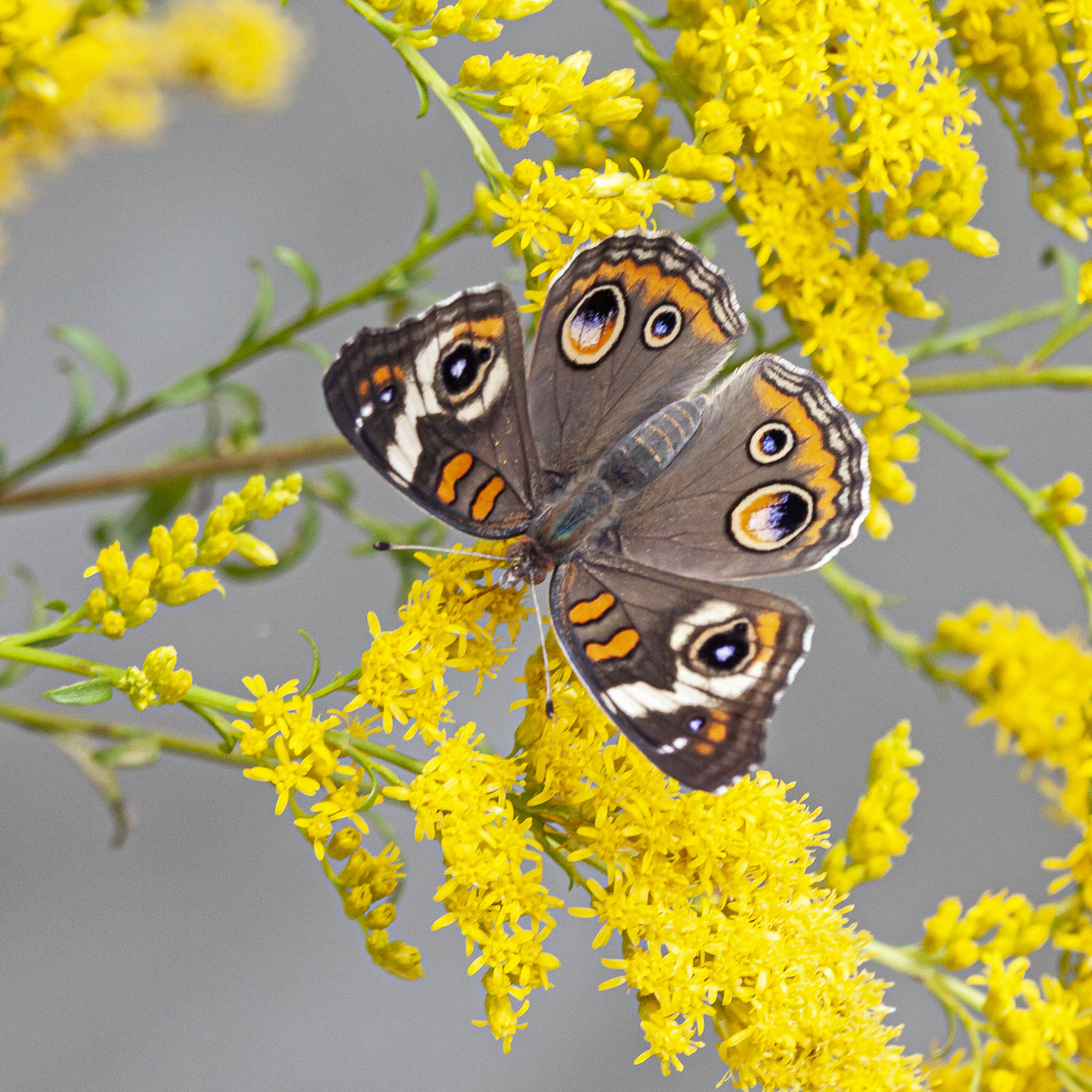
On Wednesday I spotted this colorful Common Buckeye butterfly (Junonia coenia) perched on some goldenrod at Jackson Miles Abbott Wetland Refuge. The fact that the butterfly was facing downward gives this image an abstract feel that I really like. My mind does not immediately register that this is a butterfly and instead focuses on the wonderful shapes and colors.

Common Buckeye

© Michael Q. Powell. All rights reserved.

Read Full Post »

Dragonfly wings are amazing, but most of the time they are so transparent that it is hard to see all of the tiny little “cells” that make up the wings. Last Friday, though, I captured this shot of an immature male Calico Pennant dragonfly (Celithemis elisa) at Occoquan Bay National Wildlife Refuge that really highlights the beautiful mosaic-like pattern of its hind wings. Wow!

Calico Pennant

© Michael Q. Powell. All rights reserved.


Read Full Post »

Does you mood affect how you react to images? When I am reviewing images that I have captured, most of the time I use an analytical approach. I seek to identify the species of my subject and then look at the technical aspects of the photo, such as the sharpness of the focus. Finally I will see if I can improve the composition by cropping the image.

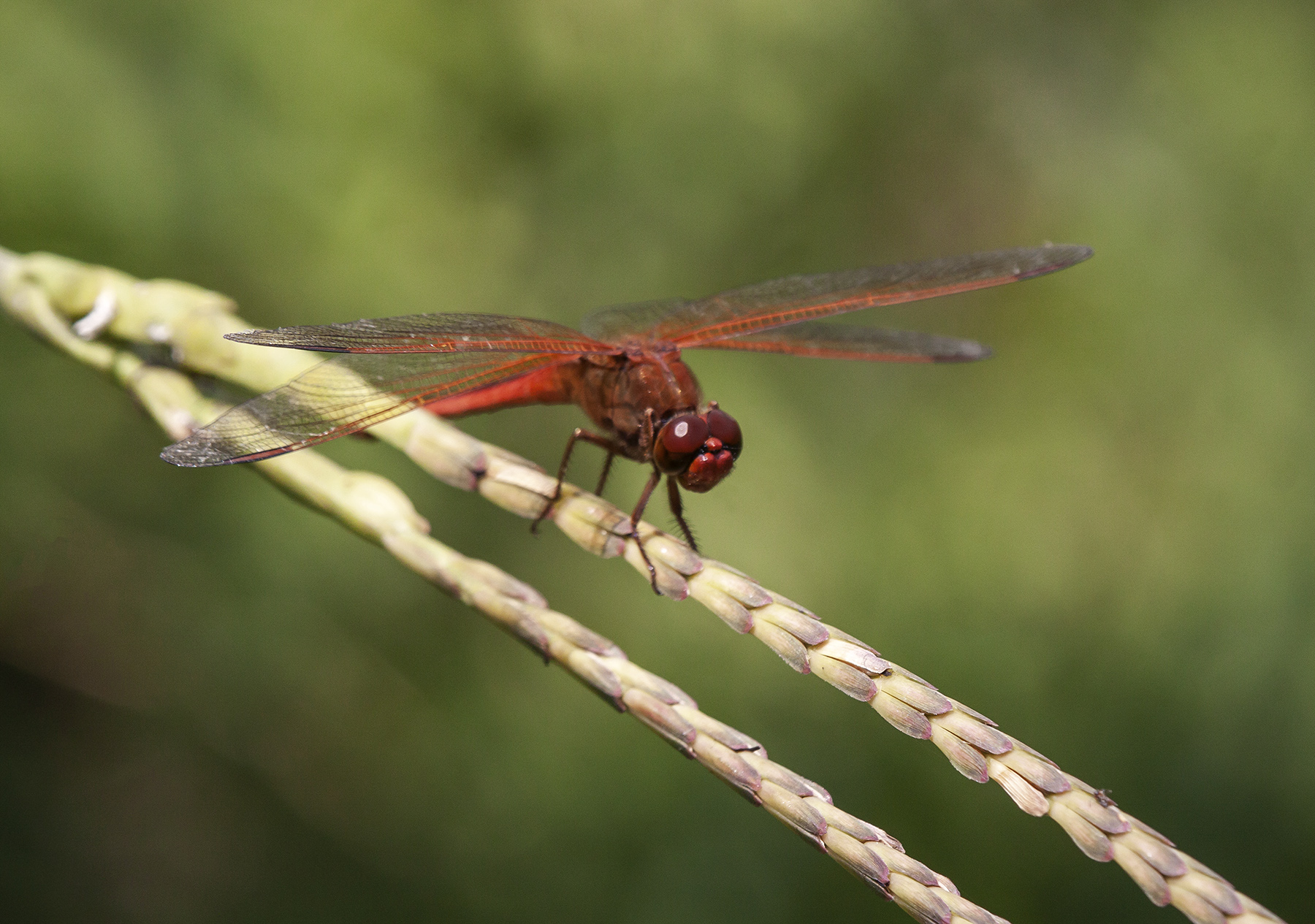
For some images, though, I respond initially with my heart and not my head. I don’t worry about “what” it is and simply enjoy the beauty of the shapes and colors that make up the image. That was the case with this shot of a male Needham’s Skimmer dragonfly (Libellula needhami) that I captured during a recent visit to Occoquan Bay National Wildlife Refuge.

I love the contrast between the orangish-red of the dragonfly’s body and the green background. The shape and texture of the vegetation, which I believe is Eastern Gamagrass (Tripsacum dactyloides), also really grabbed my eye (in part because I missed focus a little and the sharpest part of the image is the grass in front of the dragonfly). The composition is simple and straightforward and is pretty much the way I shot it.

We all like what we like. Most often we don’t even ask ourselves why we like something. I personally find it beneficial to try to articulate why I like something. Words fail me quite often when attempting to describe with words what is primarily an emotional reaction, but I think that the effort itself makes the process worthwhile.

Needham's Skimmer

© Michael Q. Powell. All rights reserved.

Read Full Post »

Eastern Pondhawk dragonflies (Erythemis simplicicollis) are voracious predators and I spotted this female pondhawk munching on another insect this past Tuesday at Occoquan Bay National Wildlife Refuge. At this time of the year the vegetation has grown high in many of the locations that I visit and I am now seeing more dragonflies perching at eye level or even higher. This heightened perspective allows me to get some cool, uncluttered backgrounds, like the one in this image that reminds me of a watercolor painting.

Eastern Pondhawk

© Michael Q. Powell. All rights reserved.

Read Full Post »

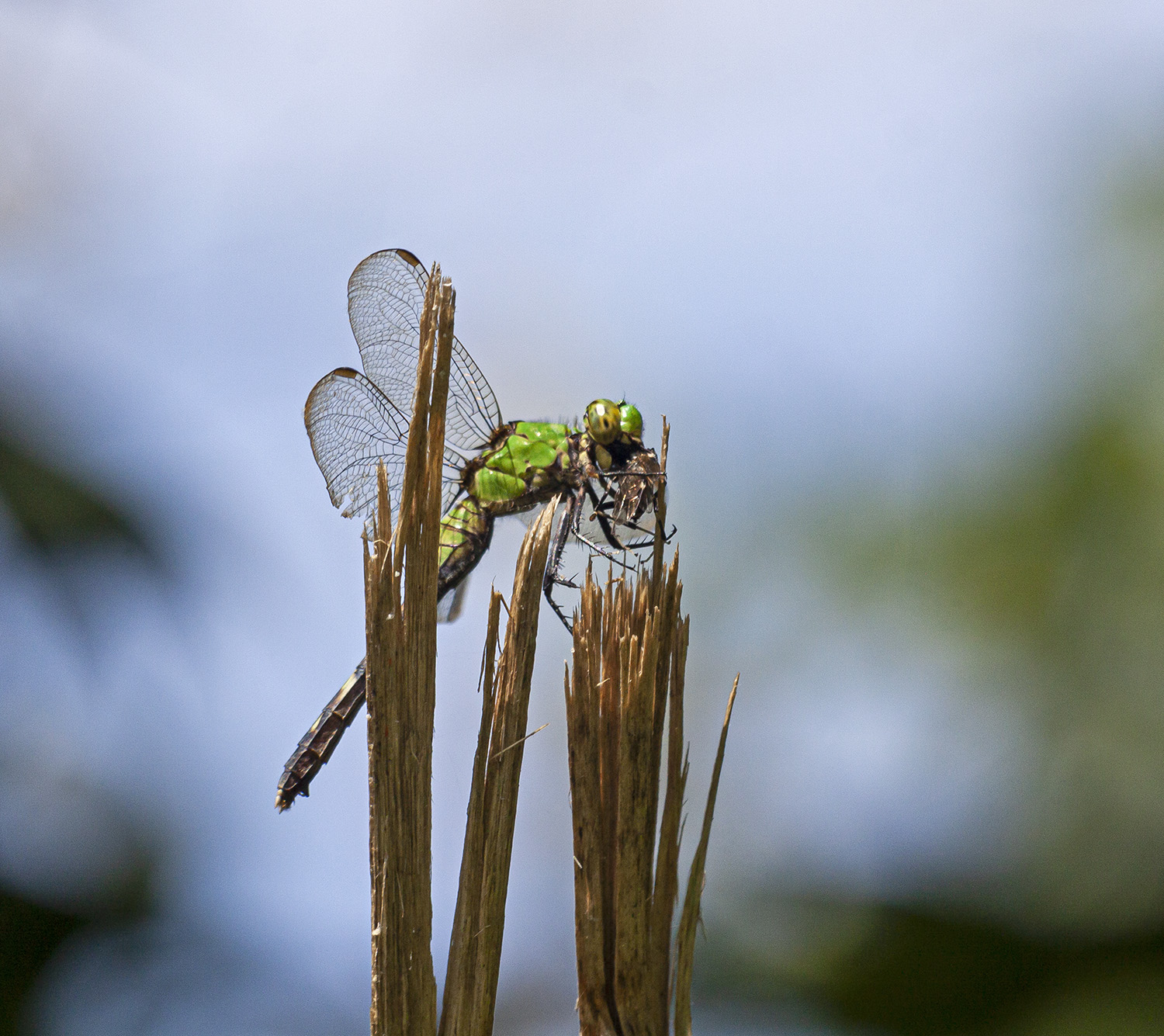
I have always been fascinated by shadows and reflections, which often lend an additional element of interest to a more straightforward shot. When a recently emerged dragonfly, probably a Lancet Clubtail (Gomphus exilis), flew into a nearby tree, I was utterly mesmerized by the shadow that it cast onto the leaves of the tree. The shapes and patterns of the green leaves create an almost abstract backdrop for the scene that really drew me in.

Most of my images are detailed, realistic portraits of my wildlife subjects, but at certain moment I love to attempt to capture more “artsy” images like this one.

Lancet Clubtail

© Michael Q. Powell. All rights reserved.

Read Full Post »

During a visit yesterday to Meadowlark Botanical Gardens in Vienna, Virginia, I was reminded of my favorite artist—Claude Monet. During the last thirty years of his life, water lilies (Nymphéas in French) were the main focus of his artistic production. One of the museums that I most love visiting is the Musée de l’Orangerie in Paris, because it houses eight massive water lily murals by Monet in two specially-built oval rooms. It is incredibly peaceful to just sit in one of those rooms, surrounded by those amazing paintings.

I was delighted and a little surprised yesterday to see that some water lilies were already in bloom. There was a lot of vegetation surrounding the pond in which the beautiful flowers were floating, so there were some limits to my ability to compose my shots. Still, I am pretty happy with the images that I was able to capture.

Perhaps you will find yourself as captivated by the water lilies as I was.

Water lily

Water lily

water lily

© Michael Q. Powell. All rights reserved.


Read Full Post »

I’ve noticed that recently I have been really sensitive to lighting and moods and not just to specific subjects. It’s problematic for me, because it is so difficult to figure out how to capture a feeling.

That is part of what was going through my head when I took this photo early in the morning this past Wednesday at Occoquan Bay National Wildlife Refuge. The sun had already risen, but it was still low in the sky. I loved the way that shafts of light were visible coming through the trees. It was a cold morning and mist was hanging over the still water of a small pond. Could I possiblycapture the details that took my breath away?

So what do you think, or more importantly, what do you feel?

sunrise

© Michael Q. Powell. All rights reserved.

Read Full Post »
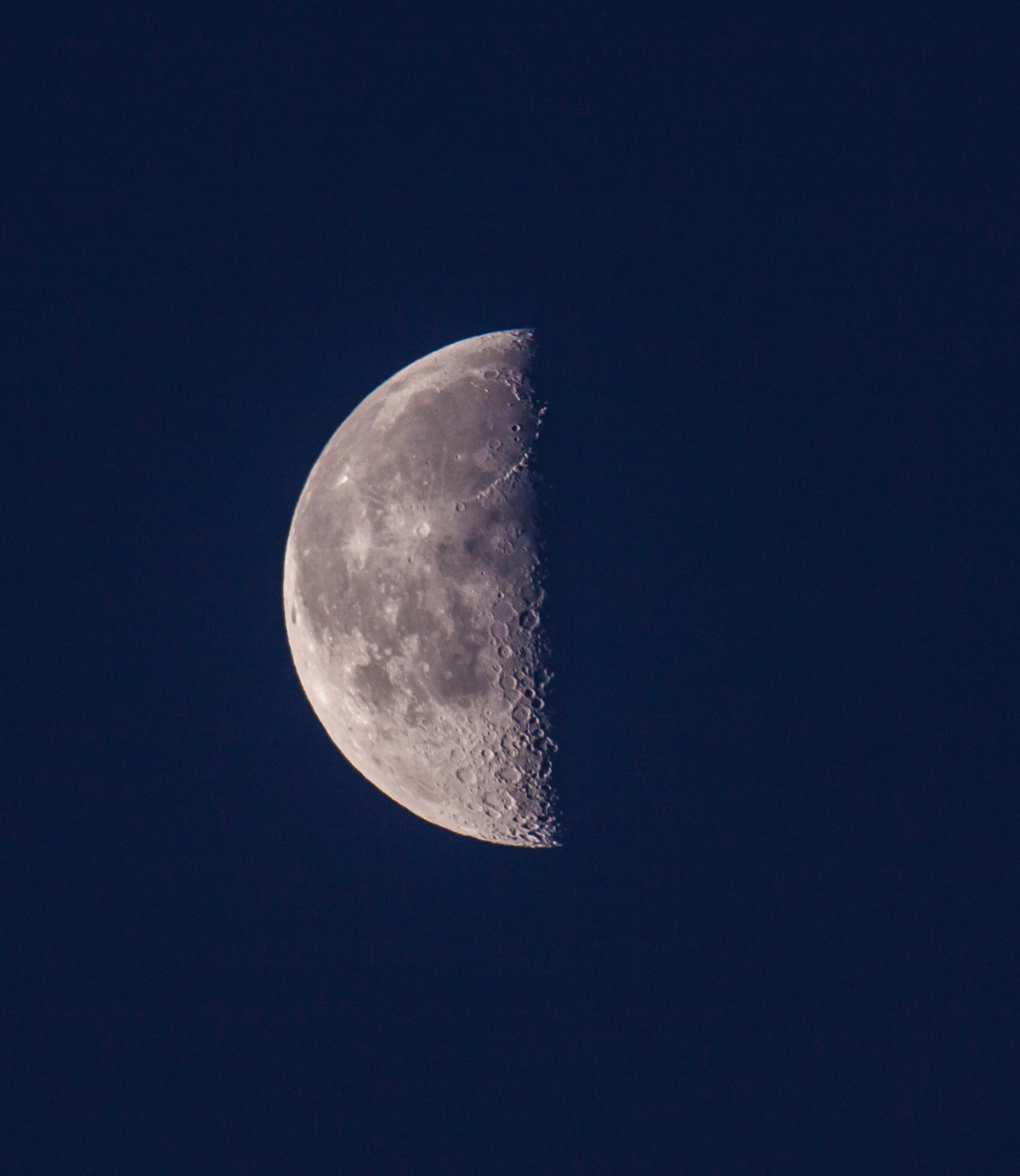
The moon was especially beautiful early yesterday morning—an almost perfect half moon. I love photographing the moon, no matter what phase it happens to be in,

I zoomed all of the way in with my 150-600mm telephoto lens and was able to capture the first image. I love the way that you can see so many details of the moon. However, the image is lacking a bit in context.

I zoomed out with the same lens and captured the second image. I would have like to have included some wonderful landscape features, but I was shooting in my neighborhood and had to be content with including the tops of some trees. In many ways the second image does a better job than the first in capturing the sense of serenity that I was experiencing at that moment.

half moon

half moon

© Michael Q. Powell. All rights reserved.


Read Full Post »

I love the way that Bufflehead ducks (Bucephala albeola) run across the surface of the water to gain speed before taking off, like this male bufflehead that I spotted last Saturday at Occoquan Bay National Wildlife Refuge. The images were already pretty much monochromatic because of the limited light, so I decided to do a black-and-white conversion of them.

If you look closely at the first image, you will see that my camera’s shutter speed was fast enough to freeze the motion of the water, but slow enough that the wings are blurred, which I think enhances the sense of speed. The wing tips are blurred in the second image as well and we also have a really cool reflection of the bufflehead after it has successfully taken to the air.

bufflehead

bufflehead

© Michael Q. Powell. All rights reserved.

Read Full Post »
As I was walking across the Key Bridge from Georgetown on Wednesday night, I glanced down at the Potomac River and saw that the Kennedy Center was aglow with rainbow colors. I believe that the colors were part of the celebration of the Kennedy Center Honors, an annual honor given to those in the performing arts for their lifetime of contributions to American culture. Honorees receive a medallion that hangs from a rainbow colored ribbon.

Most of the landmarks shown here will be familiar only to locals, but some of you may recognize the Washington Monument in the middle left in the photo. In case you are curious, I took this shot with a Canon A620 camera, an old 7.1 megapixel point-and-shoot camera that I carry with me sometimes because it fits easily into my pocket. I leaned against the railing of the bridge to take this shot in what turned out to be a one second exposure.

Although I know what the subject matter of the image is, I enjoy it equally as a kind of abstract, man-made landscape, a beautiful combination of lines and shapes and colors, with some of them reflected in the dark waters of the river.

Kennedy Center Honors

© Michael Q. Powell. All rights reserved.


Read Full Post »
When I am out in the wild with my camera, my eyes are almost always in constant motion, scanning the skies and the ground, the trees and the fields, searching for subjects to photograph. Sometimes, though, I’ll stop, overwhelmed by the natural beauty of my surroundings, and may remain stationary for an extended period of time.

I had such an experience earlier this week when I was checking out a small pond at Occoquan Bay National Wildlife Refuge. The early morning light was just beginning to illuminate the tops of the trees. Although most of the leaves on the trees have turned brown, the sunlight caused them to glow a little, restoring them for a few precious moments to their former glory.

It may not be traditional to shoot a landscape photo with a telephoto lens, but that is what I had on my camera that moment. I zoomed out my 150-600mm lens to its widest position and tried to compose an image that captured the feeling of the moment.

I don’t shoot landscape images very often and probably violated some of the normal guidelines, but I am pretty happy with this image. Although generally I crop an image to focus a viewer’s attention on my primary subject, that did not seem necessary in this case.


morning light

© Michael Q. Powell. All rights reserved.

Read Full Post »

During a recent morning walk at Occoquan Bay National Wildlife Refuge, I came across some spiderwebs in the fields that glistened in the sunlight thanks to rain the previous night. Many of the webs were only partial webs and I wondered if perhaps the torrential rain had ripped them apart.

Light was mostly coming from the front, which made it a little tricky to get a correct exposure, but that kind of backlighting is the reason why the webs are visible.

The backgrounds were different for the different webs and most of the time I had to deliberately underexpose the images to have the webs “pop,” which meant that the backgrounds looked really dark. I was thrilled when I managed to capture the first image below with a background full of autumn colors.

autumn web

autumn web

autumn web

© Michael Q. Powell. All rights reserved.

Read Full Post »

As the early sunlight pierced the foliage at Occoquan Bay National Wildlife Refuge, it created a magical world, filled with visible rays of light in the misty morning air.

The word “breathtaking” is perhaps overused, but it perfectly describes my physical reaction when I came upon this scene as I was walking a path that runs parallel to the water of Occoquan Bay. I knew that the light was coming from in front of me, so I wasn’t really expecting to take any photos until the path curved a bit and the sun was in a better position.

I marveled at the visible rays of sunlight and wondered if there was any way that I would be able to capture the incredible scene in front of me. My 150-600mm lens was affixed to my DSLR and even at 150mm, there was no way I could use it to capture the “big picture.”

Fortunately I have taken to carrying my Canon SX50 camera that has a zoom lens that goes all the way from wide angle to super zoom (an equivalent angle of view of 24-1200mm). I was able to frame the image as you see in the image below and the camera did a decent job in rendering the scene.

It is moments like this that keep me going out in the early morning, traipsing the trails at a time of the day when many folks would prefer to be sleeping.

rays of sunlight

© Michael Q. Powell. All rights reserved.


Read Full Post »

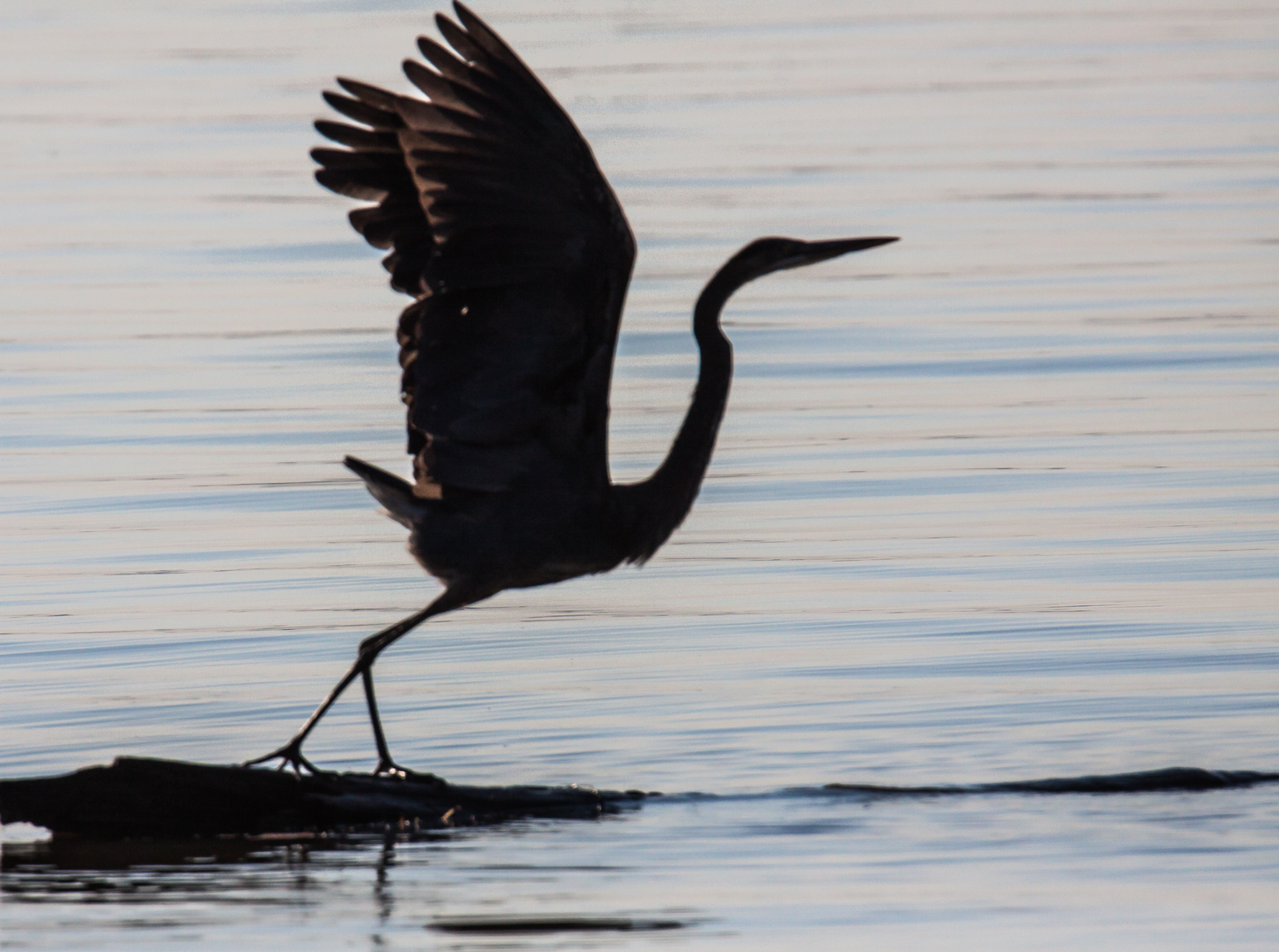
I suspected that this Great Blue Heron (Ardea herodias) at Occoquan Bay National Wildlife Refuge would be silhouetted because I was shooting into the light. I was going to make some adjustments to my camera settings, but it took off before I could do so and I captured a cool series of images.

Great Blue Heron

Great Blue Heron

Great Blue Heron

I liked the way that a few details of the feathers were visible in the images and the pink and blue streaks in the background were a nice touch. I decided, however, to play around with one of the images and opened the second shot in SIlver Efex Pro 2, a black and white conversion software program that is part of the Nik Collection.

One of the filters turned the heron into a completely black silhouette—with some birds, identification would be a problem, but the shape of the heron is unmistakable here. Another filter created the effect of a pinhole camera and you can see the result in the final images. There is something about that final image that really appeals to me.

I tend to strive for realism in my photos and normally do only a minimal amount of post-processing. I had so much fun, though, playing around with the different effects you can achieve with software that I suspect I will consider doing so again in the future.

Great Blue Heron

Great Blue Heron

© Michael Q. Powell. All rights reserved.

Read Full Post »

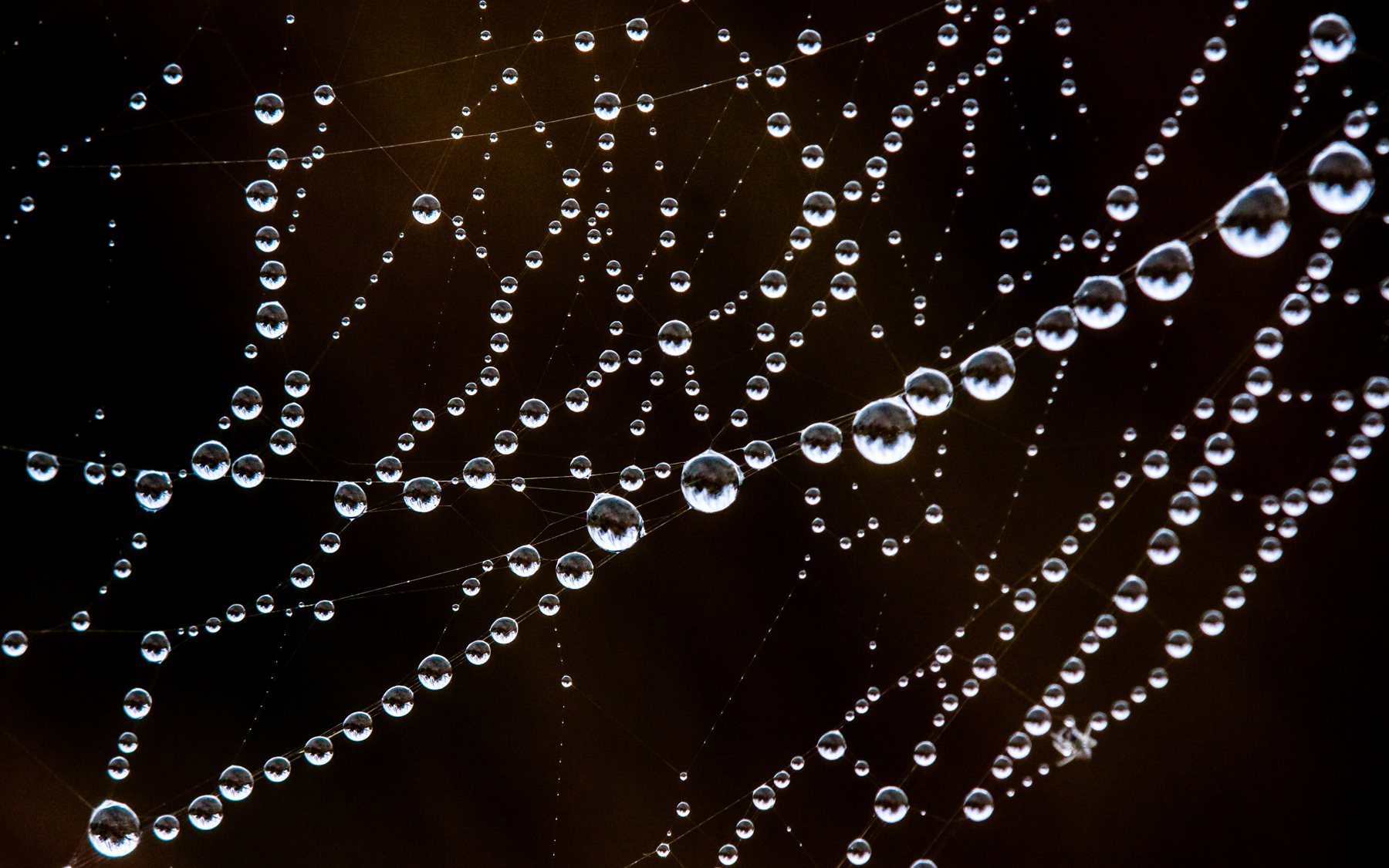
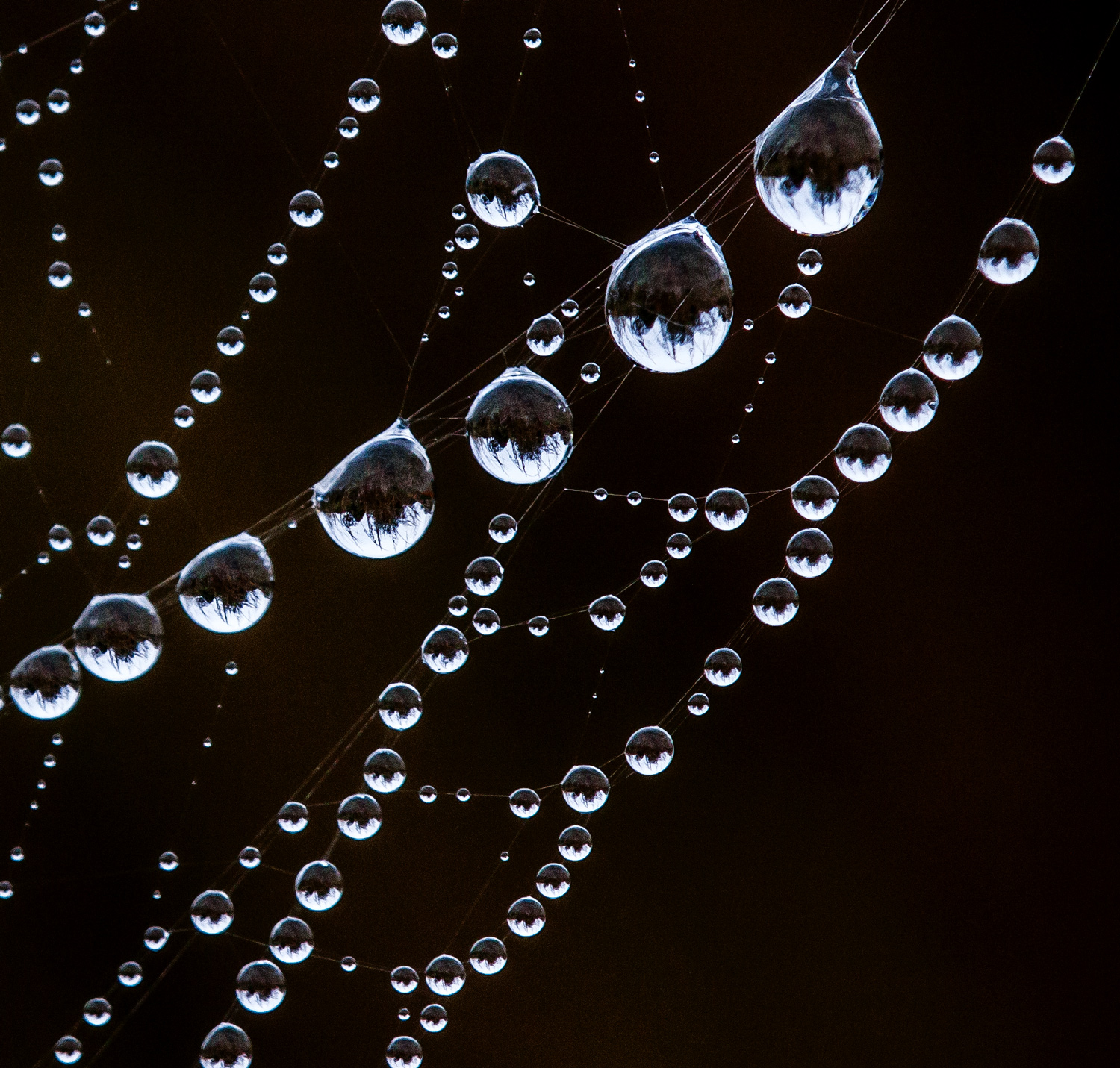
The spiderweb was tattered and the spider was absent, but the globular drops of dew gave the scene a magical feel as the early morning light turned them into transparent pearls. As I looked more closely, I saw there was a miniature upside down version of the landscape in many of the drops.

For the ease of the viewer, I flipped a cropped version of part of the scene 180 degrees in the first photo below to give a better sense of the “landscapes” that are shown right side up. The second image shows a wider view of the strings of glistening drops. The final image is the same as the first one, but rotated back to its original orientation, so that the normal rules of gravity apply and the dew drops are hanging down from the silken strands of the spider web.


tiny landscapes

tiny landscapes

tiny landscapes

© Michael Q. Powell. All rights reserved.

Read Full Post »

Orange and brown seem to be the perfect color combination for the autumn and this Question Mark butterfly (Polygonia interrogationis) was suitably celebrating the season this past Friday at Occoquan Bay National Wildlife Refuge.

Question Mark butterfly

© Michael Q. Powell. All rights reserved.

Read Full Post »
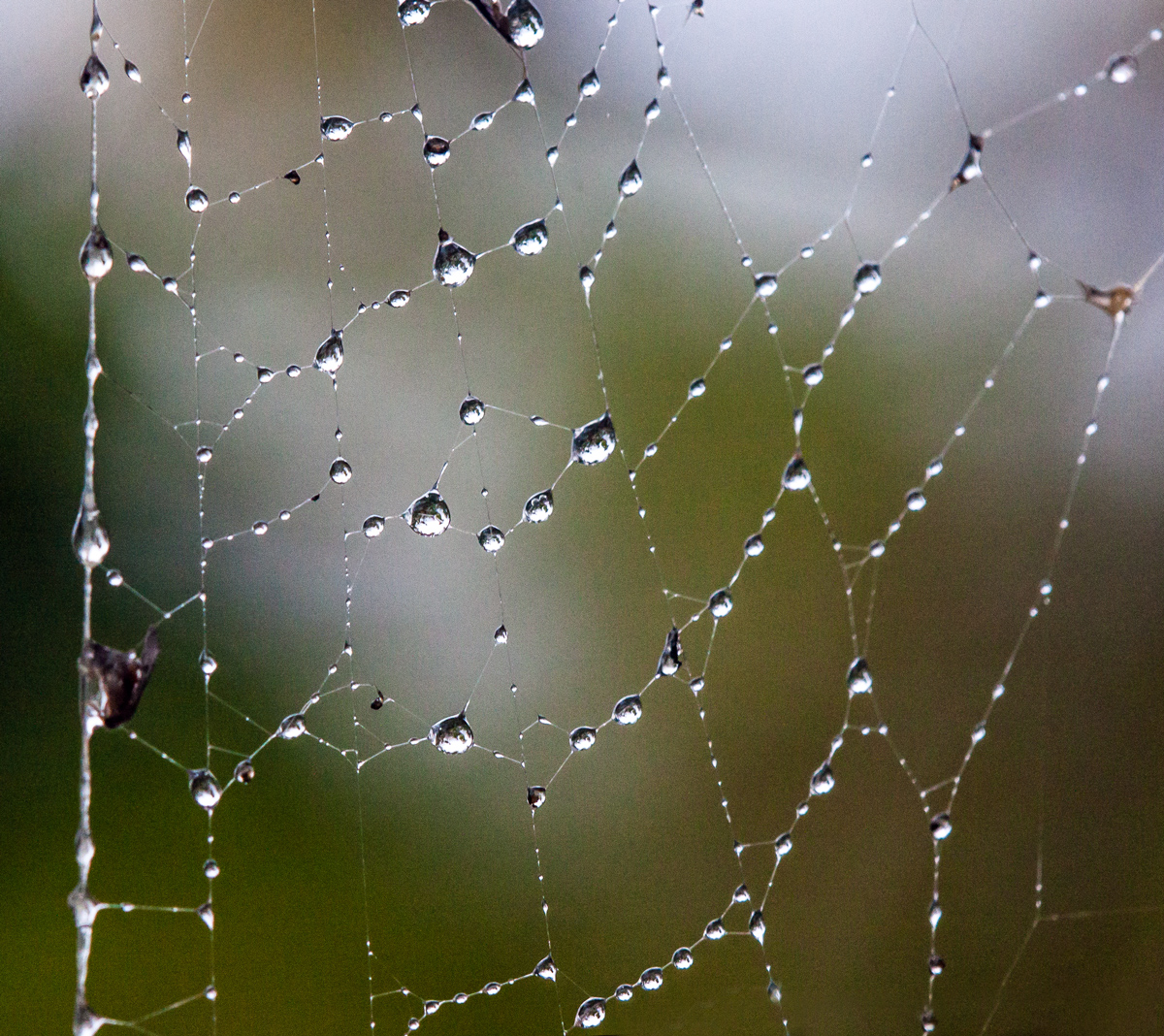
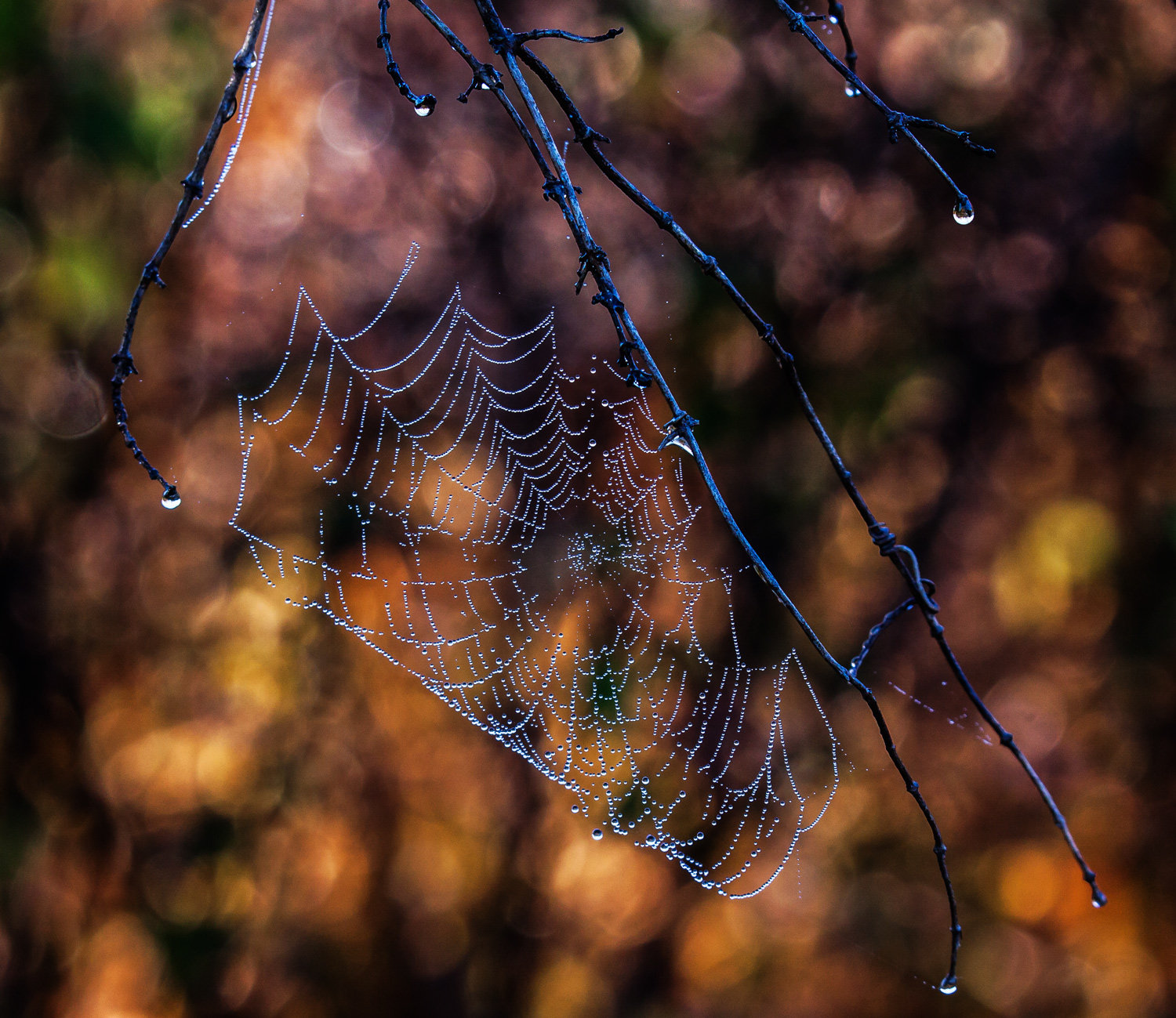
Raindrops can enhance the beauty of many subjects, like this spider web that I photographed on Friday at Occoquan Bay National Wildlife Refuge. As I looked at the drops, they somehow brought to mind an elaborate necklace of loosely strung pearls.

wet spider web

© Michael Q. Powell. All rights reserved

Read Full Post »

I was thrilled yesterday to see that at least one Swift Setwing dragonfly (Dythemis velox) is still present at Jackson Miles Abbott Wetland Refuge. Based on past records, the Swift Setwings should be with us at least until the end of September, but this has been a crazy year weatherwise, so I never know whether the different dragonflies will appear and disappear on schedule.

If you look really closely at the wings of this dragonfly, you’ll discover some really cool shapes and patterns—-not all of the individual “cells” in the wings are of the same shape and size. Together they form an intricate mosaic that reminds me of a stained glass window. (I encourage you to click on the image to see it in higher resolution.)

Swift Setwing

© Michael Q. Powell. All rights reserved

Read Full Post »

As a nature photographer, I am used to living with compromises. Unlike some other kinds of photographers, I don’t have the luxury of waiting for perfect light or photographing only perfect subjects. I can make a few adjustments or move about a bit to improve my composition, but most of the time I deal with imperfections of one sort or another.

Every once and a while, though, I’ll take a photo that doesn’t require any substantial adjustments or even cropping–it looks just like I imagined it would. That was the case with a recent image I captured of a female Eastern Amberwing dragonfly (Perithemis tenera) at Occoquan Bay National Wildlife Refuge.  I like the way that I captured the subject, I like the curved of the vegetation on which it is perched, and I like the background. It’s a bonus that I didn’t need to crop.

Perfection is elusive in any pursuit—this is about as close as I can come to it in my photography.

Eastern Amberwing

© Michael Q. Powell. All rights reserved

Read Full Post »

Sometimes when I have my camera in my hands, my attention is drawn to the amazing shapes, colors, and pattern of the natural world—I don’t need a specific animate subject to shoot. Here are a few of my more abstract shots from Monday at Occoquan Bay National Wildlife Refuge.

Even though I may not have had a main subject, in the traditional sense,I wouldn’t say that I was photographing nothing—au contraire, I was photographing everything.

ferns

grass

lily pads

© Michael Q. Powell. All rights reserved

Read Full Post »

There were only a few water lilies in bloom at the small pond at a local garden that I visited this past weekend. Surprisingly, they were all pink in color and not the white ones that I am more used to seeing—perhaps it is late in the season for the white ones. Not surprisingly, there were quite a few dragonflies buzzing about and I decided that I wanted to get a shot of one of them perched on one of the water lilies.

So I waited and hoped and waited some more. My patience was eventually rewarded when a tiny male Eastern Amberwing dragonfly (Perithemis tenera) landed on a partially open water lily bud and perched momentarily.

I really like the image that I managed to capture because of the way it conveys a sense of the mood of the moment, a calm, almost zen-like feeling of tranquility. The colors are subdued and the composition is minimalist—there is a real beauty in simplicity.

Dragonfly and water lily

© Michael Q. Powell. All rights reserved.


Read Full Post »

Last night I was playing again with watercolors and found inspiration in some videos about Chinese sumi-e brush painting, particularly one by Daleflix on YouTube that showed him painting a dragonfly and a frog. I really like the way that sumi-e painting, which is often done in ink on rice paper, emphasizes the importance of each brush stroke.

My painting skills still need a lot of work, but I especially like how the dragonfly turned out. There is a kind of minimalism in the dragonfly that appeals to me. It was really all-or-nothing when I painted it. Each of the wings, for example, was a single brush stroke, with a little bit of outlining done later. Similarly, the segmented body was done in a single pass.

I kind of got a little lost after I had painted the frog and the dragonfly and tried to add some contextual elements. The water ended up way too dark and some of the branches got too thick. In case you are curious, the painting is 4 x 6 inches in size (10 x 15 cm), so the brush strokes were pretty small.

Still, I like the overall feel of this little painting, which represents a new step for me as I explore watercolors. I think that I may explore this style of painting some more.

dragonfly and frog

© Michael Q. Powell. All rights reserved.

Read Full Post »
Many of us are old enough to remember when wall phones had long coiled cords that usually ended up stretched out and elongated. That’s exactly what I was thinking of when I spotted these coiled tendrils of some kind of flower yesterday when I was exploring Occoquan Bay National Wildlife Refuge.

I wasn’t sure how to capture them in an image and tried a couple of different approaches. The image below was my favorite. It is kind of a natural abstract image, but I included the flower in the corner of it to give the image a sense of context.

Those who read my postings regularly know that this is not the usual kind of photo that I post—sometimes it is fun to venture outside of my normal box.

coil

© Michael Q. Powell. All rights reserved.

Read Full Post »

« Newer Posts - Older Posts »