Feeds:
Posts
Comments

Archive for the ‘Art’ Category

This Great Blue Heron, which I think was a juvenile, was clearly not experienced at hunting for food. Unlike his more patient elders, he seemed unable to stay in one spot for more than a few minutes and his success rate when he made a strike was not very high. He was persistent, however, and I kept hoping that he would pull a frog or some other tasty morsel out of the waters of the beaver pond.

I readied myself as he prepared for another strike and fired away as he triumphantly pulled his catch out of the water. The photo confirmed my initial impression—the big catch was just a leaf that had been floating on the surface of the water.

With more practice, this heron’s fishing skills are sure to improve or it is going to be a long, cold autumn and winter for him.

heron_leaf_blog

© Michael Q. Powell. All rights reserved
Read Full Post »

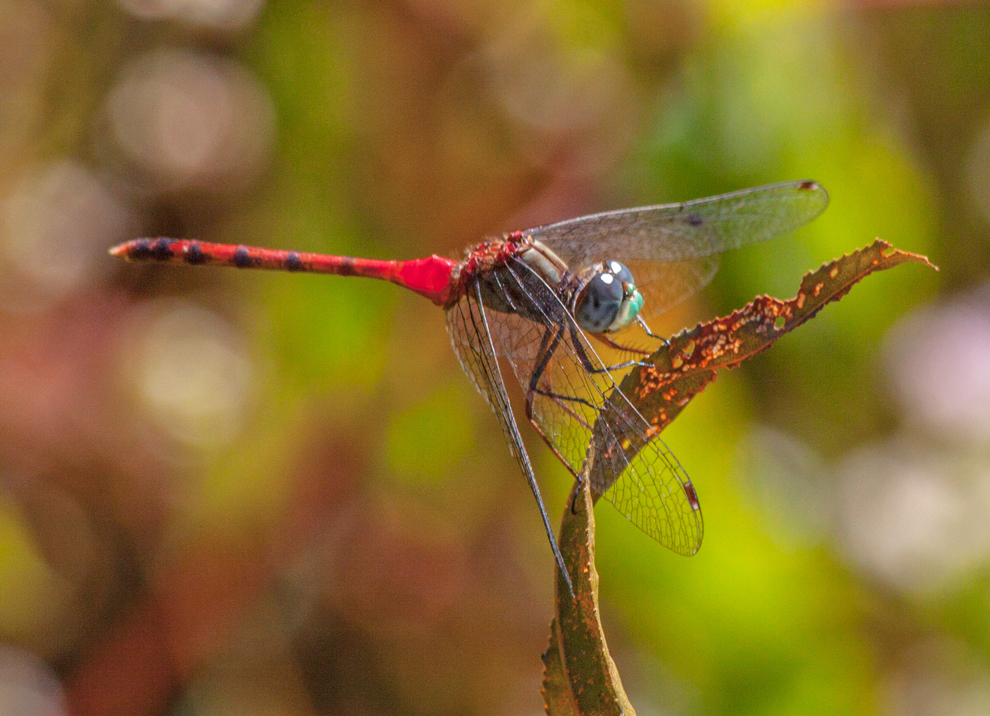
I don’t expect to see new species of dragonflies at this time of the year, but one of my fellow photographers, Walter Sanford, has been stalking the Blue-faced Meadowhawk (Sympetrum ambiguum) almost daily and I joined him for a few hours one late September day and got this shot.

I learned quickly that these dragonflies are hard to spot, despite their conspicuous coloration. They seem to like to remain perched down low in the vegetation and wait for their prey, rather than fly around when they are hunting.

I love the combination of colors on the Blue-faced Meadowhawk and I was happy to get a decent shot that shows its blue face. If you want to see more shots of this beautiful dragonfly, check out Walter’s blog posting from yesterday.

I am now in search of the Autumn Meadowhawk, the last dragonfly that I observed last fall. Normally they should be here already, but none of my fellow dragonfly followers has observed any of them yeat.

blue-faced1_blog

© Michael Q. Powell. All rights reserved

Read Full Post »

I arrived at the marsh before dawn, hoping to photograph a beautiful sunrise. I stumbled around in the fog and the dark as it gradually got lighter and captured this shot of a flock of blackbirds flying over a field of cattails. If you click on the photo, you can get a better look at all of the different flying positions of the blackbirds.

As it turned out, there were virtually no colors in the sky as the sun rose. I’m sure that I will be back again soon for another attempt.

pre-dawn_blackbirds_blog

© Michael Q. Powell. All rights reserved

Read Full Post »

Most of the tree frogs that I have seen until now have been lime green, but the one that I saw on Friday was a much darker shade of green. I am pretty sure, though, that he is a Green Treefrog (Hyla cinerea) and he was in a very familiar pose, comfortably napping during the heat of the day.

He was a pretty good distance away, perched on a small tree (or maybe a bush) in the partial shade, but luck was with me, because the sunlight was shining on him. I had a telephoto lens on my camera and managed to get a pretty good shot without scaring him away.

I left the frog thinking that he probably had the right approach—a nap sounded like a good idea.

dark_green_treefrog_blog

© Michael Q. Powell. All rights reserved
Read Full Post »

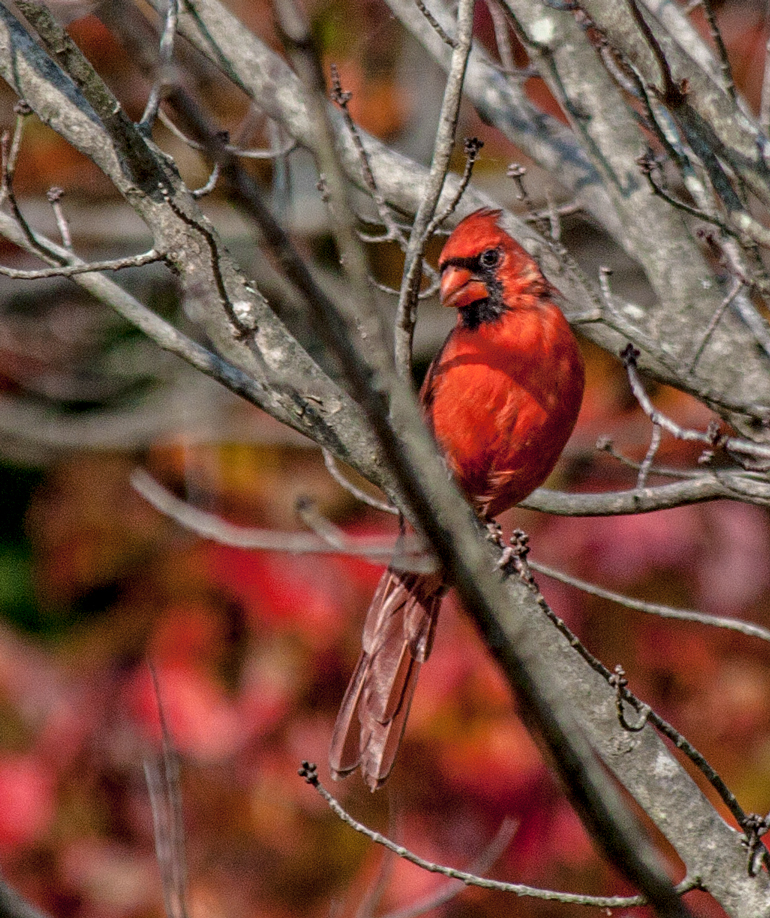
I love to photograph cardinals throughout the year, but I was really excited when I saw this male Northern Cardinal (Cardinalis cardinalis) land on a tree with colorful fall foliage in the background. There were a lot of branches, but I somehow managed to get a facial shot with an interesting expression.

The cardinal seemed to be staring at me, silently criticizing my behavior. It reminded me of the expression that parents sometimes adopt when they want to publicly communicate their displeasure to their offspring without uttering a single word.

cardinal_autumn_blog

© Michael Q. Powell. All rights reserved
Read Full Post »

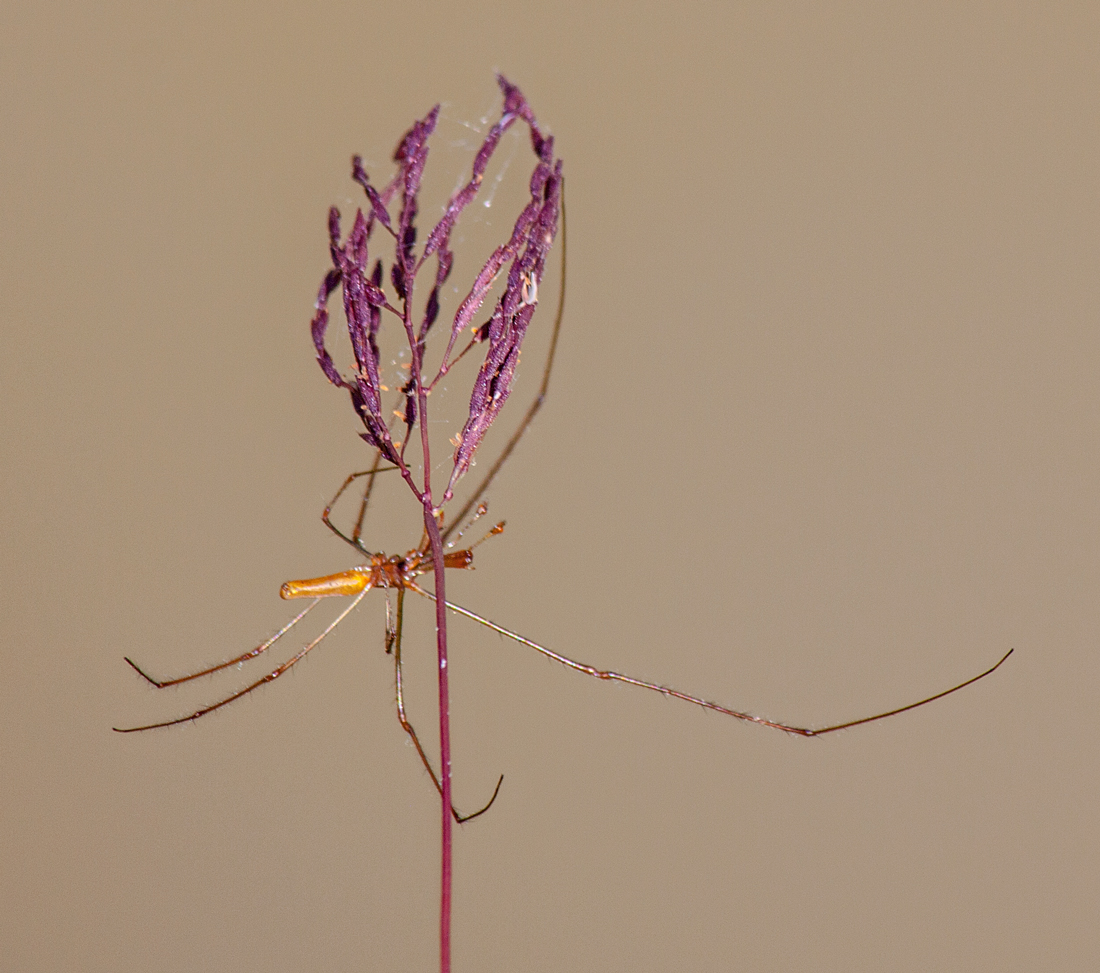
This long-jawed spider is not really camouflaged, of course, but it positioned itself in such an artistic way that its elongated body and legs seem to be an extension of the plant, especially from a distance. The plant was growing at the edge of a small pond at my local marsh and the brown background color is the water of the pond.

spider_purple_blog

Click on the image to get a higher resolution view of it.

© Michael Q. Powell. All rights reserved

Read Full Post »

Out of the corner of my eye, I detected some movement and, glancing upward, caught sight of this Great White Egret (Ardea alba) flying almost directly overhead. Normally I see egrets in flight only when I spook them and prompt them to fly away from me.

The early morning light helped to illuminate the underside of this gorgeous bird, which is usually in the shadows, revealing some of the details of the feathers. It is always tricky for me to get the proper exposure with these very white birds and I was happy that I managed to avoid blowing out too many of the highlights.

As I recall, I was pointing the camera almost straight up for these shots and that provides an unusual perspective. In the second shot, for example, it almost looks like the egret is imitating a fighter jet and is flight straight up into the air.

egret_overhead1_blog egret_overhead2_blog

© Michael Q. Powell. All rights reserved

Read Full Post »

The pose of this bullfrog seemed almost Zen-like, as he contemplated the early morning sun in a calm, meditative state of mind and body.

zen_frog_blog

© Michael Q. Powell. All rights reserved

Read Full Post »

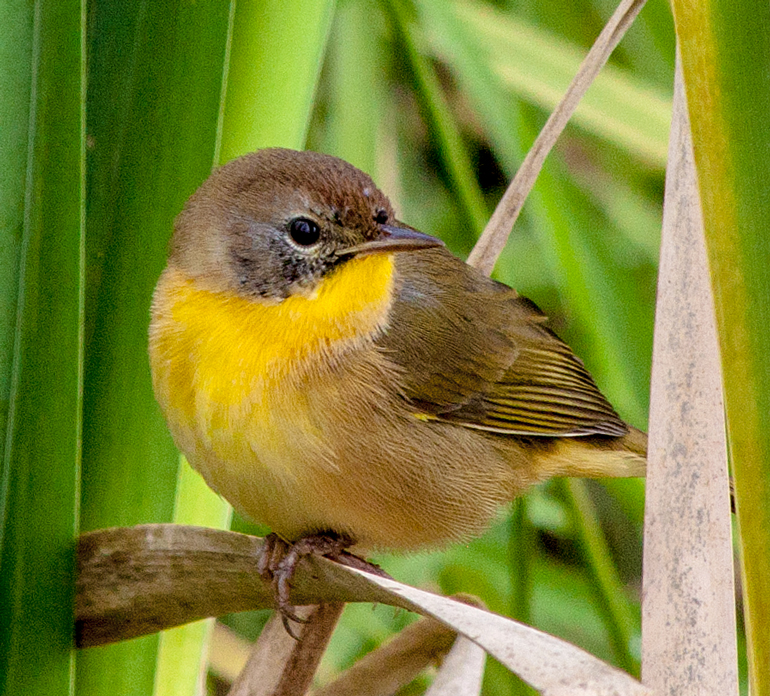
Glancing into the cattails, I caught sight of a flash of color and then gradually a bright yellow bird came into view. The tail was partially concealed by the cattails, accentuating the bird’s circular body shape (and everyone knows that the camera adds pounds to subjects).

I have done some internet searches and concluded that this is probably an immature male Common Yellowthroat (Geothlypis trichas). Adult male Yellowthroats are really easy to identify, because they have a prominent black mask. Like many bird species, however, young male Yellowthroats look a lot like the females, but gradually develop the mask. It looks to me that this bird may have the first traces of such a mask.

The lighting and camera settings combined to produce images that I really like, with colors that are beautifully saturated. I need to figure out how to replicate this look.

yellowbird_blogyellowbird2_blog

© Michael Q. Powell. All rights reserved

Read Full Post »

When a scope-toting birder told me that there was a cuckoo in a tree in the distance, I had not idea what to look for. My parents had a German cuckoo clock when I was growing up and somehow I thought the cuckoo would look like the little bird that popped out of the clock each hour.

I could see the white breast of the bird, so I pointed my telephoto lens at the tree and focused as well as I could. I had to crop quite a bit, but the bird I photographed is definitely identifiable as a Yellow-billed Cuckoo (Coccyzus americanus). What shocked me the most was the length of the bird’s tail. According to my birding guide, this cuckoo is about 12 inches (30 cm) in length.

According to the Cornell Lab of Ornithology, these birds like to eat large quantities of hairy caterpillars. Those readers who follow my blog know well that there have been lots of hairy caterpillars recently at my local marsh, so it makes a lot of sense that these birds would be present.

The background in the image is cluttered, but I like the bright colors of the autumn leaves, so I am not bothered by it, particularly because they do not conceal very much of the cuckoo.

cuckoo_blog

© Michael Q. Powell. All rights reserved
Read Full Post »

The early morning light from the side illuminated the bright fall leaves and the equally bright red male Northern Cardinal at my local marsh this past weekend.

cardinal_fall_blog

© Michael Q. Powell. All rights reserved

Read Full Post »

A familiar subject can look quite different when viewed from an unusual angle. It’s a lesson that every photographer is taught early on, but I need constant reminders to vary my approach.

I took this shot of a Viceroy butterfly (Limenitis archippus) yesterday while lying on the ground and pointing my telephoto lens up toward the sky. The perspective caused the shape of the wings to be different and permitted me to see the butterfly’s legs in a way that was completely new.

Not all such experiments are successful, of course, but I think that this one worked out pretty well.

looking_up_blog

Click on the photo to see a higher resolution view.

© Michael Q. Powell. All rights reserved

Read Full Post »

Yesterday I noticed several small flocks of blackbirds swooping in and out of the cattails at my local marsh and suspect that they are migrating birds. The marshland park seems to be favorite stopping-off spot for all kinds of birds as they move south.

I managed to get his shot of one of a male Red-winged Blackbird (Agelaius phoeniceus) in a rather typical pose on a cattail stalk. Unlike in the spring, when males seem to spend a lot of time calling out to potential, the blackbirds yesterday seemed to be much more focused on foraging for food.

blackbird_fall_blog

© Michael Q. Powell. All rights reserved

Read Full Post »

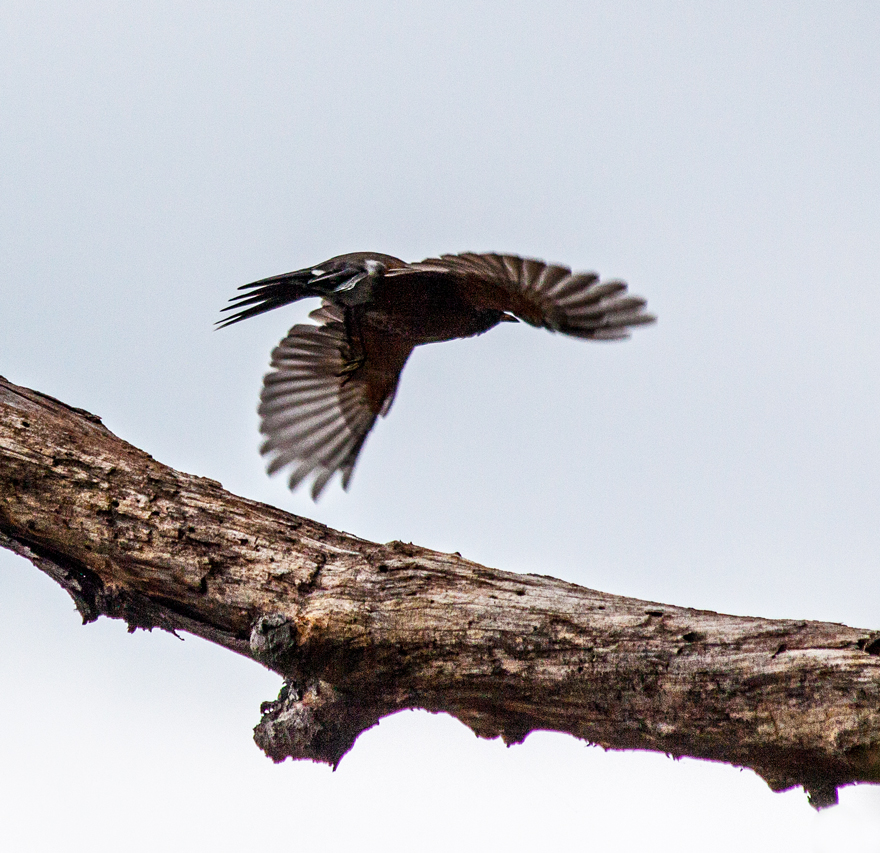
No matter how quickly I try to focus on a bird, they often are quicker than I am. Often I am left with merely an image of an empty branch, but every now and then I’ll get a cool image of the bird taking off.

That was the case yesterday, when I tried to get a shot of this small, dark-colored bird. I really like the position of the tail and the detail of the wings, which help to form an almost abstract portrait of the unidentified bird.

unknown_takeoff_blog

© Michael Q. Powell. All rights reserved

Read Full Post »

The days are getting cooler and leaves are starting to wither and fall, but there are still signs of the lingering summer, like this beautiful Viceroy butterfly (Limenitis archippus) that I photographed this past weekend. viceroy_bokeh_blog

© Michael Q. Powell. All rights reserved.

Read Full Post »

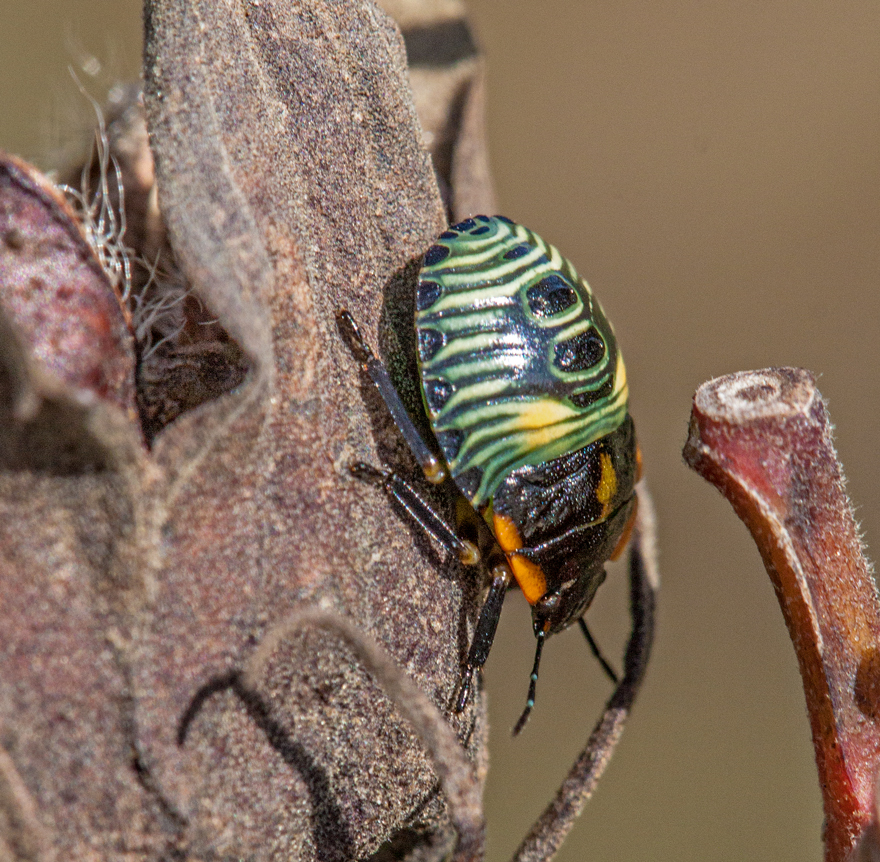
All the leaves are brown and the sky is gray as fall arrives in my local marsh, but there are still occasional spots of bright color, like this beetle that I encountered yesterday, crawling down a withered leaf. I have not been able to identify it, but its bold pattern and colors remind me of the art and fashions of the late 1960’s, when no combination was too wild. I graduated from high school in 1972 and still recall wearing some pretty wild-looking clothes.

Somehow I think the pattern on the beetle’s back would work well on a necktie. I guess it’s a commentary on how my life has progressed that I now think more in terms of neckties than tie-dyed t-shirts.

colorful_bug_blog

© Michael Q. Powell. All rights reserved.

Read Full Post »

Imagine how skinny this fuzzy white caterpillar would appear if its fur were “groomed,” like some of the dogs in my neighborhood. There is one fuzzy white dog, in particular, that looks huge, which I think is a Great Pyrenees. I was shocked one day when I saw that dog with closely cropped fur—it looked to be only half of its normal size.

For some reason, this caterpillar’s hair seems to be more tufted than usual, compared to similar caterpillars that I have seen. Maybe the hair is bunched because of the heavy dew or the way that the caterpillar slept. Clearly the caterpillar is having a bad hair day.

Do you think it could get away with wearing a hat to cover the bad hair?

really_fuzzy2_blogreally_fuzzy1_blog

© Michael Q. Powell. All rights reserved.

Read Full Post »

I can’t seem to get enough of these little green tree frogs and continue to try to get photos of them whenever I can.

In this shot, my eyes were drawn textures and colors—in particular, the bumpy texture of the frog’s skin and the contrast between the light olive green of the frog and the darker green of the leaf on which it is sitting.

frog_decay_blog

© Michael Q. Powell. All rights reserved.

Read Full Post »

Autumn is my favorite time of the year, a time when bright spots of spring-like color co-exist with the fading fall colors, a foretaste of the bleak winter landscape to come. Areas of my local marsh are dotted in bright red right now, the berries of a plant that I have been told is Winterberry (Ilex verticillata).

I’ve traipsed through lots of museums in my lifetime and seen innumerable paintings in which artists have arranged fruits and flowers and other objects into paintings that are generally known as “still life paintings.” I had those paintings in mind when I framed this shot in my viewfinder, attempting to capture a pleasing composition of colors and shapes. It’s rare that I don’t crop an image at all, but I decided to show this one composed just as it came out of the camera.

stillife_blog

© Michael Q. Powell. All rights reserved.

Read Full Post »

Summer is fading rapidly, but some flowers continue to bloom, like this beautiful Orange Jewelweed (Impatiens capensis) that I photographed recently at my local marsh.

Wikipedia claims that hummingbirds are the main pollinators of these flowers, which is not surprising, judging from their shape. Every time I pass by a cluster of these plants, I keep my eyes peeled for hummingbirds, but have not seen a single one and suspect that it is too late in the season for them.

jewelweed_blog

© Michael Q. Powell. All rights reserved.

Read Full Post »

It’s rare that I actually welcome an insect landing on me, which is usually a prelude to it biting me, but I was really happy when this Eastern Comma butterfly (Polygonia comma) decided it like the way that I tasted.

It initially landed right on my chest and began to lick my shirt and then moved over to the messenger bag in which I carry my camera gear. I carefully removed the bag and was able to get these shots while the Eastern Comma kept busy licking away my accumulated sweat (my apologies to those with delicate sensibilities, but these butterflies don’t land on pretty flowers and instead generally feed on the less photogenic sap, rotting fruit, and dung).

Normally this butterfly blends in well with its environment and is hard to see, but I guess that we would all agree that a blue Adidas bag is not its natural environment. It was also surprisingly easy to identify the butterfly. Last year I agonized in trying to decide if a butterfly I had photographed was a Question Mark or a Comma—the difference is in the shape of the white marking. Yes, those are actually the names of the butterflies. Who makes up these names? It’s the kind of job that I would enjoy.

I haven’t found any other insects named for punctuation marks, but won’t be surprised to find that there is an Asterisk caterpillar or an Ampersand beetle.

comma1_blogcomma2_blog

© Michael Q. Powell. All rights reserved
Read Full Post »

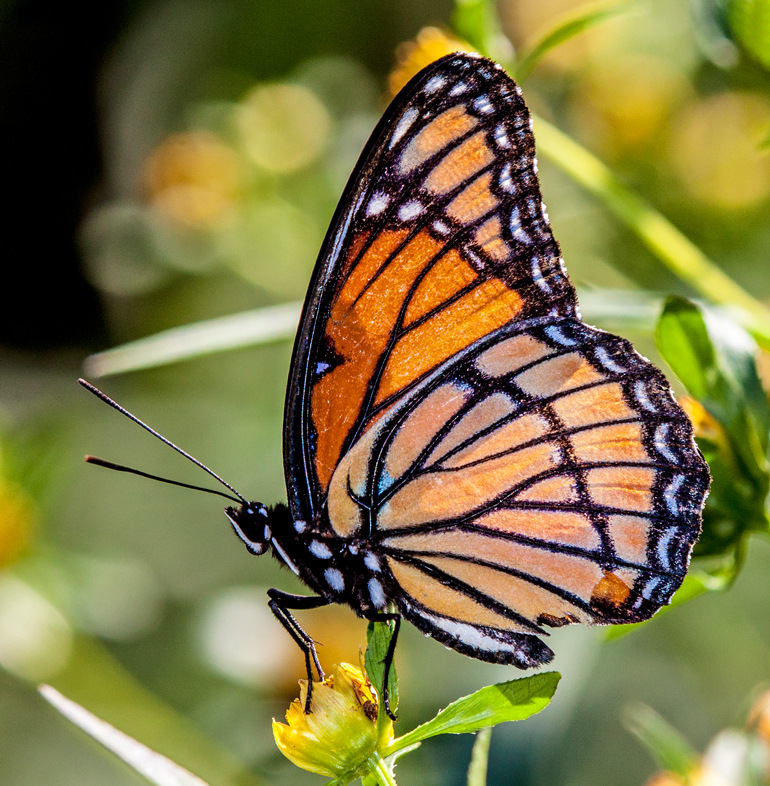
Do you ever take shots and find that you like the way that the background turned out even more than the way the subject looked?  That was the case with this image of a male Great Blue Skimmer dragonfly (Libellula vibrans) that I photographed this past weekend.

The lighting was a bit harsh and the pose is pretty ordinary, but I love the two-tone background, caused in part by the use of my 135-400mm telephoto zoom at its full extension.

blue_skimmer2_blog

© Michael Q. Powell. All rights reserved
Read Full Post »

This little Green Treefrog (Hyla cinerea) was almost hidden in the cattails, comfortably napping at midday with its legs tucked under its body. It’s nice to know that I am not the only one who enjoys a little afternoon siesta.

sleeping_frog_blog

© Michael Q. Powell. All rights reserved
Read Full Post »

Earlier this week I came across this little Jumping spider, patiently waiting for a prey to come by.  I never fail to be amazed by those eyes that seemed to be staring right at me.

Transfixed, I can’t take my eyes off of you, tiny spider, and your eyes seem to follow me. I don’t want to seem paranoid, but when I am with you, I always feel like somebody is watching me.

Somehow I thought I heard the spider humming, “I only have eyes for you,” but it was just my imagination, running away with me.

jumping_marsh2_blog

© Michael Q. Powell. All rights reserved

Read Full Post »

Small butterflies have a special, delicate beauty all their own, like this Gray Hairstreak butterfly (Strymon melinus) that I photographed in mid-August at Lewis Ginter Botanical Gardens in Richmond, Virginia.

BugGuide states that this is the most common hairstreak in North American, but this is only the second time that I have seen one. Based on my limited observation of American women, I would assert that the blond hairstreak is the most common one, though, as a bald guy, I realize that hair is not my area of expertise.

hairstreak2_bloghairstreak1_blog

© Michael Q. Powell. All rights reserved

Read Full Post »

This small Green Treefrog (Hyla cinerea) was swaying in the breeze, mostly obscured by the heavy growth in the marsh, when I first spotted it. I searched for an opening to get an unobstructed shot and finally found one, looking through a circularly bent dried leaf.

The different elements of the scene, however, were all in motion at different speeds.  I felt like I was playing a carnival game as I tried to aim and shoot at a target that would appear and disappear from view. Eventually I got a shot that was pretty close to the mental image that was my target and the frog was framed.

circle_frog_blog© Michael Q. Powell. All rights reserved

Read Full Post »

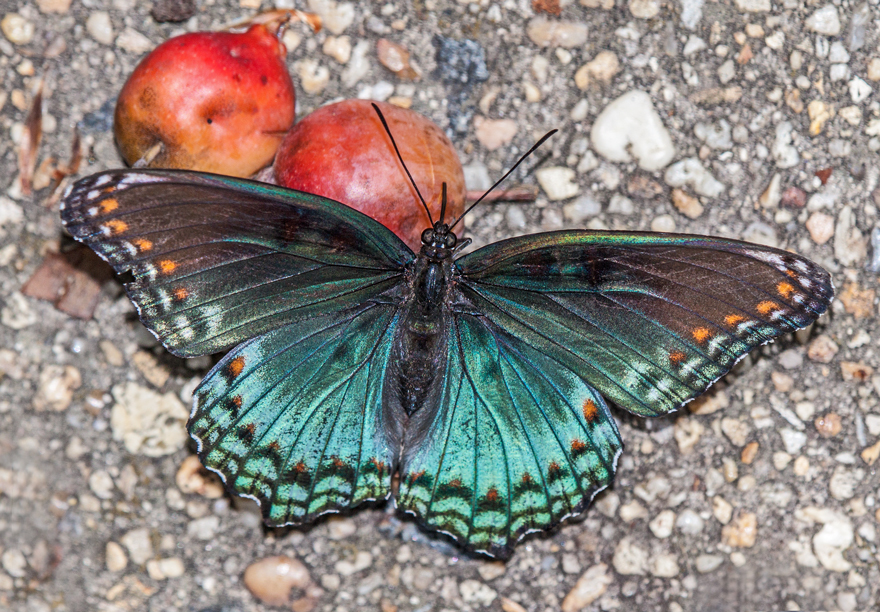
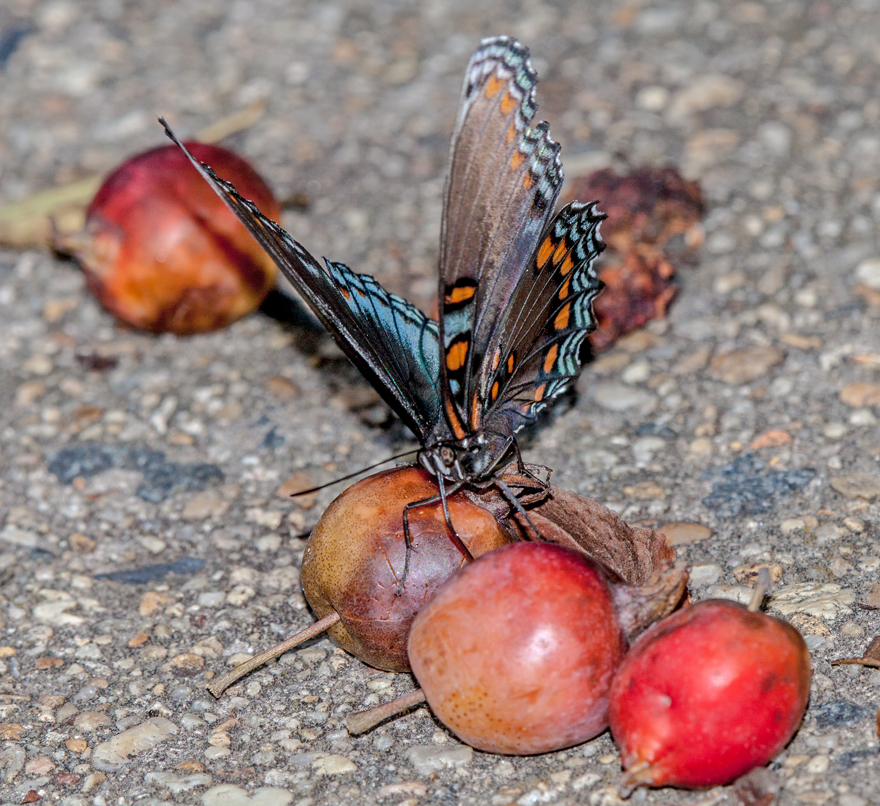
In the townhouse community in which I live in Northern Virginia, many of us have crabapple trees in our front yards, and the fallen crabapples are a nuisance at this time of the year. However, they do provide food for certain butterflies that prefer rotten fruit to flower nectar, like this Red-spotted Purple butterfly (Limenitis arthemis astyanax) that I photographed this morning.

crabapple2_blogcrabapple_blog© Michael Q. Powell. All rights reserved

Read Full Post »

Without fill-in light, a backlit subject is often in the shadows and becomes a silhouette, which is what happened in these shots of a Great Blue Heron taking off from a watery area of my local marshland park. The same sunlight in front of me also created beautiful reflections of the heron in the water, and I really like the combination of the silhouettes and reflections in these images.

This heron was getting ready to give chase to another blue heron and was squawking loudly as it took off. I watched the two herons for quite a while and this one went out of his ways several times to harass the other one and force it to search for prey in the vegetation away from the pool of water. As you can see in the second and third photos, a Great Egret was a spectator to the action, lifting up its head to observe what was going on. When things calmed down, the egret returned to its fishing until the next round of activity from the herons.

heron_silhouette1_blog heron_silhouette2_blogheron_silhouette3_blog

© Michael Q. Powell. All rights reserved

Read Full Post »

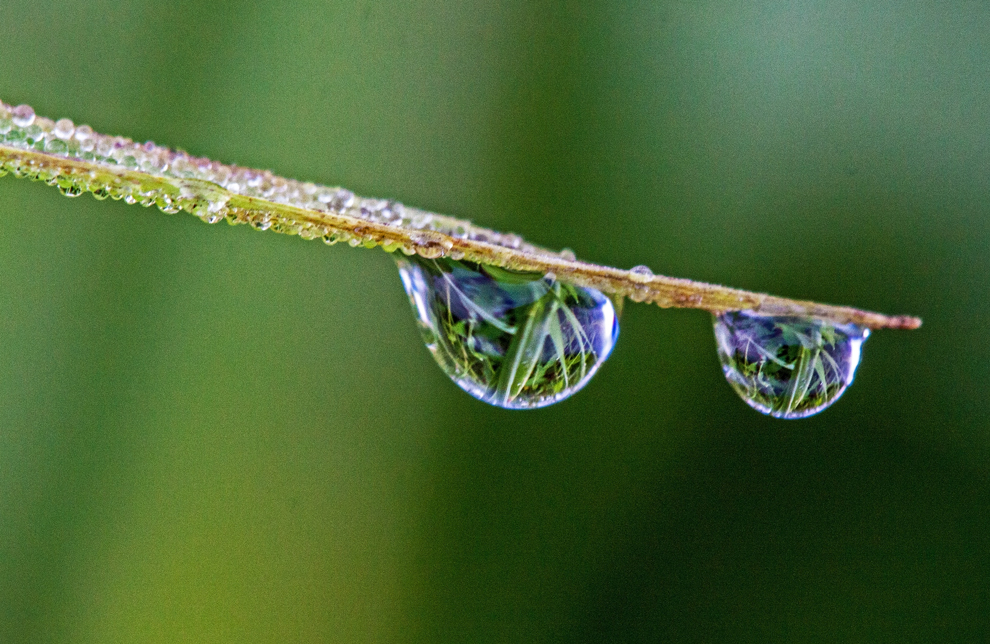
When drops of rain bead up on the surface of a leaf, the effect is magical—a world of crystal orbs is created. Most of the time the drops appear almost solid, reflecting back the light.

From certain angles, though, the raindrops serve as lenses, offering us a miniature view of the world. Within the drops, the inner world and the world beyond come together and create a beautiful effect.

drops_blog

© Michael Q. Powell. All rights reserved

Read Full Post »

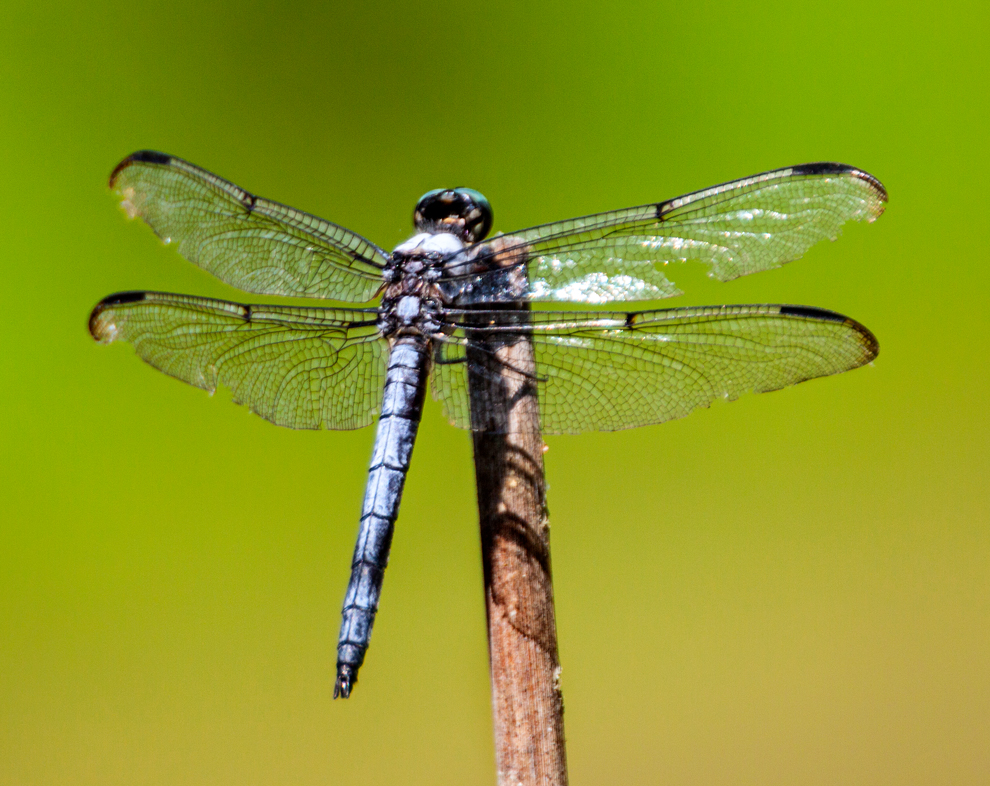
As I noted in an earlier posting today, some of my favorite images are almost minimalist in their approach. This recent image of a male Blue Dasher dragonfly (Pachydiplax longipennis) fits into that category.

Once again, the composition is simple, the color palette is fairly limited, and there is a good amount of negative space. The brown-colored background is the water in one of the areas of my local marshland park.

I like the position of the dragonfly—I think he was trying to cool off on a hot day by raising his abdomen—and the viewer’s eyes are drawn to the dragonfly, because it is the most colorful and the most sharply-focused object in the photo.

This image reminds me a little of a painting in which the artist has arranged the elements to make a pleasing composition. In this case, though, nature did the arranging.

dasher_leaves_blog

© Michael Q. Powell. All rights reserved

Read Full Post »

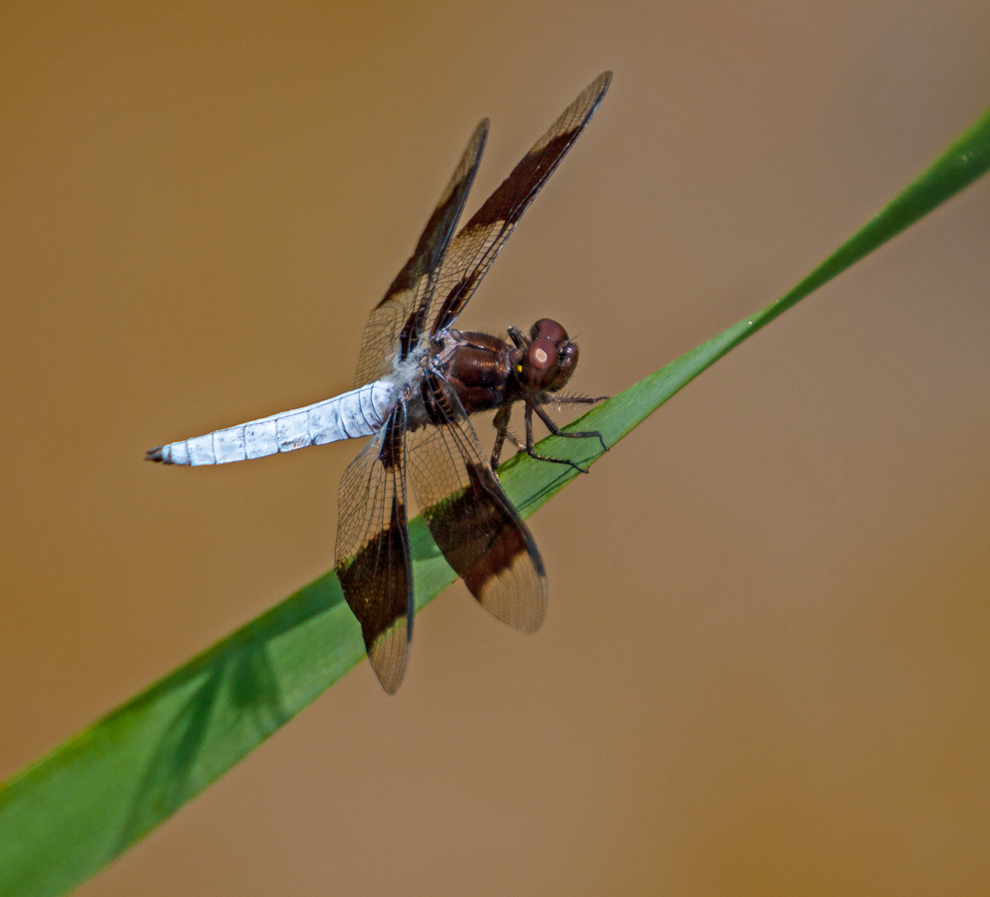
Some of my favorite images are almost minimalist in their approach, like this shot of a male Common Whitetail dragonfly (Plathemis lydia).

The composition is simple, the color palette is limited, and there is a pretty good amount of negative space. The subject is not unique and unusual—its name even indicates that it is “common.”

I managed to capture some of the details of the dragonfly, though, like the “hairs” on the legs (click on the image to see a higher resolution view), though the image is not super sharp. The shadow of the wings on the green leaf adds an additional touch of visual interest to the image.

The photo is not spectacular and showy, but I find a real beauty in its quiet simplicity.

whitetail_A_blog

© Michael Q. Powell. All rights reserved
Read Full Post »

« Newer Posts - Older Posts »