Feeds:
Posts
Comments

Archive for the ‘animals’ Category

We visit our local parks and wildlife refuges for a short while and return home, forgetting sometimes that many of the creatures we observed live and die within the confines of these small (or not so small) areas. As I wander through Huntley Meadows Park, I see signs of this entire circle of life. Lives have ended and, as we move into spring, new lives are beginning.

Whenever I come across skeletal remains, a clump of feathers, or other evidence of the death of a bird or an animal, I cannot help but wonder how the creature met its demise. Was it a predator, old age, sickness, or starvation? Life can be harsh in the wild, especially in the winter.

As far as I can tell, the animal in the first photo is a raccoon (Procyon lotor). Several months ago a fellow photographer mentioned that he had seen the dead body of a raccoon inside a hollow in the trunk of a fallen tree. I thought that predators would have dismembered the body by now, but instead it seems to be slowly decomposing in its sheltered position.

The skull is the second photo is that of a White-tailed Deer (Odocoileus virginianus). Other body parts of the deer were scattered about in the same area where I spotted the skull. There are concerns that the deer population is too high for the park to support, so there is a chance this deer died from starvation.

I know that these photos, especially the first one, are pretty graphic and apologize in advance to those who may have found them to be excessively disturbing.

raccoon

White-tailed Deer

© Michael Q. Powell. All rights reserved.
Read Full Post »

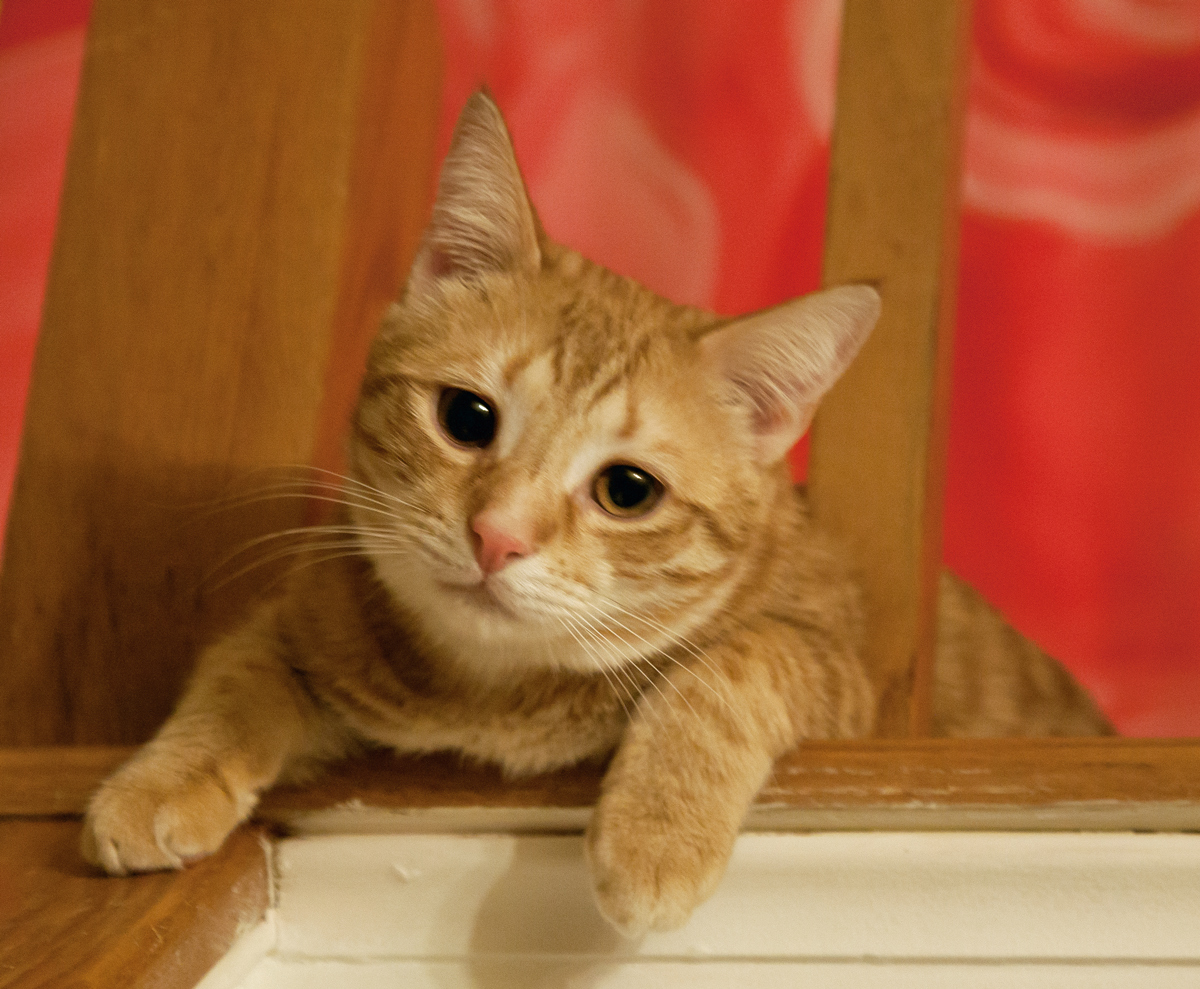
My long weekend of catsitting is coming to an end today, so I decided I needed to do a posting on Queso, the youngest member of the cat trio. Queso is still a kitten and is full of energy and curiosity. He loves to antagonize his two older “brothers” and will sometimes pounce on them when they least expect it.

Cindy Dyer and her husband Michael rescued Queso when they found him abandoned in the bushes outside of a Mexican restaurant. That initial experience and his orange-yellow fur caused them to name him Queso.

Tomorrow (or possibly later today), I’ll be back to my more typical wildlife and nature photos. It’s been a fun challenge this past weekend to shoot “wild” animals in an indoor setting with available light.

Queso

Queso

© Michael Q. Powell. All rights reserved.
Read Full Post »

Lobo is another one of the cats that I am watching this weekend. He and Pixel, the cat that I featured previously, were adopted at the same time. According to my friend Cindy Dyer, she wanted to name him “JPEG,” but her husband protested, so they settled on the name “Lobo.”

Lobo has always seemed exotic and mysterious to me, with piercing eyes that look like they could hypnotize me if I stare into them too long.

Lobo

© Michael Q. Powell. All rights reserved.

Read Full Post »

Early yesterday morning I trudged through the crusted snow to my favorite spot at Huntley Meadows Park. Along the way I saw a Bald Eagle and a hawk, so I knew that it was going to be a good day.

My favorite spot is a beaver pond in a somewhat remote area of the park. l like to sit at the edge of the pond and watch and wait as a feeling of peace and serenity gradually envelops me. It seems so far removed from the hurried rat race characteristic of the Washington D.C. area and has a restorative effect on my overall well-being.

The pond is frozen now, so I am able to sit on one of the logs that make up the beaver dam and extend my feet over the ice. I place a big plastic bag on the log and sit on a folded towel, so it’s pretty comfortable, even when the temperature is below freezing, as it was yesterday.

As I was looking toward a Great Blue Heron to my left, I detected some movement out of the corner of my right eye. I stopped breathing for a moment when I saw that a Red Fox (Vulpes vulpes) was standing on the ice. It looked like the fox had been planning to cross the pond and stopped when it spotted me.

Our eyes met for a moment as I took a few shots. Then the unthinkable happened. I pressed my shutter button and the shutter did not engage. Glancing down at my camera, I saw that the battery had died—several hours of freezing temperatures had temporarily drained the battery. This had happened before, although never at a critical moment, so I had another battery in my pocket.

I tried to change the battery as quickly as possible, but the additional movement spooked the fox a little and and it turned around and made its way back to the far bank of the pond. I managed to get a final shot of the fox after the battery change. The fox’s face is not visible, but at least you can see its bushy tail.

Red Fox

Red Fox

Michael Q. Powell. All rights reserved.

Read Full Post »

What lenses do you generally carry with you when you go out to shoot wildlife? This past year I have kept my Tamron 150-600mm lens on my camera the majority of the time and sometimes switch to my Tamron 180mm macro lens. The third lens that I have with me generally is a Canon 50mm lens that I use only occasionally.

While I was going to be away in Vienna, I decided to lend my long lens to a friend. We got into a conversation about the lens when I delivered it to him and I noted that one of th disadvantages of the Tamron zoom was that it is slow, with a maximum aperture of f/6.3 when extended to 600mm.

I contrasted the speed of the long lens with that of my “nifty fifty” that has a maximum aperture of f/1.8. In order to demonstrate how much more light I could get at f/1.8, I had him hold a couple of his guinea pigs and I took some portrait shots handheld in the limited available indoor light with the lens wide open. With a human subject, I would probably have been uncomfortably close, but the guinea pigs didn’t seem to mind.

Finally I took a few shots using the 180mm wide open at f/3.5. It was quite a bit harder to frame the squirming guinea pig at the greater distance, but I got a few shots that look almost like I used studio lighting.

I think my friend learned a bit more about the lenses (and I ended up lending him the 50mm lens too) and I rediscovered the joy of switching lenses and zooming with my feet.

gp1_web

gp6_blog

gp2_web

gp4_web

gp8_blog

© Michael Q. Powell. All rights reserved.


Read Full Post »

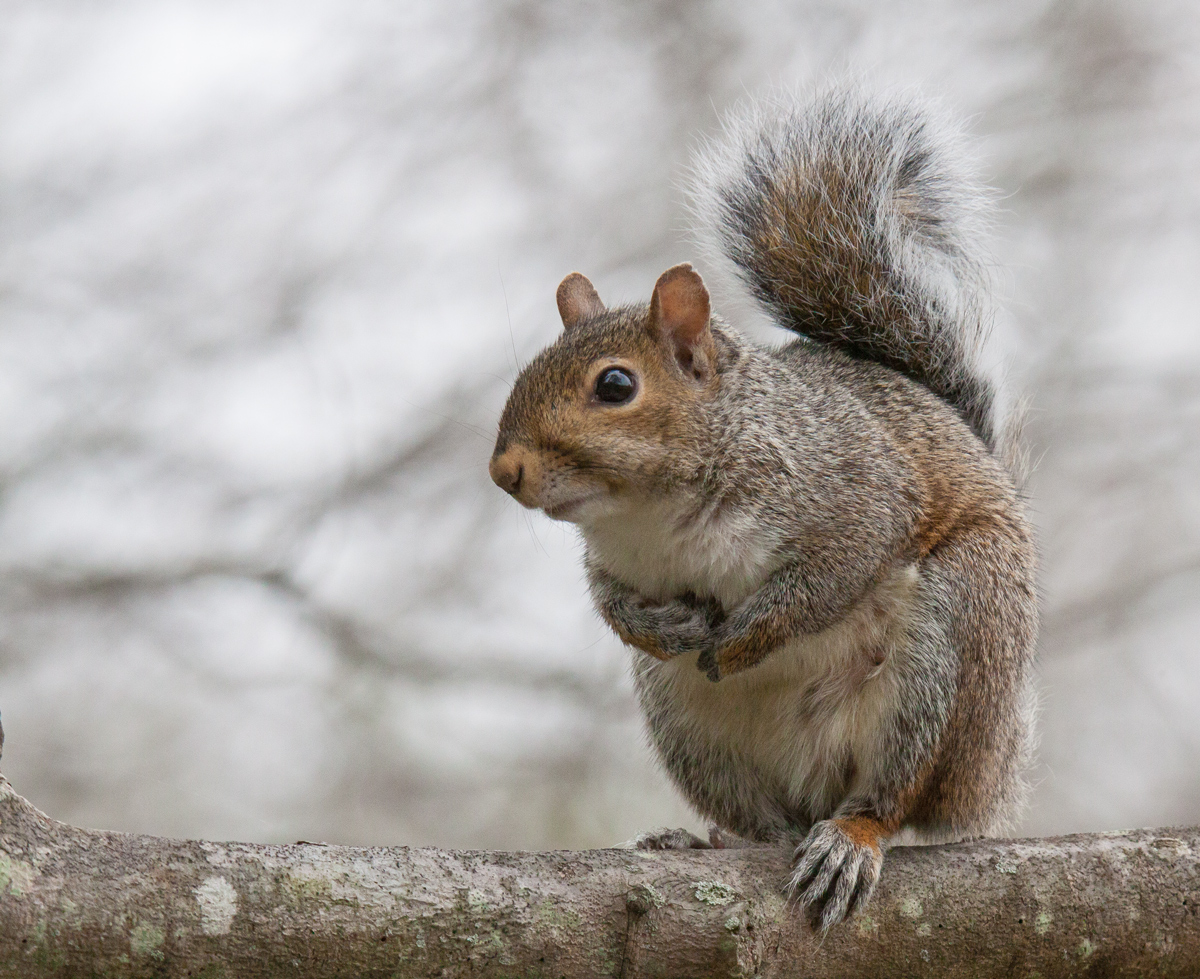
It was cool and cloudy early yesterday morning at Huntley Meadows Park and there was not much activity. Perhaps the birds and animals stayed up to welcome the new year and were sleeping late.

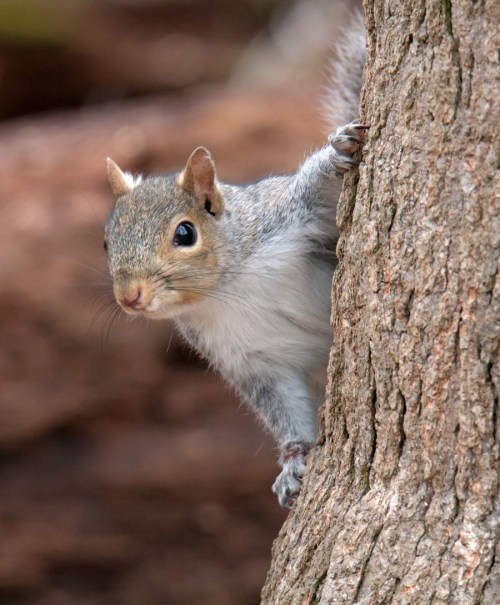
This Eastern Gray Squirrel (Sciurus carolinensis) was a notable exception—he was bright-eyed and bushy-tailed. In the midst of all of his activity, he paused for a few seconds to look in my direction and I was able to capture this modest little portrait of the squirrel.

I didn’t take any spectacular shots yesterday morning, none that are likely to make my list of favorites for 2016. I don’t feel disappointed, however, because I really enjoy taking photos of ordinary creatures and trying to capture a sense of their personalities. From that perspective, my new year of photography has already been a success.

Eastern Gray Squirrel

© Michael Q. Powell. All rights reserved.


Read Full Post »

WordPress tells me I posted 851 photos during 2015 in 395 blog posts. I’ve forgotten many of those photos, but I want to share ten of my favorites with you today as we start the new year.

I used a very unscientific approach in selecting them—I simply chose ones that I really liked without looking at numbers of likes or views or comments. So often I am focused on getting new shots that I sometimes forget how wide a spectrum of subjects I like to shoot. These images remind me of my varied approaches and techniques.

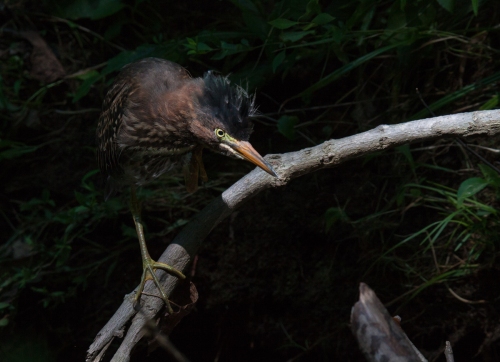
I didn’t include any of the fox photos or contest entries that I featured recently, figuring that you were already familiar with them. I should note that this selection of favorites is representative and not exhaustive—there are probably some awesome shots that I have neglected to include. I haven’t tried to put the images in any kind of rank order, but if forced to choose, my favorite image of the year is probably the first one, the Green Heron with a kind of Rembrandt lighting.

Thanks to all of you who have supported and encouraged me so much in 2015. Best wishes for a wonderful 2016.

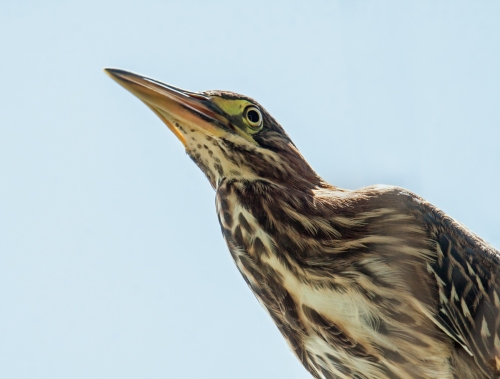
Green Heron

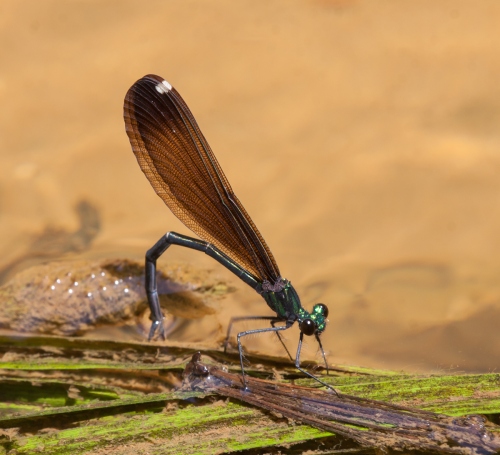
Ebony Jewelwing

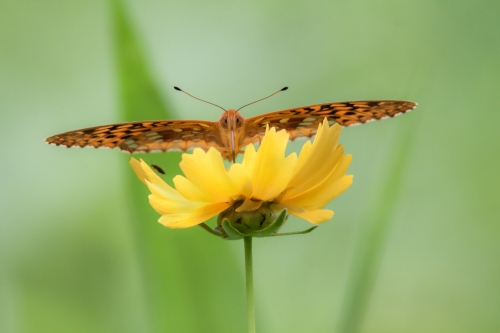
Great Spangled Fritillary

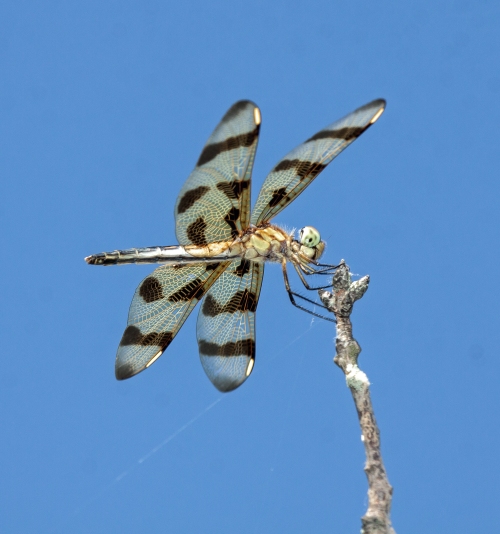
Banded Pennant

Green Heron

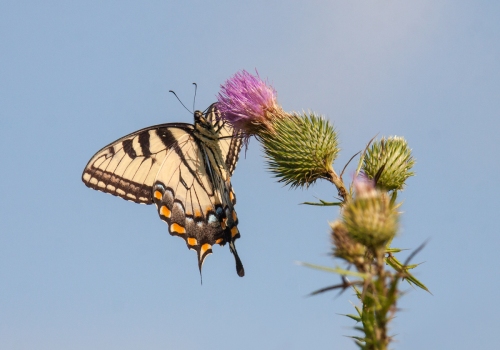
Eastern Tiger Swallowtail

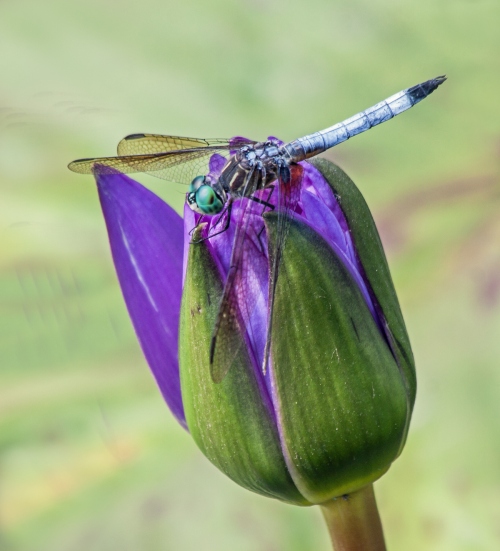
Blue Dasher

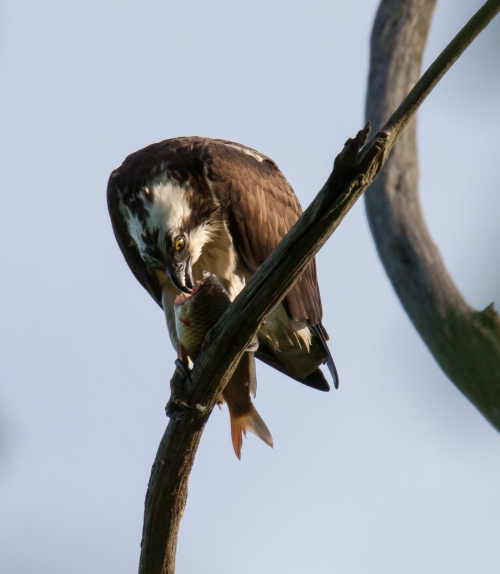
Osprey

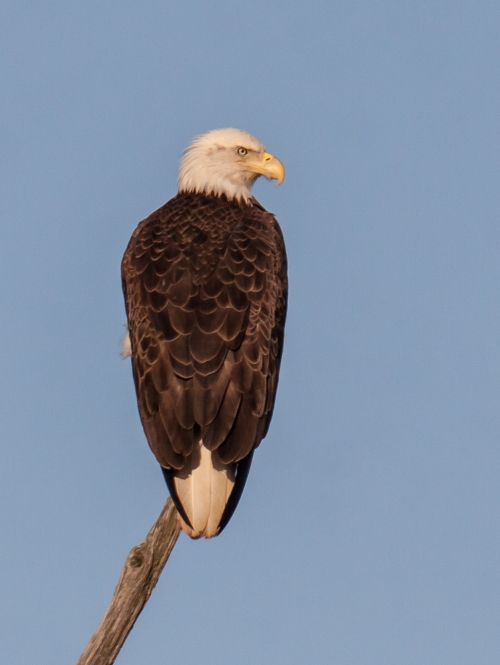
Bald Eagle

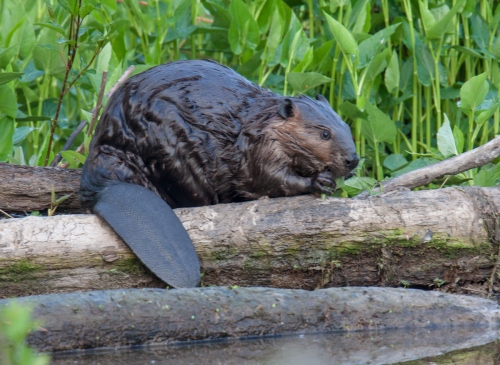
North American Beaver

© Michael Q. Powell. All rights reserved.

Read Full Post »

Last week I conducted a poll to see which of my four recent photo contest entries was your favorite image and the fox came out on top with 43 percent, followed by the bluebird (28 %), the eagle 18 %), and the dragonfly (11 %). Thanks to all of you who voted and especially to those who left comments about your choice. I was intrigued, but not surprised, by the fact that the favorite of the readers—the fox— was different from the choice of the contest judge—the dragonfly.

Several readers commented, however, that the particular image of the Red Fox (Vulpes vulpes) that I used was not their favorite one. I had previously done three postings from the magical encounter with the fox and one of the other shots seemed to speak to some readers more than the one I submitted for the contest.

So I am seeking your views again by reprising all of the fox photos and asking you to vote for your favorite. Do you prefer the fox standing up or leaning over the water? Do you like it more when the fox is looking directly at you or at an angle? Does it make a difference if the fox’s bushy tail is visible? I realize that it may not be easy to narrow your choice down to a single image, so I have tried to set up the poll to permit multiple choices.

If I have set this up correctly, you can click on any image and scroll through each of them in full size. After viewing them all, select your favorite (or favorites) and register your vote. I’d be really happy if you left a few words about your choice. NOTE: If you open the posting in Reader, you may need to click on the Title to get to the poll and to actual posting in which you can scroll through the photos in larger size as a kind of slide show.


© Michael Q. Powell. All rights reserved.


Read Full Post »

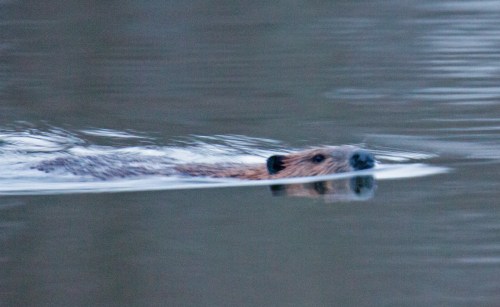
It was almost dark yesterday (and getting darker) at Huntley Meadows Park when I saw the head of a beaver break the surface of the water. It’s been quite some time since I last saw a beaver, so I was thrilled, and even managed to get a few shots by cranking up the settings on my camera.

There are several beaver lodges at the park and the resident North American Beavers (Castor canadensis) have been really busy the last few months getting ready for winter. Every time that I visit the park, I see that that more mud has been applied to the lodges and the brush pile adjacent to the lodges, which server as a larder during the winter, keep getting bigger.

Despite all of this activity, the beavers have remained remarkably elusive and I have not spotted them a single time in recent months during my early morning visits to the park. Yesterday I went to the park late in the day and was able to finally see one.

My DSLR is a little long in the tooth and its max ISO setting is 3200. I had never set it that high, because of fears of unacceptable grain in the images, but boldly set it there yesterday. I was shooting in aperture priority at f/7.1 (wide open for my telephoto lens when fully extended is f/6.3) and I was shocked to see that my shutter speeds for my shots were either 1/4 or 1/8 of a second. Fortunately my lens has image stabilization, but it’s actually a little surprising that my images were not completely blurry when shooting at 600mm with a 1/8 second shutter speed.

This shooting situation definitely pushed the limits of my camera, but I am happy that I was able to get some recognizable images of a beaver swimming at dusk. As we move deeper into the winter, I will be looking to capture some more shots of our resident beavers, hopefully in better light.

North American Beaver

North American Beaver

North American Beaver

© Michael Q. Powell. All rights reserved.


Read Full Post »

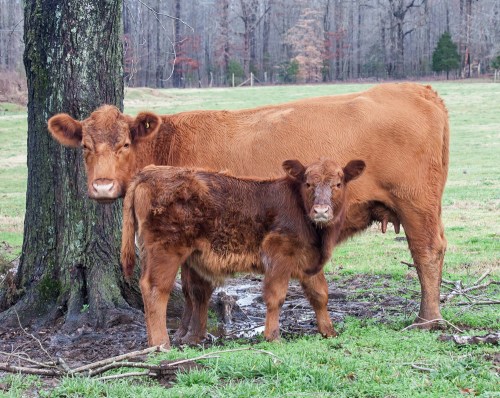
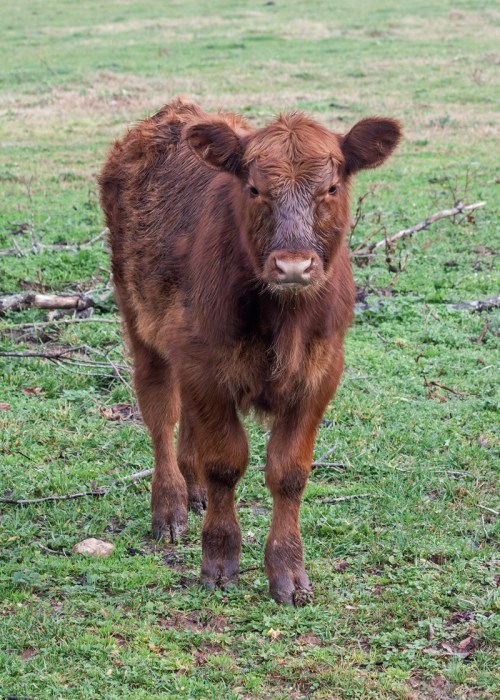
It’s hard for me to imagine life on a farm, having spent most of my life in the suburbs. I consider myself lucky to be able to distinguish a cow from a horse, but don’t ask me to tell a llama from an alpaca.

I got a little taste of farm life on Christmas Eve day when I accompanied a family member as she went about accomplishing a seemingly endless list of chores associated with the care of the farm animals.

Here are some of the fascinating faces of the farm that I encountered that day.

cows1_blog

cows2_blog

cows3_blog

horse1_blog

dog1_blog

© Michael Q. Powell. All rights reserved.

Read Full Post »

I’m dreaming of a white Christmas, but it looks like it won’t happen here this year, with a high temperature for today forecast to reach 70 degrees (21 degrees C).

So I decided to reprise a more seasonally appropriate shot from a couple of years ago at Huntley Meadows Park. In early January 2014 I spotted this Red Fox (Vulpes vulpes) circling around a beaver pond, not far from where I took my most recent fox shots.

Merry Christmas to all of my friends here who support and encourage me on my journey into photography and best wishes to you and your families as we move toward the start of a new year.

Red Fox

© Michael Q. Powell. All rights reserved.
Read Full Post »

As many of you know, I recently entered some photos in a local photo competition and was fortunate to be awarded second place for one of them. I was a little surprised by the one that was selected, because, quite frankly, it was not my favorite one of the group.

The more that I though about it, the more I realized how difficult it must be to be a judge, especially in an area like photography in which there is both a technical and an artistic component.

Why do we like what we like?

I’ve never used a poll in a posting before, but thought that in this case it might be interesting to learn which one of my four entries is your favorite. I am not really asking you to judge which one is “best,” but am looking more for a sense of which one you like most. You can use whatever criteria you like and I would be thrilled if you gave a few words about your choice.

As you can see, I chose a diverse set of subjects to appeal to a variety of tastes. There are two birds—a Bald Eagle (Haliaeetus leucocephalus) and an Eastern Bluebird (Sialia sialis); one insect—a Blue-faced Meadowhawk dragonfly (Sympetrum ambiguum); and one mammal—a Red Fox (Vulpes vulpes).

If I have set this up correctly, you can click on any image and scroll through each of them in full size. After viewing them all, select your favorite and register your vote. As I mentioned earlier, I’d be really happy if you left a few words about your choice. (I think the poll might let you vote multiple times if you have trouble choosing, but am not 100 percent certain, given that I am not familiar with the polling component.) NOTE: If you open the posting in Reader, you may need to click on the Title to get to the actual posting and to the poll.

Thanks. Merry Christmas in advance for those celebrating Christmas and best wishes as we move toward the start of a new year.

© Michael Q. Powell. All rights reserved.
Read Full Post »

I’ve finally made my way through all the photos that I took of my recent encounter with a Red Fox (Vulpes vulpes) at Huntley Meadows Park in Alexandria, Virginia and found some more good ones to post. My dear friend and photography mentor Cindy Dyer helped me to select these and to get them ready for printing.

There is a photo contest at the park and the entry deadline is tomorrow, so we were scrambling to get a fox image ready to submit. There is a limit of four photographs per photographer and I’m pretty sure that the first one below is the fox photo that I will enter, along with photos of a bluebird, an eagle, and a dragonfly. This is the first time I’ve ever printed any of my photos bigger than snapshot size—the submission images will be 11 inches by 14 inches (29 x 36 cm) matted to 16 inches by 20 inches (41 x 51 cm)—and the first time that I have entered a contest.

If you haven’t seen my previous posting with photos of this session with the fox, check out Fox at water’s edge and Fox at water’s edge—part two.

Red Fox

Red Fox

Red Fox

Red Fox

Red Fox

Red Fox

© Michael Q. Powell. All rights reserved.


Read Full Post »

In the quiet of the early morning I often will stand at the water’s edge, watching and waiting to see if any animals will emerge from the woods to get a drink of water. Sometimes my patience is rewarded.

On this occasion, two White-tailed Deer (Odocoileus virginianus) appeared. One of them kept its back to me most of the time and I was unable to get a clear shot of it. The other deer was a bit more cooperative and I manage to get some shots of it as it drank and then walked about a little bit before fading back into the woods.

Deer always seem so gentle and beautiful—a perfect match for the soft early morning light.

White-tailed Deer

White-tailed Deer

White-tailed Deer

© Michael Q. Powell. All rights reserved.
Read Full Post »

I’m still making my way through my photos from my recent encounter with a Red Fox (Vulpes vulpes), trying to decide which ones I like most. What an unexpected pleasure it is to have so many shots from which to choose.

I am so thankful and feel blessed that I had the chance to observe the fox in the wild for a relatively extended period of time. For more info on the encounter, check out my initial posting Fox at water’s edge.

Here are a couple more of my initial favorite images from the shoot. Stay tuned for another possible posting if I decide that I simply have to share a few more images.

Red Fox

Red Fox

© Michael Q. Powell. All rights reserved.
Read Full Post »

A couple of days ago I began a posting with the words “Redheads tend to be stunning, rare, and elusive” and I could easily have used those words to describe the Red Fox (Vulpes vulpes) that I encountered yesterday morning at Huntley Meadows Park.

The fox appeared to be hunting at the edge of the water of one of the ponds in a remote part of the park. I was standing at the edge of the water on the other side of a beaver pond from the fox when it emerged from the vegetation and walked to the water. I don’t think the fox was ever aware of my presence. I tried to stay composed and motionless as I snapped away with my camera.

Initially I thought the fox was simply getting a drink of water, but it walked along the shore for a few minutes as though it were seeking prey. Eventually it faded back into the brush and the magical moments came to an end,

I’m still going through my photos, but here’s an initial favorite. I suspect there will be a follow-up posting or two, but I can’t contain my excitement about the encounter and the fact that I was able to capture some images.

fox

© Michael Q. Powell. All rights reserved.
 

Read Full Post »

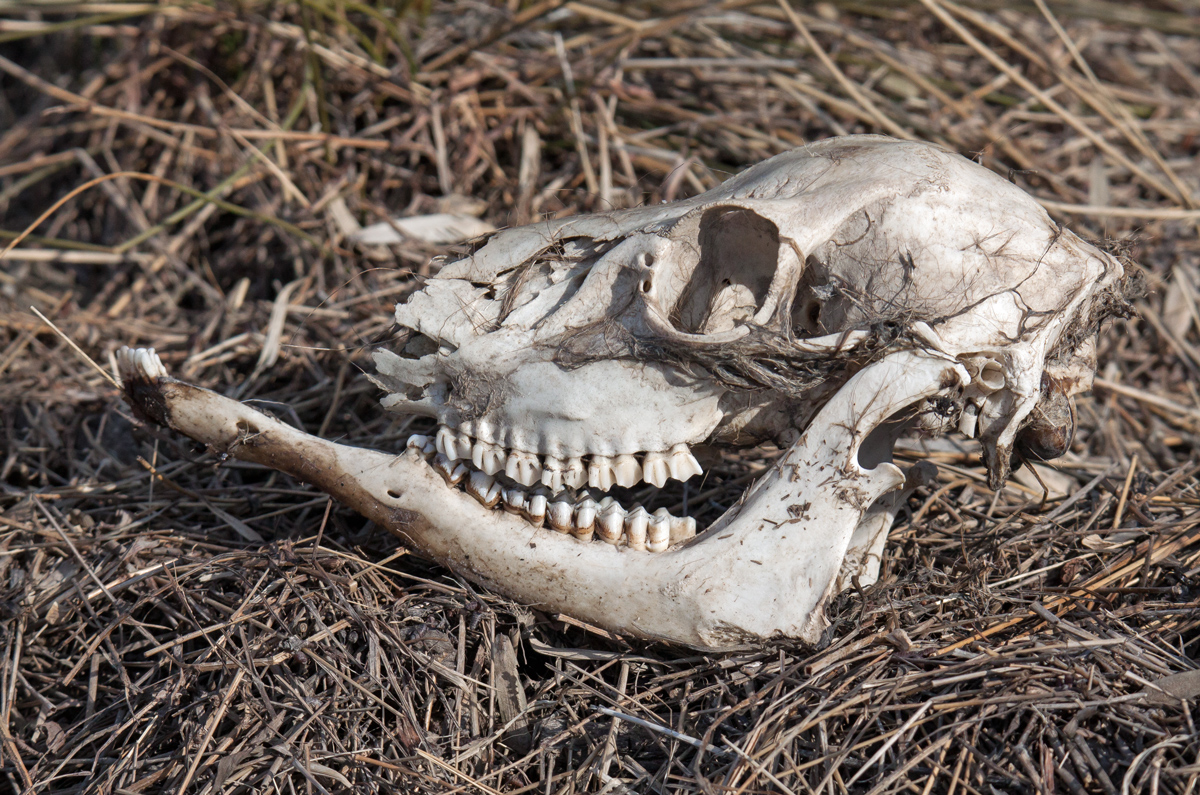
I never quite know what I will stumble upon when I wander about in remote areas of the woods, fields, and marshes of Huntley Meadows Park. This past weekend I spotted this skull, which I guess is that of a White-tailed Deer (Odocoileus virginianus), a common species where I live. How did this deer meet its demise? Was it old age, disease, starvation, or a predator?

Somehow this simple image of a skull seems appropriate for Halloween Week. Happy Halloween in advance.

White-tailed Deer

© Michael Q. Powell. All rights reserved.
Read Full Post »

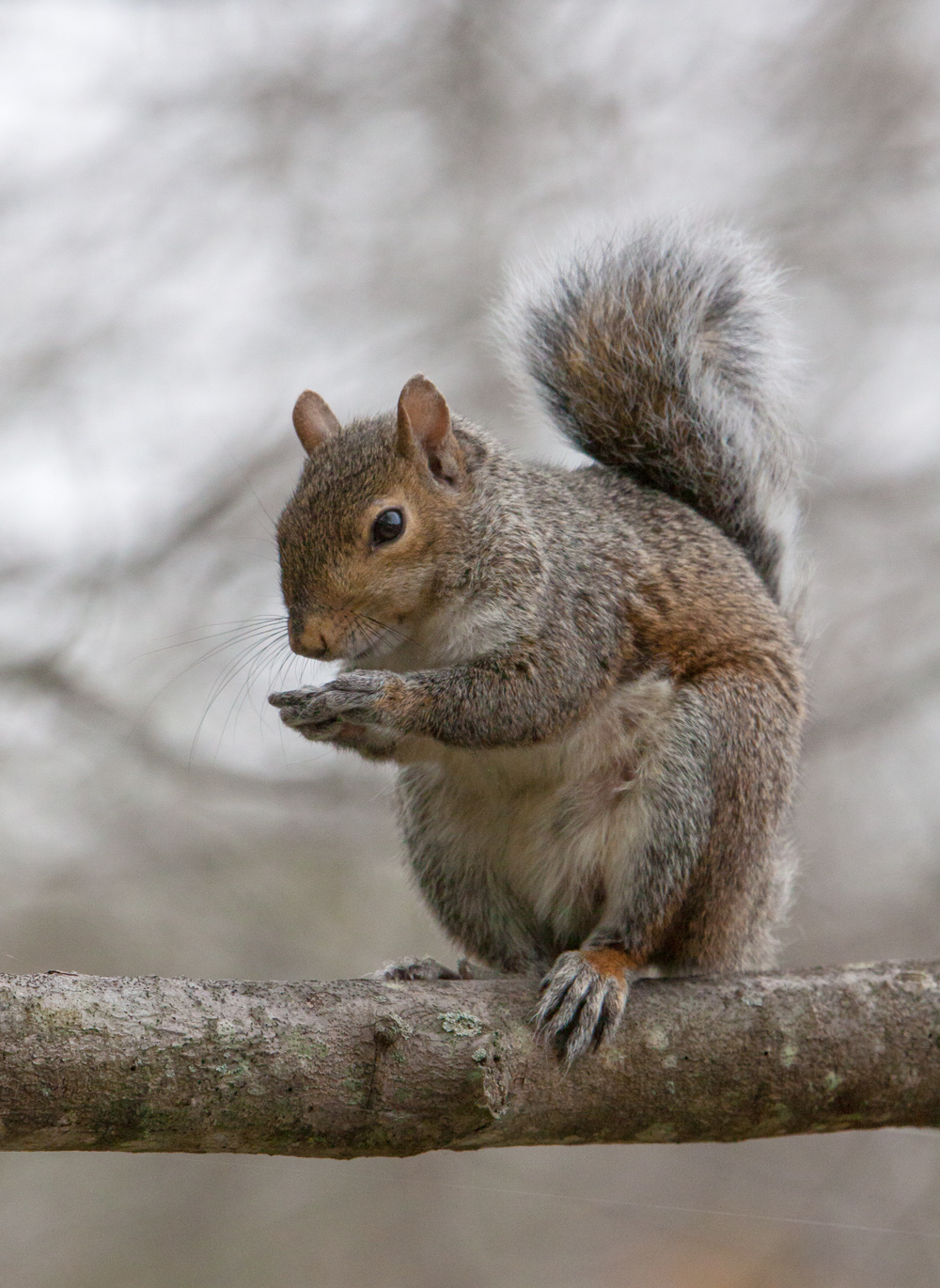
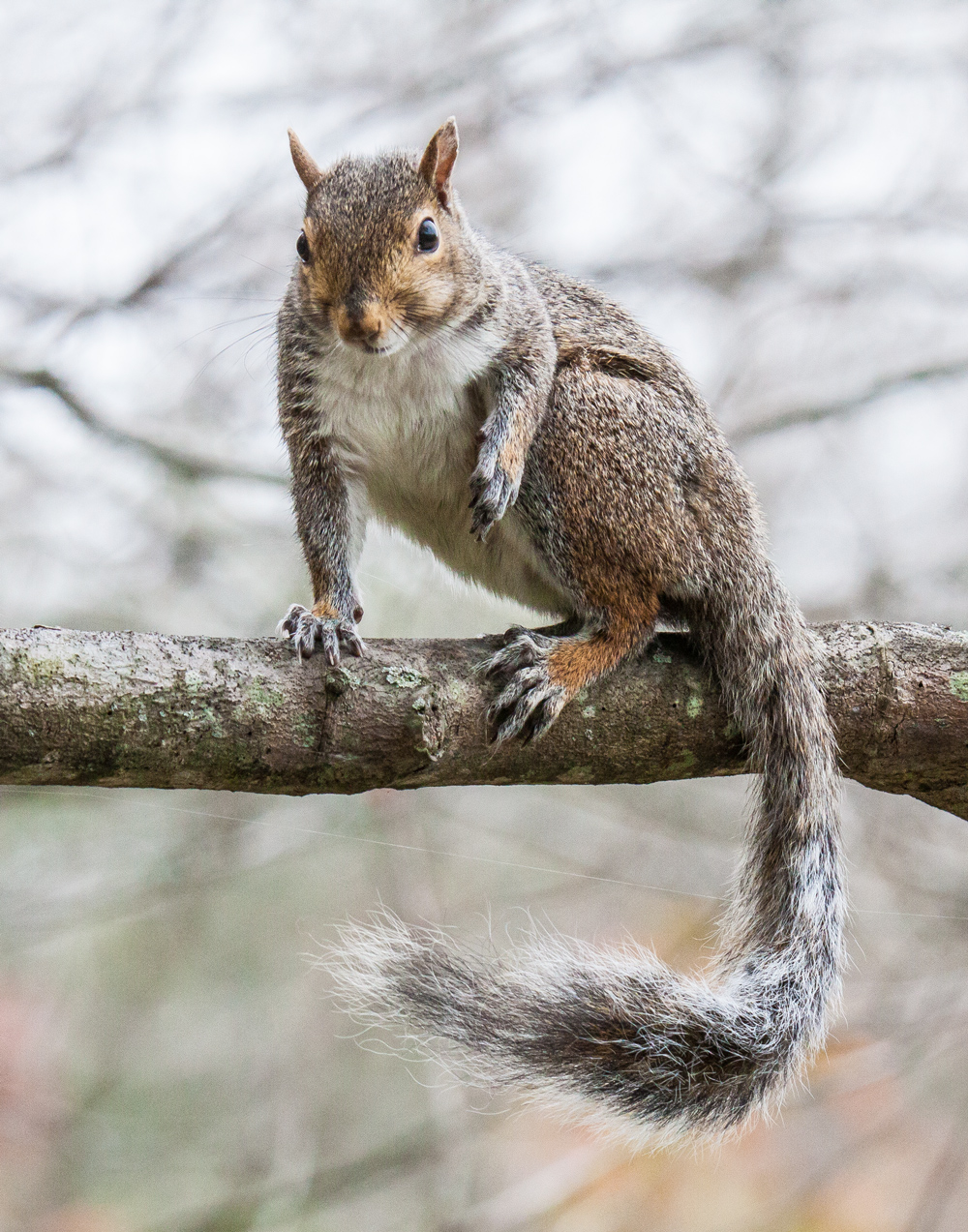
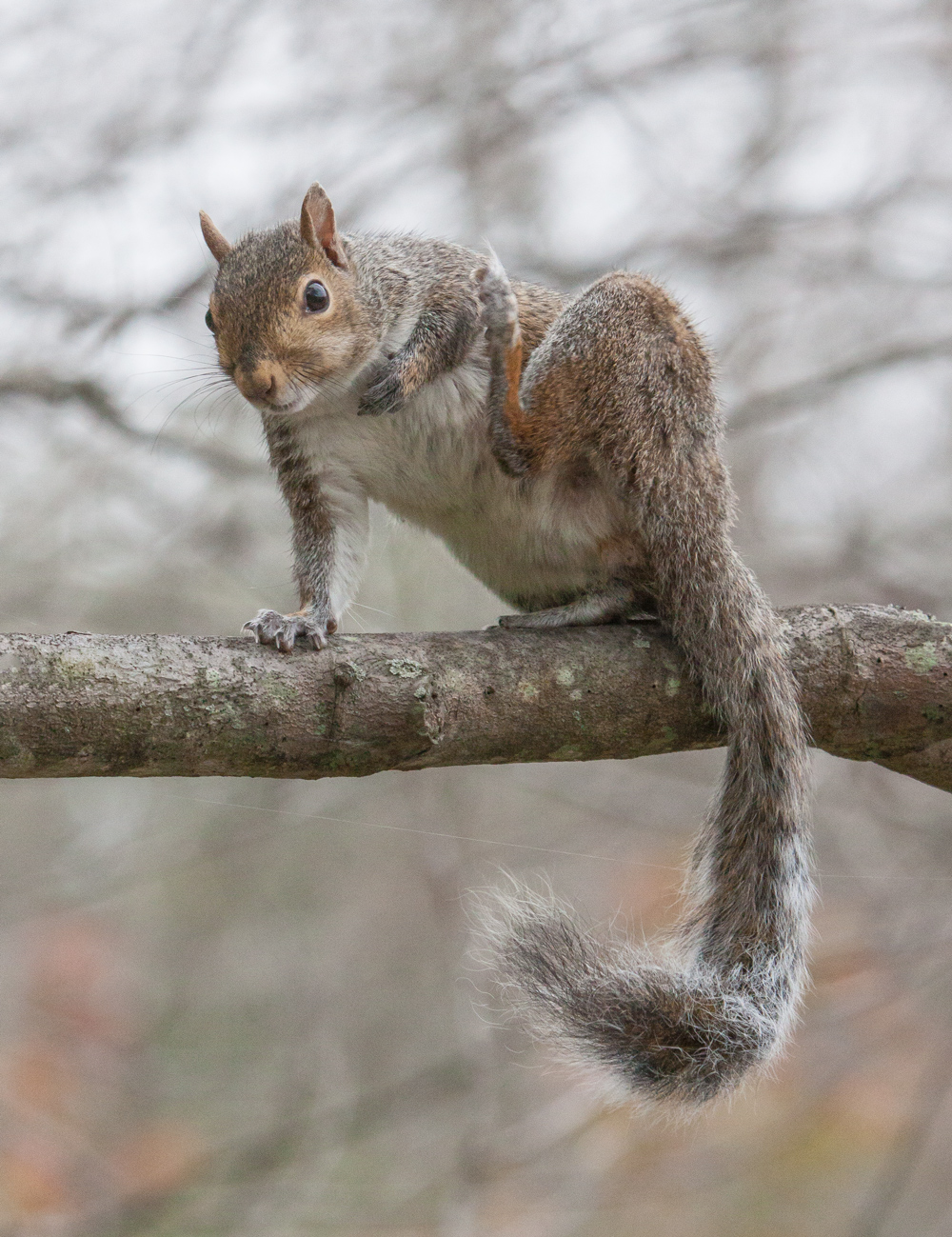
When you happen to catch sight of a squirrel, do you just keep walking? I love to watch squirrels. They are so energetic and industrious, traits that I admire in humans as well.

Last week, this Eastern Gray Squirrel (Sciurus carolinensis) at Huntley Meadows Park seemed to be posing for me and we had our own little portrait session. The squirrel made many minor adjustments to its body position to provide mw with a lot of different looks. Towards the end of our photo shoot, the squirrel had to take a short break.

Sometimes when you have an itch, you just have to scratch it, as you can see in the final image.

Eastern Gray Squirrel

Eastern Gray Squirrel

Eastern Gray Squirrel

Eastern Gray Squirrel

Eastern Gray Squirrel

© Michael Q. Powell. All rights reserved.
Read Full Post »

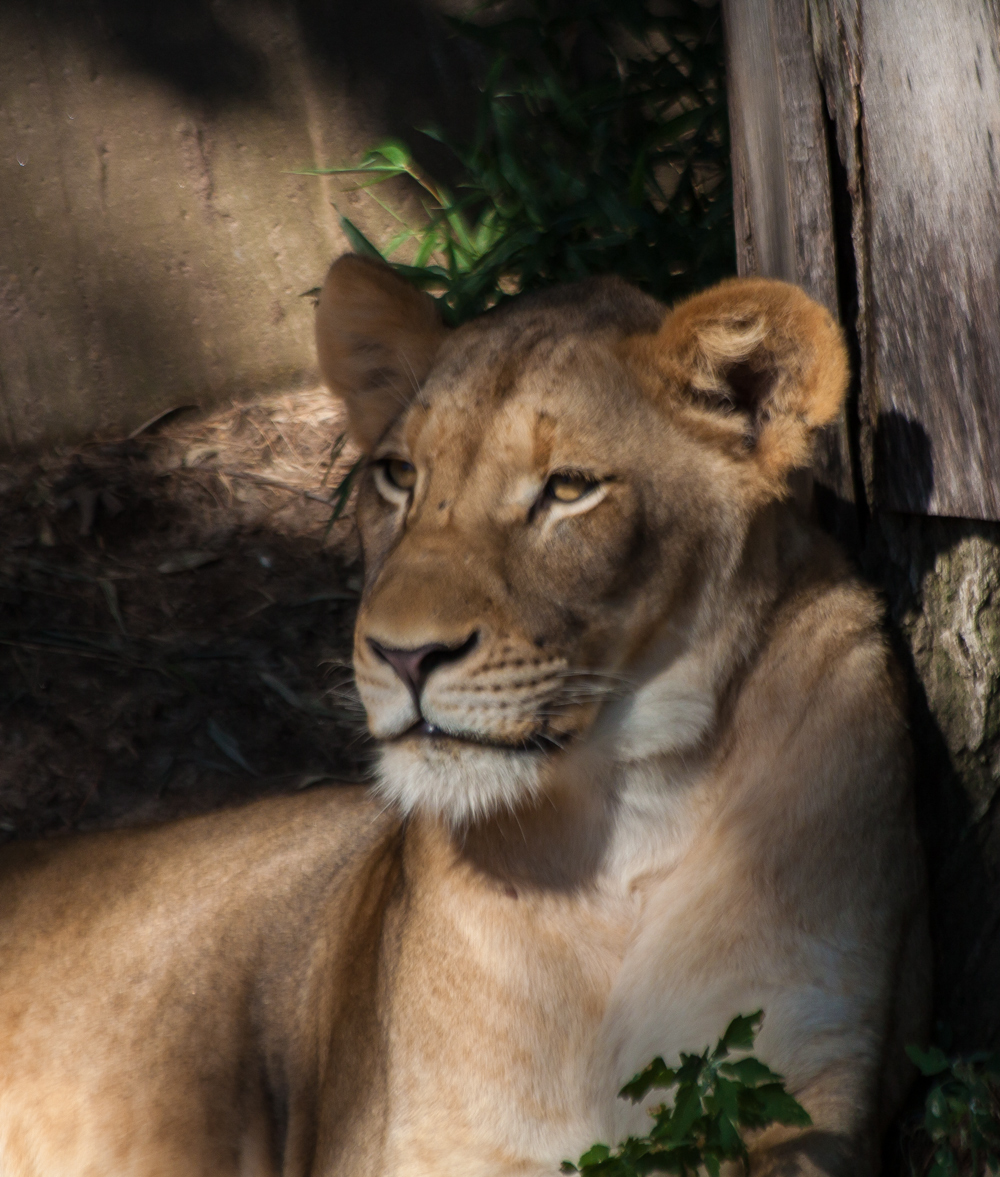
On a trip to the National Zoo earlier this week, I was walking around in heat of the summer sun, unlike most of the animals, who were relaxing in the shade or finding other ways to cool off.

This female lion was dozing in the shade and would periodically raise her head and look in our direction with sleepy eyes.

lion

This tiger decided to swim a bit in the water of the moat at the front edge of its enclosure. I couldn’t tell how deep the water was—at times it looked like the tiger was merely walking in the water and not actually swimming.

tiger

This cheetah seemed a little agitated and was not relaxing. It was walking back and forth along the fence line that separated its enclosure from the adjacent cheetah enclosure.

cheetah

I’ll probably never go on a safari and see these beautiful creatures in the wild, but my trip to the National Zoo in Washington D.C. afforded me a glimpse of their power and their majesty. I am happy that the National Zoo is active in efforts to ensure the preservation of endangered species, in particular the cheetah. Check out this article for more information about those efforts.

© Michael Q. Powell. All rights reserved.
Read Full Post »

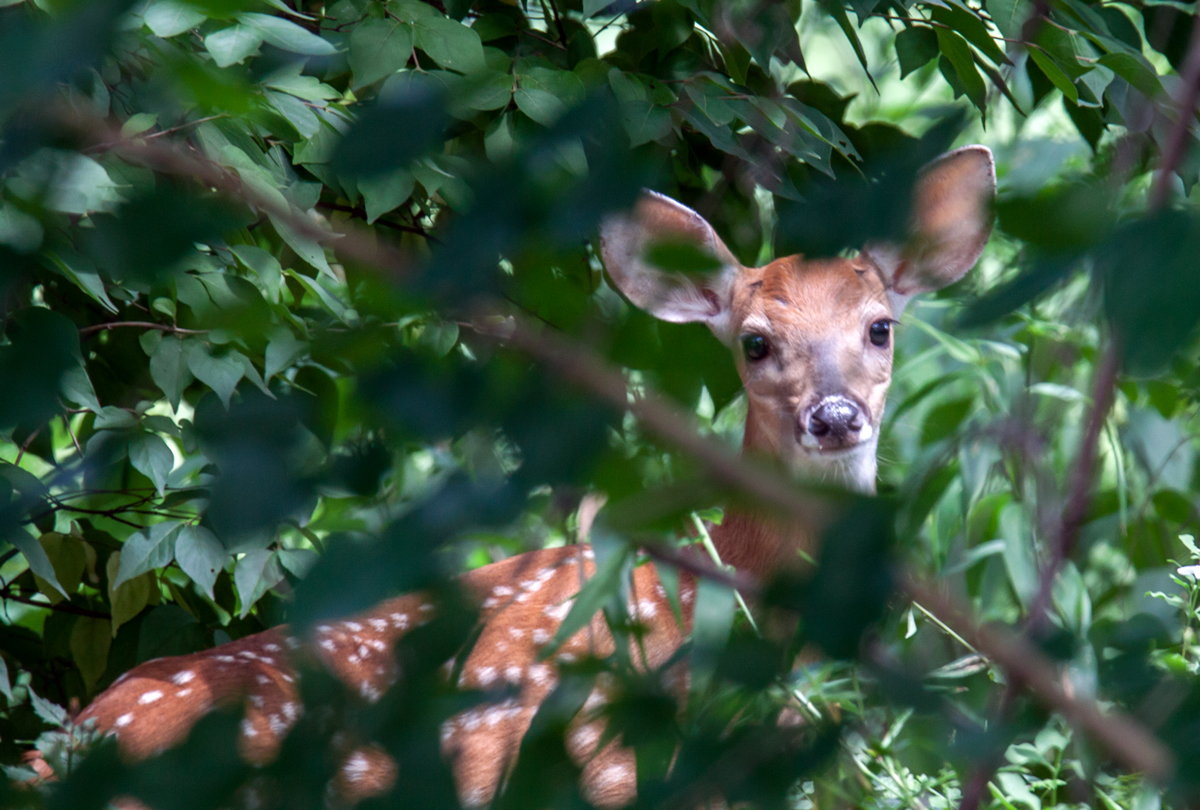
To post or not to post? For over a week, I have gone back and forth in my mind, trying to decide if I should post this image. Most of my deliberation has centered around the indisputable fact that significant parts of the main subject, a young White-tailed deer (Odocoileus virginianus), are obscured by the leaves and branches. Does the foliage add to the image or detract from it?

Ultimately, I decided that the emotional impact of the fawn’s gentle eyes, staring out at me from behind the curtain of leaves, trumped all other consideration. The leaves actually help to draw attention to those eyes, with their unbelievably long lashes.

What makes a good photo? I think a lot about that question as I go over my images. How heavily do I weigh technical and creative considerations? Most of the time, as was the case here, I’ll decide with my heart.

fawn

© Michael Q. Powell. All rights reserved.
Read Full Post »

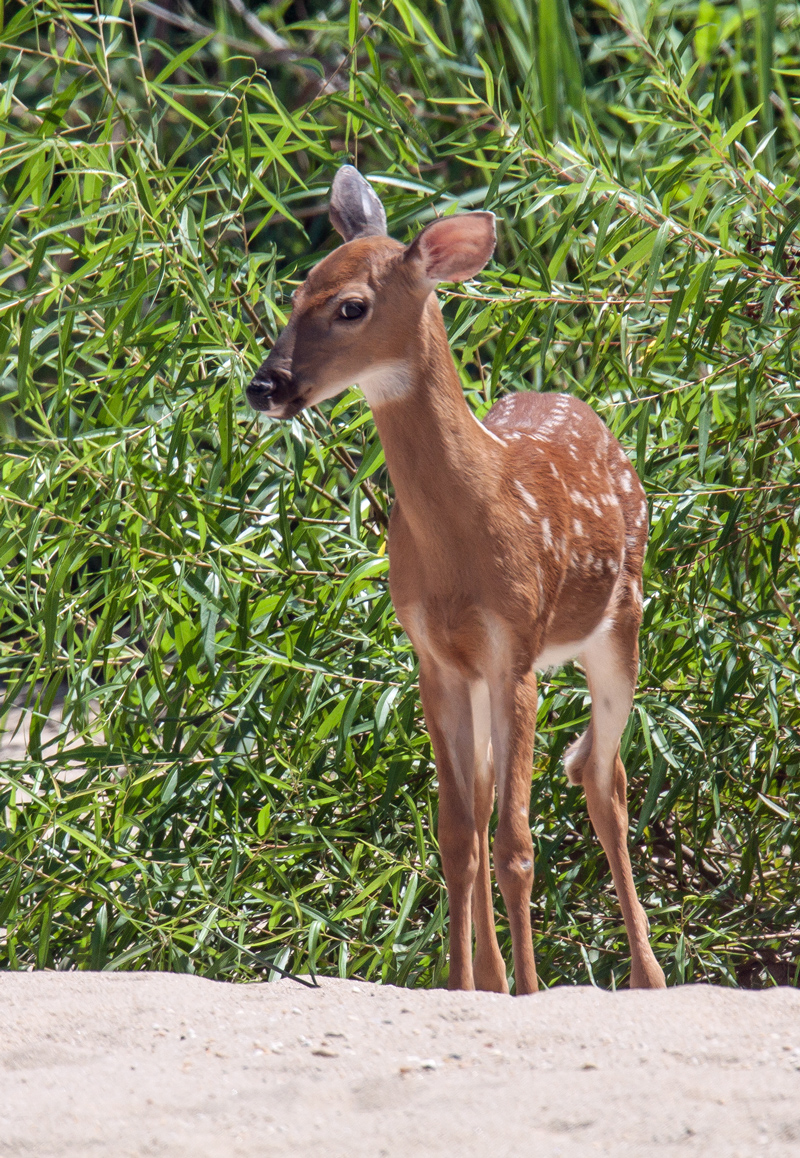
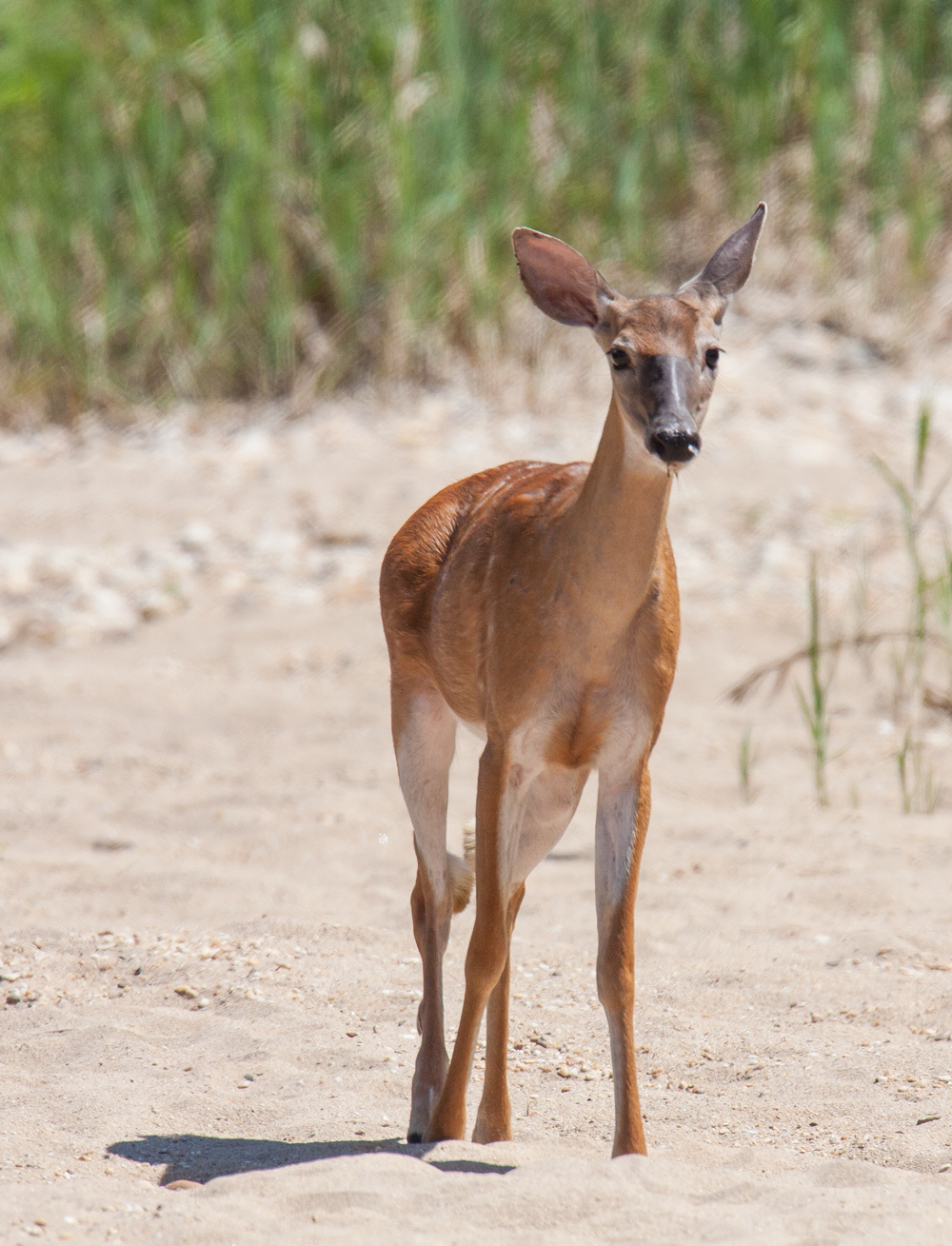
Last weekend I encountered an adorable family of White-tailed Deer (Odocoileus virginianus) while walking along a sandy area of Holmes Run, a stream not far from where I live that eventually flows into the Potomac River.

I had unobstructed views of the deer and was able to get some shots with my telephoto zoom without scaring them away. Unfortunately, the loud sounds of a passing freight train caused them to turn and run into the brush as I was trying to get shots from additional angles.

Still, I am happy with my results and think the sand adds a different look to my normal shots of deer in vegetation.

White-tailed deer

White-tailed deer

White-tailed deer

White-tailed deer

© Michael Q. Powell. All rights reserved.
Read Full Post »

Sunrise yesterday was at 5:59 and I managed to get this shot of a beautiful little fawn in the cattails at 6:05, when there was just barely enough light for my camera to focus.

Summer weather in the Washington D.C. area is often miserable—hot and humid—and I decided to visit my local marshland park really early to avoid some of the oppressive heat. When I left my house in the pre-dawn darkness, however, it was already 80 degrees (27 degrees C) on a day that was forecast to reach 96 degrees (35 degrees C).

I could hear a lot of movement in the marsh as I made my way along the board walk and occasionally would catch a glimpse of some activity as it grew progressively lighter. I encountered another photographer and he was the one who spotted the fawn and pointed it out to me—I am pretty sure that I would not have seen it without his help.

We didn’t see any adult White-tailed deer (Odocoileus virginianus) with the fawn, but their presence could easily have been hidden by the thick stand of cattails. I had time to snap off only a few photos before the fawn slowly turned his back on us and slowly faded into the background.

What a wonderful way to start my day.

fawn

© Michael Q. Powell. All rights reserved

Read Full Post »

I’ve spent most of my life living in the suburbs, so domestic livestock is kind of a novelty for me. My eyes are particularly drawn to animals as striking as this horse with a “rock star” hair style that reminds me of the beautiful horses of Iceland that I have seen featured in numerous photo shoots.

This past weekend I traveled to a winery in rural Delaplane, Virginia for an engagement party. After a wonderful celebration, I stopped at an adjacent farm that had a petting zoo. I was immediately attracted to three horses in the field that had long flowing manes blowing in the breeze. The horses walked right towards me and initially I thought they anticipated that I might have food. When they got closer, I realized that I was standing right behind a pile of hay that had been placed in the field and they more or less ignored me and munched on the hay.

I had a 24-105mm lens on my camera and ended up taking most of my shots at close range using the wide end of the lens. This was the first time that I have ever taken photos of an animal with anything other than a telephoto lens and I was happy with the results. I remember seeing some close-up photos a year or two ago that a blogger had taken of a buffalo using a wide-angle lens and thinking it would be interesting to try something like that. Unlike the buffalo shooter, though, I did not have to shoot from inside of a vehicle.

I don’t know anything about horse breeds, but these small, stocky horses with the incredible flowing hair reminded me of images that I have seen of the horses of Iceland. My dear friend and photographic mentor Cindy Dyer made a trip to Iceland last year and came back with some amazing photos, including this posting with a similar horse, although it is quite literally a horse of a different color.

Cindy has talked with me and a few fellow photographers about possibly traveling to Iceland next year. I would love to have the chance to experience firsthand the wondrous natural beauty of Iceland and to see more beautiful horses with “rock star” hair.

star2_blog

star1_blog

Michael Q. Powell. All rights reserved.

Read Full Post »

I know that there are deer at Huntley Meadows Park, the suburban marshland park where I take many of my photos, but I rarely see any of them. Perhaps they too see the posted signs warning of archery hunting to keep the population in control.

Saturday morning, however, I spotted three White-tailed deer (Odocoileus virginianus) in an open area in front of a stand of cattails.  The deer grazed for a little while before fading silently back into the forest and I managed to get a few shots of them.

It’s a nice change of pace to get some shots of mammals at a time of the year when so many of my postings are devoted to insects.

White-tailed deer

Michael Q. Powell. All rights reserved.

Read Full Post »

I don’t see rabbits very often at Huntley Meadows Park, so I was thrilled to see this Eastern Cottontail (Sylvilagus floridanus) on Monday in one of the meadows in a remote area of the park. I suspect that the rabbits are more active at dawn and dusk, when I am not there, though one of my friends offered a more straightforward explanation—the raptors are efficient hunters.

Eastern Cottontail rabbit

Rabbits have become a part of my daily life since I recently adopted a friend’s rabbit. She moved into an apartment in the city and could not bring PR (Prime Rib) with her, so he now lives with me. I don’t know the full story of his name, but do recall that her former rabbit was called Porkchop.

PR spends most of his time in his cage, but for an hour or so each evening I let him run around the living room. Sometimes he runs and jumps at such high speeds that I wonder if there is caffeine in his food. I took this shot of him relaxing after one of his evening exercise sessions. I think the photo makes for an interesting comparison with the rabbit in the wild (and I also think he’s cute, though I may be biased).

PR

Michael Q. Powell. All rights reserved.

Read Full Post »

I don’t take photos of people very often but it seems like there are some informal rules including not photographing a subject who is eating and not photographing someone who is bending over. Fortunately those “rules” do not apply when photographing wildlife.

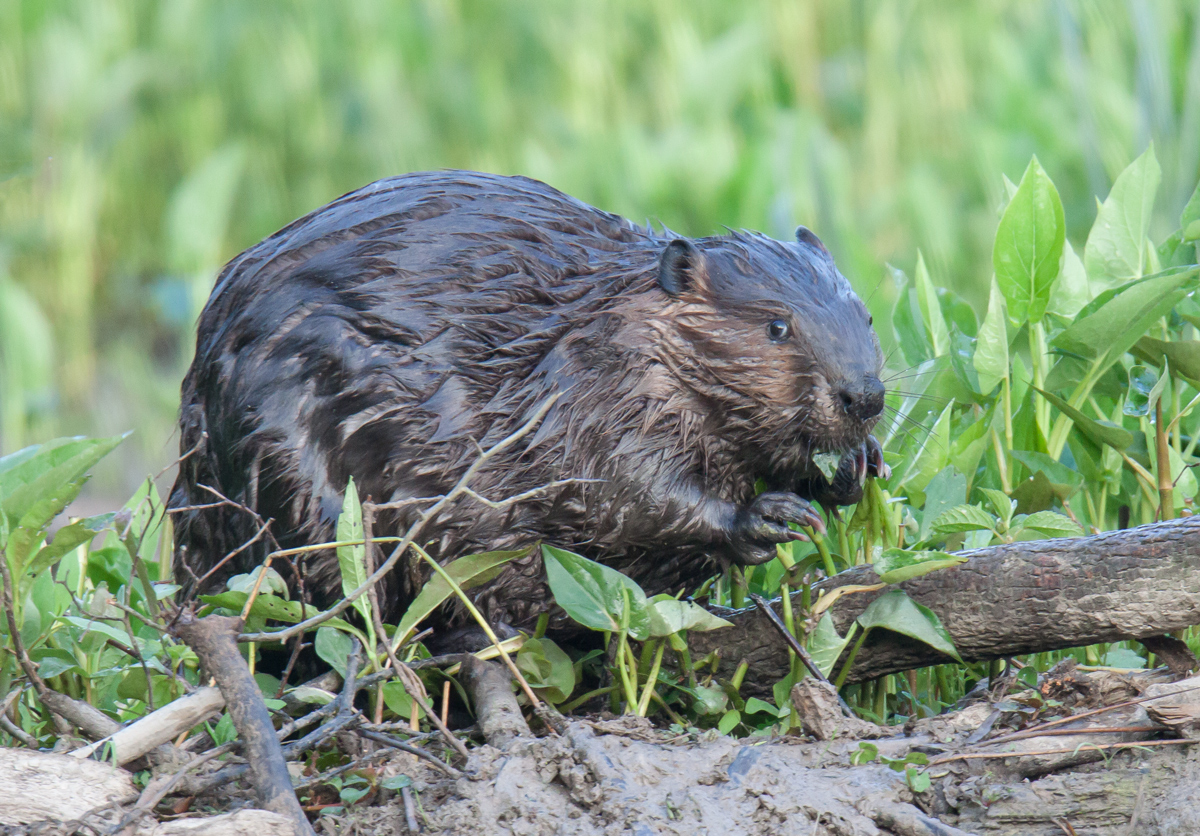
In the first shot, the North American Beaver (Castor canadensis) at my local marsh seemed to be glancing up at me mid-chew, having sensed my presence. I can’t tell if the beaver is shy or irritated, but I am happy that I was able to capture some of the details of the beaver’s “hands.” The beaver probably was aware that he had some leaves stuck between his teeth, but, as a friend, I probably would have mentioned it to him if he was going to go out in public.

In the second shot, the beaver’s posterior is facing the camera and I don’t want to be indelicate, but that part of the beaver’s anatomy looks huge. I can’t imagine what I would have said if the beaver had turned to me and asked, “Does this pose make my butt look big?” Perhaps I could have responded honestly to the question, but most guys know that is best not to respond at all if a female human poses that same question.

If you take wildlife photos, you too probably have a collection of “butt shots” of animals and birds that were running or flying away or simply sending an unsubtle message that they did not want to be bothered by a photographer. One of my favorite photographers and bloggers, Lyle Krahn, periodically does an entire humorous posting of wildlife shots devoted to this genre. Be sure to check out his The Inauguaral Butt Collection.

North American Beaver

North American Beaver

© Michael Q. Powell. All rights reserved.

Read Full Post »

Early yesterday morning I was thrilled when I saw one of the beavers at Huntley Meadows Park swimming around the beaver pond. My joy was compounded when the beaver climbed out of the water to grab a little breakfast.

North American beavers (Castor canadensis) are primarily nocturnal, so it’s difficult to get a glimpse of them during a time of the day when there is sufficient light to be photograph them. Previously I had seen a beaver at this pond in the early hours of the morning, but this is the first time that I have seen one of them climb over the logs block off one end of the beaver pond.

I am particularly happy that the first photo provides a good look at both the beaver’s very distinctive tail and its face. Most of the time that I was observing the beaver, I got a good look at only the tail end, which is interesting, but not especially photogenic.

In the second shot, the beaver is swimming away from the lodge with a small bunch of sticks. Was the beaver carrying them to another lodge? Is there a picnic somewhere else along the shore? It just seemed a bit strange for me to see the beaver heading off into the distance at a time when I assumed he would be getting ready for his long daytime snooze.

North American Beaver

North American Beaver

© Michael Q. Powell. All rights reserved.


Read Full Post »

As I was going over my photos of my recent encounter with a North American Beaver (Castor canadensis), I was struck by the beautiful quality and color of the early morning light. Sure, it was cool to be able to get some close-up shots of the beaver swimming around, but the light was equally spectacular.

I’ve tried to convey in these two images a sense of the golden glow that surrounded us during the magical moments I shared with this beaver, though somehow the colors seem to get a bit desaturated when I move the image into WordPress.

Check out my previous posting to see more images of this beautiful beaver.

North American Beaver

North American Beaver

© Michael Q. Powell. All rights reserved.

Read Full Post »

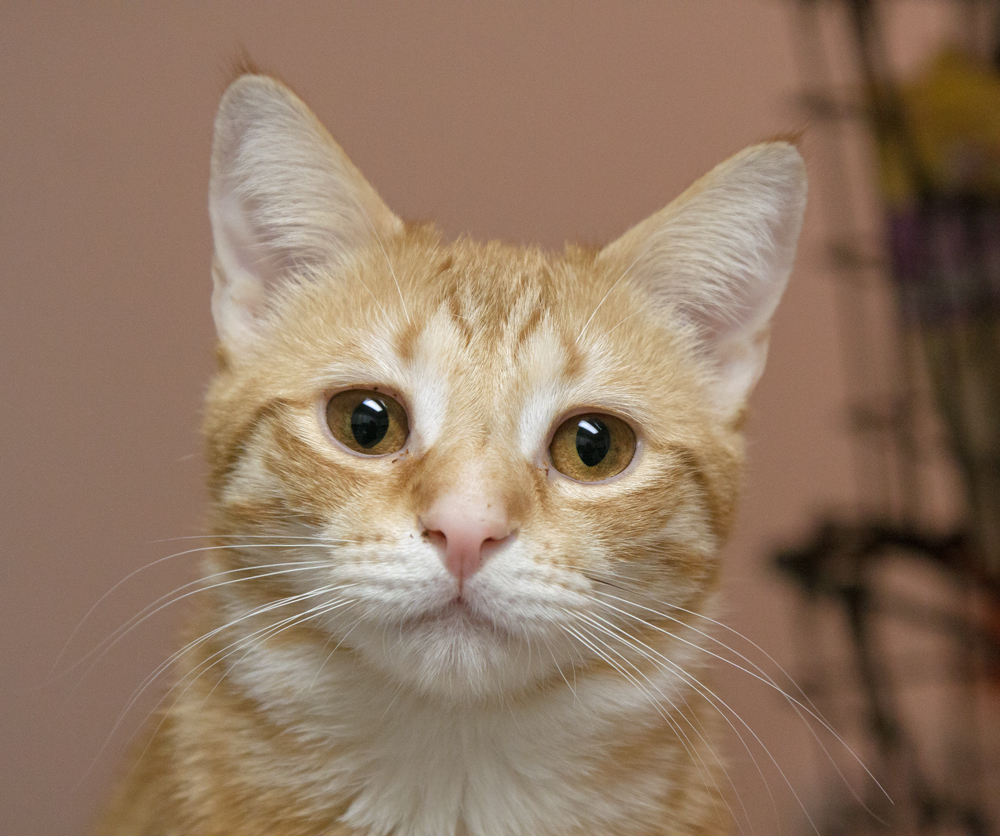
For the past year, I’ve been hosting a friend in my house, along with her dog and her rabbit. Recently she and her dog moved out, but I still have PR, the rabbit, whose initials expand to Prime Rib.

This morning I decided to try to take a photo of PR, my own little Easter bunny and here was the result.

Happy Easter to all.

Easter bunny

© Michael Q. Powell. All rights reserved.

Read Full Post »

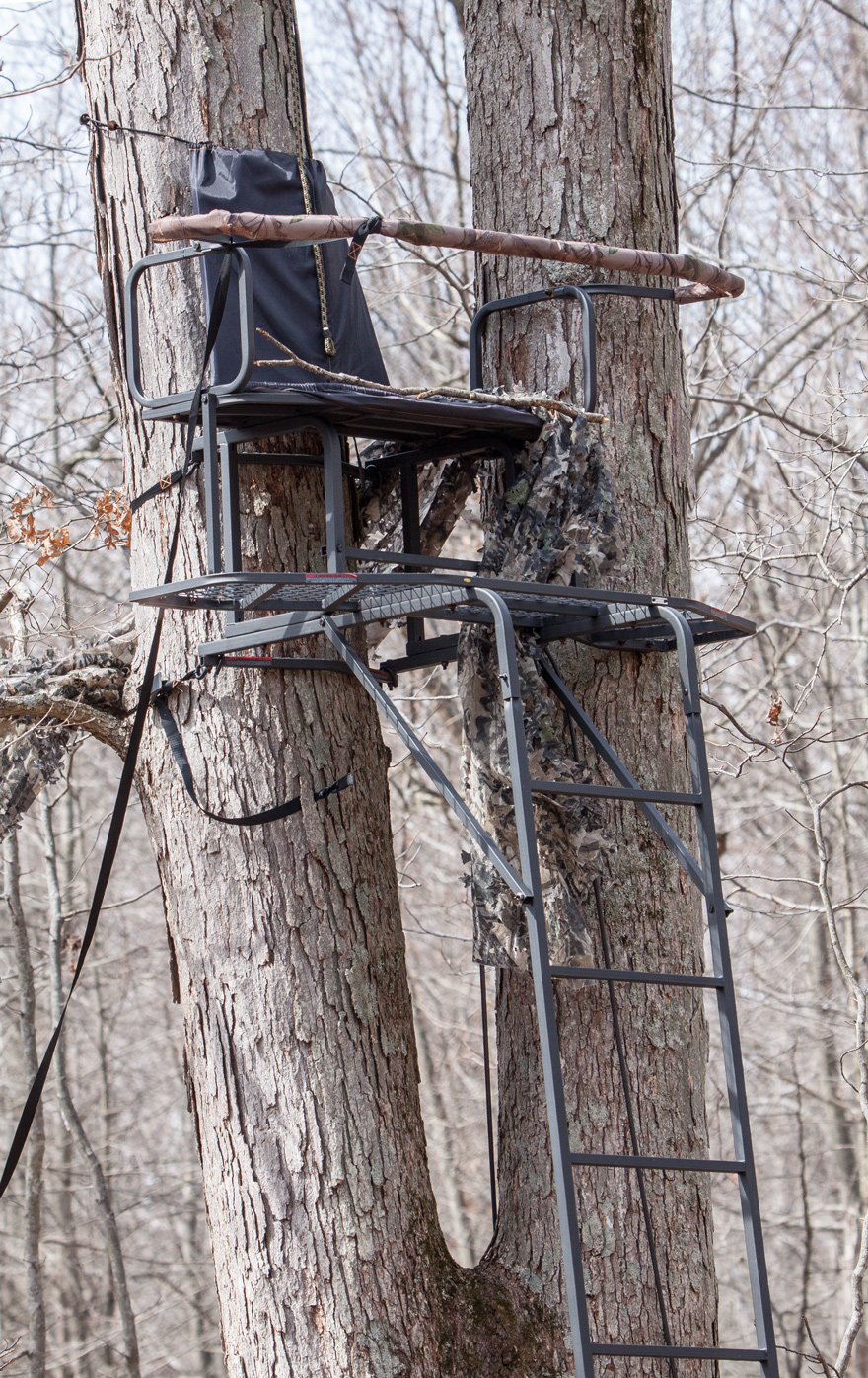
As I was wandering through remote areas of my local marshland park earlier this week searching for dragonflies, I was reminded of the need to be cautious when I came upon this hunter’s tree stand. At various times there is controlled archery hunting of deer at the park. I have not yet seen anyone with a bow, but this is the third location at which I encountered a tree stand. I was tempted to climb up into the stand and check out the view, but decided it was a bit too much trouble.

I have a bright orange stocking hat that I wear sometimes in the winter—it may not be a bad idea to get an orange baseball cap too.

reminder1_blog reminder2_blog

© Michael Q. Powell. All rights reserved.

Read Full Post »

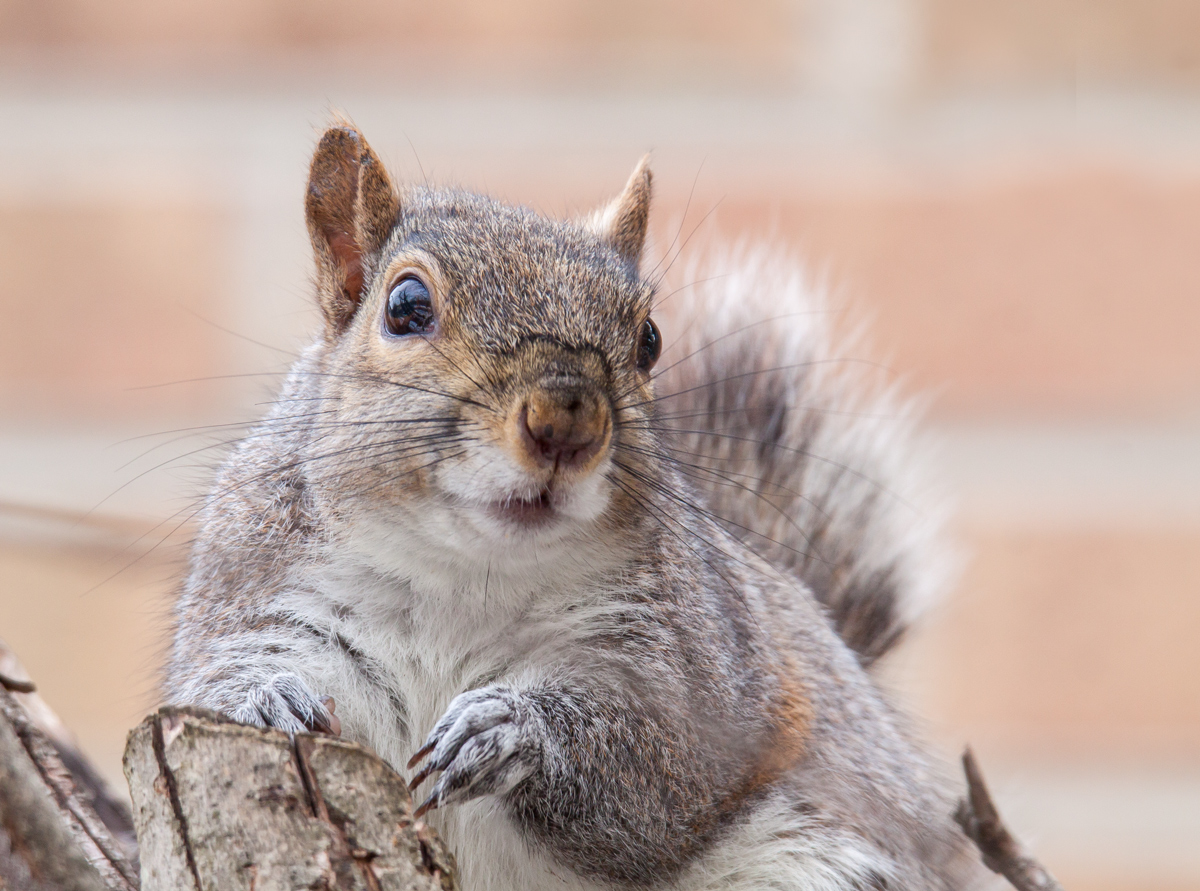
On a beautiful spring-like morning, even the squirrels in my suburban townhouse neighborhood today looked amazingly photogenic.

Eastern Gray Squirrel

© Michael Q. Powell. All rights reserved.


Read Full Post »

« Newer Posts - Older Posts »