Feeds:
Posts
Comments

Posts Tagged ‘Tamron 180mm’

What in the world is that? That was my initial reaction when I spotted a mass of black, orange, and white fibers sitting atop a milkweed plant leaf. As I moved closer, I changed my mind and decided it was probably a cocoon. I was shocked when it started moving and I realized that it was a strange-looking caterpillar.

When it comes to finding insects, milkweed plants are one of my favorite locations. There are all kinds of bugs and butterflies that make their homes on these plants and I make a point to explore them whenever I find them growing. These particular milkweeds were growing in a wooded area of Wickford Park, a small park adjacent to Huntley Meadows Park, the marshland location where I shoot many of the photos featured in this blog.

After photographing the single caterpillar, I stumbled across a whole family of them devouring a leaf on a another milkweed plant. I didn’t know the species of the caterpillar, but it was easy to do a search on the internet, because I could identify the host plant. I learned that this is a Milkweed Tiger Moth caterpillar (Euchaetes egle), also known as a Milkweed Tussock Moth caterpillar.


Milkweed Tiger Moth caterpillar

Milkweed TIger Moth caterpillar

© Michael Q. Powell. All rights reserved

Read Full Post »

Like many guys, I have trouble remembering anniversaries, so it came as a surprise a few days ago when WordPress reminded me that it was the fifth anniversary of the launching of my blog. Five years old probably qualifies as middle age or maybe even old age for a blog.

I remember well how my photography mentor Cindy Dyer sat me down and virtually insisted that I start a blog to showcase and share the results of my growing interest in photography. I’ve captured thousands and thousand of images since that time and made close to 2400 postings on this blog. My confidence, awareness, and skills as a photographer have grown significantly. More importantly, though, this blog has helped me to gain a new voice as I have learned to use my words and photographs to express a creative part of myself that has been dormant most of my life.

I am very appreciative of the support, encouragement, and suggestions that so many readers have provided these last five years. Thanks to all of you—you have helped to sustain me during times when my energy and enthusiasm have waned.

My very first posting was an image of a perching dragonfly and was simply titled Blue Dasher dragonfly. If you look at that posting, you can see that my fascination with dragonflies is not a new phenomenon. It is altogether appropriate, therefore, that I “celebrate” with another dragonfly image.

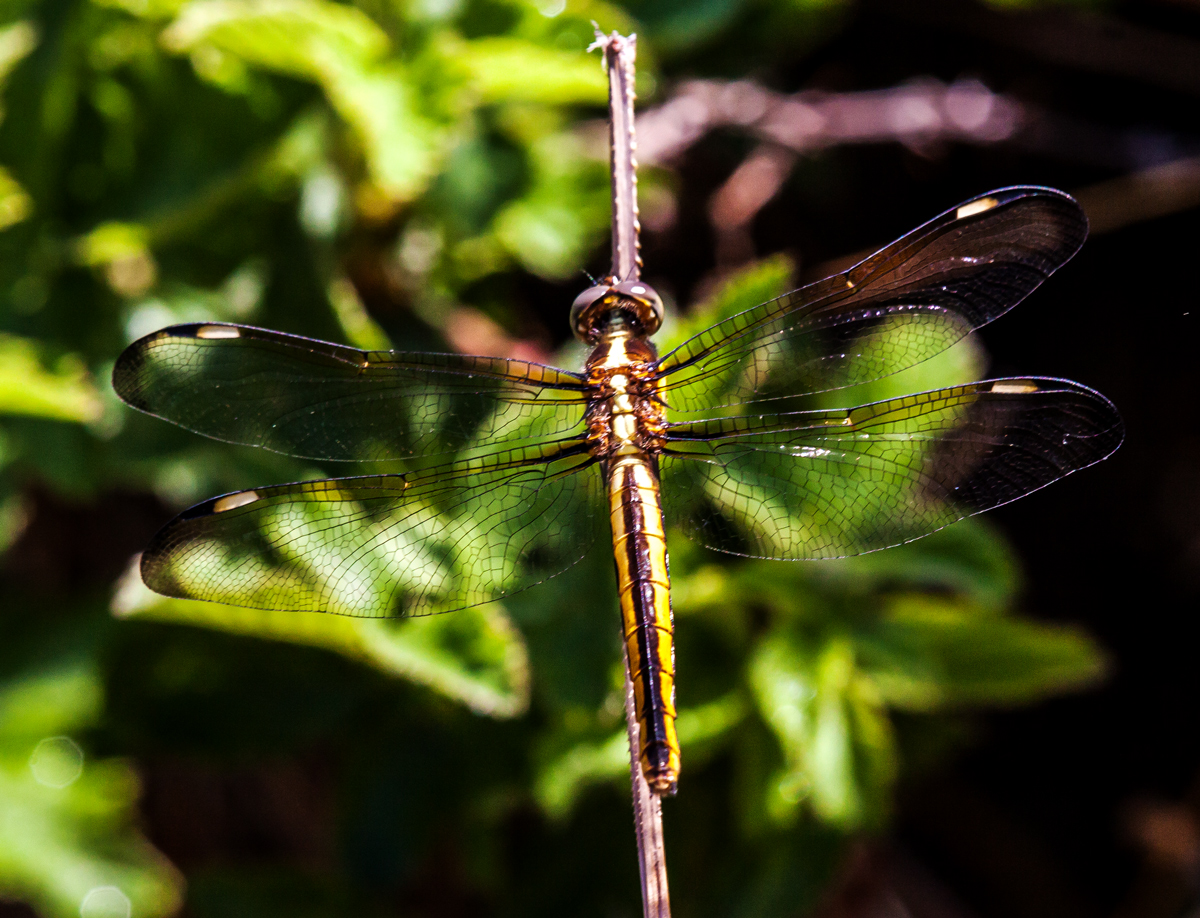
Halloween Pennant dragonflies (Celithemis eponina) generally perch facing away from me. Although it gives me a good view of their spectacular wings, I like it better when I get a frontal view and can look straight into the dragonfly’s eyes. This weekend I found a cooperative subject while exploring Meadowlark Botanical Gardens in Vienna, Virginia, and was able to capture this image.

Halloween Pennant

Like this dragonfly, I am ready to spread my wings and fly, resting briefly before taking off again.  It’s a bit of a cliche, but from the blog’s inauguration the sub-title has always been, “My journey through photography.” Where will I go next? I honestly don’t know, but I definitely welcome fellow travelers to accompany me on my continuing journey of exploration.

Perhaps I will set my sights really high and point my camera, to use the famous words of Buzz Lightyear, “to infinity and beyond.” Come fly with me.

© Michael Q. Powell. All rights reserved


Read Full Post »

I haven’t seen many hummingbirds this year, so I am always excited to spot one of their insect counterparts in action. Hummingbird Clearwing Moths (Hemaris thysbe) act a lot like hummingbirds, with the notable difference of gathering nectar with their long proboscises rather than with needle-like bills.

I photographed this moth yesterday  at Jackson Miles Abbott Wetland Refuge at Fort Belvoir, Virginia. As you can probably imagine, I had to take a lot of shots to get one in which the moth was in focus and had its wings in a relatively good position. These moths are really fast, keep moving in and out of the flowers, and are pretty small—about a wingspan of about an inch and a half  (4 cm).

Hummingbird Clearwing Moth

© Michael Q. Powell. All rights reserved

Read Full Post »

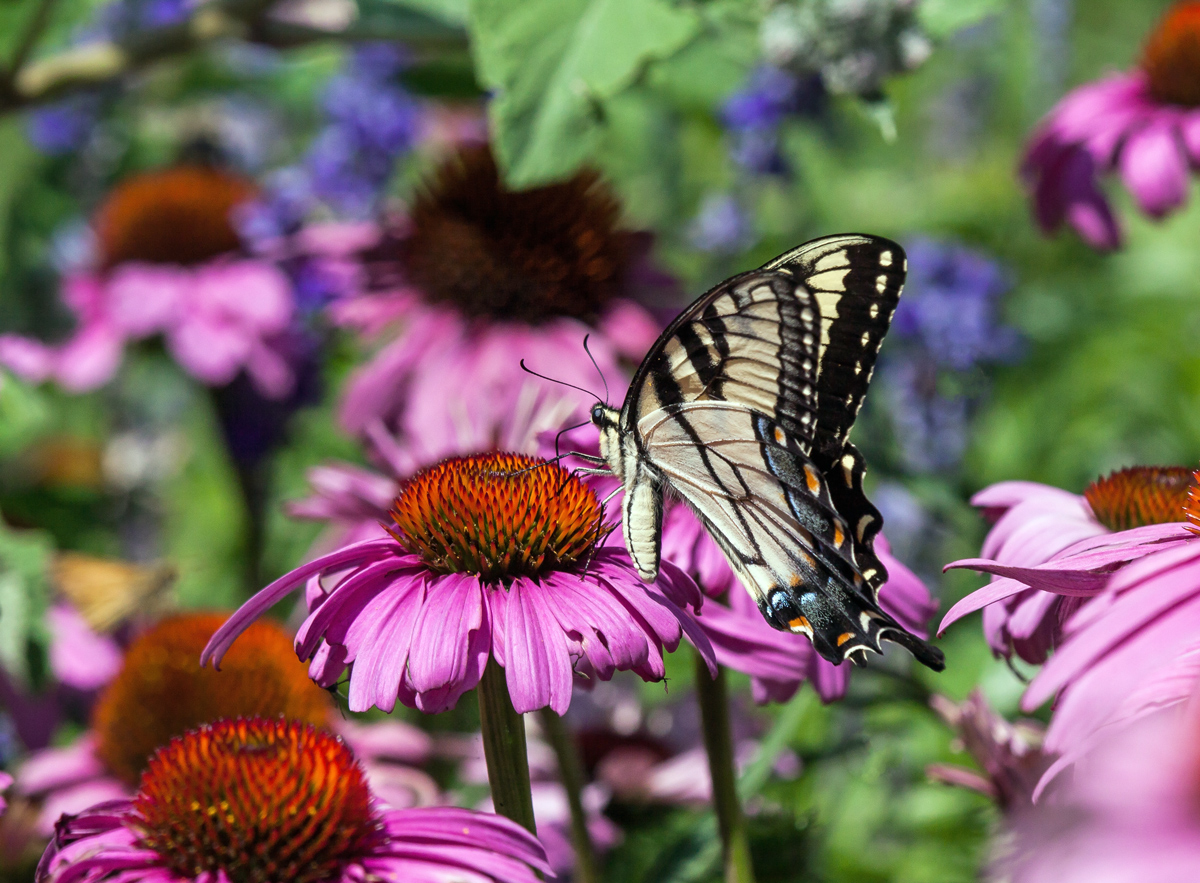
Brightly-colored flowers and butterflies—-what a wonderful combination for a summer’s day. I spotted these beauties this past weekend at Meadowlark Botanical Gardens in Vienna, Virginia.

The first shot features a little skipper butterfly on a spectacular, orange-red coneflower. The other two shots highlight the beauty of an Eastern Tiger Swallowtail (Papilio glaucus) in a patch of the more frequently observed purple coneflowers.

skipper on a coneflower

Eastern Tiger SwallowtailEastern Tiger Swallowtail

© Michael Q. Powell. All rights reserved

Read Full Post »

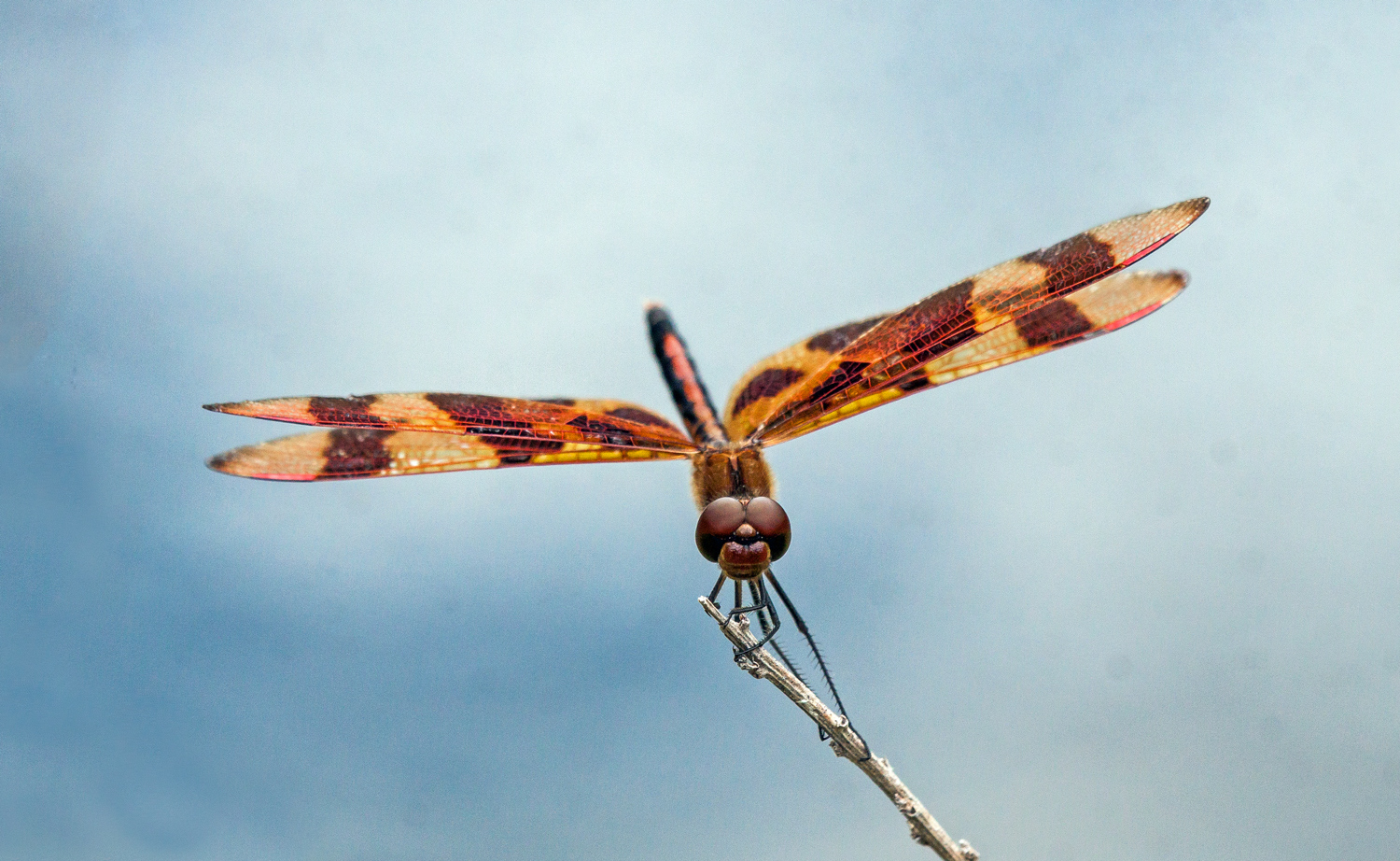
As the breeze kicked up yesterday at Meadowlark Botanical Gardens in Vienna, Virginia, this male Halloween Pennant dragonfly (Celithemis eponina) hung on tightly to his perch. From the angle at which I was shooting, though, it looked like he was participating in a pole vault competition.

Halloween Pennant

© Michael Q. Powell. All rights reserved

Read Full Post »

Yesterday as I was exploring at Jackson Miles Abbott Wetland Refuge I came across one of my favorite insects, a Hummingbird Clearwing Moth (Hemaris thysbe). These spectacular insects act like a cross between a bee and a hummingbird, although they look more like a flying crayfish. They move really quickly, so I was thrilled to capture this image that gives a clear view of the moth’s transparent wings.

Hummingbird Clearwing Moth

© Michael Q. Powell. All rights reserved


Read Full Post »

Eastern Amberwing dragonflies (Perithemis tenera)  are tiny, less than an inch (20-25mm) in length, but they are distinctive and stunningly beautiful. According to information on the wonderful Dragonflies of Northern Virginia website, Eastern Amberwings are the smallest dragonflies in our area and the second smallest in the United States—only Elfin Skimmers are smaller.

I spotted this perching male this past weekend at Jackson Miles Abbott Wetland Refuge in the vegetation surrounding a small pond. I was happy to be close enough that I was able to capture so many of the details of the dragonfly, including its captivating eyes and segmented body.

Eastern Amberwing

© Michael Q. Powell. All rights reserved.

Read Full Post »

Yesterday I was thrilled to spot some Common Sanddragon dragonflies (Progomphus obscurus) at Wickford Park, a small park adjacent to the normal marshland park where I do a lot of my shooting. This species, one of my favorites, prefers to perch on the sandy shores of a creek more than on vegetation and the spots at Huntley Meadows Park where I have seen them in the past are underwater at present, so I have not been able to find them there.

Common Sanddragon

© Michael Q. Powell. All rights reserved.

Read Full Post »

I just love the vibrant colors of the tropical water lilies at Kenilworth Park and Aquatic Gardens, like this one that I photographed on Sunday during a brief trip there. These gardens, located in a part of Washington D.C.,  are run by the National Park Service and have acres of ponds with all kinds of lotuses and water lilies. The tropical water lilies are in small cement ponds behind the visitor center and are one of my favorite spots to visit.

tropical water lily

tropical water lily

tropical water lily

© Michael Q. Powell. All rights reserved.

Read Full Post »

The last few years it has been pretty rare for me to see a Monarch Butterfly (Danaus plexippus). Most of the time when I thought I had spotted one, it turned out to be a similar-looking Viceroy Butterfly.

I was therefore really excited when I spotted a Monarch Butterfly fluttering about in a clump of what I think is some kind of milkweed during a brief trip to Kenilworth Aquatic Garden this past weekend. The butterfly seemed to be unusually skittish—it would perch for only a split second and then take off again. When it would decide to perch for a slightly longer period of time, inevitably it would bury itself among the vegetation, making a clear shot almost impossible.

I waited and waited and finally was able to get this almost unobstructed shot of the spectacular butterfly. Even in America we celebrate this kind of Monarch.

Monarch Butterfly

© Michael Q. Powell. All rights reserved.

Read Full Post »

With most of my dragonfly shots, I try to get as close as I can to the dragonfly, either my moving or by zooming, in order to highlight my subject. If I am not able to do so, I will often crop the image during post-processing.

Sometimes, though, I will intentionally keep my distance and will carefully compose the image to include more environmental elements. That was the case yesterday during a quick trip to Kenilworth Park and Aquatic Gardens with my photography mentor Cindy Dyer. Cindy needed to drop off some prints at the gift shop and I had a few minutes to grab a few shots.

Dragonfly perches generally are not very interesting, often just dried-out branches sticking out of the water. I was excited, therefore, when I spotted a male Slaty Skimmer dragonfly (Libellula incesta) perching on a purple Pickerelweed plant (Pontederia cordata).  I positioned myself to capture an additional pickerelweed plant in the background, pretty sure that it would be out of focus and not be too distracting. The cool colors and the sinuous curves of the plants in the background combine to create an “artsy” image that I really like.


Slaty Skimmer

© Michael Q. Powell. All rights reserved.

Read Full Post »

Yesterday at Occoquan Bay National Wildlife Refuge in Woodbridge, Virginia,  I was able to photograph a new dragonfly species for me, the beautiful Calico Pennant (Celithemis elisa). Fellow photographer and dragonfly enthusiast Walter Sanford had alerted me to the presence of these dragonflies at this location and had given me a general idea of where I might find them.

When I arrived at the wildlife refuge, which I had never visited before, I was a bit disoriented at first, but eventually found the pond that was my target location. The challenge, though, was to find the diminutive dragonflies. I walked about for quite some time before I finally spotted one perched on the very top of some vegetation in a field adjacent to the pond. Like other pennant dragonflies, Calico Pennants usually hang on to the most fragile, flimsy branches of plants and are often flapping in the breeze like a pennant.

Here are a couple of shots of Calico Pennant dragonflies that I observed. The one with the yellow abdomen is a female and the male has the red abdomen. As is the case with many species, immature males have the same coloration as the females, so it usually pays to look at the terminal appendages to determine the gender.

female Calico Pennant

male Calico Pennant

© Michael Q. Powell. All rights reserved.

Read Full Post »

There is something really special about green eyes, especially when you see them up close, really close. Every dragonfly season I try to find at least one cooperative dragonfly that sees eye-to-eye with me and lets me get a shot like this. I photographed this female Eastern Pondhawk (Erythemis simplicicollis) earlier this month at Huntley Meadows Park in Alexandria, Virginia.

Eastern Pondhawk

© Michael Q. Powell. All rights reserved.

Read Full Post »

Dragonflies seem to love to perch on this piece of rusted rebar that sticks out of the water at Jackson Miles Abbott Wetland Refuge. I really like the juxtaposition of the man-made and natural elements in this shot of a male Eastern Amberwing dragonfly (Perithemis tenera) that I spotted on Monday.

You can’t see it really well in the first shot, but there is a spider on the rebar in addition to the dragonfly.  I got a better shot of the spider later in the day. I don’t know for sure that it could capture the dragonfly, but it’s a potentially dangerous situation for the dragonfly (and I have photographed several dragonflies that had fallen prey to spiders in the past).

Eastern Amberwing


spider

© Michael Q. Powell. All rights reserved.

Read Full Post »

Yesterday morning at Jackson Miles Abbott Wetland Refuge at Fort Belvoir, Virginia I spotted my first Swift Setwing dragonfly (Dythemis velox) of the season. Last year. I believe, was the first time one was spotted in Fairfax County, where I live, and it looks like they are here to stay.

I spotted this dragonfly from pretty far away and recognized the shape and perching style. I took a few shots and moved a little closer and took a few more shots. I was hoping to get even closer, but the dragonfly apparently sensed my presence and flew away. As it turned out, that was the only Swift Setwing that I saw all day. I am pretty confident, though, that I will have some more opportunities to photograph this beautiful little dragonfly in the upcoming weeks and, hopefully, months.

Swift Setwing

© Michael Q. Powell. All rights reserved.

Read Full Post »

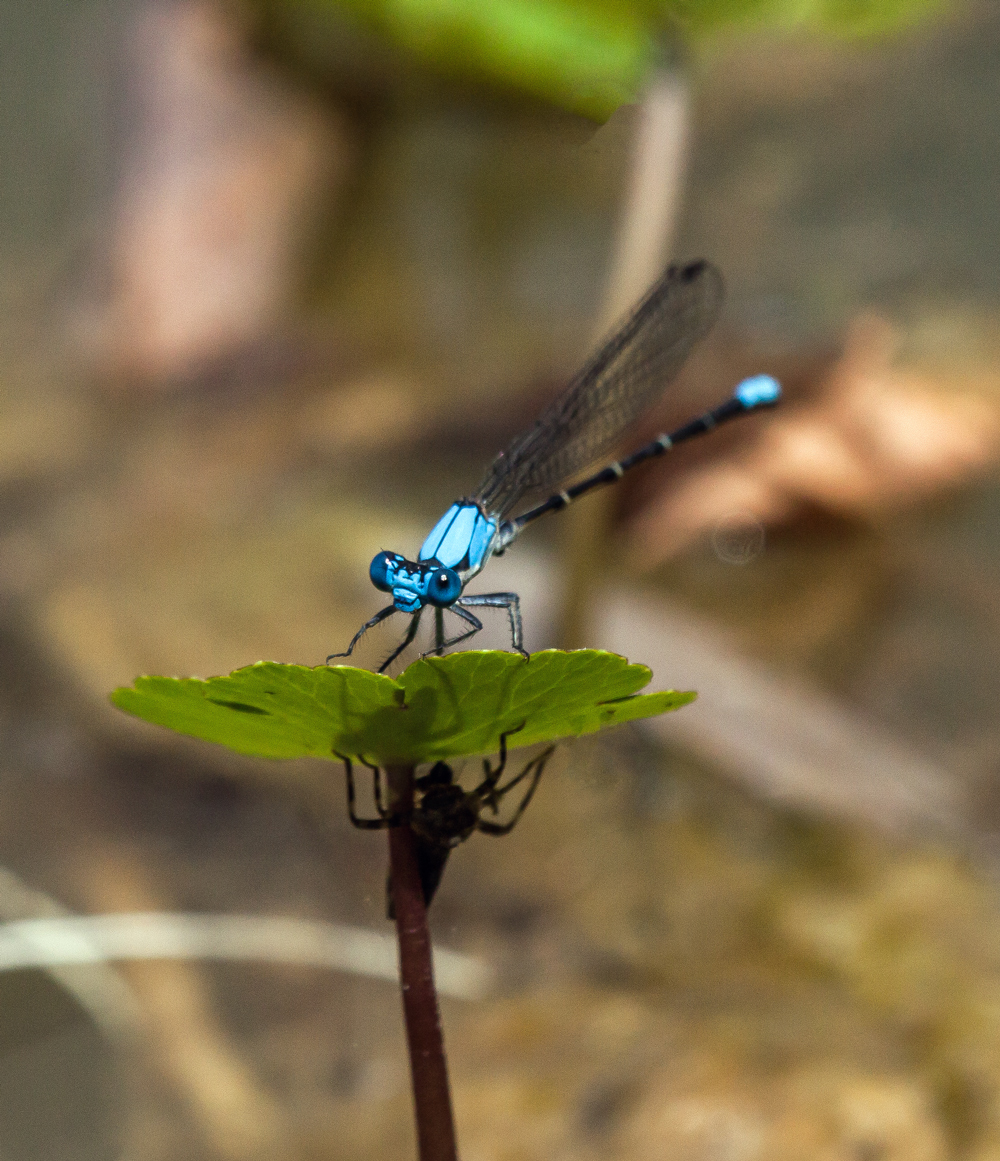
Whenever I walk along the edge of a pond, I always like to look for damselflies, which love to perch on the vegetation growing out of the water. Footing can be a bit problematic and more than once I have slid down a slippery bank into the water. Normally, though, I just lean out as far as I dare to get some shots.

Last weekend as I was exploring Jackson Miles Abbott Wetland Refuge, I spotted this beautiful little damselfly that was looking in my direction. I knew that depth of field would be a problem from that position, but did my best to focus on the damselfly’s beautiful eyes. When I returned home and began to review my shots, I was a little shocked to see what looked to be the discarded exoskeleton (exuvia) of another damselfly (or possibly a dragonfly) on the underside of the leaf on which “my” damselfly had perched. How did I not notice that when I was shooting?

I really like the way that the head of the exoskeleton is facing that of the damselfly and the shadow in between the two of them. Is it the shadow of the one looking down or the one looking up? Common sense says that it is the former, but the slight degree of ambiguity adds interest to the photo for me.


damselfly

© Michael Q. Powell. All rights reserved.

Read Full Post »

As I was exploring Jackson Miles Abbott Wetland Refuge last weekend, I spotted some Eastern Amberwing dragonflies (Perithemis tenera) flying low above the surface of the pond. One of them, a female, kept returning to a particular spot and would dip down and touch the water to deposit eggs. A male would periodically make an appearance and I couldn’t tell for sure if he was guarding the female or was trying to put the moves on her.

This is my favorite shot of the encounter. The dragonfly on the left is a male Eastern Amberwing and the one coming in from the right is a female. I thought about cropping the image in closer, but decided to keep it like this in order to retain the ripples and the reflection, elements that I really like.


Eastern Amberwing

© Michael Q. Powell. All rights reserved

Read Full Post »

What’s a Widow Skimmer? The name may bring to mind a gigolo chasing after rich old ladies, but it is actually a strikingly beautiful dragonfly. I spotted this handsome male Widow Skimmer (Libellula luctuosa) on Monday at Jackson Miles Abbott Wetland Refuge in at Fort Belvoir, Virginia.

When I took this shot, I was facing toward the sun. As a result, the body of the dragonfly is almost a silhouette. What was more important to me was the detail of the wings and I am happy I was able to capture some of the detail that was revealed as the light streamed through the almost transparent wings.

widow skimmer

© Michael Q. Powell. All rights reserved

Read Full Post »

Unicorns in Northern Virginia? One of the coolest dragonflies at Huntley Meadows Park is the Unicorn Clubtail (Arigomphus villosipes), like this one that I spotted along a stream in a remote area of the park on Saturday morning. The U-shaped tip of the abdomen is quite distinctive and makes this dragonfly fairly easy to identify.


Unicorn Clubtail

© Michael Q. Powell. All rights reserved

Read Full Post »

I am so happy that dragonfly season is finally here. There is just something about the beauty, complexity, and acrobatic skills of these amazing insects that never fails to grab my attention and I can easily spend hours watching and photographing them. I spotted this particular dragonfly, a female Spangled Skimmer (Libellula cyanea), last week at Huntley Meadows Park in Alexandria, Virginia.

Spangled Skimmer dragonfly

© Michael Q. Powell. All rights reserved

Read Full Post »

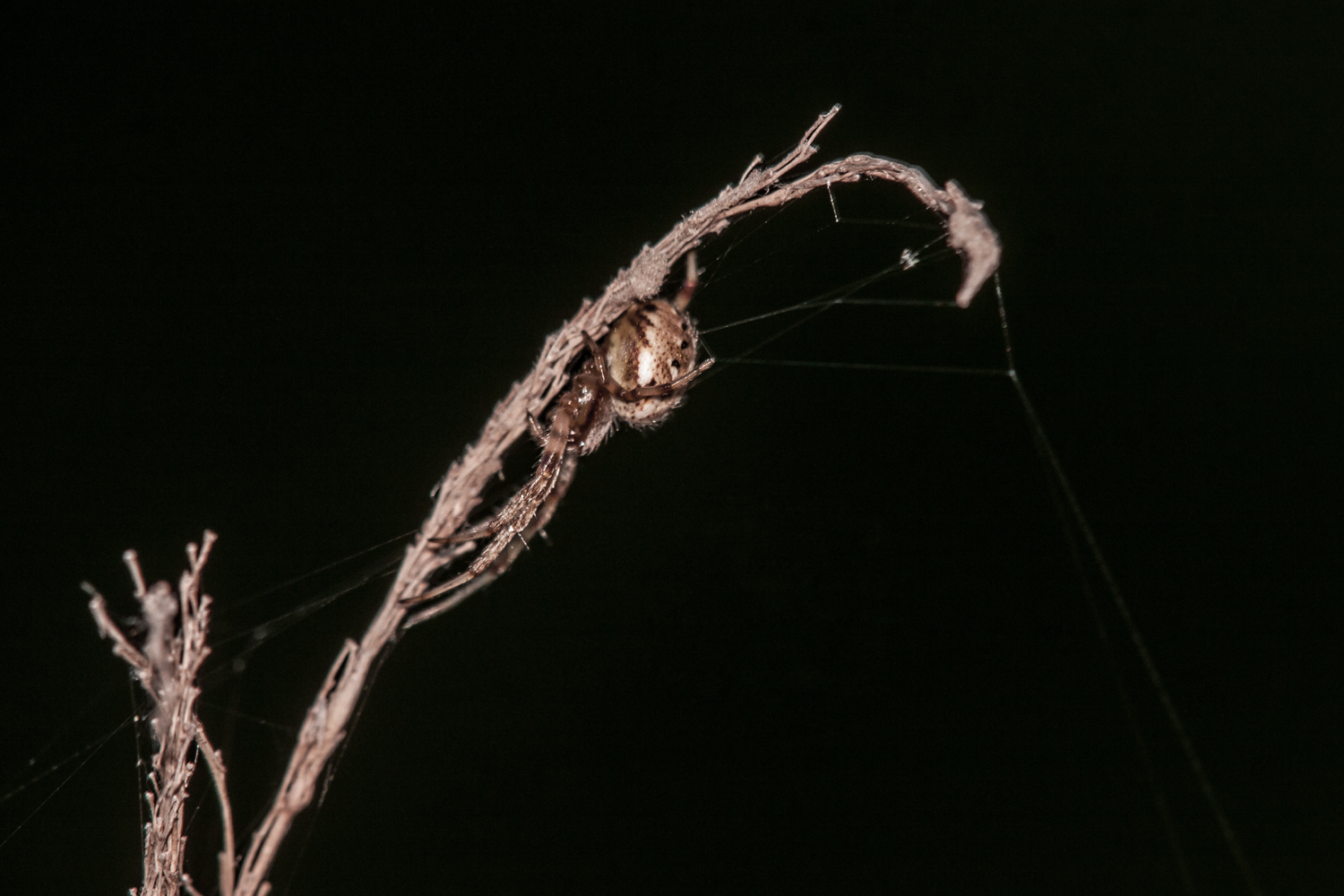
I know that some folks find spiders to be creepy, but I think they are beautiful, particularly when presented creatively in an image. I spotted this little spider earlier this week in a wooded area at Huntley Meadows Park.

The area in which the spider was located was pretty dark, so I decided to use  the pop-up flash on my camera. The light was a bit too powerful at such close range, so I  improvised a diffuser by slipping a plastic sleeve over the flash—when it is raining out, my Washington Post is delivered in plastic sleeves. All three of these shots were taken using the flash, but they look so different because of the direction of the ambient light. In the one that has a light background,for example, I was shooting almost directly into the light, so the flash was need to avoid getting nothing but a silhouette.


dramatic spider


dramatic spiderdramatic spider

© Michael Q. Powell. All rights reserved

Read Full Post »

There were crowds of people at Huntley Meadows Park on Monday, a  holiday in the United States, but I managed to find some moments of serenity and solitude as I contemplated this skipper butterfly perched on a faded iris at the edge of a vernal pool off of the beaten path.

I may be a little selfish, I suppose, but I enjoy nature most when I don’t have to share it with others.


Skipper on iris

© Michael Q. Powell. All rights reserved

Read Full Post »

If you go out early in the morning, you have undoubtedly seen flat dew-covered squares of web material scattered all over the ground. Yesterday morning at Huntley Meadows Park, I decided to explore several of them, hoping to find one of the spider-architects. Eventually I was able to find and photograph one of these spiders, which are commonly known as American Grass Spiders (g. Agelenopsis) or funnel weaver spiders.

According to an article on BugGuide.net, “For this family of spiders, the web is a horizontal, sheet-like web with a small funnel-like tube off to a side (or for some species, the middle of the web). This funnel is what the family is named for, and is used by the spider for hunting and protection. The spider will lay in wait in the funnel, and when an insect flies into, or lands on the web, the spider will rush out, very quickly check to see if it is prey, and if it is prey, bite it. The venom is fast-acting on the prey, so once the prey is subdued (within a second or two), the spider will drag the prey back into the funnel (for safety while eating, and to prevent other insects from recognizing the danger that lurks on the web).”

It’s fascinating to think about all the different ways that spiders are able to capture their prey, including all kinds of webs or even without webs, as is the case with jumping spiders and fishing spiders. It makes me happy that spiders are not larger, except perhaps in some Japanese science fiction movies, or we all might be in danger.

funnel weaver spider

© Michael Q. Powell. All rights reserved


Read Full Post »

The butterflies were really active today at Huntley Meadows Park and I nearly wore myself out chasing after them. Fortunately one of them would occasionally perch, like this Great Spangled Fritillary (Speyeria cybele), whose image I was able to capture from an unusual perspective.

Happy Memorial Day. Let us never forget the brave men and women who sacrificed so much for our freedom.

Great Spangled Fritillary

© Michael Q. Powell. All rights reserved

Read Full Post »

Most of us know what it is like to change a lens on a DSLR, but what is it like when you change a lens in one of your eyes? About 48 hours ago, I had surgery to replace the lens in one of my eyes with a plastic intraocular lens (IOL). Cataracts in both of my eyes had advanced to a point where they were interfering with activities such as night driving and both my optometrist and my ophthalmologist recommended cataract surgery.

I am in an interesting situation right now, because one of my eyes has been “fixed” and one of them has not. As a result I can’t help but do a series of before-and-after comparisons by looking at the world one eye at a time.

It’s hard to describe the changes, but it may be a little easier with photographers. Do you remember the first time that you looked at a RAW image? RAW images often look dull and flat. That’s kind of the way that things look in my right (uncorrected) eye. The view is darker, dingier, and has a slight yellow cast. The colors appear desaturated and there is not much contrast.

When I look through my corrected eye, it feels like a RAW image that has been adjusted by a skilled photographer. The whites are pure white, the colors are vibrant, and sharpness and contrast have been tweaked. Interestingly, the colors are a little on the cool side, with a slight blue color cast. One thing I didn’t expect is that objects in my corrected eye are slightly bigger than in my uncorrected eye. I asked my ophthalmologist if the lens he implanted has a magnifying effect and he noted that it did not—the phenomenon I had described was caused by my myopia, which causes objects to look smaller.

Previously I was significantly near-sighted and have needed glasses since I was in the fifth grade. The corrected eye is far-sighted now and my distance vision is amazing—for the first time in my life I was able to drive a car yesterday without glasses. My near vision now is essentially non-existent. I am hoping that it will improve a little bit as my eyes continue the adjustment process, but I fully expect that I will need the kind of reading glasses that I am using at this very moment.

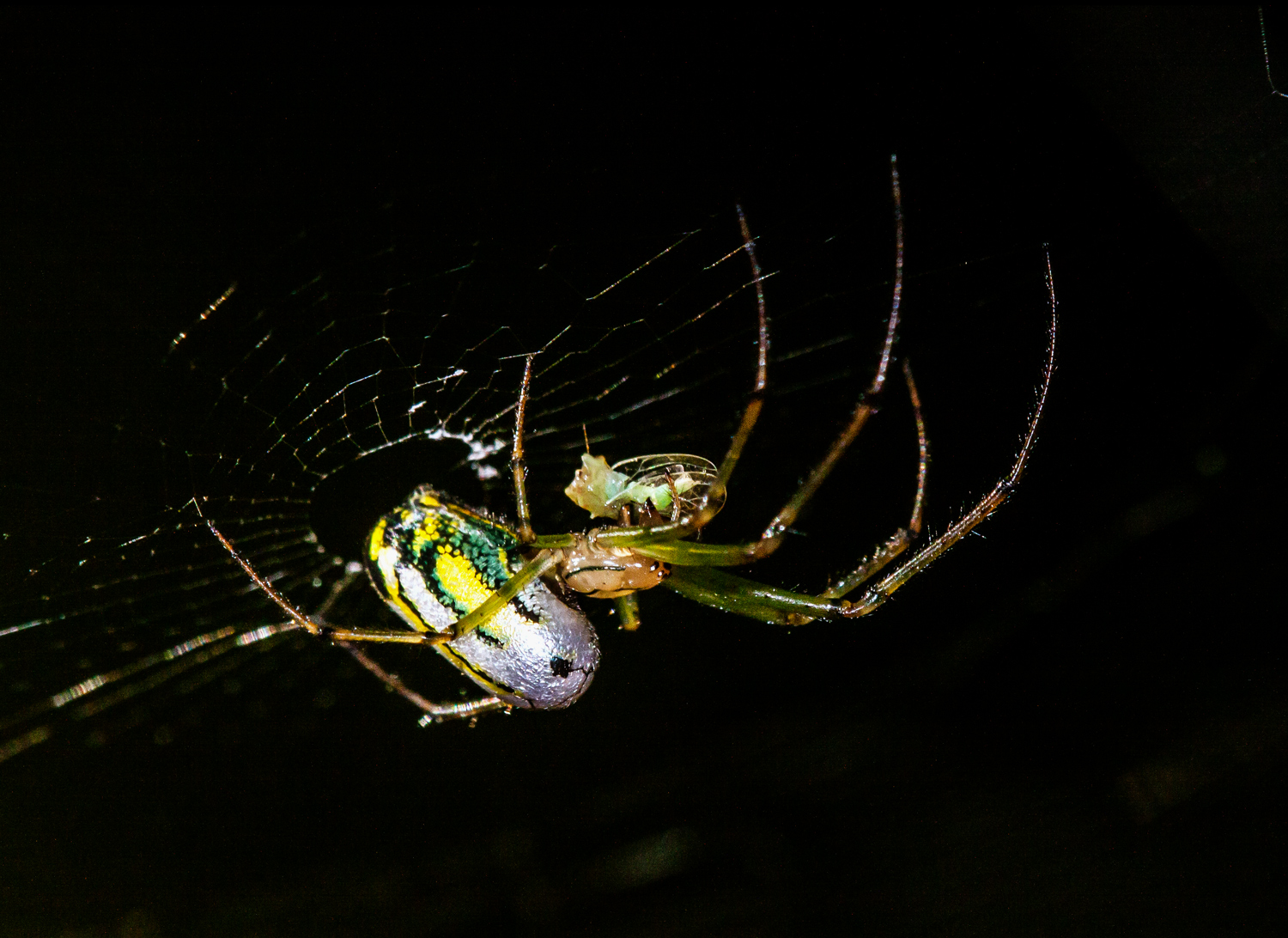
Here is a photo of an Orchard Orbweaver spider (Leucauge venusta) that I took recently. The woods were pretty dark and I was trying to shoot from a relatively short distance away, so I decided to use my pop-up flash. It produced too much glare off of the spider’s shiny body, so I ended up throwing a gray bandana over the flash as a makeshift diffuser. The spider had just captured a prey (I think) and I am pretty happy that I was able to capture as much detail as I did. (Normally I like to be more nuanced when using a flash on close-up subjects, but I think the dark background works well with a spider;)

When I look at the spider with my uncorrected eye, the green and yellow on the spider’s body are pale and dull and the section of the body between the yellow areas appears to be gray. Looking though the corrected eye, however, I see a bright white area in between the bright yellow markings and even the green seems brighter and more intense.

In another two weeks the lens in the right eye is scheduled to be replaced and I’ll probably start to take my newer, brighter world for granted. For now, though, all I have to do is close one eye at a time to see what a difference a change in lens can produce.

Orchard Orbweaver

© Michael Q. Powell. All rights reserved


Read Full Post »

The time drew near for our departure and I had pretty much given up hope of getting any good shots of dragonflies during a visit with some friends last Saturday to Lewis Ginter Botanical Garden in Richmond, Virginia. There were several streams and ponds and I would occasionally see dragonflies flying around, but the planted areas of the garden prevented me from getting close to the water and the spots where the dragonflies were perching.

As I was crossing a small bridge that connected the boardwalk to the “shore,” a dragonfly suddenly flew up from the level of the water into a tree and perched on some relatively low-hanging leaves, about eight feet (243 cm) from the ground. I was able to track the dragonfly to its location and approached it slowly and cautiously.

The dragonfly was perching vertically and the first thing I noticed was that its wings were bright and shiny, suggesting that it had only recently emerged. My initial thought was that it was a Unicorn Clubtail (Arigomphus villosipes), because of the distinctive curved tip of the abdomen. When I got home, I looked at photos of Unicorn Clubtails and doubts began to creep into my mind about the identity of this dragonfly, because the colors seemed different from the ones depicted, which were more yellow than green. I posted a photo into a Facebook group and some experts confirmed that my initial instincts had been correct.

I took shots from several different angles, wishing that I was about a foot taller so that I would not have been shooting upwards at an angle. It turned out, though, that there was an advantage to shooting upwards, for I was able to get a pretty good view in the final image of the distinctive yellow “horn” between the dragonfly’s eyes that caused it to be named “unicorn.”

Unicorn Clubtail

Unicorn Clubtail

Unicorn CLubtail

© Michael Q. Powell. All rights reserved

Read Full Post »

In addition to dragonflies, damselflies are now appearing in greater numbers, like this beautiful little Ebony Jewelwing (Calopteryx maculata) that I spotted on Friday at Huntley Meadows Park. Identification is pretty easy, because it is the only dark-winged species in our area. The red eyes suggest that it is newly emerged—the eyes will change to a less demonic color later—and the lack of white markings on the wings indicate it is a male. Click on the image if you want to see some of the details of the damselfly at higher resolution, like the tiny hairs on its legs.

Ebony Jewelwing

© Michael Q. Powell. All rights reserved

Read Full Post »
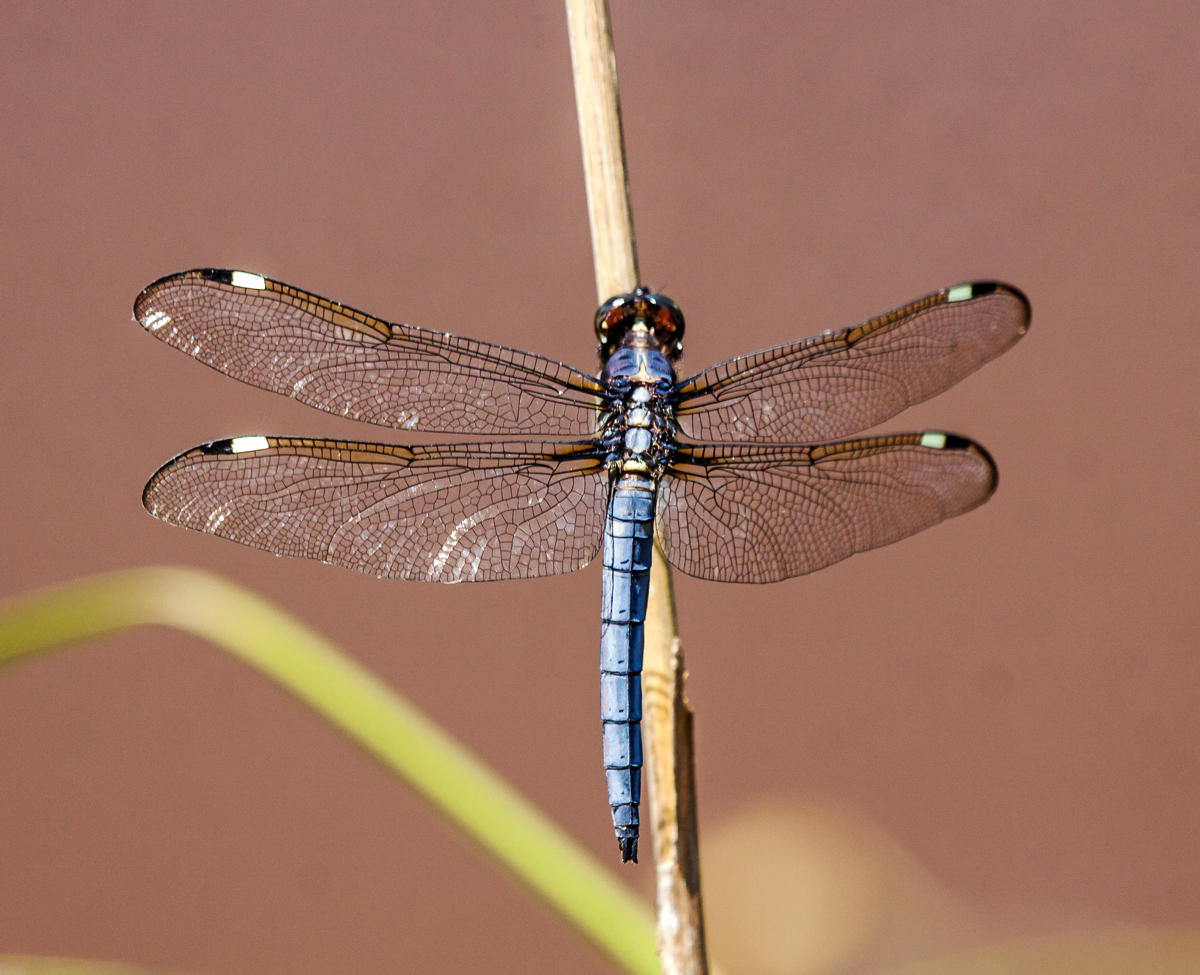
As the weather warms up, more and more dragonflies finally are starting to emerge at Huntley Meadows Park in Alexandria, Virginia. like these Spangled Skimmers (Libellula cyanea) that I spotted yesterday at the park. Spangled Skimmers are pretty easy to identify, because they are the only dragonflies in our area that have the both black and white “stigma” on the front edges of their wings. The adult male is blue, but immature males have the same coloration as the females, so you have to look closely to determine gender.

The first image, for example, shows an immature male, while the second image shows a female. If you examine the extreme tip of the abdomen (what I used to call a “tail”), you can see some differences. You may also note that the terminal appendages match for the first and third images, both of which show males.

If you want to learn more about Spangled Skimmers, check out this page from the Dragonflies of Northern Virginia website. The website is a wonderful resource for anyone interested in dragonflies, not just for folks who live in our area.

Spangled Skimmer

Spangled Skimmer

Spangled Skimmer

© Michael Q. Powell. All rights reserved

Read Full Post »

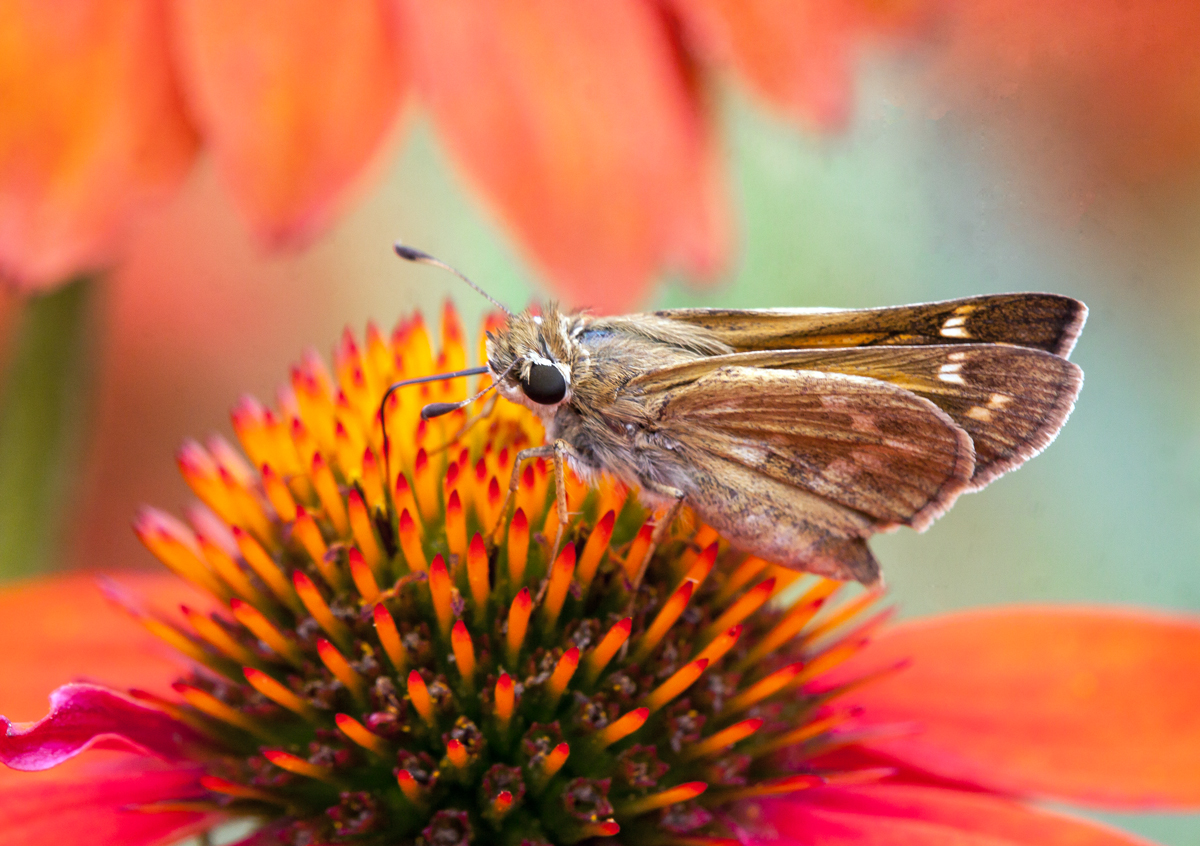
Every spring I seem to have the same problem—I see small brown skipper butterflies and can’t seem to identify them. Wikipedia notes that there are over 3500 species recognized worldwide, so I don’t feel too bad about my poor identification skills. I spotted this particular one during a recent trip to Meadowlark Botanical Gardens in Vienna, Virginia as it was feeding on what looks to be some variety of salvia flower—there are a lot of types of salvia flowers too.

As I looked through internet photos of possible matches for my skipper, I considered that it might be a Peck’s Skipper or possibly a Fiery Skipper, but none of them is a perfect match. I’m hoping that it turns out to be a Zabulon Skipper (Poanes zabulon). Why? More than anything else, I think “Zabulon” is a cool name.

skipper

© Michael Q. Powell. All rights reserved

Read Full Post »
The simple shape and spare palette of spiderwort plants (g. Tradescantia) really appeal to me and I found myself taking innumerable photos of them during a visit with fellow photographer Cindy Dyer to Meadowlark Botanical Gardens in Vienna, Virginia this past weekend. Be sure to check out Cindy’s blog for some awesome colorful images of many of the other flowers that we observed.

My friends all know that I have a warped sense of humor, so it would come as no surprise to them when I confess that I can’t help but think of an abnormal growth on an arachnid every time that I use the word “spiderwort.” As the weather continues to warm up, I’m pretty confident that I will soon be featuring images of spiders, warts and all.

spiderwort

© Michael Q. Powell. All rights reserved

Read Full Post »

Flowers are beautiful, of course, but when it comes to taking photos, I seem to be equally (or more) attracted to insects among the flowers. Yesterday we finally had some sunshine here in Northern Virginia after three soggy days in a row and I made a trip to Green Spring Gardens with my mentor Cindy Dyer to check out the flowers in bloom.

The wind was blowing most of the afternoon, which turned many of the flowers into moving targets, but patience and persistence allowed me to get some shots of some of my favorites, like love-in-a-mist and columbines. I am still going through my images, but I was immediately attracted to this shot of a bee in flight that I captured as it moved from one iris to another.

I remember being a little surprised to see a bee gathering pollen from irises—there seemed to be much candidates nearby, including some large, showy peonies. The bee didn’t spend long in each iris and the long petals of the iris often hid the bee from view. As I was tracking the bee, I somehow managed to maintain focus and captured this whimsical little shot of it in mid-air. My shutter speed of 1/640 sec was not fast enough to freeze the wings, but I really like the blur of the wings, which enhances the sense of motion for me.

bee and iris


© Michael Q. Powell. All rights reserved

Read Full Post »
« Newer Posts - Older Posts »