Feeds:
Posts
Comments

Posts Tagged ‘Tamron 150-600mm’

All wild creatures seem especially beautiful in the early morning light, like this cute little muskrat (Ondatra zibethicus) that I spotted last week in one of the small ponds at Occoquan Bay National Wildlife Refuge.

Muskrat

© Michael Q. Powell. All rights reserved

Read Full Post »

It was pretty cool yesterday morning to see a small flock of Cedar Waxwings (Bombycilla cedrorum) foraging at Occoquan Bay National Wildlife Refuge. One of them was using gravity to help it ingest a berry that it had managed to found. If you look closely, you can see what appears to be the bird’s tongue.

It seemed to take a bit of effort, adjusting ever so slightly the head and mouth, but eventually the beautiful little bird was able to get the whole berry into its mouth. In many ways, it was similar to watching a Great Blue Heron swallow a fish, albeit on a greatly reduced scale.

Cedar Waxwing

Cedar Waxwing

Cedar Waxwing

© Michael Q. Powell. All rights reserved.

Read Full Post »

I photographed this cute little Ruby-crowned Kinglet (Regulus calendula) yesterday at Occoquan Bay National Wildlife Refuge. The angle and exaggerated proportions make this kinglet look almost like a Disney cartoon to me.

If you have never seen one, Ruby-crowned Kinglets are tiny, even smaller than chickadees. They seem restless and are in perpetual motion, hopping from branch to branch and flicking their wings almost constantly, so I am happy whenever I am able to photograph one.

I can’t help but smile when I look at the photo and it almost looks to me like the tiny bird is smiling.

Ruby-crowned Kinglet

© Michael Q. Powell. All rights reserved.

Read Full Post »

Are you attracted more by something that is powerful and exciting or by something that is familiar and comfortable? When it comes to photography, it seems like I constantly face this dilemma. Should I be chasing after the large predators of the air, travelling, as some birders do, hundreds of miles in the hopes of photographing a rare species like a snowy owl? Should I be content to spend my time scanning the branches and bushes for familiar birds that some dismissively call “backyard birds?”

Fortunately, this is not an either-or proposition—it is what academics would call a “false dichotomy.” I don’t have to choose only one type of subject on which to focus my attention and my camera. The reality is that I want to photograph them all and find equal enjoyment in photographing a modest White-throated Sparrow (Zonotrichia albicollis) and a majestic Bald Eagle (Haliaeetus leucocephalus). I photographed both of these birds this past week at Occoquan Bay National Wildlife Refuge and for me they represent the two extremes that I mentioned earlier.

One image is a carefully composed portrait of a small bird at rest and the other is an action shot of a powerful predator in the air taken on the fly, relying on reactions. Is one “better” than the other? Maybe it is better to ask if you find one more appealing, one that speaks to you more.

It is a bit of a cliché to state that beauty is in the eye of the beholder—beauty is often subjective, but sometimes people talk of universal beauty. How can that be? Personally, when I think about beauty, I realize that it is inherently contradictory, that it is an elusive mystery that we can never fully understand, but that is worth pursuing.

Beauty can be found in many places and in many ways. As you prepare for the weekend, I hope that you too will find time to discover the beauty that surrounds you, in the familiar or the exotic or somewhere in between those two extremes.

White-throated Sparrow

Bald Eagle

© Michael Q. Powell. All rights reserved.

Read Full Post »

Like many other places, Occoquan Bay National Wildlife Refuge has some raised platforms on which ospreys (Pandion haliaetus) build nests each year. Sometimes violent winter weather destroys much of a previous year’s nest, but quite often the nest survives pretty much intact and all that is required is some spring cleaning and minor renovation.

The latter seemed to be the case with one of the osprey nests that I spotted this past Monday. An osprey was in the nest and appeared to be moving around some of the branches. In the first shot you can see some of the man-made elements of the platform on which the nest is constructed and get a sense of the relative size of the nest. I couldn’t get a really good look at precisely was it doing, though, because the nest was high in the air on a tall post, as you can see in the second photo below.

As I was watching the osprey, a bald eagle flew by and seemed to startle the osprey. The final shot captured the osprey just after it took off from the nest and really emphasized the massive wingspan of the osprey.

osprey

osprey

osprey

© Michael Q. Powell. All rights reserved.


Read Full Post »

Eagles in flight are always a challenge for me to photograph, so I was really happy when I managed to capture this image of a bald eagle (Haliaeetus leucocephalus) that flew by me on Monday morning at Occoquan Bay National Wildlife Refuge as rays of sunlight illuminated different parts of its body.

Quite often when I spot eagles in flight, they are really high up in the sky and it is difficult to capture details of the majestic birds. As you can probably tell from the angle of view in this shot, this eagle was flying at a relatively low angle when I took this shot. Additionally, the eagle was pretty close—I cropped some from the top of the original image, but not much at all from side to side. In fact, one of the biggest problems I had was keeping the eagle within the frame. On several other images I took, I cut off portions of the wings or of the body.

Bald Eagle

© Michael Q. Powell. All rights reserved.

Read Full Post »
Ospreys (Pandion haliaetus) were really active yesterday morning at Occoquan Bay National Wildlife Refuge, including this one that was gathering materials to either build or repair a nest.

Initially I was standing next to a field that had been cleared some time ago, when an osprey swooped in and snatched up some branches lying on the ground. I was surprised and remember wondering if the osprey would return to the readily available supply of building materials. The osprey returned two or three more times and I was able to capture some cool shots of the osprey transporting some pretty large branches. I was pretty fortunate that the osprey had to fly almost directly over me when it was making its return trips to the unknown nesting location.

There are several nesting platforms in the refuge for ospreys and later in the day I spotted an osprey in one of them. The nest seemed to be pretty much intact from last season, though the osprey seemed to be busily making adjustments and probably was doing some spring cleaning. That may be the subject for a future blog post.

Osprey

Osprey

Osprey

© Michael Q. Powell. All rights reserved.

Read Full Post »
Last Friday morning at Occoquan Bay National Wildlife Refuge, I spotted a Bald Eagle (Haliaeetus leucocephalus) in a distant tree further down the trail. I decided to try to sneak closer to the eagle, hoping it would not see me through the tangle of branches separating us.

When I got close enough for a mostly unobstructed shot, I focused on the eagle and realized it was glaring down right at me with what looked to be disapproval. A few seconds later the eagle took off and disappeared from sight.

Sneaking up on an eagle? I am not sure that it can be done—the eagle’s superior sight and reaction time seem to win out every single time.

Bald Eagle

Bald Eagle

 © Michael Q. Powell. All rights reserved.

Read Full Post »
 When I spotted a dark shape in the distance yesterday morning at the edge of a trail alongside the water at Occoquan Bay National Wildlife Refuge, I had no idea what it was—then it started to move. These images suggest to me that it was a North American River Otter (Lontra canadensis), the first time I have seen one at this location and the first time that I have seen one in the wild on land rather than in the water.
North American River Otter
As my mind was busy processing what my eyes were seeing, the otter scurried into the brush and then into the water, where it was joined by a second otter. When I watched the otters swimming away, I was facing almost directly into the sun, so all I was able to capture was this “artsy” silhouette of one of them. I really like the way that the backlighting shows off the otter’s whiskers as it turned its head around and watched as the other otter caught up.
North American River Otter
© Michael Q. Powell. All rights reserved.

Read Full Post »

This past Monday I was thrilled to catch a glimpse of several large wild turkeys (Meleagris gallopavo) foraging in a field just off of the road early in the morning as I was driving into Occoquan Bay National Wildlife Refuge. I stopped the car, grabbed my camera, and leaned out of the window, but was unable to frame a shot. I quietly got out of the car and was able to capture several images of one of them before they sensed my presence and scurried into the treeline and out of my sight.

wild turkey

wild turkey

© Michael Q. Powell. All rights reserved.

Read Full Post »

Sometimes when I take a photo of a bird, I have no idea what kind it is—I tend to shoot first and ask questions later. That was the case last Friday when I spotted this beauty at Belmont Bay, an area of open water at the confluence of the Occoquan and Potomac Rivers in Northern Virginia.  Fortunately some more experienced birders on the What’s This Bird Facebook forum helped me identify it as probably a Greater Scaup (Aythya marila), a type of diving duck.

I had tried to identify the bird on my own using a field guide that I have at home and some on-line resources, but I confess that I got stuck. I couldn’t figure out if this was a Greater or Lesser Scaup. Most of the information on distinguishing between the two species is comparative, i.e. the head is narrower or more oval. It’s hard to make a comparison when you see only a single member of a species.

As you can see from the photo below, conditions were a  little strange and there were distinct color bands in the water. I am not sure exactly what caused them, but perhaps it was the angle of the sunlight or the way the wind was moving the water. Whatever the case, it made for a pretty distinctive color change in the top third of this image that almost looks artificial.

Greater Scaup

© Michael Q. Powell. All rights reserved.

Read Full Post »

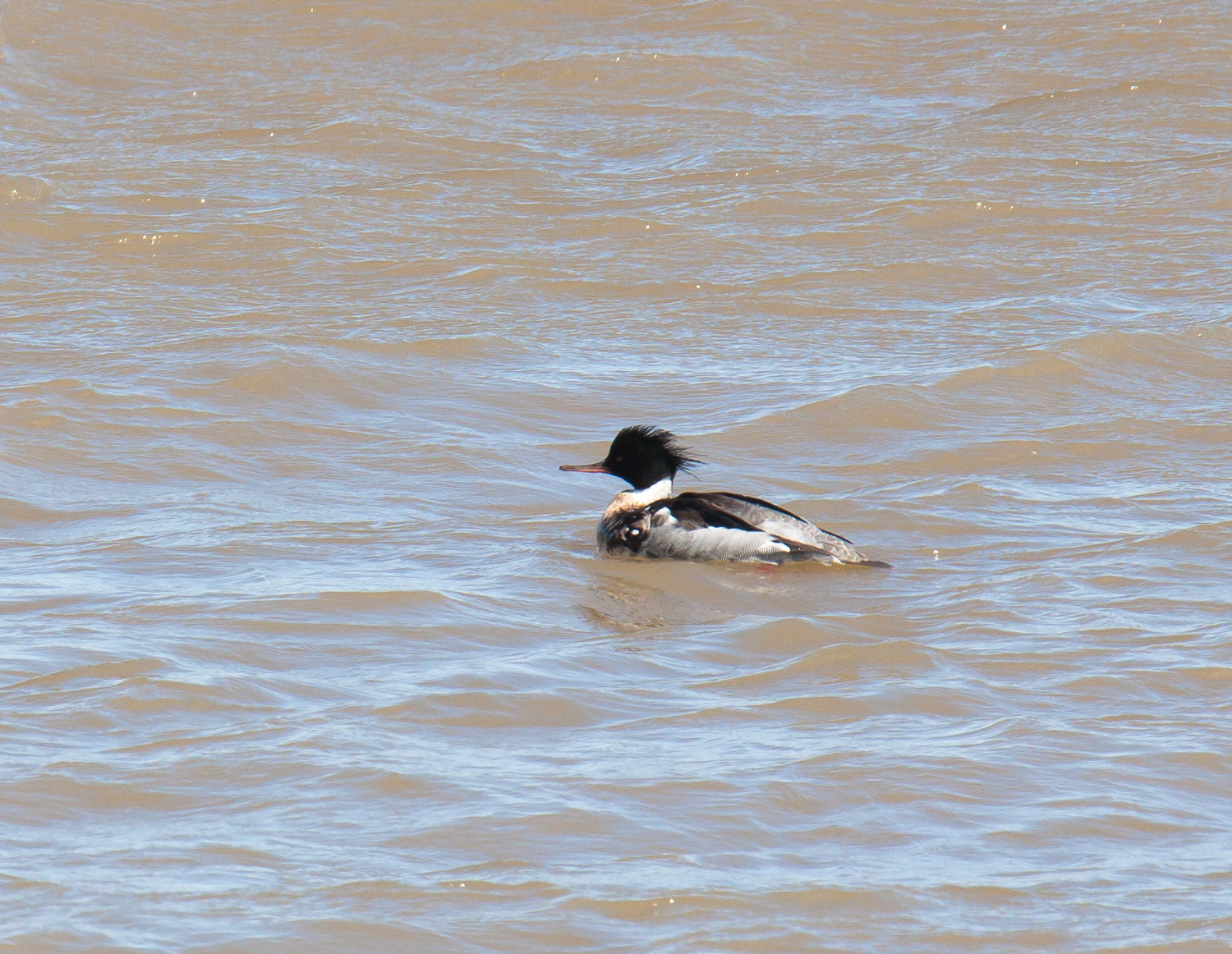
Most diving ducks quite naturally prefer to hang out in places where the water is deep, which makes it a challenge to get any shots of them and almost impossible to get close-up shots. Last Friday I was happy to spot some Red-breasted Mergansers (Mergus serrator), a species of diving duck that I rarely encounter, in the wind-swept waters of Belmont Bay at the confluence of the Occoquan and Potomac Rivers in Northern Virginia.

Both the male and female of this species have spiky hair that takes on wild shapes thanks to the effects of the wind and the water. The male in the middle of the first shot was busy preening, so I am including a separate shot of him when he deemed he was ready for an individual portrait.

Red-breasted Merganser

Red-breasted Merganser

© Michael Q. Powell. All rights reserved.

Read Full Post »

I know that rabbits don’t go south for the winter, but they seemed to disappear in late autumn and I did not see a single one during the winter months. Suddenly this past week, they started reappearing on the trails at Occoquan Bay National Wildlife Refuge.

Yesterday I spotted this cute little Eastern Cottontail (Sylvilagus floridanus) as it gathered up stalks of grass. Initially the rabbit grazed a bit before it started to accumulate a mouthful of the long, dry stalks of grass—perhaps there are little ones that need to be fed.

Eastern Cottontail

© Michael Q. Powell. All rights reserved.

Read Full Post »

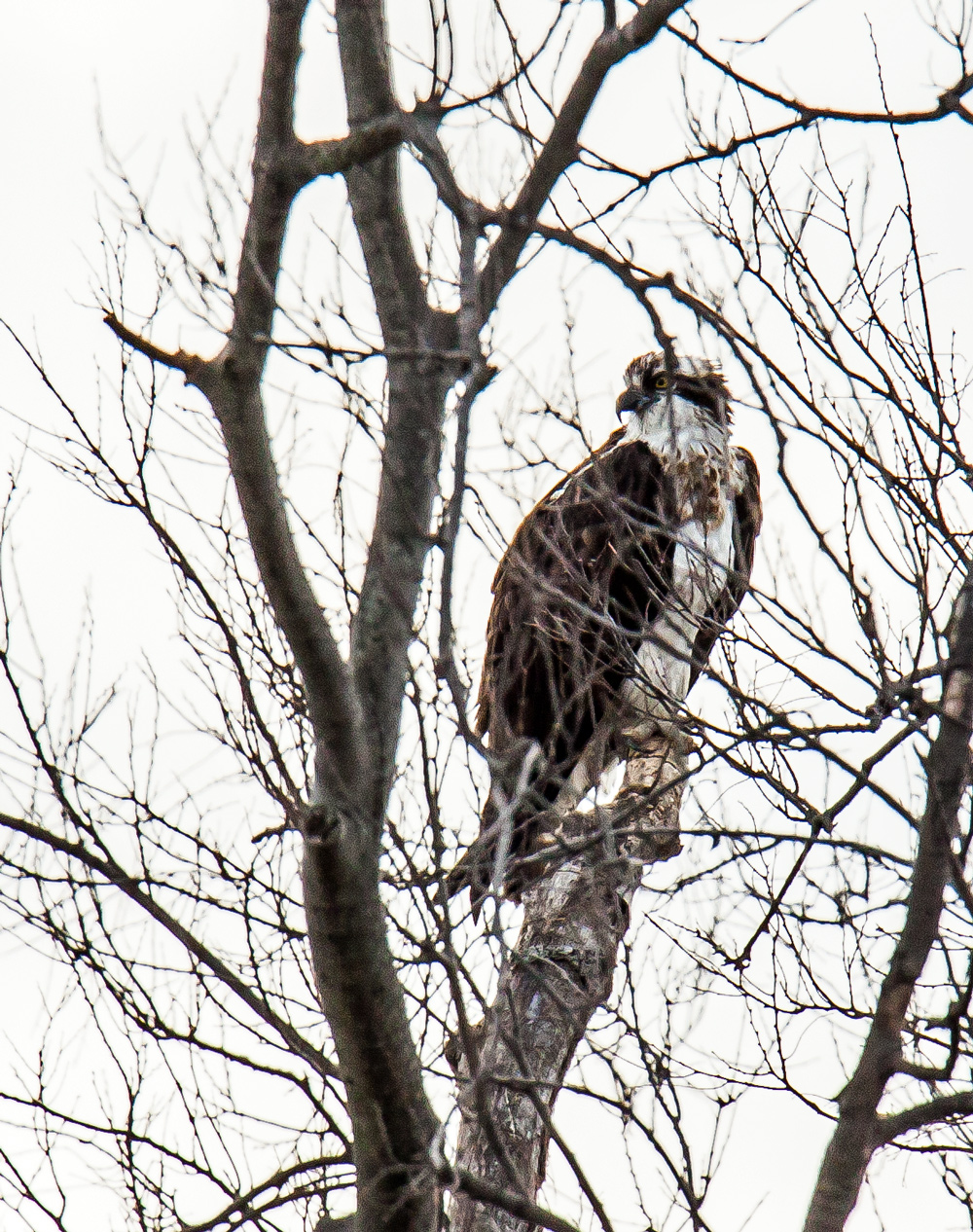
Ospreys leave our area in the fall and spend their winters in warmer locations in Central and South America. Around this time of the year, I keep my eye open for their return and this past Saturday I spotted my first one of the year. The osprey (Pandion haliaetus) was perched in a tree with branches that partially blocked my view. As I tried to maneuver to get a clear shot, the osprey took off, giving me a view of its massive wingspan. As you can see from the two images, it was an overcast day and color is mostly absent. If you look closely, though, you can just get a glimpse of the yellow of the osprey’s eye.

osprey

Osprey

© Michael Q. Powell. All rights reserved.

Read Full Post »

Most colors in nature are so dull and dreary during the winter that it is actually startling to see the bright spring plumage of some birds, like this brilliant blue Eastern Bluebird (Sialia sialis) that I encountered this past Friday. Some of the trees are now putting out buds and blossoms in my area of Northern Virginia and the blurry blotches of color that you see in the background are from one such tree.

Spring is almost here.

Eastern Bluerbird

© Michael Q. Powell. All rights reserved.

Read Full Post »

I heard some rustling deep in the heavy brush this morning at Occoquan Bay National Wildlife Refuge and then caught sight of some bright colors—it was a male wild turkey (Meleagris gallopavo) along with several females. Focusing manually, I managed to get this shot.

Although I would have liked to get an unobstructed view of this magnificent bird, I actually like the way that the blurry vegetation creates a soft vignette that draws the viewer to the head of the turkey.

Wild Turkey

© Michael Q. Powell. All rights reserved.

Read Full Post »

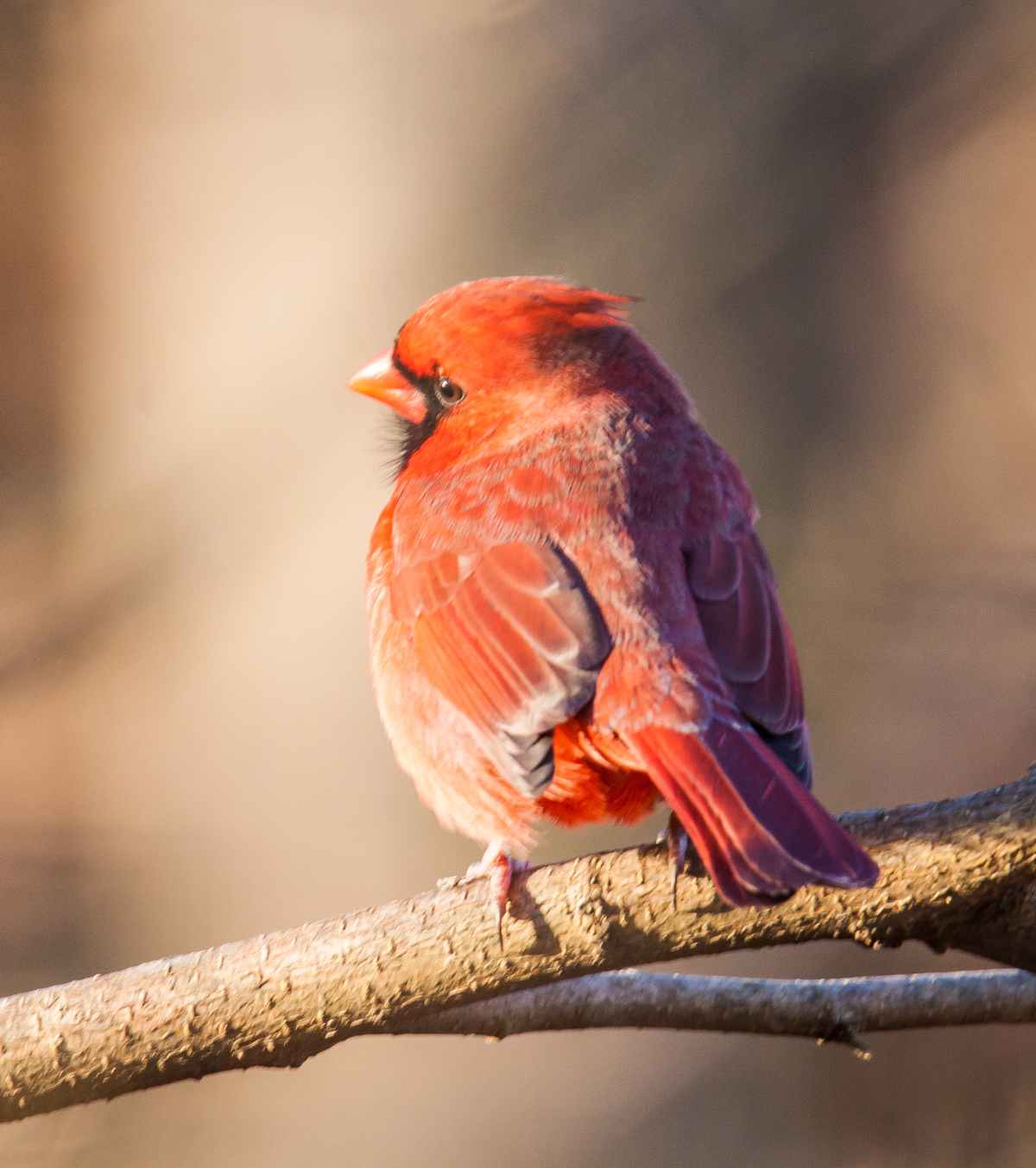
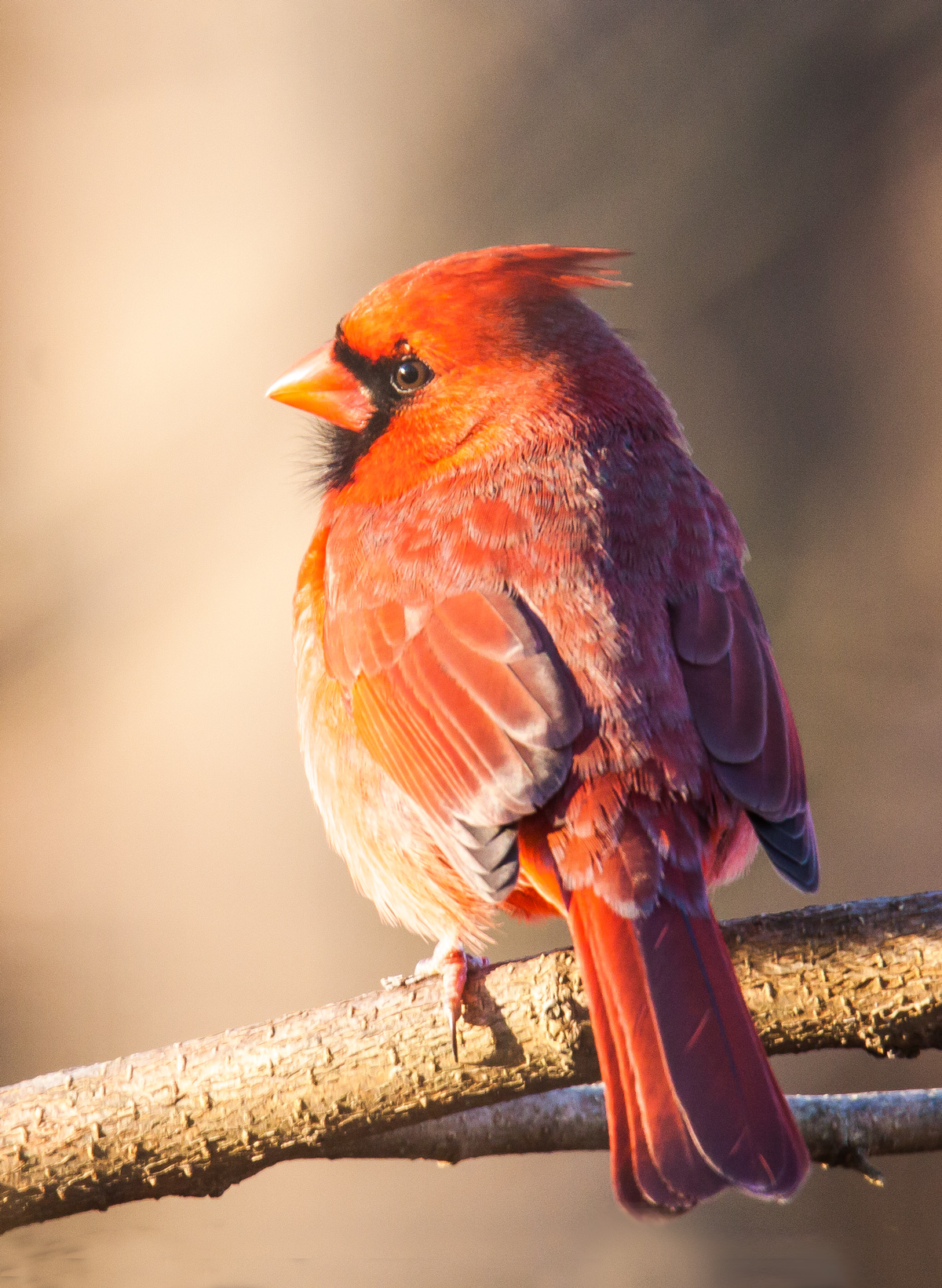
I never get tired of taking photos of ordinary birds, like this male Northern Cardinal (Cardinalis cardinalis) that I spotted yesterday Initially the cardinal turned his head slight and peeked at me over his shoulder.  Eventually he ended up giving me a better view, though it did seem like he was either shy or coy.

Northern Cardinal

Northern Cardinal

© Michael Q. Powell. All rights reserved.

Read Full Post »

Early this morning I spotted a Great Blue Heron (Ardea herodias) in a distant part of a pond that I was exploring. I was worried about blowing out the highlights of the heron’s face and bill, so I deliberately underexposed the image. As a result the background became a bit darker than it was in real life and gave it a dramatic quality that I really like. The reflections of the heron and some of the background elements add a lot to the “artsy” feel of the photo.

Great Blue Heron

© Michael Q. Powell. All rights reserved.

Read Full Post »

When this immature Bald Eagle (Haliaeetus leucocephalus) fixed its eyes on me on Monday at Occoquan Bay National Wildlife Refuge and flew straight toward me, I couldn’t help but feel a little concerned. As it turned out, the young eagle was simply soaring and veered away—and my heartbeat eventually returned to a normal rate.

Bald Eagle

Bald Eagle

© Michael Q. Powell. All rights reserved.

Read Full Post »

One of the youngest viewers of my blog is a boy named Benjamin. His grandmother likes to share my photos with him and he especially likes bluebirds. Upon viewing some images of them and seeing their colors, he innocently asked why they aren’t called Orange Bluebirds. Why not indeed? This post is especially for him.

I too love Eastern Bluebirds (Sialia sialis) and am happy anytime I am able to catch a glimpse of their bright colors. Here are a couple of images of bluebirds that I spotted this past Monday at Occoquan Bay National Wildlife Refuge (and there is plenty of orange to be seen).

Eastern Bluebird

Eastern Bluebird

© Michael Q. Powell. All rights reserved.

Read Full Post »

If you talk to your dentist, you’ll certainly be told that cavities are bad, but your perspective might change if you were a bird. I am not sure if this Red-bellied Woodpecker (Melanerpes carolinus) was checking out potential nesting sites yesterday morning at Occoquan Bay National Wildlife Refuge or merely looking for insects, but it sure did give this tree cavity a careful examination.

There was definitely no need to fill this cavity.

Red-bellied Woodpecker

© Michael Q. Powell. All rights reserved.

Read Full Post »

At first I thought this Bald Eagle (Haliaeetus leucocephalus) that I spotted today at Occoquan Bay National Wildlife Refuge had a really dirty head, but I’m beginning to think that maybe it’s simply the feather pattern of an almost-mature eagle whose head will eventually be all white.

Bald Eagle

© Michael Q. Powell. All rights reserved.


Read Full Post »

Some birds are stealthy and fly silently through the skies. Canada Geese (Branta canadensis) would not fit into that category. They like to announce their presence for all to hear, like this pair that I spotted on Monday at Occoquan Bay National Wildlife Refuge as they were coming in for a landing.

Unlike at the airport, there was no need for a loudspeaker to announce this landing.

Canada Geese

© Michael Q. Powell. All rights reserved.

Read Full Post »

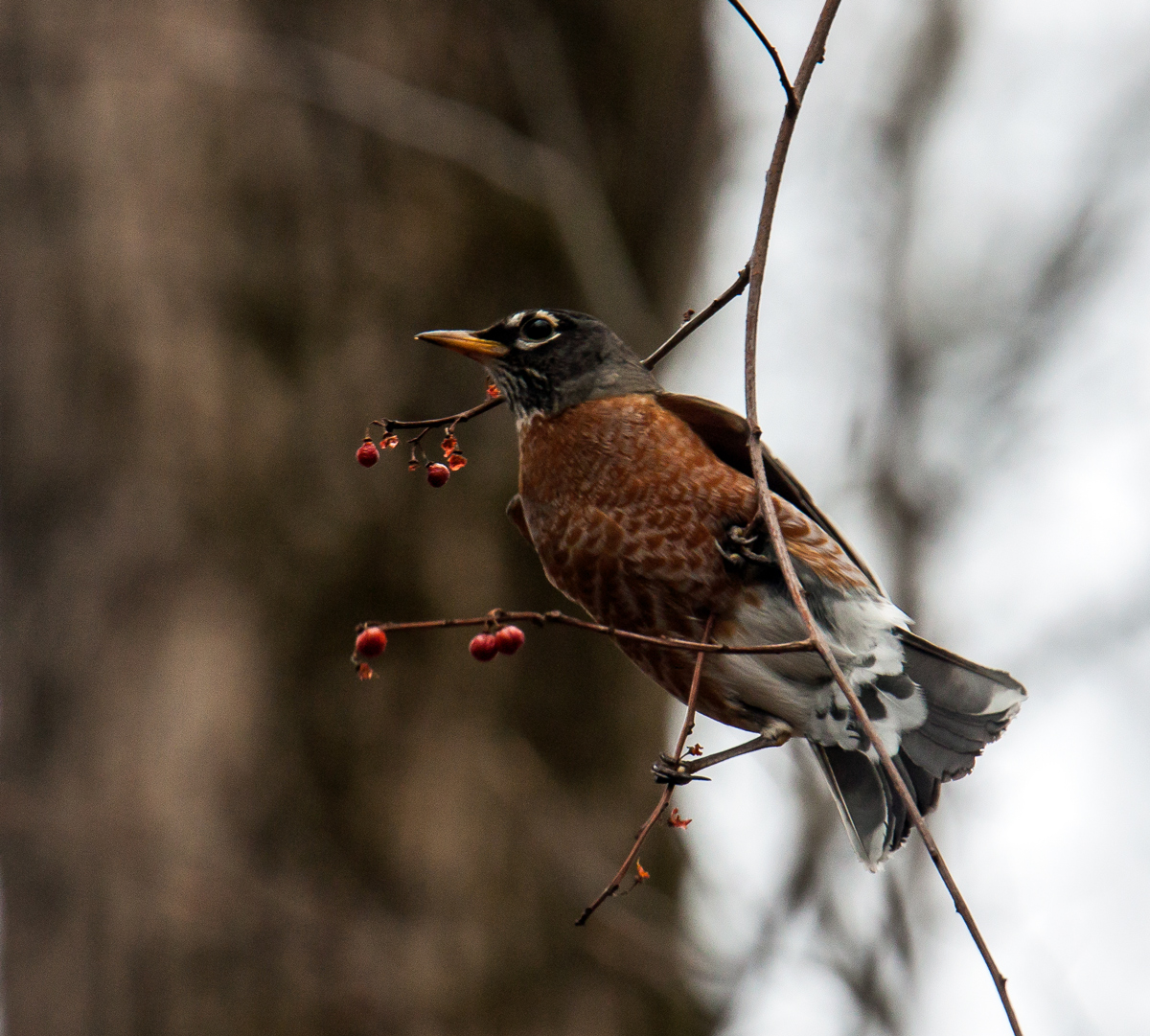
I don’t tend to think of American Robins (Turdus migratorius) as acrobatic birds—most of the time I see them poking about on the ground, the traditional early bird searching for the worm. I photographed this acrobatic robin in February at Huntley Meadows Park, a marshland park not far from where I live. The robin was precariously perched on a very thin branch and moved slowly and carefully to maintain its balance and gently grab the little red berries you can see in the photo.

American Robin

© Michael Q. Powell. All rights reserved.

Read Full Post »

Do you take photos only when the weather conditions are optimal? If I followed that rule, I’d be staying at home most of the time. This winter in particular, it seems like I am at work on all of the days with good weather. So often I will choose to go out with my camera when I am free and not when the weather is good.

One particular morning last week it was really foggy and visibility was extremely limited. The subjects that I could see were hazy and indistinct, utterly lacking in contrast. It’s hard to know how what camera setting to use in situations like those.

I was at Occoquan Bay National Wildlife Refuge, my favorite spot this winter for wildlife photography, and as usual I managed to spot some Bald Eagles (Haliaeetus leucocephalus). It is always a challenge to photograph the eagles, because they tend to perch a good distance away from the trails that I follow and they are often quite skittish.

In this case, the difficulties were magnified, because of the heavy fog/mist. I ended up processing the images that I captured in a number of different ways, attempting at times to enhance the contrast or eliminate some of the fog, with varying degrees of success.

Here are a few of my favorite shots of the eagles in the mist.

Bald Eagles

Bald Eagles

Bald Eagle

© Michael Q. Powell. All rights reserved.

Read Full Post »

The skies were heavily overcast on Monday at Occoquan Bay National Wildlife Refuge, so colors didn’t “pop” at all. However, I really like the almost monochromatic feel of this image I captured of a young Bald Eagle (Haliaeetus leucocephalus), with just the slightest bit of yellow showing around its talons.

Bald Eagle

© Michael Q. Powell. All rights reserved.

Read Full Post »

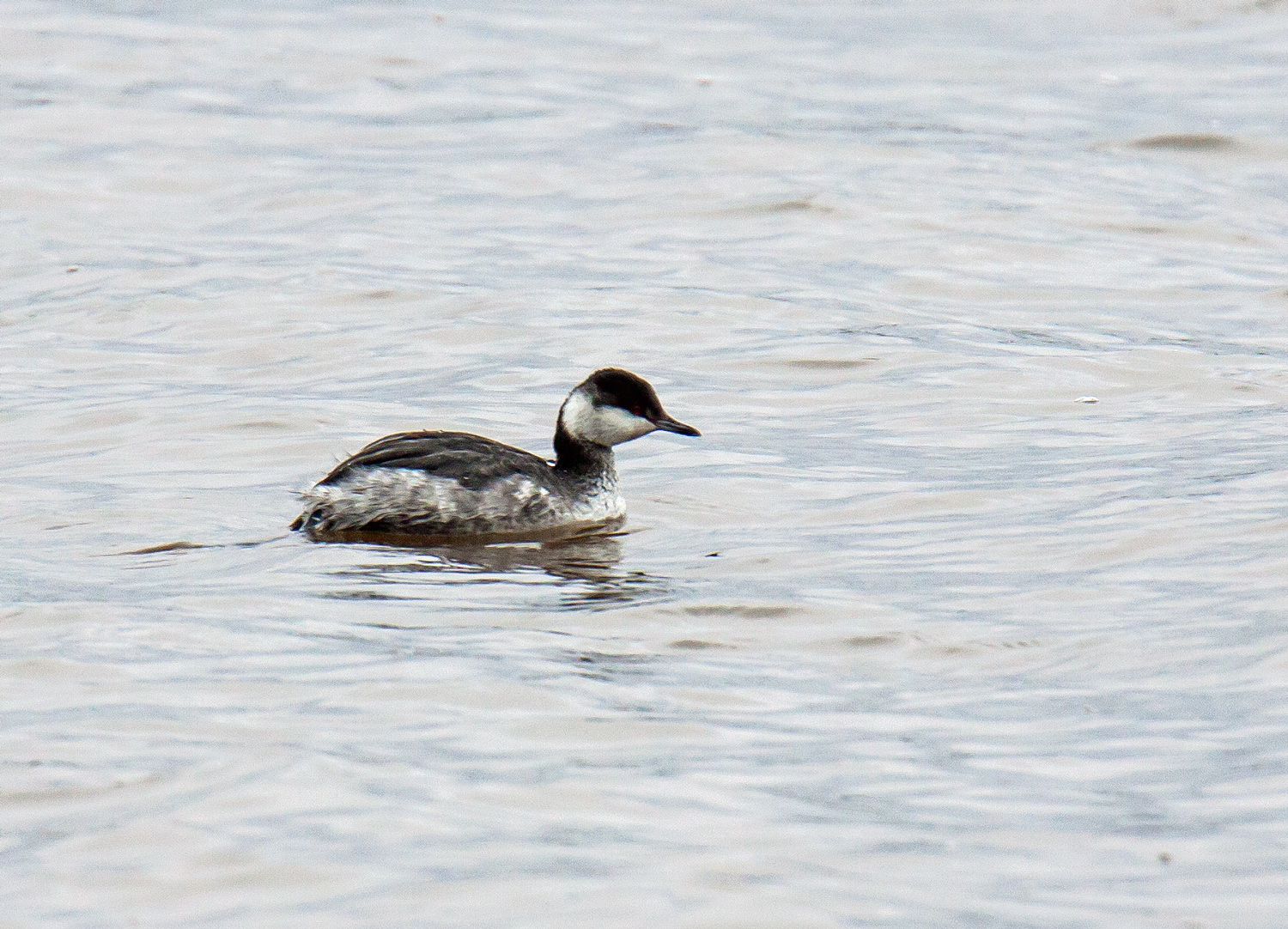
Thanks to some helpful folks in the Facebook forum “What’s this bird,” I learned that this little duck-like bird that I spotted on Monday morning at Occoquan Bay National Wildlife Refuge is a Horned Grebe (Podiceps auritus). I have seen several other kinds of grebes before, but this was a first-time sighting of this particular species.

When I looked at the Cornell Lab of Ornithology page for this species, I was a little shocked to see how different this bird looks when in breeding plumage. “Breeding adults have black heads with rich golden tufts, black back, and cinnamon neck, breast, and sides.” Wow! That would be quite a sight to see, but, alas, it looks like Horned Grebes do not breed in my area and are only visitors here for the winter.

Horned Grebe


© Michael Q. Powell. All rights reserved.

Read Full Post »
Yesterday morning I was thrilled to see this American Kestrel (Falco sparverius)  at Occoquan Bay National Wildlife Refuge. I had never before seen this little falcon, but its coloration and markings are awfully distinctive, so I had a pretty good idea what it was.

I was really struck by the small size of this bird, as compared with the Bald Eagles and vultures that I had seen earlier in the day. According to the Cornell Lab of Ornithology, the American Kestrel is about the size and shape of a mourning dove and is the smallest falcon in North America.

As you can tell from the background, it was heavily overcast when I took this shot, so the colors do not pop as much as they would in bright sunlight. One of my viewers on Facebook also noted that this is a female and, as is the case with most bird species, the colors of a female American Kestrel are more muted than those of her male counterpart.

I remember well the location of the tree in which the kestrel was perched, so I will add that location to my already long list of places to check when I visit this wildlife refuge, which has proven to have a pretty amazing variety of species to observe.

American Kestrel

© Michael Q. Powell. All rights reserved.

Read Full Post »

What kind of bird would be a perfect match for a gloomy, fog-filled day? I might suggest that this Black Vulture (Coragyps atratus) that I spotted this past weekend at Occoquan Bay National Wildlife Refuge would fit the bill admirably.

There was something shadowy, mysterious, and a little creepy about this large dark bird as it perched low in a tree and looked right at me through the fog. I felt a little shiver as I looked up at the vulture, but maybe it was just reaction to the cool temperature.

Black Vulture

© Michael Q. Powell. All rights reserved.

Read Full Post »

We don’t often have daytime fog where I live—most of the time it burns off shortly after sunrise. Yesterday, however, it hung around all morning and visibility was very limited at Occoquan Bay National Wildlife Refuge. Except for a lot of gulls and a few geese, the birds seemed to have decided to stay sheltered until the fog dissipated.

It was a nice challenge for me to try to capture a sense of the moment in the indistinct shapes that were visible as I looked out into the water of the bay. Here are a couple of images that have a kind of abstract, impressionist feel that I really like.

foggy impressions

foggy impressions

© Michael Q. Powell. All rights reserved.


Read Full Post »
While I was at Huntley Meadows Park on Wednesday, I spotted this Hooded Merganser (Lophodytes cucullatus) couple perched on a semi-submerged log, relaxing and preening their feathers. These small ducks have such an unusual and distinctive look that it is hard for me to ignore them whenever I am fortunate to spot them—often they spot me first and my first indication of their presence is when they are flying away from me.

Hooded Merganser

© Michael Q. Powell. All rights reserved.

Read Full Post »

« Newer Posts - Older Posts »