Feeds:
Posts
Comments

Posts Tagged ‘Jackson Miles Abbott Wetland Refuge’

Do dragonflies have noses? That sounds like a crazy question, but it is the first one that came to mind when I looked at the image that I had captured of a dragonfly in flight this past week at Jackson Miles Abbott Wetland Refuge. I could not immediately identify it, so I consulted with experts in a Facebook group and learned that it is a Cyrano Darner (Nasiaeschna pentacantha). This species has a protruding forehead—it’s not a nose— that is reminiscent of the long nose of literary character Cyrano de Bergerac.

The species in the second shot is a Prince Baskettail (Epitheca cynosura), a species that I have featured multiple times in this blog. During much of the summer, I can usually spot one or two Prince Baskettail dragonflies patrolling over the pond at the same wetland refuge and I love trying to capture shots of them in flight. What makes this image distinctive, though, is not so much the dragonfly, but the background. There were ripples in the pond and the way that I shot and processed the image turned them into a wonderfully abstract background.

When I post photos like these, I often get questions about how I am able to capture images of flying dragonflies. Luck and persistence are the keys to getting shots like these. I use my 180mm macro lens and focus manually as the dragonflies zoom by, because the dragonflies don’t fill enough of the frame for my auto-focus to engage quickly and accurately. I have found that is almost impossible for me to use a zoom lens in this task—I get overwhelmed when I try to zoom, track, and focus simultaneously.

Cyrano Darner

Prince Baskettail

© Michael Q. Powell. All rights reserved.


Read Full Post »

Is the best image of a butterfly only one in which its wings are fully open so that you can see all of the beautiful colors and patterns? Generally that is the angle that most of us seek to shoot. This past Wednesday I was observing an Eastern Tiger Swallowtail (Papilio glaucus) at Jackson Miles Abbott Wetland Refuge when it struck me that the butterfly was “attacking” the flower from all kinds of different angles, even hanging upside down. Why shouldn’t I take the same approach with the butterfly (minus the hanging upside down part)?

I like the way in which the three shots below capture some of the activity of the butterfly and not merely its beauty. At times it seems like beauty and function are at odds with each other, that beauty is best captured in controlled settings like in a studio, where portraits are often taken.

I fully accept that the natural world in which I like to work is chaotic and out of my control, but in the midst of it I still find incredible beauty, a beauty that may be imperfect by some standards. I encourage you to look at your world from a different angle at least from time to time and you may be amazed by the way that a change of perspective can cause you to see things in a totally different way.


Eastern Tiger Swallowtail

Eastern Tiger Swallowtail

Eastern Tiger Swallowtail

© Michael Q. Powell. All rights reserved.

Read Full Post »

Yesterday I spotted this male Swift Setwing dragonfly (Dythemis velox) at Jackson Miles Abbott Wetland Refuge. Unlike most dragonflies that hold their wings straight out to the side, this species pulls its wings forward and adopts a ready-set-go position when perching.

This species is really special to me. A few years ago I had the first documented sighting of a Swift Setwing in the county in which I live and each year I am thrilled to see them again. Late in June I saw my first one this year, but was not able to capture any decent images, so these are my first successful Swift Setwing shots this season.

Swift Setwings like to perch on the end of vegetation overhanging the water and are always almost facing the water, which makes it tough to get shots without getting wet. One of the cool things about their perching patterns is that it usually allows me to get uncluttered backgrounds in the shots that I am able to take. In both of these images, the water forms a neutral background that almost makes them look like they were shot in a studio setting.

Swift Setwing

Swift Setwing

© Michael Q. Powell. All rights reserved.

Read Full Post »

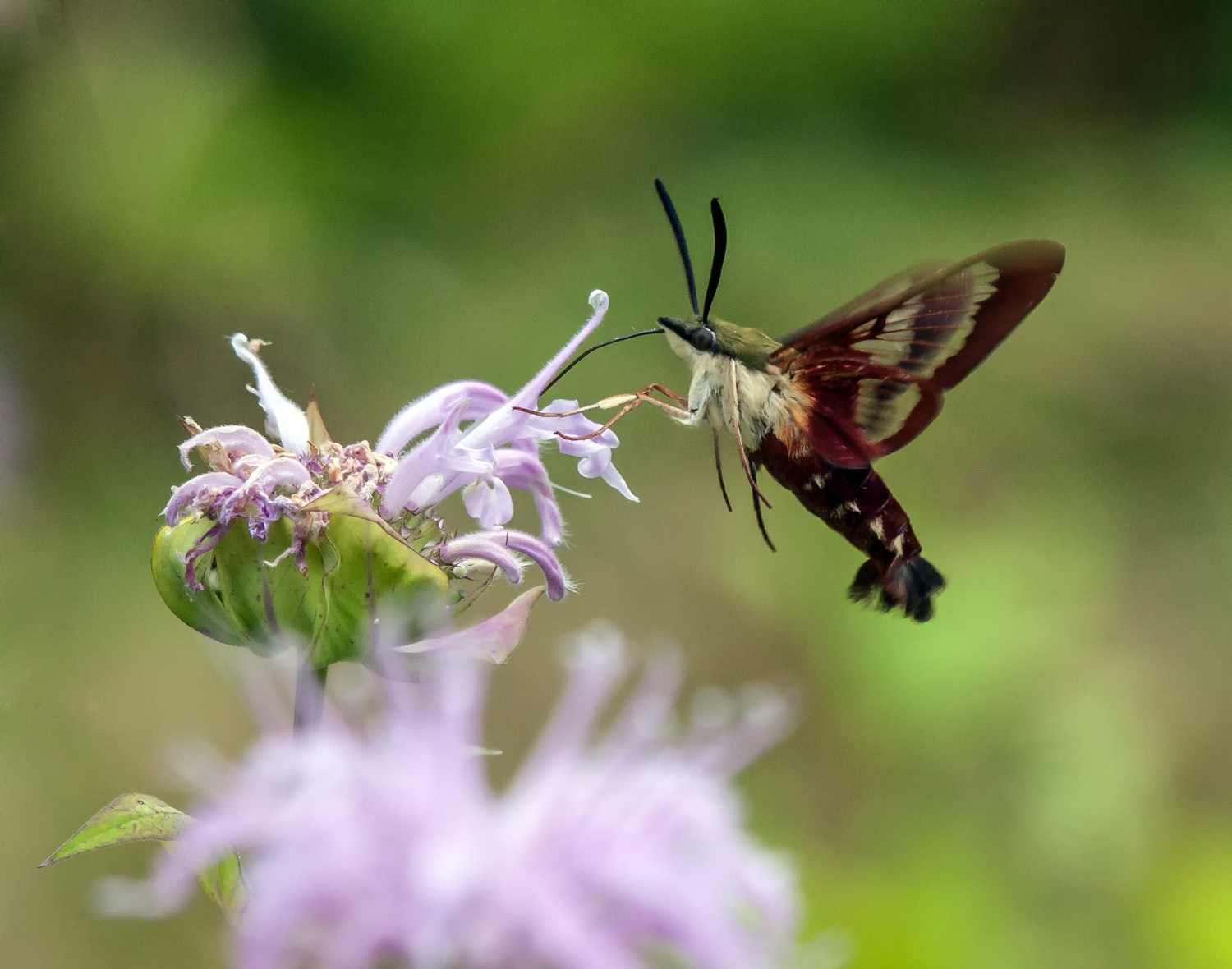
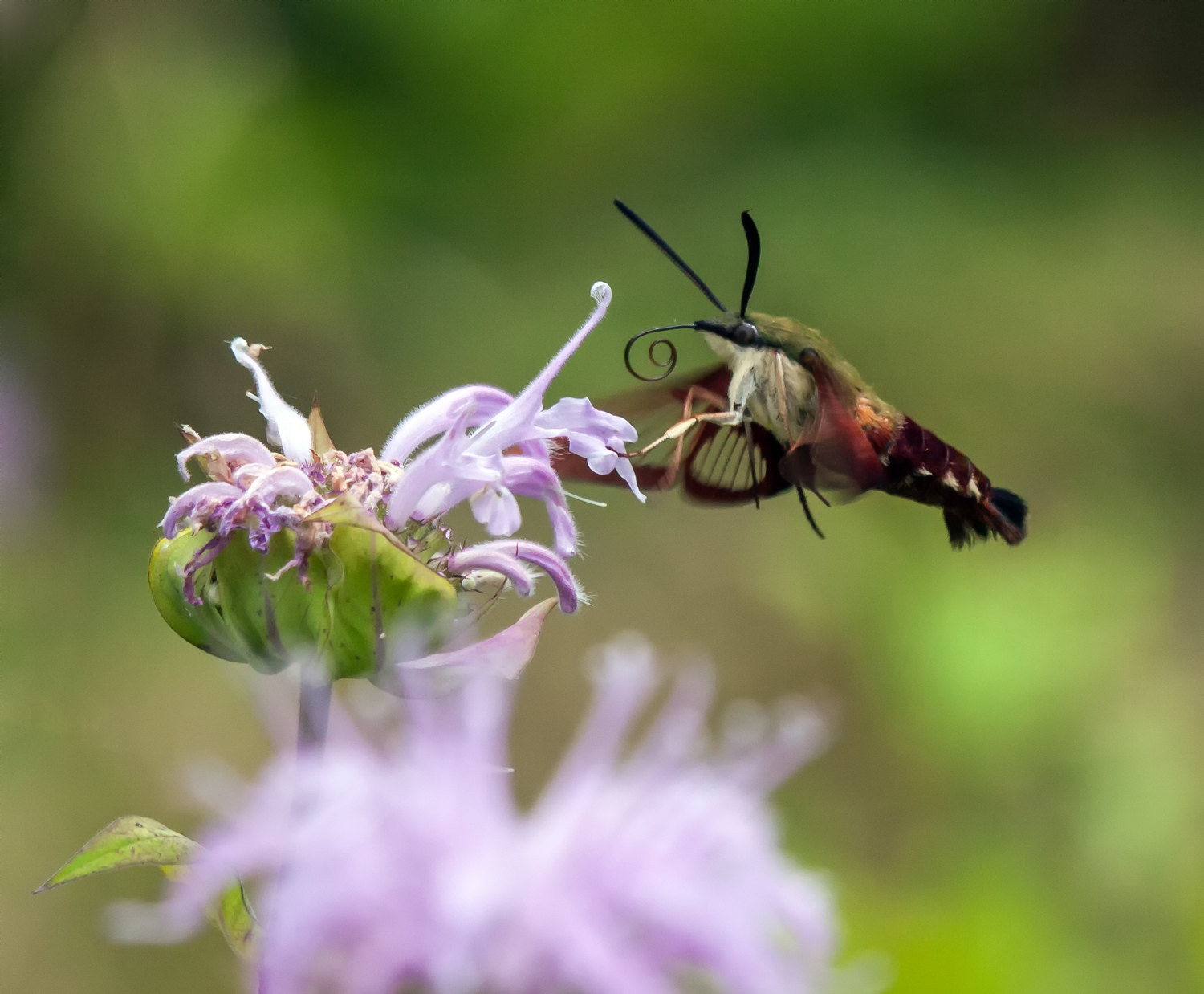
I love to photograph birds and I love to photograph insects, so what could possibly be better than photographing an insect that looks and acts like a bird? Last week I was observing a patch of flowers at Jackson Miles Abbott Wetland Refuge when I spotted what looked like a large bee. As I got closer, I realized that it was a Hummingbird Clearwing Moth (Hemaris thysbe).

Like a hummingbird, this insect hovers as it gathers nectar from flowers. Instead of a long skinny beak, though, the Hummingbird Clearwing Moth uses its long proboscis to get to the nectar. As the second photo shows, the moth curls up its proboscis when it is not in use—in this case, the moth was preparing to fly off to another flower.

Hummingbird Clearwing Moth

Hummingbird Clearwing Moth

© Michael Q. Powell. All rights reserved.

Read Full Post »

On Monday I spotted this small patch of Butterfly Weed (Asclepias tuberosa) at Jackson Miles Abbott Wetland Refuge. True to its name, the Butterfly Weed had attracted several butterflies, which I think are Pearl Crescent butterflies (Phyciodes tharos), as well as several metallic green sweat bees (genus Agapostemon). The insects seemed to love the plant’s nectar and the scene provided a visual feast for viewers like me.

butterfly weed

© Michael Q. Powell. All rights reserved.


Read Full Post »

Frequent viewers of this blog have probably noticed that I am doing a little series of postings featuring common dragonflies that at first glance might look similar. Today’s “star” is a mature male Eastern Pondhawk (Erythemis simplicicollis). Like several other dragonflies in recent postings, the Eastern Pondhawk has a primarily blue body, but several characteristics make it possible to distinguish this species from others.

Both the male and female Eastern Pondhawks have green faces and the male has distinctive white terminal appendages, i.e. those little protrusions at the end of the abdomen (the “tail). Dragonfly specialists spend a lot of time focusing on those appendages, because immature males often have the same coloration as females. In this case, an immature male Eastern Pondhawk would be green with black bands on the abdomen. For the sake of comparison, I am including a photo I took on the same day of a female Eastern Pondhawk. If you compare the tips of the “tails” of the male and the female, you should be able to see the anatomical differences between the genders.

Although it doesn’t help in identifying them, I can’t help but note that Eastern Pondhawks are voracious predators. I think that I have captured more photos of Eastern Pondhawks feeding on other insects that of any other species. When I captured this image last week, I had no idea that the dragonfly was devouring a damselfly. If you click on the image to enlarge it and look just to the left of the dragonfly’s head, you will notice a set of small wings. As you look more closely, you can see the damselfly’s body hanging vertically just below the dragonfly’s head. Yikes!

Eastern Pondhawk

Eastern Ponndhawk


© Michael Q. Powell. All rights reserved.
Read Full Post »

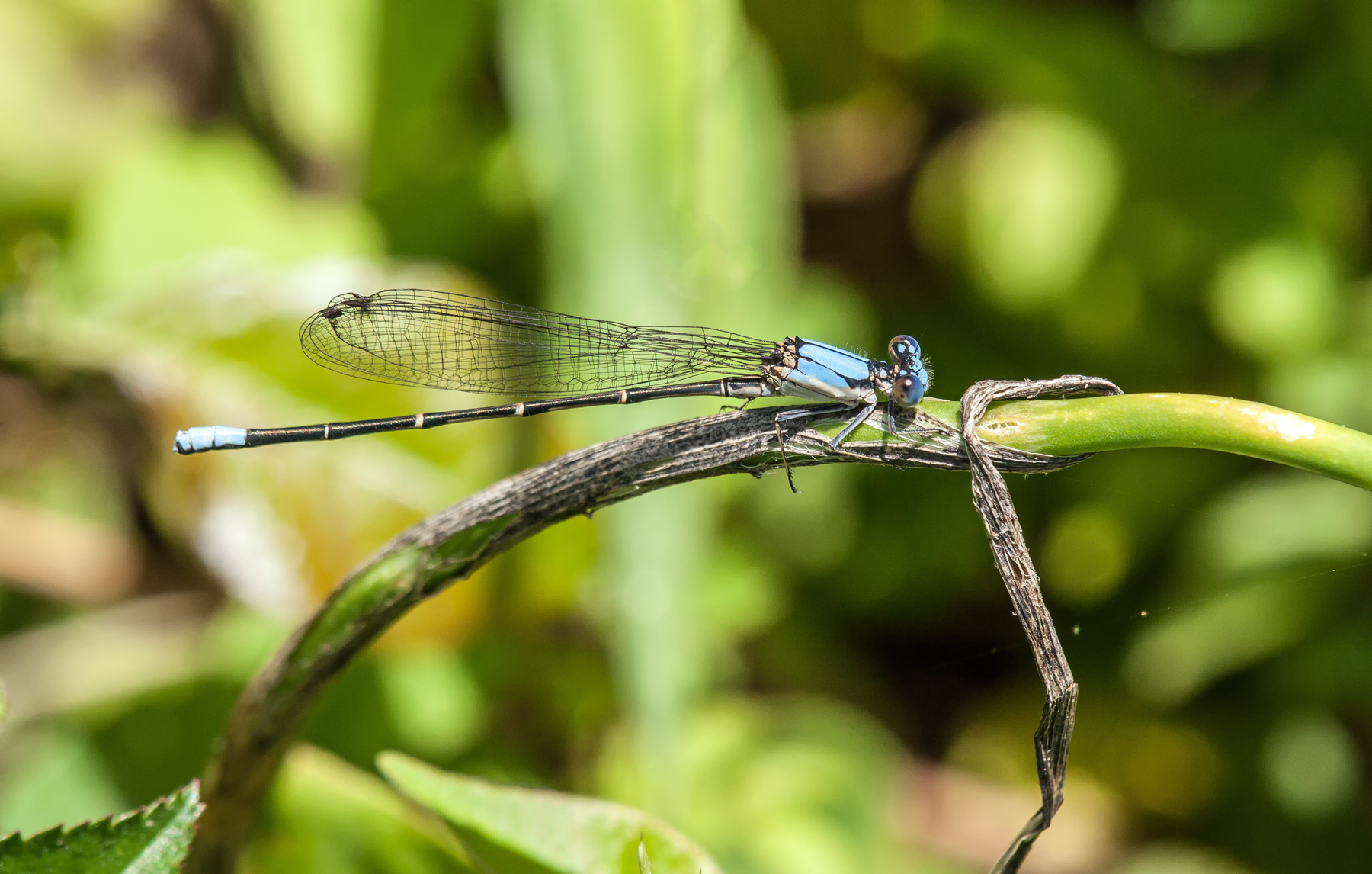
I am not sure if Blue-fronted Dancer damselflies (Argia apicalis) are always happy, but the ones that I spotted yesterday at Jackson Miles Abbott Wetland Refuge seemed to be smiling at me.

The beautiful light blue color on their upper bodies and their striking blue eyes make Blue-fronted Dancers relatively easy to spot and to identify.

Blue-fronted Dancer

Blue-fronted Dancer

Blue-fronted Dancer

© Michael Q. Powell. All rights reserved.
Read Full Post »

Throughout the month of May I have struggled to identify the dragonflies and damselflies that I have photographed. So many of the species seem so similar that I have had to defer to experts for help. Over the years I have learned that the best way to get help on a Facebook forum is to misidentify a subject—some experts, who might not respond to a request for help, feel compelled to correct you and demonstrate their superior knowledge.

This past Friday at Jackson Miles Abbott Wetland Refuge, it was nice to spot a familiar dragonfly species that was immediately identifiable—there is simply no other dragonfly in our area the looks like an Eastern Amberwing (Perithemis tenera). Even the name is helpful in drawing attention to the key identification feature, the distinctive amber wings.

These dragonflies are among the smallest ones in our area, but they tend to perch on low vegetation overhanging the water (especially males like this one), so they are relatively easy to spot. Although they tend to be a little skittish, if you are patient and persistent you can snag some shots that show the beautiful details of the Eastern Amberwing dragonfly.

Eastern Amberwing

© Michael Q. Powell. All rights reserved.

Read Full Post »

I was thrilled yesterday to see that two of my favorite damselfly species, the Blue-fronted Dancer (Argia apicalis) and the Variable Dancer (Argia fumipennis) have reappeared at Jackson Miles Abbott Wetland Refuge. It is definitely worth clicking on the images below in order to get a better look at the beautiful baby-blue color of the Blue-fronted Dancer and the spectacular purple of the Variable Dancer.

Blue-fronted Dancer

Variable Dancer

© Michael Q. Powell. All rights reserved.

Read Full Post »

It’s always wonderful to see large colorful butterflies, like this Red-spotted Purple butterfly (Limenitis arthemis astyanax) that I spotted last week at Jackson Miles Abbott Wetland Refuge. I don’t know about you, but I find the spots to be a bit more orange than red and the body looks more grayish-blue than purple. Maybe the people responsible for naming the species say it in a different light. 🙂

Red-spotted Purple

Red-spotted Purple

© Michael Q. Powell. All rights reserved.

Read Full Post »

Do you remember the first blog post that you ever wrote? In my first blog posting on July 7, 2012, I featured a photo of a Blue Dasher dragonfly (Pachydiplax longipennis). Every year since then whenever I see my first Blue Dashers of the season, I recall my excitement I experienced in being able to photograph that first dragonfly. I did not realize at that time how “addicted” I would get to photographing these beautiful little creatures.

I spotted this handsome male Blue Dasher this past Tuesday at the edge of a small pond at Jackson Miles Abbott Wetland Refuge.

Blue Dasher

© Michael Q. Powell. All rights reserved.


Read Full Post »

Yesterday I spotted this male Lancet Clubtail dragonfly (Gomphus exilis) while exploring Jackson Miles Abbott Wetland Refuge, a relatively small park not far from where I live. The dragonfly was perched on some leafy vegetation overhanging the water and I almost fell into the pond while trying to frame the shot. Fortunately I achieved my desired result by hanging over the edge of the steep bank.

If you look at the end of the “tail,” which technically is called the “abdomen,” you can see the enlarged section that gives rise to the term “clubtail.” Compared to the family of skimmers, which include most of the dragonflies that you probably see, like Blue Dashers and Common Whitetails, clubtails are relatively uncommon and it is always exciting for me to spot one.

I was particularly struck by this dragonfly’s brilliant blue eyes. For some reason I find blue eyes to be especially beautiful, irrespective of the species.

Lancet Clubtail

© Michael Q. Powell. All rights reserved.


Read Full Post »

I’m still looking for my first dragonfly of the season, but was thrilled yesterday afternoon when I spotted my first damselfly, a Fragile Forktail (Ischnura posita), at Jackson Miles Abbott Wetland Refuge. In anticipation of seeing one of these small insects, I mounted my Tamron 180mm macro lens on my camera, a lens that has gone largely unused during the long winter months in favor of my telephoto zoom lens.

Yesterday was a nice reminded of how much I enjoy using a macro lens. (To give you a sense of scale, a Fragile Forktail damselfly is about 0.8-1.1 inches in length (21-29mm).)


Fragile Forktail

Fragile Forktail

Fragile Forktail

© Michael Q. Powell. All rights reserved.

Read Full Post »

When this Spotted Orbweaver spider (Neoscona crucifera) spotted me last week at Jackson Miles Abbott Wetland Refuge, it scurried along the silken threads of its web to the relative safety of the plant to which one end of the web was attached.

There is something that really appeals to me about this image. Maybe it’s the way that the colors of the spider match those of the plant or how the shapes of the stems are similar to those of the spider’s legs. Perhaps it is the contrast between the sharpness of a few elements in the image and the dreamy, almost ghost-like background.

Most of the time I strive for super-realistic images and try to draw a viewer’s attention to the details. When I am in an artsy, creative mood, though, I am content to capture an impression of the subject, leaving the details to the imagination of others.

spotted orbweaver spider

© Michael Q. Powell. All rights reserved.


Read Full Post »

Although we are well into autumn, there are still dragonflies around, including some stunning Russet-tipped Clubtail dragonflies (Stylurus plagiatus) that I spotted earlier this week at Jackson Miles Abbott Wetland Refuge. As you can see from the photos Russet-tipped Clubtails like to perch on somewhat exposed leaves, which makes them a bit easier to spot than some species of dragonflies, though they are not common in my experience

I was able to capture images of Russet-tipped Clubtails (there were at least two individuals that I saw, both males) on several leafy perches in a tree overhanging a pond. My angle of view and the direction of the light gave each of these images a very different feel, primarily because of the way that the background was captured.

Depended on my mood, any one of these three images can be my favorite. Is there one that particularly appeals to you?

Russet-tipped Clubtail

Russet-tipped Clubtail

Russet-tipped Clubtail

© Michael Q. Powell. All rights reserved.
Read Full Post »

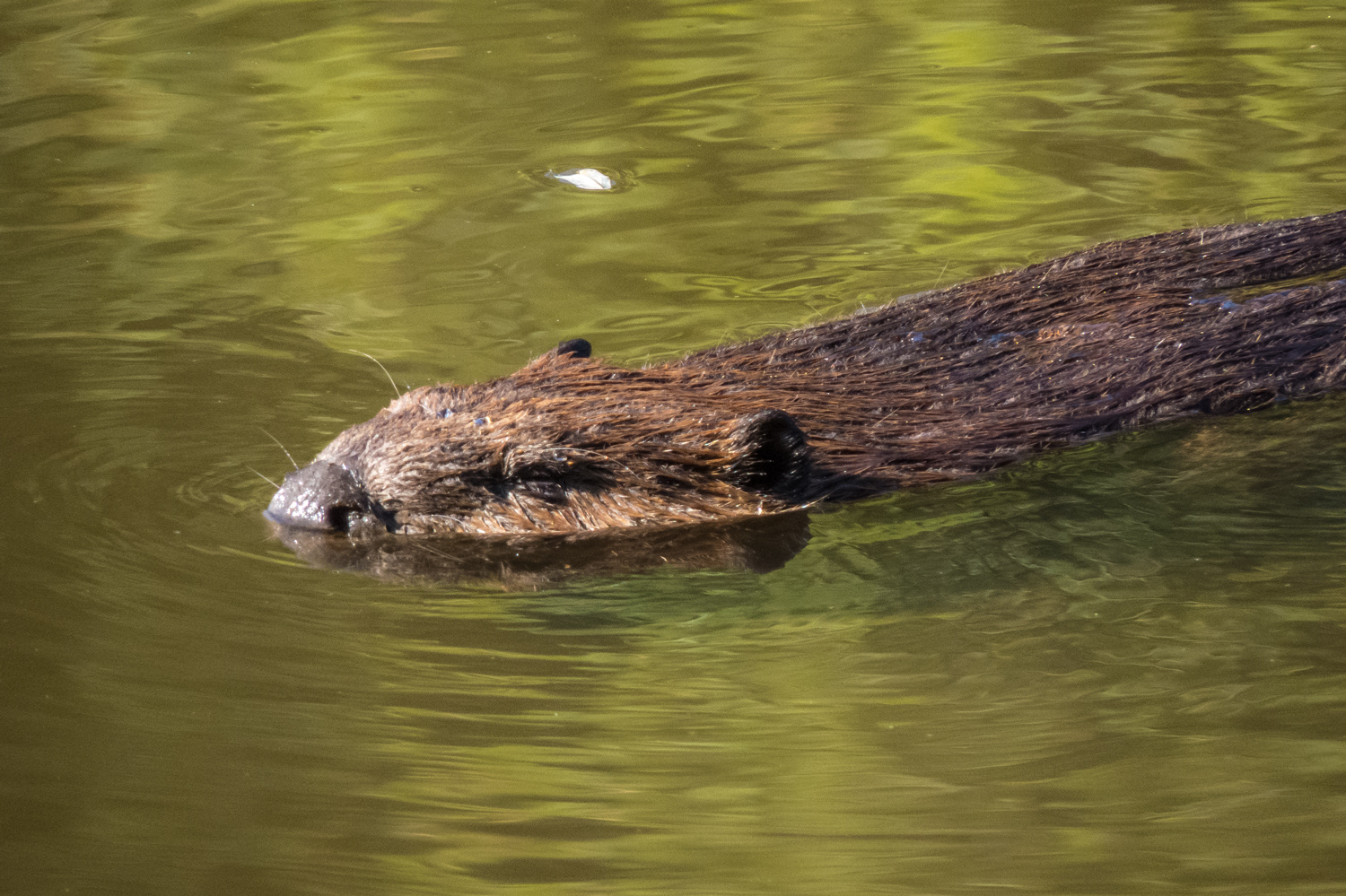
Beavers are nocturnal creatures and consequently the best times to see them generally are at dawn and at dusk. Dragonflies, on the other hand, mostly like bright sunlight and they are often most visible during the hottest part of the day.

When I was walking around the small pond at Jackson Miles Abbott Wetland Refuge yesterday morning around 10:00, therefore, I was expecting to see dragonflies. Imagine my shock when some motion in the water caught my eye and I spotted a North American Beaver (Castor canadensis) lazily swimming by parallel to the shore on which I was standing.

The light on the water was amazing and gave it a golden glow, as you can see in the first image. The beaver made a gentle u-turn and I was able to capture the ripples and the wake it created in the second image. The beaver was then swimming  toward the light and that is why you can see some of the details of the eye in that second image.

I then decided to switch from my DSLR with my 180mm macro lens that I used for the first two shots to my Canon SX50 superzoom camera. The third image is framed just as it came out of the camera with no cropping and it lets you see some of the texture of the beaver’s fur and the little hairs that stick out of its face. I also love the way the patterns of the water look in this image.

This little incident was a reminder to be eternally vigilant. Wild creatures don’t always follow the rules and may turn up in unexpected places at unanticipated times.

beaver

beaver

beaver

© Michael Q. Powell. All rights reserved.
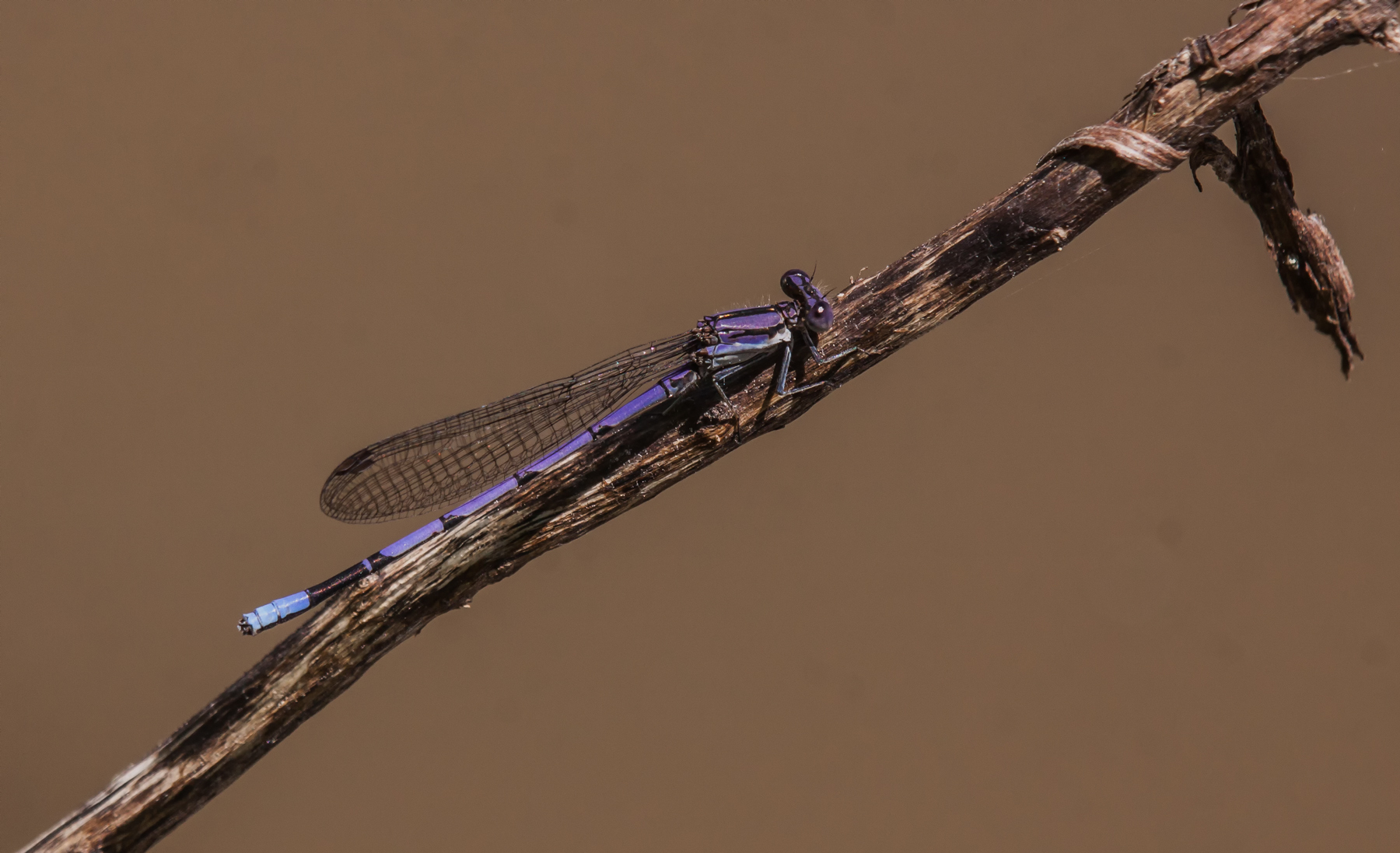
Read Full Post »

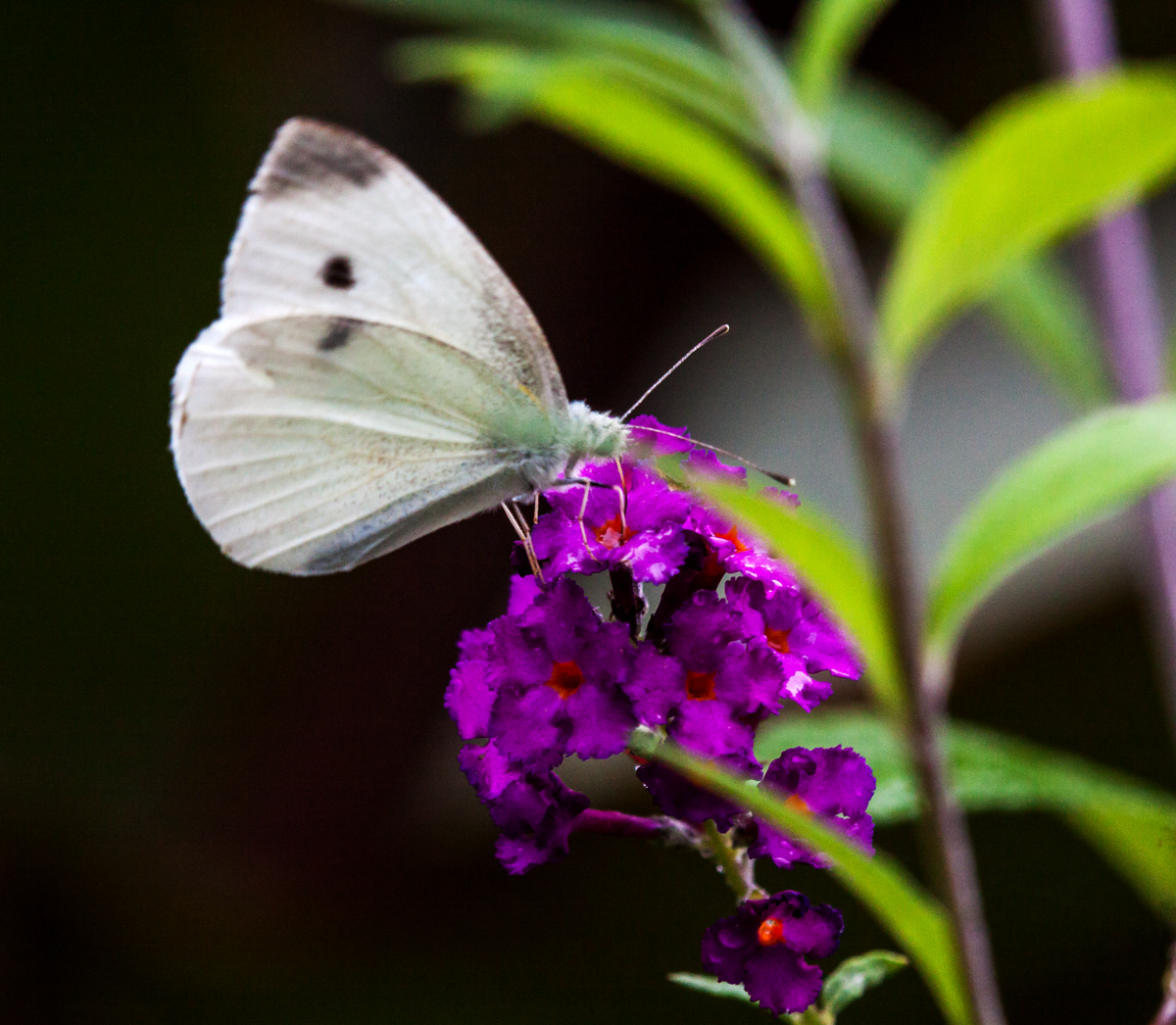
Today I decided to feature two butterflies that I have seen over the past week. I saw them at different times and at different places, so normally I would not put them together in a posting.

I was struck, however, by the contrast between the two of them. One of them, a Viceroy butterfly (Limenitis archippus), is brightly colored and hard to miss. The other, a Cabbage White (Pieris rapae) is so pale and nondescript that many people don’t notice it at all or dismiss it as being “only” a moth.

Beauty speaks to people in individual deeply personal ways. I find these two butterflies to be equally beautiful.

What do you think? Instinctively do you find one of these two to be more beautiful than the other?

Of course, there is no “right” answer. It seems to me that beauty is almost always subjective rather than universal. Our assessments of beauty tend to be influenced by a whole host of internal factors including our mood, personality, and background as much as by the external characteristics of the subject being considered.

Viceroy butterfly

Cabbage White butterfly

© Michael Q. Powell. All rights reserved


Read Full Post »

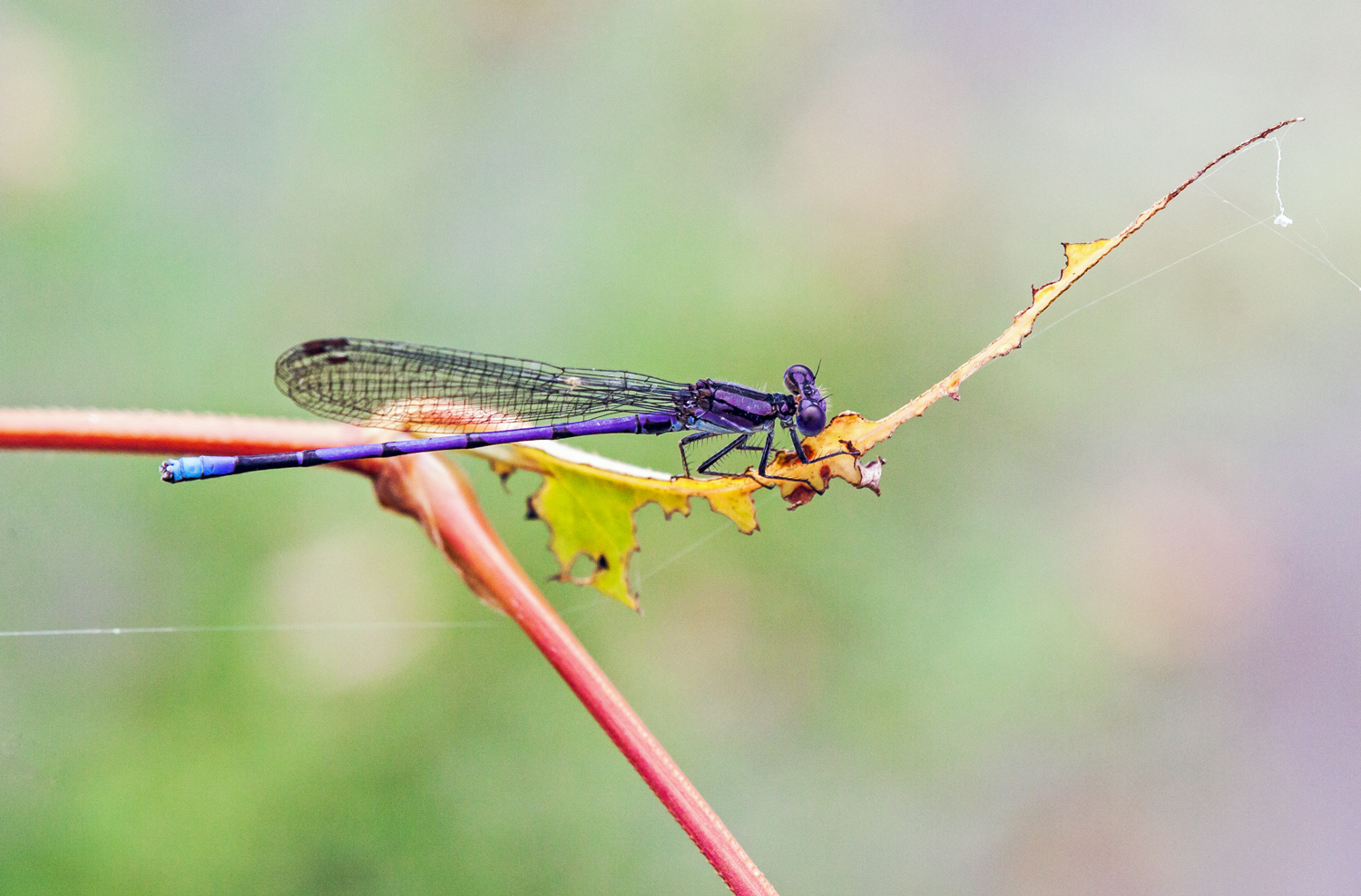
On Friday I was delighted to capture this image of one of my favorite damselflies, the beautifully colored Variable Dancer (Argia fumipennis), while exploring Jackson Miles Abbott Wetland Refuge. The red and yellow colors of the vegetation are vaguely autumn-like, a reminder that the clock is ticking for the end of the dragonfly/damselfly season this year. If only I could slow down the passage of time.

Variable Dancer

© Michael Q. Powell. All rights reserved


Read Full Post »

I was thrilled yesterday to see that at least one Swift Setwing dragonfly (Dythemis velox) is still present at Jackson Miles Abbott Wetland Refuge. Based on past records, the Swift Setwings should be with us at least until the end of September, but this has been a crazy year weatherwise, so I never know whether the different dragonflies will appear and disappear on schedule.

If you look really closely at the wings of this dragonfly, you’ll discover some really cool shapes and patterns—-not all of the individual “cells” in the wings are of the same shape and size. Together they form an intricate mosaic that reminds me of a stained glass window. (I encourage you to click on the image to see it in higher resolution.)

Swift Setwing

© Michael Q. Powell. All rights reserved

Read Full Post »

I’m a real beginner in watercolors and probably should stick to exercises and simple subjects, but that is not what I want to paint. I’ll look at some of my wildlife photos and think, “I’d like to try to paint that,” knowing full well that I don’t really have the skills to do so. I figure, though, that I’ll learn as I go along, seeing what works and doesn’t work. So yesterday evening I decided to have a go at painting an immature Cooper’s Hawk (Accipiter cooperii) that I photographed recently.

I figured the best chance I had at making something recognizable was to simplify things, especially smaller, less important elements, like the leaves in the branches surrounding the hawk. I decided that I was not going to worry about making them realistic. I also realized that it would be tough for me to capture the fine details of the feathers, so I went for a more stylized approach. I decided to simplify my color palette too and used only three colors—lemon yellow, ultramarine blue, and burnt sienna.

So what happened? You can see and judge the results yourself. Some parts of the painting came out pretty well and other parts could use a lot of improvement.

I learned a lot in the process of doing this painting, most notably that I really enjoy mixing colors. It was rare that I used one of the three colors straight out of the pan, with one exception being the yellow eye. I paid a lot of attention to trying to vary my colors, especially in areas like the feathers.

I realize now that painting details is really tough—I’m hoping that practice will help me improve my control of the brushes. The biggest thing, perhaps, that I need to work on is controlling the amount of water that is on the brush and on the paper. I was blindsided a couple of times when the result I was expecting did not happen, most often when I had too much water in my brush. (I also need a whole lot of practice with sketching.)

I didn’t really try to copy my photo, but thought you might enjoy seeing the photograph that served as a general reference for me as I painted.

Thanks to the many readers who have encouraged me to keep painting. It is a little humbling to see how crude my initial efforts are, but it really is a lot of fun creating something from scratch—there is definitely something therapeutic about playing with paints.

watercolor hawk

Cooper's Hawk

© Michael Q. Powell. All rights reserved.


Read Full Post »

I spotted this beautiful butterfly this past weekend at Jackson Miles Abbott Wetland Refuge. I am pretty sure that it is a Question Mark butterfly (Polygonia interrogationis), judging from the pattern of its wing spots.

While I may not be absolutely certain that it is a Question Mark butterfly, its beauty is unquestionable.

Question Mark butterfly

© Michael Q. Powell. All rights reserved.

Read Full Post »

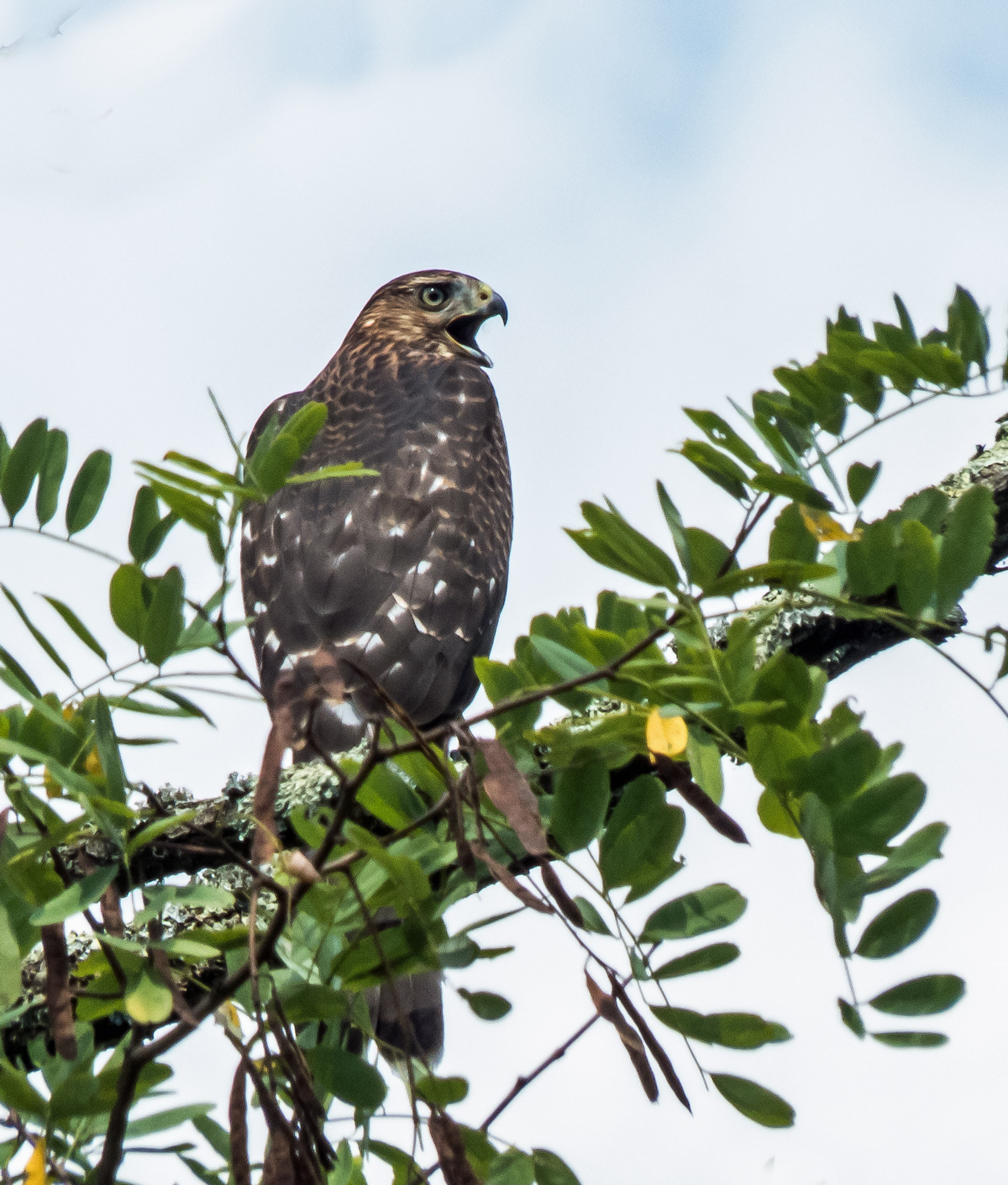
At this time of the year it’s tough for me to photograph birds—often when I spot them, they are mostly hidden in the foliage. This hawk, however, cooperated by perching out in the open this past Saturday at Jackson Miles Abbott Wetland Refuge. I was uncertain about the identification, so I checked with the experts in several Facebook birding groups and they indicated that this is an immature Cooper’s Hawk (Accipiter cooperii).

Cooper’s Hawks belong to the group of hawks called accipiters, also known as bird hawks. Accipiters have short rounded wings and a long tail and are better adapted to hunting in the woodlands that most other hawks.

Cooper's Hawk

© Michael Q. Powell. All rights reserved.

Read Full Post »

From time to time I will try to capture images of dragonflies in flight. Even under the best of circumstances it is a tough challenge for dragonflies are small, fast, and agile. Occasionally they will hover briefly, though most of the time it seems they choose to do so only when they are a long way away from me.

This past Monday I visited Jackson Miles Abbott Wetland Refuge and was surprised at the number of Swift Setwing dragonflies (Dythemis velox) that I observed there. As far as I know, this is the only location in our area where this species can be found. Swift Setwings are primarily a southern species, but seem to be migrating slowing northward.

Swift Setwings are  pretty small, about 1-6 to 2 inches long (42 to 50 mm), and the males, the only ones that I generally see, tend to perch at the edge of the water in overhanging vegetation. On this particular day, the dragonflies seemed to be particularly skittish, flying off as soon as I approached them. That was what prompted me to try to photograph them in flight. My Tamron 180mm macro is notoriously slow in focusing and tends to hunt a lot, so I switched to manual focusing. I made a lot of attempts and managed to get a few photos that were relatively in focus like the second image below.

While I was tracking one Swift Setwing in my viewfinder, a second one flew in and the two hooked up in mid-air in a mating position. They held the position for only a brief moment before disengaging and flying away in separate directions. I will spare you the anatomical details, but, as you can see in the first photo, dragonflies are quite acrobatic and flexible when mating.

So if you want a real photographic challenge, go out and see if you can capture some images of dragonflies in flight. It’s a fun challenge for me, even when I am not successful. If others see you doing so, it will reinforce the notion that wildlife photographers are a bit crazy, a perception that is accurate in many cases.

Swift Setwing

Swift Setwing

© Michael Q. Powell. All rights reserved.


Read Full Post »

Have you ever watched sprinters prepare for the start of a race? They get into their starting blocks and lean forward, ready to push off at the sound of the gun. Well, that’s what some scientist had in his mind when he first saw today’s dragonfly, the Swift Setwing (Dythemis velox). The forward tilting of the wings is very distinctive and makes this dragonfly easy to identify.

This is mostly a southern dragonfly and I was thrilled when I spotted one two years ago, the first time that a Swift Setwing had been documented in my county. Since then I have looked forward to finding them each year at Jackson Miles Abbott Wetland Refuge, where they appear to have established themselves.

Last weekend I spotted my first Swift Setwing of the season and I was able to capture these images.

Swift Setwing

Swift Setwing

© Michael Q. Powell. All rights reserved.
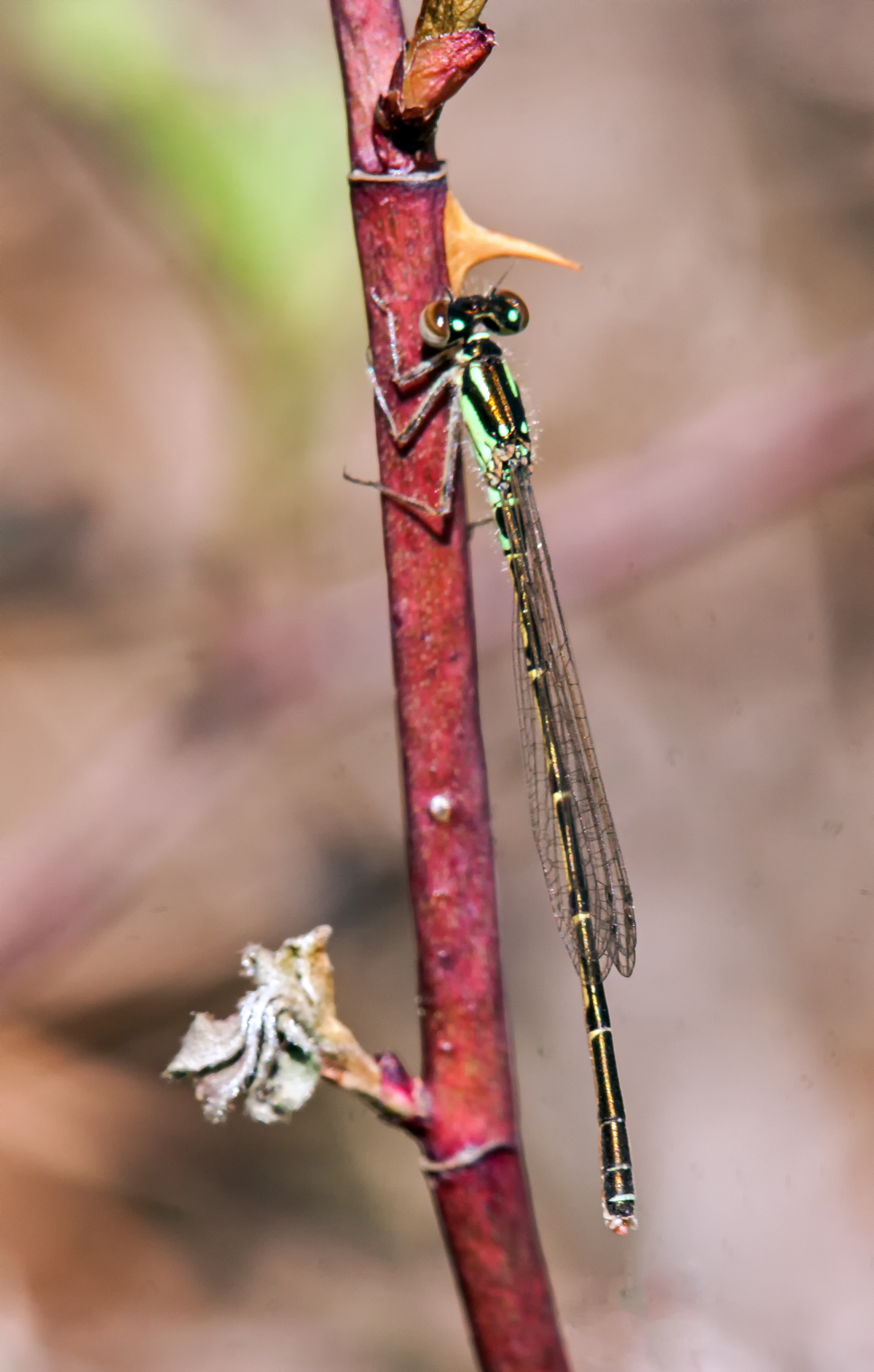
Read Full Post »

What’s your strategy for beating the heat? One of the favorite approaches here in the Washington D.C. area is to stay indoors with the air conditioning cranked up. For a wildlife photographer, though, that is not really an option. My subjects manage to survive in the heat of the day and I need to be other there if I want to photograph them.

Birds seem to be most active early in the day and late in the day, when temperatures are usually coolest, but many dragonflies seem to thrive in bright, direct sunlight. How do they do it? How do they regulate their body temperatures?

If you have ever observed dragonflies on a hot summer day, you may have seen some of them perching in a hand-stand like position, like an Olympic gymnast. This is often referred to as the obelisk posture. The abdomen is raised to minimize the surface area exposed to the sun and when the sun is close to directly overhead, the vertical alignment of the dragonfly’s body suggests an obelisk, like the Washington Monument that I see every time that I venture into the city.

Here are a couple of shots of a Lancet Clubtail dragonfly (Gomphus exilis) that I spotted this past Monday at Jackson Miles Wetland Refuge, only a few miles from where I live. Unlike some clubtail dragonflies, like the Dragonhunter that I featured recently, the Lancet Clubtail is pretty small, about 1.7 inches (43 mm) in length. What I find to be particularly stunning about this dragonfly are its deep blue eyes, which seemed to draw me in.

Initially the dragonfly had its abdomen at an angle, but gradually it kept raising it higher until it ended up in an almost perfect obelisk pose. If I were a judge at the Olympics, I would give this dragonfly a perfect score of 10.

Lancet Clubtail

Lancet Clubtail

© Michael Q. Powell. All rights reserved.
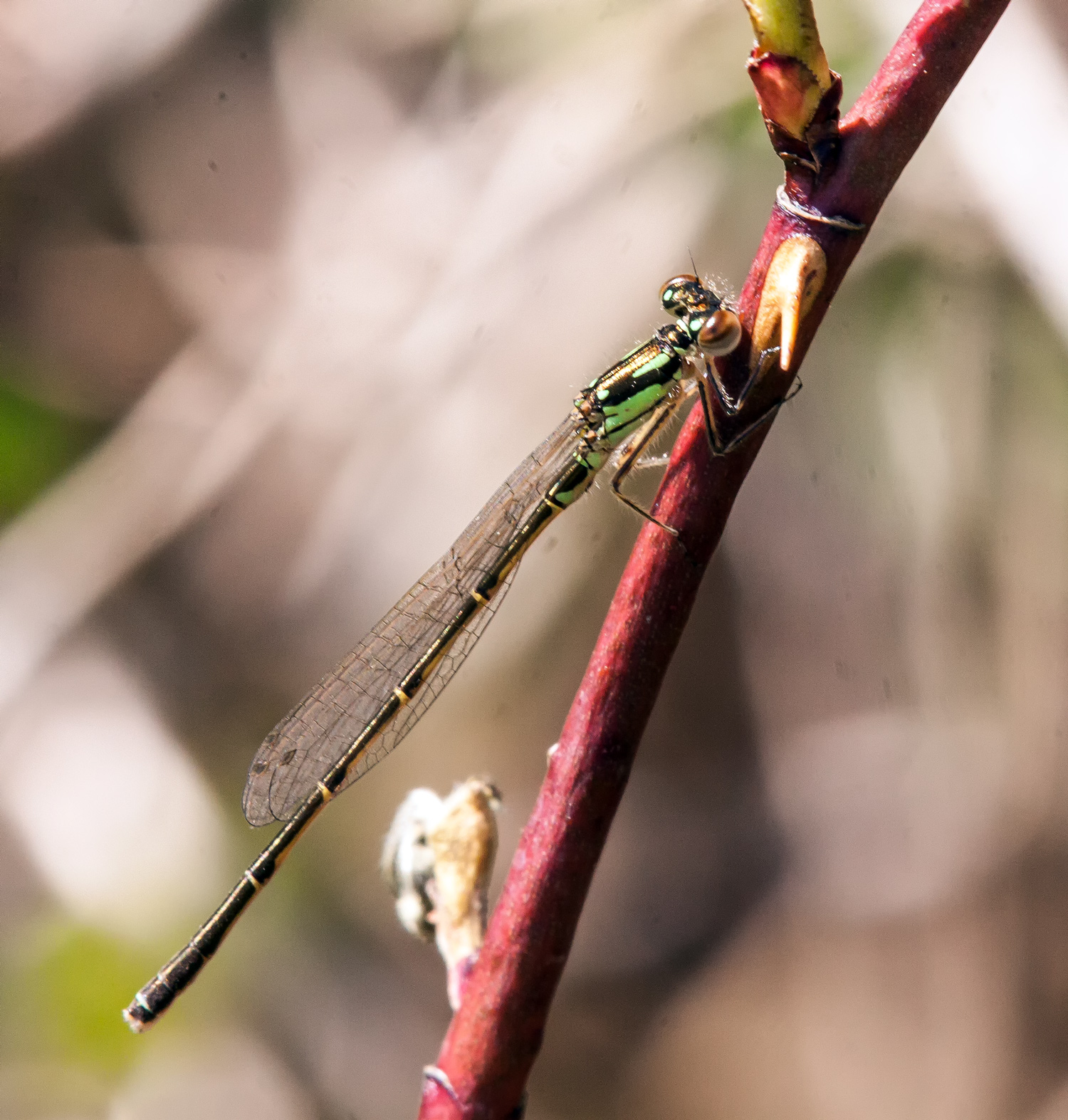
Read Full Post »

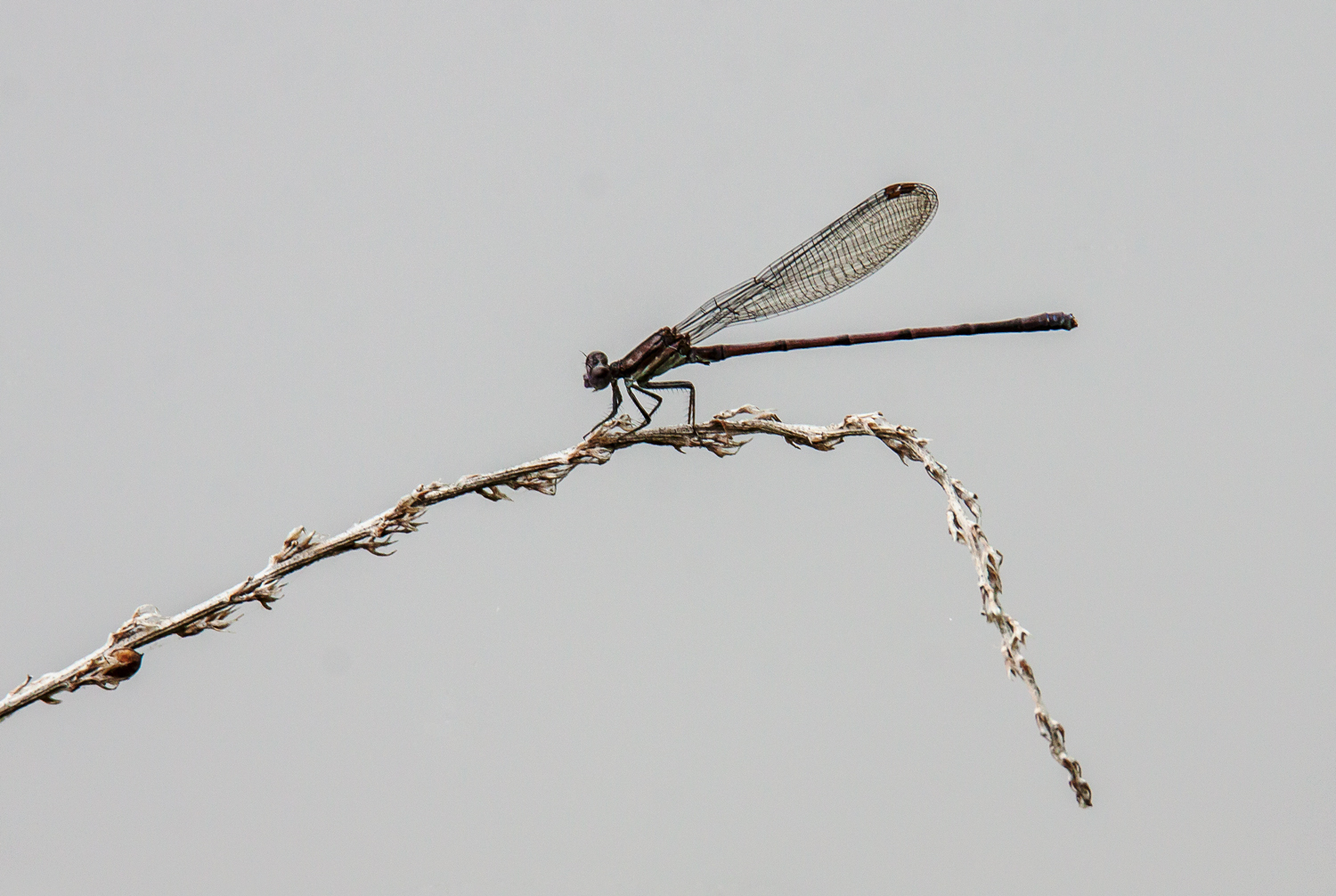
I love close-up photography, but sometimes it is good when necessity (or choice) compels me to shoot from a distance. This image has the simplest of compositions—a damselfly and a stalk on which to perch—but I like the way that the elements combined to create a sense of tranquility when I captured this moment this past Monday at Jackson Miles Abbott Wetland Refuge.

As I recall, the light was coming from in front of me, which caused the damselfly to appear as a partial silhouette. Without the normal color information, it’s hard for me to identify the species of damselfly with any degree of certainty. One of the experts on a Facebook forum, however, suggest that it might be a Variable Dancer damselfly (Argia fumipennis), the sames species that appears at the top of my blog’s home page.  As for the dried-out stalk that serves as a perch for the damselfly, I have no idea what kind of plant it is.

tranquil damselfly

© Michael Q. Powell. All rights reserved.


Read Full Post »

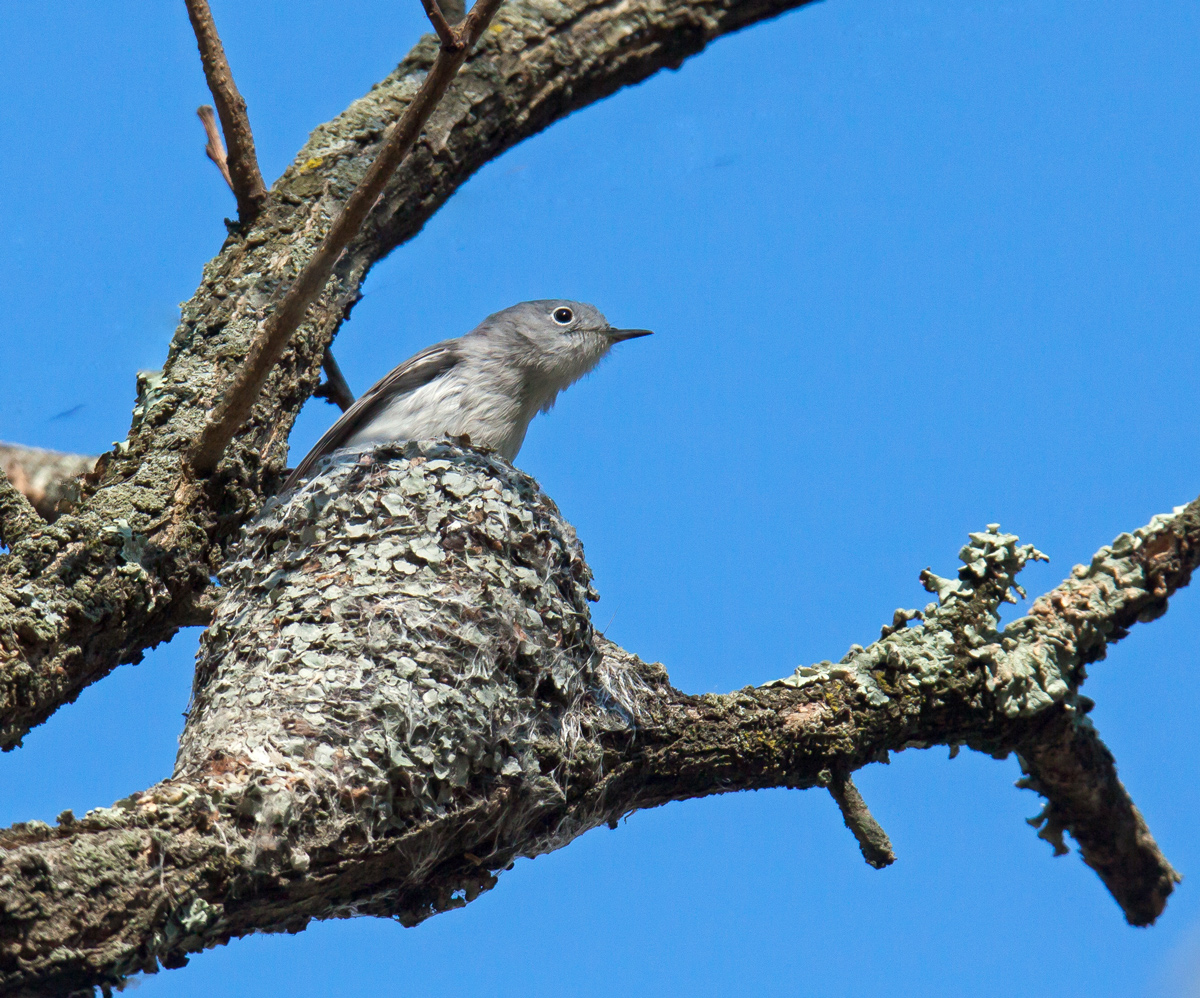
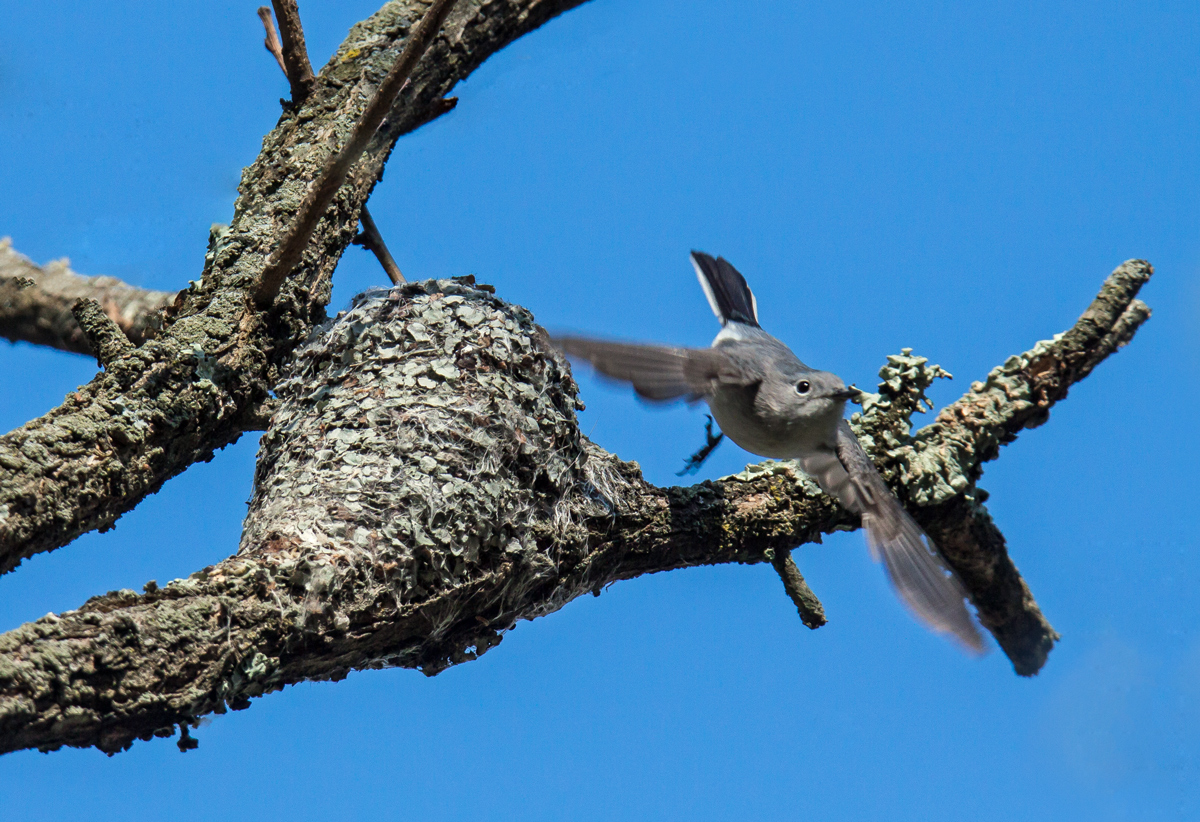
I don’t know for sure if there were babies in this nest on Monday, but this adult Blue-gray Gnatcatcher (Polioptila caerulea) kept bending forward into the nest, including the moment in the first image when it had what looked to be an insect in its mouth. Was it feeding some young ones? I have seen numerous photos this spring of baby birds with wide open mouths and I have been longing to capture some images like that.

Several weeks ago I watched as two gnatcatchers worked on this nest at Jackson Miles Abbott Wetland Refuge here in Northern Virginia. I marveled at their patience and at their amazing craftsmanship. They would bring small bits of material into the nest (spider webs and lichen from what I have read) and place them carefully. Then they would rotate their bodies while sitting in the nest to compact the material.

It was a bit of a challenge to capture these shots. I was shooting upwards and there was a leafy canopy that filtered out a lot of the light. I also tried really hard not to disturb the birds, so I kept my distance, avoided using flash, and limited the time that I was shooting.

Are there babies in the nest? If they are not there now, they should be coming soon. I will be sure to check out the nest when I return to this little wetland refuge some time in the near future and maybe then I will be able to capture shots of the little ones being fed.


Blue-gray Gnatcatcher

Blue-gray Gnatcatcher


© Michael Q. Powell. All rights reserved.

Read Full Post »

Blue Dasher dragonflies (Pachydiplax longipennis) are one of the most common and widespread dragonfly species in my area. You can get so used to their presence that you stop paying attention to them, which I think is a mistake, for in doing so you will miss their amazing beauty. The colors and patterns of this little dragonfly are stunning.

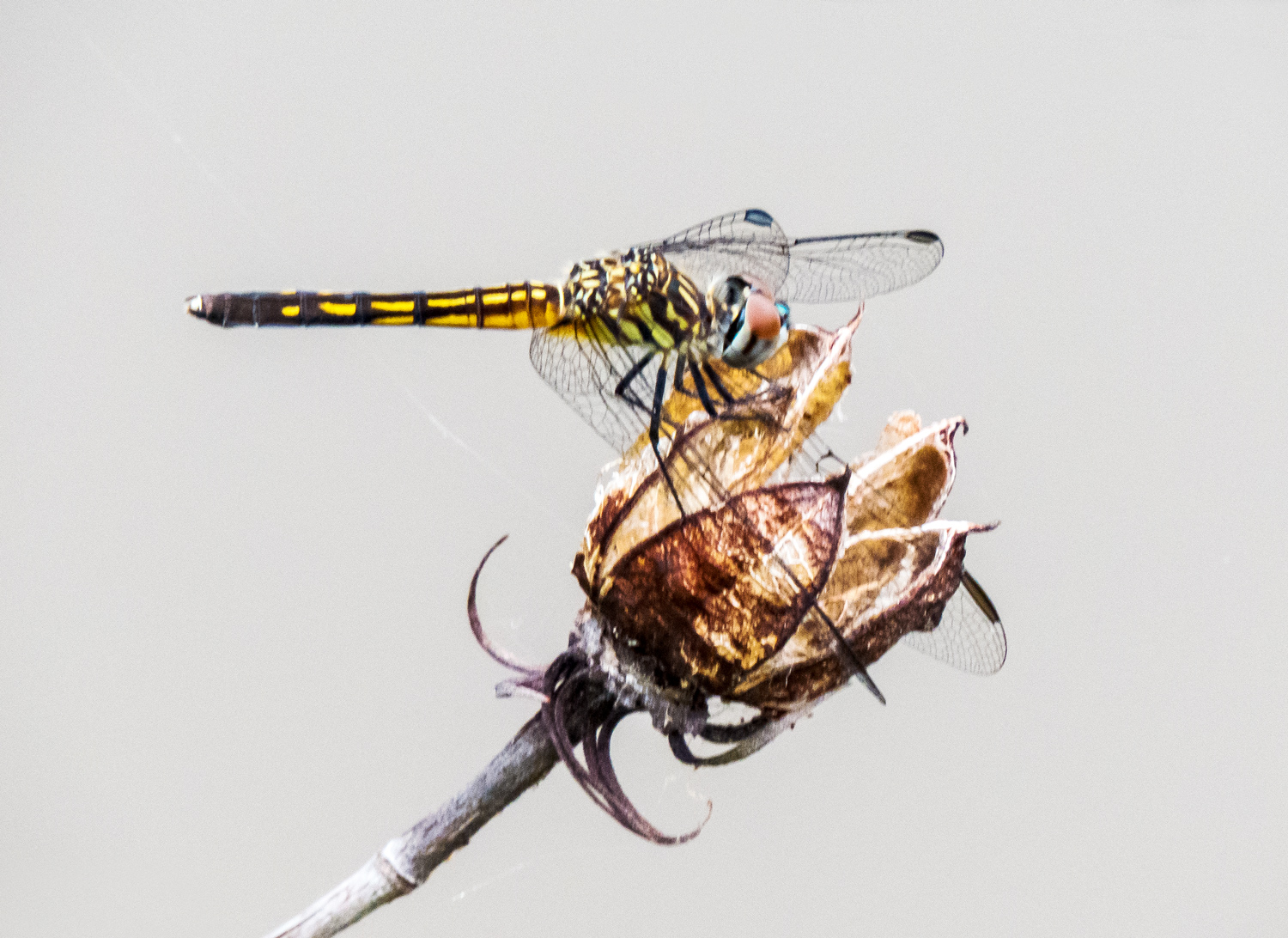
Here are a couple of shots of Blue Dashers that I captured this past weekend at Jackson Miles Abbot Wetland Refuge. This early in the season, when the dragonflies are newly emerged, the colors seem really saturated and fresh—later in the season the colors tend to become duller and more faded. I was shooting at the edge of a small pond and the water in the background turned into a neutral gray that gives the images an artistic feel, almost like they were shot in a studio environment. The uncluttered background helps to draw your attention to the dragonflies themselves and especially to those wonderful two-toned eyes. (The male’s eyes will eventually turn into a more uniform turquoise blue shade.)

In case you are curious, the Blue Dasher in the first shot looks to be a female and the one in the second image appears to be an immature male.

Blue Dasher

Blue Dasher

© Michael Q. Powell. All rights reserved.

Read Full Post »

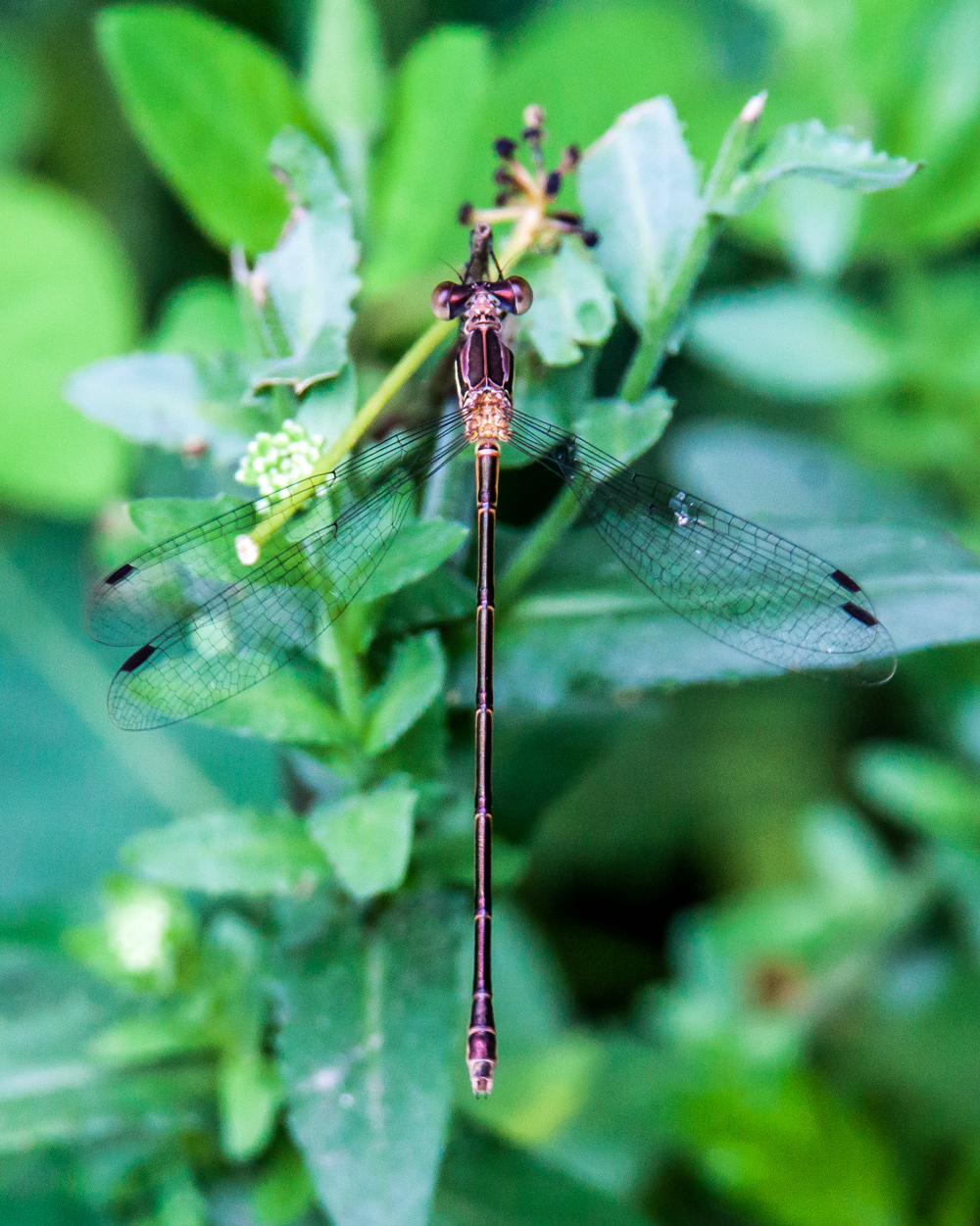
Although many damselflies are tiny in size and difficult to spot from a distance, spreadwing damselflies are a notable exception. Spreadwing damselflies tend to be quite a bit larger than other damselflies and they rest with their wings partly open in the “spreadwing” posture that gives the family its common name. (Most other damselflies rest with their wings held closed, usually above their abdomen, which makes them harder to see and to photograph.)

When I flushed this damselfly yesterday at Jackson Miles Abbott Wetland Refuge, I was immediately struck by the length of its body—it seemed to be really long and skinny.  The spreadwing family is not all that big, but I still had trouble identifying the species of the damselfly. As is usually the case in this kind ofsituation, I turned to my local expert, fellow dragonfly enthusiast and blogger Walter Sanford, who identified it as a female Slender Spreadwing damselfly (Lestes rectangularis).  I sometimes complain about the inappropriateness of the names of species, but in this case “slender spreadwing” is a perfect match for the subject that I observed.

In case you are curious about the photo, I shot it with my Tamron 150-600mm telephoto zoom lens on my Canon 50D DSLR. Over the winter I have become accustomed to using a monopod for stability and for this shot, I lowered the monopod and shot while kneeling. One of the limitations of the lens is that the minimum focusing distance is almost 9 feet (274 cm). At that distance, the camera’s autofocus system had trouble locking on the slender body of the damselfly—it kept focusing on the vegetation—so I resorted to manual focusing.

Most people are more familiar with dragonflies than with damselflies, but I encourage you to slow down and search for beautiful damselflies, the smaller members (in most cases) of the order of Odonata to which dragonflies also belong.


Slender Spreadwing

© Michael Q. Powell. All rights reserved.

Read Full Post »

Common Baskettail dragonflies (Epitheca cynosura) were flying yesterday at Jackson Miles Abbott Wetland Refuge and I managed to capture a few shots of them while they were patrolling over the pond.

There are some really cool things about dragonflies that you can observe from the photos. In the first one, you can see how dragonflies can eat on the move. Their amazing aerial skills help them to snag smaller insects out of the air. This is particularly important for species like this one that seem capable of flying for hours on end without pausing to perch. In both images you can see how the dragonfly tucks up its legs to make it more aerodynamic while flying.

So how do I get photos like this? Above all else, patience is the key. There were several dragonflies flying over the water yesterday and I observed each of them, trying to discern a pattern in their flights. The others were flying more erratically, but this one seemed to hover a bit from time to time. The subject was too small for my camera to grab focus quickly, so I resorted to focusing the lens manually.

It took a lot of shots, but eventually I was able to capture a few images that let you see some of the beautiful details of the dragonfly, particularly its very striking eyes. In case you are curious about the differing backgrounds, I shot the first image while pointing down at the dragonfly, while for the second one I was more level with the dragonfly, which caused the background to essentially disappear.

Common Baskettail

Common Baskettail

© Michael Q. Powell. All rights reserved.
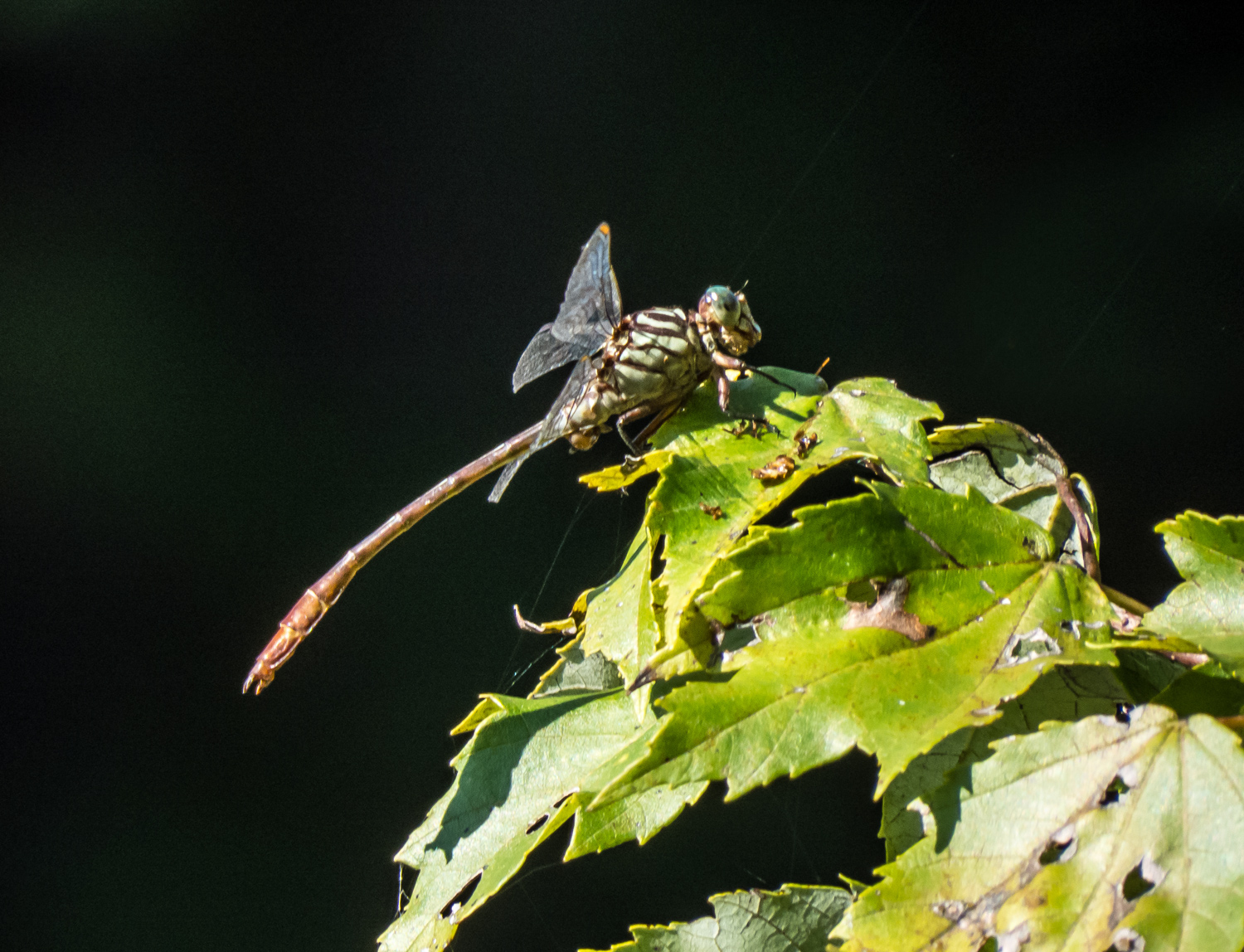
Read Full Post »

I was thrilled yesterday when I managed to spot a tiny Blue-gray Gnatcatcher (Polioptila caerulea) in a nest at Jackson Miles Abbott Wetland Refuge. These little birds use lichen and spiderwebs to make nests that blend in amazingly well with the trees on which they are found and it is unlikely that I would have been able to spot the nest if the bird had not been initially sitting in it.

Blue-gray Gnatcatcher

Blue-gray Gnatcatcher

Blue-gray Gnatcatcher

© Michael Q. Powell. All rights reserved.

Read Full Post »

« Newer Posts - Older Posts »