Feeds:
Posts
Comments

Posts Tagged ‘Huntley Meadows Park’

It’s just starting to get light outside, the dawning of a new year. It’s time to hang new calendars and to try to remember 2017 on my checks. I’m not really into setting resolutions, but New Year’s Day is a good time to stop to reflect on the past year. Then it will be time to boldly step into the as yet uncharted territories of 2017,  certain only that there will be both challenges and opportunities—I hope that I will learn and grow irrespective of the circumstances,

Best wishes to all those who read and/or view my blog for a healthy and happy 2017.

I took these shots as the sun was rising early yesterday morning at Huntley Meadows Park for the final time in 2016. The treeline to the east blocked me from seeing the actual sunrise, but the colors were spectacular for a few brief moments.

sunrise

sunrise

© Michael Q. Powell. All rights reserved.
Read Full Post »

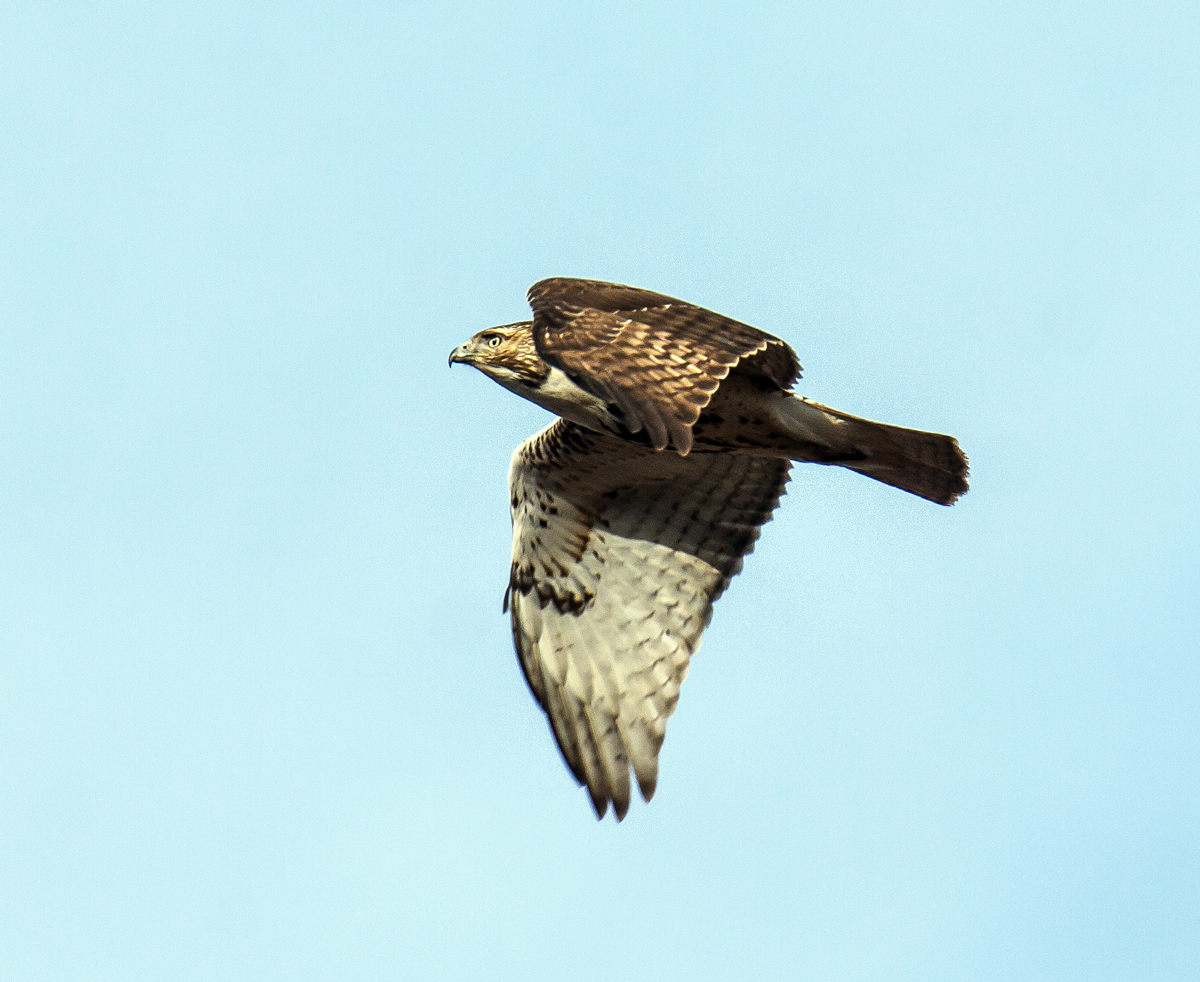
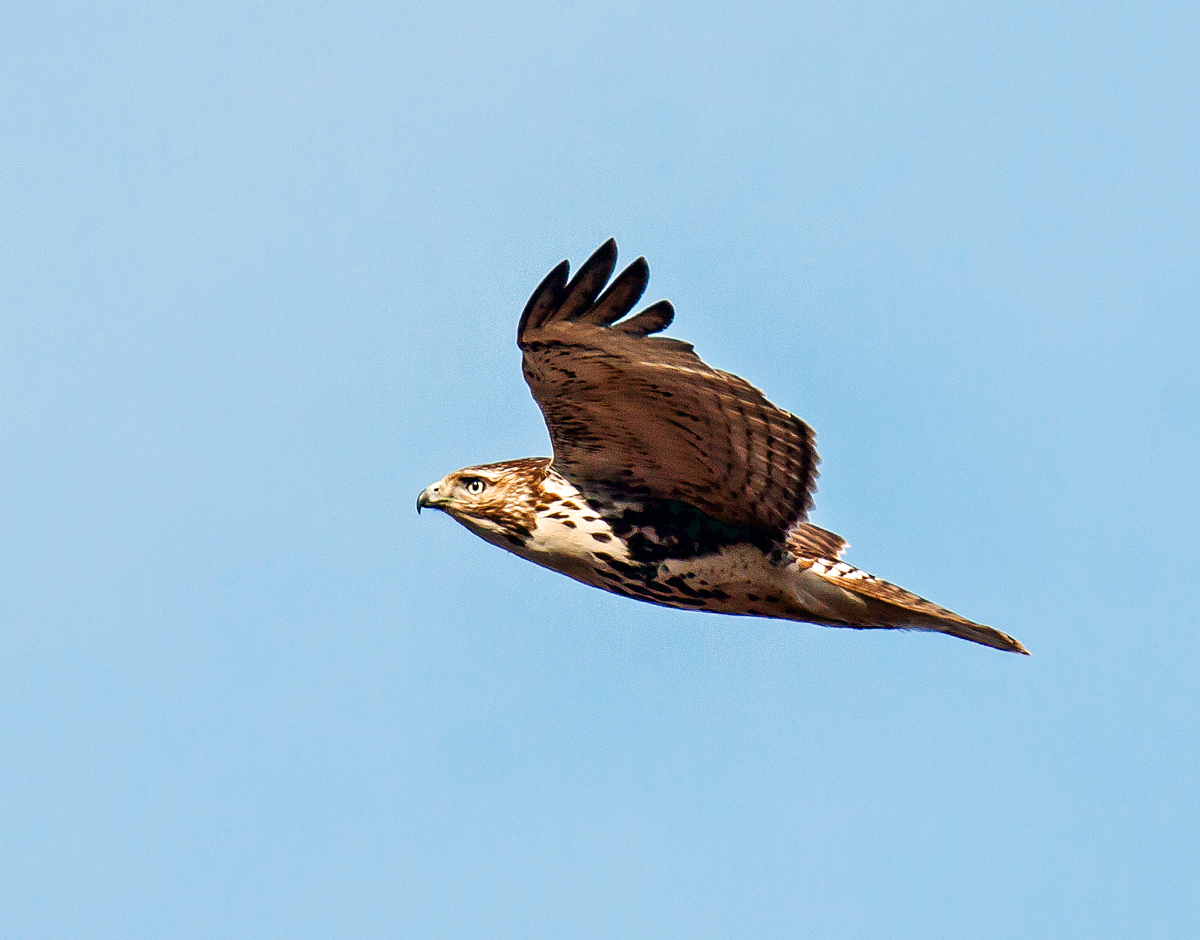
When I first caught sight of this bird in the distance, I thought it might be a Red-shouldered Hawk, but I may have gotten lucky and captured some shots of a Merlin (Falco columbarius) this morning at Huntley Meadows Park. The past few months there have been repeated sightings of a pair of these falcons, but I personally have seen one of them on only two occasions. After so many recent days of cloud-filled skies, it was nice to have some sunshine and blue skies today, though the temperature was right around the freezing mark when I set out in the pre-dawn darkness.

UPDATE: One of my Facebook viewers has suggested that this looks to him to be an immature Red-tailed Hawk. As you can see, bird identification is not one of my strengths.


Merlin

Merlin

© Michael Q. Powell. All rights reserved.
Read Full Post »

Some birds are so skittish that they fly away the very second that they detect my presence. Other birds are so tolerant or have gotten so used to humans that they will come right up to me or allow me to get pretty close to them. Northern Shovelers (Anas clypeata) are somewhere in the middle—generally they will turn their backs to me and swim away, but don’t fly away.

On a recent trip to my favorite marshland park, Huntley Meadows Park, I spotted a small group of Northern Shovelers. They were in constant motion as they foraged in the vegetation in the far reaches of one of the small ponds. It was a bit frustrating trying to get shots of them, because they spent most of the time swimming with their heads partially submerged.

I waited patiently and finally one of the handsome males briefly stopped swimming and gave me a half-smile and I was able to capture this image.

Northern Shoveler

© Michael Q. Powell. All rights reserved.


Read Full Post »

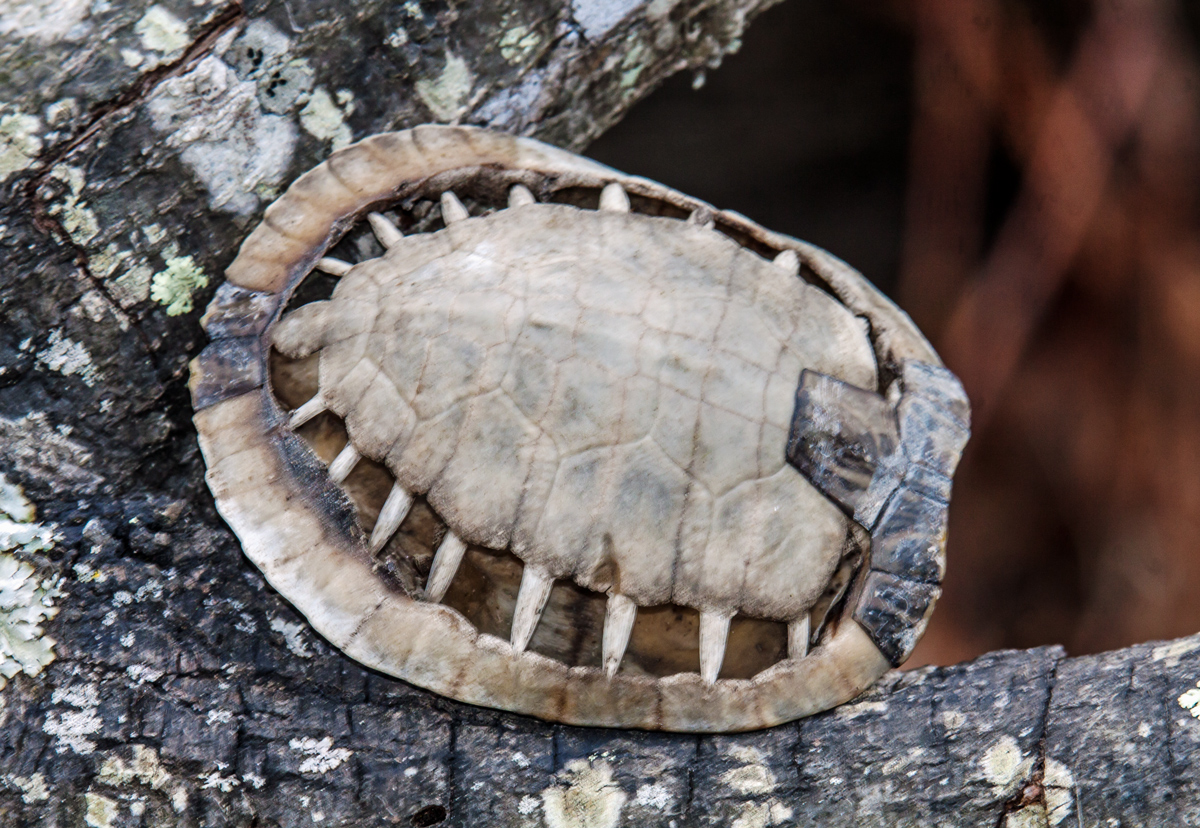
I never quite know what I will see when I wander about in the back areas of Huntley Meadows Park. This past Monday I came upon this partially deteriorated turtle shell. Initially it was in a muddy area adjacent to a beaver pond, but I moved it onto branches of a fallen tree to take the photos.

I just love the organic shapes and designs of the shell and the way that you can see some of its underlying structure.

turtle shell

turtle shell

© Michael Q. Powell. All rights reserved.
Read Full Post »

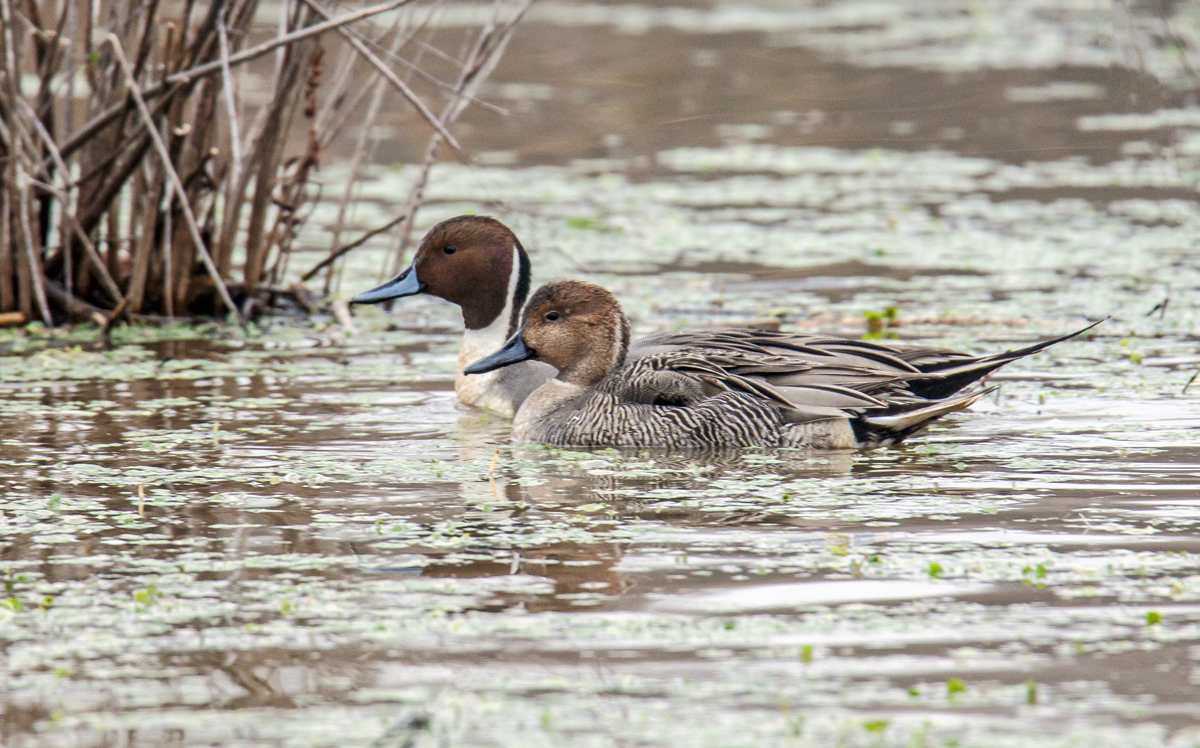
It was really cool yesterday to see some elegant Northern Pintail ducks (Anas acuta) poking about in the distant weeds of Huntley Meadows Park. At first I thought that the ducks in this first image were male-female couple. The more I look at the image, however, the more I think the duck in the foreground may be an immature male that will eventually look like the male in the background. The Northern Pintails in the second image look more to me like a male-female couple.

Northern Pintail

Northern Pintail

© Michael Q. Powell. All rights reserved.

Read Full Post »

I made a quick trip to Huntley Meadows Park on Christmas Day to see what creatures were stirring and was surprised to see some turtles had surfaced to bask in the sun. The flash of red on this Red-eared Slider turtle (Trachemys scripta elegans) made its colors seasonally appropriate and it did seem to have sandy claws.

Red-eared Slider

© Michael Q. Powell. All rights reserved.
 

Read Full Post »

We haven’t yet had snow, but Monday there were quite a few shovelers at Huntley Meadows Park. Northern Shovelers (Anas clypeata) are pretty easy to identify because of their cartoonishly elongated bills (and striking yellow eyes).

Northern Shoveler

Northern Shoveler

Northern Shoveler

Northern Shoveler

© Michael Q. Powell. All rights reserved.

Read Full Post »

Sometimes I have this feeling that the birds and other creatures that I photograph are playing games with me. On Monday this Red-headed Woodpecker (Melanerpes erythrocephalus) seemed to be playing peek-a-boo with me at Huntley Meadows Park. It was hiding at the top of a broken-off tree and at irregular intervals would show its face for just a split second and then immediately pull it back.

As I look at the woodpecker’s head I can see streaks of brown, rather than the solid red of an adult, suggesting that this may be a juvenile redhead—maybe that’s why it likes to play games.

Red-headed Woodpecker

© Michael Q. Powell. All rights reserved.

Read Full Post »

Is it possible to post too many photos of Bald Eagles (Haliaeetus leucocephalus)? I don’t think so. Here’s a shot of one I saw yesterday flying in the distance at Huntley Meadows Park. It was a nice bonus that we had sunshine and blue skies after a series of dreary, overcast days, even though it was still pretty cold outside.

I see Bald Eagles, including juvenile ones, often enough at the park that I frequently wonder if there is a nest hidden somewhere the park. I have wandered through some pretty remote areas of the park, but so far have been unsuccessful in locating a nesting site.

Bald Eagle

Bald Eagle

© Michael Q. Powell. All rights reserved.

Read Full Post »

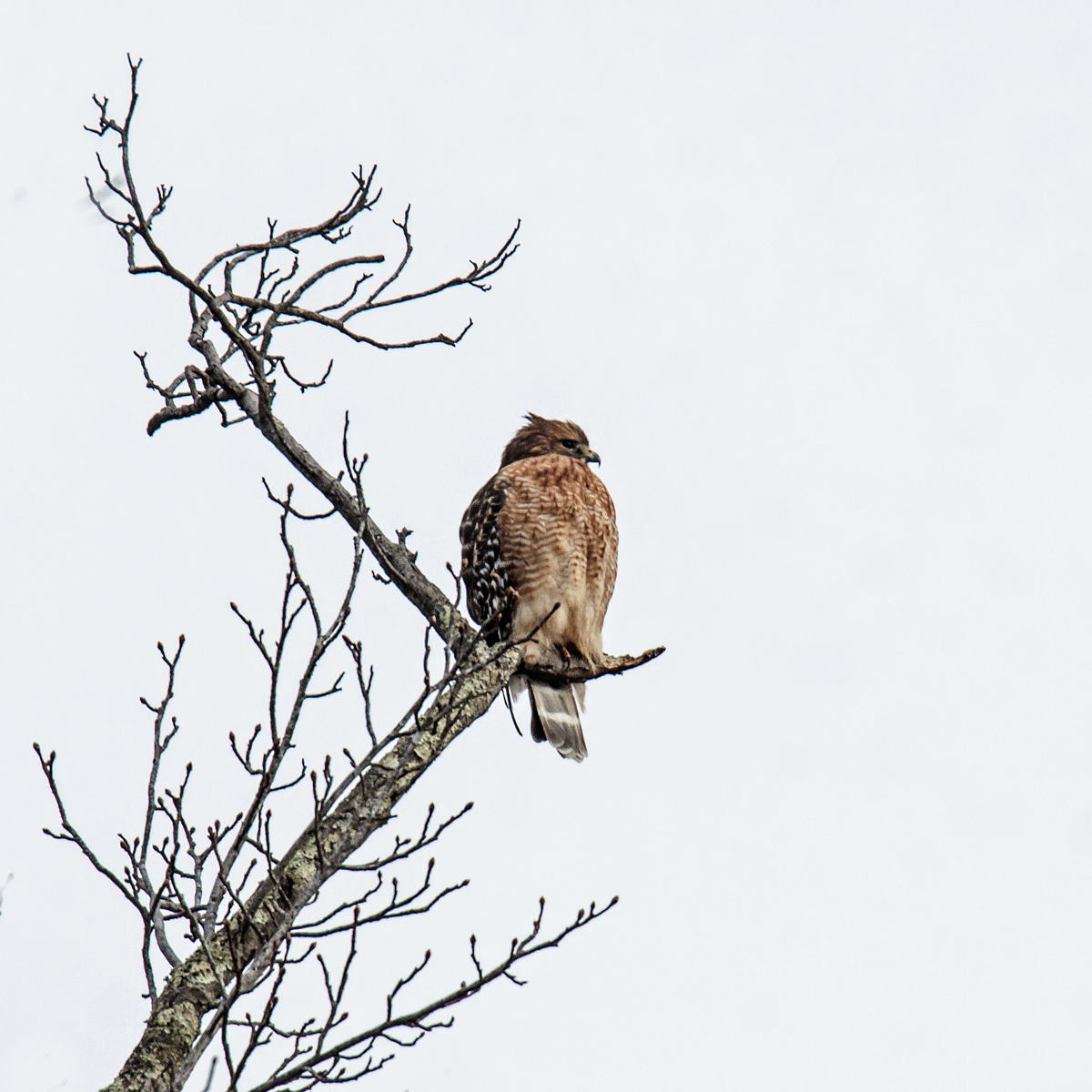
High in the trees on a bleak, overcast day, this Red-shouldered Hawk (Buteo lineatus) was keeping watch over Huntley Meadows Park last Friday. As I was getting ready to post this image, I realized that I photographed a hawk on exactly the same perch a little over a month earlier. I decided to reprise  that earlier photo to show you how much the foliage has changed. I suspect, however) that it is not the same hawk.

Red-shouldered Hawk


Res-shouldered Hawk

© Michael Q. Powell. All rights reserved.

Read Full Post »

The sky was pretty overcast early Friday morning at Huntley Meadows Park and the light was limited, so I had to crank up my ISO to 1600. My long telephoto zoom lens works best when there is good light, so I was thrilled that I somehow managed to capture some identifiable shots of this Bald Eagle (Haliaeetus leucocephalus) as it circled around me before flying away.

Any day I see a bald eagle is a wonderful day.

Bald Eagle

Bald Eagle

Bald Eagle

© Michael Q. Powell. All rights reserved.

Read Full Post »

Early yesterday morning it was frigid at Huntley Meadows Park and this Mourning Dove (Zenaida macroura) appeared to have fluffed up its feathers in an attempt to retain its body heat. Normally Mourning Doves are very skittish, but this one remained on the branch for quite a while as I slowly moved into position to take a series of shots.

Mourning Dove

Mourning Dove

Mourning Dove

© Michael Q. Powell. All rights reserved.

Read Full Post »

It was unusually cold when I set out this morning to go shooting, about 18 degrees F (minus 8 C). I always worry about birds in the wild being able to survive when it gets this cold, but somehow they manage.

As I was walking along the boardwalk at Huntley Meadows Park, I spotted a bird in the distance bobbing up in a tree. I couldn’t figure out what was going on until I got closer and could see that the bird was reaching up to grab some red berries that were just above its head.

At first I thought that this was an immature American Robin, but the more I look at the photos, the more I think that it is probably a different bird species. I would welcome assistance in identifying this mystery bird that obviously was berry hungry.

UPDATE:  Thanks to several knowledgeable folks on Facebook, I have learned that the bird is a Hermit Thrush (Catharus guttatus) and the plant with the berries is an American Bittersweet vine (Celastrus scandens).

berry hungry

berry hungry

© Michael Q. Powell. All rights reserved.

Read Full Post »

Whenever a vulture is circling overhead, I like to make sure I move about from time to time. This Turkey Vulture (Cathartes aura) at Huntley Meadows Park didn’t seem to be paying too much attention to me, but you can never be too cautious, especially if you have not taken a shower that morning.

Turkey Vulture

Turkey Vulture

© Michael Q. Powell. All rights reserved.

Read Full Post »

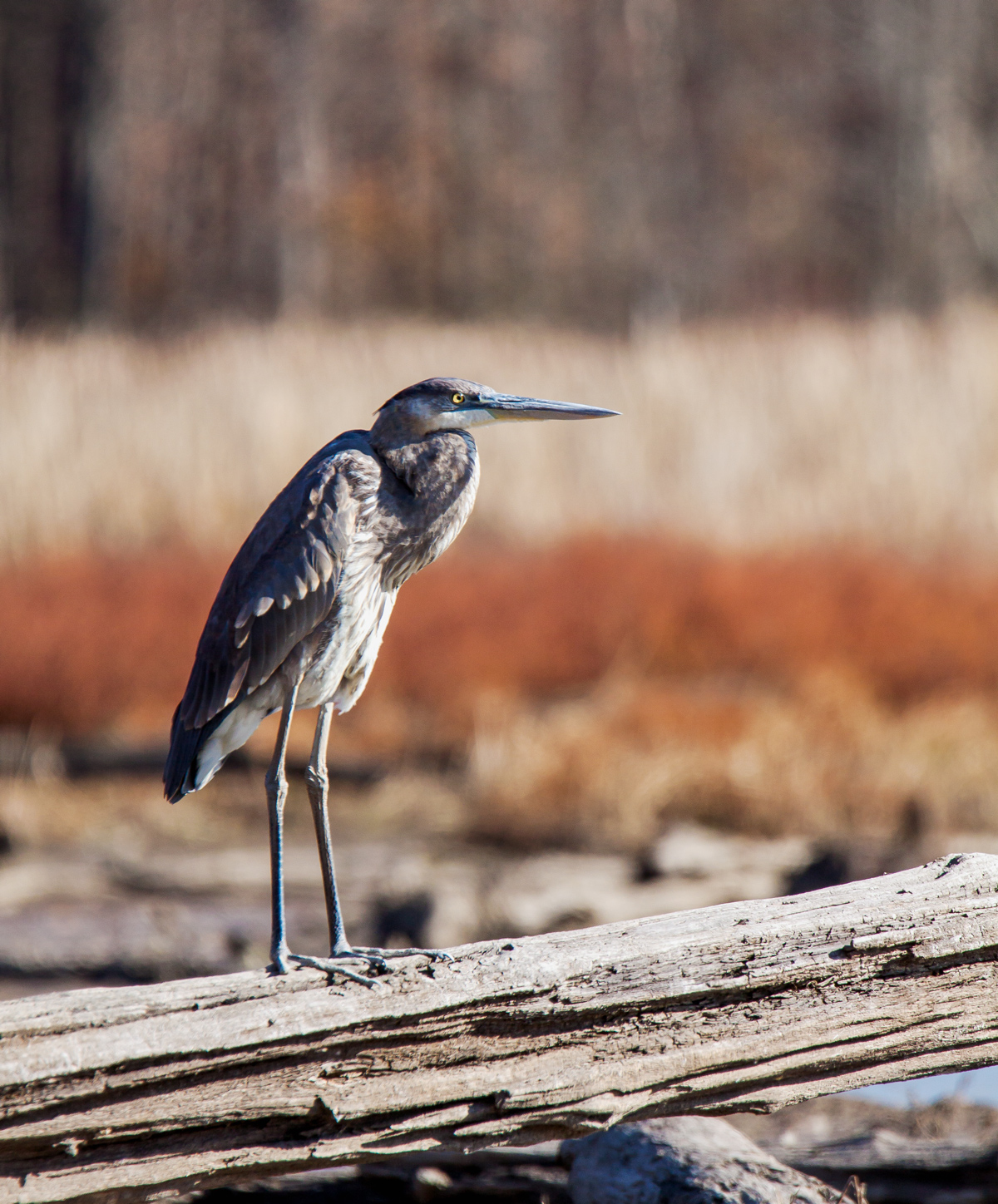
When it’s cold and windy, the Great Blue Herons (Ardea herodias) at Huntley Meadows Park often like to seek sheltered areas at the edge of the water. Unlike the heron, I stayed out in the open and was buffeted by the strong winds as I tried to capture this profile shot of the heron.

Great Blue Heron

© Michael Q. Powell. All rights reserved.

Read Full Post »

Some photographers like to stay in one spot and let the action come to them, but most of the time I prefer to keep on the move, opportunistically scanning for subjects to shoot. There is one place, however, at Huntley Meadows Park that I will sometimes visit and simply sit for extended periods of time. It is a beaver pond in a secluded area of the park and I feel a sense of peace surround me whenever I am there.

This past Monday I was sitting on a log at that spot and was struck  by the beauty of the elements of the scene in front of me. I tried to capture some of those elements of the landscape with they 150-600mm zoom lens that was on my camera at that moment. I like the way that the telephoto lens provides an intimate landscape view, unlike the wide-angle view that I typically associate with landscapes.

telephoto landscape

telephoto landscape

telephoto landscape

© Michael Q. Powell. All rights reserved.
Read Full Post »

The water levels are really low in many parts of Huntley Meadows Park and it seemed like this Great Blue Heron (Ardea herodias) was looking over mostly dry land as it surveyed the landscape this past weekend.

The banding of the colors in the background add some visual interest to the image, without being distracting. I was standing at the edge of a dried portion of the marsh and that permitted me to take this shot from a low angle, looking slightly up at the heron.

Great Blue Heron

© Michael Q. Powell. All rights reserved.

Read Full Post »

The subdued colors of the female Northern Cardinal (Cardinalis cardinalis) seem to be perfectly suited for the late autumn, when the muted shades of the fallen leaves seem to dominate the landscape.

female Northern Cardinal

© Michael Q. Powell. All rights reserved.

Read Full Post »

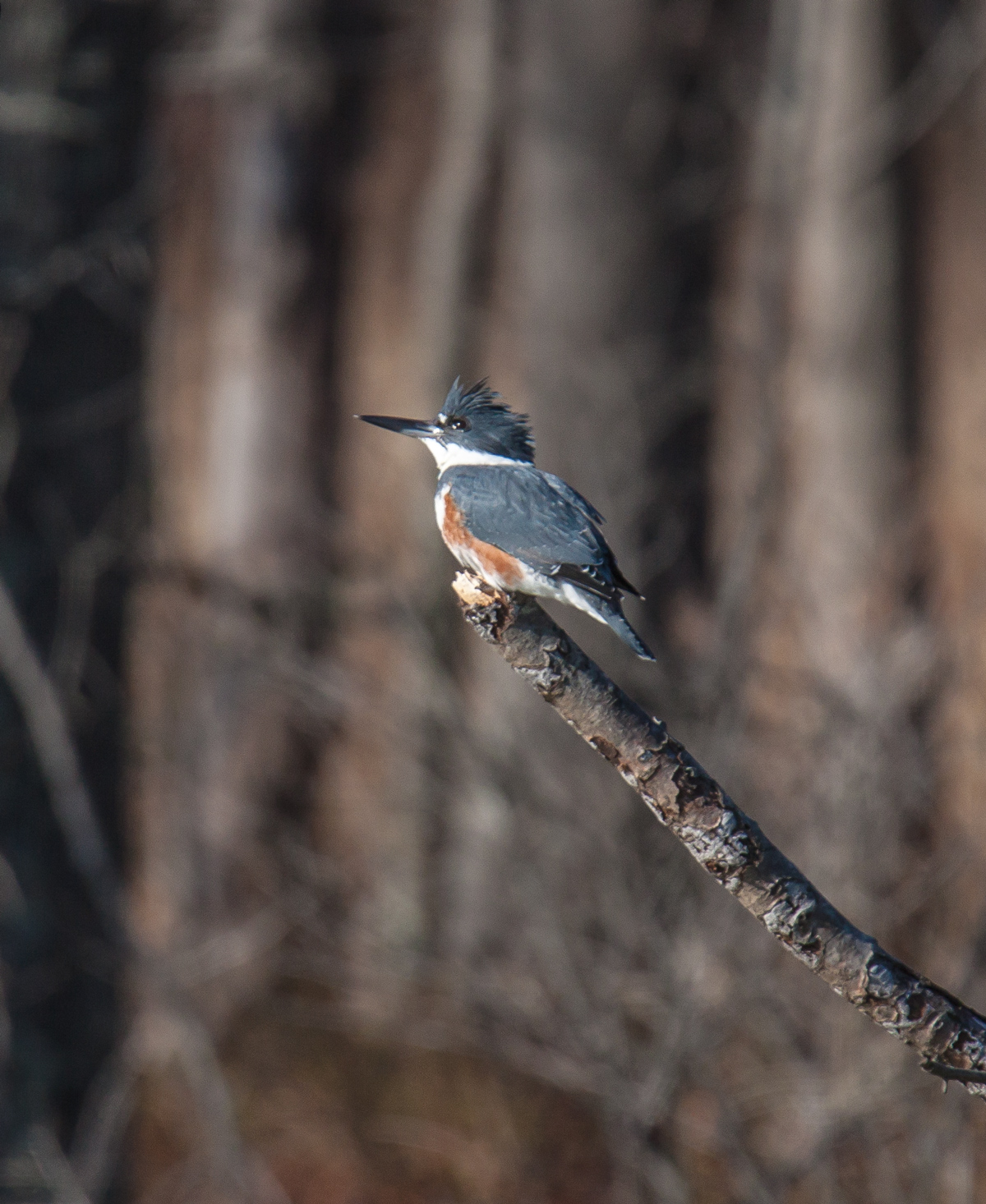
I spent a fair amount of time yesterday at Huntley Meadows Park watching a female Belted Kingfisher (Megaceryle alcyon), one of my favorite birds. She was perched on a broken-off tree a pretty good distance away and there was no way that I could get any closer, since there was water between the boardwalk on which I was standing and that tree.

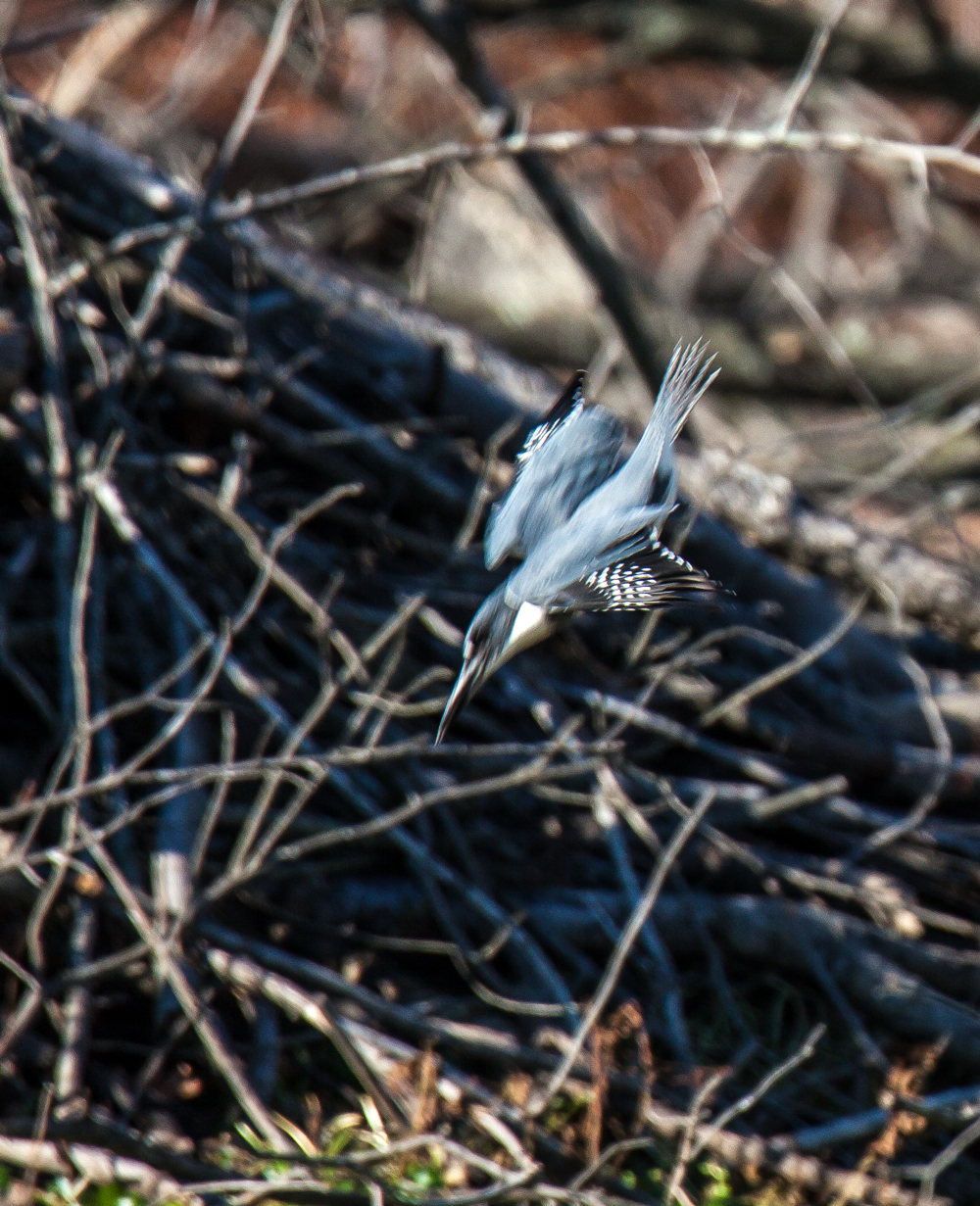
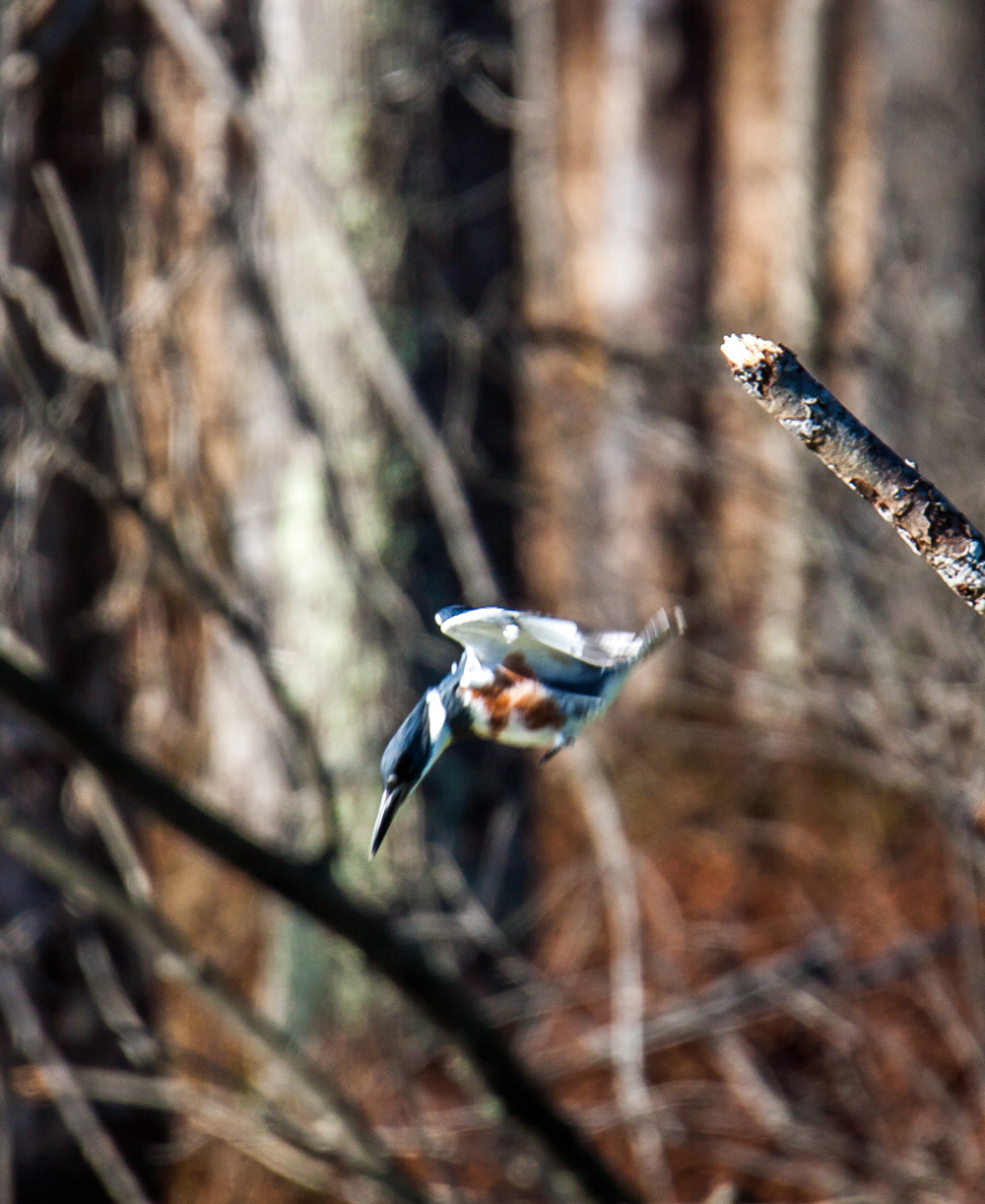
The kingfisher remained perched for quite some time, so I had plenty of time to steady myself and adjust settings until I was relatively content with some of my shots. What I really wanted to do, though, was to capture the kingfisher. I knew that eventually the kingfisher would dive into the water and I waited. Kingfishers don’t give any real warning when they are ready to dive, so I tried to remain alert and ready, even though I knew the chances of me capturing this fast-moving bird in flight were slim.

The kingfisher dove several times and I did manage to capture a few ok images of her flight toward the water. My favorite shot, however, is the final one here in which she is flying out of the water with what looks to be a small fish.

It was a nice catch for both of us.

Belted Kingfisher

Belted Kingfisher

Belted Kingfisher

Belted Kingfisher

© Michael Q. Powell. All rights reserved.

Read Full Post »

I often think of this little bird as the “Santa bird,” because of its white “beard” and round belly. Technically speaking, it’s a White-throated Sparrow (Zonotrichia albicollis), but it’s often more fun to make up my own names for the creatures that I see and photograph.

White-throated Sparrow

© Michael Q. Powell. All rights reserved.

Read Full Post »

This energetic little Downy woodpecker (Picoides pubescens) seemed to be defying gravity on Monday as it leaned over backwards and pecked away at a small tree growing out of the water at Huntley Meadows Park.

Downy Woodpecker

© Michael Q. Powell. All rights reserved.

Read Full Post »

Yesterday the fields and forests of Huntley Meadows Park were alive with the sound of birds, lot of birds. I didn’t get a close enough look to identify the black birds, but they seem to be Rusty Blackbirds or Grackles. As they foraged, they moved from one spot to another in a great cloud of birds, all flying at the same time.

I tried to capture images of the birds with different backgrounds and especially like the first one below, which reminds me of some pf Escher’s pen-and-ink drawings of birds.

birds in flight

birds in flight

birds in flight

© Michael Q. Powell. All rights reserved.

Read Full Post »

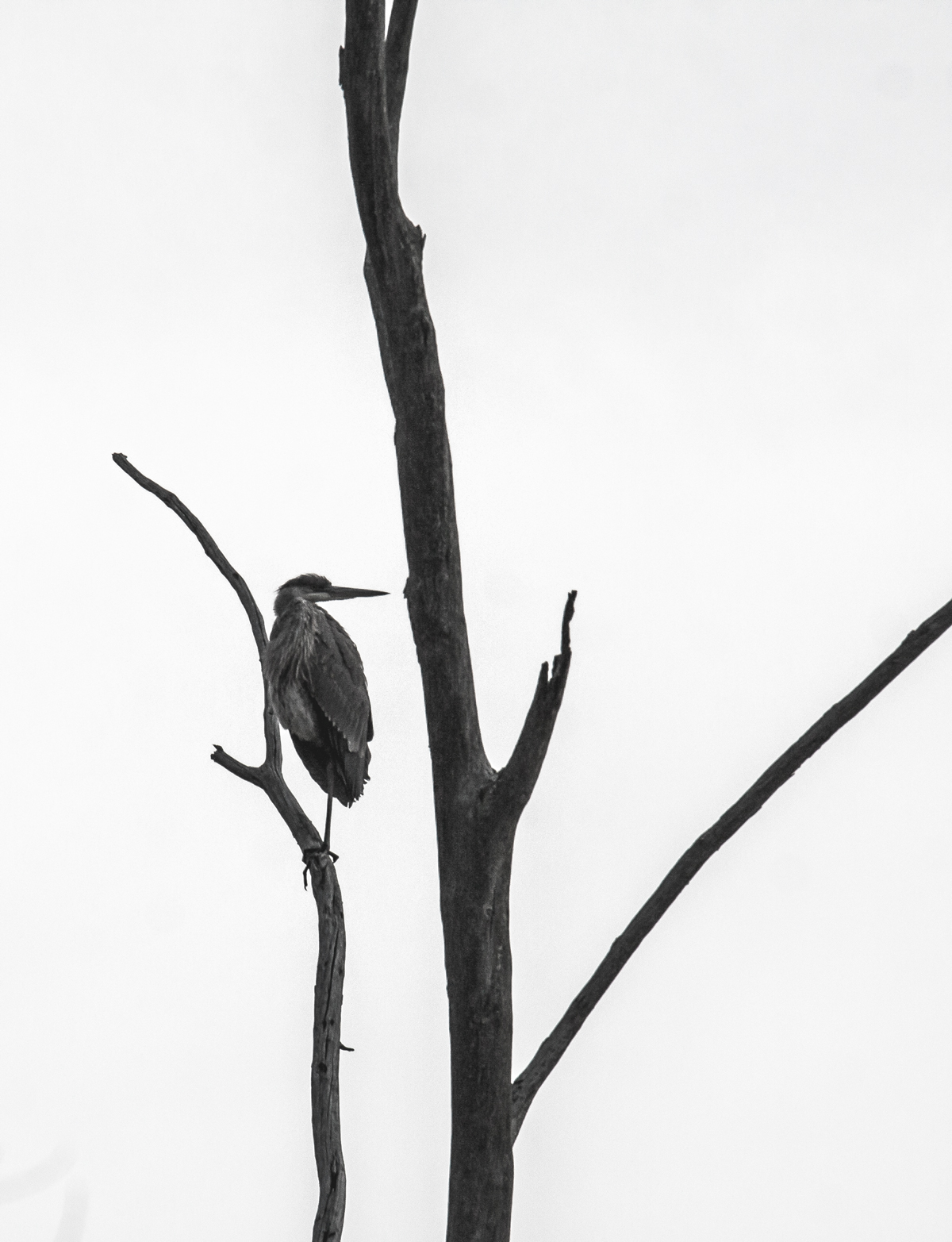
Generally when I see a Great Blue Heron (Ardea herodias) in a tree, it is roosting in a protected location and napping. Early one morning this past weekend at Huntley Meadows Park, however, I spotted this alert heron perched on an exposed dead tree, looking like it was playing the role of a sentinel.

I initially caught sight of the heron from a distance and followed a path in the treeline that let me get almost underneath the heron for some shots. The sky was overcast and there was not much light, causing the background to appear white and the images to be almost monochromatic.

Great Blue Heron


Great Blue Heron

Great Blue Heron

© Michael Q. Powell. All rights reserved.

Read Full Post »

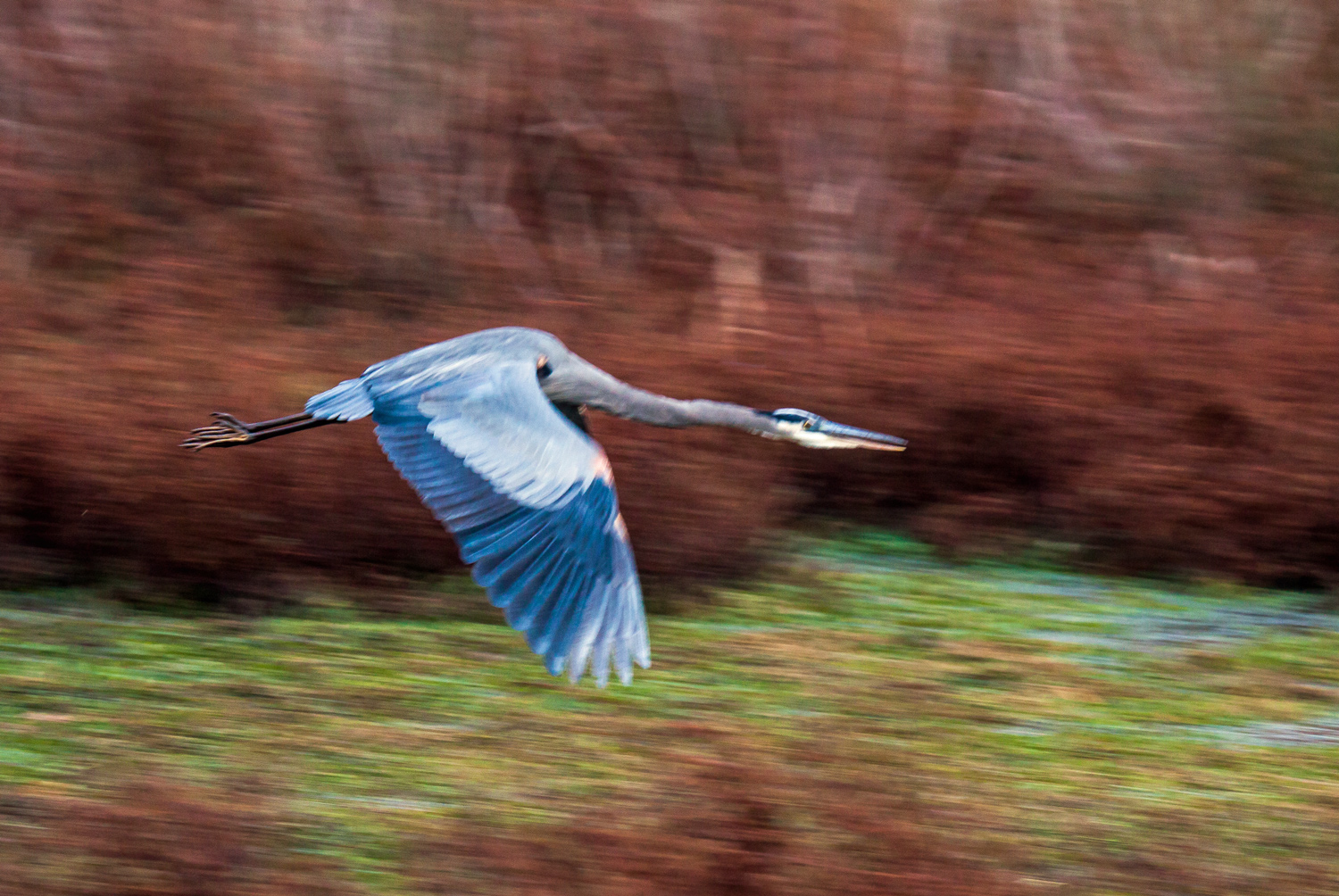
Sometimes I will intentionally use a slow shutter speed when I am panning a moving subject to blur the background and give a sense of motion, but that was not the case with these photos—I was shooting in aperture-priority mode and simply wasn’t paying attention to the shutter speed that the camera was giving me. In all three of these images, the shutter speed was 1/100 of a second, which is really too slow for handholding my 150-600mm zoom lens.

As the old saying goes, though, sometimes it is better to be lucky than good. I really like the way the background was rendered and am not at all bothered by the somewhat soft focus on parts of the moving heron.

Great Blue Heron

Great Blue Heron

Great Blue Heron

© Michael Q. Powell. All rights reserved.


Read Full Post »

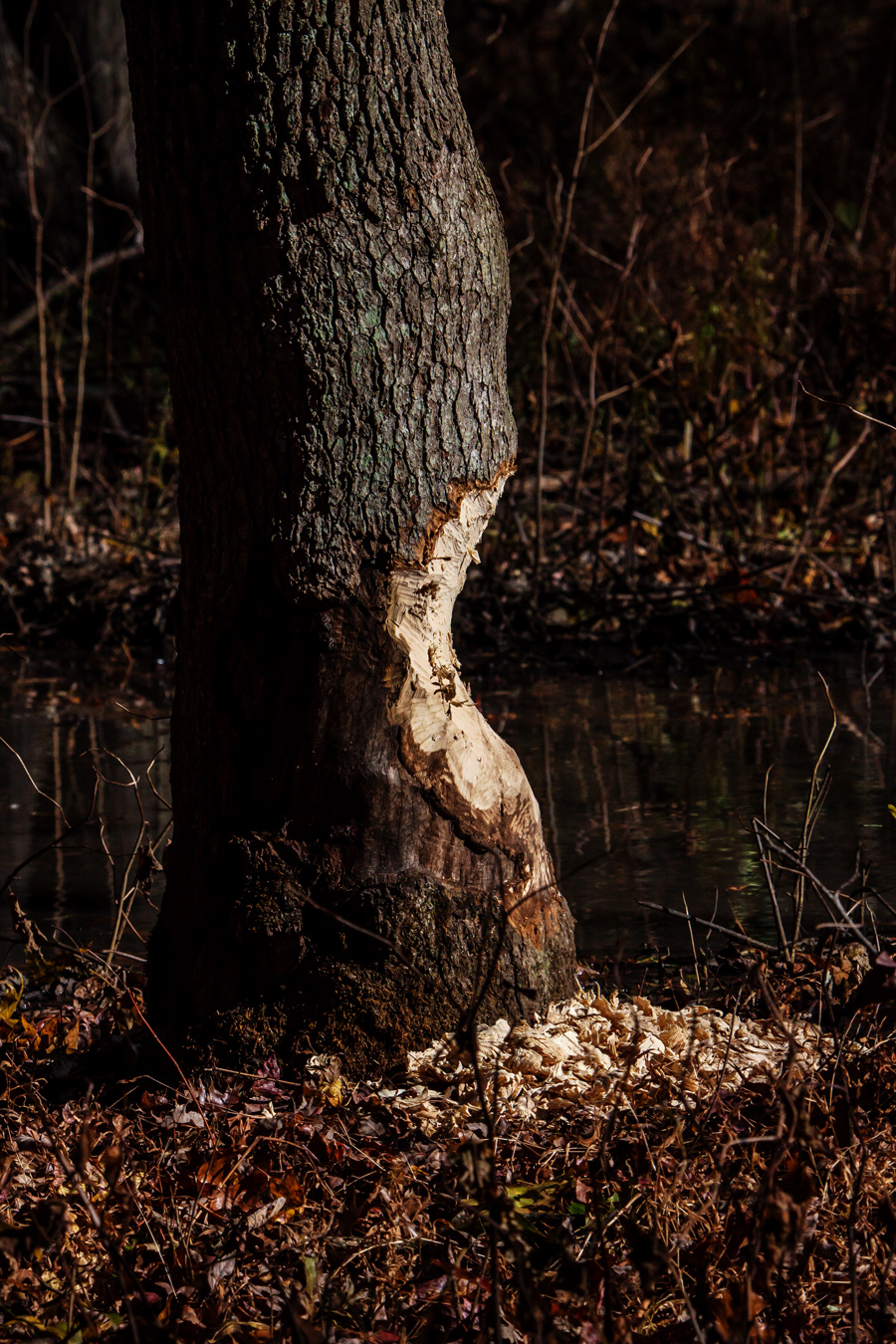
As I wander about in Huntley Meadows Park, I see lots of signs that winter is on its way, including this tree that I encountered in what seemed to be the middle of the woods. Clearly the beavers have been as busy as, well, beavers. I am hoping to be able to capture them in action in the upcoming months.

If you read this blog frequently, you probably noticed that this image is quite different from my “normal” wildlife close-ups. When I stumbled upon this tree on which a beaver had been gnawing, I was struck by the interplay of light and shadows. As I framed this shot, which is uncropped here, I was trying to capture the almost monochromatic look of the scene in a very simple composition. I’m pretty pleased by the different textures that I was also able to capture in the shot.

North American Beaver

© Michael Q. Powell. All rights reserved.

Read Full Post »

On a cool and blustery morning at Huntley Meadows Park, it seemed like most of the birds were in sheltered locations yesterday, protected from the biting wind. I did manage, though, to spot a Red-headed Woodpecker (Melanerpes erythrocephalus) busily at work high in the trees and was able to get shots from a number of different angles as the woodpecker moved about.

Red-headed Woodpecker

Red-headed Woodpecker

Red-headed Woodpecker

© Michael Q. Powell. All rights reserved.

Read Full Post »

It was a pleasant surprise to see this colorful Familiar Bluet damselfly (Enallagma civile) last Friday at Huntley Meadows Park. With the arrival of frigid weather, with temperatures at near-freezing levels at night, however, I fear that it will be my last damselfly sighting of the season.

When I first spotted this damselfly, I had my  Tamron 150-600mm zoom lens on my camera. I didn’t want to take my eyes off of the damselfly, for fear of losing sight of it in the underbrush, so I decided to make do with the long zoom lens. I quickly realized that I had a few obstacles to overcome. The minimum focusing distance of the lens is almost nine feet (2.7 meters), so I had to back up. At that distance the damselfly was so small that my autofocus did not want to lock onto it, so I was forced to focus manually, while handholding the lens at 600mm.

I ended up trying to do environmental portraits, rather then the close-ups that I generally prefer to take. I like the way that the seasonal coloration of the background helps the blue of the damselfly’s body really stand out, almost like it is an alien visitor in a foreign land.

Farewell, sweet damsels of the air, until we meet again in the spring.

Familiar Bluet

Familiar Bluet

© Michael Q. Powell. All rights reserved.

Read Full Post »

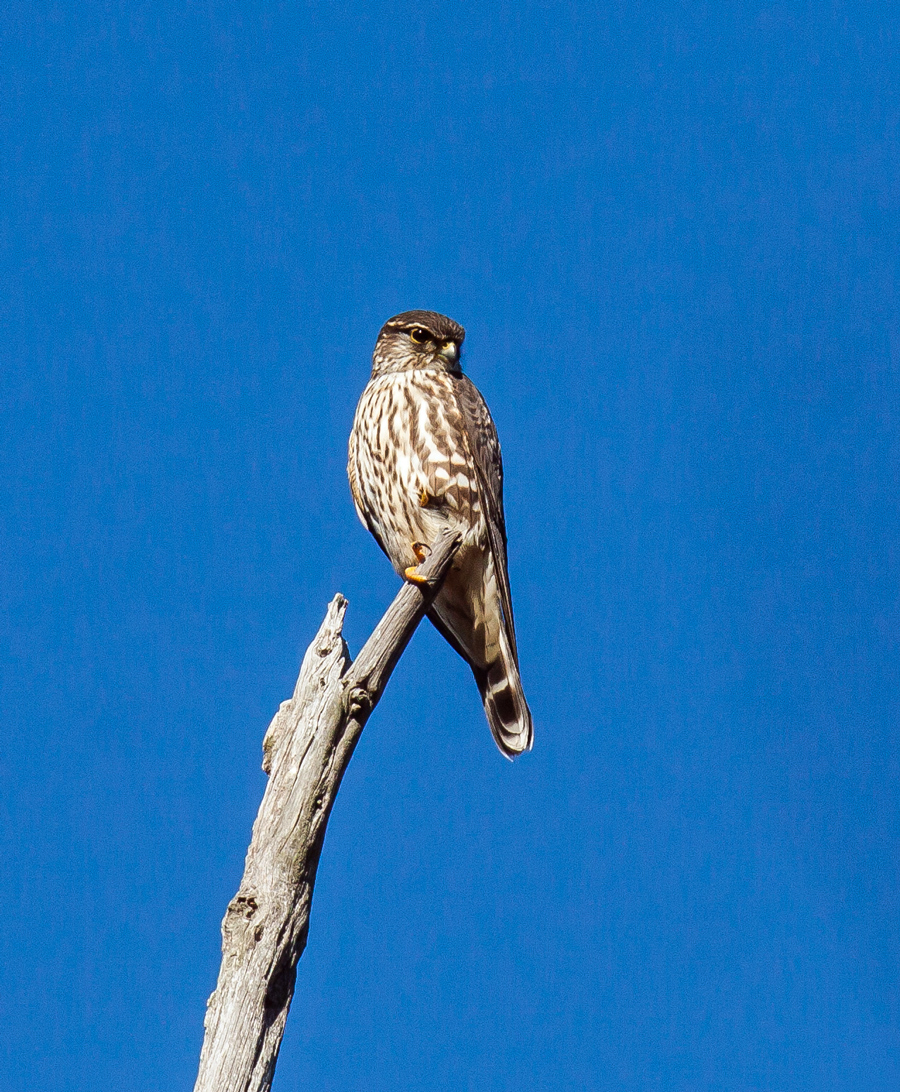
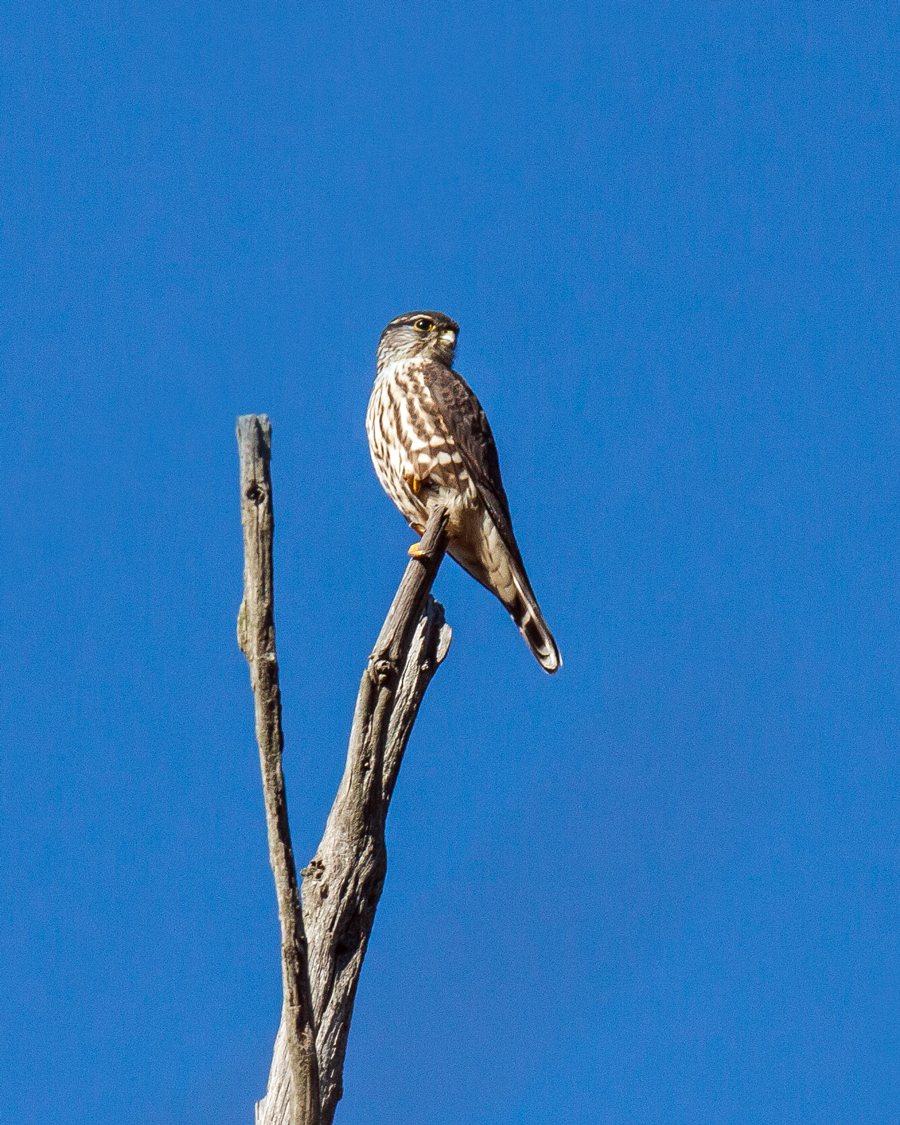
Yesterday I finally saw the merlin (Falco columbarius) that has been hanging out at Huntley Meadows Park the last month or so. Merlins are really cool-looking small falcons that generally are in our area only during periods of migration.

The merlin was perched at the very top of a slender dead tree. The Cornell Lab of Ornithology website notes that merlins spend long periods perched in open areas scanning for prey and I suspect that is what this bird was doing when I spotted it.

I was able to get relatively close to the tree, thanks to an adjacent path in the woods, but shooting upwards at such a steep angle handheld was a bit of a challenge. Fortunately the lighting was pretty good so I was able to get some decent shots, though they did requite quite a bit of cropping. You may also notice that I shot from several different angles as I tried to capture some images of this small, but powerful bird.

Merlin

Merlin

Merlin

Merlin

© Michael Q. Powell. All rights reserved.

Read Full Post »

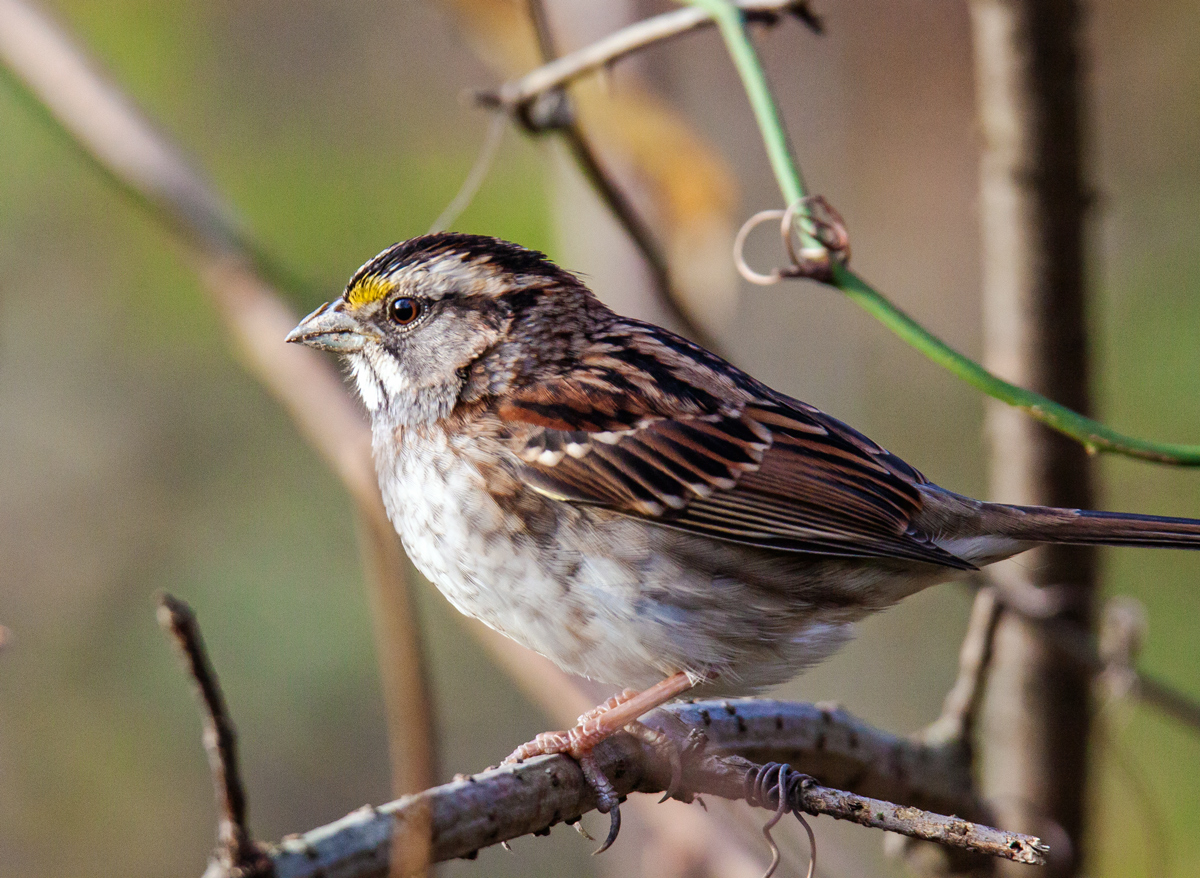
I used to think that all sparrows were simply nondescript little brown birds. Now I look more closely and can see how beautiful and distinctive they really are, like this White-throated Sparrow (Zonotrichia albicollis) that I spotted last week at Huntley Meadows Park.

I especially love the bright yellow stripe on its face (in an area technically called its “lore”) that really stands out amid the other, more subdued colors.

White-throated Sparrow

© Michael Q. Powell. All rights reserved.

Read Full Post »

With all of this cooler weather that we have had recently, including several frosty mornings, you might think that dragonfly season has ended, but it’s not over yet. Autumn Meadowhawk dragonflies (Sympetrum vicinum) are still with us in pretty significant numbers at Huntley Meadows Park in Alexandria, Virginia. In previous years I have continued to see these dragonflies into mid-December and one of my fellow photographers has seen them in early January.

Autumn Meadowhawks are small dragonflies, a little over one inch (25 mm) in length, so you have to look hard to spot them. At any other time of the year, their red bodies would make them really stand out, but they seem to like to perch on fallen leaves, including red ones, so they are often pretty well camouflaged until they move.

Here are a few favorite shots of these red beauties from this past weekend. Enjoy the dragonflies while you may and put off thoughts of the impending winter.

Autumn Meadowhawk

Autumn Meadowhawk

Autumn Meadowhawk

© Michael Q. Powell. All rights reserved.

Read Full Post »

The skies over Huntley Meadows Park were amazing around 3:00 (15:00 hrs) yesterday afternoon when a cold front was blowing in. When certain clouds were illuminated by the sun they were transformed into pastel shades of the rainbow. At times there were varying shades of orange, green, aqua, and purple.

I suspected that moisture in the clouds was responsible for the colors, but I had never seen anything like it and did not know what it was called. After searching about on the internet, I learned that this diffraction phenomenon, known as cloud iridescence, is caused by small water droplets or ice crystals individually scattering light. According to Wikipedia, ” If parts of clouds have small droplets or crystals of similar size, their cumulative effect is seen as colors. The cloud must be optically thin, so that most rays encounter only a single droplet. Iridescence is therefore mostly seen at cloud edges or in semi-transparent clouds, and newly forming clouds produce the brightest and most colorful iridescence.”

cloud iridescence

cloud iridescence

© Michael Q. Powell. All rights reserved.

Read Full Post »

« Newer Posts - Older Posts »