Feeds:
Posts
Comments

Posts Tagged ‘Huntley Meadows Park’

I spotted several young Wood Ducks (Aix sponsa) this morning at Huntley Meadows Park, including these two who playfully posed for me. Actually, there were three young Wood Ducks grooming themselves on a long and one decided to jump into the water. After swimming around for a while, the duck in the water decided to dry its wings and I was able to capture the extended wings in this shot. In case you are curious, the third duck was just out of the frame to the right. Although it was well past the “golden hour,” the light was beautiful and I was happy to be able to capture a partial reflection of the duck with outstretched wings.

wood duck

© Michael Q. Powell. All rights reserved


Read Full Post »

Why do we like certain photos more than others? What makes a good image? These questions churn away in my brain every time that I have my camera in my hand and often even when my hands are empty. Sure, there are rules and guidelines and generally accepted norms, but often it comes down to personal, unexplainable preferences—I like what I like.

Last weekend I spent a lot of time observing Green Herons (Butorides virescens) at Huntley Meadows Park. I kept trying to capture action shots of the herons catching fish or flying through the air, but I pretty much came up empty-handed. Oh, I took a lot of shots and once I wade through them all there may be some decent images of the herons that I will choose to post, but none of those images really spoke to me during my initial review of the photos from that day.

I was drawn instead to some images from early in the day when a fellow photographer and I spotted a Green Heron in the trees in the distance. We were standing on a boardwalk, so there was only a limited freedom of movement to frame our shots. There was a lot of vegetation that partially obstructed our view of the heron. I searched in vain for a visual tunnel that afforded a clear view of the entire body of the heron. Still, the light was beautiful, so I kept shooting—when it comes to birds, expressions are so fleeting that it is best to shoot a lot of images.

I decided to post this shot and attempt to explain why. There are so many things that I like about this image that I am not really bothered by the leaves that blocked my view. What do I like? I love the tilted head as the heron looks to the sky and basks in the sun; I like the little head feathers that look like a cowlick; I really like the shapes and colors in the background; and I am happy that I was able to capture some details in the wing feathers.

Is it one of my best shots? No, it is not, but I choose to post images that I like and especially the ones that make me happy, like his image of a pensive, relaxed Green Heron in a tree.

green heron

© Michael Q. Powell. All rights reserved


Read Full Post »

As we move deeper into summer, I have been seeing fewer and fewer duck families at Huntley Meadows Park—maybe the ducklings have grown up or have succumbed to predators. Whatever the case, I was thrilled early yesterday morning to spot a Mama  Wood Duck (Aix sponsa) with five ducklings, relaxing and grooming themselves on a log in the water in one of the more remote areas of the park.

When they are first born, all of the ducklings seem to look the same to me, but gradually they seem to take on some of their adult markings. The duckling alone in the center, for example, seems to be acquiring some of the head markings of the adult Wood Duck, though he still lacks the spectacular colors of the adult male Wood Duck. (In case you don’t know what a male Wood Duck looks like, I am reprising below a photo from earlier this year of one sitting on a nesting box.)

wood duck

Wood Duck

© Michael Q. Powell. All rights reserved


Read Full Post »

Several folks have recently posted photos in Facebook of a juvenile Yellow-crowned Night-Heron (Nyctanassa violacea) that they spotted at Huntley Meadows Park, my favorite marshland for photography, so I kept my eyes open today as I explored the park. I came up empty-handed for this particular bird, a species that I had never seen before, but as I was getting ready to leave, a helpful photographer led me to a spot where he had seen the bird earlier in the day.

Amazingly the bird was in the same general location and I was able to get several long-distance shots of the gangly little bird, which seems to be bigger than the Green Herons in the park, but smaller than the Great Blue Herons. As far as I know, nobody has seen an adult Yellow-crowned Night-Heron in the park, so we don’t really know how this juvenile happens to be in this location.

Yellow-crowned Nigh-Heron

Yellow-crowned Night-Heron

© Michael Q. Powell. All rights reserved

Read Full Post »

The White-tailed Deer (Odocoileus virginianus) seemed alert but unafraid when they first sensed my presence early one recent morning at Huntley Meadows Park. I watched them graze for a while before they silently faded back into the tree line.

white-tailed deer

© Michael Q. Powell. All rights reserved

Read Full Post »

In the early morning hours at Huntley Meadows Park this past weekend, a tiny muskrat (Ondatra zibethicus) silently swam to the shore and began to forage for food in the vegetation at the water’s edge. It was a peaceful moment, a perfect start to a beautiful day.

muskrat

© Michael Q. Powell. All rights reserved

Read Full Post »

Great Egrets (Ardea alba) are so graceful in flight—it’s like watching an aerial ballet performance. I spotted this egret early this morning at Huntley Meadows Park and captured this image as it was taking off from atop a tree on which it was perched.

Great Egret

© Michael Q. Powell. All rights reserved.

Read Full Post »

Halloween in June? I spotted a beautiful female Halloween Pennant dragonfly (Celithemis eponina) this past Saturday in one of the back areas of Huntley Meadows Park.

Although it is now summer, the colors of this beautifully-patterned dragonfly bring to mind those of the autumn, which thankfully is still a long way off.

Halloween Pennant

Halloween Pennant

Halloween Pennant

© Michael Q. Powell. All rights reserved.

Read Full Post »

As I was wandering about in the woods early yesterday morning at Huntley Meadows Park, I inadvertently spooked a raccoon (Procyon lotor) that was stretched out high above me on a tree limb. The raccoon quickly climbed inside the tree, but it seems like it was overcome by curiosity and poked its head out to get a better look at me.

A sharp-eyed viewer of my posting of this image in Facebook noted that the raccoon seems to have a problem with ticks, with several of them visible in one of its ears. I know that raccoons are notorious for carrying rabies, so I kept a close eye on the raccoon and was ready to move away if it had made a move to climb down from the tree.

raccoon

© Michael Q. Powell. All rights reserved.

Read Full Post »

There is something really special about green eyes, especially when you see them up close, really close. Every dragonfly season I try to find at least one cooperative dragonfly that sees eye-to-eye with me and lets me get a shot like this. I photographed this female Eastern Pondhawk (Erythemis simplicicollis) earlier this month at Huntley Meadows Park in Alexandria, Virginia.

Eastern Pondhawk

© Michael Q. Powell. All rights reserved.

Read Full Post »

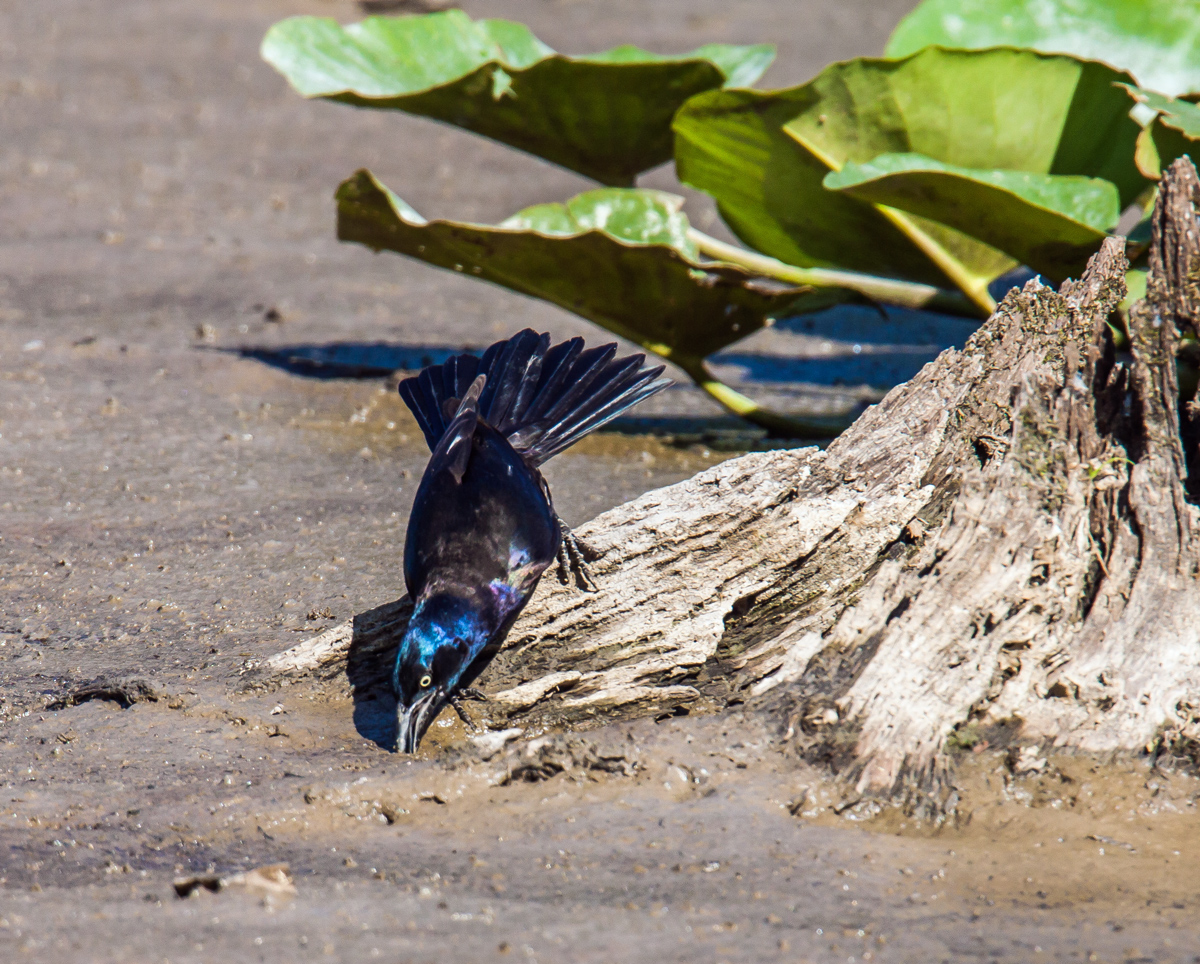
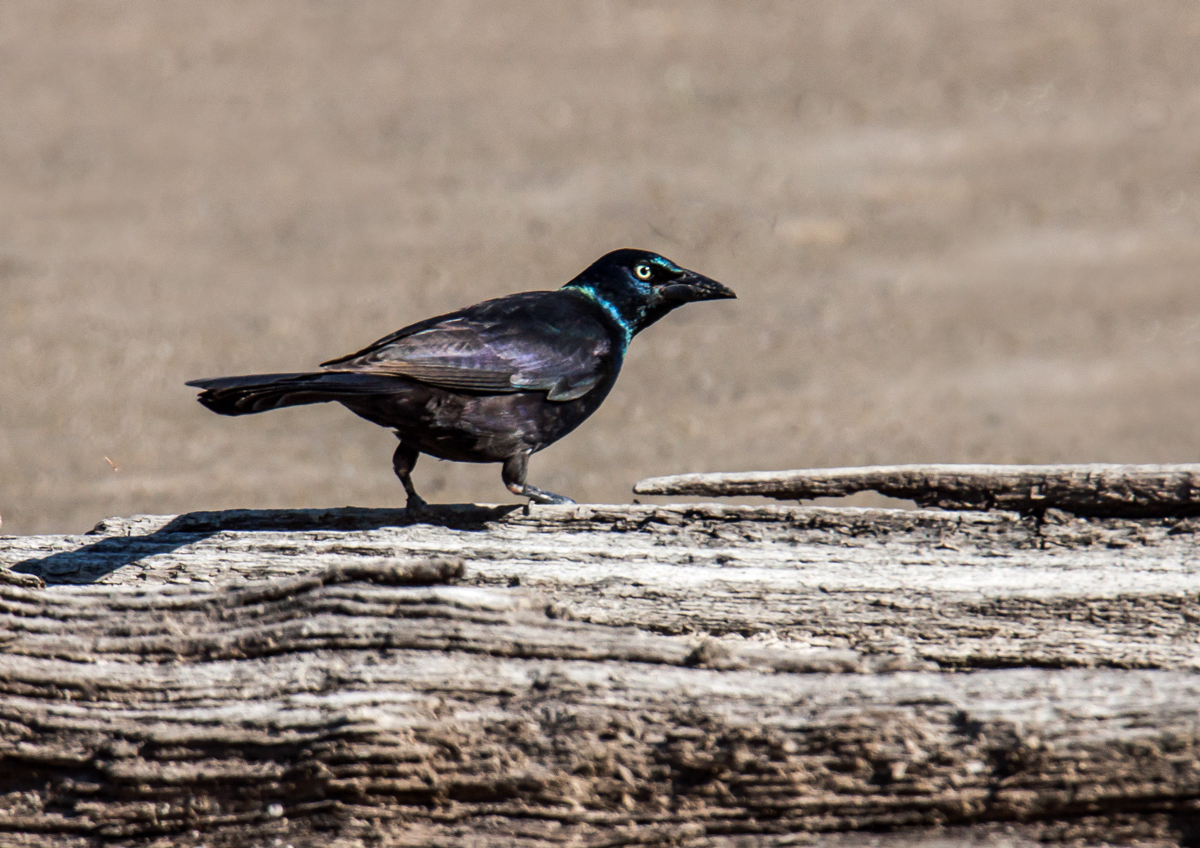
A small flock of large black-colored birds was noisily moving about the marsh at Huntley Meadows Park one morning last weekend and if I were better at identifying bird calls, I probably would have know what kind of birds they were—I considered the possibility that they might be crows or Red-winged Blackbirds or starlings or grackles. When I got closer and the sunlight illuminated their bodies, I realized that they were probably Common Grackles (Quiscalus quiscula), because of the way that their black color became iridescent, with colorful highlights.

I spent quite a while watching the grackles as they energetically pecked about, presumably looking for morsels of food. Their heads were pointed downwards most of the time, so it was a little tough to get good shots of them.

Here are a couple of my favorite shots that help show both the beauty and the personality of a grackle.


Common Grackle

Common Grackle

© Michael Q. Powell. All rights reserved

Read Full Post »

Great Egrets (Ardea alba) always seem to me to be a little vain and self-centered—maybe if comes from being so beautiful and graceful. This one did not like being ignored, so it decided to photobomb my shot of a deer this past weekend at Huntley Meadows Park .

Great Egret

© Michael Q. Powell. All rights reserved

Read Full Post »

Unicorns in Northern Virginia? One of the coolest dragonflies at Huntley Meadows Park is the Unicorn Clubtail (Arigomphus villosipes), like this one that I spotted along a stream in a remote area of the park on Saturday morning. The U-shaped tip of the abdomen is quite distinctive and makes this dragonfly fairly easy to identify.


Unicorn Clubtail

© Michael Q. Powell. All rights reserved

Read Full Post »

A White-tailed Deer (Odocoileus virginianus) seemed curious about the Great Blue Heron (Ardea herodias) perched on a log, but the heron remained impassive and did not react as the deer passed behind it early Saturday morning at Huntley Meadows Park.

Peaceful co-existence—we could all use some more of that in our daily lives.

peaceful co-existence

© Michael Q. Powell. All rights reserved

Read Full Post »

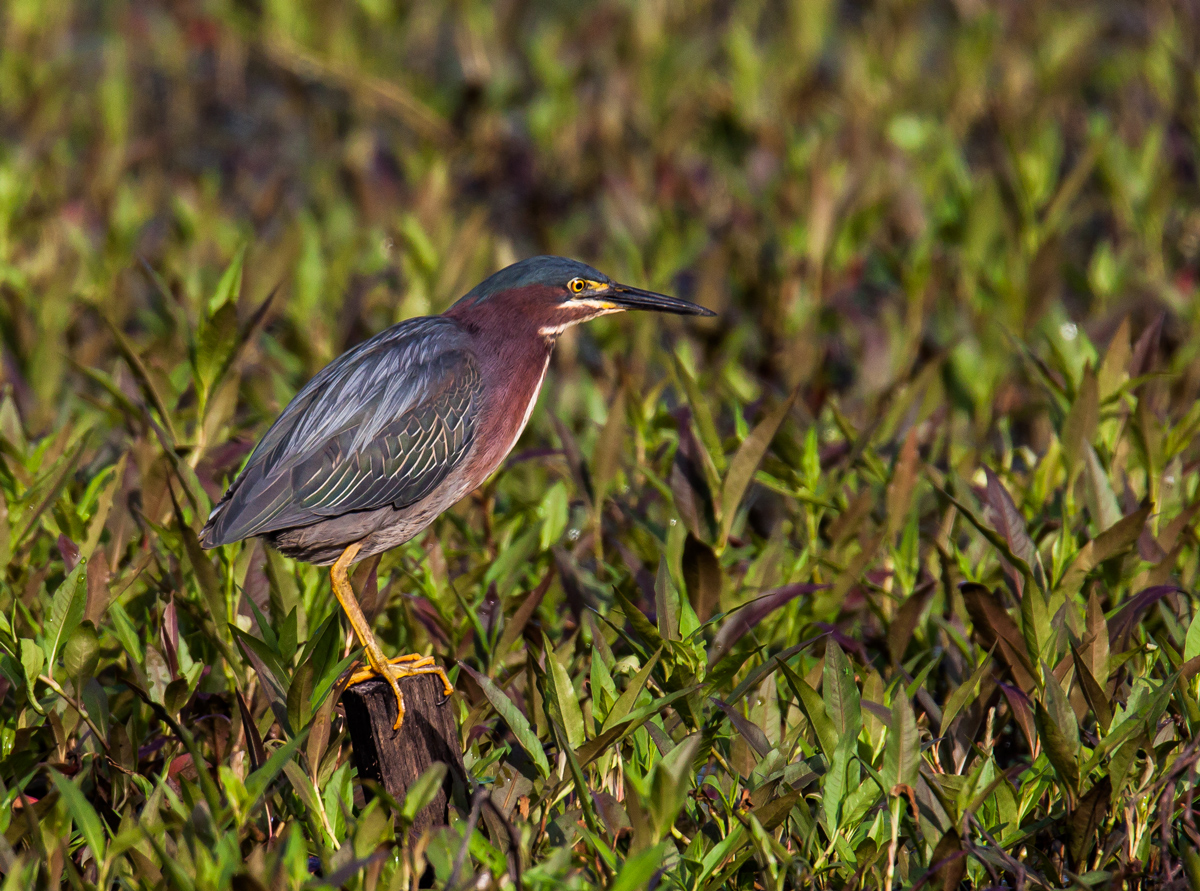
This little Green Heron (Butorides virescens) somehow managed to find a perch in the midst of the thick vegetation growing out of the water yesterday morning at Huntley Meadows Park. From this higher vantage point, the heron was able to scan the area better for potential prey, though I never saw it catch anything.

Was the Green Heron imagining how much easier it would be if it were as tall as a Great Blue Heron?

green heron

© Michael Q. Powell. All rights reserved

Read Full Post »

Female Wood Ducks (Aix sponsa) at Huntley Meadows Park have been caring for their ducklings alone, so I figured the males had all departed. This morning, however, I spotted this male Wood Duck when he climbed out of the water to groom himself.

I captured this image when he gently shook himself to dry off. The moisture flew easily into the air, like water off of a duck’s back.

wood duck

© Michael Q. Powell. All rights reserved

Read Full Post »

Every spring, Barn Swallows (Hirundo rustica) build a nest on the underside of a raised observation platform at Huntley Meadows Park. It is always  a lot of fun to watch these energetic little dynamos flying about, catching insects in mid-air. Fortunately this one came to rest for a moment on the metal railing of the platform and I was able to capture this image of a colorful Barn Swallow.


Barn Swallow

© Michael Q. Powell. All rights reserved

Read Full Post »

I am so happy that dragonfly season is finally here. There is just something about the beauty, complexity, and acrobatic skills of these amazing insects that never fails to grab my attention and I can easily spend hours watching and photographing them. I spotted this particular dragonfly, a female Spangled Skimmer (Libellula cyanea), last week at Huntley Meadows Park in Alexandria, Virginia.

Spangled Skimmer dragonfly

© Michael Q. Powell. All rights reserved

Read Full Post »

In the early morning light at Huntley Meadows Park last week, I was thrilled to catch a glimpse of an Eastern Kingbird (Tyrannus tyrannus). The colors and lighting were subdued, which helped to draw my attention to the details of the bird’s feathers when I captured these images.

Several other photographers had posted photos of a kingbird on the park’s Facebook page and I was hoping that I would see one when I set out that day. When I first saw this bird from a distance, I thought it might be some kind of swallow. Once I got a little closer, I changed my mind and considered the possibility that it might be an Eastern Phoebe. It was only when I got home and was able to look at my birding book that I realized the white-tipped tail of this bird meant that it was almost certainly an Eastern Kingbird.

I studied Latin for a couple of years in high school (a long time ago) and I am always curious about the origin of the Latin name for different species. This one—Tyrannus tyrannus—really caught my eye.  The Cornell Lab of Ornithology website explained the name in these words. “The scientific name Tyrannus means “tyrant, despot, or king,” referring to the aggression kingbirds exhibit with each other and with other species. When defending their nests they will attack much larger predators like hawks, crows, and squirrels. They have been known to knock unsuspecting Blue Jays out of trees.”

Eastern Kingbird


Eastern Kingbird


Eastern Kingbird

© Michael Q. Powell. All rights reserved

Read Full Post »

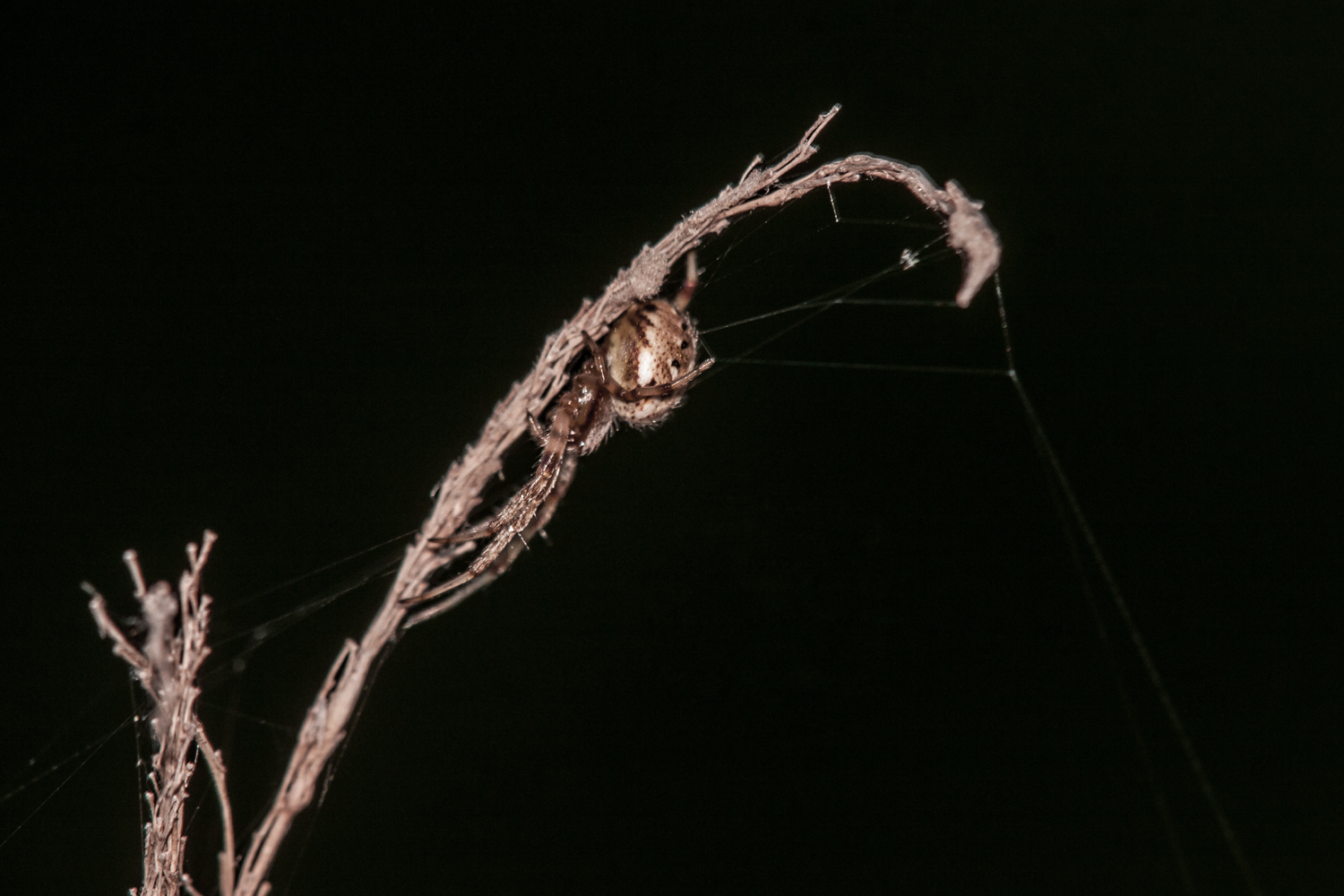
I know that some folks find spiders to be creepy, but I think they are beautiful, particularly when presented creatively in an image. I spotted this little spider earlier this week in a wooded area at Huntley Meadows Park.

The area in which the spider was located was pretty dark, so I decided to use  the pop-up flash on my camera. The light was a bit too powerful at such close range, so I  improvised a diffuser by slipping a plastic sleeve over the flash—when it is raining out, my Washington Post is delivered in plastic sleeves. All three of these shots were taken using the flash, but they look so different because of the direction of the ambient light. In the one that has a light background,for example, I was shooting almost directly into the light, so the flash was need to avoid getting nothing but a silhouette.


dramatic spider


dramatic spiderdramatic spider

© Michael Q. Powell. All rights reserved

Read Full Post »

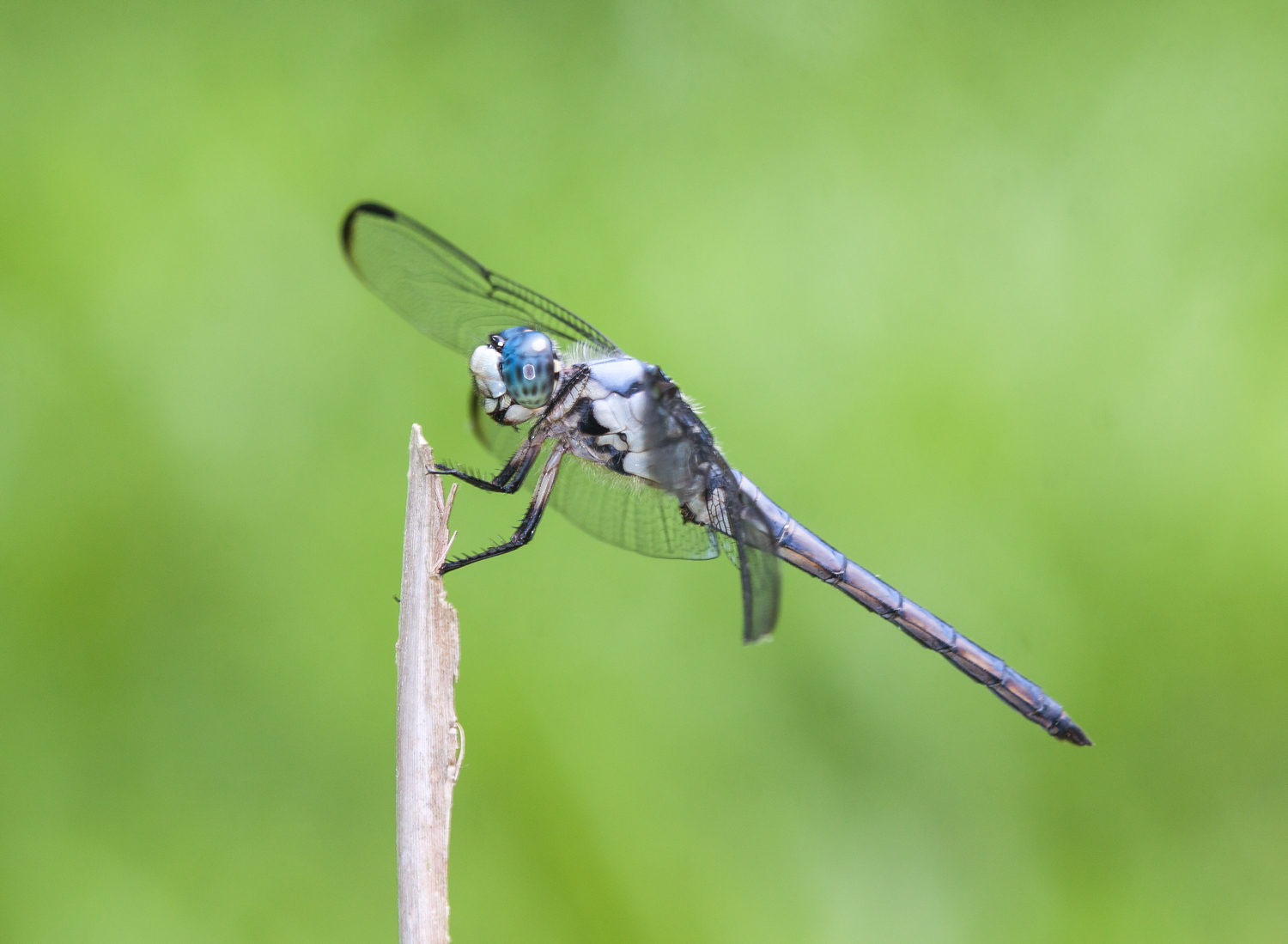
Most folks can readily identify a Great Blue Heron, but would you recognize a Great Blue Skimmer if you encountered one? This dragonfly’s wing pattern is fairly distinctive, but I usually look for its beautiful blue eyes and bright white face. I spotted these male Great Blue Skimmers (Libellula vibrans) on Monday at Huntley Meadows Park in Alexandria, Virginia.

Great Blue Skimmer

Great Blue Skimmer

Great Blue Skimmer

Great Blue Skimmer

© Michael Q. Powell. All rights reserved

Read Full Post »

There were crowds of people at Huntley Meadows Park on Monday, a  holiday in the United States, but I managed to find some moments of serenity and solitude as I contemplated this skipper butterfly perched on a faded iris at the edge of a vernal pool off of the beaten path.

I may be a little selfish, I suppose, but I enjoy nature most when I don’t have to share it with others.


Skipper on iris

© Michael Q. Powell. All rights reserved

Read Full Post »

This Green Heron (Butorides virescens) picked a particularly precarious perch from which to focus on a potential prey this past Monday at Huntley Meadows Park in Alexandria, Virginia.

Green Heron

© Michael Q. Powell. All rights reserved


Read Full Post »

If you go out early in the morning, you have undoubtedly seen flat dew-covered squares of web material scattered all over the ground. Yesterday morning at Huntley Meadows Park, I decided to explore several of them, hoping to find one of the spider-architects. Eventually I was able to find and photograph one of these spiders, which are commonly known as American Grass Spiders (g. Agelenopsis) or funnel weaver spiders.

According to an article on BugGuide.net, “For this family of spiders, the web is a horizontal, sheet-like web with a small funnel-like tube off to a side (or for some species, the middle of the web). This funnel is what the family is named for, and is used by the spider for hunting and protection. The spider will lay in wait in the funnel, and when an insect flies into, or lands on the web, the spider will rush out, very quickly check to see if it is prey, and if it is prey, bite it. The venom is fast-acting on the prey, so once the prey is subdued (within a second or two), the spider will drag the prey back into the funnel (for safety while eating, and to prevent other insects from recognizing the danger that lurks on the web).”

It’s fascinating to think about all the different ways that spiders are able to capture their prey, including all kinds of webs or even without webs, as is the case with jumping spiders and fishing spiders. It makes me happy that spiders are not larger, except perhaps in some Japanese science fiction movies, or we all might be in danger.

funnel weaver spider

© Michael Q. Powell. All rights reserved


Read Full Post »

The butterflies were really active today at Huntley Meadows Park and I nearly wore myself out chasing after them. Fortunately one of them would occasionally perch, like this Great Spangled Fritillary (Speyeria cybele), whose image I was able to capture from an unusual perspective.

Happy Memorial Day. Let us never forget the brave men and women who sacrificed so much for our freedom.

Great Spangled Fritillary

© Michael Q. Powell. All rights reserved

Read Full Post »

Most of us know what it is like to change a lens on a DSLR, but what is it like when you change a lens in one of your eyes? About 48 hours ago, I had surgery to replace the lens in one of my eyes with a plastic intraocular lens (IOL). Cataracts in both of my eyes had advanced to a point where they were interfering with activities such as night driving and both my optometrist and my ophthalmologist recommended cataract surgery.

I am in an interesting situation right now, because one of my eyes has been “fixed” and one of them has not. As a result I can’t help but do a series of before-and-after comparisons by looking at the world one eye at a time.

It’s hard to describe the changes, but it may be a little easier with photographers. Do you remember the first time that you looked at a RAW image? RAW images often look dull and flat. That’s kind of the way that things look in my right (uncorrected) eye. The view is darker, dingier, and has a slight yellow cast. The colors appear desaturated and there is not much contrast.

When I look through my corrected eye, it feels like a RAW image that has been adjusted by a skilled photographer. The whites are pure white, the colors are vibrant, and sharpness and contrast have been tweaked. Interestingly, the colors are a little on the cool side, with a slight blue color cast. One thing I didn’t expect is that objects in my corrected eye are slightly bigger than in my uncorrected eye. I asked my ophthalmologist if the lens he implanted has a magnifying effect and he noted that it did not—the phenomenon I had described was caused by my myopia, which causes objects to look smaller.

Previously I was significantly near-sighted and have needed glasses since I was in the fifth grade. The corrected eye is far-sighted now and my distance vision is amazing—for the first time in my life I was able to drive a car yesterday without glasses. My near vision now is essentially non-existent. I am hoping that it will improve a little bit as my eyes continue the adjustment process, but I fully expect that I will need the kind of reading glasses that I am using at this very moment.

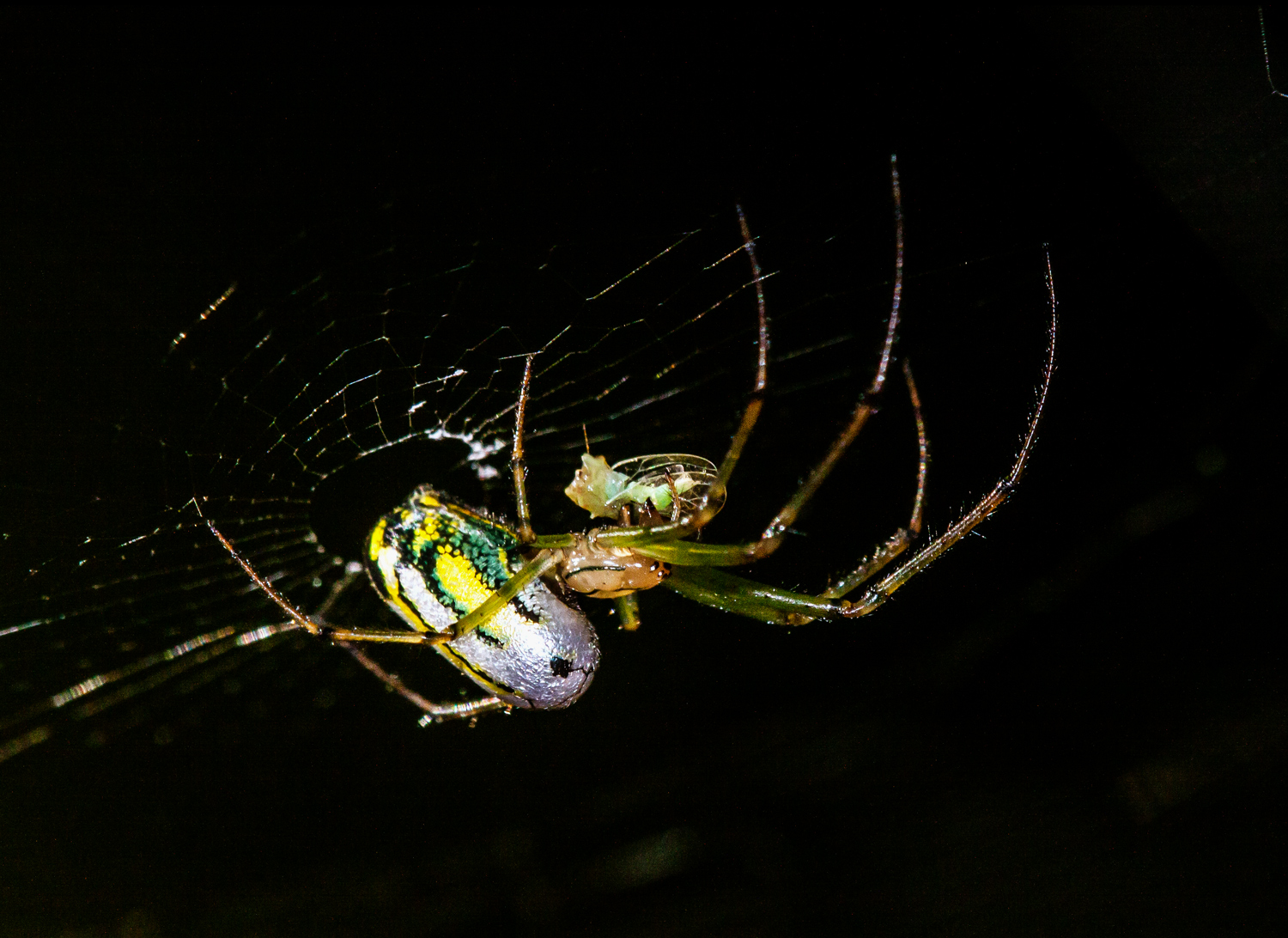
Here is a photo of an Orchard Orbweaver spider (Leucauge venusta) that I took recently. The woods were pretty dark and I was trying to shoot from a relatively short distance away, so I decided to use my pop-up flash. It produced too much glare off of the spider’s shiny body, so I ended up throwing a gray bandana over the flash as a makeshift diffuser. The spider had just captured a prey (I think) and I am pretty happy that I was able to capture as much detail as I did. (Normally I like to be more nuanced when using a flash on close-up subjects, but I think the dark background works well with a spider;)

When I look at the spider with my uncorrected eye, the green and yellow on the spider’s body are pale and dull and the section of the body between the yellow areas appears to be gray. Looking though the corrected eye, however, I see a bright white area in between the bright yellow markings and even the green seems brighter and more intense.

In another two weeks the lens in the right eye is scheduled to be replaced and I’ll probably start to take my newer, brighter world for granted. For now, though, all I have to do is close one eye at a time to see what a difference a change in lens can produce.

Orchard Orbweaver

© Michael Q. Powell. All rights reserved


Read Full Post »

I am not completely certain what these two muskrats (Ondatra zibethicus) were doing on Monday at Huntley Meadows Park. It may have been only grooming, but to me it looks like muskrat love.

muskrat love

© Michael Q. Powell. All rights reserved

Read Full Post »

Wildlife photography forces us to make a lot of choices in a short period of time, because we often encounter our subjects unexpectedly and don’t have the luxury of carefully planning all of our shots. When I stumbled upon this Hooded Merganser family (Lophodytes cucullatus) on Monday at Huntley Meadows Park, for example, I had to make a quick choice. Should I focus on the hyper-vigilant Mom or on her ducklings?

It’s hard to resist cuteness, so I initially focused on the babies. As you can see in the first shot below, the ducklings were relaxed and appeared to be preening and playing, while the Mom in the foreground kept watch. After I had taken a few shots, I switched my attention and my focus to the mother. Her more rigid posture is in sharp contrast to that of her ducklings, who have faded a little into the background in the second shot.

I think that my focusing choices cause each of the images to tell a slightly different story and causes a viewer to react differently. That’s one of the cool things I like about photography—our creative choices can help others to see the world in different ways as we gently guide their attention to what we think is important.

Hooded Merganser family

Hooded Merganser family

© Michael Q. Powell. All rights reserved

Read Full Post »

As I was getting ready to leave Huntley Meadows Park yesterday afternoon, a Wood Duck family (Aix sponsa)  suddenly swam right in front of me from under the boardwalk. Even though I zoomed out, I was unable to capture the entire family with my long telephoto lens.

Here are a couple of shots of the mother and some of her ducklings. They were moving pretty quickly as a group and I didn’t have much time to get some shots before they disappeared into the vegetation.

Wood Duck

Wood Duck

© Michael Q. Powell. All rights reserved


Read Full Post »

In addition to dragonflies, damselflies are now appearing in greater numbers, like this beautiful little Ebony Jewelwing (Calopteryx maculata) that I spotted on Friday at Huntley Meadows Park. Identification is pretty easy, because it is the only dark-winged species in our area. The red eyes suggest that it is newly emerged—the eyes will change to a less demonic color later—and the lack of white markings on the wings indicate it is a male. Click on the image if you want to see some of the details of the damselfly at higher resolution, like the tiny hairs on its legs.

Ebony Jewelwing

© Michael Q. Powell. All rights reserved

Read Full Post »

It was wonderful early this morning to catch a glimpse of one of the Hooded Merganser families (Lophodytes cucullatus) at Huntley Meadows Park. The ducklings appear to be almost grown up now and the survival rate seems to be higher than normal. In the past I have often seen the size of similar families dwindle down to just a couple of ducklings because of the large number of potential predators, most notably snapping turtles. I am amazed that the mother is able to watch over so many babies—the father doesn’t stick around to help raise the offspring.

mama merganser and babies

© Michael Q. Powell. All rights reserved

Read Full Post »

« Newer Posts - Older Posts »