Feeds:
Posts
Comments

Posts Tagged ‘Huntley Meadows Park’

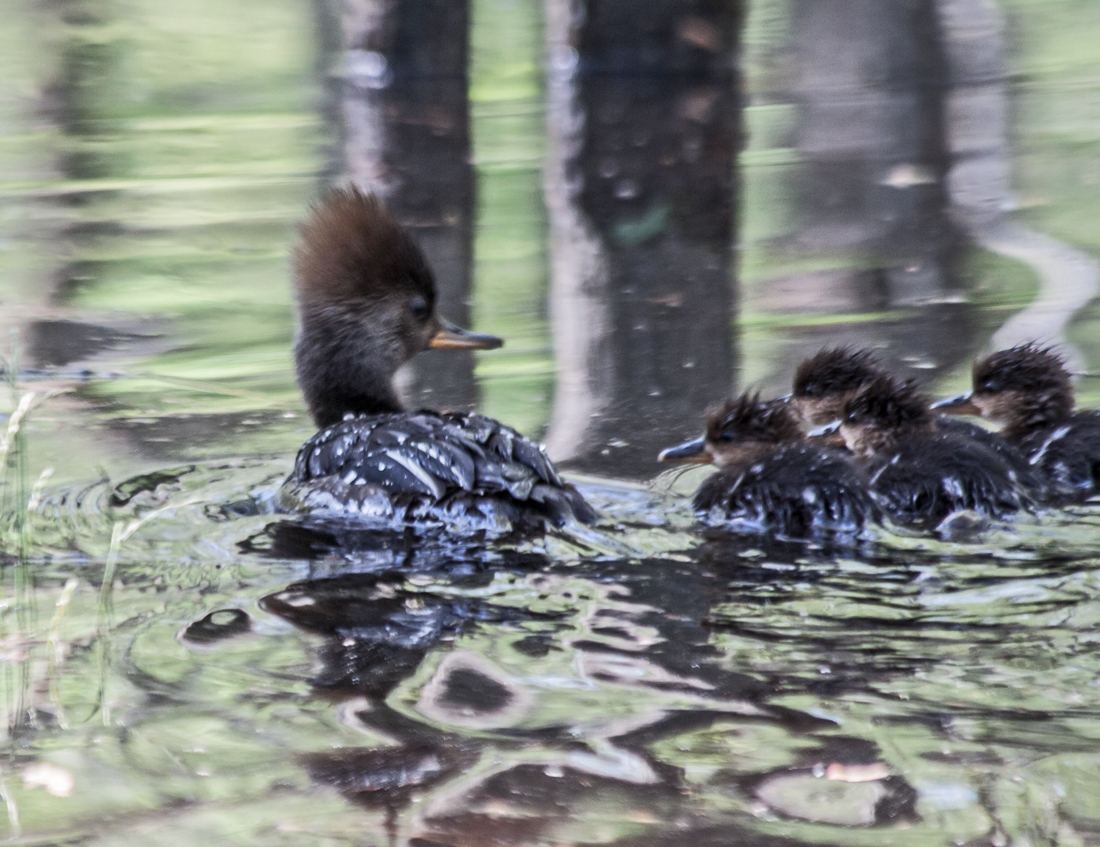
Several weeks after I first spotted a family of Hooded Merganser ducks (Lophodytes cucullatus) at my local marsh, I continue run into this single mother and her adorable ducklings. (Click here to see the original posting.)

The ducks seem to hang out a lot in one flooded, shady area of the marsh that is relatively shallow and doesn’t seem to have the snapping turtles that plagued similar families last year. The light is limited and the ducks start moving as soon as they sense my presence, so getting photos has been a challenge. Here’s a selection of some of my favorite shots to date of this cute little family.
mama_swamp4_blog

Mama duck gives a reminder to the ducklings to stay together and follow her.

mama_swamp3_blog

Trying to move out, but some of the ducklings want to look back toward me.
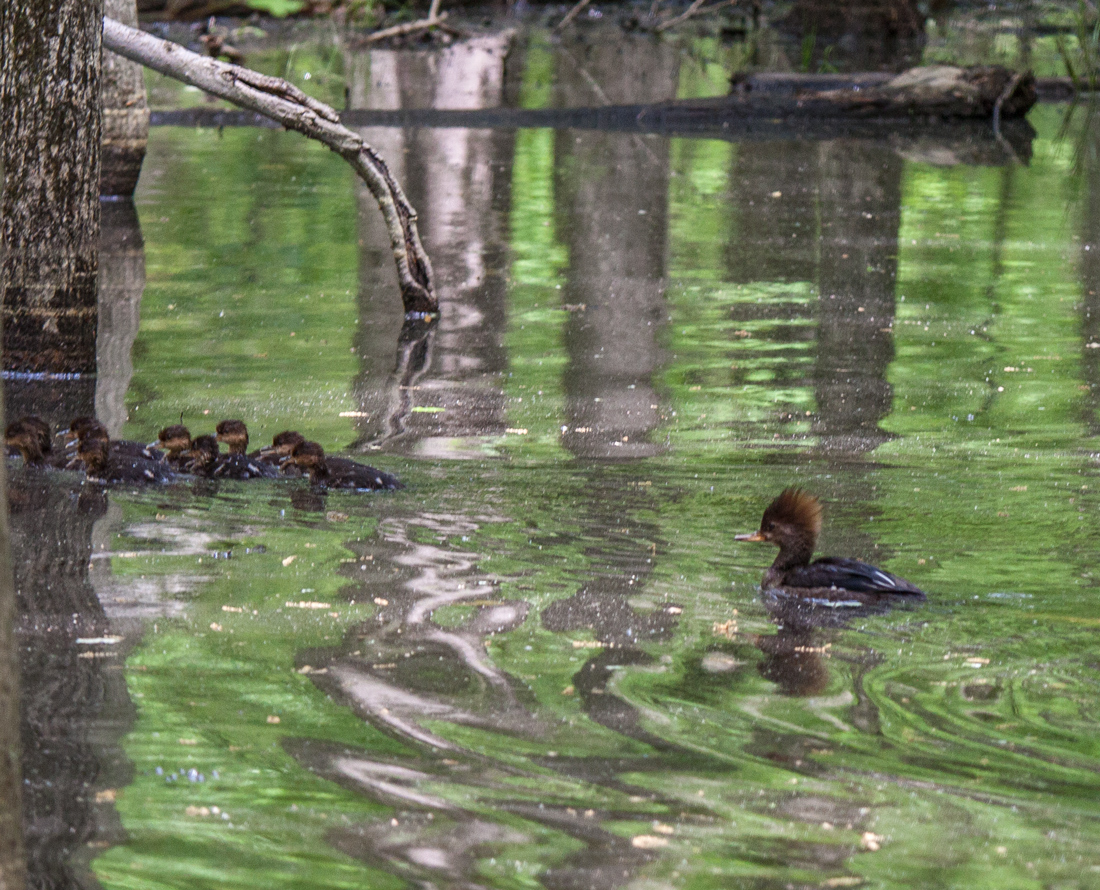
Mama duck takes up a rear position to ensure there are no stragglers.

Mama duck takes up a rear position to ensure there are no stragglers.

Grainy close-up shot that shows some of the personality of the ducklings.

Grainy close-up shot that shows some of the personality of the ducklings.

© Michael Q. Powell. All rights reserved.

Read Full Post »

Although I wake up to the sound of birds loudly chirping at this time of the year, it is getting increasingly difficult to see most of them as the trees regain their thick covering of leaves. The male Red-winged Blackbird (Agelaius phoeniceus) is a notable exception, because he does not hide behind the foliage. Instead, he seems to choose the highest point in the open from which to boldly make his loud calls—there is not timidity or shyness in this bird.

The blackbird puts so much energy into his “singing” that at times his perch becomes precarious. I captured this blackbird in one such moment, when his position seems so awkward and distorted that looks like a cartoon to me.

blackbird_cartoon_blog

© Michael Q. Powell. All rights reserved.
Read Full Post »

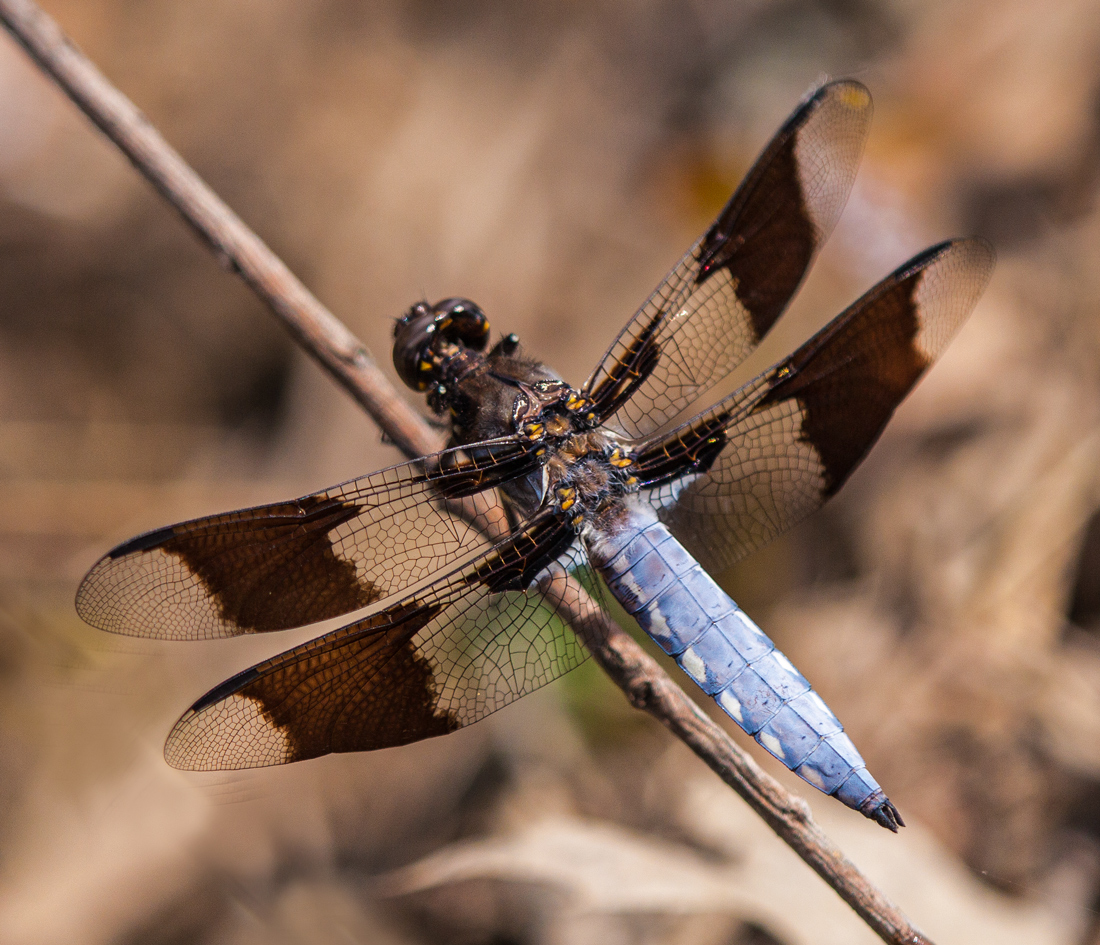
As we move deeper into spring, dragonfly nymphs are emerging from the water and starting their transformed lives as acrobatic flyers. This past weekend I spotted some young male Common Whitetail dragonflies (Plathemis lydia) in different stages of development.

Not surprisingly, adult male Common Whitetail dragonflies have white tails—it seems like most species are named after the characteristics of the male. Check out one of my postings from last year to see what a mature adult male looks like. When they first emerge, however, the males have the same body colors and patterns as the females. Fortunately, it’s easy to tell them apart, because the wing patterns are different in the male and female whitetails. (For more information about these dragonflies, take a look at the pages at bugguide.net.)

The dragonfly in the first shot is well on his way to becoming an adult and was bold enough to be flying over the water. The one in the second shot is younger, and seemed to content to remain in the vegetation at a distance from the open water.

A "tween" male--the abdomen is beginning to turn blue, but the adolescent body pattern still shows

A “tween” male–the abdomen is beginning to turn blue, but the adolescent body pattern still shows

An immature male, with the body pattern of a female and the wing pattern of an adult male

An immature male, with the body pattern of a female and the wing pattern of an adult male

© Michael Q. Powell. All rights reserved.

Read Full Post »

I was on my hands and knees last Friday, trying to get a shot of a small wildflower growing on the forest floor, when a bee landed on the very flower on which I was focusing. What are the odds of that happening at the moment when my eye was glued to the viewfinder and I was focusing manually?

The flower was only about four inches (10 cm) tall, which gives you an idea of the low angle from which I was shooting. After a second or two on the first flower (shown in the second shot), the bee moved to an adjacent flower, and I took the image I presented first. It’s interesting to note the narrowness of the depth of field—in the first shot below, I managed to focus on the bee’s head, whereas in the second shot, the focus point was more on the center of its body. I like each of the images for somewhat different reasons, but I am still shocked that I managed to get them.

Sometimes it’s better to be lucky than skilled.

bee2_flower_blogbee_flower_blog

© Michael Q. Powell. All rights reserved

Read Full Post »

This is the last image in my mini-series on insect eyes from this past Friday—a close-up of a beautiful little damselfly at Huntley Meadows Park, the local marshland where I take many of my nature photographs. 

Photographing damselflies is particularly challenging for me, because they are so long and skinny (not to mention the fact that they are really small in size). About the only way to get their bodies completely in focus is to be absolutely perpendicular to them. When I took this image, I couldn’t get into the optimal position, thanks to a sharp, thorny bush, so the lower half of the body was out of focus. That is one of the reasons why I chose to crop this image as I did, though the main reason was to focus viewers’ attention on the eyes.

This image shows the wide separation of the damselfly’s eyes, which is one of the ways to tell them apart from dragonflies, the other members of the Odonata family. Dragonflies have eyes that are very close together or even touching each other.

If you missed the earlier postings on insect eyes, check out the images of a fly’s eyes and a dragonfly’s eyes. In all three cases, click on the images, if you want to get a higher resolution view of the insects’ beautiful eyes.

damsel_eyes_blog

© Michael Q. Powell. All rights reserved

Read Full Post »

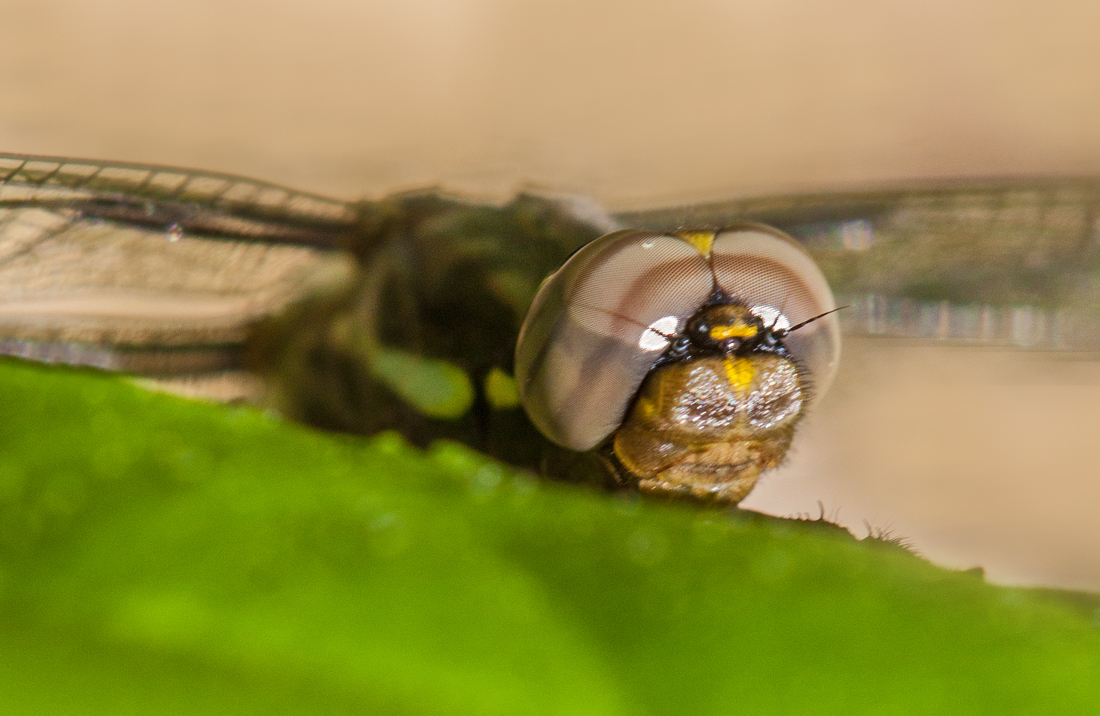
Yesterday, I seemed to be particularly fascinated by insect eyes and did a posting on a fly, whose compound eyes were pretty amazing. However, dragonflies have the largest compound eyes of any insect and I was thrilled to be able to capture this face-to-face shot of a Common Whitetail dragonfly (Plathemis lydia), peering right at me over the edge of a leaf.

A dragonfly’s eyes can have as many as 30,000 facets, known as ommatidia, that contain light-sensitive proteins, according to an article in ScienceBlogs. Although, humans also have these kind of proteins, called opsins, we have only three (red, green, and blue), whereas a dragonfly has four or five, giving it the capability to see colors beyond human visual capabilities. A dragonfly’s eyes also wrap around its head, giving it an incredible field of view. For more information and a more scientific explanation, check out a posting entitled “Super-predators” that Sue did last June in her Backyard Biology blog.

I took this shot in a wooded grassy area adjacent to a pond. It seems that the Common Whitetail dragonflies are hanging out there early in the season and not too many of them are patrolling over the water, as I commonly saw them do last summer. The fact that the dragonfly was not perched on a branch coming out of the water proved to and advantage as I was able to approach pretty closely to it in order to take this shot.
dragonfly_eyes_blog

© Michael Q. Powell. All rights reserved

Read Full Post »

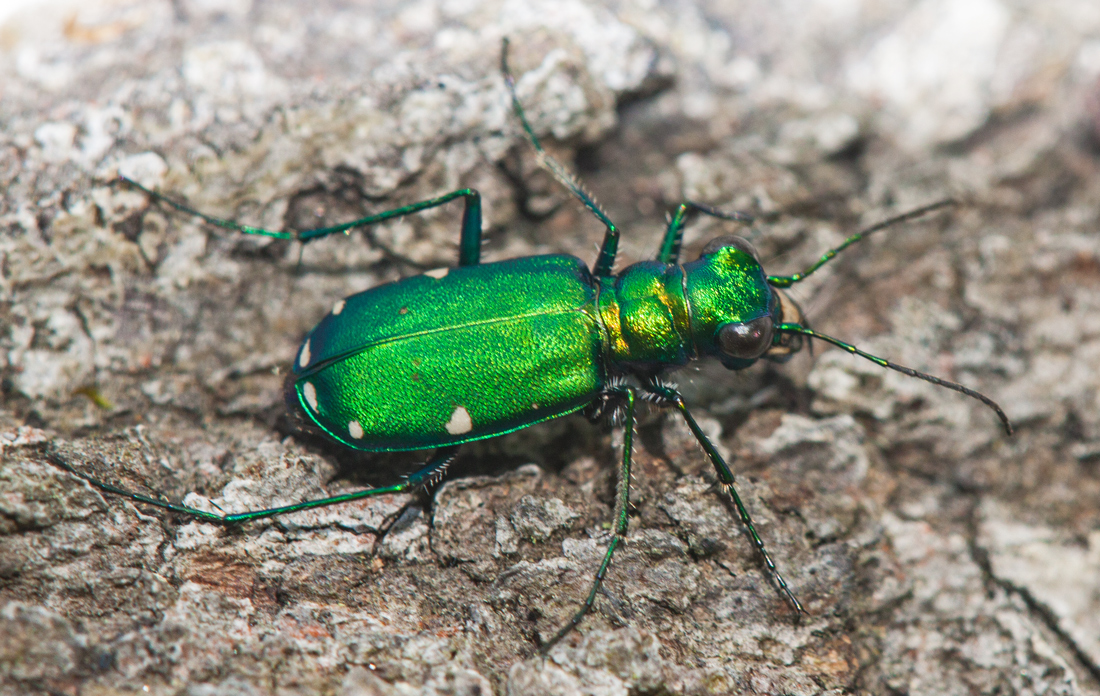
Some insects blend in so perfectly with their environments that they are difficult to spot. That is clearly not the case with this Six-spotted Tiger Beetle (Cicindela sexguttata) that I spotted yesterday at my local marsh.

The beetle’s metallic green body glistened in the sun and made it stand out against the bark of the fallen tree on which it was perched. It flew away several times when I got close to it, but kept returning, eventually remaining in place long enough for me to get this shot. Click on the image to get a higher resolution view of the beetle, including its textured body and multi-segment antennae.

emerald1_blog

© Michael Q. Powell. All rights reserved

Read Full Post »

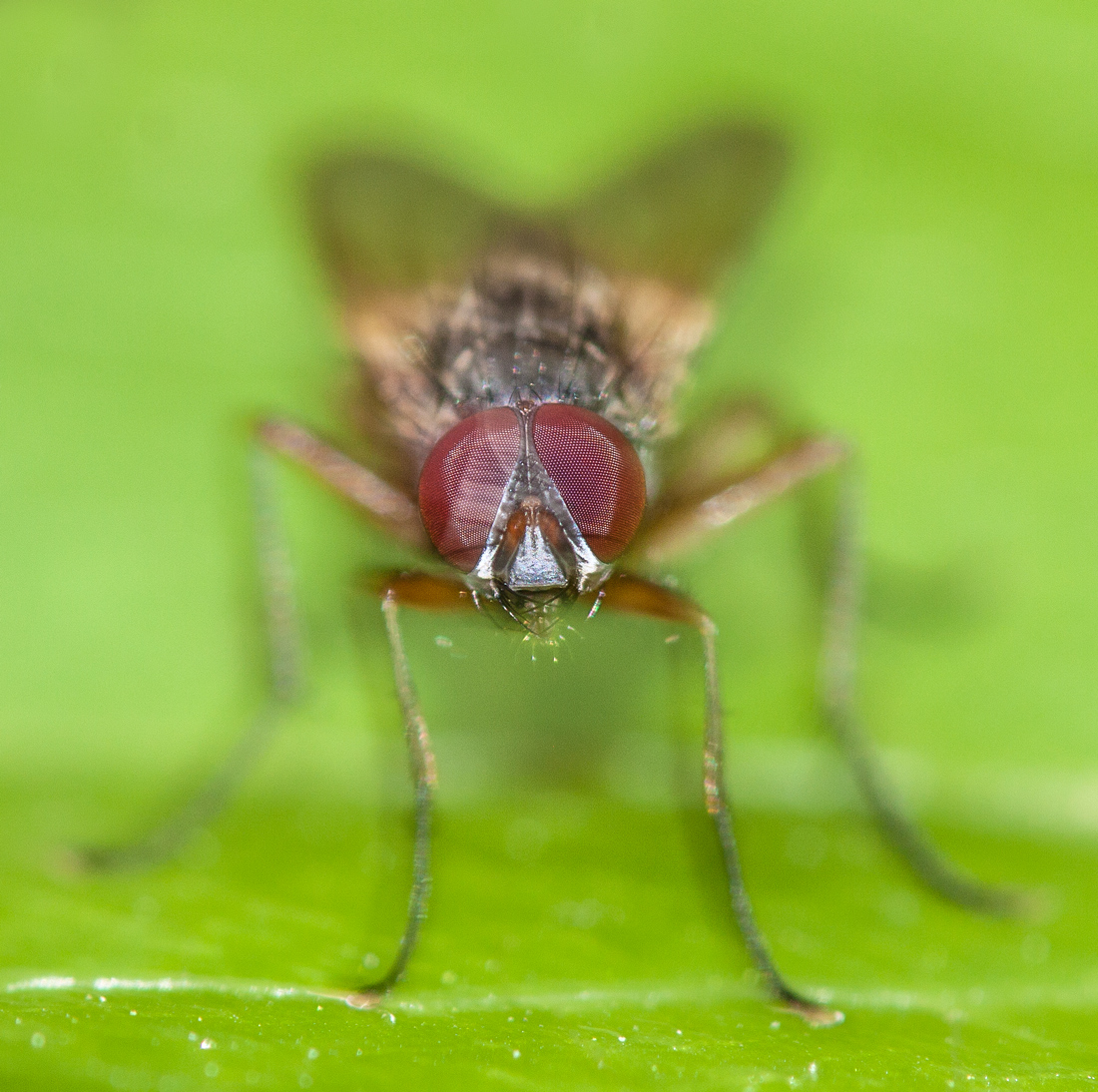
After a week in an urban setting with only a point-and-shoot, I couldn’t wait to get back to my marsh with my trusty Canon 50D in my hands. I kept my macro lens on my camera for most of the time, because the insects seemed much more active than they were only a week ago. Even flies seemed to be good subjects. I photographed this fly hand-held at really close range, which gave me a very narrow depth of field.

The first image is cropped, in order to give you a good look at the fly’s eyes—the second photo is the same image with a much less severe crop.

fly_eyes2_blogfly_eyes1_blog

© Michael Q. Powell. All rights reserved

Read Full Post »

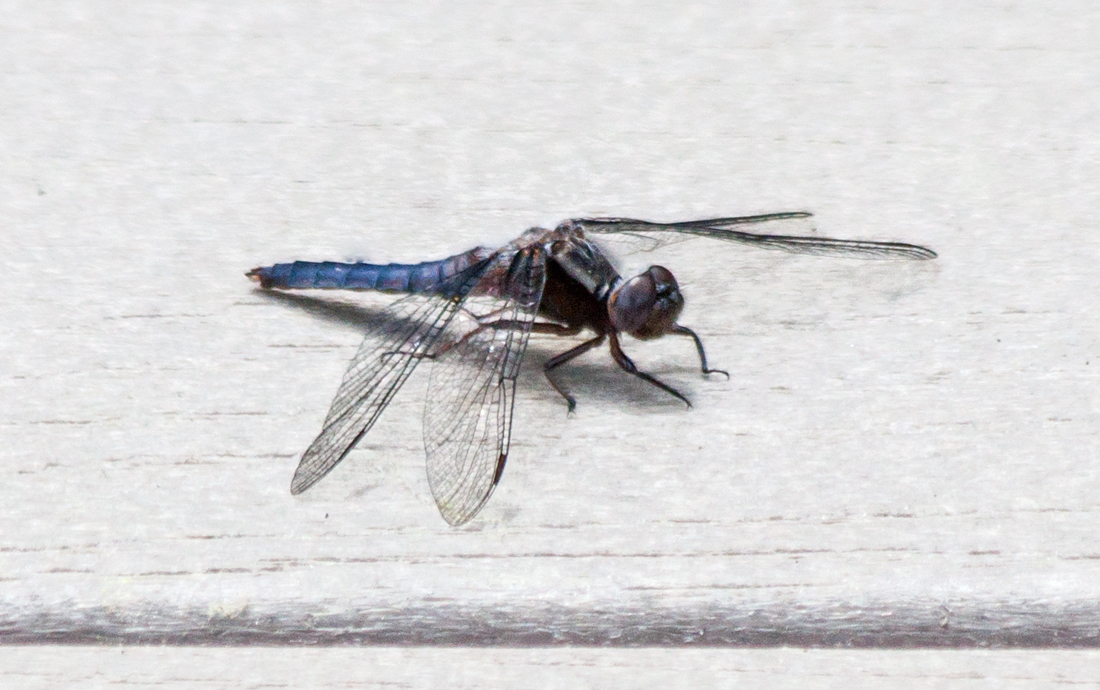
Some of the common species of dragonflies are around throughout much of the summer. Other dragonflies, sometimes referred to as “spring ephemeral” dragonflies,  are around for only brief periods of time in the early spring, like this male Blue Corporal dragonfly (Ladona deplanata) that I spotted last week on the boardwalk at my local marsh.

I had never seen this species before, but fortunately my fellow blogger and local dragonfly expert, Walter Sanford, was able to assist me with the identification. Check out his blog to see some awesome shots of dragonflies and other nature subjects.

I would love to be able to photograph this species the next time in a more natural environment, but I am pretty excited any time I have the chance to get a recognizable photo of a new species.

dragonfly2_may_blogdragonfly_may_blog

© Michael Q. Powell. All rights reserved

Read Full Post »

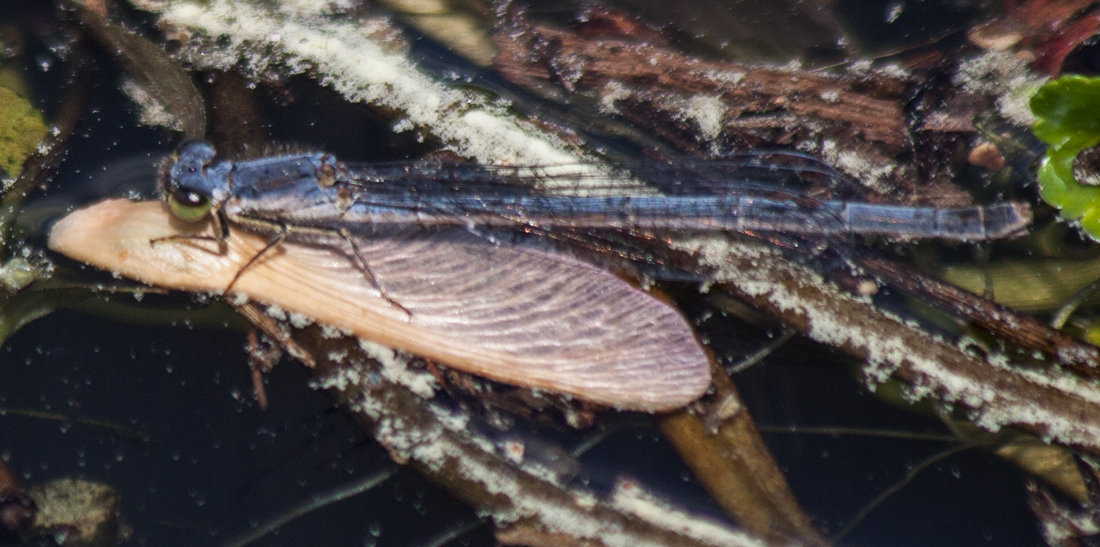
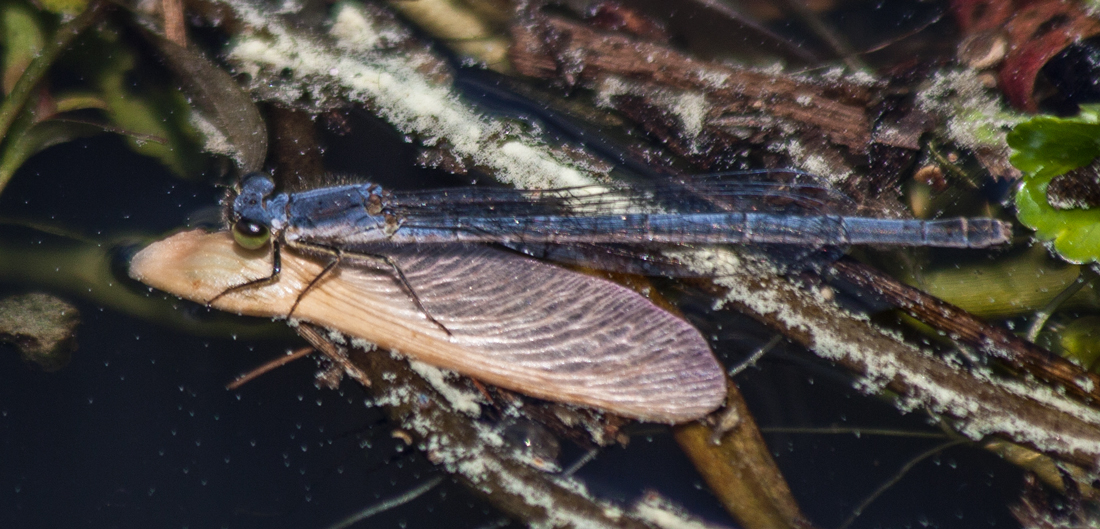
Most folks are familiar with dragonflies, but damselflies, the smaller members of the Odonata family, are equally impressive. I spotted this little beauty yesterday in the pond debris at Huntley Meadows Park, the local marshland area where I take many of my nature photographs.

I don’t know damselfly behavior very well, but noted that the very end of the damselfly’s tail is in different positions in this series of photos. In the first image, the tip is curved upward and then gradually returns to a more straight position in the final shot. Sometimes movements like this indicate that the damselfly could be laying eggs, but I haven’t been able to determine yet the gender or species of the damselfly. There seem to be a lot of different species of damselflies that are blue. (If I had to guess, I’d say that it looks like a female Eastern Forktail (Ischnura verticalis), because of the color, the forked end of the tail, and the two-tone eyes).

Although this looks like a macro shot (and the subject was really small), this is another case in which I was able to use my telephoto zoom lens to get macro-like results. Click on any of the photos to get a higher-resolution view of the damselfly and you may be surprised to see how many of the details the telephoto lens was able to capture.

damselfly1_may_blogdamselfly2_may_blogdamselfly3_may_blog

© Michael Q. Powell. All rights reserved

Read Full Post »

Some subjects are so awe-inspiring that I get excited just seeing them, even if they are too far away for a good photo—like this Bald Eagle (Haliaeetus leucocephalus) that I saw Monday at my local marsh. The eagle seemed to sense my presence and took off before I could get closer, but I managed to capture an image of its final preparations for takeoff from the branch.

eagle_takeoff1_blogWhen I am walking through the woods at this time of the year, I have to keep my eyes in constant motion. Leaves are still sparse enough on the trees that I am still able to spot some birds in the trees.  However, insects are starting to appear too, so I have to scan the leaves and branches on the ground for these little creatures.

On early Monday morning, as I looked through a break in the trees, I caught sight of a large bird in the distance, sitting on the end of a branch. I immediately stopped, having learned from experience that even a single step forward would be likely to spook the bird. The light was not great, but the shape suggested to me that it was probably a bald eagle.

The eagle looked around for a few seconds and then took off. At that moment, I was absolutely certain that it was a bald eagle. I was not so certain that I had captured any useable images, but I was content just to have experienced the sight of that majestic bird in flight.

eagle_takeoff2_blog

© Michael Q. Powell. All rights reserved

Read Full Post »

What’s your first reaction when you see a snake? I was walking through the woods at my local marsh this past weekend when I spotted a snake curled up on the leaves. My first reaction was to move closer to get a shot of the snake.

The area was relatively open, but there were lots of leaves and sticks on the forest floor, so it was not really possible to get an unobstructed shot of the snake. I took a shot anyways, fearing the snake would leave, and include it as a second image here so you can see how the snake was positioned. I noticed that the snake’s head was in an uncluttered area and a clear shot seemed possible. I changed lenses from my telephoto zoom to my macro lens, set up my tripod as low as it would go, and moved really close, until the snake’s head almost filled the frame of my viewfinder. I took some shots in natural light and some with my popup flash. The snake seemed unbothered by my actions until I inadvertently moved a small branch when adjusting my position on ground and he slithered away.

When I looked at the images on my computer, I was struck by the degree to which my reflection is visible in the snake’s eye. If you click on the first photo, you’ll get a higher resolution view that shows me taking the shot (with flash this time).

I am not sure what kind of snake this is, but it looks a bit like a Northern Black Racer snake (Coluber constrictor constrictor) as described on the webpage of the Virginia Herpetological Society. I’d welcome a confirmation or correction of my identification from anyone with more experience with snakes.

snake_reflection2_blog snake_reflection3_blog

© Michael Q. Powell. All rights reserved

Read Full Post »

Tree Swallows have been flying about for several weeks, but it was only this weekend that I finally observed one of their multi-colored brethren, the Barn Swallow (Hirundo rustica). Last year, the Barn Swallows built a nest underneath a raised observation platform of the boardwalk at my local marsh, and it looks like they are doing the same thing this year.

I was able to photograph this swallow as it perched on a small branch coming out of the water directly opposite the platform. The sky was mostly overcast during the day, which caused the reflections in the water to look mostly white. As I made a few adjustments to the image, the background essentially disappeared, resulting in a photo that looks almost like it was shot in a studio.

I really like the swallow’s serious pose and the fact that I was able to capture its signature swallow tail. It won’t be long before I see swallowtails on some of my favorite butterflies.

barn_swallow1_blog

© Michael Q. Powell. All rights reserved

Read Full Post »

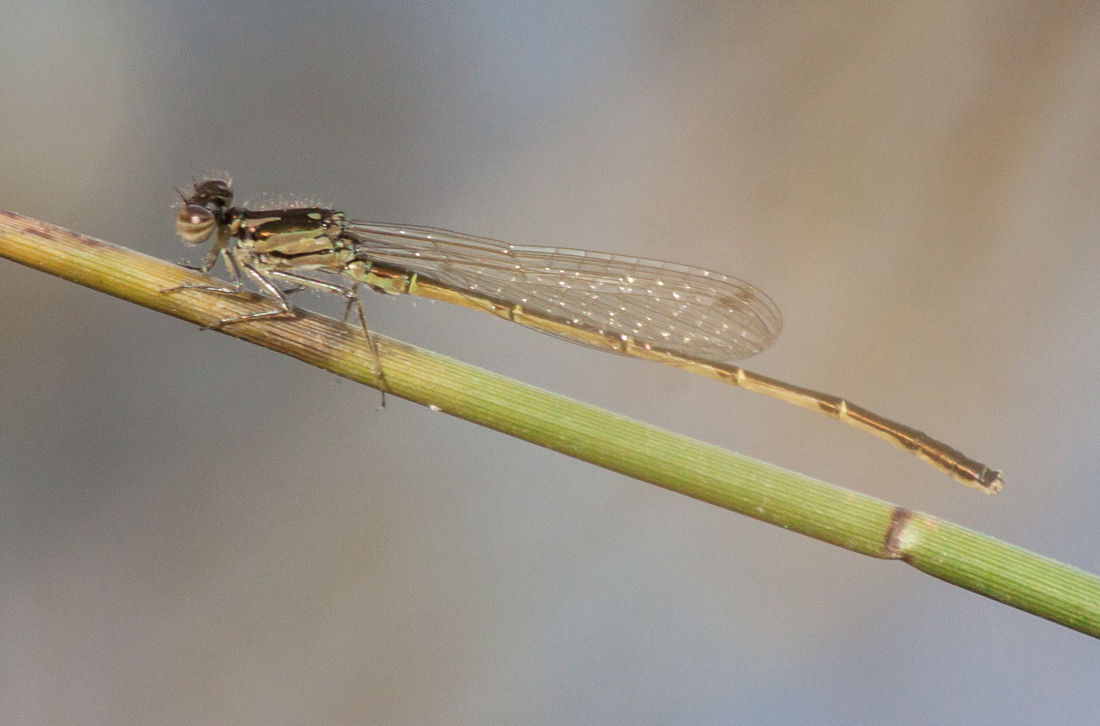
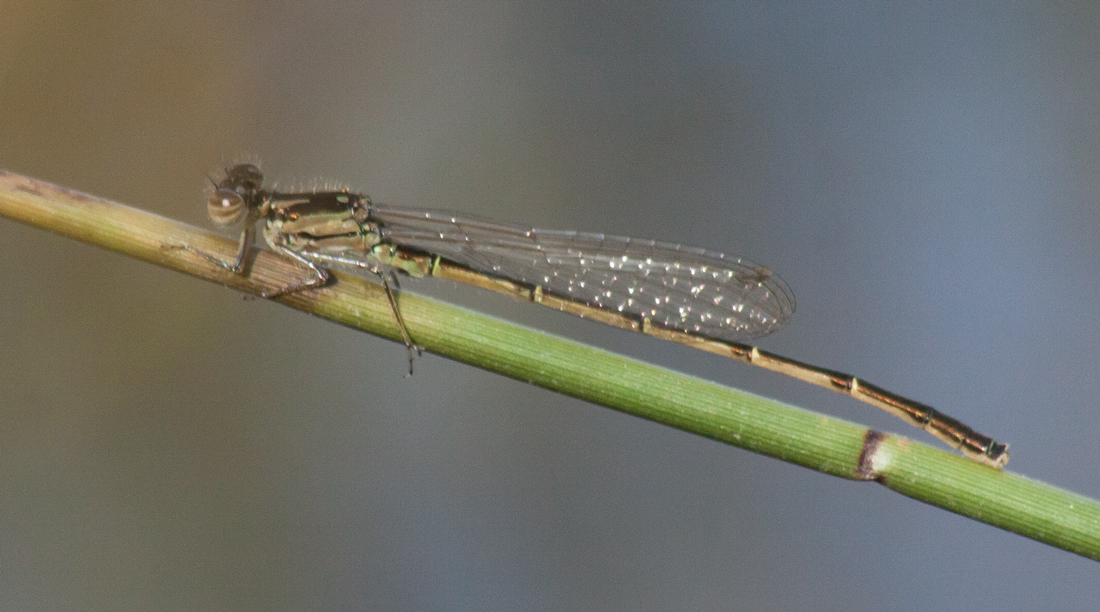
Damselflies are beautiful, delicate insects that are often hard to see and photograph. I captured this image of my first damselfly of the year at Huntley Meadows Park this past Friday. I am not very good at identifying these tiny insects, but think this might be a Fragile Forktail (Ischnura posita).

I was standing my the edge of my favorite beaver pond when I saw the damselfly in flight. I followed it with my eyes and was delighted when it landed on a nearby stalk of grass. I didn’t have a lot of maneuver, because much of the area at the pond’s edge is covered with thorny bushes, and I had to pull back a bit to get within the minimum focusing distance of my 70-300mm telephoto lens , i.e. 4.9 feet (1.5 meters). At that range, the dragonfly filled a reasonable amount of the frame.

Lighting was a bit of a challenge and I tried a couple of different settings as the damselfly lifted its tail from time to time. Eventually, it climbed to the end of the stalk and I changed position too and tried a couple of shots (including the final shot) using my pop-up flash.

Most of the time the first shot below is my favorite, but sometimes I like the others as well or more. In any case, I am happy that I was able to get some good shots of my first damselfly of the spring.

damselfly2a_blogdamselfly1a_blogdamselfly3_blog

© Michael Q. Powell. All rights reserved

Read Full Post »

Female Hooded Merganser ducks (Lophodytes cucullatus) raise their ducklings as single Moms, which must be pretty tough when you have so many offspring to look after. According to the Cornell Lab of Ornithology, the male Hooded Merganser duck abandons his mate once she begins incubating eggs and it’s not known if they reunite the following season.

Last year, when the level of water at my local marsh was pretty low and there seemed to be lots of snapping turtles, most of the ducklings did not survive. After a lot of construction at the marsh, water levels are higher and I am hoping that things will be a little easier on the duck families.

I don’t know how old these ducklings are, but they appear to be tiny—even adult Hooded Mergansers are pretty small. A family of Hooded Mergansers was spotted earlier this week and I suspect that this is the same one, so they may be a week or so old.

I was not able to get very close to the ducks and the conscientious Mama duck started swimming away as soon as she sensed my presence early yesterday morning. You can see details in the first two shots, which are cropped a fair amount, but I included a final shot, which shows more of the setting, because I love the beautiful ripples in the water.

mama_duck1_blogmama_duck2_blogmama_duck3_blog

© Michael Q. Powell. All rights reserved

Read Full Post »

Spring is here and I am once again chasing dragonflies, on a quest to capture images of these beautiful insects. Common Green Darners (Anax junius) rarely seem to perch, so I was forced to try to photograph them in flight.

This early in the spring, there aren’t yet a lot of dragonflies, so my patience was tested as I waited for one to fly by. I tried a lot of different approaches and the one that worked best on this day was to focus manually, which is a bit of a challenge at 300mm when the subject is moving pretty fast.

I hope I’ll get some better shots later this season—this is my best one so far.

dragonfly_flight_blog

© Michael Q. Powell. All rights reserved

Read Full Post »

Sometimes a coiled snake is prepared to strike, but this Northern Water Snake (Nerodia sipedon) was definitely not ready for action. The snake seemed total relaxed as it basked in the sun, curled up above the surface of the water on some dried up vegetation.

I really like the texture of the snake’s skin, but there was no way that I was going to reach out and touch it. Telephoto lenses are a good thing in situations like this.

snake_coil_blog

© Michael Q. Powell. All rights reserved

Read Full Post »

Unlike the Great Blue Herons that stay in Northern Virginia all winter, Great Egrets (Ardea alba) depart for warmer locations during the winter. I was happy to note this past weekend that the egrets are now back at my local marsh, where I took these shots of one coming in for a landing.

The wing span of this bird is impressive and I love the way that it points its toes as it comes in for the landing. As is often the case, I had challenges getting a proper exposure—I try to expose for the brilliant white body, but often blow out the highlights. I am pleased that I was able to capture some of the details of the wings in these images, though the shadows caused much of the plumage to look gray, rather than white.

egret2_april_blogegret1_april_blogegret3_april_blog

© Michael Q. Powell. All rights reserved


Read Full Post »

At first I thought that the black and orange birds rooting about in the fallen leaves were American Robins (Turdus migratorius), but a closer look through the undergrowth revealed that there was white on their breasts and that their eyes were red.

It turns out that they are Eastern Towhees (Pipilo erythrophthalmus), a strikingly marked oversized sparrow. It was quite a challenge to get somewhat unobstructed shots of these birds. They seemed to be in constant motion, hopping about and rummaging through the leaves—I had to chase them around for quite some time to get these modest shots.

towhee2_blogtowhee1_blog

© Michael Q. Powell. All rights reserved

Read Full Post »

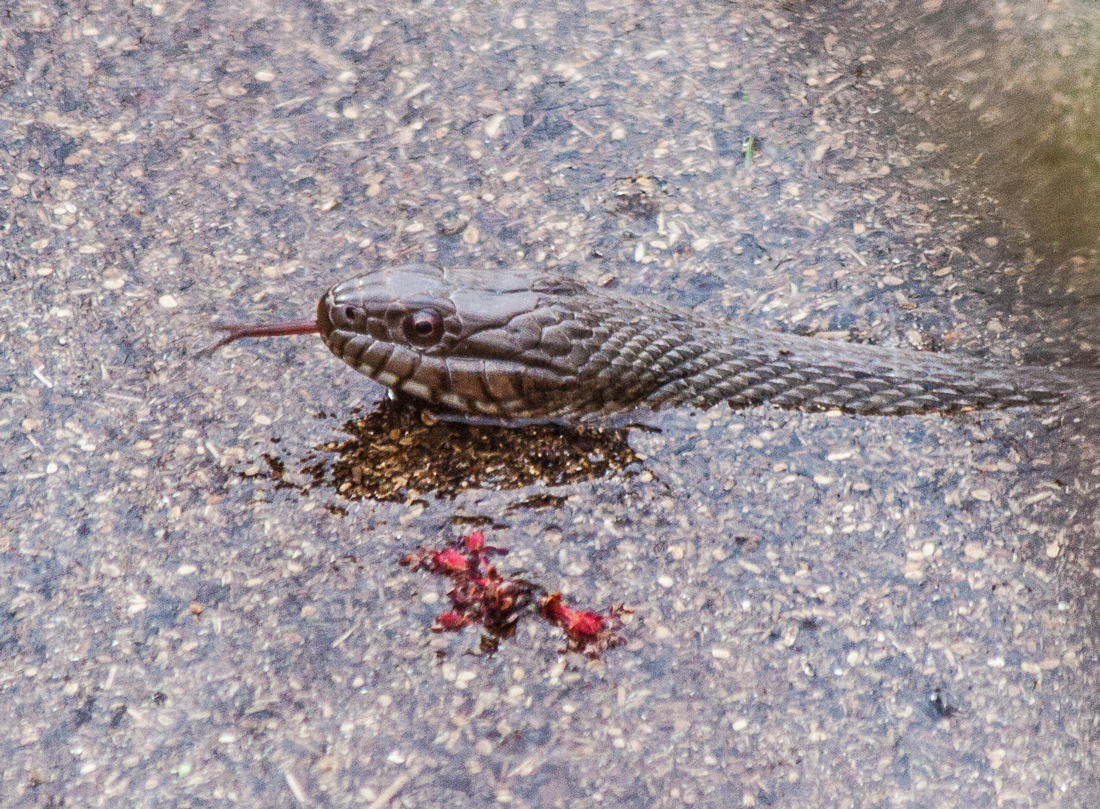
Spring has definitely arrived, bringing with it an abundance of snakes in addition to the profusion of flowering plants.  Most of the snakes have been all curled up, basking in the sun.  This Northern Water Snake (Nerodia sipedon), however, was slithering through the water and stuck out its tongue and hissed at me before disappearing below the surface of the water.

I really like the way the colors of the snake’s skin match those of its surroundings and even the reddish color of the forked tongue is repeated in the fallen blossom.

snake1_water_tongue_blog

© Michael Q. Powell. All rights reserved


Read Full Post »

The weather has gotten warmer, but I was still a bit surprised when I saw my first dragonfly of the year yesterday at Huntley Meadows Park, my local marsh. I think that it is a female Common Green Darner dragonfly (Anax junius), one of the species that migrates north after spending the winter in warmer places. This is the only dragonfly that I saw yesterday and I was able to squeeze off a couple of shots before it disappeared. I’m hoping that it won’t be long before I see more dragonflies and butterflies, some of my favorite photographic subjects.

dragonfly_april_blog

© Michael Q. Powell. All rights reserved

Read Full Post »

Some folks complain a lot about Canada Geese, but I enjoy trying to photograph them, especially when they are taking off and landing. It seems like the number of them has dwindled somewhat at my local marsh recently–perhaps some of them have migrated north.

Yesterday, this goose began to sound the alarm as soon as it became aware of my presence and took off a short time later, still crying out with its tongue extended. I managed to track the bird as it was taking off and to shoot a series of shots. The sky was pretty heavily overcast yesterday, so I had raised my ISO to 320 and figured that I would have enough speed to capture the action. What I didn’t realize at the time, though, was that my aperture was still set at f/11, because I had been shooting some landscapes just prior to these shots. I was in aperture priority mode and my camera chose a shutter speed of 1/1oo of a second.

In the first shot, the goose is relatively sharp and there is little motion blur, except for the background, which is blurred, I think, because I was panning as I tracked the goose. In the second shot, though, which preceded the first in time, the wings and the feet have some motion blur, which accentuates the feeling of the goose scrambling to get into the air.

I keep going back and forth in trying to decide which of this two photos I like better. The technical side of my brain wants to vote for the first one, but the artistic side prefers the second image. What do you think?

goose_alarm goose_alarm2_blog

© Michael Q. Powell. All rights reserved


Read Full Post »

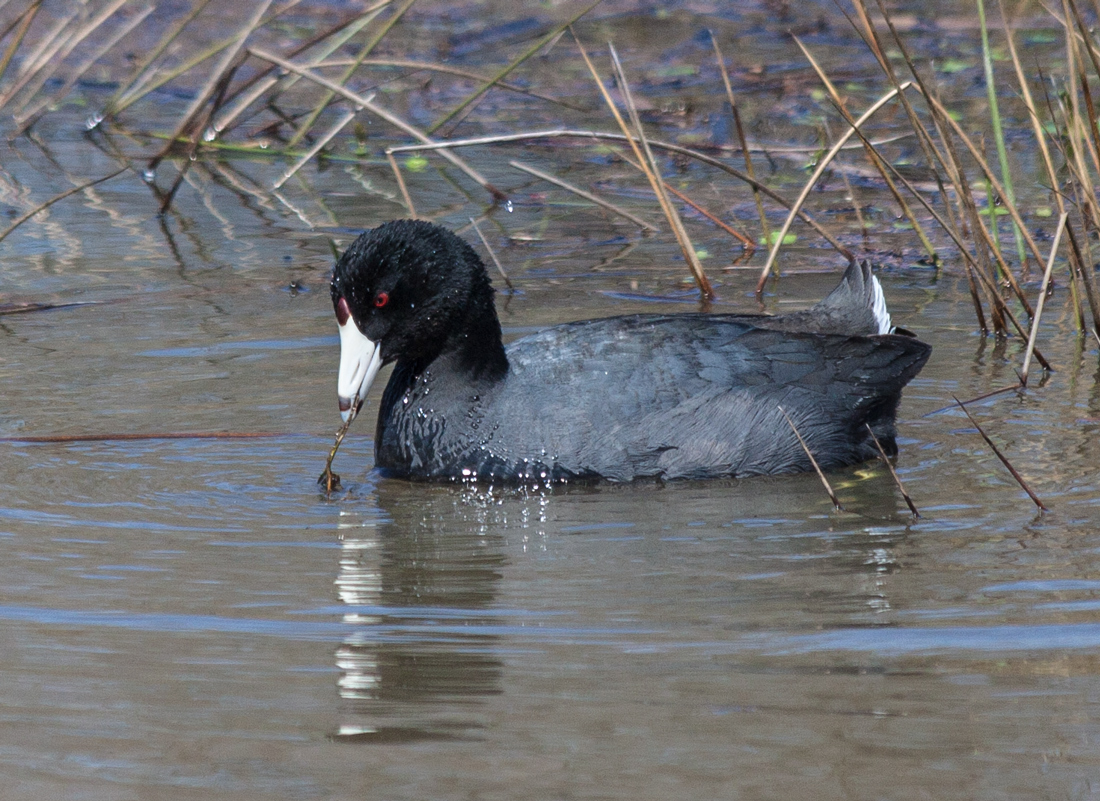
Another coot? Yes, as I was going over my recent shots of an American Coot (Fulica americana) at my local marsh one more time, I decided that I liked this image even more than the one I posted yesterday. The coot has a kind of determined look in its eye and the tilted head gives it a sense of tension, like it is exerting effort to pull that plant out of the water. Besides, I seem to be attracted to birds and animals with unusually colored eyes.

I find it tough at times to choose the best shot quickly when I have shot a series of images. Probably I need to take a little more time in reviewing the images, but I am often in too much of a hurry to find an image (or images) to post. A year ago, I felt compelled to attempt to post every single day, but I have backed off slightly and miss a day now from time to time.

Nonetheless, I still like to post images that appeal to me, which are often, but not always, my “best” shots. Sometimes the photos will merely document the experience that I want to share with readers and may not be technically great images. It’s a little selfish, perhaps, but I shoot mostly for me. Fortunately, I sense that my skills are improving and hope that the quality of the images I post tend to reflect that improvement.

coot_redeye_blog

© Michael Q. Powell. All rights reserved

Read Full Post »

Thanks to some recent rains and a major wetland restoration project at my local marsh, we seem to have a lot more American Coots (Fulica americana) than last year. Most of the time they seem to like to keep their distance. This past Monday, though, one of them drifted toward an area relatively close to where I was standing and I managed to get this shot of the coot feeding on some of the vegetation growing out of the water.coot_hungry_blog© Michael Q. Powell. All rights reserved

Read Full Post »

As I was tiptoeing my way along a tree that had fallen across a flooded area of my local marsh, I glanced down and caught sight of this turtle, submerged in the shallow water. I am no expert in identifying turtles, but it was pretty easy to identify this as a Spotted Turtle (Clemmys guttata), a species that I don’t see very often.

According to Wikipedia, the spotted turtle is federally endangered in Canada and in the United States it is considered to be vulnerable to extinction in the wild in the medium-term future, or threatened in most of its habituating states. Within Virginia, the state in which I live, the Herpetological Society is pretty grim in its prognosis, “Extinction or extirpation is possible. Populations of these species are in decline or have declined to low levels or are in a restricted range. Management action is needed to stabilize or increase populations.”

It was a bit of a challenge getting a shot of this turtle. I was standing on the trunk of a tree, so my footing was a bit precarious. The water was probably only a few inches deep, but it seemed to defeat my auto-focusing system, so I ended up focusing manually. Finally, there was a bit of glare coming off of the surface of the water, so I had to bend down to search for an angle that allowed me to minimize the glare.

I am hoping that I will see these turtles often and that Huntley Meadows Park, the place where I take a lot of my wildlife photographs, will continue to be a refuge for this species and for many other ones.


turtle_spotted_blog

© Michael Q. Powell. All rights reserved

Read Full Post »

Taking advantage of yesterday’s gorgeous springtime weather, this little Eastern Gray Squirrel (Sciurus carolinensis) took a break from his chores to enjoy a snack and to bask in the warmth of the sun for a few moments.

squirrel2_spring_blogsquirrel1_spring_blog

© Michael Q. Powell. All rights reserved


Read Full Post »

Despite the rain yesterday, the male Red-winged Blackbirds (Agelaius phoeniceus) were singing up a storm. It seemed like their entire bodieswould expand as they prepared to call out loudly. I didn’t see any female blackbirds respond to the calls—in fact, I didn’t see any at all.

blackbird_singing2_blogblackbird_singing1_blogblackbird_singing3_blog

© Michael Q. Powell. All rights reserved

Read Full Post »

Like the dried-up leaves on this branch, winter is tenaciously hanging on, refusing to give way to spring. March is almost over, yet I look out the window and see that the ground is still covered with snow.

Soon the monochromatic tones of winter will be replaced by the pastel colors of spring. Starved for bright colors, my senses rejoice when I am greeted by bright colors, like those of this male Northern Cardinal (Cardinal cardinalis) that I observed this past weekend.

cardinal_march_blog

© Michael Q. Powell. All rights reserved

Read Full Post »

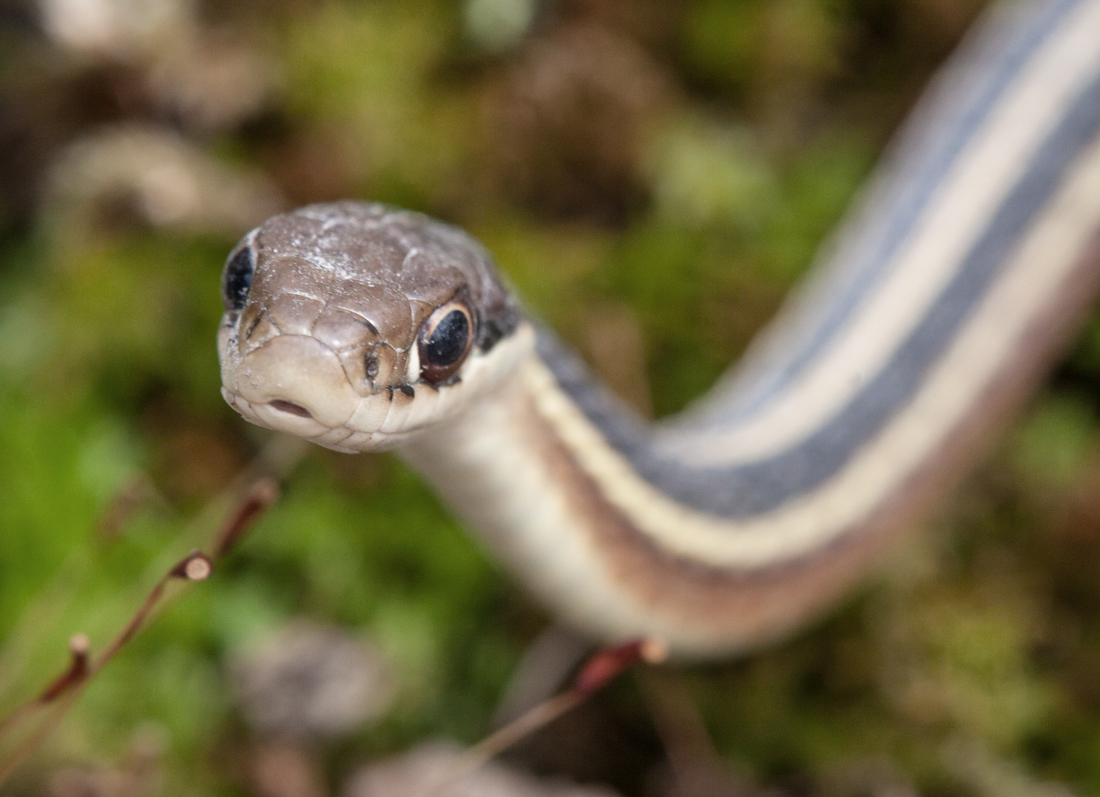
Can snakes whistle? It sure looks like this Common Ribbonsnake (Thamnophis sauritus) is trying hard to whistle as he purses his lips and seems to be blowing air in this series of shots. Who knew that snakes had lips? This snake has lips that rival those of Mick Jagger and look a bit like they were enhanced with collagen.

When you shoot subjects, how close do you get to them? My general rule for wildlife subjects is to shoot them from a distance (so I can be sure of getting a shot) and then move slowly closer and closer. I was amazed at how close this snake let me approach—this first shot was not cropped very much at all.

I like the head-and-shoulders look of the first image (taking into account the fact that snakes don’t really have shoulders), which draws attention to the snake’s eye. At times, though, I prefer the shots that show more of the snake’s body and my favorite of this group is probably the third shot. I really like the curve of the snake’s body and the tilt of its head. It’s hard to see in this reduced-size image, but two little tips of the snake’s forked tongue are visible in its partially open mouth.

snake3_march_blogsnake2a_march_blogsnake4_march_blog

© Michael Q. Powell. All rights reserved

Read Full Post »

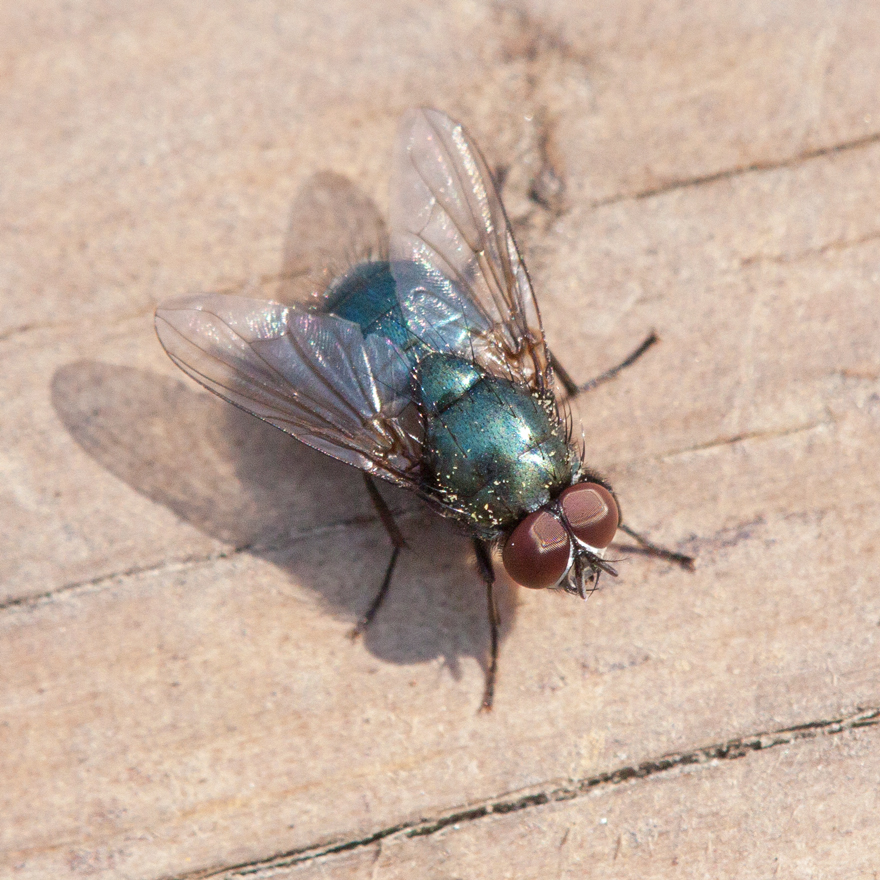
The world changed for me when I put my macro lens back on my camera, simultaneous becoming smaller and bigger. Instead of looking in the distance for birds, I switched my focus to the world immediately in from of me, searching for tiny objects that I can photograph.

In vain I long for colorful butterflies and dragonflies, but it is too early in the spring for them to appear. As soon as a fly buzzed by me, I was seized with an irresistible urge to capture its image. It’s only a fly (a Green Bottle Fly, I think), but it is symbolic of the joys to come, the time when I will spend endless hours chasing after insects, trying to capture the detailed beauty of their colors and patterns.

fly_march_blog

© Michael Q. Powell. All rights reserved

Read Full Post »

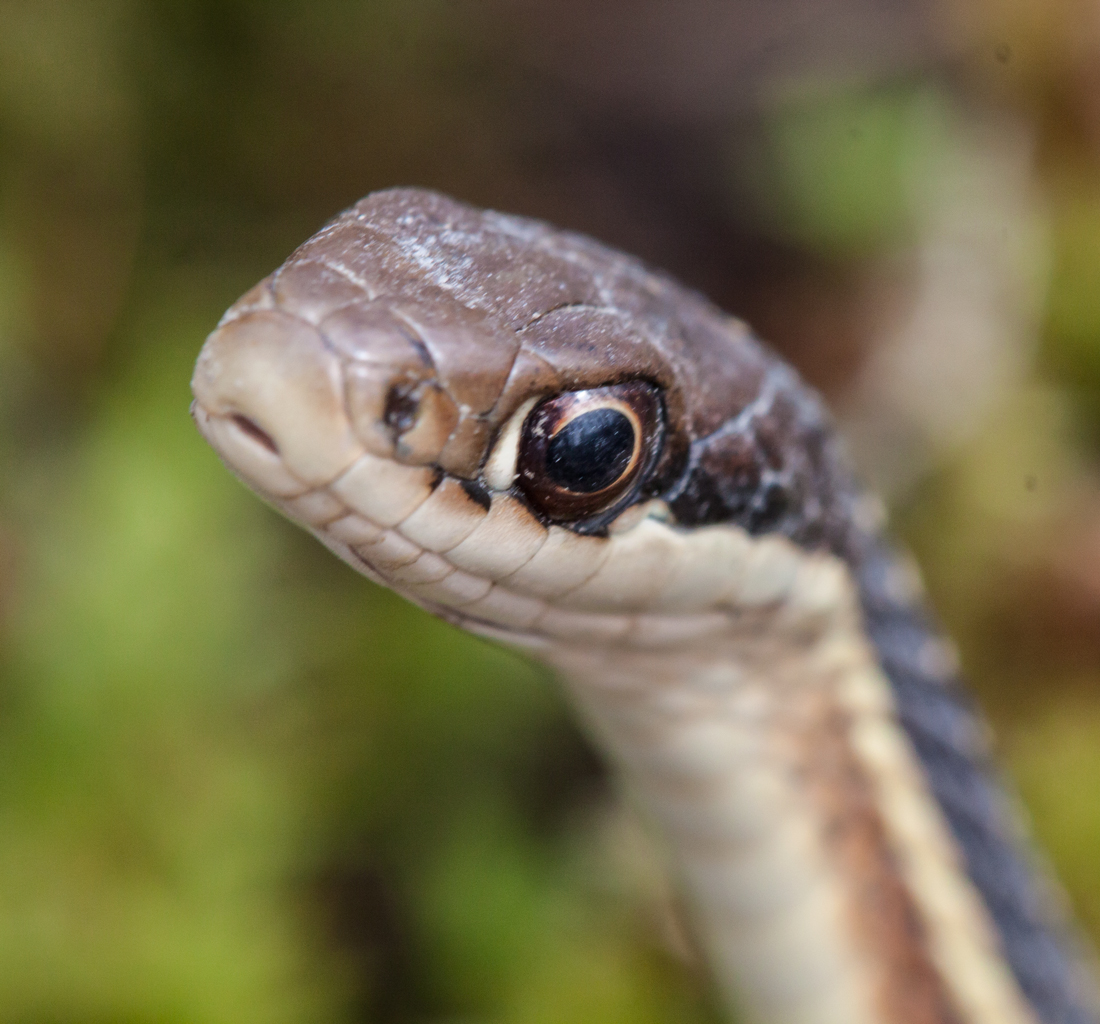
Now that it is spring, I have started carrying around my macro lens, which I was able to use to get this really close-up shot today of an Eastern Garter snake (Thamnophis sirtalis) at Huntley Meadows Park, my favorite local spot for nature photography. The snake was curled up in a mossy area and seemed to be a little sluggish. Consequently, he did not slither away when I got down low and moved in close to take this photo.

CORRECTION: Fellow photographer and blogger Walter Sanford, who is much more of an expert in snakes than I am, has identified this snake as a Common Ribbonsnake (Thamnophis sauritus sauritus), not an Eastern Garter snake.

snake1_march_blog

© Michael Q. Powell. All rights reserved

Read Full Post »

« Newer Posts - Older Posts »