Feeds:
Posts
Comments

Posts Tagged ‘Huntley Meadows Park’

I wouldn’t have thought that a moth would taste very good, even for a dragonfly, but this young male Eastern Pondhawk (Erythemis simplicicollis) would probably disagree.

I knew that dragonflies are fierce predators and ate other insects, but somehow I didn’t imagine that their diet included moths, which I would think would be dry and not have much nutritional value.

Of course, I have been known to consume chicken wings, which require a lot of work in order to get a very small amount of meat, so who am I to criticize a dragonfly’s diet. I might offer him one suggestion—the moth would probably taste better if he coated it with a spicy sauce.

Eastern PondhawkEastern Pondhawk

© Michael Q. Powell. All rights reserved.


Read Full Post »

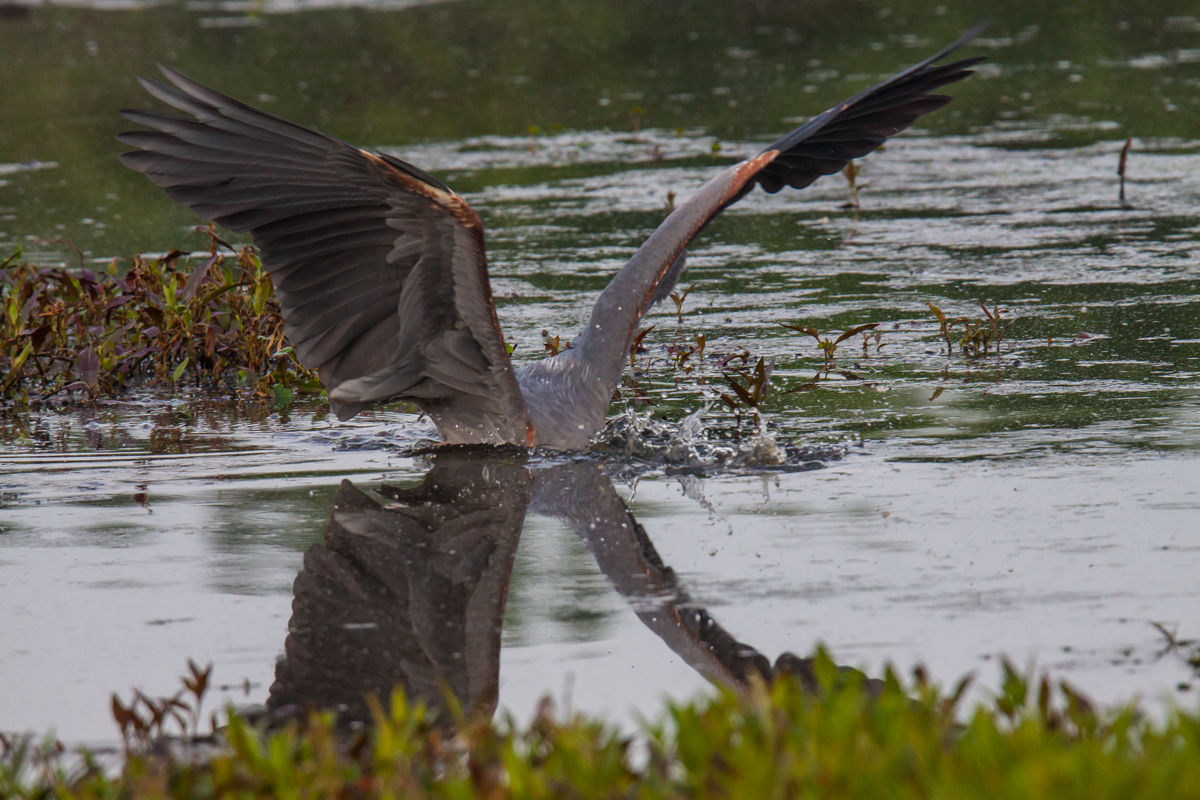
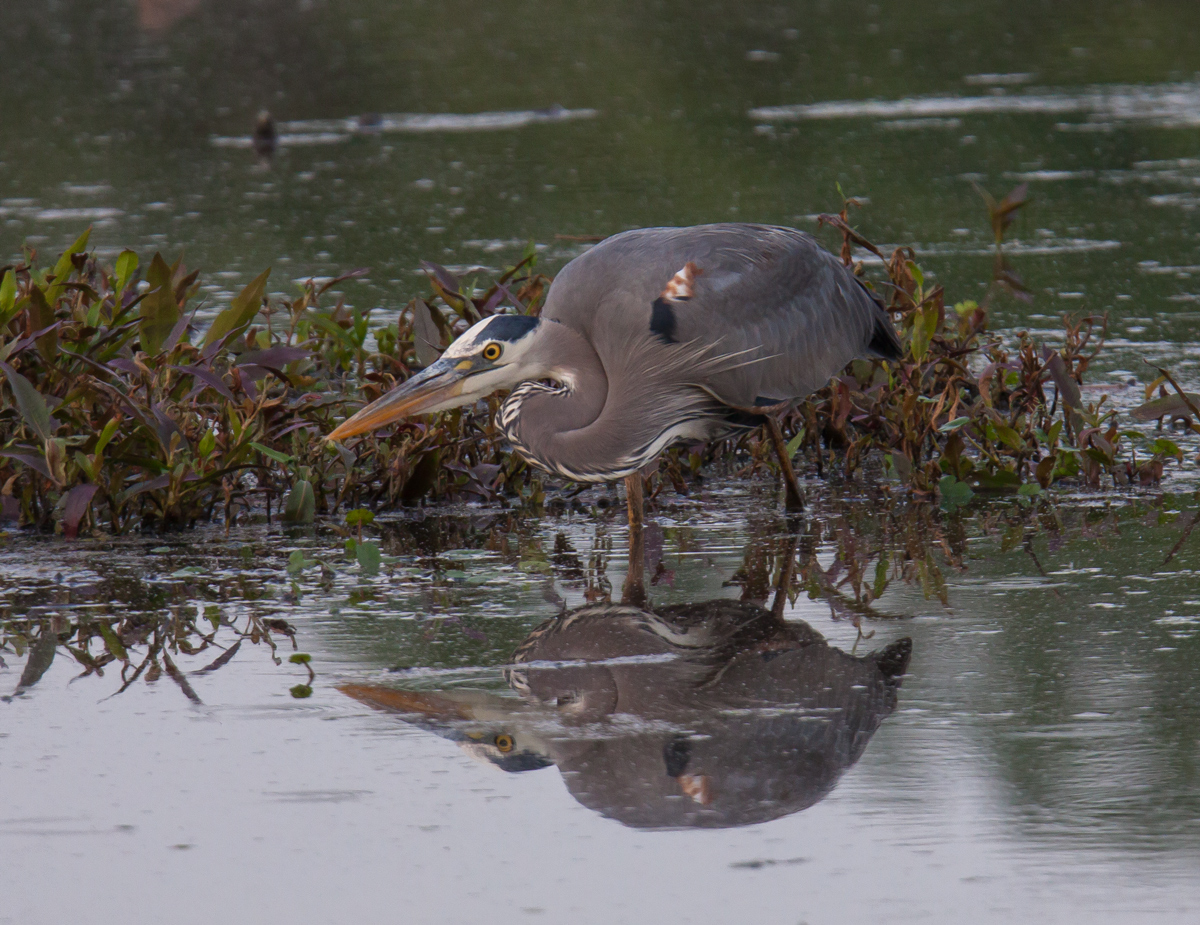
I am thrilled that I was able to get a shot of a Great Blue Heron triumphantly holding a freshly caught fish and I followed my initial instinct to post that photo. However, I also managed to capture a sequence of shots of the action that led to that culminating moment that I really like that I thought would be fun to share.

In this first shot, the heron has just made the strike and has plunged its head deep into the water. I am not sure why the heron extended its impressive wings like this, but suspect it was either to generate greater force or to maintain stability.

Great Blue Heron

When I first spotted the Great Blue Heron (Ardea herodias), it was obviously focused on finding a fish. When it bent over like this, I suspected that the heron had already spotted one and was tracking it.

Great Blue Heron

Suddenly the heron turned to the side and made the strike that I showed in the first shot. Some of the herons that I have observed in the past have been amazing in their ability to catch fish, but I have seen others, especially the young ones, that would strike repeatedly at branches and floating leaves. As a result, I knew that success was not guarantee and I waited to see how the heron had done. In this next shot, the heron’s head is just starting to reemerge from the water. At that moment it certainly knew if it had a fish in its grasp, but I still was in the dark.

Great Blue Heron

At last the heron lifted its head a bit more and I could see that indeed it had caught a fish. I really like this shot shows the little vortex that was created in the water as the fish is pulled up into the air.

Great Blue Heron

Now, after the fact, it’s easy for me to sit back and analyze what the heron was doing. During the brief moments when I was taking the shots, it was all I could do to concentrate on keeping the heron centered in the viewfinder and hoping that the buffer in my camera would not fill up too quickly as I fired away in burst mode.

© Michael Q. Powell. All rights reserved.


Read Full Post »

Early one morning last week at Huntley Meadows Park, I watched and waited as a Great Blue Heron (Ardea herodias) sought to catch some breakfast. He was successful and I left the scene equally satisfied when I captured this image.

Great Blue Heron

© Michael Q. Powell. All rights reserved.

Read Full Post »

I can’t get over the beauty of the dragonflies, especially this early in the season. On Monday, I spotted this beautiful male Painted Skimmer dragonfly (Libellula semifasciata) at a tiny pool (which was really more like a puddle) at my local marshland park.

The colors and pattern of the wings make this species quite distinctive and pretty easy to identify. The striking beauty of the Painted Skimmer has also attracted the attention of several other photographers in this area.

I personally love to see how others choose to photograph similar subjects. If you want to see more beautiful images of Painted Skimmers, check out recent postings by Walter Sanford and Joel Eagle. Each of us was presented with a similar dragonfly in different circumstances and made a series of creative choices to produce our individual portraits of this almost magical creature.

Painted Skimmer

© Michael Q. Powell. All rights reserved.

Read Full Post »
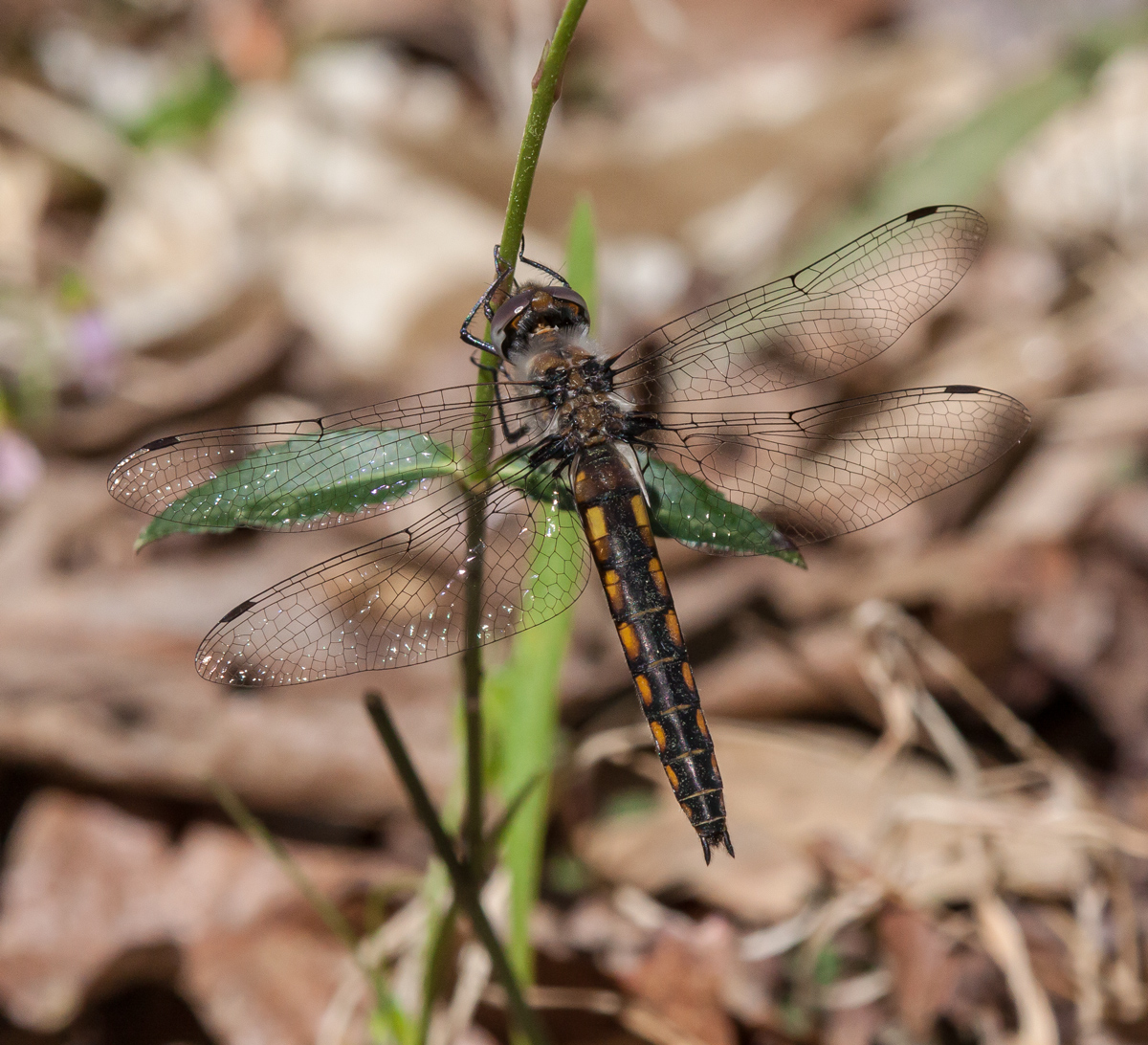
New dragonflies continue to emerge as we move deeper into spring and yesterday I spotted my first Twelve-spotted Skimmer dragonfly (Libellula pulchella) of the season, a strikingly beautiful young male. It’s easy to tell that this one is a male because the female does not have the white spots. Local dragonfly expert and fellow photographer and blogger, Walter Sanford, commented to me that, “This guy is a “freshie.” His abdomen will turn white with pruinescence when he matures.”

I am a curious guy and I started to wonder how you are supposed to count the spots to get to the twelve in this species’ name. Do the white ones count? Do the interconnected brown ones in the middle count as one or as two? Who decides?

This is not as simple as it seems and this species is sometimes known as the Ten-spotted Skimmer. Really? A bugguide.net article explains it this way:

“Once upon a time, this was the Ten-spot(ted) Skimmer, and formerly appeared in most books under that common name. To make it so, the basal spot of opposite wings was counted as one spot crossing the thorax (and so it appears at a glance, especially when they are flying or seen from a distance). Some authors rationalize it as counting the cloudy white spots on the wings, but that’s only good for mature males, and it often doesn’t work (there are often only eight white spots, the two at the base of the hind wing either missing or having been rubbed off).”

Confused? Hopefully we all can agree on the distinctive beauty of the species.

I’ll be keeping my eyes open for more of these dragonflies, although I learned yesterday from Kevin Munroe’s wonderful Dragonflies of Northern Virginia website that it is unusual to see more than a few of them at any one site. Apparently the Twelve-spotted Skimmers are a bit more picky about their habitat needs than many of the other skimmers in our area.

Twelve-spotted Skimmer

© Michael Q. Powell. All rights reserved.

Read Full Post »
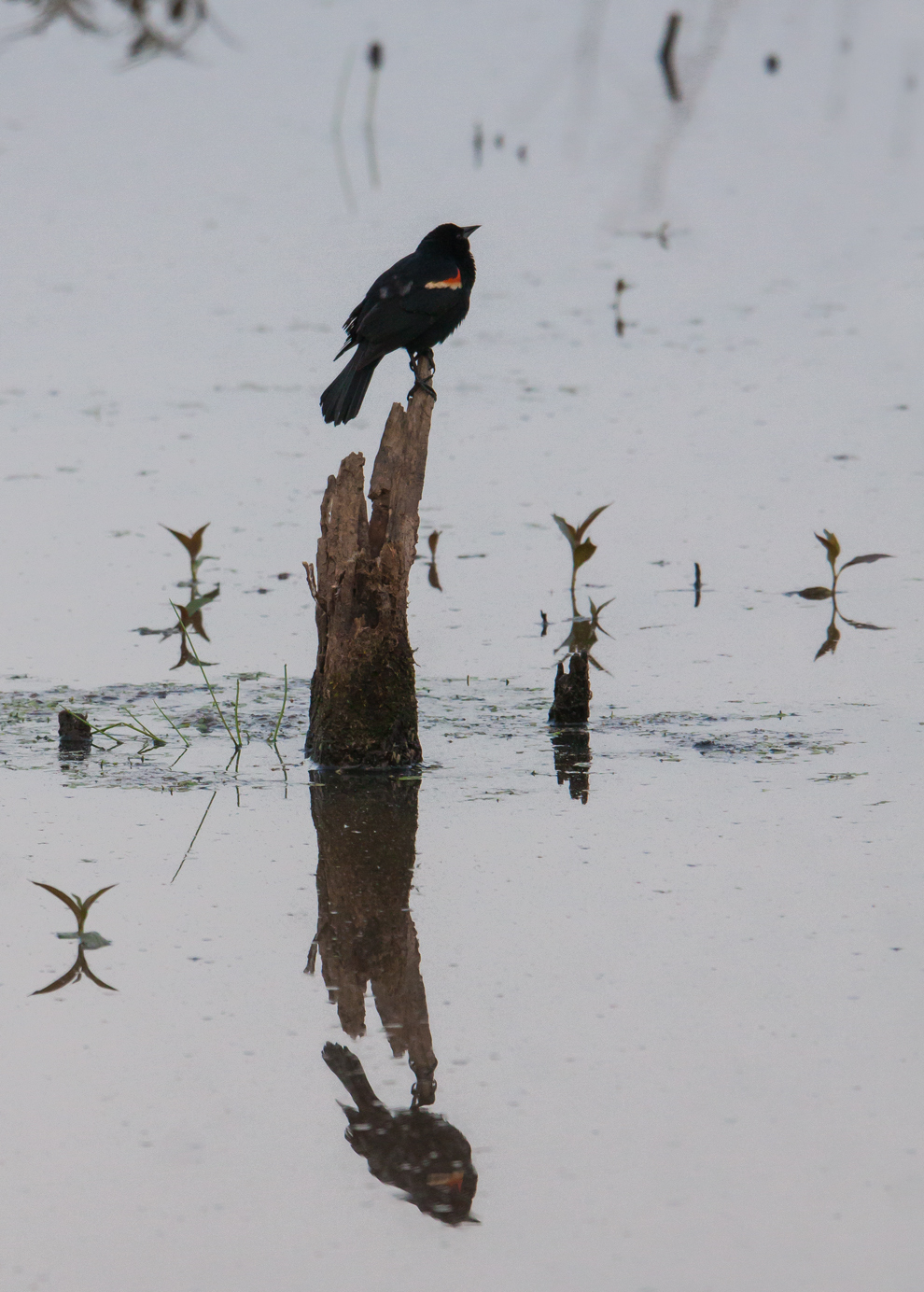
The marsh is especially beautiful early in the morning, as birds like this Red-winged Blackbird (Agelaius phoeniceus) welcome the first rays of the rising sun. The water is still, reflecting the glory of the new day, and a sense of peace overwhelms me.

Red-winged Blackbird

© Michael Q. Powell. All rights reserved.

Read Full Post »

In the early morning hours above Huntley Meadows Park, all kinds of birds are flying about, like this immature Bald Eagle (Haliaeetus leucocephalus) that I spotted yesterday.

A year ago, I probably would have guessed that this was a hawk, but my identification skills have improved somewhat and I can tell this is an eagle. Given that it takes about five years for a Bald Eagle to mature, I’d guess that this one is about two to three years old, though I defer to more expert birdwatchers on this point.

As you can probably tell, the eagle was moving from right to left as I tracked it over the treetops. I was shooting over a small pond at a pretty good distance in early morning light that was not yet bright, so my ISO was cranked up a bit. I especially like the shots that include the trees. Although I will try to photograph an eagle every time I see one, I think it is a nice extra when I manage to include part of the surroundings in the shot.

Bald EagleBald EagleBald Eagle

© Michael Q. Powell. All rights reserved.

Read Full Post »

When you can see your own reflection in an eye, you know that you have managed to get really close to a subject, in this case an Eastern Box Turtle (Terrapene carolina carolina) that I encountered this past week while walking through the woods at my local marshland park.

Of course, it is equally possible that I am imagining things and the reflections are merely those of the trees and the sky. In either case, I really like the isolated, almost abstract view that I managed to get of the eye of the turtle.


Eastern Box Turtle

© Michael Q. Powell. All rights reserved.

Read Full Post »

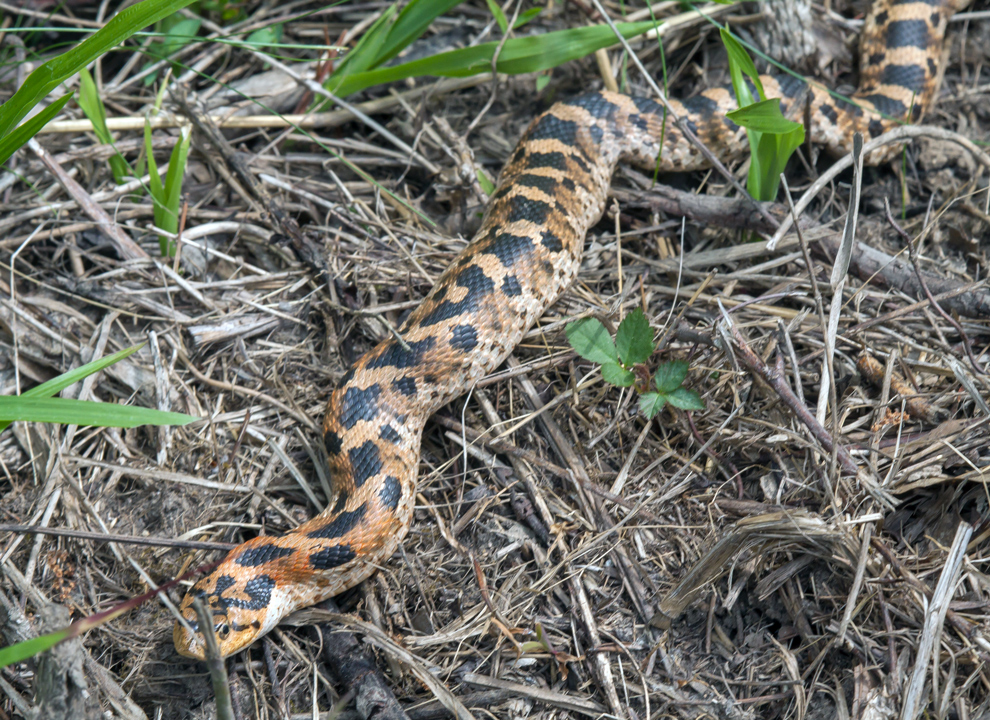
Most of the snakes that I encounter at my local marshland park blend in well with their surroundings, but the one that I almost literally stumbled on this past Monday in one of the park’s meadows was a notable exception—it was bright orange in color.

I had never before seen a snake that looked like this one and moved as close as I could to get a shot of its head with my macro lens. (During this time of the year I tend to have my 180mm macro lens on my camera much of the time.) The snake was cooperative when I was taking the close-up shots. However, after I backed up to try to get a shot of its whole body, the snake decided that enough was enough and slithered away quickly into the underbrush. I managed to get only a single body shot that has a partially obscured head, but I included it to give you an overall view of the snake.

I searched around several websites about snakes in Virginia and have concluded that this is probably an Eastern Hognose snake (Heterodon platirhinos. These snakes come in a variety of colors and I didn’t find too many photos of them with this exact coloration, but I did find several references to an “orange phase.”

I continue to be amazed at the diversity of wildlife that I find in Huntley Meadows Park—I have been going there regularly for several years now, but continue to find to find new and different creatures. It sure helps to keep  me motivated to hit the trails in a constant state of excited expectation with my camera in hand.

Eastern Hognose snake

Eastern Hognose snake

© Michael Q. Powell. All rights reserved.

Read Full Post »

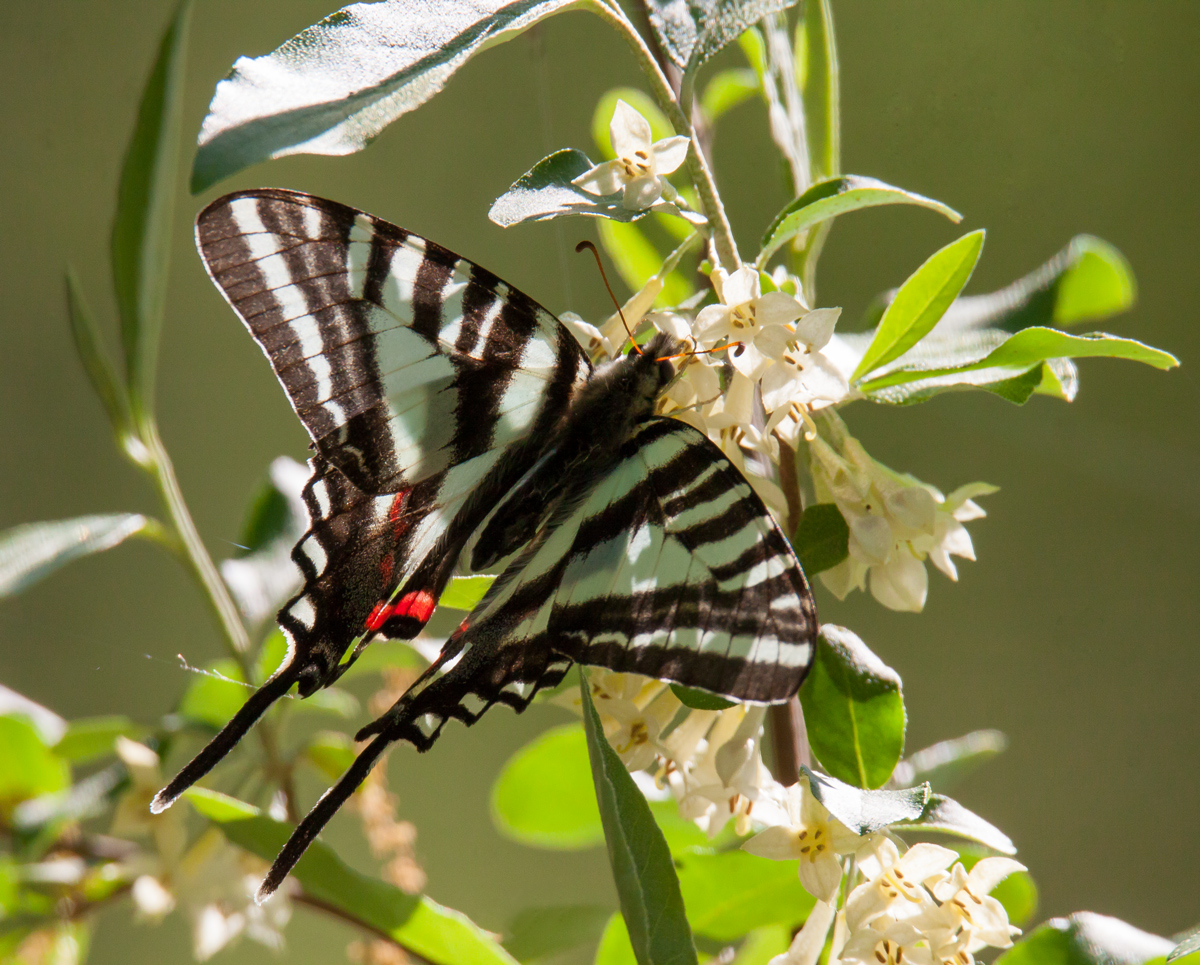
As I was out searching for dragonflies in the heat of the midday sun, a butterfly came fluttering into view. I haven’t seen many large butterflies yet this spring, so I followed after it, trying to identify it. When the butterfly paused for a moment to feed on one plant, I scrambled to get a shot.

The light was harsh and coming from a bad direction, but my long telephoto showed me clearly that it was a swallowtail butterfly, but definitely not at all colored like the Eastern Tiger Swallowtails that I often see during the summer. The markings were distinctive enough that it was easy to determine later that it is a Zebra Swallowtail butterfly (Eurytides marcellus), a species that I had never before encountered.

Multiple sources indicate that the Zebra Swallowtail is closely associated with the pawpaw tree, though I don’t know enough about trees and blossoms to determine if that is the plant on which this butterfly was feeding.

As I was poking about on the internet, I also learned from ereferencedesk.com that in 1995 the Zebra Swallowtail was designated as the official state butterfly of Tennessee. I must confess that I didn’t know that states have official butterflies.

Zebra Swallowtail

© Michael Q. Powell. All rights reserved.

Read Full Post »

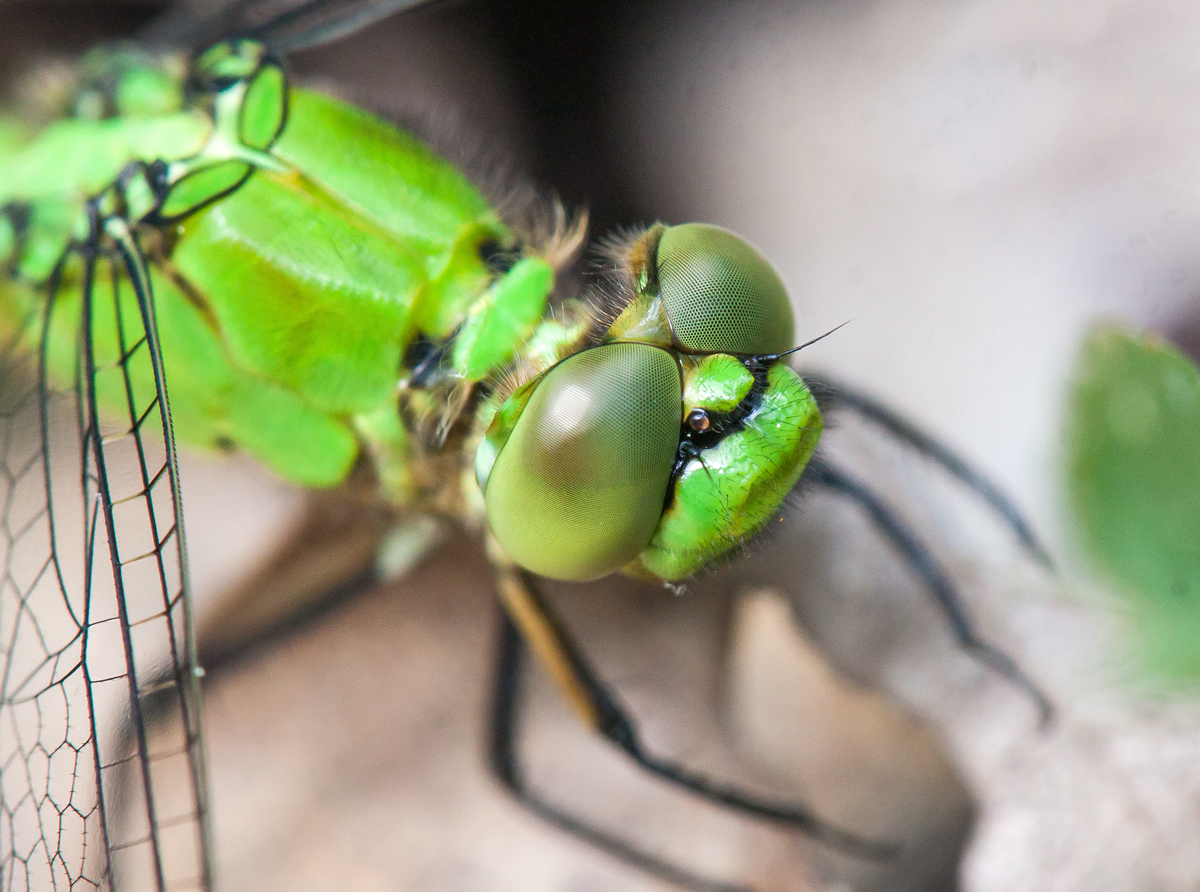
Yesterday the fields at Huntley Meadows Park were abuzz with beautiful emerald-and-black dragonflies. As I walked through the grass, the Eastern Pondhawks (Erythemis simplicicollis) would fly up to about knee level and then settle back down on the ground or perch on some low hanging plants.

Eastern Pondhawk

The dragonflies were a bit skittish and it was a bit of a challenge to get clear shots of them. Occasionally one of them would fly to a slightly higher perch and permit me to get a shot like the first one that separates the subject from the background. Long-time readers of this blog know that I will usually try to move it as close as I can and I was happy to get this close-up shot of an Eastern Pondhawk that lets you see some of the facets of its amazing compound eyes.

Eastern Pondhawk

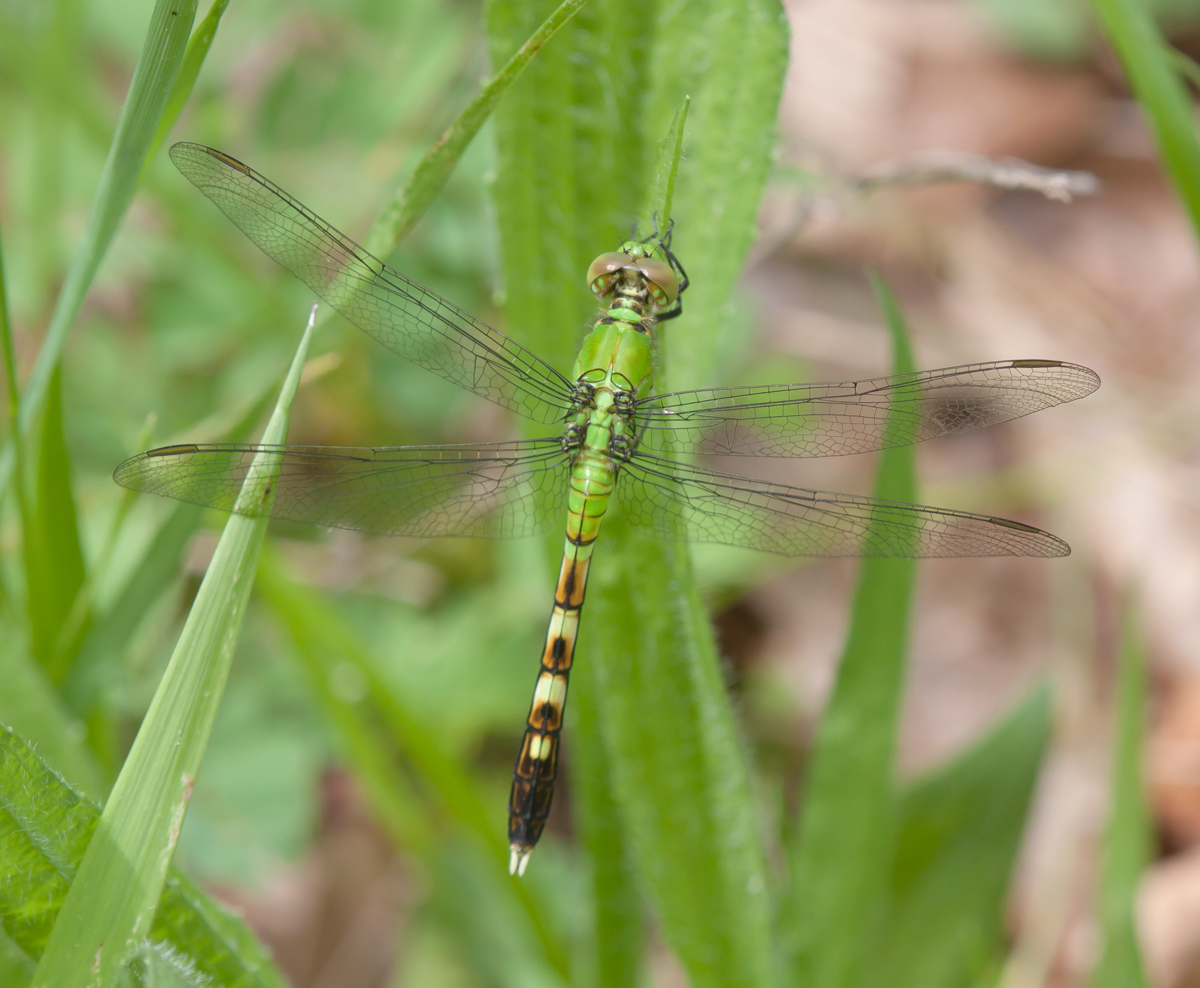
All of the Eastern Pondhawks had the same beautiful green coloration. Eventually the male Eastern Pondhawks will turn blue, but this early in the season the juvenile male have the same coloration as the females. How do you tell them apart? My fellow photographer and blogger Walter Sanford is an expert on this subject, but in this case even I can tell the difference by looking at the terminal appendages.

In the shot below, you can tell it is a male because the white cerci at the end of the abdomen are long and close together.

Eastern Pondhawk

Juvenile Male Eastern Pondhawk

By contrast, the white cerci of the female are shorter and more widely spaced, as in the photo below.

Eastern Pondhawk

Female Eastern Pondhawk

That just about exhausts my knowledge of dragonfly anatomy. My focus is mostly on capturing their beauty, but it is amazing how much I learn along the way about these fascinating little creatures.

© Michael Q. Powell. All rights reserved.

Read Full Post »
Colorful dragonflies are gradually reappearing throughout my local marshland park and I’m reacquiring the skills needed to photograph them. For me, the amazing beauty of dragonflies is especially revealed when I manage to observe them up close. I can’t help but marvel at the incredible details of their eyes and their wings and even their delicate feet and the tiny hairs that sprout on their faces.

I spotted this dragonfly, which I believe is a Painted Skimmer (Libellula semifasciata), last Friday at Huntley Meadows Park in Alexandria, Virginia. The dragonfly allowed me to get quite close to be able to take this macro shot. In general, some dragonfly species tend to be less skittish than others, but it seems to vary from individual to individual.

Be sure to click on the image to get a higher resolution view of this beautiful little creature.

Painted Skimmer dragonfly

© Michael Q. Powell. All rights reserved.


Read Full Post »

Happy Mother’s Day to Moms everywhere, who loved us and supported us as we took steps toward independence, all the while keeping a watchful eye over us.

Thanks especially to my Mom, who is now in heaven.

Canada Geese

© Michael Q. Powell. All rights reserved.

Read Full Post »

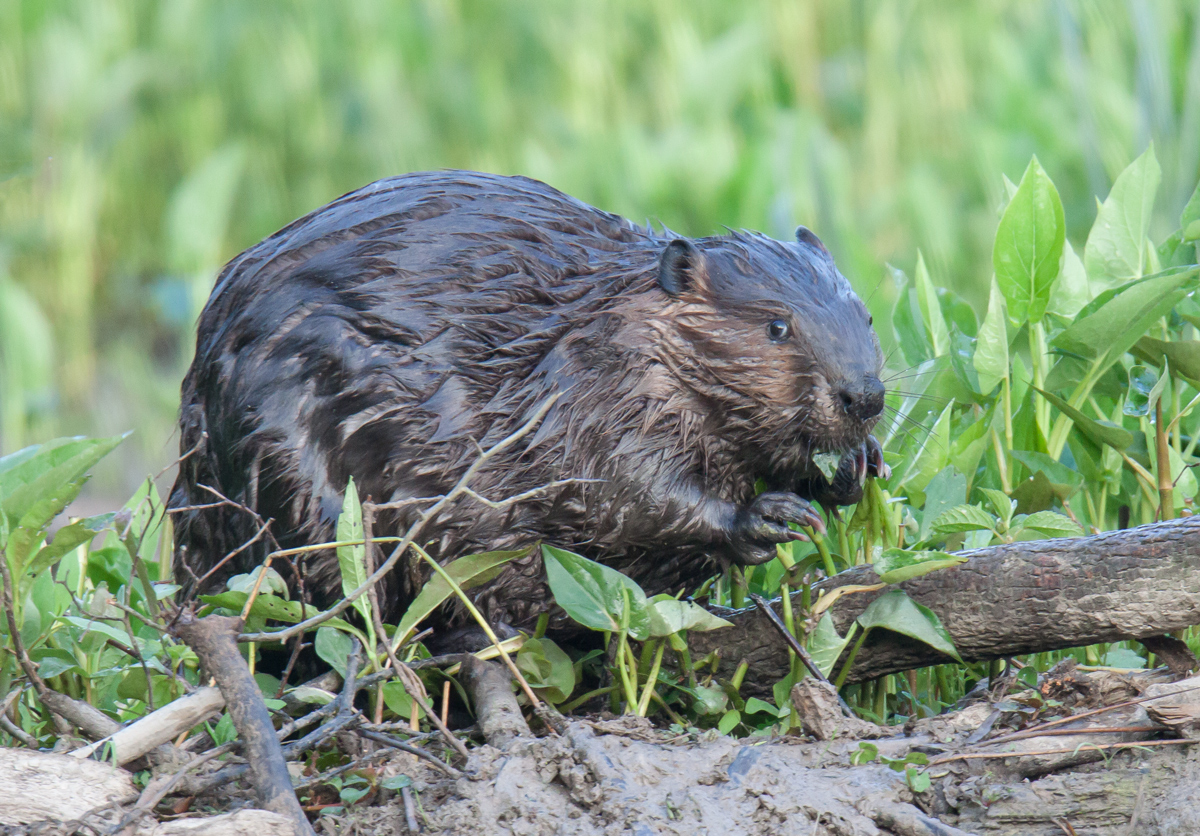
I don’t take photos of people very often but it seems like there are some informal rules including not photographing a subject who is eating and not photographing someone who is bending over. Fortunately those “rules” do not apply when photographing wildlife.

In the first shot, the North American Beaver (Castor canadensis) at my local marsh seemed to be glancing up at me mid-chew, having sensed my presence. I can’t tell if the beaver is shy or irritated, but I am happy that I was able to capture some of the details of the beaver’s “hands.” The beaver probably was aware that he had some leaves stuck between his teeth, but, as a friend, I probably would have mentioned it to him if he was going to go out in public.

In the second shot, the beaver’s posterior is facing the camera and I don’t want to be indelicate, but that part of the beaver’s anatomy looks huge. I can’t imagine what I would have said if the beaver had turned to me and asked, “Does this pose make my butt look big?” Perhaps I could have responded honestly to the question, but most guys know that is best not to respond at all if a female human poses that same question.

If you take wildlife photos, you too probably have a collection of “butt shots” of animals and birds that were running or flying away or simply sending an unsubtle message that they did not want to be bothered by a photographer. One of my favorite photographers and bloggers, Lyle Krahn, periodically does an entire humorous posting of wildlife shots devoted to this genre. Be sure to check out his The Inauguaral Butt Collection.

North American Beaver

North American Beaver

© Michael Q. Powell. All rights reserved.

Read Full Post »

Early yesterday morning I was thrilled when I saw one of the beavers at Huntley Meadows Park swimming around the beaver pond. My joy was compounded when the beaver climbed out of the water to grab a little breakfast.

North American beavers (Castor canadensis) are primarily nocturnal, so it’s difficult to get a glimpse of them during a time of the day when there is sufficient light to be photograph them. Previously I had seen a beaver at this pond in the early hours of the morning, but this is the first time that I have seen one of them climb over the logs block off one end of the beaver pond.

I am particularly happy that the first photo provides a good look at both the beaver’s very distinctive tail and its face. Most of the time that I was observing the beaver, I got a good look at only the tail end, which is interesting, but not especially photogenic.

In the second shot, the beaver is swimming away from the lodge with a small bunch of sticks. Was the beaver carrying them to another lodge? Is there a picnic somewhere else along the shore? It just seemed a bit strange for me to see the beaver heading off into the distance at a time when I assumed he would be getting ready for his long daytime snooze.

North American Beaver

North American Beaver

© Michael Q. Powell. All rights reserved.


Read Full Post »

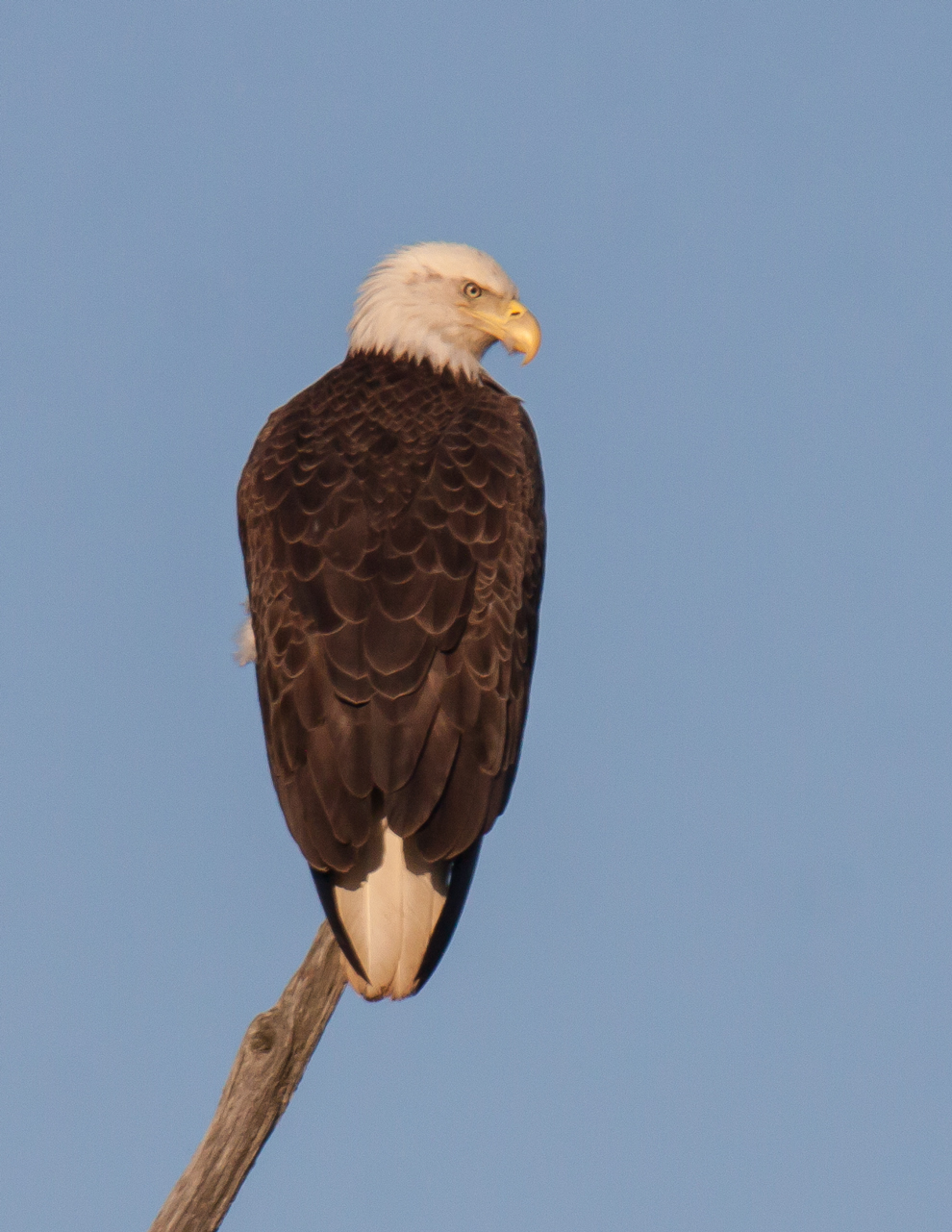
This past Monday was a wonderful day for eagles. In addition to the young eagle whose photos I posted earlier, I also managed to capture these images of a mature Bald Eagle (Haliaeetus leucocephalus) perched on a dead tree in the marsh.

Bald Eagle

Bald Eagle

© Michael Q. Powell. All rights reserved.


Read Full Post »

As I looked intently through my long telephoto lens at the stagnant, debris-filled water in a ditch, I became acutely aware of bright red eyes staring back at me. What was this unusual red-eyed marsh creature?

Eastern Box Turtle

Pulling my eyes away from the magnified view in the camera’s viewfinder, I could see the contours of a turtle’s shell in the water, partially obscured by all of the debris. The bright color and distinctive shape of the shell and the striking red eyes made it easy to determine when I got home that this is a male Eastern Box Turtle (Terrapene carolina carolina).

Eastern Box Turtle

Although these turtles spend most of their time on land, they seek damp mud or pools when temperatures get too high, according to information on the website of the Virginia Herpetological Society. On the day when I took this photo, temperatures soared above 80 degrees F (27 degrees C), and it’s probably pretty safe to assume that this turtle was simply trying to stay cool on an unseasonably warm spring day.

© Michael Q. Powell. All rights reserved.

Read Full Post »
At the edge of a steep-banked little creek, this Spotted Turtle (Clemmys guttata) lifted its head above the surface of the water. I must have spooked it a little with the sound of the camera’s shutter for it moved to a more concealed position underneath the vegetation, but continued to keep an eye on me.

Spotted Turtle

Spotted Turtle

© Michael Q. Powell. All rights reserved.

Read Full Post »
I was late in reacting when the Bald Eagle (Haliaeetus leucocephalus) took off from its perch and I was pretty sure that I had not gotten any decent shots of its departure. Consequently, I skimmed quickly through the shots during my initial review and none of them jumped out at me.

After I had done this morning’s posting, I had a few minutes before I had to depart for work and decided to review the images again. I was surprised to find this shot of the young eagle in flight, shortly after he had pushed off from the tree. It’s reasonably sharp and the wings are in a decent position, so I decided to post the photo as a complement to the first image that showed the eagle completing a difficult landing.

Bald Eagle

© Michael Q. Powell. All rights reserved.

Read Full Post »

No matter what else happened yesterday, I knew it was already an amazing day when I captured this shot of a Bald Eagle (Haliaeetus leucocephalus) early in the morning at Huntley Meadows Park.

bald eagle


© Michael Q. Powell. All rights reserved.

Read Full Post »
I love the morning light as it gradually illuminates different parts of the natural world. This Great Blue Heron (Ardea herodias) had turned its head toward the rising sun and the light was shining on its white face while other parts of its body were still hidden in the shadows.

In the limited light, I used a pretty slow shutter speed (1/80 sec) to keep from having to raise my ISO too high and I was able to get reasonably sharp shots when the heron was stationary. However, when the heron took off, I had a substantial amount of motion blur, as you can see in the final two shots.

I usually lead my postings with my favorite shot, but I had real trouble with this posting trying to decided which one to use. Should I choose one of the sharpest shots or should I go with one of the “artsy” blurred ones? I like different aspects of all four of these images and vacillated for quite some time before deciding to lead with the shot of the heron with his head tilted at an interesting angle.

Did I make a good choice?

Great Blue Heron


Great Blue HeronGreat Blue HeronGreat Blue Heron

© Michael Q. Powell. All rights reserved.


Read Full Post »
Do you chase after butterflies? I do. There is a simple, uninhibited joy in running around a meadow in pursuit of a butterfly, waiting for it to perch, hoping to capture its beauty with my camera.

It’s still a little early for some of the larger, more colorful butterflies, but last week I was able to photograph this beautiful little Clouded Sulphur butterfly (Colias philodice).

Clouded Sulphur butterfly

© Michael Q. Powell. All rights reserved.

Read Full Post »

Despite its name, the Common Baskettail dragonfly (Epitheca cynosura), one of the first dragonflies of the spring, has been observed only infrequently at my local marshland park. Therefore I was pretty excited when sharp-eyed fellow blogger and photographer Walter Sanford spotted a Common Baskettail last week when we were out together searching for dragonflies.

Walter consulted with some experts and  was able to confirm his initial identification of this dragonfly as a female. How do you tell the gender of a dragonfly? Check out Walter’s recent posting What was your first clue? to learn how he did it.

If you are more interested in photography than in dragonfly anatomy, check out Walter’s initial posting on the Common Baskettail dragonfly. We both photographed the dragonfly at the same time, but our angles of view and equipment were different, so the resulting images are similar, but not identical.

Personally i enjoy seeing how the creative choices that a photographer makes can influence their images. Walter and I have done several complementary postings in the past and will probably continue to do so in the future.

Common Baskettail dragonfly

© Michael Q. Powell. All rights reserved.

Read Full Post »

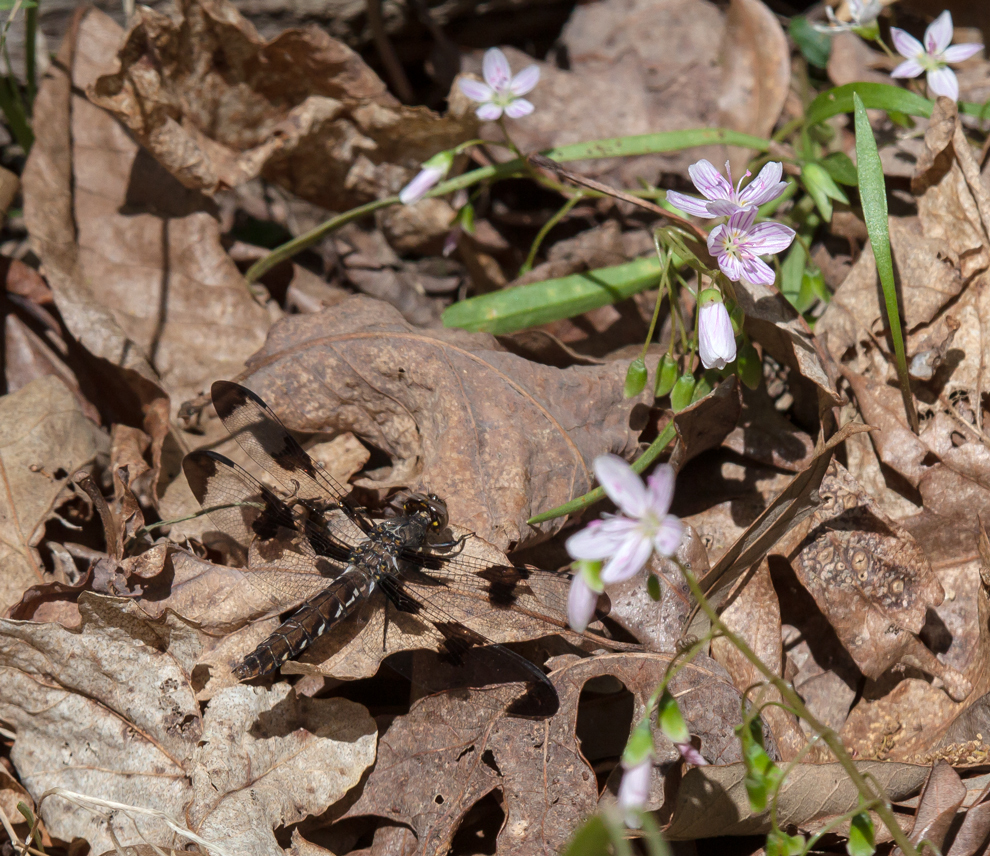
One of the earliest dragonflies to appear in our area is the Common Whitetail (Plathemis lydia) and it is also one of the last to be seen in the fall. During the summer months, these dragonflies can be seen flying all around the ponds at my local marshland. I spotted this one last Friday in a wooded area and initially had trouble seeing it as it flew made a series of short, hopping flights among the fallen leaves on the floor of the woods. As is usually the case, I tried to get as close as I could for the first shot below, but decided to also include a shot that gives you a better idea of the surroundings in which I found this little dragonfly.

Later in the seasons, the Common Whitetail will in fact be common, but this early in the spring, I am pleased with my uncommon find.

Common Whitetail dragonflyCommon Whitetail dragonfly

© Michael Q. Powell. All rights reserved.

Read Full Post »

Tiny pink and white wildflowers carpeting the forest floor at this time of the year—how appropriate it is that they are actually called Spring Beauties (Claytonia virginica).

Spring Beauty

Spring Beauty

Spring Beauty

© Michael Q. Powell. All rights reserved.


Read Full Post »
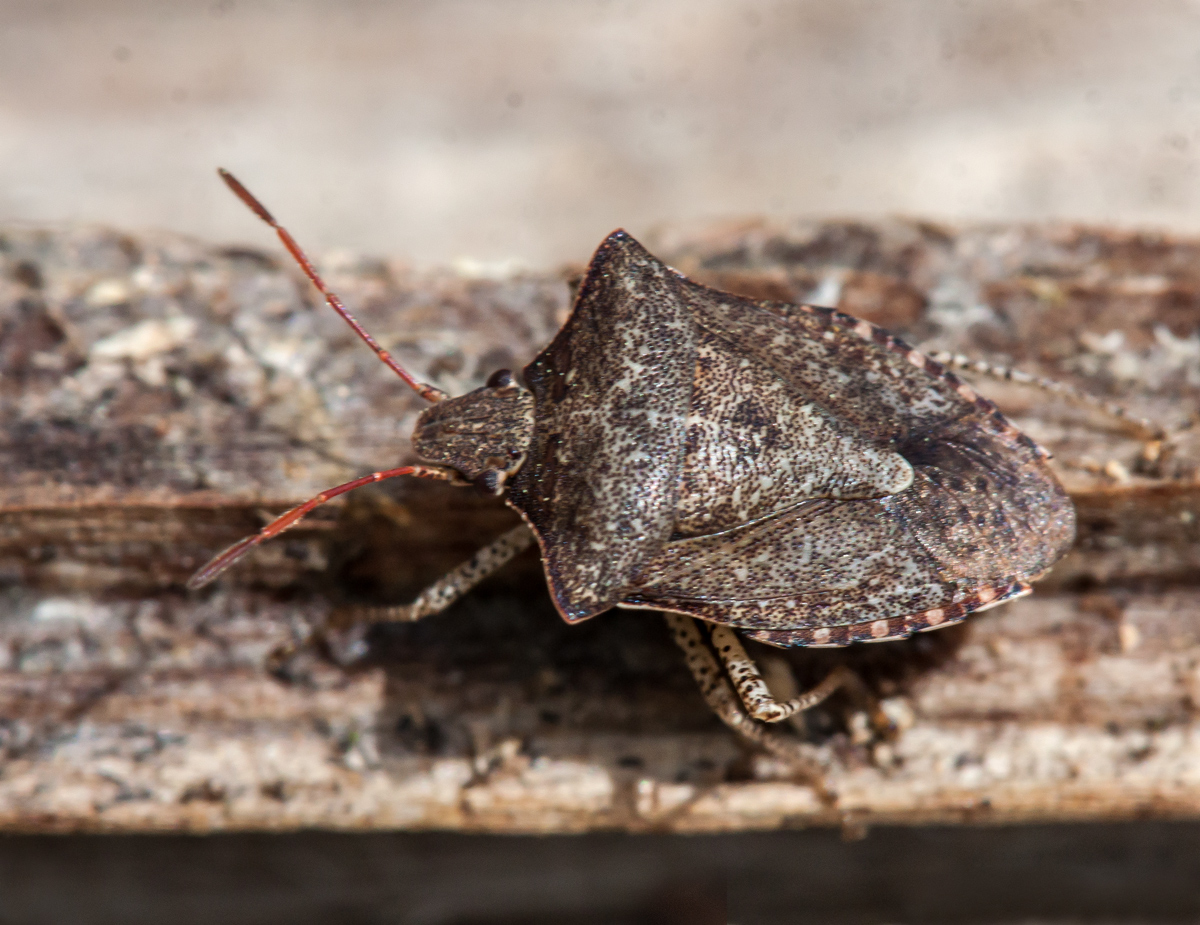
As we move deeper into spring, I am increasingly walking around with my macro lens on my camera and I view anything that moves (and some that don’t) as a potential subject. I recently captured some images of a shield bug that I spotted on a rotten bug. Most often people refer to these insects as “stink bugs,” but I figured I’d attract more readers with the word “shield” than with the word “stink.” There are a lot of different kinds of shield/stink bugs and I have not been able to identify the species of my little bug.

The bug was quite active and I remembered again how difficult it is to stop action when using a macro lens at close range. I am pretty happy with the shots I was able to get. The first one gives a good view of the shield shape and shows how well camouflaged this species is for the environment. The second images shows some of the details of the back and I can’t help but love the simple, smooth background. The final image shows the bug resting for a moment, having successfully made it to the top of an obstacle.

After a winter with few macro subjects to photograph, I am relearning a few techniques and rekindling my excitement for insects and other macro subjects. I’m pretty confident that you’ll be seeing a lot of macro shots in the upcoming weeks and months.

stink bugstink bug

stink bug

© Michael Q. Powell. All rights reserved.

Read Full Post »

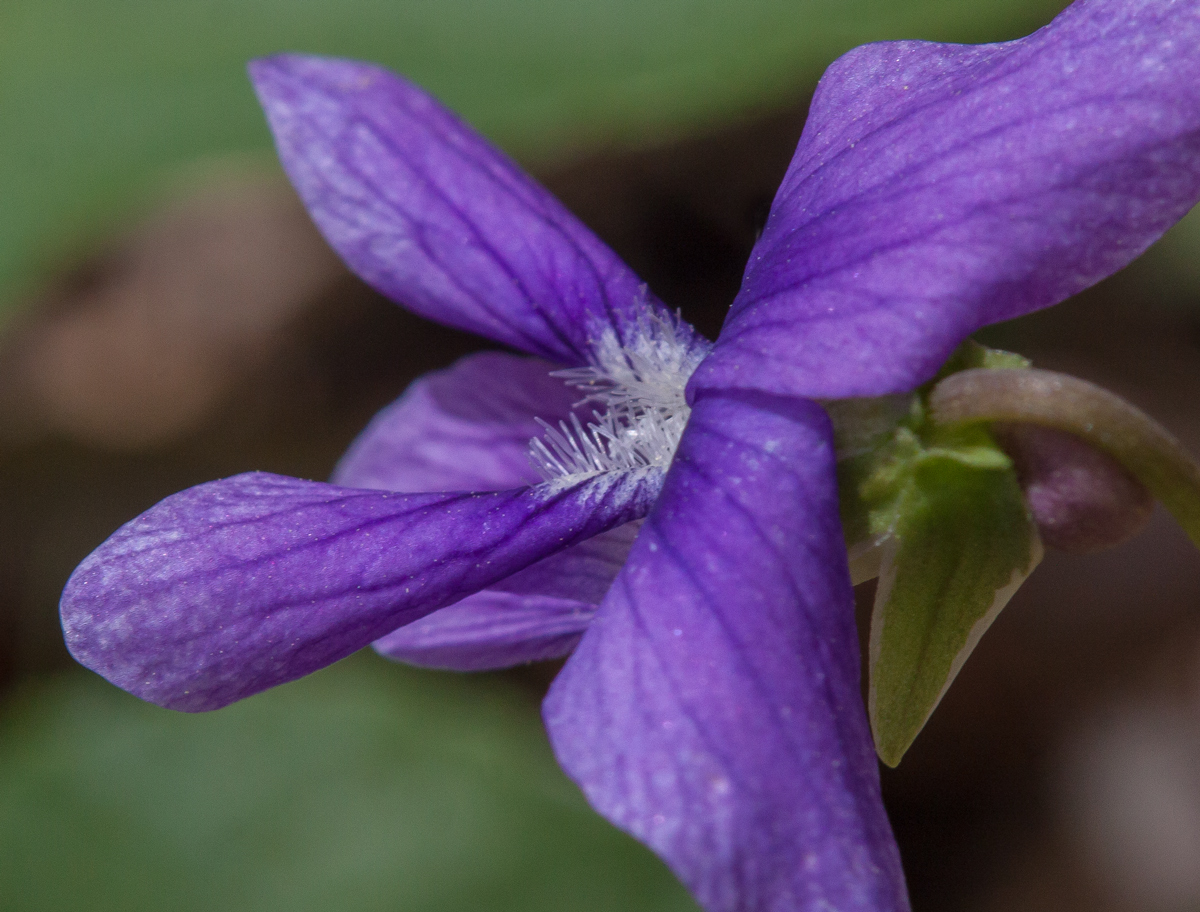
What is the best way to capture the beauty of the fragile wildflowers that carpet the forest floors at this time of the year? Should I try to photograph a single flower? Should I move in even closer and focus on only part of the flower (or crop away part of the flower)? Should the images be realistic or abstract?

These were some of the thoughts that went through my head as I took these shots of what I think is a kind of wild violet. As some of you can readily tell, I was in another one of my “artsy” moods. In case you didn’t notice, the first and last shots are actually variations of the same image that I cropped differently. I just couldn’t decide which one I liked better, so I included them both.

violetvioletvioletviolet

© Michael Q. Powell. All rights reserved.

Read Full Post »

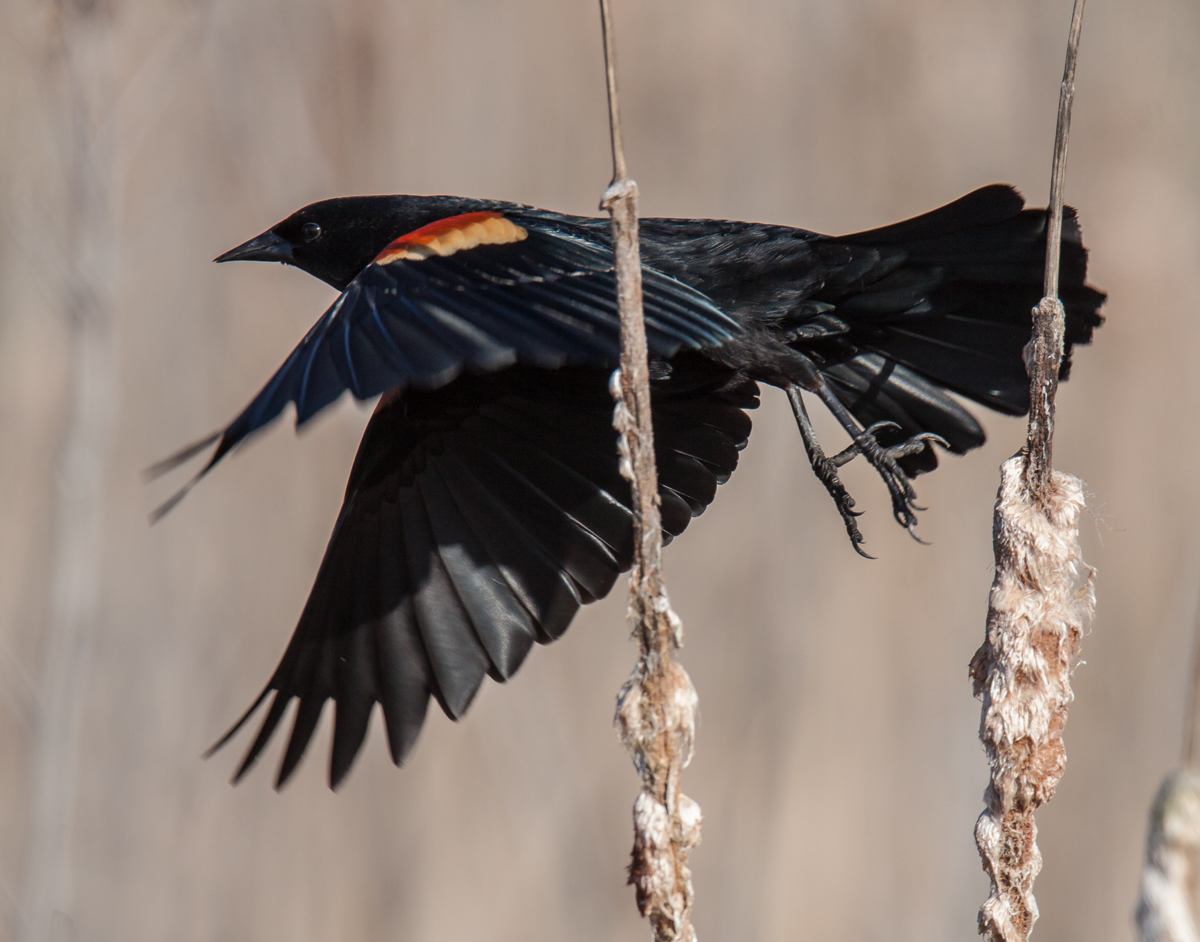
Sometimes accidents are good. I certainly didn’t expect this male Red-winged Blackbird (Agelaius phoeniceus) to move when I pressed my camera’s shutter release, but I managed to catch the bird in a much more interesting pose than the one I was originally trying to capture.

Red-winged Blackbird

© Michael Q. Powell. All rights reserved.

Read Full Post »

The forest floor is carpeted with tiny wildflowers at this time of the year and even this large black snake seemed to be taking time to appreciate their beauty.

The little flowers are Spring Beauties (Claytonia virginica) and I think the snake may be a Northern Black Racer (Coluber constrictor constrictor), though I must confess that I grow a bit confused when reading the descriptions about how to distinguish Black Racers from Eastern Ratsnakes.

Unlike an earlier shot this spring of another black snake, which I photographed with my telephoto zoom lens, I took this shot with my 180mm macro lens, getting as low as I could and as close as I dared.

Northern Black Racer

© Michael Q. Powell. All rights reserved.


Read Full Post »

Fellow blogger and photographer, Walter Sanford, has an infectious passion for dragonflies and damselflies and has encouraged and inspired me to search for them in remote areas of my favorite marshland park. In today’s blog posting, he chronicles the new species that he has discovered and photographed in the park during the past two years. Individually and sometimes together, we are seeking to discover even more new species.

I encourage all of you to check out his blog to learn more about odonates and see some amazing images of these little beauties.

waltersanford's avatarwalter sanford's photoblog

My interest in odonates, that is, dragonflies and damselflies, began during Summer 2011 at Huntley Meadows Park. Toward the end of Summer 2012 and continuing in 2013, my goal was to explore new venues for hunting odonates. Along the way, I spotted several species of odonates that are either uncommon or unknown to occur at Huntley Meadows, including Blue Corporal dragonfly, Stream Cruiser dragonfly, and Rambur’s Forktail damselfly, to name a few.

During 2014, continuing in 2015, I have been a man on a mission to explore the relatively unexplored areas at Huntley Meadows Park in search of habitat-specific odonates unlikely to be found in the central wetland area of the park. In retrospect, 2014-2015 has been a good run: five new species of odonates were discovered and added to the list of Dragonflies and Damselflies of Huntley Meadows Park.

Common Sanddragon dragonfly

Common Sanddragon dragonfly (Progomphus obscurus) 20 June 2014

Mike Powell

View original post 260 more words

Read Full Post »
I know that vultures don’t really stalk live prey, but when this Black Vulture leaned forward from its perch on a dead tree, it sure looked like it was following something on the ground.

Most of the vultures that I see at my local marsh are Turkey Vultures, which have a distinctive red head, but occasionally I will also spot Black Vultures (Coragyps atratus) like this one. I was in a remote area of the park searching for dragonflies when this vulture flew in my general direction and decided to perch for a while high on a nearby tree.

Initially the bird spent some time grooming itself, but then it assumed the pose that you see in this image. I tried to move closer to get a better shot and eventually I was almost underneath the tree. As I looked at my images on the computer, I initially thought that I might have photographed an immature Turkey Vulture, which also has a dark head, but I’m pretty sure this is a Black Vulture, because of its short tail.

When I was doing a little research on the Cornell Lab of Ornithology website, one of my favorite resources for birds, I learned that Black Vultures often hang out with Turkey Vultures to compensate for their weaker sense of smell. “To find food they soar high in the sky and keep an eye on the lower-soaring Turkey Vultures. When a Turkey Vulture’s nose detects the delicious aroma of decaying flesh and descends on a carcass, the Black Vulture follows close behind.”

In addition to its pose, I was struck by the dead-looking eyes of this vulture, which I can’t help but find a little creepy. I am not really paranoid, but somehow I am happy that it had not fixed those eyes on me.

Black Vulture

© Michael Q. Powell. All rights reserved.

Read Full Post »

« Newer Posts - Older Posts »