Feeds:
Posts
Comments

Posts Tagged ‘heron’

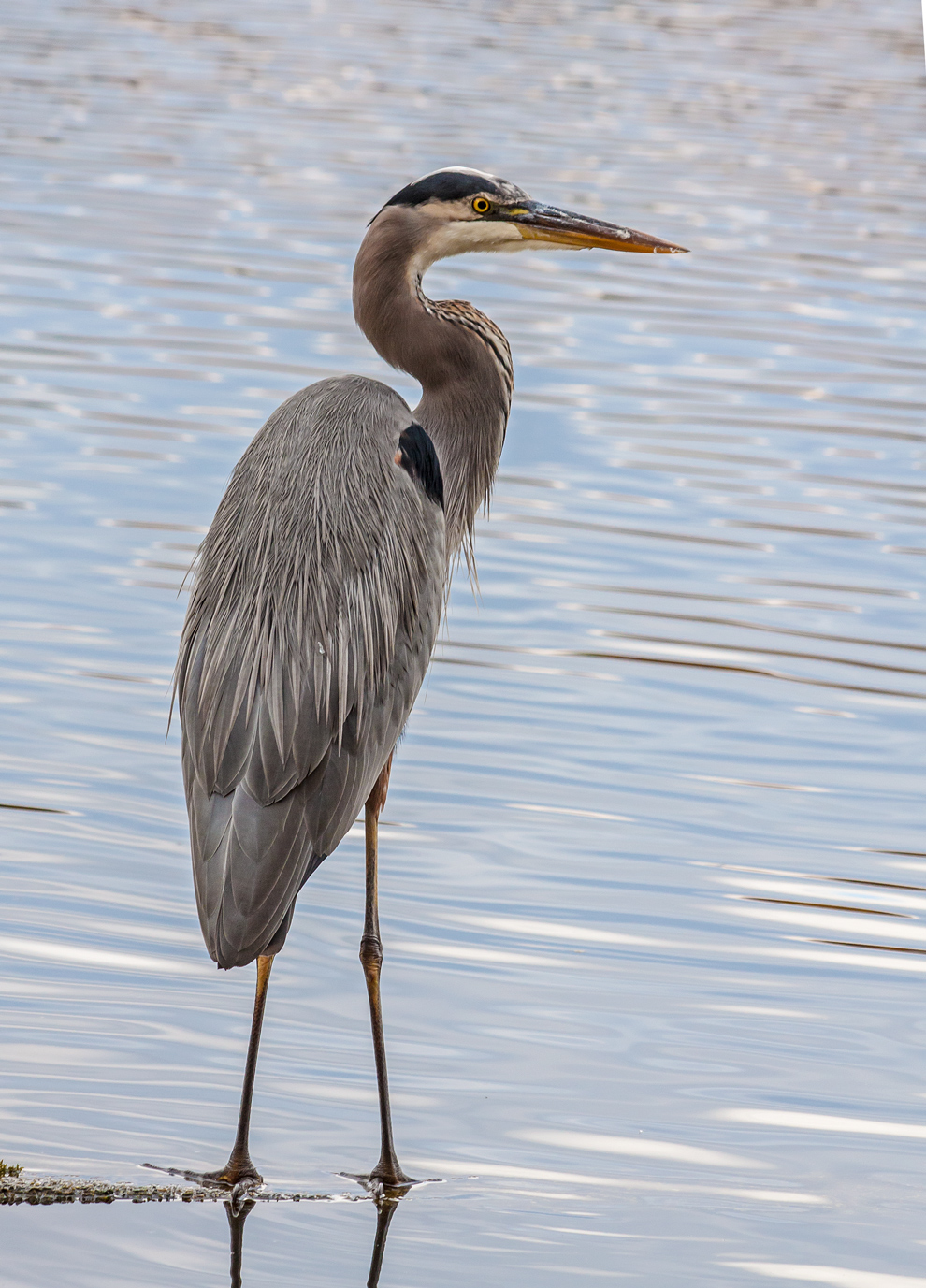
I am not sure what this Great Blue Heron (Ardea herodias) was doing when I spotted it this past weekend at Huntley Meadows Park, but it looked to be admiring its most recent manicure.

Great Blue Heron

© Michael Q. Powell. All rights reserved.

Read Full Post »

Late Saturday afternoon I was exploring Cook Lake, a tiny urban fishing lake adjacent to a water park in Alexandria, Virginia. I accidently spooked a Great Blue Heron (Ardea herodias) that flew to a fallen tree on the shore. The lighting was beautiful and the heron struck a pose that I can only describe as heroic.

I never get tired of photographing Great Blue Herons.

Great Blue Heron

© Michael Q. Powell. All rights reserved

Read Full Post »

Great Blue Herons (Ardea herodias) are one of my favorite birds, in part because they are with us the entire year. Even during the snowy days of winter, I would occasionally see one of them.

Now that spring is here, there are many more birds at Huntley Meadows Park, but I am always happy to see one of the faithful Great Blue Herons, like this one that flew by me yesterday morning.

Great Blue Heron

© Michael Q. Powell. All rights reserved.

Read Full Post »

Sometimes a Great Blue Heron’s catch is big enough for a main course, but sometimes it’s only an appetizer. The good news is that appetizers are really easy for a Great Blue Heron (Ardea herodias) to swallow.

I included the second photo, which sequentially was taken before the first one, because I like the expression on the heron’s face. The heron seems to be both amused and embarrassed at the small size of the fish.

It’s obvious, though, that the heron does not have a catch-and-release policy if the fish is not of a certain minimum size.

Great Blue Heron

Great Blue Heron

© Michael Q. Powell. All rights reserved.

Read Full Post »

I awoke this morning thinking I would see snow on the ground again, but it seems to have turned into rain. This photo of a Great Blue Heron (Ardea herodias) and its modest catch reminds me of how snowy it was a mere two weeks ago in our area.

It’s interesting to me to see how the unusual angle of view and the low perspective make the heron’s bill seem unusually elongated and its long neck appears to be really short. The distorted perspective of the image may cause some viewers to look a second time at the photo to mentally reconfirm that this indeed is a Great Blue Heron.

I think that most photographers would agree that it is a good thing when viewers take a second look at their images or examine them more closely.

Great Blue Heron

Michael Q. Powell. All rights reserved.


Read Full Post »

The egrets and green herons have gone south for the winter, but the Great Blue Herons (Ardea herodias) at Huntley Meadows Park continue to provide me with lots of photo opportunities.

Great Blue Herons present an unusual challenge to me—they are so long and wide when in flight that I actual have to remember to zoom out when photographing them in order to fit them in the frame.  Like most wildlife photographers, I usually am complaining about needing more reach and spend most of my time shooting with the lens almost fully extended.

In this first shot, I was able to anticipate the action and captured the heron’s takeoff almost exactly the way you see it. In the second shot, however, I slightly misjudged the speed of the heron and almost cut off the wings and the feet. As you can see, the light was beautiful and I was happy to be able to capture a lot of beautiful wing details.

Before long migrating ducks should be arriving and you should be relieved from steady diet of heron photos with which I have been populating my postings recently.

Great Blue Heron

Great Blue Heron

© Michael Q. Powell. All rights reserved.
Read Full Post »

In the early light of the dawn, I captured this solitary Great Blue Heron (Ardea herodias) in deep reflection, contemplating the start of a new day.

There is nothing really complex about this image, but I like the way that it conveys the mood of that moment, a moment when the world seemed to be totally tranquil, uncluttered by the hustle and bustle of everyday life.

I love the early morning.

Great Blue Heron

© Michael Q. Powell. All rights reserved.
Read Full Post »

I love the morning light as it gradually illuminates different parts of the natural world. This Great Blue Heron (Ardea herodias) had turned its head toward the rising sun and the light was shining on its white face while other parts of its body were still hidden in the shadows.

In the limited light, I used a pretty slow shutter speed (1/80 sec) to keep from having to raise my ISO too high and I was able to get reasonably sharp shots when the heron was stationary. However, when the heron took off, I had a substantial amount of motion blur, as you can see in the final two shots.

I usually lead my postings with my favorite shot, but I had real trouble with this posting trying to decided which one to use. Should I choose one of the sharpest shots or should I go with one of the “artsy” blurred ones? I like different aspects of all four of these images and vacillated for quite some time before deciding to lead with the shot of the heron with his head tilted at an interesting angle.

Did I make a good choice?

Great Blue Heron


Great Blue HeronGreat Blue HeronGreat Blue Heron

© Michael Q. Powell. All rights reserved.


Read Full Post »

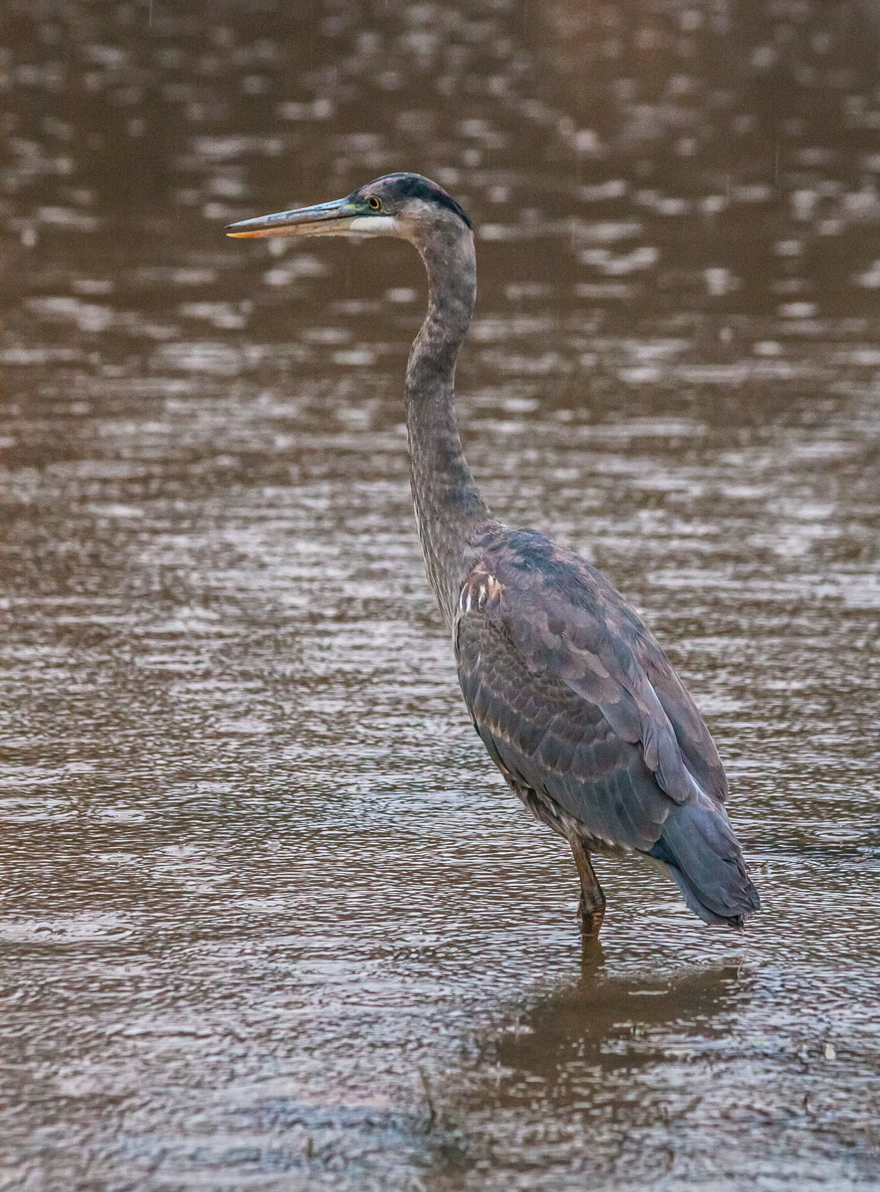
Most of the time I try to fill the frame of my camera with my wildlife subjects, but sometimes it’s nice when they are part of a larger landscape, like this shot of a Great Blue Heron (Ardea herodias) in the rain from last Friday.

Great Blue Heron

© Michael Q. Powell. All rights reserved.
Read Full Post »

Even in Northern Virginia, where temperature are relatively mild, winter must be difficult for Great Blue Herons, because many of their favorite ponds freeze over from time to time and fishing is not possible. After a recent period of temperatures above freezing, the ice melted and I was happy to see a heron return to a familiar location at my local marshland park.

I encountered this Great Blue Heron (Ardea herodias) early on a Saturday and had an extended period of time with this photogenic bird. The heron seemed to be willing to pose for me and gave me a number of different looks.

At times, as you can see in the final shot, the heron would look straight at me with apparent curiosity. After I had taken my shots, I moved along the boardwalk, leaving the heron to continue in his efforts to catch something to eat for breakfast.

Great Blue Heron

Great Blue Heron

Great Blue Heron

Great Blue Heron

© Michael Q. Powell. All rights reserved.
Read Full Post »

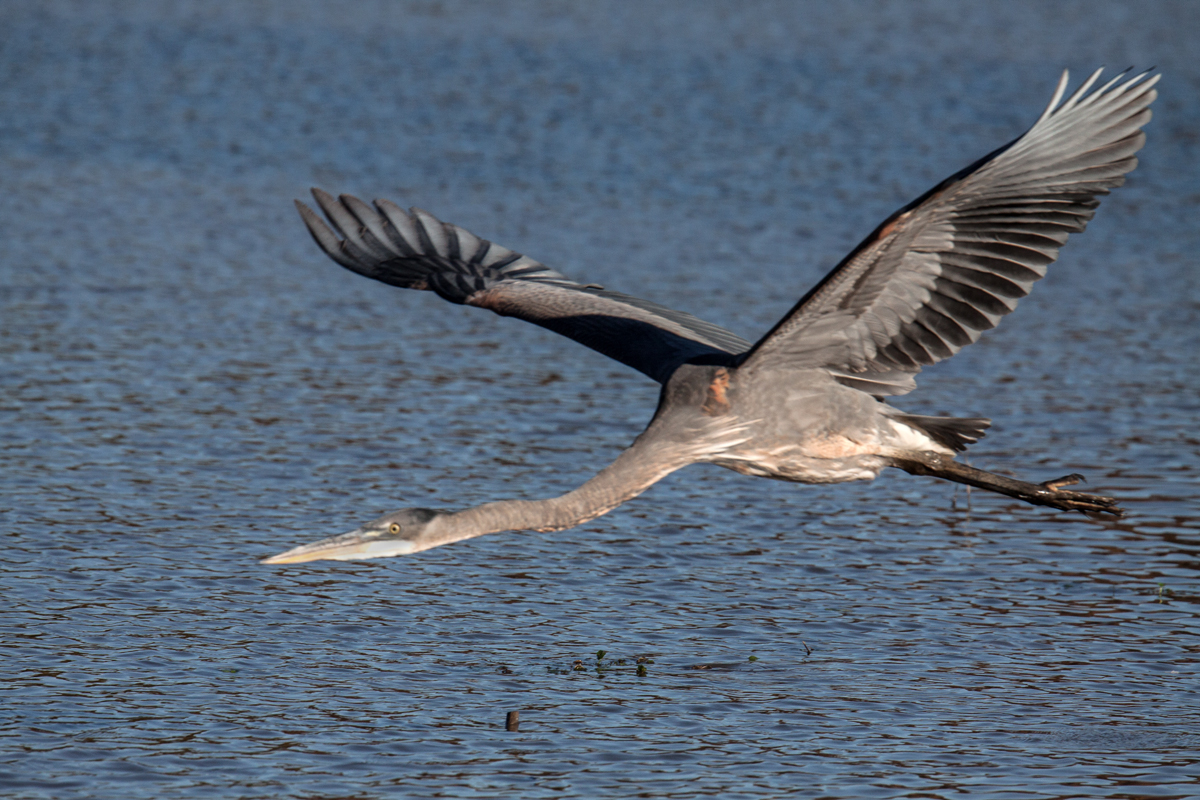
Can you identify the bird in the first photo? There is an almost abstract quality to the image that I really like that focuses on the bird’s wide wingspan more than on the identity of the bird. The unusual viewing angle, looking forward from his extended feet, enhances that effect.

As you can see in the second photos (and as you probably easily guessed), this was a Great Blue Heron (Ardea herodias). Yesterday, a blustery but sunny day, I came across this heron at my local marshland park as he tried in vain to catch some lunch. Without much warning, he took off just after I snapped the second photo, perhaps to find a better fishing spot, and I was able to capture the more unusual view that I have shown as the first image.

Great Blue HeronGreat Blue Heron

© Michael Q. Powell. All rights reserved.


Read Full Post »

One of the Great Blue Herons (Ardea herodias) that has been hanging around the boardwalk at my local marshland park was amazingly cooperative yesterday morning and posed for this portrait. I think the white background was caused by the very cloudy sky—it makes the shot look almost like it was taken in a studio setting.

I really like the way that you can see the wispy feathers on the top of the heron’s head. I can’t help but notice, though, that this heron has the same kind of growth pattern on the top of his head as I do.

I wonder if he would consider shaving his head (and I really hope that he does not opt for a comb-over hairstyle a bit later in life).

Is there a Hair Club for herons?

Great Blue Heron

© Michael Q. Powell. All rights reserved.

Read Full Post »

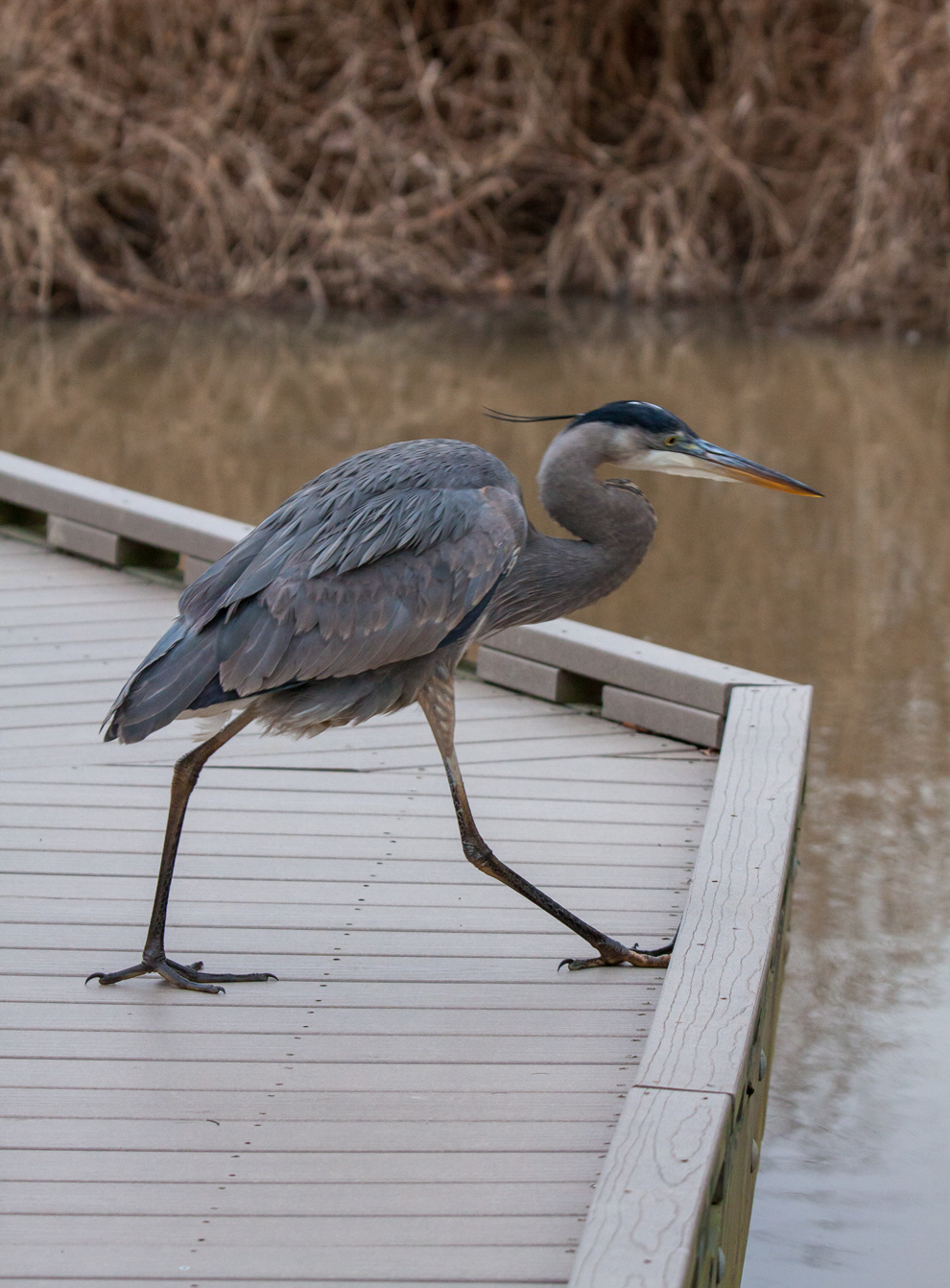
It was cold and gray yesterday afternoon at Huntley Meadows Park and there weren’t a lot of people around. The Chairman of the Board(walk) decided that it was a good time to survey his marsh from a different vantage point.

I just love watching Great Blue Herons (Ardea herodias) and you never know what they will choose to do next. It was unusual, however, taking photos of one using the 150mm end of my 150-600mm Tamron lens and I actually had to back up in order to fit the heron’s entire body in the frame. Shortly after I took these shots, the heron flew off a short distance, back into the water.

Chairman of the Board(walk)Chairman of the Board(walk)

© Michael Q. Powell. All rights reserved.

Read Full Post »

Zooming a long telephoto lens while tracking a flying bird is like simultaneously patting your head and rubbing your tummy—it can be done but requires a lot of practice.

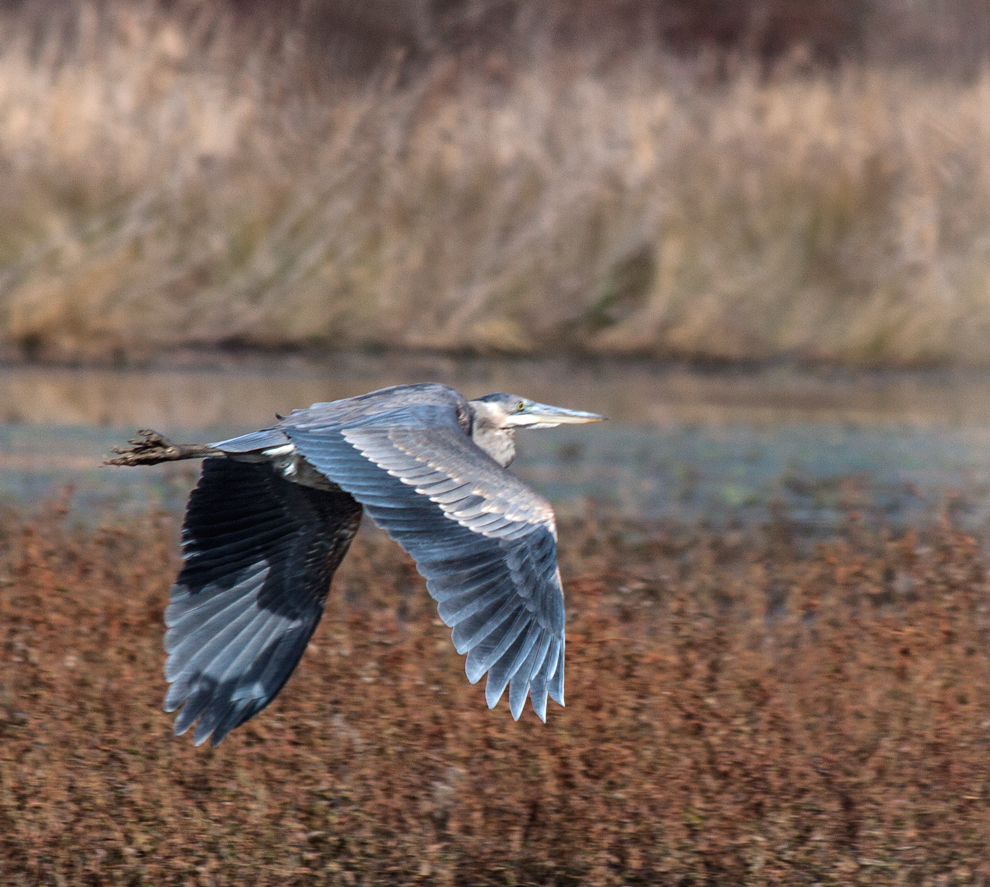
Yesterday as I was observing a Great Blue Heron (Ardea herodias) on the far side of a small pond, he unexpectedly took off. The heron flew towards me initially and then veered off to the side. My 150-600mm lens was fully extended at the start and as the bird approached, I frantically tried to zoom out a little. The EXIF data indicate that I was at 552mm when I took this shot and I just barely managed to keep the heron in the frame—I didn’t crop this image at all.

I’ve often been told to fill the frame with the main subject and this is one of the few times when I have been able to do so with a bird.

Great Blue Heron in flight

© Michael Q. Powell. All rights reserved.

Read Full Post »

The Great Blue Herons (Ardea herodias) at my local marsh seem to have grown accustomed to the presence of people and some of them like to fish near the boardwalk. This one was so close that I had to lean backwards over the edge of the edge of the boardwalk to fit the entire heron into these shots—zooming was not an option, given that I was using a lens of a fixed focal length, a 180mm macro lens.

While I was observing the heron, it concentrated its activity around a rock that stuck out of the water, sometimes perching on it and sometimes circling around it. I hope the heron had better luck during the rest of the day, because it did not have any luck at all as I watched and waited in vain to capture a big catch.

Great Blue Heron Huntley Meadows Parkheron3_rocks_blog

© Michael Q. Powell. All rights reserved.

Read Full Post »

A dragonfly perching on a heron? In real life it’s highly unlikely that you would see such a thing, but a male Blue Dasher dragonfly (Pachydiplax longipennis) decided that the metal silhouette of a Great Blue Heron (Ardea herodias) in a pond at Green Spring Gardens made a good spot to rest.

Click on any of the tiled images to see all of them full-sized in slide show mode.

Blue Dasher

© Michael Q. Powell. All rights reserved.


Read Full Post »

Green Herons (Butorides virescens) are once again hanging out at my local marshland park. Unlike Great Blue Herons (Ardea herodias), which fish while wading in the water, these smaller herons usually wait at water’s edge or on vegetation, which normally makes them tough to spot. This Green Heron, though, decided to perch on a log in plain view, which allowed to take this rather formal looking portrait shot.


heron_green_blog

© Michael Q. Powell. All rights reserved.

Read Full Post »

Direct sunlight and harsh shadows in the middle of the day make it challenging to take portraits without somehow diffusing the light. During the spring and summer, I will usually carry a collapsible diffuser that I use when photographing flowers (and occasionally people), but it would have been tough to get into position to use such a diffuser on this Great Blue Heron (Ardea herodias) that I spotted on the shore of the Potomac River last Saturday, when I was visiting Dyke Marsh Wildlife Preserve.

As I observed the heron, I was standing on a raised boardwalk, looking downward at the heron though some bushes. In order to get an unobstructed shot, I zoomed in, focusing primarily on the head and neck. The heron moved its head about a lot as it searched the shallow waters and looked through the debris at the shore’s edge, moving in out of the shadows.

I took a lot of photos of the heron and this is one of my favorites. I like the way that I was able to capture some of the details of the plumage and the sinuous curve of the heron’s neck. I would love to be able to capture a similar image early in the day or late in the day, but, as every wildlife photographer knows, you can never tell when you will have another opportunity to photograph a subject again.

heron1_march_blog

© Michael Q. Powell. All rights reserved

Read Full Post »

The Great Blue Heron (Ardea herodias) was standing tall on the trunk of a fallen tree last weekend and extended his neck as he looked all around. When he bent down and leaned forward, I knew he was getting ready to take off and I managed to get this shot just before his liftoff.

heron_trunk_blog

© Michael Q. Powell. All rights reserved

Read Full Post »

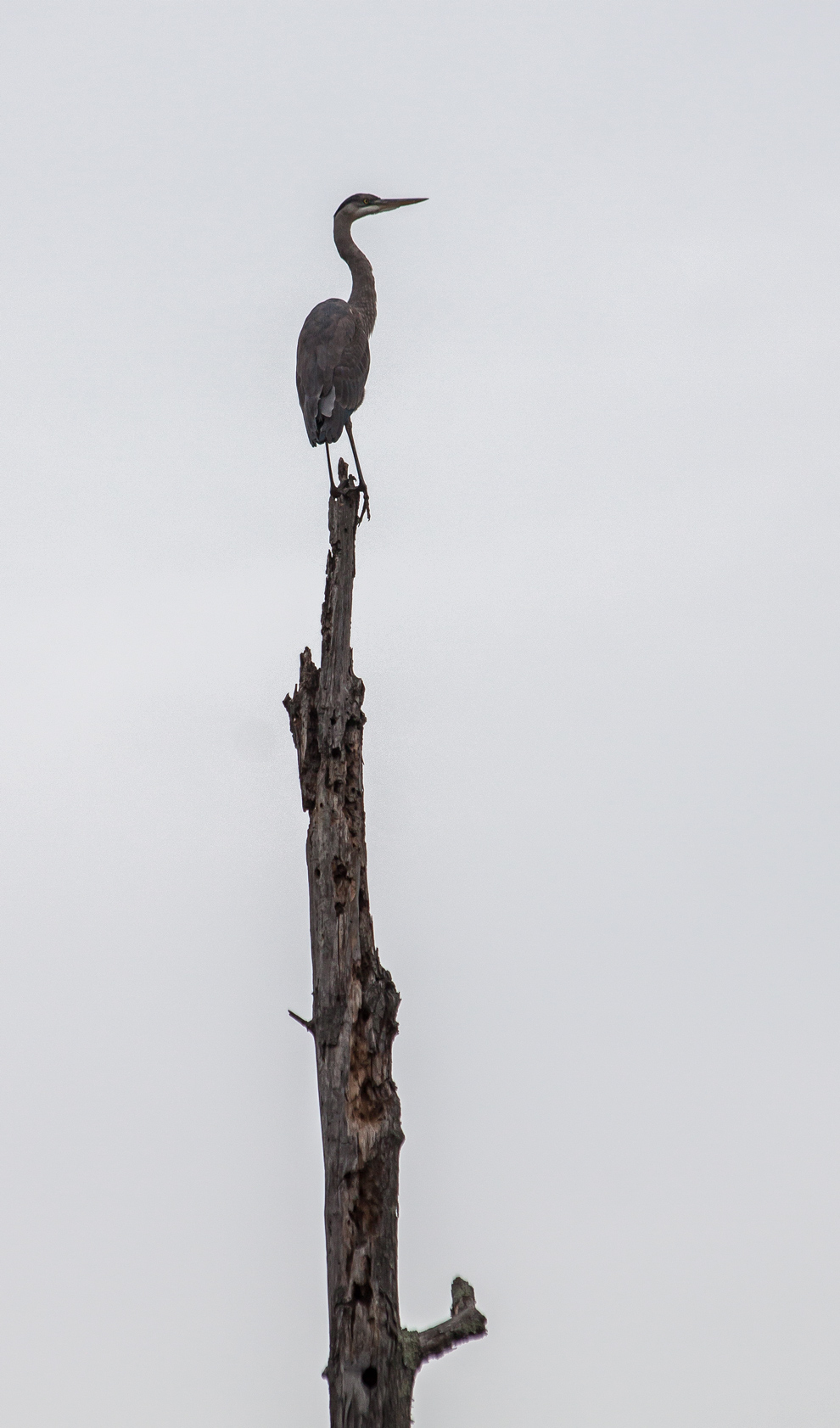
When the Great Blue Heron landed high in a limbless, skinny tree, I suspected he would not be there long—it was like he was perched on top of a flagpole. I managed to capture of series of action shots as he pushed off from the tree and launched himself into a dive.

heron_takeoff4_blogThe shot below give you an idea of the height of the tree in which he was perched. It looked to be dead and mostly rotted and was in the center of a marshy field. It was early in the morning and there was heavy cloud cover, which is why the sky looks so white. The photos were mostly silhouetted, but I tried to lighten the shadows a bit to reveal some details.

heron_takeoff3_blog

The next shot shows the Great Blue Heron (Ardea herodias) a split second before he took off. He has extended his wings and is leaning forward. Obviously he had received the call from the control tower that he was cleared for takeoff.

heron_takeoff1_blog

This final shot suggests that the heron propelled himself forward with his legs before using his wings, ending up in a somewhat unusual position.heron_takeoff2_blog

I was able to track the heron until he disappeared into the trees, which let the buffer in my camera catch up with me—as you might suspect, I was shooting as fast as my camera would fire.

© Michael Q. Powell. All rights reserved

Read Full Post »

Early yesterday morning, I was so focused on a Great Blue Heron that I spotted high in a tree that I didn’t even notice that there was a Bald Eagle in an adjacent tree until it took off almost right in front of me. Nearby, a female Belted Kingfisher loudly announced her presence with her unmistakable rattling call.

The sky was covered with heavy clouds and the forecast called for thunderstorms, which meant that lighting conditions were less than optimal for taking photos in a wooded area. Still, it felt great to be outdoors on the trails after a week of constrained activity thanks to our recent snowstorm.

I hadn’t seen a live Great Blue Heron (Ardea herodias) at my local marsh in quite some time, so I was excited when I caught sight of the heron, perched on broken-off tree at the edge of one of the marshy fields. The heron was almost a silhouette against the sky, but its shape is very easy to recognize when you see it in profile.

heron_early_blog

As I was creeping forward to get a clearer shot, I was startled when a large bird flew right across my field of view—I knew almost immediately that it was a Bald Eagle (Haliaeetus leucocephalus), although it too was mostly a shadowy silhouette as I viewed it through the branches of the trees. I was able to react quickly enough to get off a few shots before the eagle flew out of sight.

eagle_early_blog

A short distance away, a female Belted Kingfisher (Megaceryle alcyon) was perched on the trunk of a rotted tree, intently staring down at the shallow water of the marsh, looking for prey. That water prevented me from getting closer to her, but I did manage to capture her distinctive pose through the branches.

kingfisher_early_blog

I am an early bird by habit and it was great to be outdoors in the “wilds” of my suburban marsh to see what other early birds I could find.

© Michael Q. Powell. All rights reserved

Read Full Post »

As many of you know from my posting last week, I recently came upon a dead body of a Great Blue Heron (Ardea herodias)  and several of us who regularly visit this marsh have wondered if perhaps this was the young blue heron who hung around the boardwalk throughout the fall and early winter. We had previously noted that this heron was not very proficient at catching food and worried that it seemed to lack basic survival skills.

I took a lot of photos of that young heron, whom I encountered repeatedly during my early morning visits to the marsh, and decided to post a few photographs from late December and early January. I’ll never know for sure if this heron survived the winter, but these images help remind me of some of the special moments that we shared.

heron_mem3_blogheron_mem3a_blogheron_mem2_blog

© Michael Q. Powell. All rights reserved

Read Full Post »

It concerns me that this young Great Blue Heron (Ardea herodias) at my local marsh may be too tolerant of people and desensitized to the reality of genuine predators that could do it harm. I worry too about its ability to catch enough food to survive, especially if this is the same young heron that I observed during the fall striking in vain at leaves in the water.

On a cold, wet day this past week, the heron was hunkered down on a log not far from the boardwalk. Other than a few movements of its head as it watched me, the heron didn’t budge a bit as I snapped away and even stayed in place when a noisy group of people walked by us.

When I see this little heron, I try to get a few pictures and then move on, thankful for the photo opportunity, but not wanting to reinforce its comfort level with the presence of people.

heron1_jan_blog

© Michael Q. Powell. All rights reserved

Read Full Post »

Do you like long walks in the rain? Although this sounds like a question for an on-line dating service, it’s really about your style of photography.

I enjoy taking wildlife photos in the rain, if the rain is not coming down too hard and if it is not too windy. Of course, I can’t control the intensity of the rain, so I have various levels of protection. Generally, I’ll try to hold an umbrella in one hand and shoot one-handed, steadying my shot by leaning against the umbrella handle, if possible. If the rain starts to fall harder I’ll cover up my camera inside my raincoat or sometimes will pull out a plastic trash bag for additional protection until the rain slows down.

Last week, I was walking in the rain at Huntley Meadows Park, my local marshland park, when I came upon a Great Blue Heron (Ardea herodias), standing on the boardwalk. I approached the heron quietly and stopped. The heron was looking right at me and somehow I knew that it was going to take off.

I dropped to one knee, turned the camera sideways, and pulled way back on the zoom lens, hoping to fit the heron into the frame. This image was shot at 75mm on a 70-300mm lens, so you can tell that I was relatively close to the heron. The other settings were f5, 1/400 sec., and ISO 500 for those who might be interested in the technical aspects of the shot.

It’s always interesting to see which birds are active in the rain and I did get some shots of other birds that day, but I will save them for another blog posting.

heron_liftoff_rain_blog

© Michael Q. Powell. All rights reserved

Read Full Post »

In the weak early morning light, the sky and the water merged together, providing an uncluttered backdrop for this portrait of a Great Blue Heron.

I’ve taken quite a few photos of Great Blue Herons (Ardea herodias), but rarely have I encountered one as cooperative as this one was early on Monday morning. He looked to be cold and may have been trying to snooze as he huddled near the edge of the boardwalk. He let me get pretty close to him and didn’t seem to object to my presence, though he did follow me with his eyes. As a result of his tolerance, I was able to capture more detail in the heron’s feathers than I usually can manage.

After a few shots, I left him in peace to catch a few more winks.

heron_morning2_blog

© Michael Q. Powell. All rights reserved.

Read Full Post »

The light was fading in the late afternoon yesterday and it was starting to rain when I came across a Great Blue Heron (Ardea herodias), one of my favorite birds. The conditions were less than ideal, but I was determined to try to get a shot.

I managed to open my umbrella without startling the heron, a minor miracle, given that my umbrella is green and white. Knowing that I was going to have to shoot one-handed (with a small amount of balancing help from the hand holding the umbrella), I decided I was going to have to crank up the ISO of the camera higher than I had ever gone before—to ISO 1600.

I like the image that I got, though unsurprisingly it was a bit grainy. Fortunately, my software was able to reduce thee noise a little.

So now you know of at least two things that you can find out in the open when it is raining—blue herons and crazy photographers.

heron_rain_blog

© Michael Q. Powell. All rights reserved.

Read Full Post »

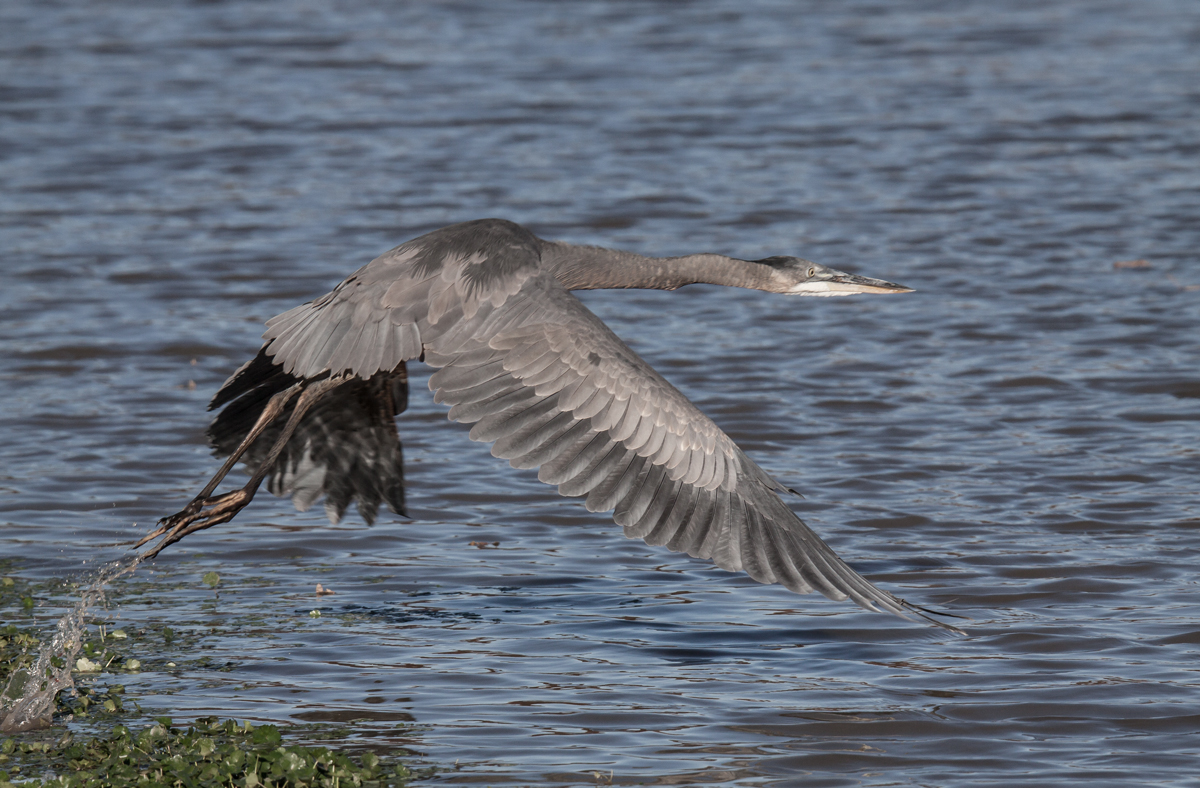
I was moving forward slowly in the underbrush, trying to get closer to some ducks, when out of the corner of my eye I detected some motion. It was a Great Blue Heron (Ardea herodias) flying low over the waters of the marshland pond.

I didn’t have time to check the settings on my camera, but the heron’s slow speed in flight did allow me to get off a few shots. This was one of the few times that I have been able to capture a bird in flying parallel to the ground at eye level and I really like this perspective.

heron_marsh2_blogheron_marsh_blog

© Michael Q. Powell. All rights reserved.

Read Full Post »

I felt like this Great Blue Heron (Ardea herodias) was modeling for me when it climbed out of the water onto a narrow slab of concrete and struck a pose. It was unusual for me to see a stationary heron out of the water—usually when I see them out of the water, they are flying. The blue waters make it look like I shot this in some exotic, tropical location, but I took this photo only a mile or so from where I live, at a small suburban pond surrounded by townhouses on one side and a well-travelled road on the other side.

heron_out_of_waterblog

© Michael Q. Powell. All rights reserved.

Read Full Post »

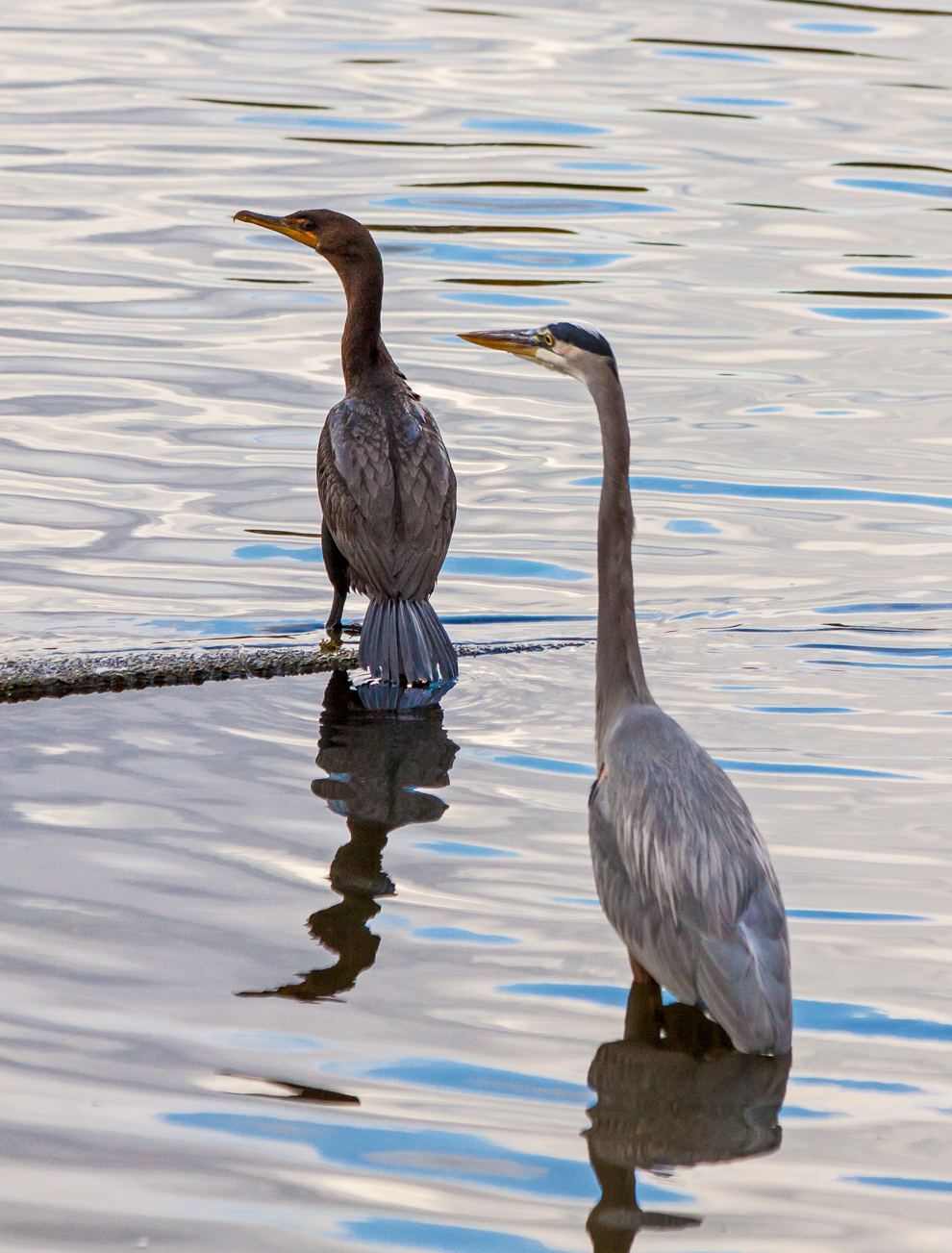
Who knew that the man-made pond in a nearby suburban neighborhood would be a favorite spot for juvenile birds to hang out together?  That’s what it looked like when I spotted an immature Double-crested Cormorant (Phalacrocorax auritus) and an immature Great Blue Heron (Ardea herodias) together, both with their heads turned in profile, probably checking out some cute little female goose.

Actually, I couldn’t immediately identify the cormorant, though it was obvious that it was neither a duck or a goose. The way that it swam with its long neck extended and its bill pointed in the air, however, was distinctive enough to make it easy to find in my identification guide.

I like the way that these two birds posed for me, with the cormorant perched on a narrow concrete slab to compensate for the heron’s greater height and the synchronized head positions. I have seen this young heron hanging around the pond before (it’s the same heron that I featured in the Crouching heron posting this morning), but I don’t think that I have seen a cormorant there before. Usually there are only geese and occasionally some ducks, like the small flock of Ring-necked ducks that are there right now.

cormorant_heron_blog

© Michael Q. Powell. All rights reserved.

Read Full Post »

Saturday, I went out with fellow photographer Cindy Dyer to take photographs of the fall foliage and we stopped at a little suburban pond, where I managed to get this close-up shot of a Great Blue Heron (Ardea herodias) crouching at the edge of the water. If you want to see some awesome shots of the fall colors in Northern Virginia, check out Cindy’s blog—she was quicker than I was in posting her shots.

I was able to get this downward-looking angle for the image because I was on a small bridge that is part of a walking path around the pond. The heron was focused on trying to catch prey, though he didn’t seem to be having too much success. Judging from its relatively small size and inexperience fishing, I suspect that this might be a juvenile heron.

I took a number of other shots of the heron that I will probably post, including an encounter with what I think is a juvenile cormorant. Stay tuned.

heron_crouching_blog

© Michael Q. Powell. All rights reserved.

Read Full Post »

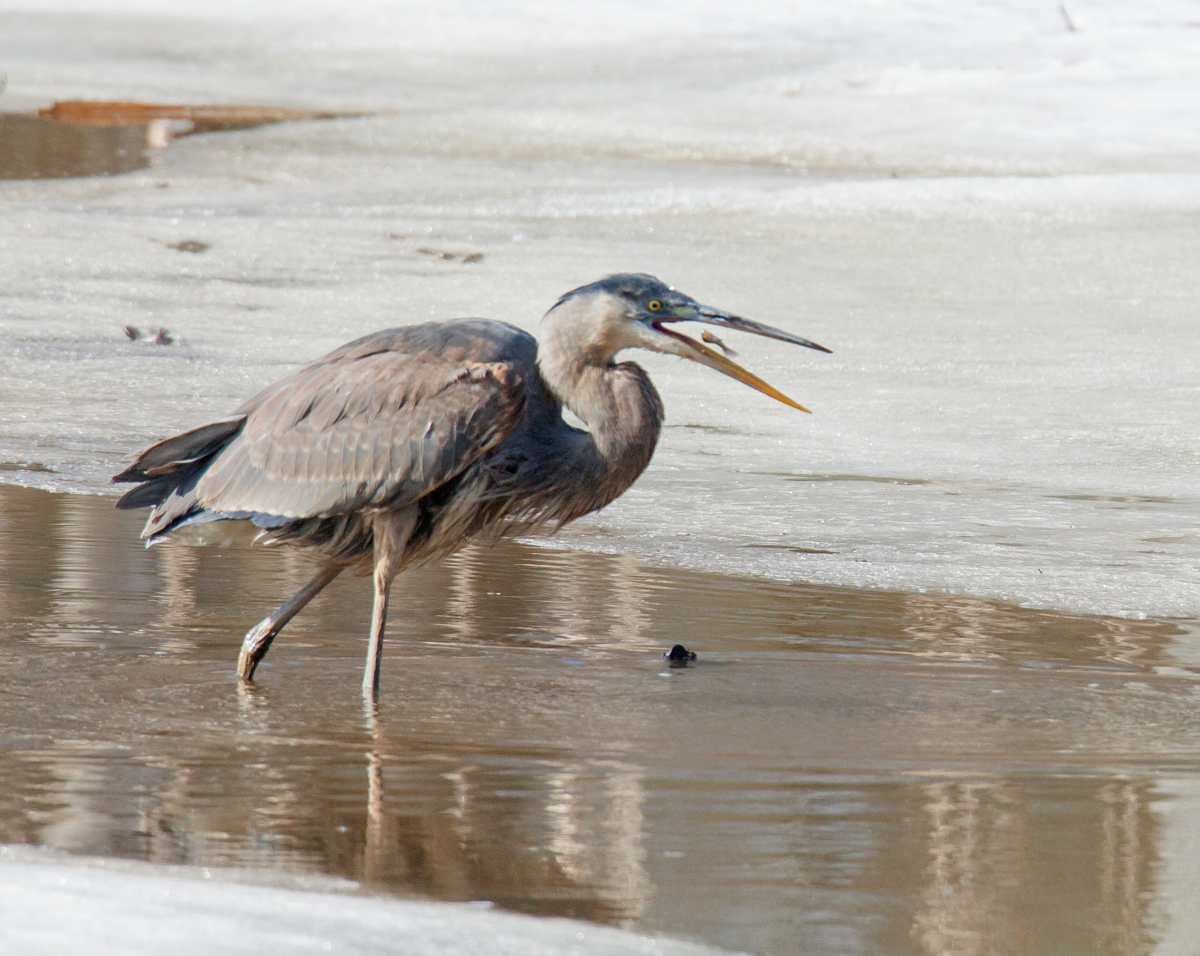
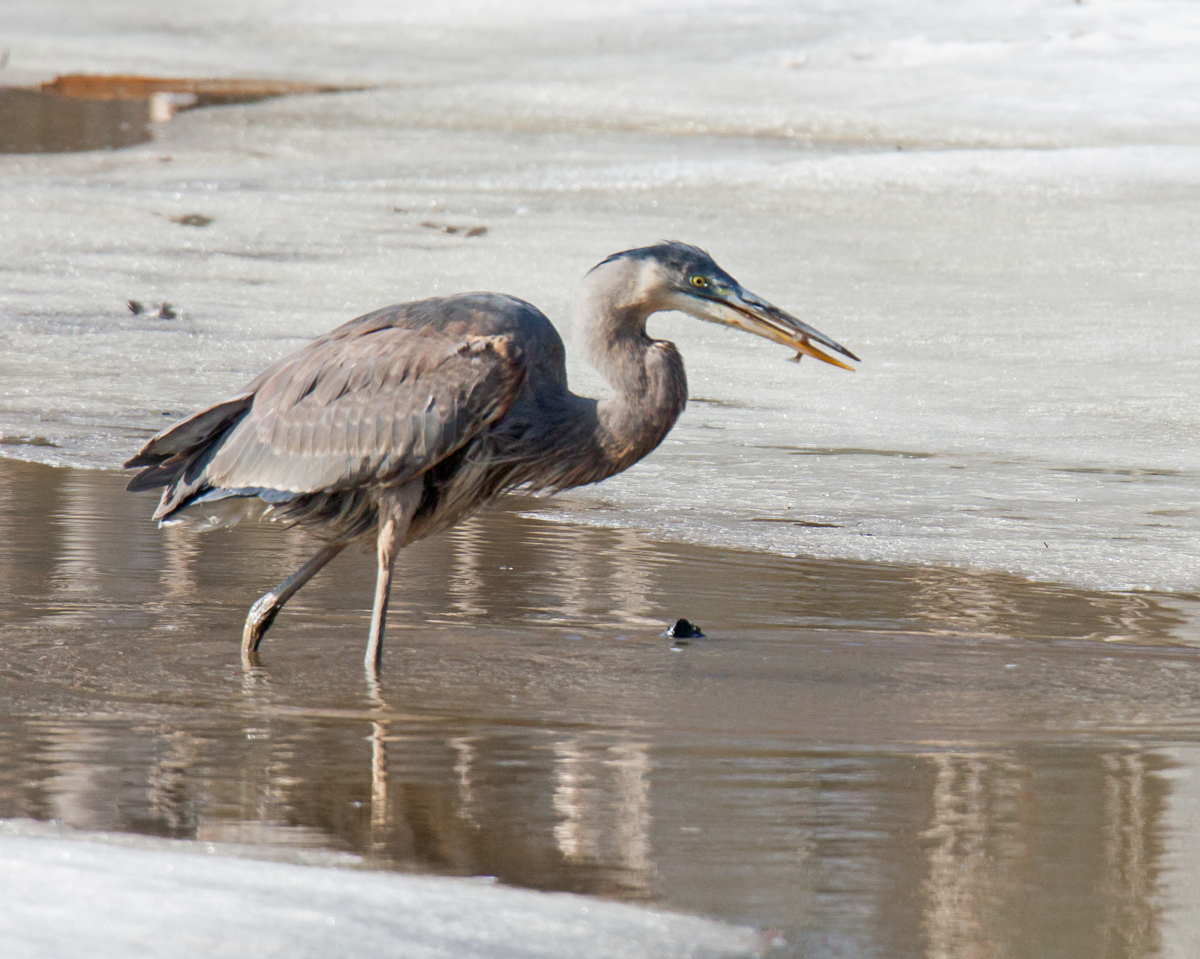
If you are a heron, how do you get  a fish down your throat and into your stomach after you have caught it? Some animals and birds of prey might tear off a bite-size piece of the fish using claws or talons. Herons don’t have that option. They have to somehow maneuver their catch within their bills until they are in a position to swallow it whole, all the time at risk of dropping their catch back into the water and losing it.

I enjoy watching Great Blue Herons (Ardea herodias) fish. They seem to be extremely focused, but patient as they wait for the optimal moment for a strike. This past weekend, I observed this heron in the waters of the Potomac River, just south of the city of Alexandria, Virginia. I watched and waited with my camera focused and ready until the heron struck and pulled a modest fish out of the water.

The heron made several adjustments to the fish’s position by making small movements with his head until it was in the ready position shown in the second photo. He them gave a little flip of his head, launching the fish into the air, and opened his mouth wider, as you can see in the first image. In a split-second the fish was gone and the heron was swallowing.

Every time I see a heron fishing, I am hoping that I will see him pull a really big fish out of the water, as I have seen in photos on other blogs.  So far I have seen the herons catch only small fish and an occasional crayfish or frog, but I hope to be ready when a heron catches a “big one,” so that I won’t have to be the one who tells stories of “the one that got away.”

heron_fish2_blog

heron_fish1_blog© Michael Q. Powell. All rights reserved.
Read Full Post »

« Newer Posts - Older Posts »