Feeds:
Posts
Comments

Posts Tagged ‘Canon Rebel XT’

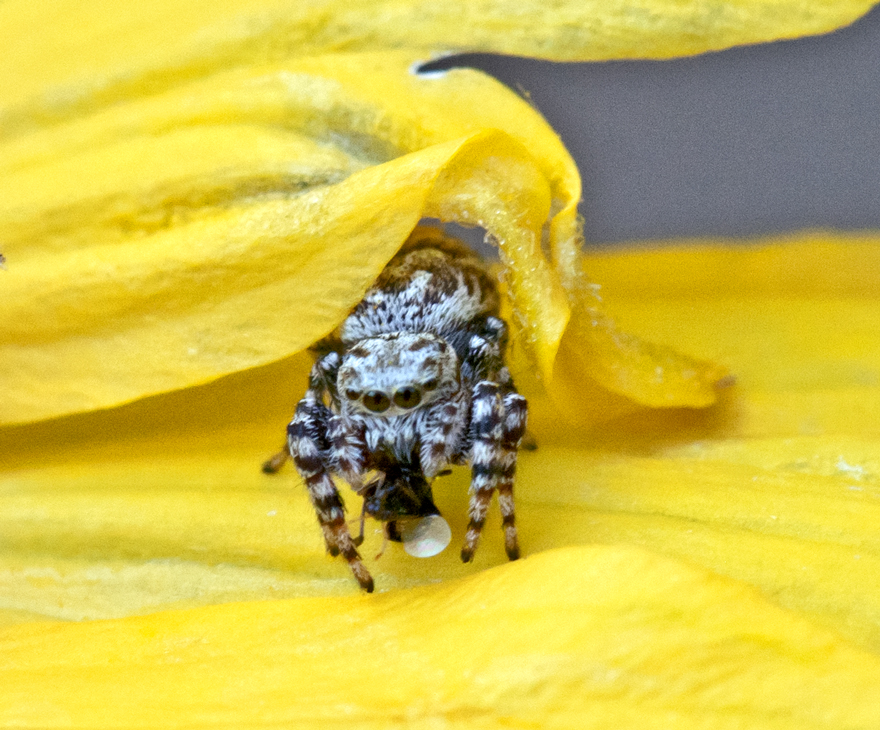
As I was checking out the flowers in my neighbors’ garden yesterday afternoon, I came across this little spider, sitting on top of a flower. There was no web anywhere in the vicinity, so I suspected that I might have a jumping spider.

Last month, I encountered a tiny, fuzzy spider that turned out to me a jumping spider, so I am a little more attuned to looking for them now. This one is definitely not the same kind, though, with completely different colors and markings. You can compare the two by checking out the photos in my previous posting.you

When I first saw the spider, it had just captured some kind of insect as you can see in the second photo. It then moved under the shade of a petal of the flower to enjoy its freshly caught dinner. I showed this moment in the first and third shots. The first one was taken a little closer and shows a lot of detail, but I really like the context that the third one provides and it is probably my favorite one. The final shot gives you an overall view of the spider.

I love the color and pattern of the spider and was happy that I was able to capture some of the details. The spider was not very big and I had trouble placing my tripod on the uneven ground to get a sharp shot. I am really happy with the results, however, and will definitely keep looking for these spiders with eyes that I find to be simply irresistible.
jumping3_blog

jumping2_blogjumping1_blogjumping4_blog

Michael Q. Powell. All rights reserved

Read Full Post »

One of my neighbors, fellow blogger Cindy Dyer, now has lavender blooming in her garden. It smells wonderful and this Cabbage White butterfly (Pieris rapae) seemed to be really enjoying it earlier this afternoon.

cabbage1_blog

Michael Q. Powell. All rights reserved

Read Full Post »

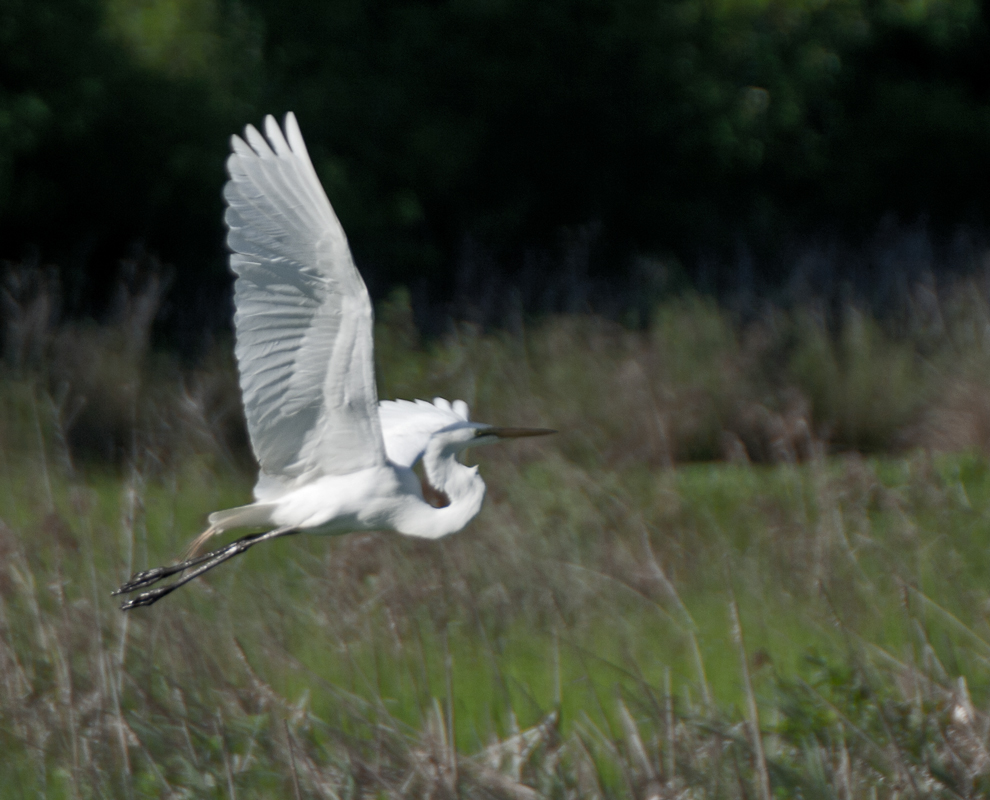
Yesterday, I was observing a Great Blue Heron (Ardea herodias) as he flew to a new location. As soon as the heron landed, a male Red-winged Blackbird (Agelaius phoeniceus) started buzzing him, obviously feeling possessive of the territory. I captured this photo as the heron took off in search of a more peaceful fishing spot.

I love watching the interaction between different species, whether it be birds, reptiles, animals, or insects. Sometimes there is a kind of peaceful coexistence and sometimes, as was the case here, there is confrontation. Previously, I observed a group of blackbirds harassing a juvenile eagle, but this time the blackbird seemed to be alone.

One of my favorite bloggers, Sue of Back Yard Biology, did a wonderful posting recently on the Red-winged Blackbird’s sense of territoriality that is worth checking out. She called it “Angy Bird” and the post includes some cool photos that illustrate her main point.

I tend to think of blackbirds as aggressive and herons as peaceful and prone to avoid confrontation. Another one of my favorite bloggers, Phil Lanoue, who posts gorgeous shots of birds and alligators in his local marsh, has shown me, however, that Great Blue Herons will harass other birds and sometimes steal their catches, including this posting that he called “Stolen Treasure.”

Initially I was focused on catching this heron in the air, but I am glad that I kept my eyes and camera trained on the bird after he landed, for it turned out that the most exciting action was just starting.

chase1_blackbird

Michael Q. Powell. All rights reserved
Read Full Post »

Although I usually try to get close-up shots of dragonflies, there is something really peaceful about this longer distance shot of a male Common Whitetail dragonfly (Plathemis lydia) from this past weekend. I really like the arc of the branch and the reflection of both the branch and the dragonfly in the still water of the marsh. If you click on the image, you’ll see that there is a pretty good amount of detail in the dragonfly—I chose not to highlight those details in this posting.

Click the photo to see a higher resolution view.

Click on the photo to see a higher resolution view.

Michael Q. Powell. All rights reserved
Read Full Post »

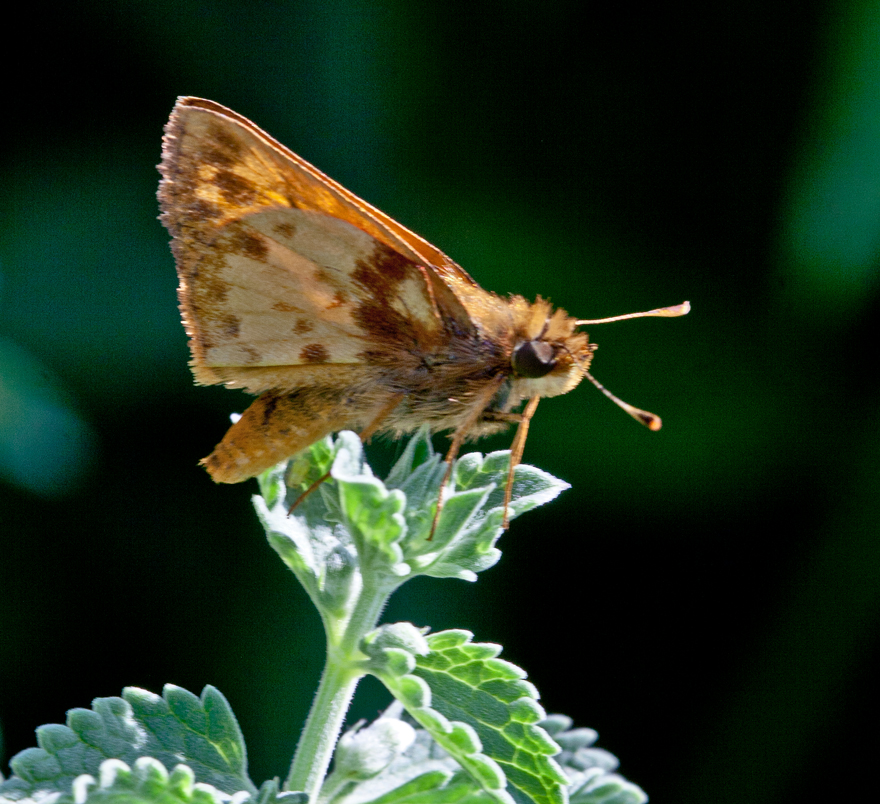
I have trouble identifying a lot of my photographic subjects, but skipper butterflies are among the toughest. Wikipedia says that are more than 3500 recognized species of skippers worldwide, so I don’t feel too bad about my difficulties.

As I perused photos on the internet, I came across a few shot of butterflies that looked at lot like the one that I photographed, and on that basis I am going to tentatively identify it as a Fiery Skipper (Hylephila phyleus).

I like the way in which the skipper was lit and he stayed perched long enough to permit to use my macro lens.

skipper_blog

Michael Q. Powell. All rights reserved

Read Full Post »

Who hasn’t wished for an extra set of hands to get more done in this multi-tasking world?

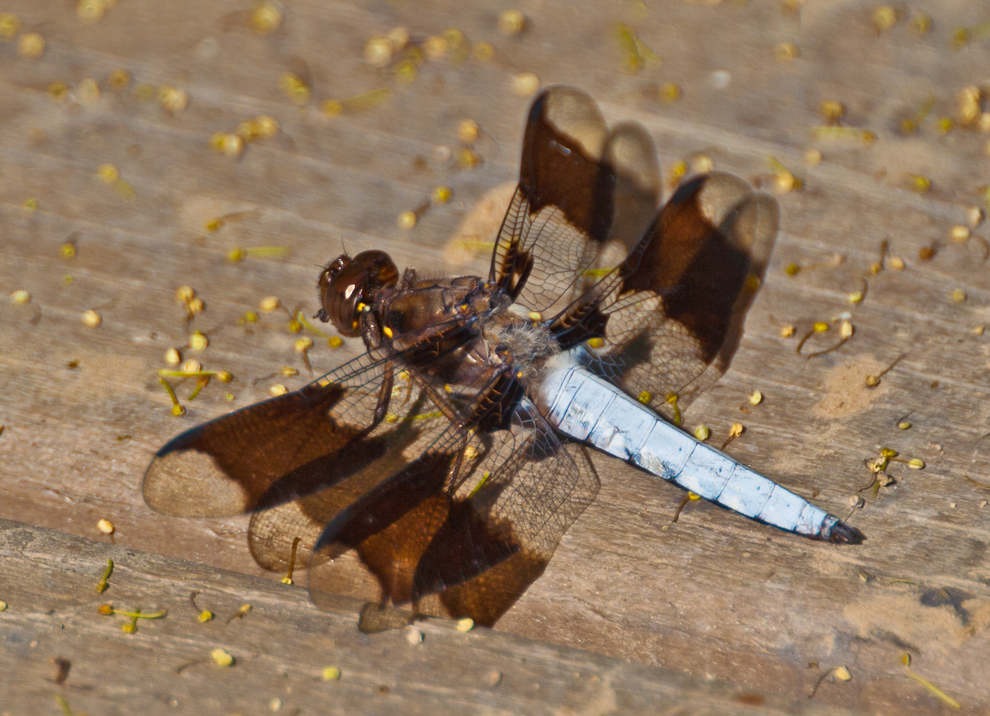
When I first looked at this photo that I took of a male Common Whitetail dragonfly (Plathemis lydia), it looked like he had grown two extra sets of wings. Had a genie granted one of his wishes? Could he now fly faster than his friends (he is a male, after all)? Will this impress the ladies?

A close look at the image, however, reveals that the extra wings are merely illusions, shadowy reflections of a more ordinary reality.

That doesn’t mean, though, that he has ceased to dream and to wish from time to time for those extra wings.

wings_blog

Michael Q. Powell. All rights reserved

Read Full Post »

What happened to this swallow to cause it to be so drab looking? That was my first thought when I looked at these images.

The bird was perched at a location where I had previously seen a lot of Barn Swallows (Hirundo rustica), but it looked more like a Tree Swallow (Tachycineta bicolor). However, all of the Tree Swallows that I have seen before have been a shiny bluish-green in color. Was this a different kind of sparrow?

It turns out that the answer to my mini-mystery is quite simple—juvenile Tree Sparrows are not the same color as the adults. I guess that I had been assuming that the young Tree Sparrows would be miniature versions of their parents.

The little swallow seemed quite content to pose for me and allowed me to get profile shots and head-on shots without any instructions. Perhaps a modeling career is in its future.

swallow1_blogswallow2_blog

Michael Q. Powell. All rights reserved
Read Full Post »

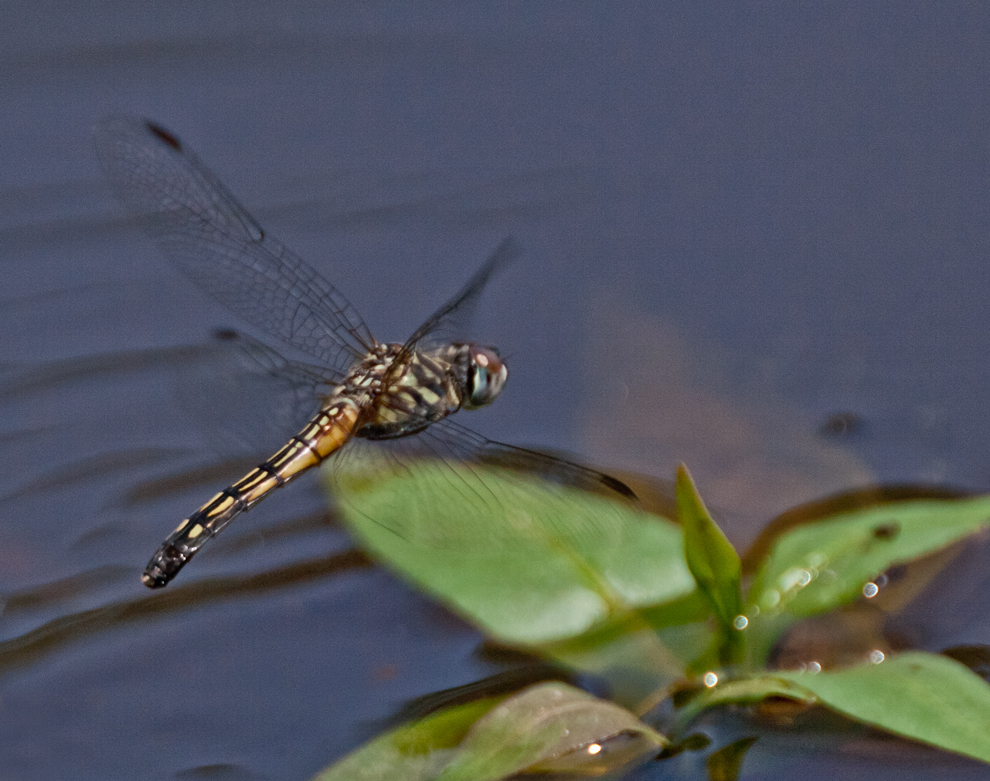
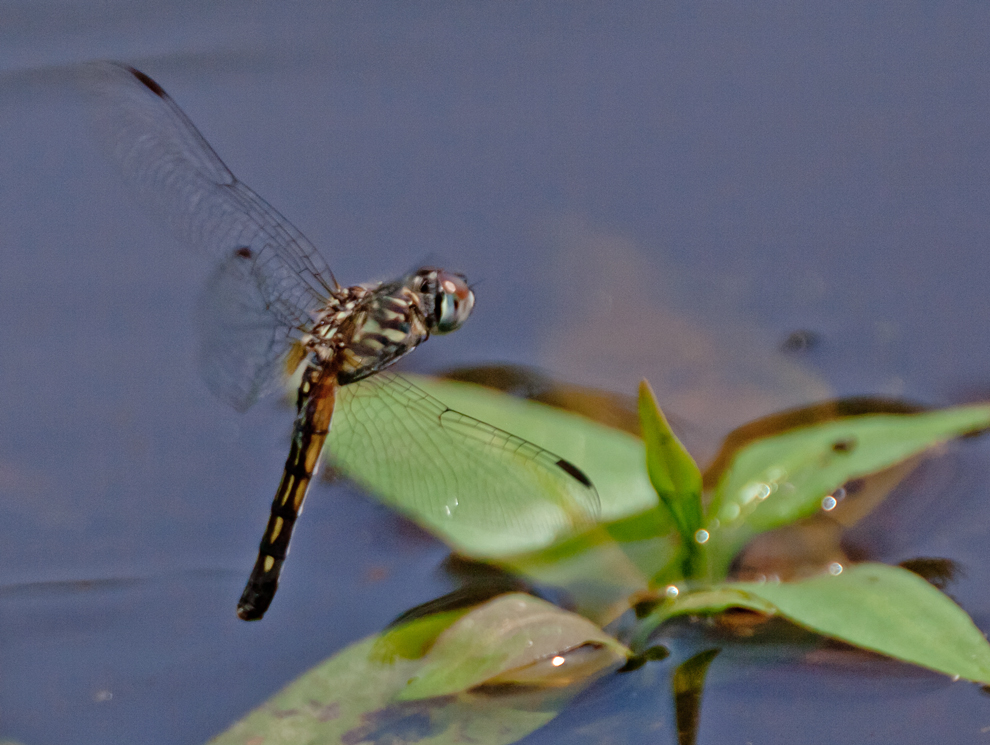
How can you photographing a dragonfly while it is flying? As we have moved into dragonfly season, I have been thinking a lot about that question and earlier this week, I had some success in getting images of a female Blue Dasher dragonfly that I believe was ovipositing.

female_dasher2_blog

Last year, I was content to photograph perched dragonflies (and still love to do so) and occasionally would capture one as it was leaving a perch. This year I am challenging myself and am actively seeking out opportunities to follow dragonflies with my lens and, if possible, to catch them in motion. They are so agile in flight, that the challenge is somewhat daunting. I have experimented with auto focusing and manual focusing. I have tried pre-focusing on an area and waiting and hoping a dragonfly would fly into it. I have had my best luck so far when I can catch the dragonfly as it is hovering.

This female Blue Dasher dragonfly (Pachydiplax longipennis) approached this little clump of vegetation several times and would begin to hover. Then she would bend her tail forward and move it rapidly back-and-forth for a few seconds, which I think meant that she was laying eggs.

female_dasher1_blog

I am definitely not an expert on dragonfly behavior and may be totally wrong about what she was doing. However, from a purely photographic point of view, this offered my best chance of getting some shots of this dragonfly in flight. As I recall, I got my best shots when focusing manually and snapping as many shots as I could when it looked like things were coming into focus.

female_dasher3_blog

The Blue Dasher female (and you’ve probably noticed that the females of this species are not blue, despite their name) flew away and returned several times, but eventually was done with her business. I am continuing to observe the different species of dragonflies and hope to identify the types of behavior they exhibit that will maximize the chance of me getting some more shots like these ones.

Michael Q. Powell. All rights reserved
Read Full Post »

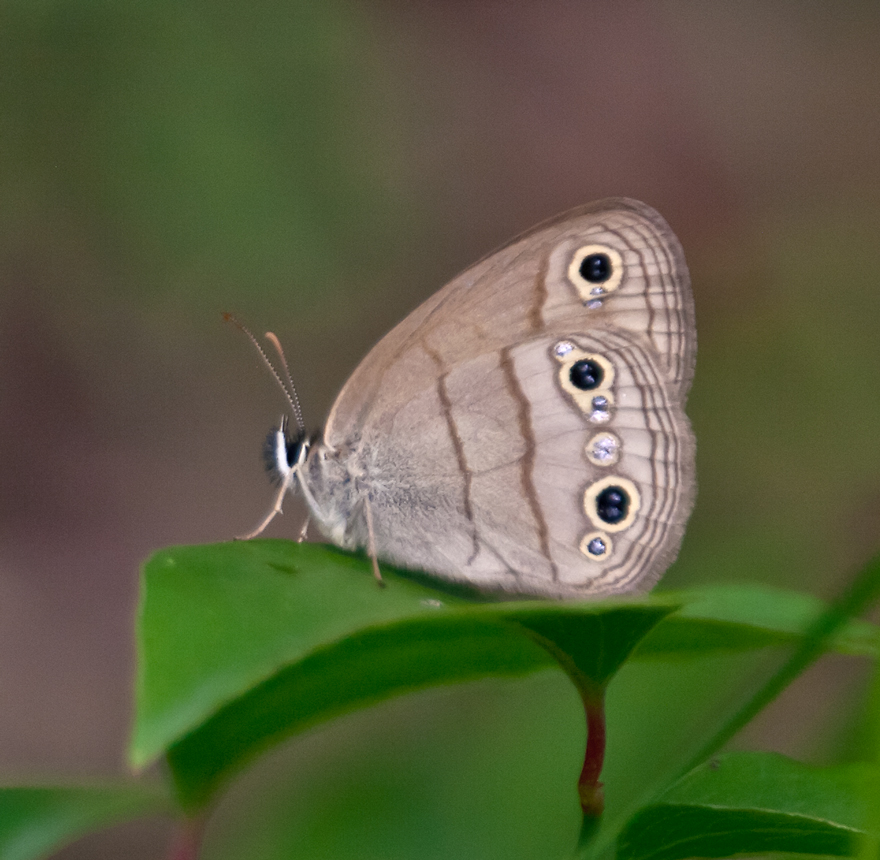
I have been seeing little brown butterflies (or moths) flitting about in the woods recently, but have not gotten a good look at any of them, so I was thrilled when a Little Wood Satyr butterfly (Megisto cymela) landed on a nearby leaf this past Monday and remained long enough for me to get some shots.

I am not a hundred percent certain of my identification, because there are a lot of similar butterflies and the distinctions seem pretty subtle to me at the moment. Please let me know if you can identify this little butterfly with greater precision.

This is another photo in which I took the time to use my tripod and to focus carefully, shooting at a focal length just short of 400mm. The focus is a little soft, particularly for the leaf, but I think that it helps to give the image a kind of dreamy feel, though it’s a little early for a midsummer night’s dream.

brown1_blog

Michael Q. Powell. All rights reserved

Read Full Post »

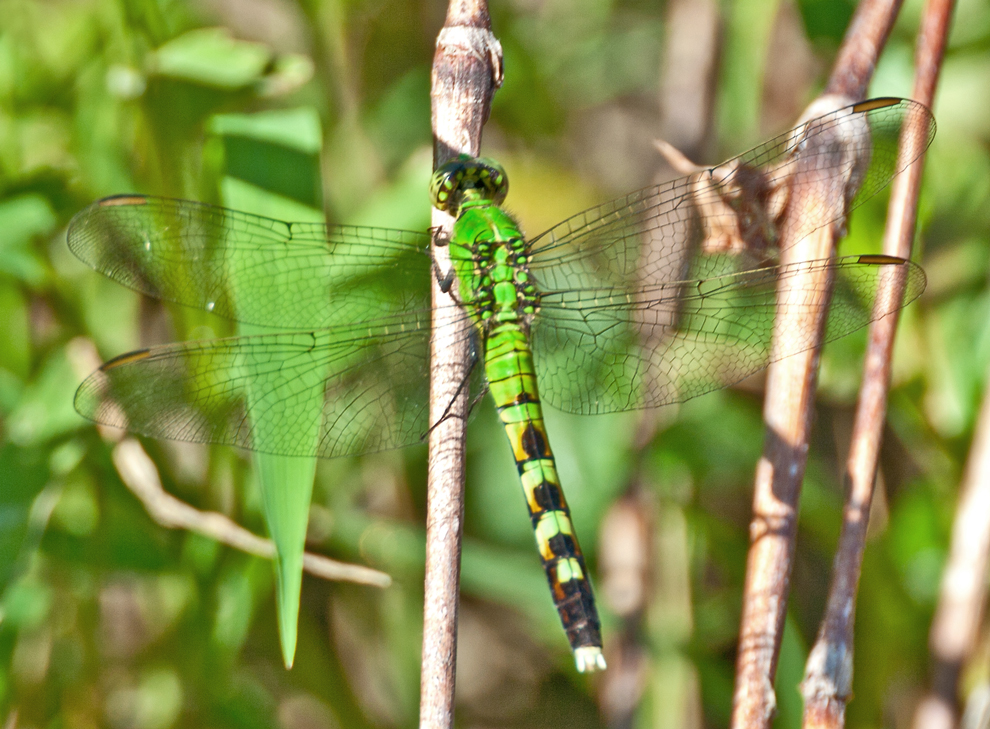
Normally, I try to have an uncluttered background for my dragonfly shots, but the brilliant green body of this female Eastern Pondhawk (Erythemis simplicicollis) really helps it to stand out (and this was the first pondhawk that I saw this spring).

Most of the dragonflies that I observe at my local marsh are either Blue Dashers or Common Whitetails, so I was really excited when a flash of emerald green caught my eye—the color is distinctive enough that I knew immediately what it was. Without paying too much attention to my surroundings, I moved forward to try to get a better angle on the dragonfly.  The next thing I knew, I was ankle-deep in marsh mud, but did manage to get some shots.

I haven’t yet seen any male Eastern Pondhawks, which are mostly blue, but I am keeping my eyes open and hope that it is only a matter of time until I photograph one this spring.

pondhawk1_blog

pondhawk2_blog

Michael Q. Powell. All rights reserved
Read Full Post »

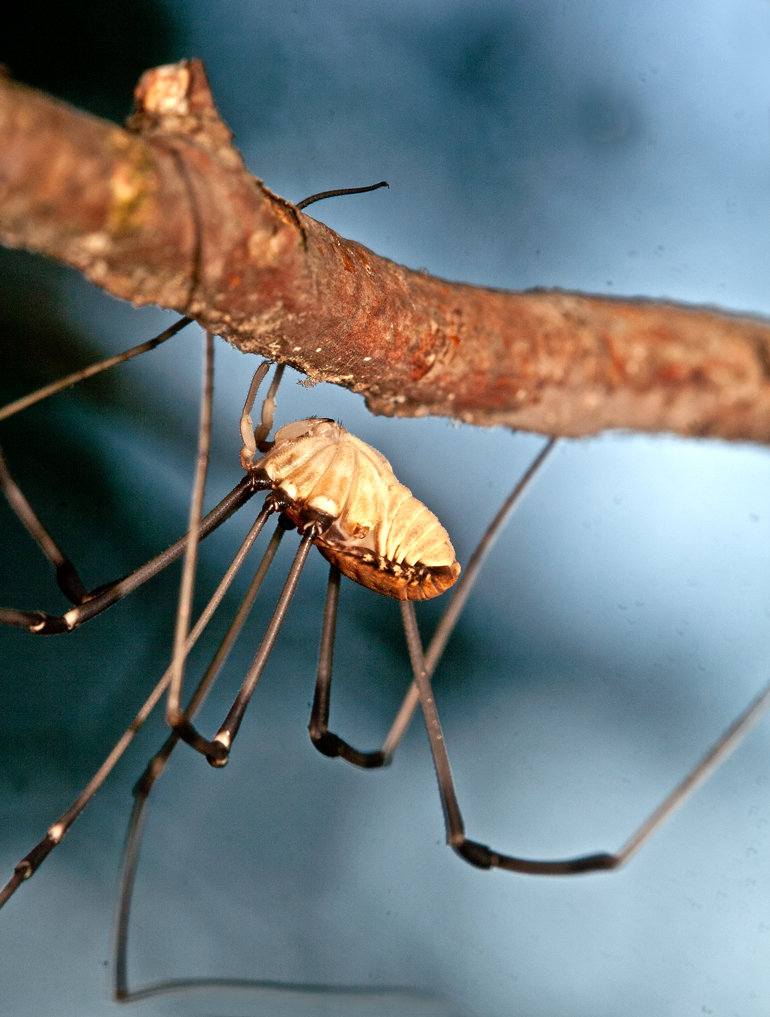
Can a photo of a daddy longlegs (also known as a harvestman) be artistic?

Ordinarily, I would emphatically respond in the negative, but somehow this macro shot that I took of a daddy longlegs, suspended upside down from a branch, came out with a cool, creative vibe to it. I like the way the legs are placed, the way the light is hitting its body, and the way the branch is in focus only in the center area.

I ran across this daddy longlegs as I was walking through the woods and I took the time to set up my tripod and use my 100mm macro lens to get this shot. The daddy longlegs was amazingly tolerant of my efforts and remained in place the whole time, even when I experimented with the use of my pop-up flash.

daddy1a_blog

Michael Q. Powell. All rights reserved

Read Full Post »

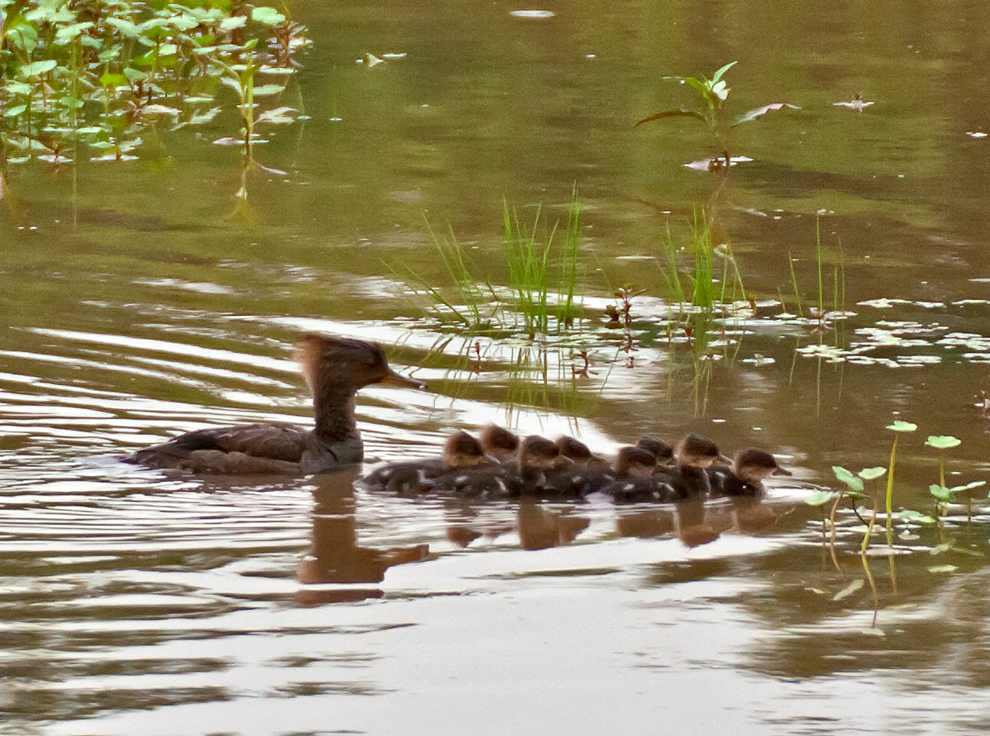
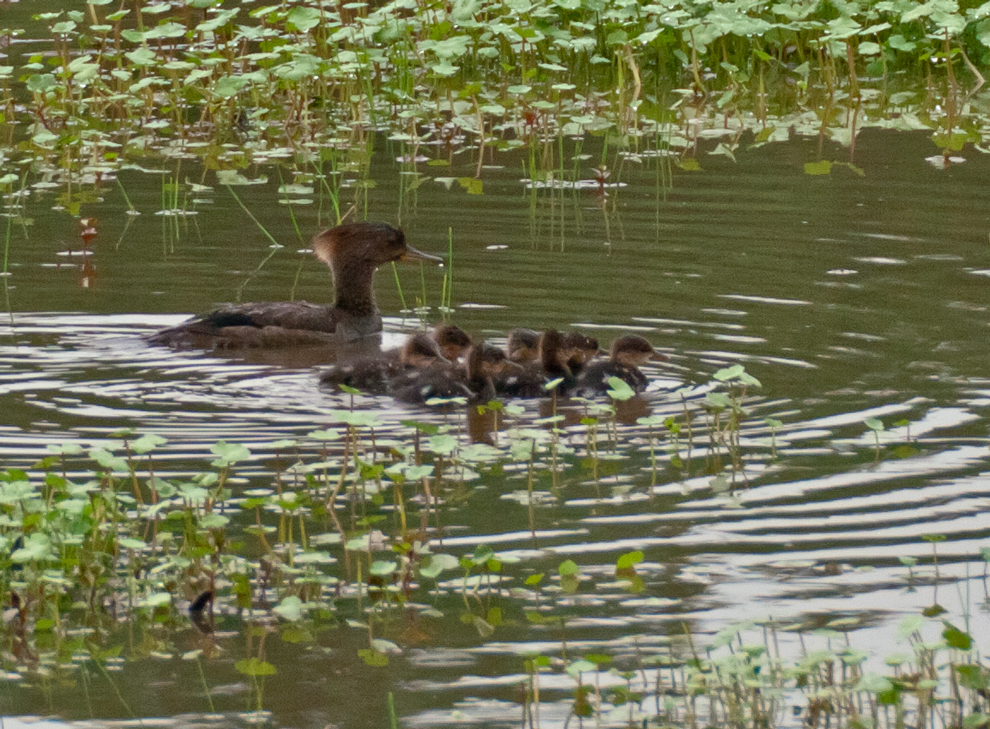
Walking along the boardwalk at my local marsh yesterday morning, scanning the surface of the water, I noticed some movement and suddenly a female Hooded Merganser (Lophodytes cucullatus) with eight little ducklings swam into view. They were pretty far away in the shallow water, amidst the plants that have sprung up, but I managed to get a few shots of the family. The female Hooded Merganser ducks cares for the young alone, unlike the Canada Geese families that I see at the marsh, in which both parents are present.

I was heartened to see this group of ducklings, because I had heard from others at the marsh of dwindling number of ducklings earlier in the season. I have no idea how many of these little ones will survive—they seem so small and vulnerable (not to mention cute) and the snapping turtles are huge in comparison.

mergansers2_blog

mergansers1_blog

Michael Q. Powell. All rights reserved
Read Full Post »

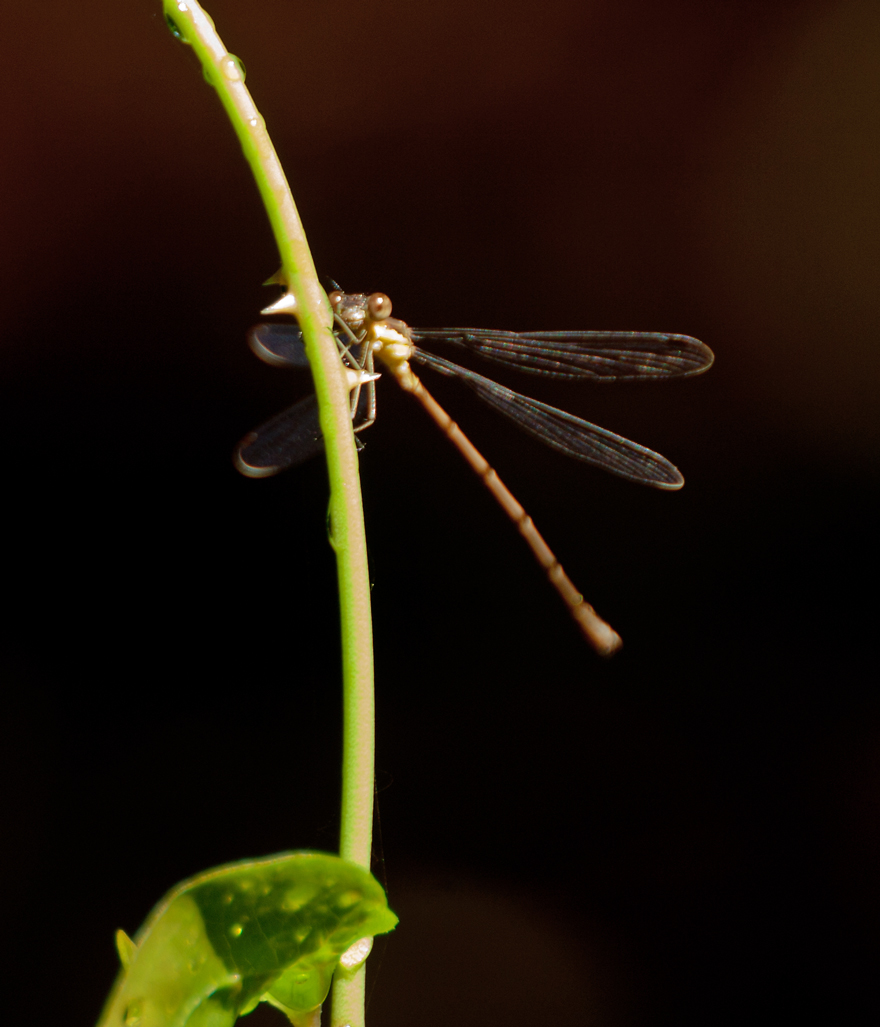
Walking through the woods today at my local marshland park, I managed to photograph my first damselfly of the spring, what appears to be some type of spreadwing damselfly, possibly a Slender Spreadwing (Lestes rectangularis).

My camera was already on my tripod, with my 135-400mm zoom lens attached, when the damselfly flew by and perched on a thorny vine right in front of me. I decided to try to get a shot and the first thing that I had to do was to back up, because the minimum focusing distance of the lens at full extension is 7.2 feet (2.2 meters). Secondly I had to switch to manual focus—the damselfly is so slender that my camera refused to autofocus on it. Finally, I had to adjust the aperture manually, when I realized that there was a lot of direct light falling on the vine and on the damselfly.

The two shots that I am posting may look like they were taken using flash, with an almost black background, but the damselfly was in a little pocket of light and the rest of the area was pretty heavily shaded.

damselfly_blog

damselfly2_blog

Michael Q. Powell. All rights reserved
Read Full Post »

Arriving at the marsh really early in the morning, I was finally able to get a relatively well-exposed shot of a Great Egret (Ardea alba) in breeding plumage, with wispy plumes on its back and a bright green color between its eye and bill (an area known as the “lore”).

Generally I have trouble photographing this beautiful bird, because its brilliant white color gets blown out pretty easily when there is a lot of light and using exposure compensation is often not sufficient. One obvious solution to the problem of too much light is to come at a time of reduced light. I switched to manual mode and, after a bit of experimentation, found a setting that seemed to work pretty well. I also had my camera on a tripod, which is a good practice any time I can manage to use it, which permitted me to use a slower shutter speed.

morning_egret2_blog

Michael Q. Powell. All rights reserved
Read Full Post »

Love-in-a-mist (Nigella damascena) is one of those rare flowers that looks as good (or even better) after it has finished blooming and has turned into a seed pod. If you need to remind yourself of the striking blue blooms of this remarkable flower, check out my posting from last week that I called Whole Lotta Love.

I was a little surprised to that these ones at Brookside Gardens in Wheaton, Maryland had already moved to this stage of development, but was quick to jump on the chance to photograph them yesterday. I like the way that the spiky portions of the plant are in sharp focus and how the background looks almost misty, as befits the name of the flower. As always, though, the plant looks vaguely alien to me, like it came from outer space.

Love is always beautiful and comes in many forms, whether in the mist on in a pod.

Love1_blog

Michael Q. Powell. All rights reserved
Read Full Post »

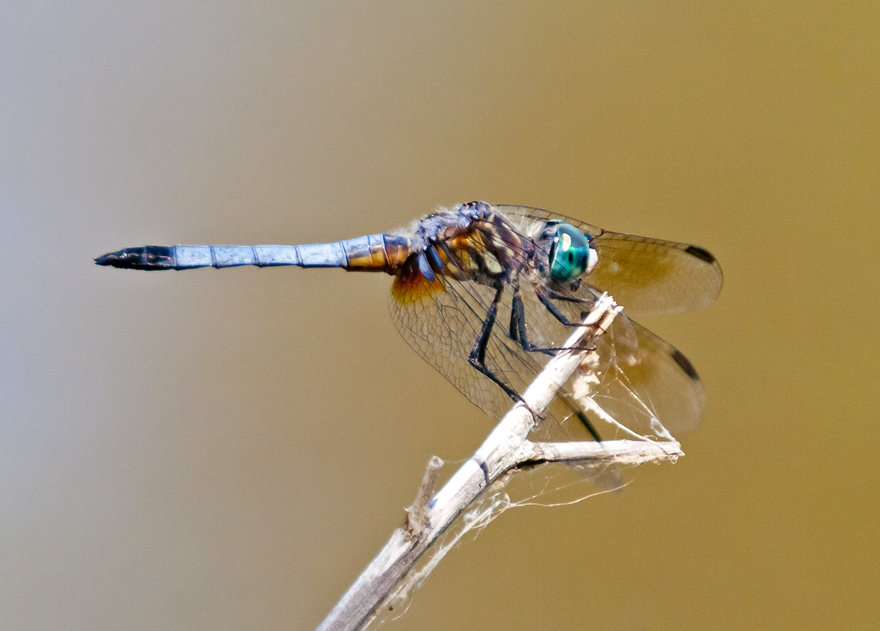
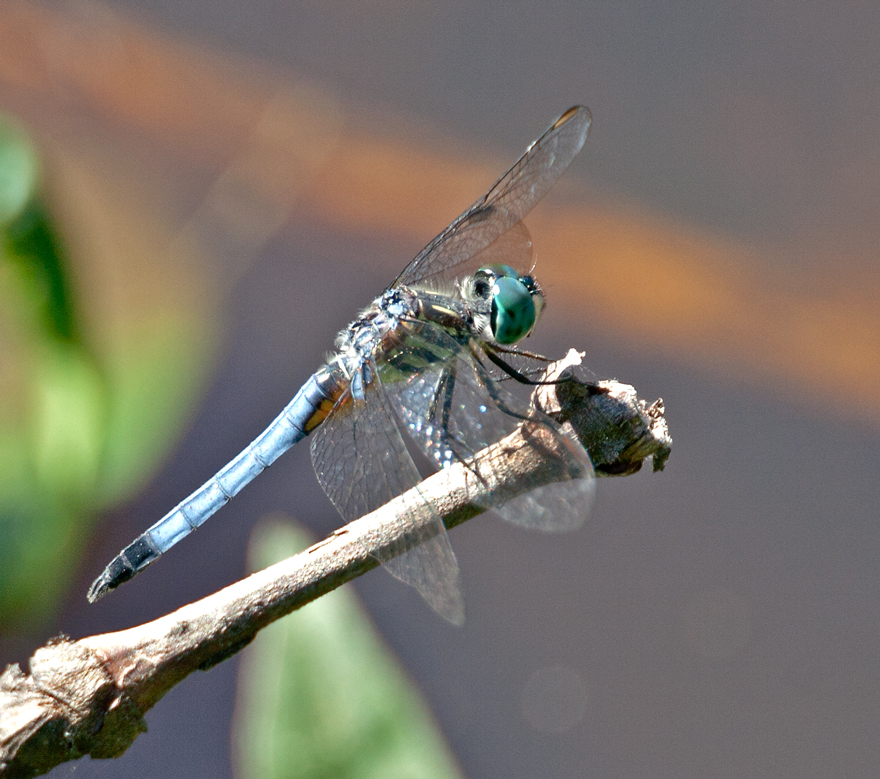
Last summer, my favorite photographic subject was the Blue Dasher dragonfly (Pachydiplax longipennis) and I was really excited on Friday to see that they are once again present at my local marshland park.

It continues to be a challenge to get close enough to capture the wonderful details of the dragonfly and to manage the background so that it is not too cluttered. I am happy to have gotten a few good images of male Blue Dashers to start the season, with the promise of more shots to come.

dasher1_blogdasher2_blog

Michael Q. Powell. All rights reserved
Read Full Post »

With thousands of gorgeous flowers blooming at Brookside Gardens in Wheaton, Maryland today, this beautiful butterfly, which I think is a Variegated Fritillary (Euptoieta claudia), chose to land on a lowly dandelion growing at the edge of a walkway. Why did it make that choice?

I had been chasing this butterfly around though several sections of the garden, hoping desperately that it would land somewhere within range of my 100mm macro lens. When it did finally land, I approached it cautiously and got a few shots handheld that came out pretty well. I am also including a shot that gives you an idea of the setting—there was a landscape timber to the left and a series of stone tiles that made up the walkway, and the dandelion was growing low to the ground at the edge of the walkway. The lighting was less than optimal, but sometimes you have to work with what you have, especially when the subject is likely to fly away at any moment.

I deliberated for quite some time over the identification of the butterfly. At first, I was sure that it was a Pearl Crescent (Phyciodes tharos), which is orange and has brown spots. As I looked at more photos, though, I changed my mind and now think that it may be a Variegated Fritillary.

As always, I welcome assistance on the identification of my subjects.

pearl2_blogpearl1_blogpearl3_blogMichael Q. Powell. All rights reserved

Read Full Post »

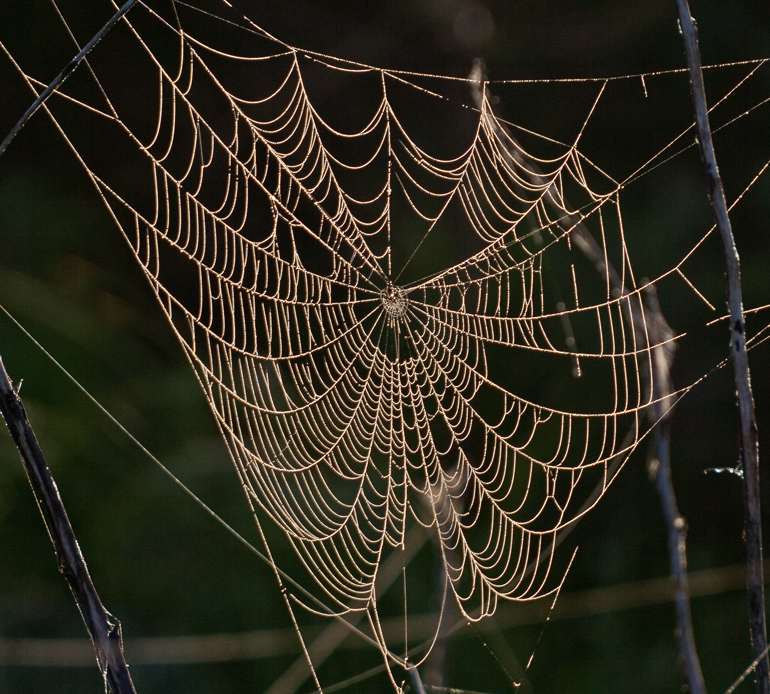
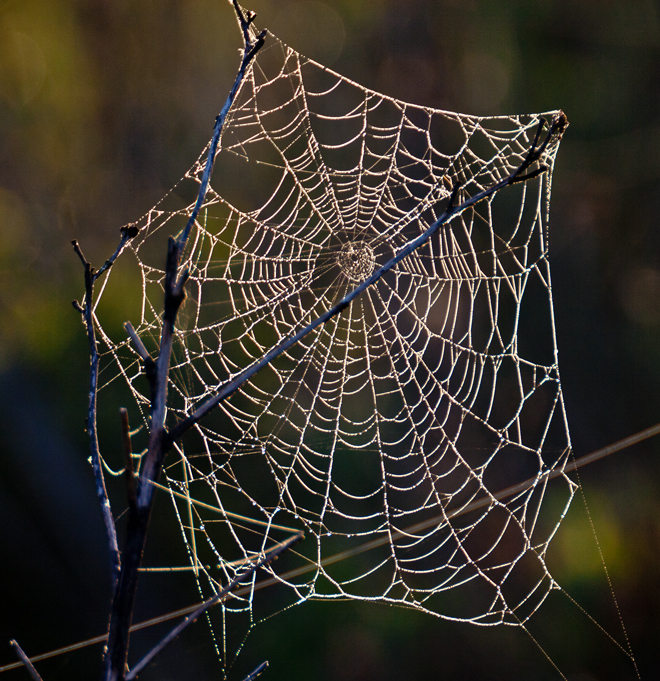
Temperatures were forecast to soar yesterday, so I arrived early at the marsh—about 6 o’clock— and was treated to many stunning examples of spider art. The early morning light and the dew made it possible to get these shots.

I had thought that it was a bit early in the season for spiders to be active, but I was thrilled to be proven wrong. I never fail to be impressed by the handiwork of the different kinds of spiders and how they are able to adapt their webs to the environment.

I shot some webs with my macro lens and others with a telephoto zoom. In virtually all cases, I focused manually and used my tripod.

Only a few of the webs had visible spiders and I chose to highlight one of those in the first image, which is a close-up of the web shown in the final shot. The webs themselves are not perfect and have gaps and breaks in some places, an appropriate metaphor for the lives that most of us live.

web3_blogweb1_blogweb4_blogweb2_blog

Michael Q. Powell. All rights reserved

Read Full Post »

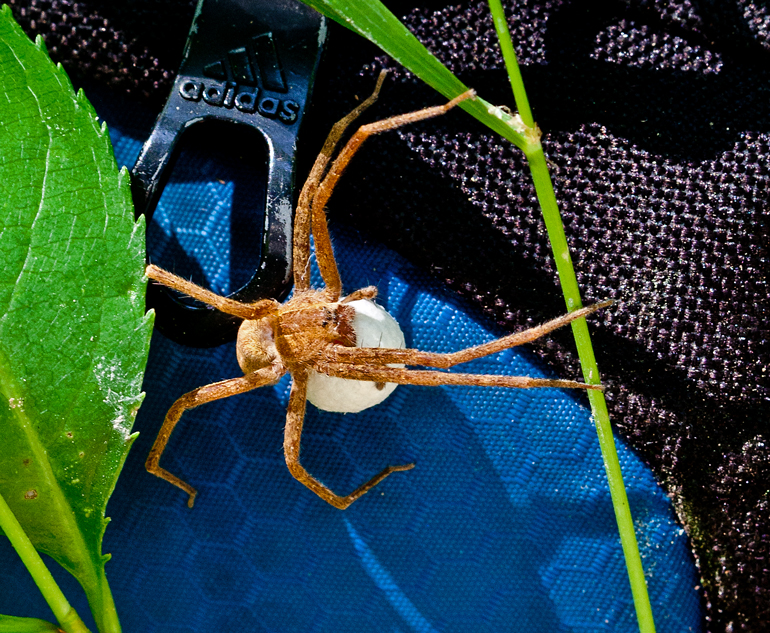
As I was reaching for my camera bag after taking a photo of a spider, I was surprised to see an unexpected visitor—a much larger spider with what looks like an egg sack.

I was in a wooded area and had placed my bag on the ground while I set up my tripod to take a photo of a small spider (shown in the second photo).  After getting the shots, I returned to my bag. I bent down to open the zipper of the bag and suddenly was eye-to-eye with the spider. The spider seemed really large at that moment, although retrospectively it does not seem that big when I compare it with the Adidas logo on the zipper pull. When I tried to adjust the bag’s position, the spider moved away, but fortunately I had the foresight to take some photos before attempting to improve the lighting situation.

I am not sure of the identification of either of these spiders, but find them both to be pretty cool in their own ways. I’d welcome some more information from more knowledgeable readers about the white ball and, in particular, if it is an egg sack.

UPDATE: I have done a little research and think that the spider in the first shot may be a Nursery Web Spider (Psaurina mira), a spider that is known for carrying its egg sack with its fangs. Some other spiders attach the egg sack to their spinnerets.

egg1_blogspider2_green_blog

Michael Q. Powell. All rights reserved

Read Full Post »

A Great Blue Heron (Ardea herodias) seems to be a regular visitor to the beaver pond at my local marsh (and may have taken up residence nearby), but usually fishes in an area in which it is tough to get a clear shot.

One recent morning, however, I was happy to see him in a closer area and was able to get these shots. The first one has a less cluttered background, which helps to highlight the heron’s head.  Sometimes, though, I like the second one better, in which the heron is tucked into the midst of the growth and is partially camouflaged.

Do you have a preference for one of the two images?

heron1_blogheron2_blog

Michael Q. Powell. All rights reserved
Read Full Post »

After spending most of their lives underground as nymphs, the 17 year cicadas (Magicicada septendecim) spend the few weeks of their adult lives looking for love. The males are very loud in their “singing” as they seek to attract females. I watched one cicada couple go through a very brief introduction and courtship phase and then suddenly they were mating.

I guess that you have to move quickly when your days are numbered.

love1_blog

Michael Q. Powell. All rights reserved
Read Full Post »

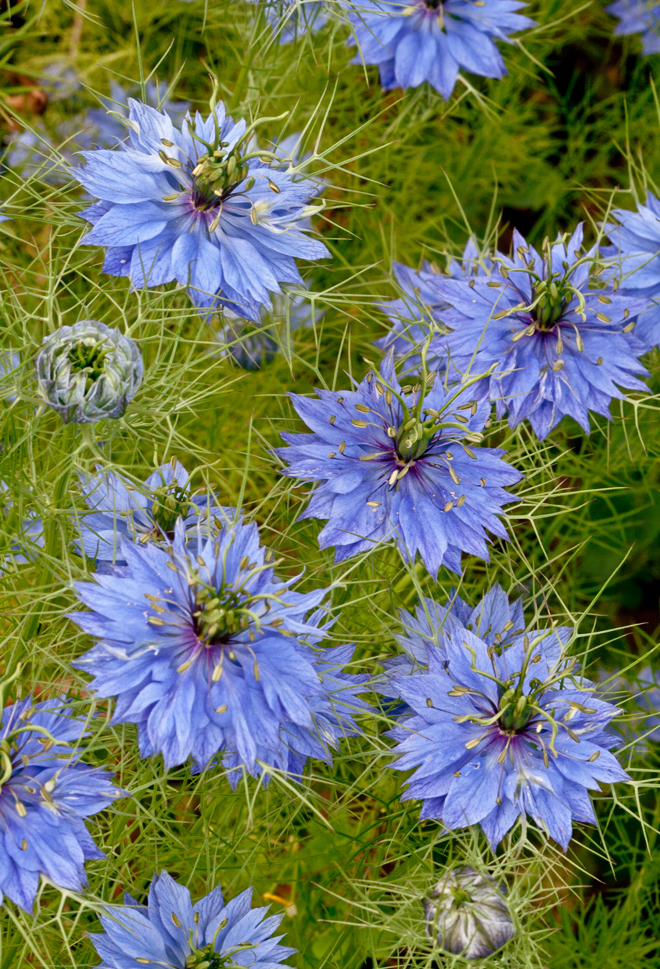
This cluster of Love-in-a-mist (Nigella damascena), one of my favorite flowers, was so striking that I decided to try to capture the grouping, even though usually when I take photos of flowers, I focus on a single blossom.

Framing the shot was a challenge, as I struggled to find a plane and camera settings that would keep most of the flowers in focus. I’m pretty happy with the result and I did only a slight amount of cropping to get this final image.

I grew up in the era of what is known now as classic rock-and-roll and it seemed natural to borrow the title of a Led Zeppelin song for this posting. I can’t say that I remember too many of the lyrics, excepted the chorus of repeated “Wanna whole lotta love,” but some of the guitar playing was really memorable.

lofoflove_blog

Click on the photo for a higher resolution view.

Michael Q. Powell. All rights reserved

Read Full Post »

From a distance, I couldn’t tell why the stems of this plant were bright red in color, but when I got closer, I realized it was covered in little red insects. I think that these might be aphids, but I am not completely sure. There were ladybugs in some nearby plants, and if these are in fact aphids, the ladybugs may be in for a feast.

Does anyone have a better idea what kind of insects these are?

bugs_blog

Michael Q. Powell. All rights reserved

Read Full Post »

What do you get when you place two six year old boys in an outdoor environment filled with cicadas? You get a whole lot of energy and excitement. One of the boys came running up to me with a cicada perched on his fingertip and almost desperately asked me to take his picture. How could I refuse a request like that?

I decided that the best backdrop for the cicada was the colorful t-shirt that he was wearing. I am not sure exactly what was displayed on the shirt, but it seemed to be some sort of monsters and superheroes, which somehow seemed to be appropriate.  Be sure to click on the photo to get a higher resolution of the cicada, which is a really cool-looking insect (in a slightly creepy way).

boy_cicada_blog

Michael Q. Powell. All rights reserved

Read Full Post »

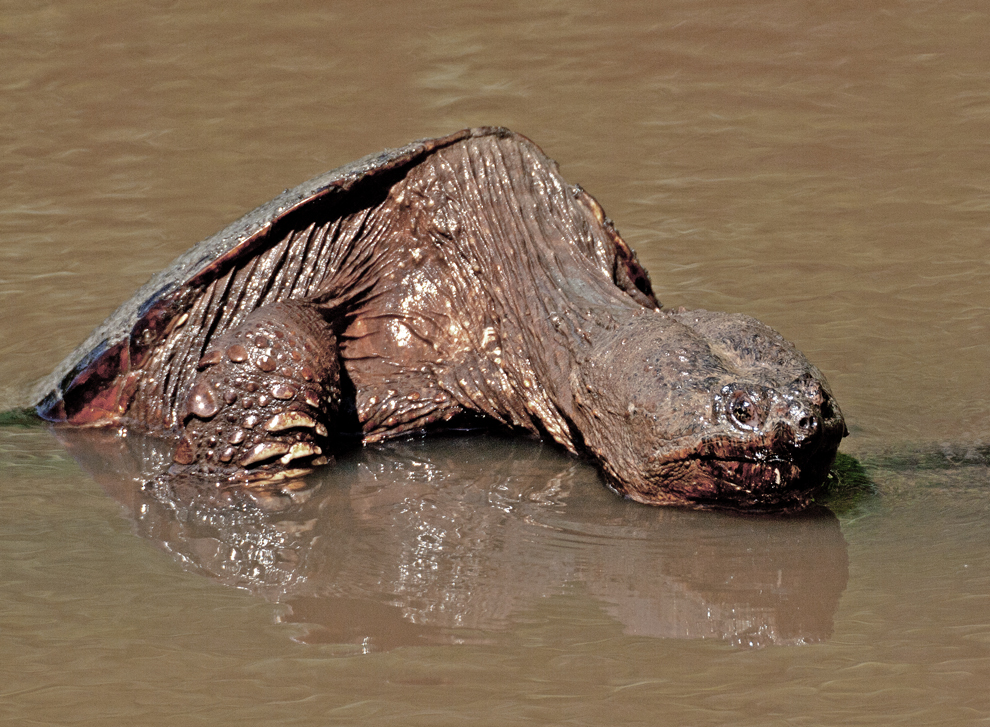
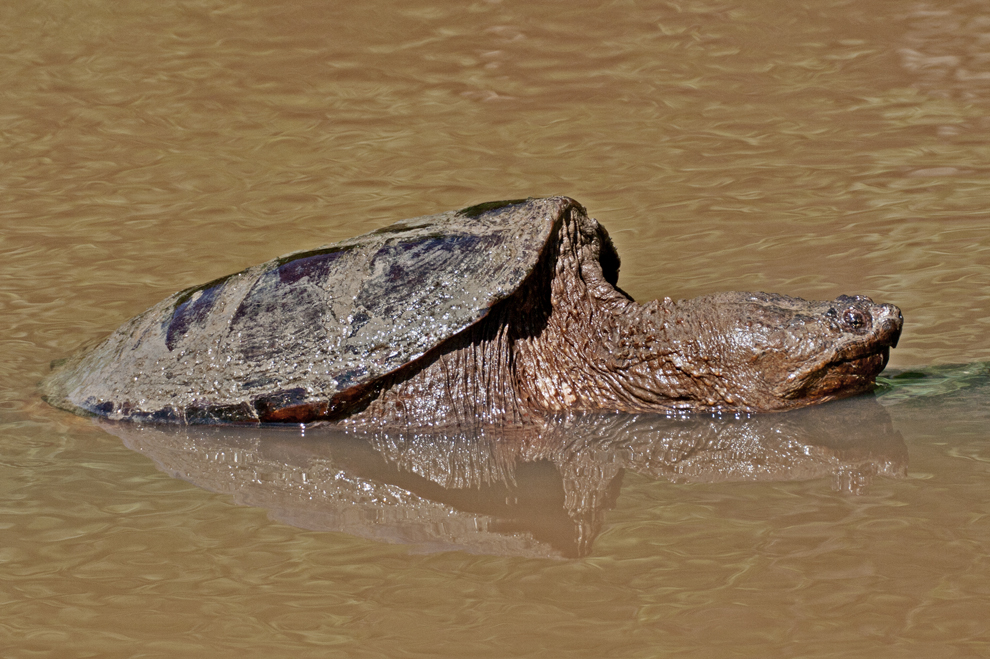
It may be hard for this snapping turtle to climb the ladder of success, when he had such difficulties merely getting himself onto a floating log. It would be understatement to note that Eastern Snapping Turtles (Chelydra serpentina serpentina) are not exactly graceful when they pull themselves out of the water (and even in the water, they seem a bit clumsy).

I read somewhere on-line that snapping turtles—unlike most other turtles—generally do not bask in the sun out of the water. Therefore, I was a little surprised when this turtle swam up to the log and began his attempt to climb onto it. It was like watching a movie in slow motion as he struggled and strained to pull his body up out of the water.

The first image shows him taking a break after making it halfway to his goal. I love the details of his visible front leg and all of his wrinkles. In the second shot, he has achieved his objective and seems to be settling in for an afternoon nap in the sun.

I noted that the log is no longer floating out of the water as it was at the start.—apparently success weighs heavy on the victor.

snapper2_blogsnapper3_blog

Michael Q. Powell. All rights reserved

Read Full Post »

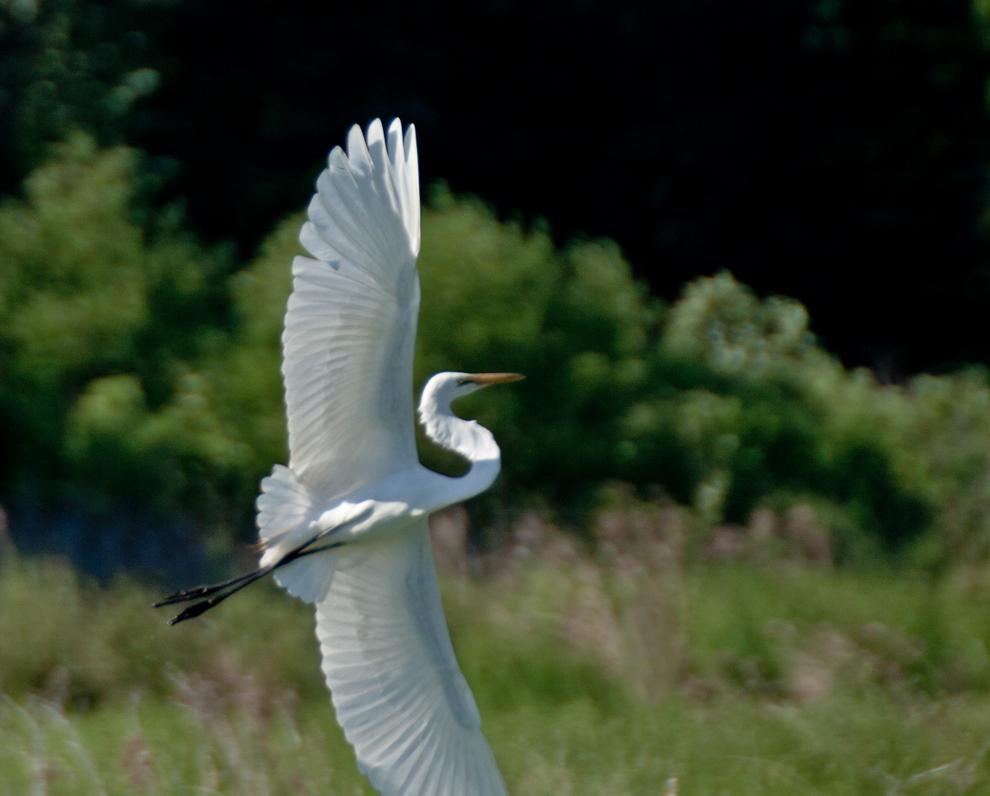
Although I observed as many as eight Great Egrets (Ardea alba) foraging at the same time in my local marshland park this weekend, they were mostly in the distance, but I came up one that was closer and got these shots as it was taking off.

The Cornell Lab of Ornithology notes that these birds have “impressive wingspans,” and I was really treated to a display of those wings. The wings were spread so wide, in fact, that I couldn’t fit them entirely in the frame in the first photo. The impressive set of wings in the second photo remind me of those were associated with Pegasus, the mythological winged horse.

egret_wings2_blogegret_wing1_blog

Michael Q. Powell. All rights reserved
Read Full Post »

Like Paul Revere’s call in 1775, the cry went out in early May, “The cicadas are coming, the cicadas are coming.” After 17 years in the ground, the cicadas of Brood II  (Magicicada septendecim) were coming back in force. The Washington Post ran a story with the sensationalist headline of Bug-phobic dread the looming swarm of Brood II cicadas” and hysteric anticipation gripped the metro D.C. area.

Like most of the snowstorms forecast in this area, the invasion of the cicadas has been underwhelming. I had not seen a single cicada until I traveled to Manssas, VA for a cookout and the got to see and hear a large number of these scarey-looking insects. Apparently we are past the peak moments, but the noise in some places was just short of deafening and there were some bushes that were covered with the giant insects.

I was struck by the contrast between the fierce look of this cicada and the delicate beauty of the purple iris on which he was perched.

beast1_blog

Michael Q. Powell. All rights reserved
Read Full Post »

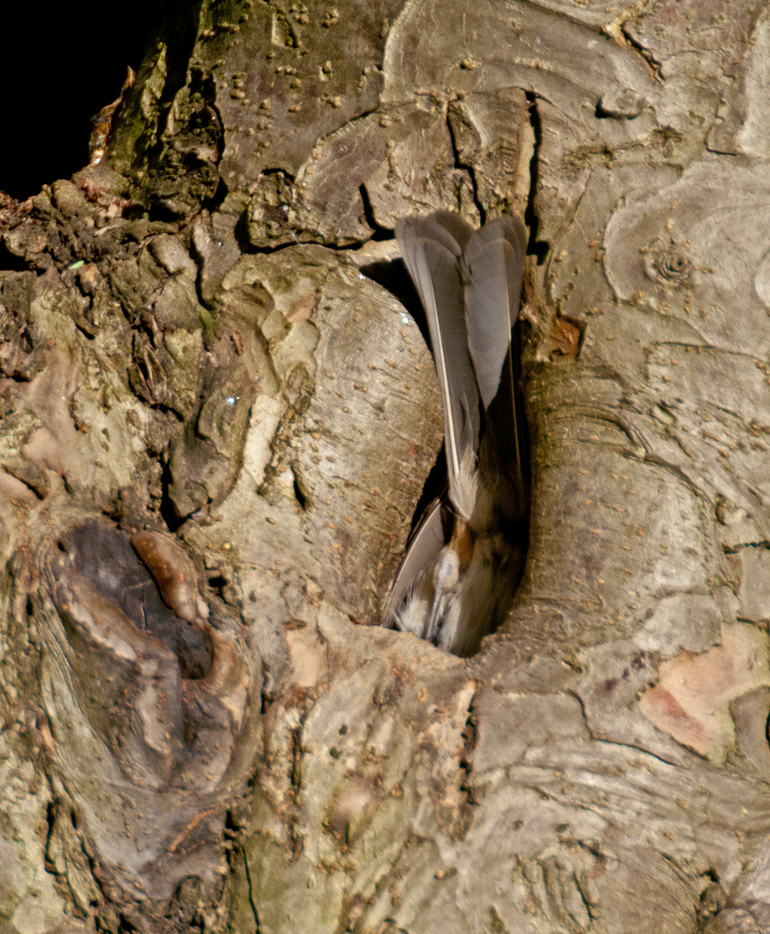
As I stalked the nest of the rescued baby bird featured in a posting last week, hoping to catch sight of its parents, I took this shot. Can you identify the bird from this photo of it entering the nesting cavity?

mom7_blog

Let me back off a little and explain. The nest in question is inside of a crabapple tree in the front yard of a neighbor’s house, about a yard or so (one meter) above the ground. There are two openings and you can sometimes see the baby birds’ heads pop up through the lower opening, which serves as a window. I learned that the upper opening serves as an entry door for the parents. This is one of my initial shots with my 100mm macro lens of the tree, with one of the parents entering the “door.”

mom9_blog

I came back at a later time with my 135-400mm lens and set up my tripod on the sidewalk and waited. It was mid-afternoon and the sun was shining almost directly into the opening, which complicated the exposure, but my patience was rewarded when the parents made multiple trips into the nest. This is another shot of one of them entering the nest, which you can see is a pretty tight squeeze.

mom5_blog

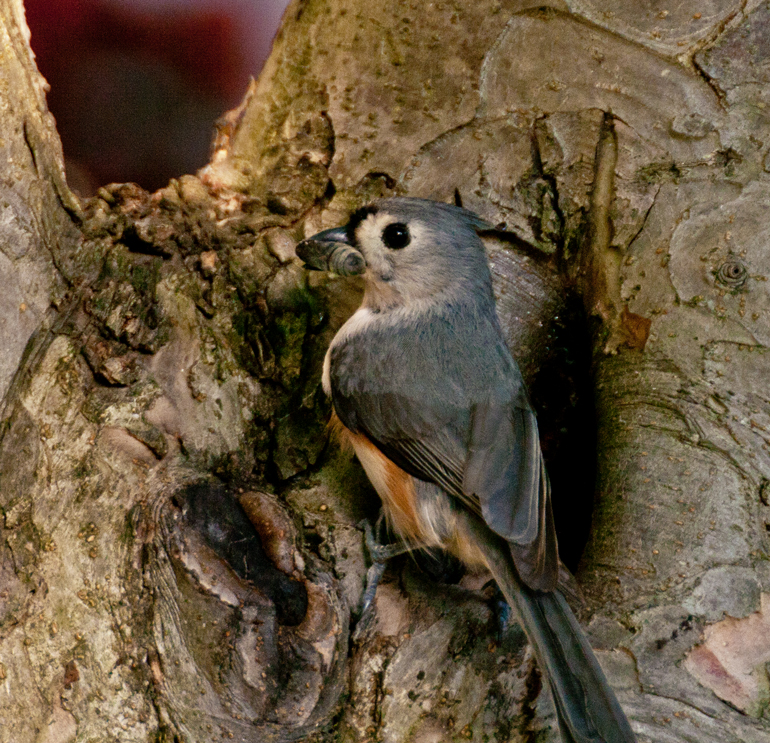
I am not that great at making bird identifications from the rear, so my job was greatly facilitated when one of the birds paused and turned to the side prior to entering the nest. The mystery birds are Tufted Titmice (Baeolophus bicolor). I can’t quite figure out what the little bird has in its bill, but assume that it is something edible. Can anyone else tell what it is?

mom1-BLOG

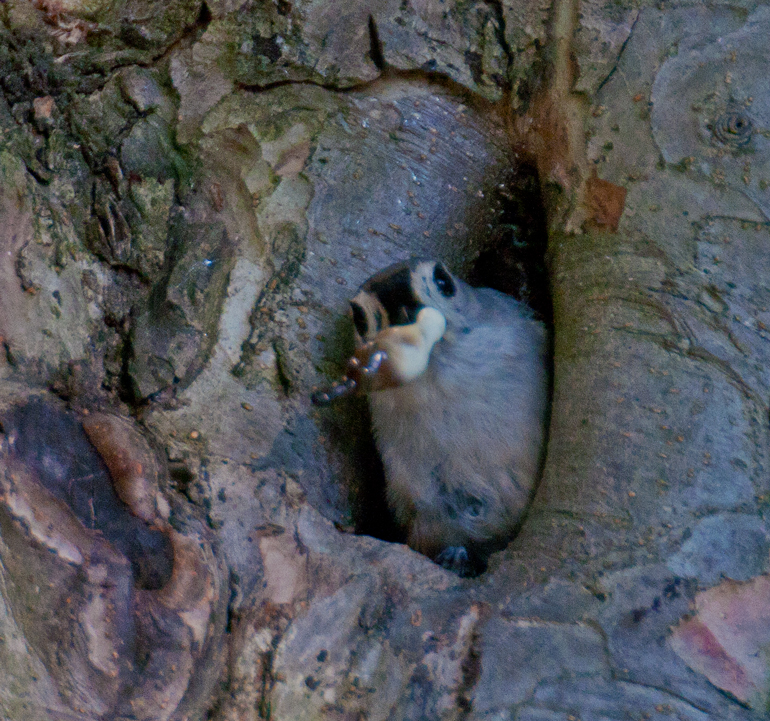
Timing was tricky as I tried to maintain my focus and the sidewalk was not all that comfortable. (I should bring a cushion next time.) Sometimes the parents would signal their imminent arrival with a call, but sometimes they would fly in out of nowhere. I attempted to capture the birds flying in and then flying out of the nest. Here is one of the few shots I was able to get of one of the parents preparing to leave the nesting cavity.

mom2_blog

Sometimes when processing my photos, I come across one that I really like, even though it has all kinds of technical problems. I decided to end this posting with such a photo. The bird has already flown out of focus, but is clearly visible and is casting a cool shadow just below the entry into the nest.

mom6_blog

Michael Q. Powell. All rights reserved

Read Full Post »

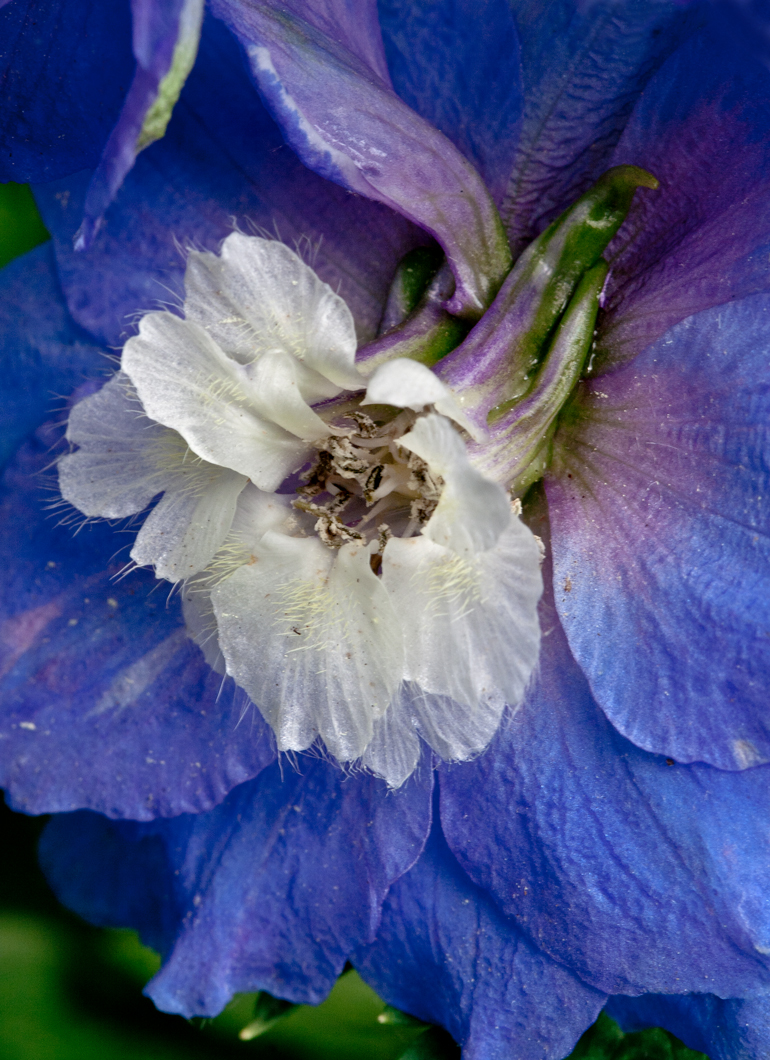
Whenever my neighbor has new flowers popping up in her garden, she invariably invites me to come and photograph them, and this close-up shot of a blue delphinium is my newest capture.

The neighbor in question is Cindy Dyer, a noted flower photographer and fellow blogger, and I thinks she almost always chooses photogenic flower species to plant. Check out her blog to see some gorgeous shots of all kinds of flowers. (She also is the one who got me started shooting regularly and has been an endless source of inspiration and encouragement for my photography.)

I love the beautiful color of this flower, which is pretty small, and the different textures that you can see in this shot.

delphinium_closeup_blog

Michael Q. Powell. All rights reserved
Read Full Post »

Yesterday was cloudy and rainy and the wildlife seemed to have sought shelter, but I spotted one bird circling over the largest body of water at my marshland park. Judging from the way that it flew, I initially thought it might be some kind of seagull.

From different angles, though, it looked a little bit like some kind of a hawk. I managed to get some photos of the various wing positions while the bird was flying and find them to be fascinating. Eventually I got a somewhat blurred shot of the entire bird and have concluded that it probably is an osprey (Pandion haliaetus), a bird that I have never before encountered, but definitely one I hope to see again in the near future.

osprey1_blogosprey5_blogosprey3_blogosprey4_blogosprey2_blog

Michael Q. Powell. All rights reserved

Read Full Post »

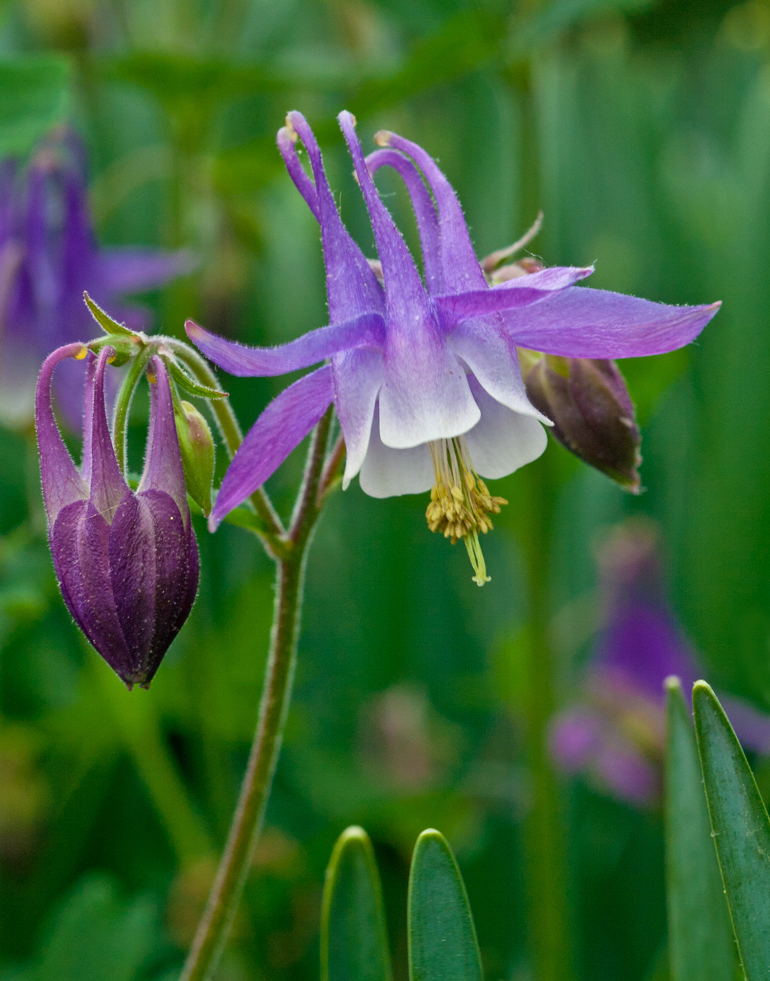
There are a lot of columbines blooming now at a local garden and I can’t keep from photographing them every time that I am there.

I especially like this shot because it shows blooms at various stages of development on the same stem. It’s fascinating for me to be able to see how the shape and color of the flower change as the blooms mature.

purple_blog

Michael Q. Powell. All rights reserved

Read Full Post »
« Newer Posts - Older Posts »