Feeds:
Posts
Comments

Posts Tagged ‘Canon 70-300mm telephoto zoom lens’

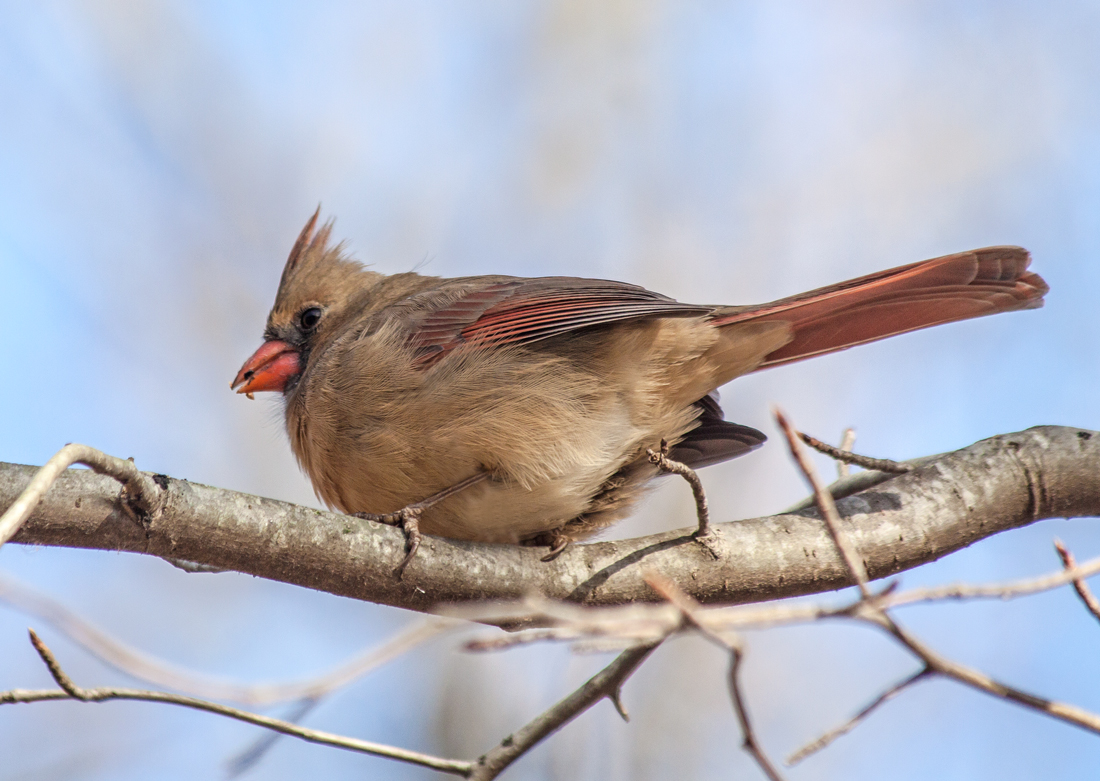
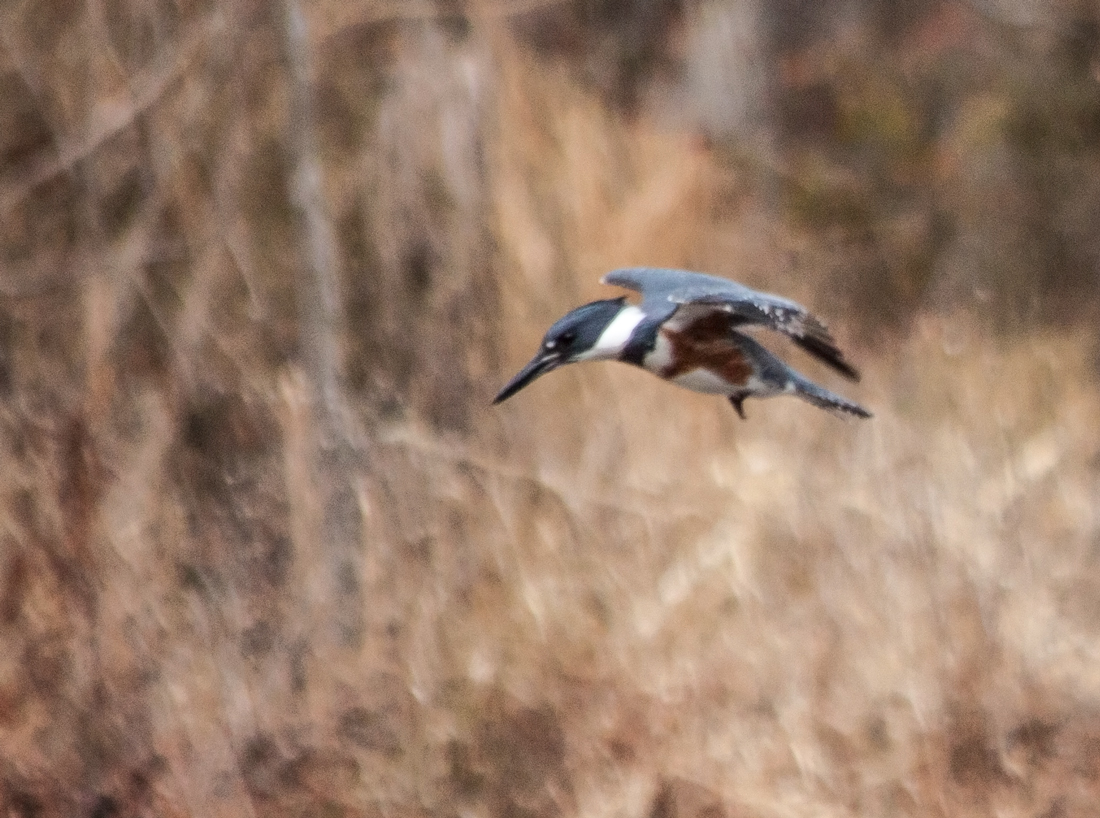
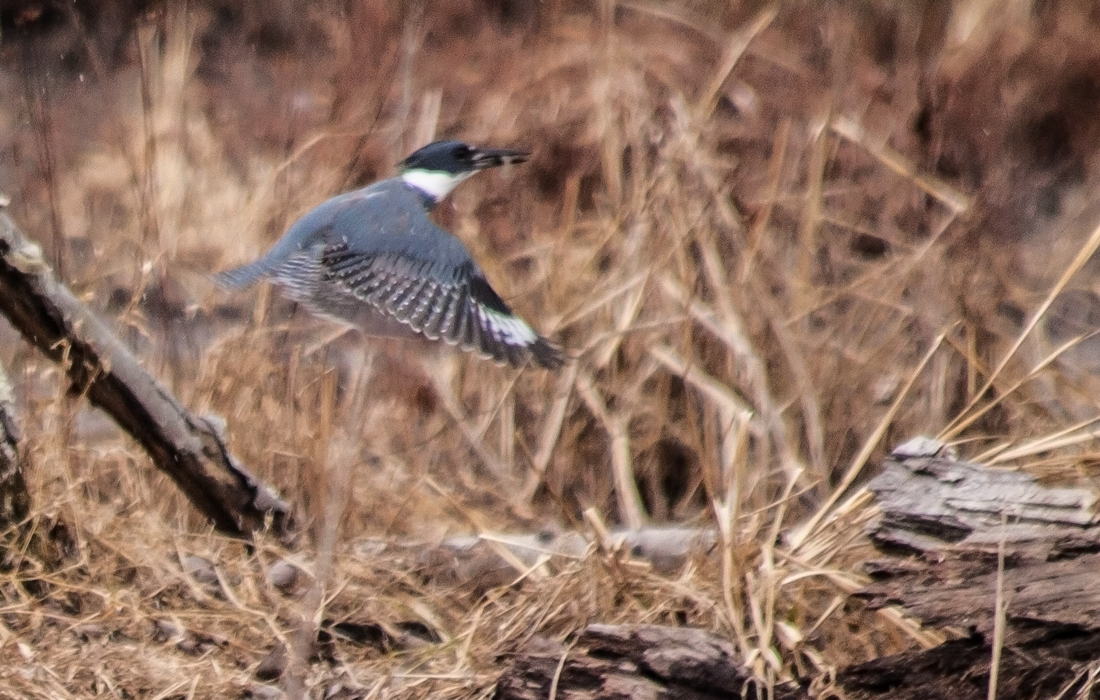
This past week I have observed female Belted Kingfishers (Megaceryle alcyon) at a couple of different locations at my marshland park and tried to capture them in flight as they dove into the water from their perches in the trees. It was challenging, because the kingfishers were pretty far away, but I did get a couple of decent shots (with a fair amount of cropping).

kingfisher4_dec_blogkingfisher1_dec_blogkingfisher2_dec_blogkingfisher3_dec_blog

© Michael Q. Powell. All rights reserved

Read Full Post »

Like a sprinter, this Canada Goose (Branta canadensis) seems to be lunging forward toward a finish line, pushing hard to be the first to break that invisible tape.

leaning_blog

© Michael Q. Powell. All rights reserved.

Read Full Post »

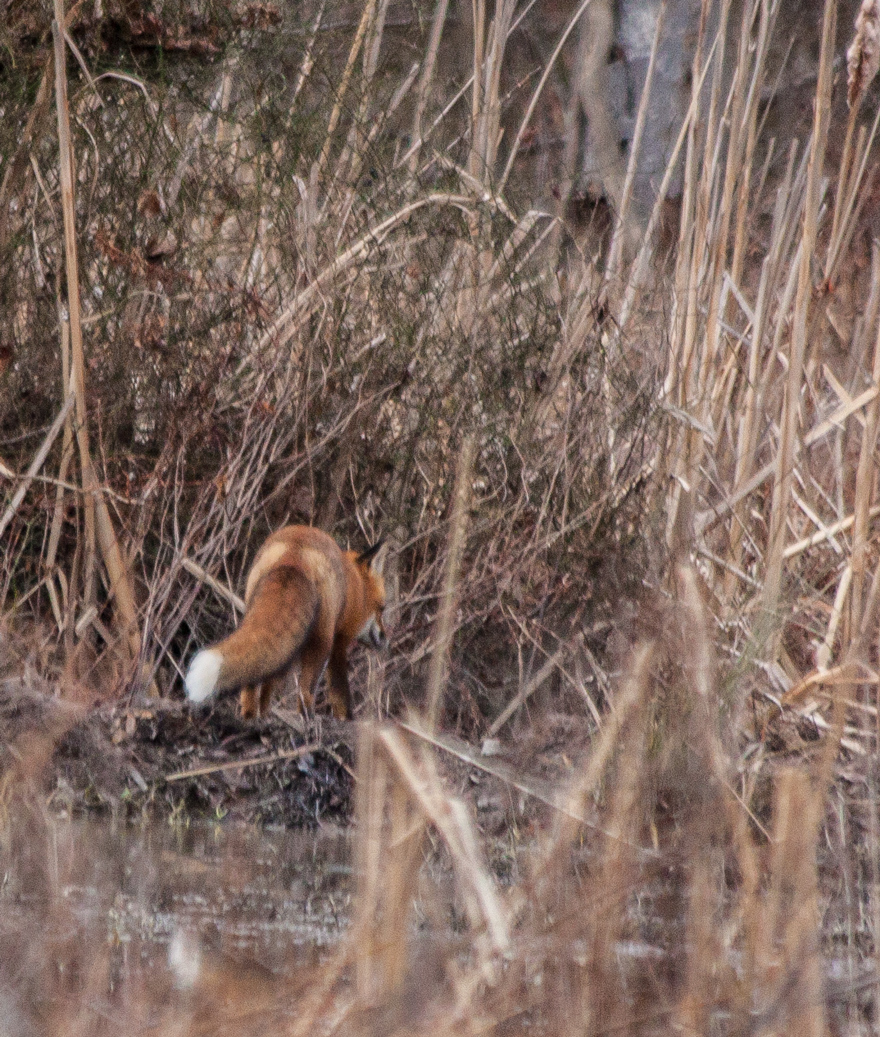
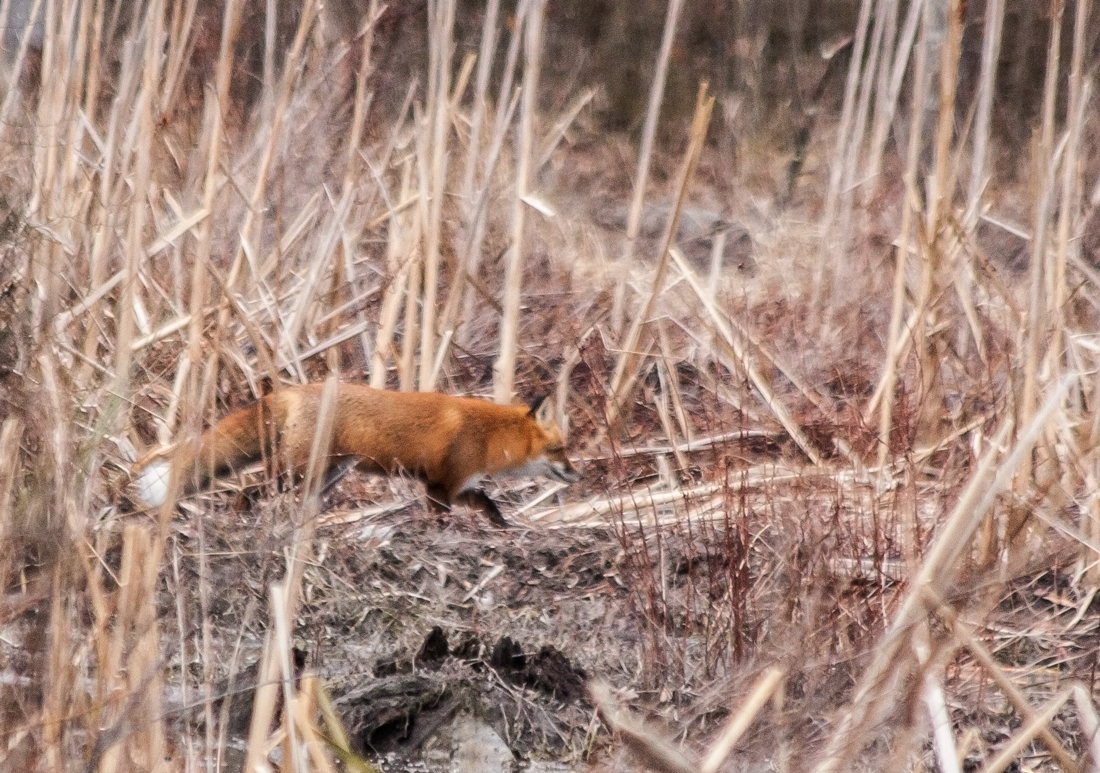
I continue to be amazed at the diversity of the wildlife at Huntley Meadows Park, the local marshland park where I capture most of my wildlife photos. Monday, as I stood at the spot where I had previously spotted an otter, I caught a glimpse of this beautiful red fox (Vulpes vulpes) as it walked around part of the perimeter of a beaver pond.

This was the first time that I had seen a fox in the wild and the wonderful red coloration was breathtakingly beautiful. I was amazed too at the bushiness of the tail. Wow!

The first photo was actually the last one in the sequence, but I really like the way that it helps to show you the setting, with the cattails surrounding the beaver pond (there are woods beyond the cattails).

fox4_blog

fox1_blogfox2_blogfox3_blog

© Michael Q. Powell. All rights reserved.

Read Full Post »

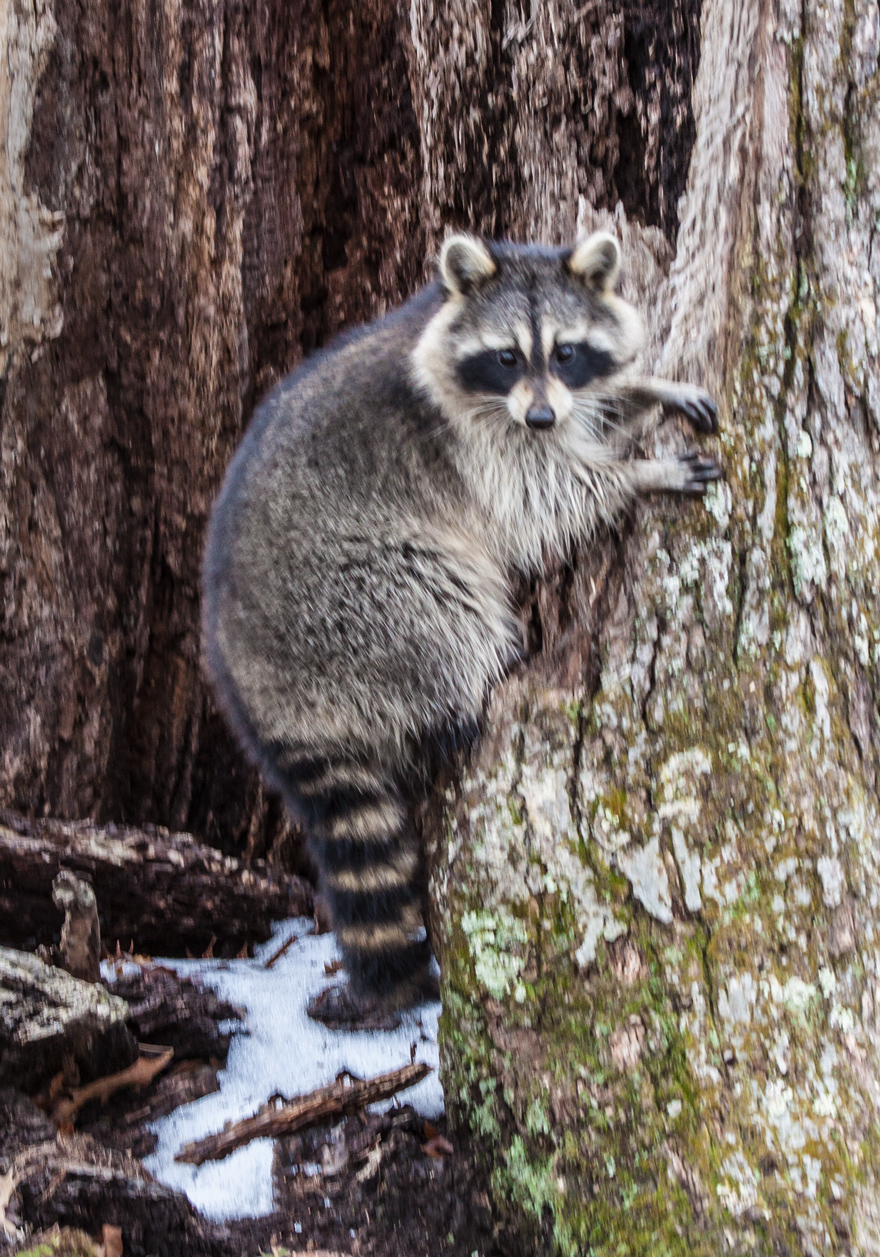
Yesterday, I returned to the pond where I had previously seen the river otter, hoping to see it again. As I stood silently at the water’s edge, I heard something pretty big moving about in the underbrush, something that seemed to be bigger than an otter.

I was surprised to see a raccoon emerge—generally they are nocturnal and previously I had seen them only at twilight. The raccoon seemed to be rooting around, looking for food. He didn’t seem to be aware of my presence and as I watched it move about, I managed to get a few clear shots before it moved away into the deeper brush.

It you are of a certain age, you remember the fun little Beatles song “Rocky Raccoon”—every time that I see a raccoon, that song comes to mind.

racoon_blog

© Michael Q. Powell. All rights reserved.

Read Full Post »

Peering through my telephoto lens at this tiny bird, I couldn’t help but smile—its energetic personality, round body, and tiny wings and tail were cartoon-like.  It looked like a wren, but it certainly didn’t resemble the Carolina Wrens that I am used to seeing.

I did a little research and have concluded that this is probably a Winter Wren (Troglodytes hiemalis). According to the Cornell Lab of Ornithology, these little birds are “incomparably energetic in voice” and per unit weight deliver their songs with ten times more power than a crowing rooster. I can only imagine groups of scientists with tiny scales and microphones conducting the research to back up that statement.

I noted on the statistics page of my blog that this will be posting number 1,000. I never imagined how much I would come to enjoy the process of blogging when I started this blog on July 7, 2012 with a photo of a Blue Dasher dragonfly. The support and encouragement from innumerable readers has helped to sustain me on my journey into photography. Thanks to all of you.

The journey continues.

winter_wren2_blogwinter_wren1_blog

© Michael Q. Powell. All rights reserved.

Read Full Post »

In the weak early morning light, the sky and the water merged together, providing an uncluttered backdrop for this portrait of a Great Blue Heron.

I’ve taken quite a few photos of Great Blue Herons (Ardea herodias), but rarely have I encountered one as cooperative as this one was early on Monday morning. He looked to be cold and may have been trying to snooze as he huddled near the edge of the boardwalk. He let me get pretty close to him and didn’t seem to object to my presence, though he did follow me with his eyes. As a result of his tolerance, I was able to capture more detail in the heron’s feathers than I usually can manage.

After a few shots, I left him in peace to catch a few more winks.

heron_morning2_blog

© Michael Q. Powell. All rights reserved.

Read Full Post »

On Monday I was checking out what looked to be a beaver lodge at one of the ponds at my local marsh, when suddenly a head popped out of the water. It was not a beaver–it was a Northern River Otter (Lontra canadensis laxatina). I was amazed (otterly amazed, you might say), but had the presence of mind to capture the moment with my camera.

I had been told that otters occasionally had occasionally been sighted at the park and that very day I overheard part of a conversation about otter scat, but I never expected to actually see an otter myself. (The conversation revolved around some scat on the boardwalk, and how it was almost certainly from an otter, because of the fish scales and shells in in it).

The otter turned his head in all directions, surveying the situation. Then all too quickly, the otter submerged itself and swam away.

otter1_blogotter2_blog

© Michael Q. Powell. All rights reserved.

Read Full Post »

Even when the weather is cold and overcast, I can usually count on finding sparrows in the marsh and in the field, cheerfully pecking about in the undergrowth. Their positive, hard-working approach and predisposition to spontaneously breaking out in song never fails to lift my spirits.

I have gotten to the point where I can identify some sparrows, but many of them continue to confound me. I think the one in the first photo is a Swamp Sparrow (Melospiza georgiana), but I am not sure of the identity of the rotund little sparrow in the second photo.

I remember when I used to categorize all sparrows as “little brown birds,” but have grown to appreciate their beauty and individuality.

sparrow2_dec_blogsparrow1_dec_blog

© Michael Q. Powell. All rights reserved.

Read Full Post »

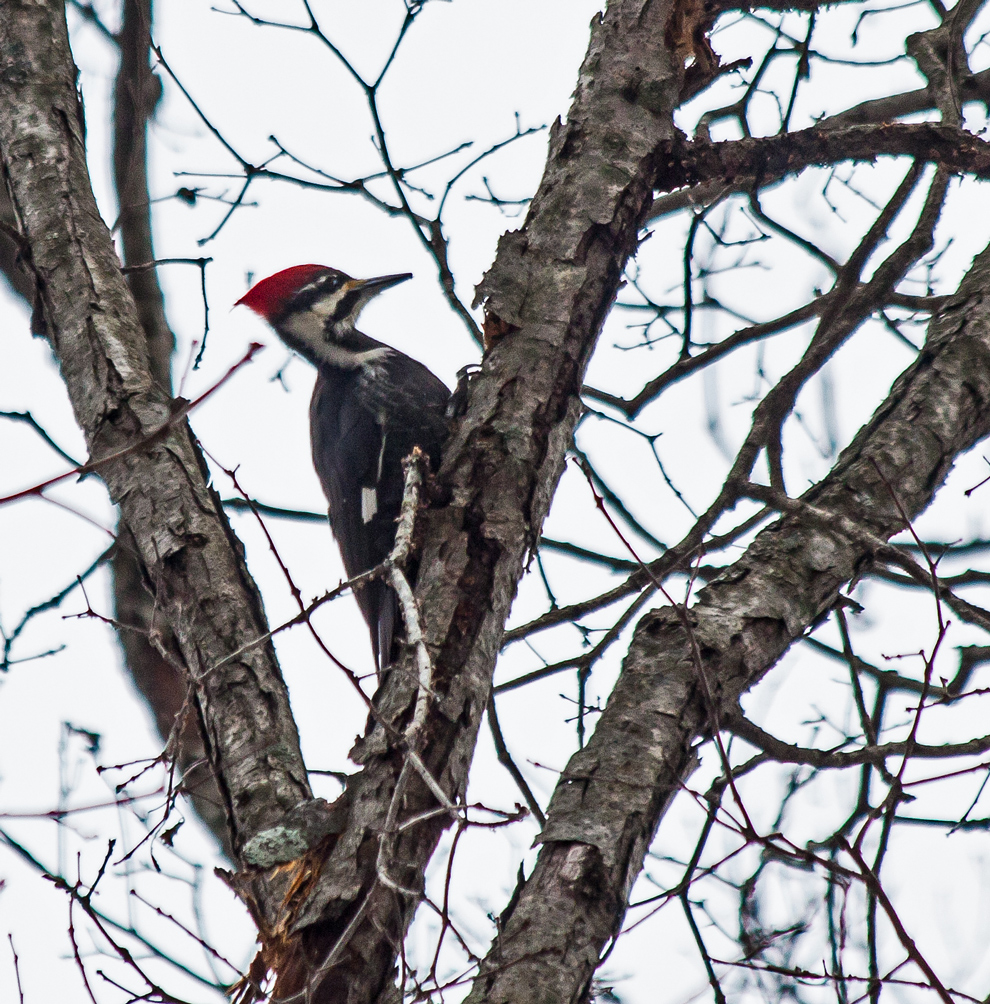
Do you have a list of subjects that you really want to photograph? I do and ever since I caught sight of a Pileated Woodpecker (Dryocopus pileatus) through the window of the visitor center of my local marshland park, I have been possessed with an overwhelming desire to photograph one. That first time, the woodpecker was hanging from a suet feeder usually used by nuthatches and Downy Woodpeckers and I was impressed by its size and its beauty.

Last month, a year after the initial sighting, I finally got a photo of one and featured it in a posting My First Pileated. The photo was a little blurry and the bird was partially obscured by branches, but it was clearly a Pileated Woodpecker. This past Saturday, I came upon another one as I was walking through the woods. Not surprisingly, I heard the woodpecker before I caught sight of it high in the trees, barely visible.

The dry leaves crackled loudly as I tried to get closer to the woodpecker and it flew to other trees several times during this protracted process. I had heard from others that Pileated Woodpeckers sometimes work on fallen logs, but this one never left the higher reaches of the trees. Eventually it flew out of sight.

I ended up with a slightly better photograph of a Pileated Woodpecker, but am confident that I can do much better this winter as I continue to stalk “big game,” which for me includes this woodpecker, hawks, and maybe even an owl.

pileated_dec_blog

© Michael Q. Powell. All rights reserved.

Read Full Post »
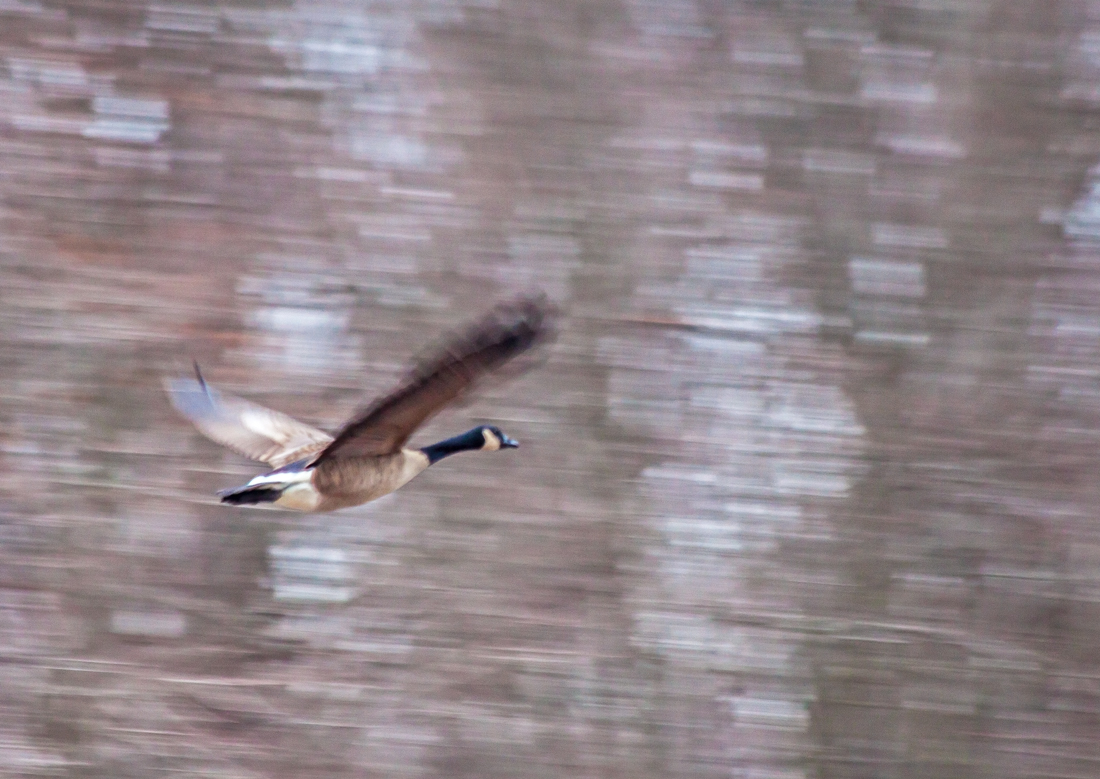
How do you capture speed? Sometimes I will pan the camera and track the moving subject, as I did yesterday with the flying Canada Goose (Branta canadensis). Usually the background is a little blurry, but this time the background became abstract, almost like a painting, an effect that I really like.

What happened? Generally, I shoot in aperture priority mode and I had my camera set on f/5.6, as wide open as I could get at the far end of my telephoto zoom. The weather was cold and gray with the threat of precipitation—it eventually rained for hours—so I set my ISO to 500. It turned out that I would have needed a much higher ISO to stop the motion completely, for my camera provided me with a shutter speed of only 1/60 of a second. That is why there is some motion blur in the wings.

goose_pan_blog

© Michael Q. Powell. All rights reserved.

Read Full Post »
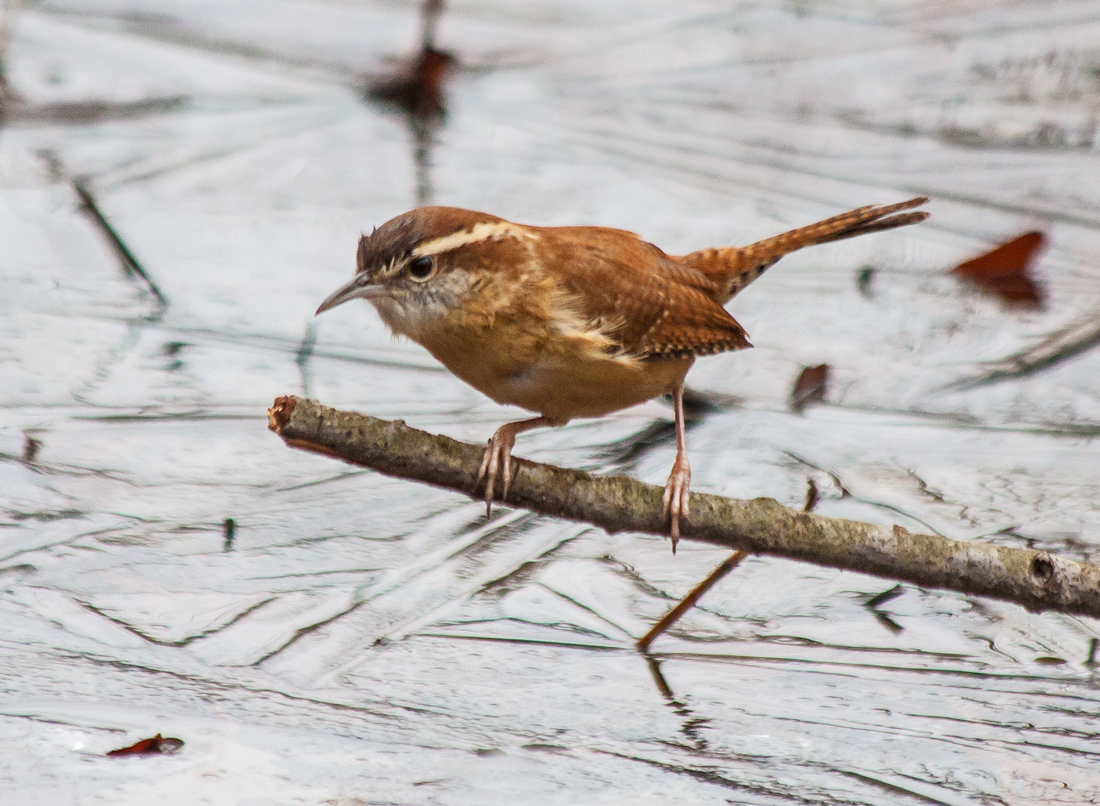
Back home from a week overseas in Vienna, I felt the need to reconnect with nature and headed off to the marsh at Huntley Meadows Park early this morning. The weather was cold and gray, but I was able to get some shots of birds, like this Carolina Wren (Thryothorus ludovicianus), surveying the frozen pond from an overhanging branch.

It’s nice to be home.

wren_dec_blog

© Michael Q. Powell. All rights reserved.

Read Full Post »

It rained all day yesterday, so it was especially nice to see the sun rise this morning. I didn’t get a photo of today’s sunrise, but thought I would share this shot from two week’s ago.

I was sitting at my computer in my bedroom in the top floor of my townhouse, early in the morning, when I happened to glance out the window. The colors of the sunrise were spectacular in the distance. Although the temperature was close to freezing, I ran out of the house with flipflops on my feet to try to capture the fleeting effects of the rising sun. I searched for a gap in the trees and the townhouses and managed to get this image at a moment after the sun had risen (I missed the peak moment), when the sunlight was reflecting off of the clouds.

suburban_sunrise_blog

© Michael Q. Powell. All rights reserved.

Read Full Post »

This Turkey Vulture (Cathartes aura) was circling around me last week, so I followed the advice given to me by one of my fellow photographers—I made sure that I moved periodically as I captured shots of this large bird with an impressive wingspan.

I will be away from home on a business trip starting tomorrow and I am not sure how often I will be able to update my blog. I wanted to alert readers in case they are concerned if they don’t see any movement for me for a number of days—the vultures probably have not made a meal of me yet. turkey_vulture6_blogturkey_vulture5_blogturkey_vulture4_blogturkey_vulture3_blog

© Michael Q. Powell. All rights reserved.

Read Full Post »

Do you ever sit by a window and daydream as you look out into the world with unfocused eyes? Somehow that was what came to mind when I spotted this Mourning Dove (Zenaida macroura) perched on a branch, framed by the trees. The dove seemed gentle and pensive, unlike so many of the birds (and people) in this area that are so driven, always intense and tense.

There is a real value in slowing down and daydreaming more in order to recharge my creative batteries. Sometimes I need a gentle reminder.

dove_framed_blog

© Michael Q. Powell. All rights reserved.

Read Full Post »

I looked up at her from below and then she cocked her head and looked down at me. Our eyes met and we shared a brief, magical moment together. Then it was over, my all-too-short encounter with a beautiful female Northern Cardinal (Cardinalis cardinalis).

cardinal_looking_down_blog

© Michael Q. Powell. All rights reserved.

Read Full Post »

Although it is exciting to search for new birds or for unusual interactions, I love to return to familiar subjects, like this male Red-winged Blackbird (Agelaius phoeniceus) that I photographed last week.

There is nothing complicated about this image, a blackbird perched on a cattail, but the small details make it special for me. I like the angled body and the turned head. The feathers seem unusually glossy and the eye is shiny too. There are a few wispy feathers that are matched by the “fluff” from the cattail. The background is brown, but there are a wide variety of shapes and shades.

What does it take for you to be satisfied as a photographer? For now at least, I am content to stay relatively close to home and photograph whatever I can find as well as I can. Life doesn’t have to be complicated all of the time.

blackbird_turned_blog

© Michael Q. Powell. All rights reserved.

Read Full Post »
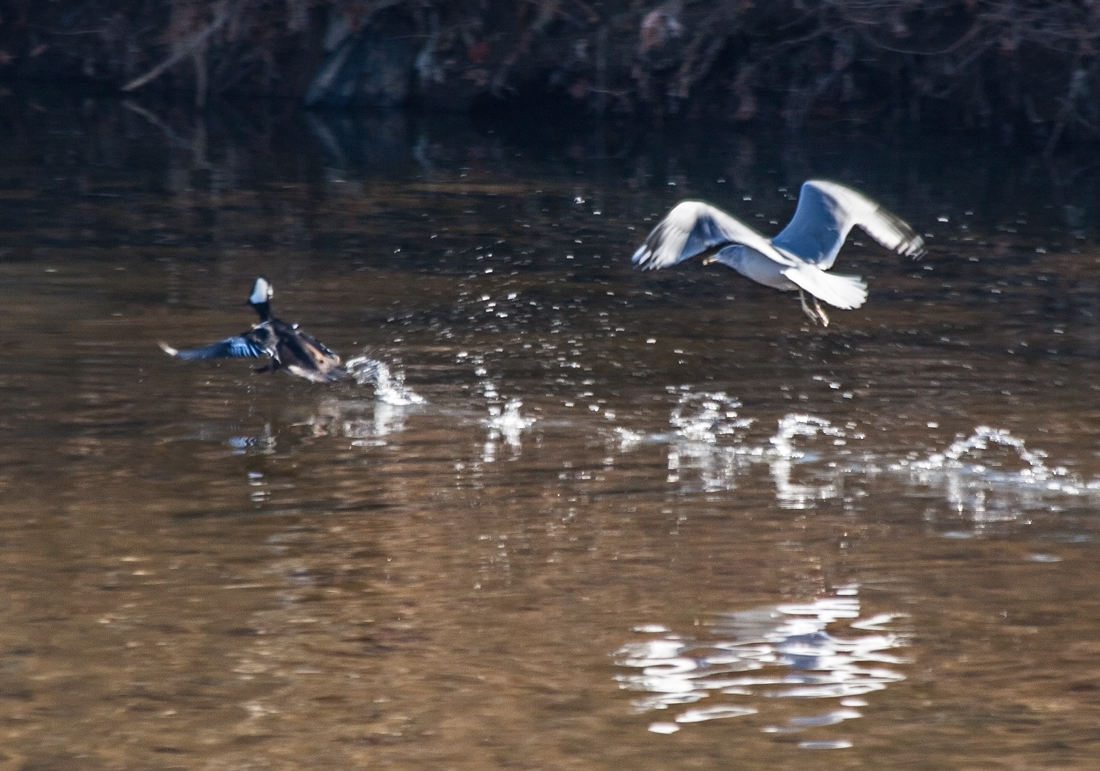
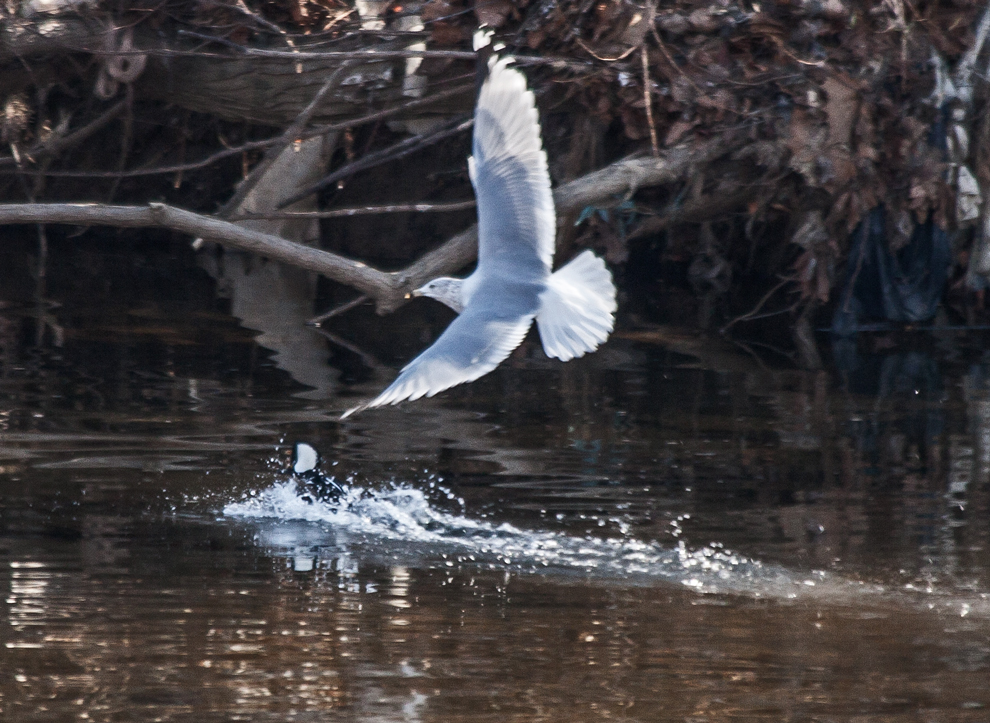
Do seagulls hunt ducks? That’s a crazy question, but that was the first thing that came to mind when a Ring-billed Gull (Larus delawarensis) started aggressively chasing a Hooded Merganser duck (Lophodytes cucullatus) with what appeared to be hostile intent.

I was walking along Cameron Run, a tributary of the Potomac River, when the scene started to unfold in front of me. The gull flew toward the dusk with its legs extended, like it was trying to snatch the duck out of the water. The duck immediately started bounding across the water (as you can see in the third photos) in an effort to escape the gull, but did not take to the air. When the duck got close to the bank of the stream, the gull turned away and left the duck in peace.

Was this merely a cranky gull or maybe a bully? Was it a territoriality thing? All I know is that it provided me a fascinating moment as I treated to a brief interaction between these two very different species of birds.

gull_chasing_duck3_bloggull_chasing_duck1_bloggull_chasing_duck2_bloggull_chasing_duck4_blog

© Michael Q. Powell. All rights reserved.

Read Full Post »
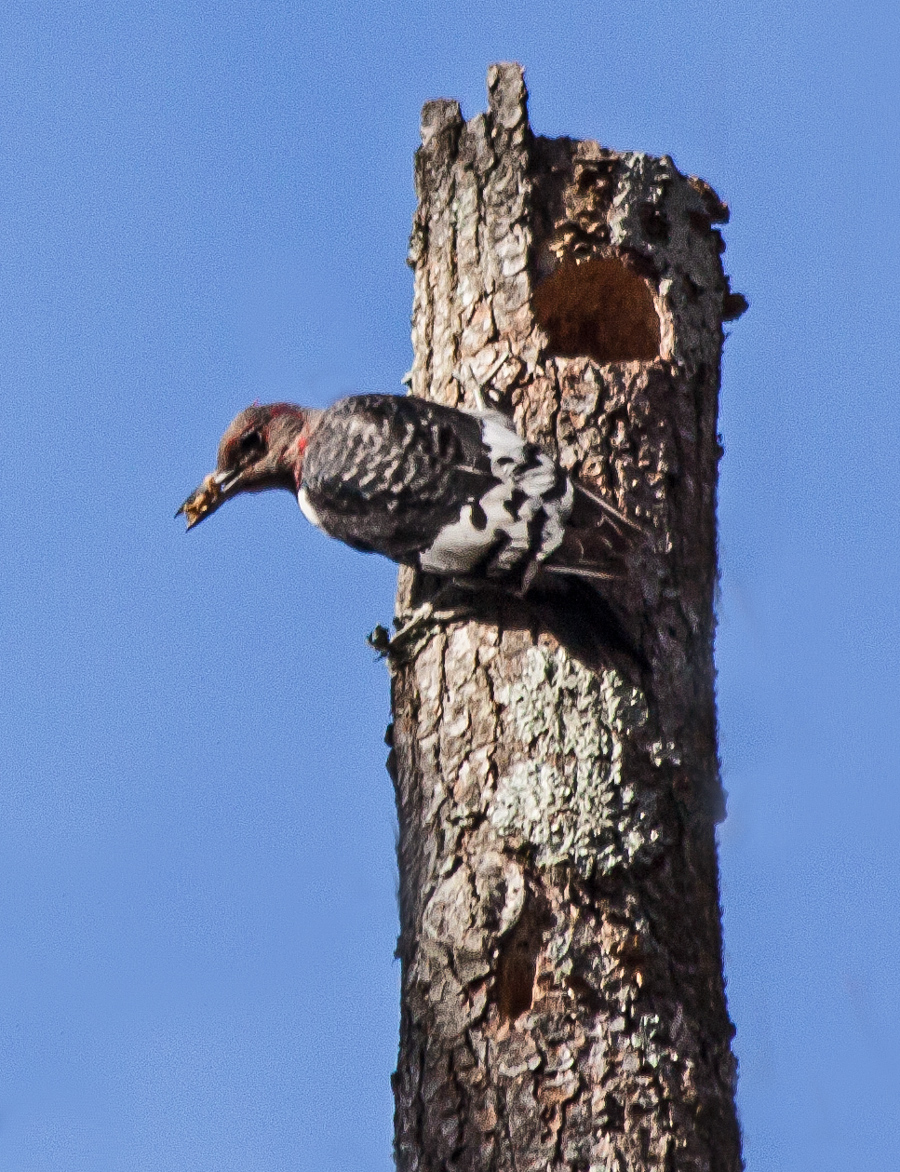
I suspect that I may qualify as a stalker, because I spent over thirty minutes on Friday sitting on a fallen tree, observing every movement of a juvenile Red-headed Woodpecker (Melanerpes erythrocephalus) high in the oak trees.

The small branches and the shadows made it almost impossible to get a clear shot of the little bird, but they did not keep me from trying. I was really fortunate to get this shot of the woodpecker as it took off from one of its perches with an acorn in its mouth and gave me a glimpse of its beautifully-patterned wings. As I understand it, when the Red-Headed Woodpecker becomes an adult, its wings will be pure black and white, so I am glad that I was able to get the shot of the black dots.

After I posted this photo, I noticed that there is a least one acorn jammed into a crack in the bark just above the top edge of the bird’s tail, mostly likely a snack that it has cached for future consumption.

woodpecker_flying_blog

© Michael Q. Powell. All rights reserved.

Read Full Post »
Why was this Red-bellied Woodpecker (Melanerpes carolinus) pecking so feverishly at the top of this broken tree? It certainly did not look like a good spot to find insects.

A few seconds later, I got an answer to my unspoken question, when the woodpecker pulled an acorn out with its beak (at least that’s what I think it is). After a bit of research on the internet, I learned that these woodpeckers eat plant materials, like acorns, as well as insects and that they sometimes use cracks in trees to store food for use at a later time.

red_bellied1-blogred_bellied2_blog

© Michael Q. Powell. All rights reserved.

Read Full Post »

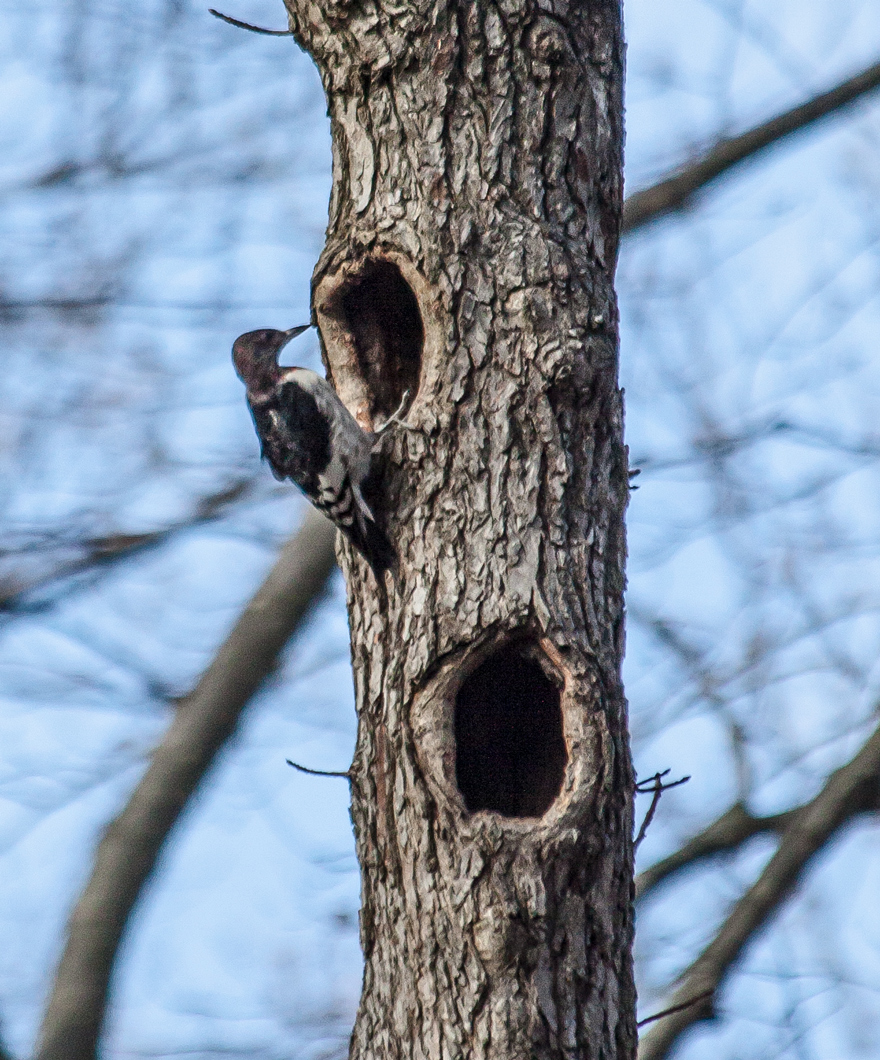
Wouldn’t you know it, I finally see a Red-headed Woodpecker (Melanerpes erythrocephalus) and its head is not red. It’s a juvenile one and if you look closely you can see a few traces of the spectacular red that it will eventually sport on its entire head.

One of the serious birders at my local marshland park identified the area in which two juvenile Red-headed Woodpeckers had been seen regularly and I was fortunate to spot one of them this past Monday. The woodpecker seemed to be carving out a cavity in the tree and actually climbed into the hole as it chiseled away the bits of wood. Earlier, I saw one of them in the distance at a nearby tree with two large cavities (see the third photo). The bird stuck its head inside one of the cavities and I couldn’t tell if it was checking out the hole or was storing food there.

The Cornell Lab of Ornithology notes that the Red-headed Woodpecker is one of only four North American woodpeckers known to store food, and it is the only one known to cover the stored food with wood or bark. These woodpeckers have a varied diet and will eat both insects, which they sometimes catch in the air, and a a number of plant materials, especially acorns.

I don’t know how long it will take for this bird’s head to turn red, but I will certainly be keeping an eye out for it, now that I have an approximate idea of its territory.

redheaded2_blogredheaded1_blogwoodpecker_cavity_blog

© Michael Q. Powell. All rights reserved.

Read Full Post »

“Do you want to go photograph some produce?” How was I supposed to respond to this question posed to me early in November by my photography mentor and fellow blogger Cindy Dyer? How exciting can produce be?

I have grown up in a world in which I buy my produce in a supermarket. That produce has been scrubbed and processed and transported from far away. I was pleasantly surprised when Cindy took me to Nalls Produce Center, a local produce market that has a wide variety of items that I have never seen in a supermarket. Who knew, for example, that pumpkins were not always orange with smooth skins?

I was pretty uncertain about how to photograph the produce, so I just concentrated on shapes and colors and textures.  It somehow seems appropriate to post this selection of photo on Thanksgiving Day, a day when Americans traditionally celebrate the bounty of the autumn harvest.

pumpkin_gray_blog

© Michael Q. Powell. All rights reserved.

Read Full Post »

I don’t often see deer in the daylight at my local marshland park, so I was a bit surprised last week when a doe came running out of the cattails and began to pick her way thought the ducks that were foraging in the shallow water. She was immediately followed by a smaller doe, who was also running.

What was going on? What had spooked these two deer? I didn’t have to wait long for an answer. A small buck emerged and started chasing the other two deer through the water.

I don’t know if they were just playing or if the buck had amorous intentions, but it gave me the chance to get a few shots of what passes as “big game” for me.

doe_big_blogdoe_little_blogbuck2_blogbuck_blog

© Michael Q. Powell. All rights reserved.

Read Full Post »

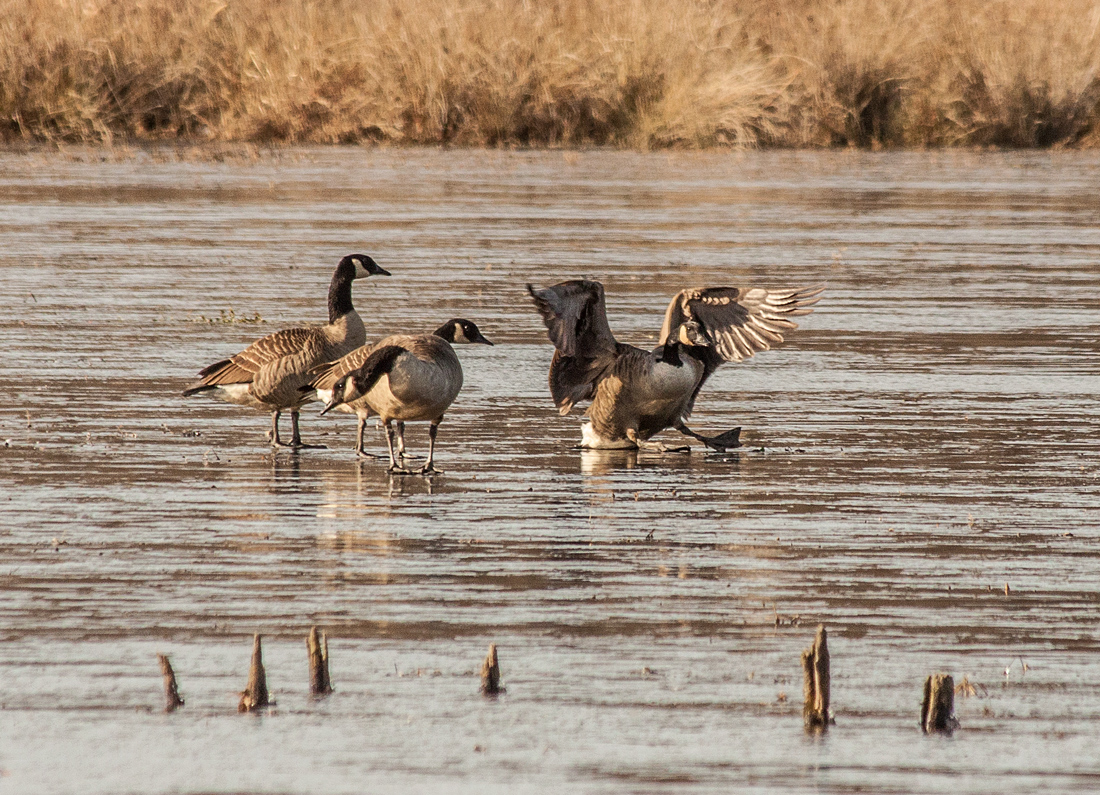
It was cold enough Monday that the pond at my local marsh froze over. The ice may not have been thick, but it complicated landings for migrating Canada Geese (Branta canadensis).

One goose slid to a stop by lowering its tail, as other geese watched with varying degrees of interest. It has warmed up a bit and we’ve had a lot of rain since Monday, so the ice is almost certainly gone by now, but I suspect that I will see this scene repeated as we move into winter.

slippery_landing_blog

© Michael Q. Powell. All rights reserved.

Read Full Post »

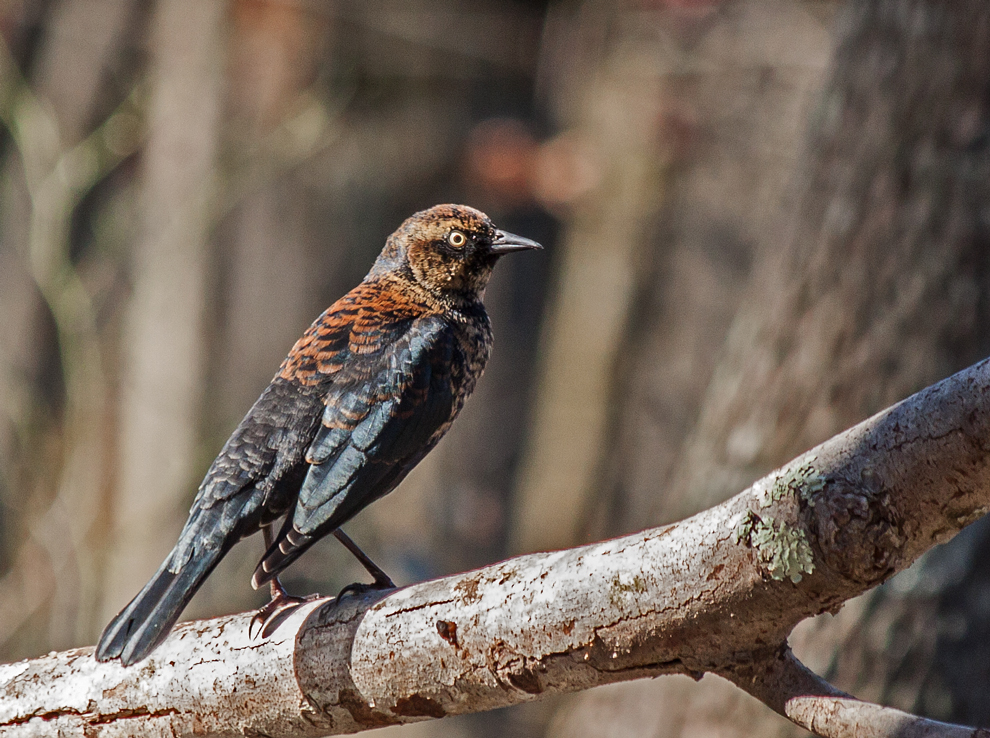
I encountered another small flock of blackbirds this past weekend and this time I managed to get a shot of a female Rusty Blackbird (Euphagus carolinus). If you want to compare the female with the male, check out my earlier posting with an image of a male.

I have now gotten used to the idea that these blackbirds are likely to be be found in the water and the mud, rather than in the cattails, where I usually find the Red-winged Blackbirds. I have also gotten used to the notion that female blackbirds are not black—that used to mess with my head.

What I have not gotten used to, however, is the pale yellow color of the eyes of the Rusty Blackbirds. There is something a little eerie and disconcerting about those eyes and I find them to be a bit creepy.

blackbird_rusty_female_blog

© Michael Q. Powell. All rights reserved.

Read Full Post »

It’s been months since I have seen any Hooded Merganser ducks (Lophodytes cucullatus), so I was thrilled when I spotted several pairs in the distance this past weekend, swimming around as shown in the second photo.

Unfortunately, they sensed my presence before I could get much closer and took to the air. Given the distance and the small size and speed of these ducks, I was surprised that I got a reasonably good shot of one of the males in flight. Hooded Mergansers always look a little cartoonish, but that effect is magnified when they are straining forward in flight. If you click on the first photo, you can get a better look at some of the details of the wings and some of the beautiful colors of this little duck.

The second photo was taken before the first and it gives you a general idea of the differences between the male and female of this colorful species of duck.

merganser_flying_blogmergansers_swimming_blog

© Michael Q. Powell. All rights reserved.

Read Full Post »

Have you ever watched ducks taking off from the water? Some of them seem to rise up almost straight out of the water, while others, like this Ring-necked Duck (Aythya collaris), like to get a running start, bouncing across the surface of the water.

bouncing_takeoff_blog

© Michael Q. Powell. All rights reserved.

Read Full Post »
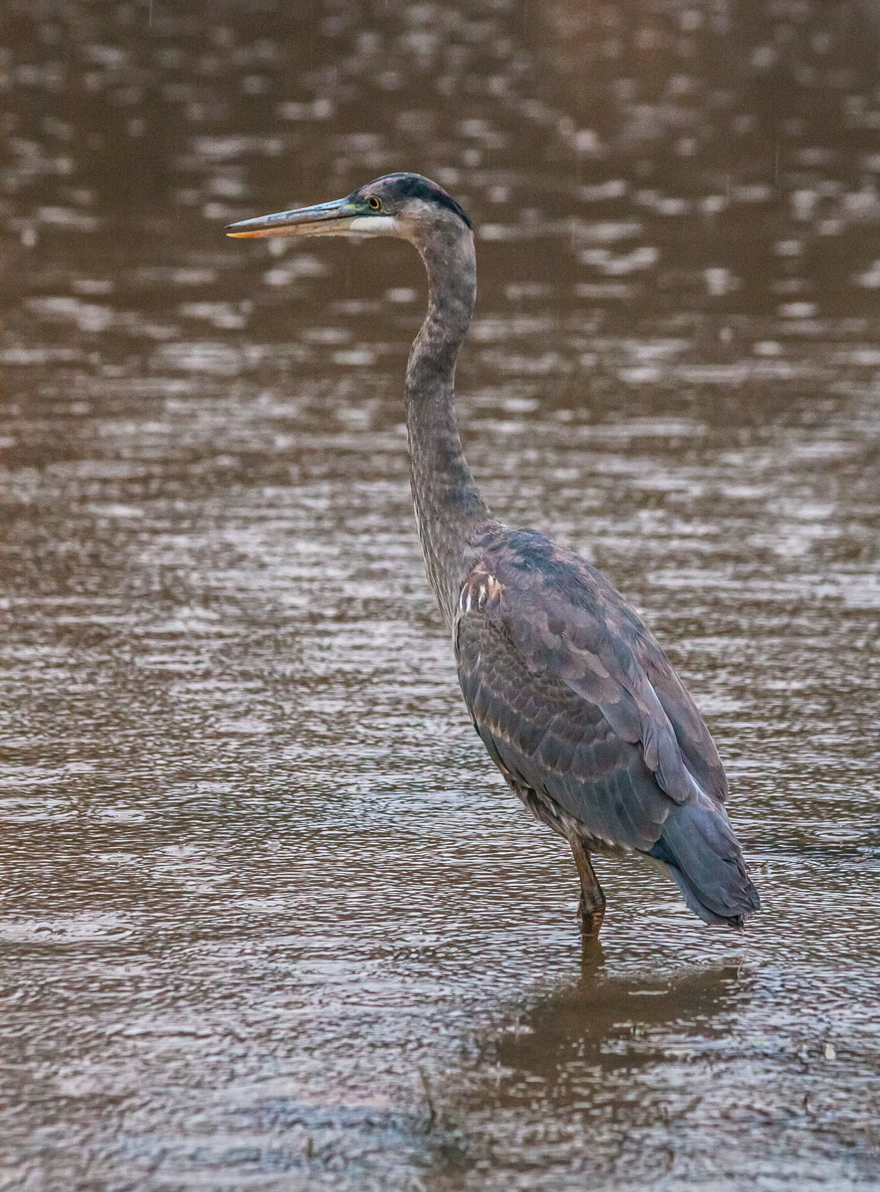
The light was fading in the late afternoon yesterday and it was starting to rain when I came across a Great Blue Heron (Ardea herodias), one of my favorite birds. The conditions were less than ideal, but I was determined to try to get a shot.

I managed to open my umbrella without startling the heron, a minor miracle, given that my umbrella is green and white. Knowing that I was going to have to shoot one-handed (with a small amount of balancing help from the hand holding the umbrella), I decided I was going to have to crank up the ISO of the camera higher than I had ever gone before—to ISO 1600.

I like the image that I got, though unsurprisingly it was a bit grainy. Fortunately, my software was able to reduce thee noise a little.

So now you know of at least two things that you can find out in the open when it is raining—blue herons and crazy photographers.

heron_rain_blog

© Michael Q. Powell. All rights reserved.

Read Full Post »
When I saw a small flock of blackbirds on Monday at my local marsh, I assumed that they were Red-winged Blackbirds, but a closer look showed that I was wrong—they were Rusty Blackbirds (Euphagus carolinus), a species that I had never photographed before.

The shape of the body seems similar to that of the Red-winged Blackbird, but the coloration is different and the pale yellow eyes of the Rusty Blackbird are particularly distinctive. They also seem to prefer a flooded area of the woods and I observed them pecking about in the shallow water, periodically flipping over wet leaves.

The Cornell Lab of Ornithology notes that the Rusty Blackbird is one of North America’s most rapidly declining species, whose population has plunged an estimated 85-99 percent over the past forty years and scientists are not sure why.rusty_blackbird_blog

© Michael Q. Powell. All rights reserved.

Read Full Post »
It won’t be long before my bird photos have the colorless backgrounds characteristic of winter, so I am photographing as many birds as I can find with autumn colors in the background, like this House Sparrow (Passer domesticus) that I observed last Sunday. As I noted in a posting last month, these birds are non-native (introduced from the Old World) and sometimes crowd out native birds. Still, I find them to be beautiful, especially when they pose like this. This pose is one of my favorites, when I get to look down the tail toward the head turned to the side.

house_sparrow_autumn_blog© Michael Q. Powell. All rights reserved.

Read Full Post »

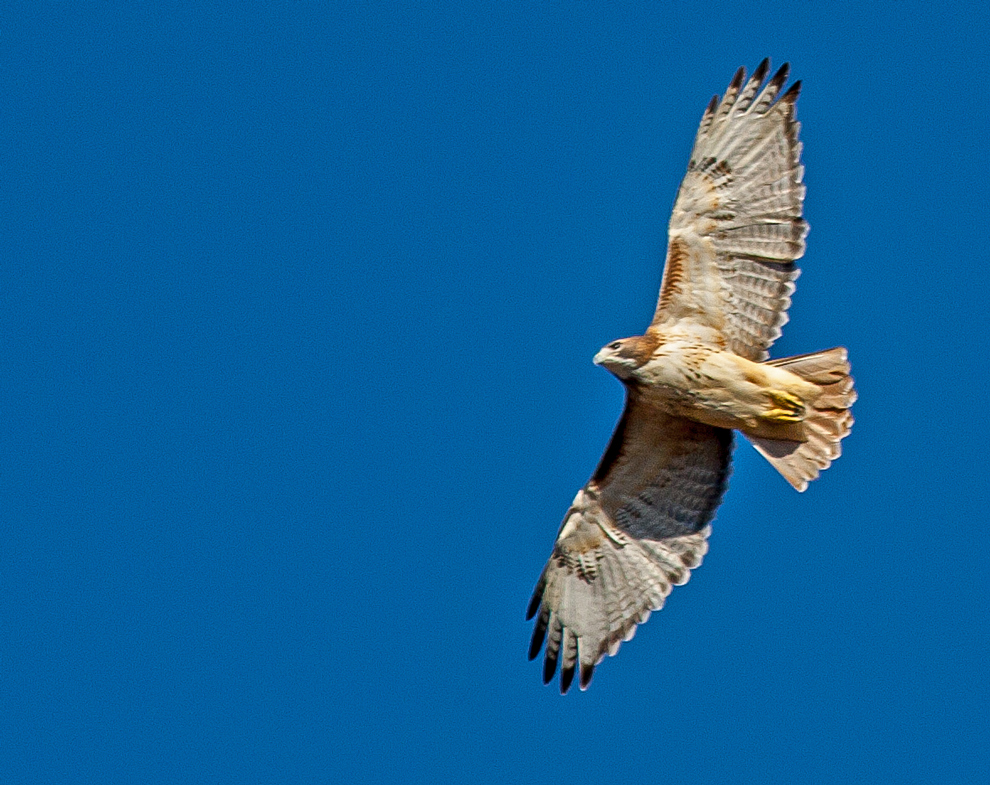
When I spotted a fairly large bird soaring in the sky, I stopped talking in mid-sentence and pointed my camera to the sky. My fellow conversationalist might have thought it was rude (she is not a photographer), but I am always trying to capture images of birds in flight and will start shooting long before I have identified a bird.

This bird looks to be a juvenile Red-shouldered Hawk (Buteo lineatus), though I am not certain about the identification and the hawk did not cry out at all, so I have only visual clues to go by. At first I thought it was just soaring for fun, but the intensity of the hawk’s eyes, especially in the second shot, suggest that it was paying attention to what was happening on the ground.

I was pretty fortunate when the hawk turned toward the light with its wings extended, providing a good look at the beautiful feathers of its wings and body. I am hoping that I will be getting better shots of hawks as we progress into winter, though, as with most wildlife subject, there are no guarantees.

hawk1_soaring_bloghawk2_soaring_blog

© Michael Q. Powell. All rights reserved.

Read Full Post »

Blue Jays are usually very loud and obnoxious, but this one flew by me without a sound.  When I looked at the photos, it was pretty clear why I had heard only the sounds of silence—the Blue Jay (Cyanocitta cristata) had apparently discovered an all-you-can-eat buffet and decided to stuff its mouth.  I suspect that the Blue Jay was going to cache the food, which seems to include acorns, and go back for more.

bluejay_mouthful_blogbluejay2_mouthful_blog

© Michael Q. Powell. All rights reserved.

Read Full Post »

« Newer Posts - Older Posts »