Feeds:
Posts
Comments

Posts Tagged ‘Canon 70-300mm telephoto zoom lens’

Green Herons (Butorides virescens) are once again hanging out at my local marshland park. Unlike Great Blue Herons (Ardea herodias), which fish while wading in the water, these smaller herons usually wait at water’s edge or on vegetation, which normally makes them tough to spot. This Green Heron, though, decided to perch on a log in plain view, which allowed to take this rather formal looking portrait shot.


heron_green_blog

© Michael Q. Powell. All rights reserved.

Read Full Post »

Yesterday I decided to take a break from insects and went walking along the biking trail at Cameron Run, a tributary of the Potomac River in Alexandria, Virginia, where I encountered this Black-crowned Night-Heron (Nycticorax nycticorax). As its name suggests, this species is usually most active at night or at dusk, so I was surprised to see one in the middle of the day.

As I was headed down to the water’s edge, I flushed the bird, which took off for some nearby rocks and perched on one of them. I got a couple of shots of the initial action, which gives you an idea of my initial view of the night heron.

In this the first and last shots, I think the heron was scratching an itch, which is a little tough when you are perched one-legged on a pointed rock. Eventually the itch was satisfied and the night heron flew off into the cooler confines of a leafy tree, probably to take a siesta until it was time to fish for dinner.

heron4_night_blogheron1_night_blogheron2_night_blogheron3_night_blog

© Michael Q. Powell. All rights reserved.

Read Full Post »

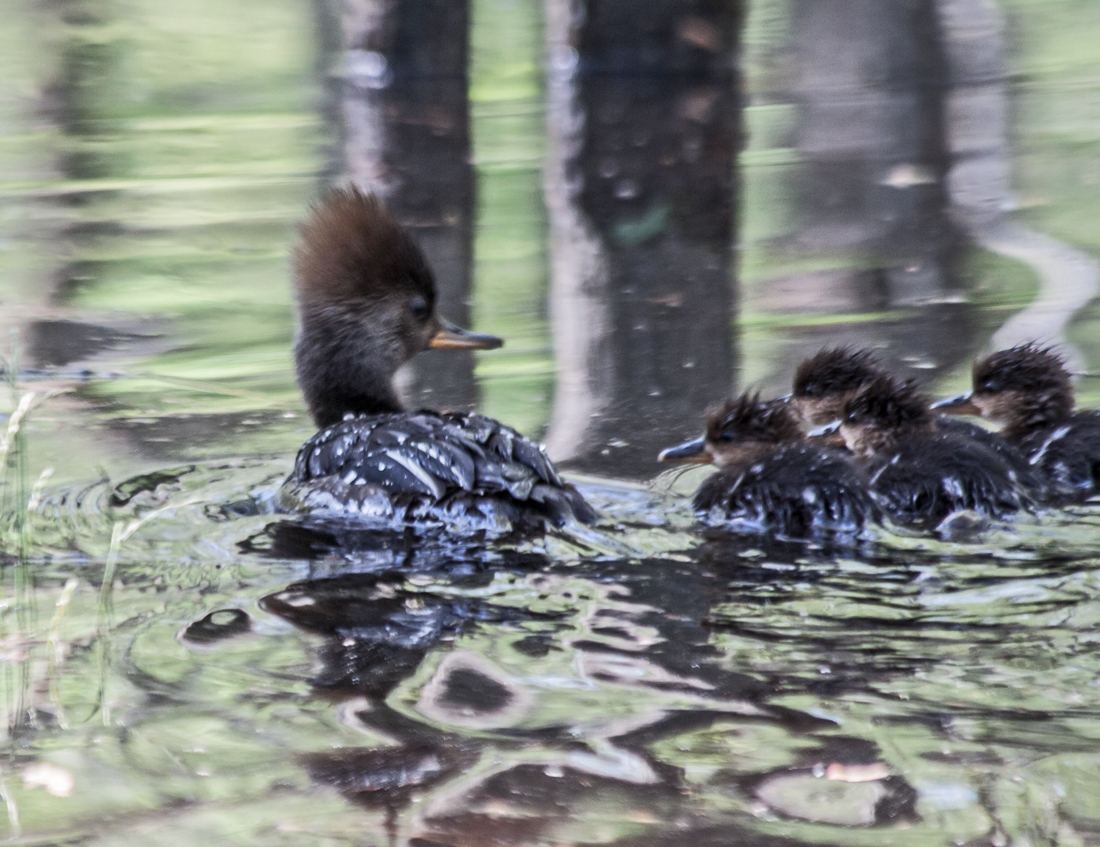
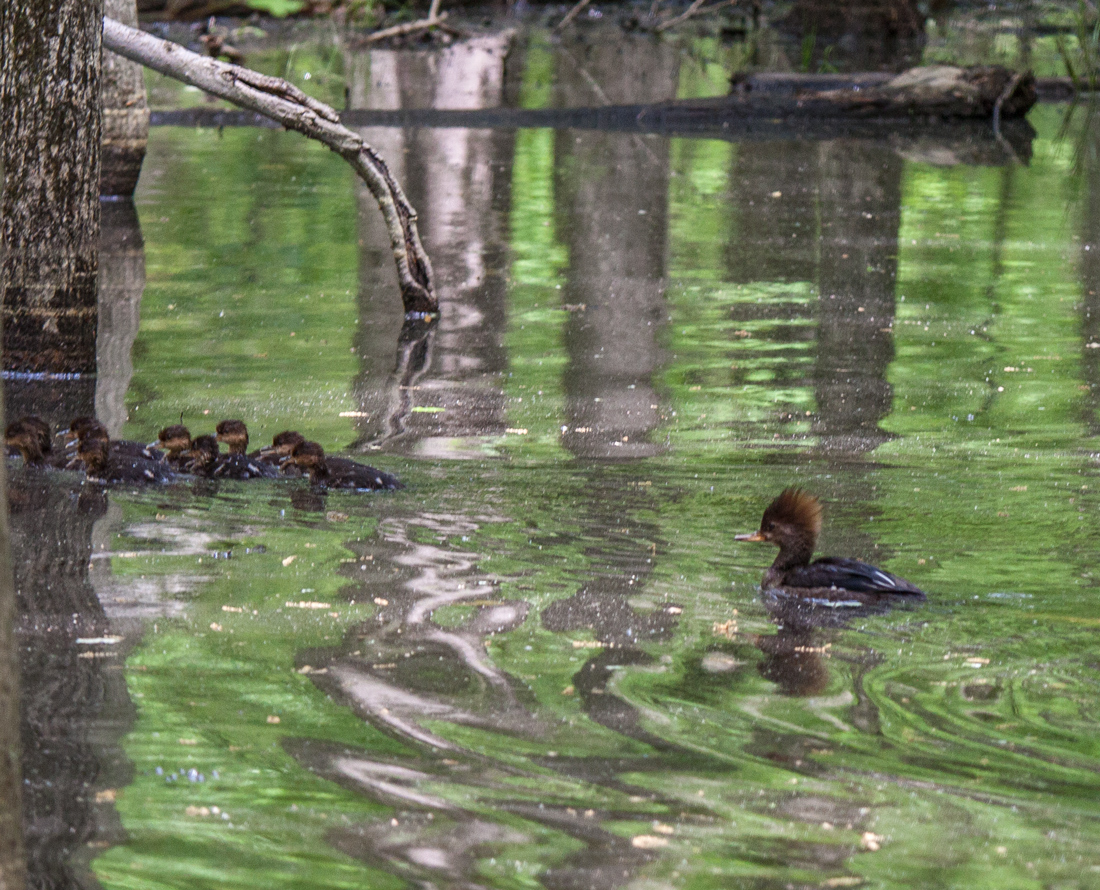
Several weeks after I first spotted a family of Hooded Merganser ducks (Lophodytes cucullatus) at my local marsh, I continue run into this single mother and her adorable ducklings. (Click here to see the original posting.)

The ducks seem to hang out a lot in one flooded, shady area of the marsh that is relatively shallow and doesn’t seem to have the snapping turtles that plagued similar families last year. The light is limited and the ducks start moving as soon as they sense my presence, so getting photos has been a challenge. Here’s a selection of some of my favorite shots to date of this cute little family.

mama_swamp4_blog

Mama duck gives a reminder to the ducklings to stay together and follow her.

mama_swamp3_blog

Trying to move out, but some of the ducklings want to look back toward me.

Mama duck takes up a rear position to ensure there are no stragglers.

Mama duck takes up a rear position to ensure there are no stragglers.

Grainy close-up shot that shows some of the personality of the ducklings.

Grainy close-up shot that shows some of the personality of the ducklings.

© Michael Q. Powell. All rights reserved.

Read Full Post »

Although I wake up to the sound of birds loudly chirping at this time of the year, it is getting increasingly difficult to see most of them as the trees regain their thick covering of leaves. The male Red-winged Blackbird (Agelaius phoeniceus) is a notable exception, because he does not hide behind the foliage. Instead, he seems to choose the highest point in the open from which to boldly make his loud calls—there is not timidity or shyness in this bird.

The blackbird puts so much energy into his “singing” that at times his perch becomes precarious. I captured this blackbird in one such moment, when his position seems so awkward and distorted that looks like a cartoon to me.

blackbird_cartoon_blog

© Michael Q. Powell. All rights reserved.

Read Full Post »

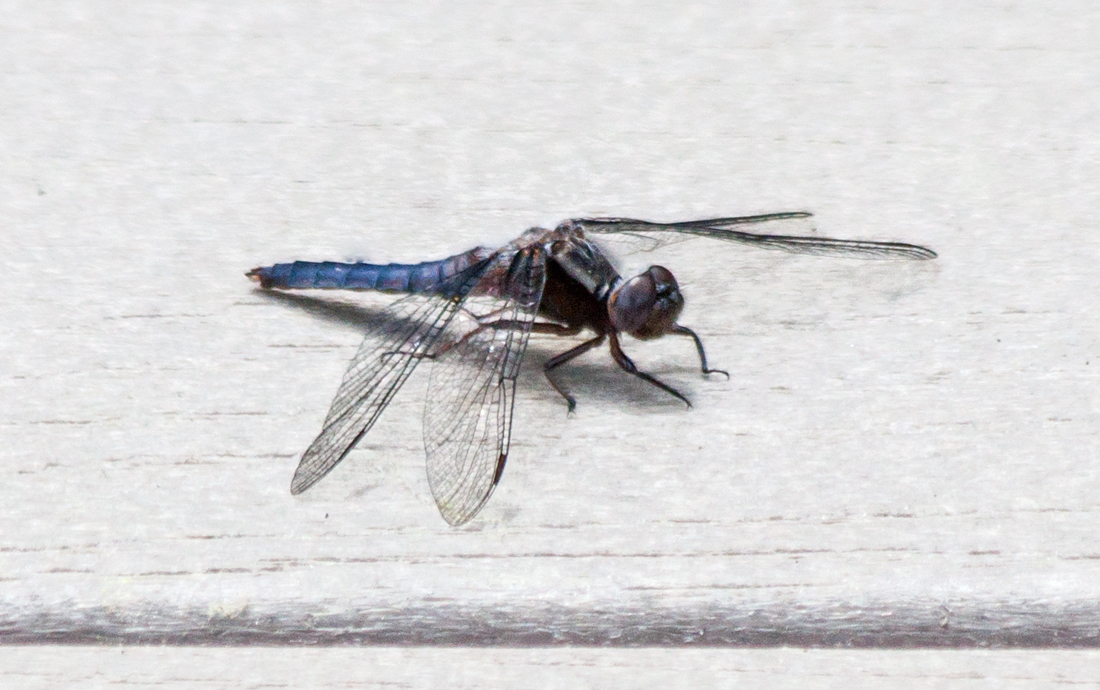
Some of the common species of dragonflies are around throughout much of the summer. Other dragonflies, sometimes referred to as “spring ephemeral” dragonflies,  are around for only brief periods of time in the early spring, like this male Blue Corporal dragonfly (Ladona deplanata) that I spotted last week on the boardwalk at my local marsh.

I had never seen this species before, but fortunately my fellow blogger and local dragonfly expert, Walter Sanford, was able to assist me with the identification. Check out his blog to see some awesome shots of dragonflies and other nature subjects.

I would love to be able to photograph this species the next time in a more natural environment, but I am pretty excited any time I have the chance to get a recognizable photo of a new species.

dragonfly2_may_blogdragonfly_may_blog

© Michael Q. Powell. All rights reserved

Read Full Post »

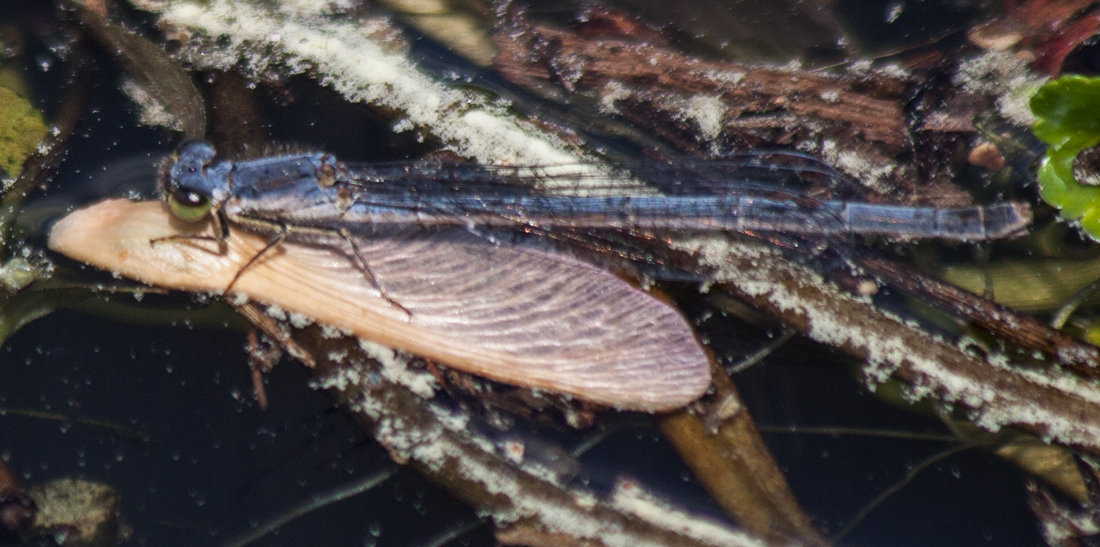
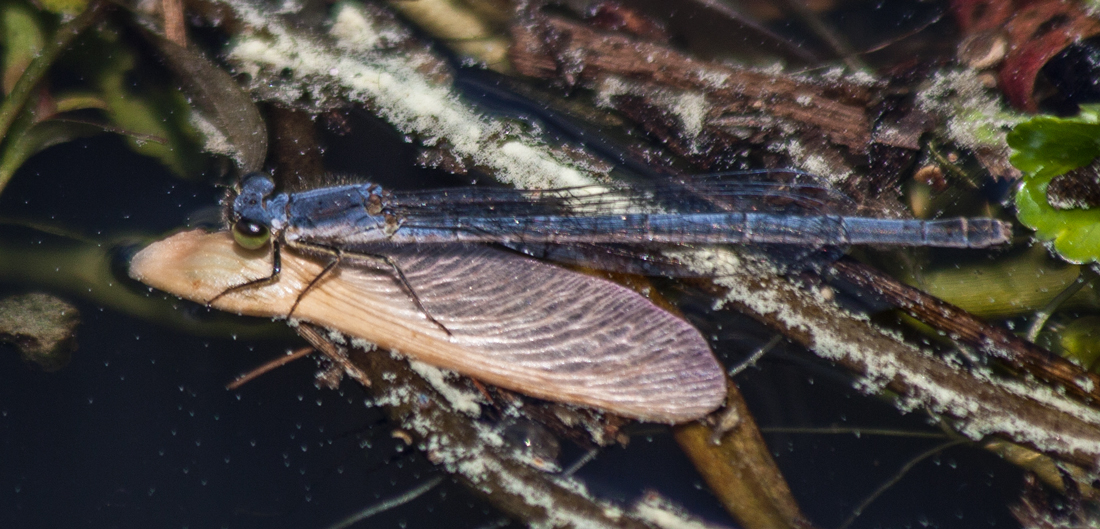
Most folks are familiar with dragonflies, but damselflies, the smaller members of the Odonata family, are equally impressive. I spotted this little beauty yesterday in the pond debris at Huntley Meadows Park, the local marshland area where I take many of my nature photographs.

I don’t know damselfly behavior very well, but noted that the very end of the damselfly’s tail is in different positions in this series of photos. In the first image, the tip is curved upward and then gradually returns to a more straight position in the final shot. Sometimes movements like this indicate that the damselfly could be laying eggs, but I haven’t been able to determine yet the gender or species of the damselfly. There seem to be a lot of different species of damselflies that are blue. (If I had to guess, I’d say that it looks like a female Eastern Forktail (Ischnura verticalis), because of the color, the forked end of the tail, and the two-tone eyes).

Although this looks like a macro shot (and the subject was really small), this is another case in which I was able to use my telephoto zoom lens to get macro-like results. Click on any of the photos to get a higher-resolution view of the damselfly and you may be surprised to see how many of the details the telephoto lens was able to capture.

damselfly1_may_blogdamselfly2_may_blogdamselfly3_may_blog

© Michael Q. Powell. All rights reserved

Read Full Post »

Some subjects are so awe-inspiring that I get excited just seeing them, even if they are too far away for a good photo—like this Bald Eagle (Haliaeetus leucocephalus) that I saw Monday at my local marsh. The eagle seemed to sense my presence and took off before I could get closer, but I managed to capture an image of its final preparations for takeoff from the branch.

eagle_takeoff1_blogWhen I am walking through the woods at this time of the year, I have to keep my eyes in constant motion. Leaves are still sparse enough on the trees that I am still able to spot some birds in the trees.  However, insects are starting to appear too, so I have to scan the leaves and branches on the ground for these little creatures.

On early Monday morning, as I looked through a break in the trees, I caught sight of a large bird in the distance, sitting on the end of a branch. I immediately stopped, having learned from experience that even a single step forward would be likely to spook the bird. The light was not great, but the shape suggested to me that it was probably a bald eagle.

The eagle looked around for a few seconds and then took off. At that moment, I was absolutely certain that it was a bald eagle. I was not so certain that I had captured any useable images, but I was content just to have experienced the sight of that majestic bird in flight.

eagle_takeoff2_blog

© Michael Q. Powell. All rights reserved

Read Full Post »

What’s your first reaction when you see a snake? I was walking through the woods at my local marsh this past weekend when I spotted a snake curled up on the leaves. My first reaction was to move closer to get a shot of the snake.

The area was relatively open, but there were lots of leaves and sticks on the forest floor, so it was not really possible to get an unobstructed shot of the snake. I took a shot anyways, fearing the snake would leave, and include it as a second image here so you can see how the snake was positioned. I noticed that the snake’s head was in an uncluttered area and a clear shot seemed possible. I changed lenses from my telephoto zoom to my macro lens, set up my tripod as low as it would go, and moved really close, until the snake’s head almost filled the frame of my viewfinder. I took some shots in natural light and some with my popup flash. The snake seemed unbothered by my actions until I inadvertently moved a small branch when adjusting my position on ground and he slithered away.

When I looked at the images on my computer, I was struck by the degree to which my reflection is visible in the snake’s eye. If you click on the first photo, you’ll get a higher resolution view that shows me taking the shot (with flash this time).

I am not sure what kind of snake this is, but it looks a bit like a Northern Black Racer snake (Coluber constrictor constrictor) as described on the webpage of the Virginia Herpetological Society. I’d welcome a confirmation or correction of my identification from anyone with more experience with snakes.

snake_reflection2_blog snake_reflection3_blog

© Michael Q. Powell. All rights reserved

Read Full Post »

Tree Swallows have been flying about for several weeks, but it was only this weekend that I finally observed one of their multi-colored brethren, the Barn Swallow (Hirundo rustica). Last year, the Barn Swallows built a nest underneath a raised observation platform of the boardwalk at my local marsh, and it looks like they are doing the same thing this year.

I was able to photograph this swallow as it perched on a small branch coming out of the water directly opposite the platform. The sky was mostly overcast during the day, which caused the reflections in the water to look mostly white. As I made a few adjustments to the image, the background essentially disappeared, resulting in a photo that looks almost like it was shot in a studio.

I really like the swallow’s serious pose and the fact that I was able to capture its signature swallow tail. It won’t be long before I see swallowtails on some of my favorite butterflies.

barn_swallow1_blog

© Michael Q. Powell. All rights reserved

Read Full Post »

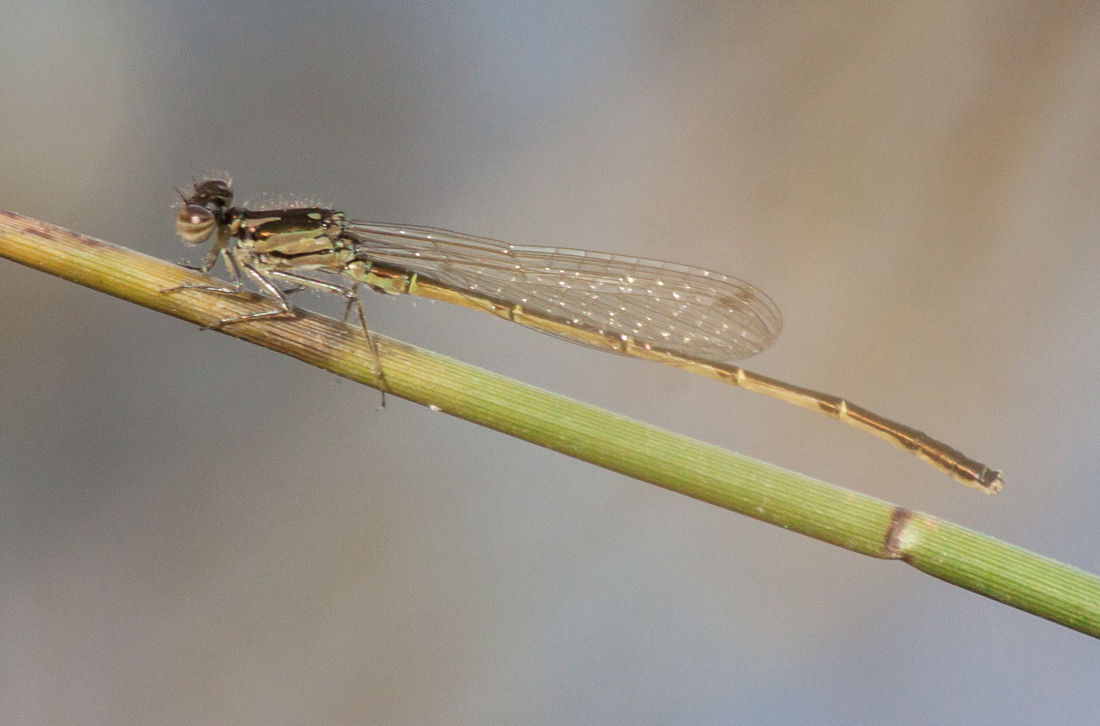
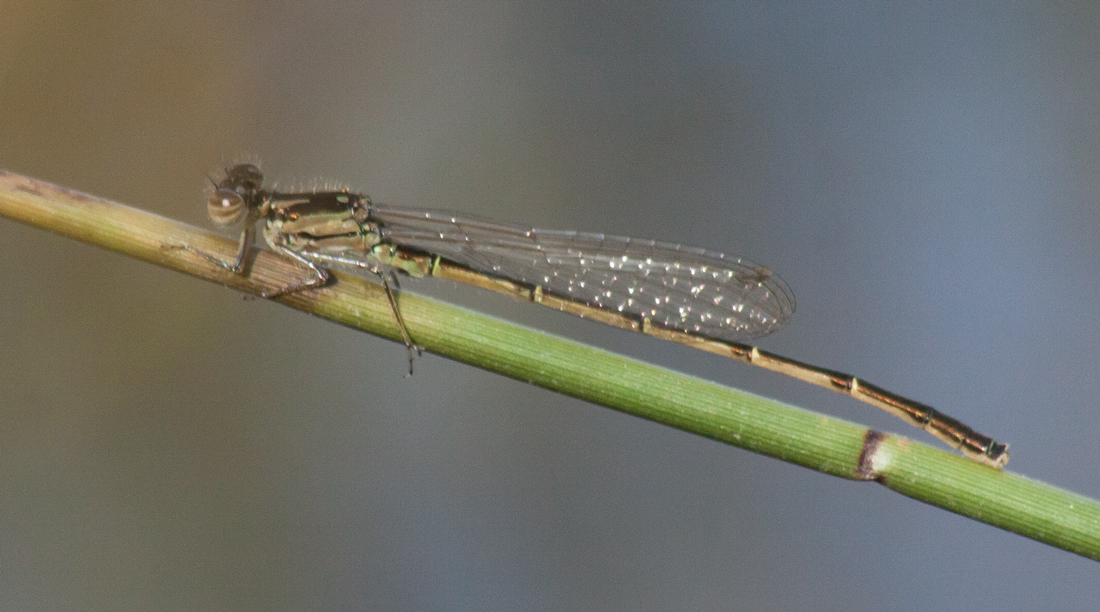
Damselflies are beautiful, delicate insects that are often hard to see and photograph. I captured this image of my first damselfly of the year at Huntley Meadows Park this past Friday. I am not very good at identifying these tiny insects, but think this might be a Fragile Forktail (Ischnura posita).

I was standing my the edge of my favorite beaver pond when I saw the damselfly in flight. I followed it with my eyes and was delighted when it landed on a nearby stalk of grass. I didn’t have a lot of maneuver, because much of the area at the pond’s edge is covered with thorny bushes, and I had to pull back a bit to get within the minimum focusing distance of my 70-300mm telephoto lens , i.e. 4.9 feet (1.5 meters). At that range, the dragonfly filled a reasonable amount of the frame.

Lighting was a bit of a challenge and I tried a couple of different settings as the damselfly lifted its tail from time to time. Eventually, it climbed to the end of the stalk and I changed position too and tried a couple of shots (including the final shot) using my pop-up flash.

Most of the time the first shot below is my favorite, but sometimes I like the others as well or more. In any case, I am happy that I was able to get some good shots of my first damselfly of the spring.

damselfly2a_blogdamselfly1a_blogdamselfly3_blog

© Michael Q. Powell. All rights reserved

Read Full Post »

Female Hooded Merganser ducks (Lophodytes cucullatus) raise their ducklings as single Moms, which must be pretty tough when you have so many offspring to look after. According to the Cornell Lab of Ornithology, the male Hooded Merganser duck abandons his mate once she begins incubating eggs and it’s not known if they reunite the following season.

Last year, when the level of water at my local marsh was pretty low and there seemed to be lots of snapping turtles, most of the ducklings did not survive. After a lot of construction at the marsh, water levels are higher and I am hoping that things will be a little easier on the duck families.

I don’t know how old these ducklings are, but they appear to be tiny—even adult Hooded Mergansers are pretty small. A family of Hooded Mergansers was spotted earlier this week and I suspect that this is the same one, so they may be a week or so old.

I was not able to get very close to the ducks and the conscientious Mama duck started swimming away as soon as she sensed my presence early yesterday morning. You can see details in the first two shots, which are cropped a fair amount, but I included a final shot, which shows more of the setting, because I love the beautiful ripples in the water.

mama_duck1_blogmama_duck2_blogmama_duck3_blog

© Michael Q. Powell. All rights reserved

Read Full Post »

Blossoming trees get a lot of attention this time of year, but as I looked upward at the trees in my neighborhood, I was struck by the beauty of the seeds of what I believe are maple trees. When I was a child in New England, I loved to watch these seed spinning through the air like little helicopters as they fell from the maple trees.

According to Wikipedia, the US Army actually developed a special air drop supply carrier during World War II that could carry up to 65 pounds of supplies and was based on the maple seed.

It was fun trying to come up with different ways to highlight the beauty of these seeds by moving closer or farther away and by varying the background.

IMG_0691 webIMG_0597 webIMG_0731 web

© Michael Q. Powell. All rights reserved

Read Full Post »

Yesterday afternoon, I again observed a blue parakeet (which is also known as a budgerigar) in the trees in my suburban townhouse neighborhood, two weeks after I first spotted it in the “wild.”

Since that first spotting, we’ve had some heavy rain and the temperature has dipped down to the freezing level.  Somehow, though, the parakeet (Melopsittacus undulatus) has managed to find shelter and food and avoid predators.  The parakeet seems to stay in the same general location, not far from several bird feeders on the back decks of nearby houses.

The general consensus seems to be that this is an escaped pet. I worry about its long-term survival, but so far it appears to be adapting pretty well to the outdoor environment.

parakeet_21_April_blog

© Michael Q. Powell. All rights reserved


Read Full Post »

Sometimes the beauty of Easter reveals itself in subtle ways, like this delicate orchid that I photographed yesterday in the conservatory at Lewis Ginter Botanical Gardens in Richmond, VA.

orchid_april_blog

© Michael Q. Powell. All rights reserved

Read Full Post »

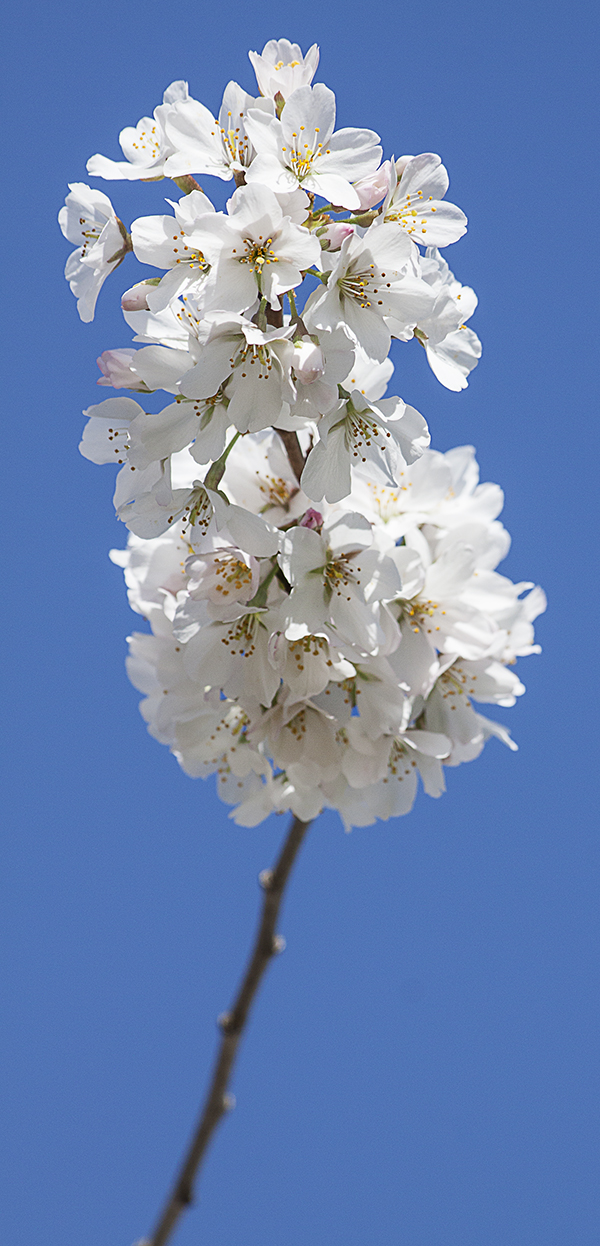
Although I live in the Washington D.C. area, I didn’t feel like fighting the crowds to get images of the iconic cherry blossoms. However, the blossoming trees in my neighborhood were pretty spectacular too, albeit on a smaller scale.

I think the first two images are Bradford pear trees, the third is a forsythia bush, and I am not sure what kind of tree the final one is. The shapes and colors and lighting make each of these shots quite different, but I think my favorite is the first one, which reminds me of a Japanese painting.

IMG_0426 webIMG_0555 webIMG_0600 webIMG_0609 web

© Michael Q. Powell. All rights reserved


Read Full Post »

The moon was shining brightly in my neighborhood this morning at 6:00, just a few days after the full moon.

moon_april_blog

© Michael Q. Powell. All rights reserved

Read Full Post »

With the cold, gray days of winter receding in my memory and the world exploding with color, I’ve taken a brief break from focusing primarily on wildlife photography and have turned my attention to capturing the beauty of flowers and blossoms.

I’ve never quite figured out how to photograph broad expanses of color, so I tend to focus more on the details of a single flower and try to isolate it from the background.  (One of my favorite bloggers, Camilla, of Calee Photography did an amazing job in capturing the beauty of tulip fields by photographing them from a small airplane. Check out her posting.)

In this case, my eyes were drawn to the not-yet-open tulip, where the color of the flower was beginning to be revealed. The composition is simple and graphic and a little abstract.

I can already sense the beauty that is to come—the anticipation makes it even more sweet.

IMG_0790 web

© Michael Q. Powell. All rights reserved

Read Full Post »

Anticipation, waiting for the moment when a tulip will burst open. For now, all we can see is a little tongue of color, a foretaste of the beauty that is to come.

Anticipation web

© Michael Q. Powell. All rights reserved

Read Full Post »

The flowering trees in my neighborhood are spectacular right now. Here’s a couple of shots of the flowers of one of them, which I think is some kind of magnolia or tulip tree.

magnolia_blogmagnolia2_blog

© Michael Q. Powell. All rights reserved

Read Full Post »

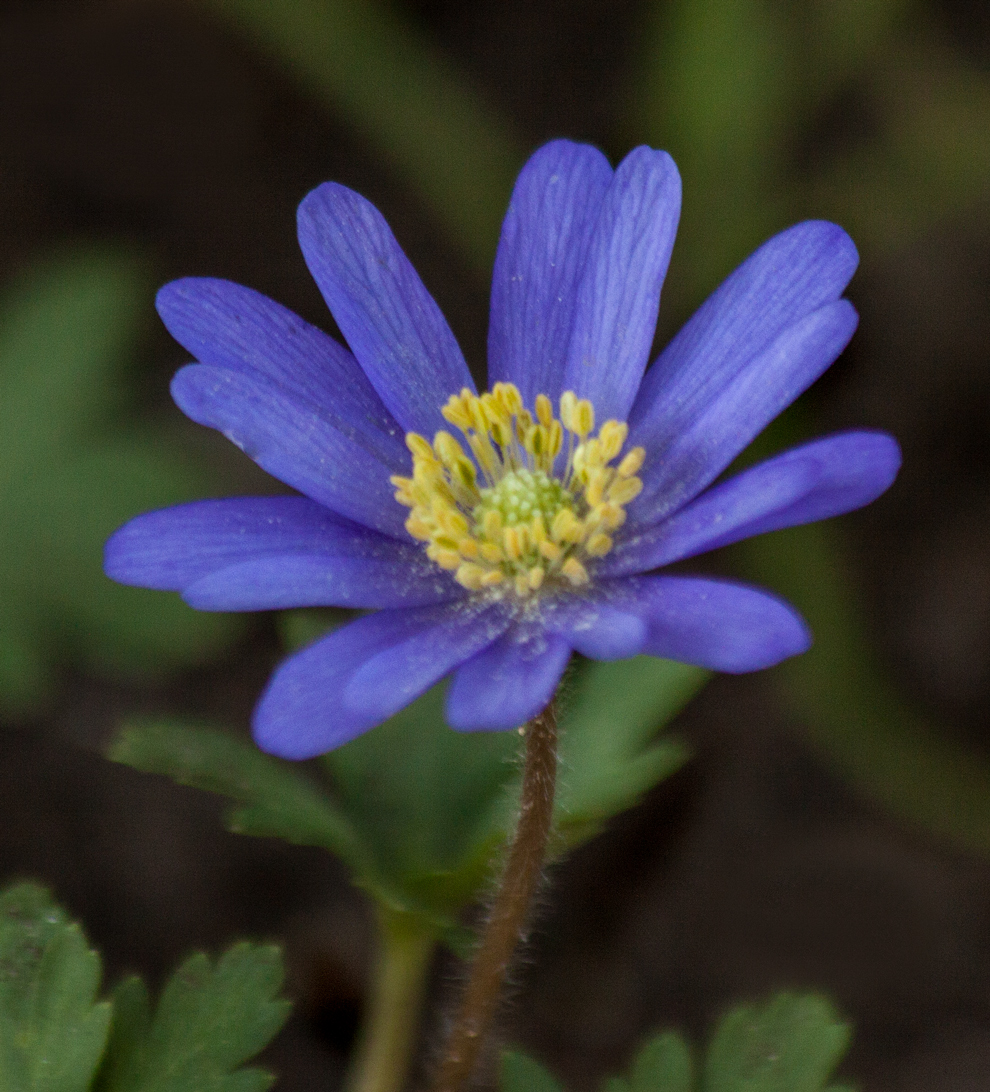
I am always happy to visit the garden of one of my neighbors, Cindy Dyer, a fellow photographer and blogger, at this time of the year, because there is always something new in bloom. Yesterday’s treat was this simple little purple flower. I have no idea what it is, but I love its shape and colors.

flower_tiny_blog

© Michael Q. Powell. All rights reserved

Read Full Post »

Spring is here and I am once again chasing dragonflies, on a quest to capture images of these beautiful insects. Common Green Darners (Anax junius) rarely seem to perch, so I was forced to try to photograph them in flight.

This early in the spring, there aren’t yet a lot of dragonflies, so my patience was tested as I waited for one to fly by. I tried a lot of different approaches and the one that worked best on this day was to focus manually, which is a bit of a challenge at 300mm when the subject is moving pretty fast.

I hope I’ll get some better shots later this season—this is my best one so far.

dragonfly_flight_blog

© Michael Q. Powell. All rights reserved

Read Full Post »

This red tulip may have been at its peak a few days ago when it was in full bloom, but it has retained its beauty in its current faded state.

tulip_faded_blog

© Michael Q. Powell. All rights reserved

Read Full Post »

Sometimes a coiled snake is prepared to strike, but this Northern Water Snake (Nerodia sipedon) was definitely not ready for action. The snake seemed total relaxed as it basked in the sun, curled up above the surface of the water on some dried up vegetation.

I really like the texture of the snake’s skin, but there was no way that I was going to reach out and touch it. Telephoto lenses are a good thing in situations like this.

snake_coil_blog

© Michael Q. Powell. All rights reserved

Read Full Post »

Unlike the Great Blue Herons that stay in Northern Virginia all winter, Great Egrets (Ardea alba) depart for warmer locations during the winter. I was happy to note this past weekend that the egrets are now back at my local marsh, where I took these shots of one coming in for a landing.

The wing span of this bird is impressive and I love the way that it points its toes as it comes in for the landing. As is often the case, I had challenges getting a proper exposure—I try to expose for the brilliant white body, but often blow out the highlights. I am pleased that I was able to capture some of the details of the wings in these images, though the shadows caused much of the plumage to look gray, rather than white.

egret2_april_blogegret1_april_blogegret3_april_blog

© Michael Q. Powell. All rights reserved


Read Full Post »

At first I thought that the black and orange birds rooting about in the fallen leaves were American Robins (Turdus migratorius), but a closer look through the undergrowth revealed that there was white on their breasts and that their eyes were red.

It turns out that they are Eastern Towhees (Pipilo erythrophthalmus), a strikingly marked oversized sparrow. It was quite a challenge to get somewhat unobstructed shots of these birds. They seemed to be in constant motion, hopping about and rummaging through the leaves—I had to chase them around for quite some time to get these modest shots.

towhee2_blogtowhee1_blog

© Michael Q. Powell. All rights reserved

Read Full Post »

What kind of birds do you have in your neighborhood? I live in the suburbs of Washington D.C. in a townhouse community in Northern Virginia. There are quite a few trees and some green spaces, so I am able to find birds to photograph when I walk through the neighborhood, though the birds tend to be small and elusive.

This past weekend, I encountered a reasonably cooperative Carolina Chickadee (Poecile carolinensis) that remained perched in a tree in a fenced backyard as I desperately sought to compose the shot. I was hoping to have the sky as the background, because I was shooting upward, but the branches of the tree made it impossible to get that shot. I quickly realized that my only hope for an uncluttered background was to use the white siding of the townhouse as the backdrop. As I moved from side to side, I noticed that the blue shutters of the townhouse kept creeping into the frame and decided to incorporate them as an element of the image.

I really like the final result, a pleasing portrait of a little chickadee with a simple, almost minimalist composition.

chickadee1_april_blog

© Michael Q. Powell. All rights reserved

Read Full Post »

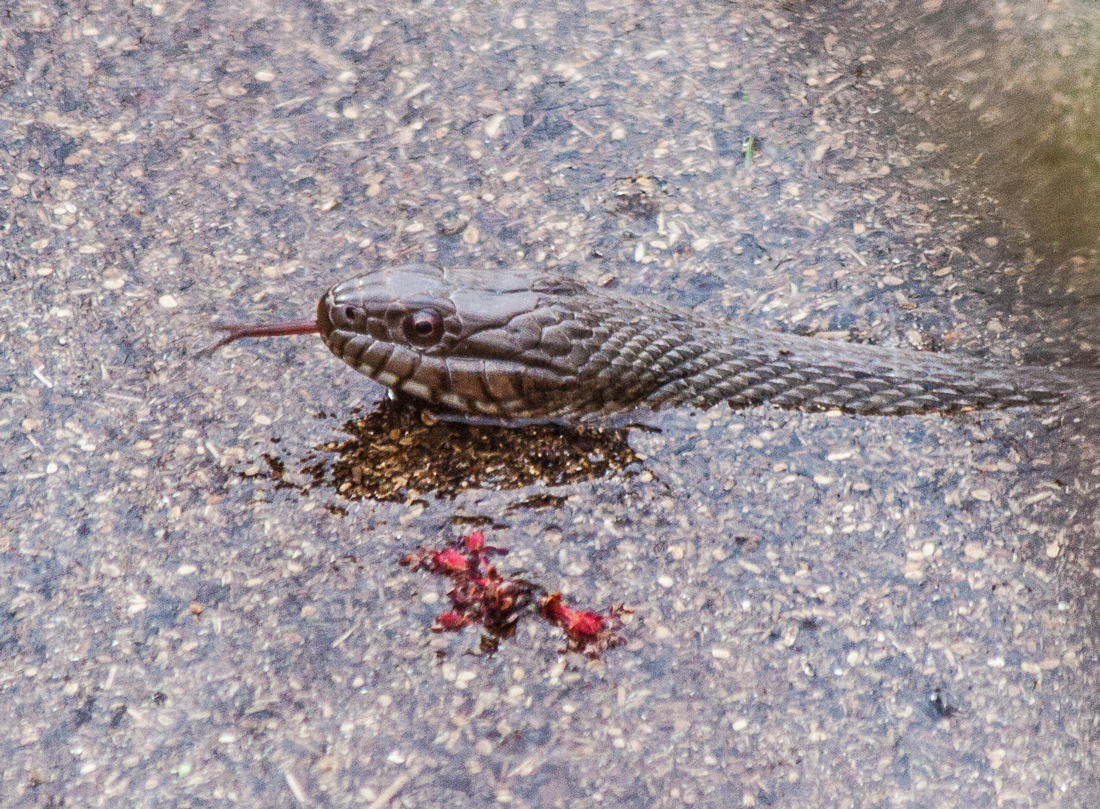
Spring has definitely arrived, bringing with it an abundance of snakes in addition to the profusion of flowering plants.  Most of the snakes have been all curled up, basking in the sun.  This Northern Water Snake (Nerodia sipedon), however, was slithering through the water and stuck out its tongue and hissed at me before disappearing below the surface of the water.

I really like the way the colors of the snake’s skin match those of its surroundings and even the reddish color of the forked tongue is repeated in the fallen blossom.

snake1_water_tongue_blog

© Michael Q. Powell. All rights reserved


Read Full Post »

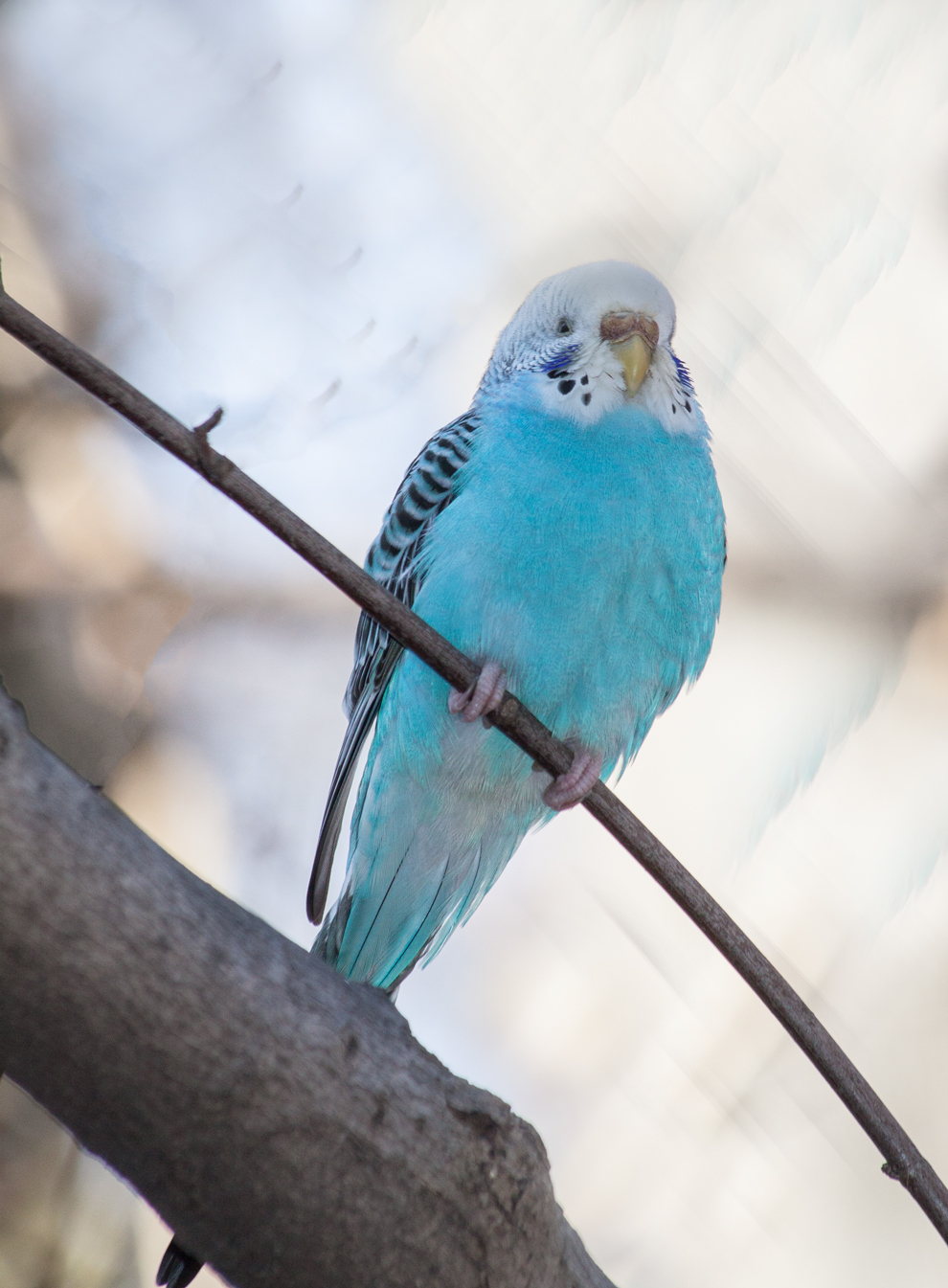
As I strolled through my suburban neighborhood on a sunny Sunday afternoon, I expected to see cardinals, chickadees, sparrows, and goldfinches in the trees—I had no idea that I would also encounter a brightly colored tropical bird.

I first saw the bird as a flash of brilliant blue, when it flew from a bird feeder on a back porch to a nearby tree. I love the blue colors of the Eastern Bluebirds, but this was an entirely different shade of blue. Initially the bird was in the shade and I tried to figure out what it was from its shadowy shape, but I was stumped, because it didn’t seem to have a bill.

When I circled around and got a better look, I could see that it was a blue parakeet. What was a parakeet doing outdoors in Northern Virginia? Had it recently escaped from one of the nearby townhouses? Can it survive for long outside?

I did a little research on the internet and learned that the birds we know as parakeets are more technically known as Budgerigars (Melopsittacus undulatus). In the wild, they live in parts of Australia and are naturally green and yellow. In captivity, they have been bred to have different colors, like the electric blue of this one. Judging from the brown color of the cere (the waxy structure that covers the base of the bill), this appears to be a female.

I’ll keep my eyes open to see if I can spot this beautiful bird again. Meanwhile, I will post the photos in the Facebook group of my homeowners’ association and see if I can learn from others how long this bird has been living in the wild.


parakeet1_blogparakeet2_blog

© Michael Q. Powell. All rights reserved

Read Full Post »

The weather has gotten warmer, but I was still a bit surprised when I saw my first dragonfly of the year yesterday at Huntley Meadows Park, my local marsh. I think that it is a female Common Green Darner dragonfly (Anax junius), one of the species that migrates north after spending the winter in warmer places. This is the only dragonfly that I saw yesterday and I was able to squeeze off a couple of shots before it disappeared. I’m hoping that it won’t be long before I see more dragonflies and butterflies, some of my favorite photographic subjects.

dragonfly_april_blog

© Michael Q. Powell. All rights reserved

Read Full Post »

Some folks complain a lot about Canada Geese, but I enjoy trying to photograph them, especially when they are taking off and landing. It seems like the number of them has dwindled somewhat at my local marsh recently–perhaps some of them have migrated north.

Yesterday, this goose began to sound the alarm as soon as it became aware of my presence and took off a short time later, still crying out with its tongue extended. I managed to track the bird as it was taking off and to shoot a series of shots. The sky was pretty heavily overcast yesterday, so I had raised my ISO to 320 and figured that I would have enough speed to capture the action. What I didn’t realize at the time, though, was that my aperture was still set at f/11, because I had been shooting some landscapes just prior to these shots. I was in aperture priority mode and my camera chose a shutter speed of 1/1oo of a second.

In the first shot, the goose is relatively sharp and there is little motion blur, except for the background, which is blurred, I think, because I was panning as I tracked the goose. In the second shot, though, which preceded the first in time, the wings and the feet have some motion blur, which accentuates the feeling of the goose scrambling to get into the air.

I keep going back and forth in trying to decide which of this two photos I like better. The technical side of my brain wants to vote for the first one, but the artistic side prefers the second image. What do you think?

goose_alarm goose_alarm2_blog

© Michael Q. Powell. All rights reserved


Read Full Post »

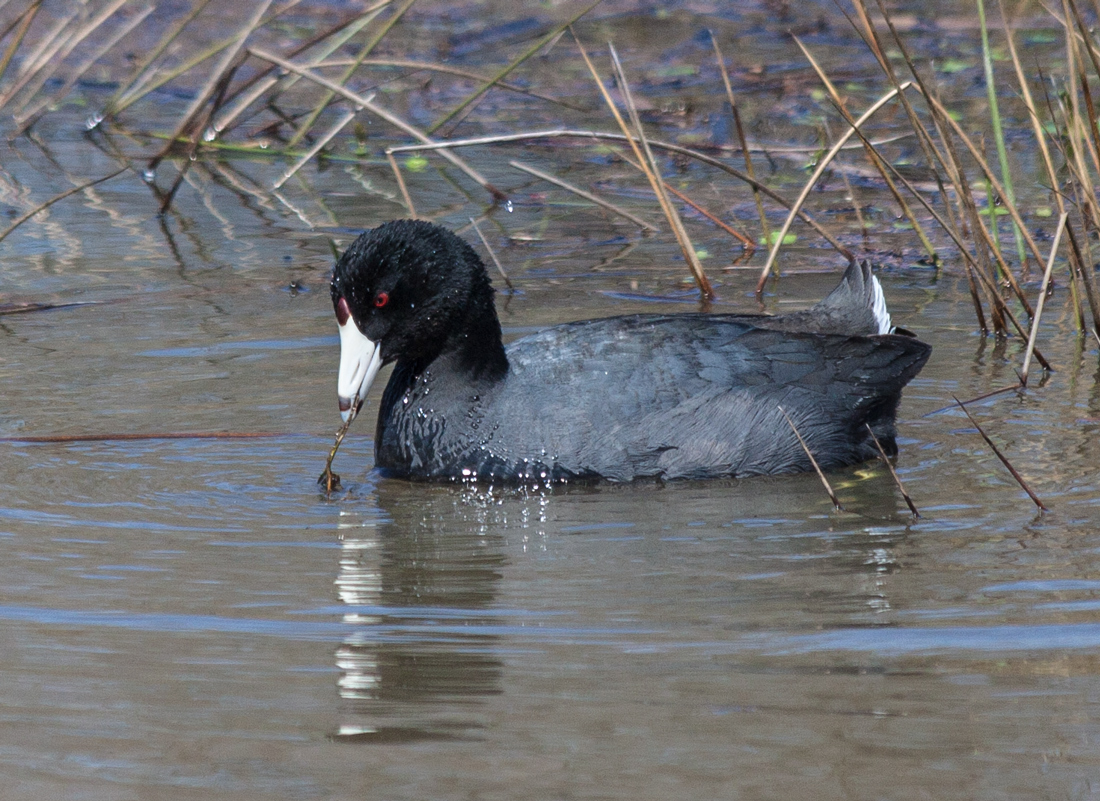
Another coot? Yes, as I was going over my recent shots of an American Coot (Fulica americana) at my local marsh one more time, I decided that I liked this image even more than the one I posted yesterday. The coot has a kind of determined look in its eye and the tilted head gives it a sense of tension, like it is exerting effort to pull that plant out of the water. Besides, I seem to be attracted to birds and animals with unusually colored eyes.

I find it tough at times to choose the best shot quickly when I have shot a series of images. Probably I need to take a little more time in reviewing the images, but I am often in too much of a hurry to find an image (or images) to post. A year ago, I felt compelled to attempt to post every single day, but I have backed off slightly and miss a day now from time to time.

Nonetheless, I still like to post images that appeal to me, which are often, but not always, my “best” shots. Sometimes the photos will merely document the experience that I want to share with readers and may not be technically great images. It’s a little selfish, perhaps, but I shoot mostly for me. Fortunately, I sense that my skills are improving and hope that the quality of the images I post tend to reflect that improvement.

coot_redeye_blog

© Michael Q. Powell. All rights reserved

Read Full Post »

« Newer Posts - Older Posts »