Feeds:
Posts
Comments

Posts Tagged ‘Canon 70-300mm telephoto zoom lens’

November arrived as a cold, overcast, windy day and there was not much wildlife moving around (and no insects at all). All around me I noticed signs of autumn and I decided to try to capture the feeling of the changing season at my local marsh. I took lots of photos of the fall foliage, but somehow I liked this image best as a graphic depiction of autumn at my favorite marsh.

autumn cattail

© Michael Q. Powell. All rights reserved.

Read Full Post »

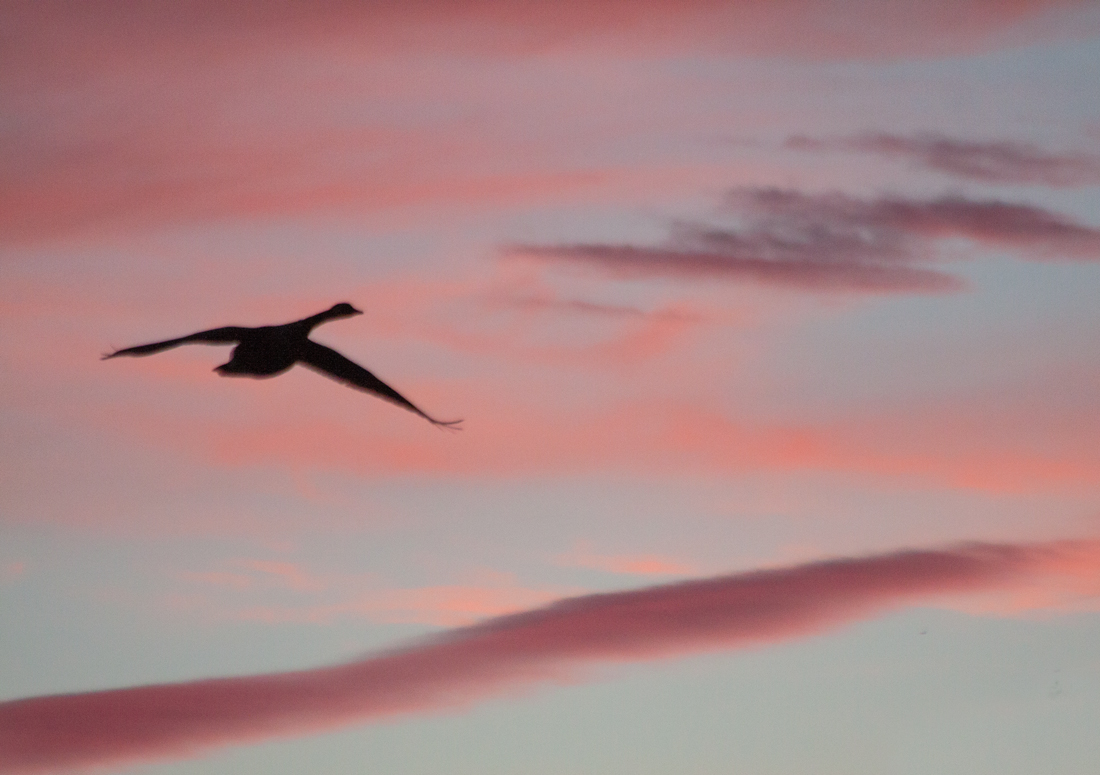
As I watched the glorious sunset at my local marsh yesterday, I kept hoping that a V-shaped formation of geese would fly into the frame. I was happy to settle for this solitary Canada Goose (Branta canadensis) and an amazing pink-tinged sky.

sunset1_oct_blogsunset2a_blog

© Michael Q. Powell. All rights reserved.


Read Full Post »

How can I show the beauty of the autumn foliage? As I was pondering that question, I glanced down into the waters of a small pond at my local marshland park and found my answer.

Impressionist autumn

The combination of the light, the reflections, and the ripples enveloped me in an impressionist world, where the forms were blurred, but recognizable. I love the art of Monet, and somehow the autumn reflections brought his works to mind.

Impressionist autumn

As i moved about, the scene would change, as different elements were reflected in the water.

Impressionist autumn

I’m often at a loss when trying to photograph landscapes—I am so used to focusing on the details of a subject that I have trouble seeing the big picture. Somehow it seemed easier when I concentrated my attention on the limited expanse of the water in the pond.

Impressionist autumn

Here in Northern Virginia, we usually don’t have the really vivid colors that I remember from my childhood days in New England, but the subdued colors are beautiful nonetheless. I find in these more restrained shades a kind of melancholic reminder that the days are gradually fading into winter.

Impressionist autumn

© Michael Q. Powell. All rights reserved.


Read Full Post »

Fall foliage is great at this time of the year, but I am also finding beautiful colors as I walk deeper into the woods. I can’t identify these different fungi, but that doesn’t keep me from enjoying their beauty. I especially enjoy the rainbow shapes in the shades of autumn, with such a wide range of oranges and browns.

© Michael Q. Powell. All rights reserved.

Read Full Post »

A female Belted Kingfisher (Megaceryle alcyon) lives at a small lake not far from where I live and periodically I try to photograph, but she continues to remain elusive.

Generally I try to photograph the kingfisher at one of her normal perches in a grove of trees across a narrow portion of the lake from where I am standing. It’s tough to isolate her against the backdrop of the trees, especially at this time of the year when the leaves are still on the trees, and often I only catch sight of her when she starts to fly.

Most of the shots in this posting are my attempts to capture her in flight. I am getting better at tracking the bird in the air and keeping her in focus, but it’s not easy to do as she flies in and out of the shadows and against varying backgrounds and she is somewhat hidden in these shots.

This past weekend, I decided to try to approach the grove of trees from the other side of the lake, where there is often a group of fishermen. I was fortunate that I was alone and I was able to make it relatively close to the grove of trees.  I was surprised to see that the kingfisher was on a low perch rather than high in the trees where I usually find her and I managed to squeeze off a few shots before she flew away. The first shot in this posting was from this new shooting position.

I plan to try this new approach again in the future and with a bit of luck, I may finally be able to get the kind of shot of this bird that I have been visualizing in my mind.


Belted Kingfisher

Belted KingfisherBelted KingfisherBelted Kingfisher

© Michael Q. Powell. All rights reserved.

Read Full Post »

As I slowly made my way through the tall grass on the lake shore, my eyes were focused on the low-hanging branches where I had seen a Belted Kingfisher earlier in the day. Suddenly the water exploded at my feet.

I was startled and so was the Double-crested Cormorant (Phalacrocorax auritus) that scrambled into action and started moving across the surface of the water. The cormorant had apparently been resting or feeding at the water’s edge and had not heard me approach. It was interesting to see the cormorant move—it rose up a bit and seemed to walk across the water and then settled back into the water once it was a good distance away from me.

The action happened so quickly and in an unexpected location that I initially had trouble framing my shots. This is my favorite of the ones in which I managed to get the entire cormorant in the frame. I especially like the details that you can see on the wings. As I was working on the image, it was interesting to note that there are almost no colors in the shot, except for the bird’s bill. When I adjusted the hue and saturation, for example, almost nothing changed.

Double-crested Cormorant

© Michael Q. Powell. All rights reserved.

Read Full Post »

As their name suggests, Autumn Meadowhawks (Sympetrum vicinum) appear later in the year than most other dragonflies. This past weekend I spotted quite a number of mating pairs, including this couple that I captured in an acrobatic position worthy of the Cirque du Soleil. The dramatic lighting and colorful background added to the theatrical feel of the image, as all the elements worked together to focus our attention on the performance.

Autumn Meadowawk

© Michael Q. Powell. All rights reserved.


Read Full Post »

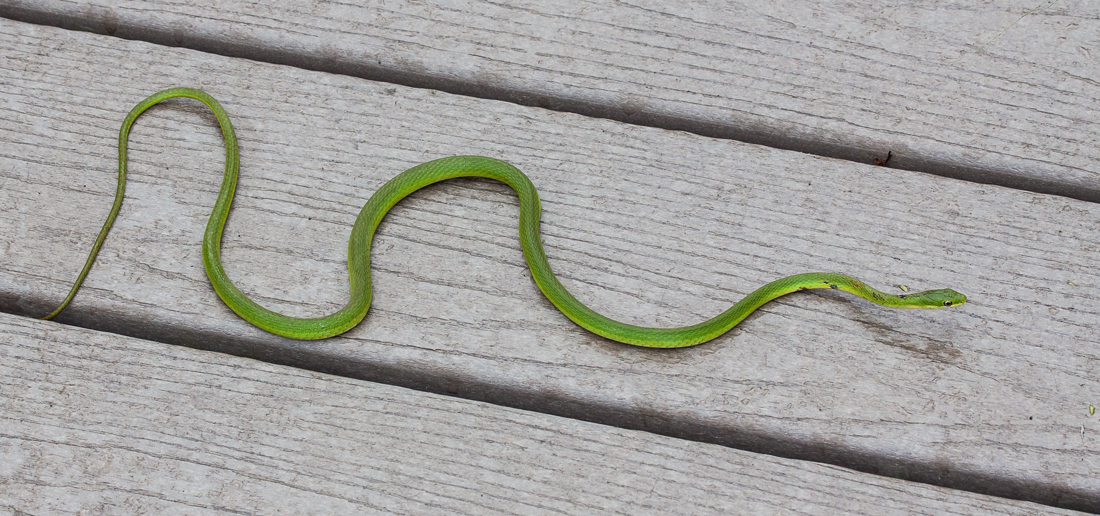
Earlier this month, I was really happy to spot this Northern Rough Greensnake (Opheodrys aestivus) on the boardwalk at Huntley Meadows Park, my local marshland park. These snakes spend most of the time in the trees and in heavy brush, so I rarely get to see one, despite their very distinctive color and overall appearance. The Virginia Herpetological Society claims that this is a docile species that will not bite, but just to be safe, I took the close-up shot from a good distance away, shooting at 300mm on my telephoto zoom lens.

Generally I like to photograph my wildlife subjects in a natural environment and the “wood” on this boardwalk isn’t even natural—it’s some kind of synthetic material. In this case, however, the neutral color of the background helps to focus viewers’ attention on the colors and textures and shape of the snake. In the final two images, in particular, I really like the contrast between the sinuous curves of the snake’s body and the hard, straight lines of the man-made objects.

Rough GreensnakeRough GreensnakeRough Greensnake

© Michael Q. Powell. All rights reserved.

Read Full Post »

Many dragonflies species have disappeared by now as we move deeper into autumn, but some especially beautiful ones have taken their place, like these male Blue-faced Meadowhawks (Sympetrum ambiguum) that I photographed yesterday at my local marshland park.

According to the Dragonflies of Northern Virginia website, this species peaks in September to October and is the rarest and hardest to find meadowhawk in our area. I was walking through a meadow at the park with one of my fellow photographers when she spotted the Blue-faced Meadowhawk in the second photo perched on a log. At that moment, I happened to have a 70-300mm telephoto lens on my camera and I was happy  to be able to get a shot that shows the spectacular colors of this dragonfly. Little did I know that I would have an even better opportunity a few minutes later.

As we continued into an area with thigh-high growth, my friend stopped for a moment and said she had spotted a spreadwing damselfly. I looked in the direction that she was pointing and didn’t see the damselfly, but I did spot another Blue-faced Meadowhawk perched atop one of the plants.

In a whispered voice, I asked my friend to freeze and I quickly changed lenses to my 180mm macro lens. Amazingly, the dragonfly stayed in place and I was able to get a number of shots, including the first one below. Given that these dragonflies are less than two inches in size (50mm), I am thrilled with the results. There is something almost magical about the combination of red, blue, and turquoise on this dragonfly.


Blue-faced Meadowhawk Blue-faced Meadowhawk.

© Michael Q. Powell. All rights reserved.

Read Full Post »

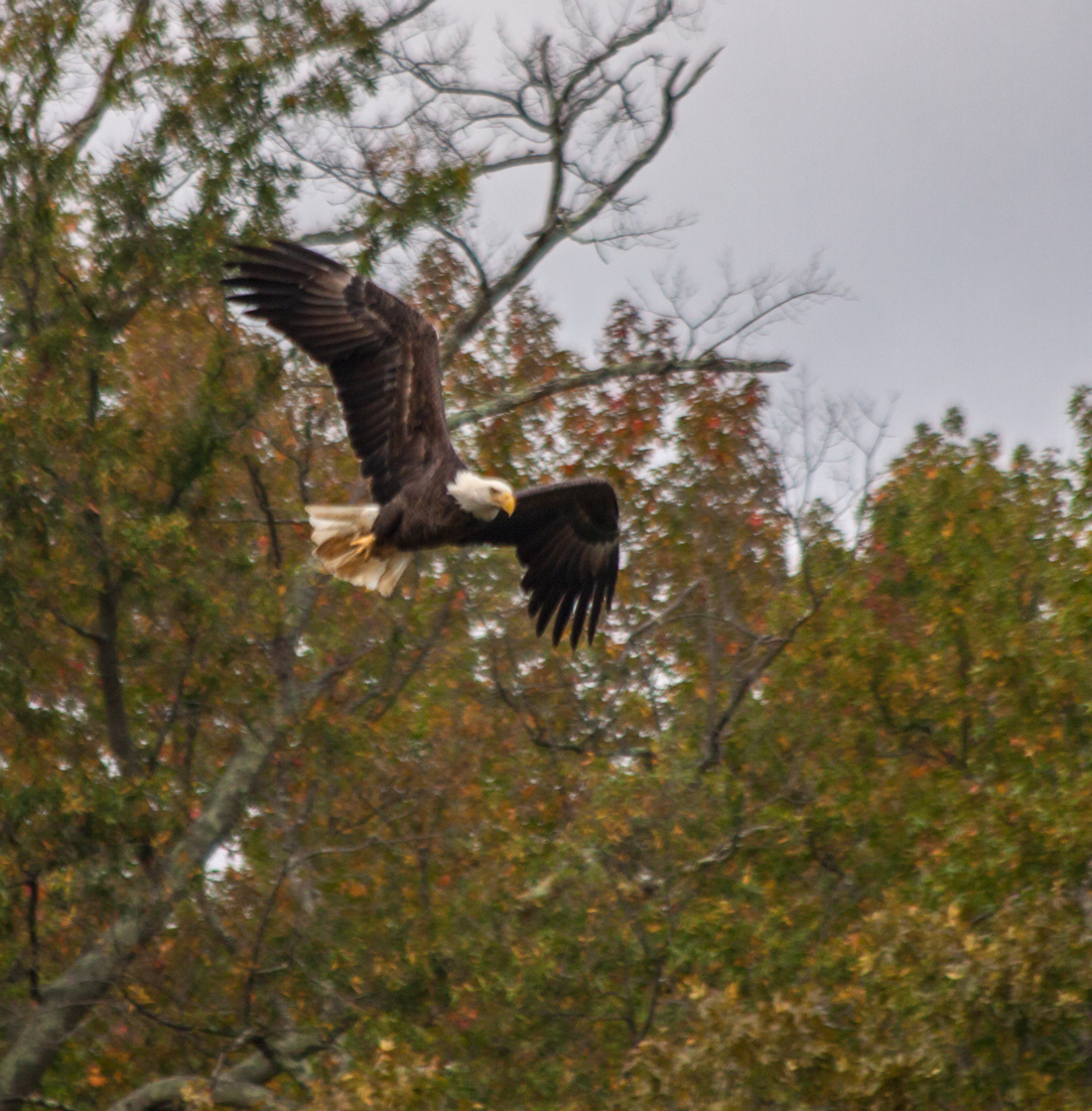
This morning I spotted a Bald Eagle (Haliaeetus leucocephalus) in a tree a my local marshland park, not far from where I had previously seen one. Once again, the eagle reacted more quickly than I did and took off before I was completely ready. This time, however, I was able to more quickly track the flying eagle and got a better shot than last time. I’m still not fully satisfied with the sharpness of this image, but I continue to believe that any day that I see an eagle is a great day.

Bald Eagle at Huntely Meadows Park

© Michael Q. Powell. All rights reserved.


Read Full Post »

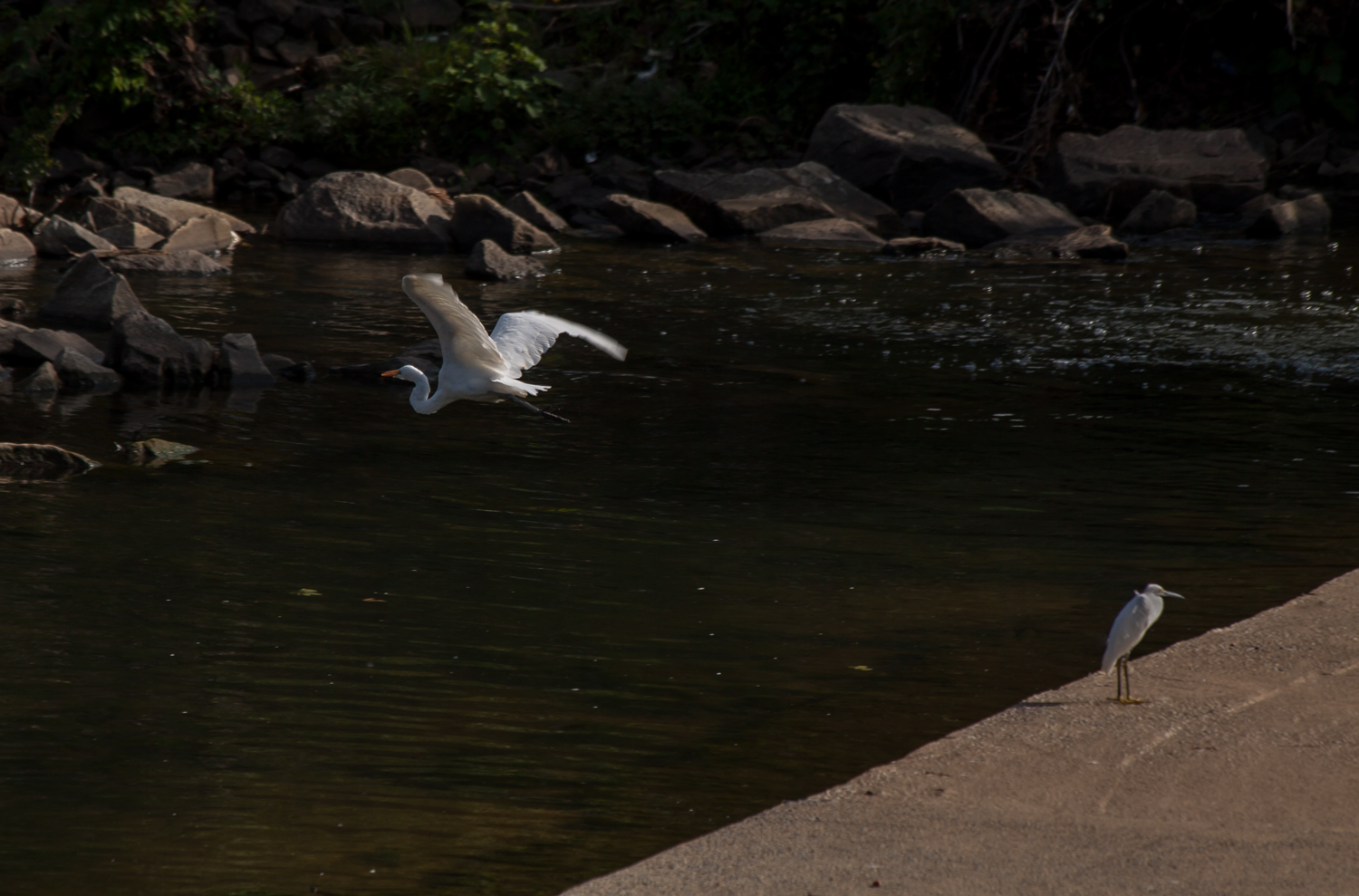
I’ve seen lots of Great Egrets (Ardea alba) over the past couple of years, but until recently I had never seen a juvenile one and had no idea that they were so small compared to the adults.

I caught this little interaction between what I assume is a mother and a young egret at Cameron Run, a tributary of the Potomac River in Alexandria, Virginia. The birds were standing on one of a number of concrete slabs that cross the entire width of the stream, presumably to slow down the flow of the water.

UPDATE: A number of more experienced birders have weighed in and pointed out that the smaller egret is not a juvenile Great Egret as I thought, but is instead a Snowy Egret (Egretta thula), a species that I had never seen before. As a result, the scenario below that I imagined is no longer valid—I’ll have to think a bit more about what herons of two different species might have been discussing.

The mother seemed to be giving instructions to the young one to stay put while she flies off to fish a short distance away.

Great Egret and baby

Mom gets a bit excited as she warns the little one to stay put

Great Egret adult and juvenile

The little one finally agrees

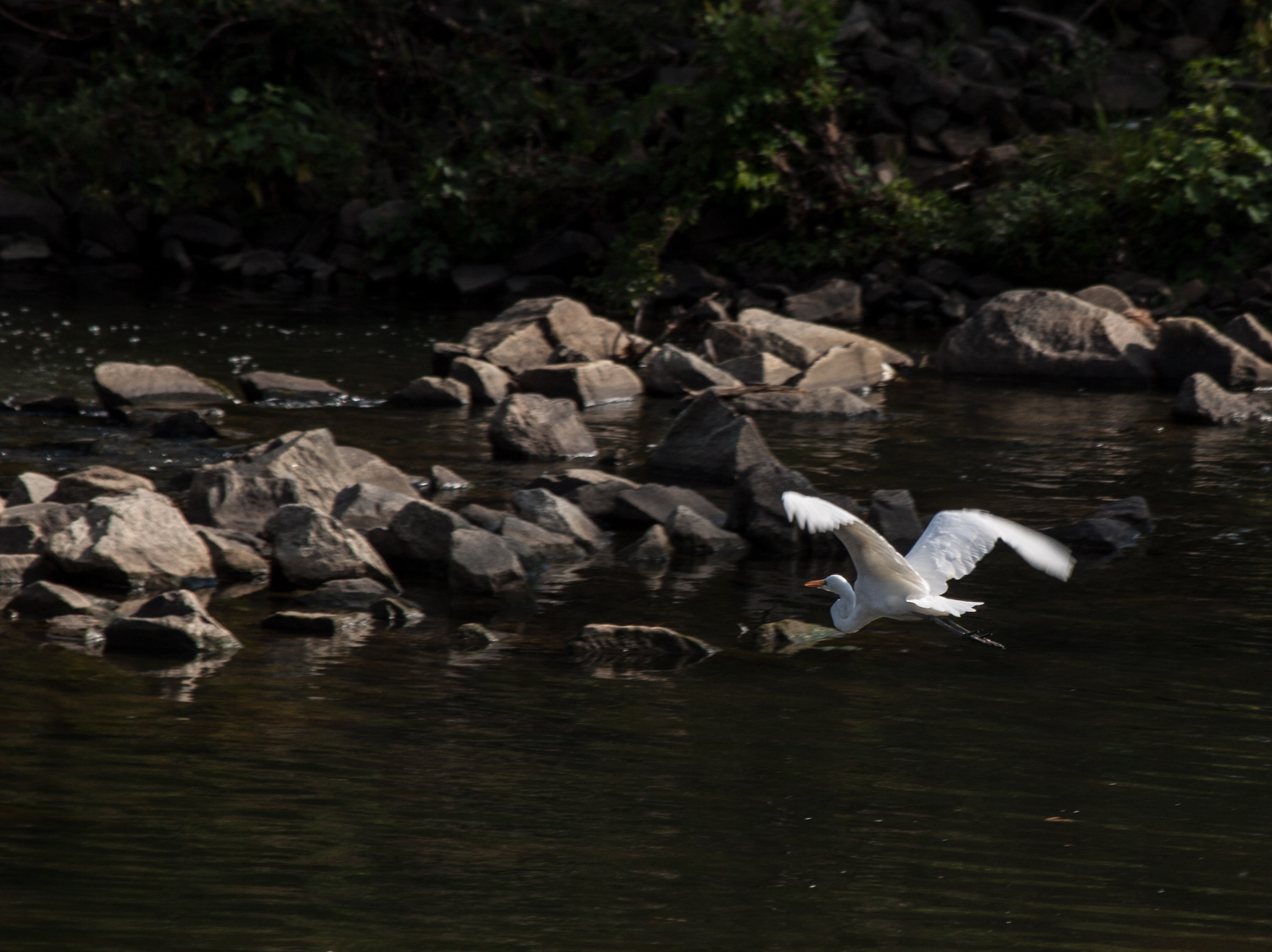
The mother eventually is reassured and takes off for the rocky edge of the water, hoping for a quick catch, so that she can feed the hungry youngster.

Great Egret adult and juvenile

Flying away for a little while

Great Egret in flight

Searching for the perfect spot for fishing

The young egret is left all alone to wait for the return of his Mom, hopefully with a tasty snack.

Great Egret adult and juvenile

Waiting for Mom

© Michael Q. Powell. All rights reserved.


Read Full Post »

This past weekend I traveled to Washington D.C. to cheer on a friend and her team, the DC Strokes Rowing Club, in the 3.1 mile Head of the Anacostia Regatta. I don’t have a lot of experience photographing sports or even people, so it was a challenge for me to capture some images of the event.

The last time that I watched my friend row, she was part of a four-woman boat, but this time she was in a mixed boat, with four female and four male rowers (plus a coxswain). I can’t even imagine how difficult it must be to synchronize your efforts with such a large number of others of such varied sizes and strengths. It was fascinating, for example, to see how they carried the boat down the ramp to the water, with the rowers arranged in ascending order by height.

I learned from the last time that I watched a race at this location that the best way to get action shots of the entire boat was to place myself on a bridge that overlooks the finish line. So after I watched the rowers launch their boat, the Stonewall, and head slowly for the start line, I walked quickly to the bridge to await their arrival. As I looked upriver to see when the boats would be coming, it was tough see across several railings and four lanes of traffic.

Eventually their boat arrived and I was happy that I was able to get some action shots from above as they headed for the finish line. Congratulations to all of them!

(Click on any of the photos in the tiled mosaic to see the photos in a larger size.)

The rowers in action

The rowers in action

© Michael Q. Powell. All rights reserved.

Read Full Post »

As I reached the boardwalk, I glanced to my right and realized that I was eye-to-eye with a snake that was loosely coiled on top of a bush. This Common Ribbonsnake (Thamnophis sauritus sauritus) seemed to have appointed himself as the official greeter of the day at the marsh, though I suspect that not all visitors welcomed his presence so close to them as they walked by.

ribbon_blog

© Michael Q. Powell. All rights reserved.

Read Full Post »
Do you photograph some subjects over and over again, hoping to get better (or at least different) images? I never grow tired of observing herons and egrets at my local marshland park. Most of the time, they (and I) are standing still, waiting for a brief moment of action, generally when they are fishing or when they take off into the air. These birds look gangly and awkward when on the ground or in the water, but when they are flying, it’s like watching an aerial ballet.

I took this shot last Friday as a Great Egret (Ardea alba) was just taking off from the muddy waters of one of the small ponds at the park. I was thrilled to be able to capture both a shadow and reflection of the graceful bird. Although I often have trouble getting a good exposure and frequently blow out the highlights, in this case I as able to capture some of the details of the wing feathers.

The egrets will be migrating out of this area soon, but I will continue to have the herons to keep me occupied in the upcoming months (and I’ll be trying to get more shots like this one).

Great Egret

© Michael Q. Powell. All rights reserved.

Read Full Post »

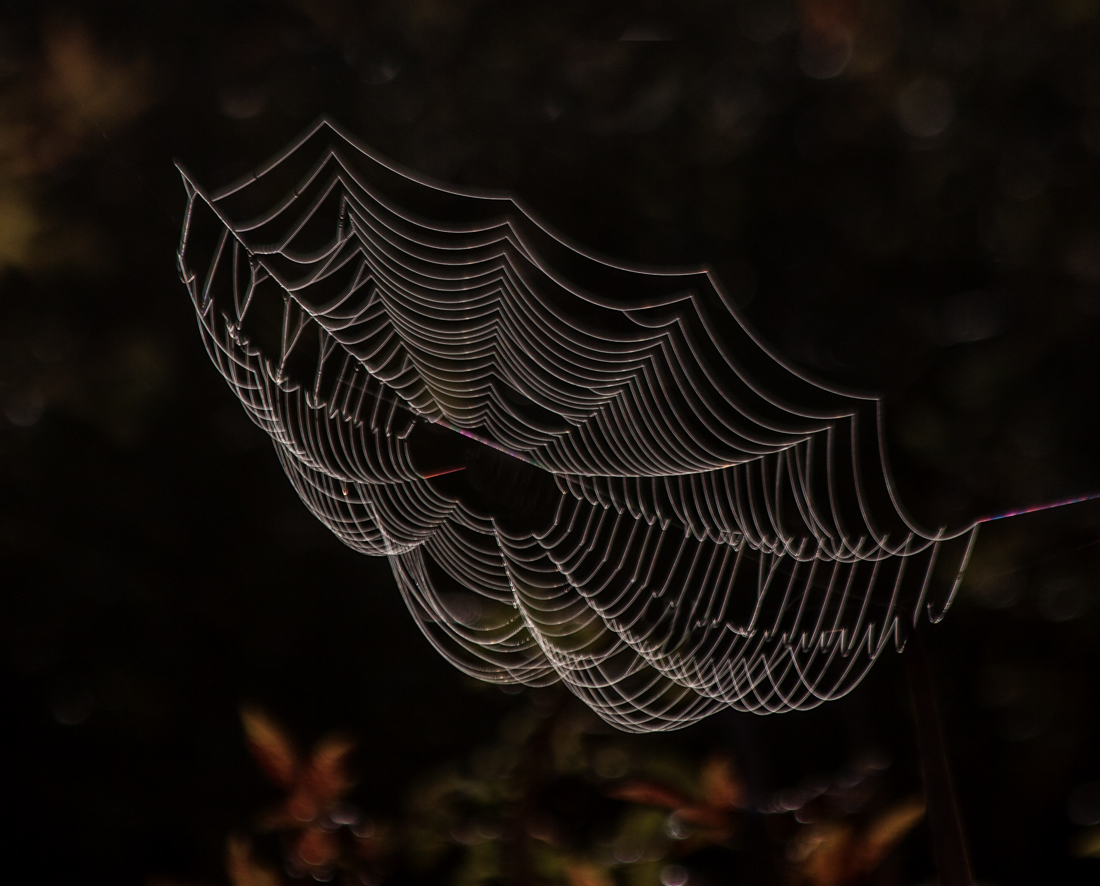
One of the joys of arriving early at the marsh at this time of the year is having the chance to see spiders’ handiwork, backlit by the rising sun.

web2_blog web3_blog

© Michael Q. Powell. All rights reserved.

Read Full Post »
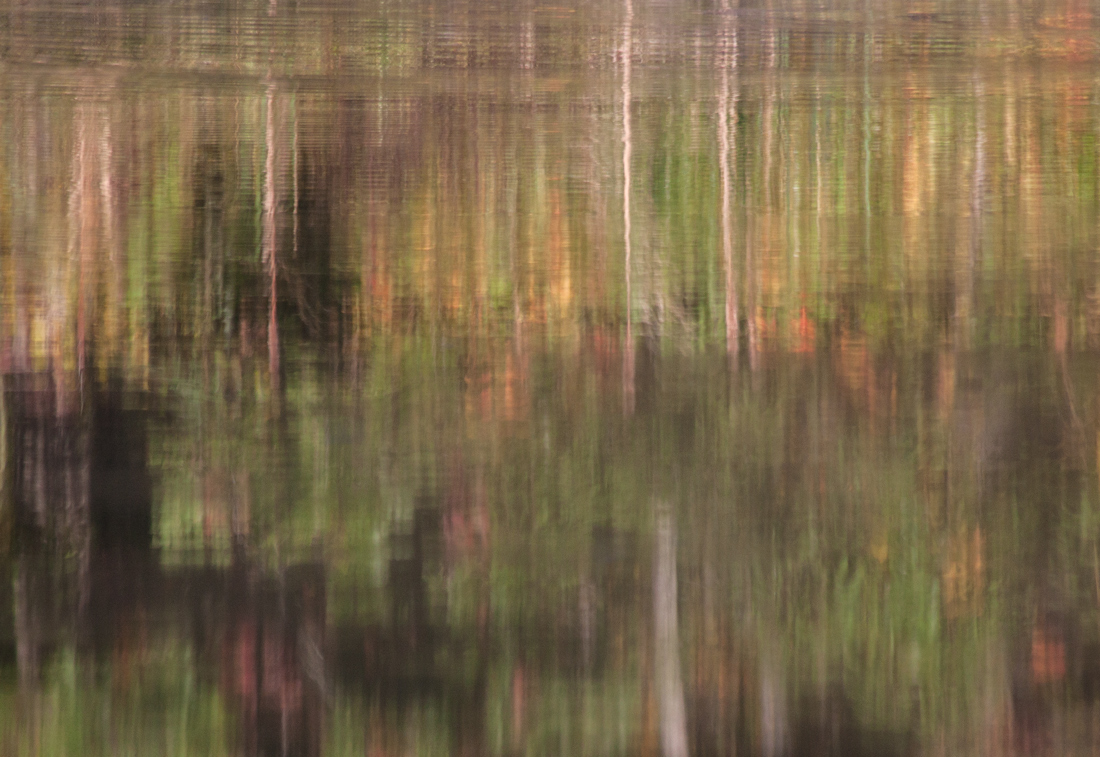
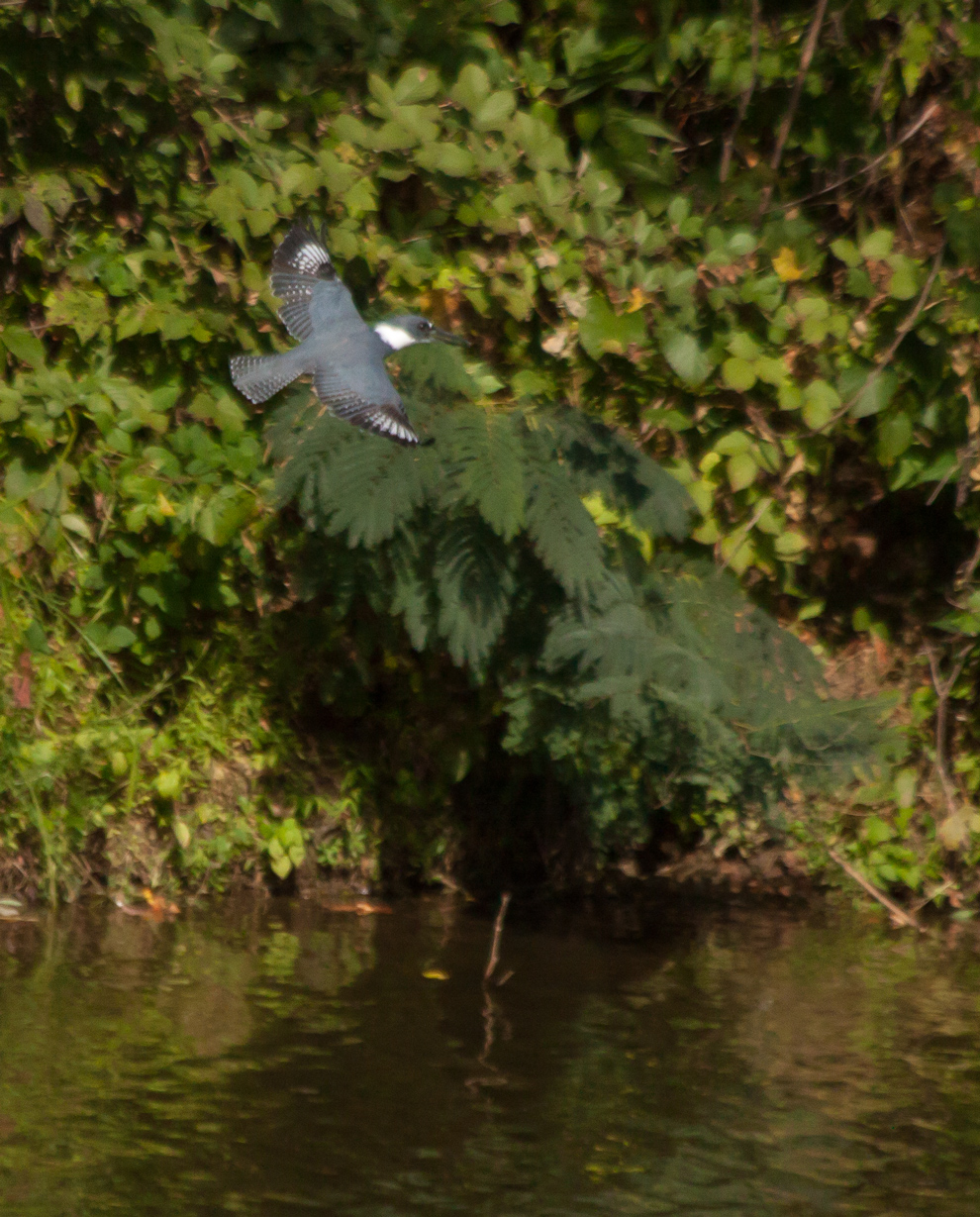
It’s autumn now and my thoughts (and my camera) are starting to focus more on birds than insects. This past weekend, I returned to a location where I had previous seen a female Belted Kingfisher (Megaceryle alcyon).  The kingfisher would perch on the limbs of some trees overlooking a small trout-stocked pond called Lake Cook, which is really more like a small pond, and periodically make a foray across the surface of the water and grab a fish.

I realized this time that I had a problem—there are so many leaves still on the trees that I couldn’t spot the kingfisher when I heard its very distinctive, rattling call. I could get a general idea of its location, but couldn’t see the kingfisher until it was already in flight, which mean I had to react really quickly to acquire and track it, hoping that I would be able to focus on it.

As it turns out, hope is not really an effective photographic technique and not surprisingly I ended up with a lot of blurry, improperly exposed images, in part because the kingfisher was flying in an out of the shadows. I was pleased, though, that I was able to capture a few decent images of the kingfisher in flight. I was shooting from across the pond from where the kingfisher was perched, so the shots are not close-ups of the bird, but are more like environmental action shots. Maybe I need a longer lens!

Belted KingfisherBelted KiingfisherBelted KingfisherBelted Kingfisher

© Michael Q. Powell. All rights reserved.

Read Full Post »

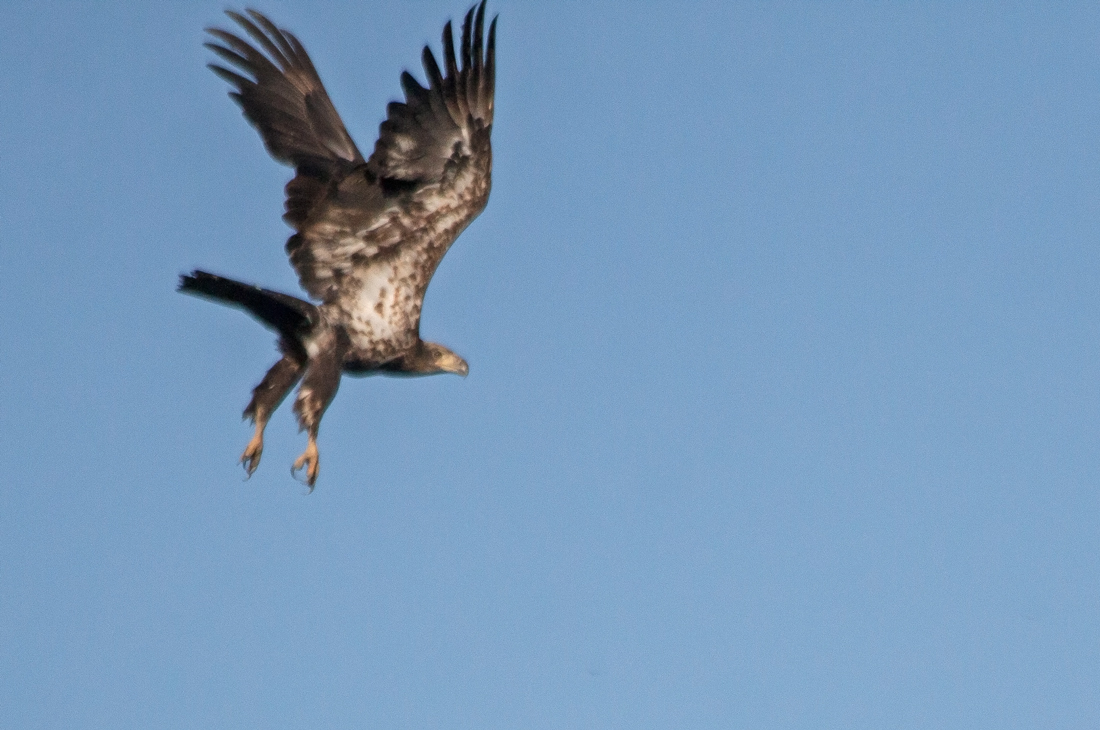
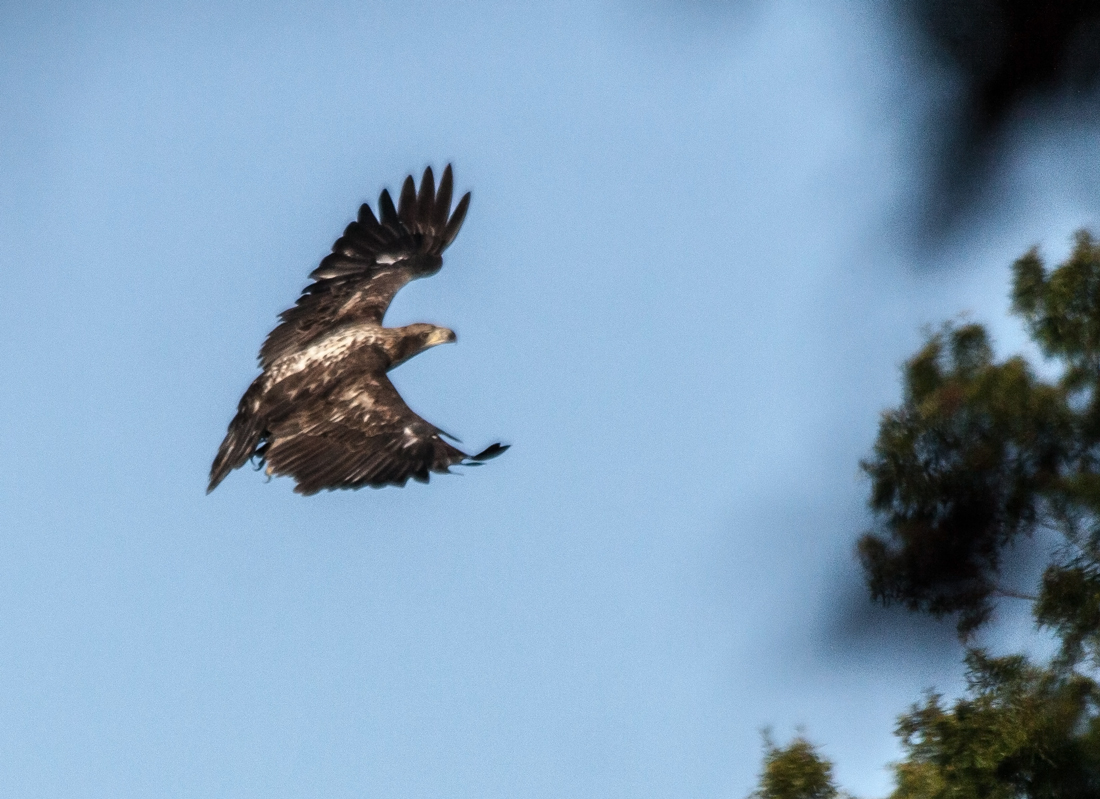
Can you react faster than an eagle can? Yesterday, I was getting ready to step out of the brush that surrounds one of the ponds at my local marsh, when I spotted a large dark shape in a dead tree that overlooks the water. I suspected that it might be a Bald Eagle (Haliaeetus leucocephalus), since I had seen eagles perched on this tree a couple of times in the past.

As I stepped forward and was starting to bring my camera to my eye, a juvenile Bald Eagle took off. The eagle flew upwards so quickly that I had trouble finding it and keeping it in my viewfinder, as you can see in my first shot. I got a few more shots as I tracked the eagle’s flight, but in most of them, the eagle’s head is obscured by its outstretched wings. Just before the eagle flew behind the trees in the distance, I got a reasonably clear shot, the second image below.

What did I learn? If an eagle spots me at the same time that I spot him, his reaction times are going to be quicker than mine. Someone I’m going to have to figure out a way to be more stealthy and more ready the next time I find myself in a situation like this. That will be my challenge this autumn as I start to take more shots of birds as the insect population gradually decreases.

eagle1_blog_sepeagle2_blog_sep© Michael Q. Powell. All rights reserved.

Read Full Post »

For the first time in my experience, ospreys have been hanging out at my local marsh this summer, probably because of the higher water levels as a result of a massive wetland restoration project. I love watching the ospreys soaring high in the air. They are generally too far aware for me to capture their high-speed dives into the water, but occasionally I will see one catch a fish. Recently I captured some shots of the various wing positions of an osprey flying away with its freshly caught fish.

© Michael Q. Powell. All rights reserved.


Read Full Post »

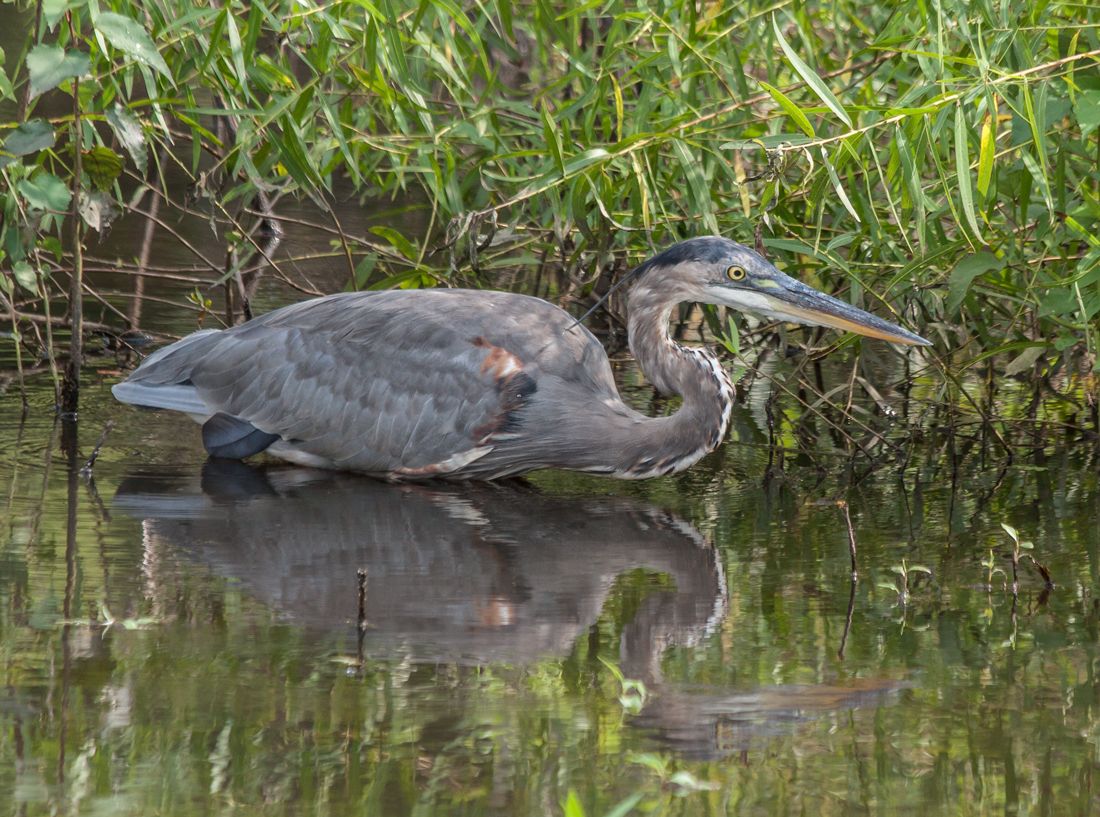
Why was this Great Blue Heron (Ardea herodias) crouching in the water? Was he playing hide-and-seek with his heron friends? Was he seeking shelter in the shade?

The more that I watched the heron fix his attention on the eye-level branches, the more I became convinced that he was stalking dragonflies. Several times he advanced forward slowly, never once looking down at the water, but I never saw him make the rapid thrust that he uses when catching fish. It seems to me that he would get a better reward for his efforts by catching fish and frogs, but maybe he simply wanted some variety in his diet.

When I departed, the heron was still crouching and the dragonflies remained hidden.

Great Blue Heron

© Michael Q. Powell. All rights reserved.

Read Full Post »

Dragonflies are so beautiful that I sometimes forget that they are also fierce predators. Last weekend at my local marsh, I captured this image of a female Eastern Pondhawk dragonfly (Erythemis simplicicollis) feeding on another dragonfly, which looks like it might be a female Blue Dasher (Pachydiplax longipennis).

The dragonfly is perched on the end of one of the slats of a railing that along the edge of an inclined section of the boardwalk. I cropped the image to focus viewers’ attention on the dragonfly, but I also like the second version of the same photo, which is close to the original view when I took the shot. Somehow those three slats remind me of a row of tombstones, a memorial to the predator’s prey.

Eastern Pondhawk

Eastern Pondhawk

© Michael Q. Powell. All rights reserved.

Read Full Post »

I know that damselflies come in many colors, but my brain wanted to cramp up when I was told that this stunning orange damselfly was a bluet. An orange bluet? Aren’t bluets blue?

Apparently that is not always the case, and this little beauty is in fact a male Orange Bluet damselfly (Enallagma signatum). This shot looks like it was done with flash, but I double checked the EXIF data and confirmed that it was simply an effect caused simply by using exposure compensation and metering carefully on the subject. Normally, I am not a big fan of a black background, which can be caused when the light from the flash overpowers the ambient light, but I think that it works well in this shot, which looks almost like it was shot in a studio.

In the second shot, the brown color of the muddy water shows through in a way that is a little more natural. I took this shot when the damselfly was farther away than in the first shot and I like the way that it shows a bit more of the environment than in the first image.

One of the advantages of shooting in bright light and on a tripod was that I was able to shoot at ISO 100 and at f/11, which gave me images that were a lot cleaner than I often get.

orange1_blogorange2_blog

© Michael Q. Powell. All rights reserved.


Read Full Post »

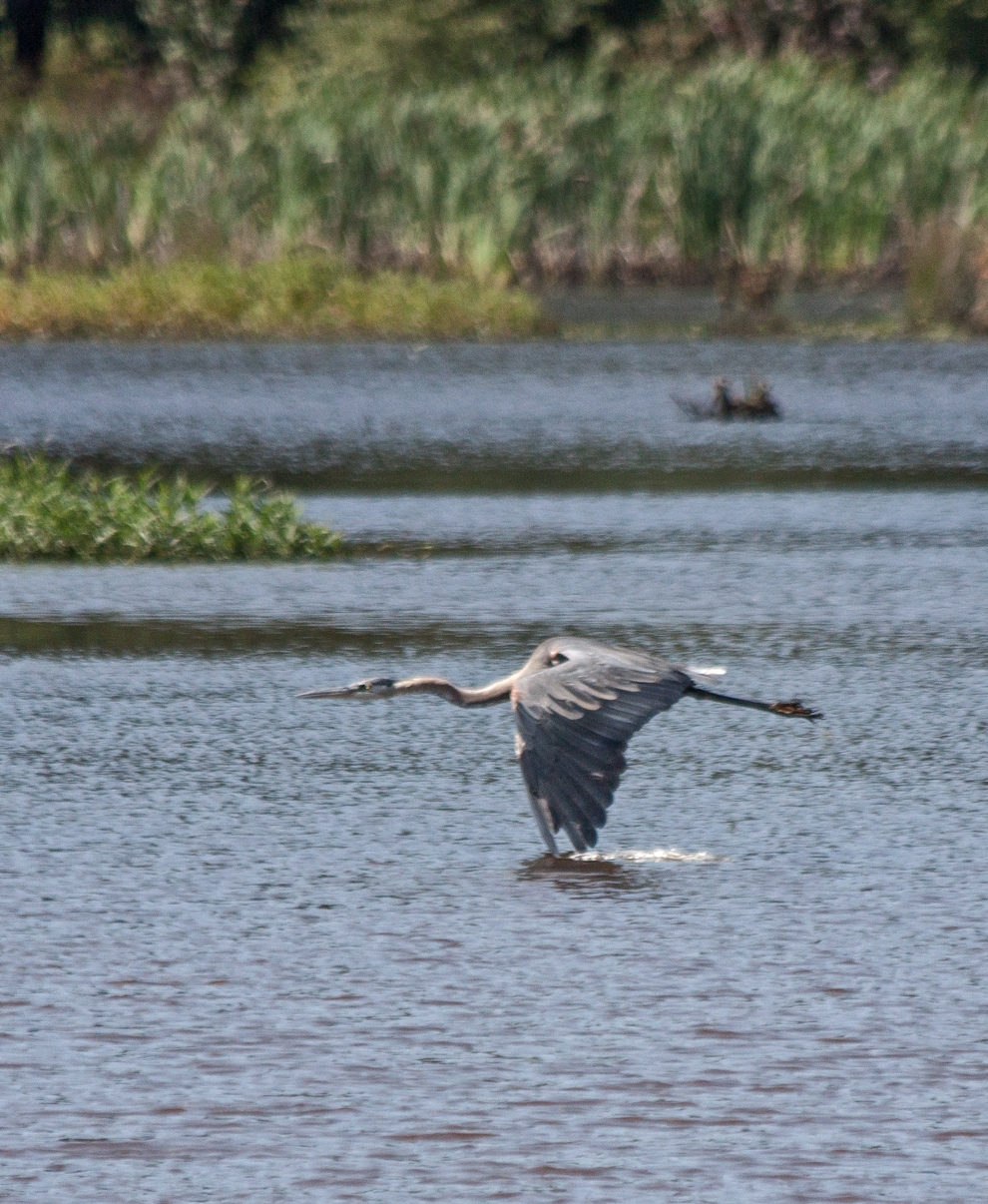
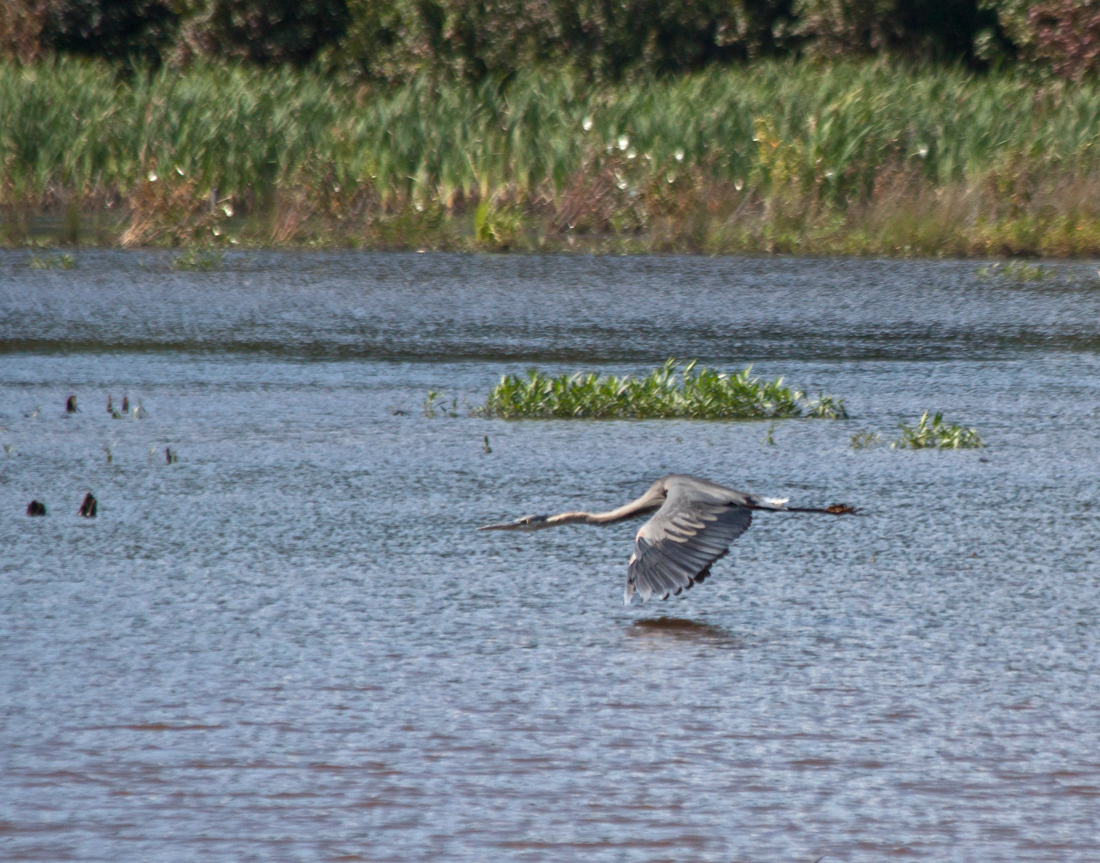
Most of time when I see Great Blue Herons (Ardea herodias) take off, they fly high into the air. This heron, however, decided to fly very low over the surface of the big pond at my local marsh—I think he was on his way to harass one of his fellow herons, because there was a lot of loud squawking shortly after I took these shots.

Generally, it’s not hard for me to decide if I want to crop a shot in landscape or portrait mode. This time, though, I vacillated and ultimately decided to do one each format.  Who says you have to choose? You can have it both ways.

heron2_low_blogheron_low_blog

© Michael Q. Powell. All rights reserved.

Read Full Post »

The few Monarch butterflies (Danaus plexippus) that I observed earlier this season were all in gardens, so I was especially happy when I spotted one this past weekend in the wild, feeding on some Swamp Milkweed (Asclepias incarnata) at my local marsh.

The little patch of Swamp Milkweed was a pretty good distance away, so I had to use the long end of my 70-300mm zoom for these shots. It looks like many of the flowers of the milkweed had not yet opened, but the butterfly obviously found it to be attractive enough to stop for a moment.

Monarch Butterfly Huntley MeadowsMonarch Butterfly Swamp Milkweed

© Michael Q. Powell. All rights reserved.

Read Full Post »

Generally I prefer to have a natural background for wildlife shots, but when a Green Heron (Butorides virescens) that I was observing this past Friday at my local marsh took off, I ended up shooting it against the backdrop of the boardwalk. I really like the look of the resulting shot, which juxtaposes those natural and industrial elements in an unusual way.

If you enjoy photos with this type of contrast of the natural and the man-made, check out my posting from this past week of an “industrial” dragonfly.

Green Heron Huntley Meadows

© Michael Q. Powell. All rights reserved.

Read Full Post »

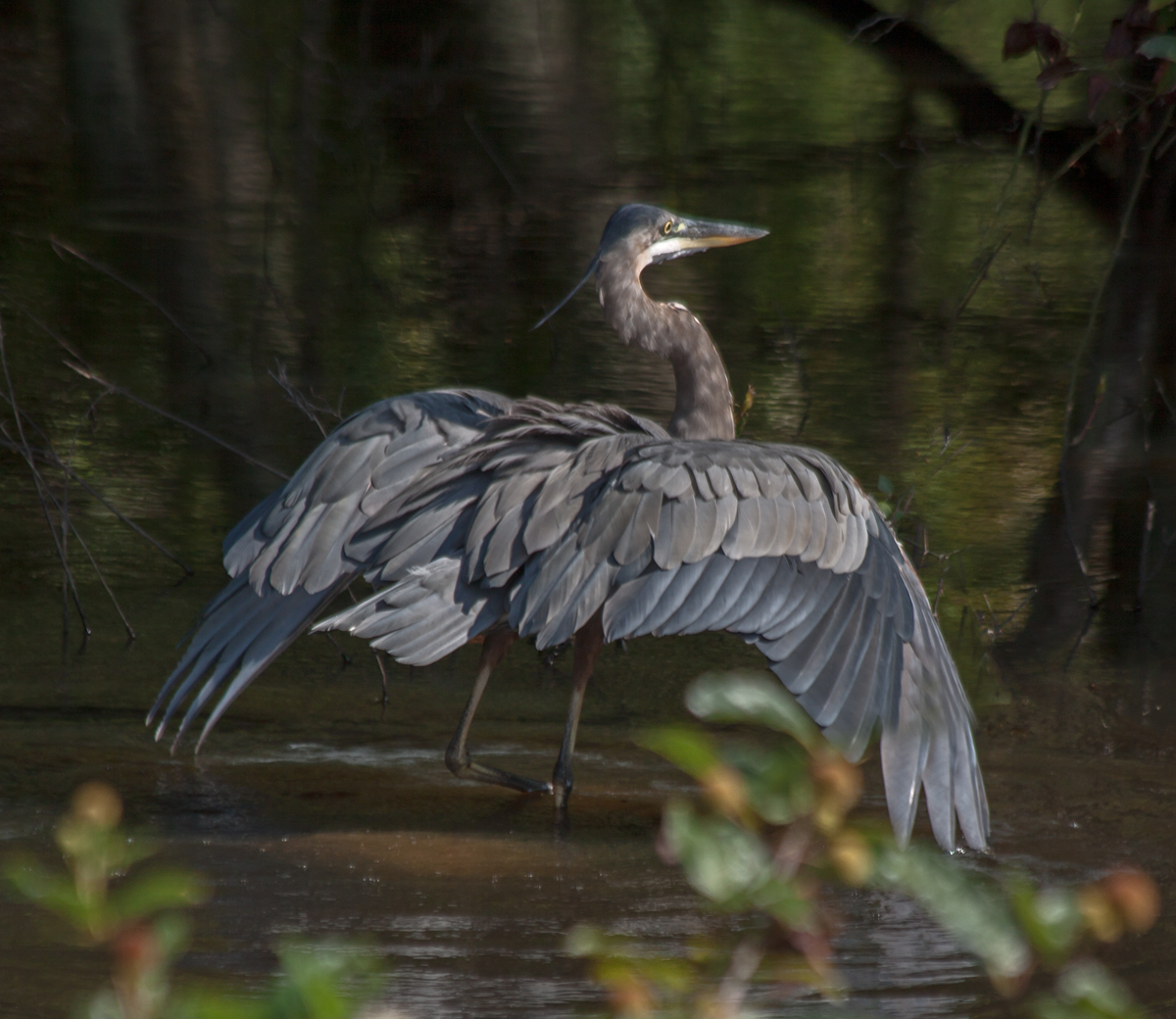
Several Great Blue Herons (Ardea herodias) were very active yesterday at my local marsh, chasing each other around and squawking loudly. One of them flew up into a tree near to where I was standing and perched for a little while. I got this shot shortly after the heron flew down from the tree into the water and extended its wings to arrest its momentum.

Great Blue Heron

© Michael Q. Powell. All rights reserved.

Read Full Post »

Readers may have noticed that I rarely take photos of people and never photograph sporting events, but yesterday I found myself supporting one of my friends at the Capital Sprints Regatta in Washington D.C. on the Anacostia River. This was her first competition as a member of the DC Strokes Rowing Club and it was great to get some shots of her in action to commemorate the event.

I had never before been to a regatta and I took a lot of photos in an effort to capture the feeling of the experience. I selected a few of my favorites for this posting, including some close-up portraits as well as some action shots.

row4a_blog


© Michael Q. Powell. All rights reserved


Read Full Post »

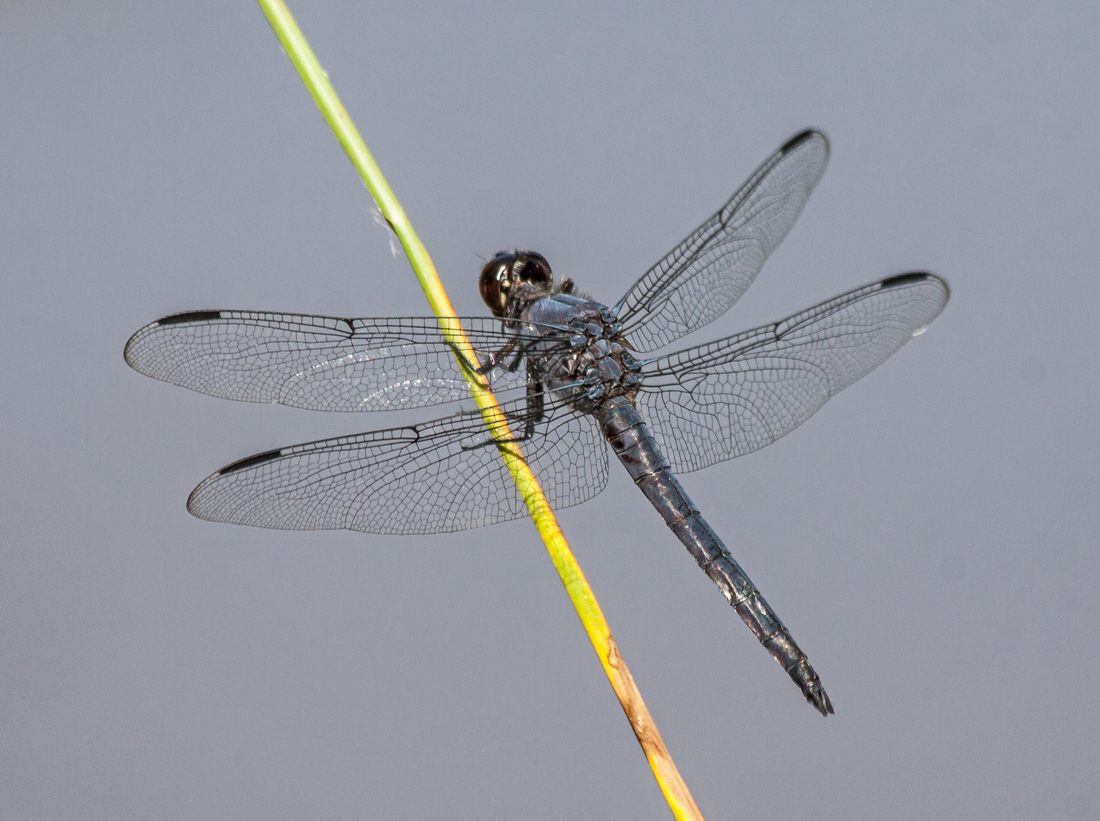
It’s prime season now for dragonflies and there are lots of them flying about. Some are brightly colored and gaudy, while others, like this Slaty Skimmer (Libellula incesta) that I encountered Tuesday at Huntley Meadows Park, have a more subdued and refined beauty.

I have been experimenting a bit with lenses and with camera settings as I chase after dragonflies. Although I often use my macro lens for this kind of shot, I took this one at 270mm of my 70-300mm telephoto zoom. I have been told that most telephoto lenses are a little soft at their extreme ends, so I pulled back a little from 300mm. Similarly, I shot this at f/10 to try to get a balance between sharpness and depth of field, while keeping the shutter speed high enough for me to easily handhold the camera.

Most of the time I use evaluative metering on my camera, but for most of my shots on Tuesday, I had the camera set for spot metering. In doing so, I realized quickly that I had to pay a lot more attention to the precise spot on which I was focusing, because that was going to play a disproportionate role in determining the exposure.

I realize, of course, that a lot of the choices will be situationally dependent, but it’s fun and instructive to try out new settings and combinations of settings in trying to improve the quality of my images. (Click on the image to see a higher resolution view of this dragonfly.)

slaty_skimmer1_blog

© Michael Q. Powell. All rights reserved.

Read Full Post »
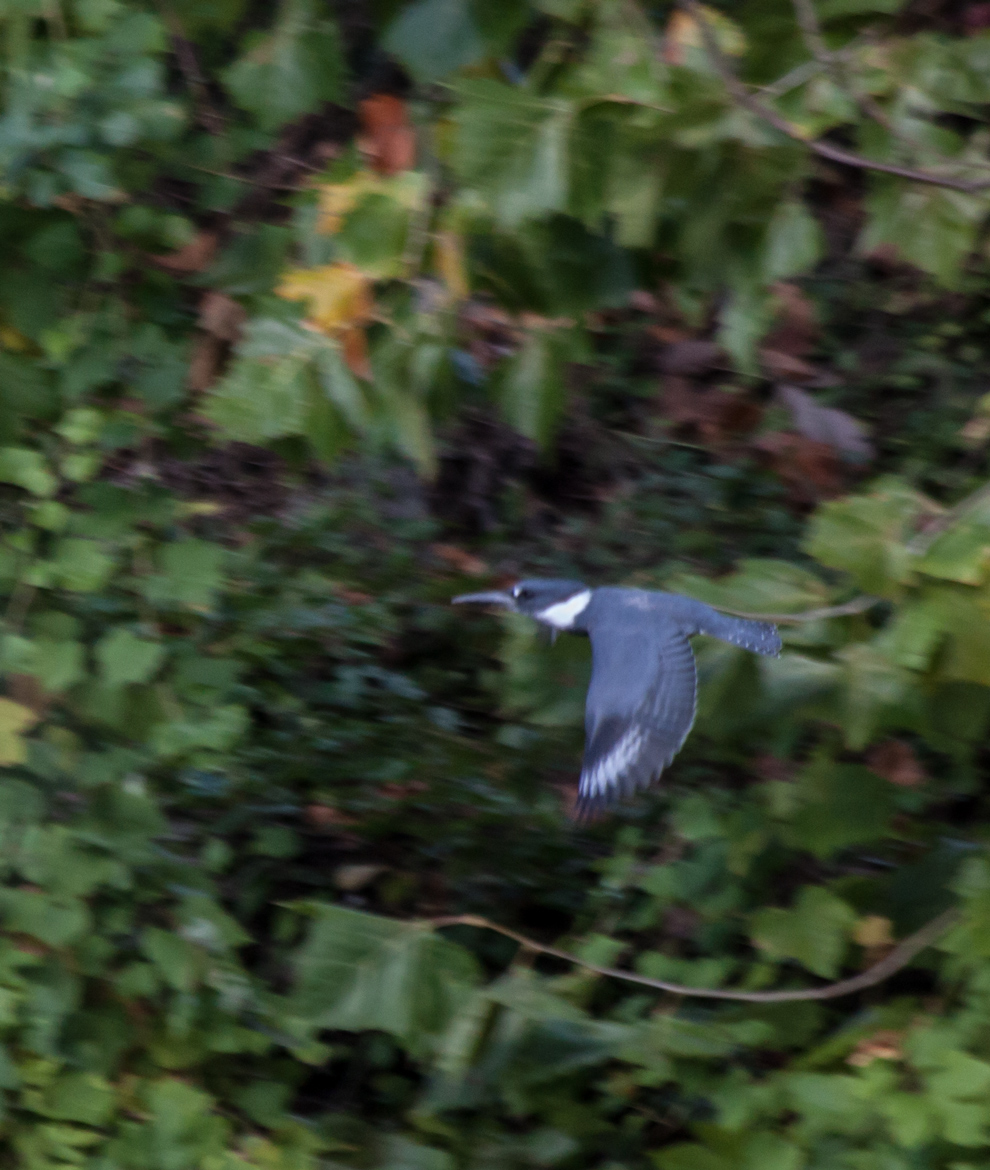
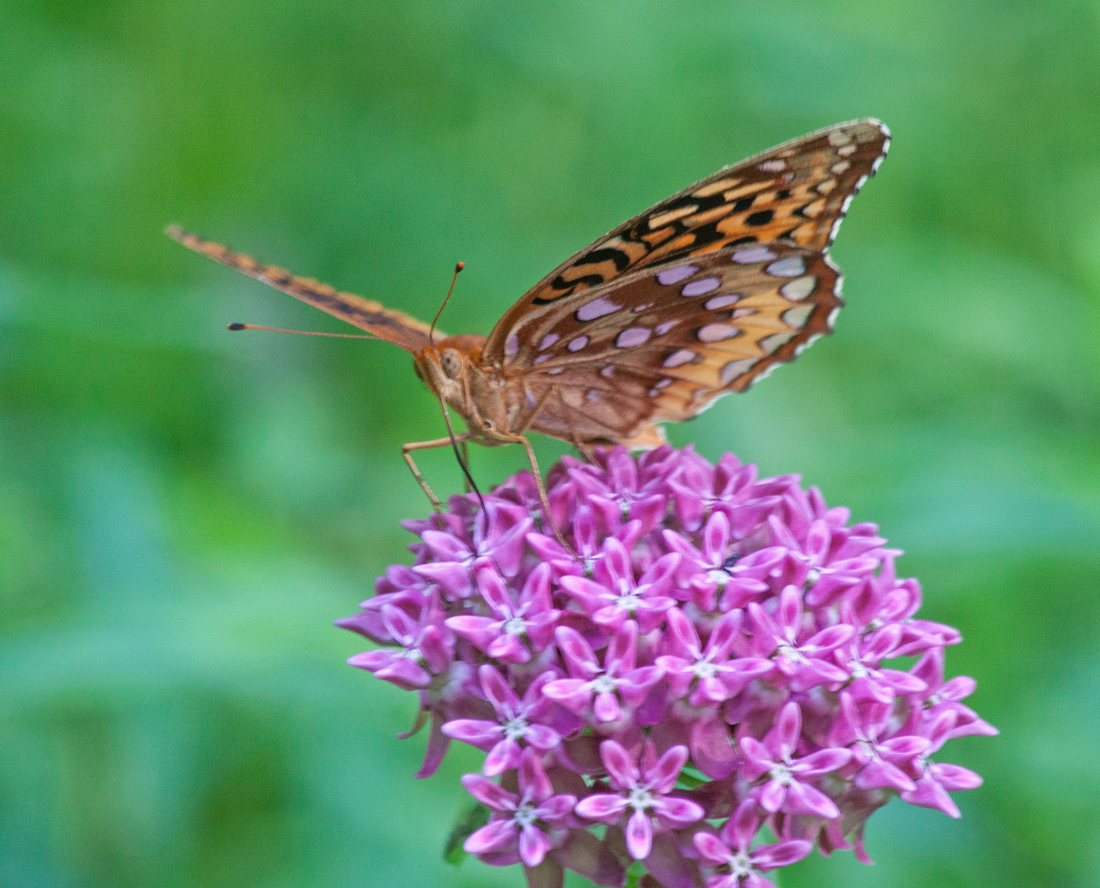
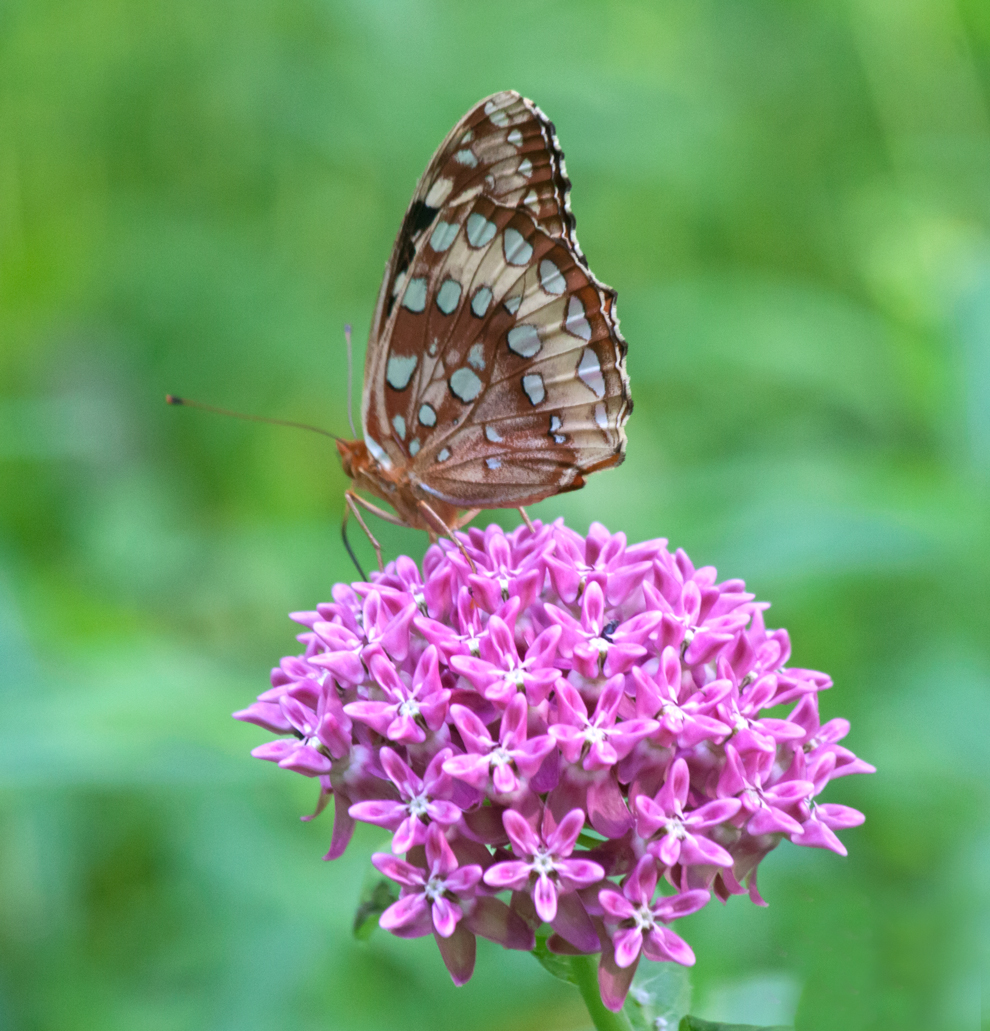
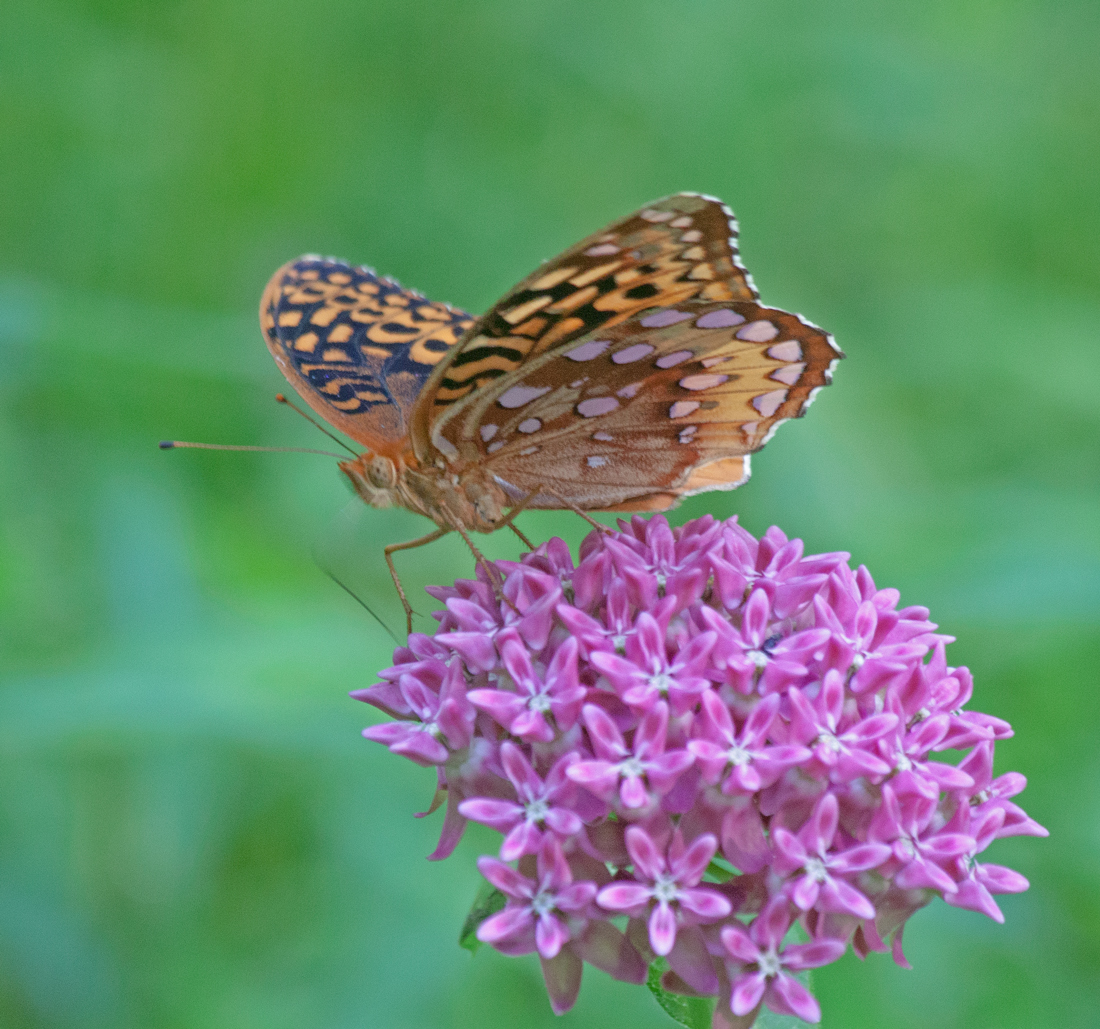
After a week and a half on the road, it was great for me to be able to return to my local marshland yesterday. I was thrilled to see that butterflies have reappeared, including Great Spangled Fritillary butterflies (Speyeria cybele). A group of about a half dozen or so of them kept returning to clusters of a pink-flowered plant that looks like a kind of milkweed, permitting me to get shots of the butterflies in various positions on the flowers.

spang_frit3_blogspang_frit1_blogspang_frit2_blog

© Michael Q. Powell. All rights reserved.

Read Full Post »

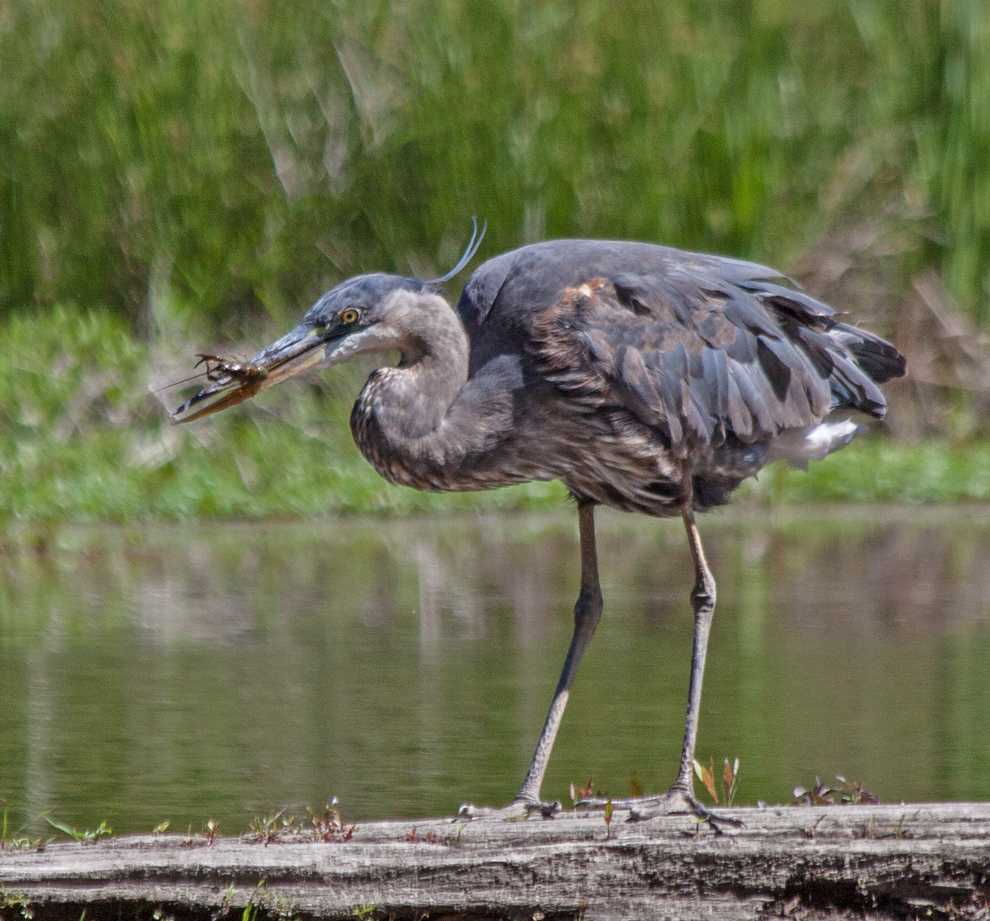
If I want to eat a lobster, I need lots of tools (and a bib). This Great Blue Heron (Ardea herodias) at my local marsh had to try a different technique and seemed to be trying to crack the crayfish’s shell with its bill (or was hoping the crayfish would simply crawl down its throat).

heron2_crayfish_blog

© Michael Q. Powell. All rights reserved.

About these ads

Read Full Post »

Getting to the tastiest parts of crabs and lobsters is an awful lot of work, even when you have the proper implements.  Imagine how tough it was for this Great Blue Heron (Ardea herodias) to figure out what to do with this crayfish that it caught at my local marsh.

Great Blue Herons generally swallow the frogs and fish that they catch after just a few adjustments to get it to slide down the throat, but the heron seemed to spend a long time with this catch, moving it back and forth in its bill. I was a bit too far away to tell if the heron eventually swallowed the crayfish whole or somehow was able to crack the shell. In either case, I’m impressed with the digestive system of this beautiful bird.

heron_crayfish_blog

© Michael Q. Powell. All rights reserved.

Read Full Post »

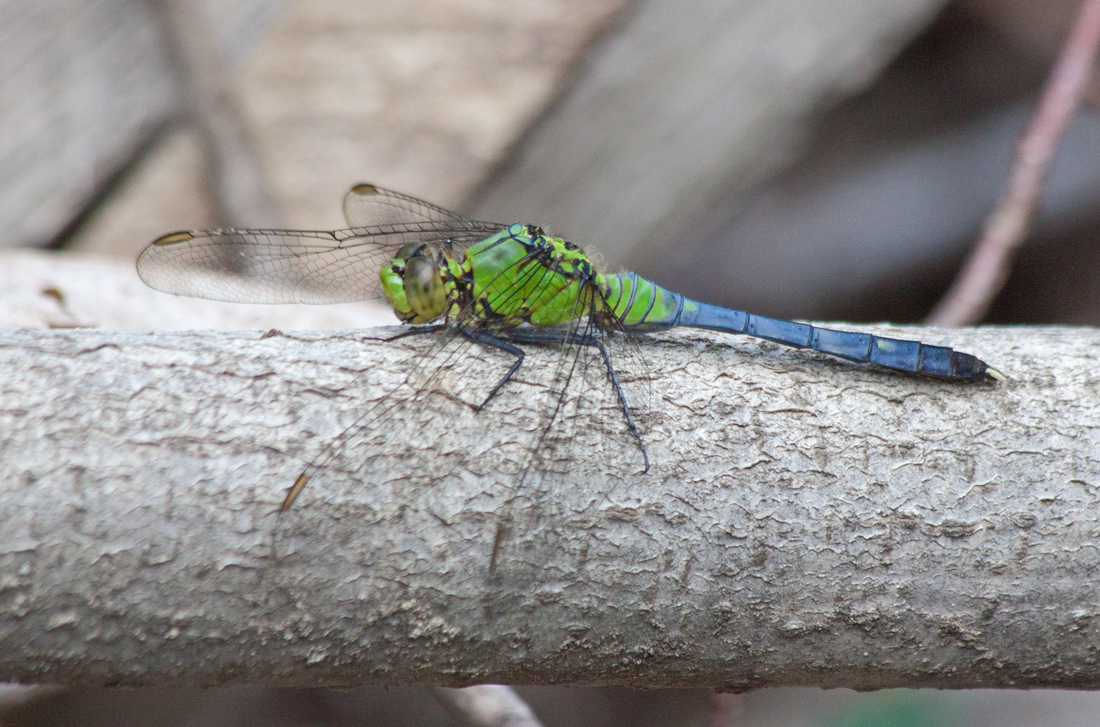
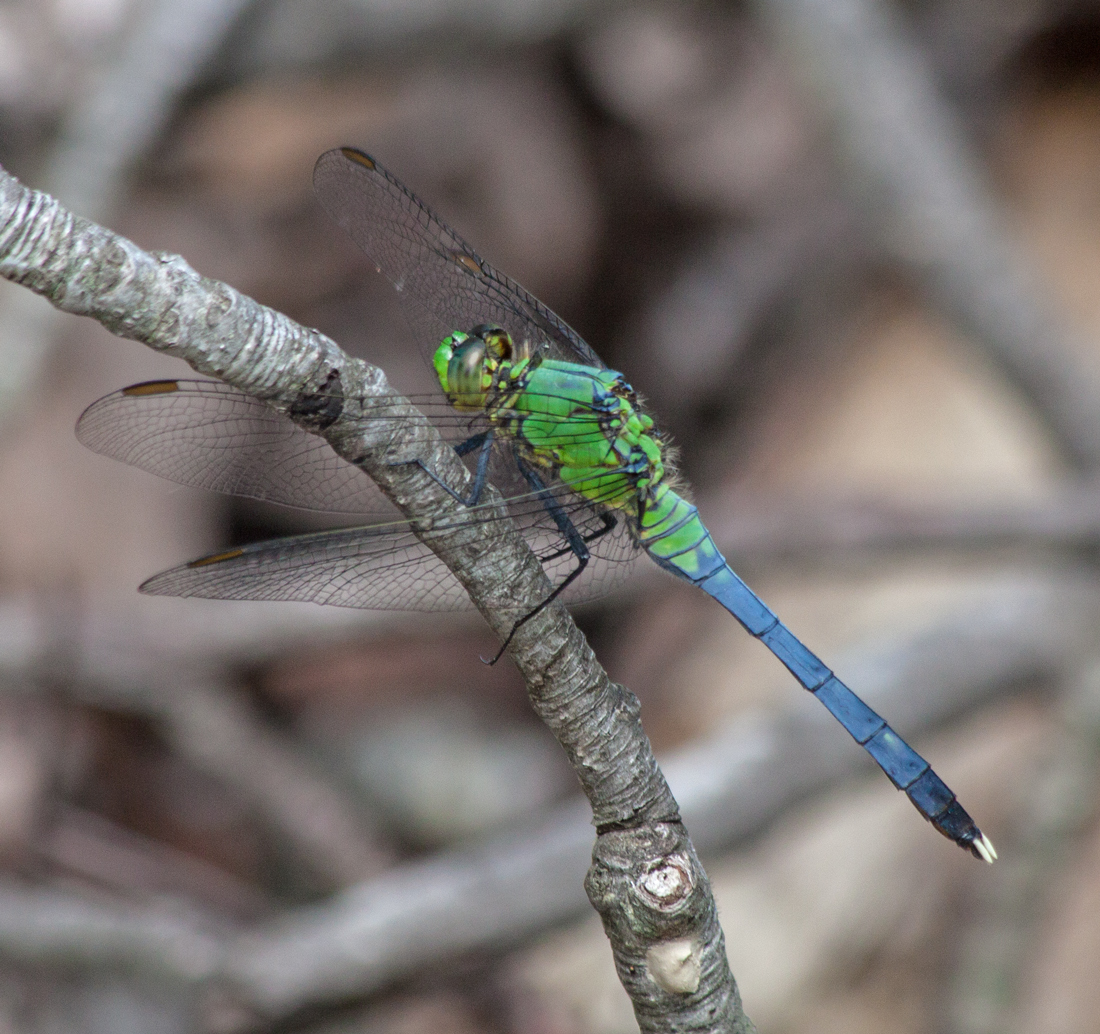
I have always been intrigued by the fact that many male dragonflies start out looking like females and over time acquire their male coloration. It’s a bit of an oversimplification, but male Eastern Pondhawk dragonflies (Erythemis simplicicollis) are blue and females are green. Males of this species initially are green and gradually turn blue. Last weekend I managed to get some shots of a dragonfly who is in midst of this transitional period.

I really like his current two-toned look, but before long he’ll be almost completely blue, (though he will retain the green face.

drag_bg1_blogdrag_bg2_blog

© Michael Q. Powell. All rights reserved.

Read Full Post »

« Newer Posts - Older Posts »