Feeds:
Posts
Comments

Posts Tagged ‘Canon 55-250mm zoom lens’

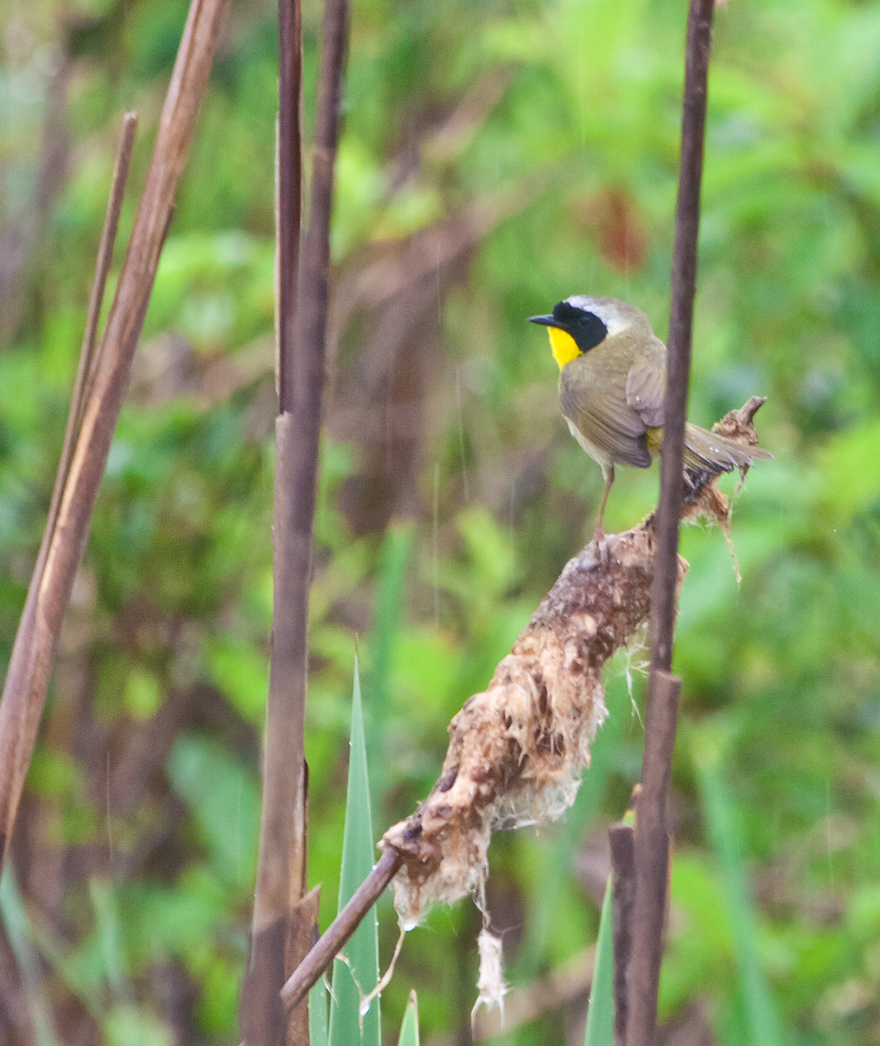
Normally I see (or hear) CommonYellowthroat warblers (Geothlypis trichas) in the upper reaches of trees, generally obscured by leaves.

I was really happy when I spotted this male yellowthroat perched on cattails, in an area in which I normally see only red-winged blackbirds. As a result, I was able to get a relatively unobstructed shot of this beautiful little bird.

yellowthroat_cattail_blog

Michael Q. Powell. All rights reserved

Read Full Post »

Thanks to Tropical Storm Andrea, it rained all day this past Friday, and this juvenile Tree Swallow (Tachycineta bicolor) was wet and hungry and decided to express its unhappiness in a very vocal way.  Shooting from under an umbrella, I was able to capture this moment of pique.

Swallows eat flying insects and I have to believe that the rainy weather made foraging tough for them. Fortunately, the continuous rain last for only a single day and this little bird probably was able to survive its day of reduced rations.

wetbird1_blog

Michael Q. Powell. All rights reserved

Read Full Post »

Yesterday, I was observing a Great Blue Heron (Ardea herodias) as he flew to a new location. As soon as the heron landed, a male Red-winged Blackbird (Agelaius phoeniceus) started buzzing him, obviously feeling possessive of the territory. I captured this photo as the heron took off in search of a more peaceful fishing spot.

I love watching the interaction between different species, whether it be birds, reptiles, animals, or insects. Sometimes there is a kind of peaceful coexistence and sometimes, as was the case here, there is confrontation. Previously, I observed a group of blackbirds harassing a juvenile eagle, but this time the blackbird seemed to be alone.

One of my favorite bloggers, Sue of Back Yard Biology, did a wonderful posting recently on the Red-winged Blackbird’s sense of territoriality that is worth checking out. She called it “Angy Bird” and the post includes some cool photos that illustrate her main point.

I tend to think of blackbirds as aggressive and herons as peaceful and prone to avoid confrontation. Another one of my favorite bloggers, Phil Lanoue, who posts gorgeous shots of birds and alligators in his local marsh, has shown me, however, that Great Blue Herons will harass other birds and sometimes steal their catches, including this posting that he called “Stolen Treasure.”

Initially I was focused on catching this heron in the air, but I am glad that I kept my eyes and camera trained on the bird after he landed, for it turned out that the most exciting action was just starting.

chase1_blackbird

Michael Q. Powell. All rights reserved

Read Full Post »

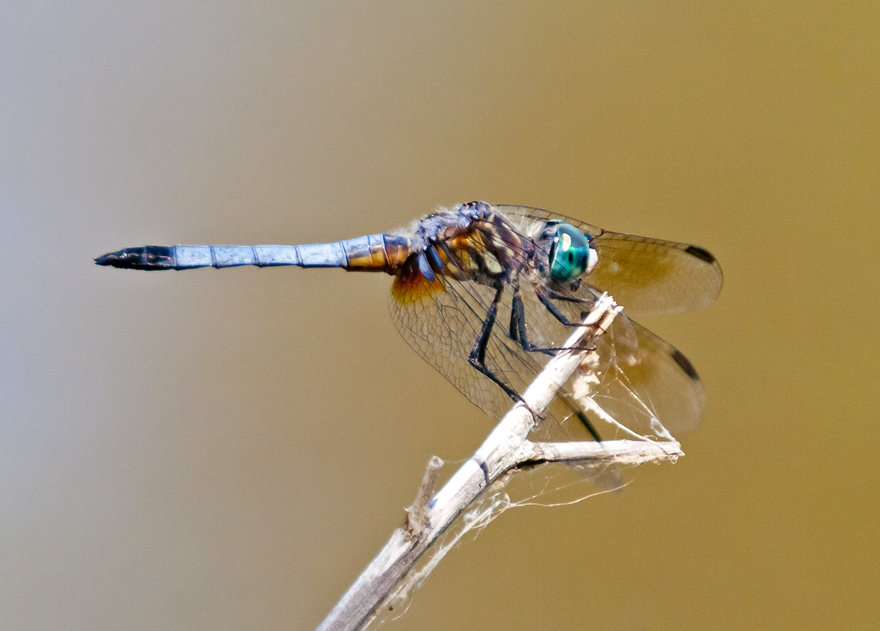
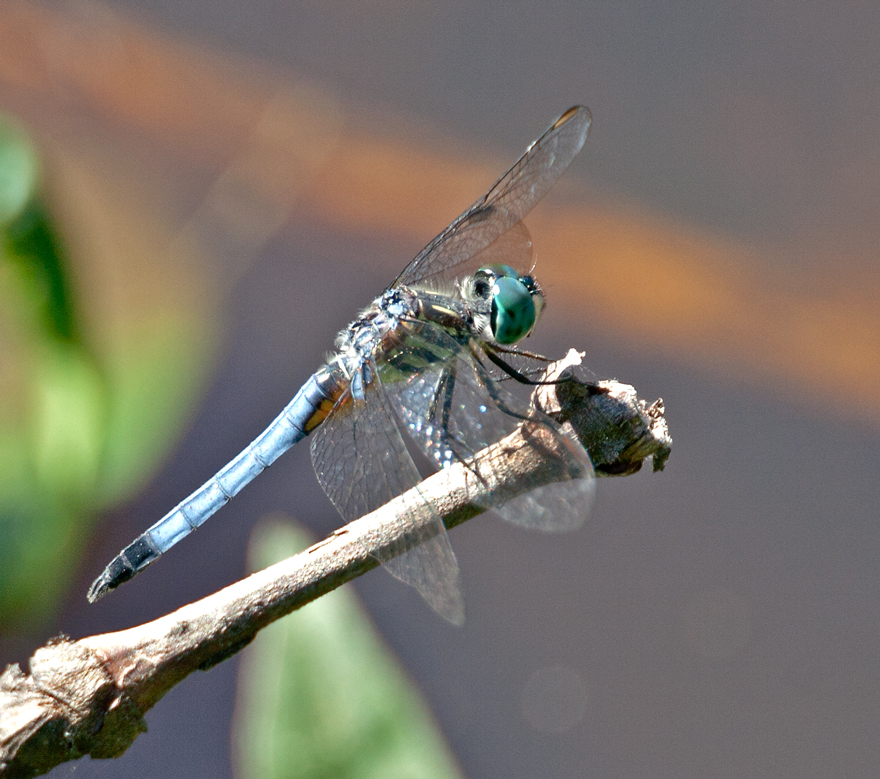
Last summer, my favorite photographic subject was the Blue Dasher dragonfly (Pachydiplax longipennis) and I was really excited on Friday to see that they are once again present at my local marshland park.

It continues to be a challenge to get close enough to capture the wonderful details of the dragonfly and to manage the background so that it is not too cluttered. I am happy to have gotten a few good images of male Blue Dashers to start the season, with the promise of more shots to come.

dasher1_blogdasher2_blog

Michael Q. Powell. All rights reserved

Read Full Post »

After spending most of their lives underground as nymphs, the 17 year cicadas (Magicicada septendecim) spend the few weeks of their adult lives looking for love. The males are very loud in their “singing” as they seek to attract females. I watched one cicada couple go through a very brief introduction and courtship phase and then suddenly they were mating.

I guess that you have to move quickly when your days are numbered.

love1_blog

Michael Q. Powell. All rights reserved

Read Full Post »

From a distance, I couldn’t tell why the stems of this plant were bright red in color, but when I got closer, I realized it was covered in little red insects. I think that these might be aphids, but I am not completely sure. There were ladybugs in some nearby plants, and if these are in fact aphids, the ladybugs may be in for a feast.

Does anyone have a better idea what kind of insects these are?

bugs_blog

Michael Q. Powell. All rights reserved

Read Full Post »

What do you get when you place two six year old boys in an outdoor environment filled with cicadas? You get a whole lot of energy and excitement. One of the boys came running up to me with a cicada perched on his fingertip and almost desperately asked me to take his picture. How could I refuse a request like that?

I decided that the best backdrop for the cicada was the colorful t-shirt that he was wearing. I am not sure exactly what was displayed on the shirt, but it seemed to be some sort of monsters and superheroes, which somehow seemed to be appropriate.  Be sure to click on the photo to get a higher resolution of the cicada, which is a really cool-looking insect (in a slightly creepy way).

boy_cicada_blog

Michael Q. Powell. All rights reserved

Read Full Post »

Six-spotted Fishing Spiders (Dolomedes triton) are a particularly fascinating kind of spiders and I was really excited to see one yesterday at my local marsh.

Fishing spiders don’t build a web, but use the surface of the water in the same way that other spiders use a web. They extend some of their legs onto the surface of the water and when they feel the vibrations of a prey, they run across the surface of the water to snatch it. According to Wikipedia, the very sensitive hairs on their legs and feet help them to interpret the vibrations they sense and determine distance and direction. Their eyes play a secondary role in hunting, particularly because they do much of their hunting at night.

This spider was a couple of feet below the level of the boardwalk and several feet away and I was able to use my tripod to help steady the shot. In fact, the spider was cooperative enough that I made attempts with my 135-400mm zoom, my 55-250mm zoom, and my 100mm macro lens. Of the images that I am posting, the first image was shot with the longer zoom and the second with the macro lens. The macro lens let me hang over the edge of the boardwalk a little, which let me get a little closer, but made it tough to brace myself.

If you want to see a few more images of these interesting spiders, check out my previous postings Fishing spider waiting for prey and Fishing in the swamp.

fishing_spider1_blogfishing_spider2_blog

Michael Q. Powell. All rights reserved

Read Full Post »

It was raining a little yesterday when I encountered my first harvestman (order Opiliones) of the spring, which explains the drops of water that you may notice on some on its legs.

Growing up, I was accustomed to calling them daddy longlegs and thought they were a kind of spider. Last year, I learned that harvestman in fact are not spiders, even though they do belong to the class of arachnids—harvestmen are in the order Opiliones and spiders are in the order Araneae.

I shot this image with my 55-250mm telephoto zoom, which meant that I couldn’t get in super close to the harvestman. However, I did manage to get at least part of all of his legs in the shot, which was not the case last year when I photographed one with my macro lens—there is an unavoidable tendency to want to get close whenever I put the macro lens on my camera.

Daddy1_blog

Michael Q. Powell. All rights reserved

Read Full Post »

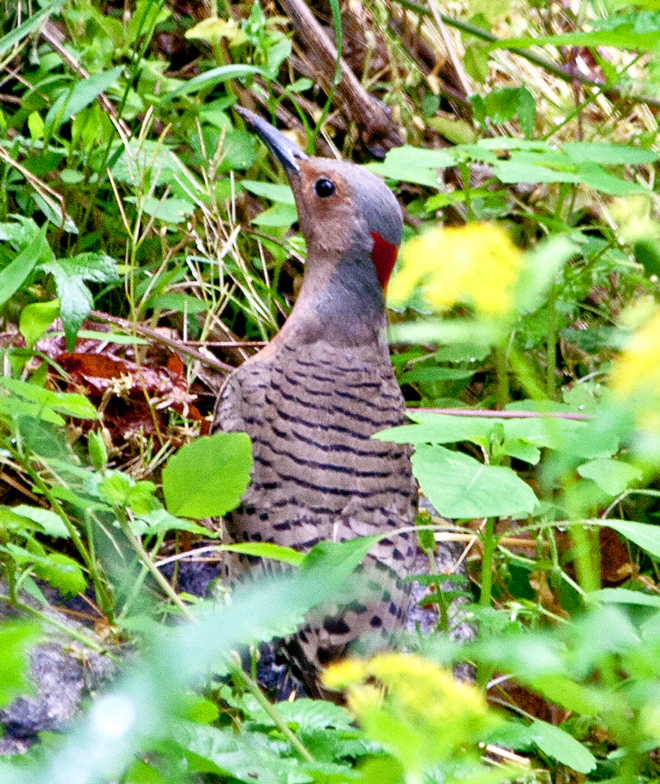
I observed this female Northern Flicker (Colaptes auratus) for quite some time yesterday, but had a difficult time getting a clear shot as she dug about in the undergrowth.

The Cornell Laboratory of Ornithology notes that this type of woodpecker is unusual in that it spends a lot of its time on the ground, digging in the dirt for ants and beetles. I love the coloration of the Northern Flicker and you can tell that this one is a female, because she is lacking the mustache stripe under her eye.

I didn’t manage to capture her entire body in the shot, but I like the way that she seems to emerge from the colorful underbrush.

flicker_blog

Michael Q. Powell. All rights reserved

Read Full Post »

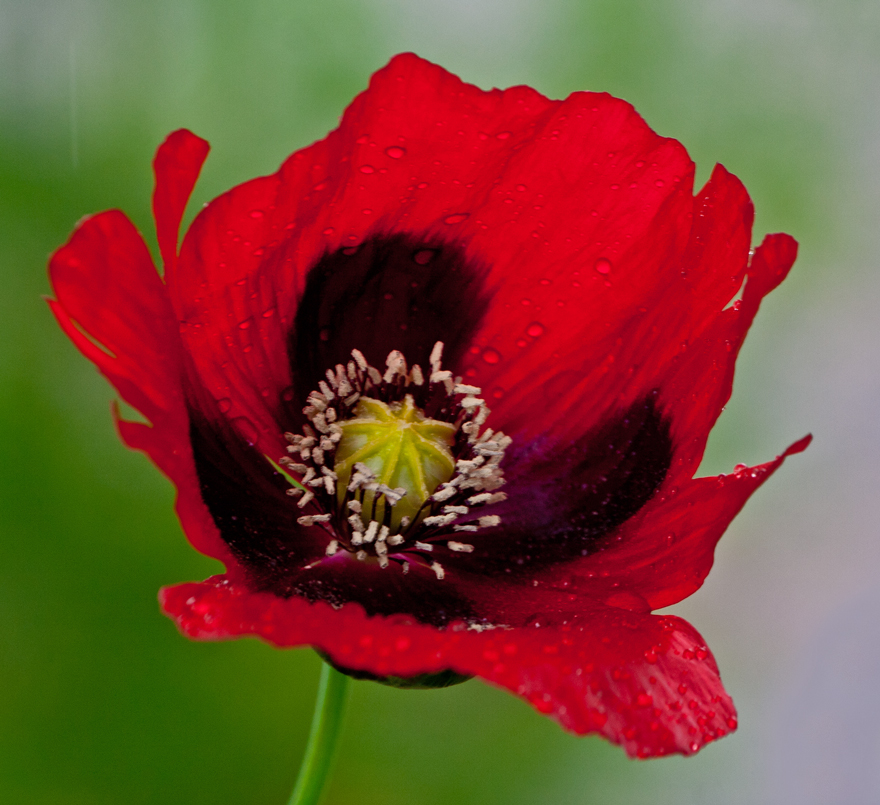
Despite the intermittent rain yesterday afternoon, I went with my camera in one hand and my umbrella in the other to a local garden and captured this image of a beautiful red poppy. I am not very good with flower identifications, but I think that it is a kind of oriental poppy.  I really like the combinations of shapes, colors, and textures that make up this flower and the visible raindrops on the petals was a bonus.

redpoppy1_blog

Michael Q. Powell. All rights reserved

Read Full Post »

I was pleasantly surprised to come across a group of irises in one of the marshy areas of Huntley Meadows Park, the nature center where I do a lot of my shooting.

It probably reveals my ignorance about flowers, but I had no idea that irises could grow in such moist conditions. Although the irises were smaller and less showy than many of the cultivated ones that I see, they were no less beautiful.

It had been raining intermittently the morning that I took this photo and you can see drops of water on some of the petals. I tried very carefully to frame this image and am pretty happy with the way that it turned out, with the blurry image of a second iris in the background repeating the shape and color of the iris in the foreground.

swamp_iris_blog

Michael Q. Powell. All rights reserved

Read Full Post »

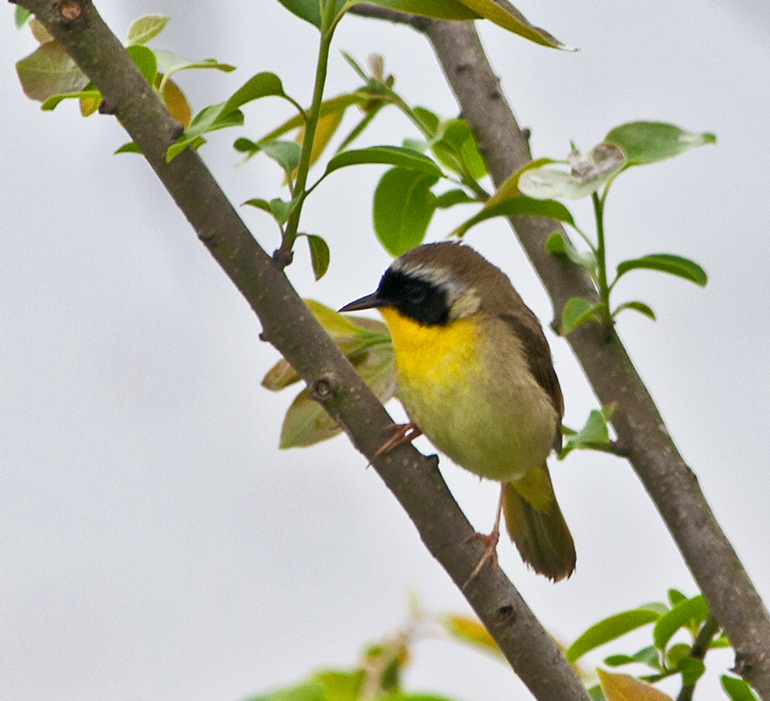
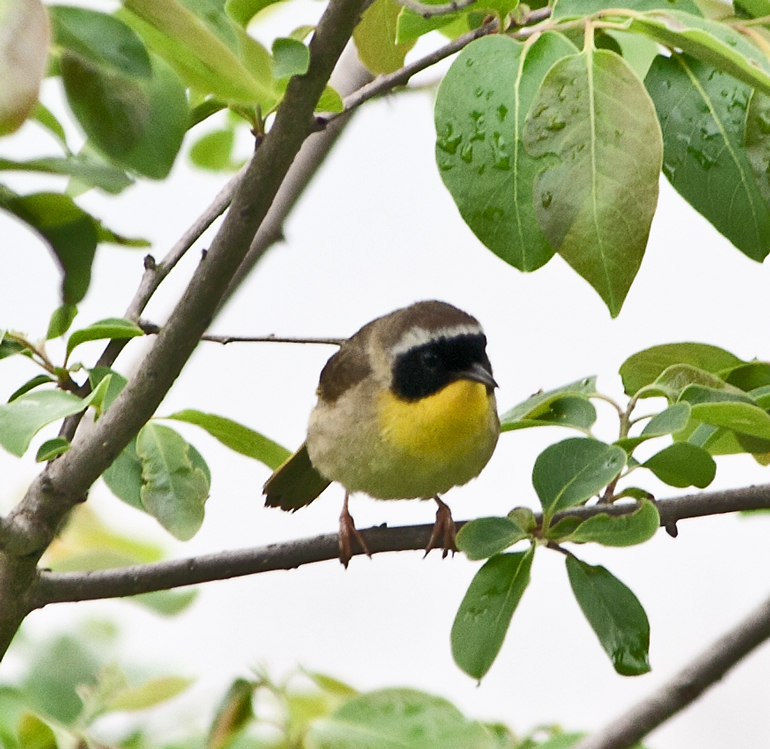
I have been hearing the calls of this little warbler for several weeks, but today was the first day that I got some clear shots of the male Common Yellowthroat (Geothlypis trichas).

I was fortunate that the foliage was not too dense when I initially spotted the bird and even when he moved to a second spot in the same tree, I had a relatively unobstructed view. Birders at my local marshland tell me that the male comes north before the female and that soon the females, which are not so brightly colored, will arrive.

warbler1_blog warbler2_blog

Michael Q. Powell. All rights reserved

Read Full Post »

Yesterday was warm and humid, which felt almost like summer here and brought out more dragonflies.

The sun was a little harsh just before noon, but I couldn’t help chasing after the dragonflies and got this shot of a male Common Whitetail dragonfly (Plathemis lydia).

head-on_blog

Michael Q. Powell. All rights reserved

Read Full Post »

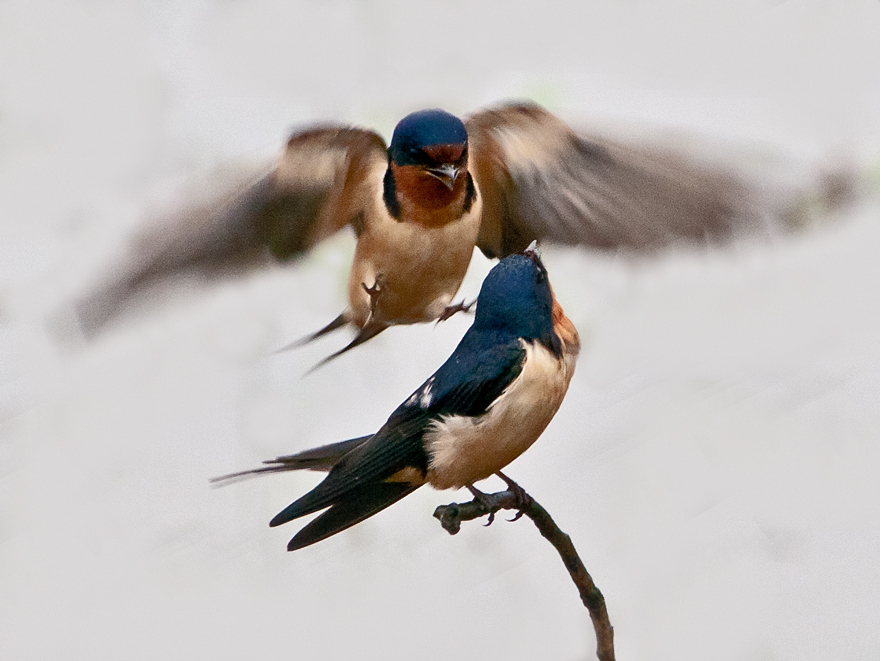
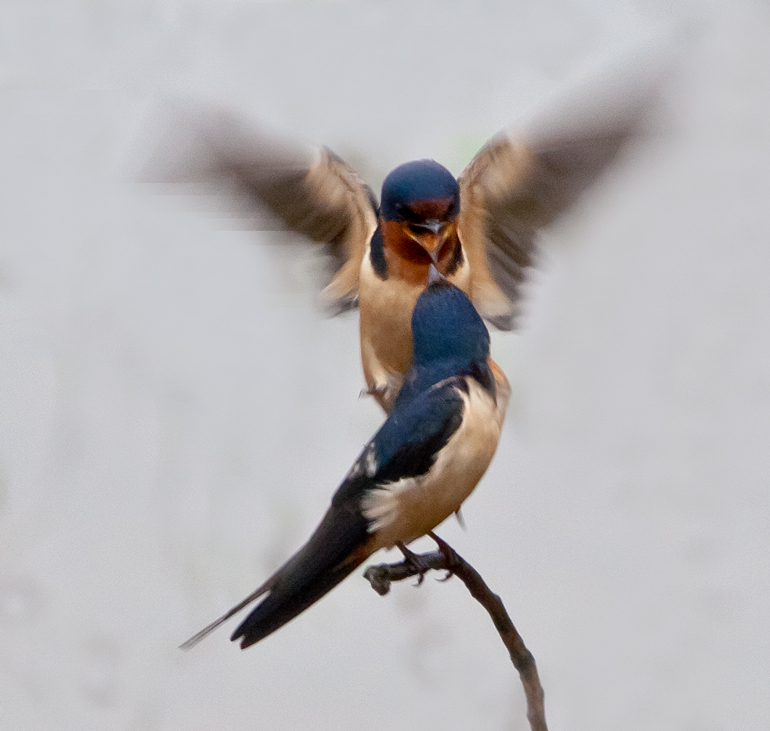
Are Barn  Swallows normally hostile toward each other?

As I was looking over once more the shots that I took on Monday, I came across this little series of images of two Barn Swallows (Hirundo rustica) interacting. I had passed over these photos when I did my first sorting, because they were seriously underexposed. Unlike the photo that I posted earlier this week of a confrontation between two swallows, I was not using a flash for these photos, which meant, however,  that I was able to take a burst of photos. (When I used my pop-up flash, I had to wait for the flash to re-cycle in order to shoot again.)

I tweaked these photos in Photoshop Elements (and cleaned up the background a little) and was amazed to discover that this confrontation seems to have escalated a bit beyond the previous one. The flying swallow seems much more aggressive and threatening, going beyond the squawking I had seen before, and looking more like he was ready to attack the sitting swallow, who seems to be paying attention to the incoming bird.

These photos would have been better with a higher shutter speed and better light, but I am amazed that I was able to capture this moment. I love interactions between members of the same species (and between different species) and I enjoy trying to catch those moments.

scream2c_blogScream2a_blogscream2b_blog

Michael Q. Powell. All rights reserved

Read Full Post »

As I was getting ready to leave the marsh on Monday, I noticed this Great Blue Heron (Ardea herodias) on the other side of the beaver pond.

He did not appear to be fishing, but was perched on a fallen tree, seemingly seeking shelter from the falling rain. He was hunched over a little, like he was trying to retain body heat.

It’s not often that I see a blue heron completely out of the water (assuming I don’t count all of the times when they were flying away from me), so I was happy to get this shot.

blueheron_standing_blog

Michael Q. Powell. All rights reserved

Read Full Post »

This portrait of a Tree Swallow (Tachycineta bicolor) looks almost like it was shot in a studio, but I am pretty sure that if it had been, I would have chosen a more attractive item on which to have her perch.

The green rusted metal post holds up a nesting box and this swallow may be building a nest in it or in one of the other nearby boxes, because she had a long piece of grass in her mouth when I started shooting. I think it might be a female, but it’s hard to tell, because males and females look a lot alike, though, according to my Peterson bird guide, the female is “slightly duller” than the male.

This was another shot that I took this past Monday, when the sky was heavily overcast. I made an effort to frame this shot with the swallow up against the sky and I think that I used my pop-up flash to add a little light. I probably will continue to experiment with the technique, especially when it’s really cloudy,  for I like the result that I got here. It does looks a little sterile and unnatural, but so often the background gets really cluttered and distracting.

treesparrow_post_blog

Michael Q. Powell. All rights reserved

Read Full Post »

On Monday as it was raining,  I encountered a Green Heron (Butorides virescens), one of my favorite birds. Initially he was perched atop an abandoned beaver lodge, but he took to the air as I approached. He flew to the edge of a cattail patch, where new shoots have started to appear during the last couple of weeks. The cattail shoots help contribute to the green backdrop for this Green Heron.

I was happy that I was able to get an unobstructed path to this little heron—normally Green Herons are at the edge of the water or are in trees, where it’s almost impossible to get a clear shot.

greenheron_rain_blog

Michael Q. Powell. All rights reserved

Read Full Post »

On Monday, I watched a family of Canada Geese (Branta canadensis), the parents and five little goslings, as they made their way from a little pond to forage in a field of cattails nearby. It was raining at the time, as you can see in the first photo, where two of the babies are swimming along (there was one parent to the front and one to the rear in the little convoy).

Once they made it to drier land, the little geese vigorously munched on small bits of vegetation. In the second photo, there is a little piece of a plant hanging out of the mouth of the baby goose. When they were in the water, the goslings looked like round balls of fluff, but they look more gangly and awkward on land.

I noticed a couple of geese sitting on what appeared to be nests. If so, I suspect I will be taking more photos of cute little baby geese.

goslings_rain1_bloggosling_wet_blog

Michael Q. Powell. All rights reserved

Read Full Post »

Here’s a photo of the Barn Swallow (Hirundo rustica) that I took today just prior to the confrontation that I featured in my previous blog entry. The sky was almost completely white, because the day was heavily overcast, and it totally disappeared when I was adjusting the RAW image.

This was one of the first times that I used flash to add a little light and bring out the colores and it seems to have worked out pretty well. Some of the more dedicated bird photographers that I see use a Fresnel lens attachment for their external flash units to give more reach to the flash—I am not sure that I am ready to go that far yet.

I managed to get a pretty good amount of detail in this shot, even capturing some of the raindrops on the swallow’s wing.

swallow1_tree_blog

Michael Q. Powell. All rights reserved

Read Full Post »

I was focusing my camera on a Barn Swallow (Hirundo rustica) perched on a branch, when out of nowhere another Barn Swallow appeared and started screeching as it hovered in midair. Fortunately I had enough presence of mind to press the shutter release.

It was raining most of the day and I was shooting one-handed under an umbrella much of the time. For this shot, I decided to use the built-in flash on my camera to add a little additional light. The reflections in the screeching bird’s eyes add to its almost maniacal look.

The bird on the branch was totally impassive. It turned its head toward the hovering bird, but did not appear to react in any other way.

The overall feel of the image is almost like a cartoon.  I really like the way it came out (and recognize that it was mostly luck and fortunate timing).

confrontation_blog

Michael Q. Powell. All rights reserved

Read Full Post »

I have no idea what caused this abstract pattern to form in one of the watery areas of my local marsh, but it really caught my eye when I was looking down, searching for frogs. Maybe it was caused by mineral seepage or plants or some strange combination of the two. Who knows?

In any case, I really like the richness and variety of the colors in the curving patterns.

pattern_blog

Michael Q. Powell. All rights reserved

Read Full Post »

We had a foggy start to one of the weekend mornings and I traveled to my local marshland park with the hope (but no real expectation) of seeing some spider webs. When I arrived at the park, the ground was covered in places with funnel webs, but that was not really what I was looking for.

As I walked along, I suddenly came upon this modestly-sized web. It is not really ornate and is broken in places, but I was thrilled to find it nonetheless. I did not see any spiders, but the web is clear evidence that they are around.

It’s only a matter of time now before I post a shot of a spider!

web2_blog

Michael Q. Powell. All rights reserved

Read Full Post »

One of my fellow photographers identified some newly arrived birds as Tree Swallows (Tachycineta bicolor) and yesterday I spotted them checking out the nesting boxes at my local marsh. I felt like they could have used a real estate agent to point out the advantages of the different styles of houses available. The first one has the charm of a log cabin and the second one has enhanced security features to discourage intruders. I don’t think that the swallows have made their decision yet—for now they seemed to be checking out the neighborhood.

swallow1_blogswallow2_blogswallow3_blogMichael Q. Powell. All rights reserved

Read Full Post »

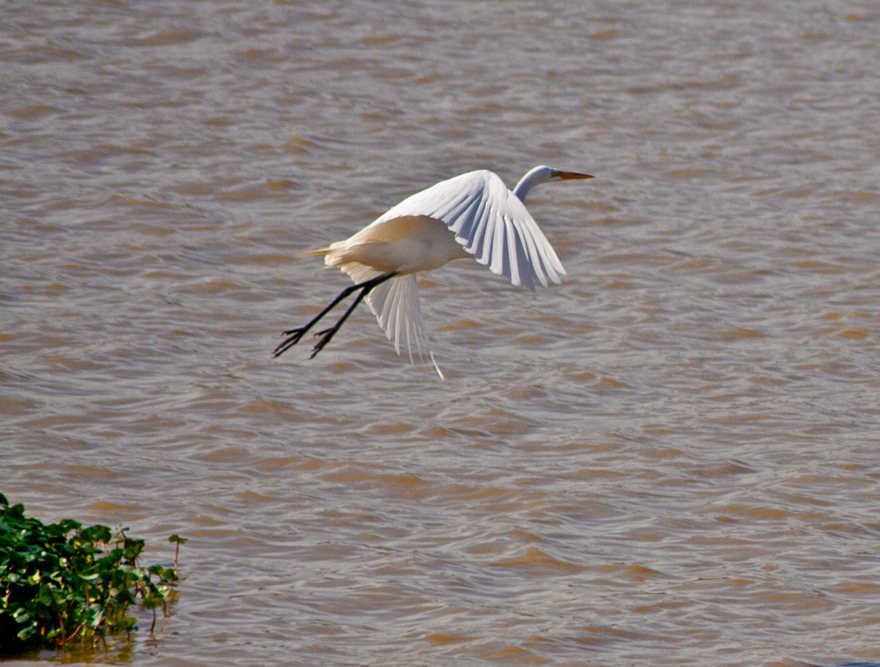
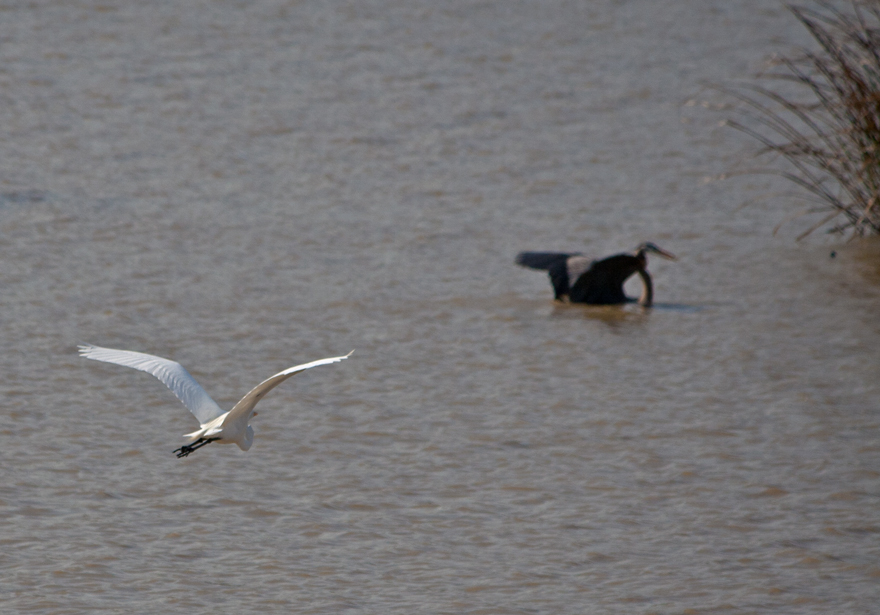
What was the mission that prompted this Great Egret to launch himself into the air?  His mission, it seems, was to continue to harass a Great Blue Heron that he had previous forced out of a prime fishing spot. As you can see from the second photo onward, the egret headed straight for the heron and only at the last minute did he veer off. (I may post some photos later of the initial encounter, but I especially like these in-flight photos.)

I took this series of photos a couple of weeks ago, when I was in Augusta, Georgia, at the Phinizy Swamp Nature Park.

takeoff_blogattack_blogattack2_blogattack3_blogattack4_blog

Michael Q. Powell. All rights reserved

Read Full Post »

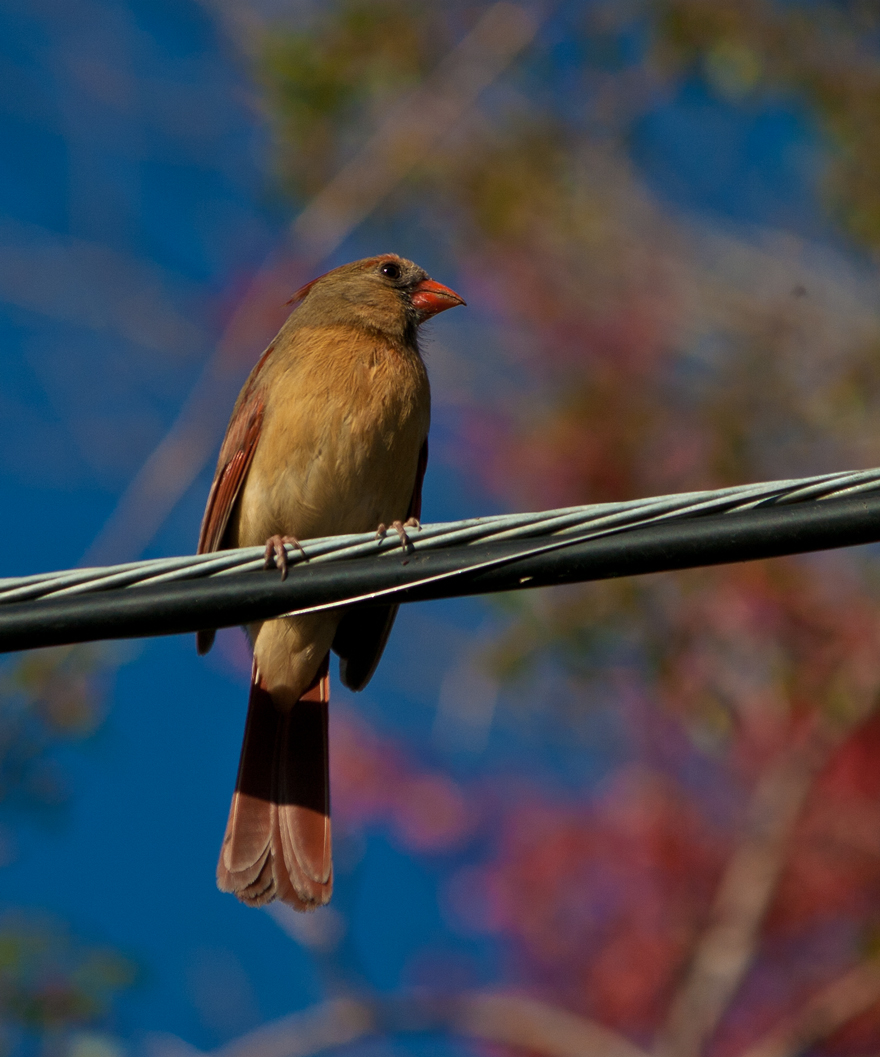
The setting and the perspective were not completely natural, but somehow I ended up with an image of a female Northern Cardinal (Cardinalis cardinalis) that I really like.

I ran across this cardinal almost two weeks ago when I was just starting my exploration of the Phinizy Swamp Nature Park in Augusta, Georgia. She was perched almost directly overhead on a wire and seemed to be warming herself in the rays of the morning sun. It was the start of a beautiful sunny day and already the skies were blue.

Georgia was already well into spring and you can see some of beautiful colors of the flowering trees in the blurred background. I managed to get the facial area of the cardinal in pretty sharp focus, which contrasts nicely with the background.

It won’t be long before we have flowering trees in Northern Virginia, where I live, but at least we have daffodils in bloom to remind us that spring is finally here.

cardinal_wire_blog

Michael Q. Powell. All rights reserved

Read Full Post »

I am finally posting some more photos of the Nine-banded Armadillo (Dasypus novemcinctus) that I spotted a couple of weeks ago when visiting the Phinizy Swamp Nature Park in Augusta, GA.

Previously, I posted a photo of the armadillo standing on his hind legs, but I thought it would be interesting to post some additional shots of the armadillo in action.

I grew up in New England, so the armadillo qualifies as an exotic animal for me, although there are probably folks in Texas and elsewhere that view armadillos as pests. I am completely fascinated by the texture of his shell, particularly the tail, and tried to highlight it in the photos.

The armadillo spent most of its time rooting about in the grass and most often his head was not visible, which was a challenge for photos. Even when I moved relatively close, the armadillo seemed so focused on what he was doing (or so near-sighted), that he paid no attention to me.

I actually had two mini-encounters with him. The first time, he scurried pretty back to the swampy field from which he had emerged when he sensed my presence. I retreated from the immediate area and returned to find him in the same location. This time, after getting his fill of insects (or whatever else he was eating), he lumbered back to the swampy field.

So far, there are no armadillos in my neighborhood in Northern Virginia, but Wikipedia notes the armadillo’s rapid expansion northward, primarily because of the lack of natural predators within the United States, little desire on the part of Americans to hunt or eat the armadillo, and the animals’ high reproductive rate. Eventually, armadillos are predicted to reach as far north as Ohio, Pennsylvania, and New Jersey.

As I studied up a bit on armadillos, I learned that armadillos can contract (and pass on) leprosy (yikes!), so you won’t see me handling any armadillos. Additionally, Nine-banded Armadillos have an unusual reproductive system, in which four genetically identical offspring are born, the only mammals in which polyembryony is reliably manifested, according to Wikipedia. This trait makes them particularly suited for certain types of scientific and medical tests that need consistent biological and genetic makeup in the test subjects.

armadillo5_blog

armadillo1_blogarmadillo4_blogarmadillo2_blog

armadillo3_blog

Michael Q. Powell. All rights reserved

Read Full Post »
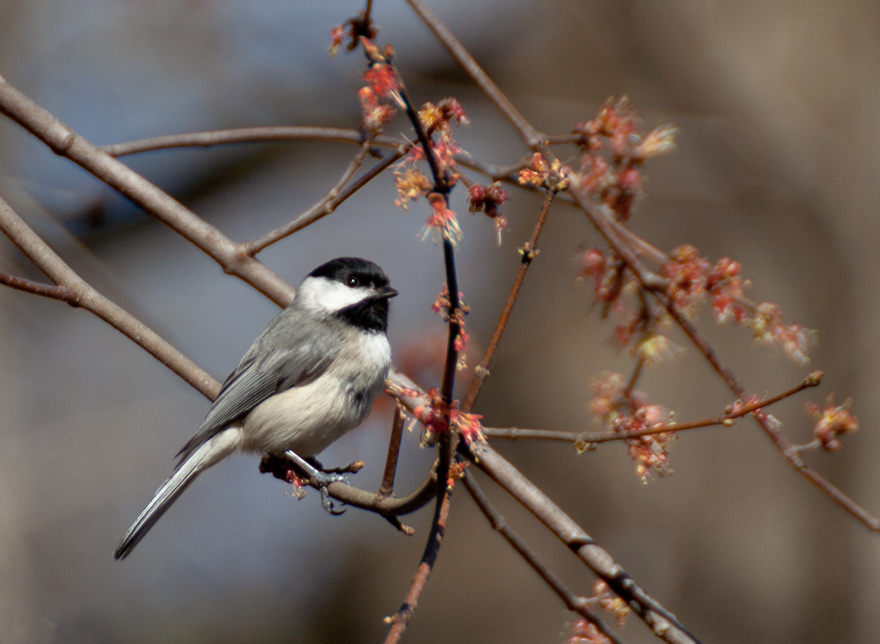
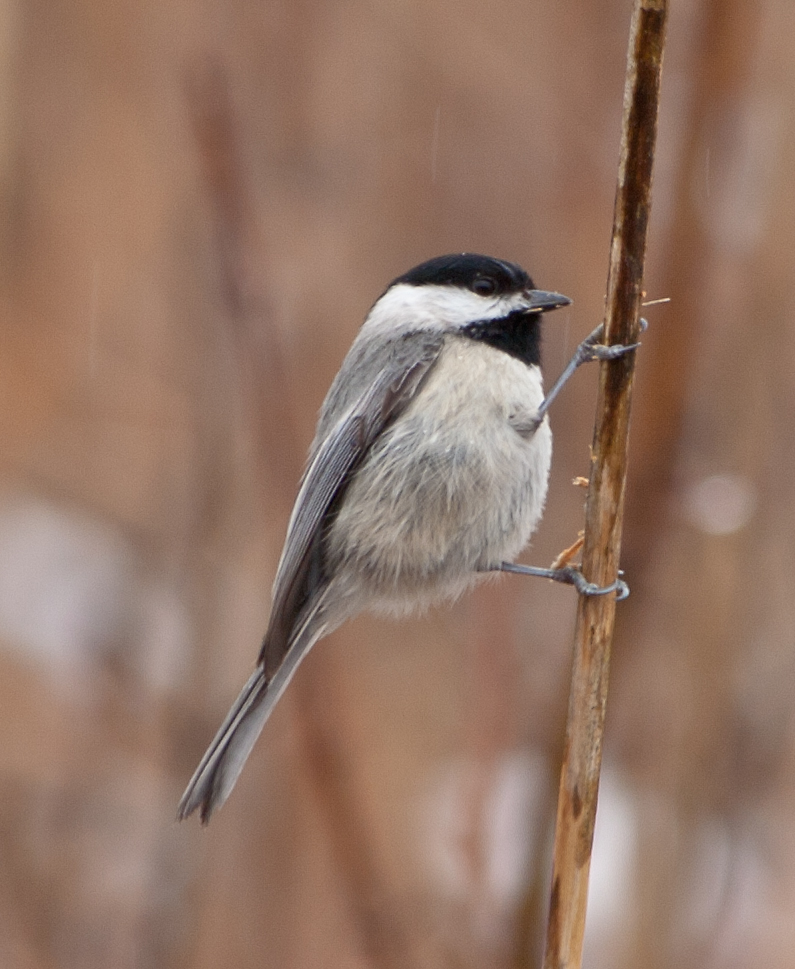
A fellow photographer informed me this past weekend that the little bird that I was preparing to photograph was not a Black-capped Chickadee—it was a Carolina Chickadee.

I am a neophyte when it comes to bird identification, but I confess to being confused. I have been trying to photograph this bird for months and have been calling it a Black-capped Chickadee (Poecile atricapillus) in my postings. To my eyes, it looked like the photographs I’ve seen others post of the Black-eyed Chickadee.

I turned to the Cornell Lab of Ornithology website, my favorite resource for bird identification, to try to resolved this conundrum. The site confirmed that the Black-capped Chickadee and the Carolina Chickadee (Poecile carolinensis) look a lot alike, but the two species probably diverged more than 250,000 years ago.

There are some differences between the two in the edging of the wings and the bib and the songs are different too, but apparently the range is one of the most critical factors, since the ranges of these two species don’t overlap much. I appear to be within the range of the Carolina Chickadee, but Virginia seems to be near the northernmost edge of the range, so I can’t exclude the possibility that I will run into a Black-capped Chickadee.

Here are a couple of my favorite chickadee photos. The first one was taken a couple of weeks ago with my recently acquired 135-400mm lens. It did a pretty good job in capturing some of the details of the chickadee in the tree. The second one was taken this past Monday with my 55-250mm lens. I managed to get a little closer to the chickadee that was clutching a stalk in the cattail field and was able to isolate the background a little.

I got started watching and photographing birds this past fall, probably after many birds had left the area. I can’t wait to see what new ones (for me) show up this spring.

chickadee_blogchickadee2_blog

Michael Q. Powell. All rights reserved

Read Full Post »

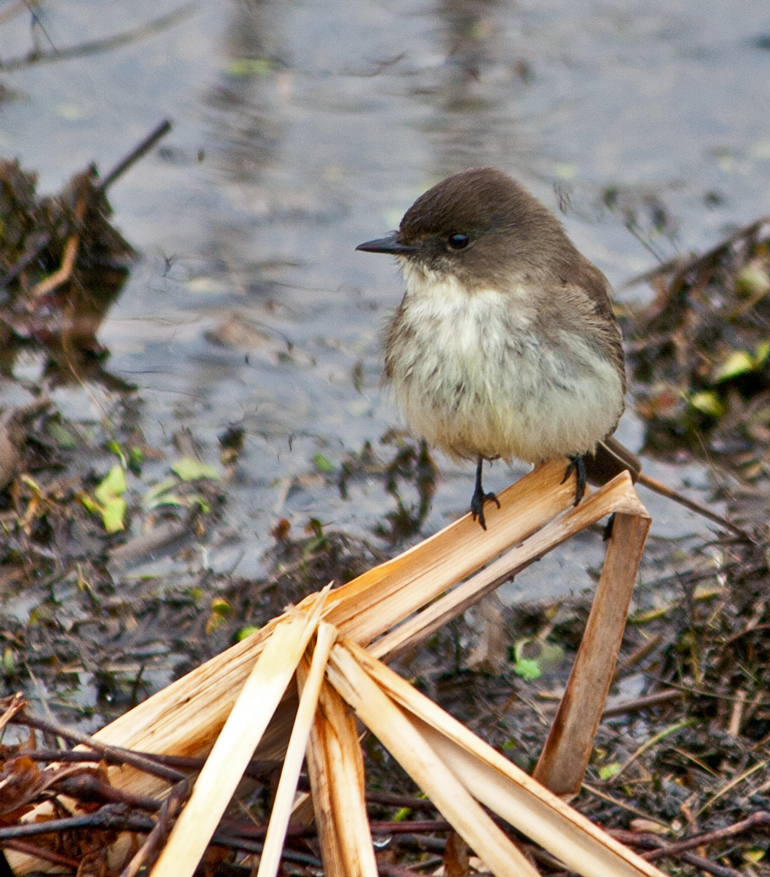
Yesterday I spotted a little grayish-brown bird that I have never seen before and I have concluded that it is probably an Eastern Phoebe (Sayornis phoebe).

I am getting a little better in figuring out how to identify birds, but this is a case where I had to depend exclusively on color and size to begin my search, without any real idea of what it could be. The colors are about right and the bill shape seems to fit. Information on the internet suggests too that they are one of the earliest birds to return in the spring.

I hope that more experienced birders will correct me if my identification is incorrect. Whatever the case, though, I like the way this image came out—it helped when the bird hopped up onto the bent stalk, a pose which makes it stand out from the somewhat clutter ground-level background.

littlebird1_blog

Michael Q. Powell. All rights reserved

Read Full Post »
Have you ever tried to take photos with an umbrella in one hand and your camera in the other? Mixed snow and rain fell during most of today and things were pretty quiet in the marsh today. I walked along the slushy boardwalk with an open umbrella, trying desperately to find something to photograph.

I was surprised to come across an American Coot (Fulica americana) for the first time in the park, although I saw lots of them earlier in the month when I was visiting in Georgia. This coot was by himself—I didn’t see any other coots and he was not hanging out with ducks either.

coot_blog

Michael Q. Powell. All rights reserved

Read Full Post »
I was really struck by the unusual poses of these Black Vultures (Coragyps atratus) that I encountered while walking along the canal path in Augusta, GA. The only other time that I saw Black Vultures in a tree, they were roosting and looked large and menacing.

These two vultures look like they have adopted a hawk’s approach to hunting by perching on a tree and waiting,  rather than by circling endlessly in the skies as other vultures do.

Vultures_blog

© Michael Q. Powell. All rights reserved

Read Full Post »

« Newer Posts - Older Posts »