What is the best way to capture motion and have the subject in focus? Recently I have been experimenting with different camera settings and shooting techniques in trying to photograph birds in flight.
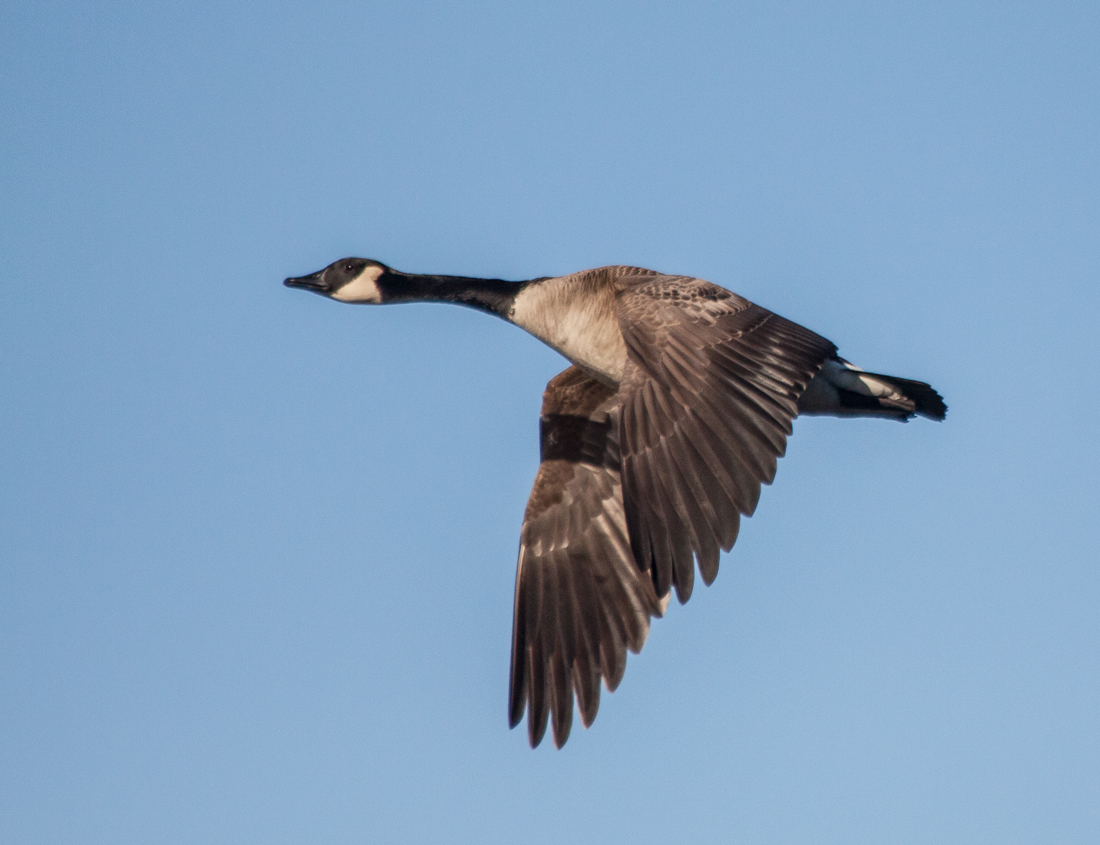
Yesterday I concentrated a large part of my efforts on Canada Geese (Branta canadensis). They make good test subjects because they are large and relatively slow-flying birds (and there are lots of them). I have done a number of postings of geese taking off and landing and in those cases I usually try to freeze the action. Getting the photo in focus is not always easy, but the action is usually taking place in a small geographic space and that helps a little with getting the focus locked in.
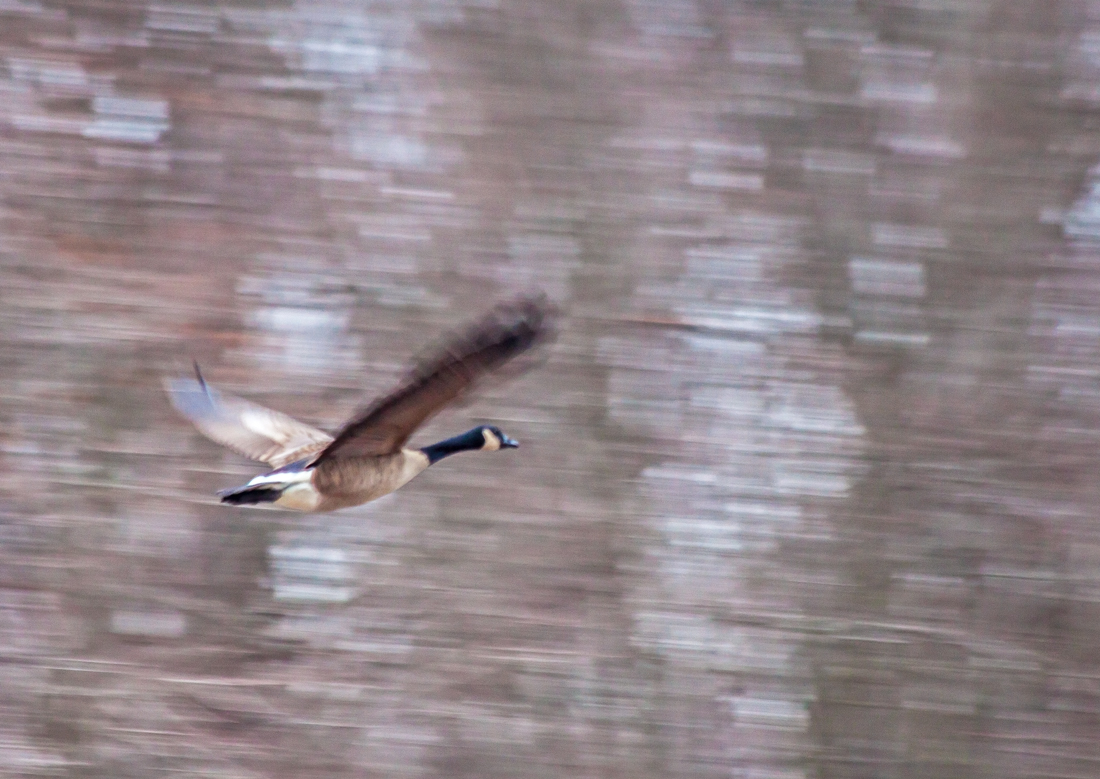
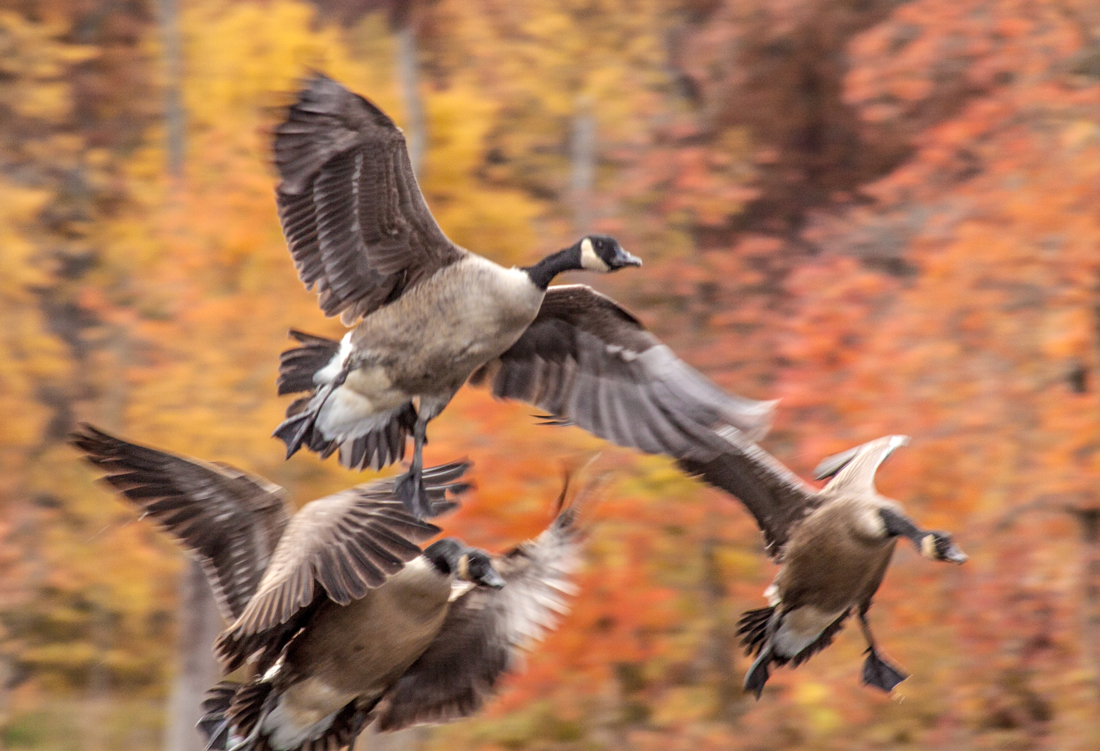
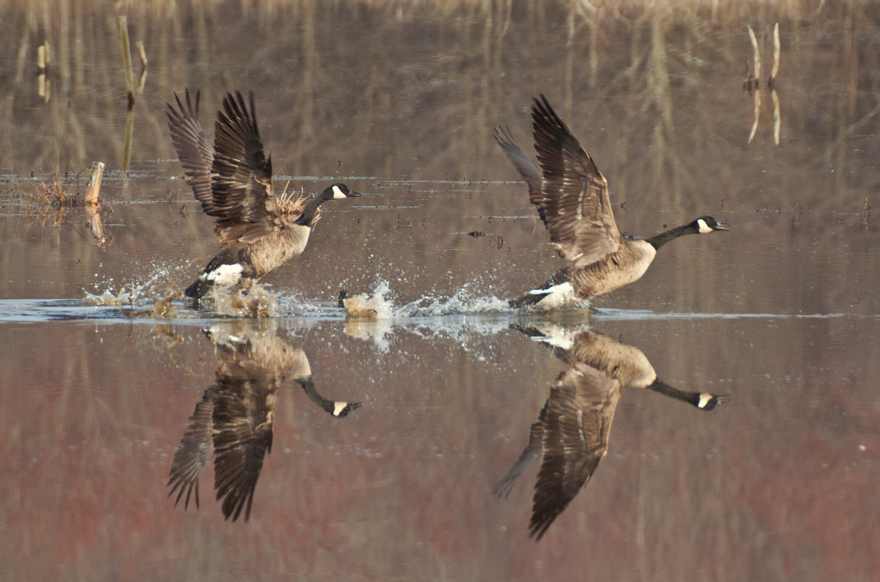
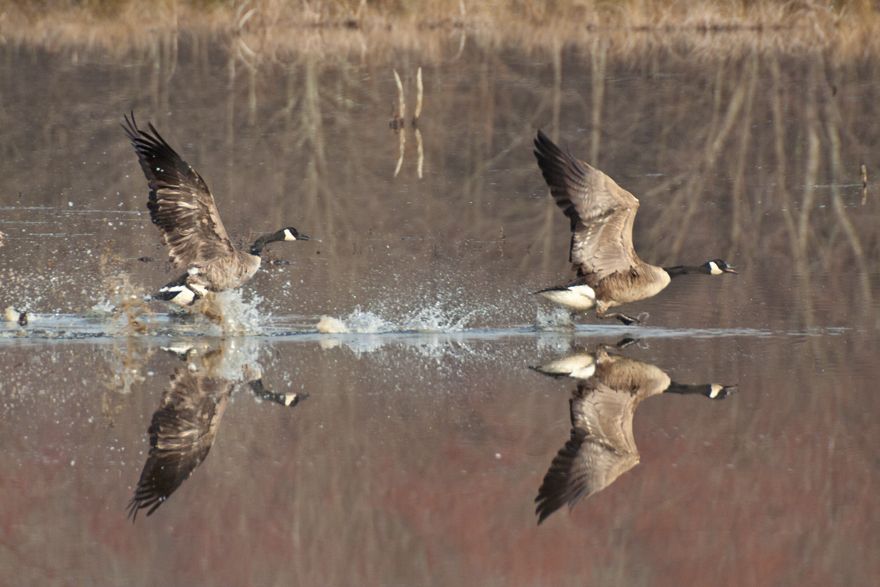
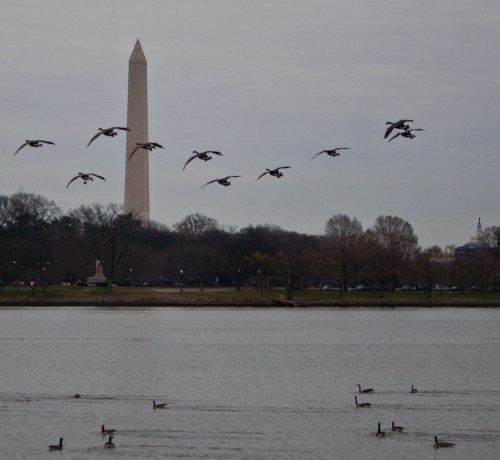
Capturing the geese before they being the landing process or after they are in flight has always been tough for me, but I think my skills are improving with practice. Generally I will try to focus on a single goose to make things easier. Yesterday, though, I decided to try to capture a group of geese flying together and had some success using a panning technique. The background blurred nicely, the necks of the geese are in focus, the wings have a bit of motion blur, and the geese themselves have assumed interesting poses. As I recall, I had my focusing point on one of the geese in the center. Some of the photographers I see with really long telephoto lenses have special mounts on their tripods that let the lenses swing freely as they track the birds, but for the most part I have been taking these shots hand-held.

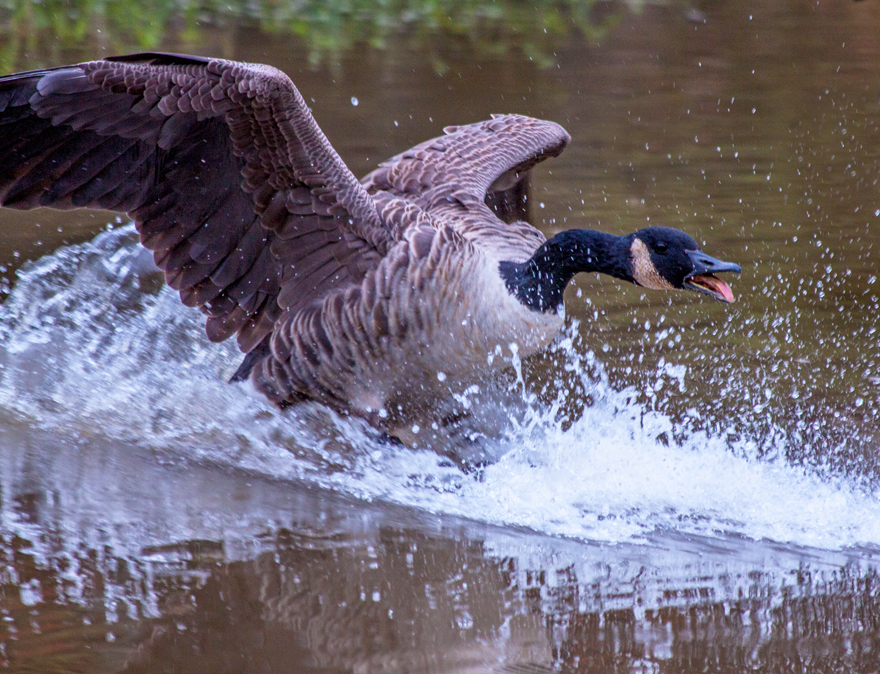
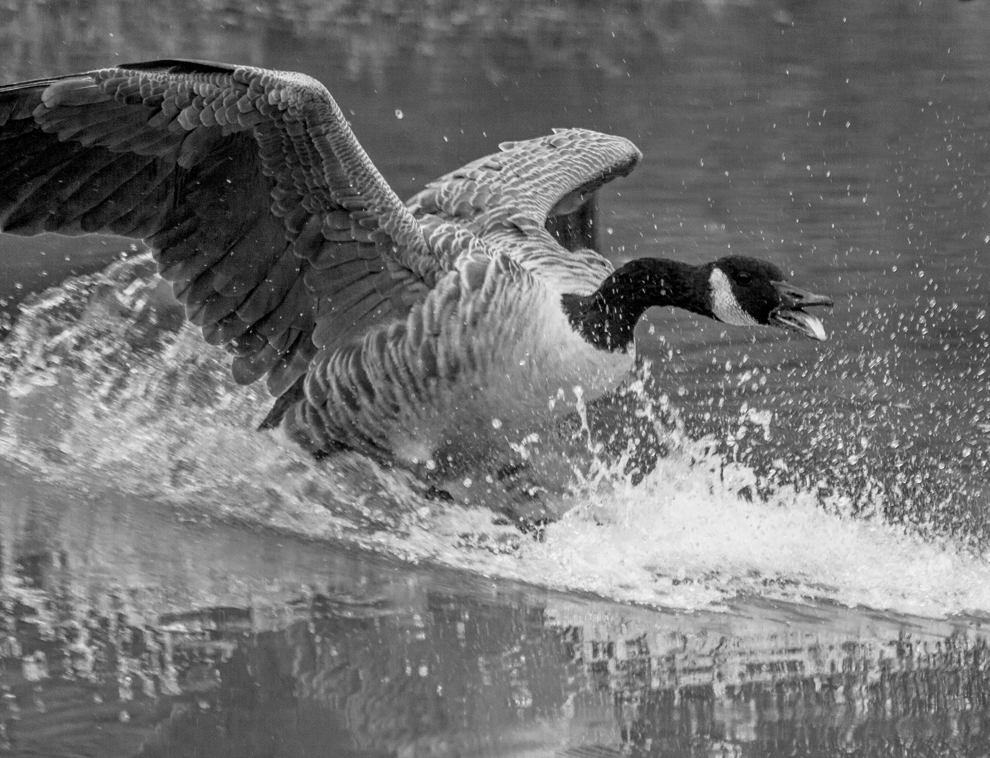
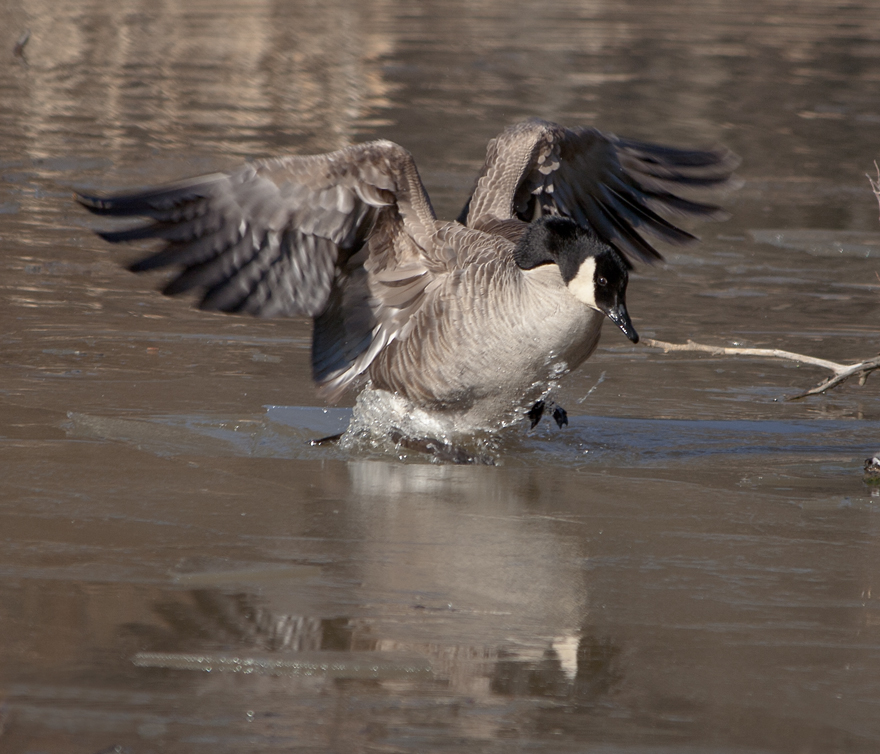
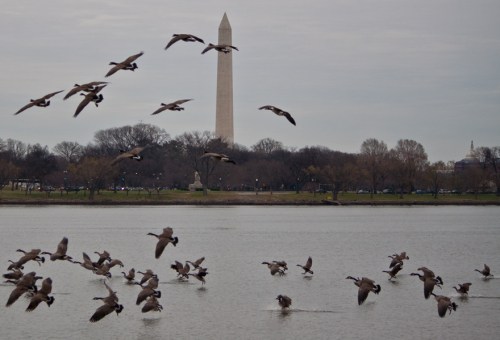
I used a slightly different technique with a couple of geese that were closer. Using one of the first rules I learned about photographing people and animals, I tried to focus on the nearest eye of one of the geese. Well, actually I probably was trying to keep my focusing point on the goose’s head in reality, but I was thinking of the eye. As you can see, there was not a lot of depth of field, but things worked out well with the face of the nearest goose in pretty sharp focus. The blurry wings provide a nice contrast with the sharper elements and my eyes are drawn to the goose’s eyes and open bill.

For me, experimentation is one of the best ways to learn new things and I am definitely learning more and more about my camera and my techniques, which will help me when I try to photograph subjects, like hawks, that are less cooperative than the Canada Geese.
© Michael Q. Powell. All rights reserved
Read Full Post »














 Mike Powell
Changing my focus
Posted in Birds, commentary, Nature, Photography, wildlife, tagged autofocus, birds in flight, Branta canadensis, Canada Goose, Canon 55-250mm zoom lens, Canon Rebel XT, Huntley Meadows Park on February 27, 2013| 15 Comments »
Lately I have been playing around with the auto-focus settings on my camera, trying to figure out how they work and deciding when it is appropriate to use each of the modes.
After doing some reading and watching some videos on the internet, I decided to remap one of the buttons on my camera. As a result, I no longer engage the autofocus by pushing down halfway on the shutter release—I engage it by pushing on the * button with my thumb. If you are interested in the reasoning behind this process, you can Google “back-button autofocus.”
Next I decided to experiment with AI Servo mode, which is supposed to be the best mode for moving subjects. Previously, I had been shooting in One Shot mode or AI Focus (which is a hybrid mode). Most of the time, that meant I had to achieve focus separately for each image. I am still having some difficulties with the Servo mode, in part because it’s hard to know for sure if the focus has locked on the subject, since, unlike the other modes, the camera will shoot even if nothing is in focus.
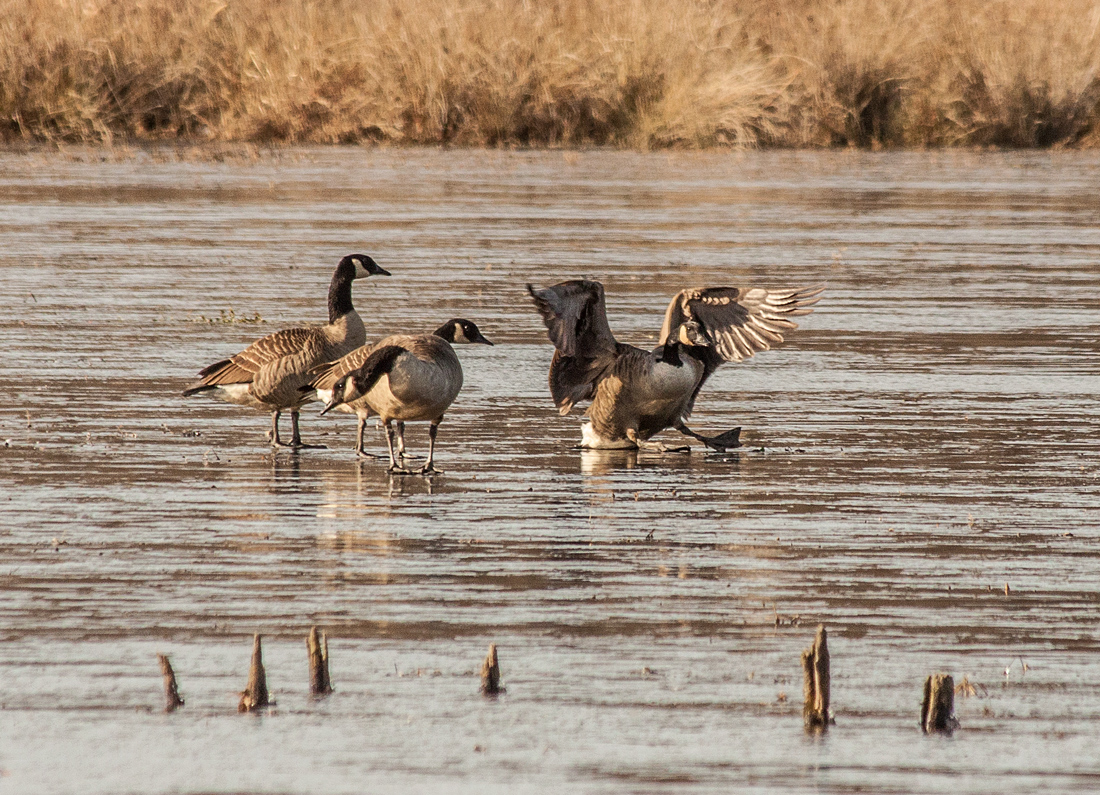
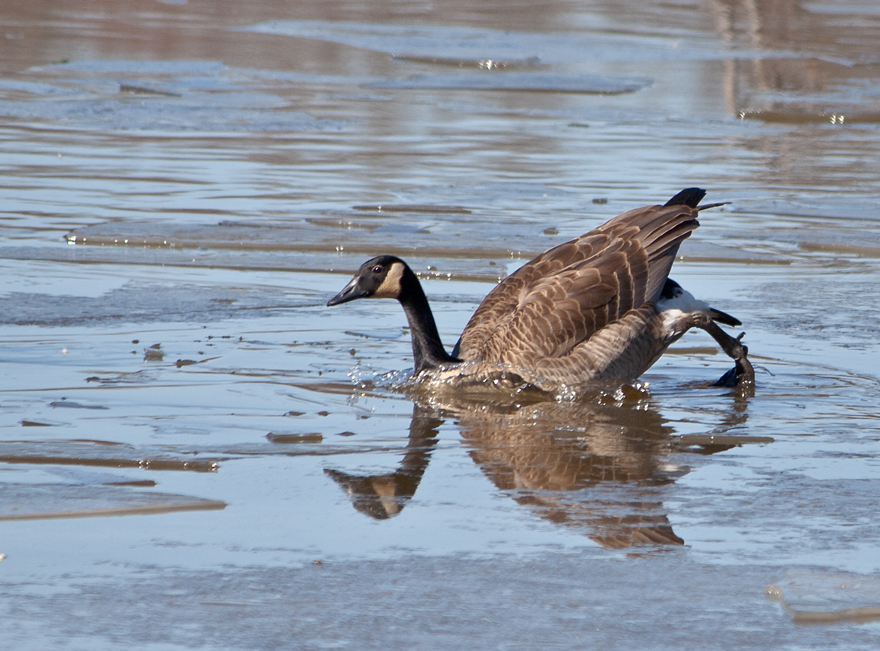
The way that it is supposed to work is that you focus on the subject with the center focus point for 1-2 seconds and then the camera will follow that subject as it moves. In the situation below, I focused on the front goose that looked like he was about to take off. When he took off, I took a sequence of six photos, only two of which were in focus. They were the second and fifth in the sequence and they came out pretty sharp.
I may be overtaxing my ancient Canon Rebel XT by shooting in RAW, shooting bursts, and having the autofocus engaged continuously. Still, it’s fascinating to experiment with the different settings and see what works best for me.
© Michael Q. Powell. All rights reserved
Share this:
Read Full Post »