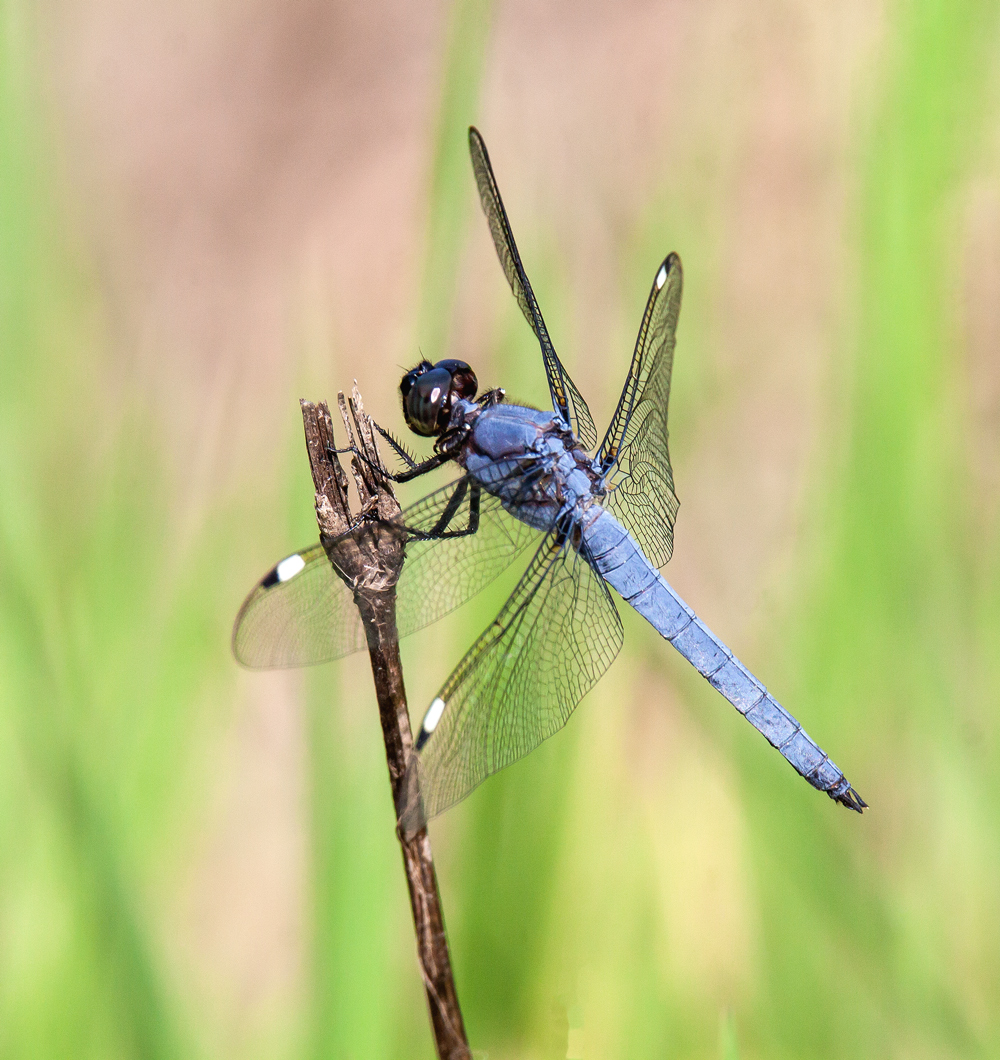
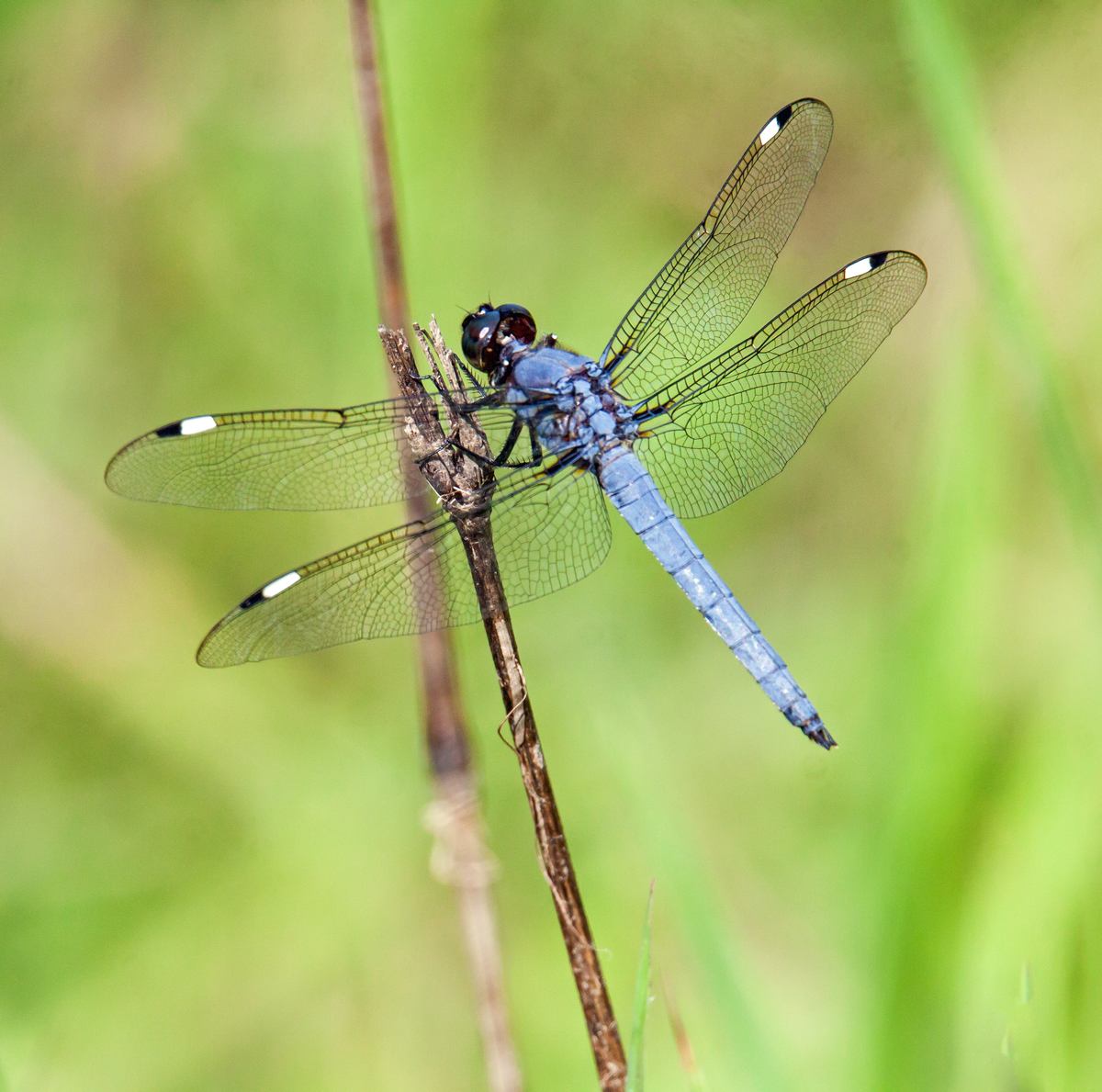
This spring I have been spending more and more time in remote areas of my marshland park and have had the opportunity to see dragonflies in earlier stages of development than in previous years. I was thrilled recently to spot a newly emerged male Common Sanddragon (Progomphus obscurus) and managed to get some shots of it with my macro lens.
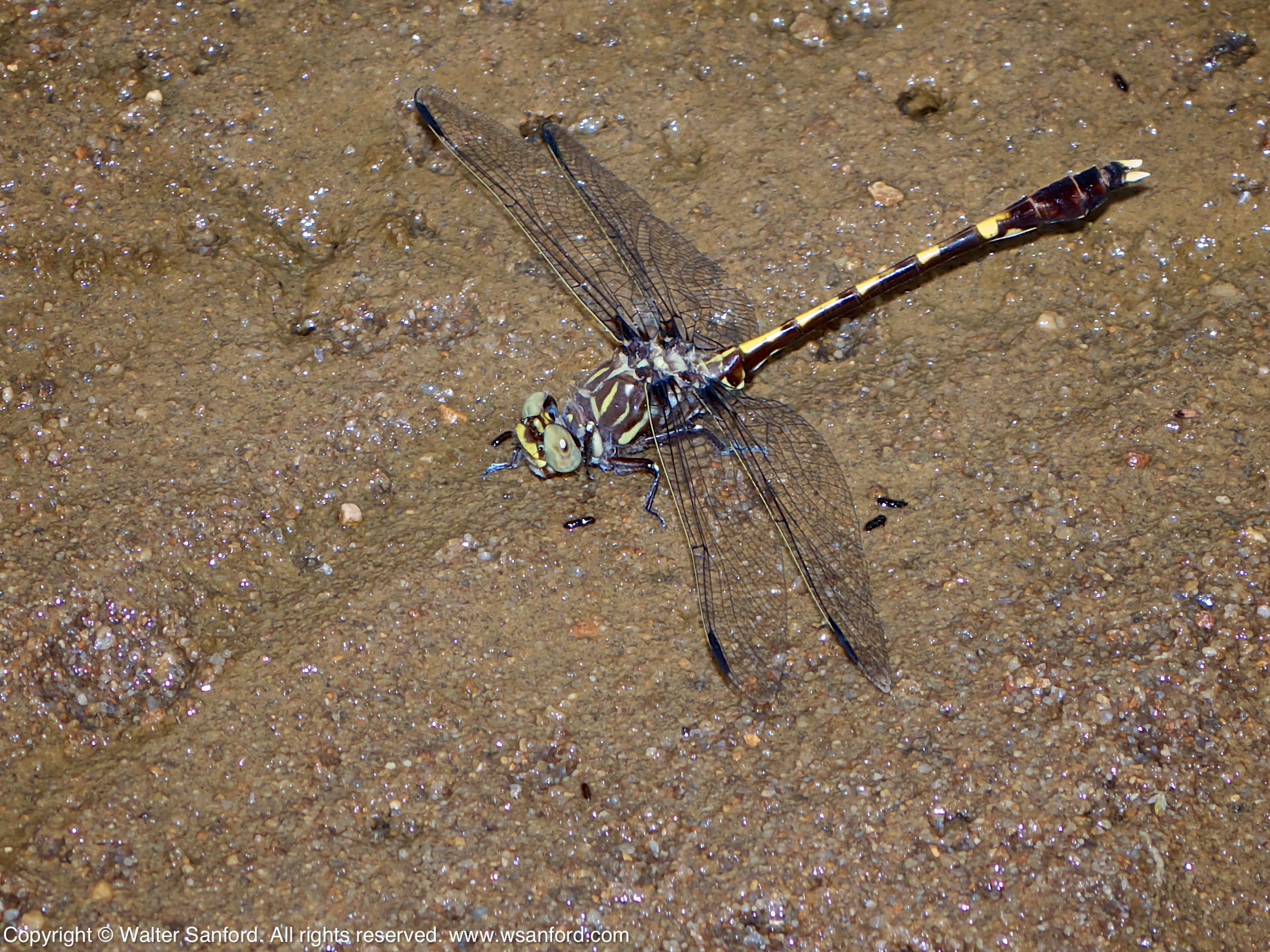
Fellow dragonfly enthusiast Walter Sanford did a posting yesterday with some wonderful shots of adult male Common Sanddragon dragonflies and you can refer to that posting if you want to see what a mature male looks like.
When you look at this very young dragonfly, in a stage called “teneral,” a few things stand out. The colors of its eyes and its body are very pale and the wings are really clear. As the dragonfly is exposed to the air and to the sunlight, its colors become more pronounced and its wings more solid.
Many of you know that dragonflies spend most of their lives underwater as nymphs going through a series of transformations. Only in the later stage of their lives do they shed their exoskeletons one last time and become the aerial acrobats that we are used to seeing.
I’ve always wanted to see this transformation taking place, but have not yet had the chance to do so. When I was sharing this images with a friend, though, he pointed out something which I had missed—the dragonfly is perched on its cast-off skin. In the final photo, you can see that the dragonfly is now more than twice as long as when he first emerged, with a significantly lengthened abdomen. In the two close-up shots, it looks like the dragonfly’s front legs are astride the head of the exoskeleton and I think you can actually see the two eyes.
I am in awe when I think of the incredible metamorphosis that has just taken place and find this dragonfly, like all newborns, to be amazingly beautiful and precious.


Michael Q. Powell. All rights reserved.
Read Full Post »






















 Mike Powell