April 29, 2021 by Mike Powell
I was thrilled to spot this beautiful male Painted Skimmer (Libellula semifasciata) on Monday, at Occoquan Regional Park, the first dragonfly of this species for me this season. I just love the way that the distinctive markings on the wings really make this dragonfly “pop” with a golden glow.

© Michael Q. Powell. All rights reserved.
Posted in Dragonflies, dragonfly, Insects, Nature, Photography, Portraits, wildlife | Tagged Canon 50D, Libellula semifasciata, Lorton VA, Occoquan Regional Park, Painted Skimmer, Painted Skimmer dragonfly, Tamron 180mm | 11 Comments »
April 29, 2021 by Mike Powell
I got a definite “Don’t mess with me” vibe when I encountered this Northern Black Racer snake (Coluber constrictor constrictor) last week at Occoquan Regional Park and moved on quickly after capturing these images. Most snakes slither away when they first detect my presence, but this one reared up a bit and started to feverish flick its forked tongue at me.
Black Racers are somewhat similar in appearance to the Eastern Rat Snake that I featured last week (See the posting Ready to shed?), but are a bit smaller in size and have shinier, smoother skins. Several of my Facebook friends noted that Black Racers also tend to be more aggressive and reported having been chased by one.


© Michael Q. Powell. All rights reserved.
Posted in Nature, Photography, Reptiles, snake, spring, wildlife | Tagged black racer, Canon 50D, Coluber constrictor constrictor, Lorton VA, Northern Black Racer, Northern Black Racer snake, Occoquan Regional Park, Tamron 180mm | 12 Comments »
April 28, 2021 by Mike Powell
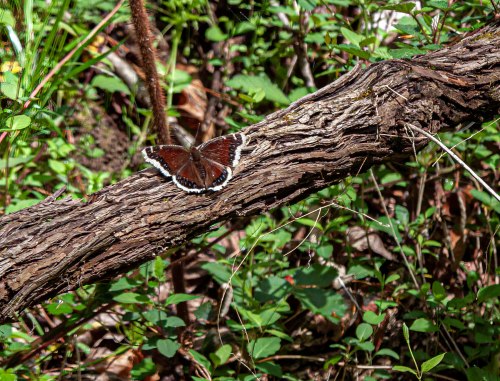
Life can be rough when you have fragile wings. I spotted this Mourning Cloak butterfly (Nymphalis antiopa) last Friday at Occoquan Regional Park and could not help but notice the significant damage to its wings. The damage might have actually happened last fall, given that this species overwinters with us as adults, awakens in the spring, and has a lifespan of 11-12 months, one of the longest lifespans for any butterfly.
As I poked about on the internet, I was intrigued to learn that this species is known as the Camberwell Beauty in the United Kingdom. I do not see Mourning Cloak butterflies very often—most of the time it is only when I am in a wooded area, rather than in a marsh or open field. When I do spot one, it is usually hyperactive and I rarely have the chance to capture an image.
The second photo below is the only other photo that I have managed to take of one this spring, and I took it from quite a distance away. Still, I like the way that it shows some of the butterfly’s habitat. I always have to remind myself of the value of these kind of environmental portraits—my normal tendency is to get close with either a macro or a telephoto lens and isolate the subject from its background.

© Michael Q. Powell. All rights reserved.
Posted in Butterflies, Insects, Nature, Photography, spring, wildlife | Tagged Camberwell Beauty, Canon 50D, Lorton VA, Mourning Cloak, Mourning Cloak butterfly, Nymphalis antiopa, Occoquan Regional Park, Tamron 180mm | 14 Comments »
April 28, 2021 by Mike Powell
I have been seeing Common Green Darner dragonflies (Anax junius) in the air for several weeks now, but only this past Monday did I finally catch one taking a break from patrolling while I was tracking it at Occoquan Regional Park. It is quite common to see Common Green Darners patrolling high overhead in a wide variety of habitats, darting to and fro, feeding on the fly.
These large colorful dragonflies—about three inches (75 mm) in length—are among the first to be spotted in the early spring and among the last to disappear late in the autumn. How is such a long flight season possible? The simple answer is that Common Green Darners are a migratory dragonfly species. Kevin Munroe described the migratory cycle on his wonderful Dragonflies of Northern Virginia website in these words:
“Common Greens seen in our area in early spring are in fact migrants from points south. They emerge in the Southeast and fly north, arriving here late March thru May. After their long flight, they mate, lay eggs and die. Their young emerge in July and August. Congregating in large swarms, this second generation begins flying south in September. They lay eggs that fall, after arriving in their southern destinations, and die. When their young hatch in March, they fly back to Northern Virginia and it starts again— a two generation migration.”
I love the bright and cheery colors of the Common Green Darner, colors that reminded one of my Facebook viewers of a tropical parrot. I also really like the bullseye pattern on the dragonfly’s “nose,” just below its large compound eyes. Be sure to click on the image if you want to see these details better.

© Michael Q. Powell. All rights reserved.
Posted in Dragonflies, dragonfly, Nature, Photography, spring, wildlife | Tagged Anax junius, Canon 50D, Common Green Darner, Common Green Darner dragonfly, Lorton VA, Occoquan Regional Park, Tamron 180mm | 13 Comments »
April 27, 2021 by Mike Powell
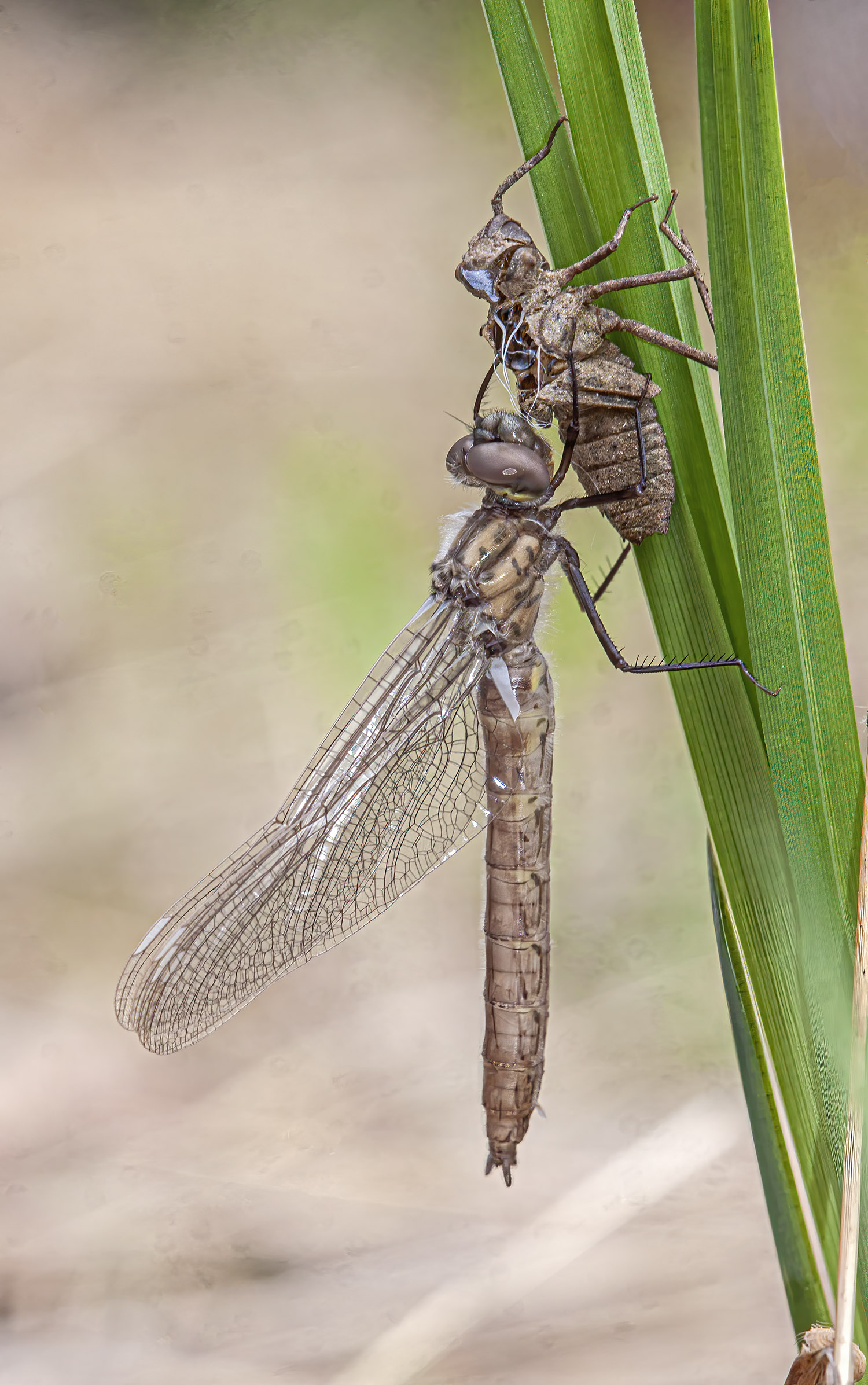
Have you ever watched a dragonfly-to-be break out of its exoskeleton and undergo a remarkable metamorphosis from a water-breathing nymph to an amazing aerial acrobat? It is an amazing and fascinating process that rivals (or maybe even surpasses) the more familiar transformation of a butterfly that many of us studied in school.
On a recent excursion to look for dragonflies in Prince William County, my good friend and fellow dragonfly enthusiast Walter Sanford excitedly called out to me that he had spotted a dragonfly that was midway through the process of emergence. We had not had much success up to that point in the day, so Walter’s news was especially welcome.
When dragonflies are in the process of emergence, they are very vulnerable. Their bodies are undergoing some incredible changes and they do not yet have the ability to fly. If you look at the first photo and compare the size of the exoskeleton (often referred to as an exuvia) to that of the dragonfly, you can get a sense of the magnitude of the changes that were occurring.
I moved a little closer for the second shot, being careful not to disturb the dragonfly, in order to capture some additional details. The exoskeleton shows, for example, little wing pads that are tiny when you compare them to the wings that are still closed over the dragonfly’s body. A little later in the process, the dragonfly will unfold the wings and will be be able to fly, albeit weakly at first.
At this stage, we could tell that the dragonfly was a female, because of the shape of the terminal appendages, but we could not determine its species, because its colors and markings were still really pale. Depending on the species, this transformation process can take as long as several hours and it can sometimes take a few days for the colors and markings to darken. (If you are interested in this whole process, I witnessed the it from start to finish several years ago and took a series of photos that documented the process in a blog posting called Metamorphosis of a dragonfly.)
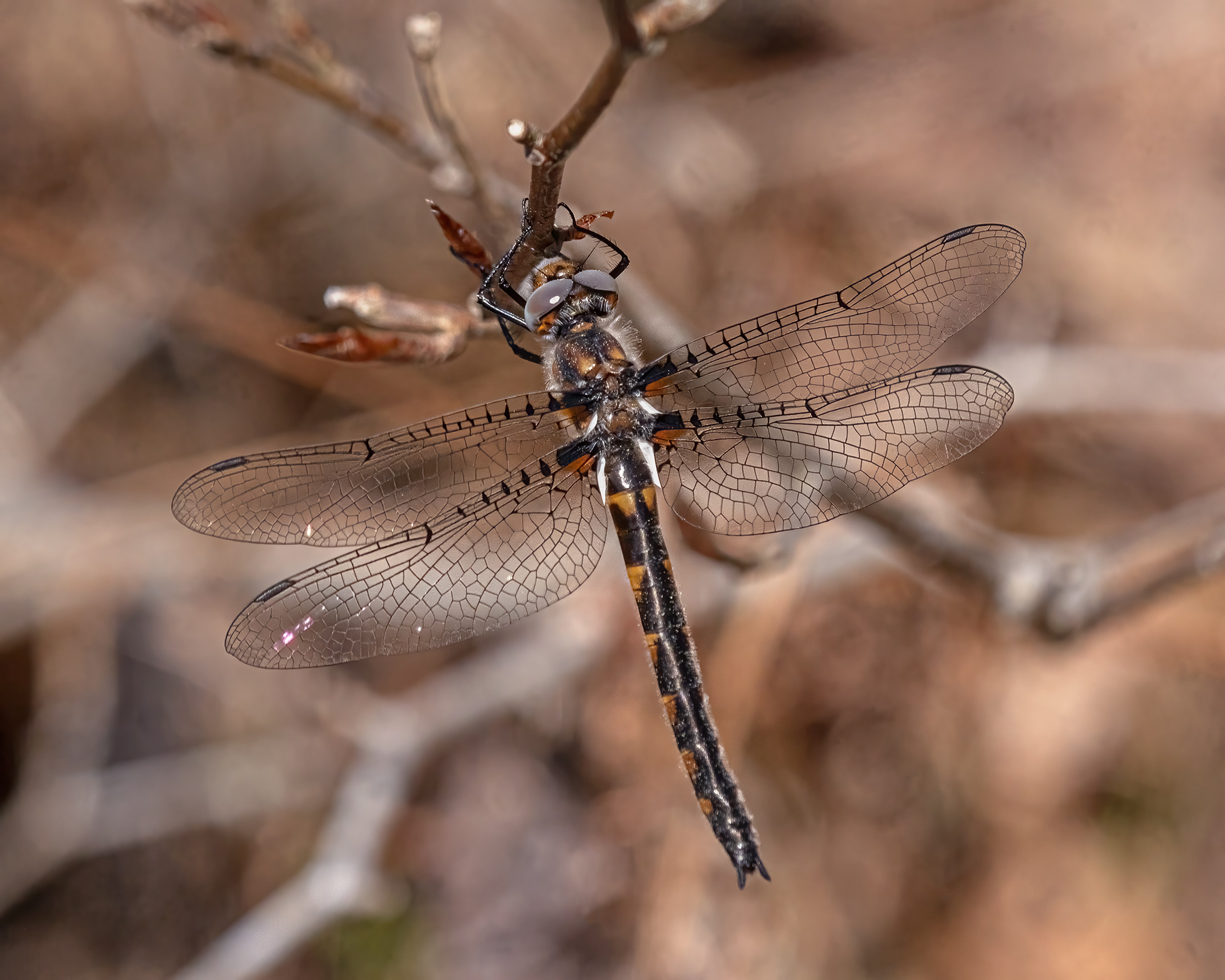
Walter was eventually able to determine that this was a female Uhler’s Sundragon (Helocordulia uhleri). My final photo shows an adult female Uhler’s Sundragon that I photographed later that same day, so you can easily see that the dragonfly was not yet done with her transformation when we photographed her.
How did Walter do it? For the answer to that mystery, check out Walter’s blog posting today called Uhler’s Sundragon dragonfly (emergent female) for the fascinating story of his detective work and additional photos and details of our encounter with this emerging dragonfly.


© Michael Q. Powell. All rights reserved.
Posted in Dragonflies, dragonfly, Macro Photography, Nature, Photography, spring, wildlife | Tagged Canon 50D, emerging, emerging dragonfly, female Uhler's Sundragon, Helocordulia uhleri, Prince William County VA, Tamron 180mm, Uhler's Sundragon, Uhler's Sundragon dragonfly | 21 Comments »
April 26, 2021 by Mike Powell
I was excited on Friday to capture this image of a colorful male Eastern Forktail damselfly (Ischnura verticalis) as I was wandering about at Occoquan Regional Park in Lorton, Virginia. I love the color combination of the light green thorax and the turquoise accents near the tip of the abdomen.
Generally when I see these little damselflies they are perched flat on the ground or on vegetation close to the ground—this slightly elevated perch made it a bit easier for me to get a good shot of its entire body. In case you are curious about the size of this damselfly, Eastern Forktails are only 0.8-1.3 inches (20-33 mm) in length, so you have to look really carefully to spot one.

© Michael Q. Powell. All rights reserved.
Posted in damselfly, Insects, Macro Photography, Nature, Photography, spring, wildlife | Tagged Canon 50D, Eastern Forktail, Eastern Forktail damselfly, Ischnura verticalis, Lorton VA, Occoquan Regional Park, Tamron 180mm | 16 Comments »
April 25, 2021 by Mike Powell
When I photographed this dragonfly on Friday at Occoquan Bay National Wildlife Refuge, I had no doubt in my mind that it was a Common Baskettail dragonfly (Epitheca cynosura). I had seen dragonflies of this species several times near that area of the refuge, including once earlier this year. Besides, what else could it be?
I got a quick response to that question when I posted a photo to the Virginia Odonata group, a Facebook forum devoted to dragonflies and damselflies. One viewer suggested that it looked more to him like a Slender Baskettail dragonfly (Epitheca costalis) than a Common Baskettail. Eventually several experts weighed in and also opined that it looked like a male Slender Baskettail, though one acknowledged that it was difficult to make a definitive call based on my photos that he judged to be “suboptimal.”
So how do you tell the species apart? Slender Baskettails tend to have a narrower waist and are relatively slimmer, but the only way to know for sure is by the length of the cerci, the dark black terminal appendages at the tip of the abdomen (the “tail”). The cerci are longer on male Slender Baskettails than on Common Baskettails. (If you want to know more about dragonfly terminal appendages, check out a posting by fellow dragonfly enthusiast Walter Sanford entitled Dragonfly terminal appendages (male, female).)
The folks who suggested that this dragonfly is a Slender Baskettail did so on the basis of my photos, but that is not really a reliable method, because the angle and lighting can distort perceptions. How do you know for sure? One expert stated that “you can really only ID them by measuring the cerci which I do of a specimen under a microscope.” I may be a little geeky when it comes to dragonflies, but I am not about to measure a specimen’s anatomical parts with a microscope.
I am left therefore with a bit of a scientific mystery. Is it a Slender Baskettail or a Common Baskettail dragonfly? It might be a bit of heresy to some, but it does not really matter to me. I was simply happy to capture these cool photos of a beautiful creature.
Shakespeare’s words about a rose in “Romeo and Juliet” could easily be applied here, “A rose (or a dragonfly) by any other name would smell (or look) as sweet.”


© Michael Q. Powell. All rights reserved.
Posted in Dragonflies, dragonfly, Insects, Nature, Photography, spring | Tagged Canon 50D, Common Baskettail, Common Baskettail dragonfly, Epitheca costalis, Epitheca cynosura, Occoquan Bay National Wildlife Refuge, Slender Baskettail, Slender Baskettail dragonfly, Tamron 180mm, Woodbridge VA | 13 Comments »
April 24, 2021 by Mike Powell
I was thrilled yesterday at Occoquan Bay National Wildlife Refuge to spot my first Blue Corporal dragonfly (Ladona deplanata) of the season. This little dragonfly—about 1.4 inches (36 mm) in length—is one of the earliest dragonflies to reappear each spring in my area and was one of my target species for the day.
If you look carefully at the upper part of the thorax (the “shoulders”) you can see the two light-colored stripes, the traditional military insignia for a corporal, that are responsible for the name of this species. Blue Corporals most often perch flat on the ground, which can make them really hard to spot when they land. In this case, the ground was so cluttered with dried reeds that I could barely detect the dragonfly’s wings. (You can see the wings more easily if you click on the image to enlarge it.)

© Michael Q. Powell. All rights reserved.
Posted in Dragonflies, dragonfly, Insects, Nature, Photography, wildlife | Tagged Blue Corporal, Blue Corporal dragonfly, Canon 50D, Ladona deplanata, Occoquan Bay National Wildlife Refuge, Tamron 180mm, Woodbridge VA | 6 Comments »
April 24, 2021 by Mike Powell
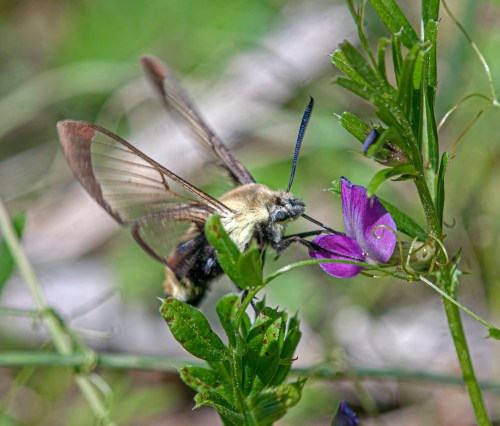
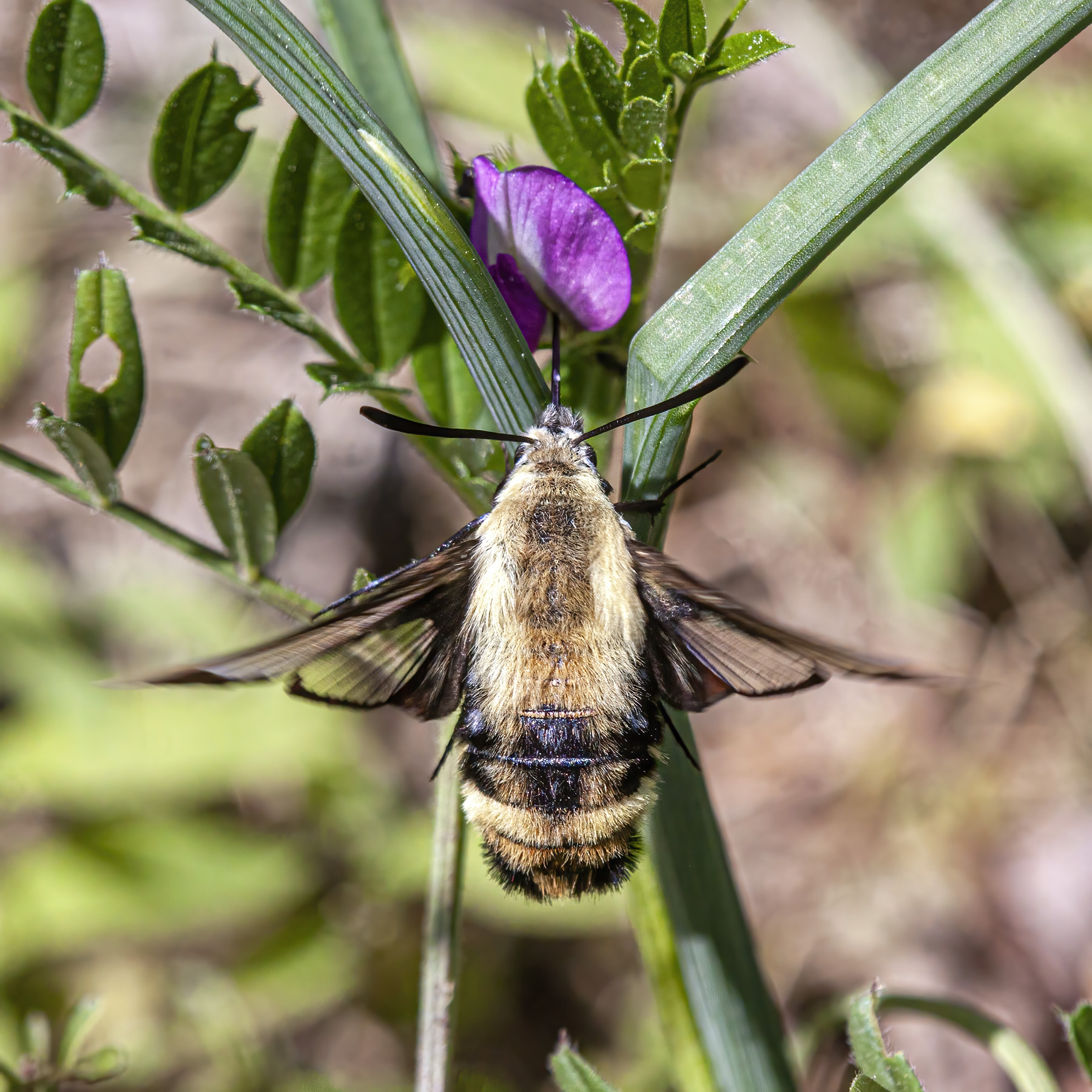
I was thrilled yesterday to spot this Snowberry Clearwing Moth (Hemaris diffinis) as I was wandering about in Occoquan Regional Park. This fascinating insect looks a lot like a bumblebee, but acts a lot like a hummingbird and hovers when it is feeding. Unlike a hummingbird that has a long pointed beak, members of this species have a long proboscis that they curl up when it is not in use, as you can see in the first photo.
The active little moth was very focused on the tiny violets and did not seem bothered by my presence, so I was able to move in quite close for these shots. However, the moth did not linger long on any flower, so I had to move quickly. I do not know how fast the moth was moving its wings, but the shutter speed for these photos was as high as 1/2000 of a second and there was still some wing blur. In case you are curious, Snowberry Clearwing Moths are about 1.25-2.0 inches (32–51 mm) in length.


© Michael Q. Powell. All rights reserved.
Posted in Insects, Nature, Photography, spring, wildlife | Tagged Canon 50D, clearwing moth, Hemaris diffinis, Lorton VA, Occoquan Bay National Wildlife Refuge, proboscis, Snowberry Clearwing Moth, Tamron 180mm | 18 Comments »
April 23, 2021 by Mike Powell
I never quite know what I will encounter when I am out wandering in the wild with my camera, like this rather large snake that I almost literally stumbled upon on Monday while exploring in Prince William County. I am fairly certain is an Eastern Rat Snake (Pantherophis alleghaniensis), the most commonly seen snake in the state of Virginia where I live, according to the Virginia Herpetological Society. On average, an Eastern Rat Snake in our state is 42 – 72 inches in length (107-183 cm) and I estimated that this one was at least four feet long (122 cm).
The snake was completely stretched out perpendicular to a stream and did not react as I initially approached, which shocked me a little. When I took my initial shots, in which I was not as close as it seems, I noticed that its eyes were somewhat cloudy, an indication that this snake may have been preparing to shed its skin. Knowing that snakes are vulnerable during this stage and more likely to be aggressive, I captured my shots quickly and backed away.
I decided to try something different to capture a view of the entire snake and created a panoramic image in Photoshop using three separate shots. The last image is the result of that little project and I encourage you to click on the image to get a look at the entire length of the snake. In case you are curious, the process is really easy and the software does most of the work aligning the images.
I was inspired to try the panorama by the work of Reed Andariese, an amazing photographer whose blog, Photo Art Flight, I follow. Over the years, Reed has done panoramic composite shots using a wide variety of cameras (including his iPhone) and lenses—check out his recent posting in which he featured multi-image composites taken with a fish-eye lens. Wow!


© Michael Q. Powell. All rights reserved.
Posted in Nature, Photography, Reptiles, snake, spring | Tagged Canon 50D, Eastern Ratsnake, Pantherophis alleghaniensis, Prince William Forest Park, rat snake, shedding, Tamron 180mm, Triangle VA | 10 Comments »
April 22, 2021 by Mike Powell
I spent most of my time looking for birds during a trip last week to Occoquan Bay National Wildlife Refuge and I managed to capture the images of the bald eagles that I featured yesterday. The day had started off cool and overcast, more suitable for birds than for dragonflies, but when the sun finally broke through in the late afternoon, I decided to swing by a small pond on my walk back to the parking lot on the off chance that I might find a dragonfly.
My hunch paid off when I spotted this female Ashy Clubtail dragonfly (Phanogomphus lividus) perched low to the ground. At that moment I had my Tamron 150-600mm lens attached to my camera and that presented a challenge, because its minimum focusing distance is 8.9 feet (2.70 meters), so I had to back up. At that distance it is hard to locate and focus on a subject that is only 2 inches (50 mm) in length. Fortunately I have been in this situation before and I steadied myself, focused manually, and captured the first image before the dragonfly flew away.
Having established that there there was at least one dragonfly in the area, I switched to my Tamron 180mm macro lens, my preferred lens for dragonflies, and continued my search. A few minutes later I spotted another female Ashy Clubtail when it flew up into some low hanging vegetation and I captured the second image. There is a good chance that this was the same individual that I photographed earlier—both of them are pale in color, suggesting that they had only recently emerged from their larval state.
As I moved a little closer for the final shot, the dragonfly closed its wings overhead, reverting briefly to an earlier stage when it was in the process of emerging. I have seen this happen before when a newly emerged dragonfly, sometimes referred to as a teneral, flew for the first time and its wings were still in a very fragile state. At this point, I decided to stop shooting, fearful that I might spook this newly emerged dragonfly into flying at a time when she clearly needed to rest.
If you are unfamiliar with the amazing process that a dragonfly goes through in transforming itself from a water-dwelling nymph to an aerial acrobat, check out my blog posting called Metamorphosis of a dragonfly that documents the entire process in a series of photos.


© Michael Q. Powell. All rights reserved.
Posted in Dragonflies, dragonfly, Insects, Nature, Photography, spring, wildlife | Tagged Ashy Clubtail, Ashy Clubtail dragonfly, Canon 50D, female Ashy Clubtail, Occoquan Bay National Wildlife Refuge, Phanogomphus lividus, Tamron 150-600mm, Tamron 180mm, Woodbridge VA | 13 Comments »
April 21, 2021 by Mike Powell
Perhaps these Bald Eagles (Haliaeetus leucocephalus) were singing or maybe they were trying to scare off incoming osprey, but most importantly they were doing it together as a couple on a shared perch when I spotted them on Monday at Occoquan Bay National Wildlife Refuge at a moment when the skies were completely overcast.

© Michael Q. Powell. All rights reserved.
Posted in Birds, Nature, Photography, spring, wildlife | Tagged Bald Eagle, Bald Eagle couple, Canon 50D, eagle duet, Haliaeetus leucocephalus, Occoquan Bay National Wildlife Refuge, Tamron 150-600mm telephoto, Woodbridge VA | 16 Comments »
April 21, 2021 by Mike Powell
Both members of a Bald Eagle (Haliaeetus leucocephalus) couple were active on Monday in and around the big nest at Occoquan Bay National Wildlife Refuge—neither of them appeared to be sitting continuously in the nest. Perhaps there are eaglets already, though the nest is so deep I could not see any little heads.
I captured this image as one of the eagles was making its final approach to land on the nest. I really like the position of the wings that help the eagle slow its forward progress and the way that the light coming from the side was illuminating the tail feathers.
I will be continuing to monitor this nest and the other one at the wildlife refuge for signs of baby eagles and hopefully will have the chance to capture some shots of them soon.

© Michael Q. Powell. All rights reserved.
Posted in Birds, Nature, Photography, spring, wildlife | Tagged Bald Eagle, Canon 50D, Haliaeetus leucocephalus, Occoquan Bay National Wildlife Refuge, Tamron 150-600mm, Woodbridge VA | 7 Comments »
April 20, 2021 by Mike Powell
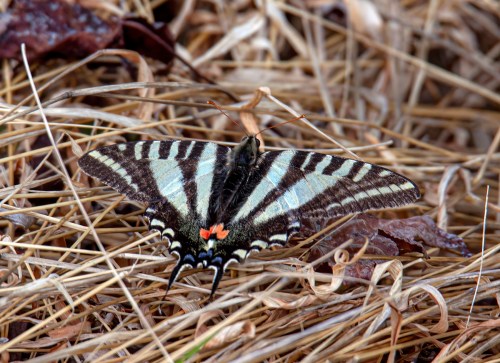
I was pleasantly surprised last week at Occoquan Bay National Wildlife Refuge to spot a few Zebra Swallowtail butterflies (Eurytides marcellus), including this one that posed momentarily for me. Generally this butterfly species is associated with the pawpaw tree, on which its larvae feed exclusively, but this one apparently spotted something of interest in the dry vegetation at the edge of the trail and decided to investigate it.
It is so exciting to see familiar spring species begin to reappear one-by-one.
© Michael Q. Powell. All rights reserved.
Posted in Butterflies, Insects, Nature, Photography, spring | Tagged Canon 50D, Eurytides marcellus, Occoquan Bay National Wildlife Refuge, Tamron 150-600mm, Woodbridge VA, Zebra Swallowtail, Zebra Swallowtail butterfly | 8 Comments »
April 20, 2021 by Mike Powell
One of the coolest spring birds in our area is the Blue-gray Gnatcatcher (Polioptila caerulea), a tiny bird that is only slightly larger than a Ruby-throated Hummingbird. I spotted this one last week in the trees at Occoquan Bay National Wildlife Refuge.
The Blue-gray Gnatcatcher has a distinctive call, so it is easy to know when one is around. Finding the bird, though, can be a real challenge because they are small, energetic, and spend a lot of time high in the trees. The trees are really starting to leaf out now, which adds another level of complexity to the challenge.
Several years ago I spotted a gnatcatcher’s nest (see my 2018 posting Gnatcatcher nest) and I am hoping to find one again this year. Blue-gray Gnatcatchers make their nests in a way that seems almost magical, using lichens and spiderwebs.


© Michael Q. Powell. All rights reserved.
Posted in Birds, Nature, Photography, spring, wildlife | Tagged Blue-gray Gnatcatcher, Canon 50D, gnatcatcher, Occoquan Bay National Wildlife Refuge, Polioptila caerulea, Tamron 150-600mm, Woodbridge VA | 6 Comments »
April 19, 2021 by Mike Powell
There always seems to be something fun and whimsical about ladybugs, like this one that I spotted last Saturday at Occoquan Regional Park. This is probably an invasive Harlequin Lady Beetle (Harmonia axyridis), rather than a native ladybug, but I still find it to be beautiful.
The Harlequin Lady Beetles, also known as Multicolored Asian Lady Beetles, may assist with control of some aphid pests, but may also harm native and beneficial insects and are considered by many to be pests.
My interests tend to be primarily photographic, so I tend not to make distinctions between weeds and flowers or between native and invasive species in the way that others, such as gardeners and farmers, may need to do. I am trying to capture my subjects as well as I can and I am pretty happy with the way this particular image turned out, given the small size of the ladybug and the fact that it was moving about as I was trying to get a shot.

© Michael Q. Powell. All rights reserved.
Posted in Insects, Macro Photography, Nature, Photography, spring, wildlife | Tagged Canon 50D, Harlequin Ladybug, Harmonia axyridis, ladybug, Lorton VA, Multicolored Asian Lady Beetle, Occoquan Regional Park, Tamron 180mm | 8 Comments »
April 19, 2021 by Mike Powell
Here are a few shots of one of the cool early spring dragonflies in our area, the distinctive Twin-spotted Spiketail dragonfly (Cordulegaster maculata). I photographed what I believe are two different males on 16 April at Occoquan Regional Park. I was fortunate to spot these dragonflies as they were flying about low to the ground and was able to track them visually to their perches less than a foot (30 cm) above the ground. As you can see from the photos, Twin-spotted Spiketails hang from vegetation at an angle rather than perch horizontally as some dragonflies do.
This species is considered to be uncommon in our area, so I was quite happy to spot them again this year in a location where I had seen them last year. According to Kevin Munroe’s wonderful website Dragonflies of Northern Virginia, Twin-spotted Spiketails “are uncommon to rare, and need small, perennial, forest streams with stable, relatively un-eroded banks and a noticeable, steady current. They don’t need the cold, highly-oxygenated, rocky waters of a trout stream, but do need streams with halfway decent water quality and relatively low stormwater surges.”
Over the past few years I have learned, thanks to the helpful instruction of fellow dragonfly enthusiast Walter Sanford, that the habitat really matters for many of the uncommon dragonfly species in our area. There are no guarantees that I will find the my target species when I go searching for them, but there is a much greater chance if I know where to look and when, given that some of these species are present for only a few weeks each year.
In case you are curious, these dragonflies are much larger than the Uhler’s Sundragons and Selsys’s Sundragons that I featured in recent postings. The sundragons are about 1.5 inches (40 mm) in length, while the Twin-spotted Spiketail can be almost 3 inches (76 mm) in length.


© Michael Q. Powell. All rights reserved.
Posted in Dragonflies, dragonfly, Macro Photography, Nature, Photography, spring, wildlife | Tagged Canon 50D, Cordulegaster maculata, Lorton VA, Occoquan Regional Park, Tamron 180mm, Twin-spotted Spiketail, Twin-spotted Spiketail dragonfly | 10 Comments »
April 18, 2021 by Mike Powell
On Friday I was really happy to capture this image of a juvenile Common Five-lined Skink (Plestiodon fasciatus) at Jackson Miles Abbott Wetland Refuge. How do I know that it is a juvenile? Only juveniles have the distinctive blue tail that I find to be exceptionally cool and that, in this case, adds a touch of color to an almost monochromatic image.
The old stump on which the skink was perched made a wonderful background for this shot and I love the way that the concentric age rings and the uneven texture of the wood mirror the colors and scales of the skink’s body. The shadowy center shape makes this feel like an aerial shot, as if a giant skink were standing on a ledge, staring down into a deep crevasse.

© Michael Q. Powell. All rights reserved.
Posted in Nature, Photography, Reptiles, spring | Tagged Canon 50D, Common Five-Lined Skink, Fort Belvoir VA, Jackson Miles Abbott Wetland Refuge, juvenile skink, Plestiodon fasciatus, skink, Tamron 180mm | 11 Comments »
April 17, 2021 by Mike Powell
Although it has been almost a week since I last posted an image of a bird, let me reassure you that I have not given up on them. At this time of the year, however, my attention is divided and I am just as likely to be hunting for tiny subjects with my macro lens as I am to be scanning the increasing leafy trees through my long telephoto zoom lens. When I start walking (and I do a lot of walking), I have to decide which lens I will initially put on my camera and that will largely dictate where I will look for subjects.
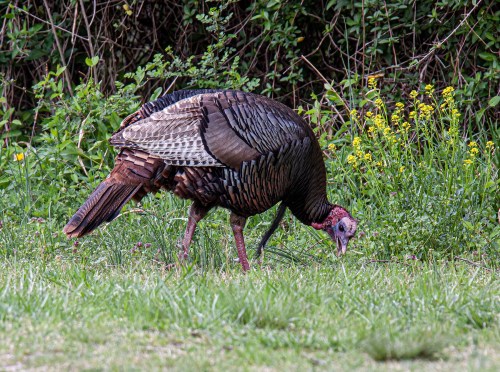
On Thursday, I went back to Occoquan Bay National Wildlife Refuge to look for birds and was delighted to spot a small flock of Wild Turkeys (Meleagris gallopavo). Sometimes the turkeys that I see appear relatively small, but some of the members of this flock seemed enormous, like the one in the first photo. The turkeys were picking about at the edge of the trail on which I was walking and slowly made their way into the undergrowth as I approached. The motion was fast enough, though, that one of the turkey’s legs is blurred in the second photo.
I am hoping to be able to capture some images of springtime warblers and of baby eaglets, but the transition has already begun from mostly telephoto shots to mostly macro shots—it is part of my seasonal transition.

© Michael Q. Powell. All rights reserved.
Posted in Birds, Nature, Photography, spring, wildlife | Tagged Canon 50D, Meleagris gallopavo, Occoquan Bay National Wildlife Refuge, Tamron 150-600mm, turkey, Wild Turkey, Woodbridge VA | Leave a Comment »
April 17, 2021 by Mike Powell
I was a little shocked last week at Prince William Forest Park, when I spotted a groundhog (Marmota monax) scampering down a trail heading right towards me as I was resting on a log. The groundhog must have sensed my presence, because it suddenly stopped, sniffed the air, and headed back in the direction from which it had come.
When I first detected the animal coming my way, I thought it might be a bear cub. Yes, I know that it is the wrong color and shape for a bear cub, but I had seen the signs at the park entrance to be aware of bears. According to news report, wildlife cameras at the park detected a black bear coming out of hibernation in February of this year. It may look like I was pretty far away from the groundhog, but I actually took this photo with the same 180mm macro lens that I used to photograph yesterday’s small dragonfly.
I thought about rewording the first paragraph that I had also used on a Facebook posting, but decided to leave it untouched. Several of my friends suggested that the groundhog might have gotten closer if I had taken a shower—I definitely left myself open for that interpretation by the way that I worded the last sentence of the first paragraph. I have always felt that it is good to be able to laugh at yourself—as someone once noted, it guarantees that you will have an endless source of humor.


© Michael Q. Powell. All rights reserved.
Posted in animals, Nature, Photography, spring, wildlife | Tagged Canon 50D, groundhog, marmota monax, Prince William Forest Park, Tamron 180mm, Triangle VA, woodchuck | 14 Comments »
April 16, 2021 by Mike Powell
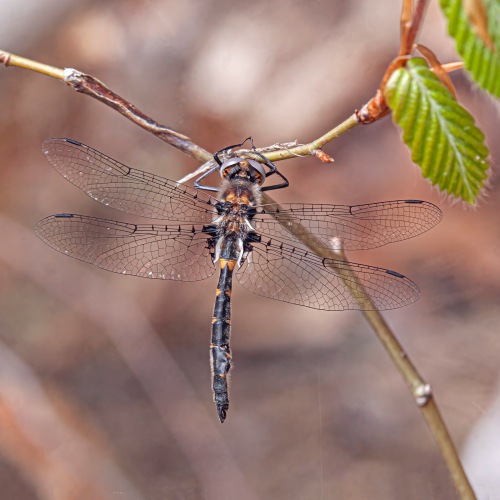
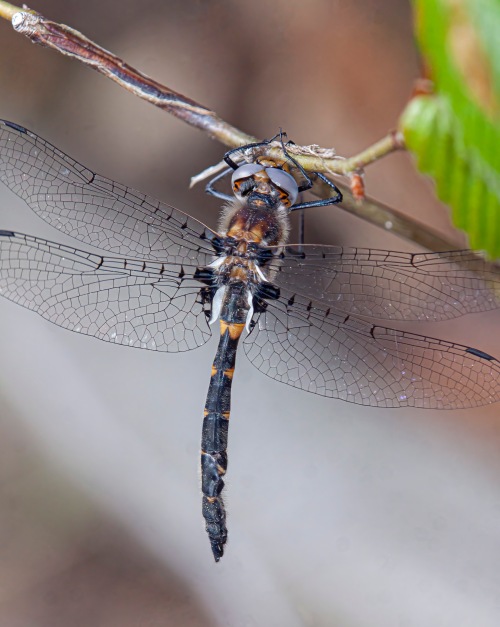
Normally when I photograph a new species of dragonfly I am immediately ecstatic, but that was not the case on Tuesday. After a long day of searching for Uhler’s Sundragons (Helocordulia uhleri) in Prince William County with fellow dragonfly enthusiast Walter Sanford, we were excited when we finally spotted a few of them. It had been an overcast day and it was only when the sun came out after noon that the dragonflies began to appear. Walter was thrilled, but my excitement was a little more muted, because I had photographed this species the previous week—check out my posting First dragonflies of the season for details and photos of my adventures that day.
After a while, Walter noted to me that all of the Uhler’s Sundragons that he had seen so far were female and that he hoped he would see a male. This may sound a little strange, but with some species of dragonflies, the females hang out in a separate area from the males until they are ready to mate, so you do not always see the genders intermixed.
I was wandering around the area a bit, as I am prone to do, when Walter called out to me that he had found a male. I rushed over and managed to get some shots of the specimen, including the first two images below. As it turns out, that was the only male that we saw all day.
The following day, Walter sent me an excited Facebook message informing me that the male dragonfly that we had both photographed was not a Uhler’s Sundragon, but was a Selys’s Sundragon (Helocordulia selysii), a similar species that neither of us had ever seen before. Walter did a records search and it looks the species had never before been documented in Prince William County. Finally I was ecstatic.
How did we not notice immediately that this was a different species? One of the primary differences between the species is that Uhler’s Sundragons have amber-colored markings mixed with dark ones at the base of their wings, while Selys’s Sundragons have only the dark markings. Given the small size of these dragonflies, these differences are hard to spot in the field, but are much easier to see when reviewing images afterwards.
For comparison purposes, I have included a photo of a male Uhler’s Sundragon that I photographed last week. If you look carefully, you can see the amber-colored markings in the final photo that are absent in the first two photos.
You may also notice that there is a spider on the branch in the final photo that appears to be reaching down and tapping the dragonfly on the “shoulder.” In this scenario, I am not sure which species would be the predator and which would be the prey. I have documented several cases in which dragonflies have been caught in spiderwebs and also a case when a jumping spider took down a much larger dragonfly (see my 2014 posting Spider captures dragonfly—the story for a fascinating series of images).
If you would like to see Walter’s account of our encounter with the Selys’s Sundragon, check out his blog posting today entitled Selys’s Sundragon dragonfly (male).
Selys’s Sundragon, 13 April 2021
Selys’s Sundragon, 13 April 2021

Uhler’s Sundragon, 8 April 2021
© Michael Q. Powell. All rights reserved.
Posted in Dragonflies, dragonfly, Insects, Macro Photography, Nature, Photography, spring, wildlife | Tagged Canon 50D, Helocordulia selysii, Helocordulia uhleri, Prince William County VA, Selys's Sundragon, Selys's Sundragon dragonfly, Tamron 180mm, Uhler's Sundragon, Uhler's Sundragon dragonfly, Walter Sanford | 24 Comments »
April 15, 2021 by Mike Powell
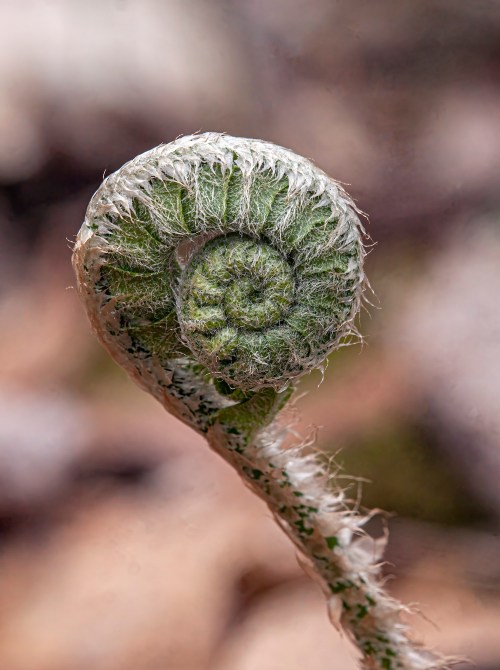
I am always attracted to the beautiful forms of a fiddlehead as it gradually unfurls from a tightly coiled spiral into a full-fledged fern frond. I have no idea if the process takes days or weeks, but but it was amazing to see the various stages of development of the fiddleheads that I have spotted during recent forays into a forest in Prince William County, Virginia.
The first two photos make it pretty obvious that the fiddlehead resembles the curled ornamentation (technically called a “scroll”) on the end of a stringed instrument, such as a violin that are traditionally carved in the shape of a volute (a rolled-up spiral). As I was poking about on the internet, I also learned that the fiddlehead stage of a fern is sometimes known as a crozier, the term used for the hooked staff carried by a bishop as a symbol of pastoral office.


© Michael Q. Powell. All rights reserved.
Posted in Art, Landscape, Nature, Photography, spring | Tagged Canon 24-105mm, Canon 50D, ferns, fiddlehead, Prince William County VA, Tamron 180mm | 18 Comments »
April 14, 2021 by Mike Powell
It is nearly impossible to miss the ostentatious displays of brilliant color as a succession of flowers and trees burst onto the springtime scene. Sometimes, though, they overwhelm my senses and I find myself more drawn to the delicate beauty of the tiny wildflowers that pop up in fields and forests.
Yesterday I was happy to photograph a skittish Eastern Tailed-Blue butterfly (Cupido comyntas) as it moved about in a small patch of Spring Beauty wildflowers (Claytonia virginica) in a forested area of Prince William County. With my macro lens, I was able to capture the distinctive “tail” and orange chevrons that help in identifying this tiny butterfly that has a wingspan of only ¾ – 1¾ inches (22 – 29 mm). I also managed to capture the beautiful pink markings of the spring beauties, including the anthers at the tips of the stamens.
It is easy to lose myself in this magical tiny world or perhaps it might be more correct to say that I find myself there.

© Michael Q. Powell. All rights reserved.
Posted in Butterflies, Flowers, Insects, Macro Photography, Nature, Photography, spring | Tagged Canon 50D, Claytonia virginica, Cupido comyntas, Eastern Tailed-blue, Eastern Tailed-blue butterfly, Prince William County VA, Spring Beauty, Spring Beauty wildflowers, Tamron 180mm | 17 Comments »
April 13, 2021 by Mike Powell
Are you the kind of person who sees shapes in the clouds? If so, then perhaps you too may see the shape of a fire-breathing dragon in this amazing parrot tulip that I photographed yesterday in the garden of my dear friend Cindy Dyer. As more of Cindy’s parrot tulips pop open I am becoming convinced that these are the craziest flowers that I have encountered, with all kinds of wild shapes and colors.
I am equally convinced that we all need a little whimsy, fantasy, and child-like fascination in our daily lives. As adults we tend to take ourselves too seriously too often. Wouldn’t it be cool to see the world afresh as a child does, full of excitement and imagination?
Keep your eyes open today—you too might unexpectedly encounter a fire-breathing dragon or equally fanciful creature.

© Michael Q. Powell. All rights reserved.
Posted in fantasy, Flowers, Gardening, Nature, Photography, spring | Tagged Alexandria VA, Canon 50D, Canon 60mm, Cindy Dyer, dragon, fantasy, fire-breathing dragon, imagination, parrot tulip, Runnymeade, tulip | 12 Comments »
April 13, 2021 by Mike Powell
Most snakes tend to lie horizontally, but the Northern Watersnake (Nerodia sipedon) that I spotted last week felt inclined to slither its way up a protruding tree branch and bask in the sun at a rather sharp angle. I was exploring the edge of a stream in Prince William County and was somewhat shocked to stumble upon this snake—I had been keeping an eye on the vegetated areas, knowing there was a chance there might be a snake there, but did not really expect to see one out in the open.
Most of the Northern Watersnakes that I have seen in the past have been darker and duller in color than this one, which has a distinctive colorful pattern. Given the brightness of the colors and the snake’s relatively small size, I wonder if this might be a juvenile snake.
The snake seemed comfortable on its perch and did not react when I took these photos, though I must admit that I kept a respectful distance away. When I continued on, the snake stayed put, enjoying the warmth of the springtime sun.


© Michael Q. Powell. All rights reserved.
Posted in Nature, Photography, Reptiles, snake, spring, wildlife | Tagged Canon 50D, Nerodia sipedon, Northern Water Snake, Northern Watersnake, Prince William County VA, Tamron 180mm | 19 Comments »
April 12, 2021 by Mike Powell
Last week I came across this carefully-balanced stack of rocks in a stream at Prince William Forest Park. These rock stacks are often called cairns, a word that comes from the Gaelic for “heap of stones” and can be quite beautiful. However, they can cause serious damage to the delicate river ecosystems and are illegal in most national parks—one of the fundamental policies of the National Park Service is to preserve natural resources in an unaltered state.
The Friends of the Smokies website offered these alternative recommendations for visitors who felt a desire to build a cairn in a posting entitled Don’t Move Rocks.
“If you feel so moved by the natural serenity around you, try a silent prayer.
If you feel the extreme urge to balance things, try balancing a drink can on your head (because apparently there’s a world record for everything).
And if you just want to see a stacks of things, hit up IHOP (International House of Pancakes) on the way home.”

© Michael Q. Powell. All rights reserved.
Posted in Landscape, Nature, Photography, spring | Tagged cairn, Canon 24-105mm, Canon 50D, ecosystems, Prince William Forest Park, stacked rocks, Triangle VA | 26 Comments »
April 12, 2021 by Mike Powell
Here’s another beautiful tulip that I spotted yesterday morning in the garden of my good friend and neighbor Cindy Dyer, an elegant variety known as the Lady Jane (Tulipa clusiana var. ‘Lady Jane’) . The pink speckles in the background are fallen petals from her crabapple tree.
As I returned back to my townhouse, I could not help but notice that my front yard was carpeted in pretty pink petals from my crabapple tree, thanks to the gentle wind and light rain in the early morning. I felt like I should be lighting candles and pouring champagne—clearly all of those lovely petals meant that I was loved. Yes, I am an unapologetic romantic.


© Michael Q. Powell. All rights reserved.
Posted in Flowers, Gardening, Nature, Photography, spring | Tagged Alexandria VA, Canon 50D, Canon 60mm, Cindy Dyer, crabapple blossoms, Lady Jane tulip, Runnymeade, Tulipa clusiana var. 'Lady Jane' | 10 Comments »
April 11, 2021 by Mike Powell
I love to stroll along the shore—the rhythmic sound of the waves relaxes me and often puts me into a contemplative frame of mind. When I spotted this crow on a recent trip to Occoquan Bay National Wildlife Refuge, I couldn’t help but think that the crow too was lost in its thoughts and enjoying the same therapeutic benefits of a stroll at the water’s edge.
I must confess that I do not know my crows very well. I assume that this is an American Crow (Corvus brachyrhynchos), but realize that it might instead be a Fish Crow (Corvus ossifragus). From what I have read, even experts sometimes have trouble visually distinguishing between the two species, though Fish Crows are substantially smaller than American Crows. Apparently some people can tell them apart by their calls, but this crow was silent, so I too will remain silent and simply identify the strolling bird as a crow.

© Michael Q. Powell. All rights reserved.
Posted in Birds, Nature, Photography, spring, wildlife | Tagged American Crow, Canon 50D, Corvus brachyrhynchos, Corvus ossifragus, crow, fish crow, Occoquan Bay National Wildlife Refuge, Tamron 150-600mm, Woodbridge VA | 4 Comments »
April 11, 2021 by Mike Powell
Tulips come in many varieties and my good friend and neighbor Cindy Dyer, who is also my photography mentor, likes to find photogenic ones to plant. For several weeks I have been keeping an eye on her garden, waiting and wondering what type and color tulips would emerge from the green growth that was slowing pushing upward.
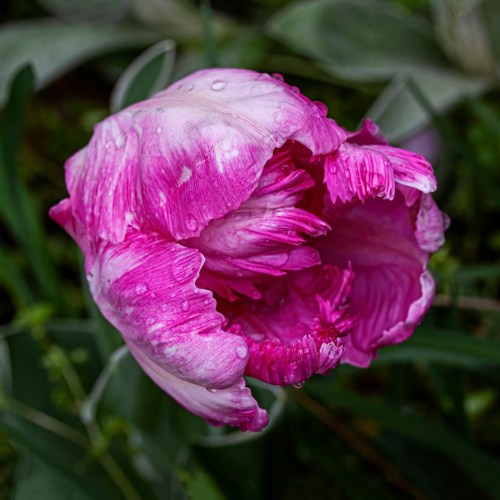
This week some of those tulips finally burst open and I was delighted to see that they are Parrot tulips. Parrot tulips are whimsically-shaped, with uncontrolled ruffled edges that somehow make me think they have a bad case of “bed head.”
I captured these images on Friday, a gloomy day punctuated with periodic rain showers. The colors of the tulips are more subdued and do not “pop” as much as they do in the sunlight, but I like the moody feel of the images. The raindrops add a nice touch too—I love to photograph the drops of rain that bead up so beautifully on so many plants and flowers.


© Michael Q. Powell. All rights reserved.
Posted in Flowers, Gardening, Nature, Photography, spring | Tagged Alexandria VA, Canon 50D, Canon 60mm, Cindy Dyer, parrot tulips, Runnymeade, tulips | 13 Comments »
April 10, 2021 by Mike Powell
On Thursday I finally photographed my first dragonflies of the season. I had previously spotted Common Green Darners several time, but they don’t really “count” because I was not able to capture images of them. I initially checked out several locations at a stream in Prince William County, Virginia, where I had seen Uhler’s Sundragon dragonflies (Helocordulia uhleri) in recent years and came up empty-handed.
However, I was thrilled when later in the day I spotted Uhler’s Sundragons at several locations further upstream from my previous locations. Uhler’s Sundragons have a brief and very early flight period and are considered rare in our area. They also are habitat specialists and “they need clean, small to medium, rocky forest streams with gravelly and/or sandy substrate, and a decent flow,” according to the wonderful Dragonflies of Northern Virginia website.
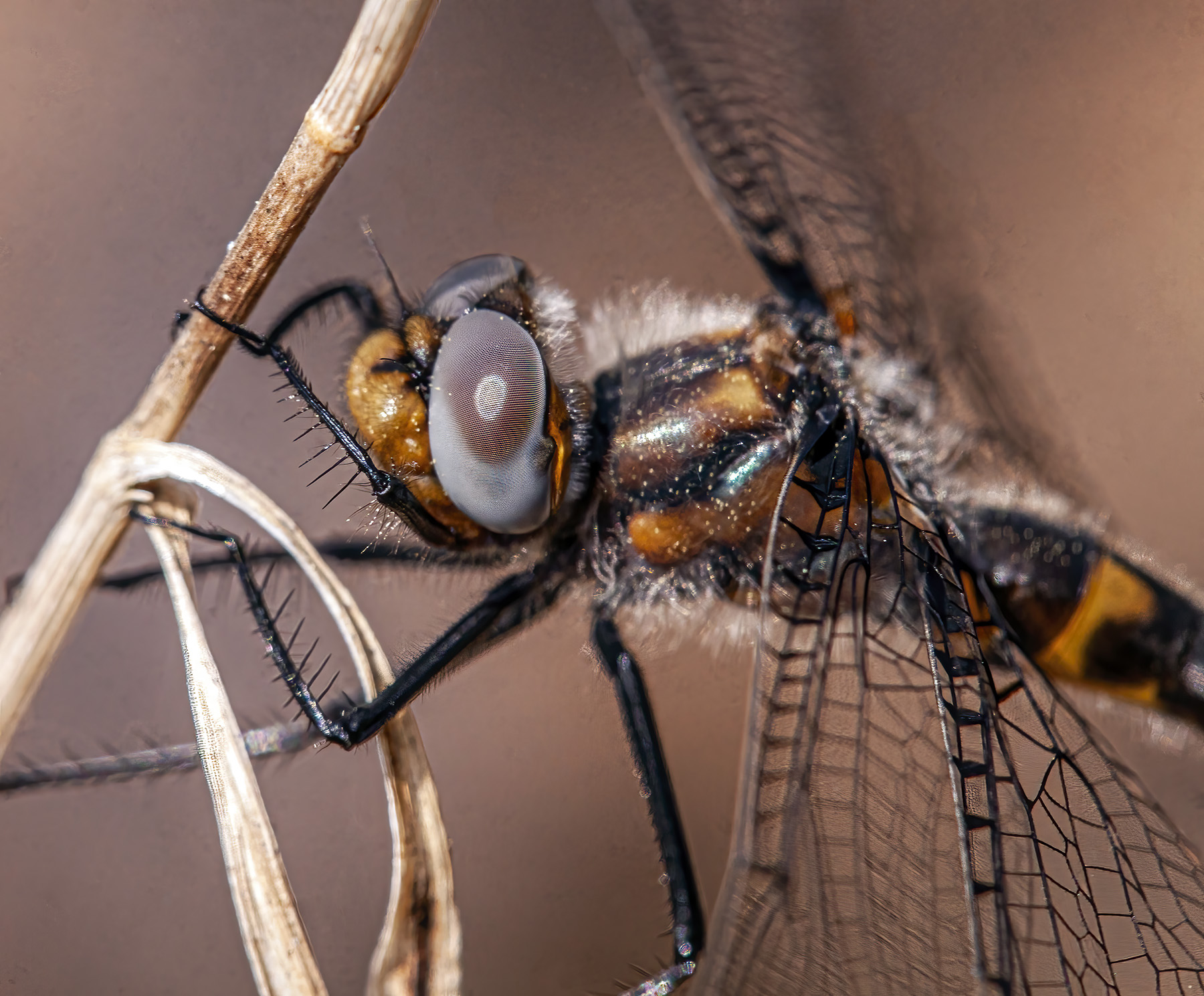
These three photos are indicative of the types of photos that I often try to capture of dragonflies. I love to try to get as close as I can and take extreme close-up shots, like the first one. You can easily see the spines on the legs of the dragonfly and even some of the ommatidia, the optical units that make up the amazing compound eyes of the dragonfly.
The second shot of a female Uhler’s Sundragon is a good illustration of the way that I try to separate my subjects from the background. The final shot of a male Uhler’s Sundragon shows more of the habitat in which I found the dragonfly. The background is a little busy, but I like the way that the image shows the transparency of the dragonfly’s wings.
In case you are curious about how I can tell the gender of these dragonflies, one of the primary keys is to look at the tips of the abdomens (the “tail”)—you will probably note the different anatomical shapes if you compare the second and third images.


© Michael Q. Powell. All rights reserved.
Posted in Dragonflies, dragonfly, Insects, Macro Photography, Nature, Photography, spring, wildlife | Tagged Canon 50D, Helocordulia uhleri, Prince William County VA, Tamron 180mm, Uhler's Sundragon, Uhler's Sundragon dragonfly | 26 Comments »
April 9, 2021 by Mike Powell
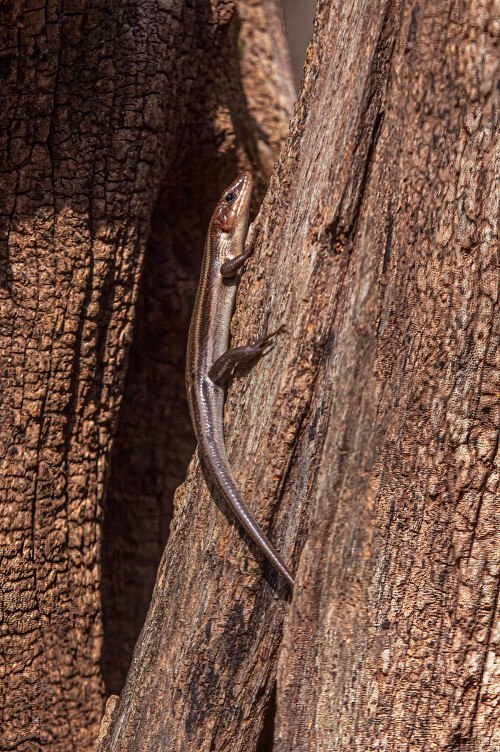
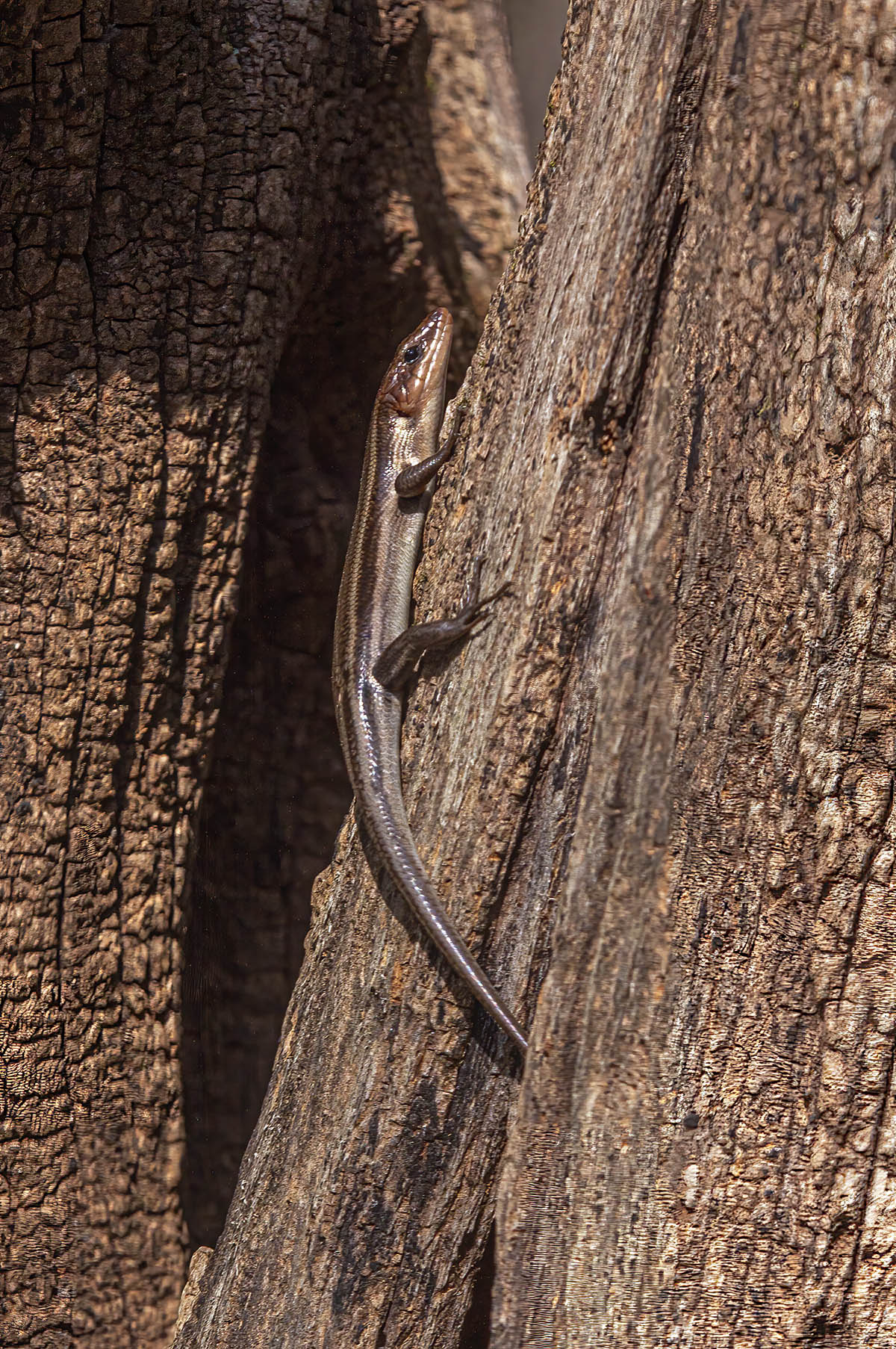
Our recent warm weather has brought out all kinds of creatures, like this Common Five-lined Skink (Plestiodon fasciatus) that I spotted on Wednesday at Jackson Miles Abbott Wetland Refuge. We do not have very many lizards in my area, so it is always a treat for me to spot one.
This skink blended in so well with the tree on which it was perched that I probably would not have spotted it if it had not moved. I love the way that the colors and texture of the skink’s body match the roughness of the tree’s bark, thereby creating a really harmonious color palette for the image.
© Michael Q. Powell. All rights reserved.
Posted in Nature, Photography, Reptiles, spring | Tagged Alexandria VA, Common Five-Lined Skink, Fort Belvoir VA, Jackson Miles Abbott Wetland Refuge, Plestiodon fasciatus, skink | 14 Comments »
« Newer Posts - Older Posts »







 Mike Powell