May 18, 2023 by Mike Powell
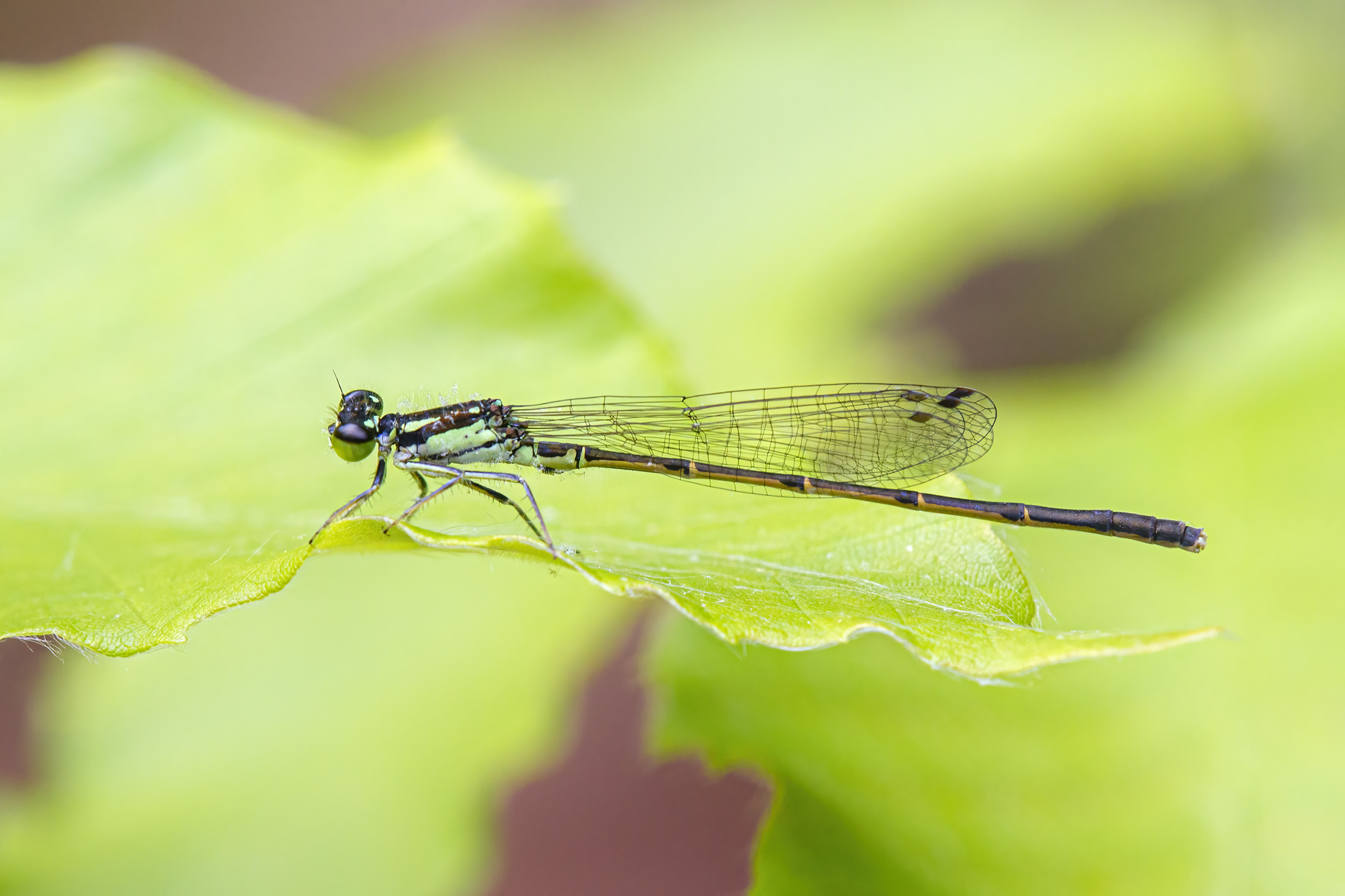
Yesterday I spotted my first Ebony Jewelwing damselfly (Calopteryx maculata) of the season while exploring at Occoquan Regional Park in Lorton, Virginia. As far as I know, this is the only damselfly in our area with completely dark wings, so it is a pretty easy species to identify.
Most of the time I spot Ebony Jewelwings in the shadowy vegetation along small streams, but this one was perched in the open. Perhaps it was enjoying the warmth of the spring sunshine.
I am not sure why the eyes of this damselfly appear to be red, because most of the time the eyes of male Ebony Jewelwings are darker. Perhaps the reddish coloration is a result of the angle of the light or maybe it is related to the age of the individual and will darken as he grows old.

© Michael Q. Powell. All rights reserved.
Posted in damselfly, Insects, Macro Photography, Nature, Photography, spring, wildlife | Tagged Calopteryx maculata, Canon 7D, Ebony Jewelwing, Ebony Jewelwing damselfly, Lorton VA, Occoquan Regional Park, Tamron 180mm | 2 Comments »
May 17, 2023 by Mike Powell
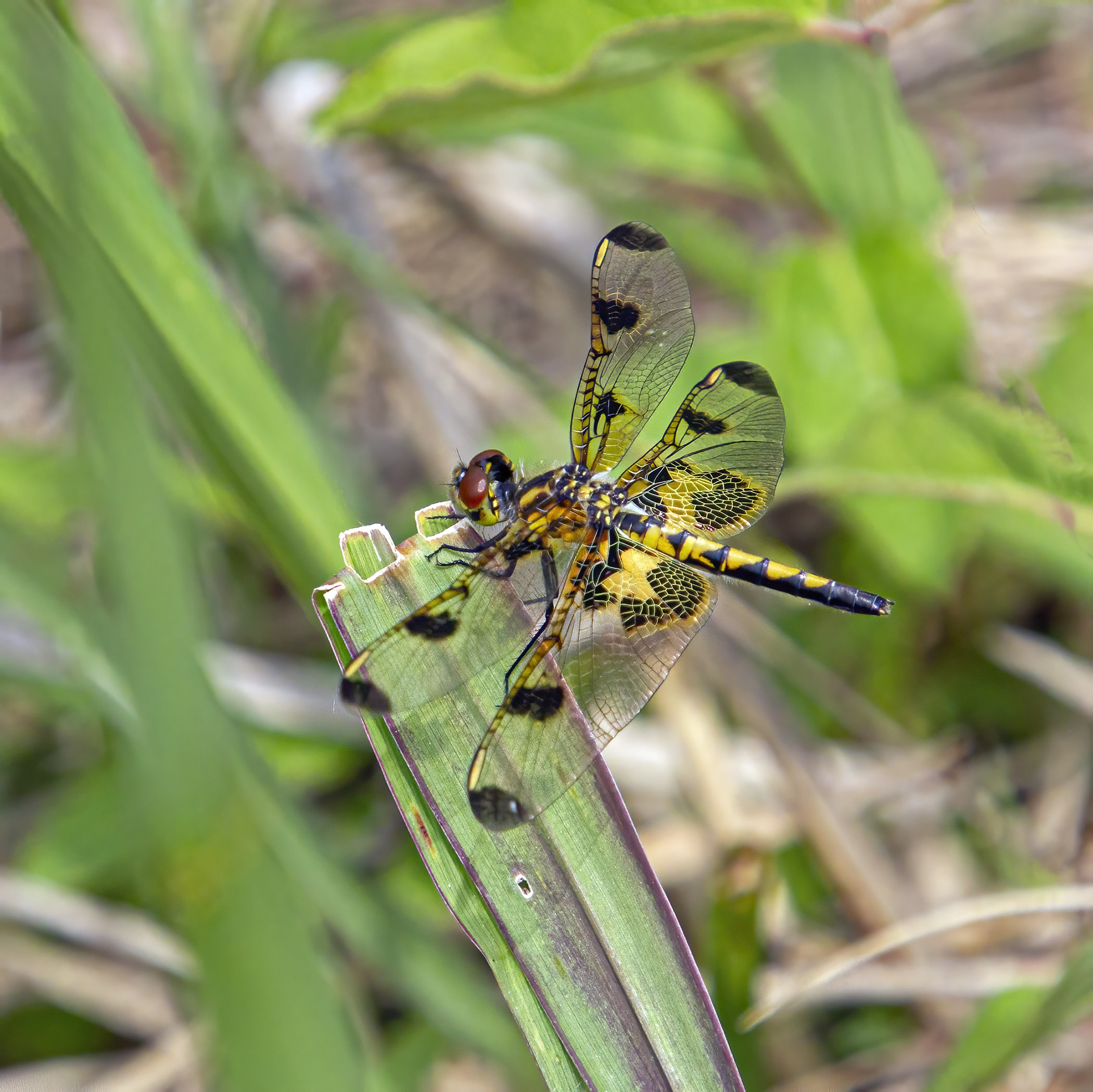
I was delighted last Thursday to see quite a few Calico Pennant (Celithemis elisa) dragonflies during a visit to Occoquan Bay National Wildlife Refuge. The markings and wing patterns on this species are really striking, making this one of the most attractive species that I see during the dragonfly season.
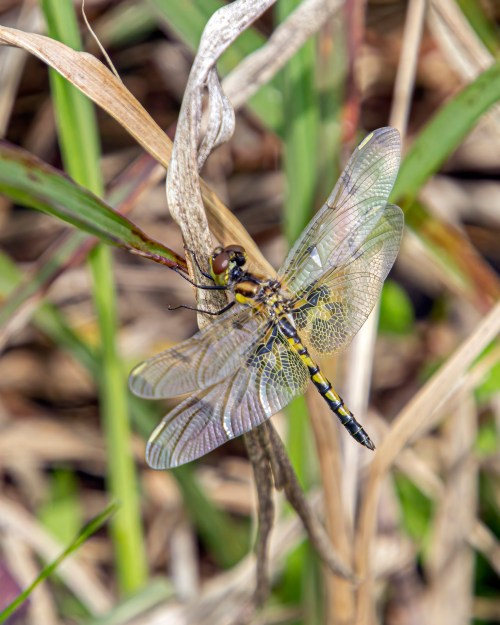
Some of the Calico Pennants appeared to have newly emerged—when dragonflies initially break through the exoskeleton of their water-dwelling larvae selves, their wings are really shiny and fragile and their coloration is often pale. The dragonfly in the first photo appears to be in that stage of development, which is sometimes referred to as “teneral.” It you look closely at the place where the dragonfly is grasping the vegetation, you can see what is quite probably its discarded exoskeleton from which it had recently emerged.
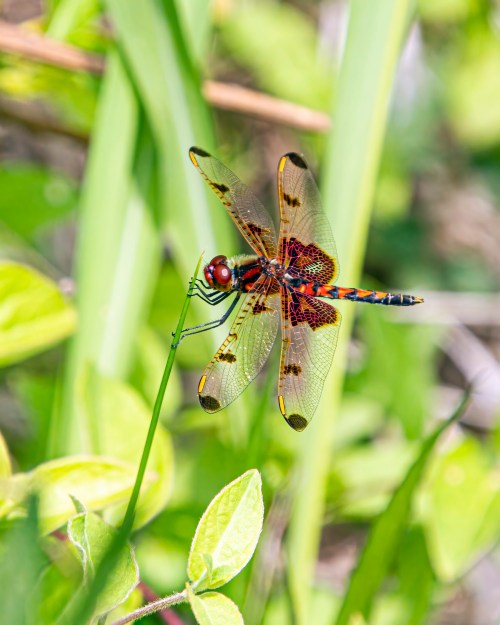
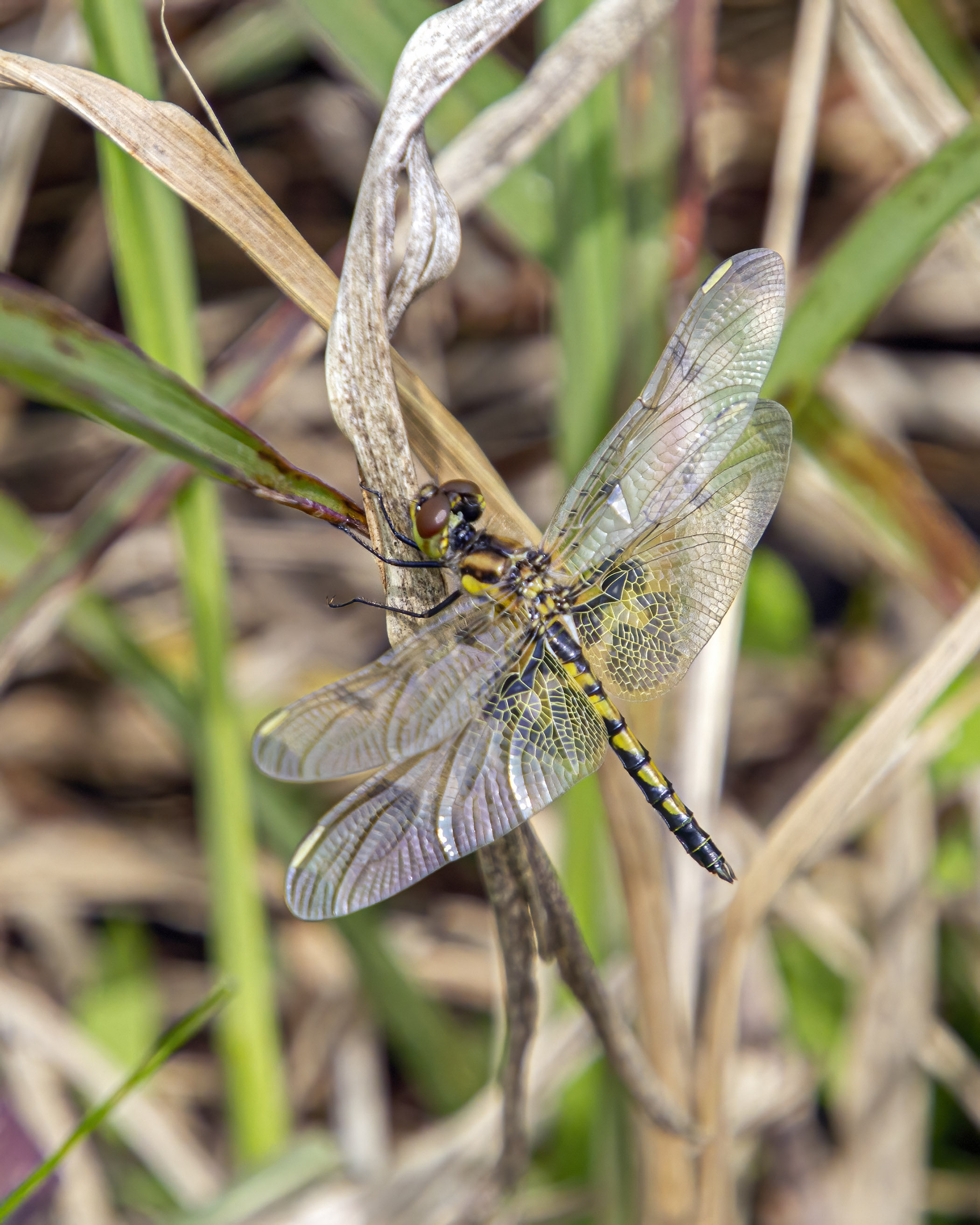
The Calico Pennants in the second and third photo are females, as was the one in the first photo. The patterns on the wings of these more mature females are more distinct and their yellow coloration is somewhat brighter. How do I know that they are females? If you look closely at the ends of their abdomens (the “tails”) you can see the terminal appendages that indicate their gender.
Female Calico Pennants have yellow markings on their abdomens, but that is not a reliable indicator of their gender, because immature males have that same coloration. The dragonfly in the fourth photo, for example, is an immature male Calico Pennant. If you compare the tip of the abdomen of this dragonfly with the one in the third photo, you may be able to see that there are differences.
What does a mature male Calico Pennant look like? I managed to spot only a single mature male that day, but fortunately was able to capture a shot of it. As you can see in the final photo, adult male Calico Pennants have red marking on their abdomens and the veining on their wings is pinkish in color.
We are gradually transitioning to the summer dragonfly species and some of the early spring ones are starting to disappear. I’ll be keeping my eyes open for the “new” species, so don’t be surprised to see more dragonfly photos in the upcoming months.


© Michael Q. Powell. All rights reserved.
Posted in Dragonflies, dragonfly, Insects, Macro Photography, Nature, Photography, spring, wildlife | Tagged Calico Pennant, Calico Pennant dragonfly, Canon 7D, Celithemis elisa, Occoquan Bay National Wildlife Refuge, Tamron 18-400mm, Woodbridge VA | 5 Comments »
May 16, 2023 by Mike Powell
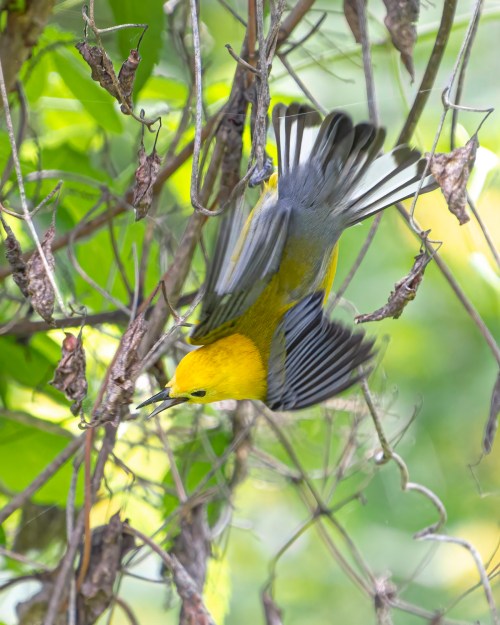
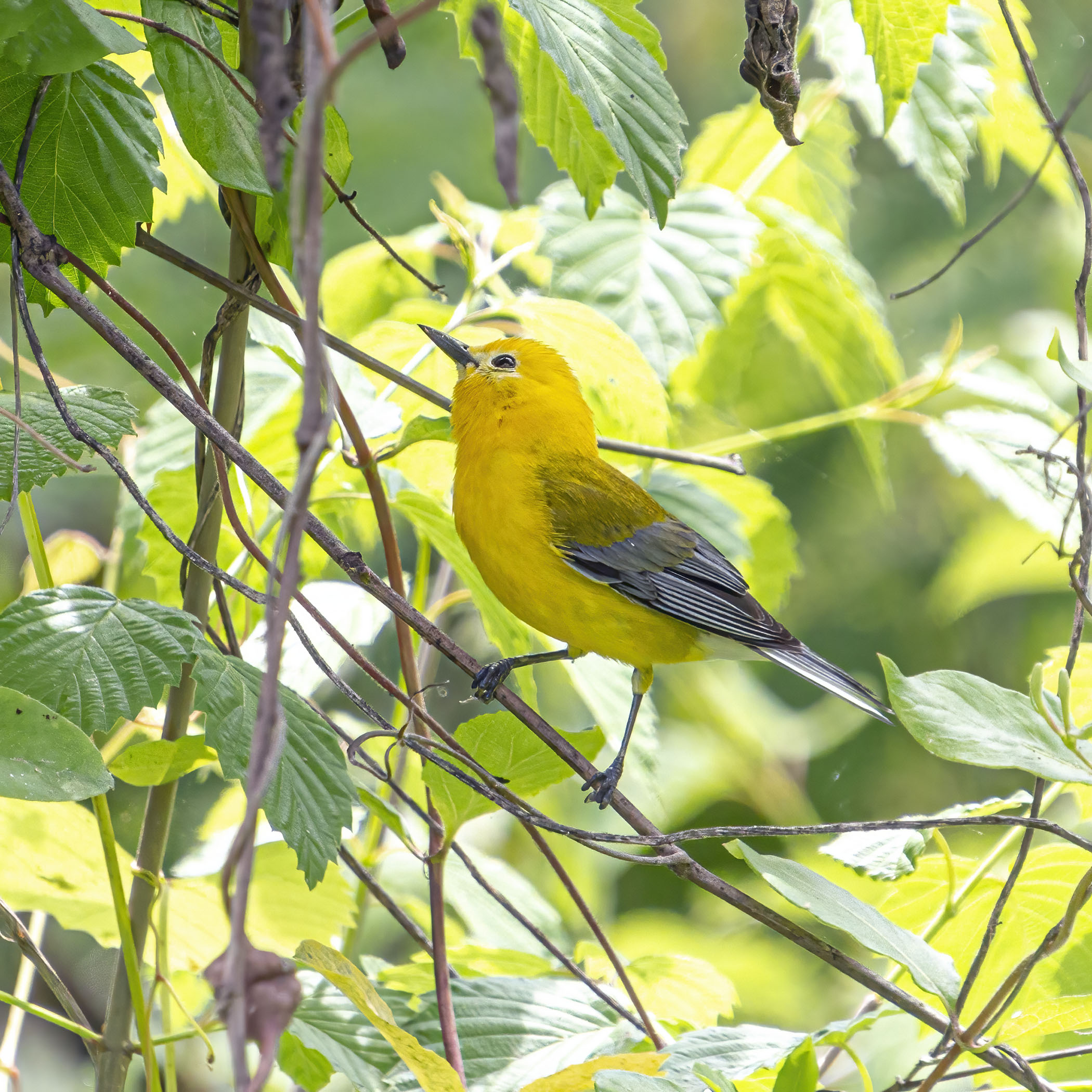
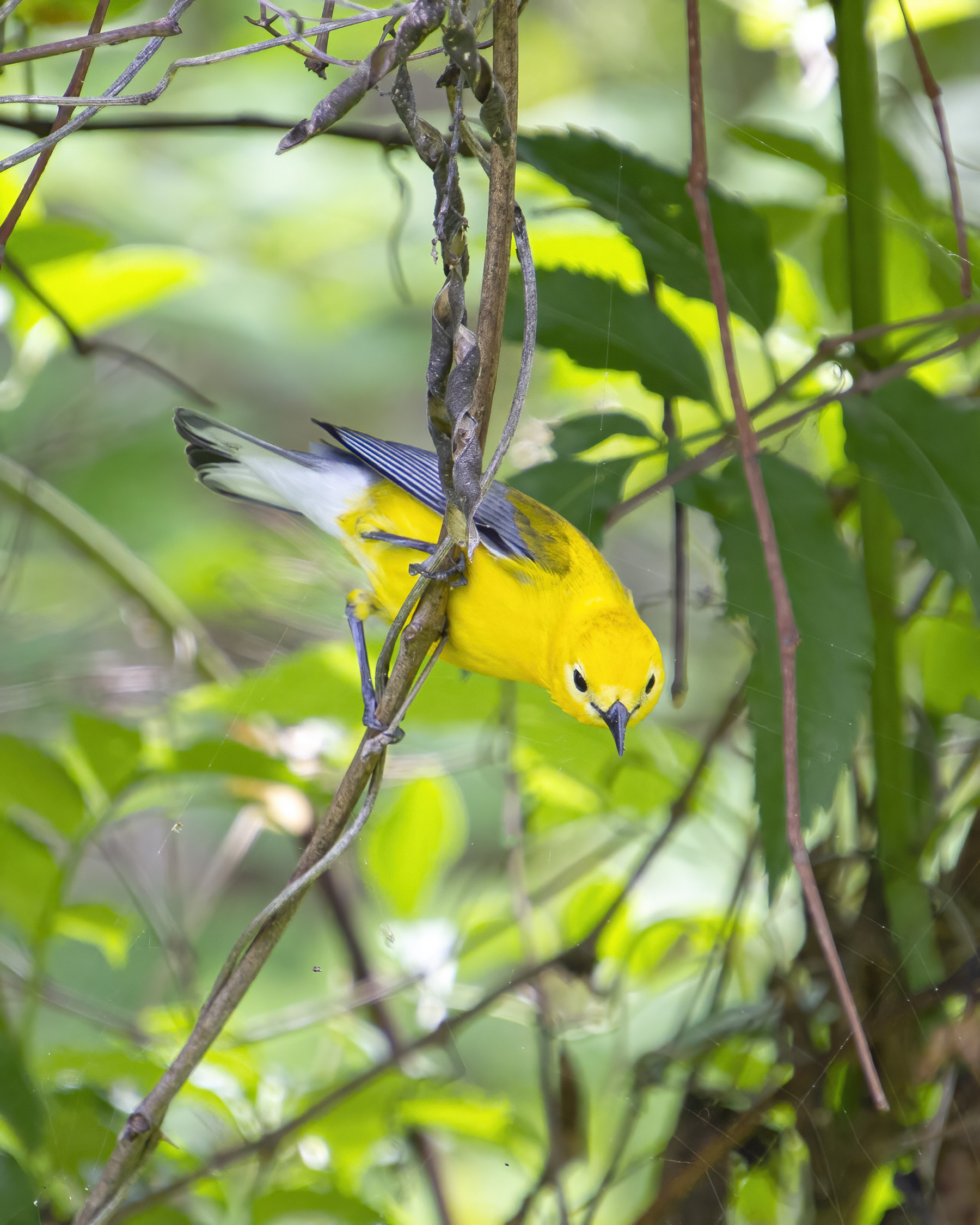
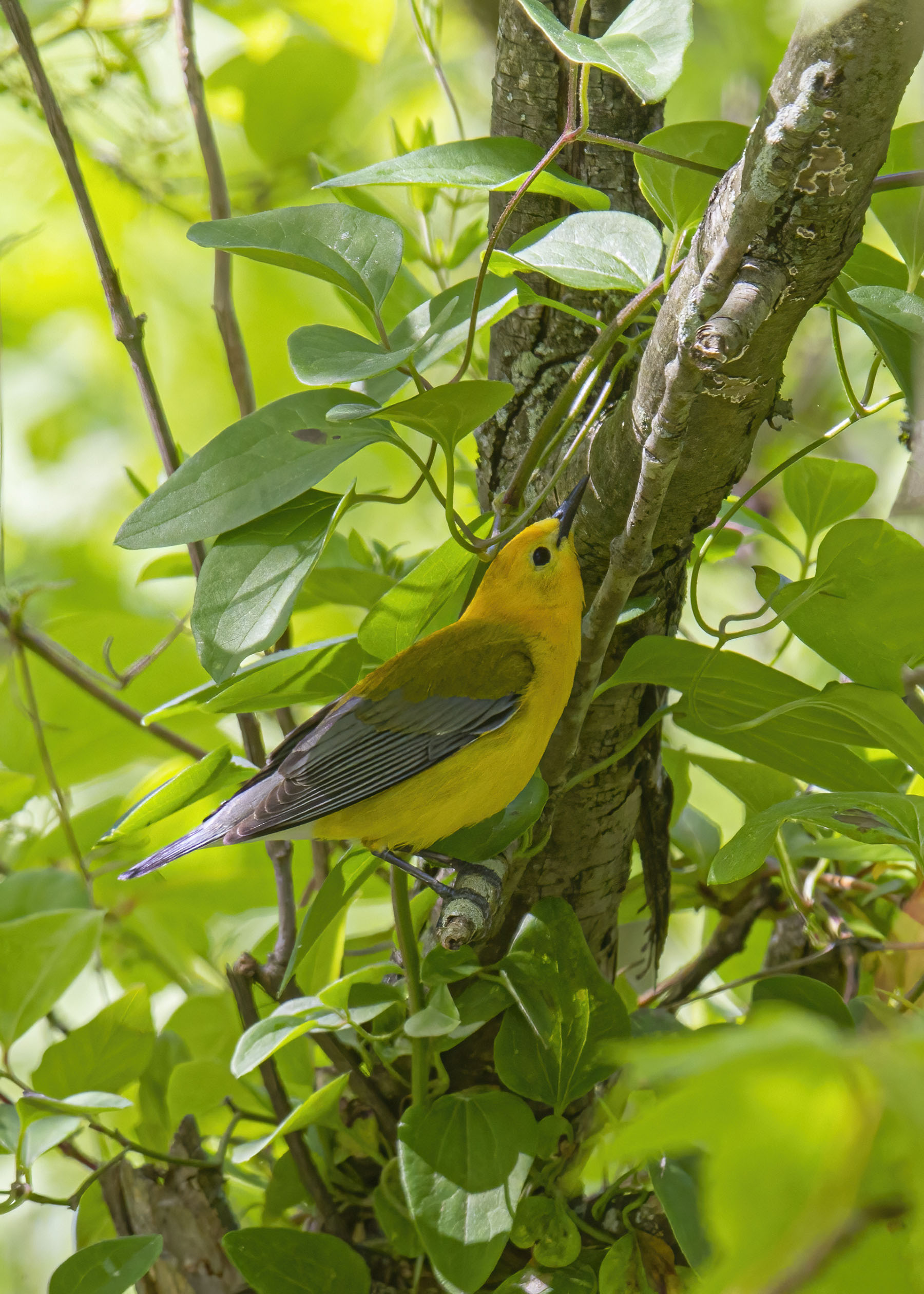
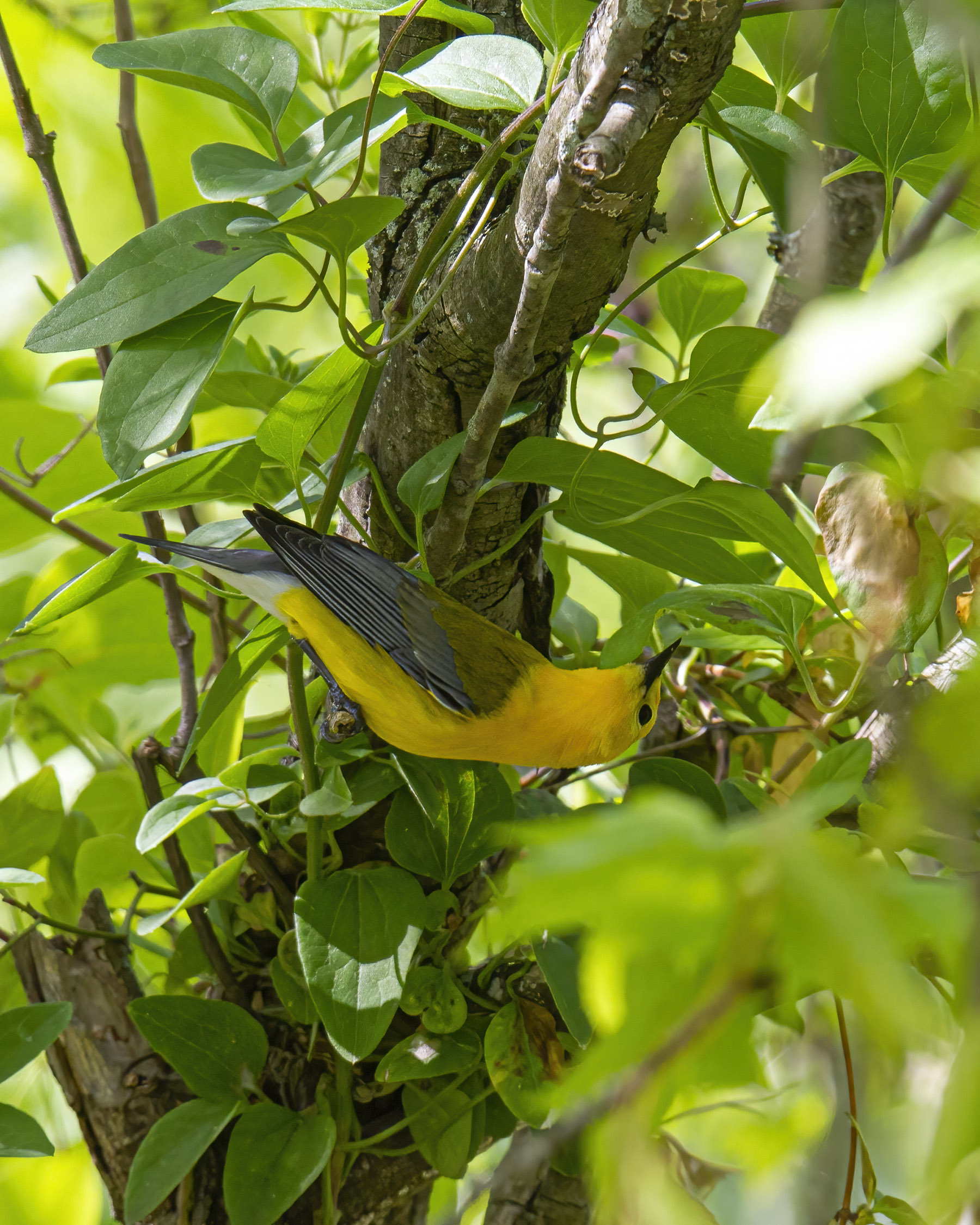
I love the poses of this bright yellow Prothonotary Warbler (Protonotaria citrea) that I spotted last Thursday at Occoquan Bay National Wildlife Refuge. The warbler was actively twisting, turning, and stretching as it foraged for food and amazingly was perched quite low in the vegetation—most of the times in the past I have seen Prothonotary Warblers high in the trees and was forced to shoot them from an unflattering sharp upward angle.
Quite often when I am focusing on a wildlife subject, it moves. Most of the time the result is a blurry image, but sometimes I end up with a really cool shot. The Prothonotary Warbler took off just as I pressed the shutter release and I was lucky to capture it in action, as you can see in the final photo.
The yellow plumage of a Prothonotary Warbler is startlingly bright and cheerful. Invariably the sight of a Prothonotary Warbler makes me think of Tweety Bird, a character from Warner Brothers Looney Tunes cartoons that I remember from my childhood. I think that Tweety was supposed to be a canary, but he didn’t really look like a canary. Often Tweety had adventures with Sylvester the cat, the subject of Tweety’s signature line, ” “I tawt I taw a puddy tat!””


© Michael Q. Powell. All rights reserved.
Posted in Birds, Nature, Photography, Portraits, spring, wildlife | Tagged Canon 7D, Looney Tunes, Occoquan Bay National Wildlife Refuge, Prothonotary Warbler, Protonotaria citrea, Tamron 18-400mm, tweety bird, warbler, Woodbridge VA | 10 Comments »
May 15, 2023 by Mike Powell
As I was scanning the trees for small birds last Thursday at Occoquan Bay National Wildlife Refuge, I spotted this Great Blue Heron (Ardea herodias) surveying its surroundings from its high perch. I have occasionally seen herons roosting in the trees in the past, but it has usually been earlier in the day—this heron might have decided that it wanted a mid-afternoon nap or at least a few peaceful moments.
Now that I am retired, I have rediscovered the pleasure of naps and a Sunday afternoon nap has become part of my weekly routine.

© Michael Q. Powell. All rights reserved.
Posted in Birds, Nature, Photography, spring, wildlife | Tagged Ardea herodias, Canon 7D, Great Blue Heron, Great Blue Heron in a tree, Occoquan Bay National Wildlife Refuge, Tamron 18-400mm, Woodbridge VA | 5 Comments »
May 14, 2023 by Mike Powell
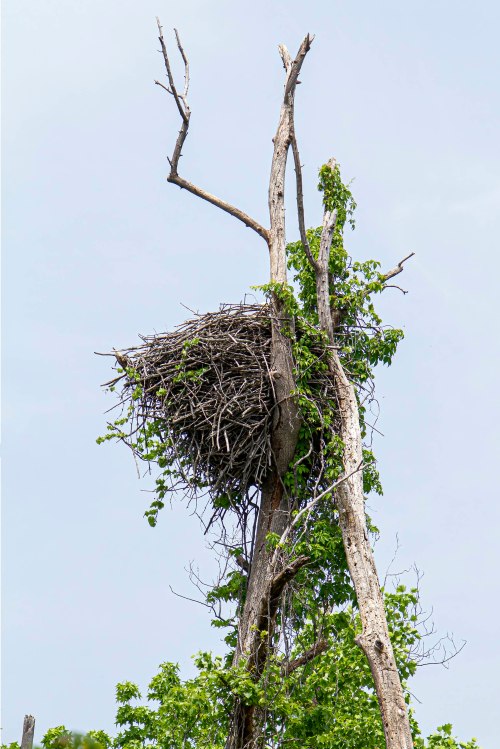
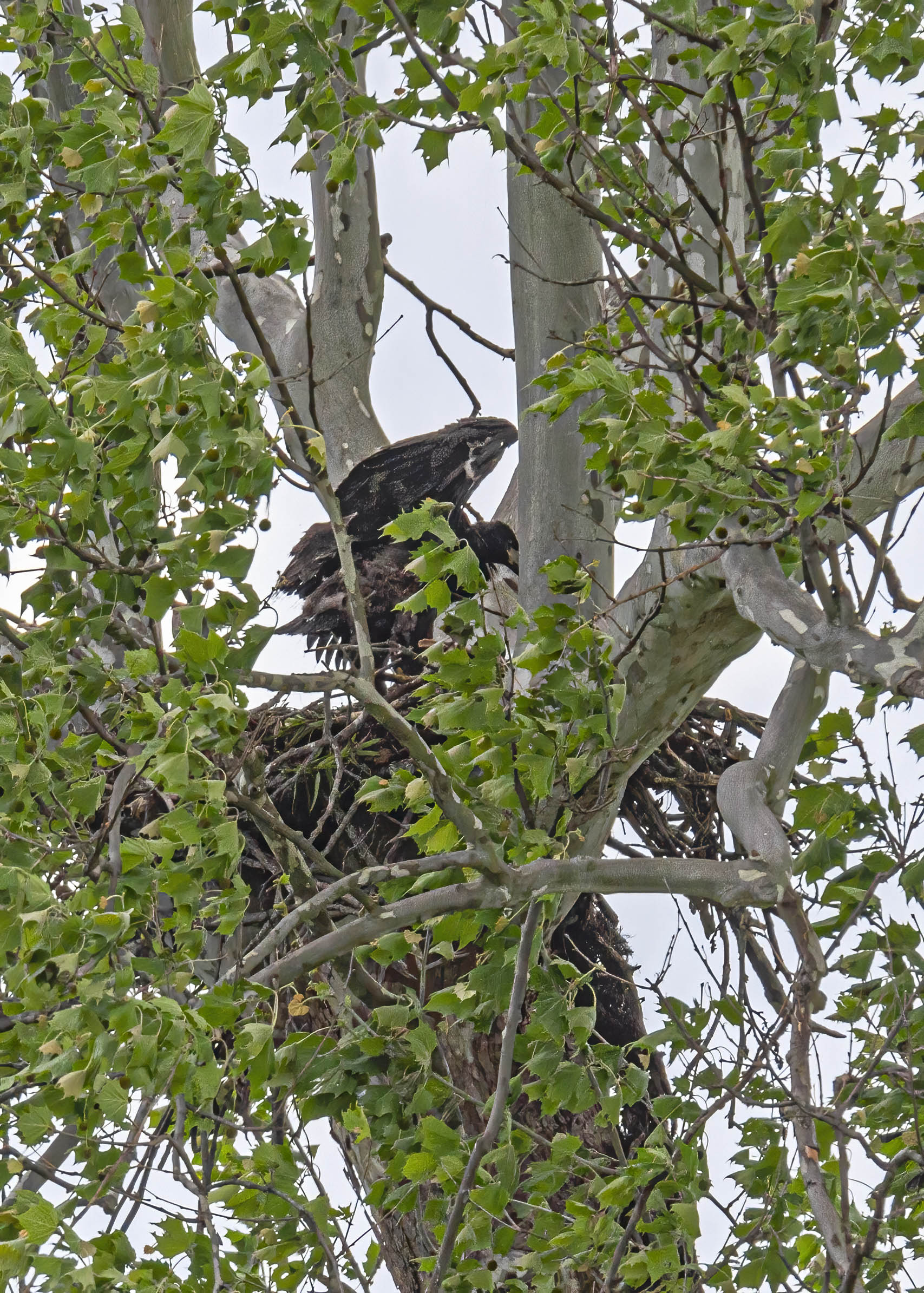
I patiently watched the large Bald Eagle (Haliaeetus leucocephalus) nest last Thursday at Occoquan Bay National Wildlife Refuge and eventually caught a glimpse of an eaglet. As some of you may recall, I have been keeping an eye on three eagle nests at this refuge and have already seen eaglets at the other two nests. This nest is significantly larger than the other two nests, as you can see in the second photo, and it is difficult to see activity in the nest.
I was zoomed in as close as I could with my telephoto lens and still had to crop the image in the first photo quite a bit so you can see the eaglet with its open mouth—I suspect it wanted to be fed. As you can see, one of the parents was in the nest with the eaglet and the other parent was perched in a nearby tree. It is possible that there are more eaglets in the nest, but I was really happy to spot one.
In case you are curious, I did not have my longest telephoto lens with me that day. Normally I use my Tamron 150-600mm lens when I know that I will be photographing birds. I was anticipating that I would be focusing on both large and small creatures, so I was using my Tamron 18-400mm lens on this occasion. This lens gives me a great deal of flexibility in photographing dragonflies as well as birds and in capturing landscape shots like the shot of the nest—I was standing in the same spot for both photos in this blog posting.

© Michael Q. Powell. All rights reserved.
Posted in Birds, Nature, Photography, spring, wildlife | Tagged Bald Eagle, bald eagle nest, Canon 7D, eaglet, Haliaeetus leucocephalus, Occoquan Bay National Wildlife Refuge, Tamron 18-400mm, Woodbridge VA | 1 Comment »
May 13, 2023 by Mike Powell
On Thursday I was blessed to photograph a beautiful little Prairie Warbler (Setophaga discolor) as it was singing in a small tree at Occoquan Bay National Wildlife Refuge. At this time of the year I can often hear the birds, but have trouble spotting them amidst the abundant foliage. Even when I am able to locate a warbler, it is usually perched really high in a tree, out of range of my telephoto lens. In this case, the warbler was almost at eye level when I took these photos.
Despite its name, the Prairie Warbler is not found on a prairie. According to the Cornell Lab of Ornithology, “Finding this bird during the breeding season is often as simple as finding the scrubby second-growth forests, young pine stands, and overgrown pastures that it prefers. In spring, listen for males singing from a mostly exposed perch in one of the tallest trees in its territory, a distinctive sputtering buzz that starts low and climbs high up the scale, beyond human hearing.”


© Michael Q. Powell. All rights reserved.
Posted in Birds, Nature, Photography, spring, wildlife | Tagged Canon 7D, Occoquan Bay National Wildlife Refuge, Prairie Warbler, Setophaga discolor, singing warbler, Tamron 18-400mm, warbler, Woodbridge VA | 3 Comments »
May 12, 2023 by Mike Powell
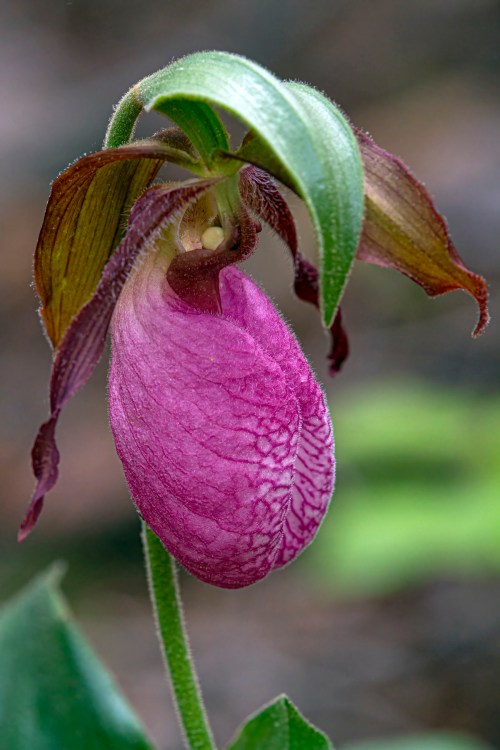
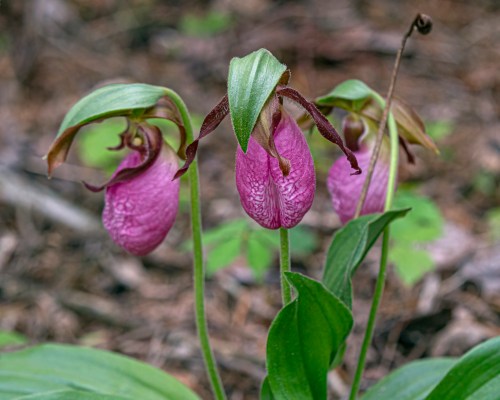
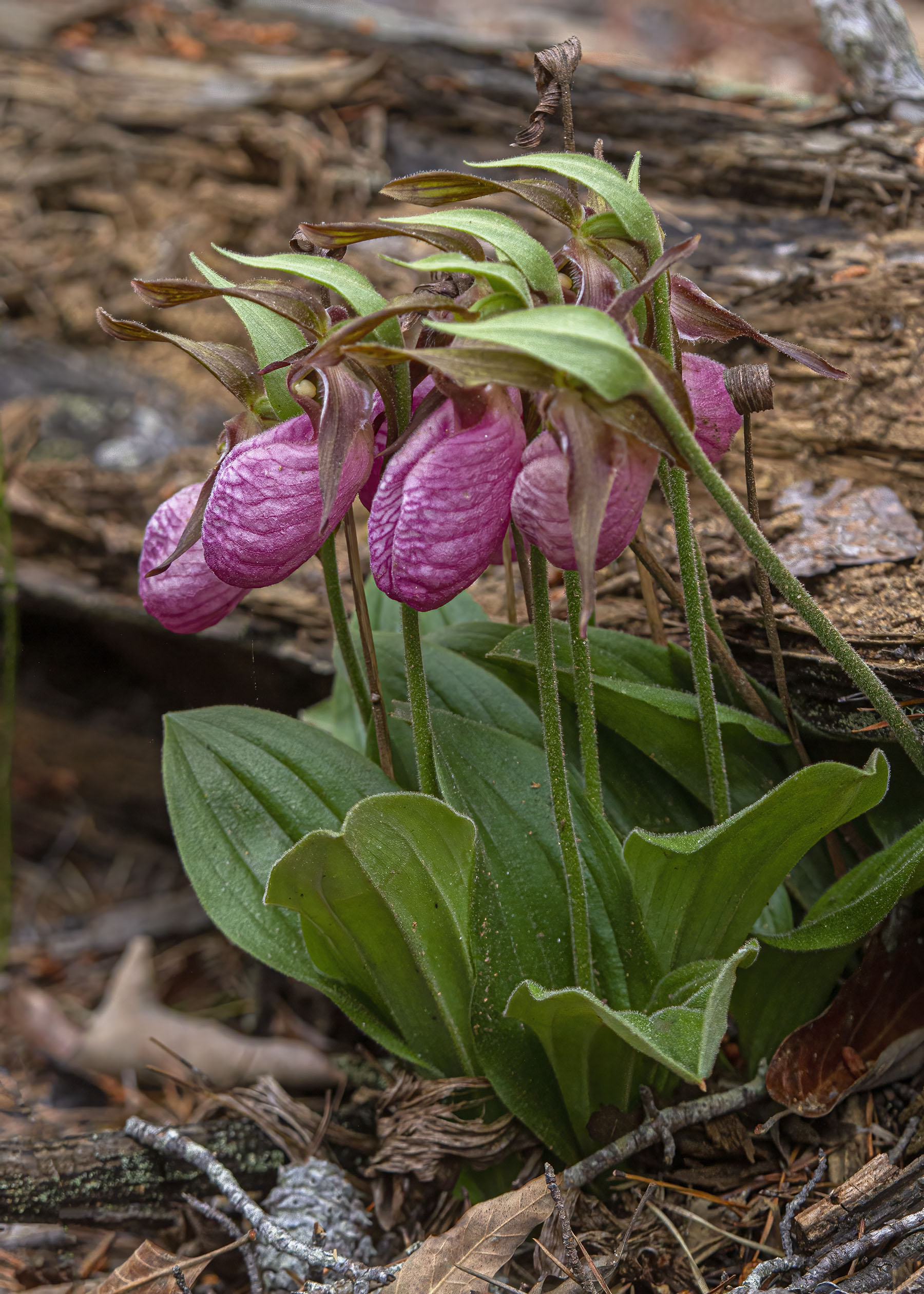
I was thrilled earlier this month to spot a dozen or so Pink Lady’s Slippers (Cypripedium acaule) as I exploring a creek in Prince William County, Virginia. Most of them were growing individually, but there were a few small clusters of these beautiful native orchids.
I have seen these flowers several times in previous years, so I had a general idea of where to look for them, but when I set out on the hike to search for them, I was not certain that my timing was right—it was a bit earlier than I had seen them in past years. I had to walk for several miles to get to this location and initially I could not find any lady’s slippers. Eventually I spotted a single one and was really happy. All of the sudden I started seeing them in multiple spots and was able to capture a variety of images.
I am fascinated by the shape of these flowers and my first instinct was to move in close and capture macro shots to highlight the details of the flower by isolating it from the background, as you can see in the first three images. When it came to groupings of flowers, though, the background could not be eliminated. That turned out to be a blessing in disguise, because I was “forced” to show the environment in which I found the flowers—I have a tendency to forget to take these kinds of shots in my zeal to zoom in. As it turns out, the last image is one of my favorites, though I must admit that the first image in my absolute favorite of these photos.



© Michael Q. Powell. All rights reserved.
Posted in Flowers, Nature, Photography, spring | Tagged Canon 7D, Cypripedium acaule, Lady's Slipper, Lady's Slipper orchid, Pink Lady's Slipper, Prince William County VA, Tamron 180mm | 19 Comments »
May 11, 2023 by Mike Powell
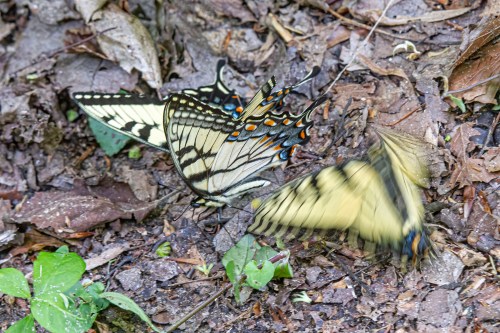
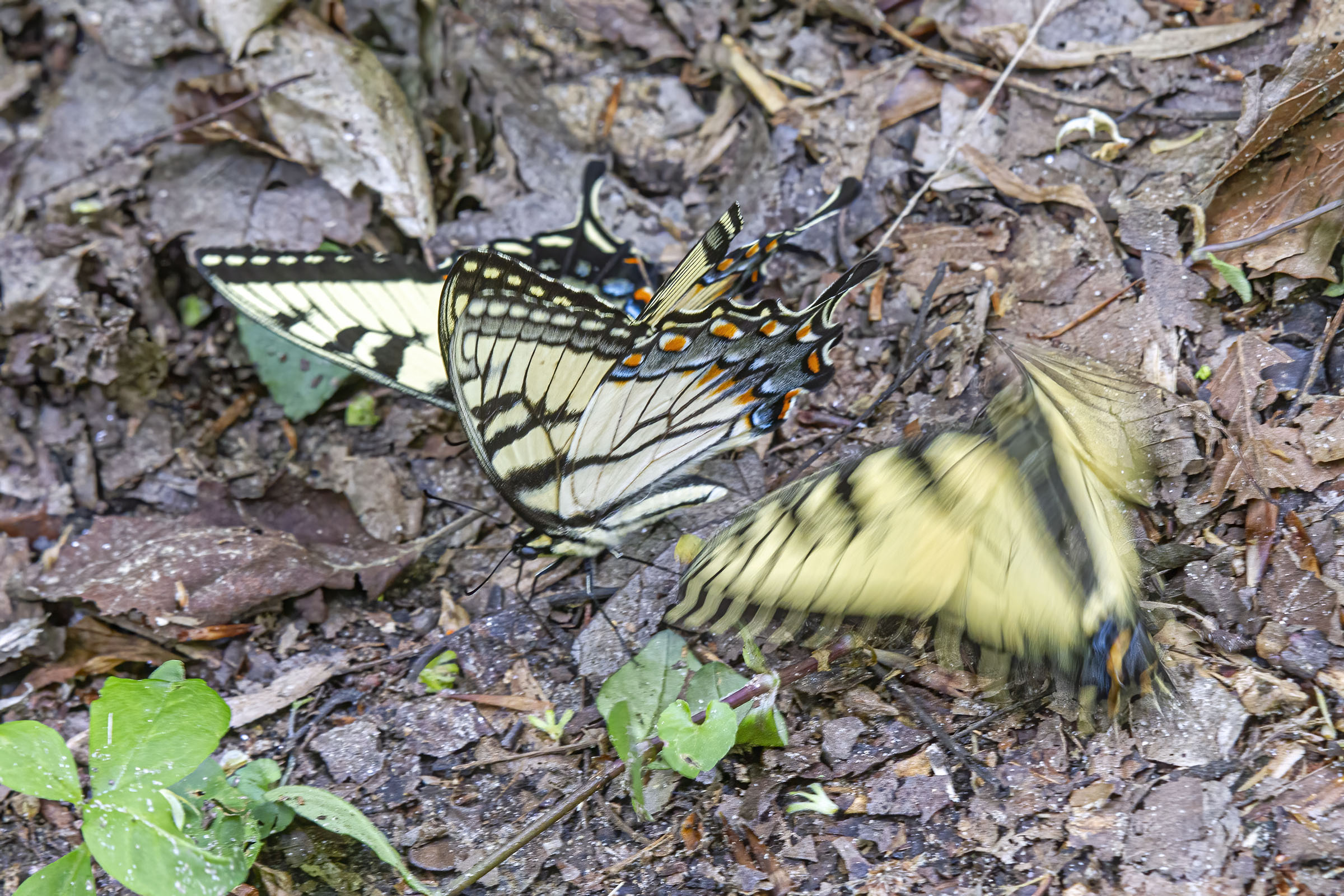
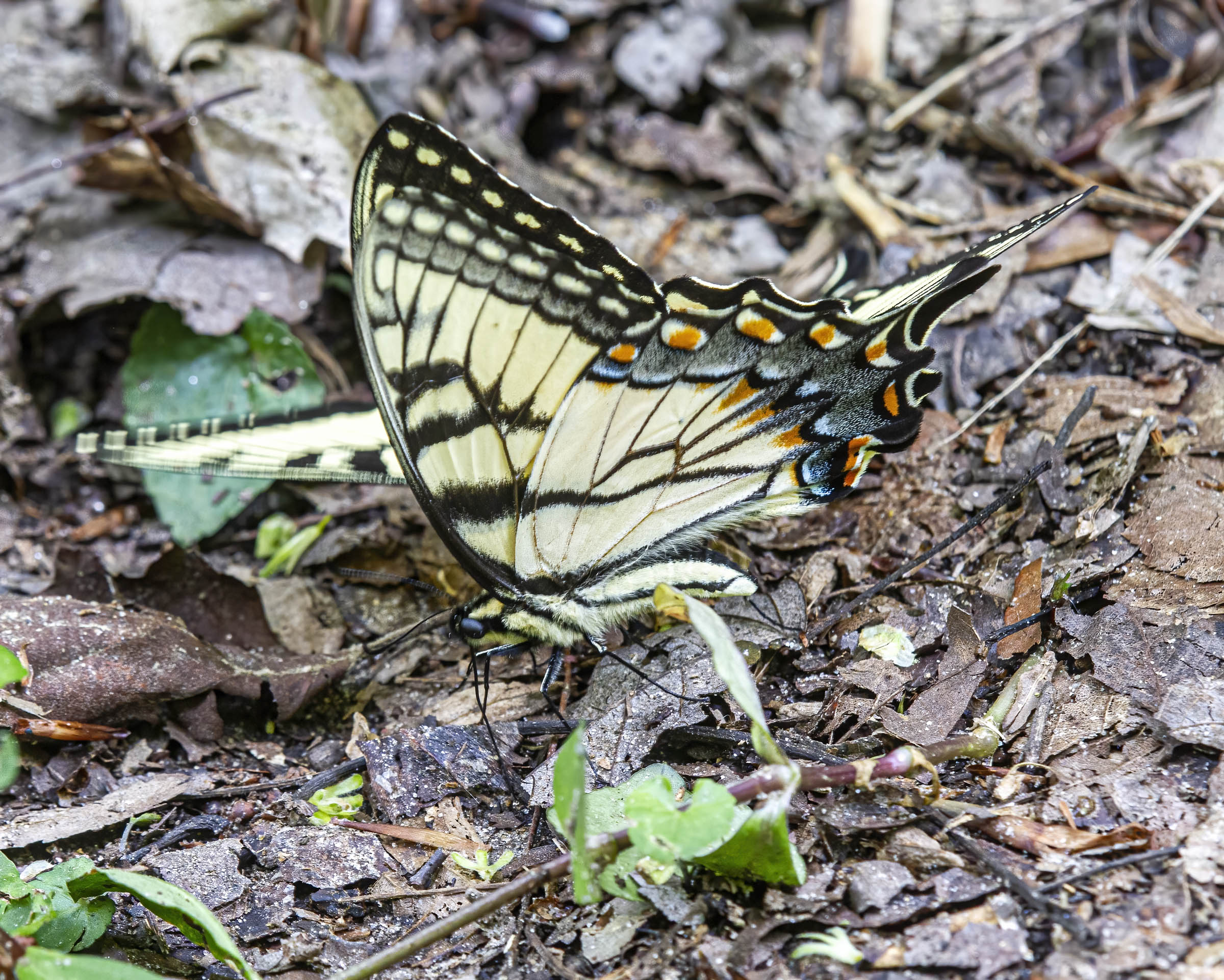
I usually think of butterflies drinking nectar from colorful flowers. Sometimes, though, newly emerged Eastern Tiger Swallowtails (Papilio polyxenes) will gather around mud puddles or other damp spots—a behavior often referred to as “puddling”—to suck minerals and other substances out of the damp ground, like these butterflies that I spotted in early May alongside a creek in Prince William County, Virginia.
Butterflies were constantly moving in and out of a small group that seemed to be concentrated at one particular spot. As I was taking this shot, a new arrival “photobombed” me. I really like the motion blur of the arriving butterfly, which gives the image a dynamic feel and also a bit of whimsy. The second shot is a close-up view of one of the butterflies as it extracted nutrients from the moist area.
“Puddling” behavior is mostly associated with male butterflies. According to an article at the Thoughtco website, “Nectar lacks some important nutrients the butterflies need for reproduction. For those, butterflies visit puddles. By sipping moisture from mud puddles, butterflies take in salts and minerals from the soil. This behavior is called puddling, and is mostly seen in male butterflies. That’s because males incorporate those extra salts and minerals into their sperm.”

© Michael Q. Powell. All rights reserved.
Posted in Butterflies, Insects, Nature, Photography, spring, wildlife | Tagged Canon 7D, Eastern Tiger Swallowtail, Eastern Tiger Swallowtail butterfly, Papilio polyxenes, Prince William County VA, puddling, Tamron 180mm | 2 Comments »
May 10, 2023 by Mike Powell
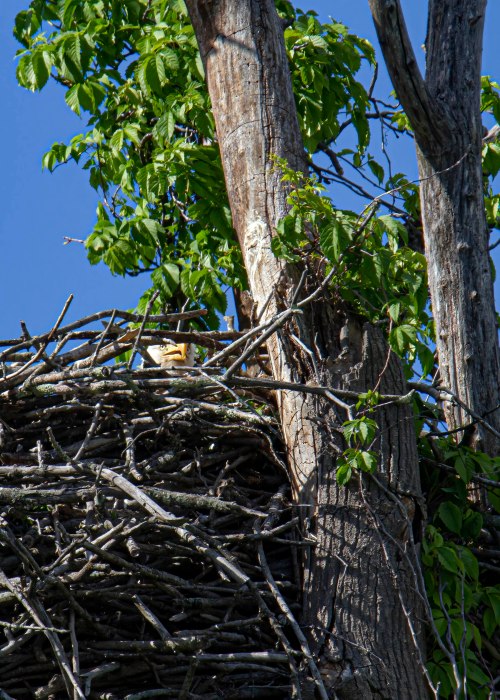
As I was observing a large nest last Friday at Occoquan Bay National Wildlife Refuge, I couldn’t help but notice that the Bald Eagle (Haliaeetus leucocephalus) in the nest was keeping an eye on me. The eagle seemed to be observing me through a gap in the branches at the top of the nest, as you can see in the first two photos.
After getting a few shots, I continued walking down the trail. When I looked back towards the nest, I could see the eagle’s head poking out of the top of the nest and it still seemed to be watching me.
As you can tell from the final photo, this is a really large nest and it is hard to monitor what is going on inside of it. Are there any eaglets yet? In two other nests at the refuge, I have already seen eaglets, but those nests were much smaller, so it was not hard to spot the babies. I’ll continue to monitor this nest and with a little luck I will see an eaglet or two in this large nest.


© Michael Q. Powell. All rights reserved.
Posted in Birds, Nature, Photography, spring, wildlife | Tagged Bald Eagle, bald eagle nest, Canon 7D, Haliaeetus leucocephalus, Occoquan Bay National Wildlife Refuge, Tamron 150-600mm, Woodbridge VA | Leave a Comment »
May 9, 2023 by Mike Powell
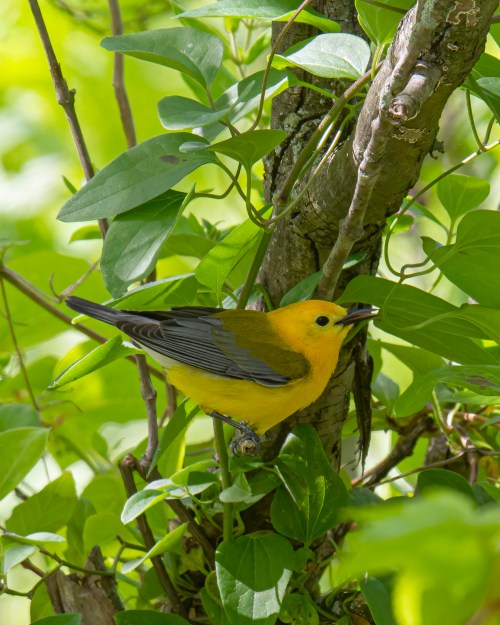
It was fascinating to watch this acrobatic little Prothontary Warbler (Protonotaria citrea) last Friday as it twisted and turned, poked and probed while searching for tasty treats among the leaves of a tree at Occoquan Bay National Wildlife Refuge. We have reached a time of the year when most of the small birds are hidden by the leaves on the trees, so I was really fortunate to be able to spot this warbler and to track it as it moved about in this tree.


© Michael Q. Powell. All rights reserved.
Posted in Birds, Nature, Photography, spring, wildlife | Tagged Canon 7D, Occoquan Bay National Wildlife Refuge, Prothonotary Warbler, Protonotaria citrea, Tamron 150-600mm, warbler, Woodbridge VA | 7 Comments »
May 8, 2023 by Mike Powell
Although it is fun to try to photograph migratory species passing through our area, I am equally content to photograph the local species that are present throughout the year, like Wild Turkeys and Eastern Cottontail Rabbits. This rather rotund Wild Turkey (Meleagris gallopavo) seemed to be dancing the hokey-pokey when I spotted it last Friday at Occoquan Bay National Wildlife Refuge. “You put your right leg in, you put your right leg out. You put your right leg in and you shake it all about…” For the record, I did not join in the dance.
Later that same day I encountered this cute little Eastern Cottontail Rabbit (Sylvilagus floridanus). The rabbit was quite tolerant on my presence and calmly chewed on the grass while I took its picture. For several years I cared for a pet rabbit, so rabbits have a special place in my heart.
Turkeys and rabbits are quite common at this refuge and at certain times of the day I am likely to encounter them. Generally they slowly move into the undergrowth as I approach. I don’t think they necessarily view me as a threat, but they probably do not want to take chances.


© Michael Q. Powell. All rights reserved.
Posted in animals, Birds, Nature, Photography, spring, wildlife | Tagged Canon 7D, Eastern Cottontail rabbit, Meleagris gallopavo, Occoquan Bay National Wildlife Refuge, rabbit, Sylvilagus floridanus, Tamron 150-600mm, turkey, Wild Turkey, Woodbridge VA | 4 Comments »
May 7, 2023 by Mike Powell
This juvenile Bald Eagle (Haliaeetus leucocephalus) may not be quite ready to fly, but it was testing out its wings by flapping them vigorously while I was observing the nest on Friday at Occoquan Bay National Wildlife Refuge. The eaglet is so large that there is no longer any room in the small nest for its parents—one of its parents was perched on a higher branch in the same sycamore tree.
A few weeks ago, I observed two eaglets in this nest and I have not had a good look at both eaglets since that time. Has something happened to the other eaglet? When I looked closely at all of my photos, I noticed that I could see the silhouettes of both eaglets sitting side by side in some of the images, as you can see in the final photo. The eagle on the left seems much smaller than the one on the right, which was the one that was flapping its wings in the first two photos.
The foliage in the tree and the barrier across the trail keep me from seeing any better what is happening in this eagle nest, but it looks like the eaglets are growing bigger and stronger, especially the one on the right. It should not be too long before it is time for the eaglet to be making its first tentative attempts at flight.


© Michael Q. Powell. All rights reserved.
Posted in Birds, Nature, Photography, spring, wildlife | Tagged Bald Eagle, bald eagle nest, Canon 7D, eaglet, Haliaeetus leucocephalus, Occoquan Bay National Wildlife Refuge, Tamron 150-600mm, Woodbridge VA | 2 Comments »
May 6, 2023 by Mike Powell
I love to use my macro lenses. There is something almost magical about capturing details on tiny subjects, like this Fragile Forktail damselfly (Ischnura posita) that I spotted this past Monday alongside a pond in Prince William County, Virginia. Fragile Forktails are only about an inch (25 mm) in length, so I had to get pretty close to my subject to “fill the frame,” even with my 180mm macro lens.
One of the biggest challenges when I get this close to a subject is that my depth of field is really shallow, so I risk having a lot of my subject out of focus. In fact, in the majority of my photos of this damselfly, either the eyes or the tip of the abdomen is in focus, but not both. In this kind of situation, the “trick” to having the entire subject in focus is to position myself so that the sensor of my camera is parallel with the plane of the subject.
In this image, you can see that about the only things in focus are the damselfly and the edge of the leaf on which it was perched—the rest of the image is pleasingly blurred. This approach works pretty well with damselflies, which hold their wings above their bodies when perched, but does not work as well with dragonflies, which perch with outstretched wings. As a result, portions of the dragonflies in most of my photos are blurred, though I usually give top priority to keeping their eyes in focus.

© Michael Q. Powell. All rights reserved.
Posted in damselfly, Insects, Macro Photography, Nature, Photography, spring, wildlife | Tagged Canon 7D, Fragile Forktail, Fragile Forktail damselfly, Ischnura posita, Prince William County VA, Tamron 180mm | 8 Comments »
May 5, 2023 by Mike Powell
There are now plenty of Ospreys (Pandion haliaetus) to see at Occoquan Bay National Wildlife Refuge, though it is still a challenge to get a decent shot of one. I spotted the osprey in the first photo last week and it seemed to be in a pensive mood or perhaps was simply alert to the possibility of an attack from above. One of my Facebook readers suggested that this was an osprey father-to-be who was contemplating the weight of his new responsibilities and the end of his happy-go-lucky bachelor days.
The osprey in the second shot was keeping watch over one of the larger osprey nests at the wildlife refuge. Unlike bald eagles, which put a lot of care and attention into the construction of their nests, ospreys often seem content to throw a few sticks together in a rather haphazard way. As a result, quite a few osprey nests are damaged by winter storms and have to be reconstructed when the ospreys return in the spring.
The osprey in the final shot is working on a different nest. Ospreys lay their eggs later than the eagles, which are already caring for their young eaglets. It is probably about time now for the ospreys to begin sitting on their nests and incubating their own eggs.


© Michael Q. Powell. All rights reserved.
Posted in Birds, Nature, Photography, spring, wildlife | Tagged Canon 7D, Occoquan Bay National Wildlife Refuge, Osprey, Pandion haliaetus, Tamron 150-600mm, Woodbridge VA | 2 Comments »
May 4, 2023 by Mike Powell
I was happy that I managed to get a shot of this tiny butterfly perched low in the vegetation at Occoquan Bay National Wildlife Refuge on Wednesday. I think it may be a Falcate Orangetip (Anthocharis midea), although the butterfly never opened its wings, so I was not able to confirm that the wings were tipped with orange.
I was a bit shocked that I was able to capture so much detail of this tiny creature, given that I was shooting with my Tamron 150-600mm zoom lens fully extended to 600mm. When I bought this lens in November 2014, I remember reading reviews about the lens that stated that it was soft at 600m. That has not really been my experience. If I pay attention to my techniques and use a monopod for additional stability (as I was doing for this shot), I can shots that are acceptably sharp to my eye.
For those of you who are especially geeky, for this shot I was shooting with a Canon 7D at f/8, 1/400 sec, and ISO 800 with an exposure compensation value of minus 1.33 stops. More important than the settings, though, is the fact that I like the image that I managed to capture—that is always my number one priority.

© Michael Q. Powell. All rights reserved.
Posted in Butterflies, Insects, Nature, Photography, spring, wildlife | Tagged Anthocharis midea, Canon 7D, Falcate Orangetip, Falcate Orangetip butterfly, Occoquan Bay National Wildlife Refuge, Tamron 150-600mm, Woodbridge VA | 8 Comments »
May 3, 2023 by Mike Powell
As I was reviewing my photos of the past couple of weeks, I was a little surprised at the number of shots that I have taken of Blue Corporal (Ladona deplanata) dragonflies in wildly varying environments. Blue Corporals are an early-season species and won’t be around for too much longer, so I am happy to have had the opportunity to observe so many of them. Most of the time, Blue Corporals like to perch flat and, judging from the photos, it doesn’t seem to matter if there are rocks, vegetation, or even lily pads.
From the perspective of a naturalist, I like the way that the different photos give you a feel for the environments in which I found these dragonflies. As a photographer, I was also struck by the way that the colors and textures of the background interact with the subjects. Most of the backgrounds in these shots are somewhat cluttered, but I did my best to use framing and focusing techniques to keep the background from being too distracting.
If I had to make a choice, I would say that the first photo is my favorite of the Blue Corporal images. I love the juxtaposition of the dragonfly with the varied textures, shapes, and colors of the rocks. I also really like the way the background grows progressively more blurry towards the top of the image. Do you have a favorite?


© Michael Q. Powell. All rights reserved.
Posted in Dragonflies, dragonfly, Macro Photography, Nature, Photography, spring, wildlife | Tagged Blue Corporal, Blue Corporal dragonfly, Canon 7D, Fort Belvoir VA, Jackson Miles Abbott Wetland Refuge, Ladona deplanata, Occoquan Bay National Wildlife Refuge, Tamron 150-600mm, Tamron 180mm, Woodbridge VA | 2 Comments »
May 2, 2023 by Mike Powell
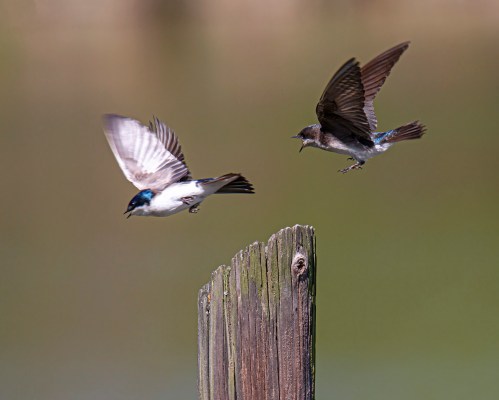
As I was focusing in on a Tree Swallow (Tachycineta bicolor) that was happily singing from a perch sticking out of a small pond, another swallow came screeching in in an attempt to take over the perch. The attack was successful and the first bird was forced to leave.
Happy with his effort to become “king of the hill,” the new swallow began to sing with all of his might as he surveyed his new kingdom. How long will his reign last? Undoubtedly the swallow knows that others may soon seek his place, but seems determined to enjoy his moment in the spotlight.


© Michael Q. Powell. All rights reserved.
Posted in Birds, Nature, Photography, spring, wildlife | Tagged birds in flight, Canon 7D, Occoquan Bay National Wildlife Refuge, Tamron 150-600mm, Tree Swallow, Woodbridge VA | 3 Comments »
May 1, 2023 by Mike Powell
I tracked this Common Baskettail dragonfly (Epitheca cynosura) in the air for quite some time as it patrolled back and forth along one of the trails at Occoquan Bay National Wildlife Refuge, hoping that it would land. Fortunately I acted quickly when finally it did perch and was able to capture these shots.
The Dragonflies of Northern Virginia website provides the following description of the Common Baskettail, “Small, dark, constantly hovering. Fast, acrobatic flight. Often high above clearings and sunny paths/old roads. Also along pond, stream and river edges.” As you can tell from this description, it is pretty challenging to get a shot of a Common Baskettail dragonfly.
Occasionally I will try to capture an image of a Common Baskettail while it is flying, but that works better when the dragonfly is flying above a pond than when it is flying with a background of vegetation. If you are interested in seeing some shots of Common Baskettails in flight, check out my blog posting from May 2022 entitled “Flying Common Baskettail dragonflies.”


© Michael Q. Powell. All rights reserved.
Posted in Dragonflies, dragonfly, Insects, Nature, Photography, spring, wildlife | Tagged Canon 7D, Common Baskettail, Common Baskettail dragonfly, Epitheca cynosura, Occoquan Bay National Wildlife Refuge, Tamron 150-600mm, Woodbridge VA | 8 Comments »
April 30, 2023 by Mike Powell
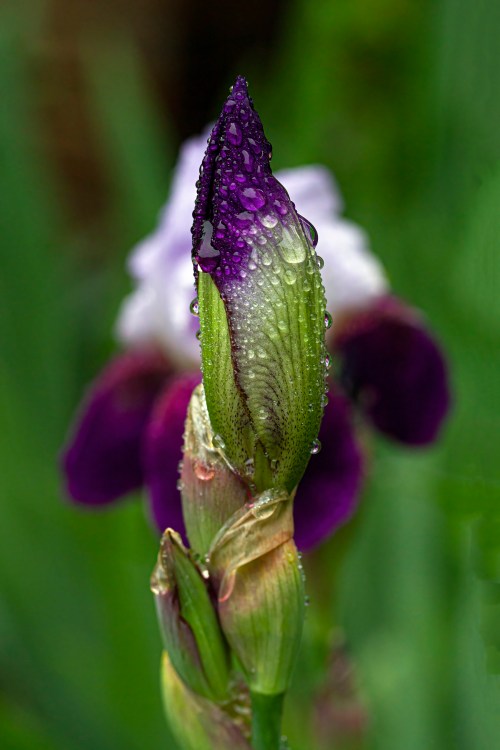
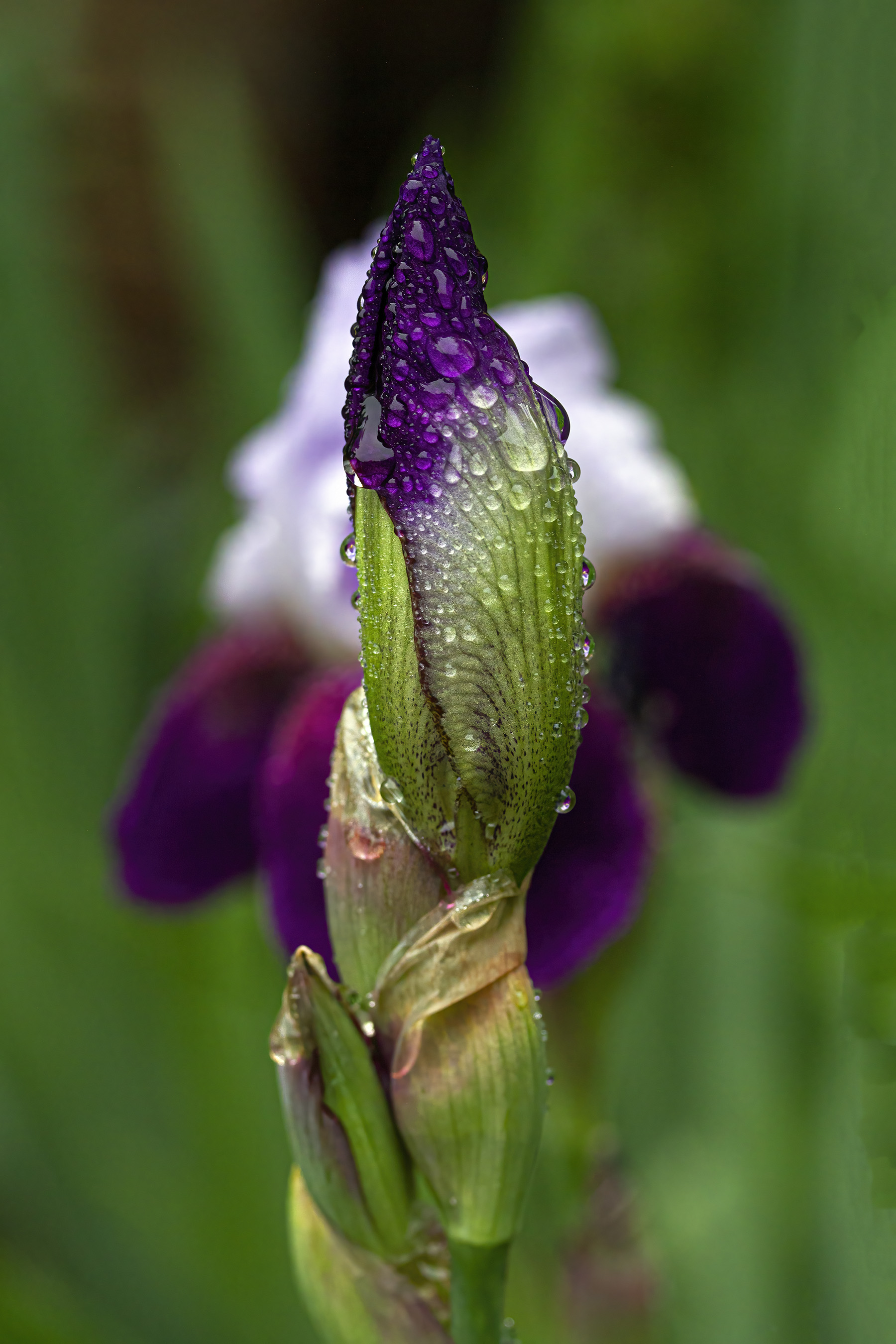
The rain has stopped for now, but some raindrops remain, sparkling like tiny jewels this morning on the bearded irises in the garden of my neighbor and fellow photographer Cindy Dyer. I tried to get creative with the framing of the first shot, with a blurred iris in the background of an unopened bud.
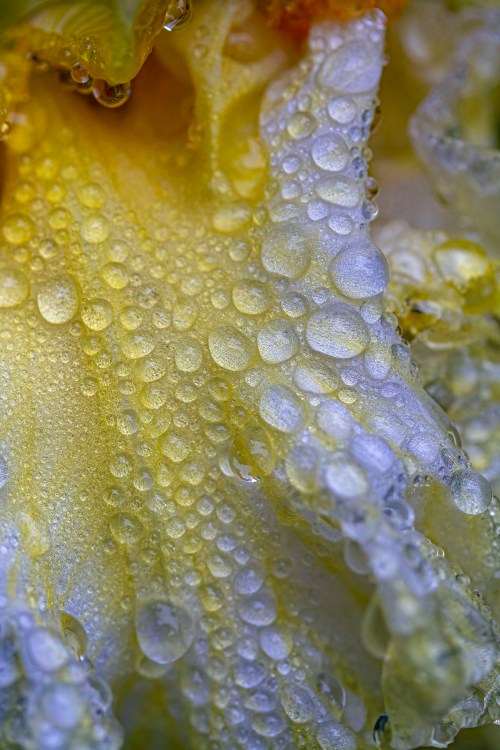
In the second shot, I was so close to the bearded iris that you almost can’t tell that the primary subject is a flower—I love my macro lenses. There third and fourth shows show a couple more varieties of irises that are currently in bloom in Cindy’s garden, with lots more still to come.


© Michael Q. Powell. All rights reserved.
Posted in Art, Flowers, Gardening, Macro Photography, Nature, Photography, spring | Tagged Alexandria VA, bearded irises, Canon 60mm, Canon 7D, Cindy's garden, iris, irises, Runnymeade | 10 Comments »
April 29, 2023 by Mike Powell
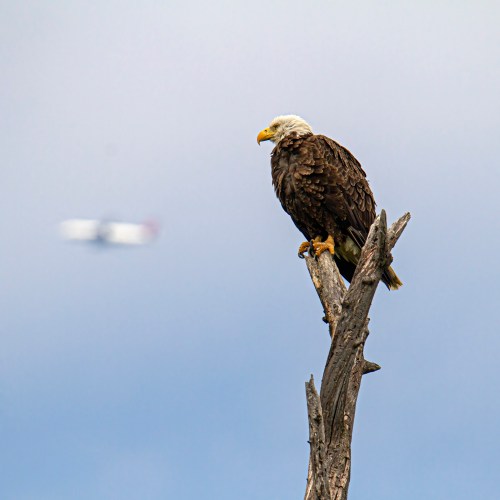
This Bald Eagle (Haliaeetus leucocephalus) remained steadfastly on guard above its large nest on Wednesday at Occoquan National Wildlife Refuge as a jet flew by in the distance. As I was focusing on the eagle, I caught sight of the jet out of the corner of the eye and managed to time the shot pretty well to be able to include the jet in the frame.
Normally I do not like to include man-made objects in my wildlife photos, but in this case I really like the juxtaposition between the wildness of a bald eagle’s flight and the more “civilized” human flight.
© Michael Q. Powell. All rights reserved.
Posted in aircraft, Birds, Nature, Photography, spring, wildlife | Tagged Bald Eagle, bald eagle nest, Canon 7D, Haliaeetus leucocephalus, Occoquan Bay National Wildlife Refuge, Tamron 150-600mm, Woodbridge VA | 8 Comments »
April 28, 2023 by Mike Powell
On Wednesday I visited Occoquan Bay National Wildlife Refuge to check on the eaglets in the nests there. As the leaves continue to grow, it is becoming harder and harder to observe activity at several of the nests of the Bald Eagles (Haliaeetus leucocephalus). In one of them, though, I managed to find a small visual tunnel and was fortunate to capture the first two images that show some sweet little moments between an eaglet and one of its parents.
The third image shows an eaglet in a different nest. As you can see, the leaves on the sycamore tree hid most of the nest. Previously I spotted two eaglets in this nest, so there may be another hiding out of view.
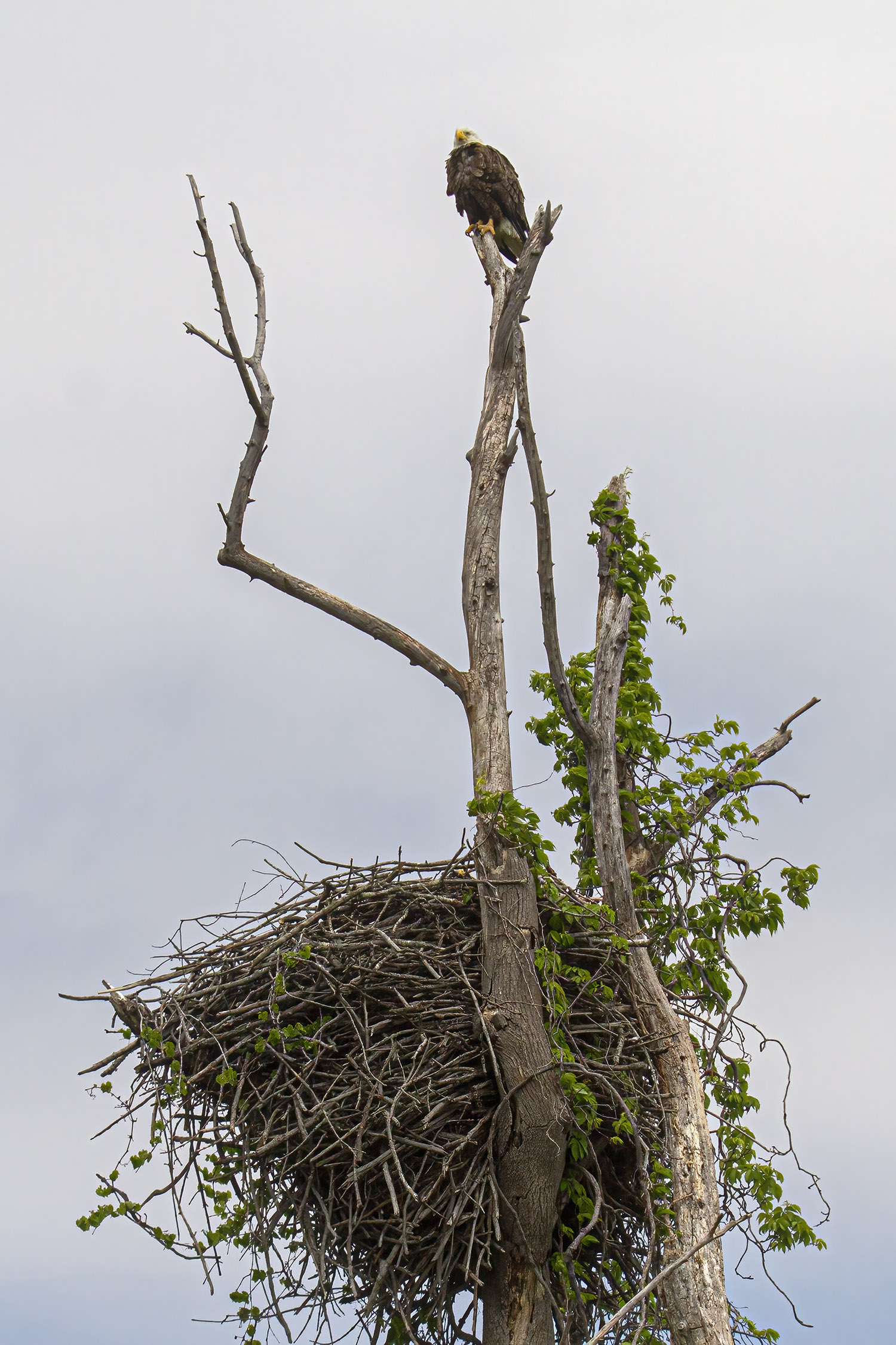
The final two shots shows the largest eagle nest at the refuge. The nest is so big and so high in the trees that it is difficult to tell what is going on inside of the nest. One eagle was keeping watch and the other adult appears to be in the nest. If you look closely at the nest right below the tree on which the eagle is perched, you can just make out the yellow beak of an adult eagle. The final image is a close-up shot of the nest that I cropped to show more clearly the eagle’s beak. The adult eagle is perched so high in the nest that it is possible that there is an eaglet or two in the nest as well—when an eagle is incubating eggs it tend to hunker down really low to keep the eggs warm.


© Michael Q. Powell. All rights reserved.
Posted in Baby photography, Bees, Nature, Photography, spring, wildlife | Tagged Bald Eagle, bald eagle babies, bald eagle nest, Canon 7D, Haliaeetus leucocephalus, Occoquan Bay National Wildlife Refuge, Tamron 150-600mm, Woodbridge VA | 6 Comments »
April 27, 2023 by Mike Powell
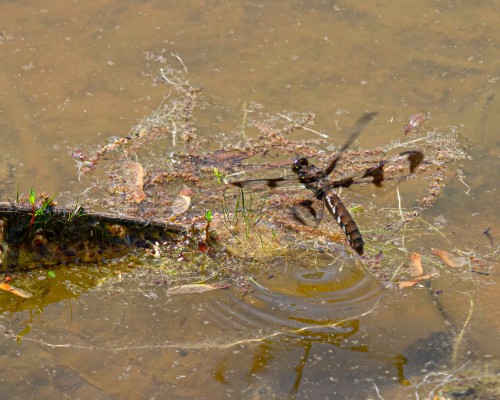
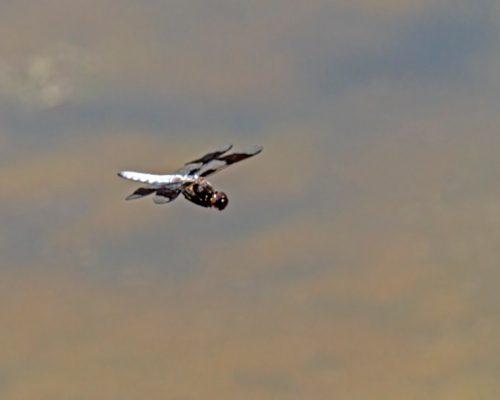
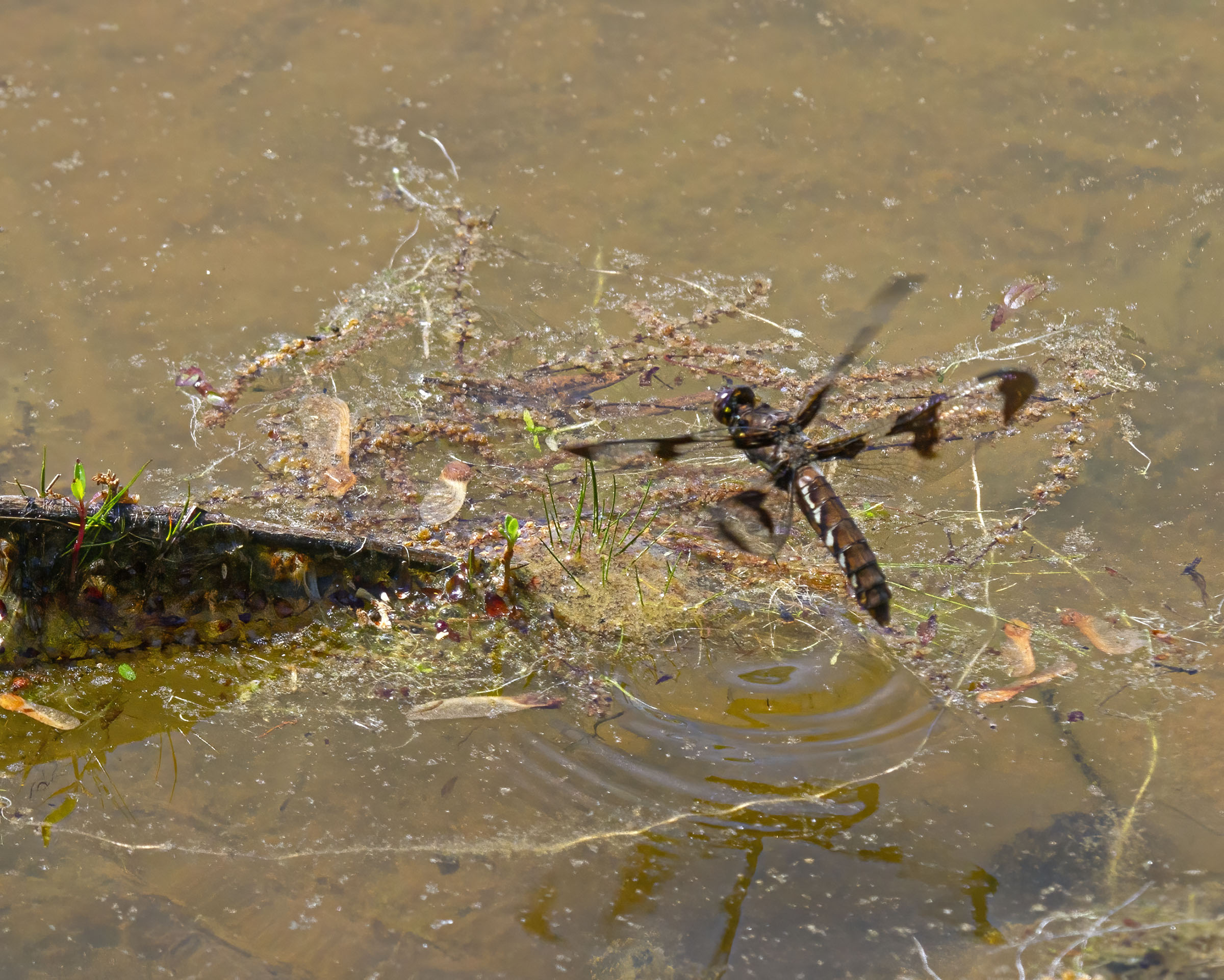
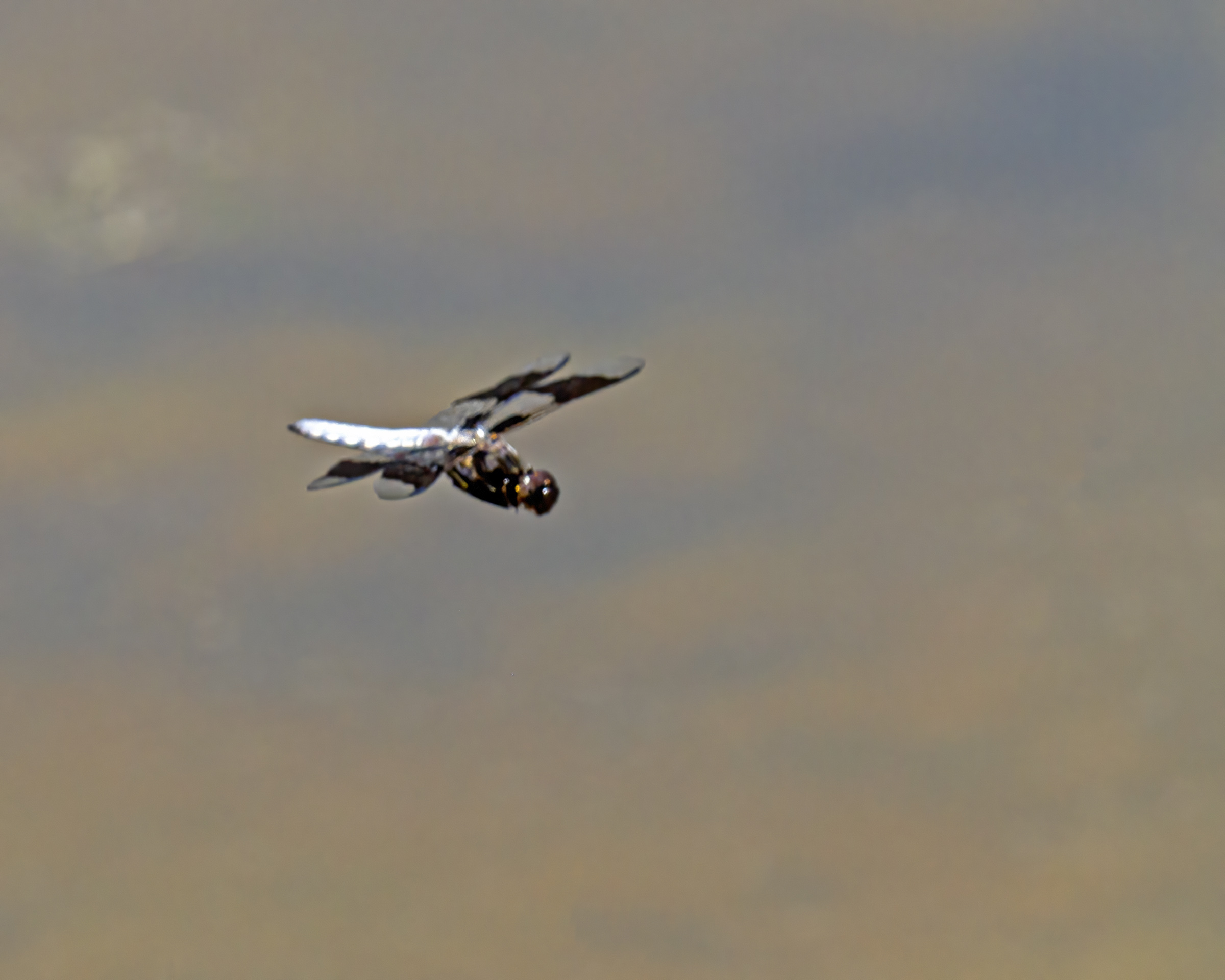
It is pretty early in the season for Common Whitetail dragonflies (Plathemis lydia), but one pair was already getting busy last Friday at Occoquan Bay National Wildlife Refuge. I did not see the actual mating taking place, but I captured this first shot as the female deposited eggs in the water as the male hovered overhead. The second image is a distant shot of the hovering male Common Whitetail.
Different dragonfly species deposit their fertilized eggs in different ways. Some will place the eggs directly into vegetation, while others distribute their eggs more generally into the water. Female Common Whitetails are in the latter group—they oviposit in flight, with guarding male hovering above, by tapping their abdomen into the water near floating vegetation or clumps of mud and often flicking water and eggs forward. According to
If you look closely at the first photo, you can see some concentric ripples where the dragonfly has dipped the tip of her abdomen in the water, releasing some eggs and creating some disturbance on the surface of the water. The male’s job is to fight off any potential rivals that might try to interfere with the process and mate with the female.
The eggs will develop into larvae that will spend most of their lives underwater. The adult phase of their lives, when they transform into dragonflies, may last only a few weeks or so, which is why perpetuation of the species through mating is such a critical biological imperative.
© Michael Q. Powell. All rights reserved.
Posted in Dragonflies, dragonfly, Nature, Photography, spring, wildlife | Tagged Canon 7D, Common Whitetail, Common Whitetail dragonfly, Occoquan Bay National Wildlife Refuge, ovipositing, Plathemis lydia, Tamron 180mm macro, Woodbridge VA | Leave a Comment »
April 26, 2023 by Mike Powell
On Monday I went exploring at Accotink Bay Wildlife Refuge at Fort Belvoir, a local US Army installation, and was pleasantly surprised to spot this North American Beaver (Castor canadensis) swimming in Accotink Creek just before midday. Beavers are generally nocturnal and most of the times when I have seen on in the past it has been at dawn or dusk.
I am not sure why this beaver was swimming during the day. Perhaps there are babies in the lodge and the beaver needed a moment of peace and relaxation. Whatever the case, I like the way that I was able to capture the ripples in the water as the beaver slowly swam past me.

© Michael Q. Powell. All rights reserved.
Posted in animals, beaver, Nature, Photography, spring, wildlife | Tagged Accotink Bay Wildlife Refuge, beaver, Castor canadensis, North American Beaver, swimming beaver | 3 Comments »
April 25, 2023 by Mike Powell
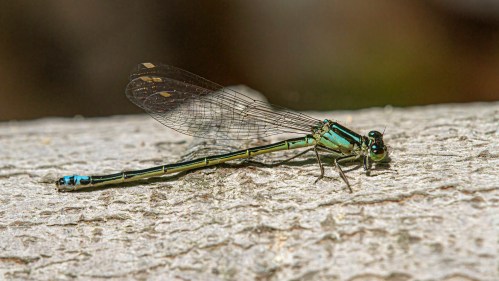
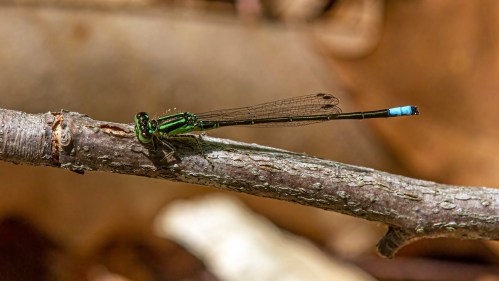
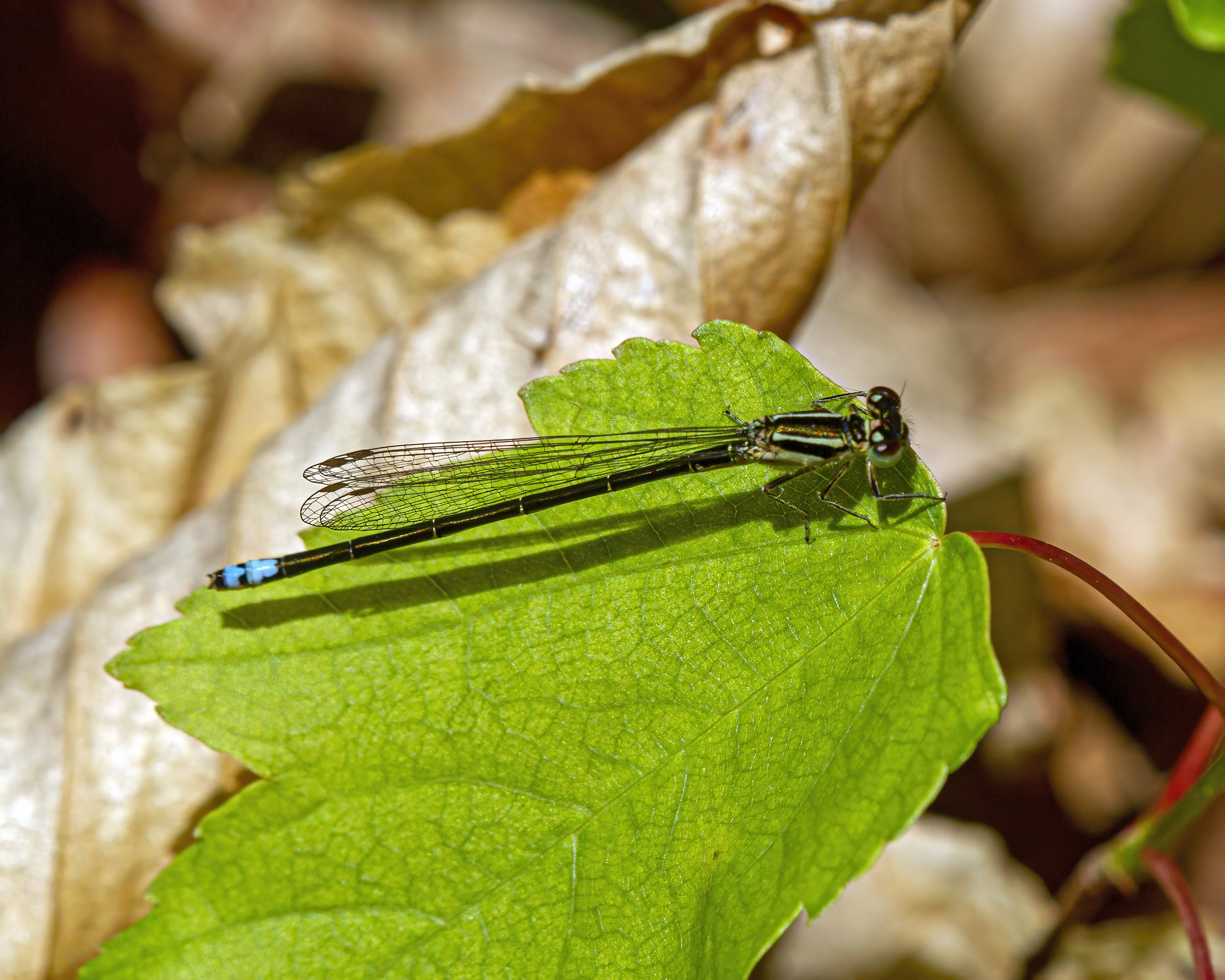
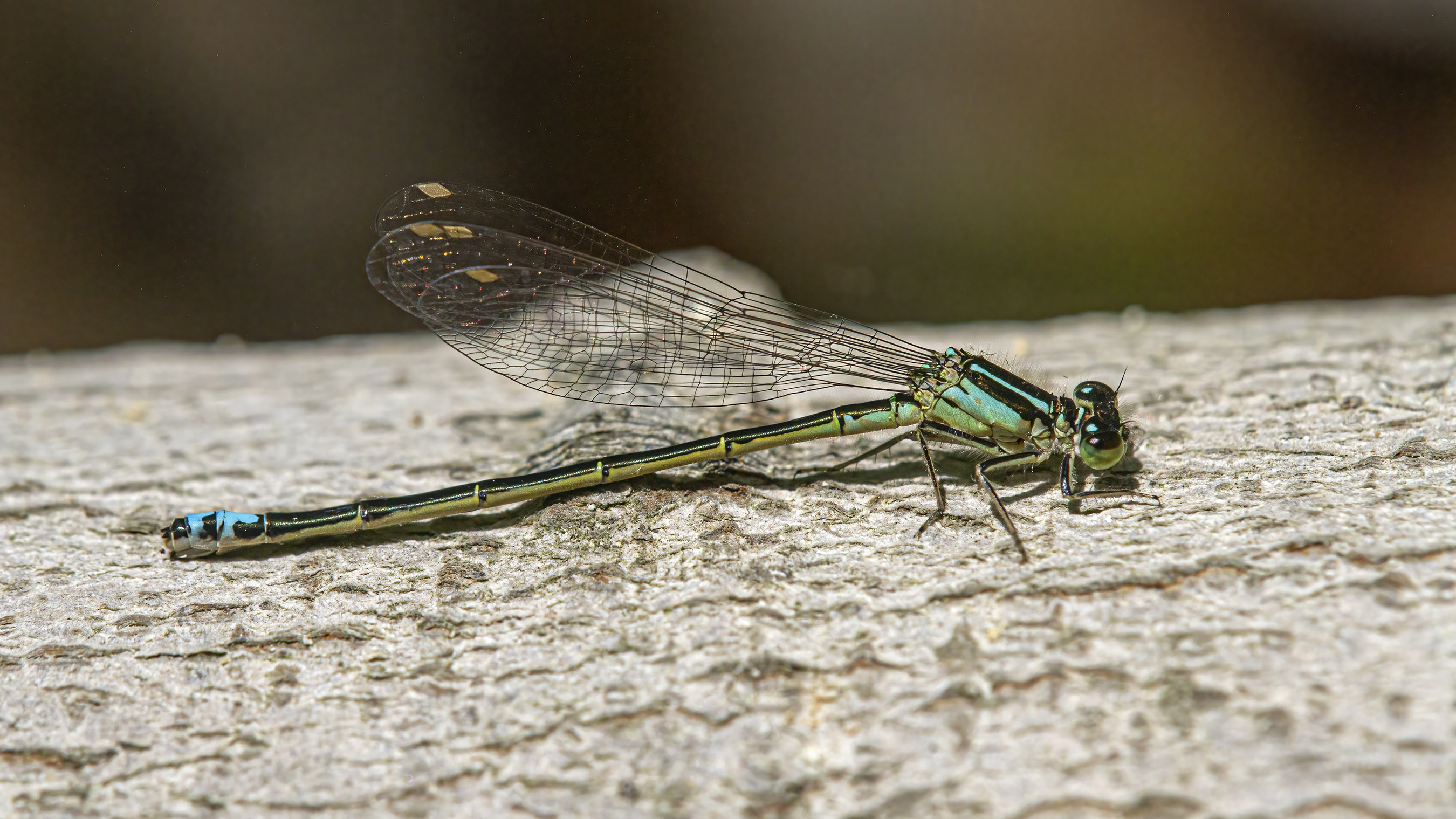
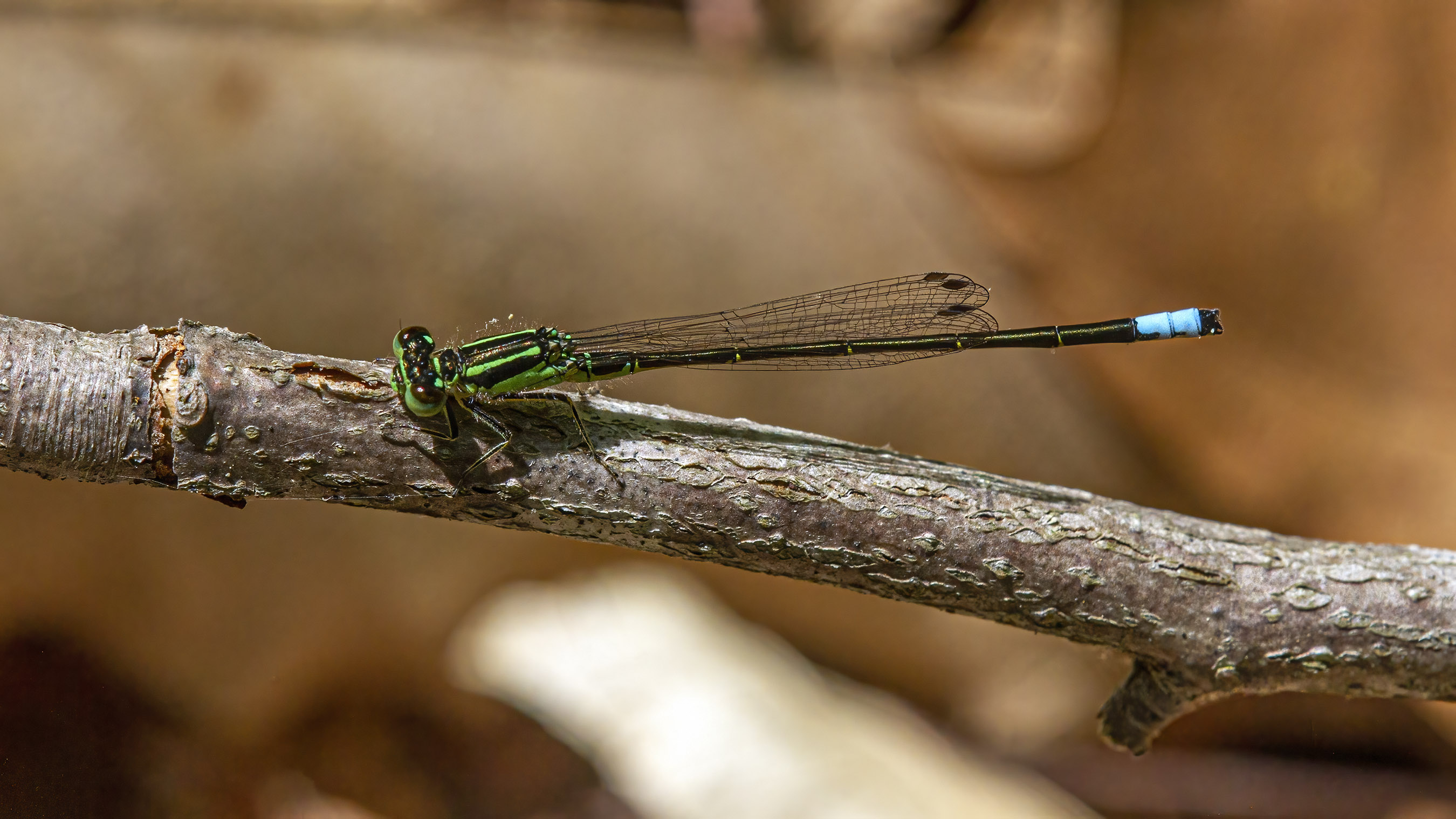
Yesterday I went exploring in Accotink Bay Wildlife Refuge, a nature preserve on the grounds of Fort Belvoir, a nearby US Army installation. I did not see many dragonflies, but was happy to spot some Eastern Forktail (Ischnura verticalis) damselflies. These damselflies are quite small—about an inch (25 mm) in length—and have distinctive blue markings near the tips of their abdomens.
Many damselflies have combinations of black and blue on their bodies, so identification can often be difficult. Usually I start by looking at the body and deciding if it is primarily black, as was the case here, primarily blue, or somewhere in the middle. After that, I examine the shape of the markings at the tip of the abdomens and compare them with the pictures in my damselfly identification guide.
Somehow, though, I always have more problems with damselfly identification that I do with dragonfly identification. Fortunately I am part of several Facebook groups that have experts who can weigh in when I need help in identifying a particular damselfly.

© Michael Q. Powell. All rights reserved.
Posted in damselfly, Macro Photography, Nature, Photography, spring, wildlife | Tagged Accotink Bay Wildlife Refuge, Canon 7D, Eastern Forktail, Eastern Forktail damselfly, Fort Belvoir VA, Ischnura verticalis, Tamron 180mm | 2 Comments »
April 24, 2023 by Mike Powell
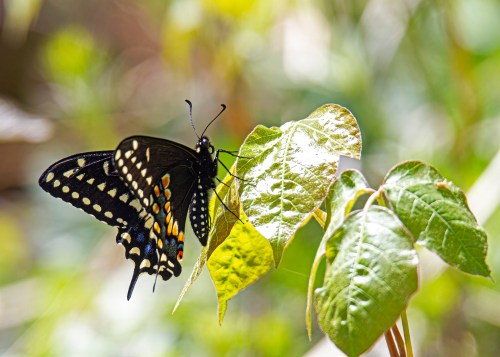
One of the clear signs that we are moving through spring is the emergence of large numbers of full-sized butterflies. Last week I was delighted to spot multiple Black Swallowtail (Papilio polyxenes) butterflies. Dark swallowtail butterflies can sometimes be problematic for identification, because in our area we have Pipevine Swallowtails, Spicebush Swallowtails, and the dark morph female Eastern Tiger Swallowtail, in addition to the Black Swallowtail.
However, these butterflies were relatively easy to identify, because I could clearly see the black dot inside the orange dot in each of the photos, one of the field markers of a Black Swallowtail. I was quite struck by the unblemished state of each of these butterflies, which seemed to be fresh and bright with fully intact swallowtails. As the season moves on, some of the butterflies will become more and more tattered and faded.
If you are curious about the identifying marks for the different kinds of dark swallowtails, I highly recommend a blog posting by Louisiana Naturalist called Four Dark Swallowtails. In this posting, she does side-by-comparisons of the four species from different angles and points out the visible differences that are really useful in identification.


© Michael Q. Powell. All rights reserved.
Posted in Butterflies, Insects, Nature, Photography, spring, wildlife | Tagged black swallowtail, black swallowtail butterfly, Canon 7D, Occoquan Bay National Wildlife Refuge, Papilio polyxenes, Tamron 150-600mm, Woodbridge VA | 3 Comments »
April 23, 2023 by Mike Powell
I was ecstatic to spot this bright yellow Prothonotary Warbler (Protonotaria citrea) on Tuesday at Occoquan Bay National Wildlife Refuge. It can be a little frustrating at time of the year when warblers are migrating through our area, because there are leaves on the trees that conceal the little birds—I often end up hearing more warblers than seeing them.
The warbler was perched on this clump of vegetation at the end of a branch and was reaching down into the cluster of leaves. At first I thought that the item in the warbler’s bill was an insect, but now I wonder if it might be a seed. Although Prothonotary Warblers like to eat all kinds of insects, they will also eat fruits and seeds.
I am by nature a curious person and don’t recall encountering the word “prothonotary” in any other context. What is a prothonotary? According to the Cornell Lab of Ornithology, “The Prothonotary Warbler got its name from the bright yellow robes worn by papal clerks, known as prothonotaries, in the Roman Catholic church.” A prothonotary is also the chief clerk in certain courts of law, including in the state of Pennsylvania.

© Michael Q. Powell. All rights reserved.
Posted in Birds, Nature, Photography, spring, wildlife | Tagged Canon 7D, Occoquan Bay National Wildlife Refuge, Prothonotary Warbler, Protonotaria citrea, Tamron 150-600mm, Woodbridge VA | 9 Comments »
April 23, 2023 by Mike Powell
Last Tuesday I spotted a Great Blue Heron (Ardea herodias) at Occoquan Bay National Wildlife Refuge with its wings spread forward in the so-called “flasher pose.” There are several theories about why herons assume this posture. Some speculate that it is for the purpose of temperature regulation (either to warm up or to cool off) or to dry out their feathers. Others believe that it is part of the preening process and that the increased heat makes parasites more active and easier to remove.

© Michael Q. Powell. All rights reserved.
Posted in Birds, Nature, Photography, spring, wildlife | Tagged Ardea herodias, flasher pose, Great Blue Heron | Leave a Comment »
April 22, 2023 by Mike Powell
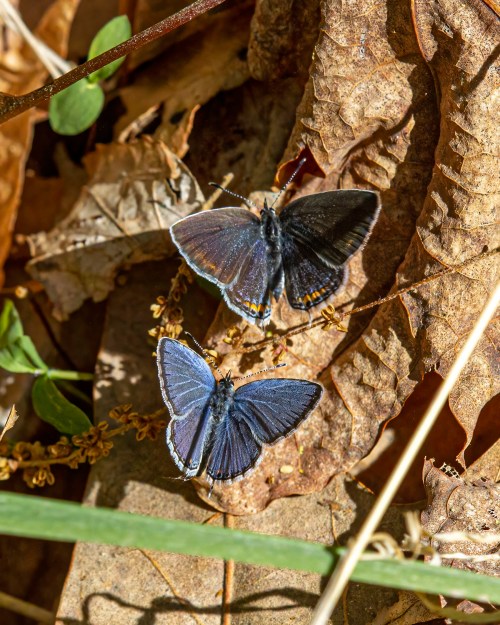
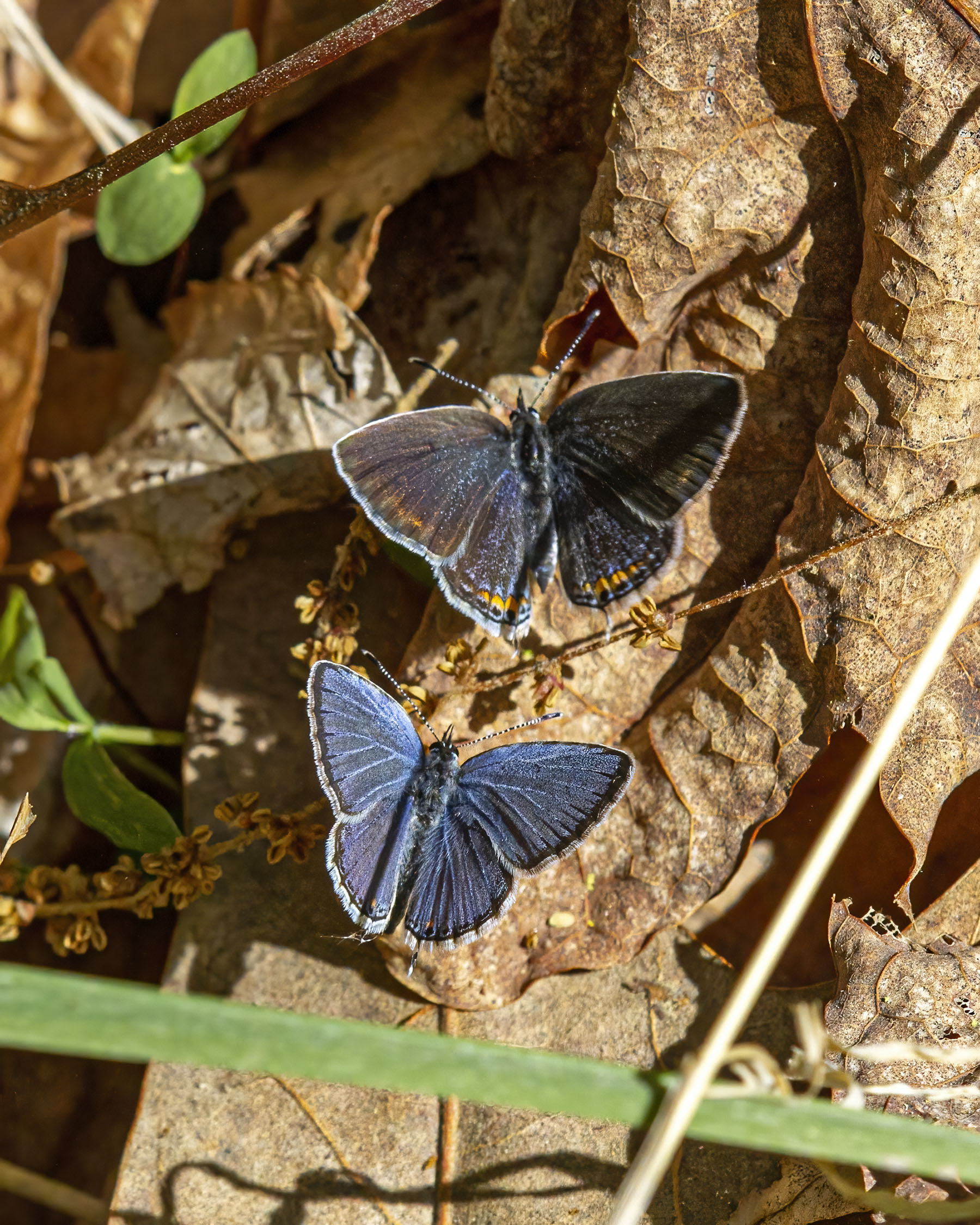
I don’t know much about the courting behavior of Eastern Tailed-blue butterflies (Cupido comyntas), but the male at the bottom of the photo was actively pursuing a female when I photographed them on Wednesday in Prince William County. Eastern Tailed-blues are tiny butterflies, with a wingspan of about an inch (25 mm), so you have to look really closely to see the single narrow tail on each hind wing. When their wings are closed, Eastern Tailed-blues are mostly grayish0-white in color, so it was a real visual treat to be able to capture them with their wings open.
© Michael Q. Powell. All rights reserved.
Posted in Butterflies, Insects, Macro Photography, Nature, Photography, spring, wildlife | Tagged Canon 7D, Cupido comyntas, Eastern Tailed-blue, Eastern Tailed-blue butterfly, Prince William County VA, Tamron 180mm | 7 Comments »
April 22, 2023 by Mike Powell
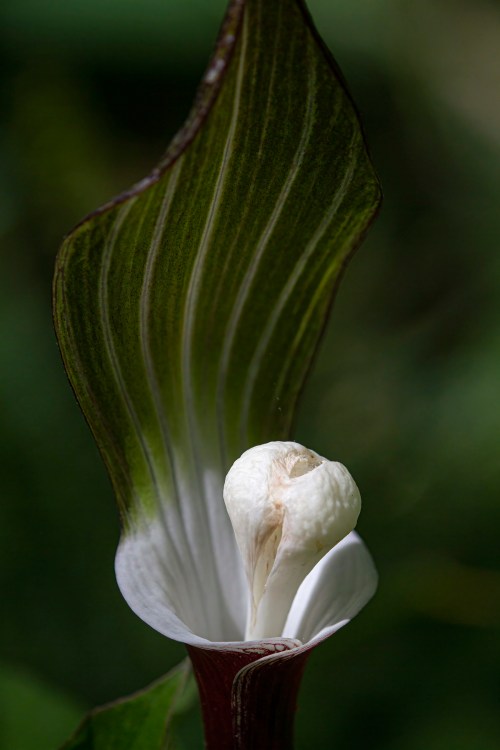
What is the most unusual-looking flower that you have ever seen? For me, it would probably be the Japanese Jack-in-the-Pulpit (Arisaema sikokianum). There is something so alien and exotic about this plant that it stopped me in my tracks when I first spotted it last year in early May at Meadowlark Botanical Gardens in Vienna, Virginia. Check out my posting from last year if you would like more details of my first encounter with this plant species.
On Thursday I made a trip the botanical gardens with my friend and photography mentor Cindy Dyer. She was interested in photographing the tulips, peonies, and other flowers, but I made a beeline for the area where I had seen the Japanese Jack-in-the-Pulpit last year. Initially I could not find any, but I asked several of the folks working in the garden beds and one of the walked me to an area where there were two plants that were well past their prime.
As we were talking, another gardener overheard us and noted that she had spotted one further up the trail earlier in the week. I walked really slowly and looked carefully and eventually found the correct spot—there was one wilted Japanese Jack-in-the-Pulpit and one in bloom. The two photos below give you a sense of the beauty of this unusual plant. As you can probably tell, I varied the settings on my camera to give a different feel to each of the images. Although the first image provides a clearer view of the entire plant, I really like the moody feel of the second shot.
The Japanese Jack-in-the-Pulpit is closely related to the Jack-in-the-pulpit (Arisaema triphyllum), which is supposed to be common to the eastern United States, though I have never seen one. The American species looks fairly similar to the Japanese variant, but the spadix, the part that is the “Jack” in the name, is darker in color and the pitcher more closely matches the leaves. If you want to see a beautiful photo of a Jack-in-the-Pulpit growing wild in New England, check out this blog posting by fellow photographer Steve Gingold.

© Michael Q. Powell. All rights reserved.
Posted in Art, Flowers, Gardening, Photography, spring | Tagged Arisaema sikokianum, Canon 7D, Jack-in-the-Pulpit, Japanese Jack-in-the-Pulpit, Meadowlark Botanical Gardens, Tamron 180mm, Vienna VA | 13 Comments »
April 21, 2023 by Mike Powell
On Tuesday I hiked to the farthest Bald Eagle (Haliaeetus leucocephalus) nest at Occoquan Bay National Wildlife Refuge, hoping to determine if there were any eaglets in the nest. During most of the year you can walk past this nest as part of a big loop, but the road is now blocked to protect the eagles, so you have to double back along the trail (a distance of almost two miles (3.2 km) to return to the parking lot.
This eagle nest is in a sycamore tree. Several years ago, one of the limbs gave way and during the off-season almost half of the nest slid to the ground. The eagles have done some repairs each year, but the nest is still relatively small. At this time of the year, there is a good deal of new foliage, so it is a bit difficult to see what is going on in the nest.
When I arrived at the nest, I noticed that one of the adults was sitting completely upright, which was a good sign. When the eagles are incubating the eggs, the tend to hunker down in the nest, with only their heads visible.
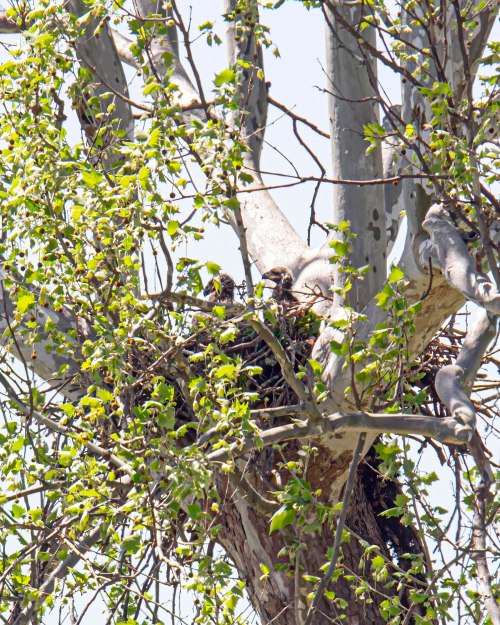
As I watched and waited, the adult eagle flew to some higher branches in the tree. My flow of adrenaline and sense of anticipation increased as I waited to see if an eaglet would appear. I was double delighted when two little heads popped up. The eaglet on the left seemed to be a bit bigger than its sibling and was probably the older of the two. In the second image, the bigger eaglet is looking upwards toward the branch where the adult was perched.
I was a long way off when I took these photos with my telephoto zoom lens, so they are not super quality images, but they provide proof that there are at least two little eaglets in this nest. As I noted in an earlier post, there is one eaglet in another nest on the refuge. The third active eagle nest is so large and high up in the trees that it is not yet possible to tell if there are any eagle babies in it—any eaglets will probably have to grow stronger and larger before the climb up to the the edge of that nest.


© Michael Q. Powell. All rights reserved.
Posted in Baby photography, Birds, Nature, Photography, spring, wildlife | Tagged Bald Eagle, bald eagle babies, bald eagle nest, Canon 7D, eaglets, Haliaeetus leucocephalus, Occoquan Bay National Wildlife Refuge, Tamron 150-600mm, Woodbridge VA | 5 Comments »
April 20, 2023 by Mike Powell
On Tuesday I spotted this female Common Green Darner (Anax junius) dragonfly at Occoquan Bay National Wildlife Refuge, the first darner that I have been able to photograph this season. Like most darners, Common Green Darners are relatively large dragonflies—about 3 inches (76 mm) in length—that spend a lot of time patrolling in the air. In fact, Common Green Darners are one of a handful of dragonflies that migrate, so that the earliest ones that we see in spring are likely to have migrated from more southern locations before local Common Green Darners have emerged.
When I first spotted this dragonfly, she was patrolling over a field of tall vegetation. I watched her fly back and forth for quite a while. When she decided to take a break, I was lucky to see where she landed.
As you can see in the photo, Common Green Darners normally hang vertically. In this case the dragonfly perched relatively close to the ground, so it was a bit of a challenge to frame the shot, particularly because I was shooting with my long telephoto zoom lens. I am quite pleased, though, with the resulting image that shows off a lot of the details of this species, including the distinctive black and blue “bullseye” in from of the dragonfly’s large compound eyes.

© Michael Q. Powell. All rights reserved.
Posted in Dragonflies, dragonfly, Insects, Nature, Photography, spring, wildlife | Tagged Anax junius, Canon &D, Common Green Darner, Common Green Darner dragonfly, female Common Green Darner, Occoquan Bay National Wildlife Refuge, Tamron 150-600mm, Woodbridge VA | 9 Comments »
« Newer Posts - Older Posts »






















 Mike Powell