August 6, 2012 by Mike Powell
You might think that I am going to talk philosophically about a bee, but my title is meant to be taken literally. If you click on the photo, you can actually see reflections of the sky and bushes on the shiny surface of the abdomen end of this bee.
I am pretty sure that this is a carpenter bee for two main reasons. First, the abdomen area is shiny and hairless, unlike a bumblebee who is more hairy. Secondly, the bee is sucking nectar out of the side of the flower rather than going in from the front, a process sometimes referred to as “nectar robbing.” Carpenter bees are notorious for circumventing pollination in certain plants by slitting open the side of the flower.
Perhaps others can see more reflections on the bee. It’s like looking at clouds and trying to see shapes—it’s a lot of fun and everyone sees something different. Life is like that sometimes.

Click the photo to see more details
© Michael Q. Powell. All rights reserved.
Posted in Bugs, Flowers, Gardening, Insects, Macro Photography, Nature, Photography, wildlife | Tagged bee, Canon 55-250mm zoom lens, Canon Rebel XT, carpenter bee, flower, insect, nature, nature photography, nectar robbing, reflections, sky | 4 Comments »
August 6, 2012 by Mike Powell
It may sound like a new summer beverage sensation, but the title is meant to be literal.
I captured this shot of a green heron just as the rain was beginning to fall this afternoon. I was at the same pond at a local garden where I had previously seen a juvenile green heron (and that was right after the rain). Maybe green herons like to come out to play in the rain—I’ll have to remember that in the future.
There really wasn’t enough light for a high quality image, but I think that I managed to capture the unique look and style of the green heron.
(I also got some photos of a juvenile green heron this afternoon but I’ll save them for another posting.)

© Michael Q. Powell. All rights reserved.
Posted in Birds, Nature, Photography, wildlife | Tagged birds, Canon 55-250mm zoom lens, Canon Rebel XT, green heron, green spring gardens, heron, nature | 7 Comments »
August 6, 2012 by Mike Powell
Is it really possible to find inspiration and motivation in an insect?
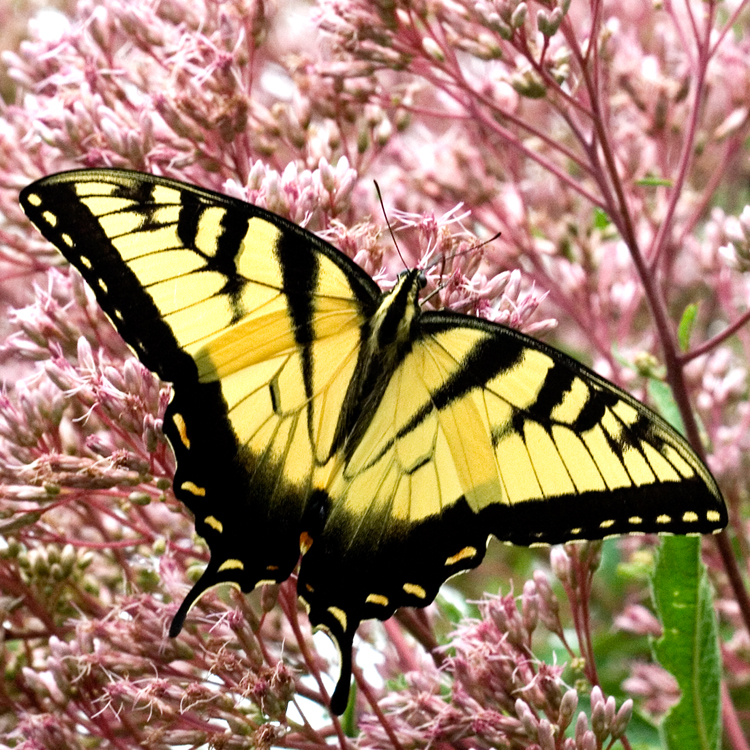
Take a really close look at this photo of an male Eastern Tiger Swallowtail butterfly (Papilio glaucus).
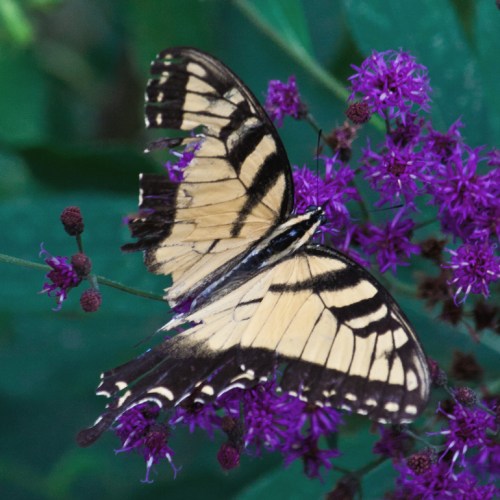
Do you see the delicate beauty of his colors and shapes or are your eyes drawn immediately to his infirmity? His wings are virtually shredded and there is a large portion of one of them missing.
Somehow, despite all of those limitations, he can still fly. He can defy gravity and the laws of aerodynamics.
I don’t know how he does it, but he is able to overcome adversity. Some of the lyrics of the song “Defying Gravity” from the musical “Wicked” come into my head as I think about it.
“I’m through accepting limits ’cause someone says they’re so. Some things I cannot change but til I try I’ll never know….I’d sooner buy defying gravity. Kiss me goodbye I’m defying gravity and you can’t pull me down.”
Inspiration and motivation can come from many places, I would posit, even from insects.

Take these broken wings and learn to fly…
© Michael Q. Powell. All rights reserved.
Posted in Flowers, Gardening, Insects, Nature, Photography, wildlife | Tagged broken wing, butterfly, Canon 55-250mm zoom lens, Canon Rebel XT, Eastern Tiger Swallowtail butterfly, green spring gardens, inspirational, Papilio glaucus | 7 Comments »
August 5, 2012 by Mike Powell
I came across this tiny damselfly yesterday when I was visiting a local garden in the late afternoon. Initially I spotted her when she was flying and I was thrilled when she chose to land in a spot where I could photograph her. I apologize to the experts for not identifying the type but I find it impossible to identify damselflies (and even dragonflies are not easy).
Damselflies are particularly challenging for me to photograph because they are so long and skinny. If I photograph them from the side, the eye is often out of focus and if I try to shoot head-on, depth of field is an issue.
I ended up with a photo that I shot from above and to the side. Somehow I managed to reduce the composition to the damselfly, the branch to which she is clinging, and a couple of leaves.
I find special beauty in that kind of simplicity in nature and in my photography.

Unidentified damselfly
© Michael Q. Powell. All rights reserved.
Posted in Bugs, Flowers, Gardening, Insects, Macro Photography, Nature, Photography, wildlife | Tagged Canon 55-250mm zoom lens, Canon Rebel XT, damselfly, dragonfly, green spring gardens, insect, leaf, nature | 6 Comments »
August 4, 2012 by Mike Powell
Four weeks ago today my friend and mentor Cindy Dyer helped me to start this blog. She has been teaching me and encouraging me as I seek to express myself through my photography. I owe her my thanks.
Over the past month I’ve tried a lot of different things: short posts and long ones; serious posts and funny ones; scientific posts and artistic ones; and scarey posts and beautiful ones. Some have been successful and others less so. The best thing about this blog, however, is that I have encountered a wide array of fellow bloggers. You have taught me so much and supported me with words of encouragement and inspiration. Thanks to all of you.
My first blog posting featured a Blue Dasher dragonfly, one of my favorite subjects. It somehow seems appropriate to feature another one as I celebrate my four-week anniversary. I photographed this Blue Dasher dragonfly (Pachydiplax longipennis) in late June at Green Spring Garden, a county-run facility that has a pond as well as a garden. It is only a few miles from my house and has been a kind of laboratory for me as I have worked on my photography.
Today is a hot, humid day here in the Washington DC area and I have stayed indoors poring over some of my images from the past month or so. I came across this one and after I adjusted the exposure a bit I realized that it was a pretty good shot. The lighting and background help to make it stand out from some of my other dragonfly photos (and I have lots). I uploaded a higher resolution image to allow viewers to see some more of the details, including the “eyelashes” of the dragonfly. Be sure to click on the image.

Click on the photo for a more detailed view of the dragonfly
© Michael Q. Powell. All rights reserved.
Posted in Insects, Macro Photography, Nature, Photography, Portraits, wildlife | Tagged Blue Dasher dragonfly, Canon 55-250mm zoom lens, Canon Rebel XT, dragonfly, dramatic, nature photography, Pachydiplax longipennis | 5 Comments »
August 4, 2012 by Mike Powell
It’s fun to share photos and thoughts with my fellow bloggers. Here’s is a posting that one of them, Another Perspective Photography, did in response to my recent creepy bug photos. She specializes in babies and weddings. The kind of pressure that comes with those subjects and the accompanying high expectations would terrify me.
 Another Perspective Photography
So many other bloggers inspire me…. I LOVE looking at other peoples pictures, wondering how they got that light, or that angle, what lens they used, and then sometimes trying something new myself. In this case, I went back through my archives to find some of my favourite bug pictures, inspired by fellow photog blogger Mike Powell – especially by his amazing pictures of the scary creepy creature on his lavendar plant. Mine are not NEARLY as technically perfect- some of them were just spontaneous- “quick get that picture”, others were planned….and in the interest of time, I pulled a few from my personal facebook albums- which are in low resolution. (who knows which hard drive I’ve got some of them on!!!) Next time I’m feeling like a photo adventure, I might just go in search of BUGS in a more serious fashion.
Also, feel free to correct me…
View original post 41 more words
Posted in Uncategorized | Leave a Comment »
August 4, 2012 by Mike Powell
A few minutes ago I was vacuuming when I suddenly noticed that there was an insect on the screen of my sliding glass patio door. Of course, I immediately stopped working and grabbed my camera (with macro lens) and tripod.
I decided to try some face-to-face shots, which was a little tricky for the insect (which I think is a katydid) was less that two feet above ground level. I am glad that nobody could see me as I contorted my body with considerably less grace than the Olympic gymnasts I watched earlier this week.
When I looked at my closeup shots of the eyes, I realized they were a little creepy. No, they were more than a little creepy. So, of course, I am sharing them with you. Hopefully this image does not cause anyone to lose sleep or have nightmares and I certainly would not advise blowing this up and hanging it on your wall. (And yes, I know my macro technique still needs work, but I am still just learning.)
Now I can return to my chores, unless some other photo opportunity literally falls at my door step.

© Michael Q. Powell. All rights reserved.
Posted in Bugs, Humor, Insects, Macro Photography, Nature, Photography, Portraits, wildlife | Tagged Canon 100mm macro lens, Canon Rebel XT, creepy, creepy crawlie, extreme closeup, eyes, grasshopper, katydid, nightmare | 5 Comments »
August 4, 2012 by Mike Powell
I have always been fascinated by light and shadows.
Shadows often hide or mask details of a subject, although they also may reveal elements of a subject that might otherwise be concealed. Sometimes shadows are an accurate reflection of the subject (like a silhouette), but other times they distort reality. Shadows intrigue me too because they often pick up characteristics of the surfaces on which they are cast in addition to those of the subject.
My musings on shadows were prompted by this photo of an unidentified wasp (I think it is some kind of wasp) that I shot yesterday morning. The wasp was back lit by the morning sun, causing a hidden part of his body to be revealed in the shadow.

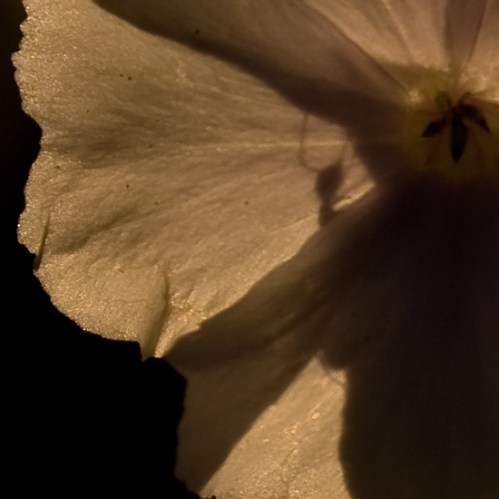
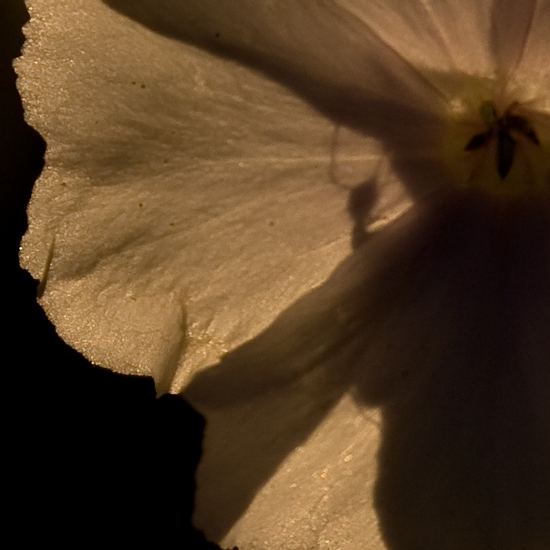
A few months ago I decided to photograph the morning light coming through a small flower in my neighbor’s garden. As I getting ready to shoot, an ant started walking across the back of the flower. It’s not a technically good shot but I like the effect that was produced by the ant’s shadow.
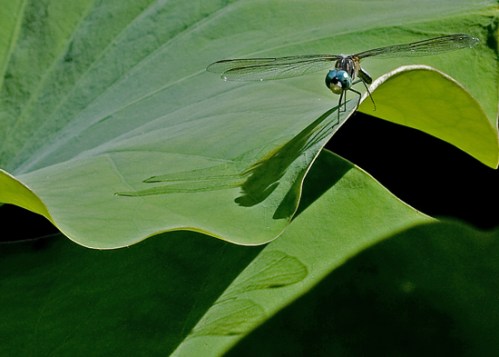
Folks who follow this blog know that I love dragonflies. In early June I took some photos of dragonflies on a sunny day, resulting in lots of shadows. The dragonfly’s shadow makes me think of the position of a person hang gliding and it even looks like the dragonfly is wearing a little helmet.

The undulating surfaces on which the shadow falls really make a difference in the shape of the shadow. I especially like how the shadows of the wings fall on a separate leaf from the shadow of the main body. The shadows of the leaves themselves make this image even more interesting for me.
 In this final photo a dragonfly literally is casting a long shadow. The distortion caused by the angle of the sunlight causes his legs to appear much longer and I find that this dragonfly looks much more menacing than is typical of a dragonfly.
Can a dragonfly actually look menacing?

© Michael Q. Powell. All rights reserved.
Posted in Bugs, Flowers, Gardening, Humor, Insects, Macro Photography, Nature, Photography, wildlife | Tagged ant, Canon 55-250mm zoom lens, Canon Rebel XT, dragonflies, green spring gardens, insect, light, musings, nature, shadow, wasp | 2 Comments »
August 3, 2012 by Mike Powell
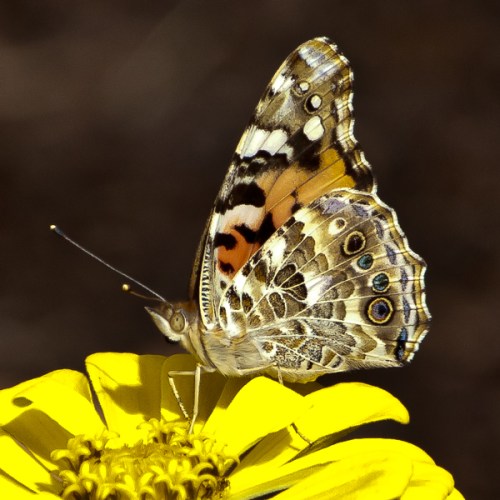
Painted Lady butterfly (Vanessa cardui) photographed today at Green Spring Gardens, Alexandria, Virginia.
© Michael Q. Powell. All rights reserved.
Posted in Bugs, Flowers, Gardening, Insects, Macro Photography, Nature, Photography, wildlife | Tagged butterfly, Canon 55-250mm zoom lens, Canon Rebel XT, flowers, nature, Painted lady butterfly, Vanessa cardui | 3 Comments »
August 3, 2012 by Mike Powell
Female Eastern Tiger Swallowtail butterfly (Papilio glaucus) photographed today at Green Spring Gardens, Alexandria, Virginia.

© Michael Q. Powell. All rights reserved.
Posted in Bugs, Flowers, Insects, Macro Photography, Nature, Photography, wildlife | Tagged back-lit, Canon 55-250mm zoom lens, Canon Rebel XT, Eastern Tiger Swallowtail butterfly, flowers, green spring gardens, nature, sky, swallowtail butterfly | 2 Comments »
August 3, 2012 by Mike Powell
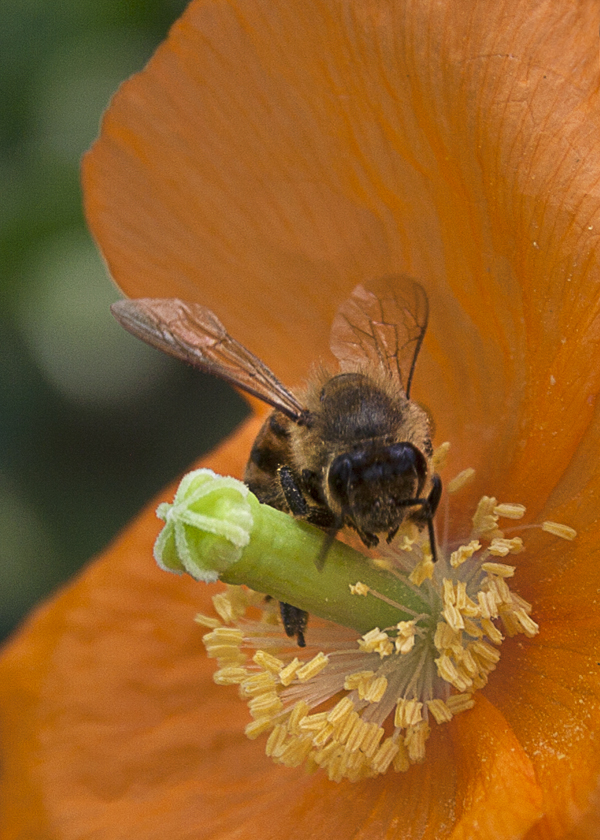
Do you ever get in the mood for a single color? This evening I am in an orange mood. (As a disclaimer I should mention that I drive an orange car, so orange plays a larger role in my daily life than it probably does for most others.) To scratch that itch, I decided to post some photos from late May of an orange poppy and some of the insects that visited it.
May was the month when I first started getting more serious about photography and these photos were an early indication to me that I was improving. I still enjoy looking at them, remembering some of the early twists and turns of the photography journey on which I have embarked.
As I think back, I feel like I was just learning to walk. Now I can walk with much greater confidence. I look forward to being able to run.

Visiting bee

Visiting hoverfly (flower fly)

Visiting ant
© Michael Q. Powell. All rights reserved.
Posted in Bugs, Flowers, Gardening, Insects, Macro Photography, Nature, Photography, wildlife | Tagged ant, bee, canon 18-55mm lens, Canon Rebel XT, flowers, green spring gardens, hover fly, insects, orange poppy, poppy | 9 Comments »
August 2, 2012 by Mike Powell
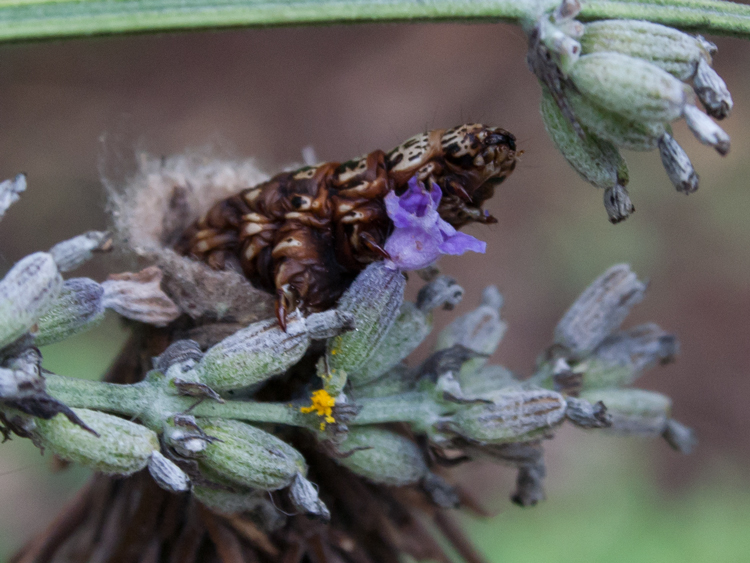
This evening after work I returned to the site of yesterday’s adventures with the creature that I think is a bagworm caterpillar. Despite some heavy rain last night his sticks-and-silk abode was intact. I stood and waited, wondering if he would reappear.
After just a few minutes of waiting I watched as the bag started to shake and the caterpillar began to emerge from the bag. Unlike last night when he seemed a little coy, tonight he seemed to have shed all inhibitions (or was really hungry).
He rather quickly extended himself more than halfway out of the bag and began to chew on the lavender blossoms. That answered one of my questions from my last posting about whether lavender was a suitable host plant for a bag worm.
I managed to shoot him from a number of different angles to show some details of the caterpillar and the opening in the bag. I think that a couple of my shots captured the texture of the bag. My shooting time was really limited because after his brief snack the caterpillar returned to the comfortable confines of his sleeping bag.
I am sure that I will move on to other subjects eventually, but for the moment I remain utterly fascinated with my creature on the lavender plant. We are developing a relationship but I have not given him a pet name, at least not yet.


© Michael Q. Powell. All rights reserved.
Posted in Bugs, Flowers, Gardening, Insects, Macro Photography, Nature, Photography | Tagged bag worm, bug, canon 18-55mm lens, Canon Rebel XT, caterpillar, insect, lavender, nature photograhy, pest | 21 Comments »
August 1, 2012 by Mike Powell
This evening I spotted something unusual hanging from a lavender plant in my neighbor’s garden. I like to visit her garden when I come home from work in the evening because there are always flowers and insects to photograph, many of which she photographs and features in her blog.
The strange object looked a little like a misshapen pine cone and seemed to be covered in pine needles and little twigs. It was hanging from the lavender plant, swinging in the gentle breeze.
Suddenly in front of my eyes the “pine cone” thing began to shake a little, an opening appeared in the top, and a caterpillar (I think that’s what it is) began to emerge. Fortunately I had my camera in my hand because I had been taking some shots of bees.
The caterpillar emerged only partially and then returned to the homemade structure. The opening closed shut, leaving no evidence that there was a living creature inside.
My preliminary research suggests this is a kind of bagworm, although it seems a little unusual for it to make its home on a lavender plant. Wikipedia indicates that there are many species of bagworms, including one whose pupae are collected as a protein-rich food.
I don’t know if you noticed the claws on this caterpillar in the close-up photograph, but I may now have nightmares about giant clawed caterpillars (to go along with the soul-sucking robber flies of a few days ago).

Close-up of bagworm caterpillar emerging

Stepping back to see the whole “bag”

Caterpillar has gone back inside
© Michael Q. Powell. All rights reserved.
Posted in Bugs, Flowers, Gardening, Insects, Macro Photography, Nature, Photography | Tagged bagworm, Canon 55-250mm zoom lens, Canon Rebel XT, caterpillar, flowers, insect, lavender, pests, pupa, scarey | 9 Comments »
July 31, 2012 by Mike Powell
This butterfly looks so drab until he opens his wings and reveals his hidden beauty. It was there all the time but we couldn’t see it.
I haven’t been able to identify this butterfly that I photographed this past weekend in a meadow in Massachusetts but like the way the shot turned out.
UPDATE: I am now pretty sure this butterfly is a Common Wood Nymph (Cercyonis pegala). Check out the Butterflies and Moths of North America website for additional details.
How much beauty do we miss each day because we fail to see past the ordinary exteriors of things (and people) in our lives and neglect to look more deeply?

© Michael Q. Powell. All rights reserved.
Posted in Bugs, Macro Photography, Nature, Photography, wildlife | Tagged butterfly, Canon 55-250mm zoom lens, Canon Rebel XT, nature | 7 Comments »
July 30, 2012 by Mike Powell
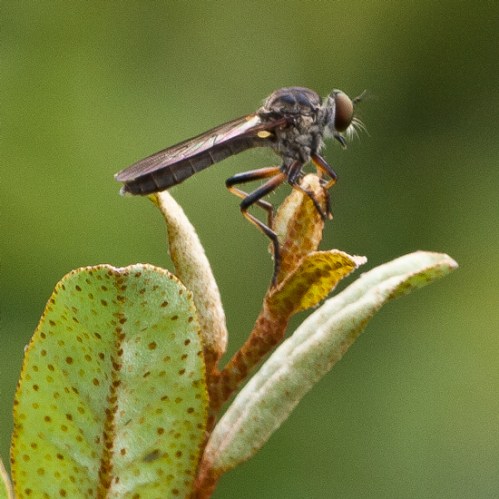
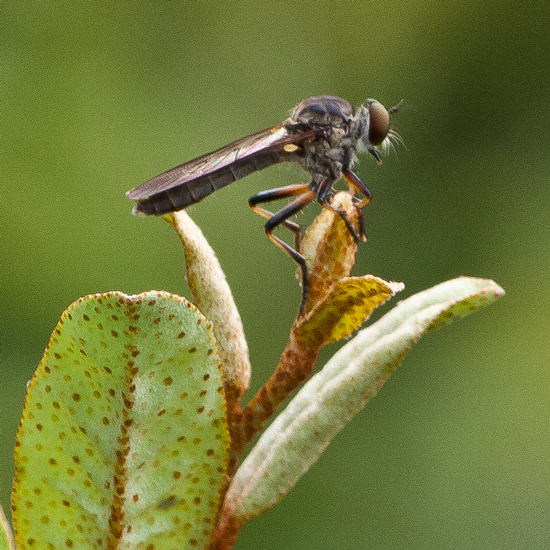
My eyes were so attuned to dragonflies yesterday that my first thought when I stumbled upon this insect perched at the top of a plant was that it was a tiny dragonfly. The pose especially looked familiar.
The more I looked at it, however, the more I realized that the legs and winds were all wrong and the head, which in this profile shot looks a bit like a dragonfly’s, was really different. From another angle it sort of looked like a fly, but not any fly that I had ever seen. What is it?
I think that what I have here is a robber fly (from the insect family Asilidae). So far I have not been able to get any more precise in identifying this guy’s species. The description of robber flies in Wikipedia, however, is pretty. scarey.
“The short, strong proboscis is used to stab and inject victims with saliva containing neurotoxic and proteolytic enzymes which paralyze and digest the insides; the fly then sucks the liquefied meal through the proboscis.”
Yikes! That description alone is enough to bring back flashbacks of alien movies and zombie thrillers.
I may not sleep well tonight.
© Michael Q. Powell. All rights reserved.
Posted in Bugs, Gardening, Insects, Macro Photography, Photography | Tagged Asilidae, Canon 55-250mm zoom lens, Canon Rebel XT, fly, insects, robber fly | 6 Comments »
July 30, 2012 by Mike Powell
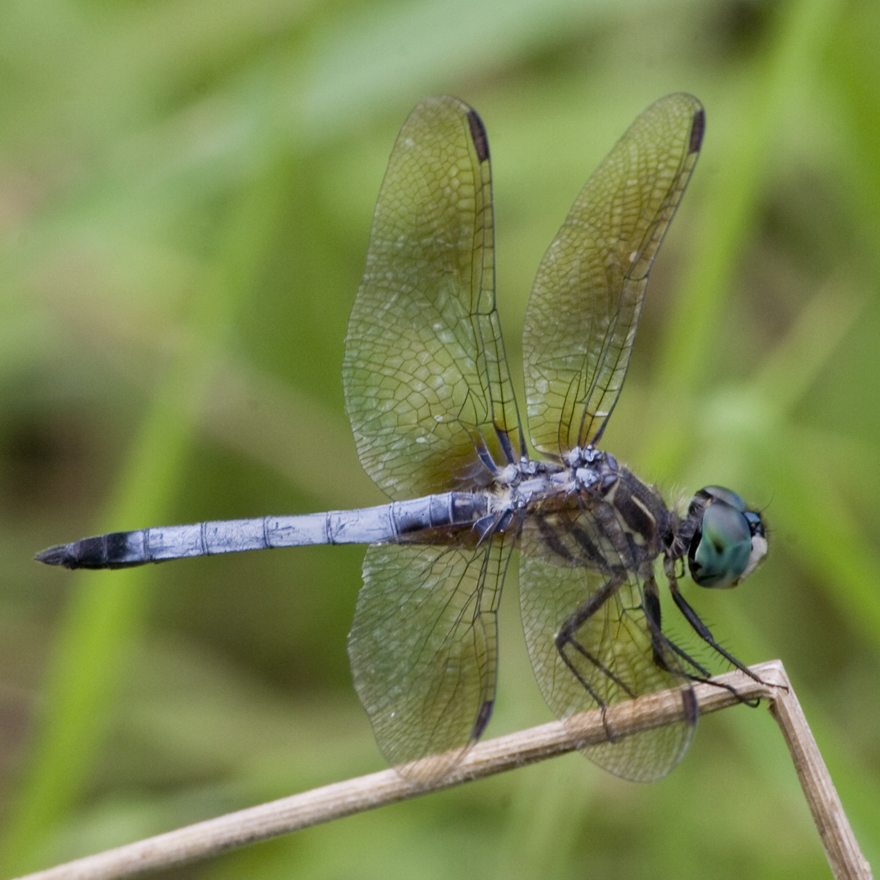
I know that this sounds like a trick question but I asked myself this very question when I encountered the dragonfly pictured below this afternoon. I have had lots of practice observing and photographing Blue Dasher dragonflies (Pachydiplax longipennis) and they have always been blue.
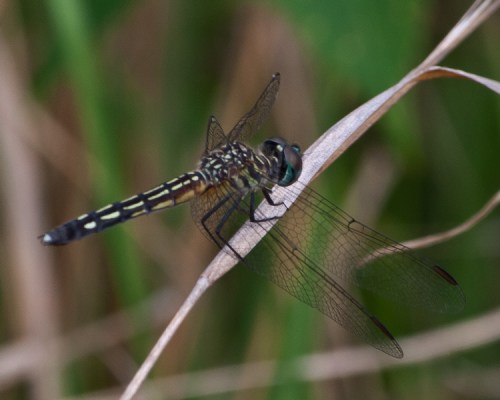
From the “waist” up this looks like a typical Blue Dasher with the distinctive chest markings. (I realize that I am not using the anatomically correct language so I apologize if anyone is offended by my ignorance.) The tail, though, is completely different in color—it is not blue.
A little research on the internet reveals that the female Blue Dasher, as shown above, is not blue. She (and juvenile males) have the yellow stripes on the tail as shown.
I am still left wondering, though, about the male-female ratio for Blue Dashers and have no explanation why until now I have seen only males.
I will leave you to ponder that mystery as you look at one of my favorite photo from yesterday of a male Blue Dasher.

© Michael Q. Powell. All rights reserved.
Posted in Insects, Macro Photography, Nature, Photography, wildlife | Tagged Blue Dasher dragonfly, Canon 55-250mm zoom lens, Canon Rebel XT, dragonfly, Pachydiplax longipennis | Leave a Comment »
July 29, 2012 by Mike Powell
A flash of emerald green whizzed past my eyes as I was walking in a meadow near my hotel in Massachusetts. What could it be? I waited a few minutes and recognized the familiar flight patterns of a dragonfly.
Most of the dragonflies that I see are drab by comparison with this one that is almost tropical in the brightness of its color. I am pretty sure this is a female Eastern Pondhawk (Erythemis simplicicollis). For more details about this dragonfly check out BugGuide.

Female Eastern Pondhawk
I stayed for a while longer in the meadow to see what else might appear and was pleased when a pretty bluish-green dragonfly flew into view. At first I thought it was a Blue Dasher but after examining him more closely I realized he was a different type. I think he is a male Eastern Pondhawk (Erythemis simplicicollis).

Male Eastern Pondhawk
© Michael Q. Powell. All rights reserved.
Posted in Bugs, Insects, Macro Photography, Nature, Photography, wildlife | Tagged Canon 55-250mm zoom lens, Canon Rebel XT, dragonflies, Eastern Pondhawk, emerald green, Erythemis simplicicollis, insects, nature photography | 6 Comments »
July 28, 2012 by Mike Powell
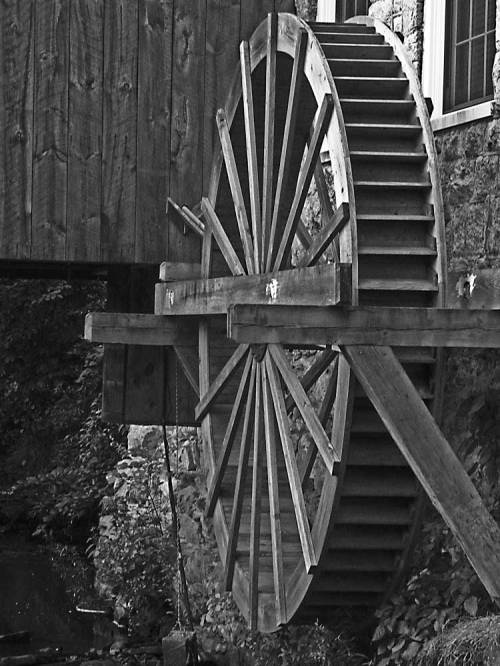
On an early morning walk today I saw this old mill, which has been converted to a restaurant. I currently am in Franklin, Massachusetts for a few days for a family wedding and somehow this mill reminds me of historical New England.
Although I have no experience photographing buildings or converting images from color to black and white, I decided to step out of the comfort zone that I have established recently shooting insects, flowers, and wildlife and try something totally different, including using a different camera (a Canon Powershot A620 instead of my usual Canon DSLR).
I am moderately satisfied with the resulting photos. Putting aside the results, though, I am happy that I was willing to risk failure by trying something new. As the old saying goes, the only way for a turtle to make progress is to stick his neck out.

© Michael Q. Powell. All rights reserved.
Posted in Photography, Travel | Tagged Canon PowerShot A620, mill, New England, photography, water wheel | 3 Comments »
July 27, 2012 by Mike Powell
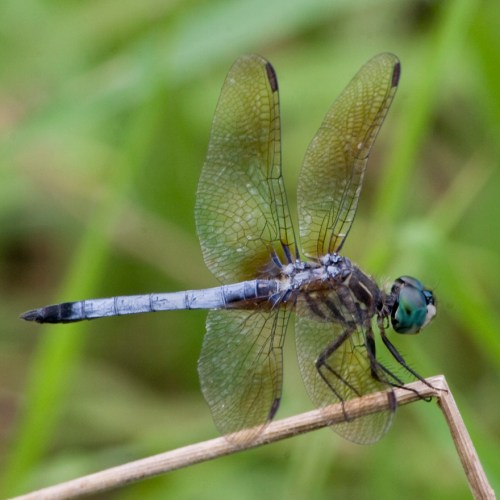
Perhaps I am going through a blue period for my favorite members of the Odonata family this weekend (one damselfly and two dragonflies) all turned out to be different shades of blue. I photographed the dragonflies in a marshy area where I expected to find them. I didn’t at all expect to see the damselfly in a garden setting but was able to get a shot when my friend Cindy Dyer pointed her out to me. (I’m calling the damselfly a “her” because it seems strange for me to refer to anything with “damsel” in its name as a “him.”)
It’s easy for me to identify the dragonfly in the middle as a Blue Dasher but I have not yet been able to identify the other two insects by name.
For now they will have to remain strangers, nameless but beautiful.


© Michael Q. Powell. All rights reserved.
Posted in Bugs, Gardening, Insects, Macro Photography, Nature, Photography | Tagged Blue Dasher dragonfly, Canon 100mm macro lens, Canon 55-250mm zoom lens, Canon Rebel XT, damselfly, dragonfly | 4 Comments »
July 26, 2012 by Mike Powell
What do you want to emphasize in a photograph that you display to others? It is a creative choice that each of us faces every time we take a photo or manipulate an image.
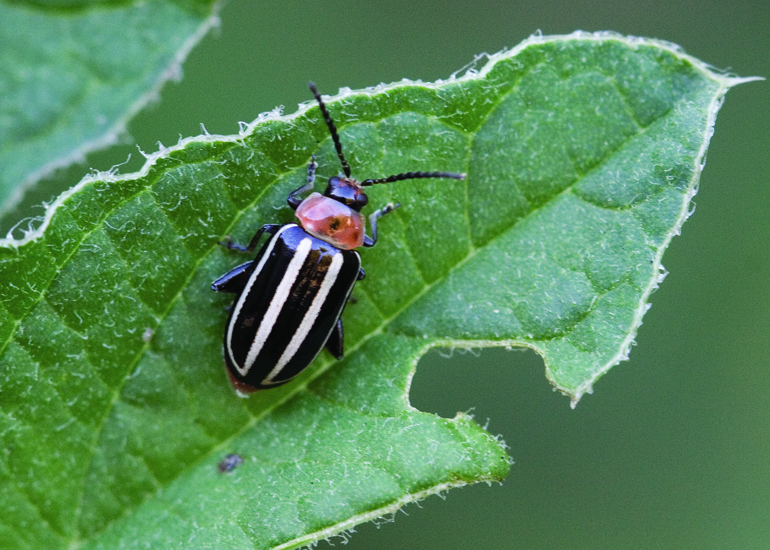
I enjoy shooting subjects with friends and comparing our results. Earlier in the week I was with Cindy Dyer, my photography mentor, and spotted an interesting looking little beetle on a plant in her garden. I did not have my macro lens on my camera and suggested that she photograph the little striped beetle, a type she had never previously encountered. She later identified the beetle as a Striped Cucumber beetle (Acalymma vittata).
Cindy took a wonderful photo of the beetle staring over the edge of a leaf and entitled her posting “The Abyss.” Her photo is graphic and colorful and full of a sense of mystery and contemplation. I took some photos this evening of what is possibly the same beetle. I tried to convey the same impression that Cindy did in my second photo below, but that was not really what I wanted to stress. This first photo shows my “take” on the subject.

I decided that I wanted to contrast the beauty of the beetle with its destructiveness and chose to include the damaged leaf in the initial photo that is most prominently featured on the blog. The rest of the photos are variations of the themes of beauty and destruction, sometimes depicting only one of the two themes or juxtaposing them both in a single frame.


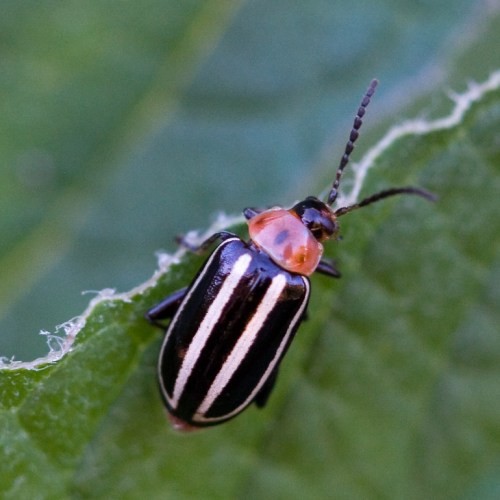
Our choices influence how our viewers are likely to react to our photos. It is liberating to have that kind of creative freedom. It is who we are and what we do.
© Michael Q. Powell. All rights reserved.
Posted in Bugs, Gardening, Insects, Macro Photography, Nature, Photography | Tagged Acalymma vittata, beetle, bug, Canon 100mm macro lens, Canon Rebel XT, gardening, insect, pest, striped cucumber beetle | 3 Comments »
July 24, 2012 by Mike Powell
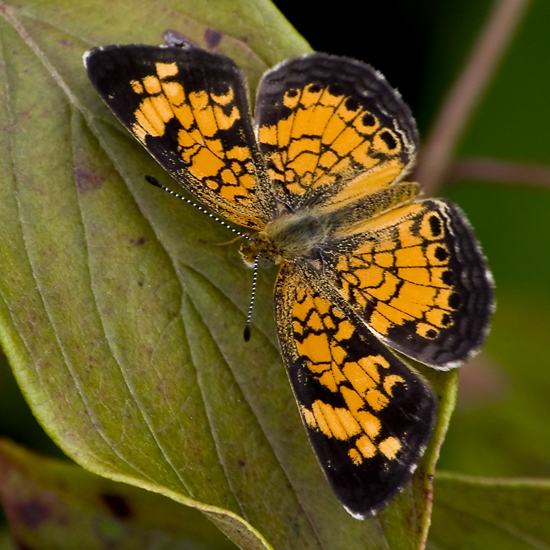
Here are a couple of shots of a Pearl Crescent butterfly (Phyciodes tharos) that I took yesterday at Huntley Meadows Park in Alexandria, Virginia. The Gardens With Wings website cautions that the Pearl Crescent resembles several other butterflies and the patterns of Pearl Crescent butterflies are variable, according to Wikipedia. I apologize in advance, therefore, if I have misidentified this butterfly, but I think we can all agree that he is amazingly beautiful.


© Michael Q. Powell. All rights reserved.
Posted in Gardening, Insects, Macro Photography, Nature, Photography | Tagged butterfly, Canon 55-250mm zoom lens, Canon Rebel XT, nature, nature photography, orange butterfly, pearl crescent butterfly, Phyciodes tharos | 2 Comments »
July 24, 2012 by Mike Powell
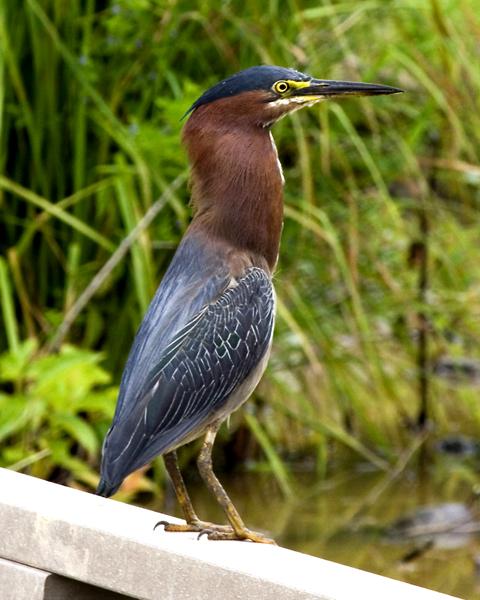
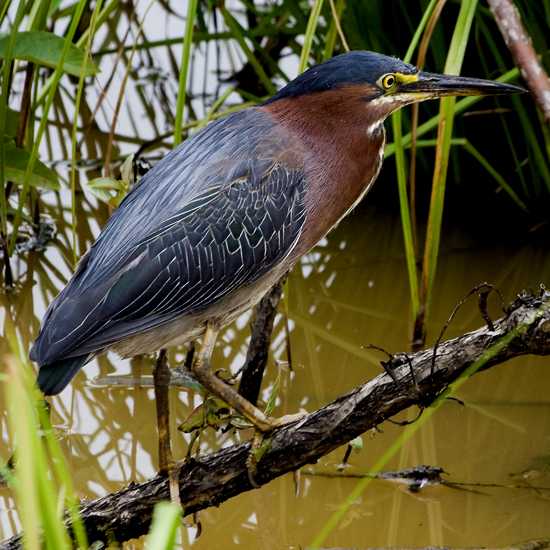
Yesterday’s blog entry featured the adventures of a young green heron catching and swallowing a frog. After the snack was consumed, though, the heron moved from the boardwalk into the marshy area. There he perched on a branch and seemed to pose for me, maybe figuring that his exploits were worthy of a magazine feature.
The resulting photograph is one of my favorite shots of the whole day, because I think it captures well the rugged beauty of this young bird. The background is a little distracting but I like the reflections in the water and the angle of the ranch.

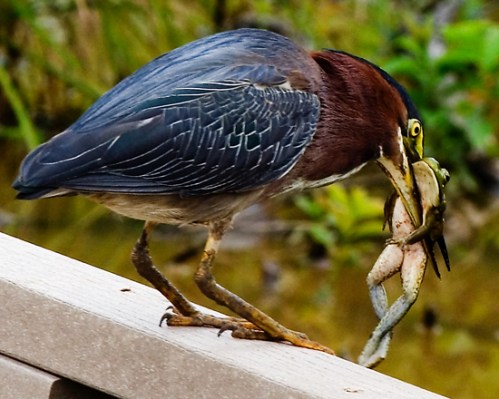
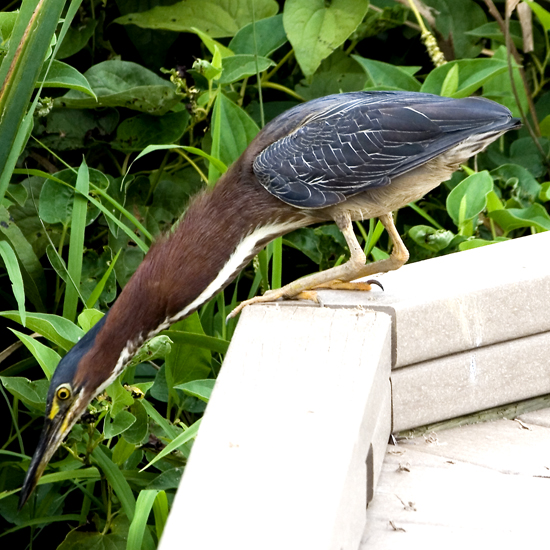
I decided to include two additional action shots from yesterday. The photos seem to show that I probably was incorrect when I stated that the heron had speared the frog when he initially caught it. It looks like the heron was merely holding the frog with his beak as he adjusted its position. Now that I think about it, the process of swallowing the frog would have been complicated if the frog had been speared.

© Michael Q. Powell. All rights reserved.
Posted in Birds, Nature, Photography, Portraits, Reptiles, wildlife | Tagged Canon 55-250mm zoom lens, Canon Rebel XT, frog, green heron, heron, Huntley Meadows Park, nature, wildlife | 4 Comments »
July 24, 2012 by Mike Powell
One can only imagine what is going through the frog’s mind as he looks into the crazed eyes of the green heron who has just speared him. Is he looking for mercy? Is he resigned to his fate?
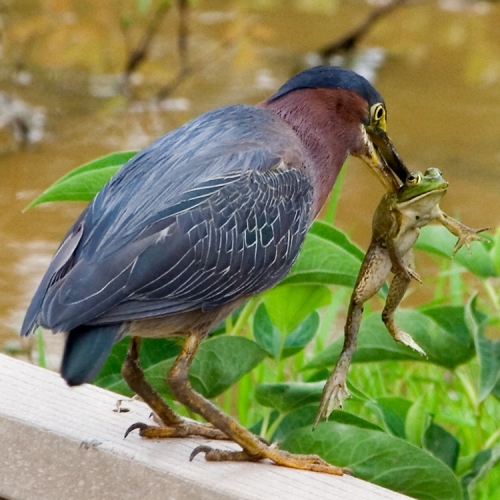
I watched the prelude to this moment unfold this afternoon at Huntley Meadows Park, a marshland park here in Virginia. The green heron was intently scanning the water from the edge of a boardwalk that runs through the march. Periodically he would extend his neck down toward the water.

Several times we heard an excited “eeep” sound followed by a splash, indicating another frog had escaped. After a few more minutes, however, the heron dived into the water and reappeared on the boardwalk with the speared frog you see in the first photo.
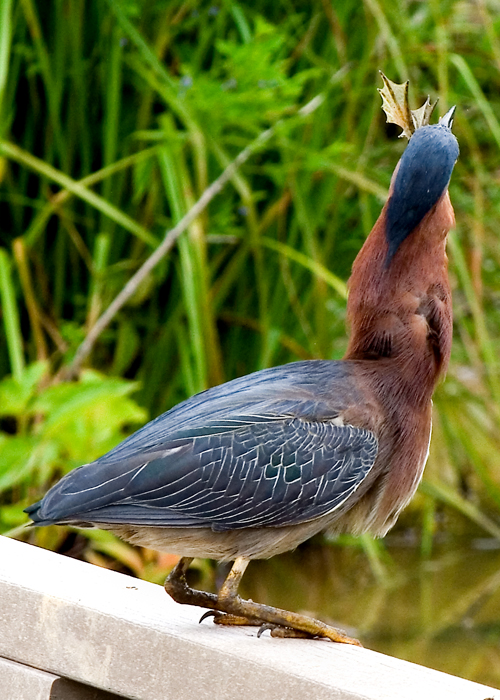
When you look at the comparative size of the heron’s mouth and the frog, it hardly seems possible that the green heron could swallow the entire frog. The heron took his time shifting the position of the frog and then all at once he turned his head, bent his neck back a little, and down went the frog. It happened so quickly that I was able to snap only a single photo that shows the frog’s webbed feet as the only remaining parts that have not yet been swallowed.

In this final photo the heron no longer has a slim neck. I have no idea how long it will take for the frog to reach the heron’s stomach but I am pretty sure he was not yet there when I took this photo.
And don’t try to talk with the heron during this period. Why not? Read the caption of the last photo!
I can’t talk now. I have a frog in my throat.
© Michael Q. Powell. All rights reserved.
Posted in Birds, Humor, Nature, Photography, Reptiles, wildlife | Tagged Canon 55-250mm zoom lens, Canon Rebel XT, eyes, frog, green heron, Huntley Meadows Park, marsh, nature, swallowing, wildlife | 21 Comments »
July 23, 2012 by Mike Powell
Let me begin with a disclaimer—no actual stabbing of bugs took place in the making of this posting. Believe it or not, this bug really is called the Twice-stabbed Stink Bug (Cosmopepla lintneriana). Why? The namer of bugs (whoever that is) decided the two red spots on the bug’s back look like stab wounds.
Yesterday I spotted this little bug while photographing with my friend and photo mentor Cindy Dyer. Cindy has a wonderful posting with a sharper photo of this specific bug and some fun information about him, including the fact that he is also known as the Wee Harlequin Bug. For additional information on the bug, check out his page at Bugguide.
I like the overall effect of this photo, acknowledging that it is far from perfect technically. I’m looking forward to improving my skills as I practice and learn new techniques.

© Michael Q. Powell. All rights reserved.
Posted in Bugs, Flowers, Gardening, Insects, Macro Photography, Nature, Photography | Tagged bug, Canon 100mm macro lens, Canon Rebel XT, Cosmopepla lintneriana, green spring gardens, insect, Twice-stabbed Stink Bug, Wee Harlequin Bug | 1 Comment »
July 23, 2012 by Mike Powell
It’s pretty cool to photograph big, gaudy butterflies but today I photographed the smallest butterfly I’ve ever seen. I was shooting photos with my mentor Cindy D. and her husband when Cindy spotted this little guy. He seemed too small to make a good photo and they needed to leave.
Undeterred I lay on my stomach and got as close as my lens would permit me (I did not have time to switch to my macro lens and had to make do with the 18-55mm kit lens that happened to be on the camera). To give you an idea of his size, note that he is perched on a single clover flower.
I’m pretty happy with the result and hope eventually to figure out what kind of butterfly he is. For now, though, I am content to have gotten this shot.

Tiny butterfly on a clover flower
© Michael Q. Powell. All rights reserved.
Posted in Bugs, Flowers, Gardening, Insects, Macro Photography, Nature, Photography | Tagged butterfly, canon 18-55mm lens, Canon Rebel XT, clover, flowers, macro photography, nature, photography, tiny butterfly | 6 Comments »
July 22, 2012 by Mike Powell
Posted in Flowers, Gardening, Nature, Photography | Tagged Canon 55-250mm zoom lens, Canon Rebel XT, flowers, hibiscus, lily, rain, raindrops | 6 Comments »
July 21, 2012 by Mike Powell
I haven’t seen too many butterflies yet this season so I was happy yesterday to encounter several Eastern Tiger Swallowtail (Papilio glaucus) butterflies at a local garden. The few that I have seen during the past few weeks have been pretty damaged but the male I photographed was in great condition. The female had some damage to one of her “tails” but otherwise was almost perfect.
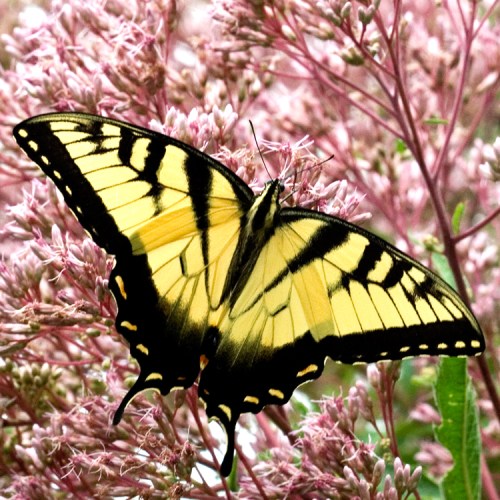
Eastern Tiger Swallowtail male in perfect condition

Eastern Tiger Swallowtail female with damaged tail
© Michael Q. Powell. All rights reserved.
Posted in Bugs, Flowers, Gardening, Insects, Nature, Photography | Tagged butterfly, Canon 100mm macro lens, Canon 55-250mm zoom lens, Canon Rebel XT, Eastern Tiger Swallowtail butterfly, green spring gardens, swallowtail butterfly | 4 Comments »
July 21, 2012 by Mike Powell
What do bees do when it’s raining? I never really gave the question much thought until this morning when I saw a really cool photo by the unUrban Studio showing a bee seeking shelter in an orchid in an early morning rain. In an earlier post today I showed a bee clinging to the underside of a leaf for protection from the rain.
During a walk in the light rain this afternoon I was pleased to also discover the bee shown below, sheltered inside of a red hibiscus flower. He appeared to be completely protected and may have been napping. As you can probably tell, I had to lighten the image a little to reveal the bee more clearly. This caused the sky, which was light already, to go totally white and produced an effect that I really like.
I enjoy walking in the rain and sometimes carry my camera under an umbrella if it is not raining too hard. From now on I’ll make a point of peeking into flowers and under leaves to discover more secret hiding places of the bees.
 © Michael Q. Powell. All rights reserved.
Posted in Bugs, Flowers, Insects, Macro Photography, Nature, Photography | Tagged bee, Canon 100mm macro lens, Canon Rebel XT, flower, green spring gardens, hibiscus, insects, rain, red, shelter | 2 Comments »
July 20, 2012 by Mike Powell
What do bees do when it’s raining? I never really gave the question much thought until this morning when I saw a really cool photo by the unUrban Studio showing a bee seeking shelter in an orchid in an early morning rain.
When I took a walk in the light rain earlier this afternoon I decided to look carefully to see if I too could find bees hiding from the rain. Much to my surprise I found the bee shown below, clinging to the underside of a leaf. Apparently it protects him pretty well, though you can see a couple of drops of water on his lower body. The moisture also seems to have caused his hair to frizz a little.
I remember when I too had hair that frizzed when it was humid but those days, alas, are long gone (as is my hair).

© Michael Q. Powell. All rights reserved.
Posted in Bugs, Flowers, Insects, Macro Photography, Nature, Photography | Tagged bee, Canon 100mm macro lens, Canon Rebel XT, green spring gardens, hiding, leaf, rain | Leave a Comment »
July 20, 2012 by Mike Powell
One of my earlier post identified my obsession with the red milkweed beetle (Tetraopes tetrophthalmus). As I hang around the milkweed plants, it’s hard not to notice another really colorful creature, especially because this seems to be its prime mating season. After a little research I’ve started to become better acquainted with the large milkweed bug (Oncopeltus fasciatus). Wikipedia provided me with some good information to start and BugGuide added some additional details. I am still getting used to shooting with my macro lens so I apologize in advance that not all of the photos are super sharp. I think they help, though, in explaining some of the traits of these fascinating bugs.
It has been relatively easy to get shots of the mating milkweed bugs and my research identified why. Milkweed bugs while mating can remain connected for up to 10 hours, according to Wikipedia. Yikes! I guess those television commercials about seeing your doctor after four hours don’t apply to these bugs.


What happens after mating? An article from the Life Sciences Depart at the University of Illinois at Urbana noted that a female lays about 30 eggs a day and 2,000 during her lifetime. Egg-laying begins 1 to 15 days after mating and peaks at about 20 days.
A few days ago I came across this group of milkweed bugs. The photo is technically lacking (it was hard to get the needed depth of field) but it gives you an idea of what the large milkweed bug looks like in various stages of development. As a “true” bug, milkweed bugs undergo incomplete metamorphosis. They go through a series of nymph stages, known as instars. For the large milkweed bug there are five instars. Buzzle has an article that explains the bug’s life cycle.
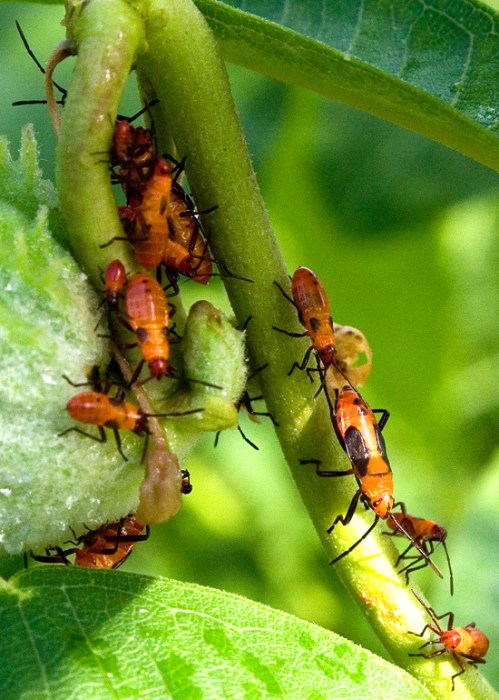
At each stage the bug is covered by an inflexible exoskeleton that constrains its growth. Periodically he bursts out of the exoskeleton and can grow to twice his size in minutes as the new exoskeleton develops and hardens, according to the Buzzle article. Here’s a shot of a bug in one of the earlier nymph stages.
As the milkweed bugs get older the wing pads increase in size in each molt. In the next three photos the wing pads are visible but not yet really prominent.
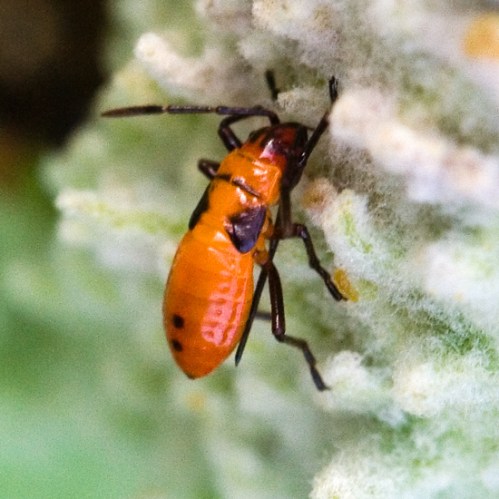


The wings on this nymph are much more prominent, leading me to think he might almost be an adult. The Buzzle article noted that the entire process of metamorphosis, from egg to adult takes 4-8 weeks, depending on the temperature of the habitat.

Once the large milkweed bug has become and adult (as shown in the last couple of photos) mating begins 5 to 12 days after the last molt for females and two to three days for males, according to the University of Illinois article. And the circle of life continues.


© Michael Q. Powell. All rights reserved.
Posted in Bugs, Insects, Macro Photography, Photography | Tagged bugs, Canon 100mm macro lens, canon 18-55mm lens, Canon Rebel XT, insects, instar, large milkweed bugs, milkweed, milkweed bugs, nature, nature photography, Oncopeltus fasciatus, red milkweed beetle, Tetraopes tetrophthalmus | 6 Comments »
July 19, 2012 by Mike Powell
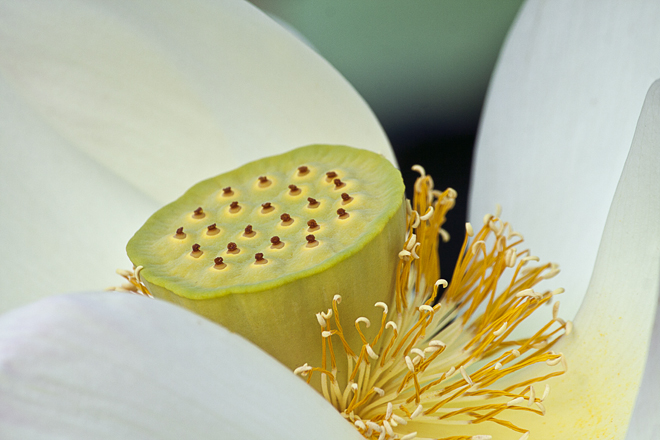
The petals of the lotus flower are delicately beautiful and I love to drink in their beauty. What I enjoy the most, though, is peeking past the petals of the open lotus flower into its very center, the home of its seed pod.
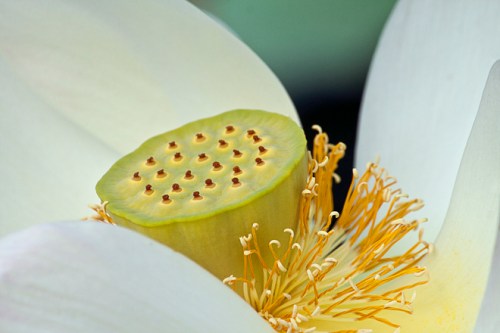
The solid, cylindrical shape and the contrasting color of the seed pod—sometimes green and sometimes yellow— provide for me a nice contrast to the texture and coloration of the petals. These is something intriguing to me about the protruding pod parts that gradually dry out and sink into the pod itself. (I’ll probably do another posting that focuses exclusively on the pods themselves, as they appear after the petals have fallen.)
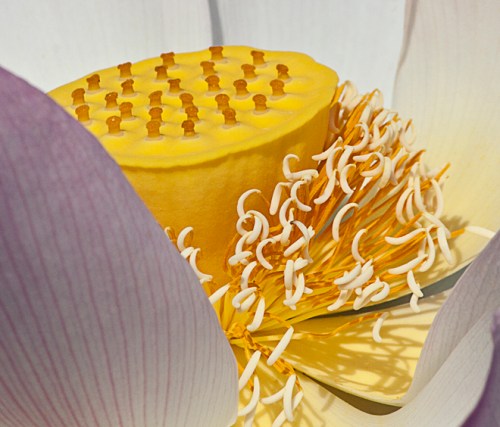
I took these photos a little over a week ago at Kenilworth Aquatic Gardens in Washington DC, a wonderful setting run by the National Park Service.
That same day I ran into my friend Cindy D. and her husband Michael at Kenilworth and they too were shooting photos. Cindy later posted a gorgeous lotus photo on her blog and she also included amazing information about the lotuses at this garden, some of which are descended from ancient plants whose seeds were recovered in 1951 from a dry Manchurian lake bed. Check out her blog for the rest of the story.
© Michael Q. Powell. All rights reserved.
Posted in Flowers, Gardening, Macro Photography, Nature, Photography | Tagged calm, Canon 55-250mm zoom lens, Canon Rebel XT, contrast, flowers, Kenilworth Aquatic Gardens, lotus, lotus flowers, nature, nature photography, seed pods, tranquility | 2 Comments »
« Newer Posts - Older Posts »























 Mike Powell