Feeds:
Posts
Comments

Archive for the ‘Winter’ Category

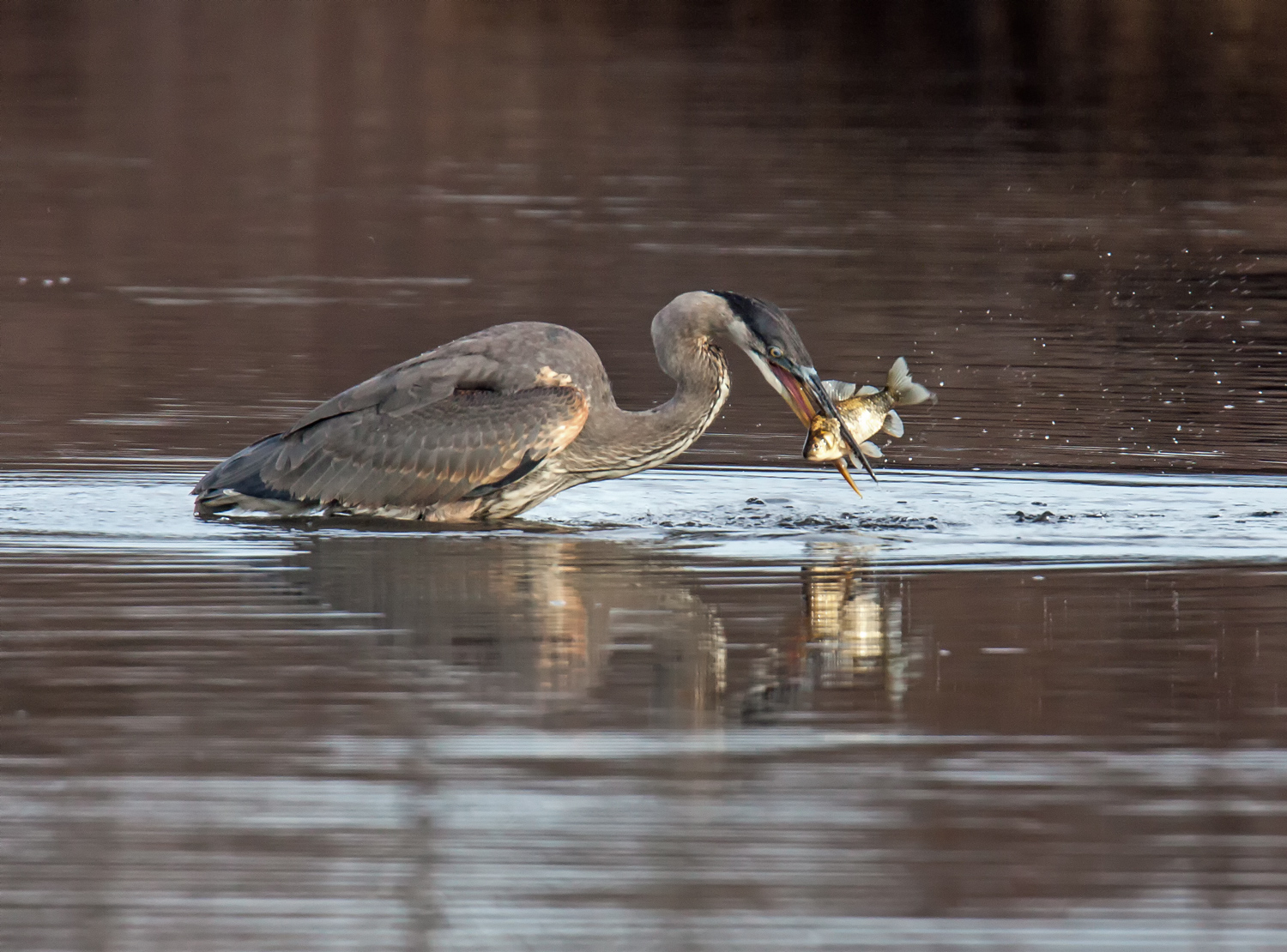
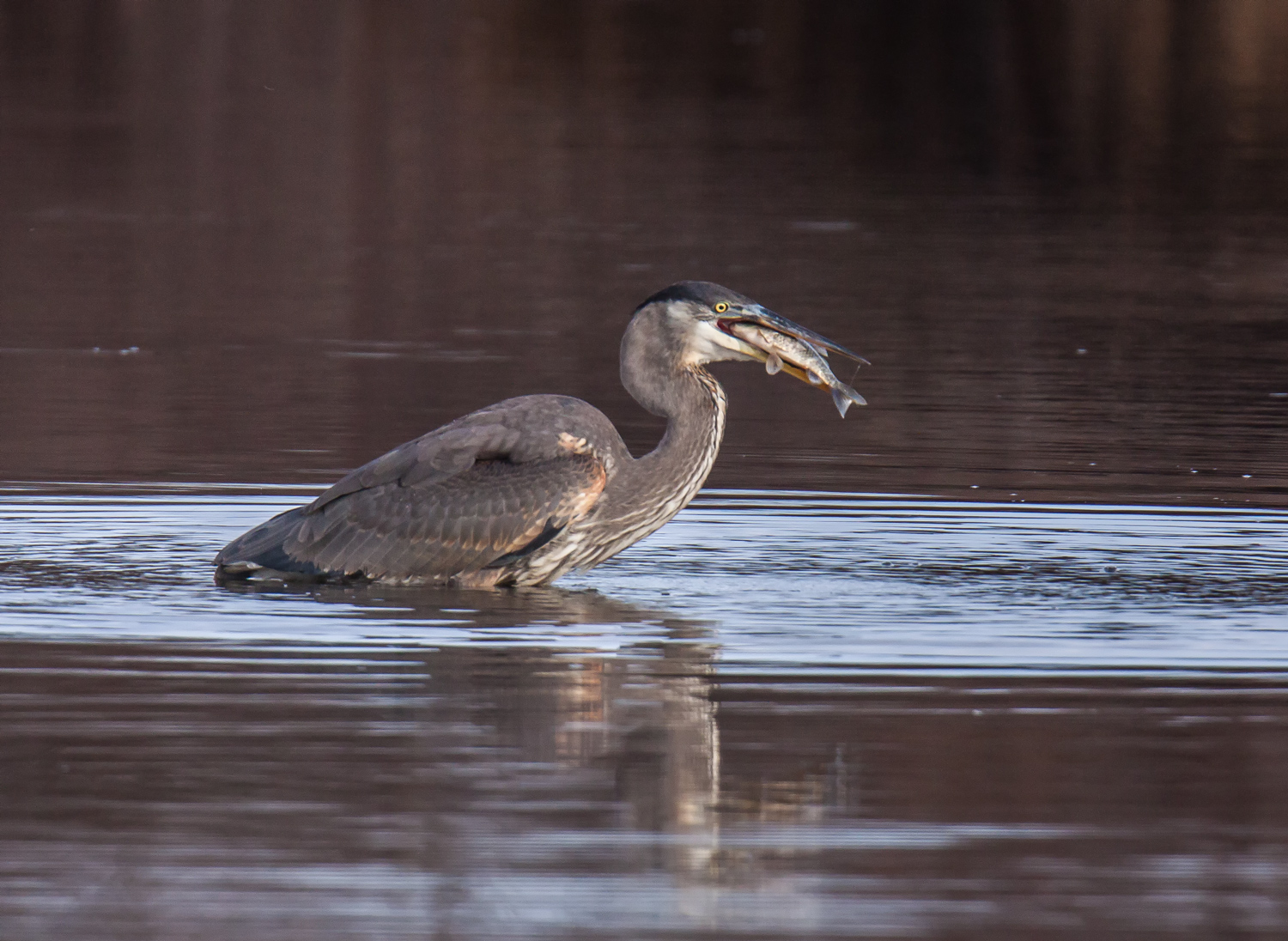
After several unsuccessful attempts, this Great Blue Heron (Ardea herodias) pulled a good-sized fish out of the waters of a small pond on Monday at Occoquan Bay National Wildlife Refuge. A few second later the heron had the fish correctly positioned and swallowed in a single big gulp. I thought the heron would take a break to digest his meal, but it returned immediately to fishing.

Great Blue Herons have an amazing amount of patience. They will stand immobile for extended periods of time and then strike forcefully into the water without any notice. When I am observing a heron, it is always a challenge to remain alert and ready. Often the heron’s patience exceeds my own, but fortunately that was not the case on this particular day. I was lucky too that the heron did not turn away after it had caught the fish, which allowed me to capture some of the action.

Great Blue Heron

Great Blue Heron

© Michael Q. Powell. All rights reserved.

Read Full Post »

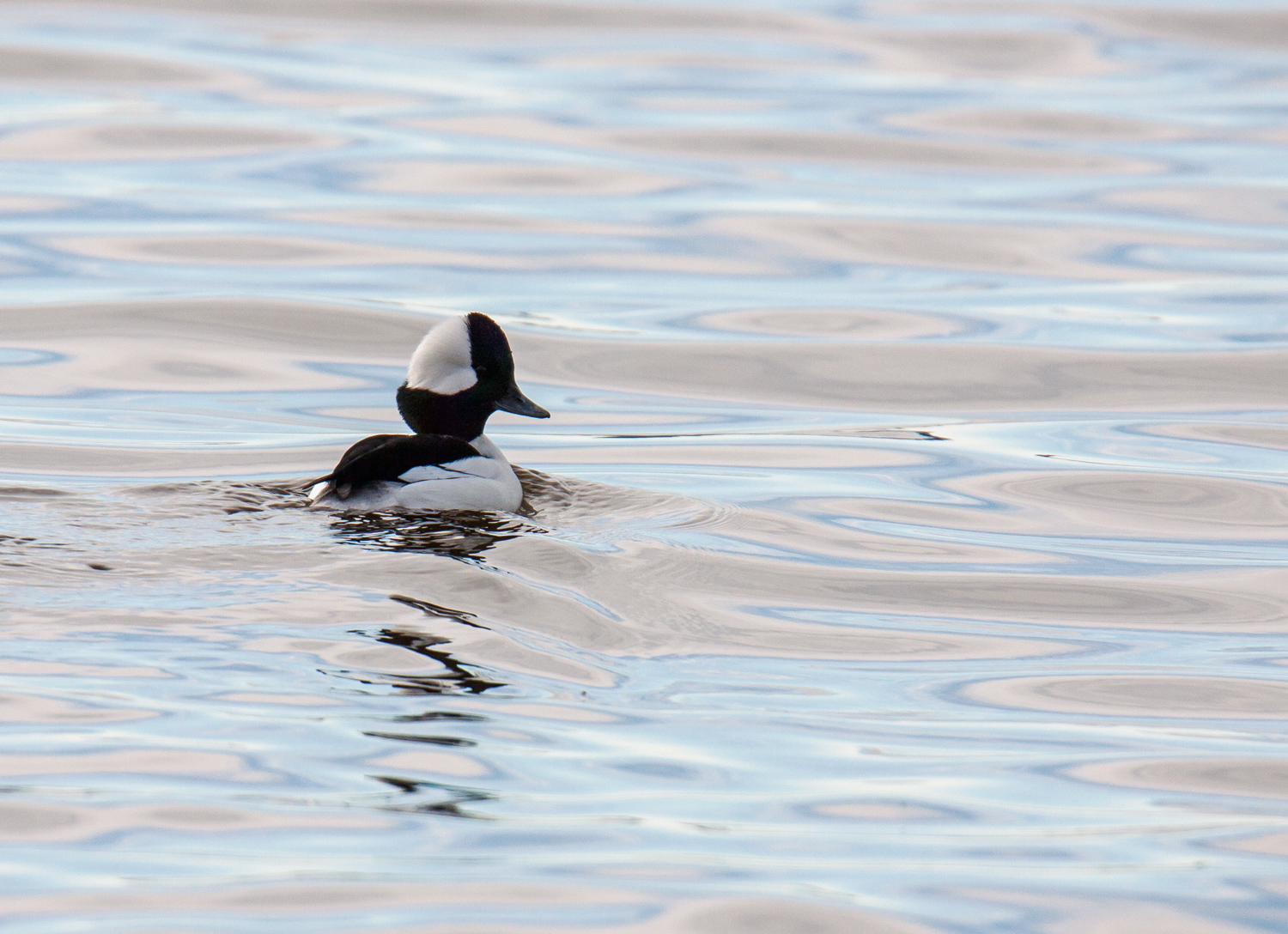
For the first time in a while, a male Bufflehead (Bucephala albeola) ventured close enough for me to get some shots yesterday when I was exploring Occoquan Bay National Wildlife Refuge. I have posted some photos of buffleheads fairly recently, but they have all been of females (or possibly immature males).

The shape and colors of these little water birds, especially the males, always strike me as cartoonish—like they were drawn by Disney artists.

Bufflehead

Bufflehead

© Michael Q. Powell. All rights reserved.

Read Full Post »

I have returned from my week-long trip to Vienna, Austria, but thought that I would share images of some of the night lights of the city on my final night. On a cold winter evening when snow was lightly falling, Vienna gleamed like one of the brilliant crystals from Swarovski.

As you can see from the first photo of one of the streets in the central pedestrian zone of Vienna, the city lights are amazing. The second shot is of of the clock tower in one of the inner courts of the Hofburg Palace. The final image shows the elegant storefront of the Swarovski store.

Thanks to my readers who have stayed with me this past week as I deviated from my normal wildlife and nature photography. It is enjoyable to mix things up a bit and a fun challenge to photograph entirely different subjects. I am heading out in a short while and with a little luck will have some new wildlife images to share tomorrow.

night lights in Vienna

night lights in Vienna

night lights in Vienna

© Michael Q. Powell. All rights reserved.


Read Full Post »

Last night, my final night in Vienna this trip, I had a chance to walk by Stephansdom (St. Stephen’s Cathedral), an incredible building in the center of the city.

The beauty of Vienna is magnified at this time of the year by wonderful decorations and lights everywhere.

Stephansdom

© Michael Q. Powell. All rights reserved.

Read Full Post »

I was thrilled yesterday to see that there are still Fine-lined Emerald dragonflies (Somatochlora filosa) at Occoquan Bay National Wildlife Refuge. I was afraid that all of the recent rain had washed them away.

This particular dragonfly species is pretty uncommon, but the wildlife refuge that has become my go-to place for photography is one of the few local spots where they can be found. I think its peak period in our area is September-October, judging from my experience last year, so I was anxious to see them some more before they disappeared for the year.

It is easy to see a Fine-lined Emerald dragonfly when it is patrolling, because it often flies at knee to shoulder height. It is a whole different problem, though, to get a shot of one, because they spend most of their time in the air rather than perching. I spent quite a bit of time yesterday chasing after these dragonflies, hoping in vain to be able to catch the moment when one decided to take a break.

Finally I decided to change my approach and see if I could capture a shot of one as it flew by me. I know that it can be done, because last year I captured an in-flight image using my 150-600mm zoom lens. The lens that I had on my camera, however, was my 180mm macro lens, which meant that I had to get pretty close to the dragonfly rather than zooming in. That particular lens is slow to focus, so I decided to focus manually, which can be tricky with a moving subject. One of the downsides of the lens is it has no built-in image stabilization, so I decided to keep the camera affixed to my monopod for the sake of stability.

It took some time, but eventually I was able to capture a few shots of flying Fine-lined Emeralds that were relatively in focus, aided by the fact that these dragonflies hover a little from time to time.

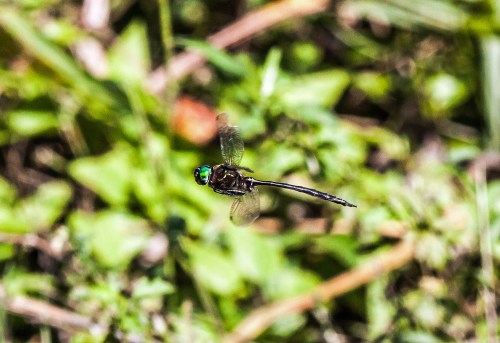
I particularly like the first image because it shows both the emerald eyes and the fine lines near the tip of the abdomen that are responsible for the name of the species. It was also cool that the angle of view was unusual, given that I was looking down at the dragonfly as I took the shot. I also like the touch of brownish-orange from the out-of-focus leaves that gives the image an autumn feel.

The second shot gives a more “normal” view of a Fine-lined Emerald dragonfly as it flew by.  I was happy to be able to separate it somewhat from the leafy backdrop by carefully focusing on the dragonfly. This is one of those situations when the auto-focusing system of the camera would have been challenged—the subject was pretty small in the viewfinder and the auto-focus probably would have tried to lock on the background.

fine-lined emerald

fine-lined emerald

© Michael Q. Powell. All rights reserved.

Read Full Post »
When this immature Bald Eagle (Haliaeetus leucocephalus) fixed its eyes on me on Monday at Occoquan Bay National Wildlife Refuge and flew straight toward me, I couldn’t help but feel a little concerned. As it turned out, the young eagle was simply soaring and veered away—and my heartbeat eventually returned to a normal rate.

Bald Eagle

Bald Eagle

© Michael Q. Powell. All rights reserved.

Read Full Post »
Some birds are stealthy and fly silently through the skies. Canada Geese (Branta canadensis) would not fit into that category. They like to announce their presence for all to hear, like this pair that I spotted on Monday at Occoquan Bay National Wildlife Refuge as they were coming in for a landing.

Unlike at the airport, there was no need for a loudspeaker to announce this landing.

Canada Geese

© Michael Q. Powell. All rights reserved.

Read Full Post »
Do you take photos only when the weather conditions are optimal? If I followed that rule, I’d be staying at home most of the time. This winter in particular, it seems like I am at work on all of the days with good weather. So often I will choose to go out with my camera when I am free and not when the weather is good.

One particular morning last week it was really foggy and visibility was extremely limited. The subjects that I could see were hazy and indistinct, utterly lacking in contrast. It’s hard to know how what camera setting to use in situations like those.

I was at Occoquan Bay National Wildlife Refuge, my favorite spot this winter for wildlife photography, and as usual I managed to spot some Bald Eagles (Haliaeetus leucocephalus). It is always a challenge to photograph the eagles, because they tend to perch a good distance away from the trails that I follow and they are often quite skittish.

In this case, the difficulties were magnified, because of the heavy fog/mist. I ended up processing the images that I captured in a number of different ways, attempting at times to enhance the contrast or eliminate some of the fog, with varying degrees of success.

Here are a few of my favorite shots of the eagles in the mist.

Bald Eagles

Bald Eagles

Bald Eagle

© Michael Q. Powell. All rights reserved.

Read Full Post »

The skies were heavily overcast on Monday at Occoquan Bay National Wildlife Refuge, so colors didn’t “pop” at all. However, I really like the almost monochromatic feel of this image I captured of a young Bald Eagle (Haliaeetus leucocephalus), with just the slightest bit of yellow showing around its talons.

Bald Eagle

© Michael Q. Powell. All rights reserved.

Read Full Post »

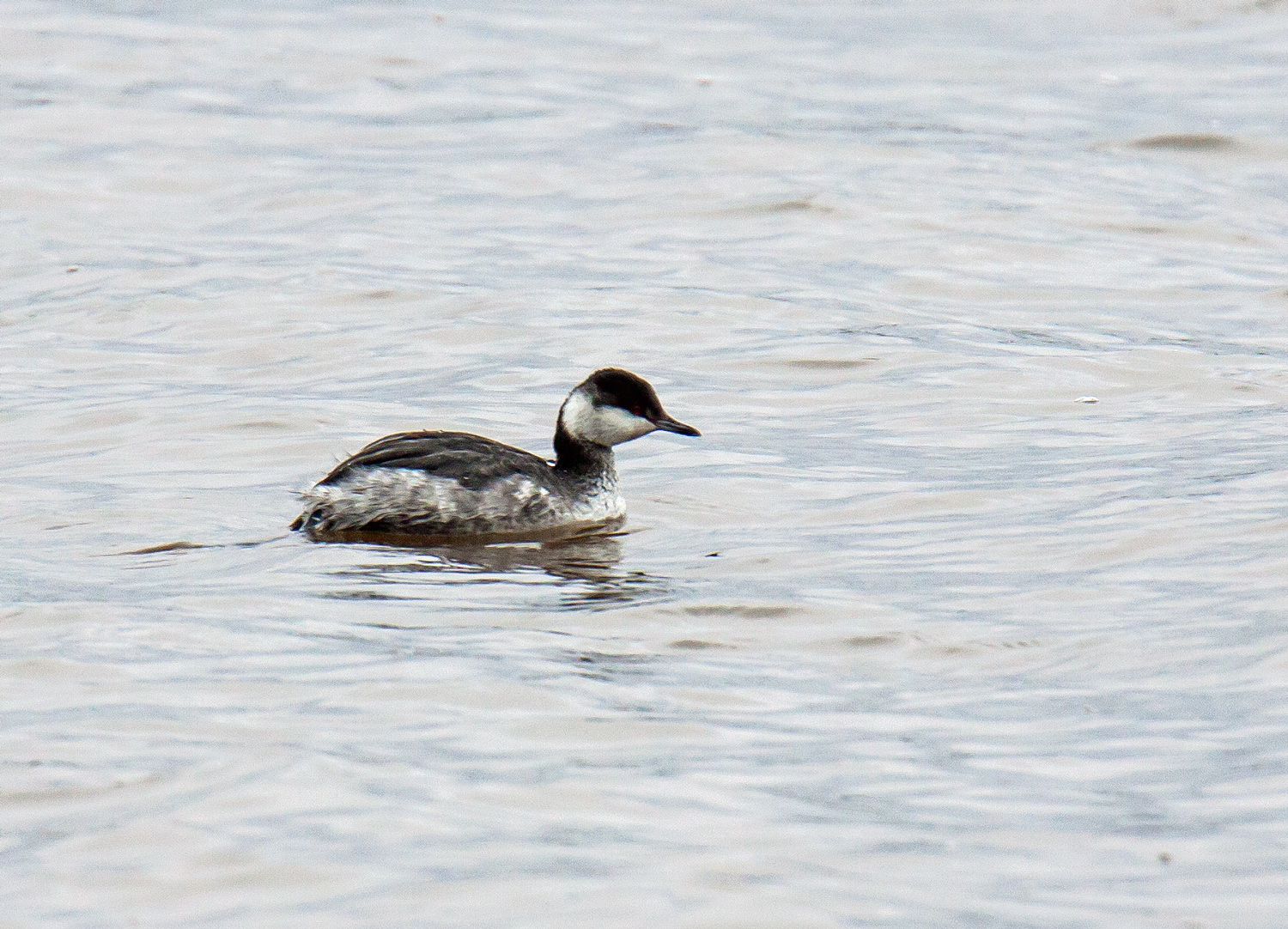
Thanks to some helpful folks in the Facebook forum “What’s this bird,” I learned that this little duck-like bird that I spotted on Monday morning at Occoquan Bay National Wildlife Refuge is a Horned Grebe (Podiceps auritus). I have seen several other kinds of grebes before, but this was a first-time sighting of this particular species.

When I looked at the Cornell Lab of Ornithology page for this species, I was a little shocked to see how different this bird looks when in breeding plumage. “Breeding adults have black heads with rich golden tufts, black back, and cinnamon neck, breast, and sides.” Wow! That would be quite a sight to see, but, alas, it looks like Horned Grebes do not breed in my area and are only visitors here for the winter.

Horned Grebe


© Michael Q. Powell. All rights reserved.

Read Full Post »

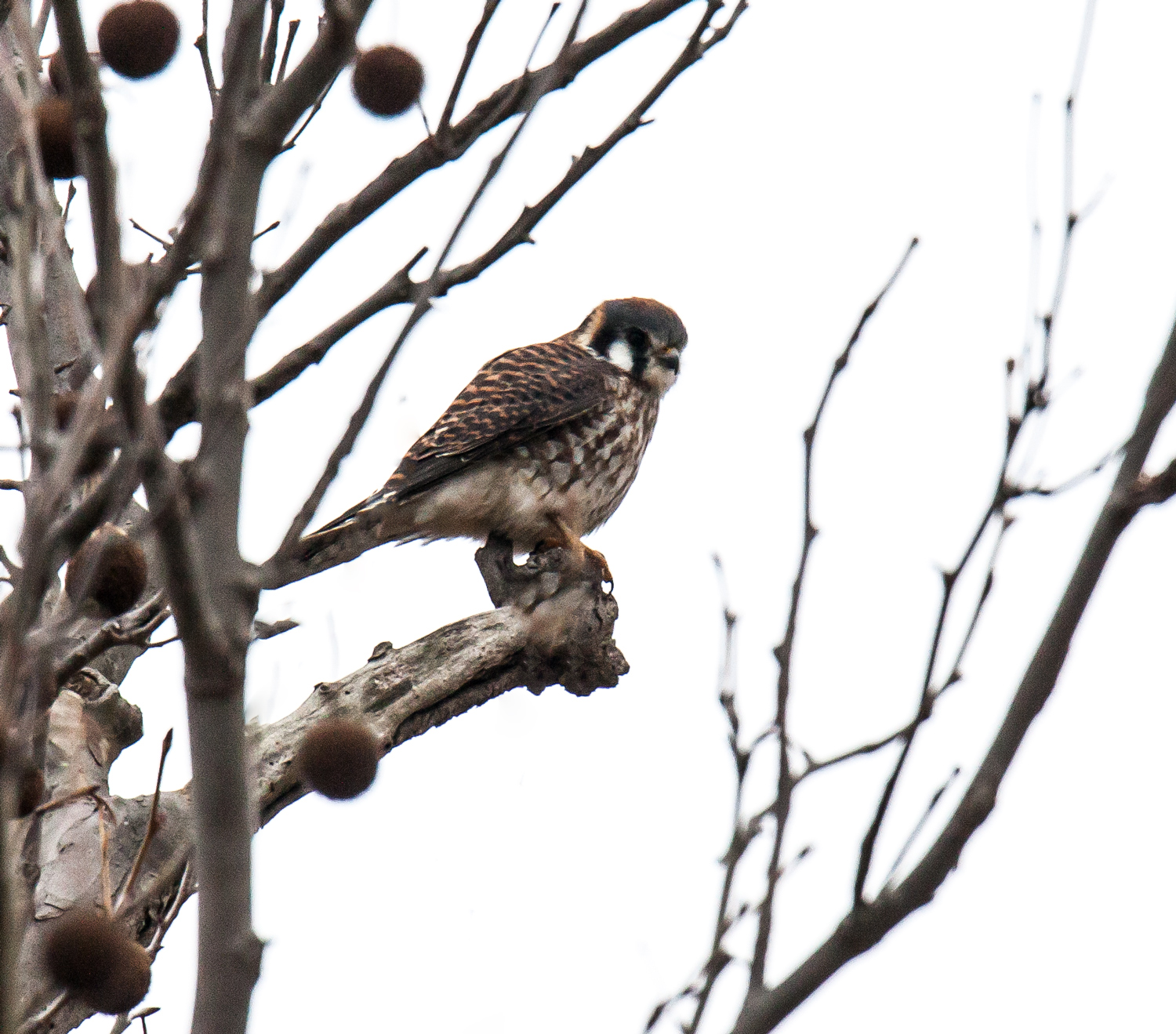
Yesterday morning I was thrilled to see this American Kestrel (Falco sparverius)  at Occoquan Bay National Wildlife Refuge. I had never before seen this little falcon, but its coloration and markings are awfully distinctive, so I had a pretty good idea what it was.

I was really struck by the small size of this bird, as compared with the Bald Eagles and vultures that I had seen earlier in the day. According to the Cornell Lab of Ornithology, the American Kestrel is about the size and shape of a mourning dove and is the smallest falcon in North America.

As you can tell from the background, it was heavily overcast when I took this shot, so the colors do not pop as much as they would in bright sunlight. One of my viewers on Facebook also noted that this is a female and, as is the case with most bird species, the colors of a female American Kestrel are more muted than those of her male counterpart.

I remember well the location of the tree in which the kestrel was perched, so I will add that location to my already long list of places to check when I visit this wildlife refuge, which has proven to have a pretty amazing variety of species to observe.

American Kestrel

© Michael Q. Powell. All rights reserved.

Read Full Post »

What kind of bird would be a perfect match for a gloomy, fog-filled day? I might suggest that this Black Vulture (Coragyps atratus) that I spotted this past weekend at Occoquan Bay National Wildlife Refuge would fit the bill admirably.

There was something shadowy, mysterious, and a little creepy about this large dark bird as it perched low in a tree and looked right at me through the fog. I felt a little shiver as I looked up at the vulture, but maybe it was just reaction to the cool temperature.

Black Vulture

© Michael Q. Powell. All rights reserved.

Read Full Post »

While I was at Huntley Meadows Park on Wednesday, I spotted this Hooded Merganser (Lophodytes cucullatus) couple perched on a semi-submerged log, relaxing and preening their feathers. These small ducks have such an unusual and distinctive look that it is hard for me to ignore them whenever I am fortunate to spot them—often they spot me first and my first indication of their presence is when they are flying away from me.

Hooded Merganser

© Michael Q. Powell. All rights reserved.

Read Full Post »

The light was dim in the early morning hours this past Wednesday at Huntley Meadows Park, but I could detect some movement in the vegetation adjacent to the boardwalk that runs through the marshland. I watched and waited and eventually a male Northern Shoveler (Spatula clypeata) swam slowly into view and I managed to capture some images of it. I love the reflections of both the duck and the vegetation in this shot.

After the fact, I discovered that I probably should have changed the setting of my camera to raise the shutter speed. Many of my shots were blurry, but somehow this one came out reasonably sharp, despite the fact that it was taken with a shutter speed of only 1/15 of a second with my lens zoomed out all of the way to 600mm. I am pretty sure that it helped that I was using a monopod.

This incident reminded me of the special challenges and rewards that come with shooting at dawn or dusk. There is often a lot of activity, but there is a constant struggle to capture that activity in the limited light that is available. When things come together, though, it is almost magical and is definitely worth the effort.

Northern Shoveler

© Michael Q. Powell. All rights reserved.

Read Full Post »

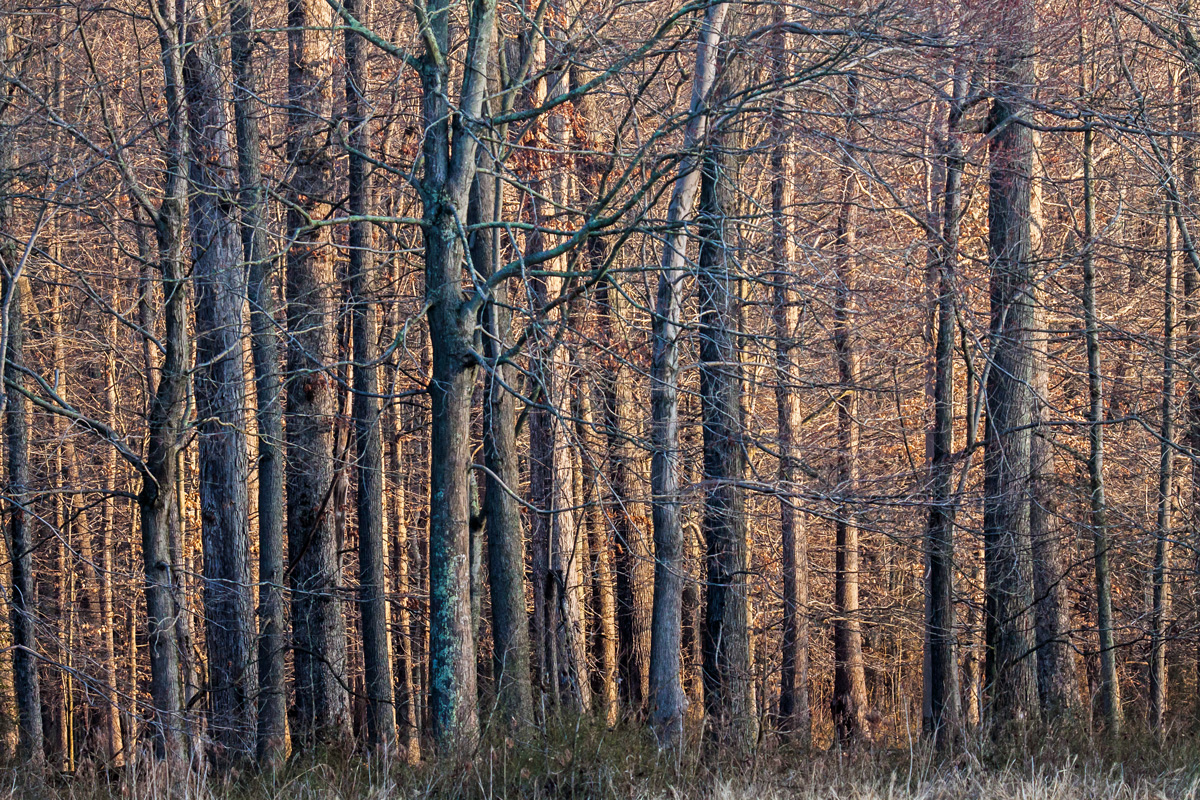
The early morning sunlight was spectacular yesterday as it streamed through the trees at Huntley Meadows Park. I tried to capture this phenomenon as a kind of mini-landscape by using my telephoto lens and framing it just as you see in this image. It is a little unusual for me not to crop an image at all, but by composing it this way, I was able to include those elements that I found the most interesting, the light and shadows of the trees, and left out the things that I found less interesting such as the sky. I did include a little strip of grass in the foreground so that the image is not completely abstract.

early morning trees

When I first arrived at the park, the sun had barely risen and there was a lot of ground fog, which made the woods look really mysterious and a little spooky. One of my viewers on Facebook said the image looked like it could be the setting for the witches in Macbeth. The second image was a lot tougher to capture, because of the lack of light and my desire to capture a sense of the fog that was clinging to the ground. There is a slight blur to the image, which would normally be a shortcoming in a photo, but I think it works ok with an image like this one.

early morning trees

© Michael Q. Powell. All rights reserved.


Read Full Post »

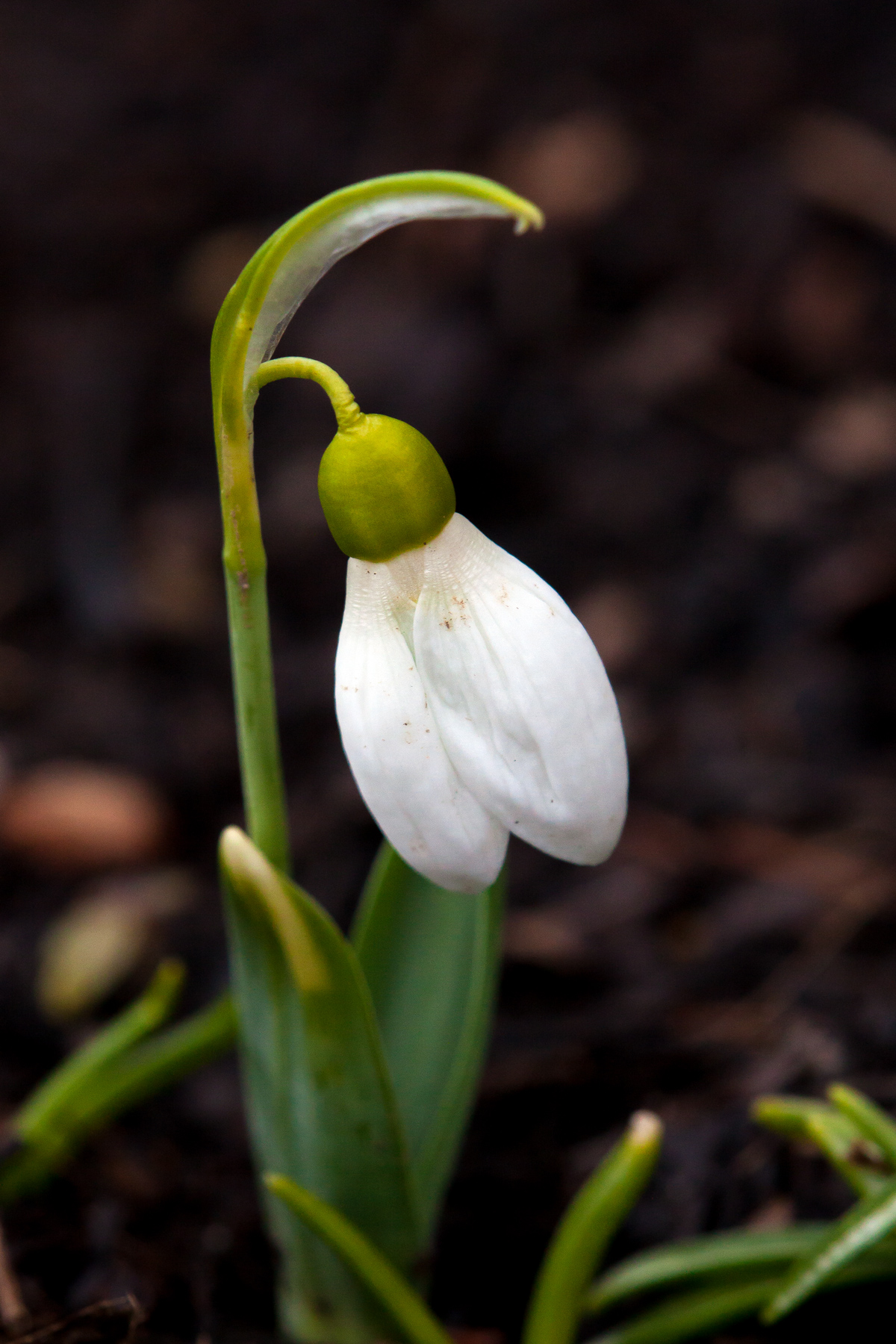
There were clumps of snowdrops scattered throughout Green Spring Gardens on Monday. I just love this simple little flower that is with us through much of the winter.

It won’t be long before the snowdrops are replaced by the more complex, more colorful flowers of the spring. At times I am impatient for the arrival of spring, but at other times I am simply content to enjoy the beauty of the modest snowdrop.

snowdrop

snowdrop

© Michael Q. Powell. All rights reserved.


Read Full Post »

Yesterday I took a break from bird photography and visited Green Spring Gardens, a county-run historic garden, with a macro lens on my camera rather than my long telephoto zoom lens. It is still a bit early for most flowers, so I was happy to spot these little purple flowers that had pushed their way to the surface. I think they may be crocuses, though I really don’t know flowers very well.

I got really low to get an interesting background and almost got stepped on by a runner—maybe it’s best not to wear a camouflage jacket when lying on the ground.

purple buds

© Michael Q. Powell. All rights reserved.

Read Full Post »

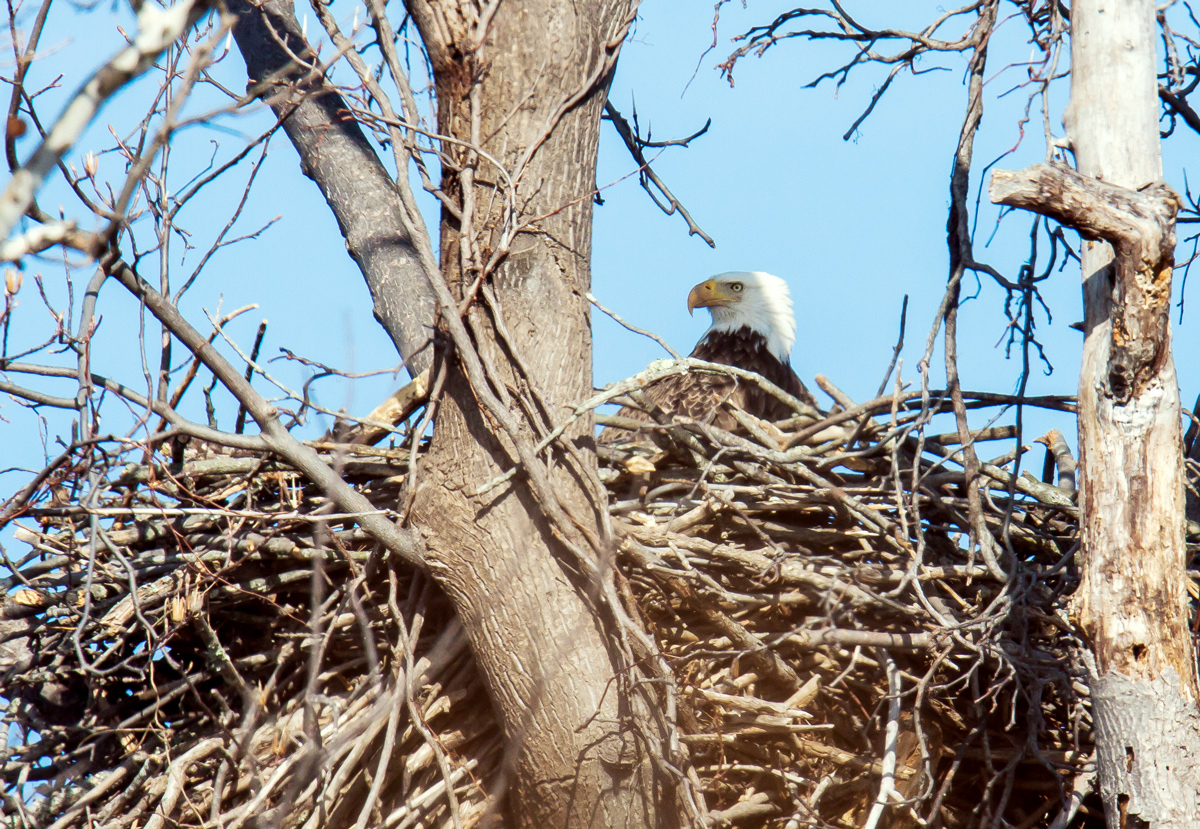
This eagle’s nest is nestled back in the trees at Occoquan Bay National Wildlife Refuge, somewhat obstructed though still visible from the trail. When I first sighted the nest this past Saturday morning, it looked like it was empty.  I kept my eyes glued to the nest as I slowly walked past it and suddenly I spotted a Bald Eagle (Haliaeetus leucocephalus) sitting on the nest, partially hidden in the shadow of the trees. This is the second nest at the refuge that I have spotted so far this winter that appears to be in use, though I suspect that there may be more. When leaves return to the trees, I fear that the nest will be completely hidden from view, which will give the eagles a little more privacy from paparazzi like me.

bald eagle

© Michael Q. Powell. All rights reserved.

Read Full Post »

The light was so beautiful early this morning at Occoquan Bay National Wildlife Refuge that it looked like this male Bufflehead duck (Bucephala albeola) was swimming in the clouds rather than in the water, giving this image an almost surreal feel that I really enjoy.

bufflehead

© Michael Q. Powell. All rights reserved.

Read Full Post »

Yesterday I spotted this cool-looking Brown Thrasher (Toxostoma rufum) in the vegetation at Occoquan Bay National Wildlife Refuge. I especially love the thrasher’s light-colored eyes and distinctive markings.

Brown Thrasher

Brown Thrasher

© Michael Q. Powell. All rights reserved.

Read Full Post »

I am rarely able to see the red belly of the Red-bellied Woodpeckers (Melanerpes carolinus) that I occasionally spot, but the light was coming from the right direction on Monday at Occoquan Bay National Wildlife Refuge to illuminate the reddish-brown color of this woodpecker’s belly.

When I first started taking photos of birds, I remember seeing the bright red color of a woodpecker like this one and thinking it must be called a “red-headed woodpecker.” I am somewhat more knowledgeable about birds now and have a greater appreciation for the difficulties associated with identifying them. In particular, I have learned that you often cannot rely on the name of a bird to identify its key features.

Red belly or not, I knew what this bird was as soon as I saw it, but it was nevertheless wonderful that it chose to pose so nicely for me. One of my Facebook viewers said that it reminded her of a similar pose in the movie The Lion King. It turns out that The Lion King is one of my favorite movies, and I was thrilled when I just now watched a You Tube video of The Circle of Life, one of the songs in the movie that features the rock outcropping that looks like the branch in my photo. I was particularly drawn to the beauty of the birds in the opening moments of the video. It is worth checking out if you have never seen it before or even if you have.

Red-bellied Woodpecker

© Michael Q. Powell. All rights reserved.

Read Full Post »

Bufflehead ducks (Bucephala albeola) recently were playing around off of Occoquan Bay National Wild Life Refuge, chasing each other around and even giving each other piggyback rides—or so it seemed.

buffleheads

© Michael Q. Powell. All rights reserved.

Read Full Post »
The weather was not very cooperative this past Monday, but my persistence was rewarded when I was able to observe a Bald Eagle (Haliaeetus leucocephalus) pulling a fish out of the waters off of Occoquan Bay National Wildlife Refuge in Northern Virginia. On multiple occasions I have seen an eagle with a fish in its talons, but this was the first time that I actually got the see the eagle catch the fish.

The only downside was that I was quite a distance away and the light was limited when I captured the shots. Like most wildlife photographers, though, I feel inspired by the images that I do capture to go out again and again, often to the same places, with the hope and expectation that I will have more opportunities to make better images. Unlike Olympic athletes, I won’t have to wait four more years to have another chance to test myself.

bald eagle

bald eagle

© Michael Q. Powell. All rights reserved.


Read Full Post »
This majestic Bald Eagle (Haliaeetus leucocephalus) was partially hidden behind some branches yesterday at Occoquan Bay National Wildlife Refuge, but I managed to find a visual tunnel and capture this image of it. Most of the time I prefer an uncluttered background, but in this case I really like the organic shapes and patterns of the out-of-focus branches.

Bald Eagle

© Michael Q. Powell. All rights reserved.

Read Full Post »

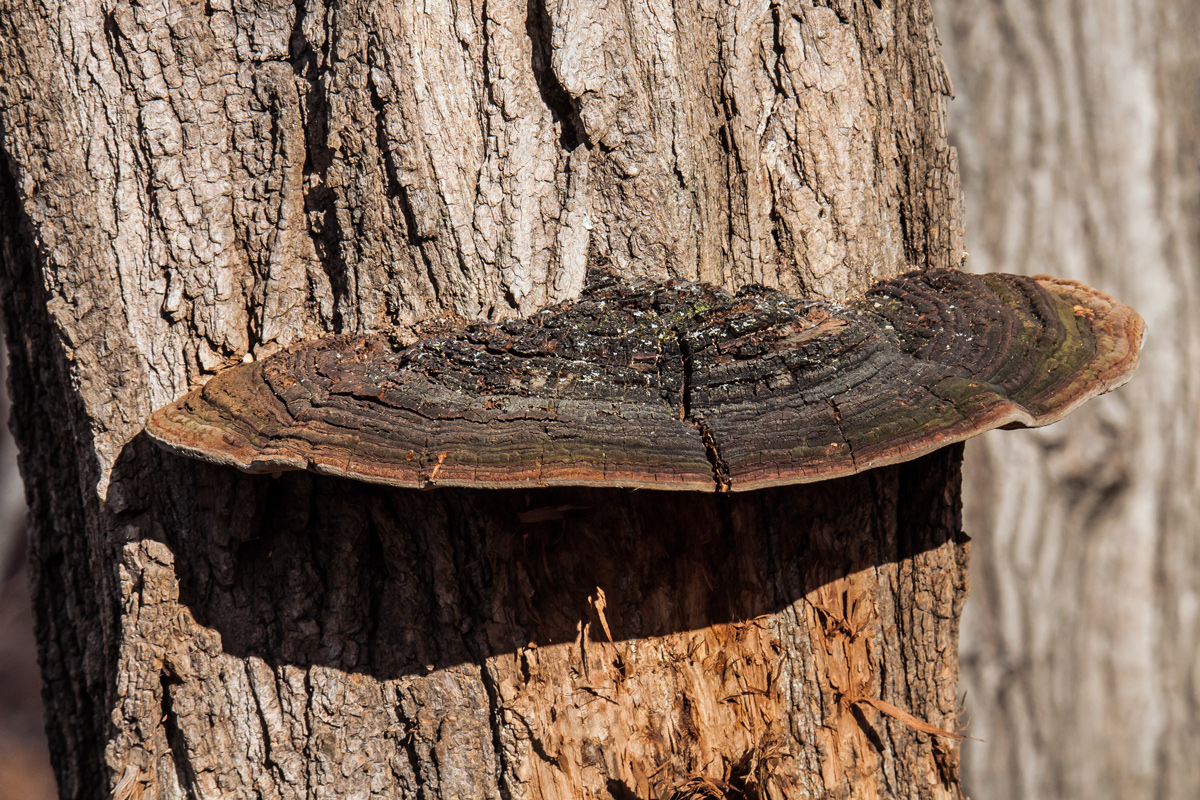
The skeletal forms of trees remain hidden during much of the year, but winter reveals them in all of their naked glory. Without the distractingly bright colors of leaves, it is easy during the cold season to become entranced by the delightful contours and textures of the trees and the unusual growths that protrude from their bark.

As I get older, it seems that I too am developing protrusions and discolorations, but I tend to keep them hidden under layers of clothing, especially during the winter.

natural growth

natural growth

© Michael Q. Powell. All rights reserved.

Read Full Post »

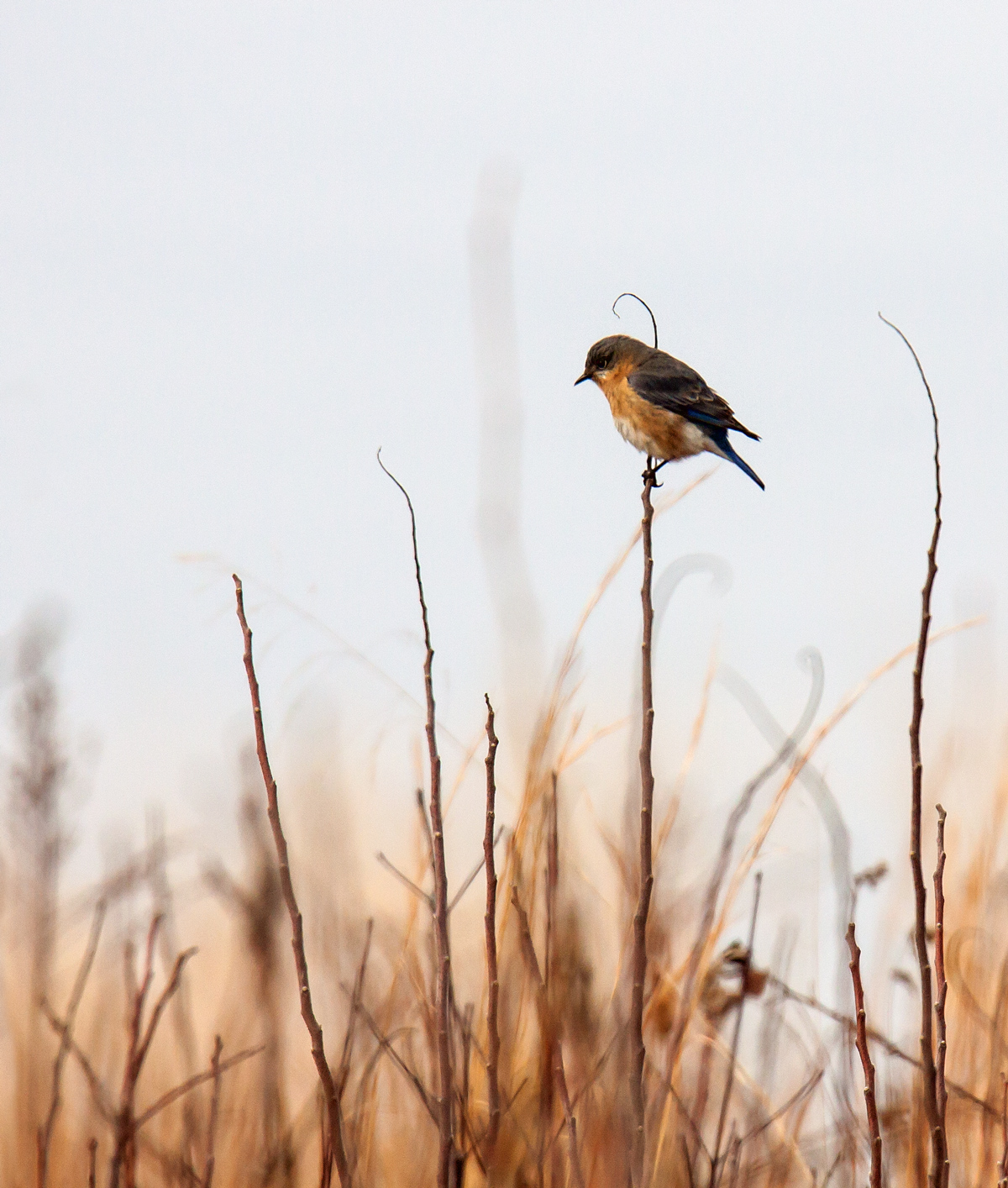
Sometimes I am content to capture a sense of the moment rather than a detailed image of my subject. That was certainly the case this past Friday at Occoquan Bay National Wildlife Refuge, when I experienced an overwhelming feeling of tranquility upon spotting this solitary Eastern Bluebird (Sialia sialis) peacefully perched in middle of a large field.

We were alone, but somehow together, as we each enjoyed the moment on our own terms.

Eastern Bluebird

© Michael Q. Powell. All rights reserved.

Read Full Post »

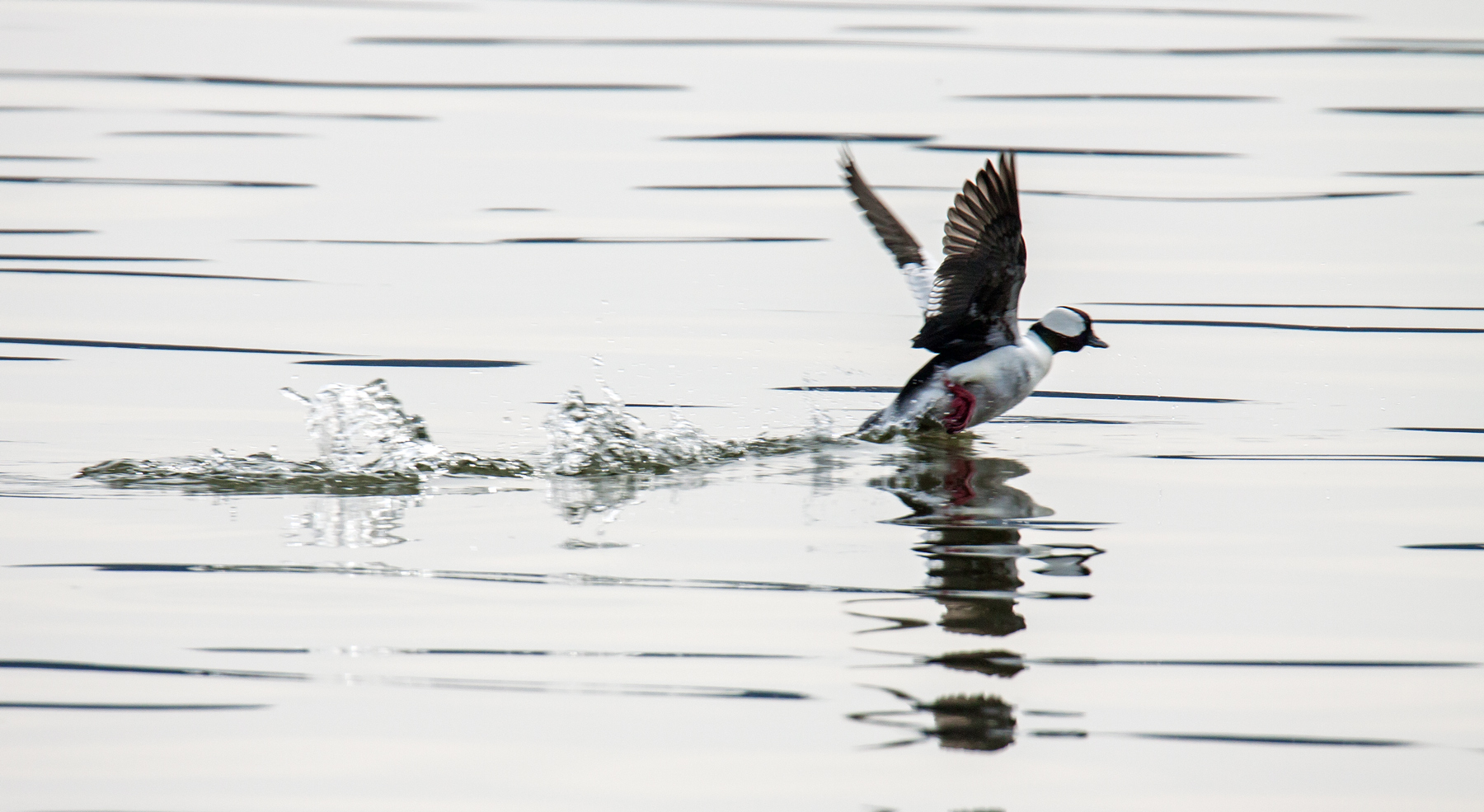
Although many ducks take to the air straight out of the water, some of them, like this tiny Bufflehead (Bucephala albeola) need to get a running start. It is simultaneously fascinating and amusing to watch them bounding across the surface of the water to generate enough lift for take-off.

I saw quite a few Buffleheads today at Occoquan Bay National Wildlife Refuge, but most of them were far away—diving ducks seem to prefer the deep water. This male Bufflehead was on his own a bit closer to the shore than the others. I had barely enough time to focus on him before he took off, but fortunately he was moving parallel to me, so I was able to retain focus on the bird and capture some of the water spikes that he was generating.

Bufflehead

bufflehead

Bufflehead

© Michael Q. Powell. All rights reserved.

Read Full Post »
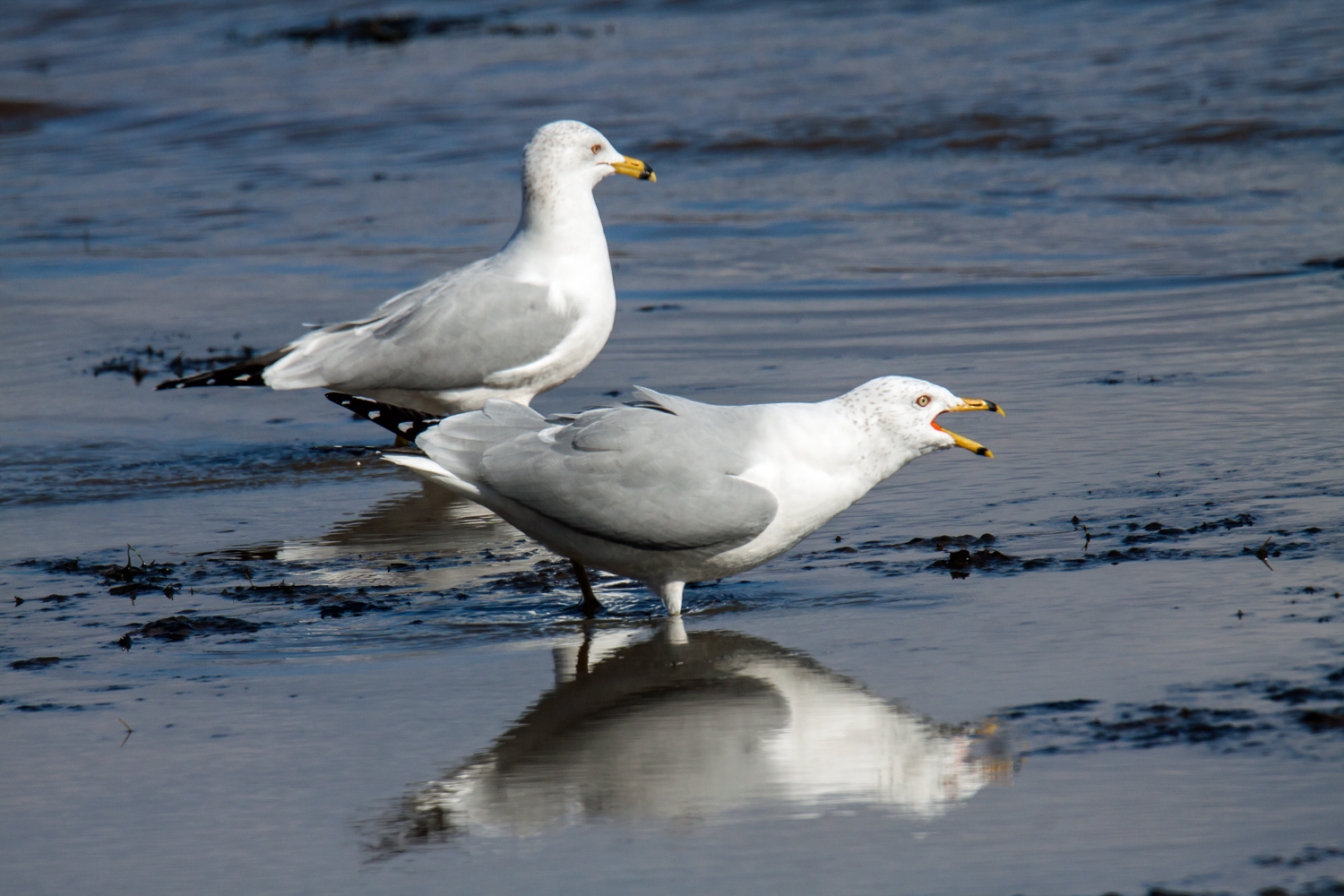
I generally do not pay much attention to gulls when I am out with my camera, but this Ring-billed Gull (Larus delawarensis) was so loud and so close last weekend at Occoquan Bay National Wildlife Refuge that it was impossible to ignore. I love the juxtaposition between the tensed, emotion-filled pose of the gull in the foreground and the blasé  attitude of the gull in the background, who has clearly heard this screaming multiple times and was not in the least impressed by it.

Ring-billed Gull

© Michael Q. Powell. All rights reserved.

Read Full Post »

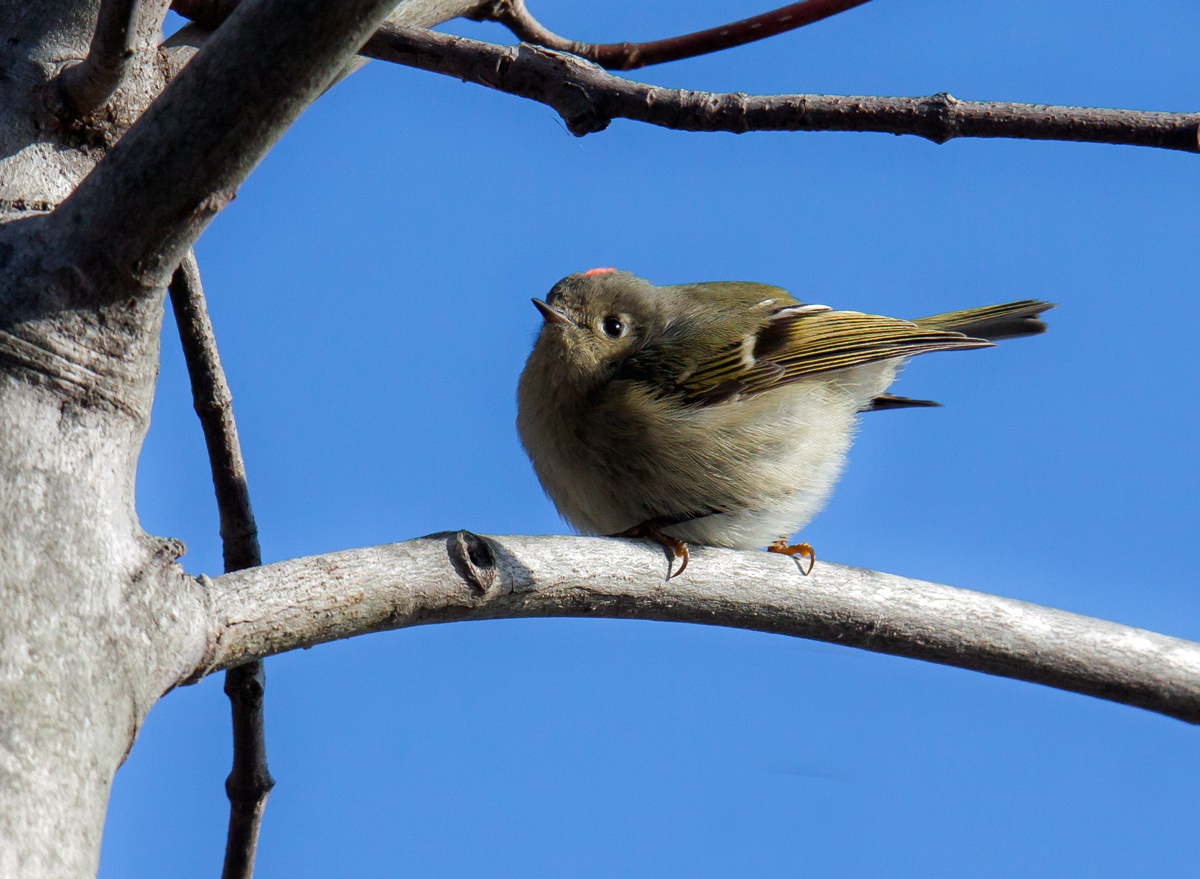
Under normal circumstances, Rub-crowned Kinglets (Regulus calendula) are described as “stocky” or “chubby” or “compact.” In cold weather, when they fluff up their feathers to retain heat, they amazingly grow even rounder in shape. These round balls of fluff bounce from branch to branch as they frenetically forage for food, reminding me of the pinball games that I used to play in my youth.


I was thrilled last Friday at Occoquan Bay National Wildlife Refuge when this male Ruby-crowned Kinglet paused for a split-second on a branch and I was able to capture this image. I love the tilt of his head, the contrast between the curves of his body and the angular lines of his bill and wings, and the wonderful little details like the glimpse of his ruby crown and the peek  at his tiny little feet.

Ruby-crowned Kinglet

© Michael Q. Powell. All rights reserved.

Read Full Post »

From a distance, the large bird perched on a broken-off tree looked majestic and I assumed that it was a hawk or an eagle. Zooming in with my telephoto lens, I realized that it was “only” a Turkey Vulture (Cathartes aura).  It got me thinking about the fact that vultures have a bad reputation—many people are creeped out by the way that vultures circle overhead and eat dead things. For them, the words “majestic” and “vulture” just don’t go together. If you suspend all preconceived notions and examine the bird in this photo (or watch a vulture effortlessly soaring overhead), perhaps you too will find a bit of majesty there.

Turkey Vulture

© Michael Q. Powell. All rights reserved.

Read Full Post »
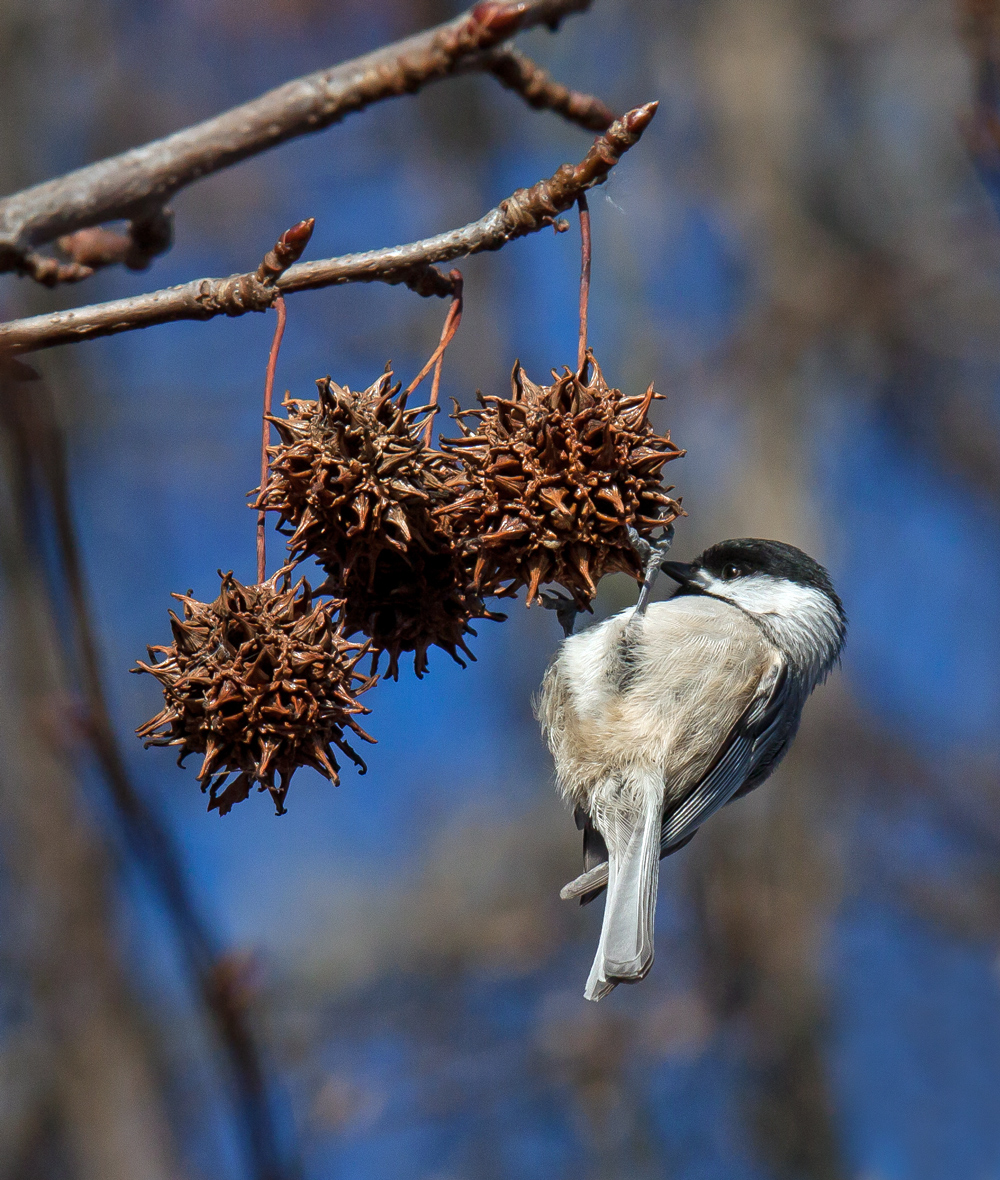
This Carolina Chickadee (Poecile carolinensis) was working hard this past Friday at Occoquan Bay National Wildlife Refuge to get to the seeds inside the spiky pods of a sweetgum tree. I was amazed that the stem of the seedpods was able to support the weight of the little bird, particularly because it had to peck away vigorously to get to the seeds. Eventually the chickadee’s persistence would pay off and it would sit on a branch and really seemed to enjoy the seeds.

It makes me wonder what the seeds taste like.

Carolina Chickadee

© Michael Q. Powell. All rights reserved.

Read Full Post »

« Newer Posts - Older Posts »